


🍓 Strawberry Tree (Muntingia calabura) — Grow Your Own Cotton Candy Berries 🌿
A lightning-fast tropical fruit tree with candy-sweet berries, pollinator-friendly flowers, and warm-season harvests that can turn an ordinary backyard into a living snack bar.
Some fruit trees make you wait years for the payoff. Strawberry Tree gets right to the point.
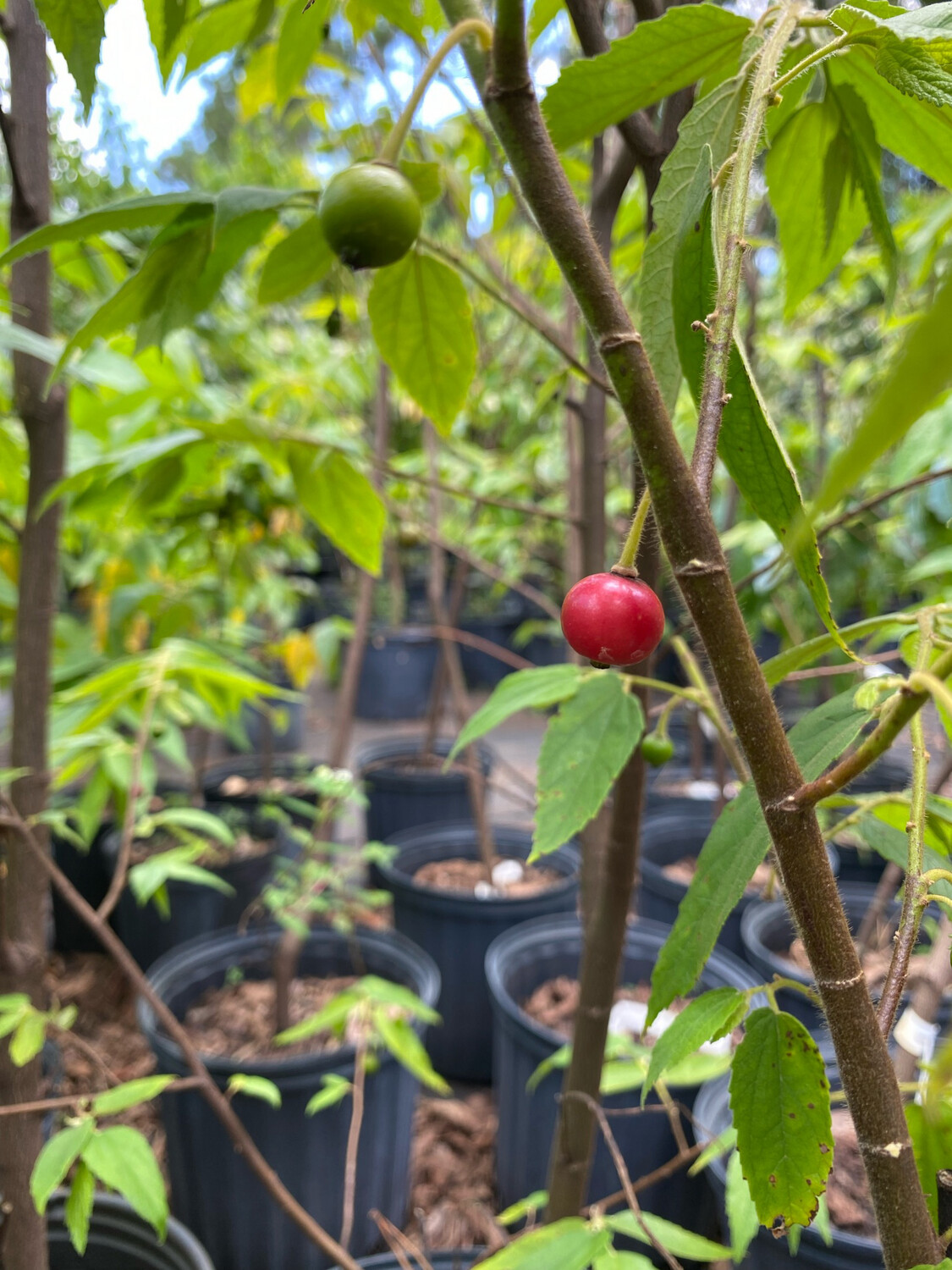
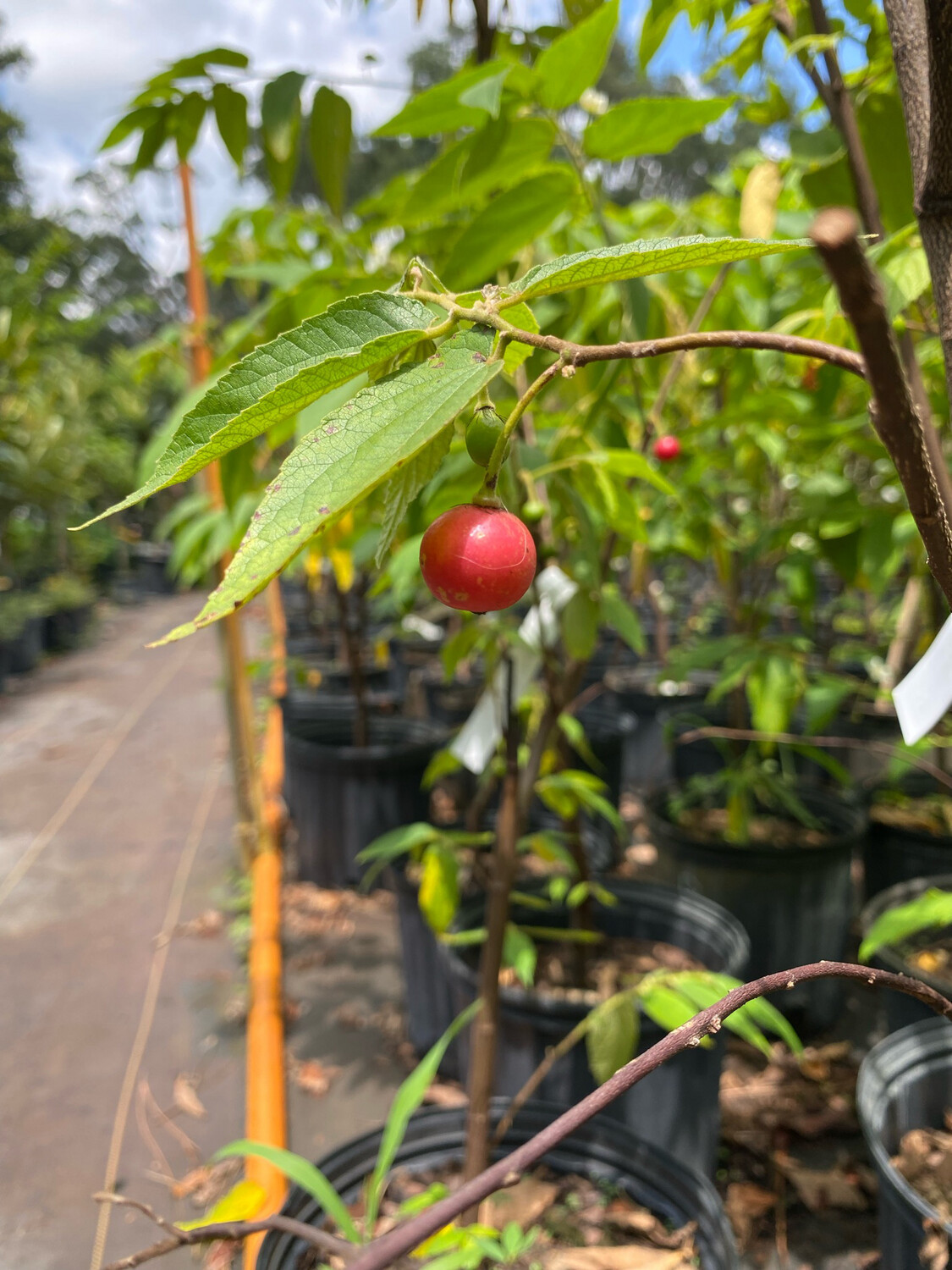
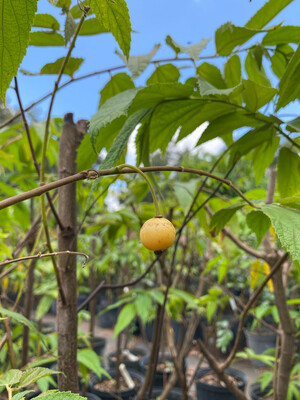
Its tiny red berries are soft, juicy, and intensely sweet, with a flavor frequently compared to cotton candy, caramelized sugar, sweet cereal milk, and berry jam. They are too delicate for conventional grocery-store distribution—which means this is one of those fruits you usually have to grow yourself to experience.
Plant it where you walk every day, keep the canopy within reach, and prepare to understand why this tree becomes a favorite with children, tropical-fruit collectors, pollinators, and anyone who believes the garden should come with snacks.
🌿 Quick Facts Guide
| Category | Details |
|---|---|
| Botanical Name | Muntingia calabura |
| Common Names | Strawberry Tree, Panama Berry, Jamaican Cherry, Jamaica Cherry, Jam Fruit Tree, Cotton Candy Berry, Singapore Cherry |
| Plant Family | Muntingiaceae |
| Plant Type | Fast-growing tropical to subtropical evergreen fruit tree |
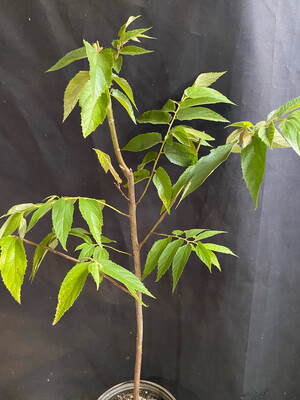
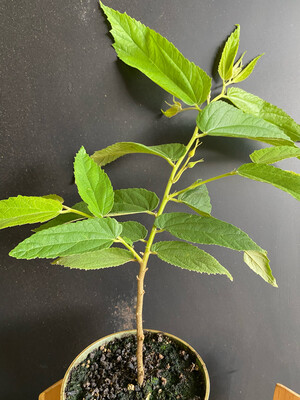
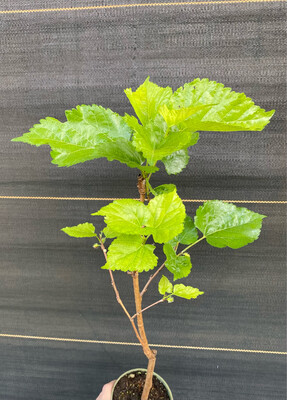
| Sale Size | Ships in a 3-gallon nursery container |
| Estimated Age | Approximately 8–14 months, depending on propagation date and growing conditions |
| Typical Size at Shipping | Varies by current nursery stock and seasonal pruning |
| Mature Height | Approximately 20–40 ft unpruned |
| Maintained Height | Commonly kept around 8–15 ft with regular pruning |
| Mature Width | Approximately 15–30 ft, depending on training and climate |
| USDA Growing Zones | Best suited to Zones 9b–11 |
| Florida Performance | Best in South Florida and protected Central Florida microclimates |
| Sun Requirements | Full sun for strongest growth and fruit production; light partial shade tolerated |
| Cold Hardiness | Frost-sensitive; protect young plants near 32°F and below |
| Growth Rate | Extremely fast in warm weather |
| Growth Habit | Airy, spreading canopy with horizontal to slightly drooping branches |
| Spacing | 12–20 ft for a naturally spreading tree; 8–12 ft when maintained smaller |
| Pollination | Self-compatible; one tree can produce fruit |
| Harvest Season | Primarily spring through fall in Florida, with intermittent winter production in frost-free locations |
| Wind Tolerance | Fair in ordinary breezes, but branches can be weak and break in strong wind |
| Salt Tolerance | Low; avoid saline irrigation, coastal flooding, and direct salt spray |
| Container Friendly | Yes, with disciplined pruning and progressive up-potting |
| Indoor Growing | Possible only with exceptional light; outdoor container culture is strongly preferred |
UF/IFAS describes Muntingia calabura as an evergreen tropical fruit tree suitable for Zones 9b–11, capable of reaching roughly 35 ft, and prone to weak branch development if long limbs are not regularly shortened.
🌎 Origin Story — A Tropical American Tree That Went Global
Muntingia calabura is native from Mexico through Central America and into tropical South America. Its botanical genus honors Abraham Munting, a 17th-century Dutch physician and botanist.
The tree eventually traveled far beyond its native range. It was introduced into the Philippines during the late 1800s and became widely established across Southeast Asia, where it is now known by names such as aratiles, kersen, talok, and Singapore cherry.
Why did it travel so well?
- It establishes quickly.
- It tolerates many ordinary soils.
- It begins producing while relatively young.
- Its fruit feeds people, birds, bats, and other wildlife.
- It readily colonizes open, sunny ground.
In many tropical communities, it became a familiar roadside or schoolyard tree—the kind of fruit children picked while walking home rather than something purchased in a store.
That history captures the real personality of Strawberry Tree: not precious, not fussy, and definitely not stingy.
🍒 The Fruit Experience — Tiny Berry, Major Personality
| Fruit Feature | What to Expect |
|---|---|
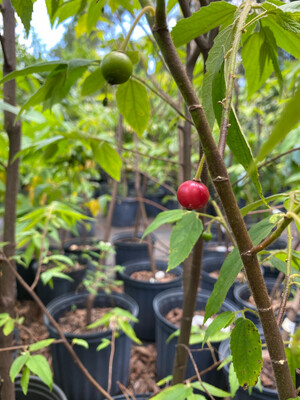
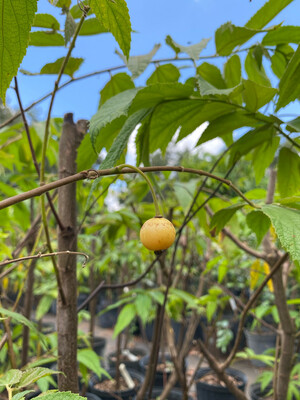
| Fruit Size | Usually approximately ¼–½ inch wide |
| Skin Color | Green when immature, becoming pinkish-red to deep red when ripe |
| Skin Texture | Very thin, smooth, and edible |
| Flesh | Soft, juicy, pale tan to translucent, with a delicate gel-like quality |
| Seeds | Numerous but extremely tiny and generally eaten with the fruit |
| Flavor | Very sweet with cotton-candy, caramel, cereal-milk, fig, and light berry notes |
| Aroma | Mild and sweet rather than strongly perfumed |
| Best Stage to Pick | Fully colored and soft, but before the fruit falls or birds claim it |
| Shelf Life | Extremely short; best eaten or processed soon after harvesting |
Why People Keep Going Back for Another Handful
Strawberry Tree fruit requires:
- No peeling
- No slicing
- No utensils
- No complicated ripening
- No trip to the grocery store
Simply pick a fully ripe berry and eat it fresh.
The fruit’s exceptionally soft texture is also why it is rarely found in commercial produce departments. It bruises easily and does not tolerate long-distance handling well.
This is not a fruit designed for shipping. It is a fruit designed for standing under the tree and eating it immediately.
🌸 Flowering, Pollination & Fruit Production
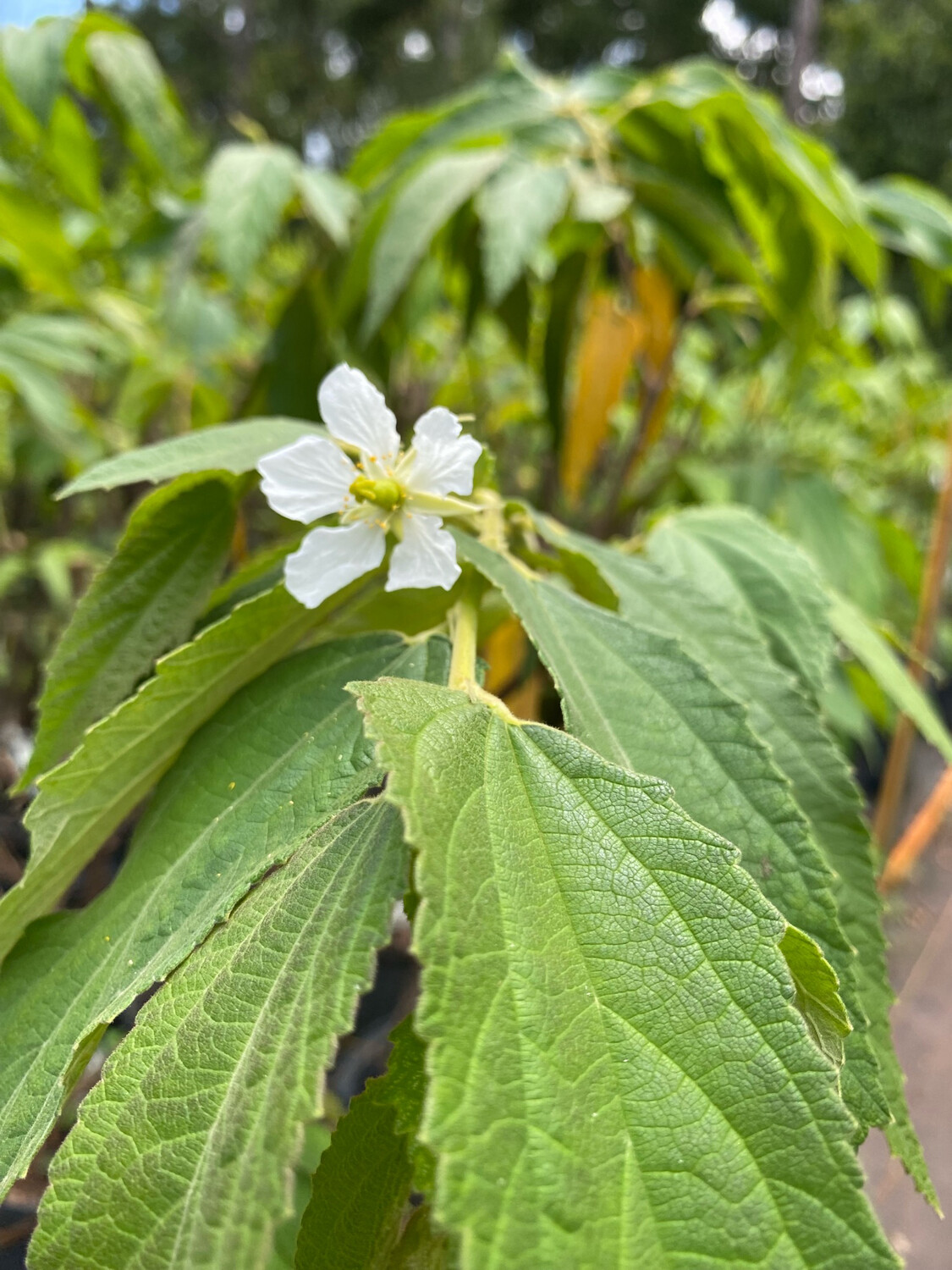
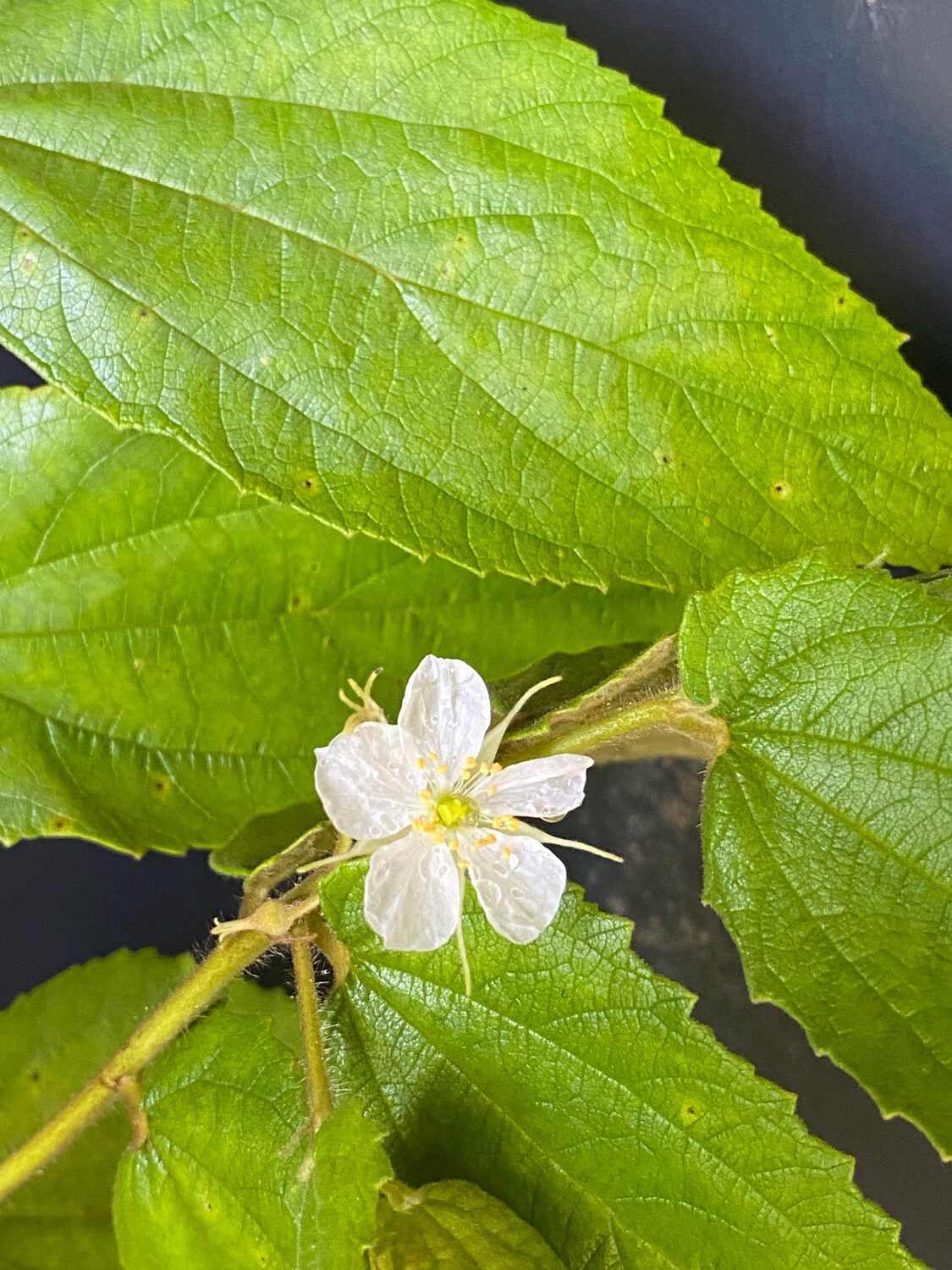
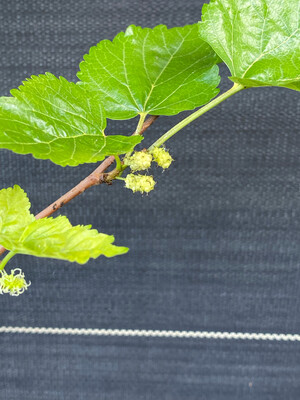
Strawberry Tree produces small, five-petaled white flowers with bright yellow stamens. The flowers resemble miniature strawberry blossoms and may appear alongside green and ripe fruit on the same branch.
Fruiting Habits
- Trees can begin flowering and fruiting while relatively young.
- Individual flowers are short-lived, but new flowers appear repeatedly during warm weather.
- The species is self-compatible, so a second tree is not required.
- Bees and other flower-visiting insects can improve pollination activity.
- Ripe berries may appear in small quantities almost daily during peak production.
- Production slows considerably during cold, cloudy, or dry weather.
Research has documented spontaneous self-pollination and self-compatibility in Muntingia calabura, although flower-visiting bees remain valuable contributors to the tree’s ecological and productive role.
Florida Harvest Expectations
| Region | Typical Production Pattern |
|---|---|
| South Florida and Frost-Free Microclimates | Intermittent production through much of the year, with the strongest crops during warm, bright months |
| Central Florida and Zone 9b | Primarily spring through fall; production pauses or declines during colder weather |
| Northern Florida and the Lower Southeast | Warm-season production only; winter protection or container growing is normally required |
| Texas Gulf Coast and Similar Climates | Strong summer production where heat and irrigation are adequate; freeze protection is essential |
| Cold-Winter Regions | Container or greenhouse culture, with fruiting primarily during the outdoor growing season |
UF/IFAS notes particularly abundant spring and summer harvests in Florida. “Nearly year-round” production is most realistic in consistently warm, frost-free conditions—not in every Zone 9 landscape.
What Boosts Fruit Set?
- Six or more hours of direct sunlight
- Warm days and nights
- Consistent soil moisture during flowering
- Abundant pollinator activity
- Light pruning that maintains healthy fruiting wood
- Moderate organic nutrition
- Prompt correction of drought or root-zone saturation
Avoid excessive nitrogen. It can produce long, weak shoots that are more vulnerable to wind damage and difficult to harvest.
🍓 How to Use Strawberry Tree Fruit
Fresh Eating
Fresh eating is the main event.
Harvest berries when they are fully colored and soft. Enjoy them directly from the tree or collect them into a shallow container so their delicate skins are not crushed.
Culinary Applications
- Fresh garden snacks
- Fruit salads
- Smoothies
- Yogurt and oatmeal toppings
- Pancake or waffle syrup
- Refrigerator jam
- Dessert sauces
- Frozen fruit purée
- Sorbet and granita
- Fruit leather
- Mocktails and shrubs
- Infused vinegar
- Lightly cooked compotes
Because the fruit is small and extremely soft, recipes that use the entire berry are generally more practical than recipes requiring seed removal.
🍯 Quick Cotton Candy Berry Syrup
Ingredients
- 2 cups ripe Strawberry Tree berries
- ½ cup water
- ¼–½ cup sugar or honey, adjusted to taste
- 1–2 teaspoons lemon or lime juice
Method
- Combine the berries and water in a small saucepan.
- Simmer gently for approximately 10 minutes.
- Mash the softened fruit.
- Strain for a smoother syrup or leave the tiny seeds for a rustic texture.
- Stir in sweetener and citrus juice.
- Cool and refrigerate.
Use over pancakes, yogurt, ice cream, oatmeal, or tropical fruit salad. Freeze extra syrup for longer storage.
Other Useful Parts of the Tree
Traditional cultures have prepared tea from the leaves and used the bark, flowers, and fruit in folk practices. These uses are part of the plant’s cultural history, but they should not be presented as substitutes for professional medical care.
Laboratory research has identified phenolic compounds and antioxidant activity in the fruit, including gallic acid and anthocyanin compounds. These findings are interesting from a food-science perspective, but they do not establish the plant as a treatment for diabetes, inflammation, or other medical conditions.
🌿 Top Benefits of Growing Muntingia calabura
🍓 Fast Backyard Fruit
Few tropical fruit trees combine this level of growth speed, early production, and approachable fresh eating.
🐝 Pollinator Support
The repeated white flowers supply pollen and nectar to visiting insects during warm weather.
🐦 Wildlife Value
Birds and other fruit-eating wildlife are strongly attracted to ripe berries. This can be a benefit in a wildlife garden—or friendly competition during harvest season.
🌳 Quick Canopy and Biomass
The fast-growing canopy can create filtered shade, habitat, and a steady source of small pruning material for controlled chop-and-drop systems.
🌸 Ornamental Appeal
The tree offers:
- Soft, lightly fuzzy foliage
- Serrated leaf margins
- White flowers
- Red berries
- An informal, tropical silhouette
- Flowers and fruit appearing together
🌾 Ecological and Traditional Uses
Outside the home orchard, Muntingia calabura has been used as:
- A pioneer tree in disturbed sites
- A shade tree
- A wildlife food source
- A source of soft wood and fuel
- A source of bark fiber for cordage
- A nectar and pollen resource for beekeeping
Best Landscape Roles
Strawberry Tree works especially well in:
- Food forests
- Children’s gardens
- Tropical fruit collections
- Informal edible hedges
- Wildlife gardens
- Farm edges
- Regenerative planting systems
- Areas where quick vertical structure is desired
It is less suited to formal landscapes where fallen berries, irregular branching, or seasonal leaf turnover would be considered messy.
Growing and Caring for Strawberry Tree (Muntingia calabura)
🌞 Seasonal Guide for Florida and Similar Warm Climates
Strawberry Tree is botanically evergreen in tropical climates, but Central Florida growers may see it behave as semi-evergreen during cold, drought, shipping stress, or abrupt seasonal changes.
Semi-evergreen means the tree may thin its canopy, yellow older leaves, or temporarily drop part of its foliage without entering the deep winter dormancy seen in peaches, apples, or mulberries.
| Season | What the Tree Is Doing | What the Grower Should Do |
|---|---|---|
| Spring | New leaves, rapid branch extension, flowering, and renewed fruit production | Resume regular irrigation, add compost, begin light feeding, and remove confirmed cold-damaged wood |
| Summer | Fastest growth, frequent flowers, heavy berry production, and high water demand | Check containers daily, harvest often, shorten excessively long shoots, and monitor storm damage |
| Fall | Continued fruiting while temperatures remain warm; growth gradually slows | Continue harvesting and light pruning, but avoid stimulating tender late growth near frost season |
| Winter | Slower growth, reduced flowering, yellowing leaves, partial leaf drop, or cold damage in Zone 9 | Reduce fertilizer, adjust irrigation, mulch the roots, and protect young trees during cold events |
Is Strawberry Tree Deciduous?
No. It is an evergreen tropical tree, not a truly deciduous fruit tree.
However, the following can be normal during winter in Central Florida:
- Scattered yellow leaves
- Spotted or weathered older foliage
- Partial canopy thinning
- Reduced flowering
- Slower water use
- Temporary branch-tip damage after frost
- Fresh new growth returning once temperatures warm
Do not assume a cold-stressed tree is dead immediately after a freeze. Wait until consistently warm spring weather reveals which stems remain alive.
📍 Where to Plant Strawberry Tree
Choose a Location With:
- Full sun
- Excellent drainage
- Warm southern or southeastern exposure
- Protection from strong winter winds
- Room for an airy, spreading canopy
- Easy harvesting access
- Space away from structures and utilities
- Enough distance from pavement to avoid fallen-fruit mess
Avoid Planting In:
- Low areas where cold air settles
- Frequently flooded ground
- Heavy compacted soil without raised planting
- Locations exposed to direct ocean salt spray
- Areas irrigated with saline water
- Narrow spaces where pruning will be neglected
- Directly beside pools, driveways, or high-traffic walkways
- Hurricane wind tunnels between buildings
Wind Tolerance
Strawberry Tree grows quickly, but fast growth does not equal strong wood.
Its extended branches can be vulnerable to:
- Thunderstorm winds
- Tropical storms
- Heavy fruit and rain loads
- Poor branch attachment
- Sudden canopy exposure after nearby trees are removed
Plant in a reasonably sheltered location and shorten long, whippy branches before storm season. UF/IFAS specifically recommends frequent pruning because the branches can be weak and prone to breakage.
Salt Tolerance
This is not a salt-tolerant fruit tree.
In coastal landscapes:
- Place it behind a windbreak.
- Keep it away from direct ocean spray.
- Avoid brackish irrigation.
- Flush container soil with fresh water if salts accumulate.
- Watch for burned leaf margins and stalled growth.
🌱 How to Plant Strawberry Tree — The GreenDreams High & Tight Method
After shipping, allow your Strawberry Tree to recover in its original container before planting.
We recommend waiting approximately 30 days or until healthy new growth appears, whichever takes longer. This allows the plant to recover from transport, adjust to your environment, and demonstrate that the root system is actively growing.
Step-by-Step Planting Instructions
- Select a sunny, well-drained site.
- Water the plant before planting.A hydrated root ball is easier to handle and less likely to crumble.
- Dig a hole only slightly wider than the nursery container.The hole should be approximately the same depth as the root ball—not deeper.
- Remove the container carefully.Support the soil and roots rather than pulling on the trunk.
- Set the plant high and tight.Position the top of the root ball level with or slightly above the surrounding grade.
- Do not bury the trunk flare.Planting too deeply increases the risk of oxygen deprivation, stem rot, and prolonged decline.
- Backfill firmly.Use native soil, finished compost, or a modest blend of both. Eliminate large air pockets without compacting the soil into concrete.
- Top-dress the surrounding area.GreenDreams commonly uses combinations of:
- Finished compost
- Charged biochar
- Azomite or other mineral amendments
- An appropriate organic nutrient source
- Apply hardwood mulch.Maintain approximately 2–4 inches of mulch around the root zone.
- Keep mulch away from the trunk.Leave several inches of exposed space around the woody base.
- Water deeply at soil level.
For a visual demonstration of our method, visit the GreenDreams fruit-tree planting guide:
https://youtu.be/RRQFY30qdA8?si=rRIcsbLlVAVYotfI
💧 Strawberry Tree Watering Guide
Strawberry Tree grows rapidly when warmth and moisture are available, but its roots still require oxygen. The goal is consistent moisture without standing water.
Newly Planted Trees
During warm, dry weather:
- Check the root zone daily for the first 1–2 weeks.
- Water deeply approximately 3–4 times per week when rainfall is limited.
- In very sandy soil or extreme heat, daily watering may temporarily be necessary.
- Gradually reduce frequency as roots establish beyond the original root ball.
- Continue supplemental irrigation through the first dry season.
Established Trees
- Water deeply approximately once or twice weekly during prolonged dry weather.
- Increase irrigation during flowering and heavy fruit production.
- Reduce watering during cool, cloudy, or rainy periods.
- Allow the upper soil to begin drying before saturating it again.
- Never allow the tree to remain in standing water.
Container Plants
Container-grown Strawberry Trees may need water daily during warm weather.
Check moisture rather than watering blindly:
- Water when the upper 1–2 inches of mix begin to dry.
- Apply enough water for excess to flow from the drainage holes.
- Empty saucers that retain standing water.
- A root-bound plant may dry much faster and should be up-potted.
GreenDreams Watering Standard
Water at soil level only.
- Morning watering provides the best absorption window.
- Drip irrigation is preferred for in-ground trees.
- Avoid overhead sprinklers and misting systems.
- Do not routinely wet the foliage.
- Avoid afternoon overhead watering, which can contribute to spotting, disease pressure, and leaf scorch.
Signs the Schedule Needs Adjustment
| Plant Signal | Possible Meaning |
|---|---|
| Limp leaves and dry soil | The plant needs water |
| Yellow leaves and wet soil | The roots may be staying too wet |
| Crispy leaf edges | Drought, wind, fertilizer salts, or saline water |
| Rapid wilting in a container | The root system may have outgrown the pot |
| Slow growth despite warm weather | Low light, poor drainage, root stress, or inadequate nutrition |
🌾 Soil and Organic Fertility
Strawberry Tree tolerates a broad range of soils, but the strongest container and landscape performance occurs in a root zone that is:
- Well drained
- Biologically active
- Moderately fertile
- Rich in stable organic matter
- Able to hold moisture without becoming waterlogged
In-Ground Soil
Florida sand can be improved by top-dressing with:
- Finished compost
- Charged biochar
- Worm castings
- Hardwood mulch
- Low-rate organic fruit-tree fertilizer
- Trace minerals where soil testing supports their use
In heavy clay or seasonally wet ground, plant on a raised mound rather than trying to turn the planting hole into a bowl of amended soil.
Fertilizing Schedule
Strawberry Tree is fast growing and usually does not need aggressive feeding.
A practical organic schedule is:
- Early spring: Compost and a modest balanced organic fertilizer
- Early summer: Light follow-up feeding if growth or foliage indicates a need
- Late summer: Optional low-rate feeding in frost-free areas
- Fall and winter: Avoid heavy nitrogen in Zone 9 because tender new growth is vulnerable to cold
Too much nitrogen can create long, soft branches with reduced structural strength.
Whenever possible, base nutrient decisions on:
- Plant appearance
- Soil testing
- Growth rate
- Fruit production
- Drainage and irrigation practices
✂️ Pruning Strategy — Turn Vertical Growth Into a Fuller Canopy
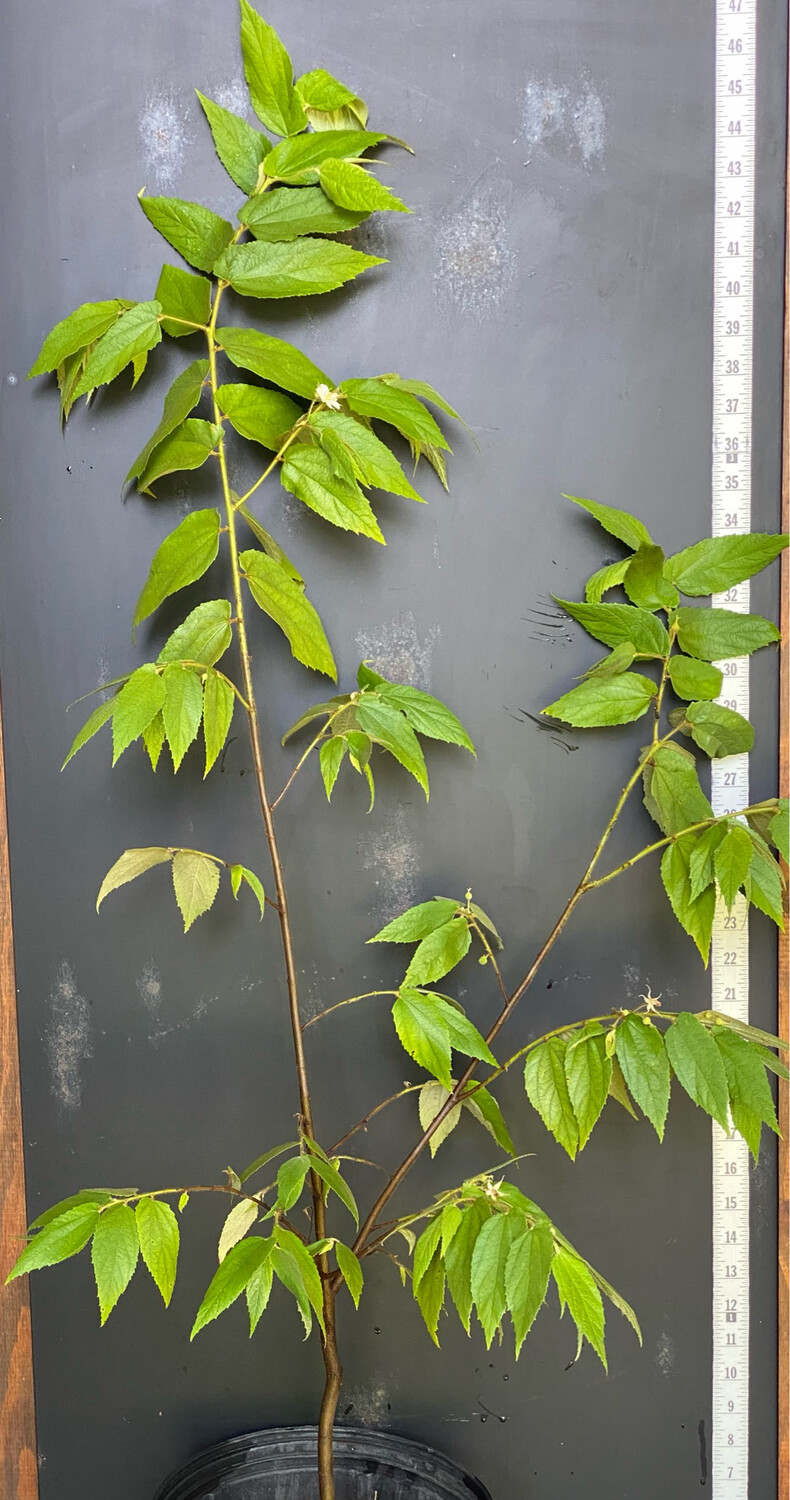
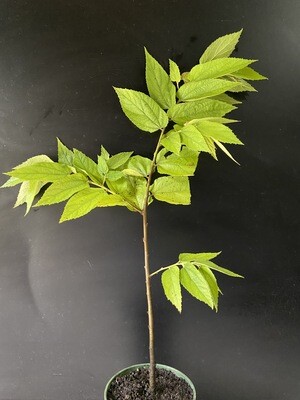
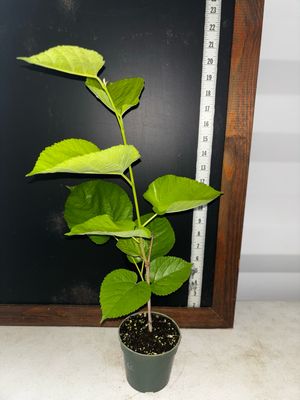
Strawberry Tree (Muntingia calabura) naturally grows quickly and vertically, especially while young. A newly planted tree may initially develop as one tall central stem with small leafy shoots along the trunk before forming a broader canopy.
That upright growth is normal—but you do not have to let the tree reach its unpruned height of 20–40 feet.
Strategic pruning can create a shorter, wider, stronger, and much easier-to-harvest Strawberry Tree.
How to Prune a 6- to 8-Foot Vertical Strawberry Tree
Once your tree is healthy, established, and actively growing:
- Choose where you want the canopy to begin.For most home growers, approximately 3–5 feet above the ground creates a comfortable branching and harvest height.
- Locate a healthy leaf node or small side branch near that height.A node is the point where a leaf, bud, or young shoot emerges from the main stem.
- Make one clean heading cut immediately above the node.Cut approximately ¼ inch above the node using clean, sharp pruning shears or loppers.
- Allow the buds below the cut to develop.Removing the upper growing tip reduces vertical dominance and encourages lower buds to produce outward-growing branches.
- Select the strongest new branches.Once new shoots appear, retain approximately 3–5 well-spaced branches growing in different directions. Remove or shorten shoots that grow straight upward, cross through the center, or crowd another branch.
- Tip-prune the selected branches as they lengthen.When each branch reaches approximately 18–24 inches long, pinch or trim the growing tip. This encourages another round of branching and helps create a fuller canopy.
💡 The goal is not simply to cut the tree shorter. The goal is to redirect its energy into a well-spaced framework of reachable fruiting branches.
Recently Shipped or Newly Planted Strawberry Trees
Do not immediately prune a tree that is:
- Wilting or dehydrated
- Recovering from shipping
- Recently transplanted
- Experiencing heat, cold, or root stress
- Not yet producing healthy new growth
Allow the Strawberry Tree to recover in its original container for approximately 30 days or until active new growth appears before performing structural pruning.
For a weak or unusually thin tree, reduce its height gradually rather than removing a large section at once. Shorten the main leader by approximately 12–18 inches, allow the tree to recover and branch, and continue shaping it during a later growth cycle.
Best Time to Prune Strawberry Tree in Florida
The best routine pruning periods include:
- During active warm-season growth
- After a heavy fruiting cycle
- Late spring through summer for light shaping
- Before branches become excessively long, heavy, or difficult to manage
- Before peak hurricane season when structural correction is needed
Avoid major pruning immediately before a forecast freeze. Pruning can stimulate tender new growth that is more vulnerable to cold damage.
Late winter pruning should be delayed until the risk of a significant freeze has passed and any cold-damaged wood can be accurately identified.
Ongoing Strawberry Tree Pruning
Once the basic canopy has formed:
- Maintain the tree around 8–12 feet tall for convenient harvesting.
- Tip-prune vigorous shoots before they become long and heavy.
- Remove competing vertical leaders.
- Remove dead, damaged, crossing, or inward-growing branches.
- Favor branches with broad attachment angles rather than narrow, upright crotches.
- Lightly thin crowded areas to improve airflow and sunlight penetration.
- Reduce long branches back to a healthy node or suitable side branch.
- Avoid removing more than approximately 25% of the living canopy during routine pruning.
- Sanitize pruning tools before and after use.
💡 Do not repeatedly shear the entire canopy into a dense ball. Selective heading and thinning cuts create a stronger, more productive structure than indiscriminate topping or shearing.
Strawberry Tree wood and extended branches can be relatively lightweight and vulnerable to breakage. Keeping the canopy compact reduces leverage during thunderstorms and tropical weather while making the soft, delicate fruit much easier to collect.
❓ Strawberry Tree Pruning FAQ
My Jamaican Cherry Tree is 6–8 feet tall and growing straight upward. How do I make it shorter and fuller?
Once the tree is established and actively growing, make a clean heading cut just above a healthy node or suitable side shoot at the height where you want the canopy to begin—usually around 3–5 feet above the ground for a backyard tree.
Several buds below the cut should begin producing new shoots. Retain approximately 3–5 outward-growing branches spaced around the trunk, then tip-prune those branches after they reach approximately 18–24 inches long.
This repeated, selective pruning gradually transforms one vertical stem into a lower, wider, and fuller fruiting canopy.
Can I top a Strawberry Tree or Jamaican Cherry Tree?
A young Strawberry Tree can receive a purposeful heading cut to initiate branching, but indiscriminate topping should be avoided.
The difference is intention:
- Proper heading cut: Made immediately above a healthy node or suitable side branch to direct future growth.
- Topping: Cutting stems at random heights without considering nodes, branch structure, or the amount of canopy being removed.
Proper training creates well-positioned branches. Repeated hard topping can produce crowded, weakly attached shoots that require additional corrective pruning later.
What if my Strawberry Tree was recently shipped or transplanted?
Wait before pruning.
Keep the tree in its original container, provide bright filtered light, and water at the soil level while it recovers. Structural pruning should begin only after the tree has stabilized and started producing healthy new growth—generally around 30 days after arrival, depending on its condition.
Will pruning prevent my Strawberry Tree from producing fruit?
Heavy pruning may temporarily remove flowers, developing fruit, or potential flowering wood. Moderate pruning, however, keeps future fruit production within reach and improves the tree’s long-term structure.
Strawberry Trees grow rapidly and commonly flower along active growth. A healthy tree will generally resume flowering as its new canopy develops.
How often should a Strawberry Tree be pruned?
Inspect the tree several times during the warm growing season.
Light tip-pruning can be performed whenever vigorous branches extend approximately 18–24 inches beyond the desired canopy. More substantial height reduction is usually needed only once or twice per year when routine shaping is maintained.
How small can I maintain a Strawberry Tree?
With consistent training, many growers maintain Strawberry Tree around 8–12 feet tall, compared with an eventual unpruned height of approximately 20–40 feet.
Container-grown trees can be maintained smaller, but they require regular:
- Root-space management
- Up-potting
- Soil-level watering
- Organic nutrition
- Canopy pruning
Should I remove the small shoots growing along the trunk?
Do not remove every shoot at once.
Some lower leafy shoots help a young tree photosynthesize and strengthen its trunk while becoming established. Once the upper canopy begins developing, gradually remove shoots that are:
- Below the desired canopy height
- Growing directly toward the trunk
- Competing with selected scaffold branches
- Forming narrow or weak attachment angles
- Crowding other developing branches
Avoid stripping the trunk bare during one pruning session.
What should I do after pruning?
- Water deeply at the soil level during the morning.
- Do not water over the leaves or fresh pruning cuts.
- Maintain even soil moisture without waterlogging the roots.
- Avoid applying a heavy dose of nitrogen immediately after pruning.
- Keep hardwood mulch several inches away from the trunk.
- Watch for healthy buds and new shoots beneath the heading cut.
- Protect tender regrowth when cold weather is expected.
- Continue selecting and shaping the strongest outward-growing branches.
🌱 Fresh shoots appearing beneath the cut are a sign that the Strawberry Tree is responding exactly as intended.
🪴 Container Growing and Pot Progression
Strawberry Tree can be grown in a container, especially where winter temperatures are too cold for permanent in-ground planting.
The tradeoff is simple: the tree grows quickly, so the container program must keep up.
Recommended Pot Progression
4-inch pot → 1 gallon → 3 gallon → 7 gallon → 15 gallon → 25 gallon or larger
Do not jump a very small root ball directly into an oversized pot. Excess unused soil can remain wet for too long.
When Is It Time to Up-Pot?
Transplant when:
- Roots are visible through the drainage holes.
- The pot dries excessively fast.
- Growth slows during warm weather.
- The root ball slides out as a dense mass.
- Water runs around the root ball rather than soaking through it.
- The plant becomes unstable or top-heavy.
Recommended Container Mix
Use a fast-draining, compost-enriched tree mix.
A practical blend may include:
- Two parts high-quality outdoor potting mix
- One part pine bark fines or coarse coconut husk
- One part perlite, pumice, or similar aeration material
- A modest amount of finished compost or worm castings
Avoid:
- Dense garden soil in containers
- Heavy peat mixes with no aeration
- Pots without drainage holes
- Continually saturated saucers
- Fine soil that collapses and excludes oxygen
How to Transplant Into a Larger Container
- Water the plant several hours before transplanting.
- Select a pot only one or two practical sizes larger.
- Confirm that the new container has open drainage holes.
- Add enough mix to keep the original root crown at the same height.
- Remove the old container carefully.
- Loosen only severely circling exterior roots.
- Place the root ball without burying the trunk.
- Fill around the sides and settle the mix gently.
- Water thoroughly at soil level.
- Place the plant in bright filtered light for several days before returning it to full sun.
Nursery containers, fabric pots, tree pots, potting mixes, bark, perlite, compost, and other materials are often available through local garden centers, landscape-supply businesses, farm stores, hydroponic suppliers, recycling programs, and online nursery-supply searches.
Can It Grow Indoors?
Technically yes—but it is not naturally suited to life as a conventional houseplant.
Indoor success requires:
- A high-output grow light
- Warm temperatures
- Strong airflow
- A large container
- Frequent pruning
- Access for pollinating insects or manual pollination
- Enough ceiling space for vigorous growth
A better cold-climate strategy is to grow it outdoors in a movable container during warm weather and protect it in a greenhouse, sunroom, or heated structure during winter.
🌿 GreenDreams Companion Plant Guild
Give the tree enough root and canopy space before adding companions.
Nitrogen Support
- Pigeon pea
- Sunn hemp
- Perennial peanut
- Other non-invasive legumes suited to the site
Pollinator Magnets
- Mexican sunflower
- Native wildflowers
- Basil allowed to flower
- Salvia
- Small-flowered native shrubs and herbs
Biomass and Chop-and-Drop Plants
- Lemongrass
- Clumping grasses
- Mexican sunflower
- Pigeon pea
- Banana leaves and trunks where bananas are already part of the system
Aesthetic Tropical Pairings
- Bananas
- Edible hibiscus
- Ginger
- Turmeric
- Cranberry hibiscus
- Dwarf mulberries
- Tropical foliage plants
Keep dense companion growth away from the trunk and maintain airflow around the tree’s lower structure.
Cautions, Troubleshooting, FAQ & Shipping
⚠️ Important Cautions
Frost Sensitivity
Young Strawberry Trees are tropical and can be damaged at or near freezing.
For cold events:
- Water the root zone before the temperature drops if the soil is dry.
- Apply a thick mulch layer while keeping mulch away from the trunk.
- Cover young plants to the ground with frost cloth.
- Use stakes so fabric does not crush the canopy.
- Remove or vent coverings after temperatures rise.
- Move container plants into protected shelter.
- Wait until spring before removing questionable wood.
Weak Branch Structure
The tree’s rapid growth can create long, lightweight branches. Regular structural pruning is necessary, especially in storm-prone areas.
Low Salt Tolerance
Avoid direct salt spray, saline soil, brackish irrigation, and flood-prone coastal locations.
Fallen Fruit
Ripe berries may drop and stain or create a slippery surface. Do not position the tree directly above:
- Pool decks
- Patios
- Vehicles
- Frequently used sidewalks
- Outdoor furniture
- Formal entrance areas
Wildlife Competition
Birds may harvest the fruit before you do. Frequent picking is usually more practical than netting an entire fast-growing canopy.
Self-Seeding
Fruit-eating animals can spread the tiny seeds. Remove unwanted seedlings before they establish, particularly near natural areas or in tropical regions where the species can naturalize.
The plant is not listed as a Florida noxious weed by the Florida Natural Areas Inventory, but UF/IFAS notes that it has naturalized in some locations and has not yet received a full UF/IFAS nonnative-plant assessment. In other tropical regions, it has demonstrated invasive potential.
Traditional Medicinal Use
Leaves, flowers, bark, and fruit have been used in folk preparations. Do not use these traditions as a replacement for medical care, prescribed medication, or professional guidance. Research on isolated compounds does not establish safe dosage or clinical effectiveness.
🌟 Is Strawberry Tree Right for You?
✅ Ideal For
- Florida tropical-fruit growers
- Families who want an easy walk-by snack
- Food forest and permaculture systems
- Pollinator and wildlife gardens
- Growers who enjoy unusual fruit
- Gardeners wanting rapid canopy development
- People willing to prune annually
- Warm-climate container growers
- Tropical-fruit collectors who value flavor over shelf life
❌ Not Ideal For
- Growers unwilling to prune a fast-growing tree
- Exposed coastal sites with direct salt spray
- Wet areas with standing water
- Formal landscapes where fallen fruit is unacceptable
- Cold climates without winter protection
- Very small yards with no room for canopy management
- Locations directly beneath power lines
- Growers who require fruit with commercial storage life
🔍 Strawberry Tree Troubleshooting Guide
Icons represent common issues and organic solutions—look for 🌿 for recovery tips.
| ⚠️ Issue | 🧠 Likely Cause | 🌿 Organic Response |
|---|---|---|
| 🍂 Yellow leaves with wet soil | Excess irrigation or poor drainage | Reduce frequency, improve drainage, and confirm the pot is not sitting in water |
| 💧 Wilted leaves with dry soil | Drought or a root-bound container | Water deeply at soil level and inspect whether up-potting is needed |
| 🫣 Leaf curl after delivery | Shipping stress, wind, heat, or rapid light change | Provide bright filtered light, stable moisture, and time for acclimation |
| ☀️ Pale or scorched new leaves | Sudden exposure to intense sun after shipping | Gradually increase direct sunlight over 7–14 days |
| 🌬️ Broken branches | Weak extended growth or storm exposure | Make clean corrective cuts and begin regular structural pruning |
| 🌱 Fast growth but little fruit | Excess nitrogen, low light, or cool weather | Increase sunlight where possible and reduce high-nitrogen fertilizer |
| 🌸 Flowers but limited fruit | Weather stress, low pollinator activity, or moisture fluctuations | Maintain even moisture and add flowering companion plants |
| 🐛 Chewed foliage | Caterpillars, beetles, or other chewing insects | Inspect after dark, hand-remove pests, and use a correctly labeled organic treatment only when necessary |
| 🪲 Sticky leaves or distorted growth | Aphids, scale, or whiteflies | Inspect leaf undersides, control ants, wash pests from stems, and encourage beneficial insects |
| 🍄 Spotted foliage | Wet leaves, low airflow, seasonal leaf turnover, or fungal pressure | Stop overhead watering, improve airflow, remove heavily damaged fallen leaves, and monitor new growth |
| ❄️ Blackened branch tips | Frost injury | Wait until warm spring growth identifies dead wood, then prune to healthy tissue |
| 🍃 Fruit disappearing | Birds and other wildlife | Harvest morning and evening, prune to reachable height, or protect selected branches |
| 🌊 No growth in heavy soil | Waterlogged or oxygen-poor roots | Improve drainage, redirect irrigation, or replant high and tight on a mound |
| 🔥 Brown leaf edges | Drought, fertilizer excess, salt, or hot wind | Flush container soil, reduce fertilizer, evaluate irrigation water, and provide wind protection |
❓ Strawberry Tree FAQ
How fast does Strawberry Tree grow?
It is one of the fastest-growing tropical fruit trees in warm, irrigated conditions. Growth slows sharply during cool weather and when roots remain too wet or too dry.
How long before Muntingia calabura produces fruit?
Trees may begin flowering and fruiting within approximately 1–2 years under favorable conditions. A 3-gallon plant may fruit during an early growing season after establishment, but timing varies and is not guaranteed.
Does Strawberry Tree fruit all year in Florida?
In frost-free South Florida, it may produce intermittently through much of the year. In Central Florida, the main production period is generally spring through fall, with cold weather reducing or stopping flowering.
Does Strawberry Tree need a pollinator?
No. The species is self-compatible, so one tree can produce fruit. Bees and other flower visitors still support stronger pollination activity.
How large does Strawberry Tree become?
An unpruned tree can reach approximately 20–40 ft. Regular pruning can maintain it closer to 8–15 ft.
Can Strawberry Tree survive frost?
Young trees are frost-sensitive. Established plants may recover from brief cold events, but branch dieback is possible, and survival below the upper 20s should never be assumed.
Can Strawberry Tree grow in a pot?
Yes. Use a well-drained mix, up-pot as roots fill each container, and prune regularly. Long-term production will require a large pot.
Can Strawberry Tree grow indoors?
Only with intense supplemental lighting and enough space. It performs much better outdoors or in a greenhouse.
What does Strawberry Tree fruit taste like?
The berries are extremely sweet, with flavors often compared to cotton candy, caramel, sweet cereal milk, fig, and mild berry jam.
Why is the fruit not commonly sold in stores?
The berries are exceptionally soft, bruise quickly, and have a very short post-harvest life. They are best eaten immediately.
Is Strawberry Tree invasive in Florida?
It is not currently listed as a Florida noxious weed, but it can self-seed and has naturalized in some tropical regions. Harvest fruit and remove unwanted seedlings, especially near natural areas.
Is Strawberry Tree the same as Arbutus unedo?
No. Both are sometimes called Strawberry Tree, but Muntingia calabura is a tropical American fruit tree, while Arbutus unedo is a Mediterranean species from a completely different plant family.
🚚 Shipping and Plant-Arrival Information
Your Strawberry Tree ships in a 3-gallon nursery container from our Florida nursery.
Shipping Schedule
- Ships every Monday
- UPS Ground service
- Continental United States shipping
- Plant size and shape vary with season and current nursery growth
- Some leaves, flowers, fruit, or tender branch tips may be removed before shipping to improve packing safety
Regional Shipping Guidance
This 3-gallon size is generally more resilient than a young 4-inch or 1-gallon starter, but Muntingia calabura remains a tropical, frost-sensitive species.
It is best suited for shipping to:
- Florida
- The Southeastern United States
- The Gulf Coast
- Texas
- Other warm regions with shorter UPS Ground transit times
Orders shipped to northern and western states may experience:
- Extended ground transit
- Heat or cold exposure
- Drying
- Leaf drop
- Bent or broken tender growth
- Delayed recovery
- Additional California agricultural-inspection delays
Buyer discretion is strongly advised during peak summer heat and winter cold. GreenDreams cannot control temperatures, carrier delays, inspection holds, or handling after the package leaves our nursery.
Risk associated with extended UPS Ground transport is assumed by the buyer. Tropical plants can often recover with appropriate care, but cosmetic condition upon arrival cannot be guaranteed in distant or extreme-weather destinations.
Upon Arrival
- Open the package promptly.
- Remove packing material carefully.
- Inspect soil moisture before adding water.
- Place the plant in bright filtered light.
- Protect it from intense afternoon sun, wind, and cold.
- Water only at soil level.
- Do not immediately fertilize.
- Do not immediately plant in the ground.
- Allow approximately 30 days or wait for healthy new growth before transplanting.
- Increase direct sunlight gradually.
Some temporary leaf yellowing, drooping, or leaf drop can occur after shipment. New growth is the clearest sign that the plant has acclimated.
🏡 Shop With Us in Person
Strawberry Tree Available at GreenDreams Nursery & Farm
Skip the shipping box and experience the plant in person.
Our public retail nursery carries a continually changing collection of:
- Tropical and subtropical fruit trees
- Edible and medicinal plants
- Native and ecological species
- Pollinator plants
- Food forest support plants
- Larger sizes not available for shipping
- Rare seasonal inventory not listed online
GreenDreams Nursery & Farm — Retail Nursery Open to the Public
🌾 18709 US Hwy. 41, Spring Hill, FL 34610
🕘 Tuesday–Friday: 9AM–5PM
🌞 Saturday: 8AM–3PM
Come see what is flowering, fruiting, and ready to plant this week. Our team can help you select the best Strawberry Tree size and companion plants for your landscape.
🌿 Beyond the Plant: GreenDreams Services
At GreenDreams, we do more than grow plants—we design, build, and restore productive ecosystems across Florida.
- 🌳 Onsite consultations and edible landscape design
- 🚜 Installation and project management
- 🚚 Bulk delivery of compost, mulch, biochar, and soil materials
- 🌾 Wholesale and large-scale regenerative solutions
Let our team help you build a thriving edible landscape—starting with a Strawberry Tree that makes the walk through your garden a little sweeter.
🌿 IMPORTANT INFORMATION BEFORE PURCHASING LIVE PLANTS
Please note: Plants purchased through our online store are not available for pickup at our retail nursery in Spring Hill, Florida.
Online inventory is housed at a separate facility and is priced, prepared, and handled exclusively for shipping.
🌱 Looking for larger plants or more selection?
Our retail nursery location offers far more availability, including larger sizes, specialty plants, and many selections not suitable for nationwide shipping.
Local pickup is available for retail nursery purchases only.
Visit our Spring Hill, FL retail nursery page to explore in-person shopping options.
🚚 LIVE PLANT SHIPPING & TRANSIT EXPECTATIONS
Live plants naturally experience stress during shipping. Temporary leaf drop, mild wilting, or cosmetic stress is normal after transit. Most plants recover quickly with proper watering, gradual light exposure, and basic aftercare. Some plants may require additional attention during the first few weeks.
Despite careful packing, minor cosmetic damage may occur during transit. Small issues such as broken leaves or stems typically resolve with time and proper care.
If your shipping box arrives with significant external damage, please contact UPS within 30 days to initiate a carrier claim.
⏱️ SHIPPING METHOD, TIMING & TRANSIT WINDOWS
All online orders ship via UPS Ground from our Central Florida nursery.
📦 Shipping Schedule: Orders ship once weekly on Mondays to reduce the risk of packages sitting in transit over weekends. A countdown clock on our website displays the next shipping date.
🚚 Typical Transit Times:
-
Florida: 1–2 days
-
Southern U.S.: approximately 2 days
-
Midwest, West & Northern U.S.: 3–5 business days
Long-distance shipments, particularly to the western U.S., may experience additional transit time due to agricultural inspections in states such as Arizona, California, and Texas.
Extended transit times can be more challenging for small or tender plants and may require additional recovery care after arrival.
🌡️ EXTREME WEATHER & SEASONAL RISK
Live plants are sensitive to temperature extremes.
We cannot guarantee plant condition during periods of extreme summer heat or winter cold and freezing temperatures. Weather-related delays, carrier interruptions, or exposure during delivery are beyond our control.
Customers are responsible for:
-
Monitoring tracking information sent via email
-
Retrieving packages promptly upon delivery
-
Preventing plants from being left outdoors in extreme conditions
During unsafe weather, holiday shipping volume, or extended transit risk, orders may be held and shipped the following week to protect plant health.
⚠️ CUSTOMER RESPONSIBILITY & REFUND POLICY
By purchasing live plants, customers acknowledge and accept the risks associated with shipping, weather exposure, transit delays, and regional suitability.
Refunds or replacements are considered only under exceptional circumstances and in accordance with our return and refund policy. We are not responsible for:
-
Weather-related damage
-
Carrier delays
-
Poor plant selection for a given climate or region
-
Improper care after delivery
Upon purchase, customers assume full responsibility for the ongoing care and success of their plants.
✅ CONSENT & AGREEMENT
By completing a purchase, you confirm that you have read, understand, and agree to all shipping policies, responsibilities, and conditions outlined above.
Our goal is transparency, plant health, and long-term growing success — and we appreciate your understanding and care when ordering live plants.


