


🍇 Tice Mulberry Tree — Old Florida Flavor, Fast Shade & Big Berry Energy 🌿
Morus hybr. ‘Tice’
Also listed as Morus spp. ‘Tice’ because its exact parentage has not been formally documented
Some fruit trees make you wait. Tice Mulberry gets straight to work.
This vigorous old Florida cultivar is loved for its bold tropical-looking foliage, sprawling shade canopy, classic sweet-tart mulberry flavor, and ability to handle the heat, humidity, sandy ground, and occasional cold snaps that define gardening across Florida and the Gulf Coast.
It is fast. It is useful. It produces delicious fruit—and once established, it asks for surprisingly little in return.
For growers with room to let a mulberry behave like a real tree, Tice is an old-school Florida performer with serious food-forest presence.
🌿 Quick Facts Guide
| Category | Details |
|---|---|
| Botanical Name | Morus hybr. ‘Tice’ or Morus spp. ‘Tice’ |
| Common Name | Tice Mulberry |
| Cultivar Origin | Old Florida selection associated with Tice, a community near Fort Myers in Lee County |
| Plant Type | Deciduous fruit tree |
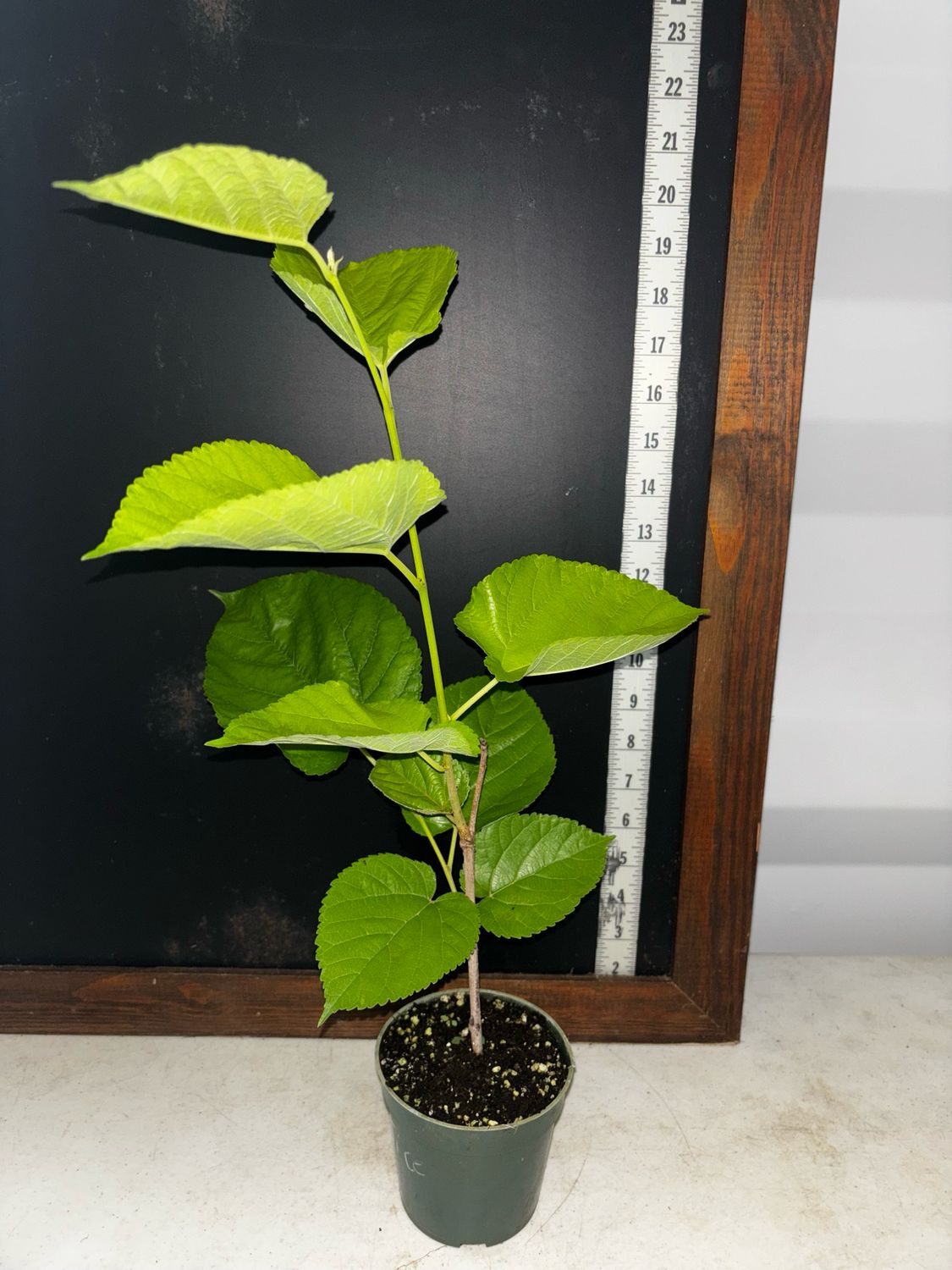
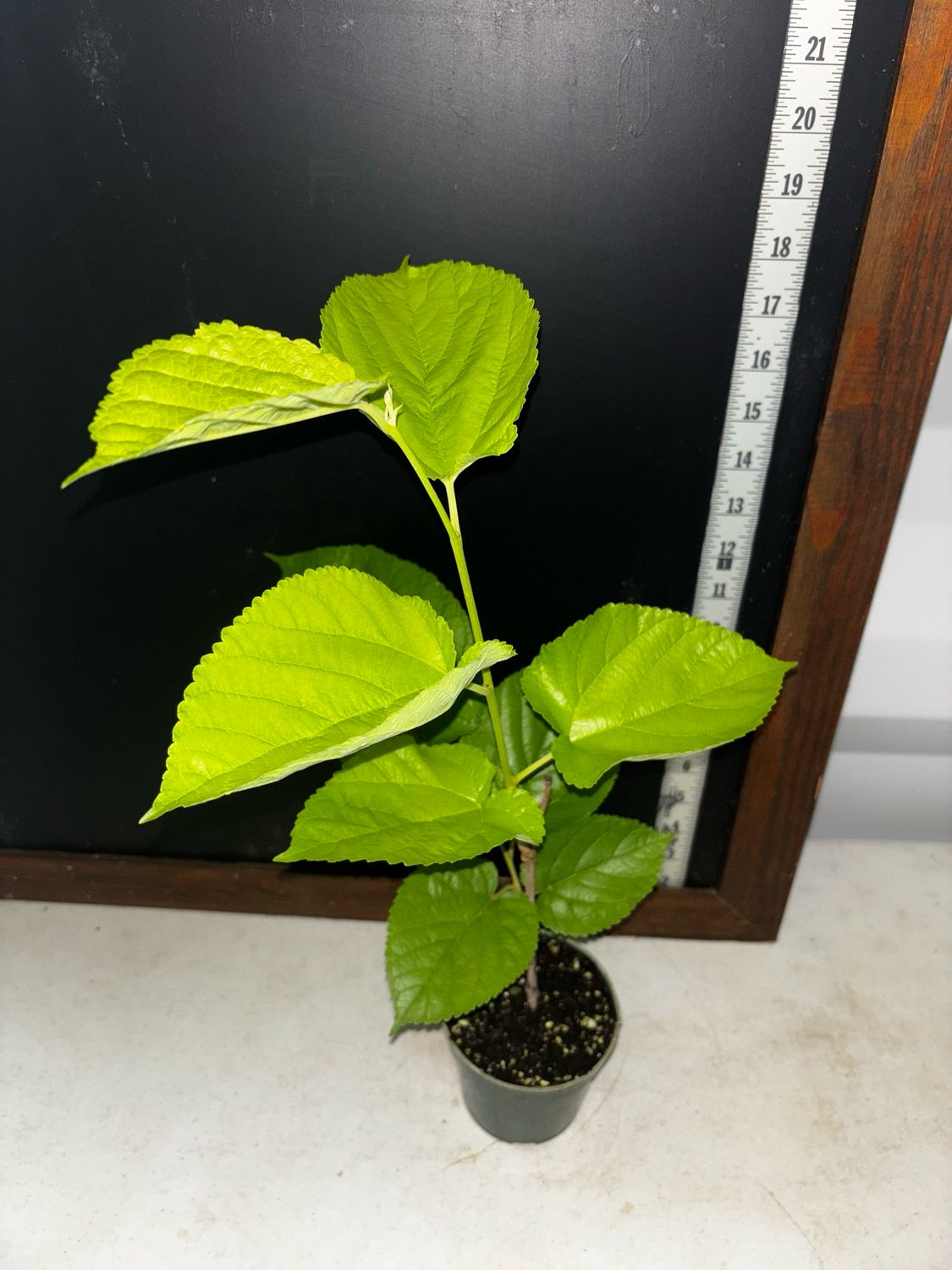
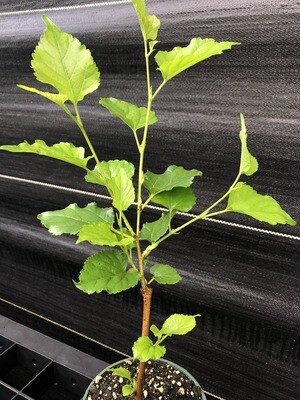
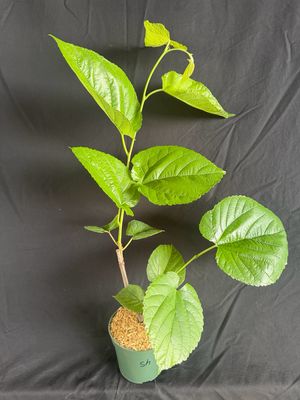
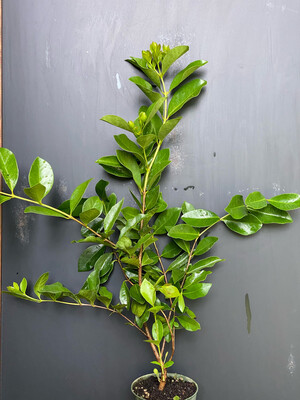
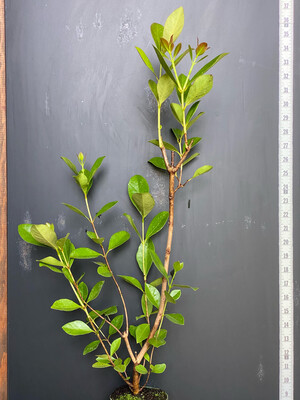
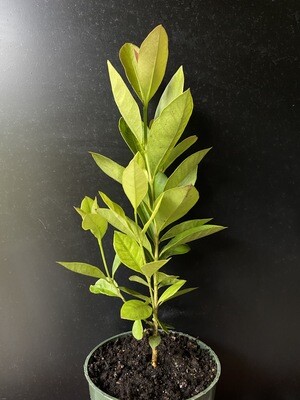
| Sale Size | Ships in a 4-inch nursery container |
| Estimated Age | Approximately 3–6 months; age and height vary with propagation date and season |
| Mature Height | Commonly 20–30+ ft when allowed to grow naturally |
| Managed Height | Approximately 8–12 ft with frequent training; 12–18 ft generally provides a better balance between productivity and control |
| Mature Width | Approximately 20–30 ft with a broad, spreading canopy |
| USDA Zones | Generally Zones 7–10 |
| Best Performance | Zones 8–10, including Florida, the Gulf Coast, coastal Southeast, and warmer parts of Texas |
| Sun Requirements | Full sun; at least 6–8 hours of direct sunlight |
| Cold Hardiness | Approximately 10–15°F once mature and fully dormant; cultivar-specific limits are not formally documented |
| Young Plant Protection | Protect a 4-inch starter plant from hard freezes and prolonged temperatures below approximately 28°F |
| Growth Rate | Very fast under warm, well-watered conditions |
| Growth Habit | Vigorous, spreading tree with a dense, coarse-textured canopy |
| Pollination | Typically fruits as a single tree; another mulberry cultivar is not normally required |
| Typical Fruiting Age | Often within 1–3 years from a young cloned plant, depending on care and growing conditions |
| Soil Preference | Adaptable, but best in well-draining sandy, loamy, or compost-enriched native soil |
| Water Needs | Regular moisture while young; increasingly drought tolerant after establishment |
| Spacing | 15–25 ft for a natural canopy; approximately 10–15 ft with consistent size management |
| Wind Tolerance | Good after establishment; protect or lightly stake young plants in exposed sites |
| Salt Tolerance | Limited to moderate; suitable for protected inland coastal landscapes but not direct salt spray |
| Container Growing | Possible with regular pruning and progressive upsizing, but Tice performs best when eventually given substantial root and canopy space |
| Indoor Growing | Not recommended as a permanent indoor plant |
🌳 The Old Florida Story Behind Tice Mulberry
Tice Mulberry is more than a productive fruit tree—it is a piece of Florida horticultural history.
The cultivar is associated with Tice, Florida, an established community immediately east of Fort Myers in Lee County. Historical plant records describe it as an old, delicious Florida selection originating from the Fort Myers area.
Exactly who selected the original tree is uncertain. Its complete lineage has also never been formally documented through cultivar registration or genetic testing. It is frequently described as a possible red and white mulberry hybrid, but the safest botanical designation remains:
Morus spp. ‘Tice’ or Morus hybr. ‘Tice’
That imperfect paper trail is part of the cultivar’s heirloom character. Like many old Florida fruit trees, it moved from property to property through cuttings, backyard nurseries, farms, and grower networks long before online catalogs and DNA verification became standard.
Over time, growers kept propagating it because the tree consistently demonstrated the traits that matter most:
- Rapid growth
- Large, dramatic leaves
- Strong performance in sandy Florida soils
- Good sweet-and-tart fruit
- Broad summer shade
- Reliable recovery following dormancy and pruning
- Notable vigor in areas where root-knot nematodes challenge other plants
The name survived because the tree did.
🍇 Fruit Characteristics: Classic Mulberry Flavor With a Florida Accent
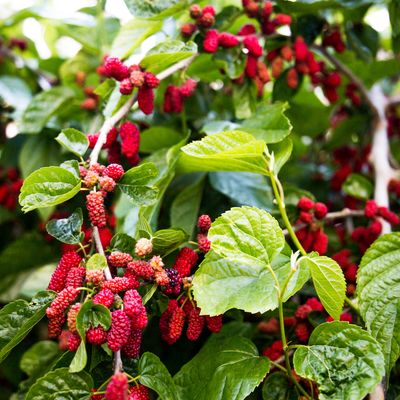
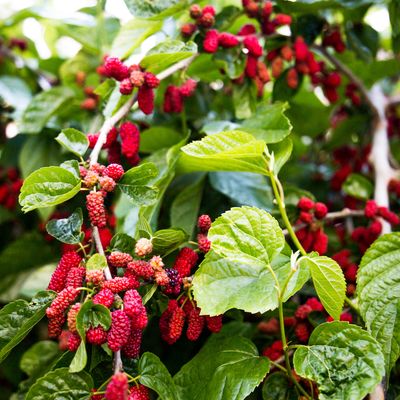
Tice produces dark berries with the familiar appearance of an elongated blackberry—but growing overhead on a tree rather than along a thorny cane.
| Fruit Trait | Tice Mulberry Description |
|---|---|
| Typical Size | Medium to large, commonly around 1–1½ inches; size varies with moisture, crop load, and tree maturity |
| Ripening Color | Green to red, then deep purple or nearly black |
| Flavor | Rich, sweet, and distinctly mulberry-forward with a bright acidic finish |
| Texture | Very soft, tender, and juicy |
| Skin | Thin and delicate |
| Seeds | Tiny, edible, and generally unobtrusive |
| Aroma | Mild woodland-berry aroma when fully ripe |
| Best Eating Stage | Deep purple-black, soft, and easily released from the stem |
| Storage Quality | Highly perishable; refrigerate immediately and use or freeze quickly |
The flavor lands somewhere between:
- A ripe blackberry
- Dark berry preserves
- A touch of raspberry-like acidity
- Sweet woodland fruit eaten directly from the tree
This is not a firm commercial berry bred for cross-country supermarket transport. Ripe mulberries are soft and fragile, which is precisely why growing your own makes such a difference.
Tree-ripened Tice Mulberries deliver a flavor and texture that rarely survive commercial handling.
🧺 Harvest Season by Region
Mulberry timing changes with winter temperatures, spring warmth, pruning, and local rainfall.
| Growing Region | Typical Main Harvest |
|---|---|
| South Florida | Often late February through April |
| Central Florida and Zone 9 | Commonly March through May |
| North Florida and Gulf Coast Zone 8 | Usually April through May or early June |
| Cooler Zone 7 Locations | Late spring into early summer |
| Container-Grown Trees | Timing may shift with root space, pruning, and winter protection |
Fruit develops quickly once the tree breaks dormancy and flowers. During peak ripening, inspect the tree daily or every other day because fully ripe berries soften and fall quickly.
Will Tice Produce More Than One Crop?
A second fruiting flush may occur following a warm-season growth cycle or carefully timed postharvest pruning. However:
- Secondary crops are not guaranteed.
- Climate and growing-season length strongly influence repeat production.
- Tice does not necessarily carry as many berries at each node as compact everbearing cultivars.
- It generally produces best when allowed to form a reasonably substantial canopy.
Some growers call postharvest cutting for a new fruiting flush stress pruning. A safer strategy is to shorten young shoots and small branches rather than repeatedly cutting into large structural limbs.
🌿 A Tree Built for More Than Fruit
Tice earns its space through several layers of usefulness.
1. A Fast-Growing Edible Shade Tree
The broad leaves and vigorous canopy can begin cooling a sunny garden surprisingly quickly.
Use it to create:
- Summer shade near a food forest
- A living canopy over shade-tolerant crops
- A productive visual screen
- A children’s berry-picking tree
- A habitat and feeding station for wildlife
- A chop-and-drop biomass source from small prunings
2. A Productive Food-Forest Anchor
Tice works best as a canopy or upper sub-canopy tree where its growth can be directed without crowding structures.
Its annual leaf drop contributes organic matter, while pruned twigs and leafy shoots may be cut into smaller pieces and returned beneath the canopy as mulch.
3. Bold Ornamental Foliage
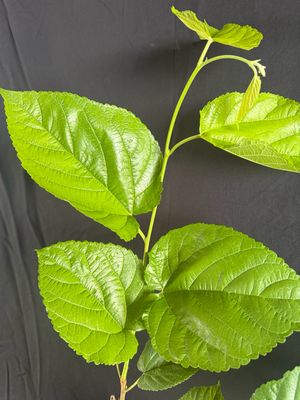
The leaves are one of this cultivar’s most recognizable features. They are often large, drooping, broadly heart-shaped, toothed, and occasionally lobed—especially on vigorous new shoots.
The effect is lush and almost tropical during the growing season.
Tice can provide dramatic texture behind smaller fruiting shrubs, flowering plants, and clumping grasses. Because it becomes bare during dormancy, pair it with evergreen understory plants when year-round screening is important.
4. Wildlife Support
Ripe mulberries attract:
- Songbirds
- Squirrels
- Raccoons
- Opossums
- Other fruit-eating wildlife
This can be an advantage in habitat gardens, but growers seeking a maximum personal harvest should pick frequently and consider temporary bird deterrents.
5. Valuable Rootstock Potential
Experienced Florida growers have reported notable vigor and apparent root-knot nematode tolerance in Tice and closely related Florida selections. For this reason, it is sometimes used as rootstock for grafting other mulberry cultivars.
This observed resistance is promising, but it should be viewed as grower experience rather than a formally guaranteed pest-resistance rating.
🍽️ Culinary Uses: Why Grow Mulberries at Home?
Mulberries are among the most versatile fruits in an edible landscape.
Eat Them Fresh
The easiest—and arguably best—method is to eat fully ripe fruit directly from the tree.
A dark berry should release easily with very little resistance. Red fruit may look tempting but usually has more acidity and less developed sweetness.
Freeze the Harvest
Place clean, dry berries in a single layer on a tray. Freeze until firm, then transfer them into a freezer-safe container.
Frozen mulberries work beautifully in:
- Smoothies
- Sauces
- Baked goods
- Homemade sorbet
- Yogurt
- Oatmeal
- Fermented beverages
Bake With Them
Use mulberries much like blackberries or raspberries in:
- Cobblers
- Muffins
- Quick breads
- Pies
- Galettes
- Pancakes
- Cakes
- Fruit crumbles
Because the fruit is very juicy, a little cornstarch, tapioca starch, or flour may be needed to thicken pie and cobbler fillings.
Preserve Them
Common preservation methods include:
- Mulberry jam
- Jelly
- Syrup
- Fruit leather
- Chutney
- Compote
- Dehydrated berries
Make Beverages
Mulberries can be processed into:
- Juice
- Shrubs
- Smoothies
- Wine
- Mead
- Kombucha flavoring
- Lemonade
- Sparkling fruit drinks
Use Them in Savory Recipes
The sweet acidity pairs well with:
- Goat cheese
- Soft cheeses
- Balsamic vinegar
- Fresh herbs
- Roasted meats
- Grilled vegetables
- Salad greens
- Hot peppers
A mulberry-balsamic reduction can be used anywhere a chef might normally reach for blackberry sauce.
🫙 Most Popular Use: Small-Batch Mulberry Jam
Mulberry jam is one of the most practical ways to capture a large spring harvest.
Basic Method
- Combine fully ripe mulberries with sugar and fresh lemon juice.
- Gently crush the fruit while heating.
- Simmer until the mixture reaches the preferred consistency.
- Refrigerate as a fresh jam or follow a tested canning recipe for shelf-stable storage.
Mulberries are naturally soft and juicy, but their pectin levels can vary. Lemon juice and commercial fruit pectin may help create a firmer set.
For food safety, always use a tested preservation recipe when water-bath canning.
🌎 Historical and Cultural Uses of Mulberry
Mulberries have supported people and wildlife across several continents.
UF/IFAS records that Indigenous communities in North America dried, stored, cooked, and processed native mulberry fruit. Some groups also used parts of native mulberry trees for dyes, tools, and traditional applications.
White mulberry was introduced from Asia into the United States during attempts to establish a domestic silk industry. Its leaves served as food for silkworms, and the trees later naturalized widely even after commercial silk ventures declined.
Tice is a much newer Florida selection, but it belongs to this larger story of a plant valued for:
- Fruit
- Shade
- Wildlife forage
- Leaves
- Wood
- Fiber-related agriculture
- Traditional food preparation
Historical uses should not be interpreted as medical recommendations.
🍇 Nutritional Profile
Fresh mulberries contribute:
- Vitamin C
- Dietary fiber
- Iron
- Potassium
- Natural fruit carbohydrates
- Polyphenols
- Anthocyanin pigments in dark-colored fruit
Anthocyanins are the red, purple, and blue plant pigments found in many dark berries. Research has documented several anthocyanin compounds in mulberry fruit, although concentrations differ substantially among species, cultivars, growing conditions, and ripeness.
Mulberries can be part of a varied whole-food diet, but the fruit should not be marketed as a treatment or cure for disease.
🌸 GreenDreams Mulberry Comparison Guide
| Cultivar | Fruit Size, Flavor & Texture | Tree Size & Growth Habit | Cold & Climate Notes | Best For |
|---|---|---|---|---|
| Thai Dwarf | Small to medium; sweet, soft, very juicy, with mild berry acidity | Compact, bushy, and highly responsive to pruning; often maintained around 4–8 ft | Best in Zones 8–10; protect young growth from freezes | Containers, patios, and small yards |
| Everbearing | Small to medium; sweet-tart, juicy, classic mulberry flavor | Bushy to medium-sized tree that responds well to pruning | Adaptable; exact hardiness varies by clone | Backyard orchards and extended harvests |
| Tice | Medium to large, commonly around 1–1½ inches; rich sweet-tart flavor with very soft, juicy flesh | Large, vigorous, and spreading with dramatic foliage; performs best with room to form a canopy | Excellent Florida performer; generally Zones 7–10, with best growth in Zones 8–10 | Food forests, shade, homesteads, and larger properties |
| Florida Giant / Estero Giant | Large to very large, frequently reported around 2 inches; bold sweet-tart flavor with juicy, delicate flesh | Vigorous, broad-canopied Florida tree with substantial leaves | Best suited to warm Southern climates, generally Zones 8–10 | Collectors, large yards, and oversized fruit |
| Shangri-La | Medium to large; sweet, rich, juicy fruit with classic dark-berry character | Fast-growing, broad-spreading tree with large foliage | Best in warm temperate to subtropical climates; protect young growth from severe freezes | Food forests, wildlife gardens, and large productive landscapes |
A Note About Florida Mulberry Names
Tice, Estero Giant, Crohn, Florida Giant, and other old Florida mulberry names are sometimes confused or treated as overlapping selections in the nursery trade.
Because these plants circulated through informal propagation networks and are not always supported by verified historical records or DNA testing, growers may encounter trees with very similar characteristics under different names.
GreenDreams maintains cultivar labels according to the propagation source and known nursery history of each plant.
SEASONAL CARE, PLANTING, WATERING, CONTAINERS & PRODUCTION
🍂 Tice Mulberry Is Deciduous: What That Means for Your Garden
Tice Mulberry naturally loses its leaves and enters a resting period each year.
A bare mulberry is not necessarily dead, diseased, or failing. Dormancy allows the tree to conserve energy before producing a powerful spring flush of foliage, flowers, and fruit.
Because Florida winters fluctuate, the tree may not follow the exact same calendar every year. A cool winter may produce a longer, more complete dormancy. An unusually warm winter may cause the tree to retain leaves longer or begin growing early.
🌿 Seasonal Care Guide for Central Florida and Similar Zone 9 Climates
| Season | What the Tree Is Doing | What the Grower Should Do |
|---|---|---|
| Winter: December–February | Leaves may become yellow, spotted, and tired-looking before dropping. Branches may remain completely bare for several weeks. | Reduce irrigation, stop routine fertilization, renew mulch, and protect young plants during freezes. Do not assume a leafless tree is dead. |
| Late Winter–Early Spring: February–March | Buds swell, new leaves emerge, and flowers appear rapidly. Fruit may begin forming soon after the first flush. | Resume regular watering as growth begins. Avoid heavy pruning after flowers and fruit appear. |
| Spring Harvest: March–May | Berries ripen quickly while new shoots extend. | Maintain even moisture, harvest frequently, and avoid high-nitrogen fertilizer. |
| Postharvest: May–June | The tree shifts into vigorous vegetative growth. | Perform light-to-moderate size-control pruning on young wood. Remove crossing, damaged, or poorly positioned branches. |
| Summer: June–September | Rapid canopy growth continues during heat and rain. | Monitor drainage, leaf spots, mites, scale, and storm damage. Use only light tip pruning if another growth flush is desired. |
| Fall: October–November | Growth begins slowing as days shorten and temperatures fall. | Stop heavy pruning and strong fertilization. Prepare freeze protection for young plants and allow the tree to enter dormancy naturally. |
Normal Dormancy Signs
- Yellowing leaves
- Brown or dark leaf spots before leaf drop
- Gradual thinning of the canopy
- Bare stems
- Buds that remain firm but inactive
- A pause in water use
Signs That Require Investigation
- Soft, blackened stems
- Bark separating from the trunk
- A sour smell near the root ball
- Permanently waterlogged soil
- Brittle branches with no green tissue beneath the bark well after spring warmth returns
🌱 Allow Your Tice Mulberry to Recover After Shipping
A 4-inch plant has a smaller soil volume and less stored moisture than a larger nursery tree. It may arrive with:
- Wilted foliage
- A few yellow leaves
- Minor leaf drop
- Bent but flexible shoots
- A dry upper soil surface
- Little or no foliage during dormancy
These conditions do not automatically indicate permanent damage.
First 30 Days After Arrival
- Remove the plant from its shipping box immediately.
- Check soil moisture at root level.
- Water thoroughly at the soil line when the root ball feels dry.
- Place it in bright shade or gentle morning sun for the first several days.
- Gradually increase sun exposure.
- Avoid fertilizer during the initial recovery period.
- Keep the plant in its original container for approximately 30 days—or until healthy new growth appears.
Do not immediately move a stressed 4-inch mulberry into a dramatically larger pot. Transplanting during active shipping stress can add another layer of root disturbance.
The best time to transplant is when:
- New growth confirms recovery
- Roots are beginning to fill the existing container
- The root ball holds together when handled
- Soil begins drying more quickly than normal
🌞 Where to Plant Tice Mulberry
Choose a location with:
- At least 6–8 hours of direct sunlight
- Well-draining soil
- Good airflow
- Room for a broad canopy
- Access to irrigation during establishment
- Distance from stain-sensitive hardscaping
Best Locations
- Large backyard orchards
- Food forests
- Homesteads
- Farm edges
- Wildlife gardens
- Open lawn converted into edible canopy
- West-facing areas where summer shade is useful
- Behind evergreen shrubs or understory plantings
Avoid Planting Tice Mulberry
- Directly beside a driveway
- Over a patio, pool deck, or outdoor furniture
- Above parked vehicles
- Immediately beside a house foundation
- Near septic drain fields or wells
- Under utility lines
- In narrow side yards
- Where falling fruit could create a slip hazard
- In areas exposed to direct oceanfront salt spray
UF/IFAS recommends allowing substantial separation between large mulberries and foundations, wells, or drainage fields. Tice is vigorous enough that planning for its mature root zone and canopy is far easier than trying to relocate or severely reduce it later.
🌳 How to Plant Tice Mulberry Using the GreenDreams High & Tight Method
Step 1 — Prepare the Site
Remove grass and aggressive weeds from a generous circle around the planting location.
Do not plant directly into dense turf and expect the young tree to compete successfully for water and nutrients.
Step 2 — Dig a Proper Planting Hole
Dig the hole:
- Only slightly wider than the container
- No deeper than the existing root ball
- Wide enough to position the roots without forcing them
- Shallow enough that the upper root ball remains slightly above surrounding grade
A deep, bowl-shaped hole can collect water and cause the plant to settle below grade.
Step 3 — Remove the Container Carefully
Support the root ball rather than pulling the tree by its stem.
If roots are lightly circling, gently loosen the outermost roots. Do not aggressively break apart a small or newly rooted starter plant.
Step 4 — Plant High & Tight
Position the Tice Mulberry so the top of the root ball sits slightly above the surrounding soil.
Backfill primarily with native soil and gently firm it around the root ball to eliminate large air pockets.
Avoid:
- Burying the stem
- Covering the original soil line
- Creating a deep compost pocket beneath the tree
- Leaving loose soil that allows the tree to sink after watering
Step 5 — Build Soil From the Surface
Top-dress the surrounding area with modest amounts of:
- Finished compost
- Charged biochar
- Worm castings
- Trace minerals such as azomite
- An organic nutrient blend appropriate for fruit trees
Concentrated fertilizer should not touch the trunk or young roots.
Step 6 — Mulch
Apply approximately 2–3 inches of hardwood mulch around the planting area.
Keep mulch several inches away from the trunk and root flare. Mulch piled against the trunk traps moisture and encourages decay.
Step 7 — Water Deeply
Water the entire root ball and the surrounding backfilled soil immediately after planting.
GreenDreams Planting Guide
Watch the GreenDreams High & Tight fruit-tree planting method
💧 Tice Mulberry Watering Guide
Mulberries become drought tolerant after establishment, but young plants grow and establish far more successfully with consistent moisture.
The goal is moist, aerated soil—not permanently wet soil.
Important Watering Rule
Water only at soil level.
Morning watering allows the root zone to absorb moisture before peak heat.
Avoid routine overhead watering, especially in the afternoon. Wet foliage combined with heat, humidity, and soil splash can increase leaf spotting, sun damage, and disease pressure.
Drip irrigation, low bubblers, or a slow hose placed at the soil line are preferred over overhead sprinklers.
Watering a 4-Inch Container
Check the plant every day during warm or windy weather.
Water when:
- The upper soil begins to feel dry
- The container feels noticeably lighter
- Leaves begin losing firmness
- Water use increases during a new growth flush
Apply enough water to fully moisten the root ball and allow a small amount to drain from the bottom.
Never allow the container to sit continuously in a tray of water.
Suggested In-Ground Establishment Schedule
Adjust for rainfall, soil type, season, and drainage.
Weeks 1–2
- Check daily.
- Water at soil level when the root ball begins drying.
- In hot, dry weather, daily watering may be necessary.
- Skip watering when rainfall has already saturated the soil.
Weeks 3–8
- Water deeply approximately 2–3 times per week.
- Increase frequency during extreme heat or prolonged drought.
- Reduce frequency in cool or rainy weather.
Months 3–12
- Water approximately once or twice weekly during dry periods.
- Continue monitoring the original root ball because it can dry faster than surrounding soil.
Established Trees
Established mulberries generally need supplemental water only during:
- Prolonged drought
- Extreme heat
- Heavy fruit development
- Recovery after substantial pruning
- Extended periods without measurable rainfall
Even moisture during flowering and fruit swell can help improve berry size and reduce stress.
🌾 Feeding and Soil Care
Tice Mulberry is vigorous and should not be pushed with excessive nitrogen.
Too much fertilizer can produce:
- Long, weak shoots
- Dense foliage
- Reduced fruiting
- Greater pest pressure
- More pruning work
- Tender growth vulnerable to cold
UF/IFAS notes that established mulberries often grow well without routine fertilization.
For a Young Starter Plant
Wait until the plant has recovered and produced active new growth before feeding.
Use modest amounts of:
- Finished compost
- Worm castings
- Diluted fish hydrolysate
- Kelp-based products
- A slow-release organic fruit-tree fertilizer
- Charged biochar incorporated into surface soil
- Trace minerals when indicated by soil conditions
Suggested Timing in Florida
| Season | Feeding Approach |
|---|---|
| Late Winter Dormancy | Do not push new growth with strong fertilizer |
| Spring Budbreak | Light organic feeding may be applied if the plant is actively growing |
| After Main Harvest | Compost or a modest balanced feeding may support postharvest recovery |
| Mid-Summer | Feed only if growth or leaf color indicates a need |
| Late Summer–Fall | Avoid heavy nitrogen that may create tender growth before winter |
A soil test is the best way to identify actual nutrient deficiencies.
Mulberry leaves naturally become yellow and spotted before winter dormancy; seasonal leaf decline is not automatically a fertilizer deficiency.
✂️ Pruning Tice Mulberry Without Sacrificing Tree Health
Tice grows rapidly, but aggressive growth does not mean every branch should be cut aggressively.
Mulberry pruning should have four goals:
- Build a strong branch framework
- Keep fruit within reach
- Improve light and airflow
- Prevent the tree from outgrowing its allotted space
Young Tree Training
During the first several years:
- Select a strong central or modified-central framework.
- Remove branches with narrow, weak attachment angles.
- Shorten overly long shoots to encourage branching.
- Remove crossing or inward-growing branches.
- Keep several well-spaced scaffold limbs.
- Avoid stripping the trunk of all low growth too early.
Small annual adjustments are better than correcting a neglected 25-foot canopy with one severe pruning event.
Postharvest Size Control
After the primary spring harvest:
- Shorten long young shoots.
- Cut back to an outward-facing branch or bud.
- Remove damaged and crossing growth.
- Thin crowded sections without stripping the canopy.
- Keep cuts on smaller-diameter wood whenever possible.
This can stimulate fresh growth and may support another fruiting flush in long, warm climates.
Mature Tree Pruning
Once Tice has developed large structural limbs:
- Remove major limbs only when necessary.
- Make cuts at the branch collar.
- Never leave long stubs.
- Avoid flush cuts against the trunk.
- Use clean, sharp tools.
- Sanitize tools between diseased trees.
- Hire a qualified arborist for large canopy work.
Large mulberry wounds can be slow to close, increasing the risk of decay.
Freeze-Damaged Trees
Do not rush to remove every discolored branch immediately after a freeze.
Wait until spring growth reveals the extent of living wood. Then prune back to healthy green tissue.
How Small Can Tice Be Kept?
A committed grower can maintain Tice around 8–12 ft, but this requires regular pruning.
For a better balance between fruit production, canopy health, and maintenance, many landscapes should allow approximately 12–18 ft.
Tice is not naturally a compact patio cultivar. Growers wanting the highest fruit density in a very small footprint may be happier with Thai Dwarf or another naturally compact mulberry.
🪴 Container Growing
Tice can grow in a container, but it is a vigorous tree—not a naturally miniature plant.
Container culture is most appropriate for:
- Raising a starter before planting
- Growers who need winter mobility
- Temporary patio growing
- Bonsai-style training
- Gardeners willing to prune roots and canopy regularly
Container Progression
| Growth Stage | Suggested Container |
|---|---|
| Starter Plant | 4-inch nursery container |
| First Upsize | 1 gallon |
| Developing Tree | 3 gallon |
| Young Patio Tree | 7 gallon |
| Larger Productive Tree | 15–25+ gallon |
Recommended Progression
4 inch → 1 gallon → 3 gallon → 7 gallon → 15 gallon or larger
Do not move a 4-inch plant directly into an oversized container unless irrigation and soil aeration can be managed carefully. Excess unused soil remains wet longer and may reduce oxygen around the young root system.
Signs It Is Time to Up-Pot
- Roots circling the container
- Roots emerging from drainage holes
- Soil drying unusually fast
- The root ball lifting from the pot
- Slowed growth despite adequate light and nutrition
- The plant becoming top-heavy
How to Transplant Into a Larger Container
- Select a container approximately two or three times the current soil volume.
- Confirm that it has generous drainage holes.
- Add a shallow layer of potting mix.
- Remove the plant while supporting the root ball.
- Loosen only the most congested exterior roots.
- Position the original soil line at the same level or slightly high.
- Backfill without burying the stem.
- Water thoroughly at soil level.
- Protect from intense afternoon sun for several days if roots were disturbed.
- Resume full sun gradually.
Potting Mix for Tice Mulberry
Use a mix that holds moisture without becoming heavy or stagnant.
Suggested Blend
- 40–50% high-quality bark-based potting mix
- 20–25% pine bark fines
- 15–20% finished compost or worm-casting blend
- 10–15% perlite or pumice
- Optional small amount of charged biochar
Avoid using unamended native garden soil in a container. It can compact, drain poorly, and reduce root oxygen.
Containers and soil ingredients may be found through:
- Independent garden centers
- Local nurseries
- Farm and feed stores
- Landscape supply companies
- Hydroponic or greenhouse suppliers
- Online searches for nursery pots, tree containers, bark fines, or professional potting media
Long-Term Container Expectations
A mature container-grown Tice will eventually require:
- A very large pot
- Annual canopy pruning
- Periodic root pruning
- More frequent watering
- Regular organic-matter renewal
- Protection from the container tipping in storms
Fruit production may be lighter when the tree is maintained as a very small specimen.
🏠 Can Tice Mulberry Grow Indoors?
Not successfully as a permanent houseplant.
Tice requires:
- Strong direct sunlight
- Seasonal temperature changes
- Outdoor air movement
- Significant root space
- A natural dormancy cycle
- Room for rapid woody growth
A container may be moved temporarily into a protected structure during severe cold, but the tree should return outdoors as soon as conditions allow.
A bright garage, greenhouse, or enclosed porch may provide temporary freeze shelter. A typical indoor window is not enough for long-term health or fruit production.
🌿 Tice Mulberry Food-Forest Guild
Keep companion plants outside the immediate trunk flare and avoid dense root competition directly beside a young tree.
Nitrogen-Fixing Support Plants
- Pigeon pea
- Sunn hemp
- Perennial peanut in suitable sunny areas
- Native or non-invasive legumes appropriate to the region
Biomass and Chop-and-Drop Plants
- Mexican sunflower
- Fakahatchee grass
- Other clumping grasses
- Lemongrass
- Fast-growing herbaceous biomass plants
Pollinator and Beneficial-Insect Plants
Mulberries are primarily wind-pollinated, so bee-attracting flowers do not directly replace mulberry pollination. They still strengthen the surrounding ecosystem by supporting predators and parasitoids that help manage pests.
Consider:
- African blue basil
- Native wildflowers
- Salvia
- Coreopsis
- Flowering herbs
- Native asters
Attractive Understory Pairings
Use sun-tolerant plants beyond the young tree’s root zone. As the canopy expands, transition toward plants that tolerate partial shade.
Possible companions include:
- Turmeric
- Edible ginger
- Cranberry hibiscus
- Chaya
- Katuk in protected warm locations
- Longevity spinach
- Okinawan spinach
- Shade-tolerant native species
Guild Management Tip
Tice grows quickly and may eventually shade plants that initially received full sun. Design the guild as a changing ecosystem rather than a fixed planting bed.
🍇 Best Practices for Bigger, Better Harvests
- Give the tree full sun.
- Allow enough canopy space for Tice’s natural vigor.
- Maintain even moisture during flowering and fruit development.
- Avoid excessive nitrogen.
- Make small, regular pruning cuts rather than infrequent major cuts.
- Harvest ripe fruit daily during peak season.
- Mulch the root zone while keeping mulch away from the trunk.
- Remove aggressive grass competition.
- Protect young spring growth from late freezes.
- Allow the tree adequate time to establish before expecting a heavy crop.
- Keep propagation and cultivar records accurate.
- Plant away from stain-sensitive surfaces.
Easy Harvest Technique
Spread a clean tarp or sheet beneath the canopy and gently shake individual branches.
Fully ripe berries will release easily. Sort immediately and refrigerate, freeze, or process the fruit as soon as possible.
CAUTIONS, TROUBLESHOOTING, FAQ & SHIPPING
⚠️ Important Tice Mulberry Cautions
Plant Ripe Fruit Away From Hardscaping
Dark mulberries can stain:
- Concrete
- Pavers
- Vehicles
- Outdoor furniture
- Pool decks
- Clothing
- Shoes
Plant the tree where fallen fruit can land on mulch, soil, lawn, or a harvest tarp.
Milky Sap May Irritate Skin
Mulberry stems and leaves contain a milky sap that may irritate sensitive skin.
Wear gloves and eye protection while pruning, particularly when making numerous cuts.
Do Not Eat Unripe Fruit
Fully ripe mulberries are edible. Unripe fruit and milky sap may cause stomach upset or other unpleasant reactions.
Harvest berries only after they have reached the cultivar’s fully ripe dark color and softened.
Wildlife Will Find the Tree
Birds and mammals may consume a meaningful portion of the crop.
Harvest frequently and avoid planting a heavily fruiting tree where wildlife activity could become a conflict.
Watch the Mature Root Zone
Large mulberries should not be planted immediately beside:
- Foundations
- Drain fields
- Wells
- Retaining walls
- Underground utilities
- Narrow planting strips
Remove Unwanted Seedlings
Birds may distribute seeds from mulberry fruit.
Because the exact ancestry of Tice is uncertain and white-mulberry genetics occur widely in cultivated mulberries, remove unwanted volunteer seedlings rather than allowing them to naturalize near sensitive native plant communities.
Tice Is Not Naturally Dwarf
It can be controlled with pruning, but it wants to become a substantial shade tree.
A naturally compact cultivar is a better choice for growers who cannot commit to regular pruning or provide adequate canopy space.
🔍 Tice Mulberry Troubleshooting Guide
Icons represent common issues and organic solutions—look for 🌿 for recovery tips.
| ⚠️ Issue | 🧠 Likely Cause | 🌿 Organic Response |
|---|---|---|
| 🍂 Leaves yellowing and dropping in winter | Normal deciduous dormancy | Allow the tree to rest. Reduce watering and wait for spring budbreak. |
| 🍃 Brown or black leaf spots before winter | Seasonal leaf aging or humid-weather leaf spot | Keep foliage dry, improve airflow, remove heavily affected fallen leaves, and avoid unnecessary treatment during normal dormancy. |
| 🍃 Sudden leaf drop after delivery | Shipping, darkness, temperature change, or dry root ball | Move to bright shade, check soil moisture, water at soil level, and allow recovery before transplanting. |
| 🫣 Curled or limp foliage | Heat, wind, drought, root stress, or rapid sun exposure | Check the root ball, water thoroughly when dry, and acclimate gradually to full sun. |
| ☀️ Pale or scorched leaves | A tender plant was moved into intense sun too quickly | Provide temporary afternoon protection and increase direct sun over several days. |
| 💦 Permanently wet soil and weak growth | Overwatering, poor drainage, oversized container, or deep planting | Reduce irrigation, improve drainage, and confirm that the stem and root flare are above grade. |
| 🌊 Root rot symptoms | Standing water or oxygen-starved roots | Correct drainage immediately. Repot into aerated media if container-grown and remove only clearly rotted roots. |
| 🐛 Chewed leaves | Caterpillars, beetles, grasshoppers, or other chewing insects | Inspect at night and beneath leaves. Handpick when practical or use Bt only when caterpillars are correctly identified. |
| 🪲 Sticky leaves or clustered insects | Scale, whiteflies, aphids, or mealybugs | Control ants, wash small infestations from foliage, and use horticultural soap or oil according to label directions during mild weather. |
| 🕷️ Fine stippling or webbing | Spider mites encouraged by heat and dry conditions | Rinse leaf undersides in the morning without saturating foliage late in the day; use labeled soap or oil if necessary. |
| 🍄 Repeated leaf disease | Poor airflow, overhead irrigation, dense growth, or infected debris | Water at soil level, sanitize tools, thin small crowded shoots, and remove diseased debris. |
| 🌱 Long shoots with few berries | Excess nitrogen, shade, youth, or over-pruning | Increase sunlight where possible, reduce high-nitrogen feeding, and allow productive branches to mature. |
| 🍇 Sparse fruit on a very small tree | Young canopy or Tice being maintained too tightly | Allow additional canopy development. Tice generally performs better with more space than compact everbearing cultivars. |
| 🍃 Fruit drops before ripening | Irregular moisture, heat, wind, immature tree, or weather stress | Maintain more even root-zone moisture and protect young trees from extreme exposure. |
| ❄️ Blackened tips after a freeze | Cold injury to tender growth | Wait for warm spring growth to reveal living wood, then prune back to healthy tissue. |
| 🌬️ Torn leaves or broken shoots | Wind exposure or storm damage | Remove ragged broken growth, protect a young plant, and develop a balanced branch structure. |
| 🌱 No spring growth | Late dormancy, cold soil, root damage, or dead wood | Wait for sustained warmth, perform a light scratch test, and inspect drainage before discarding the plant. |
Organic Treatment Reminder
Neem, horticultural oils, insecticidal soaps, Bt, and biological products must be:
- Matched to the correct pest
- Used according to the product label
- Applied during suitable temperatures
- Tested on a small section first
- Kept off open flowers when pollinators are active
🌟 Is Tice Mulberry Right for You?
✅ Ideal For
- Florida growers
- Gulf Coast gardeners
- Backyard orchard enthusiasts
- Food-forest designers
- Permaculture landscapes
- Homesteads
- Larger suburban or rural properties
- Families wanting a fast-growing berry tree
- Growers seeking edible shade
- Wildlife and habitat gardens
- Mulberry collectors
- Growers interested in vigorous rootstock
- Anyone who understands that deciduous trees look bare in winter
❌ May Not Be Ideal For
- Very small yards
- Apartment balconies
- Permanent indoor growing
- Narrow side yards
- Landscapes beneath utility lines
- Patios where staining is unacceptable
- Pool decks
- Growers who want a naturally miniature tree
- Growers unable to prune a vigorous canopy
- Locations with wet, poorly drained soil
- Direct oceanfront exposure
- Areas consistently colder than the recommended range without winter protection
- Customers wanting firm fruit with a long refrigerated shelf life
❓ Tice Mulberry FAQ
How large does a Tice Mulberry tree grow?
An unpruned Tice can develop into a broad tree approximately 20–30 ft tall and wide, with older trees potentially exceeding those dimensions under favorable conditions.
Regular training can maintain it closer to 8–12 ft, although allowing 12–18 ft generally provides a better balance between fruit production and maintenance.
Is Tice Mulberry a dwarf tree?
No. Tice is a vigorous, large-growing Florida mulberry.
It responds to pruning but is not genetically dwarf. Thai Dwarf or another compact mulberry may be more appropriate for a small patio or limited-space garden.
How quickly does Tice Mulberry grow?
Under warm conditions with full sun, moisture, and healthy roots, Tice may grow several feet during an active season.
Growth slows during drought, transplant recovery, container restriction, and winter dormancy.
How long before a 4-inch Tice Mulberry produces fruit?
Cloned mulberries can fruit young, sometimes within 1–3 years. A 4-inch starter should first be allowed to develop a healthy root system and branch framework.
Early flowers or fruit may appear sooner, but the first meaningful harvest usually follows establishment.
Does Tice Mulberry require another tree for pollination?
A properly propagated fruiting Tice clone generally produces fruit without another mulberry cultivar nearby.
Wind moves mulberry pollen, and a second cultivar is not normally required for a home harvest.
When does Tice Mulberry fruit in Florida?
The primary Central Florida harvest generally occurs from March through May.
South Florida may begin earlier, while North Florida and cooler regions may ripen later.
Can pruning create another mulberry crop?
Fresh growth following postharvest pruning may support an additional fruiting flush during a long warm season.
Results are influenced by cultivar, rainfall, temperature, plant health, and pruning timing. Avoid removing major structural limbs simply to force another crop.
Why did my tree lose all its leaves?
Tice is deciduous. Leaf drop in winter is normal.
A shipped tree may also lose leaves from darkness, temperature fluctuations, or moisture stress. Look for firm buds and green tissue beneath the bark while allowing time for recovery.
Can Tice Mulberry grow in a container?
Yes, especially while young, but it requires progressively larger containers and frequent pruning.
For long-term container production, plan on a 15–25-gallon container or larger. Fruit production may be reduced when the tree is kept extremely small.
Can Tice Mulberry grow indoors?
Not as a permanent houseplant. It needs outdoor sunlight, airflow, seasonal changes, and substantial root space.
It may be moved temporarily into a protected garage, greenhouse, or porch during severe freezes.
Are Tice and Estero Giant the same mulberry?
The names are sometimes treated as interchangeable or closely related by Florida growers, but the historical records and genetic verification needed to prove that they are identical are not available.
Old trees may also have been distributed under regional or family names. Purchase from a nursery that maintains propagation-source records and clear labels.
Are mulberries messy?
Ripe fruit can fall and stain hard surfaces. Plant the tree over soil, lawn, or mulch and away from driveways, patios, and parked vehicles.
Can I eat red or partly ripe mulberries?
Wait until the fruit reaches its mature dark color, becomes soft, and releases easily. Unripe fruit and milky sap may cause discomfort.
Do mulberry trees need fertilizer?
Established mulberries often grow well without routine fertilizer.
Young plants may benefit from modest organic nutrition after active growth begins, but excessive nitrogen can create excessive foliage and reduced fruiting.
Is Tice Mulberry cold hardy?
Established dormant trees are commonly grown through winter temperatures around 10–15°F, but exact cultivar limits are not formally documented.
A 4-inch starter is much more vulnerable than a mature tree and should be protected from hard freezes.
🚚 Shipping Information for a 4-Inch Tice Mulberry
This listing is for a young Tice Mulberry growing in a 4-inch nursery container.
A plant of this size has less soil volume and stored moisture than a 1-gallon or larger tree. It may dry more quickly and experience more noticeable transit stress during extended UPS Ground travel.
Best Shipping Region
The 4-inch size is best suited for shipping to:
- Florida
- The Southeastern United States
- Gulf Coast states
- Texas
Northern and Western Shipping Advisory
We can ship live plants throughout the continental United States; however, customers in northern and western states should consider:
- Longer UPS Ground transit times
- Rapid changes in temperature
- Extreme heat inside delivery vehicles
- Freezing conditions during winter
- Lower humidity
- Delayed unpacking
- Additional recovery time
- Increased moisture loss from a small container
The 4-inch size may not arrive in the same condition as a plant traveling within our regional shipping zone.
When available, we strongly recommend selecting a 1-gallon or larger plant for long-distance northern or western shipping.
California Orders
California packages may be held for agricultural inspection, which can add another day or more to transit.
This delay may increase stress during periods of extreme heat or cold.
Shipping Schedule
- Ships from Florida
- UPS Ground service only
- Live-plant shipments depart on Mondays
- Timing may be adjusted around holidays or severe weather
Extreme-Weather Disclaimer
Buyer discretion is required during peak summer heat and winter cold.
GreenDreams cannot guarantee the condition of live plants exposed to extreme temperatures, extended ground-service delays, or weather events after leaving our Florida nursery.
Risk associated with extended UPS Ground transport is assumed by the buyer.
Many stressed plants recover with:
- Immediate unpacking
- Soil-level watering
- Bright shade
- Gradual sun acclimation
- Protection from wind
- Patience while new growth develops
After Delivery
Keep the Tice Mulberry in its original container for approximately 30 days or until healthy new growth confirms recovery.
Do not fertilize or transplant immediately unless the plant has arrived fully acclimated through local pickup and the roots are clearly outgrowing the container.
Dormant plants may arrive partially or completely leafless. This is normal for a deciduous mulberry.
🌾 Shop With Us in Person
We have countless plants in larger sizes available at our retail nursery—including many fruit trees and useful species that are not listed online.
GreenDreams Nursery & Farm — Open to the Public
🌾 18709 US Hwy. 41, Spring Hill, FL 34610
🕘 Tuesday–Friday: 9AM–5PM
🌞 Saturday: 8AM–3PM
Shop our rotating collection of:
- Mulberry cultivars
- Tropical and subtropical fruit trees
- Native plants
- Medicinal species
- Perennial vegetables
- Pollinator plants
- Food-forest support species
- Organic soil amendments
🌿 Stop by our regenerative nursery to see what is blooming, fruiting, and ready to plant this week.
🌿 Beyond the Plant: GreenDreams Services
At GreenDreams, we do more than grow plants—we design, build, and restore ecosystems across Florida.
- 🌳 Onsite consultations and edible landscape design
- 🚜 Installation and project management
- 🚚 Bulk delivery of compost, mulch, biochar, and soil materials
- 🌾 Wholesale and large-scale regenerative solutions
Let our team help you create your own thriving edible paradise—starting with Tice Mulberry. 🌿
🌿 IMPORTANT INFORMATION BEFORE PURCHASING LIVE PLANTS
Please note: Plants purchased through our online store are not available for pickup at our retail nursery in Spring Hill, Florida.
Online inventory is housed at a separate facility and is priced, prepared, and handled exclusively for shipping.
🌱 Looking for larger plants or more selection?
Our retail nursery location offers far more availability, including larger sizes, specialty plants, and many selections not suitable for nationwide shipping.
Local pickup is available for retail nursery purchases only.
Visit our Spring Hill, FL retail nursery page to explore in-person shopping options.
🚚 LIVE PLANT SHIPPING & TRANSIT EXPECTATIONS
Live plants naturally experience stress during shipping. Temporary leaf drop, mild wilting, or cosmetic stress is normal after transit. Most plants recover quickly with proper watering, gradual light exposure, and basic aftercare. Some plants may require additional attention during the first few weeks.
Despite careful packing, minor cosmetic damage may occur during transit. Small issues such as broken leaves or stems typically resolve with time and proper care.
If your shipping box arrives with significant external damage, please contact UPS within 30 days to initiate a carrier claim.
⏱️ SHIPPING METHOD, TIMING & TRANSIT WINDOWS
All online orders ship via UPS Ground from our Central Florida nursery.
📦 Shipping Schedule: Orders ship once weekly on Mondays to reduce the risk of packages sitting in transit over weekends. A countdown clock on our website displays the next shipping date.
🚚 Typical Transit Times:
-
Florida: 1–2 days
-
Southern U.S.: approximately 2 days
-
Midwest, West & Northern U.S.: 3–5 business days
Long-distance shipments, particularly to the western U.S., may experience additional transit time due to agricultural inspections in states such as Arizona, California, and Texas.
Extended transit times can be more challenging for small or tender plants and may require additional recovery care after arrival.
🌡️ EXTREME WEATHER & SEASONAL RISK
Live plants are sensitive to temperature extremes.
We cannot guarantee plant condition during periods of extreme summer heat or winter cold and freezing temperatures. Weather-related delays, carrier interruptions, or exposure during delivery are beyond our control.
Customers are responsible for:
-
Monitoring tracking information sent via email
-
Retrieving packages promptly upon delivery
-
Preventing plants from being left outdoors in extreme conditions
During unsafe weather, holiday shipping volume, or extended transit risk, orders may be held and shipped the following week to protect plant health.
⚠️ CUSTOMER RESPONSIBILITY & REFUND POLICY
By purchasing live plants, customers acknowledge and accept the risks associated with shipping, weather exposure, transit delays, and regional suitability.
Refunds or replacements are considered only under exceptional circumstances and in accordance with our return and refund policy. We are not responsible for:
-
Weather-related damage
-
Carrier delays
-
Poor plant selection for a given climate or region
-
Improper care after delivery
Upon purchase, customers assume full responsibility for the ongoing care and success of their plants.
✅ CONSENT & AGREEMENT
By completing a purchase, you confirm that you have read, understand, and agree to all shipping policies, responsibilities, and conditions outlined above.
Our goal is transparency, plant health, and long-term growing success — and we appreciate your understanding and care when ordering live plants.


