


🌿 ‘White’ Mulberry (Morus alba) — Honey-Sweet, Pale Fruit with Far Less Mess
A Fast-Growing Fruit Tree with a Sweet Side
Imagine harvesting delicate, honey-sweet mulberries that are juicy enough to eat straight from the branch—without the deep purple stains commonly associated with traditional mulberries.
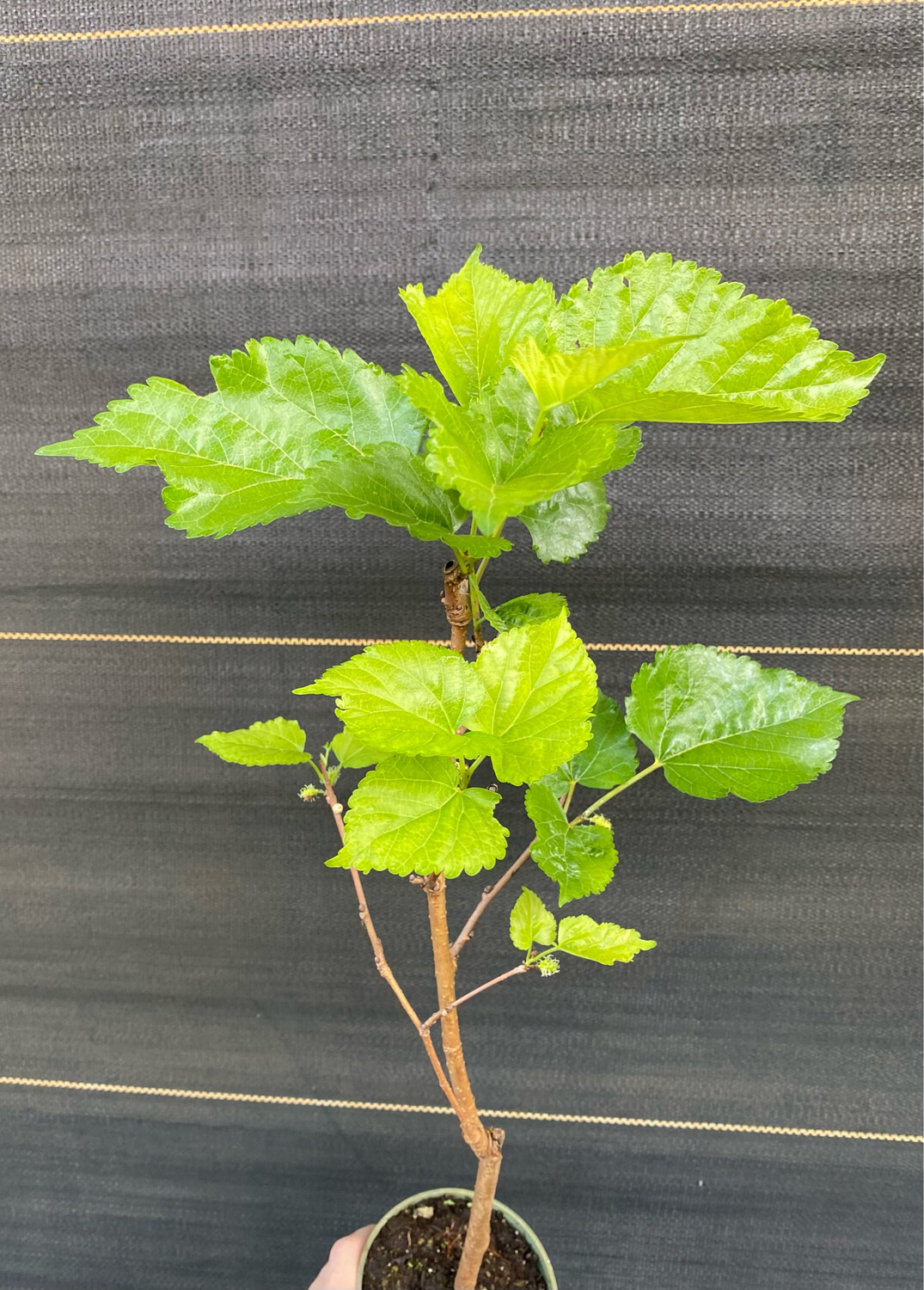
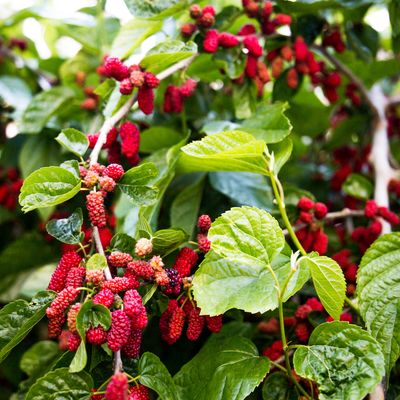
Our ‘White’ Mulberry is a pale-fruited selection of Morus alba valued for its natural sweetness, soft texture, rapid growth, and broad shade-producing canopy. The ripe fruit develops creamy white to pale blush coloring, making it far less likely to stain hands, patios, clothing, or garden pathways than darker mulberry cultivars.
The flavor lands somewhere between pear nectar, ripe honeydew melon, white peach, and mild berry sweetness. It is gentle rather than sharply acidic, making it an especially appealing fruit for children, fresh snacking, drying, baking, and naturally sweet preserves.
This is not just another berry tree—it is an edible shade canopy, wildlife resource, historic silk-producing species, and long-term food-producing asset rolled into one beautifully productive plant.
⠀
⠀
⠀
⠀
⠀
🌿 Quick Facts Guide
| Category | Details |
|---|---|
| Botanical Name | Morus alba |
| Common Names | White Mulberry, Silkworm Mulberry |
| GreenDreams Selection | Pale- to white-fruited fruiting selection |
| Plant Type | Fast-growing deciduous fruit tree |
| Family | Moraceae — the fig, breadfruit, and jackfruit family |
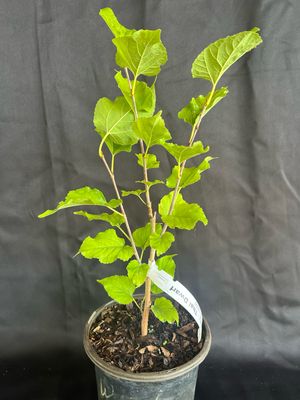
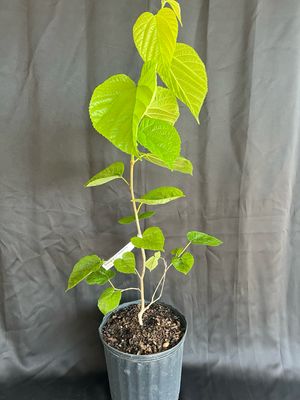
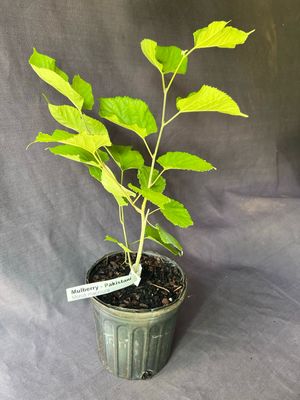
| Size at Sale | Ships in a 1-gallon nursery container |
| Estimated Age | Approximately 8–18 months; age varies with propagation method, season, and growth rate |
| Expected Shipping Height | Naturally varies by season, pruning cycle, and dormancy |
| Mature Height Unpruned | Commonly 30–50 ft; older trees may approach 60 ft in favorable conditions |
| Manageable Pruned Height | Approximately 8–15 ft with thoughtful annual pruning |
| Mature Width | Approximately 25–50 ft if allowed to form a full shade canopy |
| USDA Growing Zones | Best suited to Zones 4–9; may grow in portions of Zone 10, though dormancy and fruiting can become less predictable |
| Florida Adaptation | Well adapted to North and Central Florida; also grown in warmer areas with proper siting |
| Sun Requirements | Full sun for best fruiting; tolerates light or partial shade |
| Recommended Daily Sun | At least 6–8 hours |
| Cold Hardiness | Highly cold hardy once established and fully dormant; protect young container plants during hard freezes |
| Growth Rate | Fast |
| Growth Habit | Rounded, spreading canopy with vigorous lateral branching |
| Leaf Habit | Deciduous |
| Soil Preference | Moist but well-draining soil; adaptable to sand, loam, clay, and a broad pH range |
| Drought Tolerance | Good once established |
| Wind Tolerance | Moderate; young trees benefit from protection and structural training |
| Salt Tolerance | Some salt tolerance, but not recommended as an unprotected first-line oceanfront tree |
| In-Ground Spacing | 20–30 ft for a full-sized tree |
| Spacing When Heavily Managed | Approximately 12–15 ft for a regularly pruned backyard orchard |
| Typical Florida Harvest | Often begins during early spring, commonly March–May in Central Florida |
| Typical Harvest in Cooler Regions | Late spring through early summer, often May–June |
| Pollination | Cultivated fruiting selections may be self-fruitful, but Morus alba can produce male and female flowers on the same or separate trees |
| Indoor Growing | Not recommended as a permanent houseplant |
| Container Growing | Possible with regular root management, pruning, and progressive up-potting |
Important Botanical Note
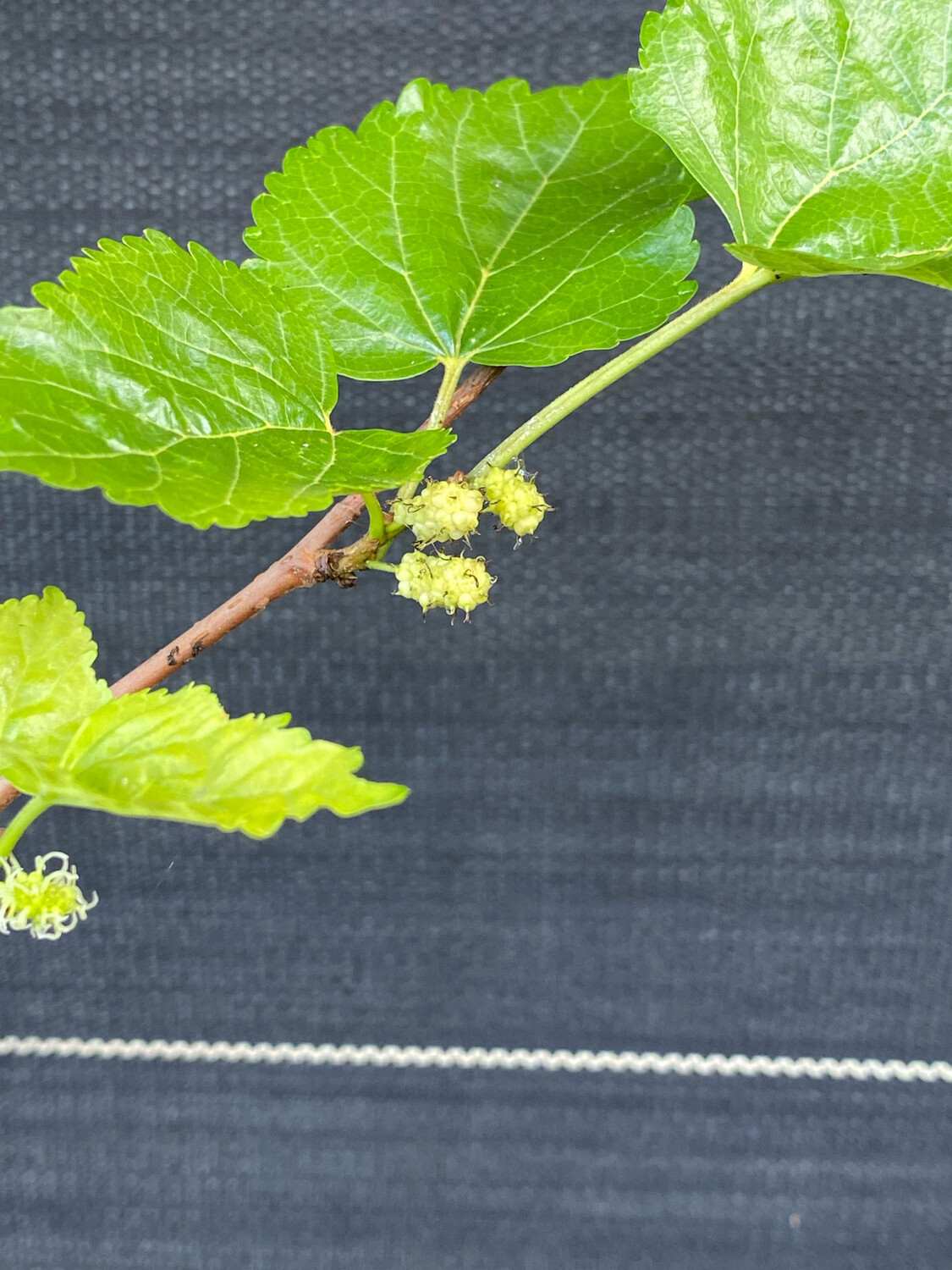
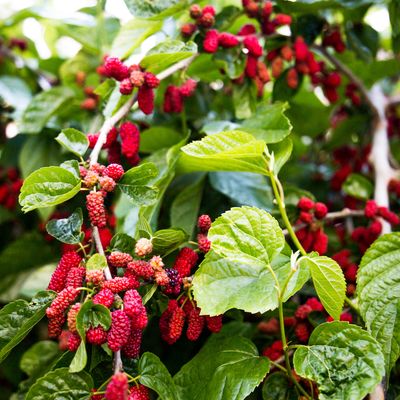
Despite the name, white mulberry does not automatically mean white fruit. The common name Morus alba is associated with the species and its pale flower buds—not a guarantee that every tree will produce white berries. Depending on genetics, Morus alba fruit can mature white, cream, pink, red, purple, or nearly black.
This listing is intended for GreenDreams’ pale- to white-fruited selection, which provides the lower-staining qualities shoppers are looking for.
⠀
⠀
⠀
⠀
⠀
🍯 What Does ‘White’ Mulberry Taste Like?
White mulberries offer a noticeably different experience from richly acidic dark mulberries.
Flavor Profile
Expect a soft, mellow sweetness with notes reminiscent of:
- Ripe honeydew melon
- Pear nectar
- White peach
- Mild honey
- Delicate berry syrup
- A subtle floral finish
The flavor is generally sweeter and lower in acidity than many red, purple, or black-fruited mulberries. Fruit quality improves significantly when the berries are allowed to become fully soft and translucent on the tree.
Texture
- Very tender
- Soft-skinned
- Juicy when fresh
- Fine-seeded
- Delicate when fully ripe
- Slightly chewy and raisin-like when dried
Fruit Appearance
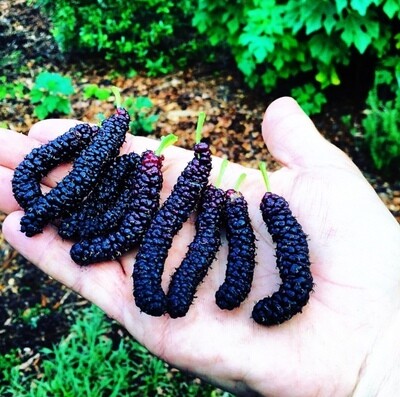
The elongated berry clusters resemble miniature blackberries but ripen to:
- Creamy white
- Pale ivory
- Translucent yellow-white
- Light pink or blush-white in strong sun
Individual fruit commonly reaches approximately ½–1 inch long, although fruit size varies with genetics, tree maturity, irrigation, sunlight, and crop load.
Skin and Flesh
Mulberries do not have a thick peel like citrus or mango. The entire berry is eaten. Its thin skin surrounds soft, juicy flesh composed of many small drupelets.
⠀
⠀
⠀
⠀
⠀
🍇 Harvesting Your ‘White’ Mulberries
Ripe mulberries are extremely delicate and should separate from the tree with almost no resistance.
Signs the Fruit Is Ready
Harvest when the berries:
- Have changed from green to cream, white, or pale blush
- Appear slightly translucent
- Feel soft rather than firm
- Release easily with a gentle touch
- Taste fully sweet with little green or grassy flavor
Fruit picked too early may taste bland, grassy, or mildly tart.
Florida Harvest Season
In Central and North Florida, mulberries commonly begin ripening during early to mid-spring, often from March through May. Some trees may produce lighter, intermittent crops later in the year depending on cultivar, pruning, rainfall, and temperature.
In South Florida and other very warm climates, winter dormancy may be shorter or less pronounced. Fruiting can become more variable where the tree does not receive a strong seasonal rest.
Cooler Growing Regions
Across the Southeast, Mid-Atlantic, Midwest, and similar climates, harvest generally shifts later—often from May into June or early July.
Harvesting Tips
- Check fruiting branches every day or two during peak season.
- Pick into shallow containers to prevent crushing.
- Harvest early in the morning when fruit is cool.
- Refrigerate promptly.
- Do not wash until shortly before eating or processing.
- Spread a clean tarp beneath the canopy and gently shake branches to collect fully ripe fruit.
- Process or freeze large harvests quickly because ripe mulberries have a short fresh-storage life.
⠀
⠀
⠀
⠀
⠀
🍽️ How to Use White Mulberries
The most valuable feature of this tree is its versatility in the kitchen. White mulberries can be used anywhere a mild, sweet berry or raisin would normally be used.
Enjoy Them Fresh
Eat fully ripe fruit directly from the tree or add it to:
- Fresh fruit bowls
- Yogurt
- Oatmeal
- Granola
- Smoothies
- Chia pudding
- Green salads
- Cheese and fruit boards
- Pancakes and waffles
- Ice cream and frozen desserts
Preserve the Harvest
White mulberries are naturally suited to:
- Jam
- Jelly
- Syrup
- Compote
- Fruit butter
- Pie filling
- Fermented fruit beverages
- Homemade wine
- Fruit vinegar
- Shrubs and drinking syrups
- Frozen smoothie packs
- Fruit leather
Because pale mulberries are often lower in acidity than dark-fruited varieties, lemon juice or another approved acid may be needed in recipes to brighten flavor and support safe preservation. Follow a tested canning recipe whenever preserving fruit for shelf storage.
Drying White Mulberries
One of the greatest culinary strengths of white-fruited mulberries is how well their sweetness concentrates during dehydration.
Dried mulberries become:
- Chewy
- Honeyed
- Raisin-like
- Shelf-stable when dried and stored properly
- Easy to add to trail mix, cereal, baked goods, and snack blends
They can be dried whole in a food dehydrator until no internal moisture remains. Store fully cooled fruit in an airtight container and watch for condensation during the first several days.
Baking Ideas
Use fresh or dried fruit in:
- Muffins
- Scones
- Quick breads
- Breakfast cookies
- Granola bars
- Fruit crisps
- Cobblers
- Sweet dumplings
- Cakes
- Rustic galettes
- Bread pudding
Simple White Mulberry Compote
Combine:
- 2 cups ripe white mulberries
- 1–2 tablespoons lemon juice
- Sweetener only if needed
- A small pinch of cinnamon, ginger, or vanilla
Simmer gently until the berries release their juice and the mixture thickens. Serve over yogurt, pancakes, oatmeal, cheesecake, or ice cream.
⠀
⠀
⠀
⠀
⠀
🌱 Nutritional and Traditional Uses
Ripe mulberry fruit contains naturally occurring:
- Carbohydrates
- Dietary fiber
- Organic acids
- Vitamin and mineral constituents
- Phenolic compounds
- Flavonoids
- Other plant-based antioxidants
Nutritional composition varies considerably according to cultivar, fruit color, ripeness, climate, and growing conditions. Darker mulberries generally contain more visible anthocyanin pigments, while pale fruit is prized more for mild flavor, sweetness, and low-staining juice.
Various parts of Morus alba have a long history of traditional use in Asian herbal systems and continue to be studied for their phytochemical content. However, a live mulberry tree or its fruit should not be represented as a treatment for diabetes, high blood pressure, inflammation, or any other medical condition.
Enjoy ripe fruit as food. Seek qualified medical guidance before using concentrated leaf, bark, root, or fruit extracts medicinally—particularly when taking blood-sugar medication.
⠀
⠀
⠀
⠀
⠀
🧵 From Silkworms to Backyard Orchards
White mulberry is native to central China and has been cultivated for thousands of years—most famously as the primary food source for the silkworm, Bombyx mori.
Silkworms feed on mulberry leaves and produce the fibers used to create natural silk. The tree became so closely tied to sericulture that it was eventually transported far beyond its original range.
During the colonial and early American periods, Morus alba was planted extensively in attempts to establish a domestic silk industry. The commercial silk ventures struggled, but the trees had no problem adapting. White mulberry naturalized throughout many portions of the United States and became a familiar part of farms, old homesites, field edges, and rural landscapes.
Beyond silk production, mulberry has historically been used for:
- Livestock and silkworm fodder
- Fruit production
- Dried fruit
- Wine
- Paper fiber
- Woodworking
- Windbreaks
- Erosion-control plantings
- Wildlife food
- Shade production
That is serious résumé energy for one tree.
⠀
⠀
⠀
⠀
⠀
🌳 Ornamental and Landscape Appeal
‘White’ Mulberry is valuable even before the first fruit ripens.
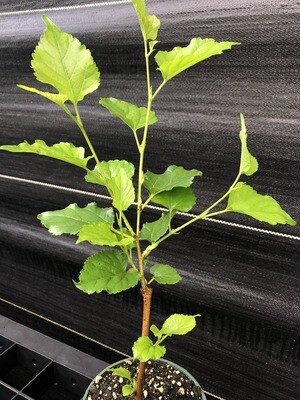
Foliage
The leaves are:
- Glossy green
- Alternately arranged
- Toothed along the edges
- Often heart-shaped at the base
- Highly variable in form
- Unlobed, two-lobed, or three-lobed—even on the same tree
Young shoots may carry deeply lobed leaves, while older branches often develop broader, less-lobed foliage. This variable leaf pattern gives the tree a lush and distinctive appearance.
Canopy
When unpruned, the tree develops a broad, rounded canopy capable of providing considerable seasonal shade. It can work beautifully as:
- A food-forest canopy tree
- A livestock-area shade tree where appropriate
- A seasonal shade tree near garden beds
- A rear-property fruit tree
- A naturalized edible landscape specimen
- A productive privacy screen
- A coppiced or pollarded biomass tree under careful management
Where It Should Not Be Used
Do not plant a full-sized mulberry:
- Directly beside a foundation
- Over septic tanks or drain fields
- Beside wells
- Against a driveway
- Over heavily used patios
- Under utility lines
- Beside narrow sidewalks
- Where fallen fruit could create a slip hazard
Although pale fruit reduces the staining issue, ripe fruit will still fall. The tree also develops a broad canopy and relatively shallow root system that deserves adequate space.
⠀
⠀
⠀
⠀
⠀
🐦 Is It Really Bird-Proof?
No mulberry should be advertised as bird-proof.
Birds, squirrels, raccoons, opossums, and other wildlife commonly enjoy mulberry fruit. Pale berries may be less visually conspicuous than dark purple or black cultivars, and the pale juice creates much less staining. However, wildlife can still locate and consume the fruit.
The good news? A mature mulberry can become productive enough to feed both the grower and the neighborhood wildlife.
For a larger personal harvest:
- Pick fruit frequently.
- Keep the tree pruned to reachable height.
- Use temporary bird netting only when it can be installed safely.
- Harvest with a tarp before wildlife activity peaks.
- Avoid planting directly beside fences, branches, or structures that provide easy wildlife access.
⠀
⠀
⠀
⠀
⠀
🍇 GreenDreams Mulberry Comparison Guide
Fruit quality and tree size vary with climate, propagation, soil, and pruning. This guide provides a practical comparison among several types commonly offered through GreenDreams.
| Cultivar or Selection | Fruit Size, Flavor and Texture | Tree Size and Growth Habit | Climate Notes | Best For |
|---|---|---|---|---|
| ‘White’ Mulberry | Small to medium; very sweet, mild, juicy, soft, pale and low-staining | Fast, broad, spreading tree; can become 30–50+ ft unpruned | Very cold hardy; performs across a broad range | Fresh eating, drying, shade, lower-stain harvests |
| Thai Dwarf | Small to medium; sweet, juicy, mild berry acidity | Compact, bushy and highly responsive to pruning | Best in warm-temperate to subtropical climates | Containers, patios and small yards |
| Everbearing | Small to medium; juicy, sweet-tart, classic mulberry flavor | Bushy to medium-sized tree; fruits over an extended period under favorable conditions | Adaptable; exact hardiness depends on clone | Backyard orchards and repeat harvests |
| Shangri-La | Large, dark fruit with rich sweet-tart flavor and soft texture | Vigorous tree with broad foliage and strong growth | Good warm-climate performer; protect young plants from severe freezes | Large fruit and productive food forests |
| Tice | Medium to large; dark, juicy and richly sweet-tart | Large, vigorous and spreading | Excellent Florida performer | Large properties, shade and abundant crops |
| Florida Giant / Estero Giant | Very large, dark fruit with soft, juicy flesh and balanced sweetness | Vigorous and spreading; responds well to size-control pruning | Selected for warm-climate performance | Growers prioritizing extra-large fruit |
| Pakistani-Type Mulberry | Very long fruit; sweet, juicy and generally lower in acidity | Upright to spreading and vigorous | Best in warm regions; cold tolerance varies by selection | Dramatic fruit, fresh eating and tropical collections |
Why Choose the ‘White’ Selection?
Choose ‘White’ Mulberry when your priorities include:
- Naturally sweet fruit
- Mild flavor with little acidity
- Reduced staining
- Excellent dried fruit
- Fast growth
- Seasonal shade
- Broad climate adaptability
- A tree with deep cultural and agricultural history
🌱 Growing ‘White’ Mulberry Successfully
Mulberries have a well-earned reputation for resilience, but good establishment practices make the difference between a surviving tree and a thriving, productive one.
The most important rules are simple:
- Give it sunlight.
- Provide excellent drainage.
- Do not plant it too deeply.
- Water deeply at soil level.
- Allow adequate recovery after shipping.
- Train the structure while the tree is young.
- Plan for its mature size before planting.
⠀
⠀
⠀
⠀
⠀
🍂 Understanding Its Deciduous Growth Cycle
‘White’ Mulberry is a deciduous fruit tree, meaning it naturally sheds its leaves and enters a dormant or semi-dormant period during winter.
Leaf loss is not automatically a sign that the tree is dying.
Dormancy allows the tree to conserve energy, rest between growing seasons, and prepare its buds for spring growth and fruit production.
What Dormancy May Look Like
During fall and winter, expect:
- Slower growth
- Reduced water consumption
- Yellowing leaves
- Brown or spotted aging foliage
- Gradual leaf drop
- Bare branches
- Firm, living buds along the stems
- Little visible change for several weeks or months
A healthy dormant stem should remain flexible, with green or pale living tissue beneath a very light scratch in the bark. Avoid repeatedly scratching young stems, as every wound creates stress.
Dormant trees may be sold or shipped without foliage. This is a normal seasonal condition—not poor plant quality.
⠀
⠀
⠀
⠀
⠀
🌿 Seasonal Mulberry Care Guide for Florida
| Season | What to Expect | Recommended Care |
|---|---|---|
| Winter — December through February | Leaf yellowing, leaf drop and dormancy; bare branches are normal | Reduce watering, protect young container trees during freezes, prune after leaf drop and before strong bud movement |
| Spring — March through May | Bud break, rapid leaf flush, flowering and main Florida fruit season | Resume regular watering, monitor fruit development, harvest frequently and apply light nutrition only if needed |
| Summer — June through September | Vigorous vegetative growth, possible lighter repeat crops and rapid canopy expansion | Water deeply during dry weather, monitor mites and sap-feeding pests, perform light post-harvest size control |
| Fall — October through November | Growth slows; older leaves may become yellow, brown or spotted before dropping | Reduce nitrogen, remove diseased wood, clean fallen fruit and prepare young trees for cold weather |
North and Central Florida
Trees typically experience a noticeable dormant season. Leaf drop may occur after cooling temperatures or frost, followed by bud break during late winter or early spring.
South Florida
Dormancy may be shorter, irregular, or incomplete. Trees may retain leaves longer, but warm winters can sometimes make seasonal fruiting less predictable.
Southeastern USDA Zones 8–10
Expect a pattern similar to Florida, with timing shifting according to latitude, elevation, and winter temperatures.
Northern Growing Regions
Dormancy lasts considerably longer. Bud break and harvest occur later, and container-grown trees require extra root protection because roots inside pots are more exposed to cold than roots planted in the ground.
⠀
⠀
⠀
⠀
⠀
☀️ Where to Plant ‘White’ Mulberry
Choose a location with:
- At least 6–8 hours of direct sunlight
- Good air movement
- Well-draining soil
- Room for the canopy to spread
- Easy access for harvesting
- Protection from severe prevailing wind while young
- Adequate distance from structures and underground systems
Best Locations
- Food forests
- Backyard orchards
- Large edible landscapes
- Rear property lines
- Naturalized garden areas
- Mixed fruit-tree plantings
- Large regenerative systems
- Areas where seasonal shade is beneficial
Avoid Planting
- In a low, waterlogged depression
- Directly beside a building foundation
- Over a septic tank or drain field
- Next to a well
- Under utility lines
- Against pavement
- In a narrow side yard
- Near pools or high-traffic patios
- Where fallen fruit may become a maintenance issue
- Beside ecologically sensitive areas where seedlings cannot be monitored
For full-sized trees, provide approximately 20–30 ft of separation from other large trees. Trees maintained intensively at 8–15 ft may be planted approximately 12–15 ft apart, but annual pruning will be essential.
⠀
⠀
⠀
⠀
⠀
🌳 GreenDreams “High & Tight” Planting Method
Do not immediately transplant a newly delivered tree.
Keep the ‘White’ Mulberry in its original nursery container for at least 30 days or until healthy new growth appears, whichever takes longer. This gives the plant time to recover from transit stress and adapt to its new environment.
Once recovered:
- Select a sunny, well-draining location.
- Water the container thoroughly before planting.
- Dig a hole only slightly wider than the nursery container.
- Keep the hole approximately the same depth as the root ball.
- Carefully remove the tree without pulling it by the trunk.
- Inspect for circling roots and gently loosen only the outermost roots if needed.
- Position the root flare slightly above the surrounding soil grade.
- Backfill with native soil, compost-amended native soil, or another site-appropriate blend.
- Firm the soil gently to remove large air pockets.
- Do not bury the trunk or pile soil over the root flare.
- Water deeply at soil level.
- Top-dress the surrounding root zone with compost, biochar, azomite, worm castings, or an appropriate organic nutrient blend.
- Apply hardwood mulch without allowing it to touch the trunk.
This slightly elevated planting style is especially helpful in Florida’s rainy climate and in sites with marginal drainage.
Watch the GreenDreams Planting Method
For our fruit-tree planting demonstration, visit:
https://youtu.be/RRQFY30qdA8?si=rRIcsbLlVAVYotfI
⠀
⠀
⠀
⠀
⠀
💧 Watering ‘White’ Mulberry Correctly
No Overhead Watering
Always water ‘White’ Mulberry at the soil level.
Overhead watering:
- Wastes water through evaporation
- Can spread fungal and bacterial problems
- Encourages leaf spotting
- Leaves foliage vulnerable to afternoon heat damage
- Delivers less water to the actual root zone
Morning watering at soil level provides the best absorption and allows accidental moisture on foliage to dry quickly.
Drip irrigation, a slow hose, or a dedicated bubbler is strongly preferred over overhead sprinklers and misting systems.
Watering While in the Nursery Container
A 1-gallon mulberry may need water daily during hot, dry, or windy weather, especially in Florida.
Check the container each morning:
- Water when the upper portion of the mix begins to dry.
- Irrigate slowly until water drains from the bottom.
- Do not allow the pot to remain submerged in standing water.
- Recheck small pots during extreme heat.
- Reduce watering during cool, cloudy or dormant conditions.
A wilted plant does not always mean dry soil. Check the potting mix before adding more water. Roots deprived of oxygen can produce symptoms similar to drought stress.
Initial In-Ground Watering
Use rainfall, soil texture, drainage, temperature, and plant response to adjust the schedule.
A practical starting guide:
Days 1–14
- Water deeply each morning unless the root zone remains moist from rain.
- Sandy Florida soils may require daily establishment watering.
Weeks 3–8
- Water approximately 2–3 times per week.
- Increase frequency during extreme heat or drought.
- Reduce frequency in heavy soil or rainy weather.
After Establishment
- Water deeply about once weekly during prolonged drought.
- Established mulberries tolerate dry periods but produce better fruit when moisture is consistent during flowering and fruit development.
- Florida sand may require more frequent irrigation during the spring dry season.
Signs of Underwatering
- Limp leaves
- Dry, lightweight container
- Leaf margins curling inward
- Premature fruit drop
- Dry soil pulling from the sides of the pot
- Crispy brown edges
Signs of Overwatering
- Persistently wet soil
- Sour-smelling potting mix
- General yellowing during active growth
- Soft or darkened roots
- Leaf drop without dry soil
- Fungus gnats around container plants
- Weak growth despite frequent irrigation
⠀
⠀
⠀
⠀
⠀
🪵 Mulching and Soil Building
Apply 3–4 inches of hardwood mulch around the tree after planting.
Expand the mulch ring as the tree grows. A broad mulch ring:
- Conserves moisture
- Reduces weed competition
- Protects shallow roots
- Moderates soil temperature
- Feeds soil organisms
- Adds organic matter over time
- Protects the trunk from mowers and string trimmers
Keep mulch at least 4–6 inches away from the trunk. Mulch piled against bark traps moisture and can contribute to rot, insects, and trunk injury.
Good top-dressing materials include:
- Finished compost
- Worm castings
- Charged biochar
- A small amount of azomite
- Leaf mold
- Composted hardwood material
- Approved organic fruit-tree nutrients
Avoid repeatedly disturbing the soil beneath the canopy. Mulberries can develop shallow feeder roots that are easily damaged by digging, tilling, and lawn equipment.
⠀
⠀
⠀
⠀
⠀
🌾 Fertilizing ‘White’ Mulberry
Mulberries are efficient growers and frequently require less fertilizer than citrus, avocado, mango, and many other fruit trees.
UF/IFAS notes that established Florida mulberries may need little or no supplemental fertilizer.
When Fertilizer May Help
Apply nutrition when:
- New growth is weak
- Leaves remain unusually pale during active growth
- The tree is growing in very poor fill soil
- The plant has remained in a container for an extended period
- A soil or tissue test identifies a deficiency
Suggested Organic Feeding Schedule
Early Spring
After bud break, lightly top-dress with compost, worm castings, or a balanced organic fruit-tree fertilizer.
Early Summer
A second light application may be used after the main harvest if growth is weak.
Late Summer and Fall
Avoid heavy nitrogen applications. Tender late-season growth is more vulnerable to cold injury and storm damage.
Avoid Over-Fertilizing
Too much nitrogen can produce:
- Excessive vertical shoots
- Weak, water-filled growth
- Delayed dormancy
- Reduced fruiting
- Greater pruning demands
- Increased susceptibility to sap-feeding insects
For established in-ground trees, building soil with compost, mulch, and chop-and-drop organic matter is often more valuable than frequent concentrated fertilizer.
⠀
⠀
⠀
⠀
⠀
✂️ Pruning a ‘White’ Mulberry
Mulberry responds strongly to pruning, but large wounds can be slow to close. The goal is to establish a strong framework early and avoid drastic topping later.
Best Pruning Time
For most regions, prune during dormancy:
- After the majority of leaves have dropped
- Before strong spring bud movement
- During late fall or winter
- During dry weather when possible
Dormant pruning reduces heavy sap flow from fresh cuts.
Young-Tree Training
During the first several years:
- Remove broken or damaged branches.
- Select several well-spaced structural limbs.
- Remove narrow, weak branch unions.
- Eliminate crossing and inward-growing branches.
- Correct competing leaders while branches are still small.
- Encourage a low, harvestable framework where space allows.
- Avoid removing more canopy than necessary.
Maintaining a Backyard-Sized Tree
To keep the tree near 8–15 ft:
- Use selective reduction cuts instead of indiscriminate topping.
- Cut long branches back to outward-growing laterals.
- Remove overly upright watersprouts.
- Thin crowded interior growth.
- Perform the primary size-control pruning after dormancy begins or after the main harvest, depending on climate.
- Repeat small corrective cuts annually rather than making massive cuts every few years.
Do Not Over-Prune Before Fruiting
Heavy pruning immediately before spring flowering can remove productive wood and encourage leaves instead of fruit.
Large-Tree Safety
Once branches become too large to manage safely from the ground, hire a qualified, insured arborist familiar with fruit trees. Never work beneath power lines or use ladders and chainsaws without proper training.
Wear gloves when pruning. Mulberry produces a milky sap that can irritate sensitive skin.
⠀
⠀
⠀
⠀
⠀
🍈 Improving Flowering and Fruit Production
For the best harvest:
- Grow the tree in full sun.
- Maintain consistent soil moisture during flowering and fruit swell.
- Avoid excessive nitrogen.
- Do not perform heavy pruning immediately before bloom.
- Allow the tree to become well established.
- Keep weeds and turf away from the root zone.
- Maintain an active soil ecosystem with compost and mulch.
- Harvest frequently so overripe fruit does not accumulate.
- Verify that the plant is a fruiting selection rather than a male or ornamental type.
Mulberry flowers are primarily wind-pollinated, so bees are not required for fruit production. However, flowering companion plants remain valuable because they support beneficial insects, biodiversity, and the overall health of the edible landscape.
When Will It Produce Fruit?
Vegetatively propagated mulberries may fruit while relatively young, sometimes within one or two growing seasons after establishment. Seed-grown trees can take longer and may not reproduce the exact fruit traits of the parent tree.
Young trees should be allowed to develop roots and structure before carrying a heavy crop. Production generally increases as canopy volume and branch structure mature.
⠀
⠀
⠀
⠀
⠀
🪴 Container Growing Guide
‘White’ Mulberry can be grown in a container, but it is naturally a large, vigorous tree. Long-term container success requires regular pruning, root management, and progressively larger pots.
Container Progression
A practical sequence is:
- 1-gallon nursery pot
- 3-gallon container
- 7-gallon container
- 15-gallon container
- 25-gallon or larger permanent container
Do not jump from a small nursery pot into a huge volume of dense, constantly wet soil. Move up gradually as roots begin occupying the existing container.
Signs It Is Ready to Move Up
- Roots emerge from drainage holes.
- The root ball holds its shape when removed.
- Water runs straight through without absorbing.
- The pot dries unusually quickly.
- Growth slows despite proper care.
- Roots circle densely around the container.
- The plant becomes top-heavy.
Potting Mix for ‘White’ Mulberry
Use a fertile but well-draining mix that holds some moisture without becoming waterlogged.
A suitable general blend may contain:
- 50% high-quality peat- or coconut-coir-based potting mix
- 25% aged pine bark fines
- 25% perlite, pumice, or another porous drainage amendment
A small amount of finished compost or worm castings may be added, but avoid creating a heavy, compost-dominant mixture.
Do not use dense native garden soil by itself inside a container.
Look for:
- Outdoor container potting mix
- Tree and shrub container mix
- Pine bark fines
- Horticultural perlite
- Pumice
- Coconut coir
- Peat-based professional potting media
These supplies are commonly available through independent garden centers, landscape suppliers, hydroponic shops, farm stores, nursery-supply companies, and online retailers.
How to Up-Pot
- Water the tree several hours before transplanting.
- Choose a container only several inches wider than the current root ball.
- Confirm that the new pot has large, unobstructed drainage holes.
- Add enough mix to keep the original root flare at the same height.
- Remove the plant carefully.
- Loosen only the most congested circling roots.
- Center the tree in the new pot.
- Fill around the root ball with fresh mix.
- Firm lightly without compacting heavily.
- Water thoroughly at soil level.
- Place the tree in bright filtered light for several days.
- Gradually return it to full sun.
- Delay concentrated fertilizer until active new growth resumes.
Container Location
Place outdoors in:
- Full morning sun
- Gradually introduced full-day sun
- A location with airflow
- A protected area during severe wind
- A space where drainage water will not create problems
Avoid:
- Dark porches
- Permanently shaded patios
- Hot pavement without irrigation monitoring
- Decorative containers without drainage
- Saucers filled with standing water
- Indoor living spaces
⠀
⠀
⠀
⠀
⠀
🏠 Can ‘White’ Mulberry Grow Indoors?
Not successfully as a permanent houseplant.
Mulberry needs:
- Strong direct sunlight
- Seasonal temperature changes
- Air movement
- Room for substantial roots
- A dormant period in colder climates
- Space for rapid canopy growth
A leafed-out tree may be temporarily protected inside a bright structure during extreme weather, but extended time in a warm, dim interior can produce weak growth, spider mites, and disrupted dormancy.
In colder climates, a dormant container tree may be protected in an unheated garage, shed, or similar sheltered space where temperatures remain cold but the root ball does not freeze solid. Check moisture periodically and do not allow dormant roots to become bone-dry.
⠀
⠀
⠀
⠀
⠀
🌿 Companion Plant and Mulberry Guild Sidebar
Build a productive guild around ‘White’ Mulberry using plants that create biomass, protect the soil, support beneficial insects, and provide visual interest.
Nitrogen-Supporting Plants
- Pigeon pea
- Perennial peanut
- Sunshine mimosa in suitable Florida landscapes
- Native legumes appropriate to your region
- Annual cowpeas during establishment
Biomass and Chop-and-Drop Plants
- Mexican sunflower
- Lemongrass
- Vetiver or other well-managed clumping grasses
- Pigeon pea
- Comfrey where climate and site conditions allow
- Cannas and edible gingers in moist outer guild areas
Pollinator and Beneficial-Insect Plants
Mulberries are wind-pollinated, but these plants strengthen the surrounding ecosystem:
- Tropical sage
- Native asters
- Blanketflower
- Coreopsis
- Sweet alyssum
- Dill
- Fennel
- African blue basil
- Goldenrod
- Native mints
Aesthetic Companions
- Turmeric
- Edible ginger
- Pineapple
- Cranberry hibiscus
- Longevity spinach
- Okinawan spinach
- Lemongrass
- Native wildflowers
Keep aggressive companion plants away from the immediate trunk and maintain a visible, mulched root-flare area.
⚠️ Important Considerations Before Planting ‘White’ Mulberry
‘White’ Mulberry is productive, adaptable, and easy to grow—but it is not the right tree for every property.
⠀
⠀
⠀
⠀
⠀
🌱 Regional Invasive and Ecological Concerns
Morus alba has naturalized extensively across the United States. Its status varies significantly by region.
Florida Status
The UF/IFAS Assessment currently classifies Morus alba as not a problem species in North, Central, or South Florida. It may presently be recommended in Florida landscapes when planted and managed appropriately.
Outside Florida
The species is considered invasive, restricted, or a noxious weed in some states and regions. Regulations can change.
Before ordering or planting:
- Check your state department of agriculture.
- Review county and municipal rules.
- Confirm whether shipment or cultivation is restricted.
- Avoid planting near natural areas where seedlings cannot be monitored.
- Remove volunteer seedlings while they are small.
- Do not move restricted plants across state lines.
- Consider a regionally native mulberry where ecological restoration is the primary goal.
Native Red Mulberry Concerns
White mulberry can hybridize with the North American native red mulberry, Morus rubra. In regions where native red mulberry populations are ecologically important, responsible siting and seedling management are recommended.
⠀
⠀
⠀
⠀
⠀
⚠️ Additional Cautions
Milky Sap
Broken leaves, twigs, and branches release a milky latex-like sap that can irritate sensitive skin.
- Wear gloves when pruning.
- Avoid contact with eyes.
- Wash exposed skin promptly.
- Keep children and pets away from fresh pruning debris.
Eat Only Fully Ripe Fruit
Fully ripe mulberries are edible. Green, underripe fruit and concentrated plant latex may cause digestive discomfort in sensitive individuals.
Pollen and Allergies
Male mulberry flowers can produce highly allergenic, wind-distributed pollen. Fruiting trees may carry female flowers, both flower types, or variable flowering structures depending on the tree.
Growers with severe pollen sensitivity should take this into consideration.
Surface Roots and Mature Size
White mulberry grows rapidly and may develop shallow roots.
Avoid planting near:
- Foundations
- Drain fields
- Wells
- Underground pipes
- Sidewalks
- Pool decks
- Retaining walls
Fruit Drop
Pale fruit stains much less than dark mulberries, but fallen fruit can still:
- Become slippery
- Ferment
- Attract wildlife
- Draw insects
- Create maintenance beneath the canopy
Wildlife
Birds and mammals may consume a significant portion of the harvest. Do not plant where wildlife activity could create a conflict with neighbors, pets, livestock, or local regulations.
⠀
⠀
⠀
⠀
⠀
🔍 ‘White’ Mulberry Troubleshooting Guide
Icons represent common issues and organic recovery strategies. Look for 🌿 for plant-recovery guidance.
| ⚠️ Issue | 🧠 Likely Cause | 🌿 Organic Response |
|---|---|---|
| 🍂 Leaves yellowing and dropping in fall or winter | Normal deciduous dormancy | ✅ Reduce watering and wait for spring bud break |
| 🍂 Yellow leaves during active summer growth | Wet roots, poor drainage, nutrient imbalance or root congestion | 💦 Check soil before watering; improve drainage and inspect roots |
| 🫣 Curled or limp leaves after delivery | Transit stress, wind exposure, dehydration or abrupt sunlight | 🌿 Keep in the original pot, water at soil level and provide bright filtered light |
| ☀️ Bleached or scorched foliage | Plant moved into intense sun too quickly | ✅ Increase sun exposure gradually over 7–14 days |
| 💧 Crispy edges and premature fruit drop | Drought or inconsistent watering | 🌿 Water deeply and maintain hardwood mulch around the root zone |
| 🌊 Constantly wet soil and leaf loss | Overwatering or blocked drainage | ✅ Clear drainage holes, reduce irrigation and repot if roots are declining |
| 🪲 Sticky leaves with black residue | Scale, whiteflies, aphids or mealybugs producing honeydew and sooty mold | 🐞 Control ants, rinse pests from stems and use labeled insecticidal soap or horticultural oil |
| 🕷️ Fine webbing and speckled leaves | Spider mites favored by heat, dust and stress | 🌿 Improve plant hydration, rinse leaf undersides in the morning and use labeled organic controls |
| 🍄 White powder on leaves | Powdery mildew favored by crowded growth and poor airflow | ✂️ Thin crowded branches, avoid overhead irrigation and remove heavily affected foliage |
| 🍄 Dark leaf spots or shoot dieback | Bacterial blight, canker or another leaf and twig disease | 🧤 Remove affected wood during dry weather and sanitize tools between cuts |
| 🪲 Holes in trunk or declining branches | Borers attacking stressed wood | ✅ Improve tree health, prevent trunk injuries and consult local Extension for identification |
| 🌱 Fast leafy growth but little fruit | Excess nitrogen, heavy pruning, shade or immature tree | ☀️ Increase sunlight, reduce nitrogen and avoid removing productive wood before bloom |
| 🌸 Flowers but no fruit | Male or non-fruiting tree, pollination biology, weather stress or insufficient maturity | 🧠 Confirm the plant is a fruiting selection and allow additional establishment time |
| 🍃 Fruit dropping before ripening | Drought, sudden heat, wind, heavy crop load or root stress | 💧 Maintain consistent soil moisture and mulch the root zone |
| 🌬️ Leaning or broken young trunk | Wind exposure or weak branch structure | 🪵 Stake temporarily and begin corrective structural training during dormancy |
| 🌱 Many seedlings beneath the tree | Fruit and seeds dispersed by wildlife | ✅ Pull seedlings promptly before roots become established |
Organic Spray Safety
When using insecticidal soap, horticultural oil, neem-based products, biological fungicides, or other organic treatments:
- Confirm that mulberry or edible fruit trees appear on the label.
- Follow harvest-interval instructions.
- Spray during cooler morning or evening conditions.
- Never apply oil products to drought-stressed plants.
- Avoid treating flowers when beneficial insects are active.
- Test a small section before treating the entire canopy.
- Do not assume that a product is safe simply because it is described as natural.
⠀
⠀
⠀
⠀
⠀
🌟 Is ‘White’ Mulberry Right for You?
✅ Ideal For
- Growers who want very sweet, mild fruit
- Families seeking a child-friendly backyard berry
- Gardeners who dislike dark mulberry stains
- Home dehydrators and preserve makers
- Food-forest growers
- Large edible landscapes
- Cold-hardy fruit collections
- Florida and Southeastern growers
- Regenerative farms
- Wildlife-supporting gardens
- Gardeners willing to prune for size control
- Properties needing seasonal shade
- Growers interested in historic and culturally significant plants
❌ Not Ideal For
- Permanent indoor growing
- Tiny patios without a long-term container plan
- Narrow side yards
- Planting directly beside foundations
- Locations over septic systems or wells
- Properties with overhead utility conflicts
- Growers expecting a completely bird-proof crop
- Gardeners unwilling to manage seedlings
- Areas where Morus alba is restricted
- Ecological restoration sites where native red mulberry is the better choice
- Anyone who expects a large fruit tree to remain naturally compact
⠀
⠀
⠀
⠀
⠀
❓ Frequently Asked Questions
Is ‘White’ Mulberry the same as white-fruited mulberry?
Not always. Morus alba is the botanical species called white mulberry, but its fruit can ripen white, pink, red, purple or black. This listing represents GreenDreams’ pale- to white-fruited selection.
Does white mulberry fruit stain?
Pale fruit generally creates much less visible staining than purple or black mulberries. Fallen fruit can still leave organic residue, attract insects, and become slippery, so thoughtful placement is recommended.
Will birds eat white mulberries?
Yes. Pale fruit may be less visually obvious, but birds and other wildlife commonly eat mulberries of every color.
Is ‘White’ Mulberry self-pollinating?
Mulberry flower biology is variable. Some trees carry both male and female flowers, while others produce only one flower type. Known cultivated fruiting selections may produce without a second tree, but species-level assumptions should not replace confirmation that the plant is a fruiting selection.
How long before my mulberry produces fruit?
Vegetatively propagated plants may fruit within one or two growing seasons after becoming established. Seed-grown plants can take longer, and their fruit may differ from the parent tree.
Is ‘White’ Mulberry deciduous in Florida?
Yes. In North and Central Florida, expect yellowing and leaf drop during fall or winter. South Florida trees may experience a shorter or less complete dormant period.
Can I keep the tree small?
Yes, but pruning must begin while the tree is young. A tree that could exceed 30 ft can often be maintained near 8–15 ft with thoughtful annual reduction pruning.
Can it be grown in a container?
Yes, particularly while young. Long-term container culture requires large pots, excellent drainage, regular pruning, root management and consistent watering.
Can it grow indoors?
Not as a healthy permanent houseplant. Mulberry requires strong sunlight, outdoor airflow, substantial root space, and seasonal changes.
What is the best potting soil for mulberry?
Use a moisture-retentive but freely draining tree-and-shrub mix containing potting media, aged pine bark and perlite or pumice. Avoid dense garden soil inside pots.
When should I transplant my delivered tree?
Wait at least 30 days or until healthy new growth appears. Keep the plant in its original nursery pot while it recovers from shipping.
How much sun does it need?
Full sun—at least 6–8 hours daily—provides the strongest growth and fruit production. Light shade is tolerated, but heavy shade can reduce flowering and fruit quality.
Is white mulberry invasive?
Its status is regional. UF/IFAS currently considers it not a problem species in Florida, while some other states regulate or discourage it. Check local rules before purchasing or planting.
Will it grow in sandy Florida soil?
Yes. Mulberries are well adapted to sandy, infertile soil when drainage is good. Compost, mulch, and consistent establishment watering will improve performance.
Does it tolerate hurricanes and strong wind?
Mulberry has some wind tolerance and is considered moderately wind resistant, but young trees and poorly structured branches may break. Train the tree early and avoid allowing multiple weak leaders to develop.
Is it salt tolerant?
It has some salt tolerance but should not be treated as a highly salt-tolerant beachfront tree. Plant behind more salt-resistant windbreak species in exposed coastal settings.
⠀
⠀
⠀
⠀
⠀
📦 Shipping and Plant-Recovery Information
Ships in a 1-Gallon Nursery Container
This is a young, vigorous plant that can recover well from shipping when given proper aftercare. However, smaller trees dry faster and are more vulnerable to extended transit, temperature extremes, and abrupt environmental changes than larger nursery specimens.
Best Shipping Region
This size is best suited for shipment to:
- Florida
- The Southeastern United States
- Texas
- Nearby regions with shorter UPS Ground transit times
We can ship across the continental United States, but buyer discretion is strongly advised for destinations in the northern and western states.
UPS Ground Shipping
- Plants ship from Florida.
- We currently use UPS Ground.
- Live-plant shipments are prepared for Monday pickup.
- Delivery time varies by location and UPS service conditions.
- Ground transit to western states can be lengthy.
- California packages may be held for agricultural inspection, potentially adding an extra day or more to delivery.
Heat and Cold Disclaimer
Live plants are sensitive to temperature extremes.
GreenDreams cannot guarantee that a plant will arrive in optimal condition when ordered during:
- Extreme summer heat
- Freezing weather
- Severe winter storms
- Holiday shipping congestion
- Extended UPS transit delays
- Agricultural inspection delays
- Carrier service interruptions
The buyer assumes the added risk associated with ground shipment during extreme weather and extended-distance transit.
Plants shipped to northern or western states may arrive with:
- Wilted leaves
- Yellowing
- Leaf drop
- Bent foliage
- Dry leaf edges
- Dormant stems
- Temporary growth interruption
Many plants recover with proper care, but recovery can take several weeks. Larger plant sizes are recommended for customers outside the Southeast whenever available.
⠀
⠀
⠀
⠀
⠀
🌿 What to Do When Your Mulberry Arrives
- Open the box immediately.
- Carefully remove packing materials.
- Inspect the potting mix before watering.
- Water thoroughly at soil level when the mix is dry.
- Place the plant in bright, filtered outdoor light.
- Protect it from intense afternoon sun for the first several days.
- Gradually increase direct sunlight over 7–14 days.
- Do not fertilize immediately.
- Do not repot or plant in the ground immediately.
- Protect the plant from high wind and temperature extremes.
- Allow damaged leaves to fall naturally unless they are diseased.
- Wait at least 30 days or until strong new growth appears before transplanting.
Transit-stressed leaves do not always recover cosmetically. The most important indicator is the development of healthy new buds and leaves.
⠀
⠀
⠀
⠀
⠀
🌾 Shop with Us in Person
GreenDreams Nursery & Farm — Retail Nursery Open to the Public
We carry countless fruit trees and edible plants in larger sizes, along with rare selections that may not yet be listed online.
🌾 18709 US Hwy. 41, Spring Hill, FL 34610
🕘 Tues–Fri 9AM–5PM
🌞 Saturday 8AM–3PM
Walk the nursery, compare available sizes, speak with our growers, and see what is blooming, fruiting, and ready for planting this week.
⠀
⠀
⠀
⠀
⠀
🌿 Beyond the Plant: GreenDreams Services
At GreenDreams, we do more than grow plants—we design, build, and restore ecosystems across Florida.
- 🌳 Onsite consultations and edible landscape design
- 🚜 Installation and project management
- 🚚 Bulk delivery of compost, mulch, biochar, and soil materials
- 🌾 Wholesale and large-scale regenerative solutions
Let our team help you create your own thriving edible paradise—starting with a productive ‘White’ Mulberry tree.
🌿 IMPORTANT INFORMATION BEFORE PURCHASING LIVE PLANTS
Please note: Plants purchased through our online store are not available for pickup at our retail nursery in Spring Hill, Florida.
Online inventory is housed at a separate facility and is priced, prepared, and handled exclusively for shipping.
🌱 Looking for larger plants or more selection?
Our retail nursery location offers far more availability, including larger sizes, specialty plants, and many selections not suitable for nationwide shipping.
Local pickup is available for retail nursery purchases only.
Visit our Spring Hill, FL retail nursery page to explore in-person shopping options.
🚚 LIVE PLANT SHIPPING & TRANSIT EXPECTATIONS
Live plants naturally experience stress during shipping. Temporary leaf drop, mild wilting, or cosmetic stress is normal after transit. Most plants recover quickly with proper watering, gradual light exposure, and basic aftercare. Some plants may require additional attention during the first few weeks.
Despite careful packing, minor cosmetic damage may occur during transit. Small issues such as broken leaves or stems typically resolve with time and proper care.
If your shipping box arrives with significant external damage, please contact UPS within 30 days to initiate a carrier claim.
⏱️ SHIPPING METHOD, TIMING & TRANSIT WINDOWS
All online orders ship via UPS Ground from our Central Florida nursery.
📦 Shipping Schedule: Orders ship once weekly on Mondays to reduce the risk of packages sitting in transit over weekends. A countdown clock on our website displays the next shipping date.
🚚 Typical Transit Times:
-
Florida: 1–2 days
-
Southern U.S.: approximately 2 days
-
Midwest, West & Northern U.S.: 3–5 business days
Long-distance shipments, particularly to the western U.S., may experience additional transit time due to agricultural inspections in states such as Arizona, California, and Texas.
Extended transit times can be more challenging for small or tender plants and may require additional recovery care after arrival.
🌡️ EXTREME WEATHER & SEASONAL RISK
Live plants are sensitive to temperature extremes.
We cannot guarantee plant condition during periods of extreme summer heat or winter cold and freezing temperatures. Weather-related delays, carrier interruptions, or exposure during delivery are beyond our control.
Customers are responsible for:
-
Monitoring tracking information sent via email
-
Retrieving packages promptly upon delivery
-
Preventing plants from being left outdoors in extreme conditions
During unsafe weather, holiday shipping volume, or extended transit risk, orders may be held and shipped the following week to protect plant health.
⚠️ CUSTOMER RESPONSIBILITY & REFUND POLICY
By purchasing live plants, customers acknowledge and accept the risks associated with shipping, weather exposure, transit delays, and regional suitability.
Refunds or replacements are considered only under exceptional circumstances and in accordance with our return and refund policy. We are not responsible for:
-
Weather-related damage
-
Carrier delays
-
Poor plant selection for a given climate or region
-
Improper care after delivery
Upon purchase, customers assume full responsibility for the ongoing care and success of their plants.
✅ CONSENT & AGREEMENT
By completing a purchase, you confirm that you have read, understand, and agree to all shipping policies, responsibilities, and conditions outlined above.
Our goal is transparency, plant health, and long-term growing success — and we appreciate your understanding and care when ordering live plants.


