


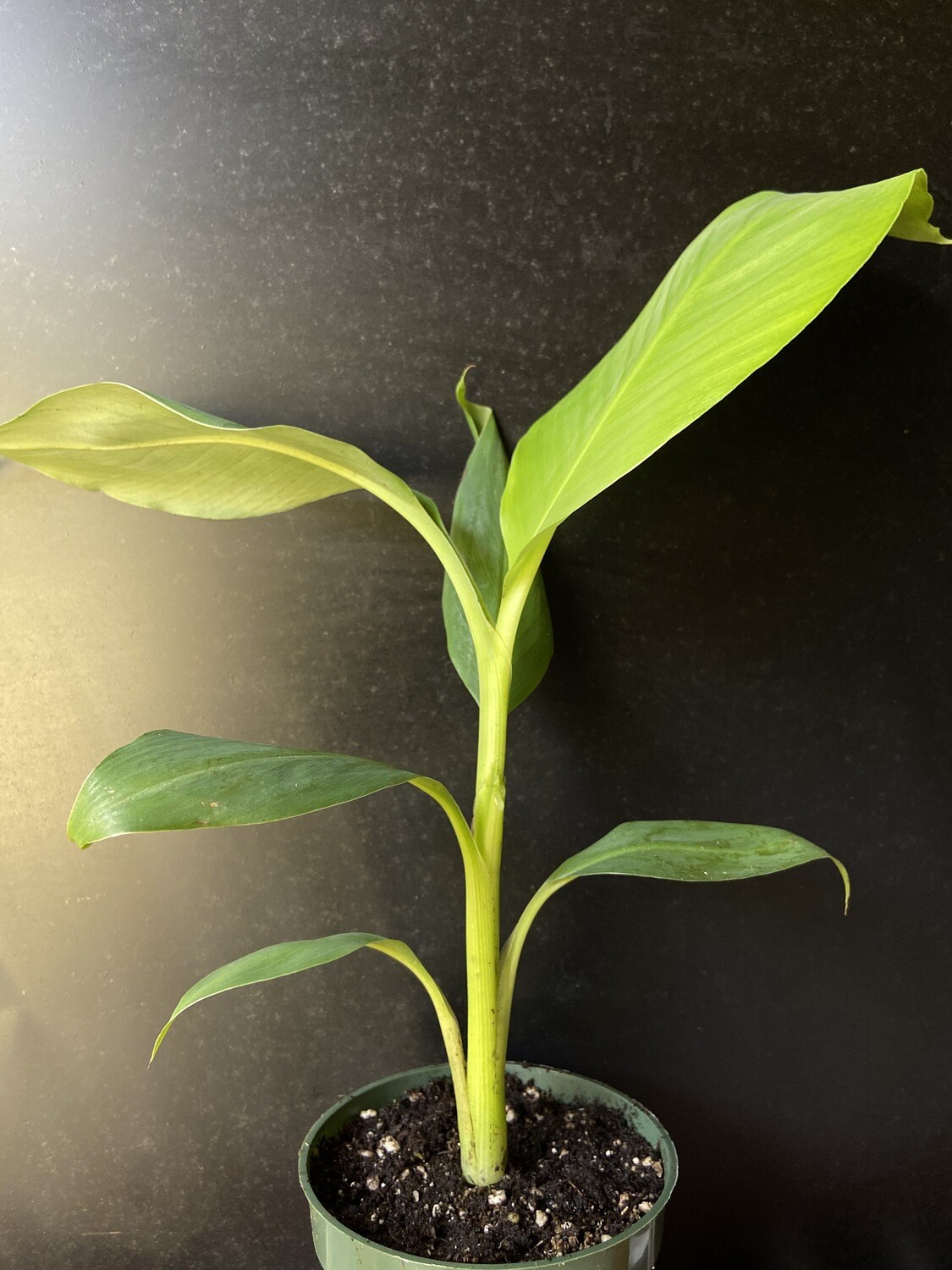
🌿 Lacatan Banana Plant — Sweet Philippine Lakatan Banana with Golden-Orange Fruit 🍌
LAST IN STOCK AT THIS SIZE FOR LIMITED TIME (AS OF 8/18)
Bring home one of the Philippines’ most celebrated dessert bananas! The Lacatan Banana—more commonly written as Lakatan in botanical references—produces richly aromatic fruit with golden-yellow to orange flesh, a satisfyingly firm texture, and a deeper tropical flavor than the average grocery-store banana.
Ships growing in an economy 4-inch nursery container.
This is the banana for growers who think standard supermarket fruit tastes a little…basic. Lakatan delivers bold sweetness, tropical fragrance, beautiful foliage, and the satisfaction of harvesting a truly distinctive banana from your own edible landscape.
🌿 Quick Facts: Lacatan / Lakatan Banana
| Category | Growing Details |
|---|---|
| Botanical Name | Musa acuminata (AAA Group) ‘Lakatan’ |
| Common Names | Lakatan Banana, Lacatan Banana, Philippine Lakatan |
| Plant Type | Fast-growing tropical perennial herb |
| Sale Size | Ships growing in a 4-inch nursery container |
| Estimated Age | Generally a young starter plant approximately 2–6 months from active propagation; age and height vary by season |
| Guaranteed Measurement | Container size rather than plant height |
| Typical Mature Height | Approximately 8–10 ft in warm, favorable conditions |
| Height in Containers or Cooler Regions | Often remains closer to 5–9 ft, depending on root space, climate, and care |
| Managed Width | Approximately 4–6 ft when suckers are thinned |
| Unmanaged Mat Width | May gradually expand 6–10 ft or wider |
| Pruned Height | Bananas should not be topped to control height; manage the mat by thinning suckers instead |
| USDA Growing Zones | Best suited to Zones 9b–11; protected sites in Zone 9a may succeed |
| Zones 8–9 | Best grown in a movable container, greenhouse, or heavily protected microclimate |
| Best Florida Regions | South Florida, coastal Central Florida, and warm protected locations farther north |
| Sun Requirements | Full sun for best fruit production; approximately 6–8 or more hours daily |
| Light Shade | Tolerated, but may delay flowering and reduce fruit size |
| Soil Preference | Fertile, organic-rich, moisture-retentive but well-draining soil |
| Preferred Soil pH | Approximately 5.5–7.0 |
| Water Requirements | High; consistent moisture without standing water |
| Cold Response | Growth slows below approximately 60°F and generally stops near 50°F |
| Frost Tolerance | Leaves and pseudostems may be damaged around 32°F; severe freezes can kill growth to the ground |
| Wind Tolerance | Low to moderate; large leaves shred and tall pseudostems may topple |
| Salt Tolerance | Low; avoid saline soil, direct coastal spray, and salty irrigation water |
| Growth Habit | Upright fruiting pseudostems emerging from an underground rhizome |
| Pollination | No second banana variety is required; edible fruit develops without pollination |
| Typical Time to Fruit | Approximately 10–24 months in Florida; often faster in continuously tropical climates |
| Spacing | Allow approximately 8–12 ft between banana mats |
| Container Growing | Yes, although large containers are required for mature growth and fruiting |
| Indoor Growing | Suitable for overwintering or ornamental growth indoors; dependable indoor fruiting is difficult without greenhouse-level light |
💡 Banana terminology: A banana is not technically a tree. It is a giant herb. What looks like a trunk is a water-rich pseudostem formed from tightly wrapped leaf sheaths.
🍌 One Letter, Two Bananas: Why We Use Lakatan and Lacatan
The Philippine cultivar was historically written as Lacatan and appeared under that spelling in the 19th-century botanical work Flora de Filipinas by Francisco Manuel Blanco.
Modern banana references commonly use Lakatan—with a K—to distinguish the Philippine dessert banana from a tall Cavendish cultivar also called Lacatan in parts of the Caribbean and the Americas.
That one-letter difference matters. The plant featured here is the prized Southeast Asian dessert banana known for:
- Rich tropical fragrance
- Sweet golden-orange flesh
- A firmer bite than many Cavendish bananas
- Strong popularity in the Philippines
- Excellent fresh-eating quality
For search visibility and customer recognition, both spellings are included throughout this listing.
🌏 A Philippine Dessert Banana with Serious Flavor
Lakatan is one of the best-known fresh-eating bananas in the Philippines and remains an important fruit for backyard growers, small farms, local markets, and specialty production.
The cultivar has also been documented under related local names in Malaysia, Indonesia, and Thailand. Its history reflects the enormous banana diversity of Southeast Asia—far beyond the handful of Cavendish cultivars commonly found in American supermarkets.
Under tropical production conditions, documented Lakatan plants average approximately:
- 8.9–9.2 ft tall
- About 12 months from planting to harvest
- 29–33 lb per bunch
- 7–8 hands per bunch
- Approximately 98–112 individual bananas
Florida results vary considerably with temperature, winter protection, soil fertility, irrigation, wind exposure, and the size of the original planting material.
🍊 Fruit Profile: What Does a Lakatan Banana Taste Like?
| Fruit Characteristic | Description |
|---|---|
| Flavor | Rich, sweet, aromatic, tropical, and more concentrated than a standard grocery-store Cavendish |
| Texture | Firm, creamy, and substantial without becoming overly mushy at ideal ripeness |
| Flesh Color | Deep yellow, golden-yellow, or yellow-orange |
| Peel Color | Green when immature, turning yellow to golden-yellow as it ripens |
| Peel | Generally thicker than that of some other Philippine dessert bananas |
| Fruit Shape | Medium-sized, curved dessert banana with full, rounded sides at maturity |
| Aroma | Noticeably fragrant when fully ripe |
| Best Eating Stage | Fully yellow with developed aroma and a slight softening of the fruit |
| Primary Use | Premium fresh eating |
| Secondary Uses | Smoothies, baked goods, frozen desserts, fruit salads, sauces, and preserves |
The flavor is often described as more aromatic and tropical than Cavendish, with a golden flesh color that makes the fruit visually distinctive before the first bite even happens.
Think of it as the banana that shows up dressed for the occasion.
🌸 How Lacatan Bananas Produce Fruit
Lakatan produces edible fruit parthenocarpically, meaning the bananas develop without pollination and normally contain no mature seeds.
You do not need a second cultivar for fruit set.
Each pseudostem follows a one-crop life cycle:
- A new shoot emerges from the underground rhizome.
- The pseudostem produces a succession of large leaves.
- A flower stalk eventually emerges from the center.
- Female flowers develop into clusters called hands.
- The bunch fills and matures.
- The fruiting pseudostem naturally declines after harvest.
- A younger sucker replaces it for the next production cycle.
The underground mat is perennial even though each individual pseudostem fruits only once.
What Improves Bunch Size and Fruit Quality?
- Full or nearly full sun
- Warm temperatures throughout the growth cycle
- Consistent soil moisture
- Excellent drainage
- Regular organic nutrition
- Adequate potassium and magnesium
- Protection from strong wind
- Thinning overcrowded suckers
- Maintaining healthy leaves while fruit develops
- Supporting heavy bunches when necessary
Crowding the mat with too many stems may produce plenty of foliage but smaller, slower-developing bunches.
🗓 Typical Harvest Season
Bananas do not follow a fixed annual bloom season in the same way as mangoes, peaches, or blueberries. Harvest timing depends largely on when the individual pseudostem reaches maturity.
Florida and Similar Subtropical Climates
Fruit may mature during summer, fall, or another warm portion of the year. Bunches developing late in the season may slow considerably during cool winter weather.
A flower stalk that emerges shortly before winter can experience:
- Delayed fruit filling
- Smaller fruit
- Peel discoloration
- Cold damage
- Failure of the bunch to emerge properly during prolonged chilling
Tropical Regions
In frost-free climates, staggered mats can produce during much of the year. Under favorable Philippine growing conditions, Lakatan has been documented at approximately 12 months from planting to harvest.
Cooler Regions
Growers in Zones 8 and 9 may require more than one growing season to obtain fruit, especially when winter interrupts active growth.
🧺 How to Know When the Bunch Is Ready
Harvest before the entire bunch becomes fully yellow on the plant.
Look for:
- Fingers that appear full and plump
- Angular edges becoming rounded
- Fruit reaching the expected mature size
- The uppermost bananas beginning to lighten or turn yellow
- Dried floral tips rubbing away easily
Cut the entire bunch and allow it to finish ripening in a shaded, protected location.
Harvesting 7–14 days before full ripeness can help reduce:
- Bird damage
- Rodent damage
- Fruit splitting
- Bruising
- Storm loss
- Uneven ripening
Do not refrigerate green bananas before they ripen. Chilling can interfere with normal color, texture, aroma, and flavor development.
🍽 Best Ways to Use Lacatan Bananas
Lakatan is first and foremost a dessert banana, and fresh eating is where its fragrance and firm golden flesh truly stand out.
Fresh Uses
- Eaten directly from the peel
- Sliced into tropical fruit salads
- Served with yogurt or granola
- Paired with mango, papaya, pineapple, or coconut
- Added to breakfast bowls
- Used as a naturally sweet snack for children and adults
Blended and Frozen Uses
- Banana smoothies
- Coconut-milk shakes
- Frozen banana “nice cream”
- Protein shakes
- Tropical smoothie bowls
- Frozen chocolate-dipped bananas
- Homemade fruit pops
Baking and Dessert Uses
- Banana bread
- Muffins
- Pancakes and waffles
- Cakes and cupcakes
- Custards and puddings
- Banana cream pie
- Cheesecake toppings
- Caramelized banana desserts
- Fruit sauces
- Jams and preserves
Savory Possibilities
Very ripe fruit can be incorporated into:
- Sweet-and-spicy sauces
- Tropical chutneys
- Curry accompaniments
- Glazes for grilled foods
- Fermented fruit vinegar experiments
RECIPE HIGHLIGHT:
🥤Simple Lakatan Banana Coconut Shake
Ingredients
- 2 fully ripe Lakatan bananas
- 1 cup coconut milk, dairy milk, or preferred alternative
- ½–1 cup ice
- ½ teaspoon vanilla
- Pinch of cinnamon or nutmeg, optional
Directions
- Peel the ripe bananas.
- Add all ingredients to a blender.
- Blend until smooth and creamy.
- Serve immediately.
The fruit’s naturally fragrant, golden flesh makes a richer-tasting shake than many mild commercial bananas.
🌱 Top Benefits of Growing Lacatan Banana
🍌 Premium Homegrown Fruit
Lakatan offers a flavor, aroma, and flesh color rarely available through conventional American grocery stores.
🌿 Fast Tropical Impact
Its broad green leaves rapidly create height, movement, shade, and a lush tropical feeling.
♻️ A Productive Perennial Mat
Once established, the underground rhizome continually produces replacement suckers for future harvests.
🧺 Multiple Garden Uses
Fruit, leaves, pseudostems, peels, and spent plant material can all serve a purpose.
🌾 Excellent Biomass Production
Old leaves and harvested pseudostems can be chopped into smaller pieces and returned to the soil as moisture-holding organic material.
🏡 Useful Seasonal Screening
Banana mats can provide privacy, shade, and visual screening around patios, garden areas, outdoor showers, and warm-facing walls.
🪴 Container Flexibility
Growers outside the subtropics can maintain Lakatan in containers and move it into protection before freezing weather.
🌾 More Than Fruit: Leaves, Fiber and Biomass
Banana plants have supported tropical households and agricultural systems for generations.
Potential uses include:
- Banana leaves as food wrappers or serving surfaces
- Leaves for lining steamers and grills
- Pseudostem fiber for experimental paper, cordage, or crafts
- Spent stems as chop-and-drop biomass
- Leaves and peels added to compost
- Shredded plant material used beneath established banana mats
- Large leaves used for temporary tropical event décor
- Plantings used for privacy and landscape screening
Various Musa species and plant parts also appear in traditional folk practices. However, medicinal uses are not necessarily specific to Lakatan, and unverified remedies should not replace qualified medical care.
🥕 Nutritional Highlights
Like other dessert bananas, Lakatan supplies:
- Natural carbohydrates
- Dietary fiber
- Potassium
- Vitamin B6
- Vitamin C
- Magnesium
- Small amounts of additional minerals and antioxidants
Lakatan has also been included in research examining banana cultivars with meaningful carotenoid levels. Its yellow-orange flesh is especially interesting to growers seeking greater diversity in the color and nutritional profile of homegrown fruit.
Nutrient content changes with growing conditions, maturity, ripeness, storage, and preparation. The fruit should be enjoyed as part of a varied diet rather than promoted as a treatment for any medical condition.
🌴 Ornamental Landscape Appeal
Even before it fruits, Lacatan earns its place in the landscape.
Its defining features include:
- Upright tropical growth
- Broad paddle-shaped leaves
- Layered green pseudostems
- Rapid warm-season growth
- Dramatic movement in light wind
- Dense screening when planted as a managed mat
- Purple-brown flower bracts with warm reddish-orange tones inside
Landscape Placement Ideas
- Behind a pool or patio
- At the rear of an edible landscape
- Beside a food forest pathway
- Near a composting or biomass zone
- As a warm-wall planting
- Around an outdoor seating area
- As a tropical screen between properties
Avoid using tall bananas beside windows, vehicles, power lines, narrow walkways, roofs, or structures where storm-toppled stems could cause damage.
Lacatan Banana Planting, Seasonal Care and Fruit Production
📦 First 30 Days After Your Lacatan Banana Arrives
Shipping is stressful for live tropical plants, especially young bananas growing in economy 4-inch containers.
Do not transplant immediately after delivery.
Keep the Lacatan Banana in its original container for approximately 30 days or until healthy new growth confirms that it has recovered from transit.
Recovery Location
Place the plant in:
- Bright filtered light for the first several days
- A protected location away from strong wind
- Morning sun followed by light afternoon shade
- Warm conditions above approximately 60°F
- A location where the container can drain completely
Gradually introduce stronger sun over 7–14 days. A young plant moved directly from a shipping box into intense afternoon sun may develop burned or bleached foliage.
Normal Shipping Responses
The plant may temporarily show:
- Bent leaves
- Torn leaf edges
- One or two yellowing leaves
- Soft older foliage
- Minor spotting
- Slowed growth
- Soil settling during shipment
These symptoms do not necessarily indicate that the underground growing point has been damaged.
Look for new central growth before judging the plant’s long-term condition.
🌞 Where to Plant Lacatan Banana
Choose the warmest practical part of the property that receives full or nearly full sun.
Best Location
- 6–8 or more hours of direct sunlight
- Protected from strong north and northwest winter wind
- Away from roof runoff and standing water
- Accessible to drip irrigation
- Sheltered from severe storm gusts
- Surrounded by fertile, biologically active soil
- Far enough from structures to allow the mat to expand
Avoid Planting
- In low spots that remain saturated after rain
- Directly beneath roof downspouts
- Against seawalls or highly saline soil
- In exposed wind tunnels
- Beneath power lines
- Immediately beside windows
- Against paved surfaces that trap excessive reflected heat
- Where lawn equipment will strike the pseudostems
- In deep shade beneath mature trees
Bananas tolerate light shade, but shaded plants generally grow and fruit more slowly.
📏 Spacing Lacatan Banana Plants
For a backyard fruiting mat, allow approximately:
- 8–10 ft between managed mats
- 10–12 ft where greater airflow is desired
- 12 ft or more near other large tropical fruit plantings
- At least 8–10 ft from buildings, windows, and frequently used spaces
The root system and sucker-producing rhizome will extend beyond the visible pseudostems.
A young starter looks tiny at planting time, but mature banana leaves require considerable overhead and horizontal room.
🌿 GreenDreams Banana Planting Method
Lacatan Banana must never be buried deeply.
Dig a hole only slightly wider than the container and approximately the same depth as the existing root ball.
Planting Steps
- Water the plant several hours before transplanting.
- Dig a hole only slightly wider than the current container.
- Keep the top of the root ball level with or slightly above the surrounding soil.
- Remove the container carefully without breaking apart the young root system.
- Set the plant upright in the hole.
- Backfill with native soil or a blend of native soil and finished compost.
- Firm the soil gently to eliminate large air pockets.
- Do not pile soil against the pseudostem.
- Water thoroughly at soil level.
- Top-dress the surrounding area rather than placing concentrated fertilizer inside the planting hole.
- Apply hardwood mulch while keeping it pulled away from the plant’s base.
Planting slightly high helps protect the rhizome from saturation during Florida’s heavy summer rainfall.
🌾 Recommended Soil Preparation
Lacatan Banana prefers fertile soil with both moisture retention and rapid drainage.
Helpful Soil-Building Materials
- Finished compost
- A modest amount of charged biochar
- Worm castings
- A mineral amendment such as azomite
- A well-labeled organic tropical-fruit fertilizer
- Aged hardwood mulch
- Chopped banana leaves and pseudostems
- Native soil retained as the primary backfill material
Do not create a soft compost-filled bowl inside compacted or poorly draining soil. Water may collect in the amended hole and damage the rhizome.
When incorporating compost into sandy native soil, mix it broadly through the surrounding planting area rather than placing a thick, unmixed layer beneath the root ball.
Preferred Soil Conditions
- High organic matter
- Active soil biology
- Slightly acidic to neutral pH
- No standing water
- No compacted hardpan immediately beneath the plant
- A mulch-covered root zone
💧 Watering Lacatan Banana Correctly
Bananas require substantial moisture but are highly vulnerable to root damage in saturated soil.
Important Watering Rule
Do not use routine overhead irrigation.
Water Lacatan Banana:
- At soil level
- In the morning
- Slowly enough to soak the root zone
- With drip irrigation or a low-flow bubbler whenever possible
Overhead afternoon watering may contribute to:
- Leaf spotting
- Fungal pressure
- Splashing of soilborne organisms
- Uneven soil moisture
- Sun or heat damage on wet foliage
Newly Planted Watering Schedule
Adjust for rainfall, soil type, temperature, and drainage.
| Establishment Stage | Suggested Starting Schedule |
|---|---|
| Days 1–14 | Inspect daily and water at soil level when the upper soil begins to dry |
| Weeks 3–6 | Water approximately every 2–3 days during dry weather |
| After Establishment | Supply roughly 1–1.5 inches of total water per week |
| Hot Florida Dry Season | Inspect soil and foliage daily; sandy locations may need more frequent irrigation |
| Rainy Season | Reduce or stop scheduled irrigation whenever the root zone remains moist |
Signs of Underwatering
- Leaves folding along the midrib
- Pale or dull foliage
- Dry leaf margins
- Slowed leaf production
- Small fruit
- Premature leaf death
- Weak or poorly filled bunches
Signs of Excess Water
- Persistently yellow foliage
- Softening near the base
- Sour-smelling soil
- Stunted growth
- No new leaf production
- Rhizome or root decay
- Standing water around the mat
The goal is consistent moisture with abundant oxygen in the root zone.
🪵 Mulching and Chop-and-Drop Care
Apply approximately 2–6 inches of coarse organic mulch across the root zone.
Suitable materials include:
- Hardwood wood chips
- Shredded tree trimmings
- Aged bark
- Chopped banana leaves
- Chopped harvested pseudostems
- Partially decomposed ramial wood mulch
Keep a small open ring immediately around each pseudostem. Do not pack mulch tightly against the base.
Why Banana Mats Love Mulch
Mulch helps:
- Hold moisture
- Moderate soil temperature
- Reduce weeds
- Feed fungi and soil organisms
- Add organic matter
- Protect surface roots
- Recycle old banana growth
After harvest, cut the spent pseudostem into manageable pieces and lay the material around—not directly against—the active mat.
Feeding Lacatan Banana for Fruit Production
Bananas are heavy feeders, particularly when grown in Florida’s sandy soil.
Lakatan requires more than nitrogen alone. Productive mats need:
- Nitrogen for leaf growth
- Potassium for bunch development and fruit quality
- Magnesium for healthy green foliage
- Phosphorus in moderate amounts
- Manganese, zinc, iron, and other micronutrients
GreenDreams Organic Feeding Strategy
- Top-dress with finished compost.
- Apply a properly charged biochar product.
- Add worm castings around young plants.
- Use an organic fertilizer formulated for tropical fruit or bananas.
- Select a fertilizer with meaningful potassium rather than an excessively high-nitrogen lawn formula.
- Supplement micronutrients only according to product labels or soil-test results.
- Maintain a broad mulch layer to support biological nutrient cycling.
Suggested Seasonal Frequency
| Season | Feeding Approach |
|---|---|
| March–May | Begin regular feeding as warm growth accelerates |
| June–September | Feed actively growing mats approximately every 4–8 weeks according to label rates |
| October | Make a lighter final warm-season application when appropriate |
| November–February | Reduce feeding considerably during cool, slow-growth conditions |
Do not place concentrated fertilizer against the pseudostem or directly into the planting hole.
Avoid fertilizing a shipping-stressed or severely cold-damaged plant until active new growth returns.
✂️ Pruning and Managing the Banana Mat
Bananas are not pruned like woody fruit trees.
Do not cut the top from a healthy pseudostem to reduce its height. The flowering stalk must travel upward through the center of the pseudostem. Topping it removes the growing point and prevents that stem from fruiting.
Recommended Mother–Daughter–Granddaughter System
Maintain approximately three primary stems:
- Mother: The largest stem approaching flowering or carrying fruit
- Daughter: A vigorous sword sucker approximately one-half to two-thirds the mother’s size
- Granddaughter: A smaller sword sucker positioned to produce the following crop
An optional fourth young sucker may be retained when space and soil fertility allow.
Remove
- Weak water suckers with broad floppy leaves
- Crowded stems growing into one another
- Pseudostems blocking pathways
- Severely diseased growth
- Fully dead leaves
- Spent stems after harvest
Retain
- Healthy green leaves
- Upright sword suckers
- Leaves supporting a developing bunch
- A logical succession of stem sizes
Minor leaf shredding is not a reason to remove an otherwise functional green leaf.
🍌 After the Lacatan Banana Fruits
Once a pseudostem produces and ripens a bunch, it will never fruit again.
After harvest:
- Allow sap flow to slow.
- Cut the spent pseudostem down in manageable sections.
- Use clean, sharp tools.
- Chop the material into smaller pieces.
- Return healthy material to the mulch zone.
- Keep the selected daughter stem as the next producer.
- Sanitize tools before moving to another banana mat.
This natural cycle is not plant failure. It is how perennial banana mats renew themselves.
🌴 Florida and Southeastern Seasonal Care Guide
Lacatan is not deciduous. It is a tropical evergreen perennial that may enter a cold-induced pause or lose its foliage after frost.
🌱 Spring: Recovery and Rapid Rebuilding
Expect:
- New leaves emerging from surviving pseudostems
- New suckers emerging from the rhizome
- Accelerated growth as soil warms
- Visible winter leaf damage
Recommended care:
- Wait until freeze danger passes before major cleanup.
- Remove collapsed or completely dead tissue.
- Resume irrigation as growth increases.
- Apply compost and warm-season nutrition.
- Rebuild mulch.
- Select the best replacement suckers.
- Gradually return container plants to full sun.
🌞 Summer: Peak Growth and Production
Expect:
- Rapid leaf production
- Strong sucker growth
- High water demand
- Possible flowering and fruit development
- Leaf spotting during prolonged wet weather
- Storm-related shredding
Recommended care:
- Supply consistent soil-level irrigation.
- Feed regularly according to product labels.
- Thin crowded mats.
- Support flowering stems if needed.
- Monitor drainage after heavy storms.
- Keep the area free from aggressive grass competition.
- Inspect leaves and pseudostems regularly.
🍂 Fall: Harvest, Support and Winter Preparation
Expect:
- Maturing bunches
- Slower growth as nights cool
- Increased storm exposure early in the season
- New stems that may not mature before winter
Recommended care:
- Harvest mature bunches before major cold events.
- Support top-heavy fruiting stems.
- Refresh mulch around the root zone.
- Reduce late high-nitrogen feeding.
- Remove weak or poorly positioned suckers.
- Prepare frost cloth and support frames before they are needed.
❄️ Winter: Protection and Patience
Expect:
- Growth slowing below approximately 60°F
- Little or no growth near 50°F
- Yellowing or burned foliage after cold nights
- Water-soaked leaves following frost
- Possible dieback of the pseudostem
- Survival and regrowth from the underground rhizome
Recommended care:
- Protect the mat before frost arrives.
- Cover the canopy and pseudostem with frost cloth.
- Anchor coverings so wind cannot remove them.
- Mulch the root zone heavily while keeping mulch off the base.
- Reduce irrigation during cool cloudy periods.
- Do not fertilize a plant that is not actively growing.
- Avoid cutting every damaged leaf immediately before another freeze.
- Wait for warm weather before determining the full extent of damage.
❄️ Cold Protection by Growing Region
| Region | Recommended Strategy |
|---|---|
| South Florida and Zone 10b–11 | Usually grown in the ground with occasional cold protection |
| Central Florida and Zone 9b–10a | Use a warm microclimate, mulch heavily, and protect during frost or freezes |
| North Florida and Zone 8b–9a | Container growing or intensive winter protection is recommended |
| Southeastern Coastal Areas | Plant near a warm south-facing exposure and protect from winter wind |
| Texas Gulf Coast | Use a protected microclimate and prepare for sudden freeze events |
| Northern and Western States | Grow in a large movable container, heated greenhouse, or seasonal indoor space |
Temperatures below approximately 28°F can kill banana growth to the ground. A healthy, well-mulched rhizome may resprout when warm weather returns, but the previous fruiting cycle is usually lost.
🌬 Wind and Storm Protection
Banana leaves naturally tear along their veins. Light shredding is cosmetic and does not mean the plant is unhealthy.
Strong wind can:
- Strip functional leaf area
- Dry foliage
- Twist the crown
- Break a fruit stalk
- Topple the pseudostem
- Uproot a shallow or saturated mat
Reduce Wind Damage
- Plant behind a porous windbreak.
- Avoid narrow wind tunnels between buildings.
- Maintain strong soil nutrition.
- Avoid waterlogged soil.
- Stake young plants loosely when needed.
- Brace fruiting stems before storms.
- Harvest mature bunches ahead of severe weather.
- Thin an overcrowded mat to reduce leverage and competition.
Do not attach wire or narrow plastic cord directly around a pseudostem. Use broad, soft support material that will not cut into the plant.
🪴 Growing Lacatan Banana in Containers
Container growing allows gardeners in colder climates to enjoy Lakatan while moving it into protection for winter.
Suggested Pot Progression
- 4-inch nursery container
- 1-gallon container
- 3-gallon container
- 7-gallon container
- 15-gallon container
- 25–45-gallon final container for long-term growth or potential fruiting
Do not move a tiny root system directly into an oversized, permanently wet container. Increase pot size gradually as roots fill the existing mix.
When to Up-Pot
Transplant when:
- Roots emerge from drainage holes
- The container dries unusually quickly
- The plant becomes top-heavy
- Roots circle the inside of the pot
- Growth slows despite proper care
- The root ball holds together when removed
How to Up-Pot
- Water the plant before transplanting.
- Select a container one or two practical sizes larger.
- Confirm that the new pot has abundant drainage holes.
- Add a shallow layer of potting mix.
- Remove the root ball without tearing it apart.
- Position the plant at the same depth.
- Fill around the sides with fresh mix.
- Firm gently.
- Water thoroughly at soil level.
- Return the plant to temporary filtered light while it adjusts.
Nursery containers and potting materials can be found through local garden centers, landscape suppliers, hydroponic stores, farm-supply retailers, online nursery suppliers, and searches for professional nursery pots.
🌼 Companion Plant and Banana Guild Sidebar
Lakatan does not require insect pollination, so companion plants do not directly trigger fruit set. They can still improve the surrounding ecosystem by building soil, producing mulch, reducing erosion, buffering wind, and supporting beneficial insects.
Recommended Support Functions
| Function | Suggested Plants |
|---|---|
| Fast Biomass and Chop-and-Drop | Mexican sunflower and other easily managed biomass plants |
| Carbon and Silica Production | Vetiver and non-running clumping grasses |
| Nitrogen Support | Pigeon pea, sunn hemp, perennial peanut, or other locally appropriate legumes |
| Pollinator Habitat | Native salvia, porterweed, firebush, and seasonal flowering herbs |
| Aromatic Border | Lemongrass, turmeric, ginger, and culinary herbs |
| Living Groundcover | Perennial peanut or another nonaggressive subtropical groundcover |
| Visual Contrast | Cranberry hibiscus, ornamental ginger, taro, and broad-leaved tropical edibles |
Keep companion plants far enough away that they do not crowd the banana rhizome or compete heavily for water.
Place aggressive biomass plants where they can be regularly pruned and recycled.
Lacatan Banana Troubleshooting, Shipping and Shopping Information
⚠️ Important Cautions
Cold Sensitivity
Lakatan is a tropical banana. Frost can destroy leaves and fruit, while harder freezes may kill the pseudostem to the ground.
Wind Exposure
Large leaves shred easily, and fruiting plants can become top-heavy. Avoid exposed planting sites.
Poor Salt Tolerance
Bananas do not perform well in saline soil or irrigation water. Direct coastal salt spray may burn leaf margins and reduce fruit quality.
Waterlogged Soil
Standing water can quickly damage banana roots and rhizomes. Correct drainage problems before planting.
Sucker Expansion
The mat will gradually spread through underground growth. Thin unwanted suckers before the planting becomes difficult to manage.
Disease Movement
Viruses, nematodes, weevils, and soilborne diseases may travel with infected plants, tools, rhizomes, or soil. Purchase clean planting material and sanitize tools.
Sap and Staining
Freshly cut banana tissue releases sticky sap that may stain clothing, concrete, tools, and skin. Wear gloves and work carefully.
Storm Placement
Do not plant tall bananas where a falling pseudostem could strike a window, roof, vehicle, utility line, or heavily used walkway.
🔍 Lacatan Banana Troubleshooting Guide
Icons represent common issues and organic solutions—look for 🌿 for recovery guidance.
| ⚠️ Issue | 🧠 Likely Cause | 🌿 Recommended Response |
|---|---|---|
| 🍂 Lower leaves turning yellow | Normal aging, cold, low nitrogen, or excessive moisture | Check drainage and new growth before feeding; remove only fully declining leaves |
| 💧 Leaves folding inward | Drought, heat, dry wind, or root stress | Water deeply at soil level and rebuild mulch |
| 🌊 Yellow plant with wet soil | Overwatering or poor drainage | Stop scheduled irrigation and improve drainage immediately |
| 🌬️ Torn or shredded leaves | Wind exposure | Retain functional green leaves and establish a porous windbreak |
| ☀️ Bleached patches after planting | Sudden exposure to intense sun | Provide temporary filtered light and acclimate gradually |
| 🍄 Brown or black leaf spotting | Fungal leaf spot or Sigatoka pressure | Improve airflow, avoid overhead watering, sanitize tools, and remove severely affected foliage |
| 🐜 Sticky leaves with small insects | Aphids, scale, or other sap-feeding pests | Control ants, inspect leaf undersides, and use labeled organic products when needed |
| 🕷️ Fine stippling or webbing | Spider mites, especially indoors or during dry weather | Rinse pests away at soil-isolated treatment areas and apply a labeled horticultural product |
| 🐛 Chewed leaves | Caterpillars, beetles, grasshoppers, or snails | Inspect at night and use targeted physical or labeled organic controls |
| 🪲 Softening or tunnels near base | Banana weevil or rhizome damage | Remove decaying tissue, inspect the rhizome, and contact Extension if damage is severe |
| 🌱 Many stems but little fruit | Overcrowding, shade, excess nitrogen, or cold | Maintain a three-stem succession and increase sun where practical |
| 🌸 Plant will not flower | Insufficient maturity, cool weather, shade, drought, or root restriction | Improve light, warmth, irrigation, root space, and balanced nutrition |
| 🍈 Small or poorly filled fruit | Drought, inadequate potassium, damaged leaves, cold, or overcrowding | Maintain moisture, healthy foliage, and appropriate fruiting nutrition |
| 🍃 Fruit drops prematurely | Severe stress, storm damage, cold, or weak stalk support | Stabilize watering and support developing bunches |
| ❄️ Water-soaked foliage after frost | Freeze injury | Wait for warm weather before major pruning and protect the surviving rhizome |
| ⚠️ Narrow upright leaves with a bunched crown | Possible viral disease, including banana bunchy top | Isolate the plant, do not propagate it, and contact the appropriate Extension or plant-health authority |
| 🔥 Burned leaf tips after feeding | Excess fertilizer or salt buildup | Flush container soil, suspend feeding, and check irrigation-water quality |
| 🪣 Container remains wet for days | Oversized pot, dense mix, or blocked drainage | Repot into a properly draining mix and confirm open drainage holes |
| 🌱 No growth after shipping | Transit stress, cool temperatures, or root adjustment | Keep warm, avoid transplanting, and wait for healthy central growth |
Do not compost material suspected of carrying a serious virus, Fusarium wilt, or another regulated disease.
❓ Lacatan Banana FAQ
Is Lacatan the same banana as Lakatan?
The names are frequently used interchangeably in retail horticulture. Lakatan is the preferred spelling for the Philippine dessert banana because it helps distinguish it from a tall Cavendish banana historically called Lacatan elsewhere.
How tall does a Lakatan Banana grow?
Expect approximately 8–10 ft under warm, favorable conditions. Plants in containers or cooler climates may remain closer to 5–9 ft.
Can I prune the plant shorter?
Do not top a healthy pseudostem. The flower stalk must emerge through its center. Control the planting by removing unwanted suckers rather than cutting the top.
How long does Lacatan Banana take to produce fruit?
In continuously tropical conditions, fruit may be harvested in approximately one year. In Florida, a realistic range is often 10–24 months depending on plant size, weather, soil, irrigation, and winter conditions.
Does Lakatan need another banana plant for pollination?
No. The edible fruit forms without pollination. A second cultivar is not required.
Does every stem keep producing bananas?
No. Each pseudostem fruits once and then naturally declines. The underground rhizome remains alive and produces replacement suckers.
Can Lacatan survive a Florida freeze?
The underground rhizome may survive brief freezes when well established and heavily mulched, but leaves, fruit, and pseudostems can be severely damaged. Temperatures below approximately 28°F may kill the plant to the ground.
Will a frost-damaged plant still fruit?
A lightly damaged pseudostem may recover. A stem frozen through its growing point generally will not complete its crop, but new suckers may emerge from the rhizome.
Can Lacatan grow in a container?
Yes. Increase the container gradually from 4-inch to 1-gallon, 3-gallon, 7-gallon, 15-gallon, and eventually 25 gallons or larger.
Can it produce bananas indoors?
It is possible in a heated greenhouse or very bright conservatory. A typical indoor window usually does not provide enough light for reliable fruiting.
How often should I water a potted banana?
Check young 4-inch plants daily during hot weather. Water when the surface begins to dry, allowing excess water to drain completely. Never leave the pot standing in water.
Why are the leaves torn?
Banana leaves naturally split along their veins during wind. Minor shredding is generally cosmetic.
What is the best fertilizer for Lakatan Banana?
Use an organic tropical-fruit or banana fertilizer that supplies balanced nitrogen, meaningful potassium, magnesium, and micronutrients. Avoid relying on high-nitrogen lawn fertilizer.
When should I harvest the bunch?
Harvest when the fruit has filled out, the angular sides become rounded, and the upper fingers begin to lighten. Ripen the bunch in a shaded location.
Should I transplant the 4-inch plant immediately?
No. Leave it in its original container for approximately 30 days or until healthy new growth appears after shipping.
✨ Is Lacatan Banana Right for You?
✅ Ideal For
- Tropical fruit collectors
- Florida growers
- Gardeners in USDA Zones 9b–11
- Protected Zone 9a gardens
- Filipino and Southeast Asian food gardeners
- Home chefs and bakers
- Growers seeking unusual dessert bananas
- Food forest enthusiasts
- Regenerative landscape projects
- Container gardeners with winter protection
- Growers who can provide regular water and nutrition
- Gardeners who enjoy producing their own mulch and biomass
❌ May Not Be Ideal For
- Landscapes without direct sun
- Permanently wet or flood-prone soil
- Highly saline coastal locations
- Exposed sites with severe wind
- Small spaces without room for sucker management
- Gardeners seeking a drought-tolerant fruit crop
- Cold-climate growers without indoor winter space
- People expecting fruit from a small indoor windowsill plant
- Landscapes where a toppling pseudostem could damage structures
🚚 Shipping Information for 4-Inch Lacatan Banana Plants
Lacatan Banana ships growing in an economy 4-inch nursery container.
This size is most suitable for delivery to:
- Florida
- The Southeastern United States
- Texas
- Other areas within a shorter UPS Ground transit range from Florida
Shipping Schedule
- Plants ship from Florida.
- We currently use UPS Ground.
- Our primary live-plant shipping day is Monday.
- Shipping may be held or adjusted around holidays or hazardous weather.
Northern and Western Shipping Advisory
We can ship live plants throughout the continental United States, but economy 4-inch plants face greater risk during extended transit.
Growers in northern and western states should understand that:
- UPS Ground transit may be considerably longer.
- Small containers dry faster than larger nursery pots.
- Plants may arrive wilted, yellowed, bent, or defoliated.
- A longer recovery period may be necessary.
- Extreme heat and cold may affect the plant while it is in transit.
- The condition of small plants cannot always be guaranteed outside our regional shipping zone.
- Buyer discretion and risk acceptance are required.
California packages may be held for agricultural inspection, which can add another day or more to transit.
Extreme-Weather Disclaimer
GreenDreams is not responsible for plant stress or damage caused by:
- Extreme heat
- Freezing temperatures
- Carrier delays
- Extended UPS Ground transit
- Weather interruptions
- Agricultural inspections
- Packages left exposed after delivery
Many stressed bananas can recover from the underground growing point with warmth, careful watering, and patience. However, recovery is not guaranteed after severe temperature exposure.
Our Size Recommendation
A 4-inch banana is economical but dries faster and carries less stored energy than a larger plant.
We strongly recommend choosing a 1-gallon or larger plant when available, especially for:
- Northern destinations
- Western destinations
- Long transit routes
- Peak summer heat
- Winter shipping
- Growers who want a stronger plant for establishment
After Delivery
- Open the package promptly.
- Photograph the plant and box if shipping damage is present.
- Water at soil level if the potting mix is dry.
- Place the plant in bright filtered light.
- Protect it from wind.
- Do not fertilize immediately.
- Do not transplant for approximately 30 days or until healthy new growth appears.
- Gradually acclimate it to full sun.
📍 Shop in Person at GreenDreams Retail Nursery: Larger Sizes & Wider Variety Available
Shop Lacatan Banana plants directly from our regenerative nursery and explore countless tropical fruiting plants, edible species, ecological support plants, and larger sizes that may not be offered online.
GreenDreams Nursery & Farm
🌾 18709 US Hwy. 41, Spring Hill, FL 34610
🕘 Tuesday–Friday: 9AM–5PM
🌞 Saturday: 8AM–3PM
Our local nursery inventory changes constantly with the seasons. Visiting in person gives you the opportunity to:
- Compare available plant sizes
- Explore cultivars not currently listed online
- Find companion plants for your banana guild
- Shop organic soil-building materials
- Ask growing questions
- See what is blooming, fruiting, and ready this week
🌿 Stop by and let us help you build a garden that tastes as good as it looks.
🌿 Beyond the Plant: GreenDreams Services
At GreenDreams, we do more than grow plants—we design, build, and restore ecosystems across Florida.
- 🌳 Onsite consultations and edible landscape design
- 🚜 Installation and project management
- 🚚 Bulk delivery of compost, mulch, biochar, and soil materials
- 🌾 Large-scale regenerative landscape solutions
Let our team help you create your own thriving edible paradise—starting with a productive Lacatan Banana mat.
🌿 IMPORTANT INFORMATION BEFORE PURCHASING LIVE PLANTS
Please note: Plants purchased through our online store are not available for pickup at our retail nursery in Spring Hill, Florida.
Online inventory is housed at a separate facility and is priced, prepared, and handled exclusively for shipping.
🌱 Looking for larger plants or more selection?
Our retail nursery location offers far more availability, including larger sizes, specialty plants, and many selections not suitable for nationwide shipping.
Local pickup is available for retail nursery purchases only.
Visit our Spring Hill, FL retail nursery page to explore in-person shopping options.
🚚 LIVE PLANT SHIPPING & TRANSIT EXPECTATIONS
Live plants naturally experience stress during shipping. Temporary leaf drop, mild wilting, or cosmetic stress is normal after transit. Most plants recover quickly with proper watering, gradual light exposure, and basic aftercare. Some plants may require additional attention during the first few weeks.
Despite careful packing, minor cosmetic damage may occur during transit. Small issues such as broken leaves or stems typically resolve with time and proper care.
If your shipping box arrives with significant external damage, please contact UPS within 30 days to initiate a carrier claim.
⏱️ SHIPPING METHOD, TIMING & TRANSIT WINDOWS
All online orders ship via UPS Ground from our Central Florida nursery.
📦 Shipping Schedule: Orders ship once weekly on Mondays to reduce the risk of packages sitting in transit over weekends. A countdown clock on our website displays the next shipping date.
🚚 Typical Transit Times:
-
Florida: 1–2 days
-
Southern U.S.: approximately 2 days
-
Midwest, West & Northern U.S.: 3–5 business days
Long-distance shipments, particularly to the western U.S., may experience additional transit time due to agricultural inspections in states such as Arizona, California, and Texas.
Extended transit times can be more challenging for small or tender plants and may require additional recovery care after arrival.
🌡️ EXTREME WEATHER & SEASONAL RISK
Live plants are sensitive to temperature extremes.
We cannot guarantee plant condition during periods of extreme summer heat or winter cold and freezing temperatures. Weather-related delays, carrier interruptions, or exposure during delivery are beyond our control.
Customers are responsible for:
-
Monitoring tracking information sent via email
-
Retrieving packages promptly upon delivery
-
Preventing plants from being left outdoors in extreme conditions
During unsafe weather, holiday shipping volume, or extended transit risk, orders may be held and shipped the following week to protect plant health.
⚠️ CUSTOMER RESPONSIBILITY & REFUND POLICY
By purchasing live plants, customers acknowledge and accept the risks associated with shipping, weather exposure, transit delays, and regional suitability.
Refunds or replacements are considered only under exceptional circumstances and in accordance with our return and refund policy. We are not responsible for:
-
Weather-related damage
-
Carrier delays
-
Poor plant selection for a given climate or region
-
Improper care after delivery
Upon purchase, customers assume full responsibility for the ongoing care and success of their plants.
✅ CONSENT & AGREEMENT
By completing a purchase, you confirm that you have read, understand, and agree to all shipping policies, responsibilities, and conditions outlined above.
Our goal is transparency, plant health, and long-term growing success — and we appreciate your understanding and care when ordering live plants.


