


🍯 Yellow Strawberry Tree (Muntingia calabura) – Golden Cotton Candy Fruit Tree 🌿
Rare Golden Fruit From One of the Fastest-Growing Tropical Fruit Trees
The Yellow Strawberry Tree is a rare golden-fruited selection of the classic Jamaican Cherry—producing soft, honey-sweet berries on a remarkably fast-growing tropical tree.
It offers the same rapid growth, repeated flowering and backyard-snack appeal as the familiar red type, but with a smoother flavor and glowing yellow fruit that immediately stands out in an edible landscape.
Same tropical speed. Same soft cotton-candy texture. A rare golden twist.
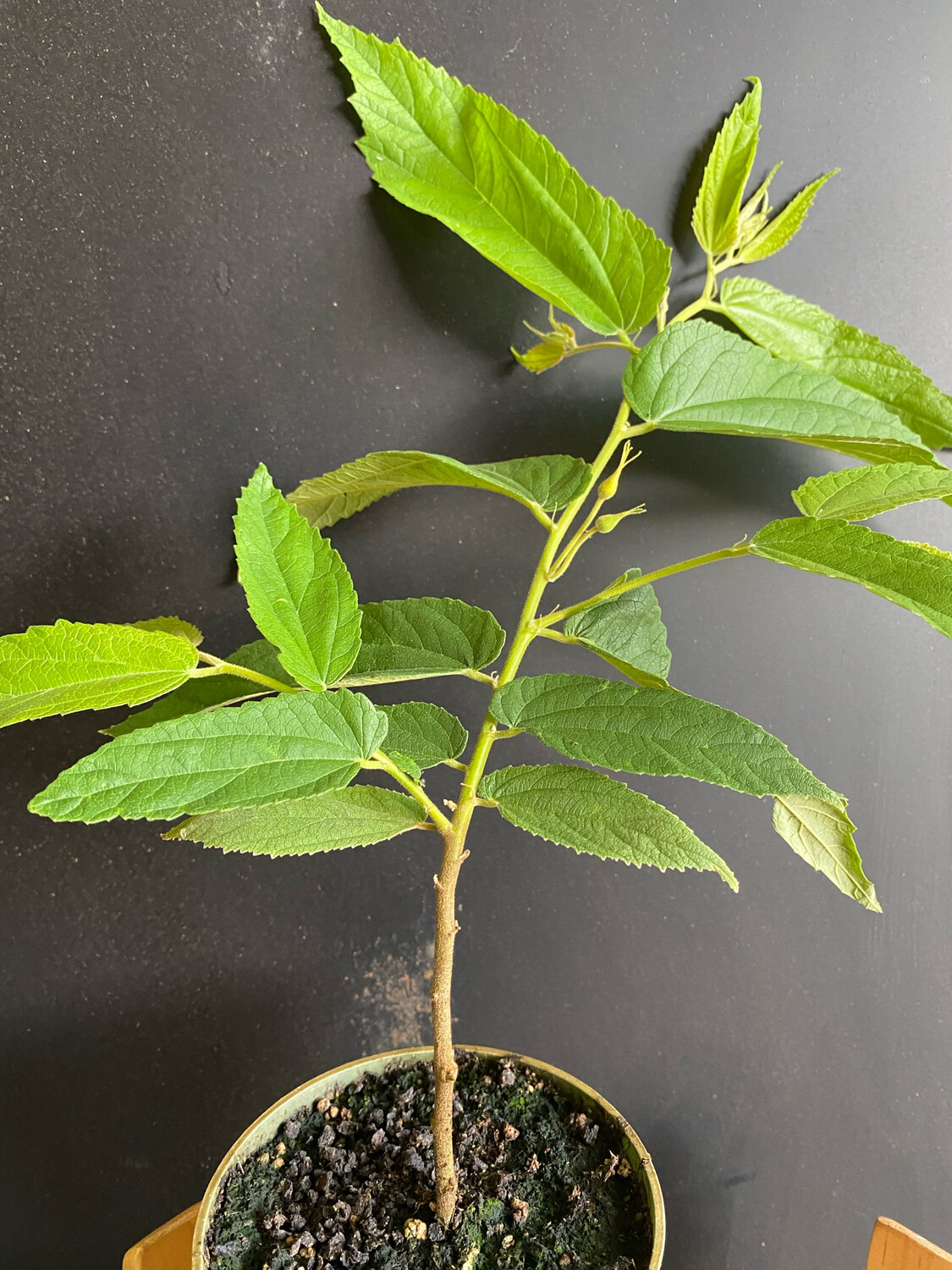
Your plant will arrive growing in a 4-inch nursery container. This is a young starter plant intended for growers who enjoy raising a fruit tree from an early stage. It will require more attentive watering and acclimation than a larger plant, especially after extended UPS Ground transportation.
🌿 Why Grow a Yellow Strawberry Tree?
- 🍯 Rare golden-yellow fruit with mellow honey-like sweetness
- 🌱 Exceptionally fast growth in warm conditions
- 🌸 Repeated flowering and fruiting cycles
- 🍒 Soft fruit rarely found in grocery stores
- 🐝 Flowers support bees and other beneficial insects
- 🐦 Fruit provides food for birds and wildlife
- ✂️ Responds well to pruning for a shorter, fuller canopy
- 🌳 Useful as a fast-growing food forest canopy tree
- 🏡 Attractive as an edible tropical ornamental
- 🌕 Offers a striking contrast beside red-fruited Strawberry Trees
This is a rewarding selection for growers who want unusual fruit without waiting years for the tree to begin contributing to the landscape.
🪴 Important Starter-Plant Expectations
This listing is for a Yellow Strawberry Tree growing in a 4-inch nursery pot.
A 4-inch plant is:
- Young and actively developing
- More delicate than a 1-gallon or 3-gallon tree
- Faster to dry out during hot weather
- More sensitive to extended shipping
- Not expected to arrive as a mature, branched or fruiting specimen
- Best grown into a larger root system before permanent landscape planting
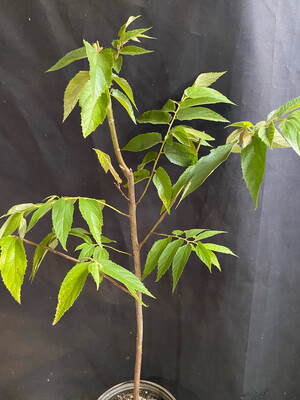
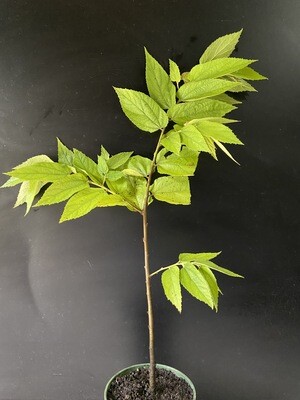
Plant height, stem thickness and branching vary with season, pruning and natural growth. Some young Strawberry Trees grow as one upright central stem before developing a broader canopy.
That vertical growth is normal and can later be redirected through strategic pruning.
Best Shipping Region
This starter size is most suitable for shipment to:
- Florida
- The Southeastern United States
- Texas
- Other locations with relatively short UPS Ground transit times
We can ship throughout the continental United States, but growers in northern and western states should carefully review the shipping section before ordering.
A 1-gallon or larger plant is recommended when available for customers outside our regional shipping zone.
🌿 Quick Facts Guide
| Category | Details |
|---|---|
| Botanical Name | Muntingia calabura |
| Common Names | Yellow Strawberry Tree, Yellow Jamaican Cherry, Yellow Panama Berry, Golden Cotton Candy Tree |
| Selection Type | Rare yellow-fruited horticultural selection |
| Plant Type | Fast-growing tropical to subtropical fruit tree |
| Sale Size | Young live plant growing in a 4-inch nursery container |
| Estimated Age | Commonly approximately 3–8 months; age and appearance vary |
| Expected Arrival Form | Young starter plant; height and branching vary by season |
| Mature Height Unpruned | Approximately 20–40 ft |
| Maintained Height | Approximately 8–15 ft with regular pruning |
| Potential Width | Approximately 15–30 ft depending on training and climate |
| USDA Zones | Best in Zones 10–11; possible in protected Zone 9b locations |
| Sun Requirements | Full sun for strongest growth and fruit production |
| Cold Hardiness | Frost-sensitive; young plants require protection near 32°F |
| Growth Rate | Extremely fast once established |
| Growth Habit | Upright while young; develops spreading and slightly drooping branches |
| Spacing | 12–15 ft for maintained trees; 20–25 ft for largely unpruned trees |
| Pollination | Self-compatible; one tree can produce fruit |
| Wind Tolerance | Low to moderate; young stems and long branches can be damaged |
| Salt Tolerance | Poor; protect from direct salt spray and saline irrigation |
| Leaf Retention | Evergreen in tropical climates; may become semi-evergreen during cool weather |
| Primary Harvest | Warm months; longer season in frost-free climates |
A Note for Zone 9b Growers
Zone 9b should be treated as a protected-microclimate growing range, not guaranteed freeze tolerance.
Plant near the warmer southern or southeastern side of a structure, away from open frost pockets and cold northwestern wind. Young starter plants should be moved into protection whenever freezing temperatures are expected.
🌎 Origin Story – A Golden Expression of a Tropical Classic
Muntingia calabura is native from Mexico through tropical Central and South America. Over time, it traveled throughout the Caribbean, Southeast Asia, Africa and the Pacific, collecting regional names such as Jamaican Cherry, Panama Berry, Capulín, Jam Fruit and Cotton Candy Berry.
The tree became popular because it grew rapidly, produced soft edible fruit and established readily in warm tropical environments.
It has traditionally been valued as:
- A backyard snack tree
- A quick-growing shade tree
- A nectar and pollen source
- A wildlife food plant
- A source of lightweight wood and fiber
- A pioneer species in disturbed tropical landscapes
Among the wider population, growers identified uncommon yellow- and pale-fruited forms. These selections were preserved for their golden color, softer flavor and novelty among rare-fruit collectors.
The Yellow Strawberry Tree is still much less commonly available than the traditional red type, making it a standout addition to mixed fruit collections and subtropical food forests.
🍯 The Golden Fruit Experience
Flavor Profile
Fully ripe Yellow Strawberry Tree fruit is commonly described as:
- Honey-sweet
- Soft and mellow
- Lightly berry-like
- Mildly caramel-like
- Less intensely sugary than many red selections
- Reminiscent of cotton candy or sweet cereal milk
Flavor varies with sunlight, moisture, ripeness and individual growing conditions. Allow the fruit to become completely golden and soft before harvesting.
Texture
- Extremely soft
- Juicy and almost melting
- Filled with numerous tiny edible seeds
- More delicate than commercially shipped fruit
The berries are best eaten immediately after picking. Their short storage life is one reason they are rarely sold in conventional produce markets.
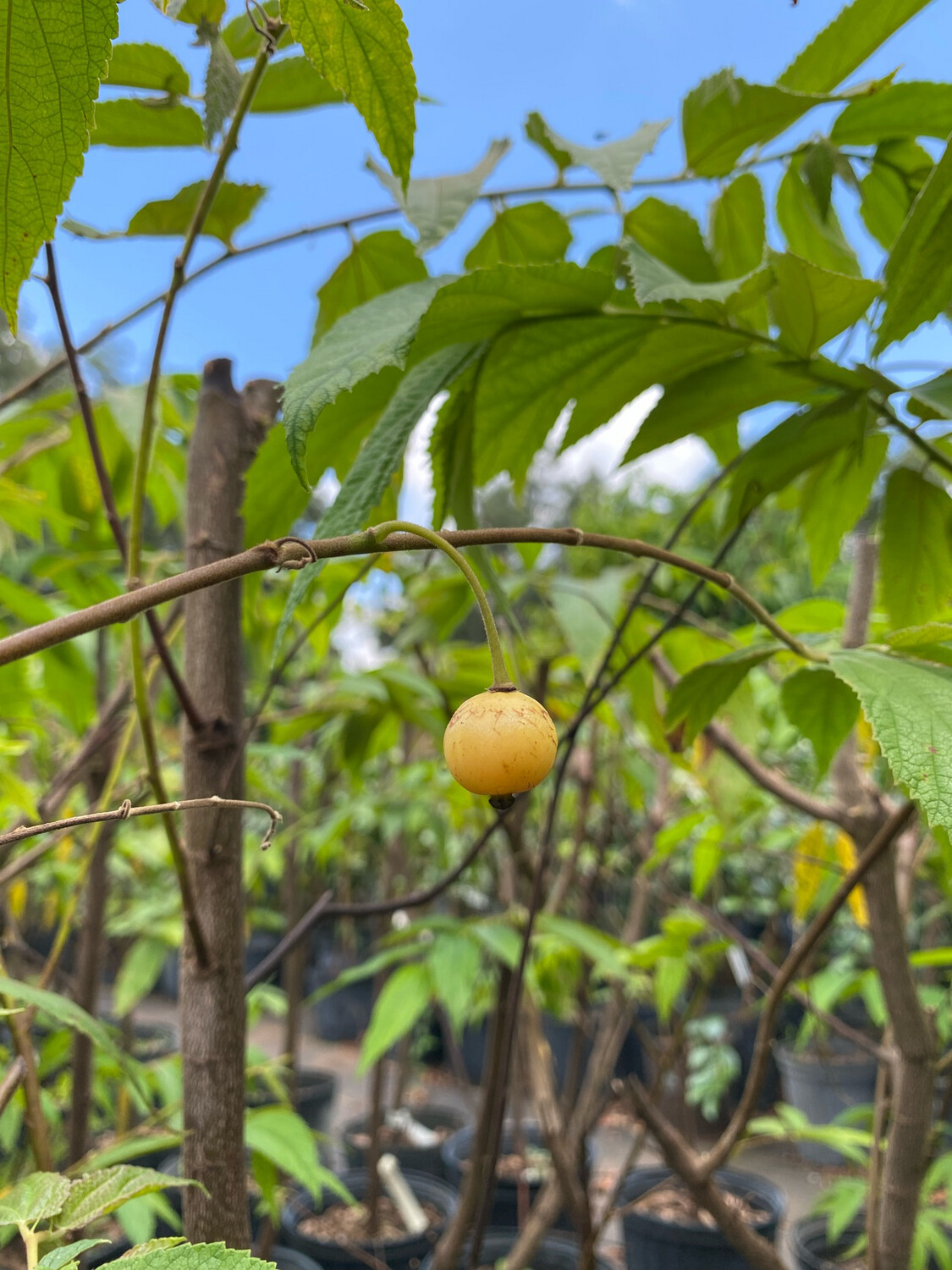
Fruit Appearance
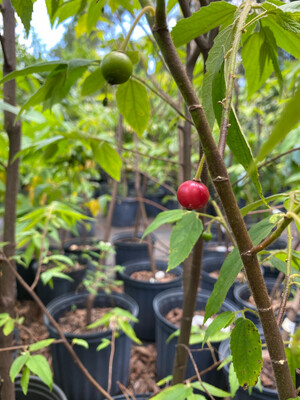
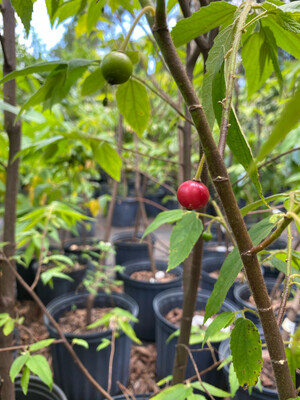
- Small and rounded
- Approximately ½ inch across
- Golden yellow when ripe
- Thin, tender skin
- Soft golden pulp
- Numerous tiny edible seeds
The bright fruit appears like small golden lights scattered through the green canopy.
🍓 Yellow vs. Red Strawberry Tree
| Feature | Yellow-Fruited Selection | Red-Fruited Selection |
|---|---|---|
| Fruit Color | Golden yellow | Bright red to deep pink-red |
| General Flavor | Mellow, honey-like and delicate | Bolder, sweeter and candy-like |
| Texture | Very soft, juicy and melting | Very soft, juicy and melting |
| Landscape Effect | Rare golden contrast | Classic bright tropical color |
| Growth Rate | Extremely fast | Extremely fast |
| Tree Size | Similar to red type | Similar to yellow type |
| Care Requirements | Same general care | Same general care |
| Availability | Less commonly offered | More widely distributed |
| Best For | Collectors and mixed-color plantings | Classic cotton-candy flavor |
Flavor is subjective, and individual trees may vary. Many growers plant both forms together for contrasting color and a side-by-side tasting experience.
🌸 Flowering, Pollination & Production
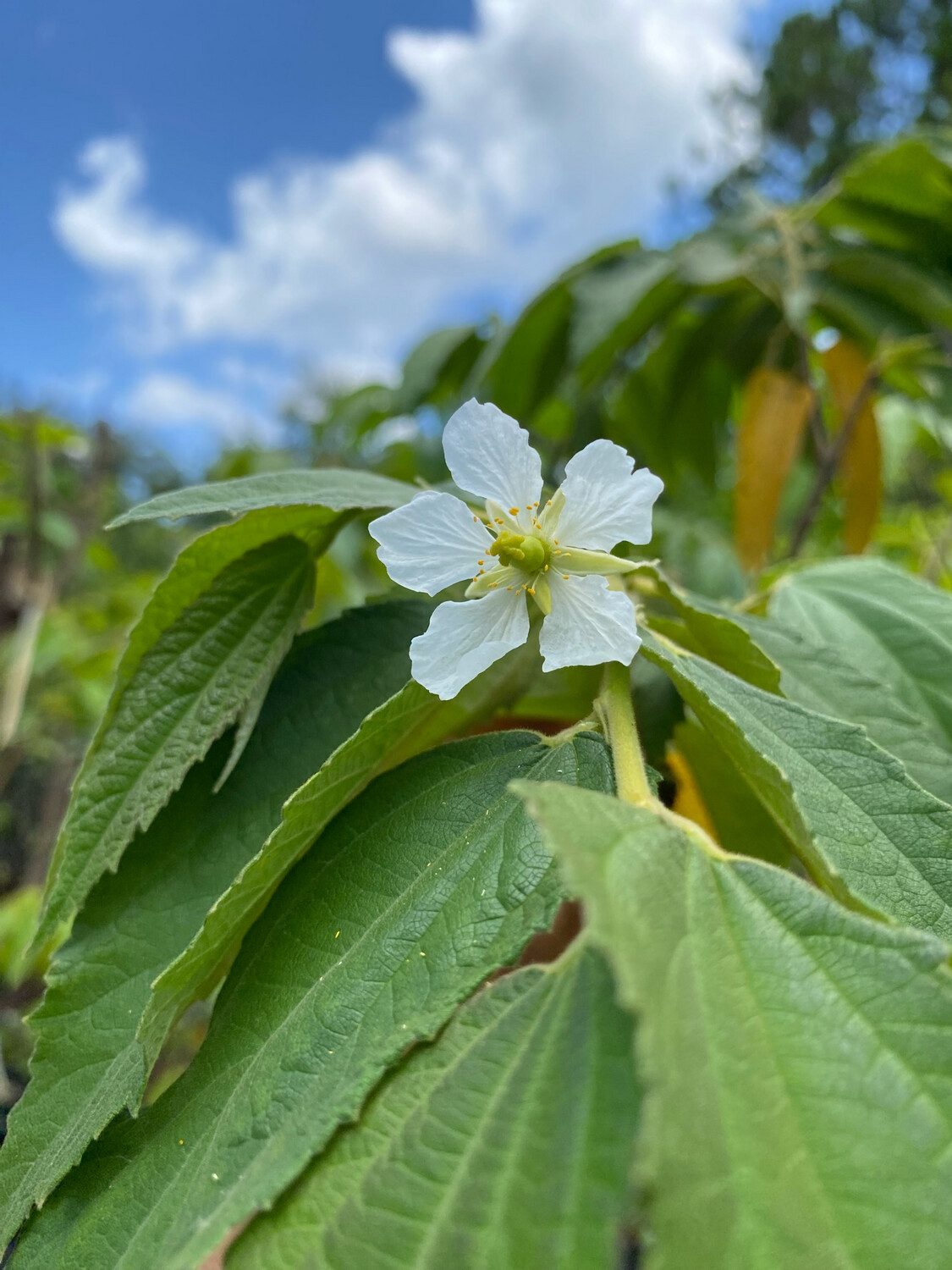
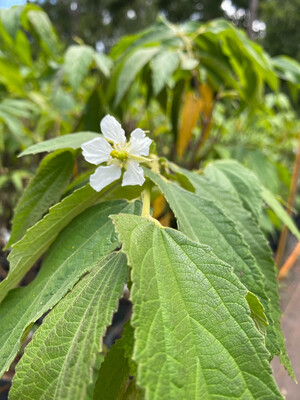
Small white flowers develop along the branches in repeated cycles.
Yellow Strawberry Tree is self-compatible, which means one healthy tree can flower and produce fruit without a separate pollinator tree.
Bees and other beneficial insects frequently visit the flowers, adding ecological value to the landscape.
Fruiting Habits
- Fruit may ripen approximately 6–8 weeks after flowering.
- Warm weather supports repeated bloom and harvest cycles.
- Mature trees may hold flowers, developing fruit and ripe berries at the same time.
- Production is strongest during warm months.
- Fruiting generally slows during cool Central Florida winters.
- Trees in frost-free climates may produce for much of the year.
How to Encourage Production
- Provide at least 6–8 hours of direct sun.
- Maintain even soil moisture during flowering and fruit development.
- Avoid prolonged waterlogging.
- Mulch the root zone to protect moisture and soil biology.
- Encourage bees and other pollinators.
- Use regular pruning to maintain accessible productive growth.
- Avoid excessive nitrogen fertilizer.
- Harvest ripe fruit frequently.
A 4-inch starter plant should first be allowed to establish a strong root system and canopy. Fruiting time will vary according to climate, root space, sunlight and winter protection.
🍒 Harvesting & Culinary Uses
Best Use: Fresh From the Tree
Pick berries when they are:
- Fully golden
- Slightly soft
- Easily released from the stem
- Sweetly fragrant
The skin, pulp and seeds are all edible.
Ways to Enjoy the Fruit
- Eat directly from the tree
- Add to tropical fruit salads
- Spoon over yogurt or oatmeal
- Blend into smoothies
- Use as a dessert garnish
- Cook into small-batch preserves
- Reduce into a dessert syrup
- Freeze into fruit ice cubes
- Add to sparkling water or mocktails
- Pair with red Strawberry Tree fruit on a tasting plate
Simple Golden Strawberry Tree Compote
- Collect fully ripe fruit.
- Rinse gently and remove the stems.
- Place the berries in a small saucepan.
- Add a small splash of water and citrus juice.
- Simmer gently until the fruit begins to break down.
- Sweeten only if necessary.
- Serve over pancakes, yogurt, ice cream or baked desserts.
The tiny seeds can remain in the finished compote.
🌿 Traditional, Cultural & Practical Uses
In tropical regions, Muntingia calabura has been used for more than fresh fruit.
Reported traditional and practical uses include:
- Leaves prepared as herbal tea
- Fruit eaten fresh or cooked into preserves
- Bark fibers used for cordage
- Lightweight wood used for fuel and small projects
- Trees planted for rapid shade
- Wildlife habitat and food production
- Pioneer growth in disturbed tropical soils
Research has identified naturally occurring phenolic compounds in the fruit. These findings do not establish the fruit, leaves or bark as treatments for medical conditions.
Traditional uses are included for educational and cultural context. Consult a qualified healthcare professional before consuming concentrated leaf, bark or herbal preparations.
🌳 Ornamental & Ecological Appeal
The Yellow Strawberry Tree develops a soft tropical appearance with:
- Light green foliage
- Softly textured leaves
- Pale or silvery leaf undersides
- Small white flowers
- Layered horizontal branches
- Slightly drooping branch tips
- Glowing golden berries
Use it as:
- An edible specimen tree
- A fast-growing food forest layer
- A backyard snack tree
- A wildlife observation tree
- A tropical ornamental
- A children’s garden feature
- A companion to red-fruited Strawberry Trees
Avoid planting directly over pale paving, vehicles, pools or outdoor furniture. Fallen ripe fruit and fruit-eating birds can create staining and cleanup concerns.
SEASONAL CARE, PLANTING, WATERING, CONTAINERS & PRUNING
🌞 Seasonal Care in Florida & Similar Warm Climates
Yellow Strawberry Tree is generally evergreen in frost-free tropical climates. In Central Florida and other marginal regions, it may become semi-evergreen, temporarily dropping older leaves during cool, dry or stressful weather.
It does not follow the predictable deep dormancy of a peach, apple or other deciduous fruit tree.
Spring
- 🌱 Rapid vegetative growth begins.
- 🌸 Flowering increases with warmer weather.
- 🍯 Early fruiting cycles may develop on established trees.
- 🪴 Starter plants can be up-potted once actively growing.
- ✂️ Structural pruning can begin after meaningful freeze danger passes.
- 🌿 Top-dress with compost or a mild organic nutrient source.
- 💧 Increase watering as growth accelerates.
Summer
- 🍯 Flowering and fruiting are often strongest.
- 🌿 Branches can extend very rapidly.
- ✂️ Tip-prune long shoots to encourage branching.
- 💧 Check 4-inch containers at least daily.
- 🔥 Young plants may need temporary afternoon protection immediately after shipping.
- ⛈️ Shorten vulnerable limbs before peak storm season.
- 🪵 Maintain a protective mulch layer after planting.
Fall
- 🍃 Fruiting may continue while temperatures remain warm.
- ✂️ Use light maintenance pruning early in the season.
- ⚠️ Avoid severe late-fall pruning that stimulates cold-sensitive new growth.
- 💧 Adjust irrigation as temperatures cool.
- 🧺 Refresh mulch before winter.
- 🪴 Prepare movable containers for cold protection.
Winter
- 🧘 Growth may slow or temporarily stop.
- 🍂 Some leaf yellowing and thinning can be normal.
- ❄️ Move small containers into protection before freezes.
- 🌬️ Protect outdoor trees from cold northwestern wind.
- 💧 Keep roots lightly moist but never saturated.
- ✂️ Wait until warm weather returns before removing questionable freeze-damaged wood.
✂️ Pruning – Turn Upright Growth Into a Fuller Tree
Young Yellow Strawberry Trees often grow vertically before developing a wider canopy.
A 4-inch starter may initially produce:
- One central upright stem
- Small leaves or shoots along the stem
- Limited lower branching
- Rapid vertical extension during warm weather
This does not indicate that anything is wrong with the plant.
The natural upright growth can be redirected later with a properly placed heading cut.
Do Not Prune Immediately After Shipping
Wait until the starter plant:
- Has adjusted to its new environment
- Is no longer wilted or stressed
- Has been gradually returned to appropriate sunlight
- Is producing healthy new growth
- Has developed enough size and foliage to recover from pruning
A very young 4-inch starter generally does not need immediate structural pruning.
Allow the plant to establish first.
How to Prune a 6- to 8-Foot Vertical Strawberry Tree
Once a tree is healthy, established and actively growing:
1. Choose the Future Canopy Height
For most home growers, approximately 3–5 feet above the soil creates a practical branching and harvest height.
2. Find a Healthy Node or Side Shoot
Choose a healthy leaf node or small branch near the height where you want the canopy to begin.
3. Make a Clean Heading Cut
Using sanitized bypass pruners or a pruning saw:
- Cut the central leader just above the selected node.
- Leave approximately ¼ inch above the node.
- Avoid leaving a long dead stub.
- Do not cut directly through the node.
- Make one clean cut without crushing the stem.
Removing the dominant growing tip encourages dormant buds below the cut to develop into new side branches.
4. Allow New Shoots to Develop
Several shoots may emerge below the cut.
Allow them to grow before selecting the strongest permanent branches.
5. Retain Three to Five Scaffold Branches
Keep branches that are:
- Distributed around the trunk
- Growing outward
- Positioned at slightly different heights
- Free from damage
- Capable of creating a balanced canopy
6. Tip-Prune the New Branches
When the selected branches extend approximately 12–24 inches, lightly remove their growing tips.
This encourages secondary branching and develops a wider, fuller canopy.
Pruning Limits
Avoid removing more than approximately 25–30% of the living canopy during one pruning session.
Do not strip every lower leaf or temporary branch from a young tree. Those leaves help strengthen and feed the developing trunk.
Best Pruning Time in Florida
- Major structural pruning: After freeze danger has passed and active growth has resumed
- Maintenance pruning: Late spring through summer
- Storm preparation: Before branches become excessively long
- Avoid: Severe pruning immediately before cold weather
Maintaining the tree around 8–12 ft can make harvesting, frost protection and storm preparation much easier.
🪴 Caring for the 4-Inch Starter After Delivery
The first goal is not immediate transplanting—it is successful recovery from transportation.
Upon Arrival
- Open the box promptly.
- Remove protective packaging carefully.
- Check the soil moisture with your finger.
- Water at soil level only when the root ball needs moisture.
- Place the plant in bright filtered light.
- Protect it from strong wind.
- Avoid immediate full afternoon sun.
- Do not fertilize immediately.
- Keep the plant in its original container.
- Watch for healthy new growth.
Sun Acclimation
Begin with bright filtered light or gentle morning sun.
Gradually increase direct sunlight over approximately 7–14 days. Plants arriving after longer trips may need additional recovery time.
Moving a boxed plant directly into strong Florida afternoon sun can cause leaf scorch even though the established tree prefers full sun.
When to Transplant
Wait at least 30 days or until healthy new growth appears, whichever takes longer.
Transplant only when:
- Shipping stress has passed
- The plant is actively growing
- The root system is beginning to fill the container
- Temperatures are favorable
- Extreme heat, cold or storms are not expected
🪴 Recommended Pot Progression
A young Strawberry Tree should usually be grown through progressively larger containers:
4-inch pot → 1 gallon → 3 gallon → 7 gallon → 15 gallon or larger
For most customers, moving the plant from its 4-inch pot into a 1-gallon container is the appropriate first step.
Avoid moving a tiny root system directly into an extremely large pot. Excess unused potting mix can remain wet for too long and contribute to root decline.
Signs the Plant Is Ready to Up-Pot
- Roots are visible through several drainage holes
- The root ball dries very quickly
- Water runs around the root mass rather than soaking through it
- Growth slows during warm favorable weather
- The plant becomes top-heavy
- Roots circle heavily inside the container
How to Up-Pot
- Water the starter plant before transplanting.
- Select a clean container with generous drainage holes.
- Choose a pot one practical size larger.
- Add enough mix to maintain the original planting depth.
- Remove the plant carefully without pulling the stem.
- Loosen only tightly circling exterior roots.
- Center the root ball in the new pot.
- Fill around it with fresh potting mix.
- Do not bury the stem.
- Firm the mix gently.
- Water thoroughly at soil level.
- Return the plant to filtered light while it adjusts.
Recommended Potting Mix
Use a lightweight, well-draining tropical fruit-tree mix containing:
- Quality peat moss or coconut coir
- Pine bark, perlite or another coarse aeration material
- A modest amount of finished compost
- Optional worm castings
- Optional charged biochar
Do not use dense native soil, straight compost or moisture-retentive garden soil by itself in a container.
Pots and potting materials are commonly available through independent nurseries, landscape suppliers, hydroponic stores, farm suppliers and online garden retailers.
🌿 Planting Yellow Strawberry Tree in the Ground
A 4-inch starter can eventually be planted in the landscape, but many growers will have better results by first developing it in a 1-gallon or 3-gallon container.
A larger root system offers:
- More moisture stability
- Better resistance to heat
- Greater resilience during wind
- Easier establishment in sandy soil
- More energy for recovery from minor damage
Where to Plant
Choose a location with:
- Full sun
- Fast-draining soil
- Space for future canopy development
- Access for pruning and harvesting
- Protection from strong wind while young
- Protection from salt spray
- A warm microclimate in Zone 9b
Where Not to Plant
Avoid:
- Low areas that retain standing water
- Directly beneath power lines
- Exposed coastal sites
- Open frost pockets
- Narrow locations where pruning will be neglected
- Directly beside pools or light-colored paving
- Areas where fallen fruit will be difficult to manage
GreenDreams High & Tight Planting Method
- Water the container before planting.
- Dig a hole only slightly wider than the root ball.
- Keep the hole approximately the same depth as the container.
- Carefully remove the pot.
- Position the root ball slightly above surrounding grade.
- Backfill with native soil, compost or an appropriate blend.
- Pack the soil firmly enough to eliminate large air pockets.
- Do not bury the stem or root crown.
- Top-dress with compost, charged biochar and appropriate organic nutrients.
- Apply hardwood mulch over the surrounding root zone.
- Keep mulch several inches away from the trunk.
- Water deeply at soil level.
Planting slightly elevated reduces the risk of settling too deeply or remaining in saturated soil.
GreenDreams Fruit Tree Planting Guide:
https://youtu.be/RRQFY30qdA8?si=rRIcsbLlVAVYotfI
💧 Watering a 4-Inch Yellow Strawberry Tree
Small nursery containers dry considerably faster than gallon-sized pots.
During warm Florida weather, a 4-inch plant may require daily attention.
Container Watering
- Check the root ball every morning.
- Water when the upper surface begins to dry.
- Water thoroughly until a small amount drains from the pot.
- Do not allow the container to sit in standing water.
- Recheck during extreme heat, dry wind or very low humidity.
- Reduce watering during cool, cloudy or rainy weather.
A small pot may appear dry on the outside while the center remains moist. Check the actual root ball before watering.
In-Ground Establishment
After eventual landscape planting:
- Water deeply after transplanting.
- Check the root ball daily during the first several weeks.
- Water approximately 3–4 times weekly during warm dry weather.
- Increase frequency in sandy soil or extreme heat.
- Reduce irrigation after substantial rain.
- Do not allow standing water to collect around the roots.
Established Trees
Once established:
- Deeply water approximately 1–2 times weekly during dry periods.
- Increase irrigation during flowering and fruit development.
- Adjust for sandy soil, rainfall and plant response.
No Routine Overhead Watering
Water only at soil level.
Morning watering provides the best opportunity for root absorption. Routine overhead irrigation—especially during the afternoon—can encourage leaf spotting, splash soil onto foliage and contribute to leaf scorch.
Drip irrigation or a soil-level bubbler is preferred over overhead sprinkler heads.
🌾 Soil, Mulch & Organic Nutrition
Yellow Strawberry Tree performs best in soil that is:
- Well drained
- Moist but not waterlogged
- Rich in organic matter
- Biologically active
- Protected from salt accumulation
Organic Soil Support
Consider using:
- Finished compost
- Worm castings
- Charged biochar
- Mild organic fruit-tree fertilizer
- Trace minerals based on soil conditions
- Decomposed hardwood mulch
Avoid excessive nitrogen. Too much nitrogen may produce long, weak shoots that are more vulnerable to wind damage.
Feeding Schedule
Spring: Apply compost and a modest organic nutrient application after active growth begins.
Summer: Feed lightly only when growth or leaf color indicates a need.
Fall: Avoid heavy nitrogen feeding late in the season.
Winter: Do not push tender new growth immediately before cold weather.
Do not fertilize a newly shipped or recently transplanted starter until it has recovered and begun producing healthy growth.
🌿 Companion Plant Guild
Nitrogen-Supporting Plants
- Pigeon Pea
- Sunn Hemp
- Perennial Peanut
- Regionally appropriate native legumes
Pollinator Magnets
- Mexican Sunflower
- African Blue Basil
- Salvia
- Native wildflowers
- Florida-native flowering shrubs
Biomass & Chop-and-Drop Plants
- Lemongrass
- Vetiver and other clumping grasses
- Pigeon Pea
- Mexican Sunflower managed before seed production
- Comfrey where appropriate for the climate
Tropical Visual Pairings
- Red Strawberry Tree
- Banana
- Edible Hibiscus
- Ginger
- Turmeric
- Dwarf Mulberry
- Papaya
- Pineapple
Keep vigorous companions far enough away that they do not crowd the young starter plant or compete directly with its root zone.
CAUTIONS, TROUBLESHOOTING, SHIPPING & FAQ
⚠️ Important Cautions
Young Starter Plant
This listing is for a young plant in a 4-inch container—not a mature tree.
Customers should expect:
- A developing root system
- A young stem
- Variable height and branching
- Possible cosmetic leaf changes after transportation
- A need for careful watering
- Gradual sun acclimation
- Additional growing time before permanent planting or fruiting
Frost Sensitivity
Yellow Strawberry Tree is tropical.
A 4-inch starter can be severely damaged or killed by frost. Move the container into a protected structure whenever temperatures approach freezing.
Do not rely on the cold tolerance of a mature tree when caring for a small starter plant.
Rapid Drying
The small container can dry quickly during:
- Summer heat
- Low humidity
- Strong wind
- Full sun
- Transportation recovery
- Periods of rapid root growth
Check the plant daily without automatically keeping the soil saturated.
Weak Young Stems
Protect young plants from strong wind. Do not place a newly delivered starter in an exposed location where the stem can whip, bend or break.
Poor Salt Tolerance
Avoid:
- Direct ocean spray
- Saline irrigation
- Salt-contaminated soil
- Concentrated roadside salt
- Exposed coastal wind
Self-Seeding Potential
Mature trees may produce volunteer seedlings where fruit falls or is carried by wildlife.
Responsible growers should:
- Harvest fruit frequently
- Remove unwanted seedlings
- Avoid planting near sensitive natural areas
- Monitor fence lines and woodland edges
Fruit Drop
Soft ripe fruit can fall, ferment or attract wildlife. Avoid planting mature trees directly over pale paving, vehicles, pools or outdoor furniture.
🔍 Yellow Strawberry Tree Troubleshooting Guide
Icons represent common issues and organic solutions—look for 🌿 for recovery guidance.
| ⚠️ Issue | 🧠 Likely Cause | 🌿 Organic Response |
|---|---|---|
| 🍂 A few yellow leaves after arrival | Normal transportation stress | Keep in filtered light and watch for healthy new growth |
| ☀️ Pale or scorched leaves | Too much direct sun immediately after shipping | Return to filtered light and acclimate gradually |
| 💧 Wilted leaves and dry root ball | Small container dried too quickly | Water thoroughly at soil level and increase monitoring |
| 💦 Yellowing with constantly wet soil | Overwatering or blocked drainage | Allow more air into the root zone and clear drainage holes |
| 🍃 Lower leaf drop | Shipping stress, cool weather or natural turnover | Confirm that stems remain green and firm |
| 🌬️ Bent or torn stem | Strong wind or rough handling | Protect the plant and loosely support only when necessary |
| ❄️ Blackened leaves | Cold or frost injury | Move into protection and wait for new growth before pruning |
| 🌱 Tall single stem | Normal apical dominance | Allow establishment; prune later at the desired canopy height |
| 🌿 Slow growth | Cool temperatures, limited roots or insufficient light | Provide warmth, gradual sunlight and appropriate root space |
| 🐛 Chewed foliage | Caterpillars or beetles | Inspect manually and use targeted organic controls only when needed |
| 🪲 Sticky or distorted growth | Aphids, scale or other sap-feeding pests | Inspect leaf undersides, manage ants and use horticultural soap when appropriate |
| 🕷️ Fine webbing indoors | Spider mites | Isolate the plant and apply an appropriate organic treatment |
| 🍄 Sour-smelling wet mix | Poor drainage or root decline | Improve drainage and avoid leaving the pot in standing water |
| 🪴 Plant dries out within hours | Root system has filled the small pot | Move into a 1-gallon container after shipping recovery |
| 🍃 No immediate new growth | Transportation recovery or cool weather | Maintain stable care and allow additional time |
| 🔥 Brown leaf tips after feeding | Fertilizer applied too soon or too heavily | Flush gently with water and pause fertilization |
A few blemished or dropped leaves do not necessarily mean the plant is unhealthy. The strongest sign of successful recovery is firm stems followed by healthy new growth.
🚚 Shipping & Handling – Please Read Before Ordering
We ship live plants from Florida using UPS Ground every Monday.
The Yellow Strawberry Tree offered on this page grows in a small 4-inch nursery container. This size offers excellent value for experienced growers but is naturally more sensitive to transportation than a larger gallon-sized tree.
Best-Suited Shipping Region
We most strongly recommend this size for:
- Florida
- The Southeastern United States
- Texas
- Nearby areas with shorter UPS Ground delivery times
Northern & Western United States
We can ship throughout the continental United States. However, customers in northern and western states should understand that longer UPS Ground transit creates additional risk.
Extended transportation may expose the plant to:
- Several days without natural light
- Rapid temperature fluctuations
- Heat buildup inside the box
- Cold exposure
- Dehydration
- Delayed delivery
- Repeated box movement
- Reduced airflow
- Longer recovery periods
A small starter plant may arrive:
- Wilted
- Leaning
- With yellowed or dropped leaves
- With minor stem or leaf damage
- In need of several weeks of recovery
These symptoms do not always indicate permanent damage. Strawberry Trees are fast growers and may recover once stable warmth, moisture and light are restored.
California Shipments
California agricultural inspection may add an additional day or more to the delivery process. This can further extend the amount of time a small plant remains boxed.
Peak Heat & Cold
Buyer discretion is strongly advised during extreme summer heat and winter cold.
GreenDreams cannot control:
- Temperatures inside UPS vehicles
- Weather conditions along the route
- Delivery delays
- Packages left outdoors after delivery
- Additional agricultural inspection time
The buyer assumes the added risks associated with extreme temperatures and extended UPS Ground transportation.
Larger Plants Recommended
Customers outside Florida, the Southeast and Texas should consider purchasing a 1-gallon or larger Yellow Strawberry Tree when available.
Larger containers generally provide:
- More soil volume
- Greater moisture stability
- A stronger root system
- More stored energy
- Better resilience during lengthy transportation
The 4-inch size dries out more quickly and may need a longer recovery period after cross-country shipping.
📦 What to Do When Your Plant Arrives
- Bring the package indoors or into shade immediately.
- Open the box promptly.
- Remove all packing material carefully.
- Check the soil moisture.
- Water at soil level only when needed.
- Place the plant in bright filtered light.
- Protect it from wind.
- Do not place it immediately in intense afternoon sun.
- Do not fertilize immediately.
- Keep it in the original container.
- Watch for healthy new growth.
- Gradually increase direct sunlight over 7–14 days.
Plants experiencing greater transportation stress may require up to several weeks of stable care before new growth appears.
Wait Before Transplanting
Keep the Yellow Strawberry Tree in its current container for approximately 30 days or until healthy new growth appears, whichever takes longer.
Do not transplant simply because the plant has arrived.
The best time to move it into a 1-gallon container is when:
- Shipping stress has passed
- New growth is visible
- Roots are filling the existing pot
- Weather conditions are favorable
- The plant is well hydrated
- No extreme heat or cold is expected
🌟 Is This Plant Right for You?
✅ Ideal For
- Rare tropical fruit collectors
- Florida and Southeastern growers
- Food forest builders
- Patient growers comfortable with starter plants
- Gardeners who monitor container moisture regularly
- Customers who enjoy growing trees from a young stage
- Warm-climate edible landscapes
- Protected patios and greenhouses
- Growers seeking an affordable entry into rare fruit cultivation
- Customers who can provide winter protection
❌ Not Ideal For
- Customers expecting a mature or fruiting tree on arrival
- Growers unable to check a small container regularly
- Unprotected cold-climate landscapes
- Direct coastal salt-spray locations
- Customers seeking the lowest-risk option for cross-country shipping
- Growers who cannot provide gradual sun acclimation
- Permanently wet planting sites
- Small landscapes where future pruning will be neglected
- Buyers ordering during extreme weather without accepting transportation risk
❓ Yellow Strawberry Tree FAQ
Is this a mature fruiting tree?
No. This listing is for a young starter plant growing in a 4-inch nursery container.
What will the plant look like when it arrives?
Height, stem thickness and branching vary. Young Strawberry Trees may arrive as one upright stem with leaves or small side shoots rather than a full miniature tree canopy.
Why is my young tree growing straight upward?
Strong vertical growth is normal. Once the tree is larger, established and actively growing, the central leader can be pruned to encourage outward branching.
Should I prune the plant immediately?
No. Allow a newly shipped 4-inch plant to recover and produce healthy new growth first.
When should I move it into a 1-gallon pot?
Wait at least 30 days or until new growth appears. Up-pot when roots begin filling the original container and the plant is no longer showing transportation stress.
Can I plant it directly in the ground?
It is possible in ideal warm conditions, but growing the starter into a 1-gallon or 3-gallon plant first generally provides greater moisture stability and establishment strength.
Does the 4-inch pot dry quickly?
Yes. It can dry much faster than a gallon-sized container, especially during Florida summer weather.
Can one Yellow Strawberry Tree produce fruit?
Yes. The tree is self-compatible and does not require a separate pollinator tree.
When will it begin fruiting?
Timing varies with warmth, sunlight, root space, pruning and winter protection. A starter plant should first be allowed to build a healthy root system and canopy.
Is it the same species as the red Strawberry Tree?
Yes. Both are selections of Muntingia calabura. The primary difference is the mature fruit color and general flavor profile.
Is the yellow fruit sweeter?
It is often described as more mellow and honey-like rather than more intensely sweet. The red type is frequently perceived as bolder and more candy-like.
Can it grow in Zone 9b?
It can succeed in protected Zone 9b microclimates, but young plants must be protected from freezing temperatures.
Can I keep it in a container?
Yes. Progressively up-pot the tree and prune it to maintain a manageable canopy.
Can it be grown indoors?
It may be overwintered in a bright greenhouse, sunroom or protected structure. It is not ideal as a permanent low-light houseplant.
Why did some leaves fall after delivery?
Leaf drop can result from darkness, temperature changes, dehydration or normal transportation stress. Keep the plant stable and watch for healthy new growth.
Should I order this size for cross-country delivery?
The decision depends on season, weather and your ability to provide recovery care. A 1-gallon or larger plant is the safer choice when available for lengthy northern or western transportation.
🏡 Shop With Us in Person
See Larger Plants & Rare Selections at GreenDreams
Our retail nursery carries Yellow Strawberry Trees, larger fruit trees and countless edible, medicinal, native and ecological plants that may not be available through our online store.
GreenDreams Nursery & Farm – Retail Nursery Open to the Public
🌾 18709 US Hwy. 41, Spring Hill, FL 34610
🕘 Tuesday–Friday: 9AM–5PM
🌞 Saturday: 8AM–3PM
Visit the nursery to compare available sizes, explore our rare fruit collection and see what is blooming or fruiting this week.
🌿 Beyond the Plant: GreenDreams Services
At GreenDreams, we do more than grow plants—we design, build and restore edible ecosystems across Florida.
- 🌳 Onsite consultations and edible landscape design
- 🚜 Installation and project management
- 🚚 Bulk delivery of compost, mulch, biochar and soil materials
- 🌾 Wholesale and large-scale regenerative solutions
- 🍃 Food forest planning and ecological landscape support
- 🪴 Plant selection for Florida growing conditions
Let our experienced team help you create a thriving edible paradise—starting with a rare Yellow Strawberry Tree.
🌿 IMPORTANT INFORMATION BEFORE PURCHASING LIVE PLANTS
Please note: Plants purchased through our online store are not available for pickup at our retail nursery in Spring Hill, Florida.
Online inventory is housed at a separate facility and is priced, prepared, and handled exclusively for shipping.
🌱 Looking for larger plants or more selection?
Our retail nursery location offers far more availability, including larger sizes, specialty plants, and many selections not suitable for nationwide shipping.
Local pickup is available for retail nursery purchases only.
Visit our Spring Hill, FL retail nursery page to explore in-person shopping options.
🚚 LIVE PLANT SHIPPING & TRANSIT EXPECTATIONS
Live plants naturally experience stress during shipping. Temporary leaf drop, mild wilting, or cosmetic stress is normal after transit. Most plants recover quickly with proper watering, gradual light exposure, and basic aftercare. Some plants may require additional attention during the first few weeks.
Despite careful packing, minor cosmetic damage may occur during transit. Small issues such as broken leaves or stems typically resolve with time and proper care.
If your shipping box arrives with significant external damage, please contact UPS within 30 days to initiate a carrier claim.
⏱️ SHIPPING METHOD, TIMING & TRANSIT WINDOWS
All online orders ship via UPS Ground from our Central Florida nursery.
📦 Shipping Schedule: Orders ship once weekly on Mondays to reduce the risk of packages sitting in transit over weekends. A countdown clock on our website displays the next shipping date.
🚚 Typical Transit Times:
-
Florida: 1–2 days
-
Southern U.S.: approximately 2 days
-
Midwest, West & Northern U.S.: 3–5 business days
Long-distance shipments, particularly to the western U.S., may experience additional transit time due to agricultural inspections in states such as Arizona, California, and Texas.
Extended transit times can be more challenging for small or tender plants and may require additional recovery care after arrival.
🌡️ EXTREME WEATHER & SEASONAL RISK
Live plants are sensitive to temperature extremes.
We cannot guarantee plant condition during periods of extreme summer heat or winter cold and freezing temperatures. Weather-related delays, carrier interruptions, or exposure during delivery are beyond our control.
Customers are responsible for:
-
Monitoring tracking information sent via email
-
Retrieving packages promptly upon delivery
-
Preventing plants from being left outdoors in extreme conditions
During unsafe weather, holiday shipping volume, or extended transit risk, orders may be held and shipped the following week to protect plant health.
⚠️ CUSTOMER RESPONSIBILITY & REFUND POLICY
By purchasing live plants, customers acknowledge and accept the risks associated with shipping, weather exposure, transit delays, and regional suitability.
Refunds or replacements are considered only under exceptional circumstances and in accordance with our return and refund policy. We are not responsible for:
-
Weather-related damage
-
Carrier delays
-
Poor plant selection for a given climate or region
-
Improper care after delivery
Upon purchase, customers assume full responsibility for the ongoing care and success of their plants.
✅ CONSENT & AGREEMENT
By completing a purchase, you confirm that you have read, understand, and agree to all shipping policies, responsibilities, and conditions outlined above.
Our goal is transparency, plant health, and long-term growing success — and we appreciate your understanding and care when ordering live plants.


