


🍓 Red Strawberry Tree (Muntingia calabura) — Grow Your Own Cotton Candy Berries 🌿
A lightning-fast tropical fruit tree producing tiny, candy-sweet red berries that taste like cotton candy, caramelized sugar, and berry jam.
Some fruit trees require years of patience before you taste the reward. Red Strawberry Tree gets moving much faster.
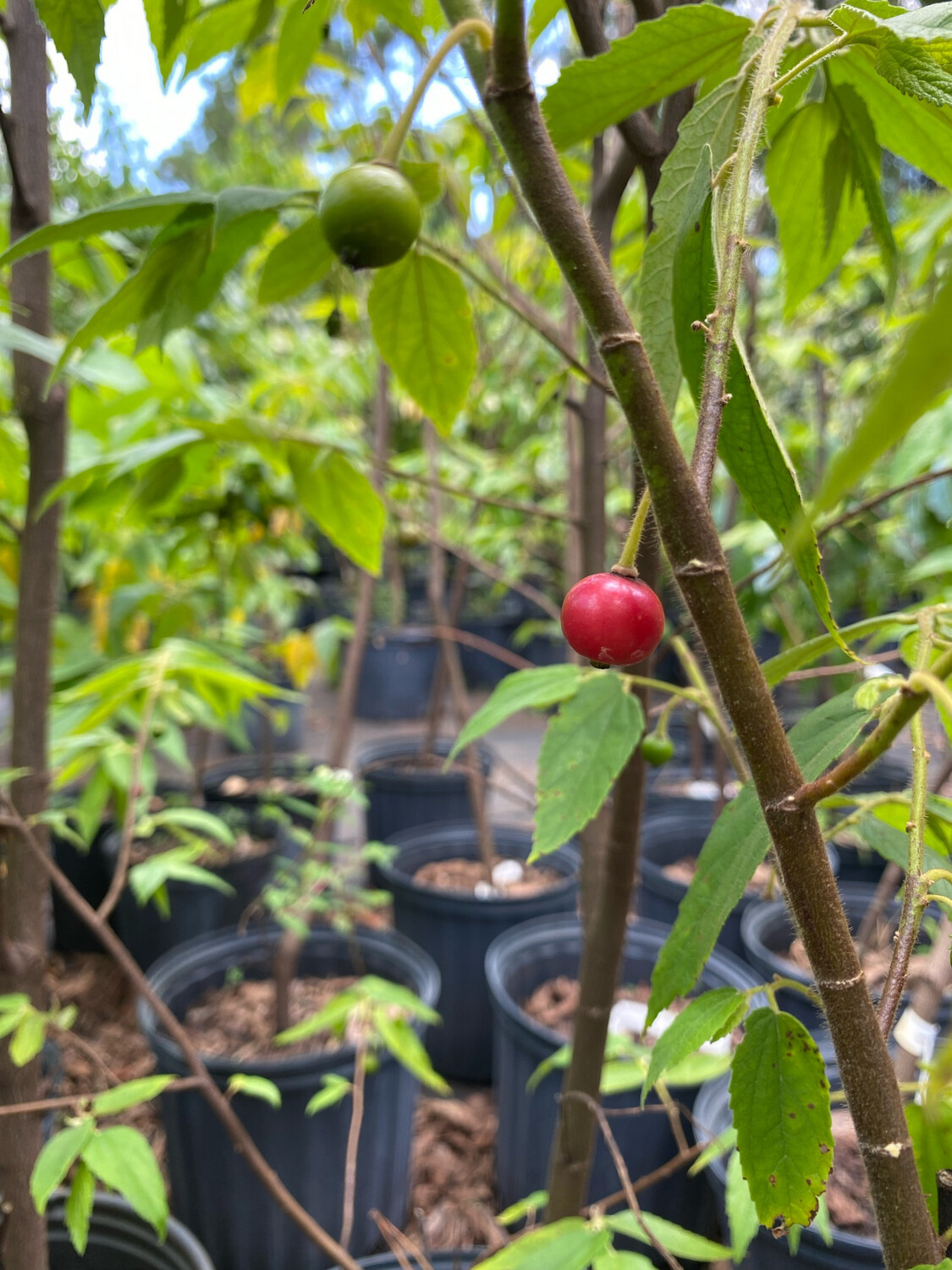
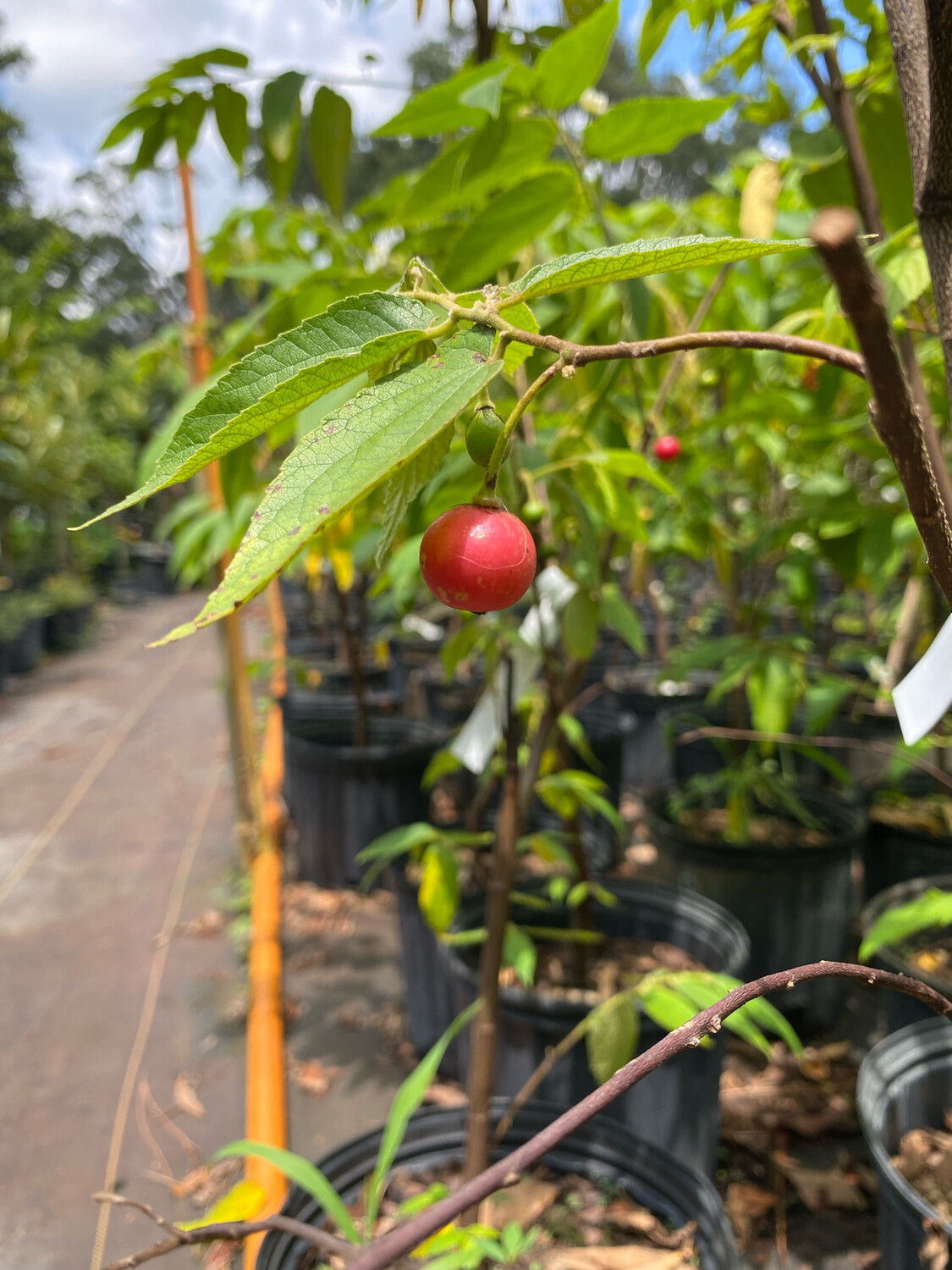
Also known as Jamaican Cherry and Panama Berry, Muntingia calabura develops into an airy tropical fruit tree covered with small white flowers and bright red berries. The ripe fruit is exceptionally soft, juicy, and sweet—perfect for grabbing directly from the tree while walking through the garden.
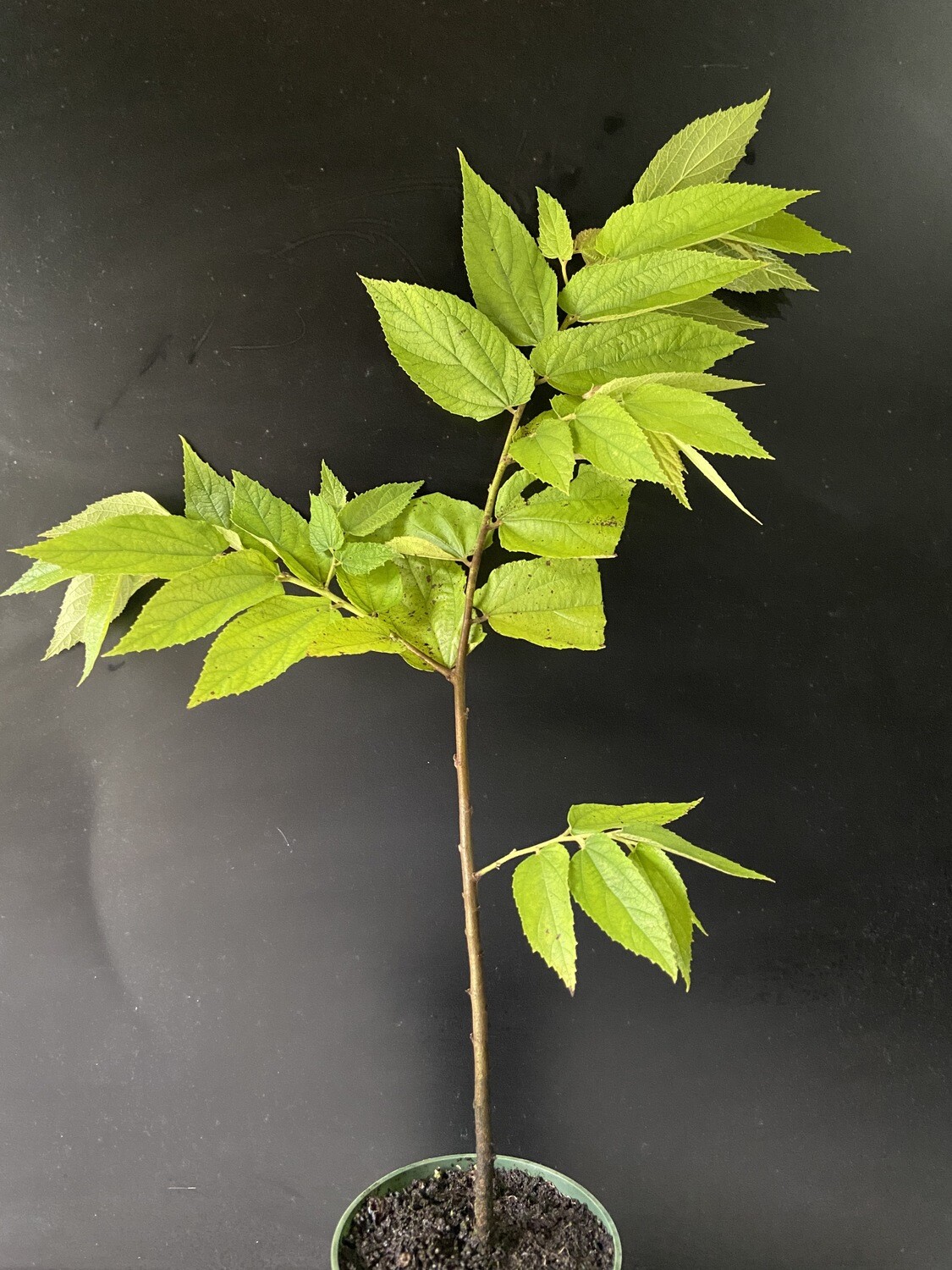
This listing features the classic red-fruited Strawberry Tree, offered as a young 4-inch starter plant. It is an economical way to begin growing this fast-producing tropical fruit tree, especially for Florida, the Southeast, Texas, and other warm regions.
Small plant now. Serious snack-tree potential later.
🌿 Quick Facts Guide
| Category | Details |
|---|---|
| Botanical Name | Muntingia calabura |
| Common Names | Red Strawberry Tree, Jamaican Cherry, Panama Berry, Jamaica Cherry, Jam Fruit Tree, Cotton Candy Berry |
| Plant Type | Fast-growing tropical to subtropical evergreen fruit tree |
| Fruit Type | Small, soft, bright red edible berries |
| Sale Size | Young plant growing in a 4-inch nursery container |
| Estimated Age | Approximately 3–6 months, depending on propagation date and growing conditions |
| Plant Height at Shipping | Varies by current crop, season, and nursery pruning |
| Mature Height | Approximately 20–40 ft unpruned |
| Maintained Height | Commonly maintained around 8–12 ft with regular pruning |
| Mature Width | Approximately 15–30 ft, depending on training and climate |
| USDA Growing Zones | Best suited to Zones 9b–11 |
| Sun Requirements | Full sun for strongest growth and fruit production |
| Cold Hardiness | Frost-sensitive; protect near 32°F and below |
| Growth Rate | Extremely fast once established in warm weather |
| Growth Habit | Upright when young, developing a broad, airy, spreading canopy |
| Spacing | Approximately 12–20 ft for a naturally spreading tree; closer spacing requires regular pruning |
| Pollination | Self-compatible; one tree can produce fruit |
| Typical Florida Harvest | Primarily spring through fall, with longer production in frost-free locations |
| Wind Tolerance | Fair in normal breezes; long, lightweight branches may break during storms |
| Salt Tolerance | Low; protect from direct salt spray and saline irrigation |
| Container Growing | Yes, with progressive up-potting and regular pruning |
| Indoor Growing | Difficult without strong supplemental lighting |
About the 4-Inch Starter Size
A 4-inch Strawberry Tree is a young, actively developing starter plant, not a miniature version of a mature fruit tree.
This size is ideal for growers who:
- Want an affordable way to begin growing a specialty tropical fruit tree
- Enjoy raising plants from a young stage
- Live within a shorter shipping distance from Florida
- Can provide consistent moisture and careful acclimation
- Plan to move the plant progressively into larger containers
- Want to shape the canopy from an early age
Because the container and root system are small, this size dries faster and is less buffered against shipping stress than a 1-gallon or larger plant.
Growers in northern or western states should strongly consider a larger size when available.
🌎 Origin Story — A Tropical American Fruit Tree That Traveled the World
Muntingia calabura is native from Mexico through Central America, the Caribbean, and tropical portions of South America.
Its botanical genus honors Abraham Munting, a 17th-century Dutch physician and botanist. The tree later traveled throughout tropical regions, including Southeast Asia, where it became a familiar roadside, village, and schoolyard fruit tree.
Its spread was easy to understand:
- The tree grows quickly.
- It begins fruiting while relatively young.
- It tolerates many ordinary soils.
- It produces repeatedly during warm weather.
- The fruit is easy to eat directly from the tree.
- Birds and other wildlife readily distribute the tiny seeds.
In the Philippines, the fruit is widely known as aratiles. Other regional names include kersen, talok, Singapore cherry, Jamaican cherry, and Panama berry.
This was never a fruit created for grocery-store shelves.
It became popular because it could grow near homes, feed families, attract wildlife, and produce an abundance of sweet fruit with relatively little ceremony.
🍒 Red Fruit Experience — Tiny Berries With Big Flavor
The fruit of Red Strawberry Tree may be small, but the flavor is memorable.
| Fruit Feature | What to Expect |
|---|---|
| Fruit Size | Commonly approximately ¼–½ inch wide |
| Fruit Shape | Small, rounded berry |
| Skin Color | Green when immature, ripening to pinkish-red or bright red |
| Skin Texture | Very thin, smooth, tender, and edible |
| Flesh Color | Pale tan to translucent |
| Flesh Texture | Extremely soft, juicy, delicate, and almost melt-in-your-mouth |
| Seeds | Numerous but extremely tiny and generally eaten with the fruit |
| Flavor | Intensely sweet with cotton-candy, caramel, fig, cereal-milk, and light berry notes |
| Best Harvest Stage | Fully red, soft, and easily removed from the stem |
| Storage Life | Very short; best eaten or processed immediately |
Why the Fruit Feels Like a Garden Secret
The berries require:
- No peeling
- No slicing
- No seed removal
- No ripening on the counter
- No preparation beyond picking
Simply find a fully red berry and eat it fresh.
The fruit is rarely sold commercially because it is too delicate for normal harvesting, packaging, and transportation. Even gentle handling can bruise the thin skin.
That limitation becomes a major advantage for backyard growers.
This is a fruit most people cannot buy. They have to grow it.
🌸 Flowering, Pollination and Fruit Production
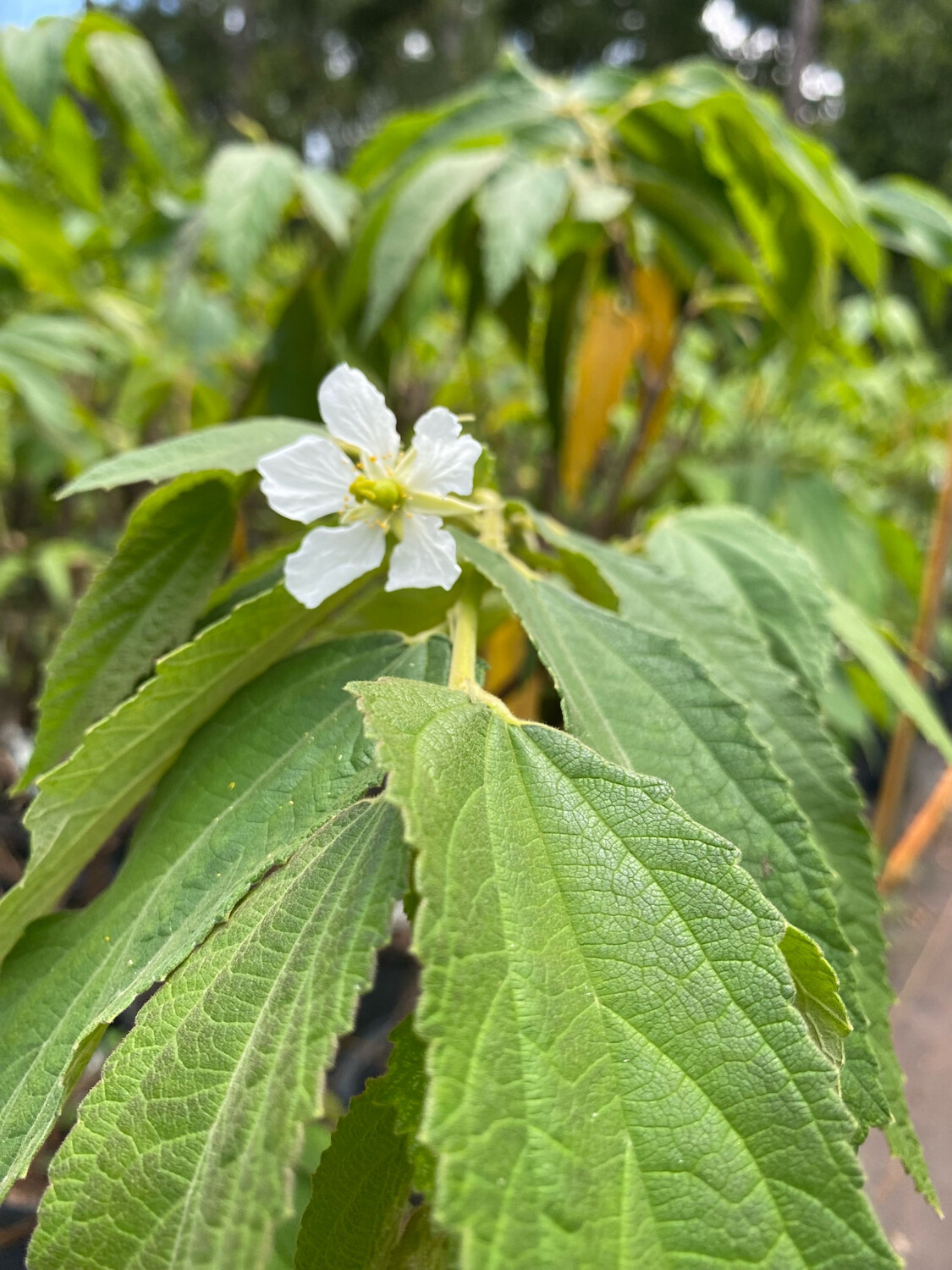
Red Strawberry Tree produces small white flowers with five petals and bright yellow stamens. The flowers resemble tiny strawberry blossoms and may appear beside green fruit and fully ripe red berries on the same branch.
Fruiting Habits
- Trees can flower and fruit while relatively young.
- Flowers appear repeatedly during warm conditions.
- Individual flowers are short-lived, but new flowers continue opening.
- One tree can produce fruit without a second pollinating variety.
- Bees and other visiting insects support pollination.
- Fruit develops relatively quickly after flowering.
- Warm, sunny weather supports the heaviest production.
- Cold, drought, low light, and root stress can slow or interrupt fruiting.
A healthy Strawberry Tree may hold flowers, immature fruit, and ripe berries simultaneously.
Expected Harvest by Region
| Growing Region | Typical Production Pattern |
|---|---|
| South Florida | Intermittent production through much of the year, with strongest harvests during warm weather |
| Central Florida and Zone 9b | Primarily spring through fall; fruiting slows or stops during cold periods |
| North Florida and the Lower Southeast | Warm-season production with winter protection required |
| Texas Gulf Coast | Strong summer growth and fruiting where water is consistent; freeze protection is important |
| Northern and Western States | Primarily container or greenhouse production during warm months |
| Frost-Free Tropical Climates | Extended or nearly continuous flowering and fruiting may occur |
How to Encourage Better Fruit Production
- Provide at least six hours of direct sunlight.
- Maintain consistent soil moisture during flowering.
- Avoid allowing a small container to dry completely.
- Protect flowers and tender growth from cold wind.
- Encourage bees and other beneficial insects.
- Prune regularly to maintain active growth within reach.
- Use moderate organic fertility rather than excessive nitrogen.
- Improve soil biology with compost, mulch, and charged biochar.
Excessive nitrogen can produce long, soft branches without improving the tree’s structure or harvest accessibility.
🍓 Culinary Uses for Red Strawberry Tree Fruit
Fresh From the Tree
Fresh eating is the primary reason to grow Muntingia calabura.
Harvest fruit when it is:
- Fully red
- Soft to the touch
- Easily removed from the stem
- Sweet and aromatic
Use a shallow bowl or tray while harvesting. Deep containers can crush the delicate fruit under its own weight.
Culinary Applications
- Fresh garden snacks
- Fruit salads
- Yogurt and oatmeal toppings
- Smoothies
- Pancake syrup
- Refrigerator jam
- Dessert sauces
- Sorbet
- Granita
- Fruit leather
- Frozen fruit purée
- Mocktails
- Shrubs
- Infused vinegar
- Lightly cooked compotes
Because the seeds are extremely small, recipes normally use the entire berry rather than attempting to remove them.
🍯 Simple Cotton Candy Berry Syrup
Ingredients
- 2 cups fully ripe Red Strawberry Tree berries
- ½ cup water
- ¼–½ cup sugar or honey
- 1–2 teaspoons lemon or lime juice
Directions
- Place the berries and water in a small saucepan.
- Simmer gently for approximately 10 minutes.
- Mash the softened fruit.
- Strain for a smoother syrup or retain the seeds for a rustic texture.
- Add sweetener and citrus juice to taste.
- Cool and refrigerate.
Serve over pancakes, yogurt, oatmeal, ice cream, cheesecake, or tropical fruit salad.
🌿 Top Benefits of Growing Red Strawberry Tree
🍒 A Fruit You Normally Cannot Purchase
The berries are too delicate for normal commercial shipping, making home production the best way to experience them.
🌱 Exceptionally Fast Growth
Once established in warm weather, Strawberry Tree can quickly develop height, canopy, and active flowering branches.
🐝 Supports Pollinators
The small white flowers provide nectar and pollen for bees and other beneficial insects.
🐦 Supports Wildlife
Birds and other fruit-eating wildlife readily visit the tree. Harvest frequently when you want to keep more fruit for yourself.
🌳 Quick Tropical Canopy
The airy canopy can provide filtered shade, habitat, and fast vertical structure within an edible landscape.
🌸 Ornamental Appeal
Red Strawberry Tree combines:
- Soft, lightly fuzzy foliage
- Serrated leaves
- Small white flowers
- Bright red berries
- An informal tropical silhouette
- Flowers and fruit appearing together
🌾 Food Forest and Regenerative Uses
This tree works especially well in:
- Tropical and subtropical food forests
- Children’s gardens
- Wildlife gardens
- Informal edible landscapes
- Farm edges
- Pollinator systems
- Tropical fruit collections
- Fast-establishing regenerative plantings
It is less suited to highly formal landscapes where fallen berries, irregular branching, or frequent pruning would be considered undesirable.
Seasonal Care, Planting, Watering, Containers and Pruning
🌞 Seasonal Behavior in Florida and Similar Warm Climates
Red Strawberry Tree is botanically evergreen in tropical climates. In Central Florida and other areas with occasional cold weather, it may behave as semi-evergreen.
Semi-evergreen means the plant may:
- Yellow and drop some older leaves
- Thin its canopy during winter
- Stop flowering temporarily
- Slow its water use
- Experience branch-tip damage after frost
- Resume active growth when temperatures warm
It does not enter the deep dormancy associated with peaches, apples, or other deciduous temperate fruit trees.
| Season | What to Expect | Recommended Care |
|---|---|---|
| Spring | New growth, increased flowering, and renewed fruit production | Resume regular irrigation, lightly fertilize, and prune confirmed cold damage |
| Summer | Fastest growth, frequent flowering, and heavy fruiting | Check small containers daily, tip-prune vigorous growth, and monitor storm damage |
| Fall | Continued production while temperatures remain warm | Continue harvesting and light shaping while avoiding excessive late nitrogen |
| Winter | Slower growth, reduced flowering, partial leaf drop, or cold injury | Reduce fertilizer, adjust watering, mulch roots, and protect during freezes |
Do not discard a cold-stressed plant immediately. Wait for consistently warm weather and look for swelling buds or new shoots before deciding which stems are no longer alive.
📍 Where to Grow Red Strawberry Tree
Choose a Location With:
- Full sun
- Warm temperatures
- Excellent drainage
- Protection from cold northern winds
- Easy access for harvesting
- Room for future canopy development
- Space away from buildings, utilities, and pavement
- A microclimate that does not collect cold air
Avoid Locations With:
- Standing water
- Heavy compacted soil without raised planting
- Direct ocean salt spray
- Brackish irrigation
- Frequent coastal flooding
- Deep shade
- Strong wind tunnels
- Overhead power lines
- Walkways where dropped berries could become slippery
- Areas where regular pruning will not be performed
Wind Resistance
Strawberry Tree grows quickly, but its fast-growing branches can be relatively lightweight.
Long branches may be vulnerable to:
- Summer thunderstorms
- Tropical storms
- Hurricanes
- Heavy rain
- Poor branch attachment
- Sudden wind exposure
Young plants should be sheltered from strong wind while their roots become established. Mature trees benefit from regular pruning that keeps branches shorter and reduces excessive leverage.
Salt Tolerance
Red Strawberry Tree has low salt tolerance.
Coastal growers should:
- Plant behind a windbreak.
- Avoid direct ocean spray.
- Use fresh irrigation water.
- Keep the plant away from areas exposed to storm-surge flooding.
- Watch for brown leaf margins that may indicate salt stress.
🌱 Caring for a Newly Arrived 4-Inch Strawberry Tree
A 4-inch plant has a small root system and limited moisture reserves. Careful acclimation is especially important after shipping.
Upon Arrival
- Open the package promptly.
- Remove packing materials carefully.
- Check the soil before watering.
- Place the plant in bright filtered light.
- Protect it from harsh afternoon sun and wind.
- Water only at the soil level.
- Do not fertilize immediately.
- Do not immediately transplant it.
- Gradually increase sunlight as the plant stabilizes.
- Wait approximately 30 days or until healthy new growth appears before transplanting.
Temporary leaf yellowing, drooping, or leaf loss may occur after shipping. The appearance of fresh buds and new leaves is the clearest sign that the plant has acclimated.
Why Wait Before Transplanting?
Shipping may temporarily affect:
- Water uptake
- Leaf orientation
- Root activity
- Moisture balance
- Sun tolerance
- Overall growth rate
Immediate transplanting creates another major change before the plant has recovered from the first one.
Allowing the plant to stabilize in its familiar nursery container reduces unnecessary stress.
💧 Watering a 4-Inch Strawberry Tree
Small containers dry significantly faster than larger nursery pots.
While the Plant Remains in Its 4-Inch Container
- Check the soil every morning.
- Water when the upper ½–1 inch begins to dry.
- Water thoroughly until excess drains from the bottom.
- Do not allow the root ball to become completely dry.
- Do not leave the container standing in water.
- Increase monitoring during hot, windy, or extremely dry weather.
- Reduce frequency during cool, rainy, or cloudy conditions.
In Florida summer weather, a 4-inch Strawberry Tree may require daily watering. That does not mean it should remain permanently saturated.
GreenDreams Watering Standard
Water at soil level only.
- Morning watering is preferred.
- Do not routinely wet the leaves.
- Avoid afternoon overhead watering.
- Do not use overhead sprinklers as the primary irrigation system.
- Use drip irrigation for in-ground plants whenever possible.
Overhead watering can increase leaf spotting, fungal pressure, uneven moisture, and foliage damage.
Signs the Plant Needs More Water
- Dry, lightweight container
- Drooping leaves
- Leaves folding inward
- Crispy edges
- Soil pulling away from the sides of the pot
- Rapid recovery after watering
Signs the Plant May Be Staying Too Wet
- Persistently heavy container
- Yellowing leaves
- Soft or darkened stem tissue
- Sour-smelling soil
- No new growth during warm weather
- Fungus gnats around the soil
Never water solely by the calendar. Check the plant and soil first.
🪴 When to Move From a 4-Inch Pot to a 1-Gallon Container
We recommend waiting at least 30 days after shipping or until the plant begins producing healthy new growth.
The plant may be ready for a larger container when:
- Roots emerge through the drainage holes.
- The root ball holds together when gently removed.
- The pot dries too quickly between waterings.
- Active growth slows despite warm weather.
- Water runs around the root ball instead of soaking into it.
- The plant becomes top-heavy.
- Roots circle densely around the container.
Recommended Pot Progression
4-inch pot → 1 gallon → 3 gallon → 7 gallon → 15 gallon → larger tree container
Avoid moving a small root ball directly into a very large container. Excess soil surrounding a small root system can remain wet for too long and increase the risk of root decline.
Recommended Container Mix
Use a fast-draining, compost-enriched outdoor tree mix.
A practical blend may include:
- Two parts high-quality outdoor potting mix
- One part pine bark fines or coarse coconut husk
- One part perlite, pumice, or similar aeration material
- A small amount of finished compost or worm castings
The finished mix should:
- Drain freely
- Retain moderate moisture
- Resist compaction
- Allow oxygen to reach the roots
- Contain organic matter without becoming dense or muddy
Avoid:
- Straight garden soil in containers
- Pots without drainage holes
- Heavy peat mixes with no aeration
- Continually saturated saucers
- Extremely fine compost used by itself
How to Transplant Into a Larger Container
- Water the plant several hours before transplanting.
- Choose a 1-gallon container with open drainage holes.
- Add enough fresh mix to maintain the original root height.
- Carefully remove the 4-inch nursery pot.
- Support the root ball rather than pulling on the stem.
- Loosen only severely circling exterior roots.
- Position the plant at the same soil depth.
- Fill around the sides without burying the trunk.
- Settle the soil gently.
- Water thoroughly at the soil level.
- Place the plant in bright filtered light for several days.
- Gradually return it to full sun.
Containers and planting materials can be found by searching local nurseries, farm stores, garden centers, landscape-supply companies, hydroponic suppliers, nursery recycling programs, and online horticultural suppliers.
🌱 Planting Red Strawberry Tree in the Ground
Wait until the young plant has developed a stronger root system before moving it into the landscape.
Many growers will have better success growing the plant through at least a 1-gallon stage before permanent planting—especially in areas exposed to drought, animals, weeds, or irrigation inconsistencies.
GreenDreams High and Tight Planting Method
- Select a sunny, well-drained planting location.
- Water the plant before removing it from the container.
- Dig a hole only slightly wider than the root ball.
- Dig no deeper than the original container.
- Position the top of the root ball level with or slightly above the surrounding grade.
- Do not bury the trunk or root crown.
- Backfill with native soil, finished compost, or a modest blend.
- Pack the backfill firmly enough to eliminate large air pockets.
- Top-dress with compost, charged biochar, azomite, and an appropriate organic nutrient source.
- Apply approximately 2–4 inches of hardwood mulch.
- Keep mulch several inches away from the trunk.
- Water deeply at soil level.
For a visual demonstration of GreenDreams’ fruit-tree planting method:
https://youtu.be/RRQFY30qdA8?si=rRIcsbLlVAVYotfI
🌾 Soil and Organic Fertility
Red Strawberry Tree tolerates many ordinary soils, but it performs best in soil that is:
- Well drained
- Moderately fertile
- Biologically active
- Rich in stable organic matter
- Moisture-retentive without becoming waterlogged
Organic Soil Support
Useful materials may include:
- Finished compost
- Charged biochar
- Worm castings
- Hardwood mulch
- Trace minerals
- Low-rate organic fruit-tree fertilizer
- Diverse chop-and-drop plant material
Fertilizing Schedule
A practical organic schedule includes:
- Early spring: Compost and a light application of balanced organic fertilizer
- Early summer: Additional light feeding if growth or foliage indicates a need
- Late summer: Optional modest feeding in frost-free areas
- Fall and winter: Avoid strong nitrogen applications in freeze-prone regions
A newly shipped 4-inch plant should not receive a heavy dose of fertilizer.
Wait for active new growth before feeding. Begin with a diluted or low-rate application rather than assuming more fertilizer will create faster recovery.
✂️ Pruning Strategy — Turn Vertical Growth Into a Fuller Canopy
Red Strawberry Tree naturally grows quickly and upward, especially while young. A young plant may initially develop as one central stem with small leafy shoots before producing a broader canopy.
That vertical growth is normal.
Strategic pruning later can encourage a shorter, wider, and easier-to-harvest tree.
Do Not Prune a Stressed 4-Inch Plant
Do not structurally prune a young plant that is:
- Recently shipped
- Wilting
- Dehydrated
- Recently transplanted
- Experiencing root stress
- Recovering from excessive heat or cold
- Not producing healthy new growth
Allow the plant to establish in its container and progress into a stronger size before making major structural cuts.
How to Train a Taller Vertical Tree
Once the Strawberry Tree is healthy, actively growing, and approximately 6–8 ft tall:
- Choose where you want the canopy to begin.Approximately 3–5 ft above the ground creates a comfortable backyard branching height.
- Locate a healthy leaf node or small side branch near that height.
- Make a clean heading cut approximately ¼ inch above the node.
- Allow buds beneath the cut to produce new shoots.
- Retain approximately 3–5 well-spaced outward-growing branches.
- Remove or shorten shoots growing straight upward, crossing through the center, or crowding another branch.
- Tip-prune selected branches once they reach approximately 18–24 inches long.
This repeated training transforms one vertical leader into a fuller, lower canopy.
Ongoing Pruning
- Maintain the tree around 8–12 ft tall.
- Tip-prune vigorous branches before they become long and heavy.
- Remove competing vertical leaders.
- Remove dead, damaged, crossing, or inward-growing branches.
- Favor wide branch angles.
- Thin crowded growth selectively.
- Avoid removing more than approximately 25% of the living canopy during routine pruning.
- Sanitize pruning tools before and after use.
💡 Do not repeatedly shear the canopy into a dense ball. Selective heading and thinning cuts create a stronger structure than indiscriminate topping.
🌿 Companion Plant Guild
Nitrogen-Supporting Plants
- Pigeon pea
- Sunn hemp
- Perennial peanut
- Other appropriate non-invasive legumes
Pollinator Magnets
- Mexican sunflower
- Native wildflowers
- Flowering basil
- Salvia
- Small-flowered native herbs and shrubs
Biomass and Chop-and-Drop Plants
- Lemongrass
- Clumping grasses
- Mexican sunflower
- Pigeon pea
- Bananas
Aesthetic Tropical Pairings
- Edible hibiscus
- Ginger
- Turmeric
- Cranberry hibiscus
- Mulberries
- Tropical foliage plants
Keep dense companion growth away from the Strawberry Tree’s trunk and maintain airflow around the lower structure.
Cautions, Troubleshooting, FAQ & Shipping
⚠️ Important Cautions
Small Containers Dry Quickly
A 4-inch plant has limited soil volume and can dry much faster than a 1-gallon or 3-gallon tree.
Check the plant daily, especially during:
- Florida summer heat
- Windy weather
- Low humidity
- Extended outdoor exposure
- Active new growth
- Root-bound conditions
Frost Sensitivity
Young Strawberry Trees are highly vulnerable to freezing temperatures.
Protect the plant by:
- Moving the container indoors or into protected shelter
- Using a greenhouse, garage, sunroom, or enclosed patio
- Avoiding exposure to temperatures near freezing
- Keeping the root zone appropriately hydrated
- Protecting tender foliage from cold wind
A young 4-inch plant should not be expected to tolerate the same cold exposure as a larger, established tree.
Weak Branches Later in Development
Mature Strawberry Trees require pruning because long, rapidly produced branches can be lightweight and vulnerable to storm damage.
Low Salt Tolerance
Avoid:
- Direct ocean spray
- Brackish irrigation
- Saline soils
- Coastal flooding
- High-salt fertilizer buildup
Fallen Fruit
Ripe berries may fall beneath mature trees. Avoid planting directly over:
- Pool decks
- Patios
- Vehicles
- Walkways
- Outdoor furniture
- Formal entrances
Self-Seeding
Birds and other animals can distribute the tiny seeds. Remove unwanted seedlings before they establish, particularly near natural areas.
Traditional Medicinal Claims
Strawberry Tree leaves, flowers, bark, and fruit have a history of folk use. These traditions should not be treated as medical advice or as substitutes for professional care.
🌟 Is This Plant Right for You?
✅ Ideal For
- Florida tropical-fruit growers
- Growers in the Southeastern United States
- Texas Gulf Coast gardeners
- Food forest and permaculture systems
- Families creating edible landscapes
- Tropical fruit collectors
- Pollinator and wildlife gardens
- Container growers willing to up-pot regularly
- Gardeners who enjoy raising plants from a young stage
- Growers seeking an affordable entry into rare fruit production
❌ Not Ideal For
- Growers who cannot monitor a small container regularly
- Cold climates without protected winter storage
- Customers unwilling to accept shipping-related cosmetic stress
- Exposed coastal locations
- Permanently wet soil
- Deep shade
- Formal landscapes where fallen fruit is unacceptable
- Small spaces without a pruning plan
- Growers wanting an immediately fruiting landscape specimen
A 4-inch plant offers excellent long-term value, but it requires more patience and attentive care than a larger tree.
🔍 Red Strawberry Tree Troubleshooting Guide
| ⚠️ Issue | 🧠 Likely Cause | 🌿 Organic Response |
|---|---|---|
| 🫣 Leaves drooping after arrival | Shipping stress, dehydration, or sudden light change | Place in bright filtered light, check moisture, and allow the plant to recover |
| ☀️ Pale or scorched leaves | Sudden exposure to intense direct sun | Acclimate gradually over 7–14 days |
| 💧 Dry soil and wilted leaves | Small container dried too quickly | Water deeply at soil level and monitor daily |
| 💦 Yellow leaves and wet soil | Excess irrigation or poor drainage | Allow the upper soil to begin drying and confirm drainage holes are open |
| 🍂 Older leaves turning yellow | Shipping stress, seasonal turnover, or root adjustment | Monitor new growth before applying fertilizer |
| 🌱 No new growth | Cool temperatures, root stress, low light, or excessive moisture | Provide warmth, bright light, drainage, and patience |
| 🪲 Sticky leaves or distorted shoots | Aphids, scale, or whiteflies | Inspect leaf undersides, manage ants, and encourage beneficial insects |
| 🐛 Chewed foliage | Caterpillars or beetles | Hand-remove pests and use only correctly labeled organic controls |
| 🍄 Leaf spotting | Wet foliage, poor airflow, or fungal pressure | Stop overhead watering and improve airflow |
| 🔥 Brown leaf tips | Drought, excess fertilizer, salt, or hot wind | Flush the soil, reduce fertilizer, and evaluate water quality |
| ❄️ Blackened foliage | Cold or frost damage | Move to warmth and wait for new growth before pruning |
| 🪴 Plant dries out daily | Root system filling the small container | Up-pot after the plant has recovered and shows active growth |
| 🌬️ Bent young stem | Shipping or wind exposure | Support loosely with a small stake while allowing natural movement |
| 🌊 Dark, soft stem base | Excess moisture or planting too deeply | Improve drainage and keep the stem base above the soil line |
❓ Red Strawberry Tree FAQ
Is this a red-fruited Strawberry Tree?
Yes. This listing features the classic red-fruited form of Muntingia calabura, producing small berries that ripen from green to pinkish-red and finally bright red.
How large is the plant I will receive?
The plant ships in a 4-inch nursery container. Height and fullness vary according to the current crop, season, propagation timing, and nursery pruning.
This is a young starter plant—not a mature or fruiting specimen.
Why choose a 4-inch Strawberry Tree?
The 4-inch size provides an economical way to begin growing a specialty tropical fruit tree. Young plants are also easy to progressively train, transplant, and integrate into a container-growing system.
The tradeoff is that a small plant requires more attentive watering, shipping recovery, and cold protection.
How quickly will it grow?
Once established in warm weather, Strawberry Tree can grow extremely quickly. Growth will be slower while the plant is acclimating, during cool weather, or while its root system is still developing.
When will a 4-inch Strawberry Tree produce fruit?
Fruiting time depends on warmth, sunlight, nutrition, root development, container progression, and overall care.
A healthy tree may begin flowering within its first year or two, but immediate fruiting is not guaranteed. The plant should first focus on developing a strong root system and canopy.
Should I transplant it immediately after delivery?
No.
Allow the plant to remain in its original container for approximately 30 days or until healthy new growth appears. Immediate transplanting can compound shipping stress.
When should I move it into a 1-gallon pot?
Up-pot when the plant has recovered and roots begin filling the 4-inch container. Signs include roots emerging from drainage holes, rapid drying, slowed growth, or a root ball that holds together firmly.
Can I plant the 4-inch starter directly in the ground?
It is possible in protected tropical conditions, but growing the plant into a stronger 1-gallon or larger size usually provides better control over watering, weeds, pests, and root development.
In Zone 9b or areas with harsh weather, container progression is strongly recommended.
Can I grow it indoors?
Long-term indoor growing is difficult without strong supplemental lighting.
The plant performs best outdoors during warm weather or inside a greenhouse, sunroom, or protected growing structure during winter.
Does Strawberry Tree need another tree for pollination?
No. Muntingia calabura is self-compatible, so one healthy tree can produce fruit.
Is Strawberry Tree evergreen?
It is evergreen in tropical climates. In Central Florida, it may become semi-evergreen and lose some leaves during cold weather, drought, or stress.
What does the fruit taste like?
The red berries are intensely sweet, with flavors often compared to cotton candy, caramelized sugar, sweet cereal milk, fig, and mild berry jam.
Can the tree be kept small?
Yes. Regular pruning can maintain a mature tree around 8–12 ft tall, compared with an unpruned height of approximately 20–40 ft.
When should I begin pruning?
Do not structurally prune a newly shipped 4-inch plant.
Begin training only after the tree is established, actively growing, and strong enough to support new branching.
Is this the same Strawberry Tree as Arbutus unedo?
No.
Muntingia calabura is a tropical American fruit tree commonly called Jamaican Cherry or Panama Berry. Arbutus unedo is a Mediterranean species from a different plant family.
🚚 Shipping and Handling — Important 4-Inch Plant Expectations
This live plant ships from Florida in a 4-inch nursery container using UPS Ground.
Shipping Schedule
- Plants ship every Monday.
- UPS Ground is currently used for live-plant orders.
- We ship throughout the continental United States.
- Plant height, fullness, and leaf count vary seasonally.
- Plants may be pruned before shipping to improve packing safety.
Best Shipping Region
This young starter size is most ideally shipped to:
- Florida
- The Southeastern United States
- The Gulf Coast
- Texas
- Regions with shorter UPS Ground transit times from Florida
Northern and Western Shipping Advisory
We can ship this plant throughout the continental United States. However, the 4-inch size is less protected from prolonged transit stress than a 1-gallon or larger selection.
Orders traveling to northern or western states may encounter:
- Longer UPS Ground transit
- Rapid soil drying
- Heat exposure
- Cold exposure
- Leaf yellowing or loss
- Bent tender growth
- Delayed recovery
- Carrier delays
- Additional California agricultural inspection time
Buyer discretion is strongly advised.
GreenDreams cannot control temperatures, carrier handling, transit delays, inspection holds, or delivery conditions once the package leaves our Florida nursery.
The buyer assumes the risk associated with extended UPS Ground transportation, particularly during peak heat and cold seasons.
Why Larger Plants May Ship Better
A 1-gallon or larger plant generally has:
- More soil volume
- Greater moisture reserves
- A larger root system
- More stored energy
- Greater resilience after leaf loss
- Better tolerance of longer transit
When available, we recommend choosing a 1-gallon or larger Strawberry Tree for northern and western destinations.
The Value of the 4-Inch Size
The 4-inch plant remains an excellent choice for growers who:
- Live within a shorter shipping zone
- Want a lower-cost starting point
- Enjoy growing young plants
- Can monitor watering closely
- Want to shape the tree from an early stage
- Have a protected growing environment
Many young tropical plants recover successfully after shipping with stable moisture, filtered light, warmth, and patience. Cosmetic condition upon arrival cannot be guaranteed during extreme weather or extended transit.
📦 What to Do When Your Plant Arrives
- Open the box immediately.
- Carefully remove all packing material.
- Check soil moisture with your finger.
- Water only when needed.
- Place the plant in bright filtered light.
- Protect it from wind and extreme temperatures.
- Avoid immediate fertilization.
- Do not prune it immediately.
- Do not transplant it immediately.
- Gradually increase direct sunlight.
- Wait approximately 30 days or until new growth appears before up-potting.
A few damaged leaves do not determine whether the plant will recover.
The most important indicators are:
- A firm living stem
- Moist but not saturated roots
- Swelling buds
- Fresh leaves
- Active new shoots
🏡 Shop With Us in Person
Find Red Strawberry Tree at GreenDreams Nursery & Farm
Our retail nursery carries a changing collection of fruit trees, edible plants, native species, pollinator plants, and food forest support plants.
Shopping in person gives you the opportunity to:
- Select your individual plant
- Compare available sizes
- Avoid shipping stress
- Find larger plants not listed online
- Explore rare seasonal inventory
- Build a complete companion plant guild
GreenDreams Nursery & Farm — Open to the Public
🌾 18709 US Hwy. 41, Spring Hill, FL 34610
🕘 Tuesday–Friday: 9AM–5PM
🌞 Saturday: 8AM–3PM
Stop by our regenerative nursery to see what is blooming, fruiting, and ready to plant this week.
🌿 Beyond the Plant: GreenDreams Services
At GreenDreams, we do more than grow plants—we design, build, and restore productive ecosystems across Florida.
- 🌳 Onsite consultations and edible landscape design
- 🚜 Installation and project management
- 🚚 Bulk delivery of compost, mulch, biochar, and soil materials
- 🌾 Wholesale and large-scale regenerative solutions
Let our team help you build a thriving edible landscape—starting with a Red Strawberry Tree that can grow alongside your vision.
🌿 IMPORTANT INFORMATION BEFORE PURCHASING LIVE PLANTS
Please note: Plants purchased through our online store are not available for pickup at our retail nursery in Spring Hill, Florida.
Online inventory is housed at a separate facility and is priced, prepared, and handled exclusively for shipping.
🌱 Looking for larger plants or more selection?
Our retail nursery location offers far more availability, including larger sizes, specialty plants, and many selections not suitable for nationwide shipping.
Local pickup is available for retail nursery purchases only.
Visit our Spring Hill, FL retail nursery page to explore in-person shopping options.
🚚 LIVE PLANT SHIPPING & TRANSIT EXPECTATIONS
Live plants naturally experience stress during shipping. Temporary leaf drop, mild wilting, or cosmetic stress is normal after transit. Most plants recover quickly with proper watering, gradual light exposure, and basic aftercare. Some plants may require additional attention during the first few weeks.
Despite careful packing, minor cosmetic damage may occur during transit. Small issues such as broken leaves or stems typically resolve with time and proper care.
If your shipping box arrives with significant external damage, please contact UPS within 30 days to initiate a carrier claim.
⏱️ SHIPPING METHOD, TIMING & TRANSIT WINDOWS
All online orders ship via UPS Ground from our Central Florida nursery.
📦 Shipping Schedule: Orders ship once weekly on Mondays to reduce the risk of packages sitting in transit over weekends. A countdown clock on our website displays the next shipping date.
🚚 Typical Transit Times:
-
Florida: 1–2 days
-
Southern U.S.: approximately 2 days
-
Midwest, West & Northern U.S.: 3–5 business days
Long-distance shipments, particularly to the western U.S., may experience additional transit time due to agricultural inspections in states such as Arizona, California, and Texas.
Extended transit times can be more challenging for small or tender plants and may require additional recovery care after arrival.
🌡️ EXTREME WEATHER & SEASONAL RISK
Live plants are sensitive to temperature extremes.
We cannot guarantee plant condition during periods of extreme summer heat or winter cold and freezing temperatures. Weather-related delays, carrier interruptions, or exposure during delivery are beyond our control.
Customers are responsible for:
-
Monitoring tracking information sent via email
-
Retrieving packages promptly upon delivery
-
Preventing plants from being left outdoors in extreme conditions
During unsafe weather, holiday shipping volume, or extended transit risk, orders may be held and shipped the following week to protect plant health.
⚠️ CUSTOMER RESPONSIBILITY & REFUND POLICY
By purchasing live plants, customers acknowledge and accept the risks associated with shipping, weather exposure, transit delays, and regional suitability.
Refunds or replacements are considered only under exceptional circumstances and in accordance with our return and refund policy. We are not responsible for:
-
Weather-related damage
-
Carrier delays
-
Poor plant selection for a given climate or region
-
Improper care after delivery
Upon purchase, customers assume full responsibility for the ongoing care and success of their plants.
✅ CONSENT & AGREEMENT
By completing a purchase, you confirm that you have read, understand, and agree to all shipping policies, responsibilities, and conditions outlined above.
Our goal is transparency, plant health, and long-term growing success — and we appreciate your understanding and care when ordering live plants.


