


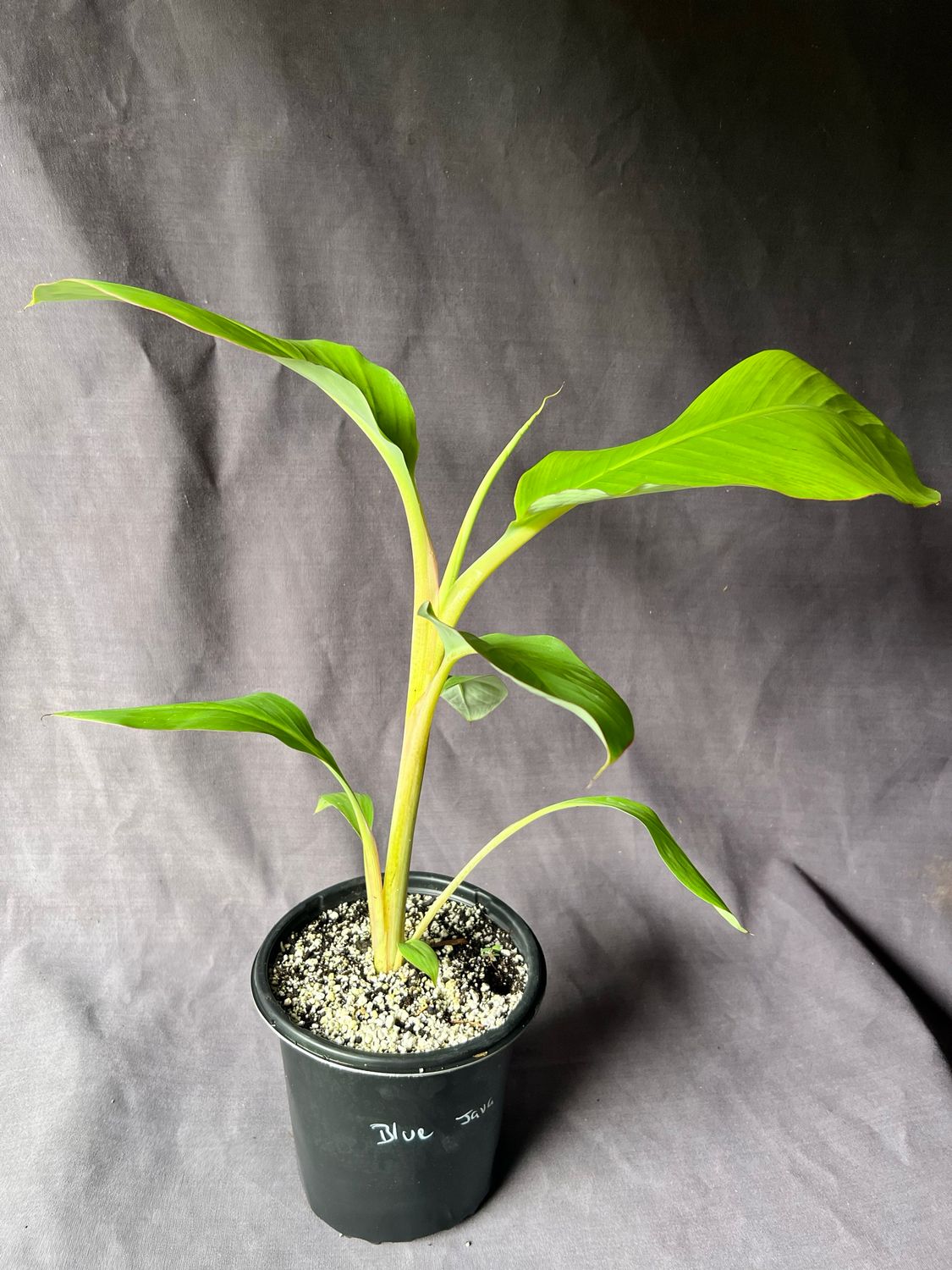
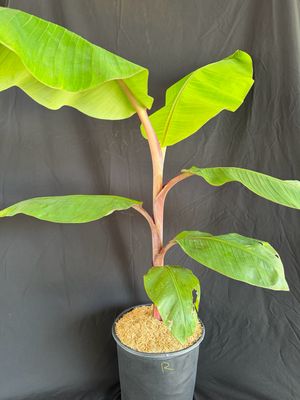
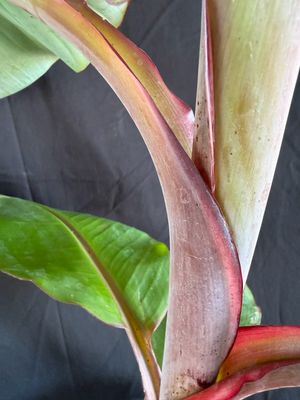
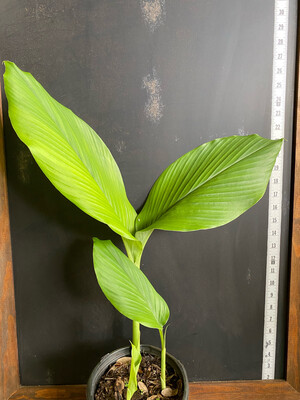
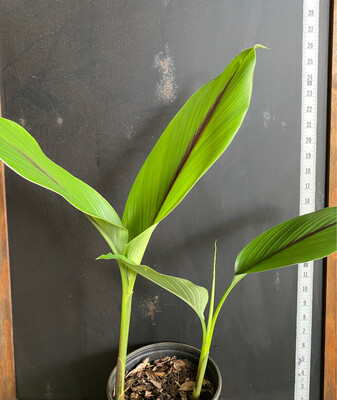
🍌 Blue Java “Ice Cream” Banana Plant — Rare Tissue-Cultured 1-Gallon Starter
LAST IN STOCK AT THIS SIZE FOR LIMITED TIME (AS OF 8/18)
A collector-worthy tropical banana with dramatic silvery fruit, lush foliage, and famously creamy dessert flavor—now available as an unusually hard-to-find tissue-cultured 1-gallon plant.
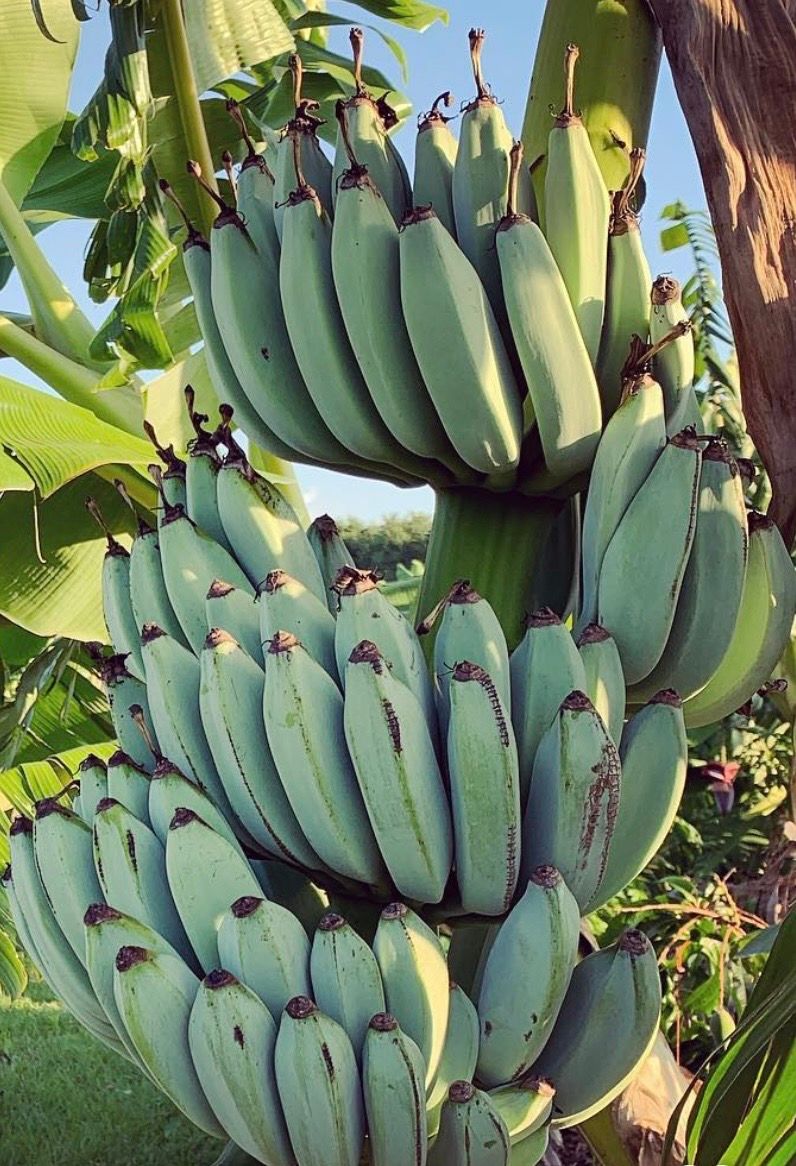
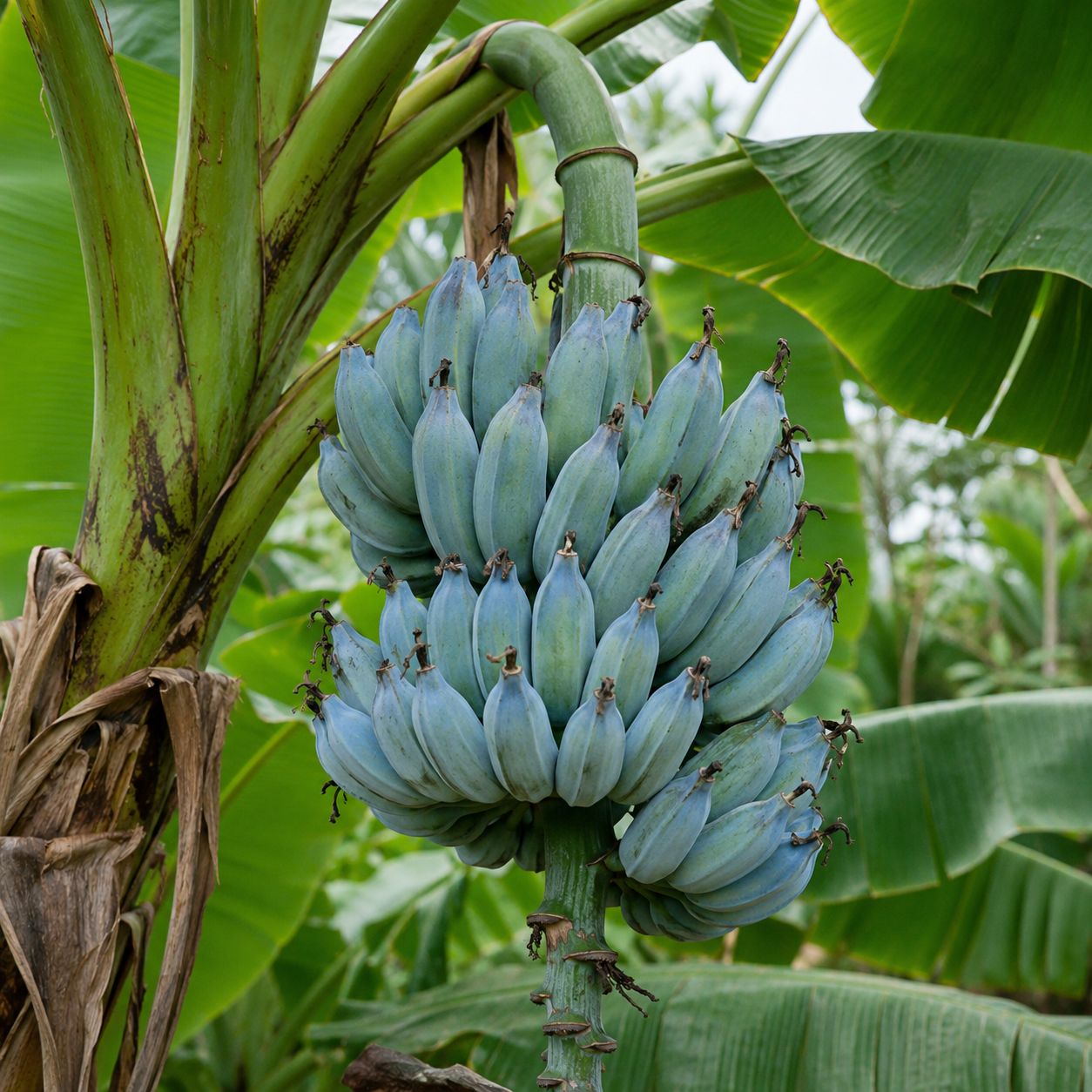
Blue Java is one of the most talked-about—and most frequently misidentified—bananas in the nursery trade. True Blue Java fruit develops a natural powdery blue-silver bloom while immature, then ripens to pale yellow with soft, creamy flesh commonly compared to vanilla custard.
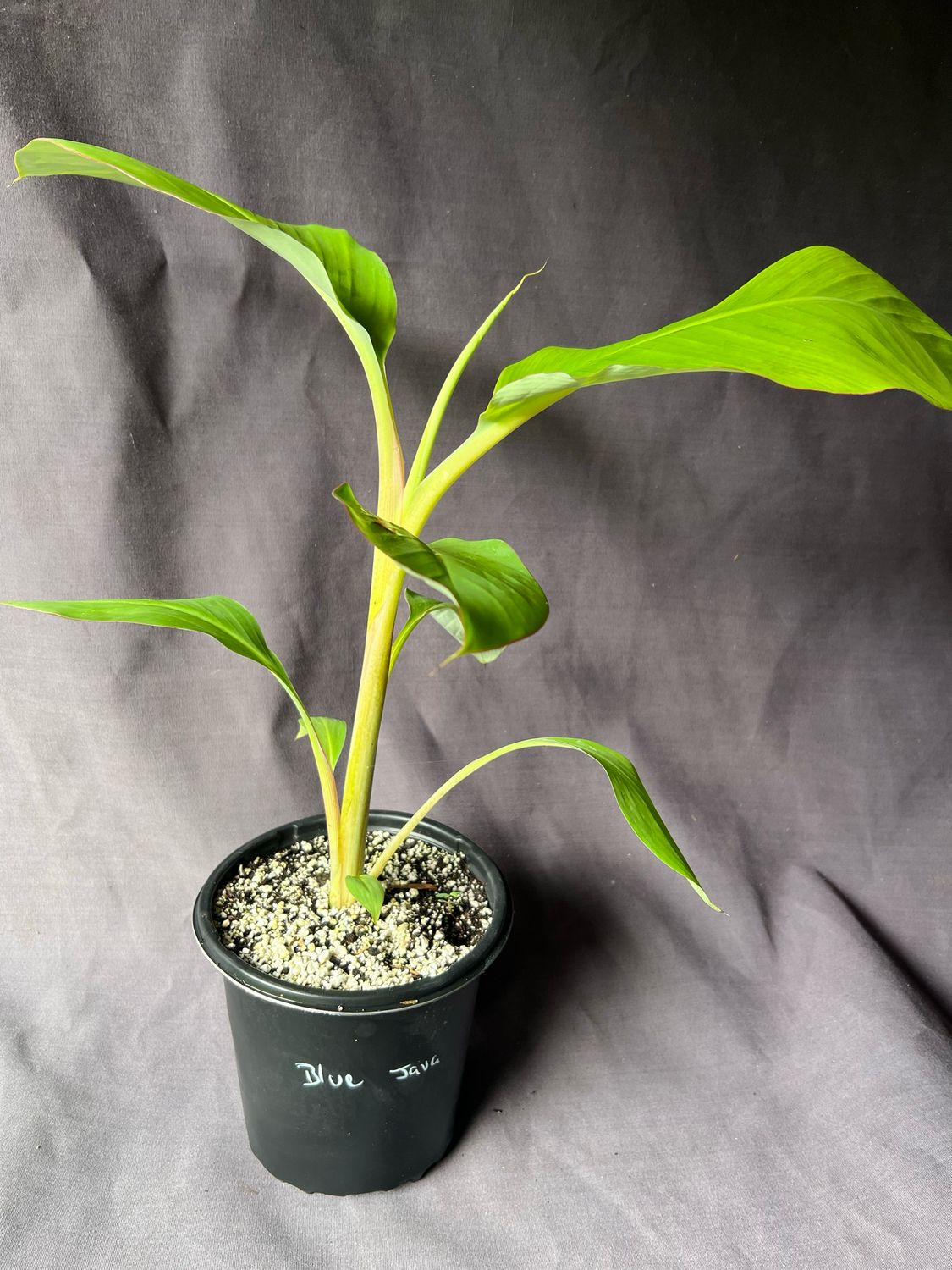
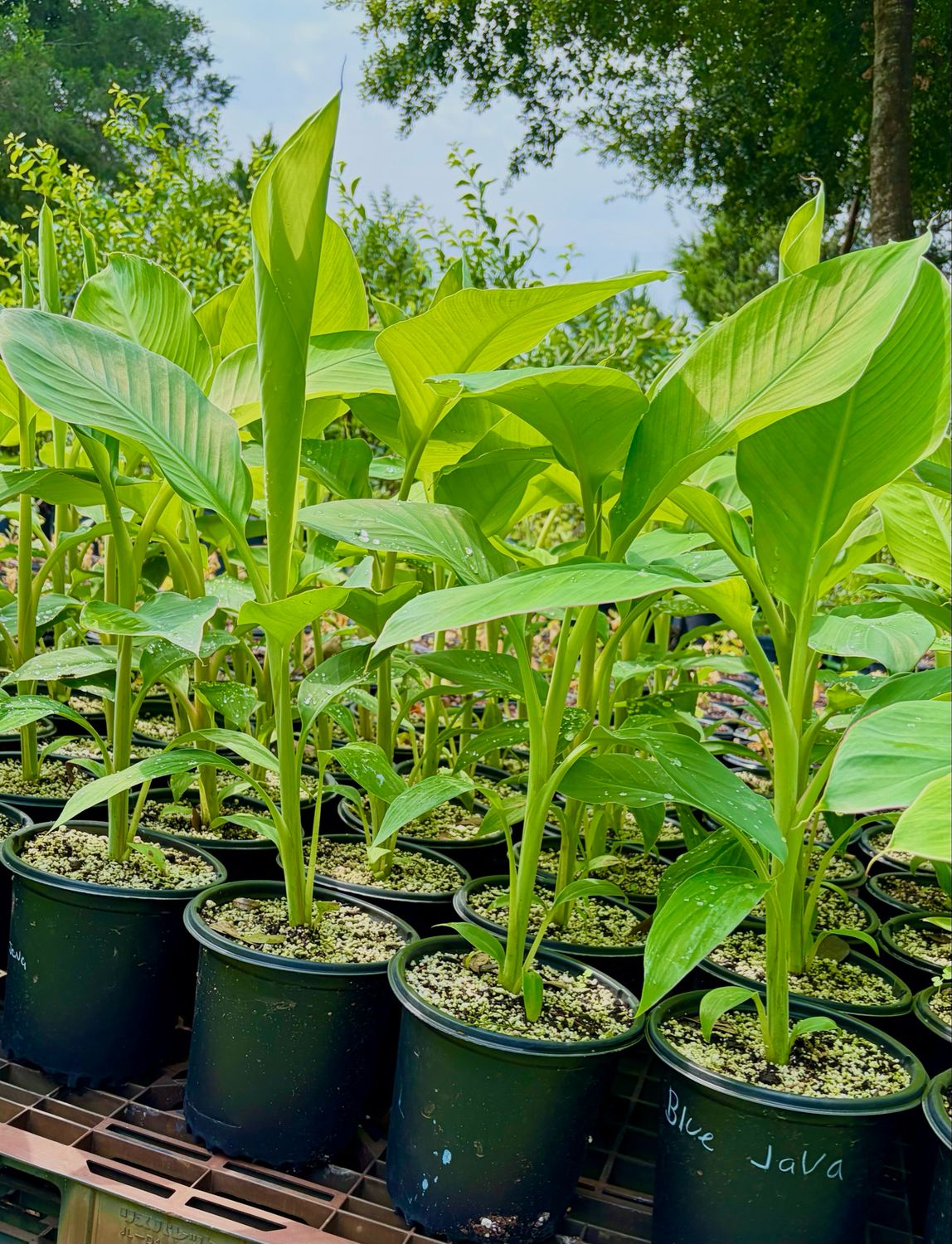
Our plants are grown from a Blue Java tissue-culture line rather than field-divided pups. Tissue-cultured Blue Java plants are especially difficult to source, making this a rare opportunity for banana collectors, food-forest growers, and tropical fruit enthusiasts to establish this legendary cultivar from a clean, compact starter.
Important fruit-color note: Blue Java bananas are not neon blue when ripe. The “blue” appearance comes from a natural waxy bloom on the immature peel. As the fruit reaches eating ripeness, the peel becomes pale yellow.
🌿 Quick Facts
| Category | Blue Java Banana Details |
|---|---|
| Botanical Classification | Musa ABB Group ‘Blue Java’ |
| Recognized Subgroup | Ney Mannan subgroup |
| Common Names | Blue Java, Ice Cream Banana, Ney Mannan |
| Plant Type | Tropical, rhizomatous perennial herb |
| Propagation Method | Tissue culture |
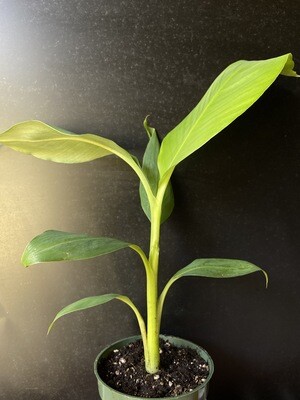
| Sale Size | Ships in a 1-gallon nursery container |
| Estimated Nursery Age | Approximately 3–6 months after laboratory acclimation and nursery finishing; age varies by batch |
| Mature Fruiting Height | Commonly 15–20 feet in favorable tropical and subtropical conditions |
| Managed Size | Mat width can be controlled through sucker removal; active fruiting pseudostems should not be topped |
| Mature Mat Width | Approximately 8–12 feet or wider if allowed to spread |
| Recommended Spacing | At least 12 feet from other large banana mats, trees, structures, and power lines |
| USDA Growing Zones | Best suited to Zones 9b–11 for in-ground fruit production; protected Zone 9a locations may succeed |
| Zone 8 Expectations | May survive or return from the rhizome with substantial winter protection, but reliable fruit production is unlikely |
| Sun Requirements | Full sun or near-full sun for strongest growth and fruit production |
| Soil Preference | Fertile, organic-rich, moisture-retentive soil with excellent drainage |
| Preferred Soil pH | Approximately 5.5–7.0 |
| Water Needs | High, but intolerant of standing water and prolonged saturation |
| Cold Response | Growth slows below 60°F; leaf and pseudostem injury may begin near freezing |
| Wind Tolerance | Stout compared with many dessert bananas, but still vulnerable because of its mature height |
| Salt Tolerance | Poor; avoid saline soil, irrigation water, and direct coastal salt spray |
| Growth Habit | Upright pseudostems emerging from an expanding underground rhizome or mat |
| Pollination Needed | No; edible bananas normally develop fruit without pollination |
| Typical Time to Fruit | Approximately 18–30 months from a 1-gallon size in Florida; faster in continuously warm tropical conditions and longer after cold setbacks |
| Harvest Timing | Can mature during different seasons depending on flowering time; warm-weather fruit development is fastest |
| Indoor Growing | Suitable for temporary overwintering in strong light; not practical as a permanent indoor fruiting plant |
| Container Growing | Possible with progressive up-potting, but mature plants require very large containers and substantial support |
Blue Java is internationally maintained as a traditional cultivar or landrace in the ABB genome group and is currently classified in the Ney Mannan subgroup.
Banana naming is notoriously complicated, and older regional references have sometimes grouped “Ice Cream” or “Blue Java” with other ABB bananas. This historical overlap is one reason accurately sourced plant material matters.
Blue Java performs best in full sun, fertile well-drained soil, dependable moisture, and warm conditions. Growth slows below 60°F, freezes can kill the top to the ground, and tall cultivars require generous spacing and protection from strong wind.
Why Tissue-Cultured Blue Java Is So Special
Blue Java is traditionally passed from grower to grower through pups, sword suckers, or divisions removed from established field mats. That process is slow, limits availability, and may also move soil, nematodes, weevils, or disease organisms from one property to another.
This batch is different.
These Blue Java starters are:
- Produced through laboratory tissue culture
- Multiplied from small amounts of selected plant tissue
- Rooted and acclimated before nursery finishing
- More uniform in size and establishment than mixed field-dug pups
- Easier to ship and establish without transporting a large field-grown rhizome
- An especially unusual find for this difficult-to-source cultivar
Commercial banana tissue culture is valued because it can rapidly multiply uniform plants while reducing the movement of nematodes and many diseases associated with field-dug material.
Tissue culture does not make a plant permanently disease-proof, and good sanitation remains essential after planting.
Tissue culture does not mean genetically modified
Tissue culture is a form of clonal micropropagation. It allows a nursery or laboratory to produce additional plants from vegetative tissue rather than creating a new plant through seed.
The process does not automatically insert foreign genes, and it should not be confused with genetic engineering.
As with all mass micropropagation, rare off-type growth can occasionally occur. Reputable production systems minimize this risk through careful source selection, limited multiplication cycles, sanitation, and quality control.
🌏 A Cultivar With Many Names—and Plenty of Mystery
Blue Java is not a modern patented release with a single, perfectly documented launch date. It is an old, vegetatively propagated banana associated with Southeast Asia and the Pacific, carried between tropical regions and renamed by growers along the way.
Names connected with Blue Java include:
- Blue Java
- Ice Cream Banana
- Ney Mannan
- Blue Lubin
- Pata Hina
- Fa‘i Pata Sina
Blue Java is classified as a traditional cultivar or landrace in the ABB genome group, Ney Mannan subgroup.
Some historical references also connect Ice Cream with Blue Java and Ney Mannan, while documenting how similar common names have sometimes been applied to other bananas.
That means the name Ice Cream Banana alone is not always enough to confirm cultivar identity. Fruit form, plant characteristics, provenance, and the original propagation line all matter.
🍨 What Does Blue Java Banana Taste Like?
The “ice cream” nickname comes primarily from the fruit’s soft, dense, creamy texture when fully ripe.
Flavor Profile
- Sweet without being aggressively sugary
- Mildly aromatic
- Frequently described as having vanilla or custard-like notes
- Creamier and softer than the average supermarket Cavendish banana
- Best when the peel has fully transitioned from pale green or silver-green to yellow and the fruit yields gently to pressure
Flavor is influenced by heat, soil fertility, watering, ripeness, and harvest timing.
“Vanilla ice cream” is a sensory comparison—not a promise that the fruit literally contains dairy or tastes like manufactured ice cream.
Fruit Appearance
| Stage | What to Expect |
|---|---|
| Young Fruit | Green with a pale, powdery, blue-silver wax coating |
| Filling Stage | Fingers become fuller and less angular |
| Harvest-Mature | Blue cast begins fading; fruit remains firm |
| Eating-Ripe | Peel turns pale yellow; flesh becomes soft, creamy, and aromatic |
| Overripe | Peel develops spotting; flesh becomes sweeter and softer |
The blue coloration is caused by a natural surface bloom. The fruit does not remain bright blue once fully ripe.
This distinction is important because heavily edited images of electric-blue ripe bananas are widely circulated online and do not accurately represent the cultivar.
🍌 Fruit Production and Harvest Expectations
Each Blue Java pseudostem produces one flower stalk and one bunch of bananas. After that bunch is harvested, the finished pseudostem is removed and a younger sucker replaces it.
Blue Java does not require another banana variety for pollination. The fruit normally develops parthenocarpically—without fertilization or viable seed formation.
What Improves Production?
- Full or near-full sun
- Consistently warm temperatures
- Deep, fertile soil
- Reliable soil-level irrigation
- Adequate potassium and magnesium
- Protection from cold northern winds
- Protection from severe tropical-storm exposure
- Maintaining sufficient healthy leaves
- Removing excess pups that compete with the fruiting stalk
- Preventing drought while the bunch is filling
- Avoiding waterlogged soil and damaged roots
Time From Planting to Harvest
A small 1-gallon tissue-cultured starter requires time to build its rhizome, root system, and mature pseudostem.
Under favorable conditions, allow approximately:
- South Florida or frost-free locations: Often 15–24 months
- Central Florida and similar Zone 9 climates: Often 18–30 months
- Cooler or repeatedly frost-damaged locations: Potentially longer
- Protected greenhouse production: Timing depends on heat, light, container size, and winter temperature
Banana development may take approximately 80–180 days from flower emergence to harvest, while total planting-to-harvest time varies greatly with temperature, moisture, care, and seasonal cold.
When Is Blue Java Ready to Harvest?
Look for:
- Fingers that appear rounded and plump
- Angular ridges becoming smoother
- Fruit reaching its expected full size
- The blue-silver cast beginning to soften
- One or two fingers beginning to lighten toward yellow
For home use, the bunch can be harvested while mature but still firm and hung in a shaded, protected location to finish ripening.
Do not refrigerate green bananas before they have ripened. Chilling can interfere with normal color, flavor, and texture development.
🥣 Best Ways to Use Blue Java Bananas
Blue Java is primarily prized as a dessert banana, but its uses go far beyond eating it straight from the peel.
Fresh and Frozen Uses
- Fresh eating
- Smoothies
- Tropical fruit bowls
- Yogurt and oatmeal toppings
- Frozen banana bites
- Banana pudding
- Homemade banana pops
- Frozen “nice cream”
- Milkshakes
- Fruit sauces and purées
Baking and Cooked Uses
- Banana bread
- Muffins
- Pancakes
- Waffles
- Cakes
- Custards
- Pies
- Caramelized bananas
- Grilled banana desserts
- Banana fritters
The Easiest Blue Java Recipe: One-Ingredient “Nice Cream”
- Allow the bananas to ripen until fully yellow and soft.
- Peel and slice the fruit.
- Freeze the slices in a sealed container.
- Blend the frozen pieces until smooth and creamy.
- Serve immediately or freeze briefly for a firmer texture.
Optional additions include cinnamon, cacao, vanilla, coconut milk, peanut butter, mango, or berries.
Can Green Blue Java Bananas Be Cooked?
Mature green fruit can be cooked in many of the same ways as other starchy bananas, although Blue Java is best known for its ripe dessert quality.
Green fruit may be boiled, roasted, fried, or added to savory dishes. Texture and flavor will differ from a dedicated plantain cultivar.
🌴 Ornamental and Landscape Value
Even before it fruits, Blue Java makes a serious tropical statement.
Landscape Features
- Large blue-green to silvery-green leaves
- Tall, upright growth
- Bold, coarse texture
- Dense tropical screening
- Expanding clumping habit
- Dramatic hanging flower and fruit stalk
- Excellent canopy layer for a subtropical food forest
Use it as:
- A tropical backdrop
- A seasonal privacy screen
- A food-forest canopy plant
- A pool-area accent away from salt exposure
- A visual transition between orchard and ornamental zones
- A source of biomass after each pseudostem is harvested
A banana is not botanically a tree. It is a giant perennial herb.
Its apparent trunk is a pseudostem made from tightly overlapping leaf sheaths, while the true perennial structure is the underground rhizome.
🍌 Blue Java Compared With Other Popular GreenDreams Bananas
| Feature | Blue Java | Tall Nam Wa | Raja Puri |
|---|---|---|---|
| Genome Group | ABB | ABB, Pisang Awak subgroup | AAB |
| Typical Height | Approximately 15–20 ft | Approximately 10–16 ft | Approximately 7–10 ft |
| Primary Appeal | Rare collector cultivar with silvery immature fruit | Dependable, productive, versatile banana | Compact, stout plant for smaller gardens |
| Flavor | Creamy, mild, vanilla-custard comparison | Sweet, dense, aromatic | Sweet, fruity, dessert quality |
| Fruit Color When Green | Silvery blue-green bloom | Standard green | Standard green |
| Ripe Peel | Pale yellow | Yellow | Yellow |
| Best Landscape Use | Tall tropical focal point or food-forest canopy | Productive backyard mat | Smaller edible landscape or protected courtyard |
| Wind Consideration | Stout but tall; still requires protection | Strong but can become tall | Shorter stature generally makes management easier |
| Container Suitability | Temporary or extremely large container | Large container possible | Better suited than Blue Java |
| Collector Value | Very high | Widely grown | Popular compact cultivar |
Cultivar height and fruit quality vary with climate, soil, water, nutrition, and the specific propagation line.
Banana common names are frequently reused across regions, so genome group and provenance are more dependable than a common name alone.
BLUE JAVA BANANA PLANTING, CARE & PRODUCTION
📦 First 30 Days After Your Blue Java Arrives
A 1-gallon tissue-cultured Blue Java banana is a young starter—not a field-grown pup with a large stored-energy reserve.
Small plants require a gentler transition after shipping.
After Delivery
- Open the package immediately.
- Remove packing material carefully.
- Inspect the soil moisture before watering.
- Place the plant in bright shade or filtered morning sun.
- Protect it from strong wind, heavy rain, and harsh afternoon sun.
- Water only at soil level.
- Allow it to acclimate gradually over 7–14 days.
- Do not fertilize heavily during shipping recovery.
- Keep it in its original container for approximately 30 days or until healthy new growth appears.
- Transplant only after the plant is actively growing and the root system is beginning to fill the pot.
Some leaf folding, bruising, edge browning, minor yellowing, or loss of an older leaf can occur during shipping.
The best indicator of recovery is a healthy new center leaf.
Do not rush to transplant a stressed banana starter. A stable root environment is more valuable than immediately moving it into a larger pot.
🌞 Where to Plant Blue Java Banana
Choose the warmest, sunniest, best-drained part of the property.
Ideal Location
- Full sun or at least 6–8 hours of direct light
- Protected from cold north and northwest winds
- Protected from direct coastal salt spray
- Outside low areas where rainwater collects
- Away from roof runoff and downspout discharge
- At least 12 feet from other large banana mats
- Away from power lines
- Away from windows or structures that could be struck if a tall pseudostem topples
- Within reach of dependable drip irrigation
Bananas tolerate some shade, but excessive shade delays flowering, reduces fruit quality, and creates thinner, weaker growth.
In subtropical Florida, full or near-full sun is recommended for fruit production.
Wind Protection
Blue Java is often described as having a sturdy pseudostem, but sturdy does not mean hurricane-proof.
Its mature height creates significant leverage in strong winds. Tall banana cultivars may topple during strong wind, while prolonged exposure can shred leaves, distort the crown, and dry the plant.
Use buildings, hedges, clumping grasses, or wind-permeable plantings to reduce wind speed without creating a completely stagnant enclosure.
Salt Tolerance
Bananas perform poorly in saline soil and saline irrigation water.
Salt stress may cause:
- Yellow leaf margins
- Brown or dead leaf edges
- Reduced growth
- Thin or malformed fruit
- Premature leaf loss
Blue Java should not be treated as a salt-tolerant coastal banana. Plant well inland from direct ocean spray whenever possible.
🌿 How to Plant Blue Java Banana
Blue Java requires moisture, but it also needs oxygen around its roots.
Planting too deeply is one of the easiest ways to create chronic decline.
GreenDreams Planting Method
- Keep the Blue Java in its original pot until shipping stress has passed and new growth is visible.
- Water the container before planting so the root ball is evenly moist.
- Dig a hole only slightly wider than the container.
- Keep the hole at the same depth as the root ball—never deeper.
- Loosen compacted soil surrounding the hole without creating a deep bowl.
- Remove the pot carefully without pulling on the pseudostem.
- Position the top of the root ball level with or slightly above the surrounding grade.
- Backfill with native soil.
- Compost may be blended with native soil, but do not place a thick layer of loose compost beneath the plant.
- Firm the soil gently around the root ball to remove large air pockets.
- Water deeply at soil level.
- Top-dress around the planting area with finished compost, biochar, azomite, worm castings, or an organic nutrient blend.
- Apply hardwood mulch over the surrounding root zone.
- Keep mulch several inches away from the pseudostem.
Search for the GreenDreams High & Tight fruit-tree planting video on our YouTube channel for a visual demonstration.
💧 Watering Blue Java Banana
Bananas need abundant moisture for strong growth and fruit production—but they decline quickly in stagnant, oxygen-depleted soil.
No Overhead Watering
Water Blue Java only at soil level.
- Drip irrigation is preferred.
- Water early in the morning.
- Keep foliage dry whenever practical.
- Avoid afternoon overhead watering.
- Do not rely on lawn sprinklers.
- Avoid splashing soil onto leaves and pseudostems.
- Never allow the container to sit continuously in a saucer of water.
Overhead irrigation can encourage fungal leaf problems, create uneven watering, waste water through evaporation, and contribute to leaf scorch when used during hot afternoons.
Watering a 1-Gallon Container
Check it daily, especially during:
- Hot weather
- Low humidity
- Wind
- Active new growth
- Outdoor acclimation
- Dry indoor heating
- Extended shipping recovery
Water thoroughly when the upper surface begins to dry, allowing excess water to drain from the bottom.
Do not water automatically if the pot is still wet.
Newly Planted in the Ground
During the first 1–2 weeks:
- Check the root zone daily.
- Water when the soil begins drying around the original root ball.
- Use a slow soil-level application.
- Avoid keeping the entire planting hole continuously saturated.
During the next 1–3 months:
- Transition toward deeper, less frequent irrigation.
- In fast-draining Florida sand, this may require several drip cycles per week.
- In loam or heavier soil, watering may be less frequent.
- Adjust for rainfall.
Established Mat
Bananas generally need approximately 4–6 inches of water per month, or around 1–1.5 inches per week, for healthy growth and production.
In Florida’s dry season, sandy soil may require the weekly amount to be divided into multiple drip-irrigation cycles.
Signs of Drought
- Folding or collapsing leaves
- Pale green foliage
- Yellowing
- Reduced leaf size
- Slow center-leaf emergence
- Premature leaf death
- Smaller bunches
- Delayed flowering
Signs of Excessive Water
- Persistently wet soil
- Yellow lower leaves
- Slow or stalled growth
- Soft root tissue
- Sour-smelling soil
- Pseudostem decline
- Increased toppling risk
Bananas are highly sensitive to drought, but they are also intolerant of flooding and continuously saturated soil.
🪴 Up-Potting Your Blue Java Banana
Move the plant into a larger container only after it has recovered from shipping and the roots are filling the current pot.
Recommended Progression
- 1-gallon container
- 3-gallon container
- 7-gallon container
- 15-gallon container
- 25- to 45-gallon container
- 45- to 65-gallon container or larger for long-term growing
Do not jump directly from a 4-inch pot into an oversized container.
A small root system surrounded by a large volume of wet potting soil can remain saturated too long and develop root problems.
Signs It Is Ready for a Larger Pot
- Roots visible from drainage holes
- Root ball holds together when gently removed
- Water runs through unusually quickly
- Plant wilts soon after watering despite normal conditions
- New growth remains small even with appropriate feeding
- Container becomes unstable or top-heavy
How to Transplant Into a Larger Container
- Choose a pot with multiple drainage holes.
- Water the plant before transplanting.
- Add enough potting mix to maintain the original planting depth.
- Support the root ball rather than pulling the pseudostem.
- Place the plant upright.
- Fill around the sides with fresh mix.
- Firm gently.
- Water thoroughly at soil level.
- Return the plant to filtered light for several days.
- Resume stronger sun gradually after recovery.
Containers and potting ingredients can be found through independent garden centers, hydroponic suppliers, farm stores, landscape suppliers, nursery-supply dealers, or online searches for professional nursery pots and tropical-plant potting media.
🏡 Can Blue Java Fruit in a Container?
Yes—but Blue Java is not naturally compact.
To have a realistic chance of fruiting, it will eventually need:
- A very large container
- Full sun
- Consistent irrigation
- Regular feeding
- Warm temperatures
- Wind protection
- Structural support
- Enough room for a mature 15- to 20-foot pseudostem
- Space for at least one replacement sucker
A 45- to 65-gallon container is a more realistic long-term minimum than a small decorative patio pot.
Even then, container-grown Blue Java may be shorter, slower, and less productive than an in-ground plant.
Is Blue Java an Indoor Banana?
Blue Java can be brought indoors temporarily for winter protection, but it is not an ideal permanent houseplant.
Indoor challenges include:
- Insufficient light
- Mature height
- Large leaves
- Rapid root growth
- Low humidity
- Spider mites
- Limited container volume
- Difficulty producing and supporting a fruit bunch
For long-term indoor fruit production, a heated greenhouse or large sunroom with strong supplemental lighting is far more suitable than a typical home interior.
🌾 Feeding and Soil Building
Bananas are heavy feeders, particularly once established and growing rapidly.
Organic Feeding Strategy
For a young 4-inch plant:
- Wait until shipping recovery and visible new growth.
- Begin with a mild, diluted organic feed.
- Avoid concentrated fertilizer against the pseudostem.
- Do not apply mature-mat fertilizer quantities to a starter plant.
For an established plant or mat:
- Top-dress with finished compost.
- Use worm castings or aged organic matter.
- Apply a balanced tropical-fruit fertilizer with proportionally higher potassium.
- Include magnesium and trace minerals where soil testing indicates a need.
- Use biochar only after charging or blending it with compost.
- Maintain a broad mulch zone.
- Feed most actively during warm growing weather.
Bananas have a high potassium requirement and may need several fertilizer applications per year in low-fertility Florida soils.
A nutrient ratio near 3-1-6, with magnesium, is commonly used for productive banana mats.
Feeding should be reduced during cool winter weather when growth and nutrient demand decline.
Mulching
Apply approximately 2–6 inches of hardwood chips, shredded bark, or similar organic material over the root zone.
Keep mulch:
- Several inches away from the pseudostem
- Broad rather than volcano-shaped
- Loose enough to absorb rainfall
- Replenished as it decomposes
Old banana leaves and harvested pseudostems can be chopped and returned around the mat as biomass, provided no serious pest or disease problem is present.
✂️ Managing the Blue Java Banana Mat
A banana mat is the clump composed of the underground rhizome, mature pseudostems, and emerging suckers.
Allowing every sucker to grow creates competition and often produces smaller bunches.
The Three-Generation System
Maintain approximately:
- One mature fruiting pseudostem
- One half-grown follower
- One small sword sucker or peeper
Remove unnecessary pups while they are small.
Why Sucker Management Matters
- Improves airflow
- Reduces competition for water
- Reduces competition for nutrients
- Directs energy toward the fruiting stalk
- Maintains access for harvesting
- Limits the mat’s footprint
- Reduces stagnant, disease-prone growth
Do Not Top a Fruiting Stalk to Control Height
The flower develops inside the pseudostem and eventually emerges from the top.
Cutting the center or topping an active stalk prevents that pseudostem from producing normally.
Control Blue Java by:
- Removing excess suckers
- Selecting the strongest replacement
- Cutting the finished pseudostem after harvest
- Choosing an appropriately spacious planting site
After Harvest
Each pseudostem fruits only once.
After the bunch is removed:
- Cut the finished pseudostem near the base.
- Chop it into manageable pieces.
- Inspect for weevil or disease damage.
- Return clean material as mulch or compost.
- Allow the selected follower to become the next fruiting stalk.
🌦 Seasonal Blue Java Care in Florida and Similar Climates
Blue Java is not deciduous, but it may appear dormant or lose its entire canopy after frost.
It is a tropical perennial herb. The underground rhizome can remain alive even when cold destroys the leaves and pseudostems.
🌱 Spring: March–May
Expect:
- New pups emerging
- Rapid leaf production as nights warm
- Recovery from winter stress
- Increased water and nutrient demand
Spring tasks:
- Wait until freeze danger has passed before removing all damaged tissue.
- Cut away collapsed or rotting leaves.
- Evaluate pseudostems for firm living tissue.
- Resume regular feeding gradually.
- Refresh compost and mulch.
- Begin dependable irrigation.
- Plant new Blue Java bananas once warm weather has stabilized.
🌞 Summer: June–September
Expect:
- Fastest vegetative growth
- Large weekly water demand
- Frequent new pups
- Flower emergence on mature plants
- Increased fungal pressure during warm, wet weather
- Tropical-storm and wind exposure
Summer tasks:
- Check irrigation frequently.
- Maintain drainage during prolonged rain.
- Remove excess pups.
- Remove fully dead leaves.
- Do not remove healthy green leaves unnecessarily.
- Support developing bunches if the stalk begins leaning.
- Watch for weevil, nematode, and leaf-spot symptoms.
- Keep weeds and turf away from the mat.
🍂 Fall: October–November
Expect:
- Continued growth during warm years
- Slower leaf production as nights cool
- Bunches taking longer to fill
- Increased risk that late flowers will carry fruit into winter
Fall tasks:
- Harvest mature bunches before severe cold.
- Reduce high-nitrogen feeding as temperatures decline.
- Maintain potassium and mineral balance without pushing soft growth.
- Refresh mulch before winter.
- Prepare stakes and frost protection.
- Avoid starting major sucker divisions too close to cold weather.
❄️ Winter: December–February
Expect:
- Slow growth below 60°F
- Little or no active growth near 50°F
- Leaf spotting, yellowing, tearing, or collapse after cold
- Possible pseudostem loss near or below freezing
- Delayed or damaged flower and fruit development
Winter tasks:
- Protect the mat before freezing weather.
- Wrap or cover the pseudostem when practical.
- Use frost cloth rather than plastic directly on foliage.
- Mulch the root zone heavily while keeping mulch away from the pseudostem.
- Water the soil before a freeze if it is dry, but do not saturate it.
- Reduce irrigation while growth is slow.
- Avoid heavy nitrogen fertilizer.
- Do not immediately remove every damaged leaf; wait until the extent of injury is clear.
- Remove soft, rotting tissue once warm, dry weather returns.
Banana growth is strongest during warm weather, slows below 60°F, and may stop near 50°F.
Freeze damage can occur near 32°F, and temperatures in the upper 20s may kill above-ground growth back to the rhizome.
🌿 Blue Java Companion Plants
Bananas do not require pollinators to set edible fruit, but diverse companion plants still improve the surrounding food-forest ecosystem.
Biomass and Chop-and-Drop Plants
- Mexican sunflower
- Pigeon pea
- Clumping grasses
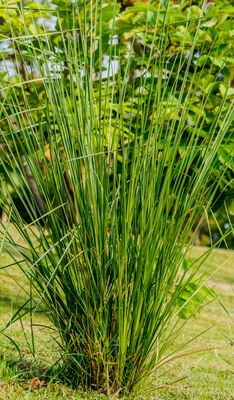
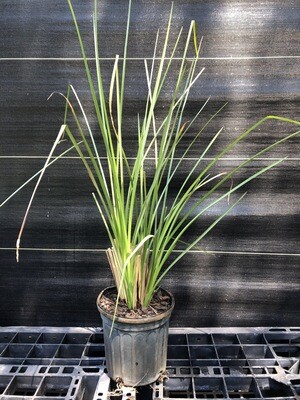
- Vetiver where appropriate
- Lemongrass
- Fast-growing support shrubs
Living Groundcovers
- Perennial peanut
- Sunshine mimosa
- Low-growing culinary herbs suited to the available light
Keep aggressive groundcovers and dense mulch away from direct contact with the banana pseudostem.
Pollinator and Beneficial-Insect Plants
- Tropical salvia
- Native porterweed
- Coreopsis
- Dune sunflower
- Flowering herbs
Pollinator companions support the wider garden, but they do not directly determine Blue Java fruit set because bananas normally fruit without pollination.
Aesthetic Companions
- Cranberry hibiscus
- Roselle
- Edible hibiscus
- Ginger
- Turmeric
- Taro in adequately moist but well-drained zones
Guild Layout Tip
Maintain a 2- to 6-foot mulch and irrigation zone around the banana mat.
Place larger support plants beyond that immediate root-management area so the Blue Java receives adequate water, light, and airflow.
BLUE JAVA TROUBLESHOOTING, FAQ, SHIPPING & SEO
⚠️ Important Blue Java Cautions
It Is Tall
Blue Java is not a dwarf patio banana.
It may reach approximately 15–20 feet and should be planted where a mature pseudostem can safely lean or fall without striking windows, vehicles, utilities, or neighboring property.
It Is Cold-Tolerant Only by Banana Standards
“Cold-tolerant” does not mean freeze-proof.
- Leaves may burn near freezing.
- Pseudostems may collapse after a hard freeze.
- Developing fruit may be damaged by chilling weather.
- The rhizome may survive and regrow even when the top is lost.
- Repeated winter dieback may prevent fruit production.
It Does Not Tolerate Standing Water
Bananas love moisture but require oxygenated soil.
Do not plant Blue Java in a depression, at the end of a downspout, beside a leaking irrigation valve, or in an area that stays saturated after summer rain.
It Has Poor Salt Tolerance
Avoid direct salt spray, saline wells, reclaimed water with elevated salts, and coastal soils affected by salt intrusion.
It Forms an Expanding Mat
Blue Java spreads through underground rhizomes and produces pups.
Control the mat by removing unwanted suckers before they become large.
It Should Not Be Advertised as Disease-Resistant
There is not enough consistent cultivar-specific evidence to promise that Blue Java resists Panama disease, Sigatoka, nematodes, or weevils.
Practice sanitation and avoid:
- Planting in known Fusarium-infested soil
- Moving contaminated soil between properties
- Sharing dirty digging tools
- Allowing rotting pseudostems to accumulate
- Buying unidentified field divisions from unhealthy mats
Tissue Culture Does Not Provide Lifetime Immunity
Tissue-cultured plants begin with cleaner propagation material, but they can become infected after exposure to contaminated soil, water, insects, tools, or neighboring plants.
🔍 Blue Java Banana Troubleshooting Guide
Icons represent common symptoms and organic recovery strategies—look for 🌿 and ✅ for corrective action.
| ⚠️ Issue | 🧠 Likely Cause | 🌿 Organic Response |
|---|---|---|
| 🍂 Lower leaves yellowing | Normal aging, cold, overwatering, or nutrient shortage | Check soil moisture first; remove only fully dead leaves; feed lightly during active growth |
| 🫣 Leaves folding inward | Drought, damaged roots, hot wind, or transplant stress | Water deeply at soil level; protect from wind; inspect drainage and roots |
| 💦 Yellow plant with constantly wet soil | Poor drainage or excessive irrigation | Reduce watering; open drainage; transplant high and tight if planted too deeply |
| 🌬️ Shredded leaves | Wind exposure | Add wind-permeable shelter; retain damaged leaves while they remain mostly green |
| ☀️ Pale or scorched new leaves | Sudden sun exposure after shipping | Return to bright shade and reacclimate gradually over 7–14 days |
| ❄️ Blackened or collapsed foliage | Freeze injury | Wait until warm weather; remove soft rotting tissue; protect the surviving rhizome |
| 🧘 Center leaf stops emerging | Cold weather, root stress, or choking | Check temperature and drainage; avoid heavy feeding until active growth resumes |
| 🍄 Brown streaks or expanding leaf spots | Possible Sigatoka or another fungal leaf spot | Avoid overhead irrigation; improve airflow; remove fully dead infected tissue; sanitize tools |
| 🪲 Small holes or tunneling near the base | Banana weevil or sugarcane weevil | Remove decaying pseudostems; inspect the rhizome; improve sanitation; contact local Extension |
| 🌱 Many pups but weak fruiting stalk | Overcrowded mat | Keep one fruiting stem, one follower, and one small sucker |
| 🌾 Pale growth in sandy soil | Low fertility, magnesium, iron, or micronutrient shortage | Use soil testing; apply compost and an appropriate tropical-fruit nutrient program |
| 🔥 Brown leaf tips after feeding | Fertilizer salts or excessive application | Flush the pot with clean water; reduce fertilizer strength; never feed a dry plant |
| 🌊 Plant leans after heavy rain | Saturated soil, damaged roots, excessive top weight, or nematodes | Improve drainage, support the stalk, inspect roots, and reduce excess pups |
| 🍈 No fruit after several years | Cold setbacks, insufficient sun, overcrowding, drought, or a juvenile plant | Increase light, warmth, water consistency, root space, and sucker management |
| 🌱 Starter has not grown after shipping | Acclimation stress, cool weather, or premature transplanting | Keep it in the original pot; provide warmth and bright filtered light; wait for new growth |
| 🍃 Blue fruit turns yellow | Normal ripening | Harvest when plump and allow it to finish ripening in shade |
✨ Is Blue Java Banana Right for You?
✅ Ideal For:
- Rare-fruit collectors
- Tropical and subtropical food-forest growers
- Florida gardeners with full sun
- Growers seeking unusual banana genetics
- Gardeners who understand winter protection
- Growers with dependable irrigation
- Large edible landscapes
- Regenerative farms
- Specialty fruit producers
- Anyone excited by a genuine tissue-culture propagation opportunity
❌ Not Ideal For:
- Very small patios
- Landscapes beneath power lines
- Sites exposed to direct ocean spray
- Flood-prone or poorly drained soil
- Homes without adequate sunlight
- Gardeners wanting a permanent indoor banana
- Locations where winter temperatures repeatedly destroy the entire mat
- Growers unable to provide summer water
- Anyone expecting ripe fruit to remain bright electric blue
- Anyone needing guaranteed fruit within a fixed number of months
❓ Blue Java Banana FAQ
Are Blue Java Bananas Really Blue?
The immature peel develops a powdery, silver-blue appearance from a natural waxy bloom.
As the fruit ripens, the blue cast fades and the peel becomes pale yellow.
Blue Java is visually unusual, but photographs showing permanently bright cobalt-blue ripe fruit are not accurate representations.
Does Blue Java Really Taste Like Vanilla Ice Cream?
Fully ripe fruit is commonly described as creamy, soft, sweet, and mildly vanilla- or custard-like.
The nickname describes the fruit’s texture and aroma; it does not mean every fruit will taste exactly like manufactured ice cream.
Is Blue Java the Same as Nam Wa?
The names have been confused in nursery and horticultural references.
Blue Java is classified in the ABB Ney Mannan subgroup, while Nam Wa is normally associated with the ABB Pisang Awak subgroup.
Older regional references have sometimes used Ice Cream or Blue Java as a synonym within Pisang Awak, which helps explain the confusion.
Our plants are offered from a tissue-culture line represented as Blue Java rather than as mixed, field-divided banana pups.
Final fruit characteristics remain the most meaningful mature confirmation of any banana cultivar.
Why Is Tissue-Cultured Blue Java Unusual?
Blue Java has traditionally circulated through pups and divisions from existing mats.
Developing a reliable tissue-culture supply requires clean source material, specialized laboratory work, acclimation, and sufficient demand to justify production.
Is a Tissue-Culture Blue Java Banana Genetically Modified?
No.
Standard tissue culture is clonal plant propagation performed under controlled laboratory conditions. It does not automatically involve genetic engineering or the insertion of foreign DNA.
Will Tissue Culture Prevent Panama Disease?
Tissue culture reduces the risk of beginning with nematode-infested or disease-contaminated field material.
It does not prevent future infection after the plant is exposed to contaminated soil, water, tools, or neighboring bananas.
How Long Will a 1-Gallon Blue Java Take to Fruit?
Approximately 18–30 months is a reasonable Florida planning range for a young starter under good care.
Continuously warm climates may be faster, while Central Florida cold, drought, container restriction, or repeated winter dieback can add considerable time.
Can Blue Java Grow in Zone 8?
It may regrow as an ornamental perennial in protected Zone 8 locations with deep mulch and winter protection.
Reliable fruit production is much less likely because the plant needs a long, warm, frost-free period to build and mature a bunch.
Can Blue Java Survive a Freeze?
The foliage and pseudostem may be damaged or killed.
The underground rhizome may survive and produce new pups when warmth returns, especially if it was established, mulched, and protected.
Does Blue Java Need Another Banana for Pollination?
No.
Edible bananas normally develop without pollination. Planting another cultivar can expand your harvest and flavor diversity, but it is not required for Blue Java to produce fruit.
Can I Plant It Immediately After Delivery?
We recommend keeping the plant in its original container for approximately 30 days or until healthy new growth appears.
Allow shipping stress to pass before transplanting.
Why Is a 1-Gallon Starter More Sensitive Than a Larger Plant?
A 1-gallon container has:
- Less stored water
- Less root volume
- Less stored energy
- Greater temperature fluctuation
- Faster drying during shipping and acclimation
Can I Grow Blue Java Inside My Home?
It can be overwintered indoors near strong light, but mature fruiting indoors is unlikely without a large heated greenhouse, substantial supplemental lighting, and a very large container.
📦 Shipping and Handling for 1-Gallon Blue Java Plants
Blue Java ships as a young, tissue-cultured plant established in a 1-gallon nursery container.
Best Regional Shipping Area
This size is most suitable for delivery to:
- Florida
- The Southeastern United States
- Texas
- Other locations within a reasonably short UPS Ground transit window
Northern and Western United States
We can ship across the continental United States, but small tropical plants may experience:
- Extended darkness
- Temperature extremes
- Drying
- Leaf loss
- Soil disturbance
- Delayed growth
- Additional recovery time
Buyer discretion is strongly advised for northern and western destinations.
The customer assumes the increased risk associated with extended UPS Ground transit.
California Shipments
California packages may be held for agricultural inspection, potentially adding another day or more to transit.
This delay can be particularly difficult for small tropical starter plants during extreme heat or cold.
Extreme Weather Disclaimer
We ship from Florida using UPS Ground.
Orders normally ship on Mondays to reduce the chance of plants sitting in a warehouse over the weekend.
We cannot control:
- Carrier delays
- Inspection delays
- Heat waves
- Freezing weather
- Package storage conditions
- Delivery vehicles
- Incorrect or inaccessible delivery addresses
GreenDreams cannot guarantee that a 4-inch tropical starter will arrive in optimal condition after extended transport outside our regional shipping area or during peak seasonal temperatures.
Many bananas recover from shipping stress with warmth, filtered light, careful watering, and patience.
Leaf appearance immediately after transit does not always indicate the health of the rhizome or growing point.
🌱 Plant Arrival Checklist
When your Blue Java arrives:
- Unpack immediately.
- Photograph the plant and packaging if damage is present.
- Check the soil before watering.
- Place in bright shade.
- Protect from wind.
- Water only at soil level.
- Do not fertilize immediately.
- Do not repot immediately.
- Allow 30 days or wait for healthy new growth.
- Introduce full sun gradually.
True Blue Java plants are famously difficult to find—and tissue-cultured starters are rarer still.
🏡 Shop With Us in Person
We have countless plants in larger sizes available, along with many rare plants that never make it onto the online store.
GreenDreams Nursery & Farm — Retail Nursery Open to the Public
🌾 18709 US Hwy. 41, Spring Hill, FL 34610
🕘 Tuesday–Friday: 9AM–5PM
🌞 Saturday: 8AM–3PM
Visit our regenerative nursery to see what is growing, blooming, and fruiting this week.
Our team can also help you compare Blue Java with Nam Wa, Raja Puri, and other banana cultivars suited to your property.
🌿 Beyond the Plant: GreenDreams Services
At GreenDreams, we do more than grow plants—we design, build, and restore ecosystems across Florida.
- 🌳 Onsite consultations and edible landscape design
- 🚜 Installation and project management
- 🚚 Bulk delivery of compost, mulch, biochar, and soil materials
- 🌾 Large-scale regenerative landscape solutions
Let our team help you create a thriving edible paradise—starting with Blue Java banana.
🌿 IMPORTANT INFORMATION BEFORE PURCHASING LIVE PLANTS
Please note: Plants purchased through our online store are not available for pickup at our retail nursery in Spring Hill, Florida.
Online inventory is housed at a separate facility and is priced, prepared, and handled exclusively for shipping.
🌱 Looking for larger plants or more selection?
Our retail nursery location offers far more availability, including larger sizes, specialty plants, and many selections not suitable for nationwide shipping.
Local pickup is available for retail nursery purchases only.
Visit our Spring Hill, FL retail nursery page to explore in-person shopping options.
🚚 LIVE PLANT SHIPPING & TRANSIT EXPECTATIONS
Live plants naturally experience stress during shipping. Temporary leaf drop, mild wilting, or cosmetic stress is normal after transit. Most plants recover quickly with proper watering, gradual light exposure, and basic aftercare. Some plants may require additional attention during the first few weeks.
Despite careful packing, minor cosmetic damage may occur during transit. Small issues such as broken leaves or stems typically resolve with time and proper care.
If your shipping box arrives with significant external damage, please contact UPS within 30 days to initiate a carrier claim.
⏱️ SHIPPING METHOD, TIMING & TRANSIT WINDOWS
All online orders ship via UPS Ground from our Central Florida nursery.
📦 Shipping Schedule: Orders ship once weekly on Mondays to reduce the risk of packages sitting in transit over weekends. A countdown clock on our website displays the next shipping date.
🚚 Typical Transit Times:
-
Florida: 1–2 days
-
Southern U.S.: approximately 2 days
-
Midwest, West & Northern U.S.: 3–5 business days
Long-distance shipments, particularly to the western U.S., may experience additional transit time due to agricultural inspections in states such as Arizona, California, and Texas.
Extended transit times can be more challenging for small or tender plants and may require additional recovery care after arrival.
🌡️ EXTREME WEATHER & SEASONAL RISK
Live plants are sensitive to temperature extremes.
We cannot guarantee plant condition during periods of extreme summer heat or winter cold and freezing temperatures. Weather-related delays, carrier interruptions, or exposure during delivery are beyond our control.
Customers are responsible for:
-
Monitoring tracking information sent via email
-
Retrieving packages promptly upon delivery
-
Preventing plants from being left outdoors in extreme conditions
During unsafe weather, holiday shipping volume, or extended transit risk, orders may be held and shipped the following week to protect plant health.
⚠️ CUSTOMER RESPONSIBILITY & REFUND POLICY
By purchasing live plants, customers acknowledge and accept the risks associated with shipping, weather exposure, transit delays, and regional suitability.
Refunds or replacements are considered only under exceptional circumstances and in accordance with our return and refund policy. We are not responsible for:
-
Weather-related damage
-
Carrier delays
-
Poor plant selection for a given climate or region
-
Improper care after delivery
Upon purchase, customers assume full responsibility for the ongoing care and success of their plants.
✅ CONSENT & AGREEMENT
By completing a purchase, you confirm that you have read, understand, and agree to all shipping policies, responsibilities, and conditions outlined above.
Our goal is transparency, plant health, and long-term growing success — and we appreciate your understanding and care when ordering live plants.


