


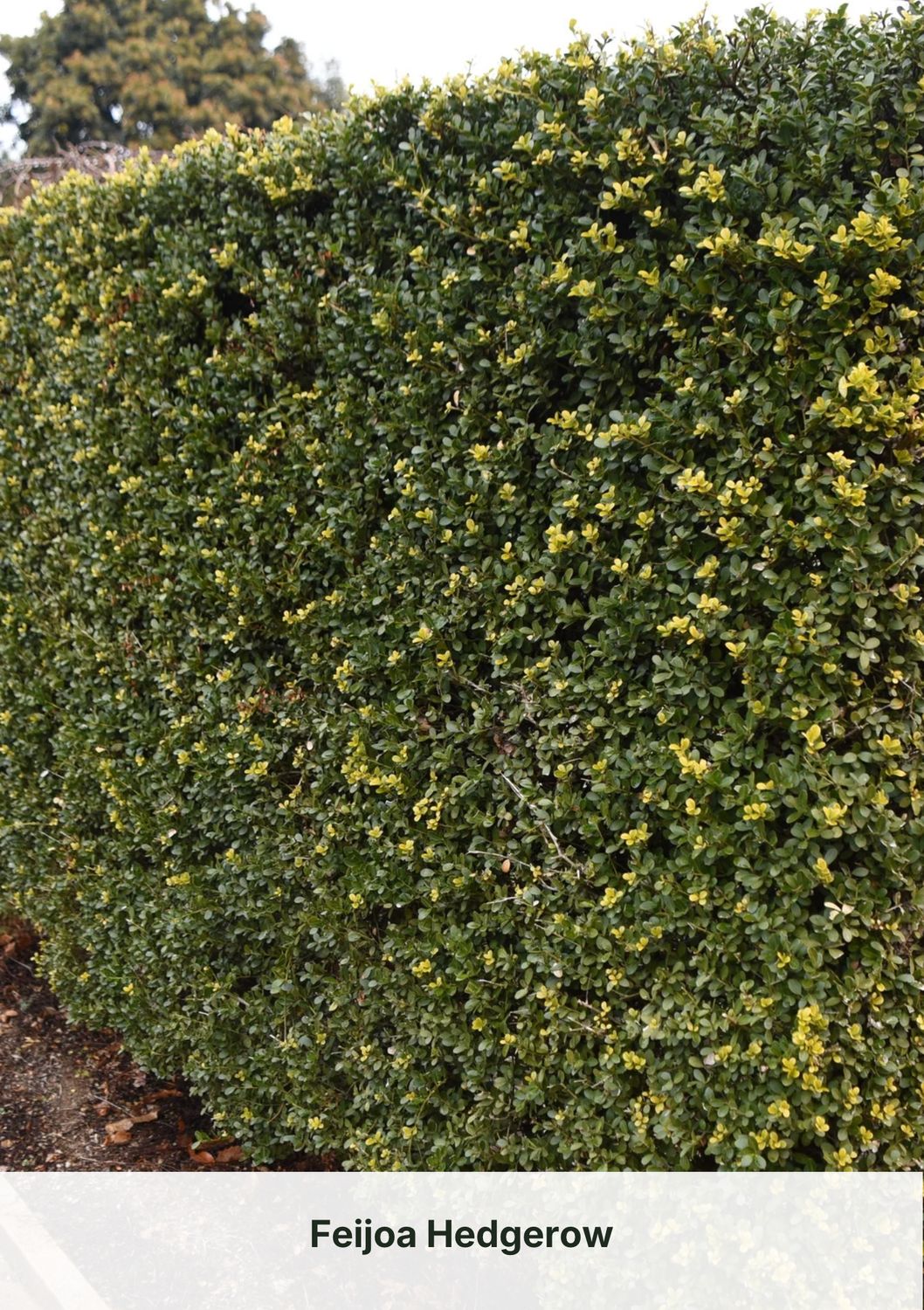
🌿 Pineapple Guava (Feijoa) — Evergreen Ornamental, Edible Flowers & Potential Fruit | 3 Gallon
🌸 Stunning Silvery Foliage • Candy-Sweet Edible Flowers • Beautiful Evergreen Landscaping • Potential Tropical Fruit
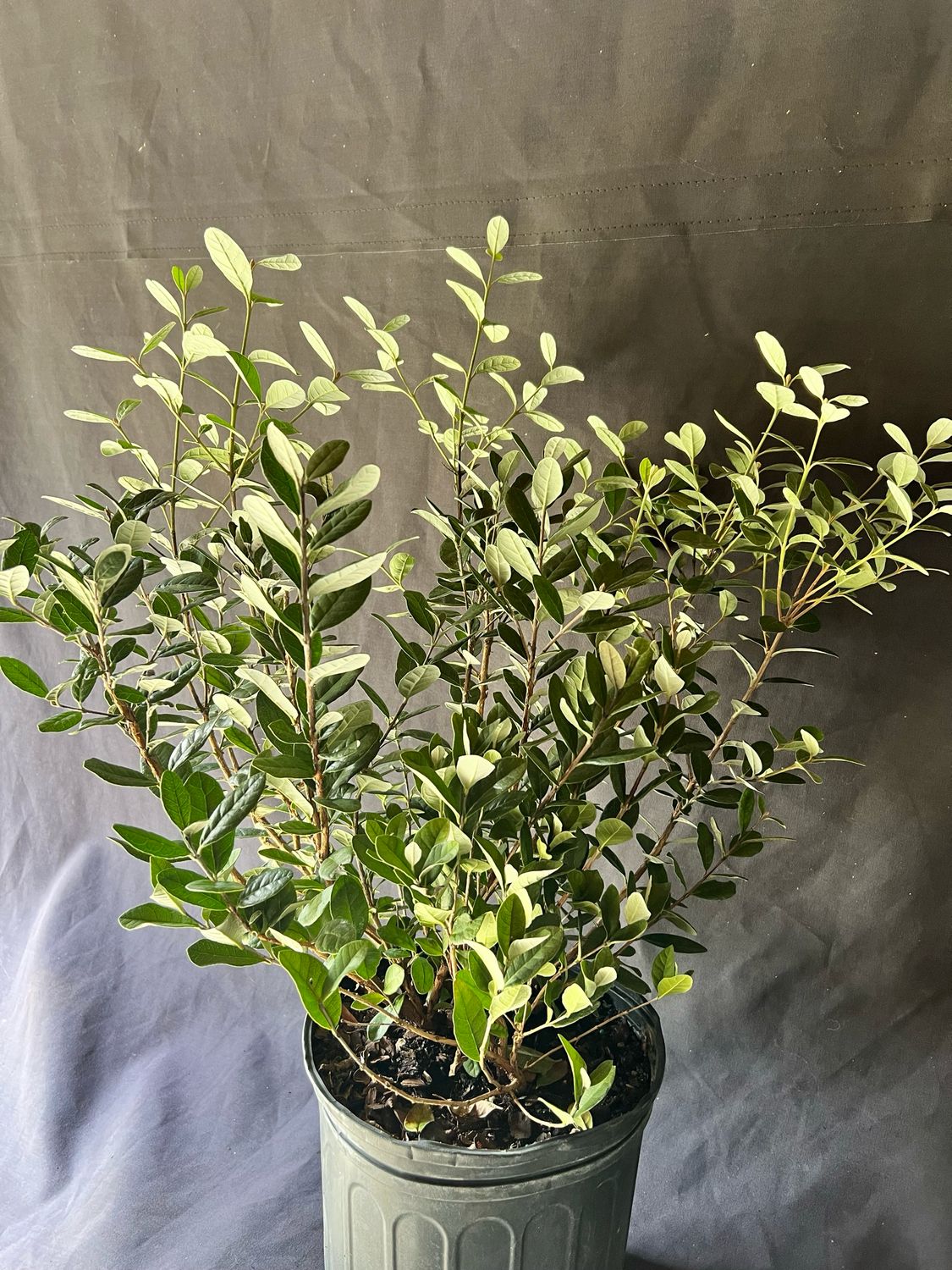
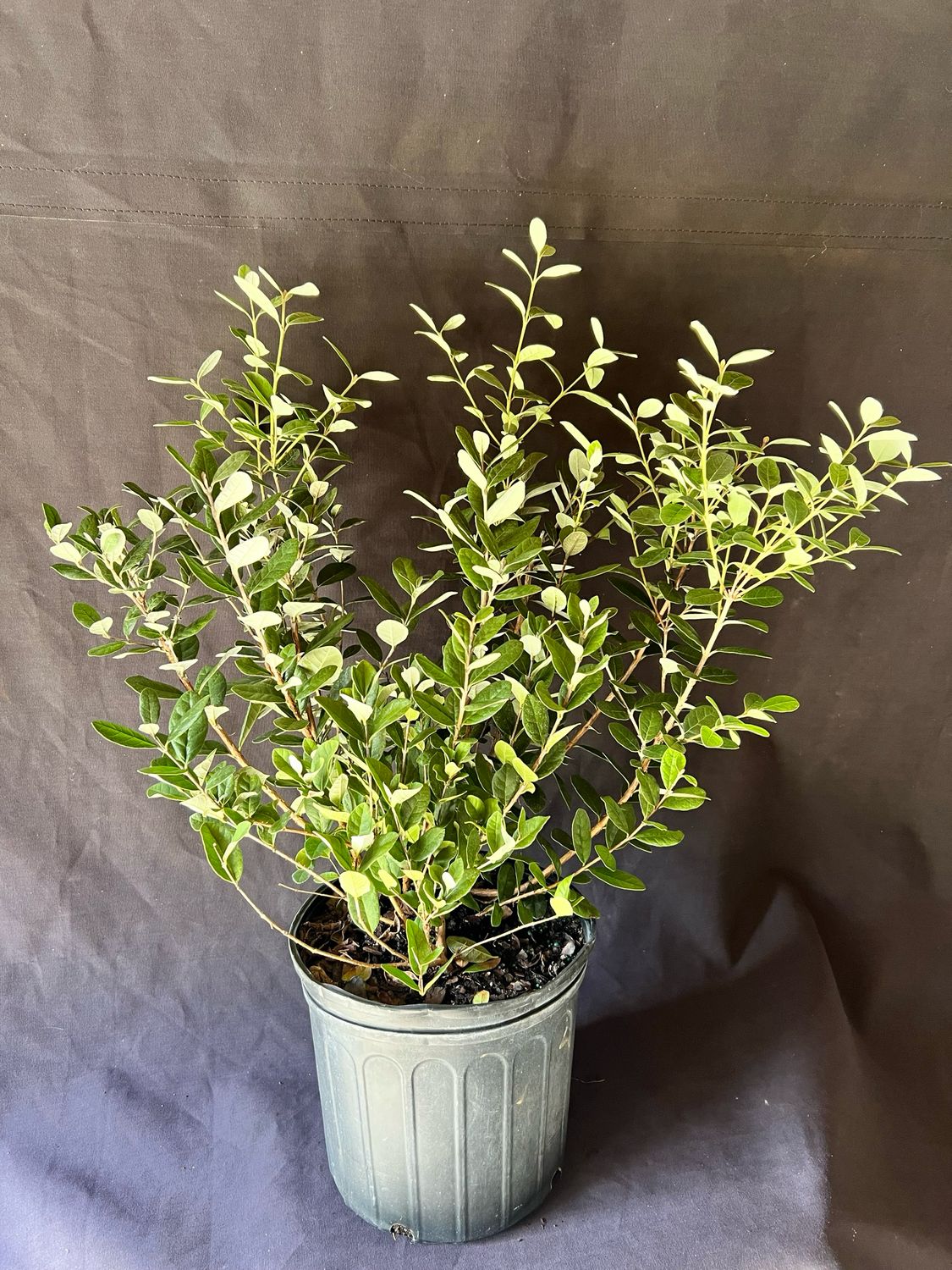
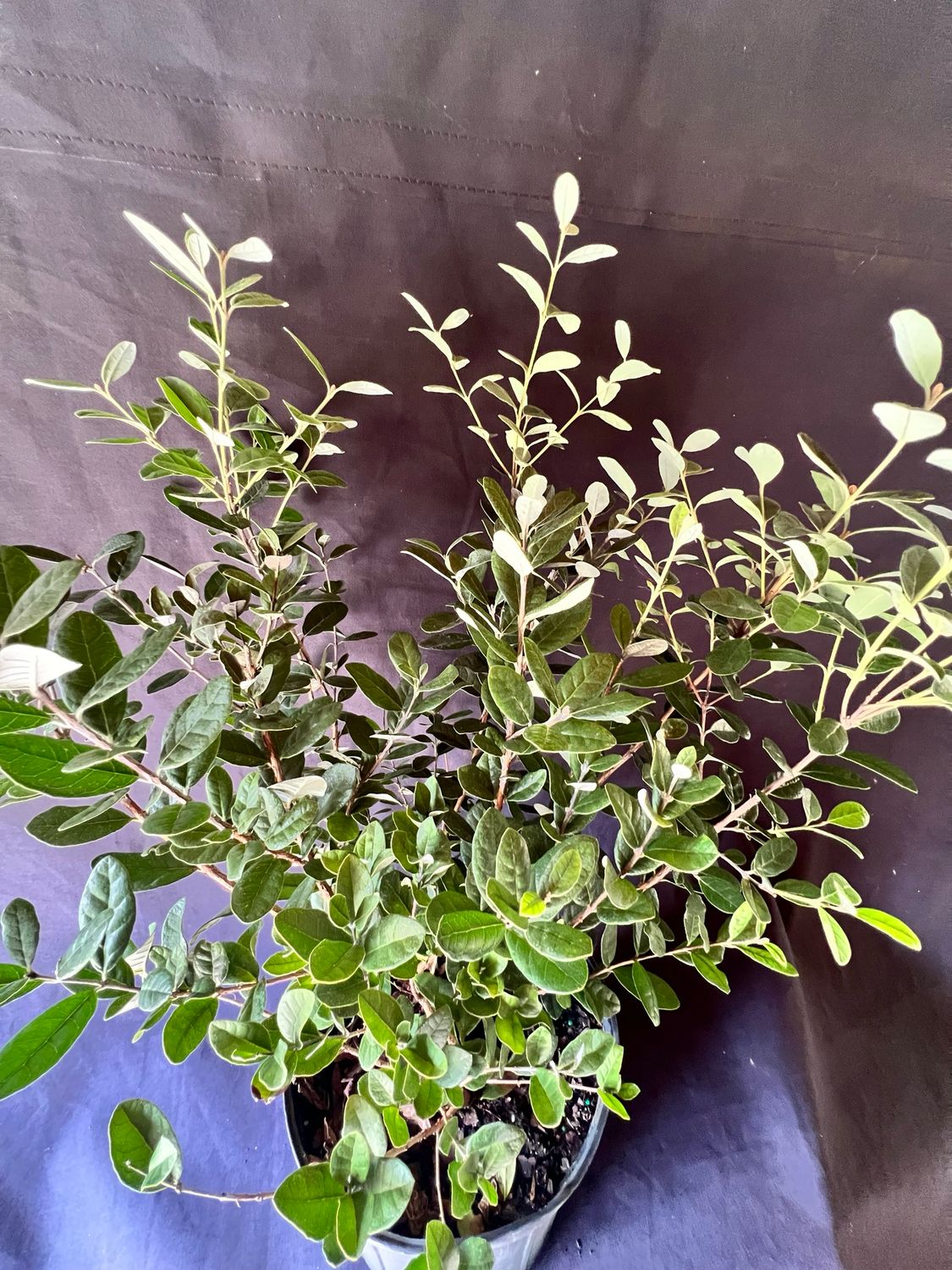
Ships in a 3-gallon nursery container.
Some plants earn their place in the landscape with an incredible harvest. Others win you over with their beauty.
Pineapple Guava does both — with a little plot twist.
This gorgeous South American evergreen is prized for its silvery foliage, architectural branching, and spectacular flowers with edible, naturally sweet petals. It's one of the most versatile plants for ornamental gardens, privacy hedges, coastal landscapes, and edible ecosystems.
And yes, under suitable conditions, it can produce wonderfully aromatic tropical-flavored fruit.
But here's what makes Pineapple Guava interesting: you don't need a fruit harvest to enjoy its many benefits.
In fact, throughout Florida's landscape industry, this species is commonly grown and sold as a premium ornamental hedge or shrub rather than a dependable fruit-producing tree.
We're big fans of plants that do more than one job. Pineapple Guava delivers beauty, edible blossoms, evergreen structure, pollinator value, and the possibility of fruit — all in one plant.
A landscaping showstopper with an edible bonus? We're here for it.
🌱 Pineapple Guava — Quick Growing Facts
| 🌿 Feature | Details |
|---|---|
| Botanical name | Feijoa sellowiana / Acca sellowiana |
| Common names | Pineapple Guava, Feijoa, Guavasteen |
| Plant family | Myrtaceae |
| Plant type | Broadleaf evergreen shrub or small tree |
| Origin | Southern Brazil, Uruguay, northeastern Argentina |
| Shipping size | 3-gallon nursery container (approximately 11.4 liters) |
| Cultivar | Unidentified; no named cultivar verified |
| Propagation | Unknown; method not verified by supplier |
| Estimated age | Not verified; container size alone cannot establish age |
| Mature height | Typically 10–15 ft. |
| Mature width | Approximately 8–15 ft. |
| Maintained height | Often 4–8 ft. with regular pruning |
| USDA hardiness | Zones 8–11 |
| Sunlight | Full sun to partial shade |
| Soil | Well-drained; slightly acidic preferred |
| Water | Moderate; drought tolerant once established |
| Growth rate | Slow to moderate |
| Cold tolerance | Established plants may tolerate temperatures near 20°F |
| Salt tolerance | Good coastal salt-spray tolerance |
| Wind tolerance | Moderately tolerant; protect from severe winds |
| Flowering season | Generally spring in Florida |
| Potential fruit harvest | Typically late summer through fall where fruit develops |
| Pollination | Depends on genetics; cross-pollination may help |
| Edible parts | Flower petals and fruit, when produced |
| Landscape uses | Hedge, privacy screen, specimen shrub, small tree, container plant |
| Florida invasive status | Not currently classified as invasive by UF/IFAS |
Important: Mature dimensions, hardiness, flowering, and fruit production vary with climate and growing conditions. These are general characteristics of the species, not guarantees for individual plants.
🌎 Where Can Pineapple Guava Grow?
Pineapple Guava is adaptable across much of the southern United States.
- Zone 8: Portions of northern Florida, coastal Georgia, South Carolina, Alabama, Mississippi, Louisiana, and the Pacific Northwest's milder areas
- Zone 9: Much of north-central Florida, parts of Texas, coastal California, and portions of Arizona
- Zone 10: Warmer coastal Florida, South Florida, coastal California, and other frost-limited regions
- Zone 11: Tropical and subtropical regions with minimal frost
USDA zones identify typical winter cold exposure, not fruiting reliability. A plant can survive and look beautiful in a location without receiving the seasonal conditions needed for dependable fruit production.
Gardeners outside these zones may experiment with protected container cultivation, but permanent outdoor growing is not recommended in climates with severe winter freezes.
🌸 Meet the Flower That's Almost Too Pretty to Eat
Let's talk about one of Pineapple Guava's most underrated features.
Its flowers are absolutely spectacular.
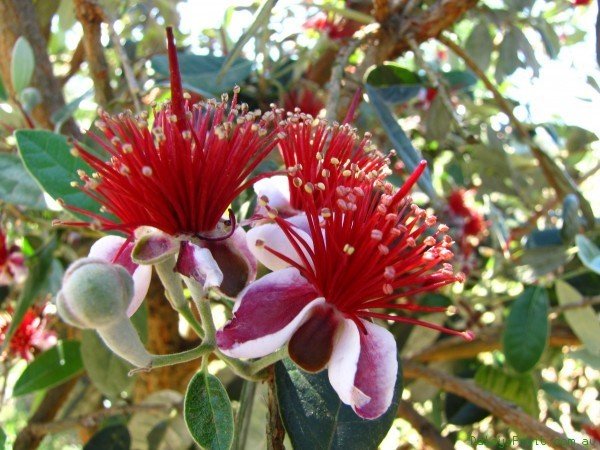
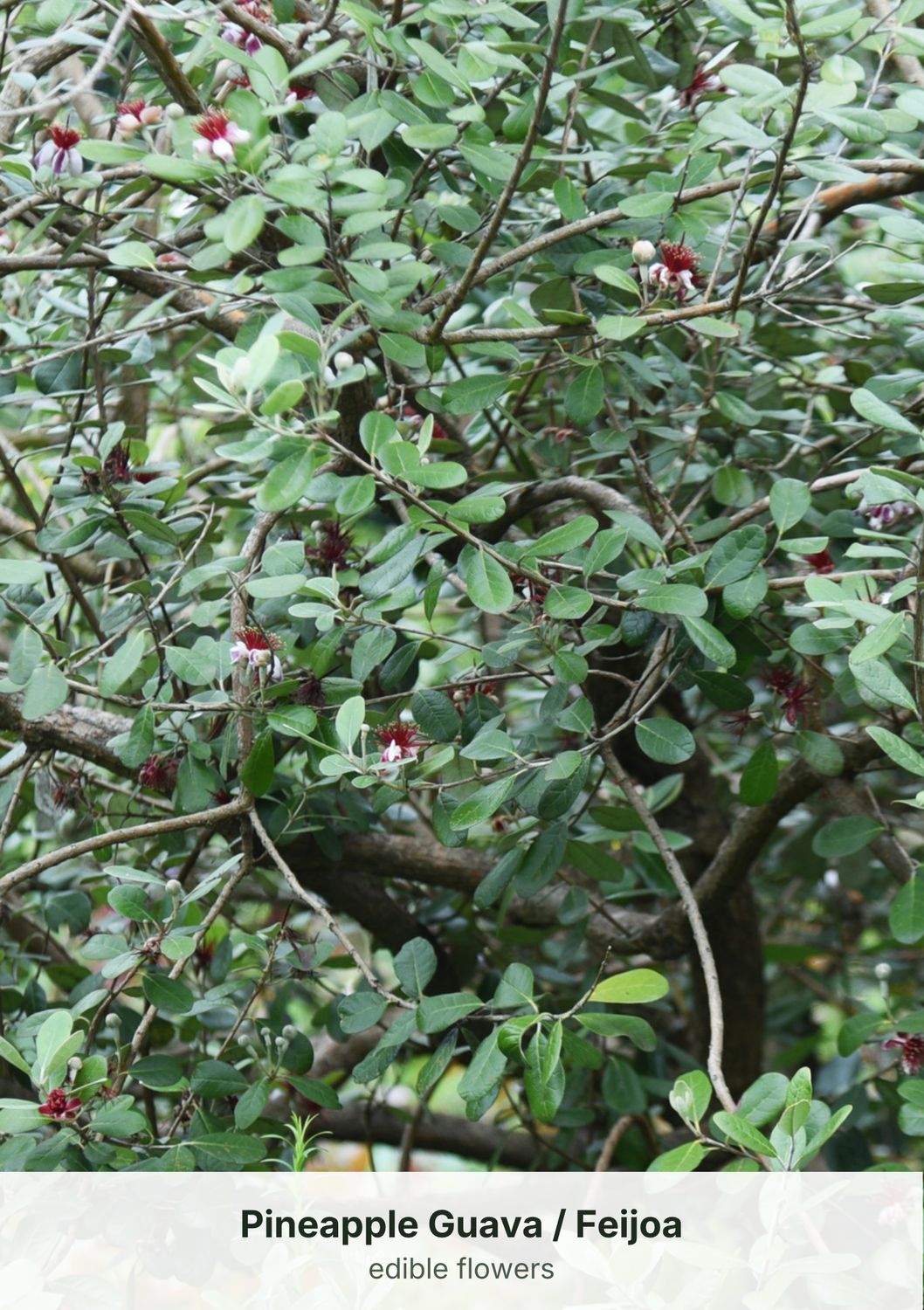
Each blossom displays thick white-to-pink petals surrounding a dramatic cluster of crimson-red stamens tipped with golden pollen.
They look like something a botanical illustrator dreamed up.
But the flowers aren't just beautiful.
The fleshy petals are edible — and they're delicious.
In our opinion, Pineapple Guava produces some of the tastiest edible blossoms in the plant world.
🍓 What Do Pineapple Guava Flowers Taste Like?
The soft, fleshy petals have a pleasant sweetness that growers often compare to:
- Strawberry
- Pineapple
- Marshmallow
- Sweet floral candy
The flavor is delicate enough to enjoy fresh, without cooking or additional sweeteners.
Creative Ways to Eat the Flowers
- Snack on fresh petals straight from the plant
- Add to a fresh fruit salad
- Decorate cakes, pastries, and desserts
- Float petals in lemonade or iced tea
- Freeze into decorative ice cubes
- Add to yogurt bowls
- Garnish cocktails and mocktails
- Pair with berries or tropical fruit
Our favorite way? Fresh from the garden. No recipe required.
Only consume flowers from plants that have not been treated with substances unsuitable for edible crops.
🌿 Want Fruit? Save Some Flowers!
If you're hoping for fruit production, leave plenty of flowers intact.
Removing the entire blossom eliminates its opportunity to develop fruit. Individual petals can sometimes be sampled without removing the reproductive structures, but excessive harvesting or damage can interfere with pollination.
The flowers are a wonderful edible crop in their own right, whether fruit ultimately develops or not.
🌳 One of Florida's Most Beautiful Evergreen Landscape Plants
This is where Pineapple Guava really shines.
Its foliage is dark green on top, with a soft, silvery-white underside that gives the entire canopy a beautiful blue-green appearance.
The leaves are thick, oval, and naturally attractive throughout the year.
As the plant matures, its branching becomes increasingly architectural, with handsome gray bark and a naturally rounded canopy.
Unlike tropical fruit trees that can look sparse or unbalanced after heavy pruning, Pineapple Guava responds well to thoughtful shaping and can become a very polished landscape feature.
✂️ One Plant, Many Landscape Possibilities
| Landscape application | Why it works |
|---|---|
| 🌿 Privacy hedge | Dense evergreen foliage creates year-round screening |
| 🌳 Small ornamental tree | Attractive branching and silvery canopy |
| 🏡 Foundation planting | Structural foliage and manageable size |
| 🌸 Edible flower garden | Sweet blossoms and colorful seasonal flowers |
| 🌊 Coastal landscape | Tolerates salt spray and breezy conditions |
| 🪴 Patio container | Can be maintained through pruning |
| 🐝 Pollinator garden | Flowers offer nectar and pollen resources |
| 🌱 Edible landscape | Combines ornamental beauty with useful edible parts |
| 🌾 Food forest edge | Evergreen structure and potential food production |
| ✨ Specimen planting | Beautiful enough to stand alone as a focal point |
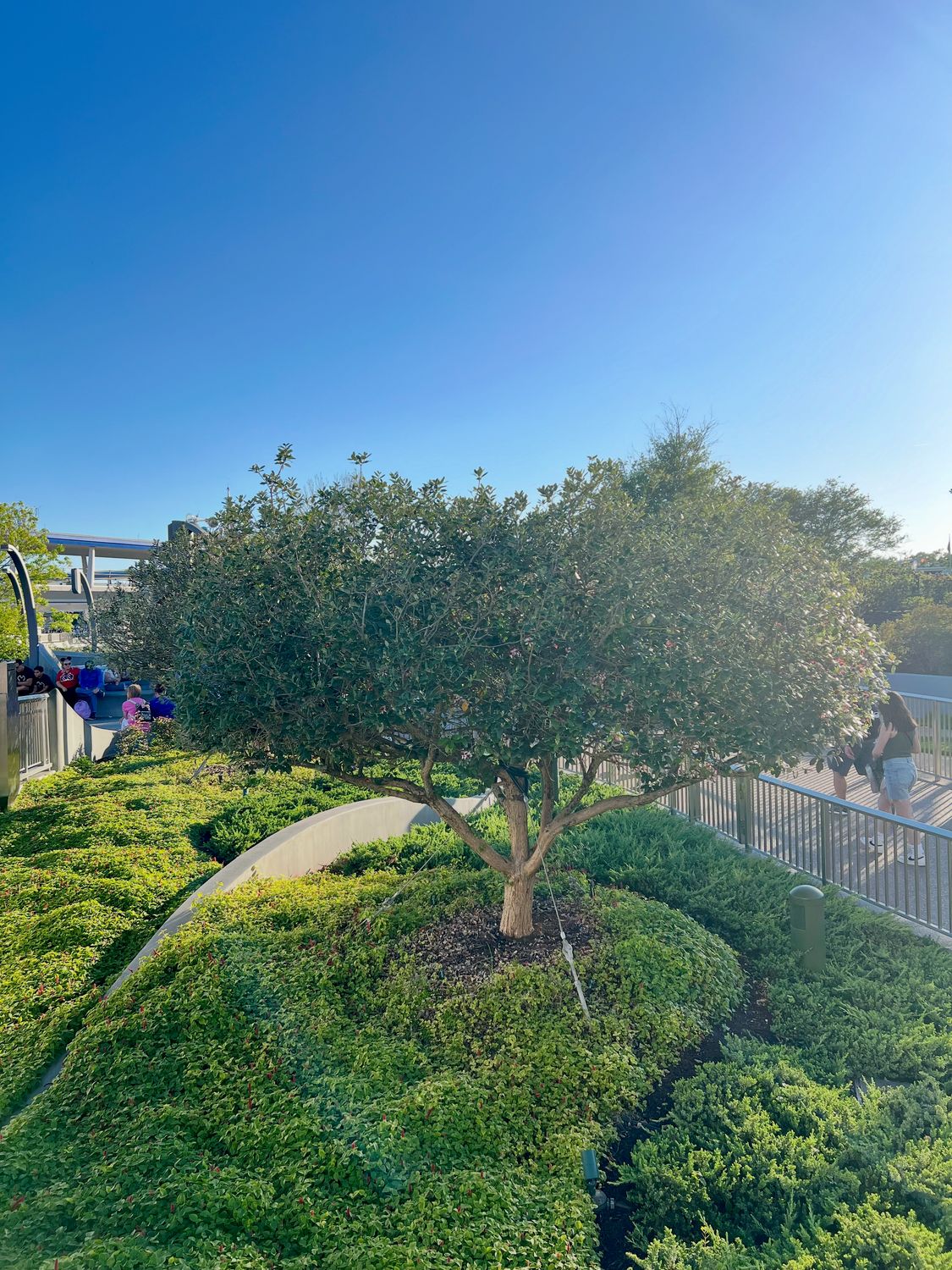
🏰 A Little Inspiration From Magic Kingdom
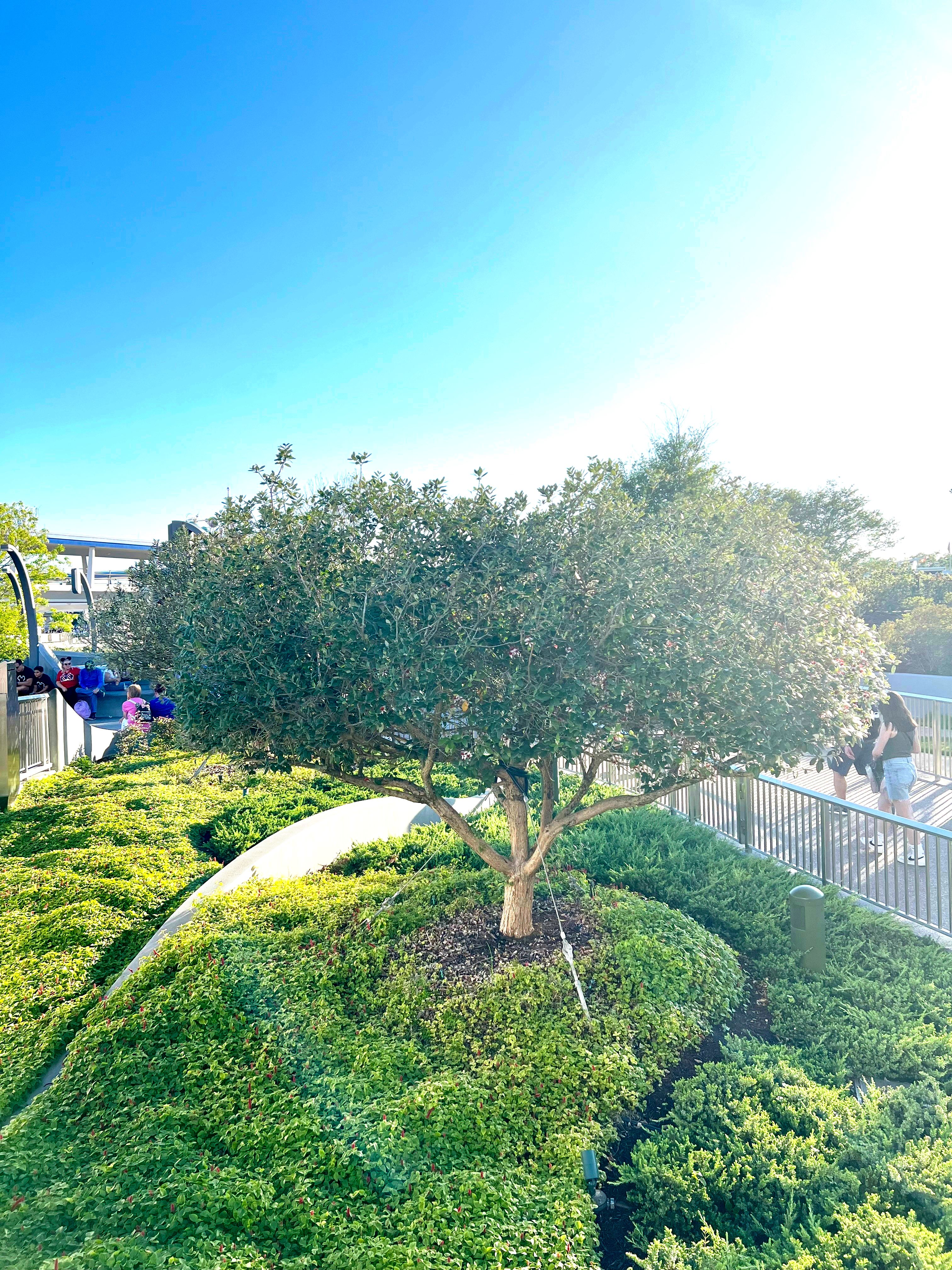
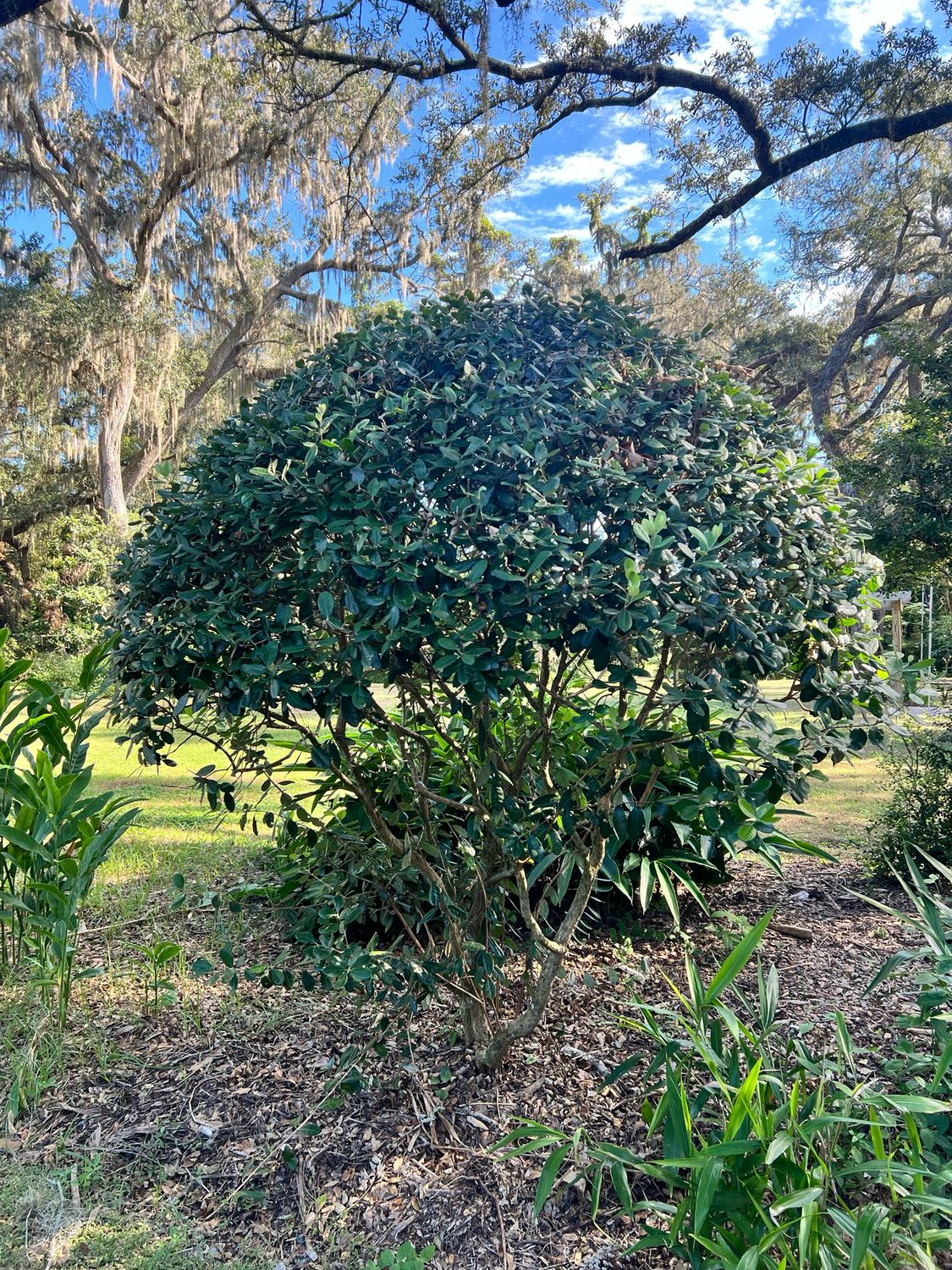
Photo: A beautiful mature Pineapple Guava specimen near TRON Lightcycle / Run at Walt Disney World's Magic Kingdom in Florida.
If you've ever wondered what Pineapple Guava can look like as a mature, well-maintained landscape specimen, here's a wonderful example.
This is the side of Feijoa we wish more gardeners knew about.
Even without a single piece of fruit, a mature plant can be absolutely stunning.
Its sculptural branching, refined evergreen foliage, and impressive presence make it a beautiful choice for everything from residential gardens to professionally designed landscapes.
Proof that an edible landscape can look just as polished as an ornamental one.
🍈 Can Pineapple Guava Actually Produce Fruit?
Absolutely. Pineapple Guava is a genuine fruit-producing species.
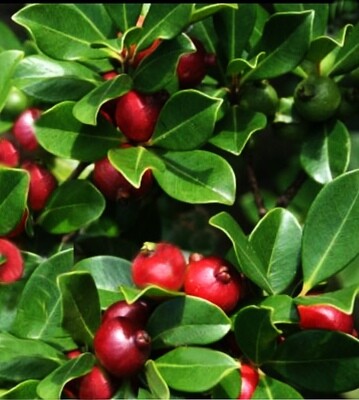
In suitable conditions, mature plants can develop fragrant green fruits with a tropical flavor unlike almost anything else.
However, there is an important distinction between the fruiting potential of the species and the proven productivity of an individual plant.
🌿 A Note From Our Growers
At GreenDreams, we believe in sharing what we've learned through firsthand experience — including when that experience differs from what you may read online.
We've worked in the Florida nursery trade for approximately 15 years and have rarely encountered named Pineapple Guava cultivars through our established wholesale suppliers.
While horticultural publications discuss numerous fruiting selections, the plants commonly available to us through the Florida landscape trade are typically sold simply as Pineapple Guava, without cultivar identification.
We've grown this species in containers at our retail nursery and in the ground at our homestead and farm.
Our plants flower beautifully, but we have not personally experienced fruit production from them.
We've heard reports from Florida growers who have harvested fruit successfully, sometimes with the assistance of hand-pollination. Research also confirms that Pineapple Guava can produce fruit under appropriate conditions.
Nevertheless, fruit production depends on genetics, climate, pollination, and growing practices.
⚠️ Important Information About the Plants We Sell
Our Pineapple Guava plants are not identified by a named fruiting cultivar.
They are sourced from another nursery in South Florida. We do not have verified information regarding their specific genetics, cultivar, age, or method of propagation.
Because of this, we cannot guarantee:
- Self-fertility or cross-pollination compatibility
- Fruit production
- Time to first fruit
- Fruit size, flavor, or yield
- Specific named-cultivar characteristics
We offer these plants for their exceptional ornamental qualities, edible flowers, and potential fruit production — not as guaranteed fruit-bearing trees.
If predictable fruit production is your primary goal, we recommend sourcing a named cultivar with documented fruiting performance.
If you appreciate beautiful, useful landscape plants with an edible bonus, Pineapple Guava is an outstanding choice.
🐝 Understanding Feijoa Pollination
Pineapple Guava flowers contain both male and female reproductive structures, but that doesn't mean every plant can pollinate itself successfully.
Some named cultivars are self-fertile, while others need pollen from a genetically different plant for dependable fruit set.
Even self-fertile selections may produce larger crops when cross-pollinated.
🌸 How Can Growers Improve Their Chances of Fruit?
- Plant in full sun for strong growth and flowering.
- Grow two genetically different plants when possible.
- Encourage birds and suitable pollinators to visit.
- Consider careful hand-pollination between compatible plants.
- Maintain consistent soil moisture during flowering.
- Avoid excessive nitrogen applications.
- Minimize unnecessary pruning during bloom.
- Allow flowers to remain intact for fruit development.
- Select a climate with suitable seasonal winter chilling.
An important distinction: Two plants do not automatically mean two genetically different plants. Because we don't know how our stock was propagated, we cannot verify whether purchasing multiple specimens from us would provide genetically different pollen sources.
❄️ Why Winter Chill Matters
Pineapple Guava generally performs best as a fruit crop in climates with some seasonal cooling.
UF/IFAS reports that flower initiation may benefit from approximately 50–200 hours of winter chilling, although the exact requirement is not fully understood and varies genetically.
Fruit production can be limited in warmer Florida locations, even when the plant grows vigorously and produces flowers.
This helps explain why Feijoa can be such an excellent ornamental in Florida while remaining an unpredictable fruit crop.
Beautiful foliage and flowering are achievable goals. Fruit is a potential bonus.
🍍 What Does Feijoa Fruit Taste Like?
When a Pineapple Guava does produce fruit, the experience is quite distinctive.
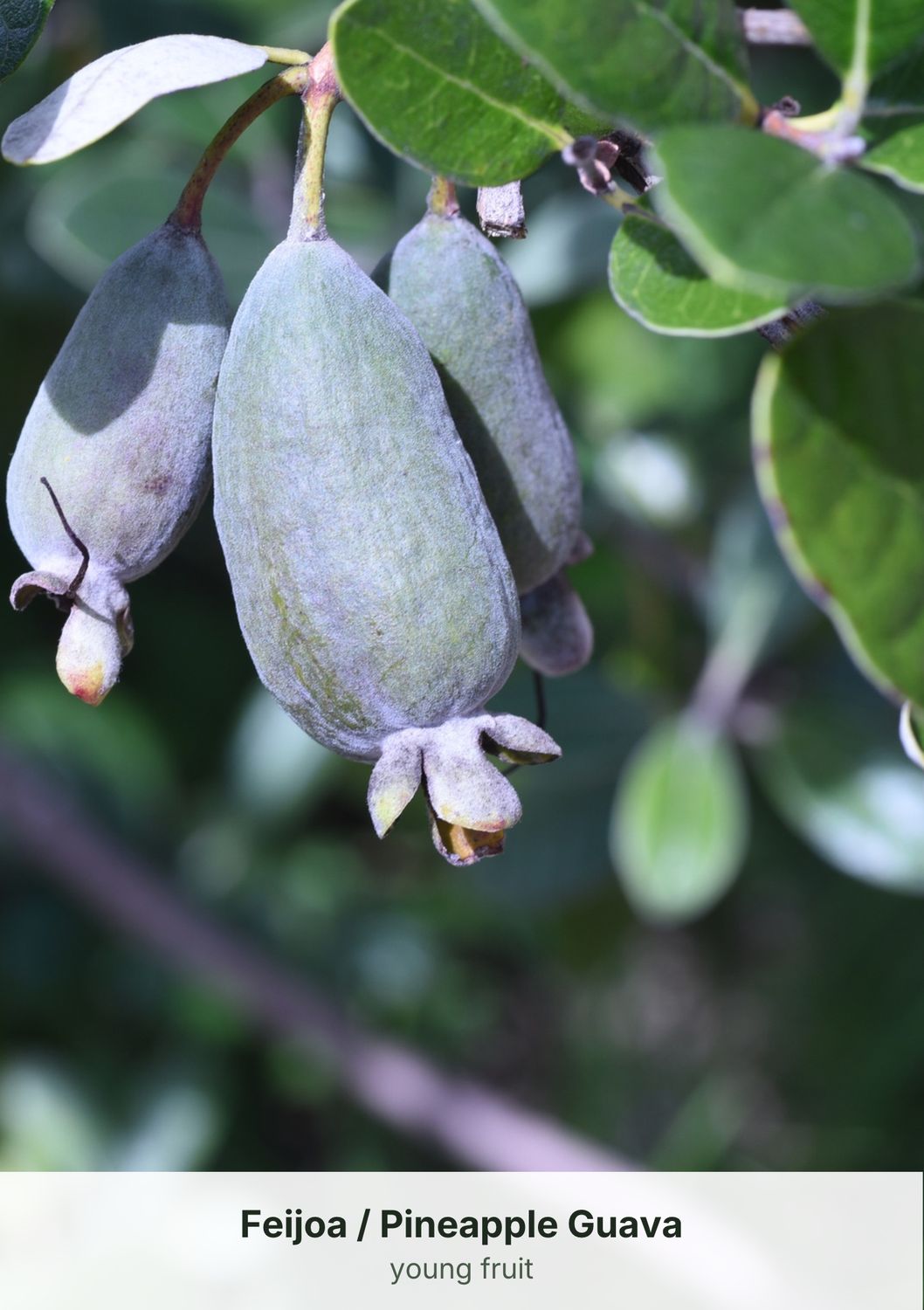
The fruits are typically oval or egg-shaped with green skin that may remain green even when ripe.
Inside, the texture changes from a somewhat granular outer flesh to a softer, translucent, jelly-like center containing small edible seeds.
🍓 Typical Fruit Characteristics
| Feature | Description |
|---|---|
| Shape | Oval to egg-shaped |
| Size | Commonly 1–3 inches long |
| Skin | Green to gray-green, sometimes waxy |
| Outer flesh | Firmer and slightly granular |
| Center | Soft, juicy, jelly-like pulp |
| Seeds | Small, embedded in the pulp |
| Aroma | Intensely fruity and floral |
| Flavor | Pineapple, guava, strawberry, citrus-like notes |
| Ripening | Often releases easily from the plant when mature |
Flavor, size, and productivity vary among individual plants and cultivars.
These descriptions reflect the species generally. They are not verified characteristics of GreenDreams' unidentified stock.
🥄 The Classic Way to Eat Feijoa
Cut it. Scoop it. Enjoy it.
When fruit is fully ripe:
- Rinse the fruit.
- Slice it in half.
- Scoop the soft interior with a spoon.
- Enjoy fresh or add to a recipe.
The aromatic pulp is also wonderful in drinks, desserts, preserves, and fruit-based dishes.
🍹 Culinary Uses Around the World
In countries such as New Zealand, where Feijoa is cultivated as a specialty fruit crop, harvests are used for:
- Fresh fruit snacks
- Smoothies and juices
- Fruit salads
- Cakes and quick breads
- Muffins and cobblers
- Ice cream and sorbet
- Jams and jellies
- Chutneys
- Fruit syrups
- Frozen fruit pulp
- Fermented beverages
🍈 Simple Feijoa Fruit Compote
For growers fortunate enough to harvest fruit, compote is an easy way to preserve its unique flavor.
Ingredients
- 2 cups chopped ripe Feijoa pulp
- 2–3 tablespoons sugar or honey, to taste
- 1 tablespoon lemon juice
- 2–3 tablespoons water
Directions
- Combine the ingredients in a small saucepan.
- Simmer gently over low heat.
- Stir occasionally until the fruit softens.
- Adjust sweetness to taste.
- Cool and refrigerate.
Serve over yogurt, pancakes, ice cream, oatmeal, or desserts.
No fruit yet? The edible flowers still offer plenty of culinary possibilities.
🌎 From South American Shrub to International Fruit Crop
Pineapple Guava has a fascinating history.
Native to southern South America, this evergreen species grows naturally in parts of Brazil, Uruguay, and northeastern Argentina.
Its species name, sellowiana, honors German botanist and plant collector Friedrich Sellow, who studied South American flora.
The plant later traveled into European horticulture before establishing itself in California and eventually becoming a popular specialty fruit crop in New Zealand.
Today, New Zealand has a well-developed Feijoa-growing tradition, with named cultivars selected for their fruit characteristics and productivity.
Meanwhile, in Florida, the same species has largely found its place in the ornamental landscape industry.
Same species. Different growing traditions. Very different expectations.
The botanical naming is interesting, too.
You'll encounter both Feijoa sellowiana and Acca sellowiana in publications and nursery catalogs. Royal Botanic Gardens, Kew currently accepts Feijoa sellowiana, while Acca sellowiana remains widely used in American horticulture.
Both names refer to the plant featured here.
🌿 Why Cultivar Identification Matters
Named fruiting cultivars have been selected for particular characteristics.
Examples discussed in horticultural literature include 'Coolidge', 'Apollo', 'Superba', 'Triumph', and 'Unique'.
They may differ in fruit size, flavor, productivity, flowering characteristics, and self-fertility.
These cultivar names are provided for educational reference only. GreenDreams does not identify the plants sold on this page as any of these selections.
For buyers seeking primarily an ornamental evergreen, cultivar identification may be less important than the plant's form, health, foliage, and overall landscape performance.
🌿 Why Grow Pineapple Guava?
Here's the short version:
- 🌸 Delicious edible flower petals
- 🌿 Gorgeous evergreen foliage
- 🌳 Outstanding ornamental landscape appeal
- 🏡 Excellent privacy hedge or specimen shrub
- 🌊 Good salt-spray tolerance
- ❄️ Greater cold tolerance than many tropical fruit trees
- ✂️ Easy to train into different landscape forms
- 🐝 Supports visiting pollinators
- 🍈 Potential fruit production under suitable conditions
- 🪴 Suitable for managed container growing
- 🌱 Useful in organic and ecological landscapes
- 💚 Generally relatively low pest pressure
Our favorite part? It's a plant you can enjoy for its beauty today, rather than waiting years for a harvest that may or may not happen.
🌿 Growing Pineapple Guava in Florida & Beyond
Pineapple Guava is refreshingly adaptable.
It's more cold tolerant than many subtropical fruit trees, handles a range of soil conditions, and can be shaped to suit both traditional ornamental landscapes and productive edible gardens.
The secret to growing a beautiful Feijoa is simple: good drainage, thoughtful pruning, healthy soil, and consistent care during establishment.
🌞 Where to Plant Pineapple Guava
Best Locations
Choose a location with:
- Full sun or partial shade
- Ideally 6 or more hours of direct sunlight
- Well-drained soil
- Good air circulation
- Adequate space for the mature canopy
- Convenient access for watering during establishment
Full sun generally encourages the strongest flowering and most compact, vigorous growth.
Light afternoon shade may be beneficial in particularly hot locations, although excessive shade can reduce flowering.
Locations to Avoid
- Low areas where water accumulates
- Chronically saturated soil
- Heavy shade beneath larger trees
- Areas subject to repeated saltwater flooding
- Extremely confined planting spaces
- Locations immediately beneath roof drainage outlets
- Areas where mature growth will constantly need severe pruning
Pineapple Guava tolerates coastal salt spray but should not be confused with a plant adapted to saltwater-saturated soil.
🌊 What About Wind?
Pineapple Guava's dense branching and sturdy evergreen foliage make it useful in coastal and exposed landscapes.
However, severe winds can damage branches, flowers, and developing fruit.
Provide some wind protection when possible, particularly for young plants and specimens being maintained for fruit production.
🌳 Planting Pineapple Guava — The GreenDreams High & Tight Method
At GreenDreams, we encourage gardeners to plant at the appropriate depth and prioritize healthy root development.
Never bury the plant's existing root flare or crown beneath additional soil.
Our Planting Method
- Choose the location. Select a sunny, well-drained area with room for the mature plant.
- Inspect the root ball. Remove the nursery pot carefully and check for circling or damaged roots.
- Dig appropriately. Make the planting hole slightly wider than the container and no deeper than the root ball.
- Position high and tight. Set the upper root ball at or slightly above the surrounding soil grade, keeping the root flare exposed.
- Backfill carefully. Use native soil, incorporating appropriate finished compost where site conditions justify it.
- Firm the soil. Eliminate large air pockets without excessively compacting the root zone.
- Top-dress organically. Apply finished compost, properly prepared biochar, and suitable organic nutrients where appropriate.
- Mulch generously. Apply approximately 2–3 inches of hardwood mulch over the surrounding root zone.
- Protect the trunk. Keep mulch several inches away from the woody base.
- Water deeply. Direct water into the root zone until the surrounding soil is evenly moist.
Avoid excessively amending only the planting hole in poorly drained soils, as this can encourage water to accumulate around the root ball.
🎥 Learn Our Planting Method
Watch GreenDreams' High & Tight Fruit Tree Planting Guide:
Our planting approach applies to many of the edible, ornamental, and ecological plants we offer, with adjustments for the particular species and growing site.
💧 Watering Pineapple Guava — Roots First!
Pineapple Guava becomes moderately drought tolerant once established, but newly planted specimens require regular attention.
Our preferred watering method is always at soil level.
We recommend morning watering with a hose, drip irrigation, or a properly positioned micro-irrigation emitter.
Avoid unnecessary overhead watering, particularly late in the day. Prolonged leaf wetness can encourage some foliar problems, while poorly directed sprinklers waste water.
🪴 Watering a Container-Grown Feijoa
A plant growing in a nursery container has much less available soil moisture than an established landscape specimen.
Check the growing media daily, especially during hot Florida weather.
Water thoroughly when the upper portion of the mix begins to dry, allowing excess water to drain freely from the container.
Depending on the weather, pot size, root development, and growing media, a container-grown plant may require daily watering during hot periods.
However, watering should always respond to actual moisture conditions rather than following a rigid schedule.
Never allow the pot to remain standing in water.
🌳 Watering Newly Planted Pineapple Guava
| Establishment period | Recommended approach |
|---|---|
| First 1–2 weeks | Inspect soil moisture daily; water thoroughly as needed |
| Weeks 3–8 | Gradually reduce frequency while watering more deeply |
| Following months | Irrigate as needed until roots establish beyond the original planting hole |
| Established plants | Supplement rainfall during prolonged drought |
| Flowering or fruit development | Maintain consistent moisture and avoid severe drying |
In hot, sandy Florida soils, newly installed plants may need more frequent irrigation than plants growing in moisture-retentive soils.
A useful starting point after the initial establishment period is 2–3 deep waterings weekly during dry weather, adjusted for actual rainfall and soil moisture.
During Florida's rainy season, irrigation requirements may drop dramatically.
🌿 How to Tell if Your Plant Needs Water
Check the soil a few inches below the surface.
Dry soil: Water deeply.
Moist soil: Recheck later.
Saturated soil: Hold irrigation and evaluate drainage.
Wilting can be caused by both excessive dryness and waterlogged roots. Always inspect the soil before assuming the plant needs more water.
🪵 Mulching & Soil Health
Pineapple Guava has a relatively shallow feeder-root system.
Protecting this root zone is especially important in Florida's sandy soils.
A layer of organic hardwood mulch helps:
- Retain soil moisture
- Moderate soil temperatures
- Suppress weeds
- Reduce disturbance to shallow roots
- Gradually contribute organic matter
- Support soil organisms
- Reduce competition from turfgrass
Our Recommended Approach
Apply approximately 2–3 inches of hardwood mulch over the root zone.
Keep mulch pulled back several inches from the trunk.
Avoid deep piles against the base of the plant.
Think mulch donut, not mulch volcano.
As the mulch decomposes, replenish it periodically to maintain soil coverage.
🌱 Organic Fertilization for Feijoa
Pineapple Guava generally does not require an aggressive fertilizer program.
In fact, excessive nitrogen can encourage vigorous foliage growth without necessarily improving flowering or fruit production.
At GreenDreams, we prefer building healthy soil and providing balanced nutrition.
Useful Organic Soil Amendments
- Finished organic compost
- Properly conditioned biochar
- Balanced organic fertilizer
- Worm castings
- Trace minerals where soil testing indicates a deficiency
- Organic hardwood mulch
When to Fertilize
For established Pineapple Guava in Florida, active growth generally occurs from spring through fall.
Light, appropriately sized fertilizer applications can be made during this period when needed.
Reduce or discontinue routine fertilization during periods of cold weather or when the plant is not actively growing.
For recently transplanted plants, allow the root system to settle before applying substantial fertilizer.
Don't Overfeed!
UF/IFAS notes that Florida-specific nutrient research for Feijoa remains limited.
A healthy plant growing in suitable soil may need relatively little supplemental fertility.
Use leaf color, plant vigor, soil conditions, and preferably soil testing to guide applications rather than assuming more fertilizer means more fruit.
🗓️ Seasonal Pineapple Guava Care Calendar
Pineapple Guava is a broadleaf evergreen.
Unlike deciduous fruit trees such as peaches, plums, and some persimmons, it does not normally shed its entire canopy for winter dormancy.
Instead, it retains foliage year-round in suitable climates, although growth slows during cooler weather.
Individual leaves will still age, yellow, and fall as part of natural foliage replacement.
❄️ Winter — December Through February
What to expect
- Evergreen foliage remains
- Growth slows
- The plant experiences seasonal cooling
- Winter chilling may contribute to subsequent flowering
- Young plants may need protection during hard freezes
What to do
- Reduce irrigation as soil dries more slowly
- Maintain mulch
- Protect newly planted or container-grown specimens during significant cold events
- Inspect the plant for winter damage
- Avoid unnecessary fertilizer applications
Established Pineapple Guava may withstand temperatures approaching 20°F, but young plants and exposed container roots are more vulnerable.
🌸 Spring — March Through May
What to expect
- New growth resumes
- Flower buds develop
- Distinctive red-and-white blossoms emerge
- Pollinator activity increases
What to do
- Maintain consistent soil moisture
- Avoid excessive nitrogen
- Encourage pollinator activity
- Minimize heavy pruning during bloom
- Enjoy the edible petals
- Leave flowers intact if hoping for fruit
In Florida, flowering commonly occurs around April and May, though conditions vary.
☀️ Summer — June Through August
What to expect
- Active evergreen growth
- Rapid foliage development
- Potential fruit enlargement following successful pollination
- Increased water demand in containers
- Heavy seasonal rainfall in much of Florida
What to do
- Monitor soil moisture
- Reduce irrigation during prolonged rainy periods
- Maintain good drainage
- Inspect for pests and foliar problems
- Avoid heavy canopy removal during extreme heat
- Keep the root zone mulched
Pineapple Guava tolerates warm conditions, but prolonged extreme heat may interfere with fruit development where fruit is present.
🍂 Fall — September Through November
What to expect
- Slowing vegetative growth
- Potential fruit ripening in productive plants
- Continued evergreen foliage
- Gradual adjustment to cooler weather
What to do
- Monitor moisture as temperatures change
- Harvest fruit if present and ripe
- Perform thoughtful structural pruning after flowering and any harvest
- Refresh mulch
- Prepare young plants for upcoming winter weather
🌿 What About Leaf Yellowing?
Some interior yellowing and leaf drop is normal.
However, excessive leaf loss may indicate drought, saturated roots, cold stress, or other environmental problems.
A healthy Pineapple Guava generally maintains a substantial evergreen canopy throughout the year.
✂️ Pruning Pineapple Guava — Hedge, Shrub or Tree?
One of the best features of this plant is how readily it adapts to different landscape styles.
Pineapple Guava naturally develops a multi-stemmed shrub form but can be trained into a small tree.
🌿 For a Natural Shrub
Allow the plant to develop multiple main stems.
Remove:
- Dead or damaged branches
- Crossing limbs
- Weak interior growth
- Branches growing into unwanted spaces
Preserve its natural rounded appearance.
🏡 For a Formal Hedge
Allow several strong basal stems to develop and encourage branching through selective pruning.
Feijoa tolerates clipping and can be maintained at approximately 4–8 feet where appropriate.
Frequent shearing may reduce flower production by removing potential flowering growth.
🌳 For a Small Ornamental Tree
Select a strong central trunk or several well-positioned stems.
Gradually remove unwanted lower branches while developing the desired canopy.
UF/IFAS describes single-trunk training with approximately 4–6 well-positioned major branches.
Avoid removing large portions of the canopy at one time.
🍈 What If Fruit Production Is the Goal?
Prioritize light penetration and healthy flowering wood.
Avoid repeated shearing during flowering and fruit development.
Structural pruning is generally best performed after any harvest or during an appropriate period before the next bloom cycle.
Remember: Pruning determines the plant's form, not its genetic capacity to produce fruit.
🪴 Growing Pineapple Guava in Containers
Pineapple Guava can make a beautiful long-term patio or courtyard specimen.
Container growing is particularly useful for gardeners who want to maintain a smaller plant or provide additional protection during cold weather.
However, container specimens require greater attention to watering and root development.
🌱 Understanding Nursery Container Sizes
| Container | Approximate volume | Typical role |
|---|---|---|
| 4-inch starter pot | Varies by pot shape | Young starter plant |
| 1 gallon | 3.8 liters | Early establishment |
| 3 gallon | 11.4 liters | Larger nursery plant |
| 7 gallon | 26.5 liters | Growing specimen |
| 15 gallon | 56.8 liters | More established specimen |
| 20–25 gallon | 75.7–94.6 liters | Large container plant |
| Larger planters | Varies | Long-term specimen growing |
These are nominal U.S. nursery sizes. Actual container volumes and plant ages can vary.
Our Pineapple Guava plants ship in 3-gallon nursery containers.
We cannot verify their age or propagation method.
When Should You Transplant?
We recommend keeping newly shipped plants in their original containers for approximately 30 days or until healthy new growth appears, provided that the container and roots remain in suitable condition.
After acclimation, assess whether the plant actually needs additional root space.
Signs It's Time for a Larger Pot
- Roots are circling heavily
- Roots are emerging from drainage holes
- Water runs through the pot unusually quickly
- The root ball is densely occupied
- The container dries out too quickly despite proper watering
- The plant has become unstable or top-heavy
Avoid moving a small root system into an unnecessarily enormous container.
Excess growing media can remain saturated and create root-health problems.
🌿 Best Potting Mix for Feijoa
Pineapple Guava prefers a well-drained but moisture-retentive growing medium.
A professional container mix may contain:
- Composted pine bark
- Coconut coir or peat moss
- Perlite or pumice
- A modest amount of finished compost
- Other stable, aerating components
The goal: retain enough moisture for healthy growth while allowing excess water to drain freely.
Avoid straight garden soil, heavy clay, or pure compost in containers.
How to Up-Pot Pineapple Guava
- Select the next appropriate container size.
- Confirm adequate drainage holes.
- Add a small amount of fresh potting mix.
- Remove the plant carefully from its current container.
- Inspect for tightly circling roots.
- Gently correct problematic exterior roots when necessary.
- Place the plant at the same growing depth.
- Backfill around the root ball.
- Firm lightly without compacting the medium excessively.
- Water thoroughly at soil level.
- Provide appropriate light and moisture during recovery.
You can find nursery containers and professional potting materials at garden centers, agricultural suppliers, landscape supply businesses, and online horticultural retailers.
Search for terms such as professional nursery container, bark-based potting mix, horticultural perlite, or organic container growing media.
🏠 Can Pineapple Guava Grow Indoors?
It may tolerate temporary indoor protection during extreme cold, particularly in a bright sunroom or greenhouse.
However, Pineapple Guava is not an ideal permanent houseplant.
It benefits from strong outdoor sunlight, air circulation, and natural seasonal temperature changes.
For long-term health and flowering, outdoor growing is generally preferable.
🐝 Companion Plants — Build a Beautiful Edible Ecosystem
Pineapple Guava looks beautiful on its own, but it becomes even more interesting when incorporated into a diverse landscape.
At GreenDreams, we encourage combining edible crops, pollinator plants, soil-building species, and ornamental companions.
🌸 Pollinator Support
Consider pairing Feijoa with:
- Native tropical sage (Salvia coccinea)
- Mexican sunflower (Tithonia diversifolia)
- Native wildflowers
- Flowering herbs
- Other seasonally blooming pollinator species
These plants support broader ecological diversity, although they do not replace the need for compatible Feijoa pollen when cross-pollination is required.
🌾 Biomass & Soil Building
Useful surrounding plants may include:
- Mexican sunflower for chop-and-drop biomass
- Vetiver grass for dense root growth and soil stabilization
- Clumping grasses for biomass production
- Pigeon pea for nitrogen fixation
- Perennial peanut for living groundcover and nitrogen fixation
Plant vigorous companions far enough from the Feijoa to prevent direct root competition and crowding.
🎨 Ornamental Design Combinations
Feijoa's silvery-green foliage looks especially attractive beside:
- Purple flowering salvias
- Burgundy-leaved plants
- Native flowering perennials
- Fine-textured ornamental grasses
- Dark green tropical foliage
- Yellow-green groundcovers
Our favorite design principle: Make the landscape look beautiful first, while incorporating useful ecological functions throughout.
A well-designed edible landscape shouldn't need to look like a traditional vegetable garden.
It can be polished, layered, colorful, and full of life.
🌿 Is Pineapple Guava Right for Your Garden?
Pineapple Guava is an exceptional multipurpose landscape plant, but understanding its strengths and limitations will help you make the right choice.
✅ Pineapple Guava Is Ideal For:
- Gardeners seeking a beautiful evergreen ornamental
- Homeowners creating privacy hedges or natural screens
- Edible landscape enthusiasts
- Growers interested in edible flowers
- Coastal landscapes exposed to occasional salt spray
- Organic gardeners seeking relatively low-maintenance plants
- Pollinator-friendly landscapes
- Homeowners wanting a small ornamental tree
- Container gardeners with adequate outdoor growing space
- Food forest growers incorporating structural evergreen species
- Gardeners who appreciate unusual plants with multiple uses
🌿 It May Not Be Ideal For:
- Buyers who require guaranteed fruit production
- Gardeners seeking a verified self-fertile cultivar
- Very shady planting locations
- Properties with chronically waterlogged soil
- Indoor-only growing situations
- Landscapes with insufficient space for mature growth
- Gardeners unable to provide winter protection in colder climates
- Buyers expecting a guaranteed fruit harvest within a specific timeframe
Our recommendation: Choose this plant because you love its ornamental qualities and edible blossoms. Consider any future fruit production an additional benefit.
⚠️ Important Growing Considerations
🍈 Fruiting Is Not Guaranteed
The Pineapple Guava offered on this page is an unidentified selection.
We cannot verify its cultivar, propagation method, self-fertility, or productivity.
❄️ Cold Weather
Established plants are relatively cold tolerant, but severe freezes can damage foliage and woody tissue.
Protect young and container-grown specimens during significant cold events.
💧 Poor Drainage
Prolonged root saturation can cause stress and decline.
Choose well-drained planting locations and avoid constantly wet container media.
🌞 Extreme Heat
While the plant tolerates warm weather, severe heat can stress young plants and may damage developing fruit.
🐝 Pollination Limitations
Flower production does not guarantee fruit development.
Genetic compatibility, suitable pollen transfer, climate, and plant health all play roles.
✂️ Excessive Pruning
Frequent shearing can remove flowering growth and reduce the opportunity for fruit development.
🌱 Pest & Disease Considerations
Pineapple Guava generally experiences relatively low pest and disease pressure, making it useful in organic landscapes.
Occasional problems may include scale insects, thrips, fungal spotting, or other stress-related issues.
Regular observation, healthy soil, proper irrigation, and good airflow are important preventive practices.
🔍 Pineapple Guava Troubleshooting Guide
| Problem | Possible explanation | Recommended action |
|---|---|---|
| 🍂 Yellowing leaves | Normal aging, excess water, or nutrient imbalance | Check soil moisture, drainage, and overall plant vigor |
| 🌿 Leaf drop | Drought, waterlogged roots, or environmental stress | Inspect soil and adjust irrigation |
| 💧 Wilting despite wet soil | Poor drainage or root oxygen deficiency | Reduce watering and evaluate root health |
| 🌸 Flowers but no fruit | Pollination, genetics, or climate limitations | Consider compatible pollen sources and hand-pollination |
| 🌼 Few or no flowers | Immaturity, excessive shade, pruning, or environmental factors | Improve light exposure and evaluate pruning practices |
| 🍈 Small fruit dropping | Heat, drought, poor pollination, or stress | Maintain consistent moisture and minimize stress |
| ❄️ Brown leaves after a freeze | Cold injury | Protect the plant and wait for recovery before removing damaged wood |
| 🪲 Sticky leaves or visible scale | Sap-sucking insects | Inspect carefully and use appropriate organic management |
| 🍃 Spotted foliage | Environmental stress or disease | Improve airflow, keep leaves dry, and identify the cause |
| 🪴 Container dries quickly | Root crowding or hot conditions | Inspect the root ball and consider upsizing after acclimation |
| 🌱 Slow growth after shipping | Normal adjustment or transit stress | Stabilize watering and light; allow recovery time |
🌿 Organic Pest Management
Our preferred approach begins with prevention:
- Keep plants properly watered without saturating the root zone.
- Encourage beneficial insects.
- Maintain healthy, biologically active soil.
- Avoid unnecessary broad-spectrum pesticides.
- Remove heavily damaged or dead growth when appropriate.
- Identify the specific pest before treating.
- Use only products labeled for the plant and application.
Even organic treatments can damage foliage when applied incorrectly or during extreme temperatures.
Always follow product labeling.
❓ Pineapple Guava Frequently Asked Questions
Does Pineapple Guava Actually Produce Fruit?
Yes. Pineapple Guava is a legitimate fruit-producing species. However, not every plant will produce a dependable harvest. Genetics, climate, pollination, and growing conditions all influence fruit production.
GreenDreams does not guarantee fruit production from the unidentified plants offered here.
Is Pineapple Guava a Fruit Tree or a Hedge?
Both!
The species can be grown as a fruit-producing shrub, ornamental hedge, specimen planting, or small tree.
Its appearance depends largely on pruning and training. The growth form alone does not determine whether the plant will produce fruit.
What Variety of Pineapple Guava Does GreenDreams Sell?
Our plants are sold as unidentified Pineapple Guava.
We do not have verified cultivar information from our South Florida nursery supplier.
Are GreenDreams Pineapple Guava Plants Seed-Grown or Propagated From Cuttings?
We do not know how these particular plants were propagated.
Seed propagation and vegetative propagation are both used within the horticultural industry, but we cannot verify which method was used for our stock.
Will One Pineapple Guava Produce Fruit?
Possibly, depending on its genetics and growing conditions.
Some named cultivars are self-fertile, while others require or benefit from cross-pollination.
Because our stock is unidentified, we cannot guarantee that an individual plant will set fruit without another compatible pollen source.
Should I Purchase Two Plants for Pollination?
Two genetically different plants may improve fruit production.
However, purchasing two plants does not necessarily guarantee that they are genetically different, particularly when propagation methods are unknown.
We cannot verify genetic differences between the individual plants in our inventory.
Can I Hand-Pollinate Pineapple Guava?
Yes. Hand-pollination may help move pollen between flowers.
Using pollen from a genetically different, compatible plant is generally preferable when dealing with self-incompatible selections.
Hand-pollination does not guarantee fruit production.
How Long Until Pineapple Guava Produces Fruit?
The age of first fruiting varies significantly.
Published research describes fruiting within a few years under favorable circumstances, but this is not a reliable prediction for unidentified nursery stock.
We cannot estimate when or whether our plants will produce fruit.
Are Pineapple Guava Flowers Edible?
Yes!
The fleshy petals are edible and have a delightful sweet flavor.
They're wonderful fresh or used as edible garnishes.
Only harvest from plants that have not been treated with substances unsuitable for edible crops.
How Large Does Pineapple Guava Grow?
Unpruned plants commonly reach approximately 10–15 feet tall, sometimes with a similarly broad canopy.
With selective pruning, plants can be maintained as smaller shrubs or hedges.
Can Pineapple Guava Be Kept at 4–5 Feet Tall?
Yes. Regular pruning can maintain Pineapple Guava at a compact height.
However, frequent shearing may reduce flowering and potential fruit production.
Is Pineapple Guava Evergreen?
Yes.
It retains foliage throughout the year in suitable climates, although individual leaves naturally age and fall.
Does Pineapple Guava Grow Well in Florida?
Yes!
Pineapple Guava is a beautiful and adaptable Florida landscape plant.
It performs especially well as an ornamental evergreen shrub or small tree.
Fruit production can be less predictable, particularly in climates with insufficient winter chilling.
Can Pineapple Guava Handle Florida Summers?
Generally, yes.
Provide appropriate irrigation during establishment, maintain mulch, and ensure good drainage during prolonged rainy periods.
Is Pineapple Guava Cold Hardy?
It is commonly grown in USDA Zones 8–11.
UF/IFAS reports that woody plant injury becomes more likely below approximately 20°F, while developing fruit can experience injury below approximately 28°F.
Cold tolerance varies with plant maturity, exposure, and the duration of freezing temperatures.
Is Pineapple Guava Salt Tolerant?
Yes. It has good tolerance to coastal salt spray.
However, it should not be planted in soil regularly saturated by saltwater.
Can Pineapple Guava Grow in a Container?
Yes!
It makes an attractive container specimen with appropriate potting media, watering, container progression, and pruning.
Can Pineapple Guava Grow Indoors?
Temporary indoor protection may be useful during severe weather.
However, it is not recommended as a permanent indoor plant because it benefits from strong outdoor light, airflow, and natural seasonal conditions.
Is Pineapple Guava Suitable for Organic Gardening?
Yes.
Its generally low pest pressure and adaptable growth make it a useful species for organically managed landscapes.
Is Pineapple Guava Worth Growing Without Fruit?
Absolutely!
Its spectacular edible flowers, evergreen foliage, versatile growth habit, and ornamental appeal make it valuable even when fruit never develops.
That's one of the main reasons we love this plant.
📦 Shipping Live Pineapple Guava Plants
🌿 Ships in a 3-Gallon Nursery Container
Our Pineapple Guava plants are shipped as living, rooted nursery plants in approximately 3-gallon containers.
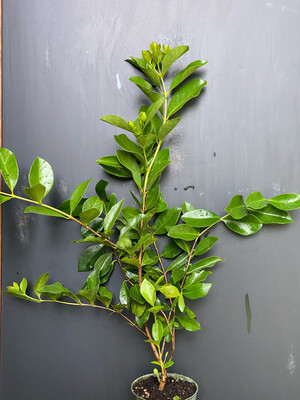
Plants vary naturally in height, branching, foliage density, and appearance.
The actual specimen you receive may differ from mature landscape photographs shown for reference.
🚚 Our Shipping Schedule
GreenDreams ships live plants every Monday via UPS Ground from Florida.
This schedule helps reduce the likelihood of packages remaining in transit over a weekend.
Orders must be received before our published shipping cutoff to qualify for the next scheduled shipping day.
🌎 Where We Ship
We ship live plants throughout the continental United States.
However, regional climate and transit duration should be considered before ordering.
🌞 Florida, Southeastern States & Texas
These destinations generally experience shorter shipping times from our Florida nursery.
Even so, live plants may experience transit-related stress.
❄️ Northern & Western United States
Extended UPS Ground transit may expose plants to:
- Extreme heat or cold
- Drying conditions
- Delayed delivery
- Temporary wilting
- Yellowing leaves
- Cosmetic damage
- Slowed growth or recovery
Plants traveling longer distances may require additional acclimation after arrival.
🌴 California Shipping
California shipments may undergo agricultural inspection, which can extend transit times.
Buyers should consider this possibility when evaluating weather and shipping conditions.
⚠️ Extreme Weather Shipping Advisory
Please monitor weather conditions before purchasing live plants.
Shipping during periods of extreme heat or freezing temperatures involves additional risk.
GreenDreams cannot control weather conditions, carrier delays, or package handling after shipment.
The buyer assumes the risk of weather-related damage during transit when choosing UPS Ground shipping.
We strongly encourage customers in colder and more distant regions to order during favorable weather conditions.
🌱 What to Do When Your Plant Arrives
- Open the package promptly.
- Remove packing materials carefully.
- Inspect the plant and root ball.
- Check soil moisture and water if needed.
- Place the plant in a protected, bright outdoor location.
- Gradually acclimate it to stronger sunlight.
- Avoid immediate transplanting.
- Monitor for healthy new growth.
🪴 Do Not Transplant Immediately After Shipping
Shipping is stressful for living plants.
We recommend leaving the plant in its original nursery container for approximately 30 days or until healthy new growth appears, provided the container remains suitable and the roots are healthy.
Allow the plant to recover before making major changes.
Minor leaf drop, yellowing, or cosmetic damage does not necessarily indicate a serious problem.
Healthy roots and stems can produce fresh growth after acclimation.
📸 Shipping Concerns
If your plant arrives with significant damage, photograph the plant, packaging, and shipping materials immediately.
Contact GreenDreams within 7 days of delivery with the photographs and your order information so we can review the issue.
Weather-related damage and normal shipping stress are not automatically eligible for replacement or refund.
🌿 Shop With Us in Person
GreenDreams Nursery & Farm — Spring Hill, Florida
Prefer to choose your plants in person? Come explore our nursery!
Our retail nursery carries a much larger selection of plants than our online shipping store, including many larger specimens and species that are not offered for UPS delivery.
Explore:
- Tropical and subtropical fruit trees
- Rare and unusual edible plants
- Perennial vegetables
- Herbs and spices
- Native Florida plants
- Pollinator species
- Ornamental and ecological landscape plants
- Organic compost, mulch, biochar, and soil amendments
Our inventory changes frequently, so there's always something interesting to discover.
🌾 Visit Us
18709 US Hwy. 41
Spring Hill, FL 34610
🕘 Hours
Tuesday–Friday: 9 AM–5 PM
Saturday: 8 AM–3 PM
View Our Retail Nursery Inventory:
https://www.greendreamsfl.com/retail-nursery-location
Our retail inventory is for in-person shopping and is separate from our online shipping inventory. Retail plant purchases are not held or reserved in advance.
Come for one plant. Leave with a whole new garden plan. We get it.
🌿 IMPORTANT INFORMATION BEFORE PURCHASING LIVE PLANTS
Please note: Plants purchased through our online store are not available for pickup at our retail nursery in Spring Hill, Florida.
Online inventory is housed at a separate facility and is priced, prepared, and handled exclusively for shipping.
🌱 Looking for larger plants or more selection?
Our retail nursery location offers far more availability, including larger sizes, specialty plants, and many selections not suitable for nationwide shipping.
Local pickup is available for retail nursery purchases only.
Visit our Spring Hill, FL retail nursery page to explore in-person shopping options.
🚚 LIVE PLANT SHIPPING & TRANSIT EXPECTATIONS
Live plants naturally experience stress during shipping. Temporary leaf drop, mild wilting, or cosmetic stress is normal after transit. Most plants recover quickly with proper watering, gradual light exposure, and basic aftercare. Some plants may require additional attention during the first few weeks.
Despite careful packing, minor cosmetic damage may occur during transit. Small issues such as broken leaves or stems typically resolve with time and proper care.
If your shipping box arrives with significant external damage, please contact UPS within 30 days to initiate a carrier claim.
⏱️ SHIPPING METHOD, TIMING & TRANSIT WINDOWS
All online orders ship via UPS Ground from our Central Florida nursery.
📦 Shipping Schedule: Orders ship once weekly on Mondays to reduce the risk of packages sitting in transit over weekends. A countdown clock on our website displays the next shipping date.
🚚 Typical Transit Times:
-
Florida: 1–2 days
-
Southern U.S.: approximately 2 days
-
Midwest, West & Northern U.S.: 3–5 business days
Long-distance shipments, particularly to the western U.S., may experience additional transit time due to agricultural inspections in states such as Arizona, California, and Texas.
Extended transit times can be more challenging for small or tender plants and may require additional recovery care after arrival.
🌡️ EXTREME WEATHER & SEASONAL RISK
Live plants are sensitive to temperature extremes.
We cannot guarantee plant condition during periods of extreme summer heat or winter cold and freezing temperatures. Weather-related delays, carrier interruptions, or exposure during delivery are beyond our control.
Customers are responsible for:
-
Monitoring tracking information sent via email
-
Retrieving packages promptly upon delivery
-
Preventing plants from being left outdoors in extreme conditions
During unsafe weather, holiday shipping volume, or extended transit risk, orders may be held and shipped the following week to protect plant health.
⚠️ CUSTOMER RESPONSIBILITY & REFUND POLICY
By purchasing live plants, customers acknowledge and accept the risks associated with shipping, weather exposure, transit delays, and regional suitability.
Refunds or replacements are considered only under exceptional circumstances and in accordance with our return and refund policy. We are not responsible for:
-
Weather-related damage
-
Carrier delays
-
Poor plant selection for a given climate or region
-
Improper care after delivery
Upon purchase, customers assume full responsibility for the ongoing care and success of their plants.
✅ CONSENT & AGREEMENT
By completing a purchase, you confirm that you have read, understand, and agree to all shipping policies, responsibilities, and conditions outlined above.
Our goal is transparency, plant health, and long-term growing success — and we appreciate your understanding and care when ordering live plants.


