


🌿 Chinese Finger Ginger – Aromatic Fingerroot for Thai Cooking
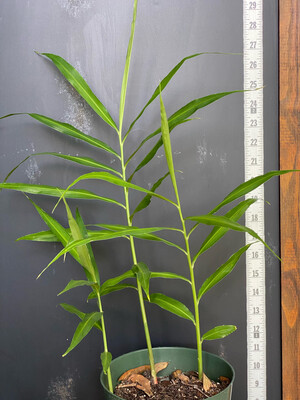
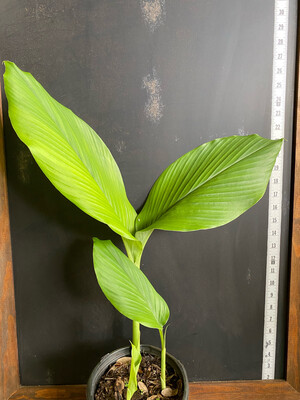
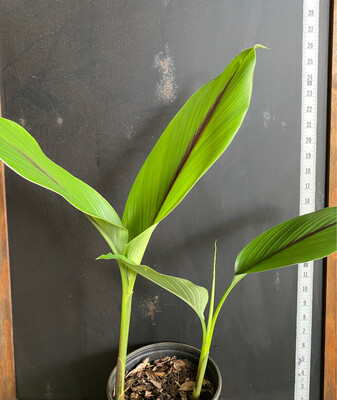
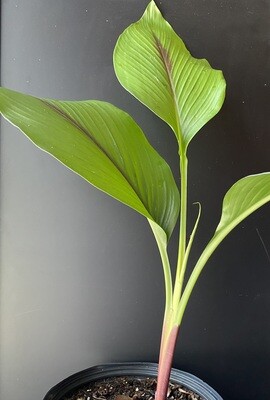
Boesenbergia rotunda — Established Live Plant in a 3-Gallon Container
A Flavor You Will Not Find in the Grocery-Store Ginger Bin
Why settle for ordinary ginger when you can grow one of Southeast Asia’s most distinctive culinary aromatics?
Chinese Finger Ginger—better known throughout Thailand as krachai and in Indonesia as temu kunci—produces clusters of golden, finger-shaped rhizomes with a crisp texture and complex flavor somewhere between traditional ginger, galangal, white pepper, and earthy citrus.
It is milder and less fiery than common ginger, yet aromatic enough to transform seafood, curries, soups, stir-fries, pickles, and noodle sauces. Above ground, lush tropical leaves create an attractive edible understory plant for shaded patios, food forests, and warm-climate gardens.
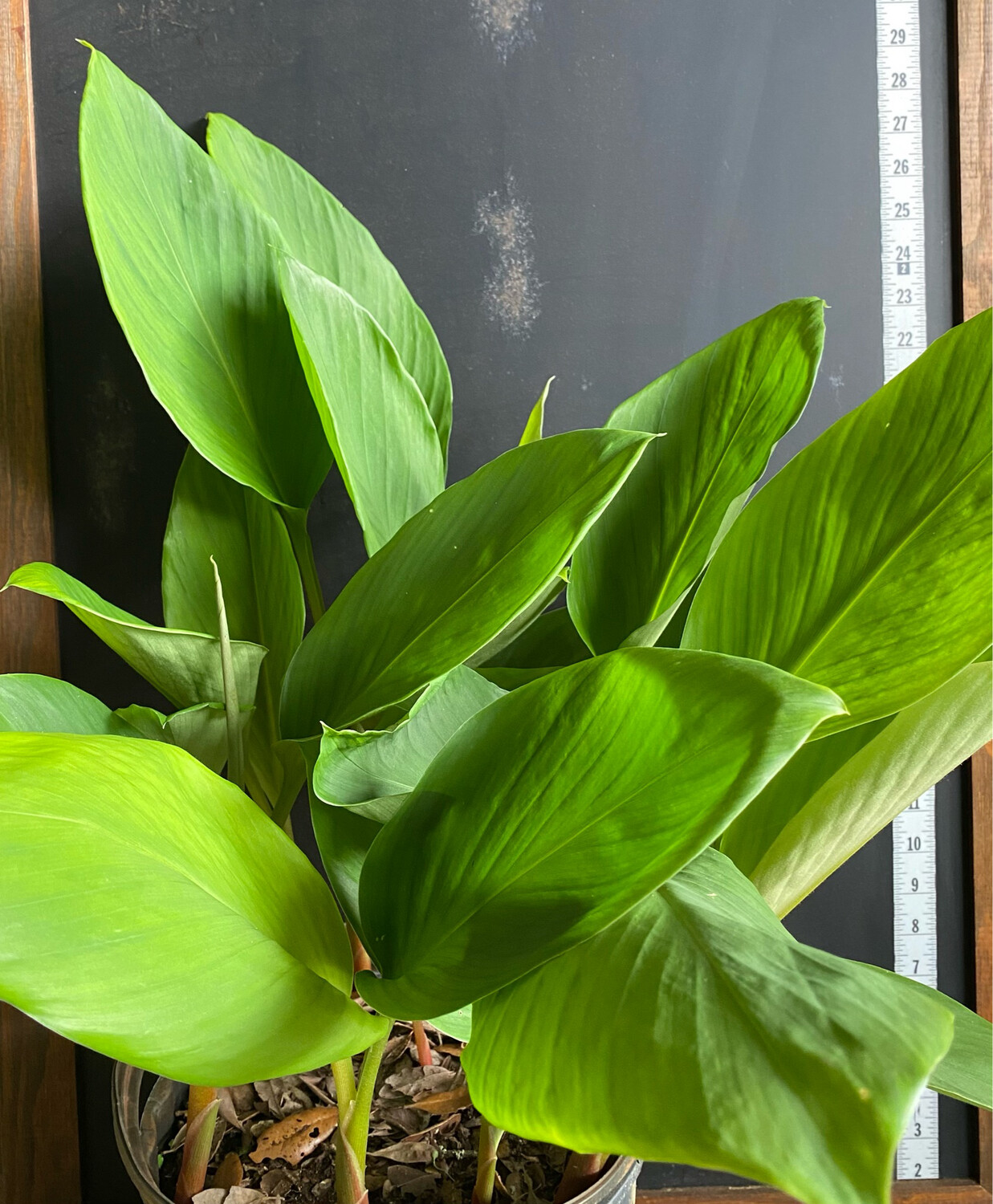
Ships as an established plant in a 3-gallon nursery container.
🌿 Quick Facts: Chinese Finger Ginger
| Category | Details |
|---|---|
| Botanical Name | Boesenbergia rotunda (L.) Mansf. |
| Plant Family | Zingiberaceae — the ginger family |
| Common Names | Fingerroot, Chinese Finger Ginger, Chinese Ginger, Chinese Keys, Krachai, Temu Kunci, Lesser Ginger |
| Plant Type | Tropical rhizomatous perennial herb |
| Sale Size | Established live plant in a 3-gallon nursery container |
| Estimated Nursery Age | Commonly approximately 8–18 months, depending on propagation method, growing season, and dormancy cycle |
| Typical Mature Height | Usually 18–30 inches; exceptionally vigorous plants may approach 3 feet |
| Typical Mature Width | Approximately 18–30 inches, gradually expanding into a clump |
| Pruned Height | Height pruning is generally unnecessary; dormant or damaged foliage may be cut to soil level |
| USDA Zones | Best as an outdoor perennial in Zones 9b–11; protect carefully in Zone 9 and grow in containers farther north |
| Florida Examples | Well suited to South Florida; protected sites in Central Florida; winter protection recommended in colder inland areas |
| Sun Requirements | Bright filtered light, morning sun, or approximately 25–40% afternoon shade |
| Light Duration | Approximately 4–6 hours of gentle direct sun or 6–8 hours of bright indirect light |
| Cold Hardiness | Tropical; foliage may decline below approximately 50°F and can be damaged by frost |
| Growth Habit | Compact, clump-forming growth from underground rhizomes |
| Seasonal Habit | Often becomes dormant or semi-dormant during cool, short winter days |
| Spacing | Approximately 12–18 inches for production beds; 18–24 inches for ornamental clumps |
| Soil Preference | Rich, loose, moisture-retentive soil with excellent drainage and aeration |
| Water Needs | Consistent moisture while actively growing; substantially less water during dormancy |
| Wind Tolerance | Low to moderate; broad leaves tear and dehydrate in exposed wind |
| Salt Tolerance | Not considered reliably salt tolerant; protect from direct salt spray and saline irrigation |
| Primary Harvest | Aromatic finger-shaped rhizomes and tender young shoots |
| Typical Florida Harvest | Late fall through winter after a spring or early-summer growth cycle |
| Propagation | Division of healthy rhizomes |
Kew recognizes Boesenbergia rotunda as a compact rhizomatous herb native from Assam and southern Yunnan through western Malesia. Singapore’s National Parks guidance recommends filtered light, rich loam, good drainage, and protection from strong wind.
🔑 Why Is It Called Fingerroot or Chinese Keys?
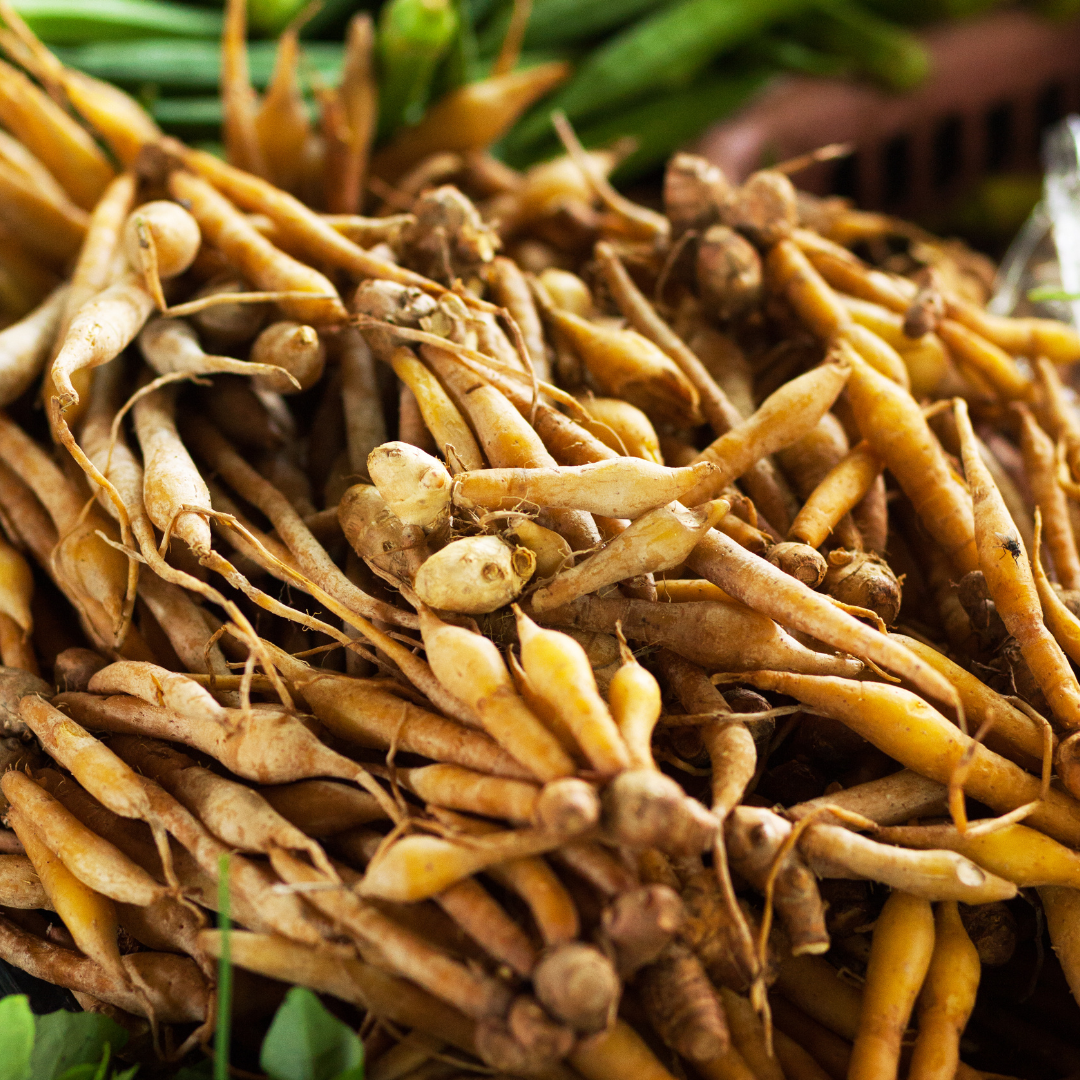
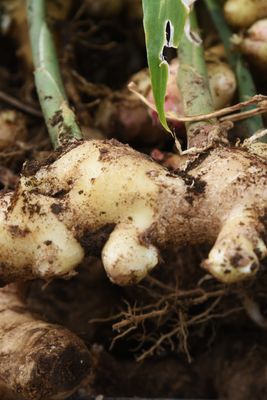
Lift a mature clump from the soil and the name makes perfect sense.
Instead of forming thick, irregular “hands” like common ginger, Chinese Finger Ginger develops numerous slender storage roots radiating from a central rhizome. The cluster resembles a bundle of fingers—or a ring of old-fashioned keys.
That shape inspired the English names fingerroot and Chinese keys, while its Thai name, krachai, appears throughout Thai markets, restaurant kitchens, household gardens, and traditional recipes.
Although it is commonly called Chinese ginger, it is not the same species as culinary ginger. Common ginger is Zingiber officinale; fingerroot belongs to the genus Boesenbergia.
🌏 From Forest Understory to Kitchen Essential
Chinese Finger Ginger originated across tropical and subtropical Asia, with a native range extending from northeastern India and southern China into western Malesia. It became widely cultivated throughout Thailand, Indonesia, Malaysia, Cambodia, Vietnam, and neighboring regions.
Its success is easy to understand. One compact plant can provide:
- A distinctive cooking spice
- Tender young shoots
- Attractive tropical foliage
- Divisions for future planting
- A culturally significant ingredient rarely found fresh in American grocery stores
For generations, small farms and household gardens have maintained fingerroot as both a food plant and traditional-use herb. It remains especially important in Thai and Indonesian cooking, where the fresh rhizome is valued for its ability to complement fish, shellfish, coconut milk, chiles, lemongrass, makrut lime, garlic, and fermented flavors.
🍲 Flavor Profile: Mild Heat, Major Personality
| Characteristic | What to Expect |
|---|---|
| Aroma | Fresh, earthy, peppery, lightly medicinal, and distinctly tropical |
| Heat Level | Milder than common ginger, with a lingering aromatic warmth |
| Fresh Texture | Crisp and tender when harvested young |
| Mature Texture | Firmer and increasingly fibrous as the rhizomes age |
| Color | Light brown exterior with cream-to-yellow aromatic flesh |
| Best Pairings | Fish, shrimp, coconut milk, chile, garlic, shallot, lemongrass, makrut lime, basil, noodles, and rice |
| Best Preparations | Thinly sliced, julienned, pounded into paste, simmered, pickled, frozen, dried, or powdered |
Fingerroot is not simply a weaker version of ginger. Its flavor is more earthy and savory, making it particularly valuable in fish curries and seafood dishes where common ginger may taste too sharp or sweet.
Fresh rhizomes deliver the brightest flavor. Dried powder is useful, but it loses some of the crisp, resinous aroma that makes freshly harvested krachai so memorable.
🌿 Which Parts of Chinese Finger Ginger Are Used?
Golden Rhizomes and Storage Roots
The underground portions are the primary culinary harvest.
Use them:
- Freshly sliced in seafood stir-fries
- Julienned into curries
- Pounded into curry paste
- Simmered in vegetable or fish soups
- Pickled for a bright, aromatic condiment
- Blended into marinades
- Frozen for later cooking
- Dried and ground into seasoning powder
Tender Young Shoots
Young shoots may be eaten raw or lightly cooked while still tender. They can be:
- Thinly sliced into salads
- Added to herb plates
- Stir-fried with vegetables
- Used as a fresh garnish
Leaves
The leaves are not typically the main harvested food product. In parts of Indonesia, leaves have traditionally been used as wrapping material during food preparation, including fermented soybean products.
Only correctly identified plants should be consumed. Not every ornamental plant commonly sold as “ginger” is edible.
🍜 Traditional and Modern Culinary Uses
Chinese Finger Ginger is a kitchen workhorse once you understand how to use it.
Thai Cuisine
Known as krachai, fingerroot is used in:
- Khanom chin nam ya: Fermented rice noodles with an aromatic fish-and-coconut curry
- Pad cha: Spicy herb stir-fries made with fish, shellfish, or meat
- Ho mok: Steamed fish curry with coconut milk
- Kaeng liang: Peppery mixed-vegetable soup
- Fish curries and seafood soups
- Curry pastes
- Spicy catfish dishes
- Fresh herb and vegetable plates
Indonesian Cuisine
Known as temu kunci, the rhizome is used in:
- Vegetable soups
- Coconut-based dishes
- Javanese spice pastes
- Porridges and savory broths
- Traditional jamu preparations
- Pickles and condiments
Cambodian and Regional Uses
Fingerroot is also sliced, pickled, pounded into aromatic pastes, or combined with fish broths and rice-noodle dishes throughout Cambodia and neighboring regions.
JIRCAS identifies fingerroot as an ingredient in Thai mixed-vegetable soups, steamed fish curry, spicy catfish, and the popular fish sauce served with khanom chin noodles.
🐟 Easy Kitchen Starting Point: Fingerroot Seafood Stir-Fry
A simple stir-fry is one of the best ways to become familiar with fresh fingerroot.
Suggested Ingredients
- Thinly sliced fresh fingerroot
- Shrimp, firm fish, mushrooms, or tofu
- Garlic
- Shallot
- Fresh chile
- Lemongrass
- Makrut lime leaf
- Thai basil or holy basil
- Fish sauce, soy sauce, or preferred seasoning
- Lime juice
Basic Method
- Slice the fingerroot into thin matchsticks.
- Sauté garlic, shallot, chile, and lemongrass.
- Add the fingerroot and cook briefly to release its aroma.
- Add seafood, mushrooms, or tofu.
- Season and finish with basil and fresh lime.
- Serve over rice or noodles.
Begin with a modest amount. Fingerroot is milder than common ginger, but its earthy aroma can become intense when used heavily.
🌿 Fingerroot vs. Ginger, Galangal and Turmeric
| Feature | Chinese Finger Ginger | Common Ginger | Greater Galangal | Turmeric |
|---|---|---|---|---|
| Botanical Name | Boesenbergia rotunda | Zingiber officinale | Alpinia galanga | Curcuma longa |
| Primary Flavor | Earthy, aromatic, peppery, mildly spicy | Sharp, warm, citrusy, spicy | Piney, floral, camphor-like | Earthy, bitter, musky |
| Texture When Young | Crisp and relatively tender | Juicy and fibrous | Firm and fibrous | Firm and dense |
| Interior Color | Cream to yellow | Pale yellow | Creamy white | Bright orange-yellow |
| Classic Culinary Role | Fish curries, soups, seafood, noodle sauces | Stir-fries, tea, baking, sauces | Thai soups and curries | Curries, rice, spice blends |
| Plant Size | Compact, generally under 3 feet | Commonly 3–5 feet | Often 5–8 feet or taller | Commonly 3–5 feet |
| Ideal Garden Position | Bright shade or gentle morning sun | Morning sun or filtered light | Sun to partial shade | Sun to partial shade |
| Winter Habit in Florida | Often dormant or semi-dormant | Commonly dormant | May remain active longer in warm locations | Commonly dormant |
| Best Reason to Grow | Difficult-to-find fresh culinary spice | Familiar multipurpose kitchen crop | Intense traditional Thai aroma | Color, spice, and high-value rhizomes |
Chinese Finger Ginger is the compact choice for growers who want an unusual Southeast Asian spice without dedicating the space required by larger galangal species. UF/IFAS identifies fingerroot as a separate culinary ginger relative and notes that rhizome crops are well suited to Florida container and field production when protected from root disease, heat stress, and poor drainage.
🌱 Top Benefits of Growing Chinese Finger Ginger
- Rare fresh flavor: Fresh fingerroot can be difficult to locate in conventional American markets.
- Excellent for seafood: Its earthy aroma pairs naturally with fish, shrimp, shellfish, and coconut milk.
- Compact growth: Easier to fit beneath taller edible plants than common ginger or large galangal.
- Container friendly: Performs well in wide containers with rich, aerated soil.
- Useful in partial shade: A strong candidate for edible spaces that do not receive all-day sun.
- Multipurpose harvest: Produces rhizomes, tender shoots, ornamental foliage, and future divisions.
- Food-forest compatible: Fits beneath banana, papaya, pigeon pea, or other open-canopy plants.
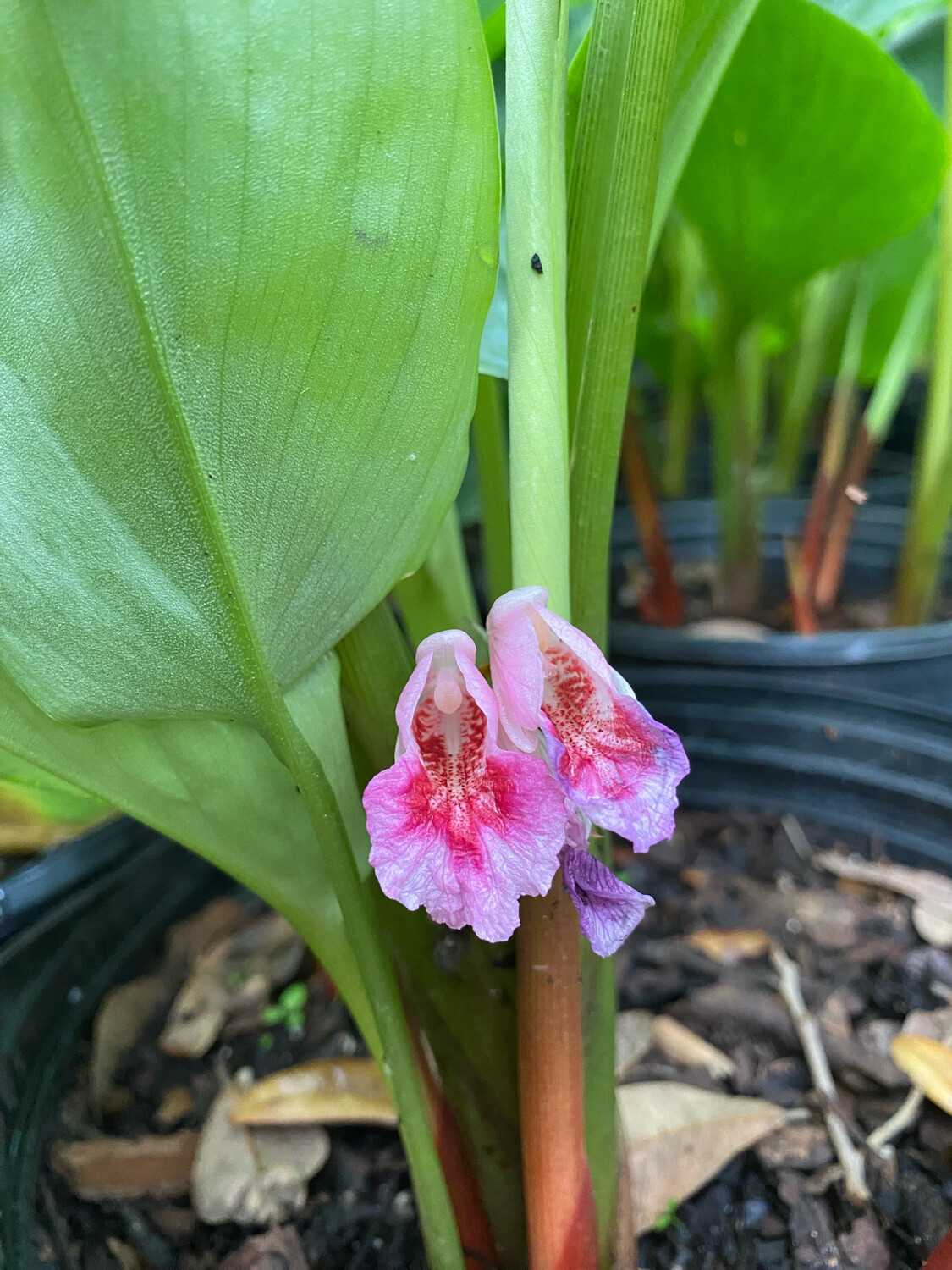
- Ornamental value: Broad green leaves and small pink-to-white flowers create a lush tropical effect.
- Seasonally resilient: Established rhizomes can rest underground and return when warm conditions resume.
- Cultural connection: Growing krachai provides direct access to a traditional ingredient with centuries of culinary history.
🌸 Ornamental Appeal in the Edible Landscape
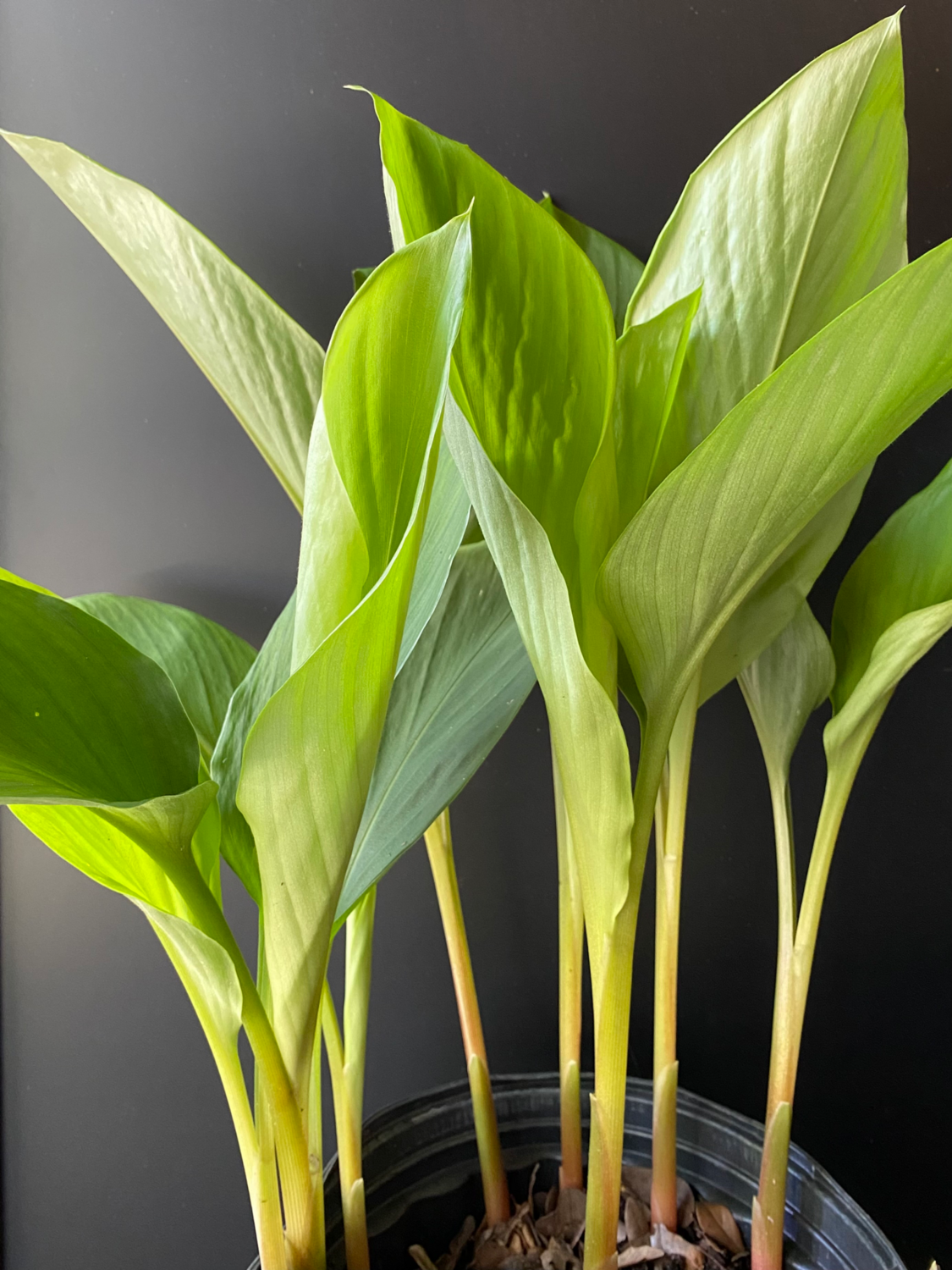
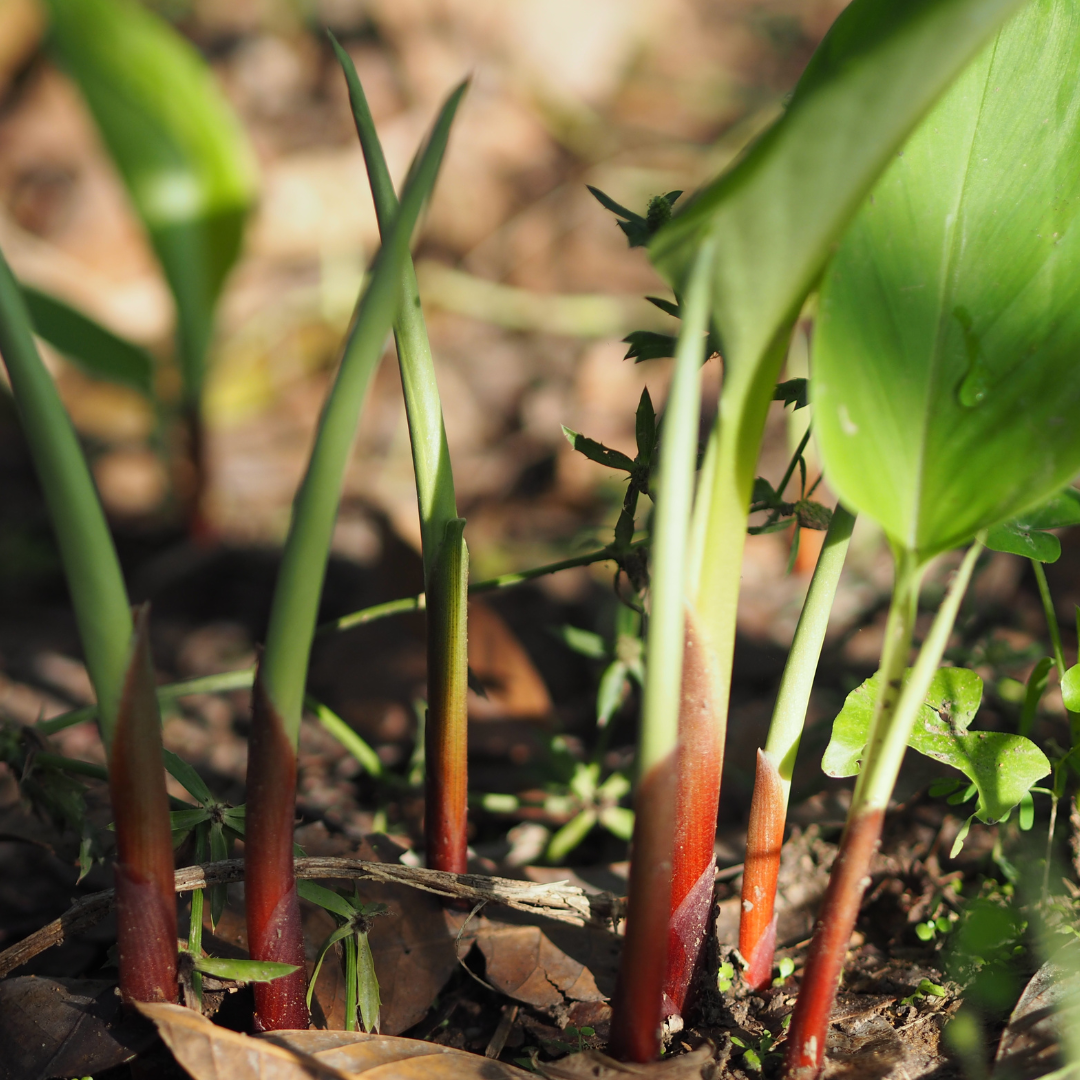
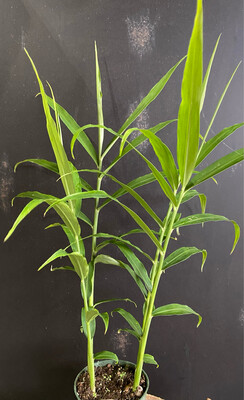
Chinese Finger Ginger forms an attractive low tropical layer with broad, pointed green leaves rising from overlapping leaf sheaths. The plant produces pseudostems rather than woody trunks.
Small white, pink, or pink-purple flowers may appear near the base of the plant and can be partially hidden by foliage. The flowers are a bonus—the real visual impact comes from the clean, rhythmic leaf pattern.
Use it:
- Along shaded walkways
- Beneath banana or papaya
- Around patios with morning sun
- In tropical herb gardens
- Near outdoor kitchens
- In Asian-inspired edible gardens
- As a soft transition between tall crops and groundcovers
- In decorative containers on sheltered porches
Avoid placing it as the only year-round focal plant in frost-prone areas. Its foliage may disappear during winter dormancy.
SEASONAL CARE, PLANTING, WATERING, CONTAINERS & PRODUCTION
🌱 How to Grow Chinese Finger Ginger
Seasonal and Organic Care for Boesenbergia rotunda
Chinese Finger Ginger thrives when growers recreate the loose forest-floor conditions of its tropical homeland: warmth, filtered light, rich organic soil, consistent moisture, and excellent drainage.
The key is balance. Fingerroot dislikes drought, harsh afternoon sun, exposed wind, compacted soil, and standing water.
☀️ Where to Plant Chinese Finger Ginger
Best Locations
Choose a site with:
- Morning sun and afternoon shade
- Bright light beneath an open tree canopy
- Approximately 25–40% shade during Florida’s hottest months
- Protection from strong west winds
- Protection from cold north winds
- Loose, organically enriched soil
- Reliable drainage after heavy rain
- Easy access to soil-level irrigation
Singapore’s National Parks recommends approximately 4–6 hours of direct light or 6–8 hours of bright indirect light. UF/IFAS research on related ginger-family rhizome crops indicates that moderate summer shade can reduce heat stress while excessive shade may reduce underground production. tions to Avoid
Do not place Chinese Finger Ginger:
- In exposed rooftop gardens
- In direct coastal salt spray
- Beneath a roof valley that releases heavy water
- In low spots that remain saturated
- Beside aggressive turfgrass without a defined bed
- In dense, dark shade with little photosynthesis
- Against a west-facing wall that reflects extreme heat
- In areas receiving routine overhead irrigation
- Where dormant winter beds will be mistaken for empty planting space
🌾 Soil Requirements
Chinese Finger Ginger prefers soil that holds moisture without becoming dense or waterlogged.
Recommended In-Ground Soil
Aim for:
- Loose sandy loam or amended Florida sand
- High organic matter
- Good oxygen movement around the rhizomes
- Slightly acidic to neutral conditions
- Rapid drainage after heavy rain
- A finished compost top-dressing
- Hardwood mulch over the surrounding root zone
Recommended Container Mix
Use a coarse, high-quality tropical potting mix containing ingredients such as:
- Coconut coir or peat-based material for moisture retention
- Fine pine bark or aged bark for structure
- Perlite, pumice, or similar coarse material for drainage
- Finished compost or worm castings in moderation
- A small amount of biochar that has been pre-charged with nutrients
A practical starting blend is:
- 50–60% quality peat- or coir-based potting mix
- 20–30% aged pine bark or wood-fiber component
- 15–25% perlite, pumice, or other aeration material
- Up to 10% finished compost or worm castings
Avoid heavy garden soil in containers. It can compact, drain poorly, and increase the risk of rhizome rot.
UF/IFAS recommends coarse substrates containing materials such as coir, peat, bark, wood fiber, or perlite so the root zone retains moisture while remaining aerated.
🪴 After Your Plant Arrives
Shipping temporarily changes a plant’s light, temperature, moisture, and airflow. Allow Chinese Finger Ginger to recover before changing its container or planting location.
GreenDreams Arrival Protocol
- Carefully remove packaging.
- Inspect the soil moisture.
- Water at soil level only if the root ball needs moisture.
- Place the plant in bright shade protected from wind.
- Avoid full sun during the initial recovery period.
- Do not fertilize immediately.
- Remove only leaves that are completely broken or decomposing.
- Gradually introduce the plant to its intended light level.
- Keep it in its current container for at least 30 days or until healthy new growth appears.
- Transplant only when the plant has recovered and roots are beginning to fill the container.
Some yellowing, bent leaves, torn foliage, or temporary wilting can occur after shipping. Healthy new growth is more important than the appearance of older leaves.
🌿 Planting Chinese Finger Ginger
Chinese Finger Ginger is not a tree, but the GreenDreams High & Tight drainage principle still applies.
The crown and upper rhizome should remain at approximately the same level as they were in the nursery container. Do not bury the pseudostems or place the plant at the bottom of a water-catching depression.
In-Ground Planting Method
- Water the plant several hours before planting.
- Dig a hole only slightly wider than the nursery container.
- Keep the hole approximately the same depth as the root ball.
- Remove the pot carefully without pulling on the foliage.
- Loosen only circling outer roots; avoid aggressively breaking the rhizome cluster.
- Set the plant so the crown remains at or slightly above surrounding grade.
- Backfill with native soil, lightly amended soil, or finished compost.
- Firm the soil carefully to remove large air pockets.
- Do not compact the soil into a hard layer.
- Water thoroughly at soil level.
- Top-dress with compost, charged biochar, azomite, or an appropriate organic nutrient blend.
- Apply 2–3 inches of hardwood mulch around the bed.
- Keep mulch several inches away from the pseudostems and crown.
💧 Watering Chinese Finger Ginger
Fingerroot appreciates consistent moisture while actively growing, but the rhizomes can rot when oxygen is displaced by standing water.
Essential Watering Rule
Do not use routine overhead watering.
Water Chinese Finger Ginger:
- At the soil level
- Early in the morning
- Slowly and deeply
- With drip irrigation, a soaker line, or a hose directed toward the soil
Overhead afternoon watering can contribute to leaf spotting, foliar burn, disease spread, and poor moisture control around the rhizomes.
While the Plant Remains in Its Nursery Container
Check the container daily during warm weather.
A 3-gallon plant may require:
- Daily watering during hot, dry, or windy conditions
- Less frequent watering during cloudy or rainy periods
- Very little water during cool dormancy
Water until moisture drains from the bottom of the container. Do not allow the pot to sit in a saucer filled with water.
Newly Planted In-Ground
Suggested starting schedule:
| Time After Planting | Suggested Watering |
|---|---|
| First 7–14 days | Check daily; water when the upper soil begins to lose moisture |
| Weeks 3–6 | Water approximately 3–5 times weekly, adjusted for rainfall and soil |
| Established summer plant | Deep watering several times weekly; daily moisture may be needed in very sandy soil |
| Rainy season | Irrigate only when drainage and soil conditions indicate a need |
| Fall slowdown | Gradually reduce as growth slows and rainfall changes |
| Winter dormancy | Keep barely moist rather than continuously wet |
The correct schedule depends on soil type, root development, rainfall, shade, temperature, and wind. Florida sand may dry rapidly, while amended beds can hold moisture much longer.
UF/IFAS notes that actively growing ginger-family crops may require daily rain or irrigation during summer. Leaf curling, edge burn, and yellowing can indicate drought stress, while persistent wetness encourages destructive root pathogens.
🍃 Reading the Leaves
The foliage tells you how the underground plant is feeling.
| Leaf Signal | Likely Meaning |
|---|---|
| Leaves folding during midday but recovering by evening | Temporary heat response |
| Persistent curling | Insufficient moisture, excessive heat, wind, or root stress |
| Crispy brown margins | Drought, excessive fertilizer salts, harsh sun, or windburn |
| Bleached tan patches | Sunburn |
| Soft yellow growth with wet soil | Possible overwatering or root decline |
| Uniform fall yellowing | Normal seasonal slowdown or dormancy |
| Sudden collapse during warm weather | Inspect immediately for rhizome rot or crown damage |
| Fine stippling or webbing | Possible spider mites |
| Sticky leaves or clustered insects | Aphids, whiteflies, mealybugs, or scale |
Do not assume every yellow leaf means the plant needs fertilizer. Check drainage, soil moisture, season, temperature, pests, and root health first.
Organic Fertilization
Chinese Finger Ginger responds well to steady nutrition during active growth, especially when the goal is rhizome production.
Recommended Approach
At planting or spring emergence:
- Top-dress with finished compost
- Add pre-charged biochar in moderation
- Apply a balanced organic granular fertilizer
- Include trace minerals only according to product directions or soil-test results
During active spring and summer growth:
- Feed lightly every 6–8 weeks with an appropriate organic fertilizer
- Use diluted fish hydrolysate, seaweed, compost extract, or another low-salt liquid feed when needed
- Maintain mulch and soil biology
- Stop feeding if the plant is drought-stressed, recently shipped, or showing root problems
Late fall and winter:
- Discontinue fertilization as foliage yellows
- Do not push tender new growth before cold weather
- Resume only after spring growth becomes active
UF/IFAS classifies ginger-family rhizome crops as moderate-to-high nutrient users but emphasizes avoiding excess salts, especially during heat or drought. Fertilization should stop during dormancy when roots are not actively absorbing nutrients.
✂️ Pruning and Clump Management
Chinese Finger Ginger does not require structural pruning.
During Active Growth
- Remove broken or severely diseased leaves with sanitized pruners.
- Cut individual leaves near the base without injuring adjacent shoots.
- Avoid removing healthy foliage unnecessarily; the leaves fuel underground rhizome development.
- Thin overcrowded clumps only when air movement or harvesting access becomes limited.
During Dormancy
Once foliage has fully yellowed or been killed by frost:
- Allow the plant to complete its natural yellowing process.
- Cut dead pseudostems 1–2 inches above the soil.
- Remove decomposing debris that could harbor pests or disease.
- Refresh mulch without covering the crown.
- Mark the planting location.
- Reduce irrigation substantially.
Dividing the Clump
Divide during dormancy or just before spring growth.
- Lift the clump carefully.
- Separate healthy rhizome sections along natural joints.
- Retain at least one strong bud or growth point per division.
- Remove soft, discolored, or foul-smelling tissue.
- Allow fresh cuts to dry briefly before replanting.
- Sanitize tools between plants.
Fingerroot is naturally propagated by rhizome division.
🍂 Seasonal Care in Florida and Similar Climates
Chinese Finger Ginger is herbaceous—not evergreen and woody like a fruit tree. In cool weather, its entire above-ground canopy may yellow, collapse, and disappear.
The underground rhizomes can remain alive even when the container or planting bed appears empty.
🌱 Spring: Emergence and Establishment
Typical timing: March through May, depending on location and soil temperature.
Expect:
- New shoots emerging from the rhizomes
- Slow early growth during cool nights
- Faster expansion as soil warms
- Increasing water and nutrient demand
Spring tasks:
- Remove excessive winter mulch
- Resume regular watering gradually
- Apply compost and organic fertilizer
- Divide crowded clumps before vigorous growth
- Protect early shoots from late cold events
- Increase light slowly for plants overwintered indoors
UF/IFAS recommends planting rhizome crops after soil warms above approximately 70°F and nighttime temperatures remain above 50°F—often March in South Florida and as late as May in North Florida. ummer: Peak Growth
Expect:
- Rapid leaf production
- Expanding rhizome clusters
- High water use
- Possible heat stress in harsh afternoon sun
- Occasional flowers near the base
Summer tasks:
- Provide filtered afternoon shade
- Check container moisture daily
- Maintain soil-level irrigation
- Feed moderately
- Reapply mulch as needed
- Inspect for mites, aphids, whiteflies, and mealybugs
- Protect from wind and reflected heat
🍂 Fall: Rhizome Bulking and Natural Yellowing
Expect:
- Slower new foliage
- Increasing underground storage
- Yellowing leaves as days shorten and temperatures cool
- Greater aroma and firmness in mature rhizomes
Fall tasks:
- Continue moisture while foliage remains active
- Stop heavy fertilization
- Harvest tender portions before they become overly fibrous
- Prepare frost protection
- Move containers to a protected location before cold nights
❄️ Winter: Dormancy or Semi-Dormancy
Expect:
- Yellow leaves
- Collapsing pseudostems
- Little or no visible top growth
- Reduced water use
- Possible total disappearance of foliage after frost
Winter tasks:
- Cut back only after foliage has finished yellowing
- Keep dormant containers barely moist
- Protect from prolonged freezes
- Store containers in a sheltered garage, greenhouse, porch, or warm indoor space
- Do not fertilize dormant plants
- Do not discard a leafless plant without checking whether the rhizome remains firm
The seasonal collapse of the aerial growth is also used as a traditional signal that fingerroot rhizomes are mature enough to harvest. / GRAPHIC SPACE — FOUR-SEASON CARE WHEEL]
❄️ Cold and Frost Protection
Fingerroot is tropical and should not be treated as a freeze-hardy perennial.
In Central Florida and USDA Zone 9
- Plant near the warmer east or south side of a structure.
- Avoid exposed low areas where cold air settles.
- Maintain 2–3 inches of mulch over the surrounding soil.
- Cover before frost using frost cloth that reaches the ground.
- Remove or ventilate coverings once temperatures rise.
- Do not allow plastic to rest directly on foliage.
- Reduce water during cold, cloudy periods.
- Delay pruning until the extent of damage is clear.
In Zones 8 and Colder
Grow Chinese Finger Ginger in a movable container or treat it as a seasonal crop.
Options include:
- Moving the entire container into a greenhouse or protected structure
- Allowing dormancy and storing the container in a cool, frost-free space
- Lifting mature rhizomes after the foliage dies back
- Storing healthy rhizomes dry and frost-free for spring planting
Warm-season production is possible throughout much of the continental United States when the plant receives adequate heat and a long enough growing season.
🪴 Container Growing
Chinese Finger Ginger is an excellent container crop because its relatively shallow rhizomes spread outward more than deeply downward.
Recommended Container Progression
Growers commonly move plants through container sizes in stages:
4-inch starter → 1 gallon → 3 gallon → 5 or 7 gallon → 10 or 15 gallon
Your GreenDreams plant already arrives in a 3-gallon container.
The next move is generally:
- 5–7 gallons for a manageable patio specimen
- 10–15 gallons for a larger rhizome-producing clump
Select a pot that is:
- Wider than it is deep
- At least 10–14 inches deep
- Equipped with multiple drainage holes
- Stable enough to resist tipping
- Made from a material appropriate for your climate
UF/IFAS production guidance notes that one rhizome plant can be grown in approximately a 5-gallon container, while larger production systems may use multiple rhizomes in a 15-gallon pot. to Up-Pot
Transplant when:
- Roots are visible from drainage holes
- Water runs around the root ball instead of soaking through it
- The clump dries substantially faster than before
- New shoots crowd the edge of the pot
- The container becomes unstable
- Rhizomes begin pressing against or deforming the container
Do not up-pot simply because 30 days have passed. Recovery, root development, season, and plant health matter more than the calendar.
How to Up-Pot
- Choose a pot only one or two practical sizes larger.
- Add enough fresh mix to maintain the existing soil line.
- Remove the plant without pulling on leaves.
- Inspect the outer root ball and rhizomes.
- Remove only rotten or circling material.
- Center the clump and backfill evenly.
- Firm gently without compressing the mix.
- Water thoroughly at soil level.
- Return the plant to bright shade while it recovers.
- Delay fertilizer until active growth resumes.
Containers and potting materials are commonly available from independent nurseries, landscape suppliers, farm stores, hydroponic suppliers, garden centers, and online horticultural retailers. Search by volume, width, drainage design, and outdoor durability rather than purchasing by appearance alone.
🏠 Can Chinese Finger Ginger Grow Indoors?
Yes—but indoor conditions must be warm and bright.
Best Indoor Conditions
- Large east- or south-facing window with filtered light
- Supplemental full-spectrum grow light where natural light is insufficient
- Warm temperatures, ideally above 60–65°F
- Protection from heating and air-conditioning vents
- Moderate humidity
- Excellent drainage
- Strong air circulation without cold drafts
Indoor Limitations
- Low light produces weak, stretched foliage.
- Rhizome yield may be reduced.
- Spider mites and mealybugs can increase indoors.
- Containers may remain wet longer than expected.
- Seasonal dormancy may still occur.
- Flowers are less reliable indoors.
Indoor growing is most useful for overwintering and maintaining living rhizomes—not necessarily for maximizing commercial-size harvests.
🌾 Harvesting Chinese Finger Ginger
Fingerroot can be harvested selectively by removing outer portions of an established clump, or the entire plant can be lifted at the end of the season.
Young Harvest
Younger rhizomes tend to be:
- More tender
- Less fibrous
- Easier to slice
- Brighter in aroma
- Well suited to raw garnishes and quick cooking
Mature Harvest
Older rhizomes tend to be:
- Firmer
- More fibrous
- Strongly aromatic
- Better suited to curry paste, simmering, drying, or powder
Florida Harvest Window
For a spring-planted crop:
- Light selective harvest may begin after several months of active growth.
- A fuller harvest commonly occurs in late fall or winter.
- Mature clumps are often lifted when the foliage naturally yellows and collapses.
- Traditional production references place maturity near eight months after planting, although harvest timing varies by climate and intended culinary use. newly purchased plant, allow recovery and strong establishment before harvesting. Giving the clump a full growing cycle generally provides a more rewarding first harvest.
🌿 Organic Companion Plants and Guild Ideas
Fingerroot is grown for underground rhizomes, so flowers and pollinators are not required for the harvest. Companion plants still improve microclimate, biodiversity, mulch production, and visual appeal.
Support Plants
- Mexican sunflower: Produces biomass for chop-and-drop mulch; position where it will not overwhelm or shade the fingerroot completely.
- Clumping grasses: Provide carbon-rich mulch and wind filtering when maintained at a respectful distance.
- Pigeon pea: Adds light canopy and nitrogen-rich biomass in warm sites.
- Moringa: Can provide prunings and filtered shade when carefully managed.
- Banana: Creates a humid tropical microclimate and overhead shade.
- Papaya: Offers a relatively open canopy with limited heavy shade.
Culinary Companions
- Lemongrass
- Turmeric
- Common culinary ginger
- Galangal
- Makrut lime
- Thai basil
- Holy basil
- Culantro
- Hot peppers
Ornamental Companions
- Okinawan spinach
- Longevity spinach
- Chaya in the taller background
- Edible hibiscus
- Surinam spinach
- Shade-tolerant native groundcovers
Keep companion plants far enough away to prevent root competition and maintain airflow. Use trimmed biomass as mulch only after allowing green material to wilt, and keep all mulch away from the fingerroot crown.
CAUTIONS, TROUBLESHOOTING, FAQ & SHIPPING
⚠️ Important Cautions for Chinese Finger Ginger
Culinary Use vs. Medicinal Claims
Chinese Finger Ginger has a long history of food and traditional herbal use throughout Southeast Asia. Researchers have identified flavonoids, chalcones, monoterpenes, phenolic compounds, and other constituents in the plant.
Laboratory and animal studies have investigated possible:
- Antioxidant activity
- Anti-inflammatory activity
- Antimicrobial activity
- Wound-healing applications
- Metabolic effects
- Digestive applications
- Cosmetic and functional-food uses
These findings do not establish Chinese Finger Ginger as a treatment or cure for any medical condition.
A comprehensive 2025 review concluded that much of the available evidence remains preclinical and that more long-term toxicity data, drug-interaction research, standardized dosing, and clinical trials are needed. Appropriate Caution
- Enjoy correctly identified fingerroot as a culinary ingredient.
- Do not use concentrated extracts as a substitute for medical care.
- Consult a qualified healthcare professional before medicinal use.
- Use extra caution during pregnancy, breastfeeding, chronic illness, or prescription medication use.
- Stop use if an allergic reaction or digestive irritation occurs.
- Do not assume other ornamental gingers are edible.
- Keep unidentified plant material away from children and pets.
Long-term safety information for concentrated fingerroot supplements remains less complete than its history of conventional food use.
🌱 Environmental and Landscape Cautions
Chinese Finger Ginger is a clump-forming rhizomatous plant. It can gradually enlarge in favorable tropical conditions but is not generally known as an aggressive landscape invader.
GreenDreams recommends:
- Harvesting or dividing oversized clumps
- Keeping discarded rhizomes out of natural areas
- Avoiding planting immediately beside waterways
- Monitoring all non-native edible plants
- Preventing soil and rhizome movement from diseased areas
UF/IFAS reports that ginger, turmeric, galangal, and related evaluated species present a low invasion risk in Florida.
🔍 Chinese Finger Ginger Troubleshooting Guide
Icons represent common issues and organic solutions—look for 🌿 for recovery guidance.
| ⚠️ Issue | 🧠 Likely Cause | 🌿 Organic Response |
|---|---|---|
| 🍂 Leaves yellowing in late fall | Natural seasonal dormancy | Allow foliage to finish yellowing, reduce water, and mark the planting location |
| 🍂 Yellow leaves during summer | Excess water, nutrient imbalance, root stress, or compacted soil | Check drainage and roots before adding fertilizer |
| 🫣 Curled leaves | Dry soil, high heat, wind, or damaged roots | Water deeply at soil level and provide afternoon shade |
| ☀️ Bleached or tan patches | Sunburn | Move container into filtered light or provide shade cloth |
| 🌬️ Torn leaves and dry margins | Strong wind | Relocate or create a living windbreak |
| 💧 Crispy edges | Drought or irregular watering | Maintain more consistent moisture without saturating soil |
| 🔥 Brown tips after feeding | Excess fertilizer salts | Flush container thoroughly and pause fertilization |
| 💦 Soft stems with constantly wet soil | Poor drainage or early root rot | Stop watering, improve aeration, and inspect rhizomes |
| 🍄 Soft, dark, foul-smelling rhizomes | Pythium, Fusarium, bacterial decay, or severe saturation | Discard infected tissue and contaminated mix; sanitize tools and containers |
| 🕷️ Fine stippling or webbing | Spider mites | Rinse pests from leaf undersides in the morning, improve conditions, and use labeled organic controls if needed |
| 🪲 Sticky leaves or white cottony clusters | Aphids, whiteflies, mealybugs, or scale | Remove heavily infested foliage and use insecticidal soap according to the label |
| 🐛 Holes in foliage | Caterpillars, beetles, snails, or grasshoppers | Inspect at dusk and remove pests manually where practical |
| 🌱 No spring growth | Soil remains cool, rhizome is dormant, or rhizome has rotted | Wait for warm soil, then carefully inspect for firm living tissue |
| ☁️ Tall, weak, floppy growth | Insufficient light | Increase gentle morning sun or bright indirect light |
| 🌿 Healthy leaves but few rhizomes | Excess shade or excessive nitrogen | Increase usable light and switch to balanced nutrition |
| 🪣 Plant repeatedly collapses after rain | Low planting position or dense soil | Replant at proper grade in a raised, well-drained bed |
National Parks Singapore lists sunburn, heat wilting, aphids, mealybugs, whiteflies, and spider mites among common fingerroot problems. UF/IFAS emphasizes root and rhizome diseases as the most serious production threat for ginger-family crops grown in Florida.
🍄 Root-Rot Prevention Checklist
Root rot is easier to prevent than cure.
✅ Best Prevention Practices
- Start with healthy plants.
- Use clean, well-draining potting media.
- Sanitize cutting and division tools.
- Keep the crown at the nursery soil line.
- Never plant at the bottom of a depression.
- Water at soil level in the morning.
- Empty water-catching saucers.
- Avoid reusing contaminated potting mix.
- Do not compost badly rotted rhizomes.
- Rotate rhizome crops when growing commercially.
- Inspect divisions before planting.
- Avoid heavy fertilization during stress.
- Provide airflow without exposing plants to harsh wind.
UF/IFAS has documented Pythium, Phytophthora, Fusarium, bacterial wilt organisms, and root-knot nematodes affecting Florida-grown ginger-family rhizome crops.
🌟 Is Chinese Finger Ginger Right for You?
✅ Ideal For
Chinese Finger Ginger is an excellent choice for:
- Thai, Indonesian, Cambodian, Malaysian, and Southeast Asian cooking enthusiasts
- Seafood lovers looking for authentic fresh aromatics
- Florida growers seeking a productive partial-shade edible
- Food-forest and permaculture gardeners
- Tropical plant collectors
- Growers interested in rare culinary herbs
- Patio gardeners with filtered sunlight
- Container growers in colder climates
- Small-space gardeners
- Chefs and market gardeners seeking unusual ingredients
- Gardeners willing to protect tropical plants from cold
- Growers who understand seasonal dormancy
❌ Not Ideal For
This plant may not be the best fit for:
- Gardens with standing water or heavy compacted soil
- Exposed beachfront sites with direct salt spray
- Windy rooftop gardens
- Landscapes that receive intense all-day western sun
- Growers wanting a drought-tolerant herb
- Gardeners expecting evergreen foliage through freezing winters
- Indoor spaces without bright light
- Anyone seeking the sharp heat of traditional culinary ginger
- Growers unwilling to provide winter protection outside subtropical climates
- Customers expecting medically proven results from traditional herbal claims
❓ Chinese Finger Ginger FAQ
Is Chinese Finger Ginger the same as regular ginger?
No. Regular culinary ginger is Zingiber officinale. Chinese Finger Ginger is Boesenbergia rotunda. Both belong to the ginger family, but they differ in growth, flavor, shape, and culinary use.
What does fingerroot taste like?
Fingerroot has an earthy, aromatic, peppery flavor with milder heat than common ginger. It is especially well suited to fish, shrimp, curries, coconut-based soups, and spicy stir-fries.
Why is it called fingerroot?
The plant produces slender storage roots radiating from a central rhizome. The cluster resembles fingers or a bundle of old-fashioned keys.
How large does Chinese Finger Ginger grow?
Most plants remain approximately 18–30 inches tall and form expanding clumps around 18–30 inches wide. Growth varies with light, soil, moisture, and climate.
Does Chinese Finger Ginger prefer sun or shade?
Bright filtered light, morning sun, or partial shade is best—particularly in Florida. Harsh afternoon sun can scorch the broad leaves.
Can fingerroot grow in full shade?
It may survive in bright shade, but excessive darkness can reduce underground rhizome production. Aim for bright indirect light rather than deep shade.
Can Chinese Finger Ginger grow in a container?
Yes. It performs well in wide 5–15-gallon containers filled with coarse, fertile, well-draining potting mix.
Can it grow indoors?
It can be overwintered or grown indoors with bright light, warmth, drainage, and airflow. Indoor rhizome production may be lower than outdoor production.
Is Chinese Finger Ginger cold hardy?
It is tropical. Cool weather slows growth, and frost may kill the foliage. Established rhizomes may return after mild winter conditions if protected, but hard freezes can kill the plant.
Is fingerroot deciduous?
It is an herbaceous perennial rather than a woody deciduous tree. In subtropical areas, foliage commonly yellows and collapses during cool-season dormancy before returning in spring.
When should I harvest fingerroot in Florida?
Spring-planted crops are commonly harvested in late fall or winter. Tender rhizomes can be sampled earlier, while mature rhizomes are often harvested when foliage yellows and collapses.
Can I harvest part of the plant without killing it?
Yes. Established clumps can be lifted partially, and outer rhizomes can be removed while healthy sections are replanted.
How long should I wait before transplanting my shipped plant?
GreenDreams recommends waiting at least 30 days or until healthy new growth confirms that the plant has recovered from shipping. Transplant when the roots are filling the container and weather conditions are favorable.
Why did my plant disappear during winter?
The foliage may have entered dormancy or been killed by frost. Reduce water and inspect carefully for firm, healthy rhizomes before assuming the plant has died.
Is fingerroot medicinal?
It has a long history of traditional use and contains compounds currently being studied. However, most proposed health benefits have not been confirmed through sufficient human clinical research. It should not be marketed or used as a cure or substitute for professional medical care.
🚚 Shipping and Plant Recovery Information
Ships in a 3-Gallon Nursery Container
Chinese Finger Ginger ships from Florida in an established 3-gallon container.
A 3-gallon plant generally has more established roots, stored energy, and moisture capacity than a small starter plant. However, all live plants can experience stress during shipping.
GreenDreams Shipping Schedule
- Orders ship on Mondays
- Service is provided through UPS Ground
- We currently ship throughout the continental United States
- Delivery time varies by destination and weather
- California packages may be held for agricultural inspection, adding an extra transit day
Regional Shipping Guidance
This tropical plant is most naturally suited to:
- Florida
- The Southeastern United States
- Gulf Coast climates
- Texas
- Other warm and subtropical regions
We can ship to northern and western states, but extended UPS Ground transit may result in:
- Yellowing leaves
- Torn or bent foliage
- Dry leaf margins
- Temporary wilting
- Cold or heat stress
- Premature dormancy
- A longer recovery period
Extreme-Weather Disclaimer
Buyer discretion is strongly advised during peak summer heat and winter cold.
GreenDreams cannot control:
- Temperatures inside delivery vehicles
- Packages left outdoors after delivery
- Carrier delays
- Extreme heat or freezing weather during transit
- Agricultural inspection delays
- Conditions caused by extended UPS Ground transportation
Risk associated with severe temperatures, long-distance ground delivery, and carrier delays is assumed by the buyer.
Whenever possible:
- Track the shipment closely.
- Bring the box indoors immediately.
- Avoid leaving live plants on a porch.
- Open the package promptly.
- Acclimate the plant in bright shade.
- Allow at least 30 days—or wait for new growth—before transplanting.
- Do not fertilize a stressed plant immediately.
Most shipping-stressed plants can recover with stable warmth, filtered light, careful soil-level watering, and patience.
🏡 Shop with Us in Person
GreenDreams Nursery & Farm — Retail Nursery Open to the Public
Discover Chinese Finger Ginger and countless other edible, medicinal, native, ecological, and useful plants at our Spring Hill nursery.
Larger sizes and seasonal plants not listed online may be available for local pickup.
🌾 18709 US Hwy. 41, Spring Hill, FL 34610
🕘 Tuesday–Friday: 9 AM–5 PM
🌞 Saturday: 8 AM–3 PM
Visit our regenerative nursery to see what is blooming, fruiting, and ready for the garden this week.
Inventory changes quickly, especially during spring and summer growing seasons.
🌿 Beyond the Plant: GreenDreams Services
At GreenDreams, we do more than grow plants—we design, build, and restore ecosystems across Florida.
- 🌳 Onsite consultations and edible landscape design
- 🚜 Installation and project management
- 🚚 Bulk delivery of compost, mulch, biochar, and soil materials
- 🌾 Wholesale and large-scale regenerative solutions
- 🌿 Food-forest planning and plant selection
- 🪵 Soil building, mulching, and ecological restoration
Let our team help you create a productive edible landscape—starting with Chinese Finger Ginger and the supportive ecosystem around it.
🌿 IMPORTANT INFORMATION BEFORE PURCHASING LIVE PLANTS
Please note: Plants purchased through our online store are not available for pickup at our retail nursery in Spring Hill, Florida.
Online inventory is housed at a separate facility and is priced, prepared, and handled exclusively for shipping.
🌱 Looking for larger plants or more selection?
Our retail nursery location offers far more availability, including larger sizes, specialty plants, and many selections not suitable for nationwide shipping.
Local pickup is available for retail nursery purchases only.
Visit our Spring Hill, FL retail nursery page to explore in-person shopping options.
🚚 LIVE PLANT SHIPPING & TRANSIT EXPECTATIONS
Live plants naturally experience stress during shipping. Temporary leaf drop, mild wilting, or cosmetic stress is normal after transit. Most plants recover quickly with proper watering, gradual light exposure, and basic aftercare. Some plants may require additional attention during the first few weeks.
Despite careful packing, minor cosmetic damage may occur during transit. Small issues such as broken leaves or stems typically resolve with time and proper care.
If your shipping box arrives with significant external damage, please contact UPS within 30 days to initiate a carrier claim.
⏱️ SHIPPING METHOD, TIMING & TRANSIT WINDOWS
All online orders ship via UPS Ground from our Central Florida nursery.
📦 Shipping Schedule: Orders ship once weekly on Mondays to reduce the risk of packages sitting in transit over weekends. A countdown clock on our website displays the next shipping date.
🚚 Typical Transit Times:
-
Florida: 1–2 days
-
Southern U.S.: approximately 2 days
-
Midwest, West & Northern U.S.: 3–5 business days
Long-distance shipments, particularly to the western U.S., may experience additional transit time due to agricultural inspections in states such as Arizona, California, and Texas.
Extended transit times can be more challenging for small or tender plants and may require additional recovery care after arrival.
🌡️ EXTREME WEATHER & SEASONAL RISK
Live plants are sensitive to temperature extremes.
We cannot guarantee plant condition during periods of extreme summer heat or winter cold and freezing temperatures. Weather-related delays, carrier interruptions, or exposure during delivery are beyond our control.
Customers are responsible for:
-
Monitoring tracking information sent via email
-
Retrieving packages promptly upon delivery
-
Preventing plants from being left outdoors in extreme conditions
During unsafe weather, holiday shipping volume, or extended transit risk, orders may be held and shipped the following week to protect plant health.
⚠️ CUSTOMER RESPONSIBILITY & REFUND POLICY
By purchasing live plants, customers acknowledge and accept the risks associated with shipping, weather exposure, transit delays, and regional suitability.
Refunds or replacements are considered only under exceptional circumstances and in accordance with our return and refund policy. We are not responsible for:
-
Weather-related damage
-
Carrier delays
-
Poor plant selection for a given climate or region
-
Improper care after delivery
Upon purchase, customers assume full responsibility for the ongoing care and success of their plants.
✅ CONSENT & AGREEMENT
By completing a purchase, you confirm that you have read, understand, and agree to all shipping policies, responsibilities, and conditions outlined above.
Our goal is transparency, plant health, and long-term growing success — and we appreciate your understanding and care when ordering live plants.


