


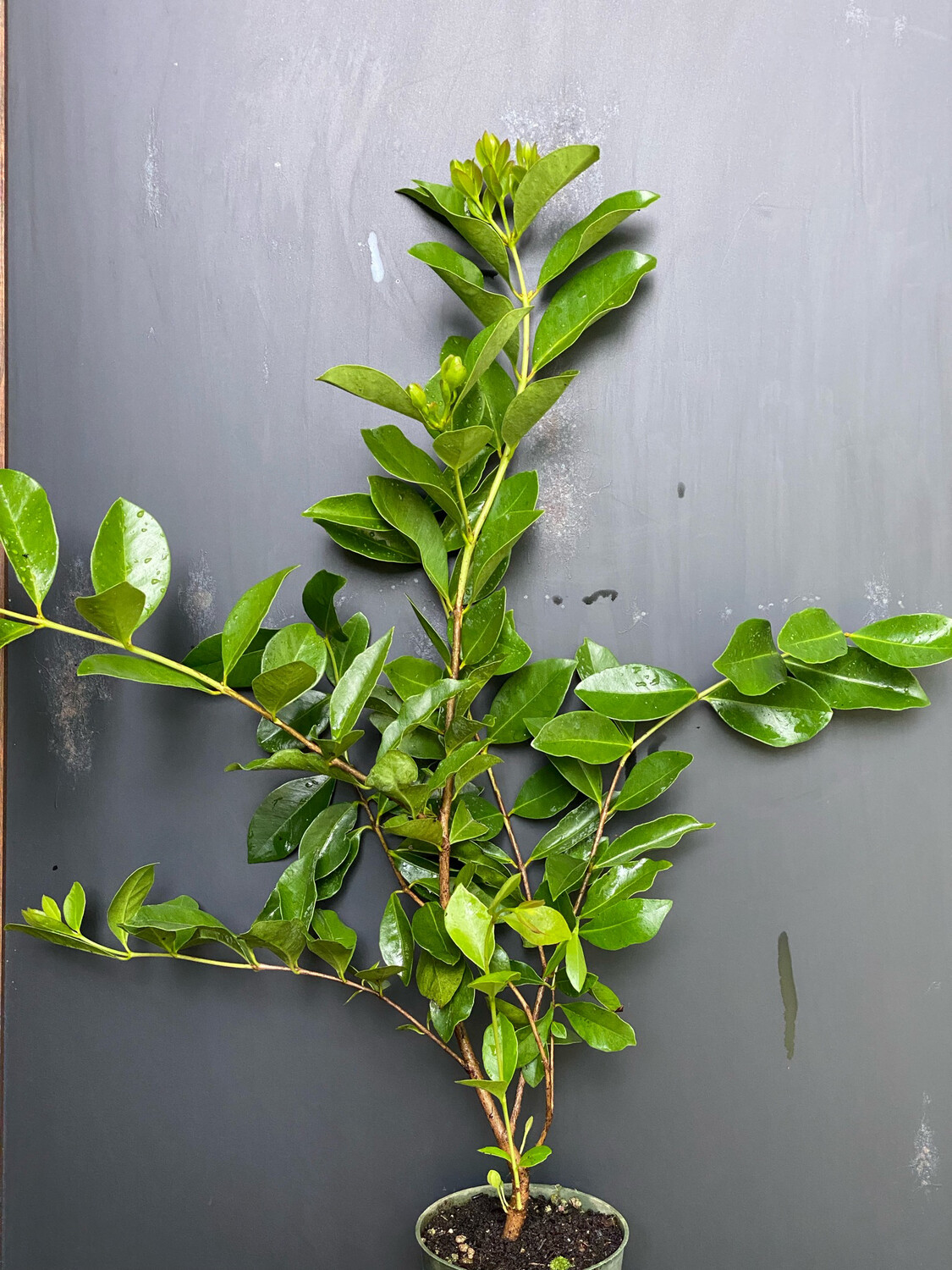
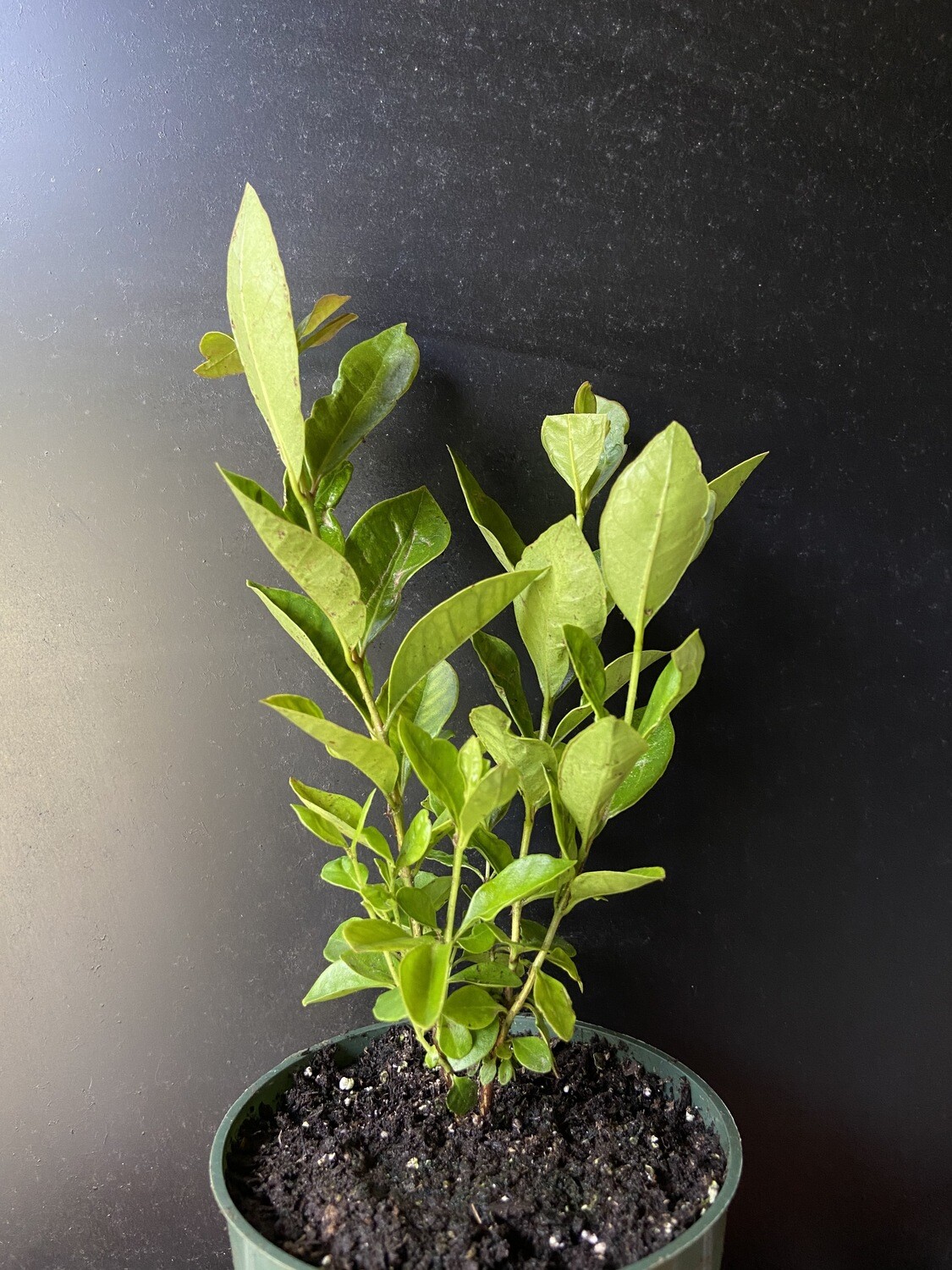
🌿 Strawberry Cattley Guava (Psidium cattleyanum / Psidium cattleianum) – Sweet-Tart Red Fruit & Evergreen Beauty 🍓🌳
A Compact Fruit Tree That Seriously Overdelivers
Sweet, aromatic fruit. Glossy evergreen foliage. Attractive peeling bark. Impressive resilience.
Strawberry Cattley Guava combines the flavor of a tropical guava with berry-like sweetness in a compact fruit tree that fits beautifully into edible landscapes, food forests, hedges, patio gardens, and productive backyard systems.
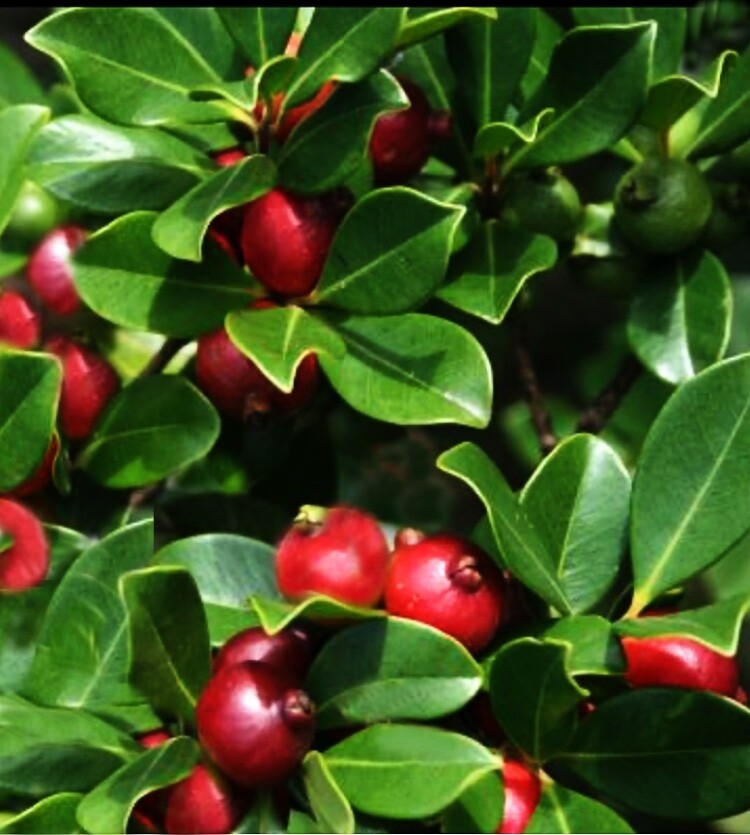
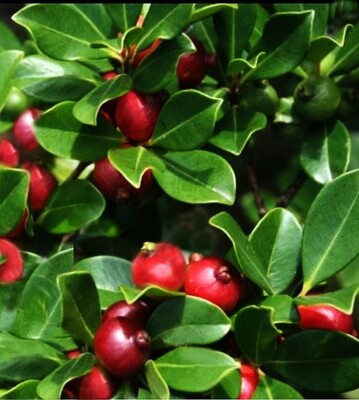
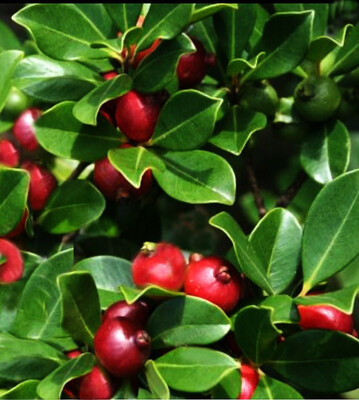
The deep red fruit may be small, but the flavor does not play small. When fully ripe, each fruit offers a juicy blend of sweet strawberry, tart cherry, and tropical guava notes—perfect for fresh eating, seed-free juice, preserves, syrups, frozen treats, and creative drinks.
👉 This is the kind of plant that makes people stop mid-harvest and ask, “Why can’t I buy this fruit at the grocery store?”
🍓 Why Grow Strawberry Cattley Guava?
- Distinctive tropical berry flavor rarely available commercially
- Compact and highly prune-responsive for smaller yards
- Evergreen foliage in warm subtropical climates
- Attractive smooth, mottled, peeling bark
- Adaptable to sandy, clay, rocky, and alkaline soils
- Moderately drought tolerant once established
- Useful as a fruiting hedge, screen, espalier, or specimen tree
- Flowers support bees and other beneficial pollinators
- Heavy crops are possible under favorable conditions
- Excellent container candidate when pruned regularly
Strawberry Cattley Guava is tougher than its polished appearance suggests. It can tolerate challenging Florida soils, periods of drought after establishment, moderate coastal salt exposure, and considerable pruning—making it useful in both ornamental landscapes and serious food-production systems.
🌿 Quick Facts at a Glance
| Category | Details |
|---|---|
| Accepted Botanical Name | Psidium cattleyanum Sabine |
| Common Nursery Spelling | Psidium cattleianum |
| Common Names | Strawberry Guava, Cattley Guava, Cherry Guava, Red Cattley Guava |
| Plant Family | Myrtaceae |
| Plant Type | Evergreen fruiting shrub or small multi-trunked tree |
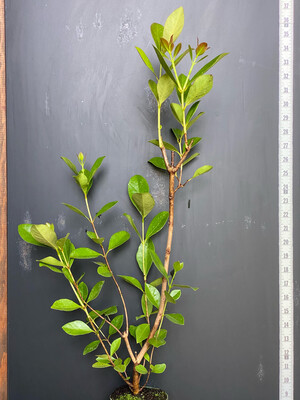
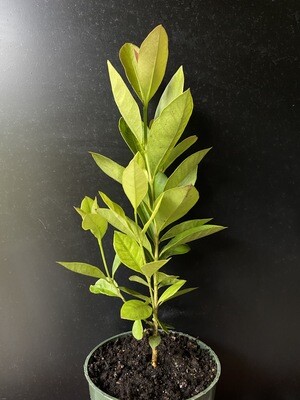
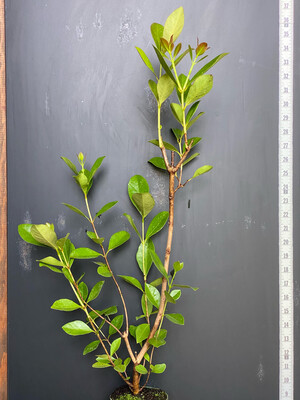
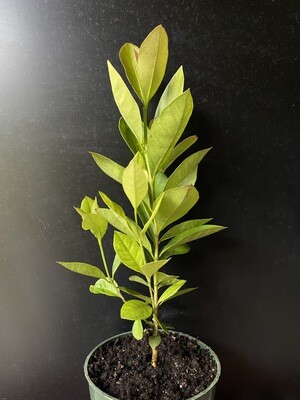
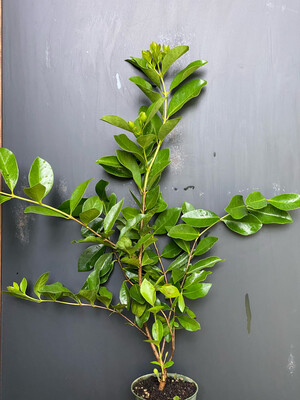
| Size at Sale | Ships in a 4-inch nursery container |
| Estimated Age | Typically approximately 4–8 months; age and height vary by crop cycle |
| Mature Height | Commonly 10–15 ft; may eventually reach 20–25 ft if unpruned |
| Maintained Height | Approximately 4–10 ft with regular selective pruning |
| Mature Width | Approximately 8–15 ft; older unpruned specimens may spread wider |
| USDA Zones | Best in Zones 9b–11; Zone 9a is marginal and requires a protected microclimate |
| Sun Requirements | Full sun to partial shade; strongest flowering and fruiting in full sun |
| Cold Hardiness | Protect young plants below 32°F; established trees may survive brief temperatures in the mid-to-upper 20s with possible leaf, twig, or stem damage |
| Growth Rate | Moderate |
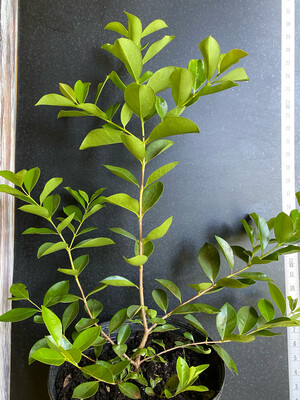
| Growth Habit | Dense, bushy, multi-branching, often multi-trunked |
| Leaf Habit | Broadleaf evergreen in warm climates; temporary thinning may occur after drought or cold |
| Spacing as a Tree | Approximately 10–15 ft from other trees and structures |
| Spacing as a Managed Hedge | Approximately 4–6 ft apart with regular pruning |
| Soil Preference | Well-draining sandy loam enriched with organic matter |
| Soil Adaptability | Tolerates sand, clay, loam, acidic soil, and moderately alkaline soil |
| Water Needs | Moderate; consistent moisture is important during establishment, flowering, and fruit development |
| Wind Tolerance | Good when maintained at a manageable height; branches are considered relatively resistant to breakage |
| Salt Tolerance | Moderate aerosol salt tolerance; prolonged saline soil or irrigation water may reduce growth and fruit quality |
| Pollination | One tree can produce fruit; bee activity and cross-pollination may improve fruit set |
| Primary Florida Harvest | Summer, commonly beginning around July; harvest may extend into fall |
| Warm Tropical Harvest | Sporadic flowers and fruit may occur through much of the year |
| Indoor Potential | Temporary overwintering only unless greenhouse-level light is available |
Botanical references vary in spelling. Kew currently accepts Psidium cattleyanum, while many Florida horticultural and nursery references use Psidium cattleianum. Including both spellings helps customers find accurate information while preserving familiar nursery terminology. Published zone recommendations also vary from Zone 9a through Zone 10a as the lower limit, reflecting the plant’s sensitivity to freeze duration, plant age, wind, and microclimate.
🌎 From Brazilian Araçá to the Modern Edible Landscape
Strawberry Cattley Guava is native from eastern and southern Brazil into northeastern Uruguay, where related fruits are commonly known as araçá. The species belongs to the same botanical family as common guava, jaboticaba, grumichama, Surinam cherry, and many other aromatic tropical fruits.
The scientific name was first published in 1821. The species name honors English horticulturist William Cattley, who successfully fruited the plant in cultivation in Britain and became known for introducing unusual tropical plants to European horticulture.
That gives this fruit tree a fitting legacy: a South American native that became internationally appreciated because one committed grower recognized that it was something special.
Why Hasn’t Strawberry Guava Become a Supermarket Fruit?
The fruit is delicate, softens rapidly, and contains numerous small seeds. These qualities make it challenging to transport and store commercially—but perfect for home growers who can harvest it at peak ripeness.
It is a true grow-it-to-know-it fruit.
🍓 Fruit Profile — Small Fruit, Major Flavor
| Fruit Feature | What to Expect |
|---|---|
| Flavor | Sweet-tart and aromatic with strawberry, cherry, and tropical guava notes |
| Texture | Soft, juicy pulp surrounding numerous firm but edible seeds |
| Skin | Thin, smooth, and edible |
| Skin Color | Bright red ripening to dark red, burgundy, or purple-red |
| Flesh Color | Creamy white to pale pinkish-white |
| Typical Size | Approximately 1–2 inches; commonly around 1½ inches |
| Shape | Round, oval, or slightly pear-shaped |
| Aroma | Fragrant, fruity, and noticeably guava-like when fully ripe |
| Best Eating Stage | Deeply colored, fragrant, and slightly soft when gently pressed |
The fruit should be harvested when it develops full red or burgundy color and releases easily with a gentle twist. Underripe fruit can be tart and firm, while overripe fruit becomes very soft and may ferment quickly in Florida heat.
UF/IFAS describes the ripe fruit as purple-red with sweet-tart, whitish flesh and notes that birds, squirrels, raccoons, and fruit flies are just as interested in the crop as people are.
🌸 Flowering, Pollination & Fruiting Habits
Strawberry Cattley Guava produces fragrant white flowers with clusters of prominent stamens, creating a small powder-puff appearance against the dark green foliage.
Typical Flowering Pattern
- Heaviest flowering often occurs during spring
- UF/IFAS commonly observes a strong bloom around April
- Additional flowers may appear during warm weather
- Flowers develop on new growth
- Bees and other insects assist with pollen movement
Does It Need Another Guava Tree?
A second tree is not generally required for fruit production. Guavas are capable of self-pollination, but insect activity and pollen movement between compatible plants can improve fruit set and overall yield.
When Will a 4-Inch Plant Produce Fruit?
Our 4-inch plants are young starter plants rather than fruiting-size specimens. Fruiting time depends heavily on:
- Whether the plant was grown from seed or vegetatively propagated
- Sun exposure
- Root development
- Winter temperatures
- Irrigation consistency
- Soil fertility
- Pruning practices
Seed-grown guavas may require approximately 3–8 years to begin production, with some Strawberry Cattley Guava seedlings taking seven years or longer. Vegetatively propagated plants may produce sooner.
👉 Grow this one for the long game. The reward is a durable fruiting tree capable of producing for many years.
How to Encourage Better Fruit Set
- Provide at least 6–8 hours of direct sun
- Avoid drought stress during flowering and fruit development
- Grow flowering companion plants nearby
- Avoid broad-spectrum pesticides during bloom
- Keep the canopy open enough for light and pollinator access
- Avoid excessive nitrogen, which can create leafy growth at the expense of flowers
- Harvest ripe fruit frequently to reduce pest pressure
🗓 Strawberry Cattley Guava Harvest Calendar
| Growing Region | Typical Harvest Expectations |
|---|---|
| Central Florida and Tampa Bay | Main crop generally develops from summer into early fall, often beginning around July |
| South Florida and Frost-Free Areas | Extended flowering and multiple fruiting flushes may occur |
| North Florida and Zone 9a | Later or less consistent crops depending on winter cold and spring recovery |
| Gulf Coast and Southern Texas | Summer through fall where winter damage is limited |
| Protected Southern California Sites | Late summer into fall, depending on heat and irrigation |
| Container Plants in Colder Regions | Production depends on plant maturity, summer heat, pollination, and winter protection |
Harvest timing shifts with rainfall, pruning, temperature, drought, and the age of the tree. In warm climates, scattered flowers or fruit may occur outside the main season.
🍹 Strawberry Guava Juice
One of the best ways to understand this fruit is to turn a fresh harvest into a smooth, seed-free juice.
The pulp blends quickly, the aroma becomes stronger, and the seeds strain out cleanly—leaving a bright tropical drink with strawberry-like sweetness and guava depth.
🍓 Seed-Free Strawberry Guava Juice
Ingredients
- 2 cups fully ripe Strawberry Cattley Guava fruit
- 2–3 cups cold water
- 1–2 tablespoons lime or lemon juice
- Honey, simple syrup, cane sugar, or agave to taste
- Ice for serving
Directions
- Rinse the fruit and remove stems, damaged areas, and flower remnants.
- Add the whole fruit and 2 cups of water to a blender.
- Pulse until the pulp separates. Avoid blending excessively, which can pulverize the seeds.
- Pour through a fine mesh strainer, jelly bag, or clean cloth.
- Press gently to extract the juice without forcing seed fragments through.
- Add citrus and sweetener to taste.
- Dilute with additional water if needed.
- Chill thoroughly or serve over ice.
💡 GreenDreams Pro Tips
- Combine very ripe and slightly firm fruit for more balanced flavor.
- Begin with less water and dilute after straining.
- Chill the fruit before blending for a fresher-tasting drink.
- Freeze cleaned fruit when the harvest becomes heavier than you can process.
- Use sparkling water for a simple tropical soda.
- Add mint, basil, ginger, mango, passion fruit, or pineapple for custom blends.
- Use the strained pulp in fruit leather, sauces, or frozen desserts when practical.
🍸 Easy Flavor Upgrades
| Add-In | Flavor Result |
|---|---|
| Fresh lime | Sharper, brighter tropical flavor |
| Mint | Cooling and refreshing |
| Basil | Aromatic and slightly savory |
| Ginger | Spicy warmth |
| Pineapple | Sweeter tropical body |
| Passion fruit | Strong acidity and floral aroma |
| Sparkling water | Light guava refresher |
| Coconut water | Mild tropical electrolyte drink |
🍨 More Ways to Use Strawberry Cattley Guava
Fresh Uses
- Eat ripe fruit directly from the tree
- Add halved fruit to tropical fruit bowls
- Mash into yogurt or oatmeal
- Blend into smoothies
- Add strained pulp to lemonade
- Freeze for later processing
Preserved Uses
- Jelly
- Jam
- Fruit butter
- Syrup
- Shrub concentrate
- Fruit leather
- Chutney
- Fermented beverages
- Vinegar
- Kombucha flavoring
- Frozen purée
- Popsicles and sorbet
Culinary Pairings
Strawberry Cattley Guava pairs especially well with:
- Lime and lemon
- Mango
- Pineapple
- Passion fruit
- Coconut
- Ginger
- Mint
- Basil
- Vanilla
- Cinnamon
- Chili
- Mild cheeses
- Sparkling beverages
Simple Strawberry Guava Syrup
Combine strained guava juice with an equal volume of sugar. Heat gently until dissolved, then refrigerate in a clean container.
Use the syrup for:
- Sparkling water
- Iced tea
- Cocktails and mocktails
- Pancakes and waffles
- Yogurt
- Ice cream
- Cake fillings
- Fruit glazes
🌿 Nutritional & Traditional Interest
Strawberry Cattley Guava fruit contains vitamin C, dietary fiber, carotenoids, phenolic compounds, and other naturally occurring antioxidants. Published food-science research has reported notable total phenolic and antioxidant activity in Strawberry Guava fruit.
These findings make the fruit nutritionally interesting, but the plant or fruit should not be represented as a treatment for disease. Enjoy it as part of a varied diet rather than as a substitute for professional medical care.
🍋 Strawberry Guava vs. Lemon Cattley Guava
| Feature | Strawberry Cattley Guava | Lemon Cattley Guava |
|---|---|---|
| Fruit Color | Red to burgundy or purple-red | Yellow to golden yellow |
| Flavor | Sweet-tart, strawberry-like, aromatic | Sweet-tart, citrusy, spicy, and lemon-like |
| Fruit Size | Commonly 1–2 inches | Often slightly larger |
| Flesh | Pale, juicy pulp with small seeds | Pale, juicy pulp with small seeds |
| Growth Rate | Moderate | Generally somewhat slower |
| Landscape Form | Dense shrub or small tree | Dense shrub or small tree |
| Best Culinary Use | Fresh eating, red juice, syrup, jelly | Fresh eating, yellow juice, preserves |
| Best For | Bold berry-like flavor and dark red fruit | Bright citrus-like flavor and golden fruit |
Both forms make attractive evergreen fruiting plants. Strawberry Cattley Guava delivers the deeper berry profile, while Lemon Cattley Guava offers a brighter citrus-style flavor. UF/IFAS notes that the yellow form is generally slower growing and produces larger yellow fruit with a distinctive spicy flavor.
🌿 Growing Strawberry Cattley Guava Successfully
Strawberry Cattley Guava is adaptable, but adaptable does not mean indestructible.
The fastest route to a healthy, productive tree is simple: allow the plant to recover from shipping, choose a warm location with excellent drainage, water at soil level, mulch properly, and keep the canopy within an easy harvesting height.
📦 First Steps After Your Plant Arrives
Your 4-inch Strawberry Cattley Guava is a young starter plant. Small plants have less stored moisture and a smaller root system than 1-gallon or larger specimens, so they require closer attention during acclimation.
Do Not Transplant Immediately
Keep the plant in its original container for approximately 30 days or until healthy new growth appears, whichever takes longer.
During this recovery period:
- Unpack the plant immediately after delivery.
- Check the soil moisture with your finger.
- Water at the soil level if the root ball is becoming dry.
- Place it in bright shade or gentle morning sun for the first few days.
- Gradually increase direct sunlight over 7–14 days.
- Protect it from intense afternoon sun, hard wind, cold nights, and heavy rain while it recovers.
- Do not fertilize a stressed or wilted plant.
- Wait for upright growth and new leaves before transplanting.
Some yellowing, minor leaf drop, bent leaves, or temporary wilting can occur following transport. A firm stem, hydrated root ball, and emerging new growth are stronger indicators of plant health than the appearance of every original leaf.
☀️ Where to Plant Strawberry Cattley Guava
Best Location
Choose a location with:
- 6–8 or more hours of direct sun
- Good air circulation
- Fast-draining soil
- Protection from cold northern and northwestern winter winds
- Enough room for harvesting and pruning
- Access to soil-level irrigation
- Distance from sidewalks, driveways, pools, patios, and parked vehicles
Full sun produces the densest growth, strongest flowering, and best fruit quality. Partial shade is tolerated, but heavy shade may produce thinner growth and fewer flowers.
Avoid Planting Near
- Flood-prone low spots
- Downspouts that discharge beside the trunk
- Septic drain fields
- Building foundations
- Power lines
- Frequently traveled sidewalks
- Natural preserves or unmanaged woodland
- Areas where fallen fruit cannot be collected
- Saltwater splash zones
- Automatic lawn sprinklers that repeatedly soak the canopy
Ripe fruit can fall, stain surfaces, attract wildlife, and germinate in surrounding soil. Place the tree where frequent harvesting and cleanup are realistic.
🌳 Landscape Uses
Strawberry Cattley Guava can function as:
- A compact backyard fruit tree
- A fruiting privacy screen
- A regularly harvested edible hedge
- A mid-layer food forest tree
- A patio specimen
- An espalier
- A multi-trunked ornamental
- A wind-filtering component of a layered planting
- A pollinator-supporting flowering tree
Its smooth gray, reddish-brown, and golden bark peels in thin sheets, creating visual interest beneath the glossy evergreen canopy. The dense habit is especially useful where growers want a plant that looks intentional rather than agricultural.
Wind Performance
The species has relatively break-resistant branches, and guavas maintained between approximately 6 and 10 feet tend to perform better during severe wind than tall, top-heavy trees.
For storm resilience:
- Keep the canopy low
- Remove crossing or poorly attached limbs
- Thin dense interior growth selectively
- Avoid creating an umbrella-shaped canopy with all weight at the top
- Do not leave rigid stakes attached after the roots become established
Dry, hot wind can damage tender new leaves even when the branches remain intact.
Salt Tolerance
Strawberry Cattley Guava has moderate tolerance to airborne salt, making it more adaptable than many delicate tropical fruit trees. It is not the best choice for direct oceanfront exposure.
Too much salt may cause:
- Brown leaf tips and margins
- Premature leaf drop
- Reduced fruit size
- Fruit drop
- Stem dieback
- Slower growth
Plant behind a windbreak in coastal landscapes and occasionally flush container soil with fresh water if salt accumulation is suspected.
🌿 How to Plant Strawberry Cattley Guava — The GreenDreams High & Tight Method
Strawberry Cattley Guava dislikes remaining waterlogged. Planting too deeply is one of the easiest ways to create long-term root problems.
Planting Steps
- Choose a sunny, well-draining location.
- Remove grass and weeds from a circle at least 3–5 feet wide.
- Dig a hole only slightly wider than the nursery container.
- Dig no deeper than the existing root ball.
- Carefully remove the plant without pulling it by the trunk.
- Inspect the outside of the root ball.
- Gently loosen only tightly circling outer roots.
- Position the plant so the top of the root ball sits level with or slightly above the surrounding soil.
- Backfill firmly with native soil.
- Water slowly at the soil level to settle air pockets.
- Top-dress the surrounding soil with compost, biochar, trace minerals, and an organic nutrient blend as appropriate.
- Apply hardwood mulch around the root zone.
- Keep mulch several inches away from the trunk and woody stems.
What High & Tight Means
The tree should sit slightly proud of the surrounding grade—not buried in a bowl.
This is especially important in:
- Florida’s rainy summer season
- Heavy clay soil
- Compacted building lots
- Areas with a high water table
- Landscapes that receive automatic irrigation
Where drainage is poor, plant Strawberry Cattley Guava on a broad mound rather than excavating a deep amended hole.
🎥 Watch the GreenDreams fruit tree planting method:
https://youtu.be/RRQFY30qdA8?si=rRIcsbLlVAVYotfI
UF/IFAS also recommends setting guava root balls level with or slightly above surrounding soil and using raised mounds where flooding or a high water table is a concern.
💧 Watering Strawberry Cattley Guava
The Most Important Rule
Water at the soil level in the morning.
Avoid routine overhead watering. Repeatedly wetting the foliage, flowers, and fruit—especially during humid weather—can increase leaf-spot pressure and spread soil-borne organisms onto the canopy.
Drip irrigation, a slow hose, or a soil-level bubbler is preferred over overhead sprinklers.
4-Inch Container Watering
Small nursery pots can dry rapidly, especially during:
- Hot weather
- Windy conditions
- Full sun
- Active new growth
- Shipping recovery
- Low humidity
Check the soil every morning.
Water thoroughly when the top portion of the mix begins to dry, allowing excess water to drain from the bottom. During Florida summer weather, this may mean daily watering. During cool, cloudy, or rainy conditions, the plant may need less.
Never leave the pot standing in a tray of stagnant water.
Newly Planted In-Ground Watering
| Establishment Stage | Suggested Starting Schedule |
|---|---|
| Planting Day | Water thoroughly after planting |
| First Week | Water approximately every other day unless rainfall keeps the root ball moist |
| First 1–2 Months | Deep water 1–2 times per week |
| First Dry Season | Check frequently and water deeply during extended rain-free periods |
| After Establishment | Water during prolonged drought and throughout flowering and fruit development |
Adjust irrigation for soil type, rainfall, wind, temperature, and visible plant response.
Sandy soil may dry faster. Clay, compacted, or low-lying soil may remain wet much longer.
Established Trees
Established Strawberry Cattley Guava trees are moderately drought tolerant, but drought during flowering and fruit development can reduce:
- Flower retention
- Fruit set
- Fruit size
- Fruit quality
- New growth
Water deeply enough to moisten the active root zone, then allow the surface to begin drying before the next irrigation.
Frequent shallow lawn irrigation is not a substitute for deep root-zone watering and can contribute to root decline.
🌾 Soil, Mulch & Root-Zone Care
Preferred Soil
Strawberry Cattley Guava performs best in:
- Well-draining sandy loam
- Mildly acidic to neutral soil
- Soil enriched gradually with organic matter
- A biologically active mulched root zone
It can also tolerate:
- Florida sand
- Clay
- Rocky soil
- Moderately alkaline soil
- Lower-fertility sites
Fruit quality and growth generally improve in fertile soil with adequate moisture.
Mulching
Apply approximately 2–4 inches of hardwood mulch over the surrounding root zone.
Keep mulch:
- Several inches away from small stems
- Approximately 8–12 inches away from the trunk of established trees
- Spread broadly rather than piled deeply
- Replenished as it decomposes
Never create a mulch volcano.
A broad mulch ring helps conserve moisture, reduce weeds, protect surface roots, and gradually improve the soil. Guava roots can remain relatively shallow, making surface soil care especially valuable.
🌿 Fertilizing Strawberry Cattley Guava Organically
Strawberry Cattley Guava does not need aggressive feeding. Too much nitrogen can produce a lush green tree with fewer flowers and more difficult-to-manage growth.
For Newly Arrived Plants
Do not fertilize during visible shipping stress.
Wait until:
- The plant is upright
- Moisture levels are stable
- New growth appears
- The roots have begun using water normally
Then apply a light dose of an organic, slow-release fertilizer suitable for tropical fruit trees.
For Young In-Ground Trees
Use small, divided applications during active growth rather than one heavy feeding.
A practical Florida schedule may include light applications:
- Early spring
- Late spring
- Midsummer
- Early fall, where warm weather remains
Avoid pushing tender new growth immediately before cold weather.
Nutrients to Prioritize
Look for an organic fruit-tree program supplying:
- Moderate nitrogen
- Potassium for fruit development
- Magnesium
- Manganese
- Zinc
- Boron in appropriate trace quantities
- Iron suited to the soil pH
Yellow new leaves with greener veins may indicate iron or micronutrient availability problems, especially in alkaline soil. When needed, use a chelated iron product labeled for alkaline conditions rather than simply applying more general fertilizer.
GreenDreams Soil-Building Approach
Top-dress the root zone with:
- Finished compost
- Charged biochar
- Worm castings
- Organic tropical fruit fertilizer
- Trace mineral amendments used according to label directions
- Hardwood mulch
Do not concentrate fertilizer against the trunk. Spread amendments beneath and slightly beyond the canopy.
✂️ Pruning Strawberry Cattley Guava
Strawberry Cattley Guava responds extremely well to pruning. Keeping the tree low makes harvesting easier, improves fruit sanitation, and reduces wind leverage.
Recommended Maintained Size
For most home growers, maintain the tree at approximately 6–10 feet tall and wide.
More intensive growers can maintain compact bushes around 4–6 feet with frequent selective tipping.
Young-Tree Training
During establishment:
- Select 3–4 well-positioned main branches.
- Remove shoots growing toward the center.
- Tip long branches to encourage side branching.
- Remove damaged, rubbing, or crossing stems.
- Remove basal shoots that are not part of the desired form.
- Maintain an open but leafy canopy.
Pruning a Fruiting Tree
Prune primarily after the main harvest.
Focus on:
- Height reduction
- Removing dead or damaged wood
- Removing crossing branches
- Increasing light penetration
- Improving air movement
- Keeping fruit within reach
- Removing excessive suckers
- Separating crowded trunks where needed
Avoid shearing the entire plant repeatedly into a solid outer shell. Shearing can create a dense surface canopy with shaded, poorly ventilated growth inside.
Selective pruning produces a healthier fruiting structure.
Guavas flower on vigorous new growth. Strategic tipping can stimulate branching and future flowering, but heavy pruning at the wrong time may temporarily remove flowers or developing fruit.
🗓 Florida Seasonal Care Guide
🌱 Spring — New Growth & Flowering
What to Expect
- Fresh green growth begins after cool weather
- Heavy flowering may occur around April
- Bees visit the white flowers
- Cold-thinned plants begin filling out again
What to Do
- Remove clearly dead wood after frost risk has passed
- Resume light organic feeding
- Refresh mulch
- Confirm drip irrigation coverage
- Avoid broad-spectrum pest products during bloom
- Monitor new growth for scale, thrips, and nutrient deficiencies
☀️ Summer — Fruit Development & Main Harvest
What to Expect
- Rapid vegetative growth
- Main fruit development
- Ripe red fruit commonly beginning around July
- Increased fruit-fly activity
- Faster drying in containers
- Possible leaf spotting during prolonged rain
What to Do
- Maintain even soil moisture
- Harvest fruit frequently
- Pick fallen fruit from the ground
- Bag developing fruit where fruit flies are severe
- Thin crowded growth if air circulation is poor
- Avoid overhead irrigation
- Check drainage after tropical storms
🍓 Fall — Continued Harvest & Post-Harvest Care
What to Expect
- Continued or secondary fruiting in warm weather
- Gradual slowing as nights cool
- Occasional leaf yellowing or thinning
- Reduced water use in containers
What to Do
- Complete the main structural pruning after harvest
- Remove volunteer seedlings
- Refresh mulch before dry winter weather
- Reduce fertilizer as cold weather approaches
- Continue irrigation during dry periods
- Prepare frost-protection materials
❄️ Winter — Slower Growth & Cold Protection
What to Expect
- Evergreen foliage may remain intact during mild winters
- Growth slows noticeably
- Leaves may bronze, yellow, spot, or drop after cold exposure
- Young stems may die back after a freeze
- Container plants become especially vulnerable
What to Do
- Move container plants against a warm wall or into protection
- Cover the plant to the ground before freezing nights
- Remove covers after temperatures recover
- Mulch the root zone without covering the stem
- Water the soil before a freeze if it is dry
- Avoid heavy fertilization
- Wait until spring to determine the full extent of cold damage
- Do not immediately prune every cold-damaged branch
Strawberry Cattley Guava is evergreen, not truly deciduous. Temporary leaf drop in winter usually indicates cold, drought, root stress, or normal replacement of older leaves—not scheduled dormancy.
🪴 Growing Strawberry Cattley Guava in Containers
Strawberry Cattley Guava is one of the more container-friendly guava relatives, provided the grower commits to pruning, watering, and periodic up-potting.
Container Progression
A practical progression is:
4-inch → 1-gallon → 3-gallon → 7-gallon → 15-gallon or larger
Do not jump from a small starter pot directly into an oversized container unless moisture management is excellent. Excess unused soil can remain wet around a small root system and increase the risk of decline.
When to Up-Pot
Transplant when:
- Roots circle the pot
- Roots emerge from drainage holes
- The plant dries unusually quickly
- Growth slows despite good care
- The root ball remains intact when removed
- New growth appears after shipping recovery
Move up one or two container sizes at a time.
Recommended Container Mix
Use a mix that drains quickly while retaining moderate moisture.
A practical blend may include:
- 40% aged pine bark fines
- 25% quality compost or worm-casting-enriched potting mix
- 20% coco coir or peat-based material
- 15% perlite, pumice, or coarse horticultural sand
Adjust for climate:
- Add more bark or aeration material in rainy, humid regions.
- Add slightly more coir in hot, dry climates.
- Never use dense garden soil alone in a container.
How to Up-Pot
- Water the plant several hours before transplanting.
- Select a container with generous drainage holes.
- Add enough mix to maintain the original planting depth.
- Remove the root ball carefully.
- Loosen tightly circling outer roots.
- Set the plant high enough that the trunk is never buried.
- Fill around the sides with fresh mix.
- Press gently to remove large air pockets.
- Water thoroughly at soil level.
- Place in bright shade for several days before returning it gradually to full sun.
Containers and ingredients can be found through independent garden centers, hydroponic suppliers, farm stores, landscape-supply companies, online nursery-supply retailers, and local compost producers.
Long-Term Container Size
For meaningful fruit production, plan to use at least a 15–25 gallon container. Larger containers provide more stable moisture and root temperature.
Root-pruning and refreshing the potting mix every few years may be needed for permanent container culture.
🏠 Can Strawberry Cattley Guava Grow Indoors?
It can survive indoors temporarily, but standard household light is rarely sufficient for strong long-term growth or fruiting.
Indoor challenges include:
- Insufficient sunlight
- Low pollinator activity
- Spider mites and scale
- Dry air
- Reduced airflow
- Excessively wet soil
- Weak, stretched growth
For temporary winter protection:
- Place directly beside the brightest south-facing window available
- Supplement with a strong full-spectrum grow light
- Keep away from heating vents
- Water less frequently than outdoors
- Inspect leaves weekly for mites and scale
- Return the plant outdoors gradually after frost danger passes
A greenhouse, sunroom, or bright enclosed patio is more appropriate than a standard interior room.
🐝 Strawberry Cattley Guava Companion Plant Guild
A productive guild should support pollinators, protect the soil, generate mulch material, and remain manageable around the tree.
| Guild Role | Suggested Plants | Primary Benefit |
|---|---|---|
| Nitrogen Support & Biomass | Pigeon pea | Fast biomass, flowers, temporary nurse shrub |
| Pollinator Magnet | Mexican sunflower | Strong bee attraction and chop-and-drop material |
| Clumping Biomass | Lemongrass or suitable sterile clumping grasses | Mulch material and structural contrast |
| Low Groundcover | Sweet potato, perennial peanut, or managed edible groundcovers | Soil coverage and weed suppression |
| Flowering Herb Layer | Basil, society garlic, salvia, native wildflowers | Pollinator support and visual interest |
| Edible Foliage Contrast | Cranberry hibiscus, Okinawa spinach, longevity spinach | Color, texture, and additional food production |
Guild Design Notes
- Keep companion plants away from the immediate trunk.
- Maintain an open harvesting path.
- Do not allow vines to climb into the guava canopy.
- Chop biomass before it becomes woody or seeds heavily.
- Keep the area open enough to spot fallen fruit and volunteer seedlings.
- Avoid placing the tree beside unmanaged natural vegetation.
⚠️ Important Considerations Before Planting Strawberry Cattley Guava
Strawberry Cattley Guava is a delicious and productive fruit tree, but responsible placement and ongoing harvest management are essential—particularly in Florida, Hawaii, and other humid tropical or subtropical regions.
🌿 Florida Invasive-Plant Status
Current UF/IFAS guidance classifies Strawberry Guava as:
- Invasive with no recommended uses in South Florida
- Caution—manage to prevent escape in Central and North Florida
The Florida Natural Areas Inventory lists the species as a FISC Category 1 invasive plant and reports that it has naturalized across peninsular Florida. It is not currently listed as a Florida Department of Agriculture and Consumer Services noxious weed, but that does not remove the responsibility to prevent spread.
In June 2026, the UF/IFAS Center for Aquatic and Invasive Plants advised against planting the species because it can reproduce through both seed and suckering, create dense stands, displace native vegetation, and host Caribbean fruit flies.
Why It Can Spread
- Trees can produce abundant fruit
- Birds and mammals transport seeds
- Fallen fruit can germinate
- Roots and cut stumps may produce suckers
- Dense growth can shade out surrounding vegetation
- The species can establish in disturbed woodland and forest edges
Responsible Management Practices
Growers who already maintain Strawberry Cattley Guava should:
- Harvest fruit before wildlife carries it away.
- Pick up fallen fruit frequently.
- Remove volunteer seedlings while they are small.
- Remove unwanted suckers promptly.
- Do not dump fruit, soil, or pruned material into natural areas.
- Avoid planting beside preserves, wetlands, woodland, or unmanaged properties.
- Keep the tree pruned low enough for complete harvesting.
- Consult UF/IFAS Extension for region-specific guidance.
- Consider non-invasive alternatives in South Florida and ecologically sensitive locations.
A maintained specimen may appear orderly within a cultivated yard, but seeds can still travel beyond the property through wildlife. Management must account for what happens outside the visible planting bed—not only beneath the tree.
⚠️ Additional Cautions
Caribbean Fruit Fly
Strawberry Cattley Guava is a known host for Caribbean fruit fly. Larvae feed inside the fruit without seriously harming the tree, but affected fruit may be unsuitable for eating.
Reduce pressure by:
- Harvesting promptly
- Picking up fallen fruit
- Removing overripe fruit
- Bagging individual developing fruit
- Using fine exclusion netting where practical
- Avoiding unmanaged fruit accumulation
Fruit Litter
Do not plant directly over:
- Sidewalks
- Driveways
- Vehicles
- Pools
- Decks
- Outdoor seating
- Light-colored paving
Soft ripe fruit can create slippery or stained surfaces.
Wildlife Competition
Birds, squirrels, raccoons, and other wildlife enjoy the fruit. Netting, frequent harvesting, and maintaining a compact canopy may be needed.
Root Suckering
Avoid unnecessary root injury from trenching, tilling, or repeated cutting. Damaged roots may respond by producing additional shoots.
Pesticide Use
Never apply horticultural oil, neem, soap, copper, sulfur, or another treatment during high heat or intense sun unless the product label specifically permits it.
Apply only products labeled for the crop and target problem. Follow all timing, temperature, harvest-interval, and pollinator-protection directions.
🔍 Strawberry Cattley Guava Troubleshooting Guide
Icons represent common issues and organic solutions—look for 🌿 for recovery tips.
| ⚠️ Issue | 🧠 Likely Cause | 🌿 Organic Response |
|---|---|---|
| 🍂 Older leaves yellowing | Normal aging, shipping stress, or seasonal turnover | Allow recovery and watch for healthy new growth |
| 🍂 New leaves yellow with green veins | Iron or micronutrient availability problem, often in alkaline soil | Apply chelated iron labeled for the soil pH and improve root-zone biology |
| 💦 Yellow leaves with wet soil | Overwatering or poor drainage | Reduce watering, improve drainage, and confirm the pot is not standing in water |
| 💧 Wilted or curled leaves with dry soil | Drought stress or root ball drying | Water slowly and thoroughly at soil level |
| ☀️ Pale, scorched patches | Sudden exposure to intense sun after shipping | Reacclimate gradually, beginning with morning sun |
| 🌬️ Brown leaf edges | Wind burn, salt exposure, drought, or fertilizer concentration | Deep water, shelter from wind, and flush container soil if salts accumulated |
| ❄️ Brown or blackened new growth | Cold or frost injury | Protect from future cold and wait until spring before major pruning |
| 🍃 Little or no flowering | Too much shade, excessive nitrogen, immaturity, or recent heavy pruning | Increase sunlight, reduce high-nitrogen feeding, and allow new fruiting wood to develop |
| 🍃 Flowers or young fruit dropping | Drought, sudden temperature change, poor pollination, or root stress | Stabilize irrigation and support pollinator activity |
| 🐛 Chewed leaves | Caterpillars, beetles, or other chewing insects | Inspect at dusk, hand-remove pests, and use labeled biological controls when necessary |
| 🪲 Sticky leaves or black sooty coating | Scale, whitefly, aphids, or other sap-feeding insects | Control ants, prune badly infested growth, and apply labeled soap or horticultural oil |
| 🕷️ Fine stippling or webbing | Spider mites, often during dry indoor conditions | Rinse foliage in the morning, improve humidity and airflow, and use labeled controls |
| 🍄 Reddish or brown leaf spots | Algal spot, fungal leaf spot, or prolonged wet foliage | Improve airflow, stop overhead irrigation, remove badly affected leaves, and seek diagnosis before treatment |
| 🍈 Soft fruit containing larvae | Caribbean fruit fly | Harvest earlier, bag developing fruit, and remove fallen fruit daily |
| 🌊 Declining tree in rainy season | Saturated soil or root-zone oxygen loss | Redirect water, improve drainage, and consider replanting high on a mound |
| 🌱 Numerous shoots from roots | Natural suckering or root disturbance | Remove young shoots promptly and avoid injuring surrounding roots |
Guavas may experience Caribbean fruit fly, whitefly, thrips, scales, algal spot, anthracnose, and several leaf-spot organisms. Proper harvesting, open-canopy pruning, sanitation, and soil-level irrigation are the first lines of defense.
🌟 Is Strawberry Cattley Guava Right for You?
✅ Ideal For
- Growers in warm subtropical climates
- Central Florida gardeners prepared to manage fruit and seedlings
- Collectors interested in uncommon tropical fruit
- Homeowners wanting a compact, prune-responsive fruit tree
- Food forest growers with accessible harvesting systems
- Gardeners who make juice, jelly, syrup, or preserves
- Growers with sunny patio or container space
- Landscapes needing an evergreen edible screen
- Gardeners willing to harvest frequently
- Properties away from natural preserves and unmanaged woodland
❌ Not Ideal For
- South Florida landscapes following current UF/IFAS recommendations
- Properties beside preserves, wetlands, or native woodland
- Gardeners unwilling to collect fallen fruit
- Locations where wildlife can freely disperse seeds
- Cold climates without winter protection
- Homes without strong outdoor sunlight
- Flood-prone planting sites
- Direct oceanfront salt exposure
- Areas above sidewalks, vehicles, pools, or outdoor furniture
- Growers seeking immediate fruit from a starter plant
❓ Strawberry Cattley Guava FAQ
Is Strawberry Cattley Guava the same as common tropical guava?
No. Strawberry Cattley Guava is a separate species with smaller, red fruit, a denser growth habit, smaller glossy leaves, and a more berry-like flavor. Common tropical guava generally produces much larger fruit.
Why are two botanical spellings used?
Kew accepts Psidium cattleyanum. The spelling Psidium cattleianum remains widely used in Florida horticulture, invasive-plant references, and the nursery trade. Both spellings may appear in customer searches and educational materials.
Is Strawberry Cattley Guava evergreen?
Yes, it is a broadleaf evergreen in warm climates. Cold, drought, shipping stress, root problems, or natural replacement of older foliage may cause temporary thinning or leaf drop.
How cold hardy is Strawberry Cattley Guava?
Published recommendations vary. It performs most reliably in Zones 9b–11, while Zone 9a is best treated as marginal. Protect young plants whenever temperatures approach freezing. Established trees may survive brief temperatures in the mid-to-upper 20s, but leaf, twig, limb, or trunk damage is possible.
Can Strawberry Cattley Guava grow in Tampa Bay?
Yes, the climate is generally suitable, although hard-freeze protection may be needed for young plants. Tampa Bay is within the UF/IFAS Central Florida caution region, meaning the plant should be managed carefully to prevent escape.
Does it need another tree for pollination?
One tree can produce fruit. Pollinating insects and the presence of another compatible guava may improve fruit set, but a separate pollinator tree is not normally required.
How long before a 4-inch plant produces fruit?
This is a young starter plant. Fruiting commonly requires several years and depends on propagation method, climate, root development, and care. Seedlings may require approximately 3–8 years or longer.
Can Strawberry Cattley Guava grow in partial shade?
Yes, but flowering and fruiting are generally strongest in full sun. Partial shade may be useful temporarily for shipping recovery or in very hot inland climates.
Can it grow in limestone or alkaline Florida soil?
It is more adaptable to alkaline conditions than many tropical fruit trees. However, iron and micronutrients may become unavailable at high pH, producing yellow new growth. Chelated iron formulated for alkaline soil may be required.
Is it drought tolerant?
Established plants have moderate drought tolerance. Regular water remains important during flowering, fruit development, extreme heat, and the first year after planting.
Does Strawberry Cattley Guava tolerate wind?
It generally handles wind reasonably well, particularly when maintained below approximately 10 feet. Tender new leaves can still burn or distort during hot, dry wind.
Does it tolerate salt?
It has moderate tolerance to salt spray. Direct oceanfront exposure, saline irrigation, and heavily salted soil can reduce growth and fruit production.
Can I keep it below 8 feet?
Yes. Strawberry Cattley Guava responds well to selective pruning and tipping. Prune primarily after the main harvest and maintain an open, low canopy.
Can it be grown as a hedge?
Yes, but a fruiting hedge requires frequent pruning, complete harvesting, fruit cleanup, and removal of volunteers. Space plants approximately 4–6 feet apart for a managed hedge.
Why is my newly delivered plant dropping leaves?
Transit darkness, temperature changes, dry roots, wet roots, wind, and sudden sun exposure may cause temporary leaf loss. Keep it in its original container, stabilize moisture, provide gentle light, and wait for new growth before transplanting.
Is Strawberry Cattley Guava invasive?
It is classified as invasive in South Florida and as a caution species in Central and North Florida by the current UF/IFAS assessment. It is also listed as a FISC Category 1 invasive plant. Growers should review local recommendations before purchasing or planting.
🚚 Shipping & Handling — 4-Inch Strawberry Cattley Guava Plants
Our 4-inch starter plants are most ideally suited for shipping to:
- Florida
- The Southeastern United States
- Gulf Coast growing regions
- Texas
We ship from Florida using UPS Ground, with live-plant shipments departing on Mondays.
Important Regional Shipping Notice
We can ship live plants throughout the continental United States, but extended UPS Ground transit to northern and western states may place additional stress on small tropical plants.
A 4-inch plant:
- Has a smaller root system
- Holds less moisture than a larger container
- Dries more quickly during transit
- Has less stored energy for recovery
- Is more sensitive to extreme heat and cold
Growers in northern and western states assume the additional risk associated with longer ground-shipping times.
When available, we strongly recommend selecting a 1-gallon or larger plant for long-distance shipping.
California Orders
California agricultural inspection may hold a package for an additional day or longer. This can extend transit time and increase stress on small plants.
Extreme Weather Disclaimer
Buyer discretion is strongly advised during peak summer heat, winter freezes, and severe weather events.
GreenDreams is not responsible for plant damage resulting from:
- Extreme heat during transit
- Freezing or near-freezing temperatures
- Extended UPS Ground transit
- Carrier delays
- Missed delivery attempts
- Packages left outside after delivery
- California agricultural inspection delays
- Damage associated with standard ground transportation
Many stressed plants can recover with shade, careful watering, warmth, and time. Cosmetic leaf damage does not always indicate that the roots or stem are no longer viable.
When Your Plant Arrives
- Open the package immediately
- Check soil moisture
- Water at soil level when needed
- Place in bright shade or gentle morning sun
- Gradually acclimate to stronger sunlight
- Protect from wind and temperature extremes
- Keep the plant in its original pot for at least 30 days
- Wait for new growth before transplanting
🏡 Shop with Us in Person
GreenDreams Nursery & Farm — Open to the Public
Want a larger plant, stronger instant landscape impact, or the chance to compare multiple fruit-tree varieties in person?
Our Spring Hill retail nursery carries countless plants in larger sizes, along with many edible, medicinal, ecological, native, and useful species that are not available through our online store.
🌾 18709 US Hwy. 41, Spring Hill, FL 34610
🕘 Tuesday–Friday: 9AM–5PM
🌞 Saturday: 8AM–3PM
🌿 Stop by our regenerative nursery to see what is blooming, fruiting, and ready for planting this week.
Inventory and available sizes change frequently, so visiting in person is the best way to explore the full collection.
🌿 Beyond the Plant: GreenDreams Services
At GreenDreams, we do more than grow plants—we design, build, and restore productive ecosystems across Florida.
- 🌳 Onsite consultations and edible landscape design
- 🚜 Installation and project management
- 🚚 Bulk delivery of compost, mulch, biochar, and soil materials
- 🌾 Food forest and regenerative landscape planning
- 🌿 Wholesale and large-scale growing solutions
- 🍓 Productive home orchard and kitchen-garden support
Let our experienced team help you turn individual plants into a thriving, interconnected edible ecosystem—starting with a thoughtfully placed Strawberry Cattley Guava.
🌿 IMPORTANT INFORMATION BEFORE PURCHASING LIVE PLANTS
Please note: Plants purchased through our online store are not available for pickup at our retail nursery in Spring Hill, Florida.
Online inventory is housed at a separate facility and is priced, prepared, and handled exclusively for shipping.
🌱 Looking for larger plants or more selection?
Our retail nursery location offers far more availability, including larger sizes, specialty plants, and many selections not suitable for nationwide shipping.
Local pickup is available for retail nursery purchases only.
Visit our Spring Hill, FL retail nursery page to explore in-person shopping options.
🚚 LIVE PLANT SHIPPING & TRANSIT EXPECTATIONS
Live plants naturally experience stress during shipping. Temporary leaf drop, mild wilting, or cosmetic stress is normal after transit. Most plants recover quickly with proper watering, gradual light exposure, and basic aftercare. Some plants may require additional attention during the first few weeks.
Despite careful packing, minor cosmetic damage may occur during transit. Small issues such as broken leaves or stems typically resolve with time and proper care.
If your shipping box arrives with significant external damage, please contact UPS within 30 days to initiate a carrier claim.
⏱️ SHIPPING METHOD, TIMING & TRANSIT WINDOWS
All online orders ship via UPS Ground from our Central Florida nursery.
📦 Shipping Schedule: Orders ship once weekly on Mondays to reduce the risk of packages sitting in transit over weekends. A countdown clock on our website displays the next shipping date.
🚚 Typical Transit Times:
-
Florida: 1–2 days
-
Southern U.S.: approximately 2 days
-
Midwest, West & Northern U.S.: 3–5 business days
Long-distance shipments, particularly to the western U.S., may experience additional transit time due to agricultural inspections in states such as Arizona, California, and Texas.
Extended transit times can be more challenging for small or tender plants and may require additional recovery care after arrival.
🌡️ EXTREME WEATHER & SEASONAL RISK
Live plants are sensitive to temperature extremes.
We cannot guarantee plant condition during periods of extreme summer heat or winter cold and freezing temperatures. Weather-related delays, carrier interruptions, or exposure during delivery are beyond our control.
Customers are responsible for:
-
Monitoring tracking information sent via email
-
Retrieving packages promptly upon delivery
-
Preventing plants from being left outdoors in extreme conditions
During unsafe weather, holiday shipping volume, or extended transit risk, orders may be held and shipped the following week to protect plant health.
⚠️ CUSTOMER RESPONSIBILITY & REFUND POLICY
By purchasing live plants, customers acknowledge and accept the risks associated with shipping, weather exposure, transit delays, and regional suitability.
Refunds or replacements are considered only under exceptional circumstances and in accordance with our return and refund policy. We are not responsible for:
-
Weather-related damage
-
Carrier delays
-
Poor plant selection for a given climate or region
-
Improper care after delivery
Upon purchase, customers assume full responsibility for the ongoing care and success of their plants.
✅ CONSENT & AGREEMENT
By completing a purchase, you confirm that you have read, understand, and agree to all shipping policies, responsibilities, and conditions outlined above.
Our goal is transparency, plant health, and long-term growing success — and we appreciate your understanding and care when ordering live plants.


