


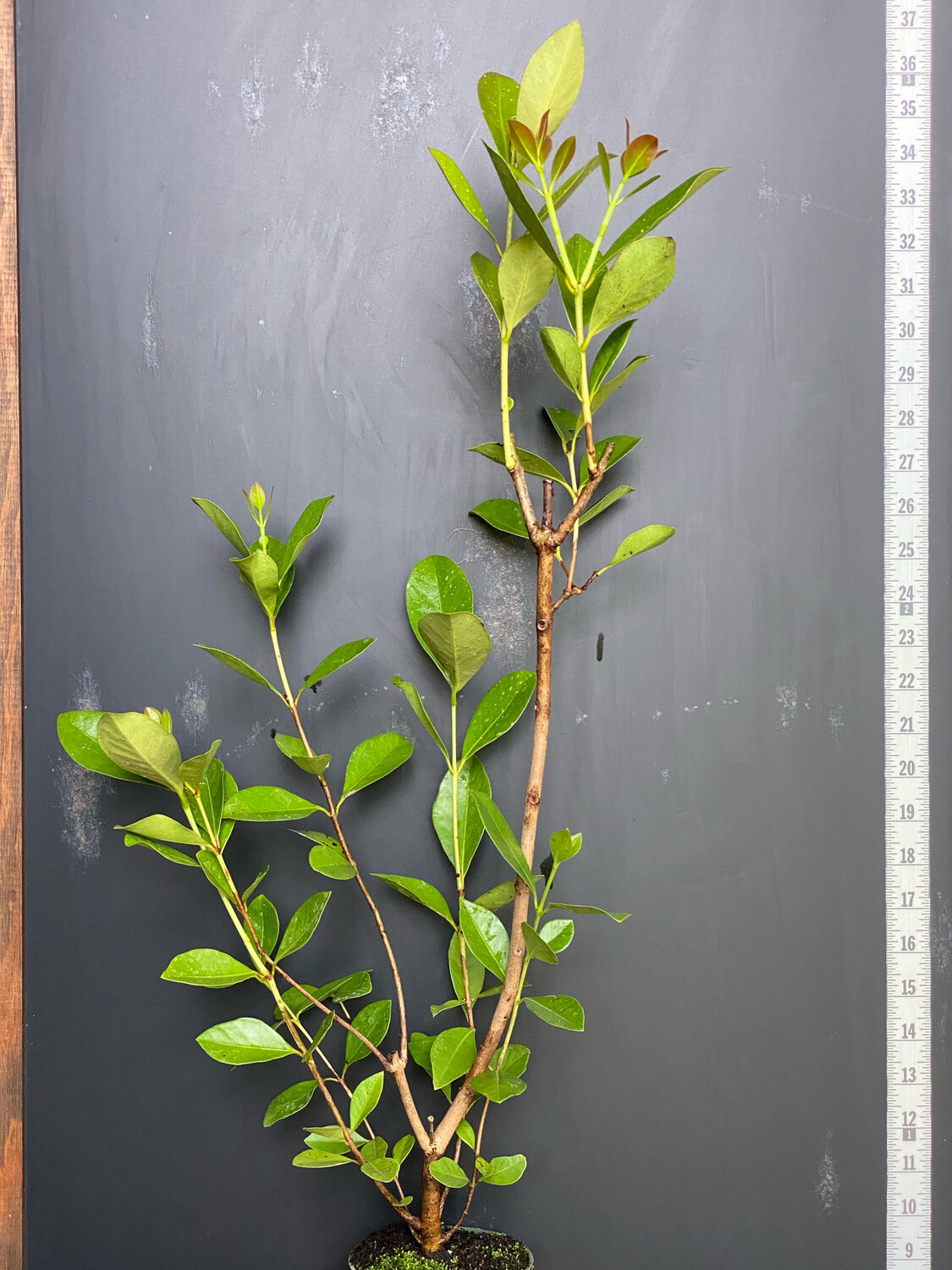
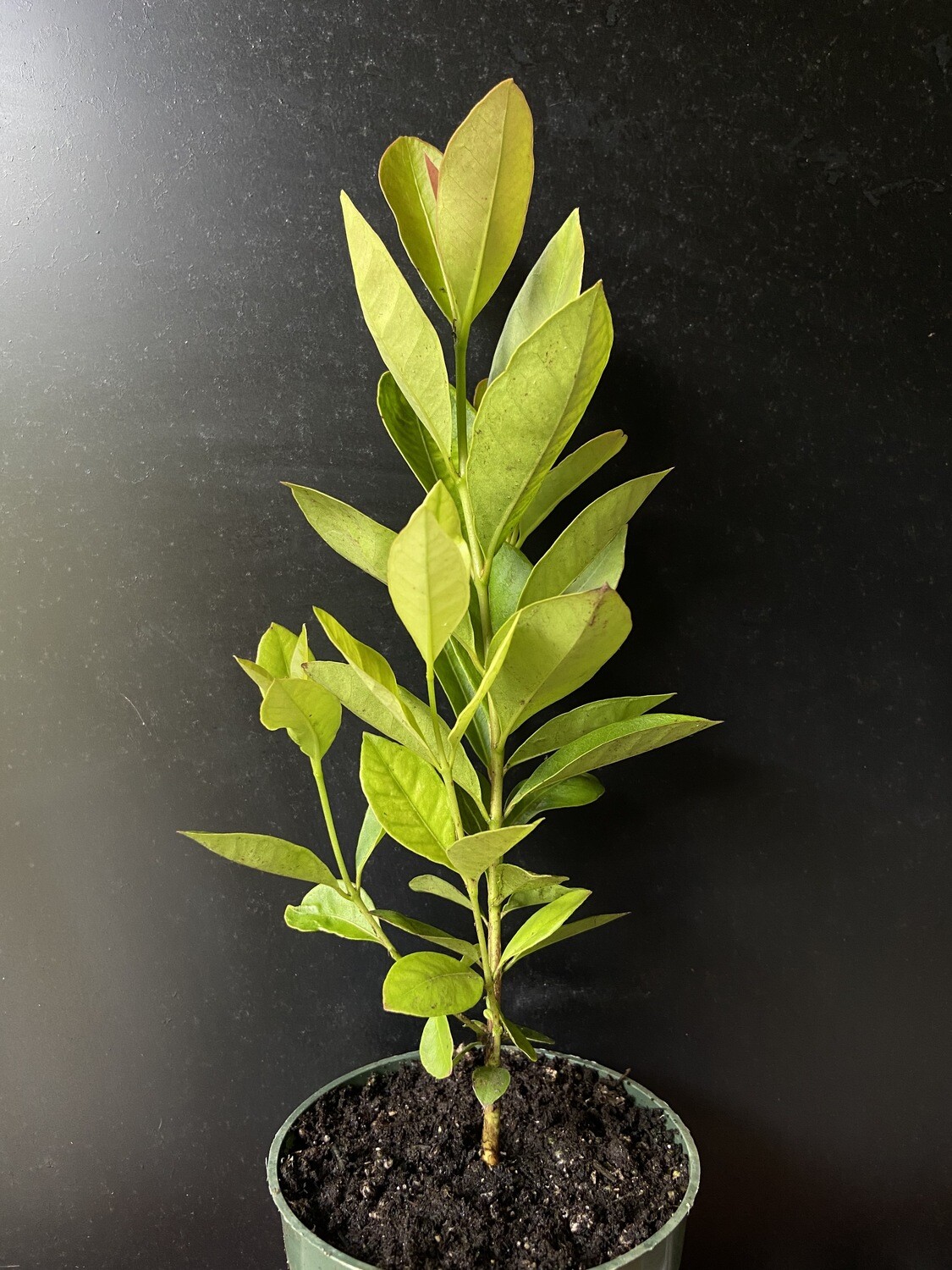
🌿 Lemon Cattley Guava (Psidium cattleyanum) – Citrus-Bright Yellow Guava for Edible Landscapes 🍋🌳
A compact evergreen fruit tree producing juicy yellow guavas with sweet-tart flavor, fragrant tropical character, and a refreshing citrus-like finish.
🍋 Small Fruit. Serious Flavor.
Lemon Cattley Guava brings something different to the backyard orchard. Its golden-yellow fruit combines the richness of guava with a bright, spicy, citrus-forward edge—almost like tropical lemonade grew on a tree.
The fruit is excellent fresh, but this plant really earns its space when the harvest reaches the kitchen. Blend the fruit into agua fresca, strain it into smooth juice, simmer it into jam, turn it into syrup, or use its acidity to wake up marinades and sauces.
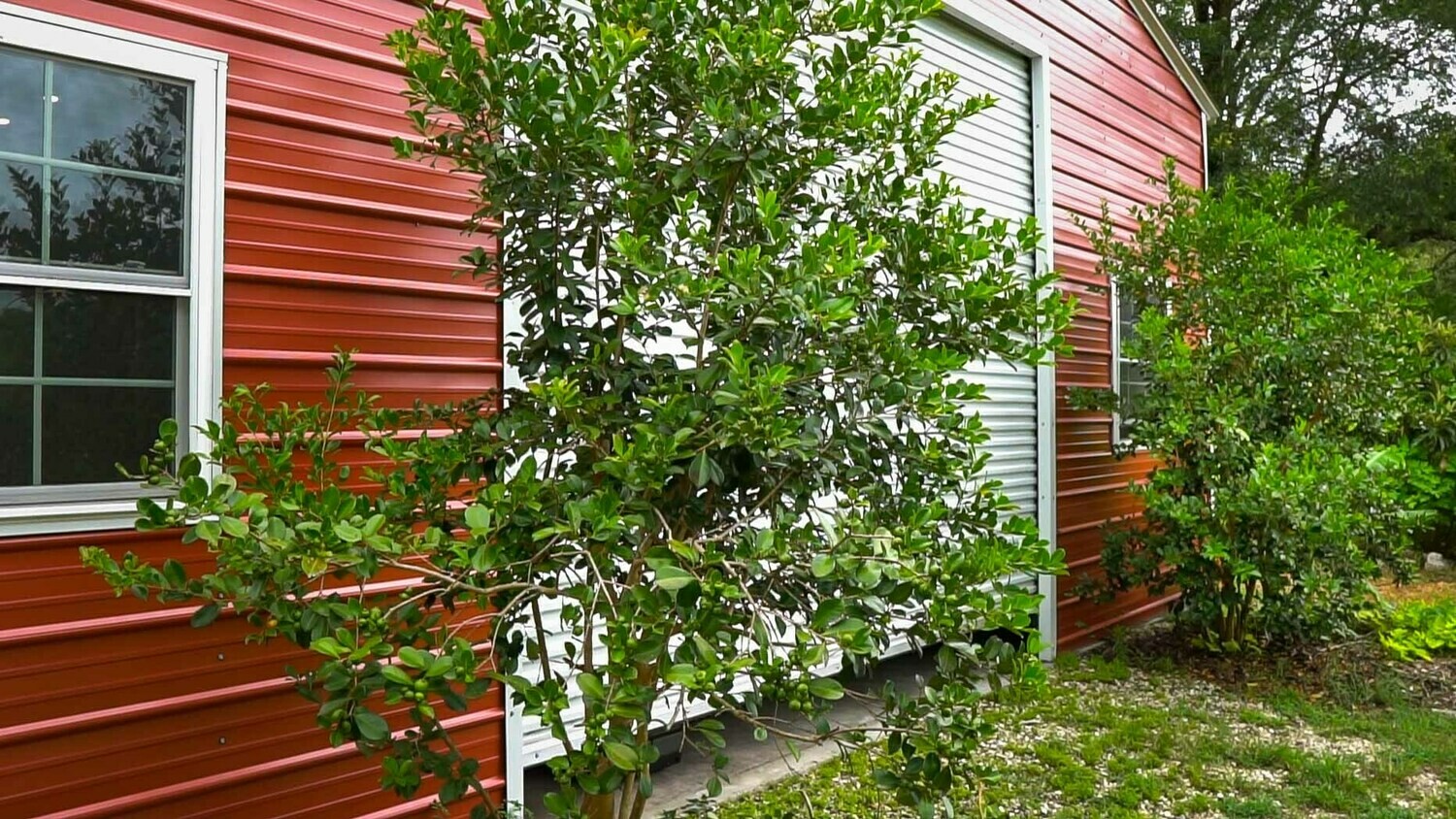
The tree itself stays naturally dense and highly branchable, making it useful as an edible hedge, compact fruit tree, container specimen, privacy screen, or productive mid-layer food forest plant.
This is not supermarket guava energy. It is small-batch, backyard-grown flavor with plenty of personality.
🌿 Quick Facts Guide
| Category | Details |
|---|---|
| Accepted Botanical Name | Psidium cattleyanum Sabine |
| Common Horticultural Spelling | Psidium cattleianum |
| Common Names | Lemon Cattley Guava, Lemon Guava, Yellow Strawberry Guava, Yellow Cattley Guava, Yellow Araçá |
| Plant Family | Myrtaceae |
| Plant Type | Evergreen subtropical fruiting shrub or small tree |
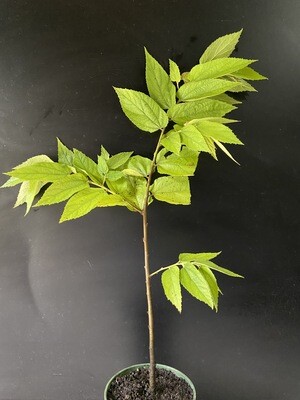
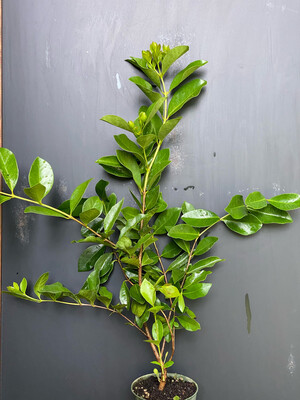
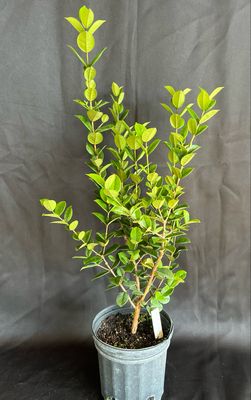
| Size at Sale | Ships in a 4-inch nursery container |
| Estimated Nursery Age | Approximately 4–8 months; age varies by propagation and production cycle |
| Typical Maintained Height | Approximately 6–10 ft with regular pruning |
| Potential Unpruned Height | Commonly 10–15 ft; may reach 15–25 ft or more in favorable humid climates |
| Mature Width | Approximately 8–15 ft unless maintained narrower |
| USDA Growing Zones | Approximately 9a–11; most dependable in protected Zone 9b and Zones 10–11 |
| Best Florida Range | Central and North Florida only with responsible management; see invasive-status section before purchasing |
| Sun Requirements | Full sun for maximum flowering and fruit production; tolerates partial shade |
| Cold Protection | Protect young plants when temperatures approach 30°F |
| Growth Habit | Dense, upright to rounded, multi-branched, and highly responsive to pruning |
| Growth Rate | Moderate; the yellow-fruited form is often slower-growing than red Cattley guava |
| Spacing for Maintained Trees | Approximately 8–12 ft apart |
| Spacing for a Hedge | Approximately 4–6 ft apart with regular pruning |
| Distance From Structures | Allow 15–25 ft when the plant will not be maintained regularly |
| Soil Preference | Well-drained sandy, loamy, or lightly clay-based soil; adaptable to mildly acidic and alkaline conditions |
| Water Needs | Moderate; consistent moisture during establishment, flowering, and fruit development |
| Drought Tolerance | Moderate once well established |
| Wind Tolerance | Generally good when established and maintained at a manageable height |
| Salt Tolerance | Moderate; avoid direct, constant ocean spray |
| Container Friendly | Yes; especially when pruned between 4–8 ft |
| Indoor Growing | Possible temporarily with intense light, but not ideal as a permanent houseplant |
| Pollination | Generally self-fruitful; pollinator activity may improve crop set |
| Primary Florida Harvest | Usually summer through early fall, commonly July–October |
| Fruit Size | Approximately 1–2 inches; yellow forms are often larger than red Cattley guavas |
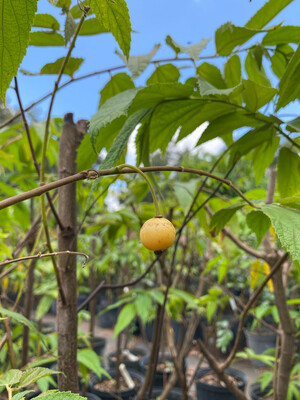
| Fruit Color | Green ripening to lemon yellow or golden yellow |
| Fruit Texture | Juicy, soft pulp surrounding numerous small, firm edible seeds |
| Typical Fruiting Age | Seed-grown trees may require approximately 3–8 years; vegetatively propagated trees may bear sooner |
| Deciduous or Evergreen? | Evergreen, but temporary leaf thinning may occur after cold, drought, transplanting, or shipping stress |
🌱 Important Botanical Note
The accepted botanical spelling is Psidium cattleyanum. The spelling Psidium cattleianum remains common in older horticultural publications, invasive-plant databases, nursery catalogs, and customer searches.
Both spellings may therefore appear in this listing for identification and SEO purposes, but they refer to the same species.
The yellow-fruited plant historically called Psidium cattleianum var. lucidum, P. cattleyanum f. lucidum, or Psidium littorale is now generally included within the variable species Psidium cattleyanum.
🌎 From Brazilian Araçá to the English Greenhouse
Lemon Cattley Guava is part of a fruiting species native from eastern and southern Brazil into northeastern Uruguay. In Brazil, related forms are commonly known as araçá, with yellow-fruited selections often called araçá-amarelo.
The scientific name honors William Cattley, an English horticulturist associated with growing and introducing unusual tropical plants during the early 1800s. The species was formally published in 1821, during an era when collectors were bringing remarkable food and ornamental plants into European cultivation.
That history explains the plant’s long list of names:
- Lemon guava
- Yellow strawberry guava
- Cattley guava
- Cherry guava
- Chinese guava
- Araçá
- Yellow araçá
Despite “strawberry” and “lemon” appearing in its common names, this is a true guava relative—not a strawberry or citrus tree.
🍈 Fruit Profile — Guava With a Citrus Twist
Flavor
Lemon Cattley Guava is typically:
- Sweet when fully ripe
- Tart enough to remain refreshing
- Fragrant without always being as musky as common tropical guava
- Spicy or resinous at the finish
- Bright and citrus-like, especially when picked at the firm-ripe stage
The exact balance changes with sunlight, rainfall, soil fertility, crop load, and ripeness. Fruit exposed to abundant sun generally develops stronger sweetness and aroma.
Texture
The fruit has:
- Thin, smooth, edible skin
- Very juicy cream-colored to pale-yellow pulp
- Numerous small, firm seeds
- A soft texture when fully ripe
- A firmer, more acidic bite when slightly underripe
The seeds are edible, but many growers prefer to strain the fruit when preparing juice, puree, syrup, or sauce.
Fruit Size and Appearance
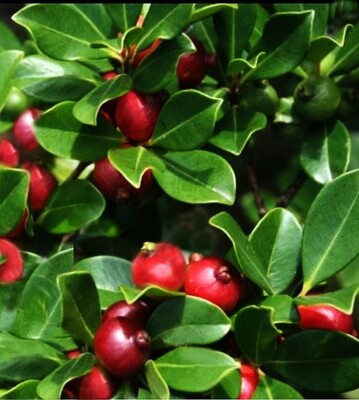
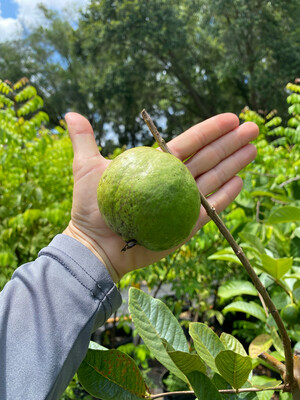
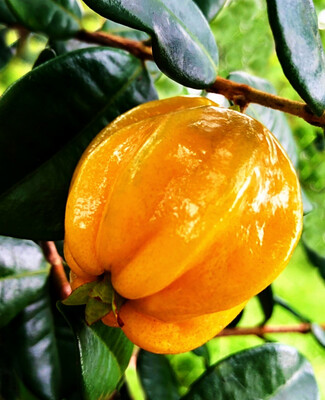
Fruit is generally round to slightly obovoid and approximately 1–2 inches across. The peel progresses from green to pale yellow and eventually golden yellow as the fruit ripens.
A ripe fruit should:
- Display an even yellow color
- Release a noticeable fruity aroma
- Yield slightly to gentle pressure
- Separate easily from the plant
Avoid squeezing heavily. Fully ripe Cattley guavas bruise easily and have a relatively short fresh-storage life.
🌸 Flowering, Pollination and Fruit Production
Small white flowers develop from the leaf axils and feature a dense center of prominent stamens. The flowers have the classic powder-puff appearance seen throughout the myrtle family.
Is Lemon Cattley Guava Self-Fertile?
Yes. A single tree can generally produce fruit.
However, bees and other pollinating insects may improve:
- Flower visitation
- Fruit set
- Fruit uniformity
- Overall crop volume
Planting pollinator-supporting flowers nearby is one of the easiest ways to strengthen production without adding another guava tree.
When Will a 4-Inch Plant Produce Fruit?
This is a starter plant—not an immediate-bearing specimen.
Seed-grown Psidium cattleyanum can be variable. Depending on climate, genetics, nutrition, sunlight, root development, and care, fruiting may begin in approximately 3–8 years. Some plants bear earlier, while others take longer.
Vegetatively propagated plants may fruit sooner because the material originated from mature wood, but propagation type should never be assumed unless specifically stated.
How to Encourage Stronger Fruit Set
For better production:
- Provide at least 6–8 hours of direct sun.
- Avoid heavy nitrogen applications that create excessive leafy growth.
- Maintain consistent soil moisture from flowering through fruit development.
- Encourage bees and other beneficial insects.
- Prune selectively after harvest to encourage productive new branching.
- Maintain an open canopy with good light penetration.
- Remove fallen fruit and harvest frequently.
- Correct iron or micronutrient deficiencies when growing in alkaline Florida soil.
🗓 Typical Harvest Windows
| Region | General Harvest Expectation |
|---|---|
| Central and South-Central Florida | Main crop commonly develops from July through October |
| South Florida | Fruiting may occur over a longer season, but planting is not recommended by UF/IFAS due to invasive status |
| North Florida and Zone 9a | Usually late summer through early fall; cold events may reduce flowering or delay maturity |
| Southeastern United States | Late summer to early fall before temperatures decline |
| Texas and Warm Western Microclimates | Summer into fall with irrigation and winter protection |
| Containers Moved Under Protection | Timing may vary with temperature, pruning, and light exposure |
Very warm climates may produce scattered flowers or an additional light crop outside the primary season.
Harvest fruit frequently. Ripe fruit left on the plant or ground attracts wildlife, fruit flies, and seed-dispersing animals.
🍹 Smooth Lemon Cattley Guava Juice
Think tropical lemonade meets fresh guava nectar.
This method captures the fruit’s aroma and citrus-like acidity while removing most of the firm seeds.
Ingredients
- 1–2 cups washed ripe or firm-ripe Lemon Cattley guavas
- 2–3 cups cold water
- Honey, simple syrup, cane sugar, agave, or preferred sweetener
- Optional lime juice
- Optional fresh ginger
- Optional mint, lemongrass, or basil
- Ice for serving
Directions
- Remove stems and any damaged fruit.
- Place the whole washed fruit in a blender with water.
- Pulse until the flesh is broken down. Avoid excessively long blending, which may pulverize seeds and create bitterness.
- Pour through a fine-mesh strainer or reusable juice bag.
- Press gently to extract the juice without forcing seed fragments through.
- Add sweetener gradually.
- Brighten with lime, ginger, or herbs as desired.
- Chill and serve over ice.
💡 GreenDreams Pro Tips
- Use firm-ripe fruit for the brightest acidity.
- Use fully golden, softer fruit for a sweeter, more aromatic drink.
- Blend with coconut water for a lighter hydration drink.
- Add ginger and mint for a garden-grown mocktail base.
- Freeze strained juice in cubes for teas, sparkling water, or cocktails.
- Process fruit shortly after harvest for the freshest flavor.
🍋 More Ways to Use the Harvest
Fresh Uses
- Eat ripe fruit directly from the tree.
- Add sliced fruit to tropical fruit salads.
- Spoon the pulp over yogurt or oatmeal.
- Blend into smoothies.
- Freeze strained puree for later use.
Preserves and Desserts
- Jam
- Jelly
- Fruit butter
- Syrup
- Sorbet
- Ice pops
- Dessert reductions
- Cheesecake topping
- Pastry filling
- Guava curd
Beverages
- Agua fresca
- Lemon-guava lemonade
- Shrubs and drinking vinegars
- Kombucha flavoring
- Fermented fruit beverages
- Cocktails and mocktails
- Sparkling guava spritzers
- Iced herbal tea blends
Savory Applications
The fruit’s sweet acidity works particularly well in:
- Glazes for fish or poultry
- Tropical barbecue sauces
- Guava vinaigrette
- Chili-lime dipping sauces
- Marinades
- Fresh salsa
- Chutney
- Hot pepper jelly
- Sauce for grilled vegetables
Small-Farm and Market Applications
Lemon Cattley Guava can be useful for:
- Fresh specialty-fruit sales
- Small-batch juice
- Craft preserves
- Cottage-food products where permitted
- Farm dinners
- Culinary demonstrations
- Tropical fruit tastings
- Value-added syrups and sauces
The fruit is delicate and does not store as long as commercial supermarket fruit, which makes it especially well suited to fresh local harvests and small-batch processing.
🌿 Nutritional and Traditional Use Overview
The fruit has been studied as a source of:
- Vitamin C
- Carotenoids
- Phenolic compounds
- Dietary fiber
- Minerals
- Naturally occurring aromatic compounds
Nutritional levels vary by fruit color, ripeness, growing conditions, and genetics.
Various Psidium species have long histories of food and folk use in tropical regions. Fruit is widely consumed fresh and processed, while leaves from some guava species have been used traditionally in herbal preparations.
These historical uses are shared for cultural and educational purposes. This plant and its products are not intended to diagnose, treat, cure, or prevent disease.
🌳 Ornamental Appeal With an Edible Payoff
Even without fruit, Lemon Cattley Guava offers strong landscape value:
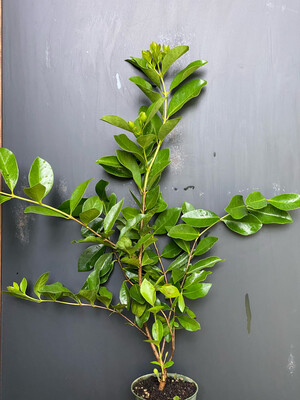
- Glossy, leathery, dark-green leaves
- Dense evergreen branching
- Smooth gray, reddish-brown, or golden-brown bark
- Attractive peeling bark on older stems
- Small white flowers with prominent stamens
- Naturally rounded growth
- Strong response to hedge pruning
- Year-round visual structure in frost-free climates
Use it as:
- A maintained edible hedge
- A small specimen tree
- A screened patio plant
- A large container centerpiece
- An orchard border
- A food forest mid-layer
- A pollinator-supporting flowering tree
Avoid positioning it directly over patios, sidewalks, vehicles, or pool decks. Ripe fruit can drop, stain surfaces, attract wildlife, and create volunteer seedlings.
🍈 Lemon Cattley Guava Comparison Guide
| Type | Fruit and Flavor | Typical Tree Size | Climate Notes | Best Use |
|---|---|---|---|---|
| Yellow Lemon Cattley Guava | Approximately 1–2 inches; juicy, sweet-tart, spicy, citrus-forward yellow fruit | Often 10–15 ft; maintain around 6–10 ft | Zones 9–11; protect young plants from freezing | Juice, preserves, containers, edible hedges |
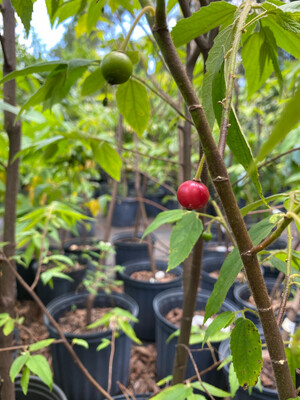
| Red Strawberry Cattley Guava | Small red to purple-red fruit with sweet-tart berry and guava character | Commonly 10–15 ft but potentially larger | Similar regional invasive concerns | Fresh eating, jelly, wildlife gardens where appropriate |
| Common Tropical Guava Psidium guajava | Usually much larger fruit with stronger classic guava aroma; white, pink, red, or yellow flesh | Commonly 10–20 ft | Tropical to subtropical; freeze sensitive when young | Larger fresh fruit, juice, paste, commercial processing |
| Pineapple Guava Acca sellowiana | Green fruit with floral, minty, pineapple-like pulp | Approximately 8–15 ft | More cold tolerant; generally Zones 8–10 | Cooler climates, hedges, edible flowers and fruit |
Availability varies. Ask our team about current fruiting guavas and other subtropical fruit trees available online or at the GreenDreams retail nursery.
🌱 Top Reasons to Grow Lemon Cattley Guava
- 🍋 Distinctive citrus-bright guava flavor
- 🍈 Excellent fruit for juice, preserves, sauces, and fresh eating
- 🌳 Naturally dense, compact, and pruning-friendly
- 🌿 Evergreen foliage in warm climates
- 🌸 Attractive white flowers
- 🐝 Supports visiting pollinators
- 🪴 Adapts well to large containers
- 🌬 Handles moderate wind when kept compact
- 🌾 Tolerates a wide range of well-drained soils
- ✂️ Can be maintained as a hedge, shrub, or small fruit tree
- 🍹 Produces a crop rarely available in conventional grocery stores
SEASONAL CARE, PLANTING, WATERING, CONTAINERS & PRODUCTION
🌿 Growing Lemon Cattley Guava in Florida and Similar Warm Climates
Lemon Cattley Guava is an evergreen subtropical plant. It does not enter a true winter dormancy like peaches, mulberries, or other deciduous fruit trees.
However, “evergreen” does not mean every leaf remains perfect year-round.
Cold, drought, excessive moisture, transplanting, shipping, nutrient imbalance, and strong wind may cause temporary:
- Yellowing leaves
- Spotted older foliage
- Leaf thinning
- Tip burn
- Slowed growth
- Partial defoliation
- Delayed spring flushing
Healthy plants normally resume active growth when warm weather, soil moisture, and root activity improve.
🗓 Florida Seasonal Care Guide
| Season | What the Plant May Be Doing | Recommended Care |
|---|---|---|
| Winter: December–February | Growth slows below approximately 60°F. Cold may bronze, curl, spot, or drop leaves. | Protect young trees below 30°F. Reduce irrigation during cool, cloudy periods. Avoid major pruning and heavy nitrogen applications before freezes. |
| Spring: March–May | New leaves emerge, branches extend, and flowering may increase. | Resume feeding after active growth begins. Correct iron deficiency if new foliage is pale. Prune cold-damaged wood only after the extent of dieback is clear. |
| Summer: June–August | Rapid growth, flowering, fruit development, and primary harvest may overlap. | Water deeply during dry periods. Maintain mulch. Monitor fruit flies, scale, thrips, whiteflies, leaf spots, and anthracnose. Harvest frequently. |
| Fall: September–November | Fruit may continue ripening while vegetative growth gradually slows. | Complete harvest, prune lightly after fruiting, remove fallen fruit, reduce late nitrogen, and prepare protection materials for winter. |
Winter Care in Central Florida
For a young 4-inch plant:
- Keep the plant mobile during its first winter.
- Move it into a greenhouse, enclosed porch, garage, or protected structure before a freeze.
- Provide bright light whenever it is held indoors.
- Return it outside after dangerous temperatures pass.
- Avoid placing a cold-stressed plant into saturated soil.
- Do not fertilize a damaged plant until new growth resumes.
- Wait before pruning frost-damaged stems; some wood may recover.
A mature tree may survive brief exposure into the mid-20s, but foliage and branch damage can occur. A 4-inch starter should not be treated as low-20s hardy. Protect it whenever temperatures approach freezing.
🌞 Where to Plant Lemon Cattley Guava
Best Locations
Choose a location with:
- 6–8 or more hours of direct sun
- Good air circulation
- Fast drainage after summer rain
- Protection from cold north or northwest wind
- Room for future canopy development
- Convenient access for harvesting
- Distance from unmanaged woods, preserves, hammocks, or natural areas
- Space where fallen fruit can be collected easily
Full sun produces the strongest flowering, densest branching, and best fruit sweetness.
Partial shade is tolerated, but deep shade may produce:
- Sparse branching
- Reduced flowering
- Lower fruit production
- Less flavorful fruit
- Greater humidity inside the canopy
Where Not to Plant
Avoid:
- Low areas that collect cold air
- Depressions that remain flooded after rain
- Constantly saturated soil
- Septic drain fields
- Directly beneath power lines
- Immediately beside foundations
- Over sidewalks, patios, pools, or driveways
- Areas exposed to intense, constant ocean spray
- Property edges bordering unmanaged natural land
- South Florida landscapes where UF/IFAS advises against planting the species
🌬 Wind and Salt Exposure
Guavas are generally able to withstand moderate wind, particularly when their height is controlled.
For better storm performance:
- Maintain the canopy at approximately 6–10 ft.
- Remove weak, crossing, or crowded branches.
- Allow wind to move through the canopy.
- Avoid an excessively top-heavy tree.
- Stake only when needed.
- Remove tight ties before they girdle the trunk.
- Establish a protected windbreak around young plants.
The species has moderate salt tolerance, but growth and fruit production may decline with repeated salt exposure. Marginal leaf browning, tip burn, leaf drop, small fruit, and branch dieback can indicate salinity stress.
Use wind-tolerant screening plants between the guava and direct coastal exposure whenever possible.
📦 What to Do After Your Plant Arrives
Keep Lemon Cattley Guava in its original nursery container for at least 30 days—or until healthy new growth confirms that shipping stress has passed.
Immediately transplanting a recently shipped 4-inch plant can compound:
- Root disturbance
- Light changes
- Humidity changes
- Temperature stress
- Watering adjustments
- Wind exposure
Acclimation Steps
- Open the package promptly.
- Remove packing materials carefully.
- Water at soil level if the mix feels dry.
- Place the plant in bright shade or gentle morning sun.
- Increase direct sunlight gradually over 7–14 days.
- Protect it from intense afternoon sun during the first several days.
- Keep it sheltered from strong wind.
- Inspect daily, but do not repeatedly move or disturb the roots.
- Wait for new growth before transplanting.
- Contact GreenDreams promptly if shipping damage is observed.
Some yellowing, leaf drop, or temporary wilting can occur after shipment. The most important recovery signal is the emergence of healthy new growth.
🌿 How to Plant Lemon Cattley Guava — The GreenDreams High & Tight Method
Before Planting
Confirm that:
- Shipping stress has passed.
- Roots are holding the potting mix together.
- The plant is actively growing.
- The planting site drains properly.
- No freeze is expected.
- The plant has been acclimated to the site’s sunlight.
Planting Instructions
- Water the plant before removing it from the container.
- Dig a hole only slightly wider than the root ball.
- Keep the hole approximately the same depth as the nursery container.
- Remove the container carefully without pulling the plant by its stem.
- Loosen only circling exterior roots. Do not break apart the entire young root ball.
- Set the plant so the top of the root ball sits level with or slightly above the surrounding grade.
- Backfill firmly with native soil.
- If amending, blend a modest amount of finished compost into the surrounding native soil rather than creating a compost-filled planting pocket.
- Tamp gently to eliminate major air pockets.
- Water thoroughly at soil level.
- Top-dress beyond the root ball with compost, biochar, trace minerals, and an appropriate organic nutrient blend.
- Apply hardwood mulch around the planting area.
- Keep mulch several inches away from the young stem and eventually 8–12 inches away from the mature trunk.
Never bury the trunk flare or create a deep mulch volcano.
Planting slightly high is especially important in Florida yards with:
- Compacted soil
- Seasonal saturation
- High water tables
- Heavy summer rainfall
- Poor drainage
For a full demonstration of our fruit-tree planting approach:
https://youtu.be/RRQFY30qdA8?si=rRIcsbLlVAVYotfI
💧 Watering Lemon Cattley Guava
The GreenDreams Watering Rule
Water at soil level in the morning. Do not rely on overhead sprinklers or afternoon overhead watering.
Overhead watering can:
- Waste water through evaporation
- Spread fungal spores
- Splash contaminated soil onto leaves
- Keep foliage wet overnight
- Increase leaf-spot pressure
- Cause spotting or burn when water remains on leaves in intense sun
Drip irrigation or hand watering at the root zone is preferred.
Watering a 4-Inch Container
Small nursery pots dry faster than larger containers.
Check the plant daily by:
- Feeling the upper inch of potting mix
- Noticing the weight of the container
- Watching for soft wilting
- Checking whether water moves freely through the drainage holes
Water thoroughly when the surface begins to dry. Allow excess water to drain completely.
During hot Florida weather, a 4-inch container may need water every day. During cool or cloudy conditions, it may require less.
Never leave the plant standing in a water-filled saucer.
After Planting in the Ground
A practical establishment schedule is:
| Period | Suggested Watering |
|---|---|
| Planting Day | Water deeply after backfilling |
| First Week | Water approximately every other day, adjusting for rainfall and soil drainage |
| First 1–2 Months | Deeply water 1–2 times weekly when rain is insufficient |
| Remainder of First Year | Water approximately twice weekly during prolonged dry periods |
| Established Trees | Deep watering during extended drought, flowering, and fruit development |
Florida’s summer rainy season may reduce or eliminate the need for supplemental irrigation. Never water automatically when the soil remains wet.
Signs of Too Little Water
- Wilted new growth
- Folded or curled leaves
- Dry leaf margins
- Premature fruit drop
- Small fruit
- Dry potting mix pulling away from the container
Signs of Too Much Water
- Persistent yellowing
- Soft or darkened stem tissue
- Sour-smelling soil
- Fungus gnats
- Algae on the soil surface
- Leaf drop despite wet soil
- Slow or stalled growth
🌾 Soil and Potting Mix
Lemon Cattley Guava is adaptable but performs best in a fertile, aerated medium that holds moderate moisture without remaining saturated.
Recommended Container Mix
A practical blend is:
- 40% aged pine bark fines
- 30% finished compost or high-quality organic potting mix
- 20% perlite, pumice, or another durable aeration material
- 10% coconut coir or peat-based moisture-retaining material
Adjust the blend for local conditions:
- Add more aeration in humid, rainy regions.
- Add slightly more moisture retention in dry climates.
- Never use dense native clay alone in a container.
- Avoid garden soil that compacts and blocks drainage holes.
The target is a mix that becomes evenly moist but releases excess water quickly.
Soil pH
Guava generally grows best in mildly acidic to neutral soil, approximately pH 4.5–7, but may grow in alkaline Florida soil when iron and micronutrients remain available.
Pale new leaves with darker green veins often indicate iron deficiency in high-pH soil.
🌿 Fertilizing for Healthy Growth and Fruit
Use a complete organic fruit-tree fertilizer containing:
- Moderate nitrogen
- Phosphorus
- Potassium
- Magnesium
- Micronutrients
Suggested Timing
- Begin feeding only after active new growth is present.
- Feed lightly during spring and early summer.
- Apply another light feeding during early fruit development.
- Feed after the main harvest when the plant is actively growing.
- Avoid heavy nitrogen late in fall.
- Do not fertilize a drought-stressed, frozen, newly shipped, or waterlogged plant.
For established trees, compost and mulch support soil health, but they may not provide every nutrient required for consistent fruiting.
High-pH Florida Soil
Where alkaline conditions cause yellow new foliage:
- Use an iron chelate labeled for alkaline soil.
- Apply it to the root zone according to the product label.
- Avoid repeatedly spraying iron onto leaves as the only correction.
- Consider soil or leaf testing when symptoms continue.
🪵 Mulching
Apply approximately 2–4 inches of hardwood mulch over the root zone.
Mulch helps:
- Retain soil moisture
- Moderate root temperatures
- Feed soil organisms
- Reduce grass competition
- Protect shallow feeder roots
- Improve soil structure over time
Keep mulch away from the trunk and young stem. Constant moisture against woody tissue can encourage rot and pest activity.
✂️ Pruning and Training Lemon Cattley Guava
Lemon Cattley Guava responds strongly to pruning and can be maintained as a shrub, hedge, or small tree.
Training a Young Plant
During the early years:
- Allow the plant to establish a healthy root system.
- Select several well-positioned branches.
- Remove damaged, weak, crossing, or inward-growing shoots.
- Tip vigorous branches to encourage lateral branching.
- Avoid removing too much foliage from a small starter.
- Decide whether the plant will become a single-trunk tree or multi-stemmed shrub.
Pruning a Bearing Plant
Prune after the primary harvest to:
- Reduce height
- Improve harvest access
- Open the center of the canopy
- Improve light penetration
- Increase airflow
- Remove suckers and volunteer stems
- Encourage fresh fruiting growth
A maintained height of approximately 6–10 ft makes harvesting, fruit bagging, pest inspection, and storm preparation easier.
Avoid severe pruning immediately before winter. Tender regrowth stimulated during late fall may be damaged by cold.
Production Pruning
Guava flowers develop on vigorous new growth. Selective pruning can stimulate branching and future flowering, but excessive pruning may temporarily eliminate fruiting wood.
The goal is controlled renewal—not repeated scalping.
🪴 Container Growing
Lemon Cattley Guava is a strong candidate for container culture, particularly where:
- Winters are cold
- Space is limited
- In-ground planting is discouraged
- Seedling management is important
- The grower wants to control final size
Recommended Pot Progression
- 4-inch nursery pot
- 1-gallon container
- 3-gallon container
- 7-gallon container
- 10–15-gallon container
- 20–25-gallon long-term container
Do not move a tiny root ball directly into a very large volume of wet soil. Oversized containers can remain saturated around undeveloped roots.
When to Up-Pot
Transplant when:
- Roots circle the inner pot wall
- Roots emerge from drainage holes
- The plant dries unusually quickly
- Growth slows despite appropriate feeding
- The root ball remains intact when removed
- The canopy has become top-heavy
How to Transplant Into a Larger Container
- Select a pot one or two practical sizes larger.
- Confirm that it has multiple drainage holes.
- Add enough fresh mix to position the root ball correctly.
- Remove the plant gently.
- Loosen circling exterior roots without destroying the core.
- Position the root ball at the same depth.
- Fill around it with fresh mix.
- Firm lightly.
- Water thoroughly at soil level.
- Place the plant in bright shade for several days before returning it gradually to full sun.
Containers and potting ingredients may be found through local nurseries, landscape-supply businesses, farm stores, hydroponic suppliers, garden centers, community marketplaces, and online searches for nursery pots or bulk soil components.
Long-Term Container Maintenance
- Maintain the canopy between approximately 4–8 ft.
- Root-prune or refresh the soil periodically once the final container size is reached.
- Top-dress with compost and organic fertilizer.
- Flush accumulated salts with a deep watering when appropriate.
- Protect the container from freezing.
- Avoid black pots in extreme reflected heat unless the root zone is shaded.
🏠 Can Lemon Cattley Guava Grow Indoors?
It can survive indoors temporarily, but it is not an ideal permanent houseplant.
For indoor success, it would require:
- A very bright south-facing exposure
- Strong supplemental grow lighting
- Warm temperatures
- Air circulation
- Careful watering
- Pollinator access or hand pollination
- Regular pruning
- Seasonal outdoor sunlight when conditions allow
Low indoor light usually causes weak growth, leaf drop, pests, and little or no flowering.
In cold climates, the better strategy is to grow it outdoors in a movable container and protect it inside only during winter.
🌻 Companion Plant Guild
Build a productive support system around Lemon Cattley Guava with plants that add pollinator habitat, biomass, wind protection, and ground coverage.
| Guild Role | Suggested Plants | Function |
|---|---|---|
| Nitrogen Support | Pigeon pea, perennial peanut, sunshine mimosa | Adds organic matter and supports soil fertility |
| Pollinator Magnets | Mexican sunflower, native salvia, African blue basil, coreopsis | Attracts bees and beneficial insects |
| Biomass Plants | Mexican sunflower, lemongrass, vetiver, clumping grasses | Provides chop-and-drop material and root-zone protection |
| Groundcovers | Sweet potato, perennial peanut, sunshine mimosa | Covers exposed soil and reduces erosion |
| Aromatic Plants | Lemongrass, society garlic, basil | Adds garden diversity and culinary value |
| Visual Companions | Turmeric, edible hibiscus, native wildflowers | Contrasts with glossy guava foliage |
Maintain open space around the trunk and avoid allowing vigorous support plants to smother the root zone.
Because birds and mammals distribute guava seeds, companion planting does not replace responsible fruit harvest and seedling control.
CAUTIONS, TROUBLESHOOTING, FAQ & SHIPPING
⚠️ Important Florida Invasiveness Guidance
Lemon Cattley Guava belongs to the same species as red strawberry guava and shares its ability to spread through seed and root suckers.
As of the May 18, 2026 UF/IFAS assessment:
- South Florida: Classified as invasive and not recommended for planting.
- Central Florida: Classified as caution; manage carefully to prevent escape.
- North Florida: Classified as caution; manage carefully to prevent escape.
The Florida Invasive Species Council also lists strawberry guava as a Category 1 invasive plant due to its documented ecological impacts in natural areas.
What This Means for Customers
This plant is not appropriate for every Florida property.
Do not plant it:
- In South Florida where UF/IFAS advises against use
- Near preserves, hammocks, wetlands, woodlands, or unmanaged acreage
- Where fallen fruit cannot be collected
- Where wildlife can freely carry fruit into natural areas
- Where suckers and seedlings will not be monitored
- Where local ordinances or property rules prohibit it
Responsible Growing Practices
Where growing is locally appropriate:
- Harvest fruit promptly and consistently.
- Collect all fallen fruit.
- Do not dump fruit or seeds into compost near natural land.
- Remove volunteer seedlings while young.
- Monitor the surrounding landscape for suckers.
- Maintain the plant within a managed garden.
- Consider permanent container culture.
- Do not allow birds or mammals unrestricted access to large crops.
- Check county and municipal guidance before planting.
- Replace the plant with a native fruiting species if escape cannot be prevented.
GreenDreams’ experience with maintained edible landscapes does not replace regional ecological guidance. Buyer responsibility and careful management are essential.
⚠️ Additional Cautions
Caribbean Fruit Fly
Cattley guava is a host for the Caribbean fruit fly. Larvae may develop inside otherwise attractive fruit.
Reduce losses by:
- Harvesting frequently
- Collecting fallen fruit
- Bagging young fruit
- Using approved monitoring traps
- Keeping the canopy low enough to inspect
- Avoiding fruit accumulation beneath the tree
Wildlife and Seed Dispersal
Birds, squirrels, raccoons, and other animals may consume the fruit and distribute viable seeds. Wildlife value must be weighed against the plant’s ability to escape cultivation.
Fruit Drop
Ripe fruit may:
- Stain pavement
- Attract insects
- Ferment on the ground
- Create slippery surfaces
- Produce volunteer seedlings
Do not place the plant over walkways, parking areas, pool decks, or heavily used patios.
Roots and Suckers
Roots are not usually considered destructive in maintained landscapes, but the plant can sucker and form dense growth where unmanaged.
Medicinal Claims
Fruit and plant compounds are being researched, but this listing does not provide medical advice. Do not use guava preparations to replace professional medical treatment.
🔍 Lemon Cattley Guava Troubleshooting Guide
Icons represent common issues and organic recovery strategies—look for 🌿 and ✅ for corrective steps.
| ⚠️ Issue | 🧠 Likely Cause | 🌿 Organic Response |
|---|---|---|
| 🍂 Older leaves yellowing | Normal leaf turnover, transplant stress, or changing weather | ✅ Monitor new growth; remove leaves only after they loosen naturally |
| 🍃 Pale new leaves with green veins | Iron unavailable in alkaline soil | 🌿 Apply an iron chelate formulated for high-pH soil |
| 💦 Yellowing throughout the plant | Excess water or poor drainage | ✅ Allow soil to drain; reduce frequency and inspect the root zone |
| 💧 Curled or wilted leaves | Drought, dry wind, or a small pot drying quickly | 🌿 Water deeply at soil level and add mulch after planting |
| ☀️ Bleached or scorched foliage | Sudden exposure to intense sun after shipping | ✅ Return to bright shade and acclimate gradually over 7–14 days |
| 🌬 Brown leaf margins | Windburn, drought, fertilizer salts, or salt exposure | 🌿 Stabilize watering, reduce salt buildup, and provide wind protection |
| ❄️ Dark, limp leaves after cold | Frost injury | ✅ Protect from additional cold and wait before pruning damaged wood |
| 🪲 Sticky leaves or black sooty coating | Scale, whiteflies, or other sap-feeding insects | 🌿 Inspect leaf undersides; use insecticidal soap or horticultural oil as labeled |
| 🐜 Ant activity on stems | Ants may be protecting scale or aphids | ✅ Manage ants and the sap-feeding pest together |
| 🐛 Chewed leaves | Caterpillars, beetles, or guava moth larvae | 🌿 Hand-pick when practical and use an appropriately labeled biological product |
| 🍄 Brown or black fruit lesions | Anthracnose or another fungal disease | ✅ Remove infected fruit, improve airflow, avoid overhead irrigation, and use labeled controls when necessary |
| 🍄 Reddish-purple leaf spots | Algal leaf spot or wet-season disease pressure | 🌿 Open the canopy, improve air movement, and consult local Extension guidance |
| 🍈 Fruit containing larvae | Caribbean fruit fly or guava moth | ✅ Bag developing fruit, harvest promptly, and remove fallen fruit |
| 🍃 Premature fruit drop | Drought, saturated soil, cold, nutrient imbalance, or crop stress | 🌿 Stabilize moisture and avoid aggressive feeding during stress |
| 🌱 Many volunteer seedlings | Fallen fruit or wildlife seed dispersal | ✅ Remove seedlings immediately and intensify harvest sanitation |
| 🌿 Repeated basal shoots | Natural suckering or response to damage | ✅ Remove unwanted suckers before they become woody |
| 🧘 Little growth during winter | Cool temperatures or seasonal slowdown | ✅ Reduce watering and wait for warm spring conditions |
| 🔥 Burned leaf tips after feeding | Excess fertilizer or salt accumulation | 🌿 Stop feeding and flush the container thoroughly if drainage is adequate |
Use pesticides, biological controls, copper products, horticultural oils, soaps, and fertilizers only according to their labels. Products labeled for one guava species, crop stage, or location may not be approved for another.
🌟 Is Lemon Cattley Guava Right for You?
✅ Ideal For
- Experienced Central or North Florida growers prepared to prevent escape
- Gardeners in warm parts of Zones 9–11
- Culinary growers who enjoy juice, preserves, syrups, and sauces
- Container gardeners who want a pruning-responsive fruit tree
- Tropical fruit collectors
- Growers with sunny, well-drained sites
- Gardeners willing to harvest fruit frequently
- Homeowners who want an edible hedge or privacy screen
- Growers who can protect a young plant from freezing
- Customers prepared to wait several years for a seed-grown plant to mature
❌ Not Ideal For
- South Florida landscapes where UF/IFAS advises against planting
- Properties bordering preserves or unmanaged natural areas
- Gardeners unwilling to remove fallen fruit and seedlings
- Cold climates without protected winter storage
- Deeply shaded yards
- Waterlogged locations
- Sites exposed to constant direct salt spray
- Customers expecting fruit immediately from a 4-inch starter
- Growers who frequently forget to water small containers
- Landscapes where fruit drop would create a safety or maintenance problem
❓ Frequently Asked Questions
What is the correct botanical name for Lemon Cattley Guava?
The currently accepted name is Psidium cattleyanum Sabine. The spelling Psidium cattleianum remains widely used in older publications and nursery references.
Is Lemon Cattley Guava the same as Strawberry Guava?
It is the yellow-fruited form of the same variable species commonly called strawberry or Cattley guava. Yellow forms are generally described as producing somewhat larger fruit with a sweet-tart, spicy, citrus-like character.
Is Lemon Cattley Guava a true lemon?
No. It belongs to the guava and myrtle family. “Lemon” refers to the fruit’s yellow color and citrus-like brightness.
Is it the same as Costa Rican Guava?
No. Costa Rican guava is generally identified as Psidium friedrichsthalianum and may also be called sour guava or lemon guava. Common names overlap, which is why the botanical name matters.
Is Lemon Cattley Guava self-fertile?
A single tree can generally produce fruit. Bees and other pollinators may improve fruit set and crop uniformity.
How long will a 4-inch plant take to produce fruit?
Seed-grown plants may require approximately 3–8 years depending on genetics and growing conditions. Vegetatively propagated plants may fruit sooner. No exact fruiting date can be guaranteed for a starter plant.
Can it be grown in a container?
Yes. It responds well to pruning and can be maintained approximately 4–8 ft tall in a large container. Gradually progress from a 4-inch pot to 1 gallon, 3 gallons, 7 gallons, and larger sizes as roots develop.
Can it be grown indoors?
It can be overwintered indoors under very bright light, but it is not an ideal permanent houseplant. Long-term flowering and fruiting require intense light, warmth, airflow, and adequate pollination.
How cold hardy is Lemon Cattley Guava?
Protect a 4-inch plant when temperatures approach 30°F. Mature guava trees may survive brief temperatures in the mid-20s, but leaves and branches may be damaged. It is not a dependable unprotected tree for climates with repeated hard freezes.
Is it evergreen?
Yes in warm climates. It may temporarily lose leaves after freezing, drought, shipping, transplanting, or severe root stress.
When does Lemon Cattley Guava ripen in Florida?
The principal harvest is generally summer through early fall, commonly July–October. Warm conditions may support scattered flowers or a smaller secondary crop.
How do I know when the fruit is ripe?
Fruit changes from green to yellow, develops a noticeable aroma, yields slightly to pressure, and separates more easily from the plant.
Are the seeds edible?
Yes, but they are firm. Many people eat the whole fruit, while others strain juice and puree for a smoother texture.
Does it tolerate wind?
Established guava trees are generally wind tolerant, especially when selectively pruned and maintained below approximately 10 ft. Young plants should be protected from hot, dry, or storm-force wind.
Is it salt tolerant?
It has moderate tolerance, but repeated direct salt exposure can cause leaf burn, reduced growth, fruit drop, and dieback.
Is Lemon Cattley Guava invasive in Florida?
UF/IFAS classifies it as invasive and not recommended in South Florida. Central and North Florida carry a caution designation requiring management to prevent escape.
🚚 Shipping Details for 4-Inch Plants
Our 4-inch live plants are most ideally shipped to:
- Florida
- The Southeastern United States
- Texas
- Nearby regions with shorter UPS Ground transit times
We ship live plants from Florida using UPS Ground, with regular plant shipments departing on Mondays.
Important Small-Plant Shipping Notice
A 4-inch plant:
- Has a smaller root system
- Contains less soil volume
- Dries faster than a 1-gallon plant
- Experiences temperature changes more quickly
- May require a longer recovery period after extended transit
Customers in northern and western states should use additional discretion. Longer UPS Ground transit times may not be suitable for every small tropical plant.
California packages may be held for agricultural inspection, potentially adding another day or more to transit.
Heat and Cold Disclaimer
Buyer discretion is strongly advised during peak summer heat and winter cold.
GreenDreams cannot guarantee the condition of plants exposed to extreme temperatures, unexpected carrier delays, inspection delays, or extended ground-service transit.
The buyer assumes weather and transit risk when ordering live plants outside our preferred regional shipping area.
Plants arriving with transit stress may require:
- Bright shade
- Protected humidity
- Careful soil-level watering
- Wind protection
- Several weeks of recovery
- Considerable patience and TLC
When available, we recommend selecting a 1-gallon or larger plant for long-distance shipping. Larger plants generally hold moisture longer and tolerate extended travel better than 4-inch starters.
After Delivery
Keep the plant in its original container for at least 30 days or until healthy new growth emerges.
Do not immediately transplant a stressed plant.
🏡 Shop With Us in Person
GreenDreams Nursery & Farm — Retail Nursery Open to the Public
Our Spring Hill nursery offers countless plants in larger sizes, rotating seasonal inventory, and many varieties that are not available for online shipping.
🌾 18709 US Hwy. 41, Spring Hill, FL 34610
🕘 Tuesday–Friday: 9AM–5PM
🌞 Saturday: 8AM–3PM
Visit our regenerative nursery to explore what is blooming, fruiting, and ready for planting this week. Our team can help you compare sizes, select companion plants, and find additional edible and useful species for your growing space.
🌿 Beyond the Plant: GreenDreams Services
At GreenDreams, we do more than grow plants—we design, build, and restore ecosystems across Florida.
- 🌳 Onsite consultations and edible landscape design
- 🚜 Installation and project management
- 🚚 Bulk delivery of compost, mulch, biochar, and soil materials
- 🌾 Wholesale and large-scale regenerative solutions
Let our team help you create your own thriving edible paradise—starting with Lemon Cattley Guava and the supporting ecosystem around it.
🌿 IMPORTANT INFORMATION BEFORE PURCHASING LIVE PLANTS
Please note: Plants purchased through our online store are not available for pickup at our retail nursery in Spring Hill, Florida.
Online inventory is housed at a separate facility and is priced, prepared, and handled exclusively for shipping.
🌱 Looking for larger plants or more selection?
Our retail nursery location offers far more availability, including larger sizes, specialty plants, and many selections not suitable for nationwide shipping.
Local pickup is available for retail nursery purchases only.
Visit our Spring Hill, FL retail nursery page to explore in-person shopping options.
🚚 LIVE PLANT SHIPPING & TRANSIT EXPECTATIONS
Live plants naturally experience stress during shipping. Temporary leaf drop, mild wilting, or cosmetic stress is normal after transit. Most plants recover quickly with proper watering, gradual light exposure, and basic aftercare. Some plants may require additional attention during the first few weeks.
Despite careful packing, minor cosmetic damage may occur during transit. Small issues such as broken leaves or stems typically resolve with time and proper care.
If your shipping box arrives with significant external damage, please contact UPS within 30 days to initiate a carrier claim.
⏱️ SHIPPING METHOD, TIMING & TRANSIT WINDOWS
All online orders ship via UPS Ground from our Central Florida nursery.
📦 Shipping Schedule: Orders ship once weekly on Mondays to reduce the risk of packages sitting in transit over weekends. A countdown clock on our website displays the next shipping date.
🚚 Typical Transit Times:
-
Florida: 1–2 days
-
Southern U.S.: approximately 2 days
-
Midwest, West & Northern U.S.: 3–5 business days
Long-distance shipments, particularly to the western U.S., may experience additional transit time due to agricultural inspections in states such as Arizona, California, and Texas.
Extended transit times can be more challenging for small or tender plants and may require additional recovery care after arrival.
🌡️ EXTREME WEATHER & SEASONAL RISK
Live plants are sensitive to temperature extremes.
We cannot guarantee plant condition during periods of extreme summer heat or winter cold and freezing temperatures. Weather-related delays, carrier interruptions, or exposure during delivery are beyond our control.
Customers are responsible for:
-
Monitoring tracking information sent via email
-
Retrieving packages promptly upon delivery
-
Preventing plants from being left outdoors in extreme conditions
During unsafe weather, holiday shipping volume, or extended transit risk, orders may be held and shipped the following week to protect plant health.
⚠️ CUSTOMER RESPONSIBILITY & REFUND POLICY
By purchasing live plants, customers acknowledge and accept the risks associated with shipping, weather exposure, transit delays, and regional suitability.
Refunds or replacements are considered only under exceptional circumstances and in accordance with our return and refund policy. We are not responsible for:
-
Weather-related damage
-
Carrier delays
-
Poor plant selection for a given climate or region
-
Improper care after delivery
Upon purchase, customers assume full responsibility for the ongoing care and success of their plants.
✅ CONSENT & AGREEMENT
By completing a purchase, you confirm that you have read, understand, and agree to all shipping policies, responsibilities, and conditions outlined above.
Our goal is transparency, plant health, and long-term growing success — and we appreciate your understanding and care when ordering live plants.


