


🌿 Giant Granadilla Passionvine: How to Grow the World's Largest Passion Fruit
Passiflora quadrangularis - Giant Granadilla, Barbadine, Badea & Giant Passion Fruit
If ordinary passion fruit is interesting, Giant Granadilla is the plant that makes people stop and stare.
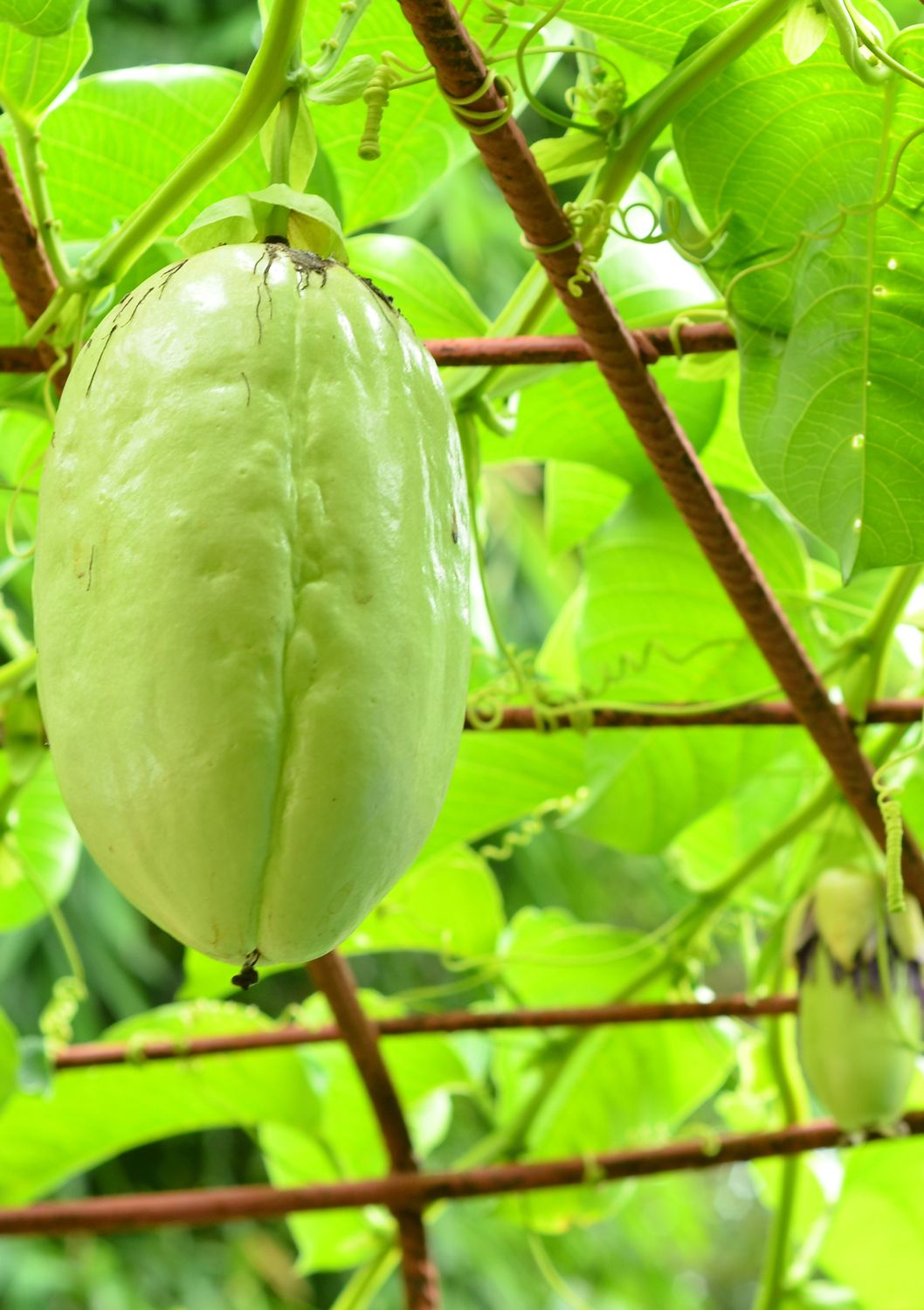
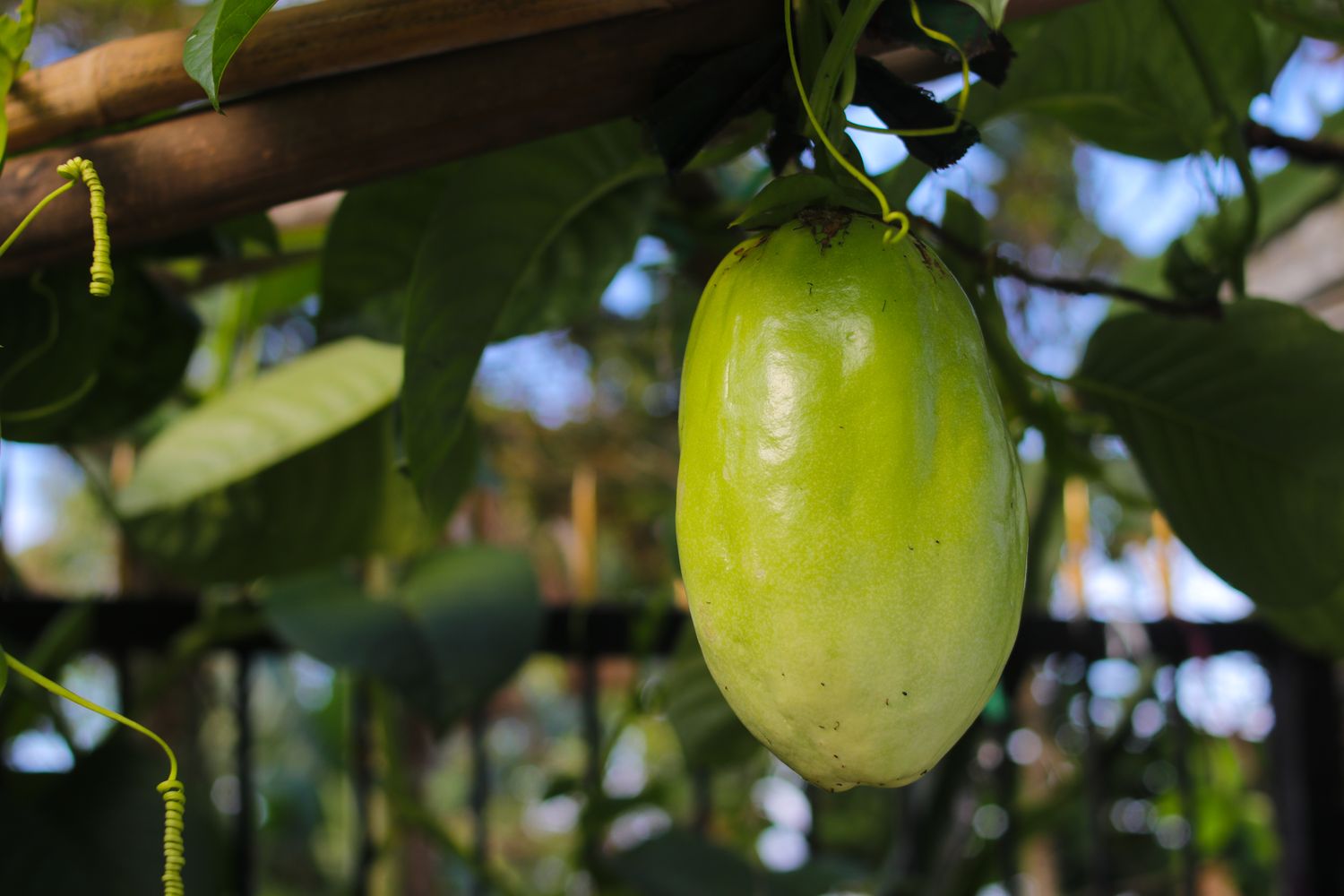
Passiflora quadrangularis is a massive tropical passionvine capable of producing spectacular fragrant flowers and the largest fruits known in the genus Passiflora - oblong, melon-sized fruits that may reach roughly 8-12 inches long. Inside is a combination rarely encountered among passion fruits: aromatic seed-filled pulp surrounded by a remarkably thick, edible inner flesh.
For tropical-fruit collectors, adventurous cooks and gardeners who enjoy unusual plants, Giant Granadilla offers an extraordinary combination of food production, botanical interest and dramatic ornamental value.
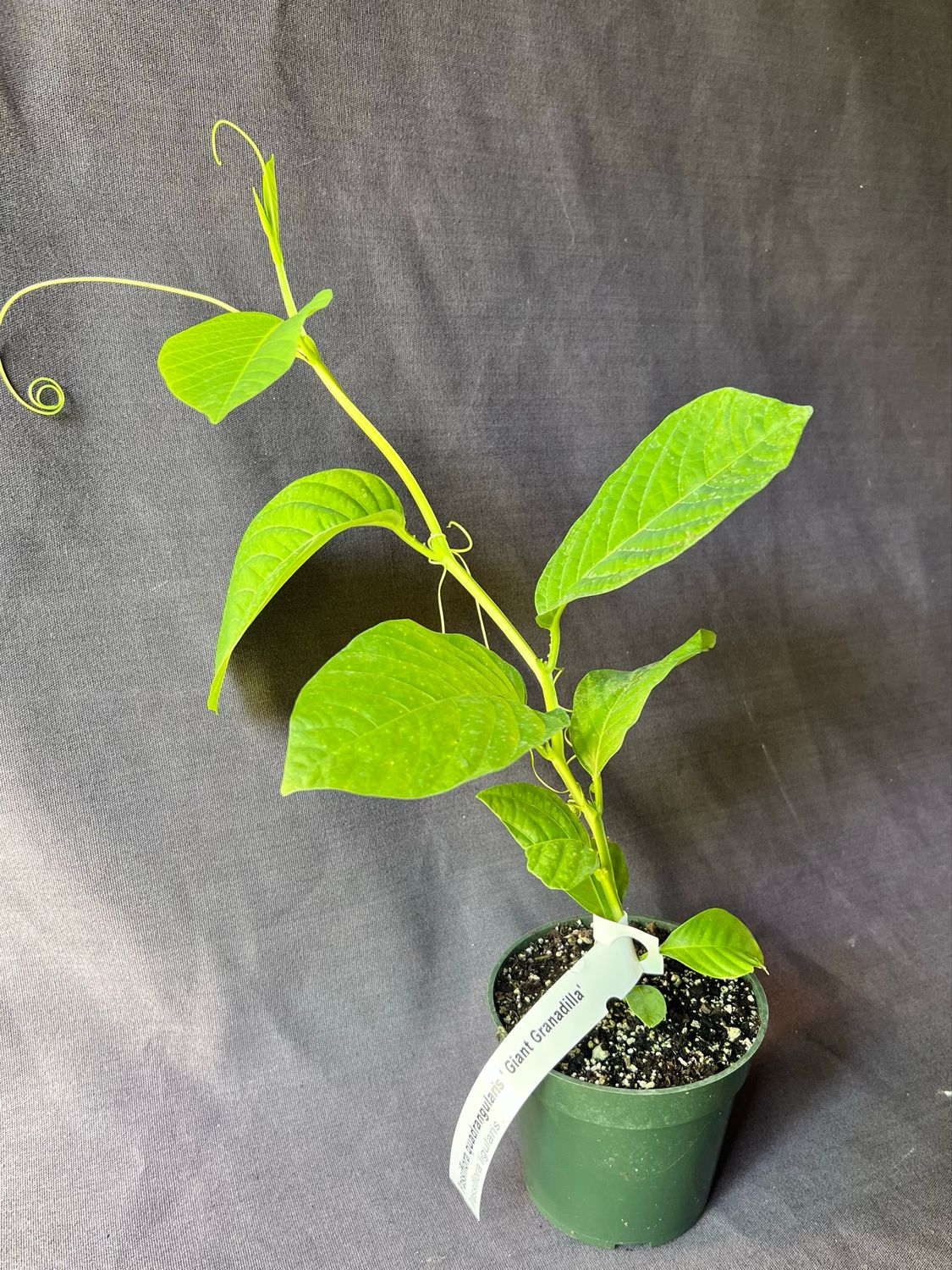
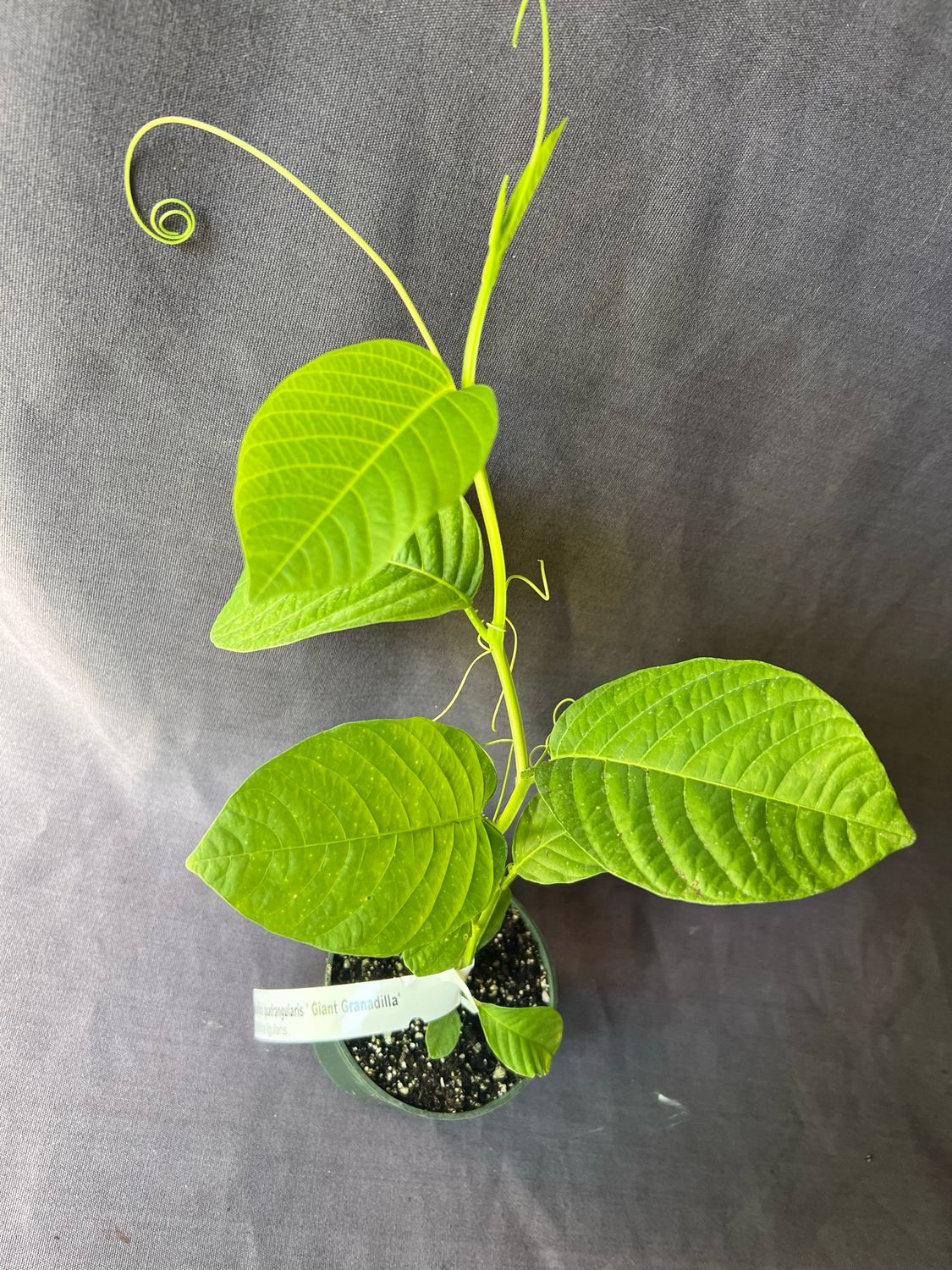
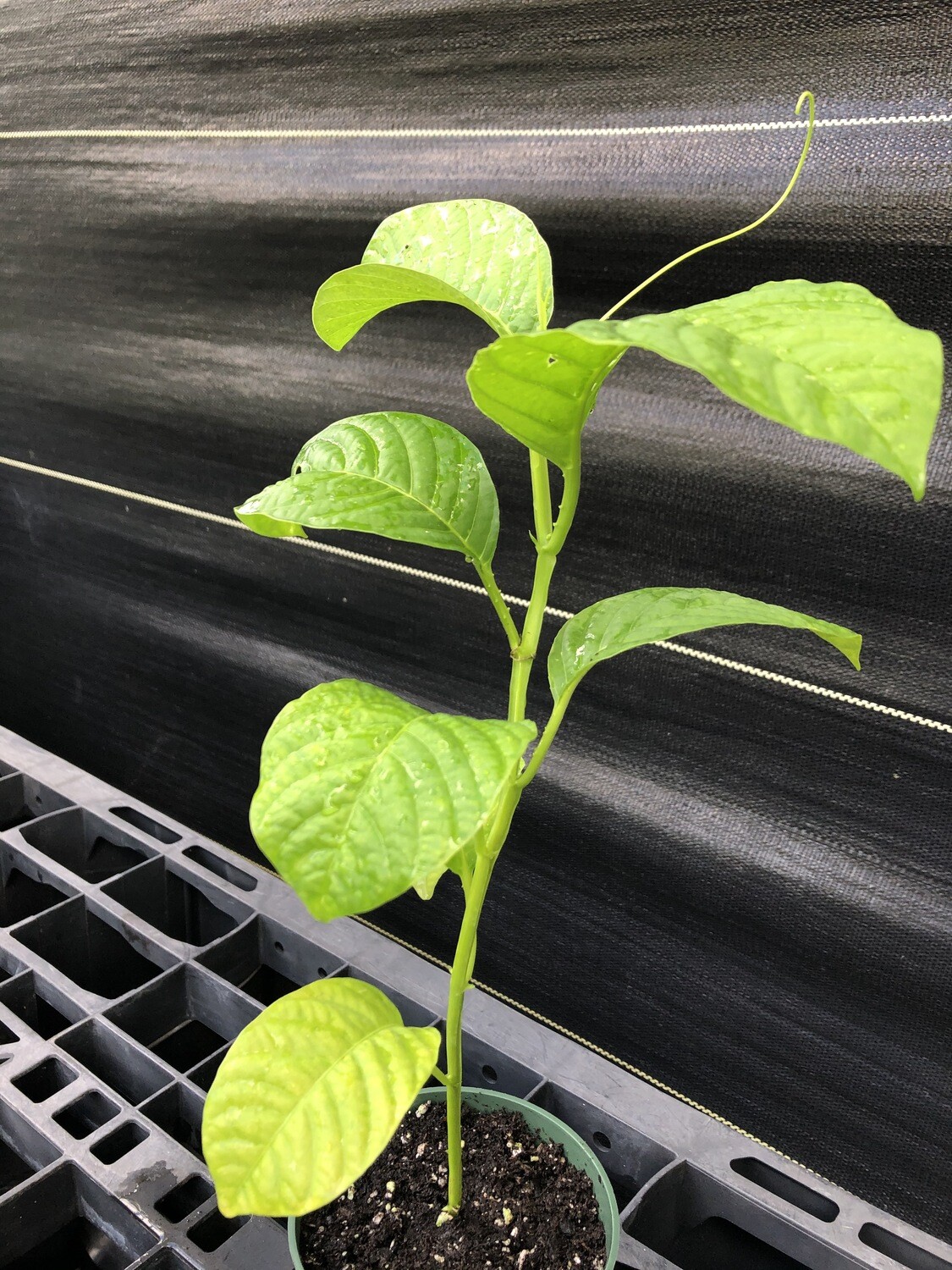
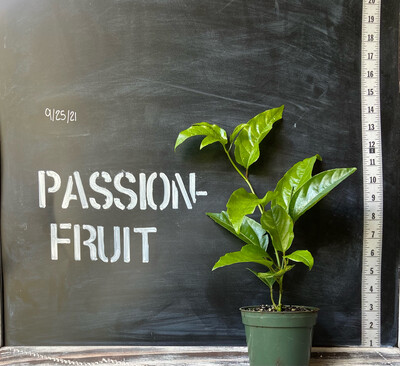
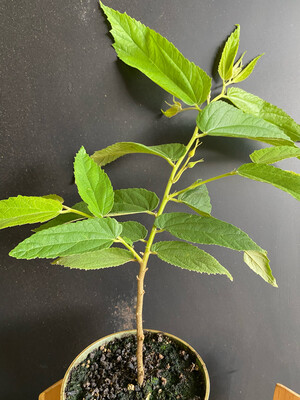
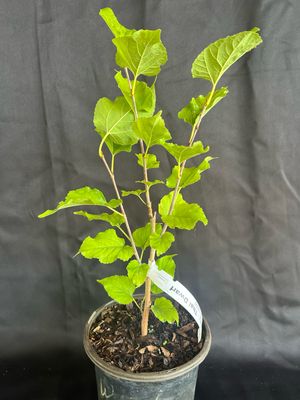
At GreenDreams, we offer young Giant Granadilla plants for shipping in 4-inch pots and may also have larger specimens available exclusively at our Spring Hill, Florida retail nursery. Retail inventory changes frequently, so in-person shoppers may find sizes and plants that are simply too large to ship.
🌿 Giant Granadilla Quick Facts
| Category | Details |
|---|---|
| Botanical Name | Passiflora quadrangularis L. |
| Common Names | Giant Granadilla, Giant Passion Fruit, Barbadine, Badea, Giant Tumbo, Grenadine, Parcha |
| Family | Passifloraceae |
| Plant Type | Vigorous tropical perennial climbing vine |
| GreenDreams Shipping Size | 4-inch starter pot |
| Retail Availability | Larger plants may be available seasonally at our Spring Hill nursery |
| Unpruned Vine Length | Commonly 30-50+ ft; potentially longer in ideal tropical conditions |
| Managed Size | Approximately 10-20 ft of trellis or arbor space with regular training and pruning |
| USDA Zones | Best adapted to Zones 10-12; experimental or protected culture in Zone 9 |
| Central Florida | Cold-sensitive; significant winter protection may be required |
| Sun | Full sun for strongest growth and fruiting |
| Growth Habit | Extremely vigorous tendril-climbing vine |
| Foliage | Evergreen in frost-free tropical conditions; may defoliate or die back after cold |
| Soil | Fertile, organic-rich, moist but well drained |
| Spacing | Approximately 8-12 ft between vines where permanent cultivation is appropriate |
| Support | Heavy-duty trellis, arbor or pergola strongly recommended |
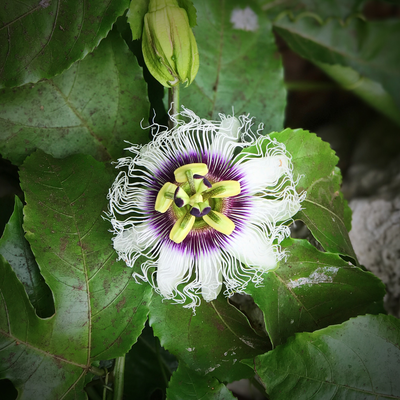
| Flowers | Large, fragrant, white, pink and purple passionflowers |
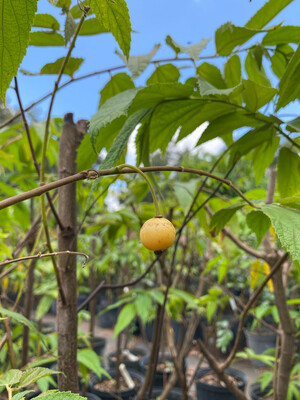
| Fruit | Large oblong green to yellow-green fruit, commonly 8-12 inches long |
| Pollination | Pollinator activity is important; hand pollination can improve fruit set |
| Container Culture | Possible, especially for overwintering, but requires a very large container |
| Indoor Growing | Possible as an overwintering strategy; indoor fruiting is considerably more difficult |
| Florida Ecological Status | UF/IFAS currently rates the species High Invasion Risk and does not recommend it for Florida landscapes |
Botanical references describe mature vines around 33-50 ft long, while tropical specimens can become substantially larger when allowed to climb trees.
🍈 Why Is Giant Granadilla So Unusual?
The name says a lot.
Giant refers to the fruit.
Quadrangularis refers to the plant's distinctive young stems, which are prominently four-angled or winged rather than round.
Those square stems are one of the easiest clues for distinguishing Passiflora quadrangularis from many other passionvines found in collections.
The vine also develops:
- Large, broad tropical leaves
- Thick, vigorous stems
- Strong curling tendrils
- Several visible nectar glands along the leaf petiole
- Large, heavily structured flowers
- Massive pendulous fruit
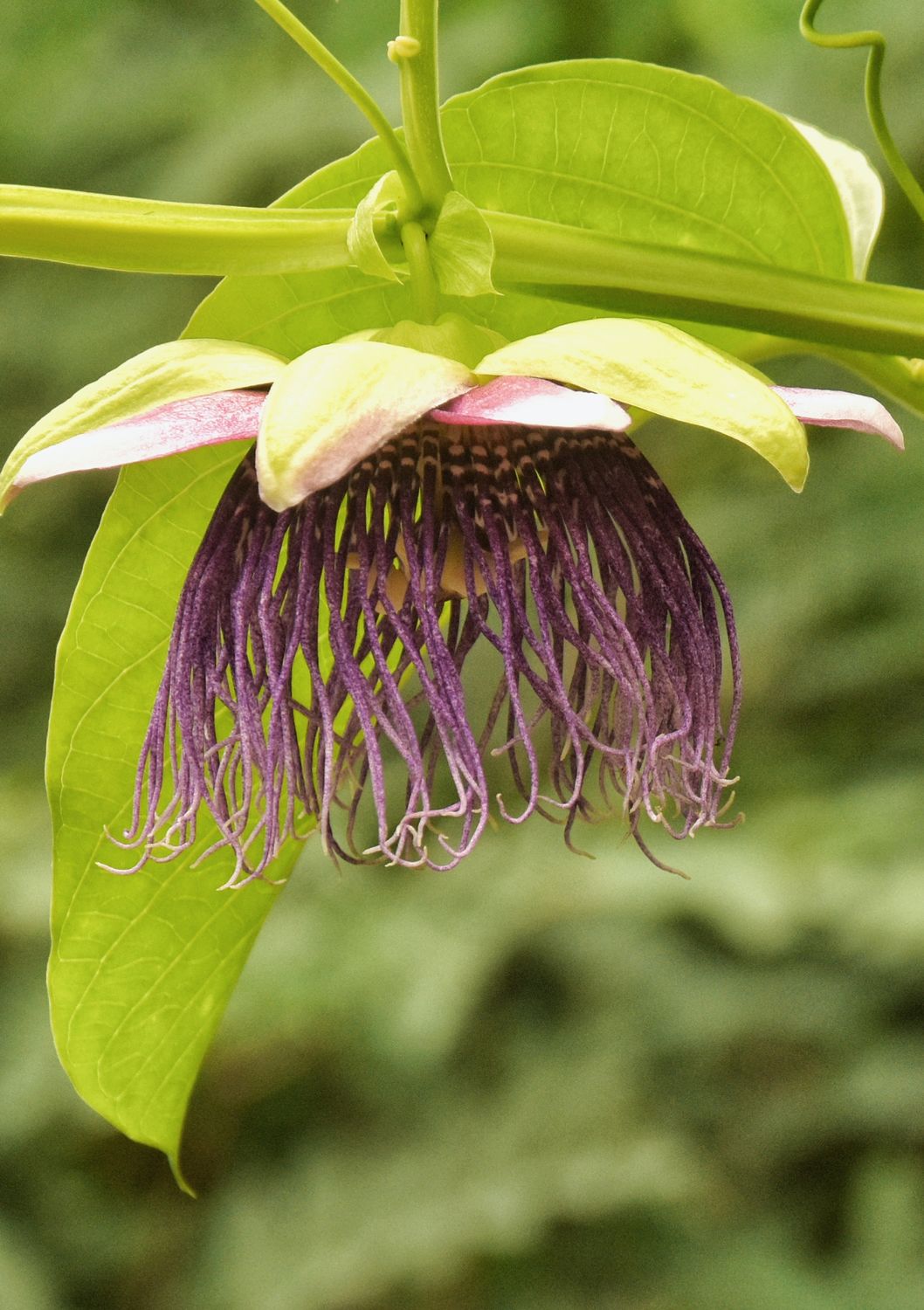
Kew describes the species as a robust perennial climber with four-angled stems and leaves commonly about 4-10 inches long. Flowers can reach roughly 4 inches or more across, displaying layers of white, pink, purple and reddish-purple structures.
It is one of those plants where the entire vine looks tropical - even before you get fruit.
🌎 From South America to Tropical Kitchens Around the World
Modern botanical records place the native range of Passiflora quadrangularis primarily from Colombia through Brazil. From tropical South America it traveled widely and is now cultivated or naturalized through parts of the Caribbean, Central America, Southeast Asia, India, Sri Lanka, tropical Africa, Pacific islands and other warm regions.
That long journey explains its collection of regional names.
You may hear it called:
- Badea in parts of Colombia and Ecuador
- Barbadine in Trinidad and Tobago
- Giant Granadilla
- Giant Passion Fruit
- Giant Tumbo
- Grenadine
- Parcha
- Maracuja-melao or melon passion fruit in Brazil
- Maracuja-acu, a Brazilian name associated with its enormous size
Brazil's Embrapa notes that P. quadrangularis has a particularly thick edible mesocarp - the pale flesh between the outer skin and central seed cavity - which distinguishes its culinary potential from many familiar passion fruits.
This is not simply an oversized version of supermarket passion fruit.
It is its own culinary experience.
🌸 Giant Granadilla Flowers: Worth Growing for the Blooms Alone
Before the fruit develops, you get one of the most spectacular displays in the passionflower world.
Flowers are typically:
- Large
- Highly structured
- Fragrant
- White to pink
- Purple and reddish-purple through the elaborate corona
- Produced individually on new vine growth
The ornate corona looks almost engineered.
Large fragrant flowers also offer another important clue about how the plant reproduces: they are designed to interact with visiting insects.
Carpenter bees, honeybees and other insects can contribute to pollination, depending on location.
🐝 More New Growth = More Potential Flowers
One of the most important things growers should understand is that passionflowers generally develop on new active growth.
A vine that becomes an enormous tangled mass of old stems is not necessarily more productive than a vine that is periodically renewed.
That is why trellis training and strategic pruning matter.
🍈 The Fruit: The Largest Passion Fruit of Them All
The fruit is the real conversation starter.
Kew botanical descriptions document fruits roughly 8-12 inches long and 5-6 inches across, while exceptional cultivated fruits may become melon-like in appearance.
Outside
Young fruit is generally:
- Green
- Smooth
- Heavy
- Elongated or oval
- Sometimes slightly ridged
As it matures, the skin becomes more yellow-green to yellowish.
Inside
Cut one open and you will see two distinctly different edible components.
1. Thick pale flesh / mesocarp
A broad layer of whitish flesh surrounds the central cavity.
The texture is firmer than ordinary passionfruit pulp and may be described as:
- Mild
- Soft when ripe
- Slightly sweet
- Melon-like
- Delicately flavored
2. Aromatic arils surrounding the seeds
The central seed mass provides more of the recognizable passionfruit character:
- Floral
- Aromatic
- Sweet-tart
- Juicy
- More intense than the pale flesh
The contrast is what makes Giant Granadilla interesting in the kitchen.
😋 What Does Giant Granadilla Taste Like?
This is where expectations matter.
If you expect the extremely concentrated acidity of purple passion fruit, Giant Granadilla may seem surprisingly mild.
Think:
melon + mild tropical sweetness + floral passionfruit aroma
rather than:
intensely sour passionfruit concentrate.
Traditional tropical-fruit literature frequently describes the white flesh as mild enough that it benefits from:
- Lime
- Lemon
- Orange
- Pineapple
- Sugar or honey
- Warm spices
- Other aromatic tropical fruits
The seed pulp supplies more of the characteristic passionfruit flavor.
That makes the fruit unusually versatile.
🍹 How Giant Granadilla Is Eaten Around the World
Several cultures discovered that this giant fruit works particularly well in beverages and desserts.
Traditional and documented uses include:
- Fresh fruit
- Juices
- Smoothies
- Syrups
- Cordials
- Sherbet
- Ice cream
- Fruit salad
- Jelly
- Jam
- Desserts
- Sweetened stewed fruit
- Pie filling
- Tropical beverages
The unripe fruit has also traditionally been cooked as a vegetable in parts of Southeast Asia.
In Trinidad and Tobago, where Giant Granadilla is commonly called barbadine, one particularly memorable preparation is Barbadine Punch - a chilled creamy drink incorporating the fruit with milk and warming spices such as cinnamon and nutmeg.
That may be one of the best introductions to the fruit for someone tasting it for the first time.
🥤 Recipe #1: Giant Granadilla Lime Cooler
A simple way to appreciate the fruit without hiding its natural flavor.
Ingredients
- 1 ripe Giant Granadilla
- 4 cups cold water
- Juice of 2 limes
- Honey, cane sugar or preferred sweetener to taste
- Ice
- Optional fresh mint
Directions
- Cut the ripe fruit lengthwise.
- Scoop out the aromatic seed pulp.
- Scoop some of the soft pale inner flesh away from the outer skin.
- Blend the pale flesh with cold water and lime.
- Briefly pulse in some seed pulp if desired.
- Strain if you prefer a smoother beverage.
- Sweeten to taste.
- Serve over ice.
Garden-to-glass tip: Lime is particularly helpful because the white flesh is intentionally mild.
🥛 Recipe #2: Caribbean-Inspired Barbadine Spice Punch
Inspired by the traditional use of Barbadine in Trinidad and Tobago.
Ingredients
- Approximately 2 cups ripe Giant Granadilla flesh
- 1-2 cups milk or preferred milk alternative
- 1 teaspoon vanilla
- 1/4 teaspoon cinnamon
- Pinch of nutmeg
- Sweetener to taste
- Ice
Directions
- Scoop the edible flesh from a ripe Giant Granadilla.
- Blend with milk until smooth.
- Add vanilla, cinnamon and nutmeg.
- Sweeten according to the ripeness of the fruit.
- Blend with ice.
- Serve very cold.
For a lighter version, replace part of the milk with coconut water.
🍲 Recipe #3: Savory Green Granadilla Coconut Curry
Immature Giant Granadilla has historically been cooked as a vegetable in parts of Asia.
Ingredients
- Firm immature Giant Granadilla
- 1 tablespoon coconut oil
- 1 small onion
- Garlic
- Fresh ginger
- Mild curry seasoning
- 1 can coconut milk
- Salt
- Lime
- Optional hot pepper
- Fresh herbs for serving
Directions
- Peel the immature fruit and remove the central seed cavity.
- Cut the firm flesh into bite-sized cubes.
- Saute onion, garlic and ginger in coconut oil.
- Add curry seasoning.
- Add fruit cubes and coconut milk.
- Simmer until the fruit becomes tender.
- Season with salt and fresh lime.
- Serve with rice.
When experimenting with immature fruit, use only accurately identified Passiflora quadrangularis fruit and follow established culinary practices.
🧬 Nutritional & Traditional Medicinal Interest
Giant Granadilla has a long history as both a food plant and a folk-medicine plant.
Historic compositional analyses report the fruit as a source of:
- Vitamin C
- Niacin
- Calcium
- Phosphorus
- Iron
- Carbohydrates
- Small amounts of protein
- Various plant phenolic compounds
Exact nutrient levels vary with fruit maturity, plant genetics, growing conditions and which portion of the fruit is analyzed.
🌿 What About Medicinal Uses?
Various Passiflora species have extensive ethnobotanical histories. Compounds reported across the genus include flavonoids, phenolic compounds, glycosides and alkaloids. P. quadrangularis itself has appeared in folk medicinal traditions, including sedative applications.
Embrapa also notes research involving aqueous extracts from P. quadrangularis leaves and peel.
However:
Traditional use does not automatically establish medical safety or effectiveness.
We recommend growing Giant Granadilla primarily as an edible fruit and botanical specimen, not treating it as a home medication.
⚠️ Important Food-Safety Caution
The ripe edible fruit is the portion of this plant we recommend customers focus on.
Historical references describe the raw roots as narcotic or poisonous, and the broader Passiflora genus is known to contain biologically active compounds in various plant tissues.
For that reason:
- Do not eat the roots.
- Do not experiment casually with medicinal doses of leaves, roots or other vegetative portions.
- Do not assume every part of a passionvine is edible simply because its fruit is edible.
- Keep unfamiliar plant material away from children and pets.
- Correct botanical identification matters.
🐝 How to Get Giant Granadilla to Fruit
A giant healthy vine does not automatically mean giant fruit.
Fruit production depends on several things happening together.
1. Plenty of Sun
Aim for full sun, ideally 6-8+ hours.
Shade promotes vine growth but can reduce flowering and fruiting.
2. Mature Active Growth
Flowers develop along fresh vine growth.
Train the plant rather than allowing it to become a dense ball of old vines.
3. Consistent Moisture
Drought stress can reduce:
- Flower production
- Fruit set
- Fruit size
- Vine growth
But saturated roots create an entirely different set of problems.
Think:
consistently moist - not constantly wet.
4. Good Pollination
This deserves special attention.
Research and horticultural observations are somewhat variable regarding self-compatibility in P. quadrangularis. Some studied populations have demonstrated self-compatibility, while growers in other locations report improved production from insects, hand pollination or additional compatible vines.
The practical recommendation is simple:
If your vine flowers heavily but produces little fruit, hand pollinate.
Late morning is generally a good time.
Transfer pollen from the anthers onto the receptive stigma using:
- A fingertip
- Cotton swab
- Small clean brush
Field references recommend pollination within several hours after flowers open.
🐝 Encourage Big Bees
Carpenter bees are particularly effective pollinators for many passionflowers because their bodies are large enough to contact the reproductive structures.
Avoid broad-spectrum insecticides during bloom.
🍈 How Much Fruit Will Giant Granadilla Produce?
There is no honest single-number answer.
Production varies considerably according to:
- Vine age
- Climate
- Sun
- Pollination
- Irrigation
- Nutrition
- Pruning
- Pest pressure
- Genetics
An interesting physiological characteristic reported for Giant Granadilla is that fruit set can occur in waves. Once several fruits are developing, additional flowers may temporarily stop setting until the first fruit approach maturity.
So instead of judging the plant by the number of flowers alone, look for successive flushes of flowers and fruit development.
📅 When Does Giant Granadilla Fruit?
In truly tropical climates, flowering and fruiting can occur over a long season.
For Florida and the subtropical Southeast, production is much more dependent on the length of warm weather.
South Florida & the Florida Keys
Expect the greatest potential for extended flowering and fruit development from:
spring through fall and potentially into early winter, depending on temperatures.
Central Florida
Warm-season growth may be explosive, but winter becomes the limiting factor.
A productive cycle may look like:
spring growth -> summer flowers -> summer/fall fruit -> winter slowdown or cold injury
Colder Regions
The challenge isn't simply growing the vine.
The challenge is maintaining enough uninterrupted warm weather for:
- Vegetative growth
- Flower development
- Pollination
- Fruit enlargement
- Ripening
That is why gardeners in colder states can successfully grow spectacular vines without necessarily harvesting mature fruit.
🌡 USDA Zones: What They Really Mean for Giant Granadilla
🌴 Zones 10-12 - Best Outdoor Climate
Examples include:
- Extreme South Florida
- Florida Keys
- Warm coastal portions of South Florida
- Warm coastal Southern California microclimates
- Warm portions of South Texas
- Other nearly frost-free subtropical areas
This is where Giant Granadilla has the best opportunity to function as a true perennial.
🌿 Zone 9 - Collector / Protected Culture
Examples include much of:
- Central Florida
- Gulf Coast Florida
- Portions of coastal Texas
- Louisiana Gulf Coast
- Warm pockets along the northern Gulf region
- Inland Southern California and Arizona microclimates
This is where things become adventurous.
A Giant Granadilla may grow spectacularly during the warm season, but cold events can:
- Stop growth
- Yellow foliage
- Cause defoliation
- Kill tender stems
- Damage the vine to the ground
Central Florida growers should think of it as a tender tropical perennial rather than a reliably cold-hardy perennial.
❄️ Zones 8 and Colder
Outdoor year-round survival is not the objective.
Grow it as:
- A warm-season tropical vine
- A container specimen
- A greenhouse plant
- An overwintered collector plant
The Royal Horticultural Society recommends protected culture and warm winter temperatures for P. quadrangularis, underscoring just how tropical the species really is.
🌿 Perennial vs. Annual: What Does That Mean?
Giant Granadilla is botanically a perennial.
That means the plant naturally survives for multiple growing seasons where climate allows.
But perennial status is climate-dependent in practice.
A mango tree is perennial too - but planting one outside in Minnesota does not make the Minnesota winter tropical.
For Giant Granadilla:
- Tropical climate: perennial evergreen vine
- Warm subtropical climate: perennial but vulnerable to winter damage
- Marginal subtropical climate: may repeatedly die back
- Temperate climate: container-grown tropical or warm-season annual unless overwintered
This distinction is particularly important when shopping for unusual tropical plants online.
❄️ Overwintering Giant Granadilla
For growers outside reliable tropical climates, there are several approaches.
Option 1 - Protect an In-Ground Vine
Before cold weather:
- Mulch the root zone heavily
- Protect the crown
- Reduce drought stress before a freeze
- Shield young vines from cold north winds
- Use frost cloth over manageable sections
- Avoid heavy pruning immediately before cold weather
After a freeze, wait before assuming the plant is dead.
Cold-damaged growth may look terrible while the lower stem and roots remain alive.
Prune confirmed dead material after the danger of additional severe freezes decreases.
Option 2 - Grow in a Large Container
Move the plant into:
- Heated greenhouse
- Bright sunroom
- Protected patio
- Other frost-free environment
Option 3 - Keep a Backup Cutting
Passionvines can be propagated vegetatively from healthy vine sections.
For collectors pushing the climatic limits, keeping a rooted backup plant provides inexpensive insurance.
🪴 Can Giant Granadilla Grow in a Container?
Yes - but understand what you're putting in the pot.
This is genetically programmed to be an enormous vine.
A 4-inch starter plant may look innocent.
It will not remain innocent.
For prolonged container culture, work toward approximately a:
20-30+ gallon container, with larger volumes preferred when trying to fruit the vine.
You will also need:
- Very strong trellising
- Excellent drainage
- High-quality potting media
- Regular irrigation
- Regular feeding
- Aggressive pruning
- Room for roots
- Room for vines
Avoid placing a small pot underneath an enormous mature canopy.
The larger the canopy becomes, the harder a small root volume has to keep the plant hydrated.
🏠 Can Giant Granadilla Be Grown Indoors?
Technically, yes.
Practically, it wants to become a small jungle.
Indoor growing works best when "indoors" means:
- Greenhouse
- Conservatory
- Large sunroom
- Heated porch
- Serious grow-light setup
A normal household window generally provides enough light for survival but not necessarily abundant flowering and fruit production.
Indoor plants also lose access to their normal pollinator community.
If flowers develop inside, hand pollination may become essential.
🌞 Where Should You Plant Giant Granadilla?
The perfect site needs more than sunshine.
You need to think in three dimensions.
Choose
- ✅ Full sun
- ✅ Excellent drainage
- ✅ Irrigation access
- ✅ A heavy-duty arbor or trellis
- ✅ Plenty of overhead room
- ✅ Air circulation
- ✅ Easy access for pruning and harvesting
Avoid
- ❌ Small ornamental trellises
- ❌ Wooden structures already deteriorating
- ❌ Drainage depressions
- ❌ Areas immediately beside septic equipment
- ❌ Locations where vines can reach utility lines
- ❌ Weak fences
- ❌ Allowing it to climb valuable fruit trees
- ❌ Allowing it to escape into adjacent natural areas
A mature fruit-loaded vine can become very heavy.
Build the support for the plant you expect in two years - not the plant you are holding today.
🌱 Planting Giant Granadilla the GreenDreams Way: High & Tight
Good drainage starts at planting.
We prefer planting tropical fruiting plants high & tight rather than burying the root system too deeply.
Step 1 - Dig Wide, Not Deep
Dig the planting hole only slightly wider than the container.
The finished soil line should remain at approximately the same level as the root ball - or slightly high where drainage is questionable.
Step 2 - Never Bury the Crown
Do not sink the stem deeper into the ground.
Deep planting encourages:
- Poor root oxygen
- Stem rot
- Crown problems
- Waterlogging
Step 3 - Backfill Firmly
Use the existing soil supplemented appropriately for the site rather than creating a soft buried "pot" of highly amended soil.
Pack soil firmly enough to eliminate major air pockets.
Step 4 - Top Dress
We commonly build fertility from the surface with materials such as:
- Finished compost
- Biochar
- Azomite or other appropriate mineral amendments
- Organic plant nutrients
Amend according to your existing soil rather than treating every site identically.
Step 5 - Mulch Broadly
Add approximately 2-4 inches of hardwood mulch around the root zone.
Keep mulch several inches away from the actual stem.
Think:
mulch the soil - not the trunk.
🎥 GreenDreams High & Tight Planting Method:
https://youtu.be/RRQFY30qdA8?si=rRIcsbLlVAVYotfI
💧 Watering Giant Granadilla
Giant Granadilla appreciates moisture.
It does not appreciate suffocating roots.
Immediately After Planting
Water thoroughly to settle the soil.
During the first couple of weeks, check moisture daily, particularly with a small 4-inch starter plant.
A newly planted starter does not yet have an extensive root system.
Establishment
Gradually reduce irrigation frequency as roots move outward.
Depending on temperature, rainfall, soil and container size, young vines may still require water several times per week.
Established Vine
Water deeply enough to maintain even soil moisture without maintaining permanent saturation.
UF/IFAS guidance for passion fruit favors small, relatively frequent irrigation that keeps moisture available without waterlogging the root zone.
💡 Remember
A vine loaded with hundreds of square feet of leaves can lose water very quickly.
Container-grown plants dry especially fast.
🌾 Feeding Giant Granadilla Organically
This is a fast-growing plant.
Fast growth requires nutrition - but too much nitrogen creates another problem:
a beautiful wall of leaves with fewer flowers.
UF/IFAS passionfruit guidance recommends stronger vegetative nutrition during establishment, followed by reduced nitrogen once the plant reaches productive age.
A GreenDreams-style fertility program may include:
- Finished compost
- Worm castings
- Biochar incorporated into the soil-building program
- Balanced organic tropical-fruit fertilizer
- Trace mineral amendments where testing indicates need
- Hardwood mulch decomposing over time
First Year
Focus on:
- 🌱 Roots
- 🌿 Structural vine growth
- 🪵 Trellis establishment
Mature Fruiting Vine
Shift toward:
- 🌸 Flowering
- 🐝 Pollination
- 🍈 Fruit development
Do not continually hammer a mature vine with high nitrogen.
✂️ How to Train and Prune Giant Granadilla
Pruning is not optional if you want this vine accessible.
Training a Young Plant
Choose one strong primary shoot.
Guide it vertically toward the main support.
Once it reaches the upper wire or arbor:
- Direct primary laterals horizontally.
- Allow productive shoots to hang downward.
- Maintain access through the canopy.
This resembles the curtain trellis system used for commercial passionfruit production.
Why Pruning Improves the Plant
An unmanaged vine develops:
- Tangled internal stems
- Dead leaves
- Shaded old growth
- Reduced airflow
- Difficult harvesting
- Increased disease pressure
Annual Cleanup
Remove:
- Dead vines
- Weak growth
- Broken stems
- Diseased material
- Excessively tangled interior vines
Then shorten selected vigorous growth to encourage new flowering shoots.
✂️ Best Time
In Florida-type climates, major structural pruning is best coordinated with the end of the cool season and the start of renewed spring growth rather than immediately before a freeze.
Disinfect pruning tools between plants when disease is suspected.
🗓 Giant Granadilla Seasonal Care Wheel - Florida & Similar Climates
| Season | What the Plant Is Doing | What You Should Do |
|---|---|---|
| 🌱 Spring | Strong vegetative flush begins | Prune dead wood, train vines, fertilize, repair trellis, increase watering |
| ☀️ Summer | Explosive growth, flowering, fruit development | Maintain moisture, monitor pollinators, hand pollinate if needed, watch mites and stink bugs |
| 🍈 Fall | Fruit maturation may continue | Harvest mature fruit, keep irrigation consistent, reduce excessive nitrogen |
| ❄️ Winter | Growth slows; cold damage possible | Protect vines, reduce fertilizer, reduce irrigation according to weather, postpone heavy pruning until freeze risk passes |
🌸 Harvesting: How Do You Know Giant Granadilla Is Ripe?
Do not judge maturity on size alone.
A giant green fruit may look ready long before the interior has reached full flavor.
Look for a combination of:
- Increasing yellow or yellow-green coloration
- Developed aroma
- Full-size fruit
- Slight change in firmness
- Mature fruit detaching more readily
Underripe passion fruits generally have inferior aroma and flavor compared with mature fruit.
With a fruit this unusual, the first harvest may require some experimentation.
That is part of the fun.
🌿 Ornamental Uses in the Landscape
Even without fruit, Giant Granadilla can create a dramatic tropical feature.
Potential applications include:
Pergola Cover
Train the vine over a heavy structure to create a shaded tropical canopy.
Edible Arbor
One of the most dramatic applications.
Fruit hangs beneath the canopy where it can be inspected and harvested.
Tropical Courtyard Feature
The huge leaves and flowers work beautifully near a patio where the flowers can be appreciated up close.
Screening
The vine can cover a large structure surprisingly quickly.
However, vigorous growth is precisely why placement and containment matter.
Do not simply release this vine into an existing tree canopy.
🐝 Companion Plants & Ecological Growing
The best companions are plants that help the Giant Granadilla without competing for its trellis.
Consider low-growing flowering plants that support:
- Carpenter bees
- Native bees
- Beneficial insects
Choose species appropriate to your local ecosystem.
Avoid allowing the vine to climb:
- Native trees
- Young fruit trees
- Shrubs
- Pollinator plantings
Its vigorous canopy can shade and smother smaller plants.
A good Giant Granadilla "guild" is therefore less about densely stacking plants and more about:
strong containment + soil health + nearby pollinator habitat.
⚠️ IMPORTANT FLORIDA NOTE: Current UF/IFAS Invasion-Risk Assessment
This is an important update for Florida growers.
In 2025, the University of Florida/IFAS Assessment of Non-Native Plants in Florida's Natural Areas classified Passiflora quadrangularis as:
HIGH INVASION RISK
for:
- North Florida
- Central Florida
- South Florida
UF/IFAS states that the species is not recommended for Florida gardening because of its predicted potential to escape cultivation and affect native vegetation.
This is different from saying the plant is universally prohibited by law.
However, it is a serious ecological consideration and should be part of an informed purchasing decision.
If You Already Maintain Giant Granadilla
Responsible management includes:
- Keep the vine confined to a dedicated structure.
- Do not allow it to grow into nearby native vegetation.
- Harvest fruit promptly.
- Do not dump fruit or seed into natural areas.
- Remove unwanted seedlings.
- Monitor property boundaries.
- Never intentionally introduce it into unmanaged ecosystems.
For Florida ecological landscaping projects, GreenDreams can also help growers select native or lower-risk alternatives when ecosystem function is the primary goal.
🐛 Troubleshooting Giant Granadilla
Icons represent common issues and organic-minded recovery strategies.
| ⚠️ Issue | 🧠 Likely Cause | 🌿 What to Do |
|---|---|---|
| 🍂 Yellow leaves | Excess water, poor drainage, nutrient imbalance or seasonal stress | Check soil moisture before fertilizing; improve drainage |
| 🫣 Curling or deformed leaves | Mites, water stress or weather | Inspect leaf undersides; improve irrigation consistency |
| 🌱 Huge vine but few flowers | Excess nitrogen or insufficient sun | Reduce nitrogen; increase light; selectively prune |
| 🌸 Many flowers but no fruit | Poor pollination | Encourage bees and hand pollinate flowers |
| 🍈 Small or poorly filled fruit | Incomplete pollination or water stress | Improve pollination and maintain even moisture |
| 🍃 Fruit drop | Stress, incomplete pollination or changing weather | Maintain steady moisture; avoid excessive fertilization |
| 💦 Wilting in wet soil | Root disease or oxygen-starved roots | Reduce irrigation and improve drainage immediately |
| 💧 Wilting in dry soil | Large canopy exceeding available moisture | Water deeply; enlarge mulch zone |
| 🕷️ Fine stippling or distorted foliage | Spider mites | Encourage predators; use labeled organic controls when appropriate |
| 🐛 Chewed foliage | Caterpillars or other chewing insects | Inspect first; tolerate modest feeding when possible |
| 🍄 Stem decline or sudden wilt | Possible Fusarium, Phytophthora or other root/crown disease | Improve drainage; remove severely affected material |
| 🍃 Mosaic or distorted foliage | Possible viral infection | Avoid propagating affected plants; remove severely symptomatic vines |
| ❄️ Blackened growth after freeze | Cold injury | Wait for damage to declare itself, then prune dead tissue |
| 🌿 Vine escaping trellis | Natural vigorous growth | Prune immediately and maintain containment |
Passionfruit crops in Florida can experience mites, stink bugs, nematodes, Fusarium, Phytophthora, Alternaria and viral diseases, making drainage, sanitation, airflow and pest observation extremely important.
🌿 Organic Pest Management: Start With the Ecosystem
Before reaching for a spray:
- Inspect the plant.
- Identify the actual pest.
- Determine whether the damage is significant.
- Support beneficial predators.
- Improve plant health.
- Use the least disruptive effective control.
This is especially important when flowers are open.
The bees you need for fruit production may also be harmed by poorly timed pest treatments.
Even organically labeled pesticides should be used carefully around active pollinators.
🌱 Is Giant Granadilla Right for You?
✅ Great Choice For
- Rare tropical fruit collectors
- Passionflower enthusiasts
- Warm-climate gardeners
- Greenhouse growers
- Adventurous cooks
- Gardeners with substantial trellis space
- People fascinated by botanical oddities
- Growers willing to prune aggressively
- Growers prepared to monitor and contain the plant responsibly
❌ Probably Not Ideal For
- Tiny garden spaces
- Weak fences
- Low-light locations
- Poorly drained sites
- Gardeners wanting a maintenance-free vine
- Cold climates without overwintering space
- Sites bordering unmanaged natural areas
- Florida ecological restoration projects where non-native escape risk is unacceptable
❓ Giant Granadilla FAQ
Is Giant Granadilla the same as regular passion fruit?
No. Giant Granadilla is Passiflora quadrangularis. The common commercial purple and yellow passion fruits are generally forms of Passiflora edulis.
They are related but distinctly different plants.
Is Giant Granadilla really the world's largest passion fruit?
It is widely recognized as producing the largest fruit in the genus Passiflora.
Individual fruits commonly reach several pounds under good tropical conditions and may approach roughly one foot long.
Can you eat Giant Granadilla fruit?
Yes.
The ripe seed pulp is edible, and unlike most familiar passion fruits, its thick pale mesocarp is also traditionally eaten.
Does Giant Granadilla taste like regular passion fruit?
Somewhat, but usually milder.
The seed pulp carries more passionfruit character, while the thick white flesh is comparatively mild, lightly sweet and melon-like.
How long does Giant Granadilla grow?
In tropical conditions, vines commonly reach 30-50+ ft, potentially considerably longer when climbing trees.
For home cultivation, pruning and trellising are strongly recommended.
Can Giant Granadilla grow in Florida?
Climatically, yes - particularly in South Florida and other warm microclimates.
However, UF/IFAS currently classifies Passiflora quadrangularis as High Invasion Risk throughout Florida and does not recommend it for Florida landscapes.
Florida growers should take that current ecological assessment seriously.
Will Giant Granadilla grow in Central Florida?
It can grow vigorously during Central Florida's warm season, but winter cold can cause major damage.
It should be viewed as a cold-sensitive tropical collector plant, not a reliably hardy Zone 9 vine.
Does Giant Granadilla survive frost?
It is tropical and frost-sensitive.
Brief cold events may damage foliage and stems, while severe or prolonged freezes can kill large portions of the vine.
Can Giant Granadilla be grown in pots?
Yes.
But because it is extraordinarily vigorous, long-term culture requires a very large container, strong support, irrigation, nutrition and regular pruning.
Why is my Giant Granadilla flowering but not fruiting?
Pollination is one of the first things to investigate.
Hand pollination can substantially improve results where natural pollinators are absent or inconsistent.
Also evaluate:
- Sun
- Irrigation
- Nitrogen levels
- Vine maturity
- Overall plant health
Does Giant Granadilla need two vines?
Not always.
Self-compatibility appears to vary among plant material and populations. Because fruit set can be inconsistent, growers seeking dependable crops may benefit from hand pollination and, where practical, genetically different compatible flowering material nearby.
Can Giant Granadilla grow indoors?
Yes as a collector or overwintering plant, particularly in a greenhouse or bright conservatory.
Producing mature fruit indoors is significantly more challenging because of light, space and pollination requirements.
🛒 Shop Giant Granadilla From GreenDreams
Looking for something beyond the same fruit plants found at every garden center?
Giant Granadilla is exactly the kind of plant we love introducing to adventurous growers.
GreenDreams specializes in edible, ecological, tropical, subtropical, native and genuinely useful plants from around the world.
📦 Available for Shipping
Our Giant Granadilla currently ships in an economical:
4-inch starter pot
We ship live plants via UPS Ground across the continental United States.
Because this is a small tropical starter plant, the 4-inch size is particularly well suited to customers in:
- Florida
- The Southeastern United States
- Texas
- Other warm regions
Small 4-inch plants dry faster and experience greater temperature swings during shipping than larger containers.
Customers in northern or western states should consider seasonal temperature extremes before ordering. Plant quality cannot always be guaranteed following unusually hot or cold long-distance transit.
When larger shipping sizes become available, they are generally preferable for growers looking for a more established plant.
🏡 Shop Giant Granadilla & More at Our Spring Hill Nursery
Shopping in person opens up an entirely different GreenDreams collection.
We frequently carry larger plant sizes that cannot practically be shipped, along with fruit trees, edible perennials, herbs, native plants, pollinator species, tropical plants and ecological landscape material.
📍 GreenDreams Nursery & Farm
18709 Hwy. 41
Spring Hill, FL 34610
Tuesday-Friday: 9 AM-5 PM
Saturday: 8 AM-3 PM
Inventory and sizes change constantly, so every visit is a little different.
🌿 Come see what's growing.
🌳 Need Help Building More Than a Garden?
GreenDreams does much more than sell plants.
We help Florida growers build landscapes designed around food production, ecological function and long-term usefulness.
🌱 Consultation
Need help determining what belongs where?
Our consultations can help with:
- Plant selection
- Site planning
- Food forests
- Fruit-tree placement
- Soil improvement
- Existing landscape problems
- Irrigation strategy
- Long-term management
✏️ Ecological & Edible Landscape Design
We design customized landscapes using combinations of:
- Fruit trees
- Perennial vegetables
- Native plants
- Pollinator habitat
- Herbs
- Groundcovers
- Support species
- Useful tropical plants
🌳 Installation
Our field crews can turn the plan into an established landscape.
🧤 Project & Day-Labor Assistance
Already know what you want but need experienced hands?
We offer project assistance for growers who need help implementing their own gardens and landscapes.
🚚 Bulk Plants, Mulch, Compost & Soil Amendments
GreenDreams also provides delivery options for larger projects, including combinations of:
- Bulk plant orders
- Compost
- Hardwood mulch
- Biochar
- Garden amendments
- Soil-building materials
The goal isn't simply to put plants into the ground.
It's to build landscapes that become more productive, resilient and useful with time.
🌿 IMPORTANT INFORMATION BEFORE PURCHASING LIVE PLANTS
Please note: Plants purchased through our online store are not available for pickup at our retail nursery in Spring Hill, Florida.
Online inventory is housed at a separate facility and is priced, prepared, and handled exclusively for shipping.
🌱 Looking for larger plants or more selection?
Our retail nursery location offers far more availability, including larger sizes, specialty plants, and many selections not suitable for nationwide shipping.
Local pickup is available for retail nursery purchases only.
Visit our Spring Hill, FL retail nursery page to explore in-person shopping options.
🚚 LIVE PLANT SHIPPING & TRANSIT EXPECTATIONS
Live plants naturally experience stress during shipping. Temporary leaf drop, mild wilting, or cosmetic stress is normal after transit. Most plants recover quickly with proper watering, gradual light exposure, and basic aftercare. Some plants may require additional attention during the first few weeks.
Despite careful packing, minor cosmetic damage may occur during transit. Small issues such as broken leaves or stems typically resolve with time and proper care.
If your shipping box arrives with significant external damage, please contact UPS within 30 days to initiate a carrier claim.
⏱️ SHIPPING METHOD, TIMING & TRANSIT WINDOWS
All online orders ship via UPS Ground from our Central Florida nursery.
📦 Shipping Schedule: Orders ship once weekly on Mondays to reduce the risk of packages sitting in transit over weekends. A countdown clock on our website displays the next shipping date.
🚚 Typical Transit Times:
-
Florida: 1–2 days
-
Southern U.S.: approximately 2 days
-
Midwest, West & Northern U.S.: 3–5 business days
Long-distance shipments, particularly to the western U.S., may experience additional transit time due to agricultural inspections in states such as Arizona, California, and Texas.
Extended transit times can be more challenging for small or tender plants and may require additional recovery care after arrival.
🌡️ EXTREME WEATHER & SEASONAL RISK
Live plants are sensitive to temperature extremes.
We cannot guarantee plant condition during periods of extreme summer heat or winter cold and freezing temperatures. Weather-related delays, carrier interruptions, or exposure during delivery are beyond our control.
Customers are responsible for:
-
Monitoring tracking information sent via email
-
Retrieving packages promptly upon delivery
-
Preventing plants from being left outdoors in extreme conditions
During unsafe weather, holiday shipping volume, or extended transit risk, orders may be held and shipped the following week to protect plant health.
⚠️ CUSTOMER RESPONSIBILITY & REFUND POLICY
By purchasing live plants, customers acknowledge and accept the risks associated with shipping, weather exposure, transit delays, and regional suitability.
Refunds or replacements are considered only under exceptional circumstances and in accordance with our return and refund policy. We are not responsible for:
-
Weather-related damage
-
Carrier delays
-
Poor plant selection for a given climate or region
-
Improper care after delivery
Upon purchase, customers assume full responsibility for the ongoing care and success of their plants.
✅ CONSENT & AGREEMENT
By completing a purchase, you confirm that you have read, understand, and agree to all shipping policies, responsibilities, and conditions outlined above.
Our goal is transparency, plant health, and long-term growing success — and we appreciate your understanding and care when ordering live plants.


