


🌿 Surinam Spinach Growing Guide: How to Grow, Harvest & Cook Talinum fruticosum

The Heat-Loving Waterleaf That Keeps Producing When Ordinary Spinach Gives Up
Traditional spinach sees a Florida summer coming and immediately starts planning its exit.
Surinam Spinach—also called Waterleaf—takes the opposite approach.
This fast-growing tropical vegetable produces tender, succulent leaves through warm, humid weather. It tolerates partial shade, responds quickly to repeated harvesting, grows well in containers, and can turn an underused corner of the garden into a dependable source of cooked greens.
Surinam Spinach is not a true creeping spinach or traditional groundcover. It is an upright, branching leafy herb that can be maintained as a compact edible understory plant through frequent cutting.
For Florida gardeners, food-forest growers, tropical plant collectors, and anyone tired of watching cool-season greens collapse in the heat, Talinum fruticosum deserves a closer look.
🌿 Surinam Spinach Quick Facts
Feature | Growing Information |
Botanical Name | Talinum fruticosum (L.) Juss. |
Frequently Used Synonym | Talinum triangulare |
Common Names | Surinam Spinach, Waterleaf, Surinam Purslane, Ceylon Spinach, Philippine Spinach, Florida Spinach, Gbure |
Marketplace Nickname | Edible Thai Ginseng or Leaf Ginseng; not related to true Panax ginseng |
Plant Family | Talinaceae |
Plant Type | Short-lived tropical perennial leafy herb; warm-season annual in colder climates |
GreenDreams Online Size | 4-inch live starter plant |
GreenDreams Retail Sizes | 4-inch, 1-gallon and 3-gallon plants available for in-person shopping, subject to seasonal inventory |
Maintained Height | Approximately 12–24 inches with regular harvesting |
Potential Unpruned Height | Commonly 2–3 feet in home gardens; considerably taller growth has been reported under favorable unpruned conditions |
Typical Width | Approximately 12–24 inches |
Practical Growing Zones | Protected perennial in approximately Zones 9b–11; annual or overwintered container plant in colder zones |
Sun Requirements | Morning sun, partial sun, or filtered light; full sun with dependable irrigation |
Best Florida Exposure | Morning sun with afternoon shade during the hottest months |
Cold Tolerance | Frost-sensitive; exposed foliage may be damaged near 32°F |
Preferred Temperature Range | Strongest production generally occurs between approximately 68°F and 95°F |
Growth Habit | Upright, branching and succulent with shallow roots |
Spacing | 10–18 inches for individual garden plants; 6–10 inches for intensive production beds |
Soil Preference | Moisture-retentive, fertile and well drained |
Preferred Soil pH | Approximately 6.1–7.5 |
First Harvest | Often 3–4 weeks after establishment |
Harvest Interval | Approximately every 1–2 weeks during vigorous growth |
Edible Portions | Leaves and tender young stems |
Container Friendly | Yes |
Indoor Growing | Possible with very bright light or grow lights |
Pollination | Primarily self-pollinating with limited outcrossing |
Flower Color | Pink to pinkish purple |
Salt Exposure | Some root-zone salinity tolerance is reported; direct ocean spray is not recommended |
Wind Exposure | Moderate tolerance, but succulent stems can break in exposed locations |
🌎 A Plant That Traveled with Tropical Food Traditions
Where Does Surinam Spinach Come From?
The accepted botanical name is Talinum fruticosum. Royal Botanic Gardens, Kew identifies its native range as tropical and subtropical America, including Florida, Mexico, the Caribbean, Central America, and much of South America. The plant has since been introduced throughout parts of Africa, Asia, Hawaii, and other tropical regions.
Its common names reveal how widely it has traveled:
Surinam Spinach
Ceylon Spinach
Philippine Spinach
Java Spinach
Waterleaf
Gbure
Surinam Purslane
These names describe places where the vegetable became known or cultivated. They do not necessarily identify its original homeland.
The name Waterleaf may be the most useful description of the plant. Its soft leaves and stems contain abundant moisture, giving them a succulent, slightly juicy texture.
Is It Really Edible Thai Ginseng?
“Edible Thai Ginseng,” “Leaf Ginseng,” and similar names occasionally appear in plant markets.
Surinam Spinach is not a true ginseng, and it is unrelated to the Panax species sold as Asian or American ginseng. The nickname may be connected to the plant’s fleshy roots and traditional tonic preparations associated with Waterleaf in parts of Asia.
The everyday food crop is the leaf and tender stem, not the root.
That distinction matters. Surinam Spinach should be grown and marketed primarily as a productive leafy vegetable—not as a substitute for medicinal ginseng.
🍃 What Does Surinam Spinach Look Like?
Surinam Spinach has an unmistakably tropical appearance without becoming oversized or difficult to manage.
Leaves
The leaves are:
Smooth and hairless
Soft green to bright green
Spoon-shaped or broadly oval
Fleshy and succulent
Frequently clustered near the tips of actively growing stems
Tenderest when harvested young

Stems
The stems are:
Smooth
Light green
Succulent rather than woody
Upright to slightly leaning
Easy to pinch or cut
Capable of producing new branches below a harvested tip
Flowers
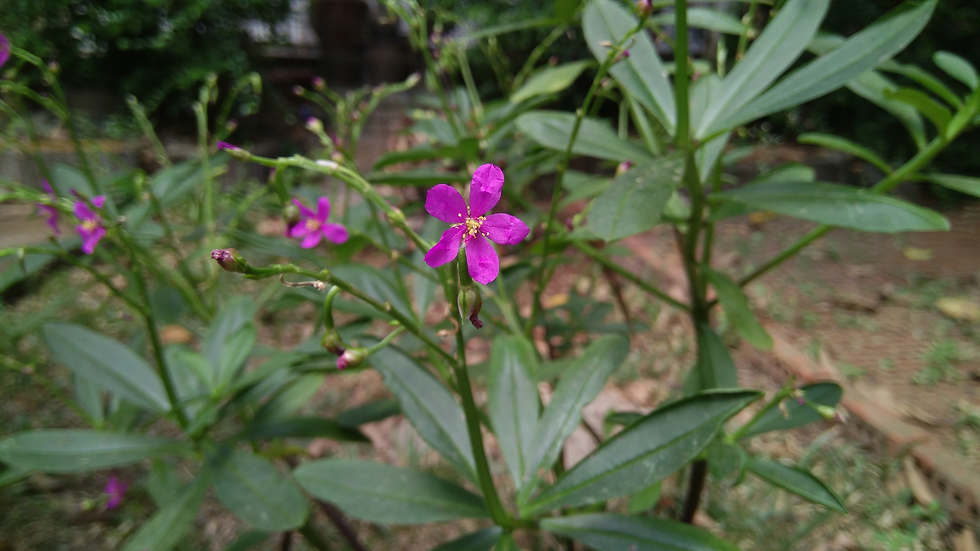
Small pink flowers rise above the foliage on delicate branching stalks. They are subtle individually, but a group of flowering plants can create an airy pink haze over an edible bed.
The flowers are bisexual and mainly self-pollinating. Small capsules develop after flowering and eventually release numerous dark seeds.
Is Surinam Spinach a Groundcover?
Not in the botanical sense.
It does not creep across the soil and root along horizontal stems like Sissoo Spinach or Perennial Peanut. Surinam Spinach grows upward from a central root system.
Closely spaced plants can still perform some living-mulch functions by:
Shading bare soil
Softening the edge of a garden bed
Reducing space available for weeds
Protecting soil from direct summer sun
Filling the lower layer of an edible landscape
For a dense planting, space plants approximately 6–10 inches apart. For larger individual specimens with easier harvesting access, allow 12–18 inches.
🌱 Why Grow Surinam Spinach?
1. It Produces During Warm Weather
True spinach is a cool-season vegetable that rapidly declines or bolts as temperatures rise.
Surinam Spinach is adapted to warm tropical and subtropical conditions. UF/IFAS reports good growth between approximately 68°F and 95°F, although sustained temperatures above 95°F can reduce yield. It performs well during seasons when traditional spinach becomes difficult to grow.
2. It Provides Fast, Repeatable Harvests
Tender growth can often be harvested approximately three to four weeks after establishment.
During active production, new shoots may be cut every one to two weeks. Regular harvesting encourages branching and keeps the plant compact.
3. It Handles Partial Shade
Waterleaf grows well in bright shade and cloudy conditions. Plants in full exposure may remain smaller, especially when high temperatures and drought occur together.
This makes it especially useful beneath:
Young mango trees
Bananas
Mulberries
Pigeon Pea
Open-canopy native trees
Trellised vines
Shade cloth structures
Patio overhangs with strong indirect light
4. It Works in Small Gardens
Surinam Spinach grows well in:
Raised beds
Patio containers
Courtyard gardens
Food-forest understories
Kitchen gardens
Small urban lots
Community gardens
Greenhouse containers
5. It Is Easy to Propagate
Waterleaf can be started from seed or stem cuttings. Commercial production frequently relies on cuttings because they establish rapidly and avoid inconsistent seed germination. UF/IFAS recommends mature stem sections approximately 5–8 inches long, while PROTA describes commonly used cuttings around 4–6 inches.
6. It Is Both Edible and Ornamental
The foliage creates a lush green mass while the fine pink flowers add light texture above the planting.
It can be used as:
An edible border
A layered food-forest plant
A soft transition between pathways and taller vegetation
A mixed-container edible
A warm-season filler in ornamental beds
A pollinator-friendly accent

🗺 USDA Growing Zones and Regional Expectations
The USDA Plant Hardiness Zone Map is based on a location’s average annual extreme minimum winter temperature. It predicts potential winter survival—not summer heat, humidity, rainfall, or overall crop performance. Gardeners should check their ZIP code rather than relying only on a statewide zone estimate.
Surinam Spinach does not have one universally established hardiness rating. The following is practical growing guidance based on its frost sensitivity and tropical growth pattern.
Region | What to Expect |
Zones 11–12 | Often grows for much of the year where moisture is available. Examples include the warmest parts of South Florida, Hawaii, Puerto Rico and other tropical territories. |
Zone 10 | Strong perennial potential, although occasional cold events can damage foliage. Includes much of South Florida, the Florida Keys, protected coastal Southern California and very warm Gulf locations. |
Zone 9b | Often performs as a short-lived perennial in protected locations. Frost may kill foliage, but mulched roots may recover. Includes portions of Central Florida, the Gulf Coast, South Texas and warm areas of Arizona and California. |
Zone 9a | Marginal perennial. Treat as frost-tender and keep protected cuttings. Includes parts of North and Central Florida, coastal Gulf states and warm inland pockets of the Southeast. |
Zone 8 | Best grown as a warm-season annual or protected container plant. Includes parts of Georgia, Alabama, Mississippi, Louisiana, Texas and the coastal Carolinas. |
Zones 7 and Colder | Grow after frost danger passes, then take cuttings or move containers indoors before autumn freezes. |
Microclimates matter.
A protected south-facing courtyard may remain several degrees warmer than an exposed field. Low areas where cold air collects may freeze even when nearby gardens escape damage.
🌞 Light, Heat, Wind and Coastal Conditions
Best Sun Exposure
Surinam Spinach grows in full sun, but the most attractive leafy production in hot climates often comes from:
Morning sun
Broken sunlight
High filtered shade
Afternoon protection
Open-canopy understory conditions
Full-day sun can work when soil moisture is dependable. However, high temperatures above approximately 95°F, especially when combined with drought, can reduce leaf number, leaf size, branching and overall production.
Too Much Shade
Deep shade may cause:
Long internodes
Pale foliage
Thin stems
Reduced branching
Slower regrowth
Fewer harvestable shoots
Aim for bright partial shade rather than a dark corner.
Wind Tolerance
Established plants tolerate ordinary garden breezes, but succulent stems can bend or snap during:
Tropical storms
Strong coastal winds
Sudden thunderstorms
Exposure between buildings
Heavy top growth after excessive fertilization
Harvest tall stems before severe weather and place container plants in a sheltered area.
Salt Tolerance
Research has examined Waterleaf for tolerance of saline and alkaline growing conditions. That suggests some ability to cope with root-zone salinity, but it should not be interpreted as proven tolerance of direct ocean spray.
Near the coast:
Plant behind a windbreak
Avoid direct beachfront exposure
Use clean irrigation water
Improve soil with compost
Rinse accidental salt deposits from leaves with fresh water
Harvest only from uncontaminated soil
🥗 What Does Surinam Spinach Taste Like?
Flavor
The flavor is:
Mild
Fresh
Lightly earthy
Less assertive than kale
Less bitter than many tropical greens
Neutral enough to accept strong spices and sauces
Texture
Raw young leaves are succulent and slightly crisp.
Cooking makes them:
Tender
Juicy
Soft
Lightly mucilaginous
Useful for thickening soups and stews
“Mucilaginous” describes the gentle body that certain vegetables release when cooked. Okra, Malabar
Spinach and jute mallow provide familiar comparisons, although Waterleaf is generally more delicate.
Which Parts Are Eaten?
Use:
Young leaves
Tender stem tips
Soft upper stems
Remove:
Tough mature lower stems
Damaged leaves
Seed capsules
Roots unless working from a well-documented traditional preparation under qualified guidance
🧺 When and How to Harvest Waterleaf
Florida Harvest Calendar
North and Central Florida
UF/IFAS identifies two useful production windows:
Spring: approximately March through July
Fall: approximately July through November
Summer production is possible, but plants may benefit from afternoon shade during extreme heat.
South Florida
A productive season may extend approximately from September through April, with broader year-round potential in protected gardens. Summer heat, heavy rain and disease pressure can still affect quality.
Colder Regions
Plant outdoors after frost danger has passed. Harvest through summer and early fall, then:
Take cuttings
Collect seeds
Move containers indoors
Allow the first hard freeze to end the crop
Best Harvest Method
For repeated home-garden harvests:
Select soft upper stems.
Cut approximately 4–8 inches of growth.
Make the cut just above a healthy leaf node.
Leave several lower leaves and nodes on the plant.
Rotate among multiple plants.
For commercial-style renewal harvests, UF/IFAS reports cutting stems approximately 1 inch above the ground. Plants may be harvested every one to two weeks for about two months, although quality and yield typically decline after repeated cuts.
Harvest in the Morning
Waterleaf wilts quickly after cutting because of its high moisture content.
Harvest early while the plants are fully hydrated. Refrigerate promptly and use as soon as practical.
🍲 How Surinam Spinach Is Used Around the World
Waterleaf has become especially important in West and Central African cooking.
Southern Nigeria
In parts of southern Nigeria, where Waterleaf is known as gbure, it is used in soups and sauces with ingredients such as:
Jute mallow
Peppers
Dried fish
Meat
Tomatoes
Onions
Palm oil
Its tender, juicy growth adds moisture and body to cooked dishes.
Cameroon
Waterleaf is traditionally paired with eru, the fibrous leaves of Gnetum africanum or Gnetum buchholzianum. The succulent Waterleaf helps soften the firmer shredded eru leaves. The resulting dish is commonly served with a starchy accompaniment such as fufu.
Other Tropical Uses
The leaves are also:
Stir-fried
Boiled as a vegetable
Added to fish or meat stews
Combined with tofu
Cooked with ground melon seed
Used in tomato-based sauces
Added to vegetable soups
Used as a natural food pigment in some applications
UF/IFAS identifies stir-frying, boiling, soups and stews as common preparation methods.
🍳 Garden-to-Table Surinam Spinach Recipes
All three recipes use cooked Waterleaf. That is our preferred recommendation for frequent consumption because cooking reduces soluble oxalate levels.
Recipe 1: Garlic-Ginger Surinam Spinach Sauté
Prep time: 10 minutes
Cook time: 8 minutes
Servings: 4 side portions
Ingredients
6 packed cups Surinam Spinach leaves and tender tips
1 tablespoon olive, avocado or coconut oil
¼ cup thinly sliced onion
2 garlic cloves, minced
1 teaspoon freshly grated ginger
¼ teaspoon sea salt, or to taste
Black pepper or crushed chili
Juice from ½ lime
Directions
Wash the Waterleaf thoroughly and remove tough lower stems.
Warm the oil in a wide skillet over medium heat.
Cook the onion for two to three minutes.
Add the garlic and ginger and cook for approximately 30 seconds.
Add the Waterleaf and stir until wilted and tender, approximately four to five minutes.
Season and finish with lime.
Garden Tip
Harvest the softest upper stems in the morning. Leave several healthy nodes below each cut to encourage fast branching.

Recipe 2: Coconut Waterleaf and Chickpea Stew
Prep time: 15 minutes
Cook time: 25 minutes
Servings: 4–6
Ingredients
6 packed cups chopped Surinam Spinach
1 tablespoon coconut oil
1 small onion, chopped
3 garlic cloves, minced
1 tablespoon grated ginger
1 teaspoon curry powder
½ teaspoon ground turmeric
1 can chickpeas, drained
1 can unsweetened coconut milk
1 cup diced tomatoes
½ cup water or vegetable broth
Salt and pepper
Lime wedges for serving
Directions
Warm the coconut oil in a pot over medium heat.
Cook the onion until translucent.
Add garlic, ginger, curry powder and turmeric.
Stir in the chickpeas, coconut milk, tomatoes and broth.
Simmer for approximately 15 minutes.
Add the Waterleaf and cook for another five to eight minutes.
Season and serve with rice or flatbread.
Garden Tip
Combine Surinam Spinach with turmeric and ginger in the landscape as well as the kitchen. All three appreciate warm weather, organic mulch and regular moisture.
🧬 Nutritional Profile and Traditional Uses
Published analyses describe Waterleaf as a source of:
Calcium
Magnesium
Potassium
Iron
Vitamin C
Tocopherols
Carotenoids
Amino acids
Protein
Dietary fiber
Nutritional values vary according to soil, fertilizer, irrigation, plant age, harvest timing, preparation and the analytical method used.
Traditional and Folk Applications
Waterleaf leaves, stems and roots have appeared in traditional preparations associated with:
General vitality
Skin applications
Digestive concerns
Blood pressure
Blood sugar
Inflammatory conditions
Measles treatment in parts of Cameroon
Tonics prepared from fleshy roots in Indonesia
These are records of traditional use—not confirmation that the plant treats or prevents disease.
Laboratory and extract-based studies should not be translated directly into medical claims about eating the leaves.
Surinam Spinach is best presented as a useful food crop with an interesting ethnobotanical history, not as a medication.
⚠️ Important Culinary and Growing Cautions
Cooked Use Is Best for Regular Consumption
Waterleaf contains soluble oxalates and other naturally occurring antinutritional compounds.
UF/IFAS advises against eating large quantities raw and reports that cooking can reduce oxalates substantially. A broader study of vegetables found that boiling generally reduced soluble oxalates more effectively than steaming.
Practical recommendations:
Wash the foliage thoroughly
Cook before frequent or substantial consumption
Avoid using large quantities in daily raw smoothies
Eat it as part of a varied diet
Consult a qualified medical professional regarding individual dietary restrictions
People with a history of calcium-oxalate kidney stones, kidney disease, or a prescribed low-oxalate diet should seek individualized medical guidance.
UF/IFAS also advises against incorporating Waterleaf into infant meals because of naturally occurring antinutritional compounds.
Grow It Only in Clean Soil
Waterleaf has been studied for its ability to accumulate heavy metals and pollutants from contaminated soils. This may make it interesting for phytoremediation research—but potentially unsafe as food when grown on polluted land.
Do not eat plants grown in:
Roadside soil
Industrial sites
Dump areas
Soil exposed to lead paint
Areas receiving polluted runoff
Unknown imported fill
Locations with a history of herbicide contamination
Food-producing plants belong in clean soil with clean irrigation water.
Manage Self-Seeding
Mature seed capsules can open and scatter numerous seeds.
Reduce unwanted seedlings by:
Removing flower stalks
Harvesting regularly
Mulching exposed soil
Growing in containers
Pulling volunteers when young
Avoiding disposal of mature seed-bearing material near natural areas
UF/IFAS did not list Waterleaf among plants evaluated as invasive at the time of its publication, but the plant can behave as a weed in disturbed tropical environments.

🌾 How to Plant Surinam Spinach
Where to Plant
Choose a location with:
Morning sun or filtered light
Moist but freely draining soil
Protection from intense western heat
Access to irrigation
Good airflow
Convenient harvesting access
Clean soil suitable for food production
Avoid:
Standing water
Dense, airless shade
Compacted soil
Roof runoff basins
Direct ocean exposure
Hot reflected heat from pavement
Contaminated or questionable soil
Areas where seedlings cannot be managed
Let Shipped Plants Recover First
After transportation, keep the plant in its original nursery container for at least 30 days or until healthy new growth appears.
During recovery:
Begin in bright shade
Introduce morning sun gradually
Keep the root ball evenly moist
Water at the soil level
Avoid strong fertilizer
Protect from wind
Do not transplant a severely wilted or stalled plant
The GreenDreams High & Tight Method
Water the plant several hours before transplanting.
Dig a hole only slightly wider than the nursery container.
Keep the hole at the same depth as the root ball.
Remove the plant carefully without pulling its succulent stems.
Set the upper surface of the root ball level with or slightly above the surrounding soil.
Do not bury the stem or crown.
Backfill with loosened native soil and finished compost as appropriate.
Firm the soil around the roots to remove large air pockets.
Top-dress with compost, charged biochar, azomite and an organic nutrient source.
Water deeply at soil level.
Apply 2–3 inches of hardwood mulch.
Keep mulch several inches away from the plant’s base.
Planting too deeply can trap moisture around the stem and increase the risk of rot.
Watch the GreenDreams High & Tight planting method here:
💧 Watering Surinam Spinach
Despite its succulent leaves, Waterleaf is not a drought-loving desert plant.
Its shallow root system performs best with regular moisture and good drainage.
Newly Planted in the Ground
During warm, dry weather:
Water daily for the first week
Continue daily or every-other-day watering through the early establishment period as conditions require
Gradually transition toward two or three deep waterings per week
Water more often in sandy soil or extreme heat
Reduce irrigation during cool or rainy weather
PROTA production guidance recommends daily watering during the first week and approximately three waterings per week after plants cover the soil.
Established Plants
Water when the upper 1–2 inches of soil begin to dry.
Prolonged drought may produce:
Smaller leaves
Tougher stems
Reduced branching
Slower regrowth
Yellowing
Wilt
Lower-quality harvests
No Routine Overhead Watering
Water at the soil level whenever possible.
Morning soil-level watering:
Delivers moisture directly to roots
Reduces soil splash onto edible foliage
Limits extended leaf wetness
Improves absorption before afternoon heat
Reduces some fungal disease pressure
Use drip irrigation rather than overhead misters or sprinklers for permanent edible landscape plantings.
🌿 Fertilizing for Steady Leaf Production
Waterleaf can survive in relatively lean soil, but repeated harvests remove nutrients.
PROTA describes Waterleaf as responsive to nitrogen and identifies general leaf yellowing as a possible nitrogen-deficiency symptom.
Organic Fertility Program
At Planting
Use moderate amounts of:
Finished compost
Charged biochar
Worm castings
Azomite or another trace-mineral amendment
Mild organic granular vegetable fertilizer
During Active Growth
Top-dress with compost every two to three months
Add worm castings around container plants
Apply a diluted organic liquid feed when regrowth slows
Replace nutrients removed through heavy harvesting
Reduce fertilizer during cold weather
Never heavily fertilize a recently shipped or drought-stressed plant
Signs of Possible Nutrient Deficiency
General pale coloring
Yellow lower leaves
Small new growth
Thin stems
Slow recovery after cutting
Check drainage and root health before assuming every yellow leaf means fertilizer is needed.
Signs of Excess Feeding
Burned tips
Salt crust on potting media
Weak, overly soft stems
Sudden wilt after application
Excessively tall growth
More pest pressure on tender foliage
More fertilizer is not always more food.
✂️ Pruning and Cut-and-Come-Again Production
Harvesting is the primary pruning method.
Tip Harvesting
For regular home use:
Cut the upper 4–8 inches
Cut above a healthy node
Remove any flower stalks you do not want
Rotate harvests among several plants
Avoid stripping every leaf from one plant
Rejuvenation Pruning
When plants become tall or sparse:
Cut stems back to approximately 2–4 inches.
Leave healthy nodes near the base.
Maintain consistent moisture.
Add a light layer of compost.
Wait for new shoots before feeding heavily.
Replace Aging Plants
Waterleaf is a short-lived crop. PROTA reports a natural productive life of roughly four to six months under some production conditions. UF/IFAS notes that market quality commonly declines after several harvests.
Maintain continuous production by:
Rooting fresh cuttings
Succession-planting younger specimens
Allowing selected plants to seed
Rotating harvest areas
Removing weak or diseased plants
🌡 Florida Seasonal Care Guide
Spring
Expect:
Rapid new shoots
Strong rooting
Increasing water demand
First harvests
Fast recovery from tip cutting
Care:
Remove winter-damaged stems
Add compost
Resume regular irrigation
Propagate cuttings
Begin harvesting once plants are established
Summer
Expect:
Fast growth with adequate moisture
Afternoon wilt during intense heat
Smaller foliage in exposed full sun
Rapid container drying
Increased caterpillar and mite monitoring needs
Care:
Provide afternoon shade where temperatures regularly exceed 95°F
Water early at soil level
Maintain hardwood mulch
Harvest frequently
Avoid heavy fertilizer during heat stress
Protect containers from reflected heat
Fall
Expect:
Continued production
Flowering and seed formation
Improved leaf quality as extreme temperatures moderate
Slower drying of container media
Care:
Continue harvesting
Collect cuttings for winter insurance
Remove seed stalks when self-seeding is not wanted
Reduce fertilizer as nights cool
Prepare frost protection
Winter
Expect:
Slower growth
Reduced water demand
Frost damage in exposed areas
Blackened or collapsed foliage after cold events
Possible regrowth from protected roots
Care:
Move containers into a greenhouse, porch or bright indoor space
Cover in-ground plants before frost
Mulch roots
Avoid keeping cold soil saturated
Wait until freeze danger passes before removing all damaged growth
Restart from protected cuttings if the mother plant dies
Surinam Spinach is not truly deciduous. Winter leaf loss results from cold stress or frost injury rather than a predictable temperate dormancy cycle.
🪴 Growing Surinam Spinach in Containers
Container culture is an excellent choice for renters, patio growers and gardeners outside tropical zones.
Recommended Sizes
Container | Recommended Use |
4-inch nursery pot | Shipping and short-term nursery production |
1-gallon container | One young plant or temporary production |
3-gallon container | Productive long-term size for one plant |
5–7-gallon container | Larger specimen, heavier harvests and less frequent drying |
Wide raised planter | Multiple plants for succession harvesting |
UF/IFAS notes that transplants can be moved into containers ranging from approximately one to five gallons.
Recommended Potting Mix
Use an airy mix that retains moisture without staying waterlogged.
A practical blend is:
Approximately 60% peat- or coconut-coir-based potting mix
Approximately 20% finished compost or worm-casting blend
Approximately 20% perlite, fine pine bark or another drainage material
Avoid filling a container with dense native soil alone.
When to Repot
Move into the next practical size when:
Roots circle the inside of the container
Roots emerge through drainage holes
The root ball dries unusually fast
Growth slows despite good care
Water runs down the pot sides instead of soaking in
The plant becomes top-heavy
Progress gradually:
4-inch → 1-gallon → 3-gallon → 5- or 7-gallon
A tiny plant placed directly into an oversized container can remain wet for too long.
🏠 Can Waterleaf Grow Indoors?
Yes, but indoor production is normally slower.
Provide:
A bright south- or east-facing window
Supplemental grow lights when needed
Approximately 12–14 hours of strong artificial light during winter
Warm temperatures
Air movement
Careful watering
Regular pest inspection
Common indoor problems include:
Leggy growth from insufficient light
Root rot from oversized containers
Fungus gnats in continually wet media
Aphids
Spider mites
Reduced harvest volume
Weak stems caused by poor airflow
Indoor growing is most useful for preserving stock plants and rooted cuttings through winter.
🐝 Organic Companion Plants and Edible Landscape Guilds
Surinam Spinach fits best in a regularly irrigated, actively managed guild rather than a dry xeric planting.
Nitrogen and Biomass Plants
Pigeon Pea: Vertical nitrogen fixer and filtered shade
Mexican Sunflower: Rapid chop-and-drop biomass
Sunn Hemp: Seasonal nitrogen and carbon production
Native legumes: Regional habitat and soil-building support
Carbon and Silica Plants
Vetiver
Lemongrass
Sugarcane
Clumping grasses
Managed clumping bamboo where sufficient space exists
Pollinator and Insectary Plants
African Blue Basil
Tropical Sage
Coreopsis
Native asters
Sweet Almond Bush
Mexican Sunflower
Edible Companions
Turmeric
Ginger
Katuk
Cranberry Hibiscus
Okinawan Spinach
Longevity Spinach
Bananas
Perennial Peanut along adjacent edges
Attractive Ornamental Combinations
Pair bright green Waterleaf with:
Purple-backed Okinawan Spinach
Burgundy Cranberry Hibiscus
Variegated edible hibiscus
Golden oregano
Dark-leaved basil
Broad turmeric foliage
Keep vigorous spreading plants from covering the Waterleaf crown.
🔍 Surinam Spinach Troubleshooting Guide
Icons represent common issues and organic solutions—look for 🌿 for recovery guidance.
⚠️ Issue | 🧠 Likely Cause | 🌿 Organic Response |
🍂 Lower leaves turning yellow | Low nitrogen, old foliage, saturated soil or root stress | Check drainage first. If roots are healthy, top-dress with compost or worm castings |
💧 Afternoon wilting | Dry root ball, intense sunlight, reflected heat or recent transplanting | Check moisture below the surface, water deeply and provide temporary afternoon shade |
💦 Soft stems collapsing at the base | Excess moisture, deep planting or poor airflow | Reduce watering, improve drainage and pull mulch away from the crown |
🌱 Tall, stretched growth | Insufficient light or lack of harvesting | Increase filtered sunlight and pinch growing tips |
☀️ Bleached or scorched foliage | Sudden full-sun exposure or extreme heat | Move containers into morning sun and acclimate new growth gradually |
🐛 Irregular holes | Caterpillars, beetles, snails or slugs | Inspect at dawn and after dark, handpick and use targeted organic controls only when necessary |
🪲 Sticky or curled new growth | Aphids, whiteflies or other sap-feeding insects | Control ants, rinse pests away and use insecticidal soap according to its label |
🕷️ Fine stippling or webbing | Spider mites | Improve hydration, increase monitoring and apply an appropriately labeled horticultural soap or oil |
🪱 Stunted plants with damaged roots | Root-knot nematodes | Rotate beds, increase organic matter and restart plants in clean media |
🍄 White or dark leaf spots | Leaf disease encouraged by wet foliage or infected plant material | Stop overhead irrigation, improve airflow, remove affected tissue and sanitize tools |
🌊 Decline following heavy rain | Saturated soil and oxygen-starved roots | Pause irrigation, improve drainage and temporarily pull excess mulch away |
❄️ Blackened, translucent leaves | Frost injury | Mulch roots, protect from further cold and prune after freeze danger passes |
🌸 Many flowers but fewer tender shoots | Plant age, stress or insufficient cutting | Remove flower stalks, rejuvenate the plant and start replacement cuttings |
PROTA identifies white leaf spot, mosaic symptoms and an unidentified blight among reported problems. UF/IFAS also notes that Waterleaf can host root-knot nematodes, although it is generally considered relatively resistant to many pests and diseases.
❓ Frequently Asked Questions About Surinam Spinach
Is Surinam Spinach the same as traditional spinach?
No. Traditional spinach is Spinacia oleracea, a cool-season vegetable. Surinam Spinach is Talinum fruticosum, a tropical leafy herb.
Are Talinum fruticosum and Talinum triangulare the same?
The names are frequently used interchangeably in agricultural literature. Kew currently recognizes Talinum fruticosum as the accepted name, while many production references continue to use Talinum triangulare.
How tall does Waterleaf grow?
Frequently harvested home-garden plants can be kept approximately 12–24 inches tall.
Unpruned plants may commonly reach two to three feet. UF/IFAS cites reports of plants reaching substantially greater heights under favorable conditions, demonstrating how strongly climate, fertility, pruning and plant age influence final size.
Is Surinam Spinach a perennial?
It is a short-lived tropical perennial in frost-free or protected climates. In areas with freezing winters, grow it as an annual or overwinter it indoors.
Can it survive frost?
Exposed foliage is frost-sensitive. Mulched roots sometimes survive brief cold events in warm microclimates, but survival should not be guaranteed.
How quickly can I begin harvesting?
Tender growth may be ready approximately three to four weeks after the plant becomes established.
Can it grow in full sun?
Yes, with dependable water. Partial shade often produces softer, larger foliage during extremely hot weather.
Can it grow beneath fruit trees?
Yes. It performs well under an open canopy where it receives filtered light, irrigation and enough room around its crown.
Can it grow in a container?
Yes. A 3-gallon container is a practical long-term size for one productive plant, while 5–7 gallons provides more root space and moisture stability.
Can it grow indoors?
Yes, with strong natural light or grow lights. Indoor growth is normally slower.
Can the leaves be eaten raw?
Young leaves are eaten raw in some traditions, but large or frequent raw servings are not recommended because of soluble oxalates and other antinutritional compounds. Cooking is the better regular practice.
Does it spread aggressively?
It does not creep through underground runners, but it can self-seed. Remove flowers or seed capsules when volunteers are not wanted.
Is it true ginseng?
No. “Edible Thai Ginseng” is a common or marketplace nickname. The plant is not related to true Panax ginseng.
Does it tolerate salt?
Some tolerance of saline soil or irrigation conditions has been reported. Direct ocean spray and exposed beachfront planting are still not recommended.
Can I propagate it from grocery-store stems?
Potentially, provided the stems are fresh, healthy and have viable nodes. Nursery-grown plants or known clean stock are more dependable and reduce the risk of introducing pests or disease.
🌿 Find Surinam Spinach at GreenDreams
GreenDreams carries Surinam Spinach as a 4-inch live starter plant for online ordering.
We ship live plants from Florida using UPS Ground throughout the continental United States. Our regular shipping day is Monday.
Small tropical starter plants generally travel best to:
Florida
The Southeastern United States
Texas
Other destinations with shorter UPS Ground transit times
Customers in distant northern or western states should consider seasonal temperatures and extended transit time before ordering. A 4-inch plant contains less soil than a larger nursery container and can dry or experience temperature stress more quickly.
🏡 Shop Larger Surinam Spinach Plants in Person
Customers visiting our Spring Hill retail nursery can shop Surinam Spinach in multiple sizes:
4-inch starter plants
1-gallon established plants
3-gallon larger landscape-ready plants
The 1-gallon and 3-gallon sizes are excellent options for local gardeners who want:
Faster establishment
A larger initial harvest
Greater resilience after transplanting
More developed root systems
A stronger visual impact in an edible landscape
Less vulnerability to rapid drying than a 4-inch starter plant
Availability may change with the season, current growth cycles and customer demand.
🏡 Shop with Us in Spring Hill, Florida
GreenDreams Nursery & Farm
18709 Hwy. 41
Spring Hill, FL 34610
Open to the Public
Tuesday–Friday: 9AM–5PM
Saturday: 8AM–3PM
Come explore our collection of:
Tropical and subtropical fruit trees
Perennial vegetables
Medicinal and culinary plants
Native plants
Pollinator plants
Biomass and support species
Food-forest plants
Ecological landscape materials
🌳 Beyond the Plant: Build a Complete Edible Ecosystem with GreenDreams
A useful plant is a great beginning. A functioning landscape is the bigger goal.
GreenDreams helps Florida property owners plan, install and maintain productive ecological landscapes.
Onsite Consultations
Our team can help evaluate:
Sun and shade patterns
Drainage
Existing trees and vegetation
Soil conditions
Irrigation
Plant selection
Food-forest layers
Garden access
Installation priorities
Phased project planning
Edible Landscape Design
We create plans for:
Residential food forests
Kitchen gardens
Tropical fruit collections
Native and edible landscape combinations
Pollinator corridors
Privacy plantings
Soil-building systems
Commercial and community growing spaces
Installation and Project Support
GreenDreams can assist with:
Planting
Bed preparation
Mulching
Soil improvement
Irrigation support
Project management
Day-labor assistance
Existing landscape restoration
Food-forest expansion
Bulk Plants and Soil Materials
Delivery services may include:
Bulk plant orders
Compost
Hardwood mulch
Biochar
Garden amendments
Other soil-building materials
Surinam Spinach may be one small plant, but it can become part of a much larger system—growing beneath fruit trees, beside turmeric, near pollinator plants, and within reach of the kitchen.
🌿 Turn Summer Heat into Harvest Season
Surinam Spinach is not trying to imitate cool-season spinach perfectly.
It offers something more useful for subtropical growers: a leafy vegetable that understands the assignment.
Give it warm soil, filtered sunlight, dependable water and regular harvesting. In return, it can provide tender greens, effortless propagation, ornamental flowers and a steady reason to walk into the garden before dinner.
Shop Surinam Spinach online, visit GreenDreams Nursery in Spring Hill, or work with our team to build it into a complete edible landscape.


Comments