


Cranberry Hibiscus & Kenaf: 2 Beautiful, Tart-Tasting Edible Hibiscus Plants for the Landscape 🌺🌿

When most people think about edible greens, they picture a vegetable bed.
These two plants challenge that idea completely.
Cranberry Hibiscus and Kenaf Hibiscus are edible plants that can hold their own in an ornamental landscape—one with dramatic burgundy foliage, the other with wild, deeply cut leaves that make people stop and look twice.
And both are surprisingly useful in the kitchen.
Cranberry Hibiscus brings rich wine-red to burgundy foliage, a soft tropical texture, and a tart, lemony bite that makes the young leaves stand out in salads, sauces and fresh harvests.
Kenaf brings a completely different personality.
Its deeply lobed leaves can look strikingly similar to cannabis from a distance, which has led to plenty of double-takes—and, in our case, one very memorable visit from code enforcement.
But Kenaf is actually a member of the hibiscus family.
It grows fast, produces edible tart greens, develops beautiful hibiscus flowers, creates seasonal privacy, supports pollinators and can produce useful fiber and biomass.
That combination is exactly why we love plants like these.
They are not simply “vegetables.”
They are edible landscape plants—species that can contribute food, color, structure, habitat and conversation value at the same time.
🌺 WHY THESE TWO PLANTS STAND OUT
Cranberry Hibiscus: Color You Can Eat
Cranberry Hibiscus (Hibiscus acetosella) is one of the most visually dramatic edible greens we grow.
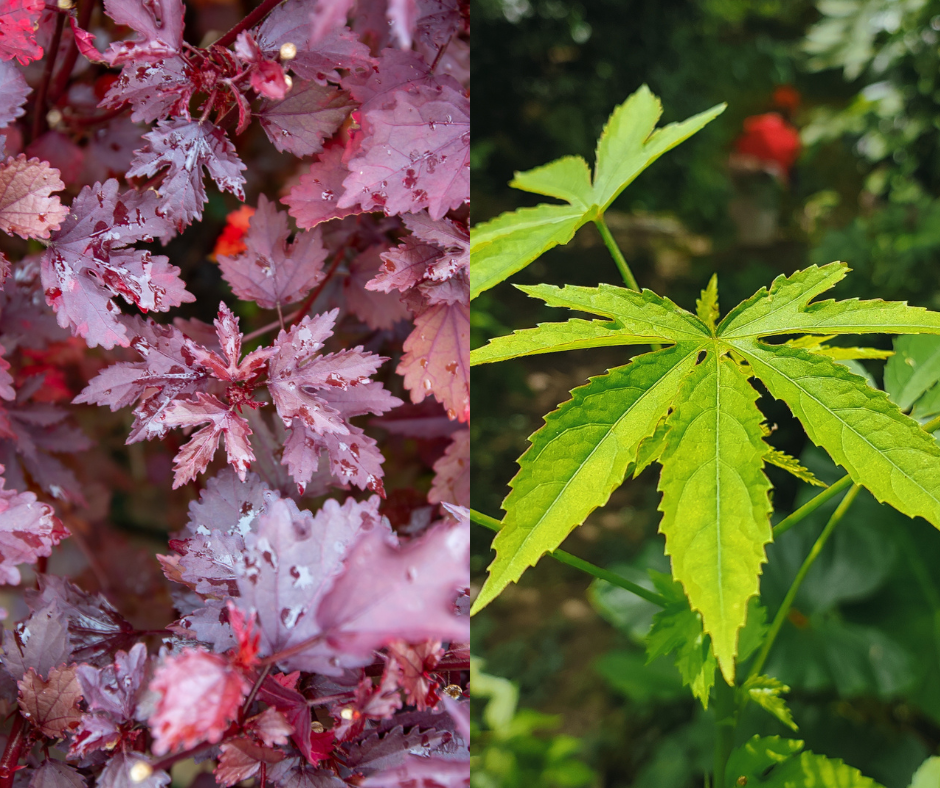
Its foliage can range from deep burgundy and merlot-red to purple-bronze, with deeply cut leaves that can resemble a tropical red Japanese maple.
In a landscape, it works beautifully as:
A burgundy foliage accent
A colorful edible hedge
A backdrop for lime-green or silver foliage
A tropical-looking foundation plant
A container specimen
A pollinator-friendly flowering shrub
A “hidden edible” in an ornamental planting
Then there is the flavor.
Young leaves are pleasantly tart, with a bright lemony, sorrel-like character.
That means the plant earns its space twice:
It looks ornamental, but it harvests like a leafy green.
🌿 Kenaf Hibiscus: The Plant That Makes People Look Twice
Kenaf (Hibiscus cannabinus) is playful, bold and a little mischievous-looking.
Its leaves can be deeply divided into narrow lobes, and from a distance they can strongly resemble cannabis.
That resemblance has caused more than one misunderstanding.
At our old GreenDreams property, we grew Kenaf along a fence line.
A neighbor saw the leaves from across the fence and called code enforcement because they thought we were growing marijuana.
We were not.
We were growing Kenaf Hibiscus.
The whole experience later inspired one of our favorite GreenDreams videos:
“We’re NOT Growing Weed, Mom.”
What makes the story even better is that Kenaf is far more useful than its appearance suggests.
It can provide:
Edible young leaves
Tart, cooked greens
Fast seasonal screening
Large hibiscus flowers
Pollinator activity
Huge warm-season biomass
Fiber-rich stems
A striking vertical accent in the landscape
Its scientific name, cannabinus, refers to the hemp-like appearance and fiber qualities of the plant—not to marijuana, THC or psychoactive properties.
Once it flowers, the family connection becomes obvious.
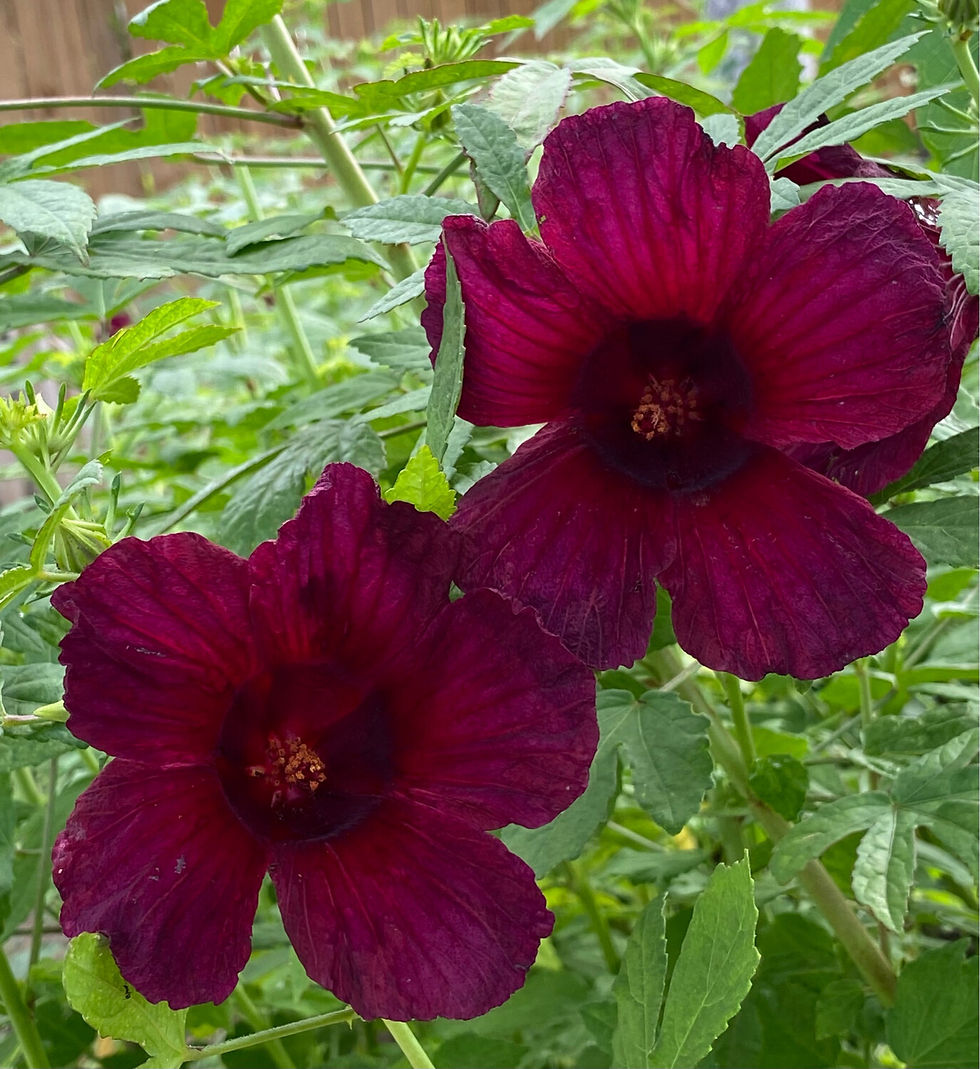
Mature Kenaf produces large hibiscus-style blooms, often pale cream to yellow with a dramatic dark burgundy throat.
For customers who enjoy unusual edible plants with a story behind them, Kenaf is hard to beat.
🌿 QUICK COMPARISON: CRANBERRY HIBISCUS VS. KENAF
Feature | 🌺 Cranberry Hibiscus | 🌿 Kenaf |
Botanical Name | Hibiscus acetosella | Hibiscus cannabinus |
First Impression | Deep burgundy ornamental foliage | Bold, deeply lobed “wait, is that cannabis?” foliage |
Main Garden Role | Edible ornamental shrub | Edible green + seasonal screen + biomass/fiber plant |
Flavor | Bright, lemony, cranberry-like tartness | Mild green flavor with pleasant acidity |
Best Edible Part | Young leaves, tender shoots, flowers | Young leaves and tender shoots |
Raw Use | Excellent when young | Traditionally used both ways; often best cooked |
Cooked Use | Excellent | Excellent |
Texture | Tender when young | Tender young; lightly mucilaginous when cooked |
Typical Height | 4–8 ft.; occasionally taller | 6–12+ ft.; potentially much taller |
Height With Regular Harvesting | About 3–5 ft. | About 4–7 ft. |
Width | About 2–5 ft. | About 2–4 ft. with landscape spacing |
Light | Full sun to light partial shade | Full sun |
Florida Performance | Excellent | Excellent warm-season crop |
Cold Behavior | Frost-tender perennial | Frost-tender warm-season crop |
Container Friendly | Yes | Possible, but requires a large container |
Ornamental Value | Exceptional burgundy foliage | Tall architectural form + hibiscus flowers |
Special Utility | Edible hedge, color contrast | Fiber, biomass, food, screening |
Pollinator Value | Flowers support pollinators | Flowers support pollinators |
Primary Harvest | Leaves | Leaves + potentially fiber/seed |
🍋 THE FLAVOR CONNECTION: TWO TART GREENS, TWO DIFFERENT PERSONALITIES
Both plants contribute acidity to the kitchen, but they do not taste exactly the same.
Cranberry Hibiscus Flavor
Young Cranberry Hibiscus leaves are:
Bright
Tart
Lemony
Slightly fruity
Crisp when freshly harvested
Tender when picked young
The flavor is closer to sorrel or a lightly acidic salad green than to a sweet cranberry.
It is one of our favorite greens for adding color and acidity at the same time.
Kenaf Flavor
Young Kenaf leaves are generally:
Mildly earthy
Fresh and green
Pleasantly tart
Softer in acidity than Cranberry Hibiscus
Slightly mucilaginous when simmered
That light thickening quality makes sense because Kenaf belongs to the same plant family as okra.
Tender shoots and young leaves are the best eating.
Older leaves become tougher as the plant shifts more energy into stalk and fiber production.
🏡 TWO VERY DIFFERENT WAYS TO USE THEM IN THE LANDSCAPE
Use Cranberry Hibiscus Where You Want Color
Cranberry Hibiscus works especially well:
Near patios and outdoor living spaces
As a burgundy backdrop in edible gardens
Mixed into ornamental beds
Along pathways where leaves are easy to harvest
In containers near the kitchen
As a colorful edible hedge
Beside chartreuse, silver or bright green foliage plants
Its strongest landscape value is contrast.
It looks intentional even when nobody realizes it is edible.
Use Kenaf Where You Want Height and Drama
Kenaf belongs where its rapid vertical growth becomes an advantage.
Good uses include:
Seasonal privacy screens
Fence lines
Back-of-border plantings
Food forest edges
Pollinator areas
Temporary shade structures
Biomass rows
Educational gardens
Areas where a tall, unusual plant becomes a conversation piece
Because Kenaf can become very tall, place it where it will not block pathways, windows or smaller sun-loving plants.
One plant gives you color.
The other gives you height.
Both give you food.
🌺 CRANBERRY HIBISCUS — THE EDIBLE BURGUNDY SHRUB

Hibiscus acetosella
Cranberry Hibiscus may be one of the easiest plants to slip into a conventional ornamental landscape without anyone realizing that dinner is growing in the flower bed.
Its deeply cut leaves range from burgundy and wine-red to purple-maroon.
From a distance, the foliage can resemble a red Japanese maple.
Up close, the relationship to hibiscus becomes clearer: colorful stems, alternate leaves and, as days shorten, small hibiscus-shaped flowers tucked among the foliage.
Then you taste it.
The young leaves deliver a clean burst of acidity somewhere between lemon, sorrel and tart cranberry.
That combination—beautiful foliage plus useful food—is exactly why Cranberry Hibiscus works so well in edible landscape design.
🌿 Why Grow Cranberry Hibiscus?
Cranberry Hibiscus earns its space by performing several jobs at once:
🌺 Dramatic burgundy ornamental foliage
🥗 Fresh edible leaves
🌿 Rapid warm-season growth
🦋 Pollinator-supporting flowers
🏡 Excellent hedge or border potential
✂️ Responds well to repeated pruning and harvesting
🪴 Performs well in containers
🌞 Handles Florida heat far better than traditional cool-season salad greens
🍃 Produces edible shoots repeatedly through the growing season
For people who want their edible landscaping to look deliberately designed rather than agricultural, this is an especially valuable plant.
🍋 What Does Cranberry Hibiscus Taste Like?
The name is more about acidity than an actual cranberry flavor.
Young leaves are:
Bright
Tart
Lemony
Slightly fruity
Crisp when freshly harvested
Tender rather than fibrous when picked young
There is no sugary cranberry sweetness.
Think of it more like a colorful tropical substitute for sorrel.
Older leaves become firmer and are better chopped or cooked.
Young shoot tips offer the best combination of texture and flavor.
🌺 Botanical Appearance
Leaves
The leaves may be:
Deep burgundy
Purple-red
Bronze-maroon
Greenish-purple depending on genetics and light exposure
Deeply palmate or lobed
Strong sunlight generally produces richer foliage coloration.
Stems
Stems often carry the same wine-red or purple coloration as the leaves.
Young plants are fairly soft-stemmed. Older stems become increasingly woody toward the base.
Flowers
Flowers typically appear as shortening daylength triggers reproductive growth.
That means Florida growers are much more likely to see flowers than growers farther north whose plants may freeze before the short-day flowering response occurs.
Expect hibiscus-shaped flowers in shades of burgundy, crimson, pink or purple depending on genetics.
Individual blooms are short-lived, as is common with hibiscus.

📏 Cranberry Hibiscus Mature Size
Unpruned
A typical garden plant reaches approximately:
4–8 feet tall
with favorable specimens capable of approaching roughly 9 feet.
Width can reach approximately:
3–5 feet
depending on pruning and genetics.
Regularly Pruned for Leaf Production
A much more practical edible-landscape height is:
3–5 feet
Repeated harvesting keeps shoots tender while encouraging lateral branching.
This is one of those plants where harvesting and pruning accomplish essentially the same goal.
Every cut tells the plant to branch.
✂️ The Best Pruning Strategy for Cranberry Hibiscus
Do not wait until the plant reaches 7 or 8 feet before deciding you want a bush.
Begin shaping early.
When a vigorous young plant reaches roughly 18–30 inches, lightly pinch or remove the actively growing tip.
New side branches should emerge below the cut.
Allow those branches to develop, then tip-prune them again.
The result is:
🌿 More branches
🥗 More harvestable shoot tips
🏡 A denser ornamental plant
🌬️ Less leverage from long, lanky stems
For Maximum Leaf Production
Use a repeated “cut-and-come-again” system.
Harvest approximately the upper 4–8 inches of vigorous shoots instead of removing individual mature leaves throughout the plant.
This simultaneously harvests food and promotes branching.
Before Winter
In frost-prone areas of Florida, avoid aggressively cutting a healthy plant immediately before a freeze.
Wait until cold damage has passed and the extent of living tissue is obvious.
Then remove dead or damaged material and allow vigorous new growth to emerge.
Cranberry Hibiscus Growing Zones
Cranberry Hibiscus is one of the easier plants in this article to classify:
It is a tender perennial best suited to Zones 9–11 for outdoor perennial culture.
NC State Extension lists Hibiscus acetosella for Zones 9a through 11b and describes it as a tender perennial that can also be grown as an annual or overwintered indoors.
Zones 9a–9b — Our Core Florida Audience
This is where the distinction between cold hardy and perennial matters.
Cranberry Hibiscus can behave as a perennial here, but winter appearance varies from year to year.
A mild winter may allow a plant to remain leafy for a long period.
A colder winter may cause:
Leaf drop
Burned growing tips
Stem dieback
Complete top dieback
If the crown and lower stems remain alive, the plant may recover strongly when warm weather returns.
For valuable plants, we still recommend making backup cuttings before winter.
Zones 10–11
This is the most reliable range for year-round or near-year-round perennial growth, provided drainage and other growing conditions are appropriate.
Zone 8
Treat Cranberry Hibiscus as marginally perennial.
Protected microclimates can sometimes surprise you, but annual culture or winter propagation is the safer expectation.
Zones 7 and Colder
Grow it as a fast summer ornamental edible.
Before frost, either:
Take stem cuttings
Move a manageable container indoors
Maintain a mother plant in a greenhouse or bright protected location
Then return plants outside after frost danger passes.
❄️ Cold Hardiness & Frost Response
Cranberry Hibiscus likes heat.
Frost is a very different story.
Light frost may burn foliage and tender stems.
A harder freeze can kill significant top growth or the entire plant.
In Central and North Florida:
Maintain a thick organic mulch layer over the root zone.
Water appropriately before a major freeze if soil is dry.
Protect prized plants with frost cloth where practical.
Leave questionable stems in place until freeze danger passes.
Prune dead tissue after weather stabilizes.
Watch for new basal or stem growth as temperatures warm.
Gardeners farther north should generally treat it as an annual or overwinter cuttings.
☀️ Where to Plant Cranberry Hibiscus
Best Location
Choose:
Full sun for deepest foliage color
Light partial shade where extreme afternoon exposure causes stress
Fertile, well-drained soil
Good airflow
A location with room to branch
Easy access for frequent harvesting
Avoid
Avoid:
Deep shade
Permanently saturated soil
Low pockets that remain wet
Areas where irrigation keeps the crown constantly soaked
Extremely windy exposed locations if plants are allowed to become tall and lanky
Too much shade usually leads to greener foliage, weaker stems and a more open growth habit.
Cranberry Hibiscus Spacing
For individual plants:
3–4 feet apart works well.
For a fuller edible hedge:
2–3 feet apart can create a denser effect if plants are regularly pruned.
For specimen plants:
Allow roughly 4–5 feet of landscape space.
Airflow matters in Florida humidity, so avoid turning the planting into an impenetrable wall.
🪴 Can Cranberry Hibiscus Grow in a Container?
Absolutely.
It is one of the better edible hibiscus plants for container gardening.
A small starter can begin in a smaller nursery container, but an established specimen will eventually appreciate:
7–15 gallons or larger
Use a well-drained container mix and expect much more frequent watering than an in-ground plant.
Regular tip-pruning becomes especially important.
Can It Grow Indoors?
It can be overwintered indoors.
That does not mean it makes an ideal low-light houseplant.
For good results it needs:
Very bright light
Ideally supplemental grow lighting
Warm temperatures
Reduced but consistent watering
Regular inspection for mites, aphids and whiteflies
For northern growers, keeping a smaller mother plant or rooted cutting indoors is often easier than moving a 6-foot shrub into the house.
🥗 Harvesting Cranberry Hibiscus
In Florida, harvesting can begin once plants establish and begin producing vigorous new growth.
Central & North Florida
Expect the main season to run:
Spring through fall
until frost slows or ends production.
South Florida
Plants may produce much longer and sometimes essentially year-round where temperatures remain favorable.
Colder Regions
Harvest from:
Late spring through first frost
Young leaves and the tender upper portion of shoots are preferred.
Regular harvesting creates new branches and additional harvest sites.
🍽️ How Cranberry Hibiscus Is Used
Cranberry Hibiscus has a long history as a leafy vegetable in parts of tropical Africa and later in Brazil.
Leaves may be:
Added raw to salads
Chopped into sauces
Cooked with vegetables
Added to soups
Incorporated into rice and grain dishes
Used wherever acidity is welcome
The flowers are also edible.
Cranberry Hibiscus Is NOT the Same Crop as Roselle
Roselle (Hibiscus sabdariffa) is famous for its enlarged fleshy calyces used for hibiscus beverages, jams and syrups.
Cranberry Hibiscus is primarily a leaf crop.
Do not purchase one expecting the heavy fleshy roselle calyx harvest associated with sorrel or Jamaica tea.
Origin Story
Cranberry Hibiscus is associated with tropical Africa, particularly the region around southern Democratic Republic of Congo, Angola and Zambia.
Botanical literature has proposed that the plant may have originated through hybridization involving related African hibiscus species, possibly through cultivation.
It later became established as a vegetable elsewhere, including Brazil.
Even the scientific name tells part of the story.
The epithet acetosella references sorrel-like acidity.
Long before modern edible-landscaping terminology existed, people were already recognizing the same characteristic growers notice today:
This leaf is pleasantly sour.
🌿 KENAF — EDIBLE GREEN, FLOWERING SCREEN & USEFUL FIBER PLANT
Hibiscus cannabinus
Once you get past the playful cannabis resemblance, Kenaf becomes even more interesting.
This is a plant that can move from a small starter to an imposing landscape feature in a single warm season.
Its young growth provides edible greens.
Its mature form adds height and tropical structure.
Its flowers reveal its unmistakable hibiscus heritage.
Its stalks contain useful bast and core fibers.
And at the end of the season, the amount of plant material it has produced makes it an excellent example of a true multipurpose crop.
For the home grower, Kenaf can be managed very differently depending on the goal.
You can keep harvesting it to encourage branching and tender leaves.
You can let it stretch upward into a seasonal privacy screen.
You can allow selected stems to flower and make seed.
Or you can experiment with its traditional fiber uses.
That versatility is what makes Kenaf much more than a novelty plant.
🌱 Why Grow Kenaf?
Kenaf offers an unusual stack of functions:
🥗 Edible young leaves and shoots
🌿 Massive warm-season biomass
🌺 Hibiscus flowers
🦋 Pollinator resources
🌾 Traditional fiber production
🧺 Cordage potential
📄 Paper and pulp applications
🪵 Renewable woody/bast material
🏡 Seasonal screening
🌱 Organic matter production
🍃 Fast harvests of leafy growth
It is one of the better examples of what we call a useful plant rather than simply an edible plant.
🍋 What Does Kenaf Taste Like?
Young Kenaf leaves are generally:
Mildly earthy
Fresh and green
Pleasantly tart
Softer flavored than Cranberry Hibiscus
Slightly mucilaginous when simmered
That light mucilage is not surprising.
Kenaf is related to okra.
Tender leaves are considerably better eating than older leaves.
Repeated harvesting keeps the plant producing softer shoots.
📏 How Large Does Kenaf Get?

Typical Home-Garden Height
Expect approximately:
6–12 feet
under favorable warm-season conditions.
Exceptional plants grown under good agricultural conditions can grow significantly taller.
Reports of 14–18 feet are possible under highly favorable conditions.
With Repeated Topping
A leaf-production plant can often be maintained around:
4–7 feet
although keeping Kenaf compact requires commitment.
This plant wants to grow.
Our YouTube video featuring Kenaf Spinach:
✂️ How to Prune Kenaf for Edible Leaf Production
Fiber growers usually want straight, relatively unbranched stems.
A home vegetable gardener wants almost the opposite.
For greens, branching is valuable.
Once plants establish and are growing vigorously:
Allow the main stem to gain adequate size.
Remove the upper growing tip.
Allow lateral shoots to develop.
Harvest those shoot tips repeatedly.
Prevent the plant from putting all its energy into vertical height.
Young lateral growth provides the most useful culinary material.
Want Fiber Instead?
Do not repeatedly top the plant.
Grow it straighter and closer together.
That reduces branching and encourages long stems.
The ideal spacing therefore depends entirely on what you want Kenaf to do.
Kenaf Spacing: Food Garden vs. Fiber Crop
For Edible Leaves
Give individual plants approximately:
2–3 feet
This promotes branching and makes harvesting easier.
For a Seasonal Screen
Approximately:
18–24 inches
can produce a dense wall, depending on cultivar.
For Fiber Production
Commercial systems use dramatically tighter spacing—often only several inches between plants within relatively narrow rows.
That encourages long, slender stems and suppresses excessive branching.
For a backyard edible garden, we generally prefer more room.
☀️ Where to Plant Kenaf
Give Kenaf:
Full sun
Warm soil
Good drainage
Plenty of vertical space
Consistent moisture during rapid growth
Reasonably fertile soil
Do Not Plant It:
Beneath power lines
In deep shade
Directly beside a narrow walkway where a 10-foot plant will become awkward
In saturated soil
In a bed with a serious known root-knot nematode problem without a management plan
Where high winds regularly batter tall vegetation
A sheltered sunny edge of an edible landscape can be ideal.
💨 Kenaf & Wind
Fast biomass growth has a tradeoff.
Tall stems create leverage.
Florida thunderstorms can push heavily branched plants over, especially if they were:
Grown too tall
Heavily fertilized
Planted in loose soil
Suddenly waterlogged
Exposed to strong wind
Harvesting and topping reduces height and can improve garden-scale stability.
Kenaf Growing Zones
Kenaf can be grown across a much wider geographic range than its lack of frost tolerance might suggest.
Why?
Because it grows so quickly.
A gardener does not need Kenaf to survive winter in order to get an enormous summer crop.
Zones 5–7
Grow Kenaf as a warm-season annual.
Start early if your frost-free season is short, give it full sun and move it outdoors only after cold danger has passed.
If you want to preserve the planting from year to year, save mature seed or experiment with protected container material.
Zone 8
Kenaf can produce tremendous summer growth but should not be considered reliably winter hardy.
Expect frost to end or heavily damage the crop.
Zone 9a–9b
This is prime Kenaf-growing territory during the warm season.
Our Florida approach is to enjoy the long growing window, protect valuable plants when practical, and assess mild frost damage before removing them.
Some protected plants may hold living tissue through brief cold events.
A hard freeze, however, can still end the crop.
Zones 10–11
Kenaf can have an exceptionally long growing season where frost is absent.
Even there, growers may choose to replant periodically because flowering, seed formation and increasing stalk maturity eventually reduce the tender leafy growth that makes Kenaf valuable as a vegetable.
Remember: Hardiness Zone Is Only Part of the Equation
For Kenaf, also consider:
Length of the frost-free season
Summer heat
Day length
Soil moisture
Wind exposure
Planting date
Whether your goal is leaves, flowers, fiber or seed
A Zone 7 gardener with a long hot summer can still grow an impressive Kenaf crop—even though the plant will not survive winter outdoors.
❄️ Kenaf Cold Tolerance
Kenaf is frost sensitive.
Cold rapidly shuts down active growth.
A killing frost normally ends the season.
For seed production in colder climates, growers need enough frost-free time for flowering and seed maturation.
For leaf production, that matters much less.
You can harvest heavily throughout summer and treat the first frost as the natural end of the crop.
🪴 Can Kenaf Grow in a Container?
Yes—but manage your expectations.
A plant capable of growing taller than many people’s houses does not naturally belong in a 3-gallon patio pot.
For meaningful long-term growth:
10–20 gallons or larger is preferable.
For a repeatedly harvested leafy plant, smaller containers can work temporarily, but:
Water demands increase
Nutrients are depleted quickly
Plants become root-bound
Height must be controlled
Can Kenaf Grow Indoors?
It can be started indoors.
Growing a mature Kenaf plant permanently inside a normal home is impractical.
It wants intense light and vertical space.
Northern growers are generally better served by starting new plants each season.
🥗 Harvesting Kenaf Leaves
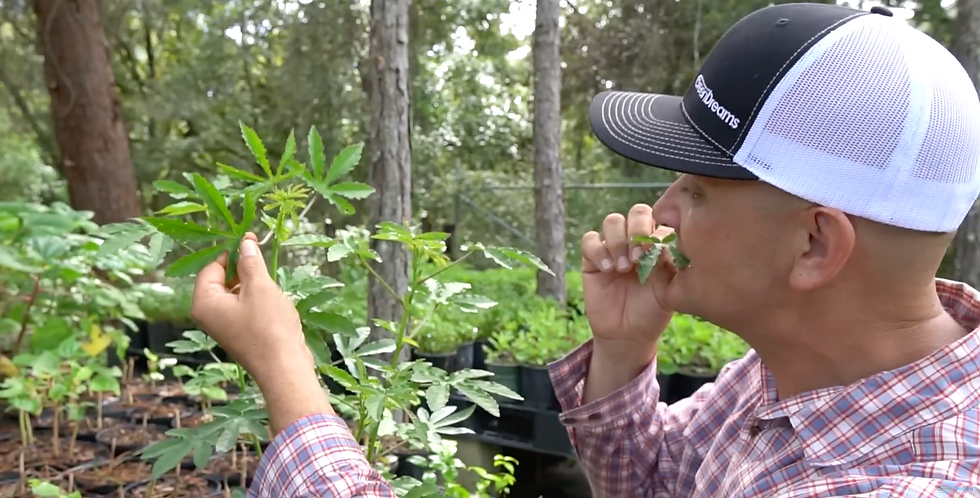
Tender tips are the goal.
Harvest before leaves become coarse and before woody growth dominates.
Florida
Plant after significant frost danger.
Tender leaf harvesting can begin once plants have established vigorous growth and continue throughout summer and fall.
Colder Regions
Harvest during:
Summer through first frost
Repeated tip harvests encourage branching.
If seed production is a priority, eventually stop pruning some stems and allow flowering and capsule development.

🌺 Flowering & Fruiting
Kenaf produces recognizable hibiscus flowers, with flower color varying among forms.
Flowers are followed by small seed capsules.
Unlike Roselle, Kenaf is not primarily grown for a thick fleshy calyx.
Its reproductive value is primarily:
Seed production
Pollinator activity
Breeding
Crop continuation
If tender leaf production is your goal, harvesting before heavy flowering generally gives you softer growth.
🍲 Traditional Culinary Use of Kenaf
Kenaf leaves appear in traditional food systems in parts of Africa and Asia.
Tender leaves have been used:
As cooked greens
In soups
In vegetable sauces
With grains
In mixed leafy dishes
Dried for later use
Documentation from northern Ghana specifically records Kenaf leaves in leafy soups.
Traditional Nigerian references also document its use as a sour vegetable.
That culinary history makes far more sense once you taste a young leaf.
It supplies something summer vegetables often lack:
Acidity.
🧵 Kenaf’s Other Life: One of the World’s Great Fiber Plants
Kenaf is far more than a garden vegetable.
Its stem contains two major fiber regions:
Bast Fiber
The long outer fiber.
Historically useful for:
Cordage
Rope
Textiles
Reinforcement material
Core Fiber
The shorter interior material.
Modern research and industry have explored it for:
Paper pulp
Biocomposites
Building products
Industrial absorbents
Animal bedding
Bioenergy
Filtration media
Horticultural growing substrates
That makes Kenaf particularly appropriate for a regenerative landscape:
you can eat it while it is tender, support pollinators when it flowers and still end the season with a tremendous amount of usable carbon-rich plant material.
🌎 GROWING THESE PLANTS BEYOND FLORIDA: PERENNIAL, ANNUAL & OVERWINTERING GUIDE
By this point, one thing should be clear: the biggest reason to grow Cranberry Hibiscus and Kenaf is not the label “perennial.”
It is what they contribute while they are growing.
Still, climate matters—especially because GreenDreams serves both Florida gardeners and customers ordering plants across the continental United States.
The USDA Plant Hardiness Zone Map is based on a location’s average annual extreme minimum winter temperature. It helps estimate winter survival, but it does not account for everything that determines how a plant performs.
Two gardens in the same zone can have very different outcomes because of:
Frost duration
Wind exposure
Soil drainage
Proximity to buildings or pavement
Canopy protection
Local cold pockets
Summer heat
Length of the frost-free growing season
The difference between a brief light frost and a prolonged hard freeze
🌿 What This Means at GreenDreams in Zone 9a/9b Florida
Our nursery is in the Spring Hill, Florida region, near the Zone 9a/9b transition.
Here, the practical question is often not:
“Is this plant annual or perennial?”
It is:
“How does this plant respond to our winter, and what can I do to keep it going?”
Cranberry Hibiscus
Cranberry Hibiscus is a true tender perennial.
In warm Florida microclimates, an established plant may:
Continue growing through a mild winter
Lose foliage during colder weather
Experience frost-burned growing tips
Suffer partial stem dieback
Resprout from living lower stems or the base
Be preserved as a container plant
Be backed up easily through propagation before winter
A light frost does not automatically mean the plant is dead.
If cold damages the top, wait until temperatures stabilize before making severe pruning decisions. Living lower stems may push new growth once warmth returns.
Kenaf
Kenaf is generally described and commercially managed as a frost-tender warm-season annual crop.
That remains the safest expectation for customers nationwide.
Florida gives Kenaf a much longer growing window than most of the country, however.
A protected plant experiencing only mild cold may hold living tissue longer than expected. After a light frost, do not automatically pull it. Wait, inspect lower stems and allow the plant to show you whether viable tissue remains.
What we would not promise is dependable regrowth after a hard freeze.
For Kenaf, reliable continuity from year to year is better achieved by saving seed and maintaining protected backup plants rather than depending entirely on an outdoor root system.
🧭 Practical Zone Guide
Growing Area | Cranberry Hibiscus | Kenaf |
Zones 10–11 | Strong perennial potential where frost is rare | Very long season; may persist longer in frost-free conditions, though often still managed as a crop |
Zone 9b | Tender perennial; protect during freezes and expect possible dieback | Long productive season; protect during unusual cold and do not rely on guaranteed spring return |
Zone 9a | Often grown as a tender perennial with winter protection; frost damage is possible | Excellent warm-season crop; mild frost damage may be survivable in protected situations, but hard freezes commonly end the crop |
Zone 8 | Best treated as a dieback tender perennial or annual depending on microclimate | Warm-season annual; restart each season is the safest expectation |
Zones 6–7 | Summer annual outdoors; overwinter protected Cranberry Hibiscus plants or cuttings | Summer annual; save seed or keep protected container material |
Zones 5 and colder | Seasonal outdoor plant; use greenhouse, sunroom or indoor propagation to preserve genetics | Seasonal outdoor crop; restart after frost or maintain protected material where practical |
🌱 The Best Insurance Policy: Make a Backup Before Winter
For growers who become attached to these plants, do not make winter survival an all-or-nothing experiment.
Before the first serious cold event:
Propagate backup plants while the parent plant is still actively growing.
Take Cranberry Hibiscus stem cuttings and root several backups.
Keep a smaller Cranberry Hibiscus in a movable container if practical.
Save mature Kenaf seed when viable capsules are available.
Keep a manageable young Kenaf or backup container plant protected if you want to experiment with carrying it through winter.
Move containers into a greenhouse, protected porch, sunroom or other bright frost-free location before freezing weather.
Give overwintered plants as much light as practical.
Reduce watering during cool, low-growth periods without allowing the root ball to remain bone dry.
Return plants outdoors gradually after frost danger passes.
For Florida growers, this strategy makes it possible to maintain a long-term collection even when an unusually cold winter damages the main landscape plants.
🍽️ 6 EASY RECIPE IDEAS
🌺 1. Cranberry Hibiscus Citrus Salad
Ingredients
1 cup tender Cranberry Hibiscus leaves
Mixed salad greens
Cucumber
Avocado
Orange or grapefruit
Olive oil
Pinch of salt
Black pepper
Method
Use small tender leaves whole.
Slice larger leaves thinly.
Because the hibiscus provides acidity of its own, taste the salad before adding additional citrus juice or vinegar.
The color contrast is excellent.
🌺 2. Cranberry Hibiscus Garden Chimichurri
Finely chop:
Cranberry Hibiscus
Parsley
Garlic
Green onion
Oregano
Add:
Olive oil
Salt
Pepper
Use vinegar sparingly.
The hibiscus supplies significant natural tang.
Serve over roasted vegetables, grilled fish, beans or rice.
🌺 3. Cranberry Hibiscus Pesto
Blend:
2 cups young Cranberry Hibiscus leaves
Basil
Garlic
Pecans or cashews
Olive oil
Parmesan or nutritional yeast
Salt
Unlike traditional pesto, you may need little or no lemon juice.
Taste before adding acid.
🌿 4. Garlic-Sautéed Kenaf Greens
Harvest very young leaves.
Heat olive or avocado oil.
Add:
Garlic
Onion
Young Kenaf leaves
Black pepper
Salt
Cook quickly until tender.
Finish with a small amount of lime only if needed.
This preparation minimizes the thicker texture that develops during prolonged simmering.
🌿 5. Kenaf, Tomato & Coconut Greens
Simmer:
Onion
Garlic
Ginger
Tomato
Coconut milk
Chili pepper
Add finely sliced young Kenaf leaves.
Cook until tender.
The natural mucilage adds body to the sauce in a similar way to other mallow-family vegetables.
Serve over rice.
🌿 6. West African-Inspired Kenaf Leaf Soup
Combine:
Chopped Kenaf leaves
Onion
Tomato
Pepper
Garlic
Beans or lentils
Vegetable, chicken or fish broth
Simmer until the greens soften.
Serve alongside rice, millet or another grain.
This is not intended as a claim to one specific traditional recipe, but it follows the documented West African practice of incorporating Kenaf into leafy soups.
NUTRITIONAL & PHYTOCHEMICAL PROFILE
These plants are food—not medicine.
That distinction matters.
Nevertheless, both contain compounds that have attracted scientific interest.
Cranberry Hibiscus
Research on Cranberry Hibiscus leaves and flowers has identified:
Anthocyanins
Flavonoids
Phenolic compounds
Organic acids
Myricetin derivatives
Quercetin derivatives
Kaempferol-related compounds
The deep red-purple coloration itself reflects an interesting phytochemical profile.
Laboratory antioxidant measurements are promising, but laboratory antioxidant activity should not be translated into promises about preventing or treating human disease.
Kenaf
Research on Kenaf foliage has identified:
Protein
Fiber
Minerals
Phenolic compounds
Chlorogenic acid
Kaempferol glycosides
Other phytochemicals
Protein values vary substantially according to maturity, cultivar and whether researchers report fresh or dried material.
Young leaves are generally much more useful as human food than mature fibrous foliage.
⚠️ FOOD & SAFETY CAUTIONS
1. Correct Identification Matters
There are many Hibiscus and mallow-family plants.
Do not eat an unidentified plant simply because the leaf resembles Cranberry Hibiscus or Kenaf.
2. Both Plants Contain Oxalates
Published testing has detected oxalates in both species, with concentrations varying according to genetics, plant age and growing conditions.
That does not automatically make them unsuitable vegetables—many familiar foods contain oxalates.
However, anyone specifically instructed by a healthcare professional to follow a low-oxalate diet should treat these greens accordingly.
Kenaf is especially well suited to cooked preparations.
3. Edible Does Not Mean Medicinal Treatment
Traditional medicinal uses exist for both species.
Modern research has investigated multiple plant compounds.
That is different from demonstrating that eating the leaves treats a medical condition.
We recommend these first and foremost as edible and useful plants.
4. Only Eat Plants Grown for Food
Do not consume foliage treated with pesticides or systemic products that are not labeled for edible crops.
At GreenDreams, we encourage organic growing practices and careful label compliance.
🌱 GREEN DREAMS “HIGH & TIGHT” PLANTING METHOD
Whether you are planting a 4-inch starter or a larger specimen, resist the temptation to bury it deeply.
Deep planting creates unnecessary problems in Florida landscapes.
Our General Approach
Dig the planting hole only slightly wider than the nursery container.
Keep the hole approximately the same depth as the root ball.
Remove the plant carefully without breaking apart the root system unnecessarily.
Position the crown at grade or slightly above surrounding soil level.
Backfill firmly enough to eliminate large air pockets.
Do not pile soil against the stem.
Water thoroughly to settle the surrounding soil.
Top-dress rather than bury amendments deeply around the root ball.
We refer to this philosophy as planting HIGH & TIGHT.
Florida’s rainfall, irrigation and occasional saturated periods make planting too deeply a much bigger problem than planting slightly proud of grade.
Planting video:https://youtu.be/RRQFY30qdA8?si=rRIcsbLlVAVYotfI
🌿 BUILDING THE SOIL AROUND YOUR EDIBLE HIBISCUS
Our preferred ecological approach focuses on the soil surface.
Consider top-dressing with:
Mature compost
Properly prepared or charged biochar
Organic granular fertilizer where needed
Mineral amendments such as azomite when appropriate to your soil program
Then cover the surrounding root zone with hardwood mulch.
Mulch helps:
Moderate soil temperature
Slow moisture loss
Feed soil organisms
Reduce weed pressure
Increase organic matter over time
Keep mulch several inches away from direct contact with the stem or crown.
The goal is a mulch ring—not a mulch volcano.
💧 WATERING — ONE OF THE MOST IMPORTANT VARIABLES
A newly planted 4-inch nursery plant has a small root system.
Its surrounding landscape may contain plenty of moisture while the original root ball has already dried out.
That is why establishment watering should focus on the actual root ball.
Immediately After Planting
Water thoroughly.
First Several Weeks
Check the root ball frequently.
Do not water according to a rigid calendar.
Instead, monitor:
Soil moisture
Heat
Rainfall
Wind
Container size
Soil type
Florida sand can dry quickly.
Heavy soils can remain wet surprisingly long.
The goal is:
Evenly moist—not constantly saturated.
💧 Cranberry Hibiscus Watering
Cranberry Hibiscus produces the best foliage with regular moisture.
Extended drought can cause:
Wilting
Small leaves
Leaf drop
Tougher foliage
Reduced growth
Once established it can tolerate temporary dryness, but a leaf crop is most productive when it is not repeatedly drought-stressed.
💧 Kenaf Watering
Kenaf becomes relatively resilient once established, but maximum biomass and tender-leaf production require adequate moisture.
Avoid cycling between:
bone dry → flooded → bone dry.
That pattern stresses roots and can contribute to lower-leaf yellowing.
🌿 FERTILIZATION
These are vigorous plants.
That does not mean more fertilizer is always better.
Too much nitrogen can create:
Long weak stems
Excessively soft growth
Pest-prone foliage
Poor structural strength
Our preference is to build fertility biologically.
Begin with compost and good soil management.
If plants indicate they need additional fertility, use an appropriate organic fertilizer according to label directions.
Cranberry Hibiscus
Moderate feeding supports repeated harvests.
Kenaf
Kenaf can respond dramatically to fertility because it is a high-biomass crop.
For the backyard landscape, you usually do not need to fertilize it as aggressively as commercial fiber production.
🌱 COMPANION PLANTING & EDIBLE GUILDS
Neither species requires a mythical “perfect companion.”
A better strategy is building layers.
Good Partners Around Cranberry Hibiscus
Consider lower-growing plants such as:
Perennial peanut
Sweet potato
Society garlic
Low culinary herbs
Add flowering ecological plants nearby to keep beneficial insects moving through the system.
The burgundy foliage also makes an excellent visual backdrop for chartreuse, silver or bright green plants.
Good Partners Around Kenaf
Because Kenaf gets tall, place it toward the:
North side of beds
Rear of borders
Seasonal screen
Outer food-forest edge
Avoid positioning it where its canopy will shade sun-loving vegetables.
Low-growing groundcovers can occupy the soil surface below it.
🪱 IMPORTANT KENAF NEMATODE NOTE
Kenaf has historically been associated with susceptibility to some root-knot nematodes.
Newer research also shows considerable genetic differences among Kenaf selections and among different Meloidogyne nematode species.
The practical conclusion is:
Do not automatically treat Kenaf as a nematode-suppressive cover crop.
If root-knot nematodes are already a serious problem, consider:
Soil testing
Crop rotation
Nematode-suppressive cover crops
Solarization where appropriate
Adding organic matter
Avoiding continuous planting of susceptible crops in the same bed
Cranberry Hibiscus has demonstrated substantially better root-knot nematode resistance in research.
🐞 ORGANIC TROUBLESHOOTING GUIDE
Symptom | Likely Cause | What to Do |
Pale foliage | Nutrient issue, excessive water or insufficient light | Check drainage, sun and fertility |
Long weak growth | Too much shade or nitrogen | Increase light; reduce feeding; prune |
Sudden wilt | Dry root ball or root problem | Check soil before automatically watering |
Yellow lower leaves | Water stress, root stress, aging leaves | Evaluate moisture and roots |
Whiteflies | Sap-feeding insects | Hose undersides; insecticidal soap if needed |
Aphids | Tender new growth attracting sap feeders | Wash off; encourage beneficial insects |
Spider mites | Hot, dry conditions | Inspect leaf undersides; improve plant health |
Leaf spots | Wet foliage + humidity | Improve airflow; avoid unnecessary overhead irrigation |
Root/crown rot | Planting too deep or wet soil | Improve drainage; pull mulch away |
Frost-blackened foliage | Cold injury | Wait, then prune dead tissue |
Kenaf stunting + root galling | Possible root-knot nematodes | Confirm diagnosis and rotate/manage soil |
Seedling collapse | Damping-off | Improve sanitation, drainage and airflow |
Kenaf stem lesions | Possible anthracnose | Remove infected material; avoid saving seed from affected plants |
For pest products, use only products labeled for the crop and application.
“Insecticidal soap,” horticultural oils and neem-based products are not interchangeable, and edible-crop harvest intervals should always be respected.
📅 SEASONAL CARE GUIDE FOR FLORIDA
Season | Cranberry Hibiscus | Kenaf |
🌱 Spring | Plant, fertilize lightly, begin tip pruning | Plant after cold danger; establish quickly |
☀️ Early Summer | Heavy leaf production | Explosive vertical growth |
🌧️ Mid-Summer | Harvest frequently; watch whiteflies | Harvest tips; manage height and wind |
🍃 Late Summer | Continue pruning and harvesting | Decide: leaves, fiber or seed |
🌺 Fall | Short days may trigger flowering | Flowering/seed development increases |
❄️ Winter | Protect in colder Florida; prune after damage | Usually end crop after frost |
🌿 South Florida Winter | Often continues growing | May persist if warm, though annual culture remains simplest |
🌺 WHICH TART HIBISCUS SHOULD YOU GROW?
Choose Cranberry Hibiscus If You Want:
The best ornamental foliage
Strong tart flavor
Salad-quality young leaves
A manageable shrub
Container potential
A food-producing hedge
A warm-climate perennial
OUR PICK FOR:
Edible landscaping + ornamental value
Choose Kenaf If You Want:
Huge biomass
A fast seasonal screen
Cooked leafy greens
A conversation plant
Fiber experimentation
A multifunctional crop
Rapid summer growth
OUR PICK FOR:
Maximum utility + biomass + educational value
🌿 DESIGNING WITH BOTH: COLOR IN FRONT, HEIGHT IN BACK
These two plants also tell two different stories about what “perennial edible gardening” really means.
Cranberry Hibiscus gives you a beautiful tender perennial that can become part of the permanent framework of a warm-climate edible landscape.
Kenaf gives you something different: astonishing seasonal productivity. Even when winter eventually ends the crop, one warm season can provide edible leaves, flowers, shade, privacy, pollinator activity, fiber and piles of organic material.
At GreenDreams, we have grown Kenaf long enough to have neighbors mistake it for an entirely different plant—and that personal history is part of why it remains one of our favorite useful species to introduce to new growers.
Place Cranberry Hibiscus closer to the house where its burgundy foliage can function as intentional landscape color.
Place Kenaf farther back where its height becomes an asset rather than a problem.
One becomes the edible ornamental.
The other becomes the seasonal biomass tower.
Together, they demonstrate an idea that defines the way we approach landscapes at GreenDreams:
Food plants do not have to look like a vegetable garden.
A landscape can produce food, feed pollinators, build organic matter and still look intentional.
🪴 SIZES AVAILABLE FROM GREEN DREAMS
🌺 Cranberry Hibiscus
4-inch rooted starter plants for online shipping
1-gallon plants when available
Larger specimens may be available seasonally at our Spring Hill retail nursery
🌿 Kenaf Hibiscus
4-inch rooted starter plants for online shipping
Larger locally grown plants may become available seasonally as the crop rapidly outgrows shipping-friendly sizes
Inventory changes throughout the season.
📦 ORDER LIVE EDIBLE HIBISCUS ONLINE
GreenDreams ships live plants by UPS across the continental United States.
Our smaller nursery sizes provide growers outside Florida an economical way to start subtropical edible plants while keeping shipping manageable.
Remember:
A 4-inch plant is a starter plant.
It has fewer stored resources and a smaller root system than an established 1-gallon specimen.
Give newly delivered plants time to:
Hydrate.
Recover from shipping.
Acclimate to local light.
Begin producing new growth.
Do not immediately put a recently boxed plant into extreme afternoon sun.
Once actively growing, both of these species can grow remarkably quickly.
Our retail nursery typically carries a much broader selection and larger plants than what can reasonably be boxed and shipped. View our latest inventory selection & pricing for in-person shopping here.
🏡 VISIT GREEN DREAMS NURSERY IN SPRING HILL, FLORIDA
Looking for larger plants?
Want to compare edible greens in person?
Our retail nursery carries many plants that never make it onto the online store because they are too large, too seasonal or available in quantities that change too quickly.
GreenDreams Nursery & Farm
18709 Hwy. 41
Spring Hill, FL 34610
Tuesday–Friday: 9 AM–5 PM
Saturday: 8 AM–3 PM
Our nursery specializes in:
🌳 Fruit trees
🌿 Perennial vegetables
🌺 Edible and useful subtropical plants
🦋 Native and ecological species
🌱 Food forest plants
🍃 Regenerative landscape support species
🌎 NEED HELP DESIGNING THE WHOLE SYSTEM?
Buying the plant is only one piece.
GreenDreams also works with Florida property owners who want help determining:
What should go where
Which species belong together
What will tolerate their microclimate
How to improve poor Florida soils
How to transition lawn into productive landscape
How much space mature plants actually require
Where fruit trees should be located
How to create useful understory layers
How to phase a project intelligently
Our Florida Services Include
🌿 On-site consultations
🗺️ Ecological and edible landscape design
🌳 Installation of food forests, orchards and ecological landscapes
🍃 Day-labor assistance for customer-led garden projects
🚚 Bulk plant deliveries
🪵 Mulch delivery
🌱 Compost delivery
⚫ Biochar and garden amendment delivery
Whether you need one unusual edible hibiscus or help turning the entire property into an ecosystem, our goal is the same:
Help you grow more food while creating healthier habitat around your home.
❓ FAQ: CRANBERRY HIBISCUS & KENAF
Is Cranberry Hibiscus edible?
Yes. The young leaves, tender shoots and flowers are edible. Young leaves are especially valued for their tart, sorrel-like flavor.
Is Kenaf edible?
Yes. Young Kenaf leaves and tender shoots have a documented history as vegetables in Africa and Asia. We especially like Kenaf in cooked preparations.
Are Cranberry Hibiscus and Roselle the same plant?
No.
Cranberry Hibiscus is Hibiscus acetosella and is primarily grown for edible foliage.
Roselle is Hibiscus sabdariffa and is famous for its fleshy calyces used in teas, syrups, jams and beverages.
Is Kenaf the same thing as marijuana or hemp?
No.
Kenaf is a hibiscus relative in the Malvaceae family.
Its scientific name cannabinus and deeply lobed leaves occasionally cause confusion, but it is botanically different from Cannabis.
Is Cranberry Hibiscus perennial in Florida?
Usually in warmer parts of Florida.
Cold events can damage it severely in northern and colder inland locations.
Zones 9–11 are the most practical range for perennial culture, with protection sometimes needed in the colder end of that range.
Is Kenaf perennial in Florida?
Kenaf may survive longer under frost-free tropical conditions, but we recommend treating it as a vigorous warm-season annual.
How tall does Cranberry Hibiscus grow?
Approximately 4–8 feet is common.
Regular pruning can maintain it around 3–5 feet.
How tall does Kenaf grow?
Approximately 6–12 feet is very realistic, with exceptional plants growing significantly taller.
Regular harvesting can keep it considerably shorter.
Can Cranberry Hibiscus grow in a pot?
Yes.
Large containers work very well, especially when plants are regularly tip-pruned.
Can Kenaf grow in a pot?
Yes, but use a large container.
Kenaf naturally wants to become a very large plant.
Does Cranberry Hibiscus need full sun?
Full sun generally produces the deepest foliage color and strongest structure.
It can tolerate some partial shade.
Does Kenaf need full sun?
Yes.
Kenaf is fundamentally a high-light, high-growth warm-season plant.
When should I harvest edible hibiscus leaves?
Harvest young leaves and tender growing tips.
Older foliage becomes tougher.
Frequent harvesting also encourages additional branching.
Can I eat Cranberry Hibiscus leaves raw?
Young leaves are excellent raw and provide strong acidity to salads.
Should Kenaf leaves be cooked?
Although culinary references document multiple uses, cooking young Kenaf leaves is our preferred approach because it improves texture and aligns with many traditional preparations.
Why is my Cranberry Hibiscus turning green?
Usually insufficient sunlight.
Genetics also affect leaf color.
Move the plant gradually into stronger light if possible.
Why is my Cranberry Hibiscus getting tall and skinny?
It likely needs more light, more pruning or both.
Pinching growing tips encourages branching.
Why is my Kenaf suddenly 8 feet tall?
Because rapid vertical biomass production is one of the plant’s defining characteristics.
If you want greens rather than fiber, start topping and harvesting earlier.
Do these plants produce the red hibiscus pods used for tea?
Not in the same way as Roselle.
If your goal is the classic fleshy hibiscus calyx used for Jamaica, sorrel or hibiscus tea, grow Hibiscus sabdariffa.


Comments