


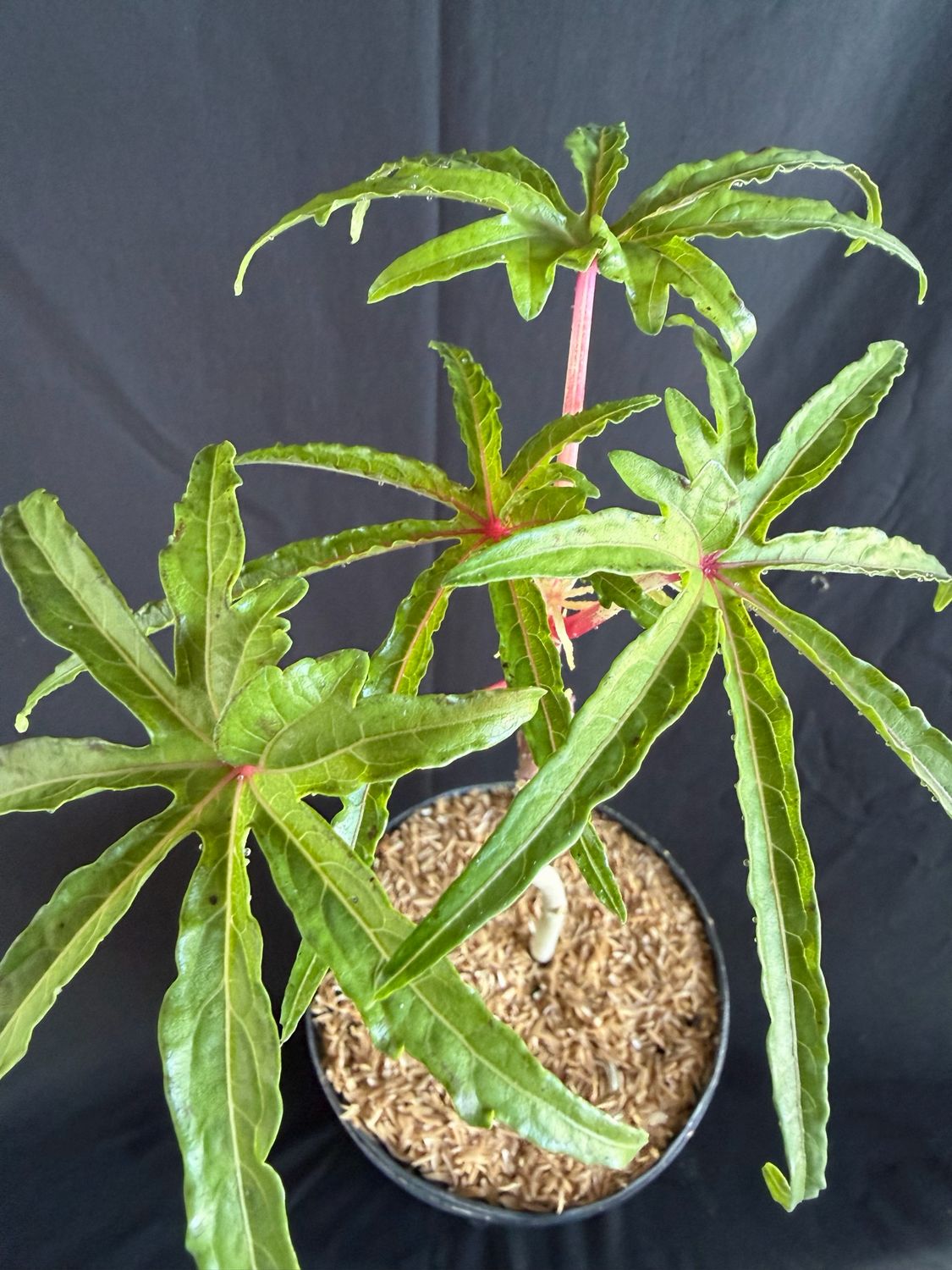
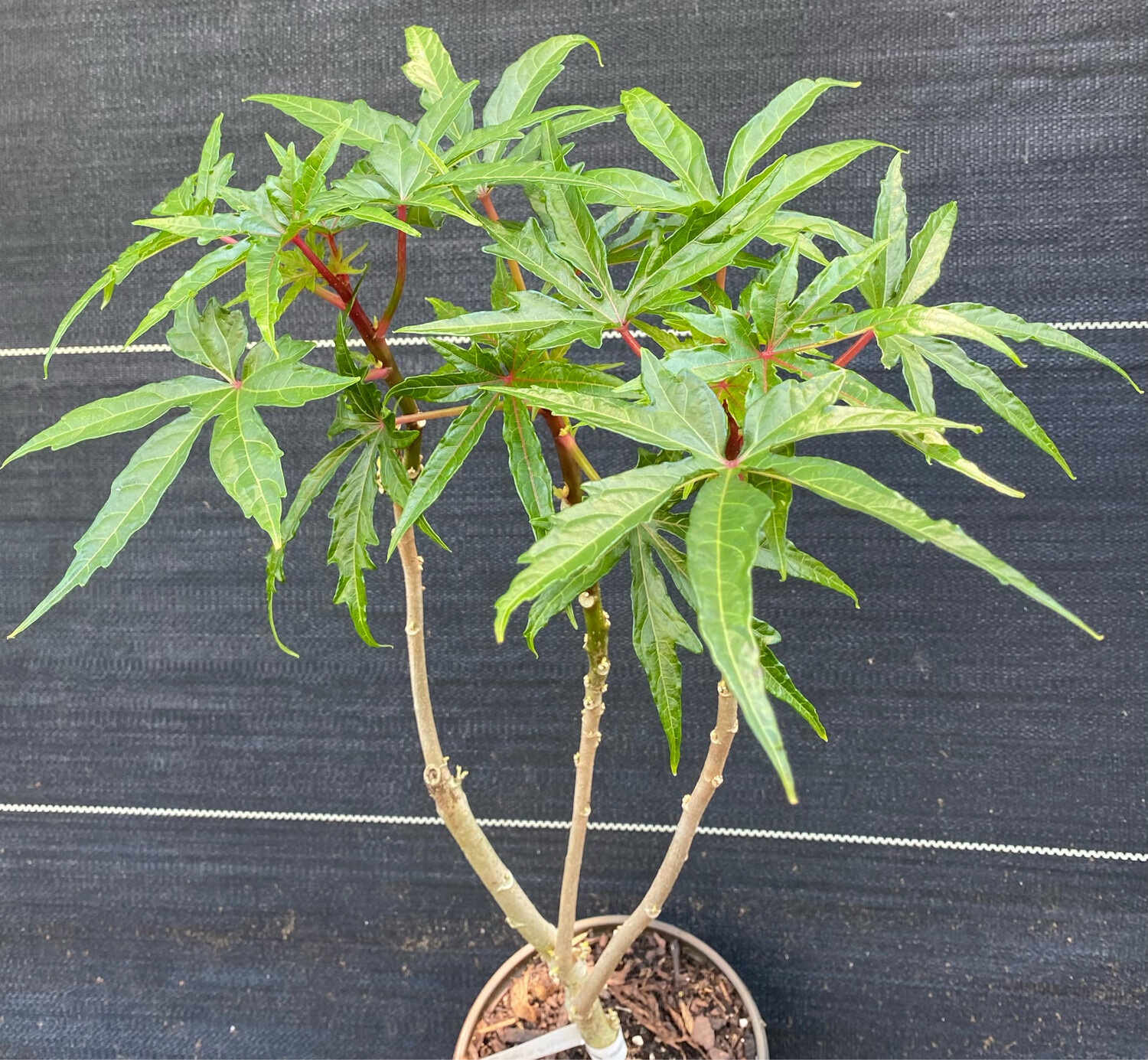
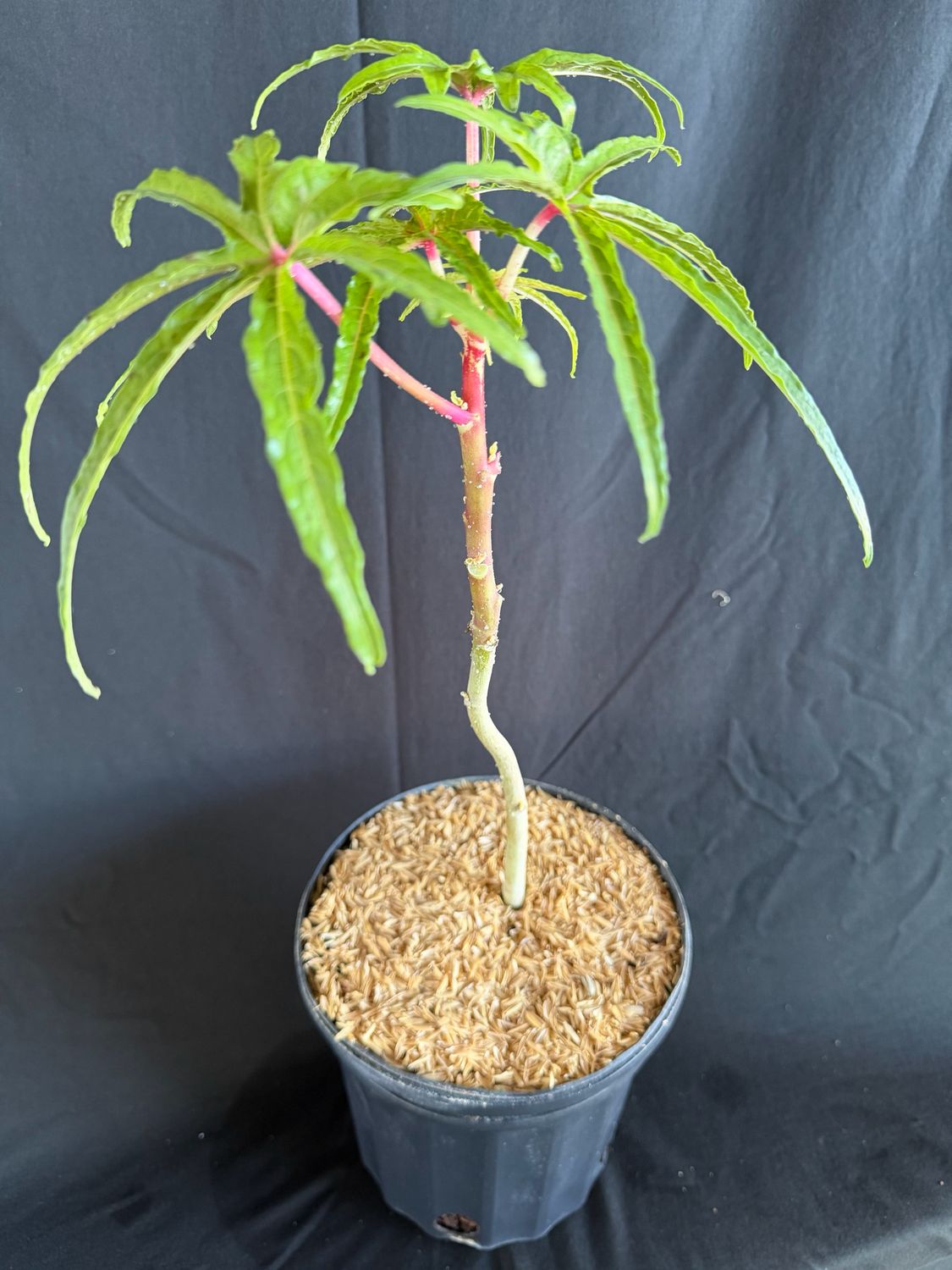
🌺 Chief Kubo’s Prize Edible Hibiscus: Growing a 1-Gallon Tropical Salad Tree
Abelmoschus manihot ‘Chief Kubo’s Prize’ — A Larger, Faster-Establishing Perennial Green for Florida Gardens, Food Forests & Containers
Traditional spinach may surrender when Florida summer arrives, but Chief Kubo’s Prize is just getting started.
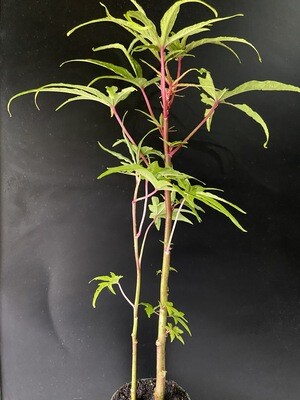
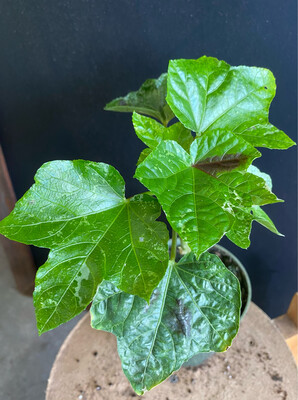
This tropical edible hibiscus produces deeply divided green leaves, striking reddish stems, showy yellow flowers and repeated harvests of tender cooking greens. Its mild, spinach-like flavor and heat-loving growth make it one of the most useful perennial vegetables for warm-climate gardens.
Our 1-gallon Chief Kubo’s Prize plants offer growers a more established alternative to a small starter. With a larger root system, more developed stems and greater moisture reserves, this size generally establishes faster, handles transportation better and reaches productive harvesting size sooner.
Grow it as a leafy vegetable, an ornamental shrub, a patio plant or part of a layered edible landscape. This is one plant that refuses to choose between useful and beautiful.
🌿 Chief Kubo’s Prize Quick Facts Guide
| Feature | Growing Information |
|---|---|
| Botanical Name | Abelmoschus manihot |
| Cultivar | Chief Kubo’s Prize; also circulated as Chief Kubo’s Pride |
| Common Names | Edible Hibiscus, Aibika, Bele, South Sea Salad Tree, Tree Spinach, Slippery Cabbage |
| Plant Family | Malvaceae—the mallow family |
| Plant Type | Tropical or subtropical perennial shrub grown for edible leaves and tender shoots |
| Size at Sale | Live plant growing in a 1-gallon nursery container |
| Estimated Age | Commonly approximately 4–8 months old, depending on season, pruning and propagation timing |
| Typical Shipping Height | Approximately 12–30 inches, although plants naturally vary by season and pruning cycle |
| Mature Height | Approximately 4–8 ft. in warm climates |
| Maintained Height | Easily kept around 3–5 ft. through harvesting and pruning |
| Mature Width | Approximately 3–5 ft. |
| Recommended Zones | Best as a perennial in USDA Zones 9–11 |
| Colder Regions | Grow as a warm-season annual or overwinter in a protected container |
| Sunlight | Full sun to partial shade |
| Best Florida Exposure | Morning sun with light afternoon shade, or full sun with dependable irrigation |
| Cold Hardiness | Frost tender; foliage and soft stems may be damaged near freezing |
| Growth Habit | Upright, branching, fast-growing and increasingly shrubby with age |
| Spacing | 3–5 ft. apart; 2–3 ft. for a frequently pruned edible hedge |
| Water Needs | Moderate to high during active growth; prefers evenly moist, well-drained soil |
| Wind Tolerance | Moderate; tall soft stems benefit from pruning or protection |
| Salt Tolerance | Low; protect from direct salt spray |
| Primary Harvest | Tender leaves, growing tips and soft young shoots |
| Florida Harvest Season | Primarily spring through fall; potentially longer in frost-free areas |
| Container Suitable | Yes—excellent with regular pruning |
| Indoor Suitable | Best as a temporary overwintering plant with strong supplemental light |
🪴 Why Choose the 1-Gallon Size?
A 1-gallon Chief Kubo’s Prize offers several advantages over a smaller starter plant.
The 1-Gallon Size Provides
- A more developed root system
- Greater soil volume and moisture reserves
- Better tolerance of short-term watering fluctuations
- More established stems and branches
- Faster landscape establishment
- An earlier path to light harvesting
- Improved resilience during longer shipping routes
- Less frequent watering than a 4-inch nursery container
- Easier transition into a 3-gallon or larger container
The plant may still experience leaf yellowing, wilting or temporary defoliation during shipping. However, a healthy 1-gallon root system usually has more stored energy available for recovery than a small starter.
Plant dimensions vary with season. A recently pruned plant may be shorter and fuller, while an actively growing summer plant may be taller and more open. Pruning does not reduce value—it encourages additional branching and future harvest points.
📍 Can Chief Kubo’s Prize Grow in Your Region?
Chief Kubo’s Pride is naturally adapted to tropical and subtropical conditions, but it can also be grown as a seasonal crop in cooler regions.
USDA Zones 9–11
These zones offer the best opportunity for perennial outdoor growth.
Examples include:
- Most of Florida
- Coastal and southern Texas
- Warmer parts of Louisiana
- Protected Gulf Coast communities
- Coastal portions of Georgia and South Carolina
- Southern Arizona
- Warmer parts of Southern and coastal California
Zone numbers provide a useful starting point, but they do not account for every local condition. Wind exposure, elevation, drainage, urban heat, proximity to water and individual microclimates can significantly affect winter survival.
In Central Florida, Chief Kubo’s Pride often behaves as a semi-perennial. The foliage may remain through a mild winter or freeze completely to the ground during colder weather. Protected roots frequently produce new growth in spring.
USDA Zone 8
Growers in Zone 8 can:
- Treat it as a highly productive summer annual
- Plant it in a protected south-facing microclimate
- Mulch heavily over the root zone
- Cover it before frost
- Take cuttings before winter
- Overwinter a container indoors or in a greenhouse
Outdoor survival is possible in warm Zone 8b locations, but it is never guaranteed.
USDA Zones 5–7
In cooler regions, grow Chief Kubo’s Prize much like an annual vegetable.
Move it outdoors after:
- Frost danger has passed
- Soil temperatures have warmed
- Nighttime temperatures consistently remain above approximately 55°F
A 1-gallon plant provides an especially useful head start in shorter growing seasons because it arrives more established than a small starter.
Before autumn frost, move the container indoors, take cuttings or allow the plant to complete its seasonal cycle.
🌱 A Salad Tree That Is Actually a Shrub
Despite the memorable nickname “South Sea Salad Tree,” Abelmoschus manihot is not a true tree.
It is a fast-growing shrub or subshrub with soft upper stems and an increasingly woody base. Without harvesting, it may develop into a tall, open plant. Regular tip pruning transforms it into a fuller, more accessible source of edible shoots.
Distinctive Features
- Deeply divided, maple-like green leaves
- Serrated leaf edges
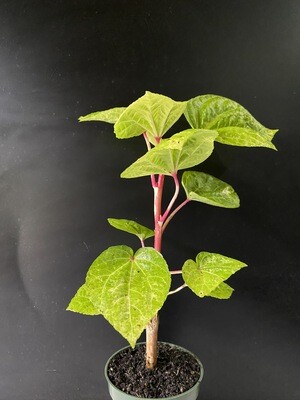
- Red, burgundy or magenta leaf stalks
- Coppery or purplish new growth
- Upright branching stems
- Pale yellow hibiscus-style flowers
- Dark maroon or purple flower centers
- Tender shoot tips that regrow after cutting
The dramatic leaf shape and colorful petioles make Chief Kubo’s Prize one of the most ornamental forms of edible hibiscus.
From across the garden, its foliage can resemble a tropical Japanese maple. Up close, the soft stems, yellow flowers and vigorous edible growth reveal a completely different kind of plant.
🌏 Origin, Culture & the Chief Kubo Name
The species Abelmoschus manihot originated across tropical and subtropical Asia into New Guinea and northeastern Australia. Through centuries of cultivation and plant sharing, it became an important leafy vegetable throughout Melanesia, Polynesia and Southeast Asia.
Regional names include:
- Aibika
- Bele
- Gedi
- Slippery cabbage
- Tree spinach
- South Sea salad tree
Growers selected different forms for leaf size, color, texture, vigor and culinary performance.
The cultivar is commonly circulated internationally as Chief Kubo’s Prize, while GreenDreams and other specialty nurseries have also offered it as Chief Kubo’s Pride.
Reliable public records do not provide a complete biography of Chief Kubo or a fully documented account of the cultivar’s original introduction. What is consistently recorded is the plant’s distinctive combination of red petioles, deeply divided foliage and ornamental edible growth.
That may be the most honest origin story: generations of gardeners continued propagating it because it was beautiful, productive and useful enough to deserve a place in the next garden.
🥬 What Does Chief Kubo’s Prize Taste Like?
The young leaves have a mild flavor often compared with:
- Spinach
- Tender Swiss chard
- Young okra leaves
- Mild Asian greens
The texture becomes soft and silky when cooked.
Chief Kubo’s Prize naturally contains mucilage, the same general thickening quality associated with okra. This allows the leaves to add body to soups, stews and sauces without relying on flour, starch or dairy.
Young Leaves
Young leaves and growing tips are:
- Tender
- Mild
- Quick-cooking
- Less fibrous
- Less noticeably mucilaginous
Mature Leaves
Larger leaves are:
- More substantial
- Better for simmering
- Slightly stronger in texture
- More effective as a natural thickener
🍃 Which Parts Are Edible?
The primary edible portions are:
- Young leaves
- Tender growing tips
- Soft young shoots
- Clean flower buds and flowers in some culinary traditions
Although Chief Kubo’s Pride is related to okra, it is not grown as an edible-pod crop.
Do not treat the mature seed capsules like okra pods. The dry, bristly capsules are not the reason to grow this species.
✂️ How to Harvest for Continued Production
A 1-gallon plant may reach harvestable size sooner than a smaller starter, but it should still be allowed to recover from transportation before cutting.
Wait until:
- The plant is holding its leaves well
- Healthy new growth has appeared
- The root ball is maintaining moisture normally
- Several active shoots are present
For the best harvest:
- Select the upper 3–6 inches of an actively growing shoot.
- Cut immediately above a healthy leaf node.
- Leave several leaves on the branch.
- Allow new side shoots to develop.
- Repeat once the new branches become established.
Harvesting and pruning are essentially the same activity. Each properly placed cut can encourage two or more new branches—and each branch becomes another future harvest point.
Avoid removing more than approximately one-third of the foliage at one time, especially from a recently shipped plant.
🗓 Typical Harvest Season
Central Florida
- Spring: New growth begins as temperatures rise.
- Summer: Peak production and fastest regrowth.
- Fall: Continued harvesting until cool weather slows growth.
- Winter: Limited or no production after frost.
South Florida
In frost-free locations, harvesting may continue through most of the year. Growth can still slow during short winter days.
Southeastern United States
Expect the main crop from late spring through the first significant frost.
Northern and Western Regions
Harvest throughout summer after the plant has acclimated to outdoor conditions. Move the container indoors or take cuttings before cold weather.
A well-established 1-gallon plant can provide a faster seasonal harvest in regions with shorter summers.
🍲 Three Ways to Use Chief Kubo’s Prize
Recipe 1: Coconut Bele Greens
Ingredients
- 4–6 cups young Chief Kubo’s Pride leaves and tender shoots
- 1 tablespoon coconut oil
- ½ small onion, chopped
- 2 garlic cloves, minced
- ½–1 cup unsweetened coconut milk
- Salt and black pepper
- Ginger, lime or hot pepper, optional
Directions
- Wash the greens thoroughly and remove firm lower stems.
- Roughly chop the leaves.
- Sauté the onion in coconut oil until translucent.
- Add garlic and cook briefly.
- Add the greens and stir until wilted.
- Pour in enough coconut milk to lightly coat the leaves.
- Simmer for 5–10 minutes.
- Season and serve with rice, beans, fish, chicken or root vegetables.
For a lighter texture, use young leaves and cook uncovered. For a creamier dish, simmer larger leaves slightly longer.
Recipe 2: Garlic-Ginger Edible Hibiscus Stir-Fry
Ingredients
- 4 cups tender edible hibiscus leaves
- 1 tablespoon avocado, coconut or sesame oil
- 2 garlic cloves, sliced
- 1 teaspoon grated ginger
- 1 small sweet pepper, sliced
- Soy sauce, tamari or sea salt
- Fresh lime juice
- Scallions or sesame seeds, optional
Directions
- Heat the oil in a wide pan.
- Add garlic and ginger.
- Stir in the pepper and cook briefly.
Recipe 3: Tropical Green Garden Soup
Ingredients
- 3 cups chopped Chief Kubo’s Prize leaves
- 1 tablespoon olive or coconut oil
- 1 onion, diced
- 2 garlic cloves
- 1 sweet potato, diced
- 1 can cooked beans or chickpeas
- 4 cups vegetable or chicken broth
- Fresh herbs
- Salt, pepper and hot sauce
Directions
- Sauté the onion and garlic.
- Add sweet potato and broth.
- Simmer until the sweet potato is nearly tender.
- Add beans and edible hibiscus.
- Cook for another 5–10 minutes.
- Season to taste.
- Blend a small portion for a thicker broth, if desired.
The natural mucilage in the leaves gives the soup extra body without flour or cream.
🌿 Nutritional & Traditional-Use Perspective
Research on aibika leaves has identified nutrients and compounds that may include:
- Beta-carotene
- Folate
- Calcium
- Iron
- Potassium
- Magnesium
- Vitamin C
- Fiber
- Plant protein
- Flavonoids
- Naturally occurring polysaccharides
Exact values vary considerably among cultivars, climates, soils, harvest ages and cooking methods.
It is most accurate to describe Chief Kubo’s Prize as a nutrient-diverse leafy vegetable rather than promise a fixed nutritional value from every plant or harvest.
The species also has a history of use in traditional herbal systems. Researchers have studied concentrated flower and plant extracts, but those preparations are not equivalent to eating garden-grown leaves as food.
Chief Kubo’s Prize is sold as an edible and ornamental plant—not as a treatment for any disease or medical condition.
📜 Traditional Craft & Industry Uses
The natural mucilage associated with Abelmoschus manihot has also been used in traditional handmade papermaking.
Plant-derived mucilage can help suspend and distribute fibers during the papermaking process. This connection gives the species a role beyond food production.
Chief Kubo’s Prize belongs to a plant group associated with:
- Culinary traditions
- Subsistence food production
- Ornamental horticulture
- Plant breeding
- Traditional craft
- Cultural preservation
- Specialty edible landscaping
🌸 Growing Chief Kubo’s Prize as an Ornamental
Chief Kubo’s Pride is productive enough for the vegetable garden but attractive enough for the front landscape.
Use it in:
- Food forest borders
- Tropical foundation beds
- Large patio containers
- Edible privacy screens
- Kitchen gardens
- Mixed perennial beds
- Pollinator gardens
- Courtyards
- Seasonal tropical displays
- Productive hedges
Its fine-textured green foliage and red petioles pair well with:
- Bananas
- Cranberry hibiscus
- Purple basil
- Golden sweet potato
- Lemongrass
- Mexican sunflower
- Clumping grasses
- Silver-leaf herbs
- Yellow or purple flowering natives
Best Landscape Placement
Use it:
- Behind lower-growing perennial greens
- Beside plants with broader foliage
- Where it can be harvested easily
- In a bed with reliable irrigation
- Where winter dieback will not leave the only focal point empty
Avoid placing it in a narrow walkway or directly against structures where its mature width will become inconvenient.
🌱 Planting a 1-Gallon Chief Kubo’s Prize
Do Not Transplant Immediately After Shipping
Even a larger 1-gallon plant experiences darkness, vibration, temperature fluctuations and moisture changes during shipping.
Keep the plant in its current container for approximately 30 days or until healthy new growth appears.
During recovery:
- Open the package immediately.
- Check the root-ball moisture.
- Water at soil level when necessary.
- Place the plant in bright shade.
- Protect it from strong wind.
- Avoid immediate afternoon sun.
- Do not fertilize a visibly stressed plant.
- Increase sunlight gradually.
- Wait for new growth before transplanting.
A plant purchased directly from our retail nursery may require less recovery time than a shipped plant, but it should still be allowed to adjust to its new environment.
Where to Plant
Choose a location with:
- Full sun to partial shade
- Rich, biologically active soil
- Good drainage
- Reliable irrigation
- Protection from direct salt spray
- Room for pruning and harvesting
- Shelter from severe wind
Best Florida Exposure
Morning sun with light afternoon shade often produces lush, tender foliage.
Full sun is also suitable when:
- The plant is acclimated gradually
- The root zone is mulched
- Irrigation is dependable
- The soil drains correctly
Avoid Planting
- In standing water
- Beneath constant roof runoff
- In a low drainage basin
- Against a scorching west-facing wall
- In exposed oceanfront salt spray
- Beneath dense tree roots
- Where lawn equipment may strike the stem
- Where mature growth will block a walkway
🌿 GreenDreams Planting Method
- Water the 1-gallon container before planting.
- Dig a hole only slightly wider than the root ball.
- Keep the hole approximately the same depth as the nursery container.
- Remove the plant without pulling on the stem.
- Gently loosen only tightly circling outer roots.
- Position the top of the root ball slightly above the surrounding soil grade.
- Backfill with native soil, finished compost or a properly integrated blend.
- Firm the soil securely around the root ball.
- Do not bury the stem or root crown.
- Water deeply at soil level.
- Top-dress with compost, charged biochar, azomite or appropriate organic nutrients.
- Add hardwood mulch around the planting area.
- Keep mulch several inches away from the stem.
Planting “high and tight” protects the root crown from excessive moisture and provides better stability during establishment.
🎥 Watch the GreenDreams planting method:
https://youtu.be/RRQFY30qdA8?si=rRIcsbLlVAVYotfI
💧 Watering a 1-Gallon Chief Kubo’s Prize
A 1-gallon plant has more soil volume than a 4-inch starter, but it can still dry quickly during hot or windy weather.
Always Water at Soil Level
Use:
- Drip irrigation
- A watering wand directed at the soil
- A gently running hose
- Morning watering whenever possible
Avoid routine overhead irrigation.
Overhead watering can contribute to:
- Leaf spotting
- Soil splash
- Fungal pressure
- Uneven root-zone moisture
- Water waste
- Afternoon leaf injury
Before Planting
Check the 1-gallon container every morning during warm weather.
Water thoroughly when:
- The upper soil begins to dry
- The container feels noticeably lighter
- Leaves begin losing firmness
- Water demand increases during rapid growth
Water until the root ball is evenly moist and excess water drains from the container.
After Planting
First 7–14 Days
Water deeply each morning when rainfall is insufficient.
The goal is to moisten the original 1-gallon root ball—not merely the surrounding soil.
Weeks 3–6
Water approximately every two to three days, adjusting for:
- Sandy soil
- Temperature
- Wind
- Rainfall
- Mulch
- Sun exposure
- Plant appearance
Established Plants
Provide approximately one to three deep waterings per week during active growth.
Hot, dry spring conditions may require more frequent irrigation than Florida’s rainy season.
A wilted plant is not always a dry plant. Oversaturated roots can also prevent water uptake. Always check the soil before adding more water.
🌾 Soil, Mulching & Organic Fertility
Chief Kubo’s Pride responds well to rich soil because leaf harvesting continually removes nutrients from the plant.
Helpful organic inputs include:
- Finished compost
- Worm castings
- Balanced organic vegetable fertilizer
- Diluted fish hydrolysate
- Kelp products
- Alfalfa-based amendments
- Properly charged biochar
- Trace minerals based on soil testing
- Hardwood mulch
Suggested Feeding Schedule
Spring
Top-dress as active growth resumes.
Summer
Feed lightly every four to eight weeks when harvesting regularly.
Fall
Reduce nitrogen as frost season approaches in Central and North Florida.
Winter
Do not fertilize a dormant or freeze-damaged plant.
Too much nitrogen can create weak, watery stems that attract aphids and break in wind.
✂️ Pruning for More Leaves
A 1-gallon Chief Kubo’s Prize may already have several established stems. Early shaping helps turn those stems into a compact, productive canopy.
Tip-Pruning Technique
- Identify a healthy growing tip.
- Cut immediately above a leaf node.
- Leave several healthy leaves below the cut.
- Allow side branches to emerge.
- Harvest the new shoots once they become established.
Maintenance Pruning
- Keep the plant within harvesting reach.
- Remove weak and crossing stems.
- Shorten top-heavy growth before storms.
- Use clean, sharp pruners.
- Avoid removing more than one-third of the canopy at once.
- Save healthy cuttings for propagation when appropriate.
Winter Pruning
Do not prune immediately after frost.
Wait until recurring freeze danger has passed, then:
- Remove dead upper stems.
- Cut back to healthy green tissue.
- Thin crowded older growth.
- Add compost.
- Refresh mulch.
- Resume watering as growth returns.
🗓 Seasonal Care in Florida
🌱 Spring
Expect:
- New basal shoots
- Rapid leaf development
- Increasing water demand
- Aphids occasionally gathering on tender tips
Care priorities:
- Remove dead stems after freeze danger passes.
- Add compost.
- Refresh mulch.
- Resume irrigation.
- Begin light harvesting after strong new growth develops.
☀️ Summer
Expect:
- Peak production
- Fast vertical growth
- Frequent harvesting
- Increased water use
- Occasional caterpillars, aphids, beetles or mites
Care priorities:
- Harvest and prune regularly.
- Maintain even soil moisture.
- Inspect leaf undersides.
- Feed lightly.
- Protect tall stems from severe wind.
- Avoid afternoon overhead watering.
🍂 Fall
Expect:
- Continued harvest
- Potential flowering
- Slower regrowth
- Cooler-weather leaf yellowing
Care priorities:
- Reduce heavy feeding.
- Take backup cuttings.
- Renew mulch.
- Prepare frost fabric.
- Inspect container plants before moving them indoors.
❄️ Winter
Expect:
- Slower growth
- Yellowing leaves
- Partial leaf drop
- Frost-blackened foliage
- Complete top dieback during a hard freeze
Chief Kubo’s Pride is not a conventional deciduous tree, but it can become cold-deciduous in Zone 9.
Protect it by:
- Mulching the root zone
- Covering before frost
- Sheltering it from north winds
- Keeping the soil lightly moist
- Avoiding saturated winter conditions
- Waiting for spring warmth before deciding it is dead
🪴 Growing the 1-Gallon Plant in a Container
A 1-gallon plant can remain in its existing container during its shipping recovery period, but it will eventually require more root space.
Recommended Pot Progression
1 gallon → 3 gallon → 7 gallon → 10–15 gallon or larger
Avoid moving directly from a 1-gallon pot into a dramatically oversized container. Excess unused potting mix can remain wet for too long.
Signs It Is Ready for a 3-Gallon Container
- Roots are visible at drainage holes.
- The root ball holds together.
- The pot dries unusually quickly.
- Water passes through immediately.
- Growth slows despite proper care.
- Roots circle the inside of the pot.
- The plant becomes top-heavy.
Recommended Potting Mix
Use an organic mix containing approximately:
- 50–60% quality peat- or coconut-coir-based potting mix
- 20–30% finished compost or worm castings
- Approximately 20% perlite, pine bark fines or another aeration material
The mix should retain moisture while still draining freely.
Avoid:
- Heavy native soil
- Pure compost
- Dense garden soil
- Containers without drainage holes
How to Up-Pot
- Select a clean 3-gallon container with drainage.
- Add enough mix to maintain the original planting depth.
- Slide the root ball out carefully.
- Loosen only tightly circling roots.
- Set the plant slightly high.
- Fill around the root ball.
- Firm the mix gently.
- Water thoroughly at soil level.
- Place in bright shade for several days.
- Gradually return it to stronger sunlight.
🏠 Can It Be Grown Indoors?
Chief Kubo’s Prize can be overwintered indoors, but it requires substantially more light than a conventional houseplant.
Provide:
- A bright south- or west-facing window
- A strong full-spectrum grow light
- Good air circulation
- Protection from heating vents
- Reduced winter watering
- Regular pest inspection
Indoor plants may develop:
- Leggy growth
- Smaller leaves
- Leaf drop
- Aphids
- Whiteflies
- Spider mites
A greenhouse, sunroom or protected porch generally produces better results than an ordinary interior room.
🐝 Companion Plants & Productive Guilds
Chief Kubo’s Pride works well in layered edible landscapes.
| Companion Plant | Garden Function |
|---|---|
| Pigeon Pea | Nitrogen-fixing shrub, pollinator resource and filtered wind protection |
| Perennial Peanut | Low nitrogen-fixing groundcover |
| Mexican Sunflower | Pollinator attraction and chop-and-drop biomass |
| Clumping Grasses | Carbon-rich mulch material and visual structure |
| Lemongrass | Aromatic border and biomass |
| Cranberry Hibiscus | Complementary edible foliage and contrasting color |
| Okinawan Spinach | Lower-growing perennial green |
| Katuk | Shade-tolerant edible shrub for layered food forests |
| Sweet Potato | Seasonal edible groundcover |
| Native Salvia | Pollinator support and ornamental color |
Do not allow companion plants to crowd the root zone or block access for harvesting.
Maintain:
- Air circulation
- Irrigation coverage
- Mulched pathways
- Visibility for pest inspection
- Space for pruning
⚠️ Important Cautions
Harvest the Correct Plant Parts
Use young leaves, tender shoots and growing tips.
Do not treat the mature seed capsules like okra pods.
Introduce New Foods Gradually
Begin with a moderate serving when trying the plant for the first time.
People with known sensitivities to okra or other members of the mallow family should exercise additional caution.
Follow Food-Safe Growing Practices
Do not eat foliage treated with:
- Systemic ornamental pesticides
- Products not labeled for edible crops
- Unknown chemical sprays
- Treatments still within a required preharvest interval
Cooking Guidance
Young leaves are eaten raw in some traditions, but cooking remains the most common and versatile preparation.
Cooking:
- Softens mature leaves
- Improves texture
- Integrates the mucilage into the dish
- Makes larger portions easier to prepare
Environmental Limitations
- Frost can kill the canopy.
- Salt spray can burn foliage.
- Tall stems can break in storms.
- Poor drainage can damage roots.
- Containers can still dry quickly.
- Young plants need time to recover after transportation.
🔍 Chief Kubo’s Prize Troubleshooting Guide
| Issue | Likely Cause | Organic Response |
|---|---|---|
| 🍂 Yellow lower leaves | Natural aging, wet roots or declining fertility | Check drainage and moisture before feeding |
| 🫣 Curling leaves | Heat, dry soil, wind, mites or aphids | Inspect leaf undersides and correct moisture stress |
| 💧 Wilting with dry soil | Insufficient irrigation | Water the entire root ball slowly |
| 💦 Wilting with wet soil | Poor drainage or root decline | Pause watering and improve aeration |
| ☀️ Bleached or crisp areas | Sudden exposure to intense sun | Return to bright shade and reacclimate gradually |
| 🔥 Brown leaf tips | Fertilizer salts or uneven watering | Flush the soil and reduce feeding |
| 🌬️ Leaning stems | Excess height or wind exposure | Prune for balance and stake loosely |
| ❄️ Blackened foliage | Frost injury | Wait until freeze danger passes before pruning |
| 🧘 No winter growth | Cold dormancy or top dieback | Scratch-test lower stems and wait for warmth |
| 🐛 Holes in foliage | Caterpillars, beetles, snails or grasshoppers | Hand-pick and use crop-labeled controls when necessary |
| 🪲 Sticky or distorted tips | Aphids or whiteflies | Inspect carefully, control ants and use labeled insecticidal soap |
| 🕷️ Stippling or fine webbing | Spider mites | Rinse leaf undersides and use a food-crop-labeled treatment |
| 🍄 Leaf spots | Wet foliage, poor airflow or soil splash | Stop overhead watering and remove heavily affected leaves |
| 🐜 Ant activity | Aphids or other sap-feeding insects may be present | Inspect new growth before treating |
| 🪴 Stalled transplant growth | Root disturbance, excess moisture or poor acclimation | Stabilize care and wait for new growth |
| 🪣 Water rushes through the pot | Root-bound plant or dry potting mix | Rehydrate slowly and consider up-potting |
| 🌾 Small or weak growth | Low light, insufficient warmth or limited nutrition | Correct the limiting condition before adding fertilizer |
| 🐛 Knotted roots and chronic decline | Root-knot nematodes | Use clean container media, raised beds and organic-matter-rich soil |
❓ Frequently Asked Questions
What is the advantage of buying a 1-gallon plant?
A 1-gallon Chief Kubo’s Prize generally has a larger root system, more developed stems and greater moisture reserves than a small starter. It can establish and reach productive size faster.
How old is the 1-gallon plant?
Plants are commonly approximately 4–8 months old, although age, height and fullness vary with propagation timing, pruning and season.
How large will the plant be when shipped?
A typical 1-gallon plant may be approximately 12–30 inches tall. Some plants may be shorter and bushier because of recent pruning.
Can I harvest it immediately?
Allow the plant to recover from shipping and produce healthy new growth first. Once several strong shoots are actively growing, begin with a light harvest.
Should I transplant it immediately after delivery?
No. Keep it in its existing 1-gallon container for approximately 30 days or until healthy new growth appears.
What size container comes next?
A well-rooted 1-gallon plant should generally move into a 3-gallon container before progressing to a 7-gallon or larger pot.
Is Chief Kubo’s Prize really edible?
Yes. Abelmoschus manihot is widely grown for its tender leaves and shoots.
Is it the same as okra?
No. The two plants are related, but Chief Kubo’s Pride is grown primarily for leaves rather than edible pods.
What does it taste like?
The leaves have a mild spinach-like flavor with a silky texture when cooked.
How tall does it grow?
It commonly reaches approximately 4–8 ft. Without pruning. Regular harvesting can maintain it around 3–5 ft.
Can I grow it in full Florida sun?
Yes, with consistent moisture and gradual acclimation. Light afternoon shade may reduce stress during extreme heat.
Will it survive Central Florida winter?
Established roots frequently survive, but frost may damage or kill the canopy. Mulching and wind protection improve recovery.
Can it grow in Zone 8?
Yes as a summer annual. Outdoor winter survival is possible in protected Zone 8b locations but is not guaranteed.
Can northern gardeners grow it?
Yes. A 1-gallon plant offers a useful head start for summer production. Grow it as an annual or overwinter it indoors.
Can it remain in a container?
Yes. Move it gradually into a 3-gallon, 7-gallon and eventually a 10–15 gallon or larger container.
Why did leaves fall after shipping?
Darkness, heat, movement and temporary dehydration can trigger leaf loss. A healthy 1-gallon root system can often produce a fresh canopy after recovery.
Does it flower?
Yes. Established plants may produce pale yellow flowers with dark centers.
🚚 Shipping 1-Gallon Chief Kubo’s Prize Plants
Our 1-gallon plants are shipped from Florida using UPS Ground.
Live-plant orders are processed for shipment each Monday.
Why the 1-Gallon Size Ships Better
Compared with a 4-inch starter, a 1-gallon plant provides:
- More soil volume
- A larger moisture reserve
- A more developed root system
- Greater stored energy
- Improved recovery potential
- Better tolerance of longer transit
This does not eliminate shipping stress.
A 1-gallon plant may still arrive with:
- Wilted leaves
- Yellowing
- Broken soft stems
- Partial defoliation
- Dry soil
- Temporary growth interruption
Living roots and stems can produce new foliage even when the original leaves are cosmetically damaged.
Best Shipping Regions
The 1-gallon size is especially well suited for:
- Florida
- The Southeastern United States
- Texas
- Gulf Coast regions
We also ship throughout the continental United States.
Northern & Western Shipping Advisory
Extended UPS Ground transit may expose tropical plants to:
- Prolonged darkness
- Temperature changes
- Dehydration
- Heat buildup
- Freezing conditions
- Carrier delays
Buyer discretion is especially important during extreme heat and cold.
GreenDreams cannot guarantee that plants traveling extended distances will arrive in the same cosmetic condition in which they left our Florida nursery.
California agricultural inspections may add another day or longer to transit.
Arrival Care
- Open the package immediately.
- Remove packing carefully.
- Check the root-ball moisture.
- Water at soil level if necessary.
- Place the plant in bright shade.
- Protect it from wind.
- Do not fertilize immediately.
- Remove only fully dead or broken material.
- Gradually increase sunlight.
- Wait approximately 30 days or for new growth before transplanting.
🏡 Shop in Person at GreenDreams Nursery & Farm
We also carry Chief Kubo’s Prize and many other edible plants at our retail nursery in Spring Hill, Florida.
Local availability may include:
- Larger Chief Kubo’s Pride plants
- 3-gallon or larger edible hibiscus
- Rare perennial greens
- Tropical fruit trees
- Native pollinator plants
- Food forest support species
- Organic soil amendments
- Plants not listed in the online store
GreenDreams Nursery & Farm
🌾 18709 Hwy. 41, Spring Hill, FL 34610
🕘 Tuesday–Friday: 9AM–5PM
🌞 Saturday: 8AM–3PM
Stop by to see what is actively growing, flowering and fruiting this week.
🌿 Beyond the Plant: GreenDreams Services
At GreenDreams, we help Florida growers build complete ecological and edible landscapes—not simply collect individual plants.
Our services include:
- 🌳 Onsite consultations
- ✏️ Edible-landscape and food-forest design
- 🚜 Professional installation and project management
- 👨🌾 Day-labor support for hands-on projects
- 🌿 Food-forest renovation and seasonal guidance
- 💧 Irrigation planning and improvements
- 🚚 Bulk plant delivery
- 🪵 Mulch delivery
- 🧺 Compost and organic soil-product delivery
- 🌾 Biochar and garden-amendment delivery
- 🏡 Large-scale regenerative property planning
Whether you need help placing one edible shrub or creating an entire productive landscape, our team can connect plant selection, soil health, irrigation and long-term maintenance.
🌿 IMPORTANT INFORMATION BEFORE PURCHASING LIVE PLANTS
Please note: Plants purchased through our online store are not available for pickup at our retail nursery in Spring Hill, Florida.
Online inventory is housed at a separate facility and is priced, prepared, and handled exclusively for shipping.
🌱 Looking for larger plants or more selection?
Our retail nursery location offers far more availability, including larger sizes, specialty plants, and many selections not suitable for nationwide shipping.
Local pickup is available for retail nursery purchases only.
Visit our Spring Hill, FL retail nursery page to explore in-person shopping options.
🚚 LIVE PLANT SHIPPING & TRANSIT EXPECTATIONS
Live plants naturally experience stress during shipping. Temporary leaf drop, mild wilting, or cosmetic stress is normal after transit. Most plants recover quickly with proper watering, gradual light exposure, and basic aftercare. Some plants may require additional attention during the first few weeks.
Despite careful packing, minor cosmetic damage may occur during transit. Small issues such as broken leaves or stems typically resolve with time and proper care.
If your shipping box arrives with significant external damage, please contact UPS within 30 days to initiate a carrier claim.
⏱️ SHIPPING METHOD, TIMING & TRANSIT WINDOWS
All online orders ship via UPS Ground from our Central Florida nursery.
📦 Shipping Schedule: Orders ship once weekly on Mondays to reduce the risk of packages sitting in transit over weekends. A countdown clock on our website displays the next shipping date.
🚚 Typical Transit Times:
-
Florida: 1–2 days
-
Southern U.S.: approximately 2 days
-
Midwest, West & Northern U.S.: 3–5 business days
Long-distance shipments, particularly to the western U.S., may experience additional transit time due to agricultural inspections in states such as Arizona, California, and Texas.
Extended transit times can be more challenging for small or tender plants and may require additional recovery care after arrival.
🌡️ EXTREME WEATHER & SEASONAL RISK
Live plants are sensitive to temperature extremes.
We cannot guarantee plant condition during periods of extreme summer heat or winter cold and freezing temperatures. Weather-related delays, carrier interruptions, or exposure during delivery are beyond our control.
Customers are responsible for:
-
Monitoring tracking information sent via email
-
Retrieving packages promptly upon delivery
-
Preventing plants from being left outdoors in extreme conditions
During unsafe weather, holiday shipping volume, or extended transit risk, orders may be held and shipped the following week to protect plant health.
⚠️ CUSTOMER RESPONSIBILITY & REFUND POLICY
By purchasing live plants, customers acknowledge and accept the risks associated with shipping, weather exposure, transit delays, and regional suitability.
Refunds or replacements are considered only under exceptional circumstances and in accordance with our return and refund policy. We are not responsible for:
-
Weather-related damage
-
Carrier delays
-
Poor plant selection for a given climate or region
-
Improper care after delivery
Upon purchase, customers assume full responsibility for the ongoing care and success of their plants.
✅ CONSENT & AGREEMENT
By completing a purchase, you confirm that you have read, understand, and agree to all shipping policies, responsibilities, and conditions outlined above.
Our goal is transparency, plant health, and long-term growing success — and we appreciate your understanding and care when ordering live plants.


