


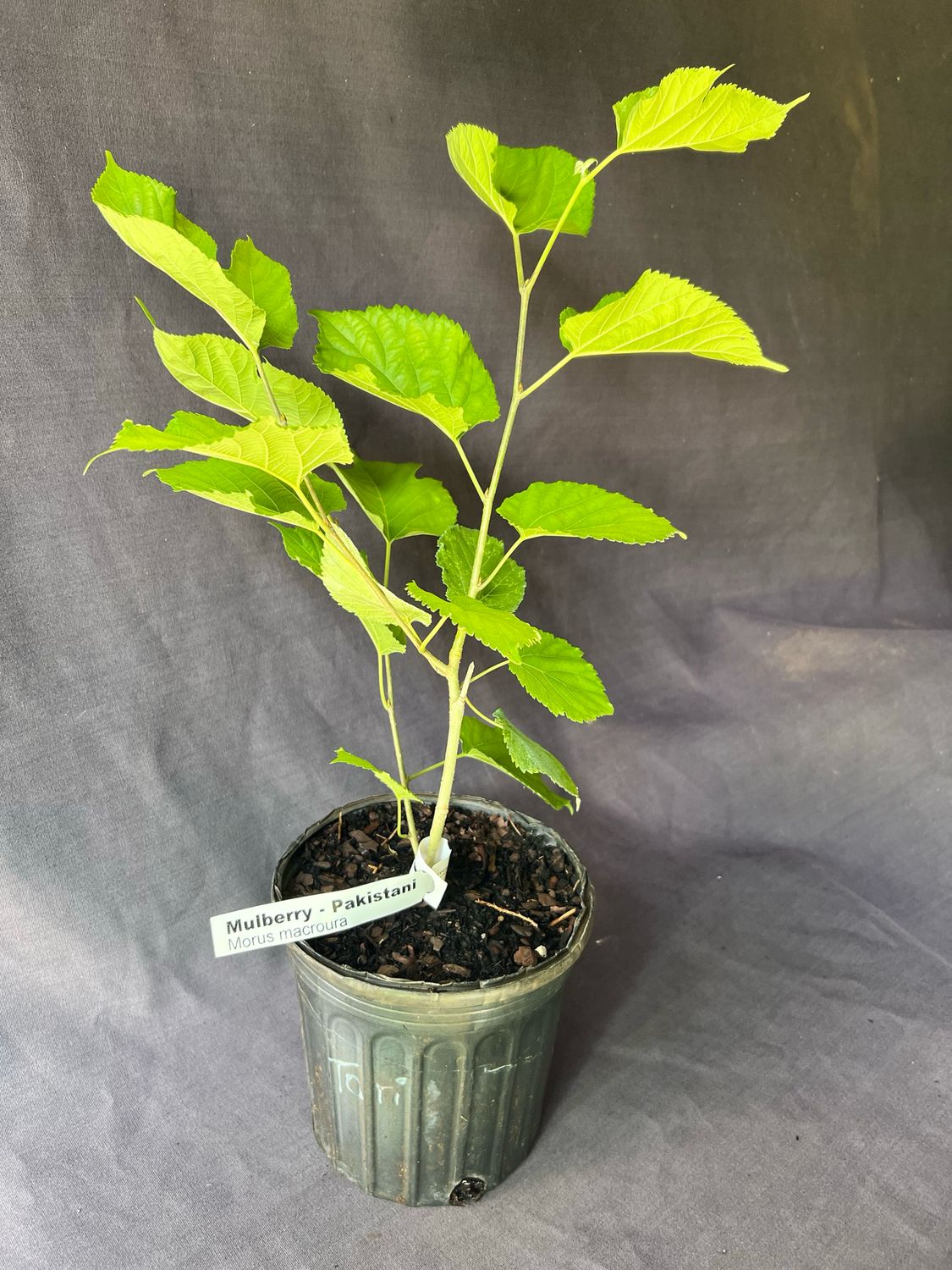
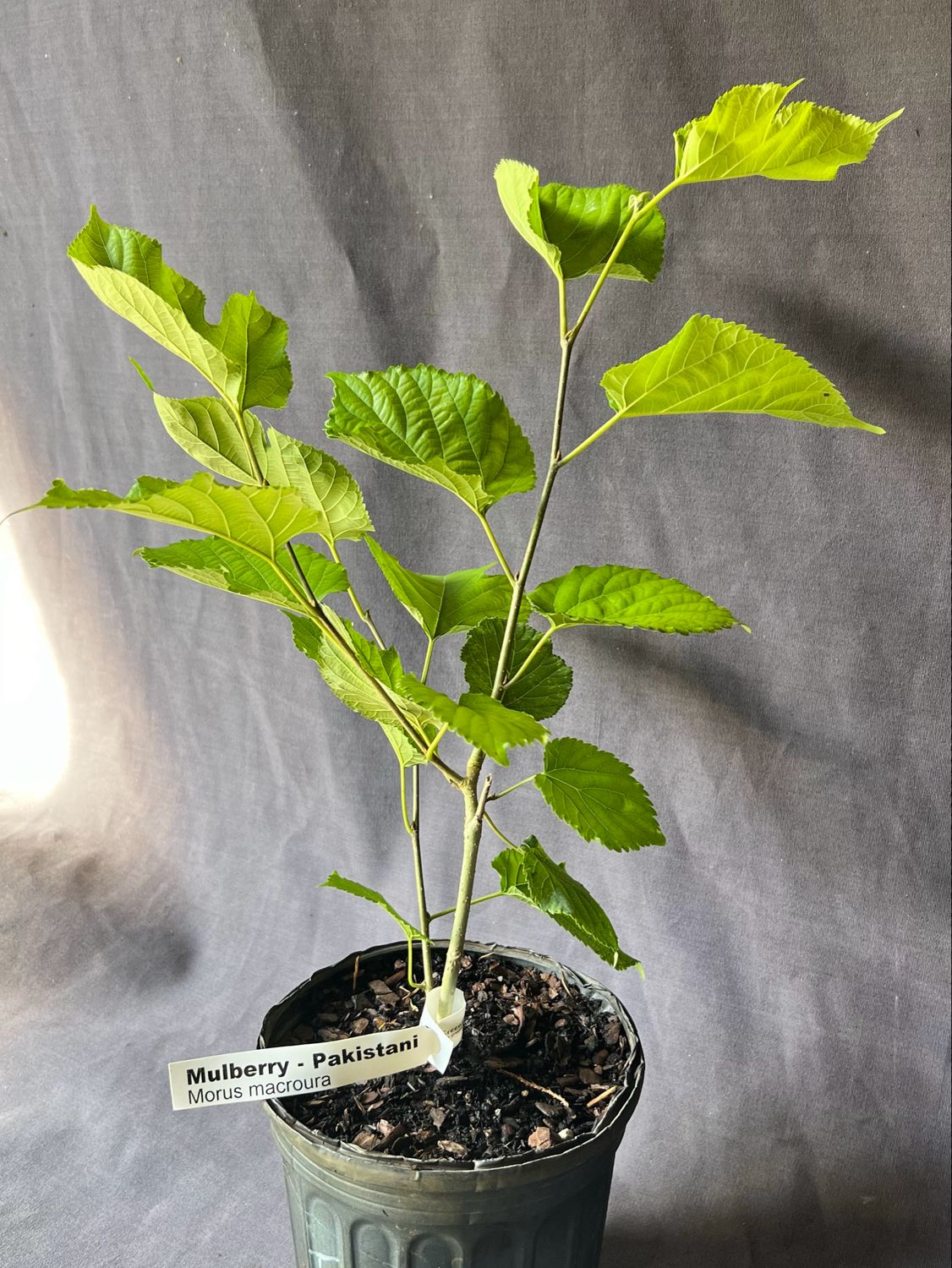
🍇 Pakistani Mulberry Tree — Morus macroura ‘Pakistan’ | 1-Gallon
Extra-long, honey-sweet mulberries with serious collector appeal.
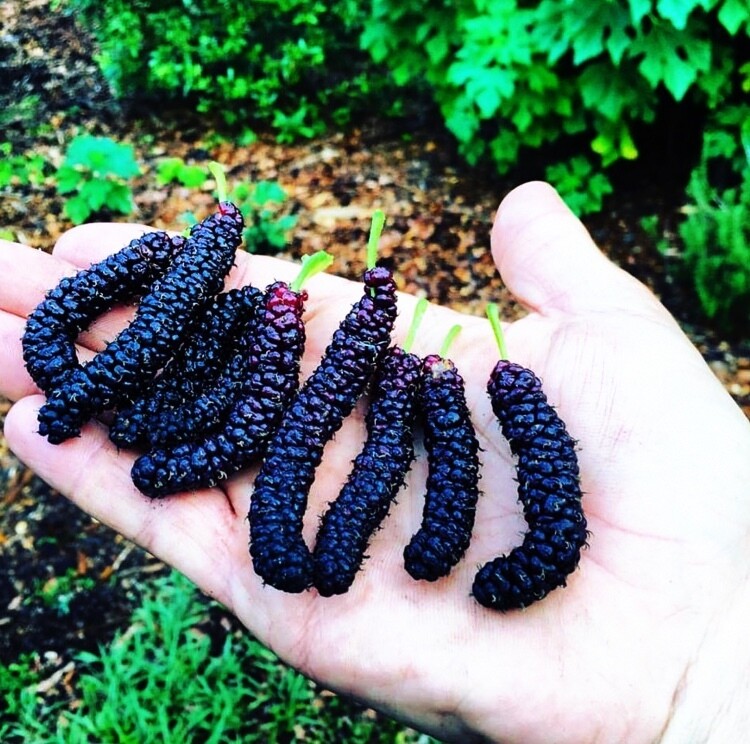
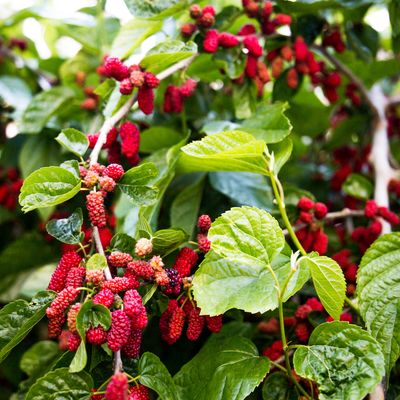
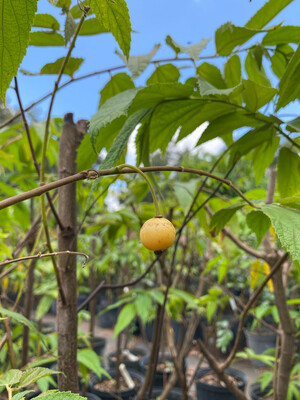
Some fruit trees quietly earn their place in the garden. Pakistani Mulberry makes an entrance. Its dramatic, pendant berries can stretch several inches long, ripening from ruby red to deep purple-black with a rich, low-acid sweetness that tastes like raspberry, blackberry and honey decided to collaborate.
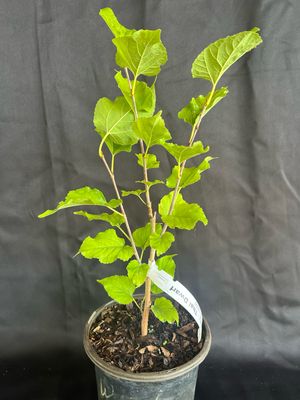
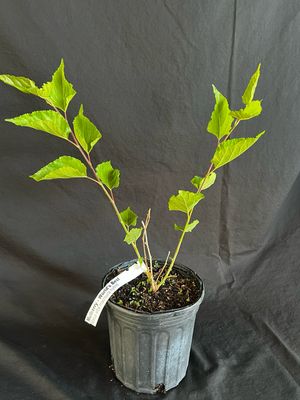
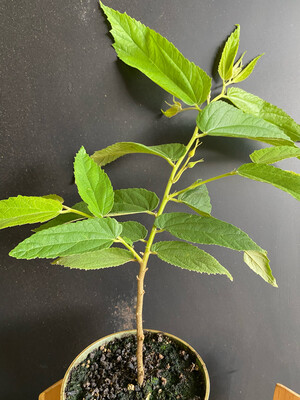
Our established 1-gallon Pakistani Mulberry trees are sturdier than starter plants, easier to maintain during shipping and ready to begin building the vigorous framework needed for future harvests.
🌿 Pakistani Mulberry Quick Facts
| Attribute | Details |
|---|---|
| Botanical Name | Morus macroura ‘Pakistan’ |
| Other Names | Pakistan Mulberry, Pakistani Mulberry, Long Mulberry, Himalayan Mulberry, Shahtoot |
| Plant Family | Moraceae — the fig, jackfruit and breadfruit family |
| Plant Type | Fast-growing, deciduous fruit tree |
| Pollination | Self-fruitful; one tree can produce fruit |
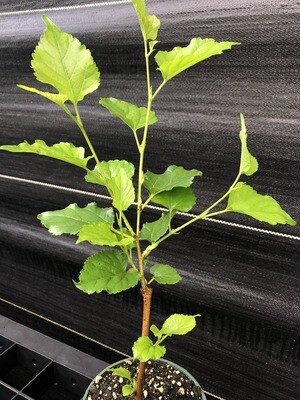
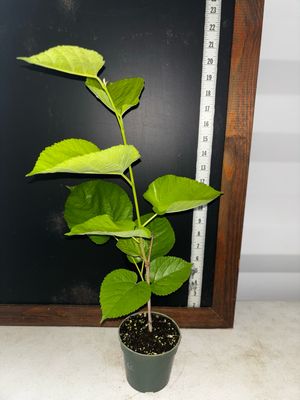
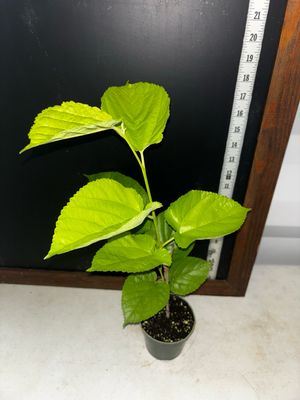
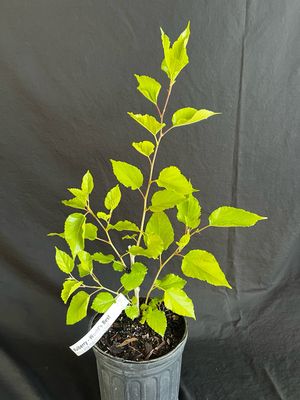
| Size at Sale | Ships in an established 1-gallon nursery container |
| Estimated Plant Age | Commonly approximately 8–18 months, depending on propagation date, pruning and seasonal growth |
| Expected Mature Height | Commonly 20–30 ft.; potentially larger in exceptionally favorable conditions |
| Maintained Height | Approximately 8–12 ft. with regular selective pruning |
| Expected Width | Approximately 15–25 ft. unpruned |
| USDA Growing Zones | Best suited to Zones 8–10, especially warm Zone 8b through Zone 10 |
| Sun Requirements | Full sun is best: 6–8 or more hours daily |
| Cold Hardiness | Protect young trees during frost and temperatures in the low 20s°F |
| Heat Tolerance | Very good once established |
| Growth Habit | Vigorous, upright when young, developing a broad and open canopy |
| Soil Preference | Adaptable, but performs best in fertile, well-draining soil |
| Spacing | 15–20 ft. for individual trees; 10–15 ft. with planned size control |
| Wind Tolerance | Moderate to good once established |
| Salt Tolerance | Fair at best; protect from direct coastal salt spray |
| Container Growing | Suitable with regular root management, watering and pruning |
| Indoor Growing | Not recommended as a permanent indoor plant |
| Typical Florida Harvest | Primarily spring, shifting later in cooler areas |
| Fruit Length | Commonly 2½–4 in.; select fruit may grow longer |
| Fruit Color | Green → ruby red → deep crimson, purple or nearly black |
| Flavor | Sweet, jammy and low-acid with raspberry, blackberry and honey notes |
Age note: Nursery container size and root development are more useful indicators than exact plant age. Seasonal pruning, propagation method and Florida’s rapid summer growth can create substantial size differences among plants of the same age.
Morus macroura is an accepted species native across a broad region extending from the Himalayas into southern China and Southeast Asia. The cultivar sold as ‘Pakistan’ has also circulated under mixed or older labels, including Morus alba ‘Pakistan’ and Morus rubra ‘Pakistan’. We use Morus macroura ‘Pakistan’, the name most commonly recognized for the long-fruited cultivar in specialty fruit collections.
🍇 Fruit Profile — The Berry That Breaks the Scale
| Fruit Feature | What to Expect |
|---|---|
| Shape | Long, narrow and cylindrical with an almost pendant appearance |
| Typical Length | Approximately 2½–4 in., with occasional larger fruit |
| Skin | Thin to moderately firm and delicate when fully ripe |
| Interior | Juicy, tender and soft with an edible central core |
| Ruby-Red Stage | Firmer texture, brighter berry flavor and a touch more acidity |
| Dark-Ripe Stage | Softer, sweeter, darker and more honeyed |
| Acidity | Lower than many standard dark-fruited mulberries |
| Seediness | Seeds are generally small and unobtrusive |
| Storage Life | Short; best eaten, chilled, frozen or processed soon after harvest |
Pakistani Mulberry is famous for fruit that can reach 3–5 inches under favorable conditions, although fruit length changes with crop load, irrigation, tree health and weather. UF/IFAS describes ‘Pakistan’ fruit as exceptionally large, sweet, ruby red and firmer than many other named mulberries.
When Should Pakistani Mulberries Be Picked?
Pick at ruby red when you want:
- A slightly firmer berry
- A brighter raspberry-like character
- Fruit that holds together better for garnishes or market displays
- A touch more tartness
Pick at deep crimson or purple-black when you want:
- Maximum sweetness
- Softer, jammy texture
- More intense color
- Fruit for sauces, preserves, sorbets and eating directly from the tree
Ripe fruit separates easily. Do not tug hard; fruit that resists picking usually needs more time.
🌸 The Islamabad Story — How ‘Pakistan’ Reached American Gardens
The story behind this cultivar is almost as memorable as the fruit.
Cuttings were reportedly obtained from Islamabad in the 1980s through USDA Plant Introduction Officer George A. White. Because the material arrived without a clearly identified cultivar name, it became known by its country of origin: Pakistan.
The plant was distributed into American specialty-fruit circles, including to fruit collectors and nursery growers who recognized that its unusually elongated berries were unlike the standard mulberries already circulating in the United States.
That simple country label stuck—and the fruit did the rest of the marketing.
Today, Pakistani Mulberry remains a sought-after collector tree throughout Florida, the Gulf Coast, southern California and other mild-winter regions.
🧺 Florida Harvest Season vs. Other Growing Regions
| Region | Typical Growth and Harvest Pattern |
|---|---|
| South Florida | May begin leafing and flowering during late winter; harvest commonly occurs during spring |
| Central Florida / Zone 9 | New growth often begins in late winter or early spring, followed by a spring crop |
| North Florida / Warm Zone 8 | Leaf-out and harvest are generally later, often extending into late spring or early summer |
| Gulf Coast & South Texas | Spring to early summer, depending on winter temperatures and late-frost exposure |
| Southern California | Spring into early summer, with timing influenced by coastal or inland conditions |
| Cooler Protected Climates | Later spring or summer harvest; crop reliability may decline after winter injury |
| Containers | Root temperature, watering and pruning may shift bloom and harvest timing |
Florida mulberries often flower and fruit with the first major flush of new growth. The berries develop quickly, and ripe fruit may fall soon after reaching peak maturity.
What Helps Produce Longer, Juicier Fruit?
- Full sun: Reduced light often means weaker flowering and smaller fruit.
- Even soil moisture: Drought during fruit development may cause premature fruit drop.
- Healthy foliage: Avoid unnecessary overhead watering and heavy fungal pressure.
- Moderate nutrition: Excess nitrogen can create impressive leaves but disappointing crops.
- Proper pruning: Maintain accessible fruiting wood without repeatedly removing the entire productive canopy.
- Prompt harvest: Daily picking prevents overripening, bird damage and unnecessary mess.
🍽️ How to Use Pakistani Mulberries
This is where Pakistani Mulberry earns permanent garden status.
Fresh Uses
- Eat directly from the tree
- Add to fruit boards and grazing tables
- Layer over yogurt, oatmeal or chia pudding
- Serve with goat cheese, burrata or ricotta
- Pair with mint, basil, thyme or citrus zest
- Fold into pancakes, muffins and quick breads
- Use as an edible garnish for cakes and desserts
Preserving the Harvest
- Freeze berries in a single layer before transferring to freezer containers
- Make mulberry jam, jelly or refrigerator preserves
- Cook into syrups for pancakes, cocktails and sparkling water
- Dehydrate for chewy fruit snacks
- Blend into coulis for cheesecake or ice cream
- Prepare fruit leather
- Ferment into fruit wine, vinegar or shrubs
- Cook into barbecue sauce or savory glaze
Pakistani and Central Asian-Inspired Uses
Mulberries are traditionally used throughout Pakistan and neighboring regions in:
- Sweet and savory chutneys
- Fresh fruit drinks
- Thick syrups
- Preserves
- Dried fruit preparations
- Sauces served alongside cheese and flatbreads
A traditional-style mulberry chutney can combine ripe fruit with ginger, mild chile, vinegar, warming spices and a small amount of sweetener. Serve it with cheese, roasted vegetables, flatbread or grilled meats.
The Most Common Home-Grower Recipe: Quick Mulberry Sauce
- Add ripe mulberries to a small saucepan.
- Add a splash of water and a squeeze of lemon.
- Simmer gently until the fruit releases its juice.
- Sweeten only as needed.
- Leave rustic or strain for a smoother coulis.
- Refrigerate and serve over yogurt, pancakes, cake or ice cream.
Kitchen note: Pakistani Mulberries are delicate and highly pigmented. Refrigerate unwashed fruit and rinse immediately before use.
🌿 Nutritional and Functional-Food Appeal
Mulberry nutrition varies substantially by species, cultivar, ripeness and growing environment. In general, ripe mulberry fruits contain:
- Natural fruit sugars
- Dietary fiber
- Vitamin C
- Potassium and other minerals
- Phenolic compounds
- Flavonoids
- Anthocyanin pigments in dark-colored fruit
Anthocyanins are responsible for much of the red, purple and nearly black coloration found in ripe mulberries. These compounds are also studied for their antioxidant activity and potential use as natural food colorants.
Pakistani Mulberry should be enjoyed as a nutritious fruit—not presented as a treatment or cure for a medical condition. Research performed on other Morus species or concentrated extracts should not automatically be applied to fresh Pakistani Mulberry fruit.
🌳 Why Grow Pakistani Mulberry?
1. It Produces Truly Memorable Fruit
Most people have seen a standard mulberry. Few have seen a berry hanging several inches long from a tree. Pakistani Mulberry creates the kind of harvest that stops garden visitors mid-sentence.
2. The Flavor Is Sweet Without Being Flat
The fruit is low in acidity but still carries recognizable raspberry, blackberry and floral notes.
3. It Grows Fast
Once established in a sunny, fertile location, Pakistani Mulberry can build substantial canopy growth in a single warm season.
4. It Fruits While Relatively Young
Propagated mulberries may begin flowering while still small. Exact fruiting time depends on plant maturity, winter conditions, pruning and establishment.
5. It Is Both Productive and Ornamental
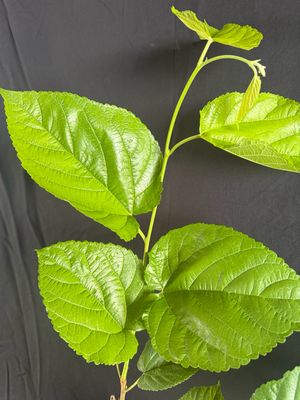
Large heart-shaped leaves create a bold subtropical appearance during the growing season.
6. It Supports Wildlife
Birds eagerly visit ripening mulberries. Planting one tree for people and another farther from the home can help spread the harvest.
7. It Fits Regenerative Landscapes
The fast-growing canopy produces abundant prunings and fallen leaves that can be returned to the soil as organic matter.
8. It Complements Other Mulberry Cultivars
Pair Pakistani Mulberry with compact or repeat-fruiting varieties for a longer, more diverse harvest season.
🍃 Landscape and Ornamental Appeal
Pakistani Mulberry develops:
- Large, glossy to lightly textured leaves
- Broad heart-shaped foliage
- Occasional lobing on vigorous young growth
- An upright young structure that opens with age
- Long fruit that hangs visibly beneath the canopy
- A sculptural branch framework during dormancy
Use it as:
- A backyard fruit tree
- A food-forest canopy or subcanopy tree
- A seasonal shade tree
- A productive screening tree
- A focal point within an orchard area
- A pruned specimen near a kitchen garden
Avoid locating it directly beside:
- White patios
- Pool decks
- Driveways
- Sidewalks
- Outdoor furniture
- Frequently parked vehicles
- Narrow entryways
Pakistani Mulberry is beautiful in leaf and fruit, but it is not an “always perfect” ornamental. It is deciduous, drops ripe fruit and may develop cosmetic leaf spotting during humid weather.
🌸 GreenDreams Mulberry Collection Comparison
Sizes, cold response and harvest timing vary with rootstock, propagation, microclimate and management.
| Cultivar | Best Growing Range | Mature / Maintained Size | Flavor | Fruit Size | Why Grow It? |
|---|---|---|---|---|---|
| Thai Dwarf | Zones 7–10 | 12–15 ft. / 6–8 ft. | Sweet-tart, blueberry and raspberry notes | Medium | Compact, fast-fruiting and container-friendly |
| World’s Best | Zones 7–10 | 12–15 ft. / 6–8 ft. | Rich, jammy and blackberry-like | Medium | Early production and strong flavor |
| Hunter | Zones 7–10 | 20–25 ft. / 6–10 ft. | Bold and jammy | Large | Heavy producer for juice and preserves |
| Shangri-La | Zones 7–10 | 10–20 ft. / 8–12 ft. | Sweet to sweet-tart | Medium | Florida selection with large tropical-looking foliage |
| Pakistani | Zones 8–10 | 20–30 ft. / 8–12 ft. | Honey-sweet, jammy and low-acid | Extra-long | The collection showstopper |
| Everbearing | Zones 7–10 | 12–18 ft. / 6–8 ft. | Balanced sweet-tart | Small to medium | Multiple fruiting flushes in favorable climates |
| 6th Street | Zones 7–10 | 15–20 ft. / 6–10 ft. | Sweet with lively acidity | Medium | Florida-found selection with manageable growth |
| Tice | Zones 8–10 | 20–30 ft. / 8–12 ft. | Sweet with pleasant tang | Medium to large | Florida heirloom known for rapid growth |
| Unryu | Zones 5–9 | 20–30 ft. / 8–12 ft. | Mild; fruit quality may vary | Small to medium | Corkscrew branching and strong winter architecture |
| White Mulberry Types | Zones 5–10 | 30–40 ft. / 10–15 ft. | Mild and honey-sweet | Medium | Light-colored fruit creates less visible staining |
Why Collect More Than One?
Pair Pakistani Mulberry with Thai Dwarf, World’s Best or Everbearing to combine:
- Extra-long gourmet fruit
- Compact trees for easy picking
- Different flavor profiles
- Earlier and later ripening windows
- Fresh eating and preservation crops
- Backup production after unpredictable spring weather
ARRIVAL, SEASONAL CARE, PLANTING, SOIL & WATERING
🌱 First Steps After Your Pakistani Mulberry Arrives
Shipping is stressful for living plants, even when they arrive looking healthy.
For the First 7–14 Days
- Keep the Pakistani Mulberry in its original 1-gallon container.
- Place it outdoors in bright filtered light or gentle morning sun.
- Protect it from intense afternoon sun, drying wind and cold.
- Water thoroughly at soil level whenever the upper potting mix begins to dry.
- Do not fertilize immediately.
- Do not prune healthy growth immediately.
- Do not transplant simply because the box has arrived.
When Is It Safe to Transplant?
GreenDreams recommends waiting approximately 30 days or until healthy new growth appears, whichever takes longer.
Transplant when:
- The plant has adjusted to local sunlight
- Leaves are firm and stable
- New buds or shoots are developing
- The root ball holds together
- Roots are beginning to fill or outgrow the container
- Severe heat, frost or storm conditions are not expected
A plant that has recently experienced shipping stress should not be asked to handle root disturbance at the same time.
🍂 Pakistani Mulberry Is Deciduous — What That Means
Deciduous trees naturally shed their leaves and rest during part of the year. Leaf loss is not automatically a sign that the tree is dying.
Pakistani Mulberry may be less predictable than a cold-climate apple or peach because warm Florida winters can trigger early bud movement. A warm spell followed by frost can damage tender new growth.
Florida and Similar Zone 9 Seasonal Guide
| Season | What the Tree May Do | What the Grower Should Do |
|---|---|---|
| Late Winter | Buds begin swelling; early leaves or flowers may appear after warm weather | Watch forecasts closely and protect tender growth during late cold snaps |
| Spring | Rapid leaf-out, flowering, fruit development and harvest | Maintain even moisture and harvest frequently |
| Early Summer | Vigorous shoot growth after harvest | Perform light size-control pruning and train the canopy |
| Rainy Season | Dense foliage, rapid growth and possible cosmetic leaf spotting | Improve airflow, avoid overhead irrigation and remove severely affected debris |
| Fall | Growth begins slowing; older foliage may yellow or spot | Reduce feeding and allow shoots to mature |
| Winter | Leaves may yellow and drop, leaving bare branches | Mulch roots, inspect structure and perform careful dormant pruning before sap rises |
Signs of Normal Dormancy
- Gradual yellowing of older leaves
- Brown spotting before leaf drop
- Reduced water use
- Bare branches that remain flexible
- Firm buds along healthy stems
- New growth returning when temperatures warm
Signs That Deserve Investigation
- Blackened bark extending down major limbs
- Soft or rotting trunk tissue
- Permanently shriveled stems
- Soil that remains saturated
- No green tissue beneath lightly scratched bark after warm weather returns
Dormant trees may ship with few leaves or no leaves during cool weather. This is normal and may actually reduce water loss during transit.
🌞 Where to Plant Pakistani Mulberry
Choose a location with:
- Full sun
- At least 15 ft. of canopy space
- Well-draining soil
- Reliable irrigation during establishment
- Good airflow
- Protection from cold north and northwest winds
- Easy harvest access
- Distance from stain-sensitive surfaces
Best Florida Location
A sunny southern or southeastern exposure is often ideal. In colder parts of Zone 8, a warm microclimate near a building, fence or established windbreak may reduce winter injury.
Avoid planting at the bottom of a slope where cold air settles.
Wind Tolerance
Established mulberries are moderately wind resistant, and some mulberries have historically been used in windbreak plantings. Young 1-gallon trees are still vulnerable to:
- Root rocking
- Trunk breakage
- Leaf shredding
- Desiccation
- Storm-driven salt exposure
Stake only when necessary. Use flexible ties and remove or loosen them as the trunk strengthens.
Salt Tolerance
Pakistani Mulberry has fair rather than exceptional salt tolerance.
It may perform in coastal communities when protected from direct ocean spray, but it should not be treated like a sea grape or other highly salt-tolerant coastal plant.
Improve protection with:
- A building
- Dense windbreak planting
- Setback from the shoreline
- Fresh-water irrigation after storm-driven salt exposure
🌾 Soil Requirements
Pakistani Mulberry is adaptable, but “adaptable” does not mean it enjoys standing water.
Ideal In-Ground Soil
- Well-draining
- Moderately fertile
- Biologically active
- Moist during establishment without remaining saturated
- Protected by a wide organic mulch ring
It can grow in Florida’s sandy soils when compost, mulch and consistent establishment water are provided.
Heavy or Poorly Draining Soil
Use a raised planting mound or berm. The root flare should remain above surrounding grade.
Suggested Organic Top-Dress
Apply around—not directly against—the root ball:
- Finished compost
- Charged biochar
- Worm castings
- Azomite or another trace-mineral amendment
- A modest amount of balanced organic fruit-tree fertilizer
- Hardwood mulch
Do not create a concentrated fertilizer pocket beneath the roots.
🌳 Planting Pakistani Mulberry the GreenDreams “High & Tight” Way
1. Prepare the Plant
Water the container thoroughly several hours before planting.
2. Dig the Hole
Dig a hole:
- Only slightly wider than the container
- No deeper than the existing root ball
- With firm, undisturbed soil beneath it
A deep, loose hole may allow the tree to sink below grade.
3. Inspect the Root Ball
Slide the plant from its pot carefully. If roots are circling tightly:
- Loosen only the outermost roots
- Make a few shallow vertical root-ball cuts when necessary
- Avoid tearing away most of the potting mix
4. Set It High
Position the top of the root ball approximately 1–2 inches above the surrounding soil grade, especially in flat or poorly draining Florida landscapes.
Keep the trunk flare visible.
5. Backfill Firmly
Use native soil, optionally blended with a moderate amount of finished compost.
Firm the soil around the root ball to eliminate large air pockets without compacting it into concrete.
6. Water Thoroughly
Water slowly at the soil level to settle the backfill.
7. Top-Dress
Add compost, charged biochar, azomite and the organic nutrients appropriate for your soil.
8. Mulch
Apply 2–3 inches of hardwood mulch over a wide area.
Keep mulch several inches away from the trunk. Never create a mulch volcano.
▶️ Watch the GreenDreams “High & Tight” Fruit Tree Planting Guide:
https://youtu.be/RRQFY30qdA8?si=rRIcsbLlVAVYotfI
💧 Pakistani Mulberry Watering Guide
The Non-Negotiable Rule
Water at the soil level.
Avoid routine overhead watering. Wet foliage, splashing soil and poor airflow can encourage leaf spotting and other disease problems.
Morning irrigation is best. Afternoon overhead watering may contribute to leaf scorch, spotting and uneven absorption.
In-Ground Watering Schedule
| Stage | Suggested Starting Schedule |
|---|---|
| Days 1–14 | Water daily unless meaningful rainfall keeps the root ball evenly moist |
| Weeks 3–8 | Water approximately 2–3 times weekly |
| Months 3–6 | Deep water 1–2 times weekly during dry weather |
| Established Tree | Water deeply during extended drought, flowering and fruit development |
| Fruit Development | Do not allow the root zone to repeatedly become extremely dry |
| Rainy Season | Reduce irrigation and check drainage before adding water |
These are starting guidelines, not rigid rules. Adjust for:
- Temperature
- Container or root-ball size
- Rainfall
- Soil drainage
- Wind
- Mulch depth
- Tree size
- Signs of stress
How to Check Moisture
Insert a finger several inches into the soil near the root ball.
- Dry and warm: Water thoroughly.
- Cool and slightly moist: Check again later.
- Saturated or sour-smelling: Stop watering and investigate drainage.
Uneven moisture during fruit development can reduce berry size or contribute to premature fruit drop.
Container Watering
A 1-gallon plant may require daily watering during warm, dry or windy weather.
Water until the entire root ball is saturated and excess water exits the drainage holes. A small splash on the surface is not enough.
Never allow the container to sit continuously in a saucer of water.
🌿 Organic Fertility Program
Pakistani Mulberry grows so vigorously that heavy fertilization is rarely necessary.
Early Spring
- Top-dress with finished compost
- Refresh hardwood mulch
- Apply a light, balanced organic fruit-tree fertilizer when soil testing or tree condition indicates a need
- Add trace minerals based on local soil conditions
After Harvest
- Add compost around the drip line
- Apply chop-and-drop biomass
- Use a light organic feeding only when growth is weak or foliage shows a confirmed deficiency
Late Summer and Fall
Avoid forcing excessive tender growth as winter approaches in colder areas.
Avoid
- Repeated high-nitrogen lawn fertilizer
- Fertilizer against the trunk
- Feeding a dry or severely stressed tree
- Strong synthetic fertilizer immediately after shipping
- Fertilizing without correcting drainage problems
PRUNING, CONTAINERS, PRODUCTION & COMPANION PLANTING
✂️ Pruning Pakistani Mulberry for Manageable Harvests
Pakistani Mulberry is naturally vigorous. Without a plan, today’s cute fruit tree can become tomorrow’s berry-launching rooftop neighbor.
The Goal
Create a low, broad canopy that can be harvested from the ground or a short orchard ladder.
Young-Tree Training
During the first few years:
- Select a strong central leader or low open framework.
- Keep several well-spaced scaffold branches.
- Remove weak, crowded and sharply angled growth.
- Prevent multiple competing trunks unless a bush form is intentional.
- Keep the lowest permanent limbs high enough for access but low enough for harvest.
Annual Size Control
- Shorten overly vigorous shoots after harvest.
- Use reduction cuts back to suitable side branches.
- Thin crowded interior growth.
- Remove dead, damaged, rubbing or crossing branches.
- Keep the canopy open enough for light and airflow.
- Avoid indiscriminate topping.
Best Timing
Two practical windows may be used:
Immediately after harvest:
Useful for light size control in warm climates because the tree has time to regrow and mature new shoots.
During true dormancy:
Perform structural pruning after leaf fall but before late-winter bud swell and sap rise.
Avoid Heavy Pruning During Bud Swell
Mulberries can bleed substantial sap from cuts made as growth begins. Mature trees may also callus slowly over large wounds.
Use clean tools and avoid unnecessary major limb removal.
🪴 Growing Pakistani Mulberry in a Container
Pakistani Mulberry can be maintained in a container, but it is not naturally dwarf.
Container production requires:
- Full outdoor sun
- Frequent watering
- Regular pruning
- Root management
- A stable, well-draining container
- Periodic replacement of depleted potting mix
Suggested Pot Progression
| Current Size | Next Practical Size |
|---|---|
| 4-inch starter pot | 1-gallon container |
| 1-gallon container | 3-gallon container |
| 3-gallon container | 7-gallon container |
| 7-gallon container | 10–15-gallon container |
| Long-term patio tree | 20–30 gallons or larger |
Do not move a small root ball directly into an excessively large container unless watering will be carefully managed. Oversized containers can remain wet for too long around undeveloped roots.
When to Up-Pot
Transplant when:
- Roots circle the lower pot
- Roots emerge from drainage holes
- The pot dries unusually quickly
- Growth slows despite proper care
- The root ball remains intact when removed
- The plant becomes top-heavy
How to Up-Pot
- Choose a container with several drainage holes.
- Use a pot only a few sizes larger.
- Maintain the same planting depth.
- Keep the root flare exposed.
- Fill around the root ball without compacting excessively.
- Water thoroughly at soil level.
- Place in filtered light for several days after root disturbance.
- Gradually return it to full sun.
Recommended Potting Mix
Use a fertile, fast-draining outdoor tree mix containing materials such as:
- Aged pine bark or other chunky bark
- Quality compost
- Coconut coir or peat-based potting material
- Perlite, pumice or another aeration material
- A modest mineral component
The mix should retain enough moisture for a thirsty fruit tree without staying waterlogged.
Search local independent nurseries, landscape-supply companies, hydroponic suppliers or online horticultural retailers for:
- Large nursery containers
- Tree pots
- Fabric grow bags
- Pine-bark-based potting mix
- Perlite or pumice
- Coconut coir
- Compost and organic amendments
Long-Term Container Size
A 20–30-gallon container is a practical minimum for a maintained patio specimen. Larger containers produce a more stable tree and reduce how quickly the root zone dries.
Maintain approximately 6–10 ft. through annual pruning.
🏠 Can Pakistani Mulberry Grow Indoors?
Not successfully as a permanent houseplant.
Pakistani Mulberry needs:
- Direct outdoor sun
- Seasonal temperature changes
- Strong airflow
- Space for vigorous roots
- A winter rest period
- Pollination-friendly outdoor conditions
It may be moved temporarily into:
- An unheated greenhouse
- A bright garage during a freeze
- A protected porch
- A sheltered structure with strong light
Return it outdoors promptly after dangerous weather passes.
🌾 Small Farm, Market Garden and Larger-Scale Production
Pakistani Mulberry has potential for:
- Farmers markets
- U-pick operations
- Restaurant sales
- Chef-focused specialty fruit
- Frozen fruit
- Jam and syrup production
- Sorbet and dessert ingredients
- Fermented beverages
- Natural food color applications
Its greatest commercial challenge is shelf life. Fully ripe berries are delicate and should be sold, chilled, frozen or processed quickly.
Suggested Spacing Strategies
| Production Style | Suggested Spacing |
|---|---|
| Large freestanding trees | 20–25 ft. apart |
| Managed orchard trees | 15–20 ft. apart |
| Intensively pruned hedgerow | Approximately 10–15 ft. apart |
| Food-forest planting | 15–25 ft., depending on neighboring canopy layers |
Provide access for:
- Harvesting
- Sheet collection beneath trees
- Pruning
- Irrigation repair
- Mulch application
- Mowing or understory management
For the cleanest premium fruit, hand-pick daily. For processing fruit, place clean collection sheets beneath the canopy and gently shake ripe branches.
🌼 Pakistani Mulberry Companion Plant Sidebar
Nitrogen-Fixing Support Plants
- Pigeon Pea
- Sunn Hemp
- Perennial Peanut
- Cowpea
- Sunshine Mimosa in suitable open areas
Biomass and Chop-and-Drop Plants
- Mexican Sunflower
- Fakahatchee Grass
- Lemongrass
- Vetiver where appropriate
- Bananas
- Comfrey in climates and soils where it performs well
Pollinator and Beneficial-Insect Plants
Pakistani Mulberry does not require a second mulberry tree, but a diverse insectary planting improves the overall resilience of the garden.
- African Blue Basil
- Blue Porterweed
- Native Salvias
- Coreopsis
- Blanketflower
- Dune Sunflower
- Sweet Almond Bush
Edible and Aesthetic Partners
- Chaya
- Moringa
- Turmeric
- Ginger
- Pineapple
- Bananas
- Cranberry Hibiscus
- Longevity Spinach
- Okinawa Spinach
GreenDreams Chop-and-Drop Strategy
Combine:
- Green nitrogen-rich material: Pigeon pea, sunn hemp or Mexican sunflower
- Brown carbon-rich material: Mature grass blades, small woody prunings and dry leaves
Cut biomass into manageable pieces and spread it beneath the canopy without piling material against the trunk.
This living fertility system:
- Protects sandy soil
- Retains moisture
- Feeds soil organisms
- Adds organic matter
- Reduces fertilizer dependency
- Recycles nutrients already grown onsite
CAUTIONS, TROUBLESHOOTING, FAQ & SHIPPING
⚠️ Pakistani Mulberry Cautions
Fruit Staining
Dark ripe fruit can stain:
- Concrete
- Fabric
- Vehicle finishes
- Pool decks
- Shoes
- Indoor flooring after being tracked inside
Site the tree accordingly.
Milky Sap
Cut stems and leaves release milky latex. The sap may irritate sensitive skin.
Wear gloves and eye protection when pruning.
Fruit Drop
Overripe fruit may create a slippery surface. Harvest regularly and avoid planting over walkways.
Wildlife Competition
Birds, squirrels and other wildlife quickly learn the harvest schedule.
Deer Browsing
Young mulberries may be browsed heavily. Protect newly planted trees where deer pressure is high.
Cold Sensitivity
Pakistani Mulberry may break dormancy during warm winter weather and then suffer damage from a returning freeze.
Unripe Fruit
Do not consume hard, green, undeveloped fruit or plant sap. Eat fully developed fruit and introduce unfamiliar foods in reasonable portions.
Not a Permanent Indoor Plant
Indoor conditions do not provide the sun, airflow or seasonal cycle required for long-term health.
Not a Highly Salt-Tolerant Coastal Tree
Protect it from direct salt spray and saline irrigation.
🔍 Pakistani Mulberry Troubleshooting Guide
Icons represent common issues and organic solutions—look for 🌿 for recovery guidance.
| ⚠️ Issue | 🧠 Likely Cause | 🌿 Organic Response |
|---|---|---|
| 🍂 Leaves yellowing in fall | Normal seasonal dormancy | Allow leaves to drop; reduce watering as growth slows |
| 🍃 Sudden leaf drop after shipping | Transit stress, light change or root-ball drying | Keep in filtered light, water evenly and wait for new growth |
| 🍂 Yellow leaves during summer | Excess water, poor drainage or nutrient imbalance | Check soil moisture and drainage before fertilizing |
| 🍄 Brown or black leaf spots | Humidity, poor airflow or wet foliage | Water at soil level, thin crowded growth and remove severely affected debris |
| 🫣 Curled or wilted leaves | Underwatering, root stress, wind or intense heat | Deeply water the root ball and provide temporary wind protection |
| 💦 Constantly wet soil | Overwatering or blocked drainage | Reduce watering and improve drainage immediately |
| 🪣 Tree declines after planting | Root ball planted too deeply | Replant high and tight with the trunk flare exposed |
| 🍃 Fruit drops before ripening | Drought, temperature stress or weak establishment | Maintain even moisture during flowering and fruit swell |
| 🍇 Fruit remains short or sparse | Low sunlight, uneven water, heavy pruning or excessive nitrogen | Increase sun, stabilize irrigation and reduce nitrogen |
| 🌱 Lots of leaves but little fruit | Excess nitrogen or repeated removal of productive wood | Use compost-based fertility and revise pruning practices |
| ❄️ Blackened shoot tips | Frost or freeze injury | Wait for new growth to identify living wood, then prune dead tissue |
| 🌬️ Torn leaves or leaning trunk | Strong wind or inadequate anchoring | Stake temporarily and use a windbreak |
| 🪲 Sticky leaves or distorted growth | Aphids, scale or other sap-feeding insects | Inspect undersides, manage ants and use horticultural soap when appropriate |
| 🕷️ Fine stippling or webbing | Spider mites during hot, dry conditions | Improve plant hydration and use targeted horticultural oil or soap |
| 🐛 Chewed leaves or webbed branches | Caterpillars or fall webworm | Hand-remove small infestations or use labeled biological controls |
| 🐜 Ants moving through canopy | Ants may be tending aphids or scale | Address the sap-feeding pest and manage ant access |
| 🍄 White coating on leaves | Powdery mildew or residue | Improve airflow, avoid wet foliage and confirm diagnosis before treatment |
| 🌾 Weak growth in sandy soil | Low organic matter or inconsistent moisture | Add compost, hardwood mulch and biologically active top-dressing |
| 🧪 Brown leaf tips after feeding | Excess fertilizer or salt buildup | Flush the root zone and suspend feeding |
| 🪱 Container dries within hours | Root-bound tree or undersized pot | Up-pot once the tree has recovered and roots fill the container |
| 🌱 No spring growth | Dormancy, cold injury or dead wood | Wait for sustained warmth and perform a light scratch test |
Organic Treatment Reminder
Use only products labeled for:
- The identified pest or disease
- Edible fruit trees
- Your intended application method
Avoid spraying open flowers when pollinators are active. Apply horticultural oils and soaps during cooler parts of the day and follow label directions exactly.
🌟 Is Pakistani Mulberry Right for You?
✅ Ideal For
- Florida and Gulf Coast fruit growers
- Warm-climate food forests
- Rare-fruit collectors
- Families who love fresh berries
- Gardeners seeking rapid shade and production
- Growers willing to prune annually
- Home preservers and jam makers
- Restaurant gardens
- Market growers serving local customers
- Container growers with a large sunny patio
- Anyone who wants the “What IS that?” tree
❌ Not Ideal For
- Growers in very cold regions without winter protection
- Tiny spaces without a pruning plan
- Permanent indoor growing
- Locations beside white concrete or parked vehicles
- Sites with standing water
- Highly exposed beachfront locations
- Gardeners wanting a perfectly evergreen ornamental
- Anyone unwilling to share at least a few berries with birds
❓ Pakistani Mulberry FAQ
Is Pakistani Mulberry the same as Morus macroura?
The long-fruited cultivar is most commonly listed as Morus macroura ‘Pakistan’. It has also circulated under Morus alba ‘Pakistan’ and Morus rubra ‘Pakistan’, so mixed botanical labels remain common in the nursery trade.
Does Pakistani Mulberry need a pollinator?
No second tree is normally required. ‘Pakistan’ is sold as a self-fruitful cultivar.
How long are Pakistani Mulberries?
Fruit commonly measures approximately 2½–4 inches, with longer fruit possible under favorable growing conditions.
What do Pakistani Mulberries taste like?
They are sweet, low-acid and jammy, with flavors often compared to raspberry, blackberry, honey and subtle citrus or floral notes.
When does Pakistani Mulberry fruit in Florida?
It commonly fruits during spring, often with the first major flush of new growth. Timing varies across South, Central and North Florida.
How quickly will a 1-gallon Pakistani Mulberry produce fruit?
Propagated mulberries can fruit while relatively young, but no exact harvest year can be guaranteed. Establishment, winter temperatures, pruning, light and plant maturity all influence production.
How big does Pakistani Mulberry grow?
Expect approximately 20–30 ft. in many home landscapes if left unpruned. It can be maintained around 8–12 ft. with consistent selective pruning.
Can Pakistani Mulberry grow in Zone 8?
Yes, especially in warm or coastal Zone 8 locations. Protect young trees and tender early growth during hard freezes. Performance becomes less predictable in colder microclimates.
Can Pakistani Mulberry grow in a pot?
Yes. Use a large, well-draining container and plan for regular watering, root management and pruning. A 20–30-gallon container is a practical long-term starting point.
Can Pakistani Mulberry grow indoors?
Not as a permanent houseplant. It needs full outdoor sun, airflow and seasonal temperature changes.
Is Pakistani Mulberry evergreen?
No. It is deciduous and may lose all its leaves during winter.
Why is my Pakistani Mulberry losing leaves?
Leaf loss may result from dormancy, shipping stress, drought, overwatering, cold or disease. The timing and condition of the branches help determine whether the change is normal.
Should I fertilize Pakistani Mulberry heavily?
No. Mulberries generally produce well with compost, mulch and moderate organic nutrition. Excess nitrogen may encourage leaves at the expense of fruit.
Does the fruit stain?
Yes. Deeply colored ripe fruit can stain patios, driveways, vehicles and fabric.
Can I prune Pakistani Mulberry heavily?
Pakistani Mulberry tolerates size control, but repeated indiscriminate topping creates weak structure and unnecessary regrowth. Use selective reduction cuts after harvest or during dormancy before sap begins rising.
Are Pakistani Mulberries nutritious?
Mulberries generally provide vitamin C, fiber, minerals and naturally occurring phenolic pigments. Nutrient values vary by species, cultivar and ripeness.
🚚 Shipping and Handling — 1-Gallon Live Plant
What Ships
- One live Pakistani Mulberry plant
- Grown and shipped in a 1-gallon nursery container
- Plant height and branching vary naturally
- Plants may be pruned before shipping for health and package safety
Shipping Schedule
We ship live plants from Florida every Monday using UPS Ground.
Orders may be held when:
- Extreme heat is forecast
- Freezing weather threatens the route
- Holiday schedules may create delays
- Carrier disruptions increase transit risk
Best Shipping Region
The 1-gallon Pakistani Mulberry is best suited for UPS Ground shipping to:
- Florida
- The Southeastern United States
- The Gulf Coast
- Texas
The 1-gallon size is generally more resilient than a 4-inch starter because it has a larger root system and more stored moisture.
Northern and Western United States
We ship throughout the continental United States, but customers in northern and western states should consider:
- Longer UPS Ground transit times
- Hot distribution facilities
- Cold overnight temperatures
- Drying during extended transportation
- Regional weather differences
- Additional recovery time after arrival
Ground shipping may not be suitable during extreme seasonal conditions. Risk associated with distance, weather and extended ground transit is assumed by the buyer.
California Orders
California inspection requirements may hold a package for an additional day or longer. Inspection delays are outside the nursery’s control and can add stress to live plants.
Extreme Weather Disclaimer
Buyer discretion is strongly advised during peak summer heat and winter cold.
GreenDreams is not responsible for temperature-related stress or damage caused by:
- Extreme heat
- Freezing weather
- Extended ground transit
- Carrier delays
- California inspection delays
- Packages left outdoors after delivery
- Incorrect customer shipping information
Many stressed plants recover with proper watering, filtered light and patience, but immediate appearance after a long journey may not represent the plant’s long-term health.
Dormant Shipping
Pakistani Mulberry is deciduous and may ship:
- Partially defoliated
- With yellow leaves
- Completely leafless
- Recently pruned
Dormancy is normal and does not mean the tree is dead.
After Delivery
- Open the package promptly.
- Water at soil level when the root ball is dry.
- Keep the plant in its original container.
- Acclimate it in filtered outdoor light.
- Protect it from wind, frost and intense afternoon sun.
- Wait approximately 30 days or until new growth appears before transplanting.
🌾 Shop With Us in Person
We carry countless plants in larger sizes, along with rare fruit trees, edible plants, native species and useful landscape plants that may not be listed online.
GreenDreams Nursery & Farm — Open to the Public
🌾 18709 US Hwy. 41, Spring Hill, FL 34610
🕘 Tuesday–Friday: 9 AM–5 PM
🌞 Saturday: 8 AM–3 PM
Shop Pakistani Mulberry trees, compare cultivars and explore what is currently blooming, fruiting and ready for Florida landscapes.
Come see what’s fresh this week. 🌿
🌿 Beyond the Plant: GreenDreams Services
At GreenDreams, we do more than grow plants—we design, build and restore ecosystems across Florida.
- 🌳 Onsite consultations and edible landscape design
- 🚜 Installation and project management
- 🚚 Bulk delivery of compost, mulch, biochar and soil materials
- 🌾 Wholesale and large-scale regenerative solutions
Let our team help you create a thriving edible paradise—starting with Pakistani Mulberry.
🌿 IMPORTANT INFORMATION BEFORE PURCHASING LIVE PLANTS
Please note: Plants purchased through our online store are not available for pickup at our retail nursery in Spring Hill, Florida.
Online inventory is housed at a separate facility and is priced, prepared, and handled exclusively for shipping.
🌱 Looking for larger plants or more selection?
Our retail nursery location offers far more availability, including larger sizes, specialty plants, and many selections not suitable for nationwide shipping.
Local pickup is available for retail nursery purchases only.
Visit our Spring Hill, FL retail nursery page to explore in-person shopping options.
🚚 LIVE PLANT SHIPPING & TRANSIT EXPECTATIONS
Live plants naturally experience stress during shipping. Temporary leaf drop, mild wilting, or cosmetic stress is normal after transit. Most plants recover quickly with proper watering, gradual light exposure, and basic aftercare. Some plants may require additional attention during the first few weeks.
Despite careful packing, minor cosmetic damage may occur during transit. Small issues such as broken leaves or stems typically resolve with time and proper care.
If your shipping box arrives with significant external damage, please contact UPS within 30 days to initiate a carrier claim.
⏱️ SHIPPING METHOD, TIMING & TRANSIT WINDOWS
All online orders ship via UPS Ground from our Central Florida nursery.
📦 Shipping Schedule: Orders ship once weekly on Mondays to reduce the risk of packages sitting in transit over weekends. A countdown clock on our website displays the next shipping date.
🚚 Typical Transit Times:
-
Florida: 1–2 days
-
Southern U.S.: approximately 2 days
-
Midwest, West & Northern U.S.: 3–5 business days
Long-distance shipments, particularly to the western U.S., may experience additional transit time due to agricultural inspections in states such as Arizona, California, and Texas.
Extended transit times can be more challenging for small or tender plants and may require additional recovery care after arrival.
🌡️ EXTREME WEATHER & SEASONAL RISK
Live plants are sensitive to temperature extremes.
We cannot guarantee plant condition during periods of extreme summer heat or winter cold and freezing temperatures. Weather-related delays, carrier interruptions, or exposure during delivery are beyond our control.
Customers are responsible for:
-
Monitoring tracking information sent via email
-
Retrieving packages promptly upon delivery
-
Preventing plants from being left outdoors in extreme conditions
During unsafe weather, holiday shipping volume, or extended transit risk, orders may be held and shipped the following week to protect plant health.
⚠️ CUSTOMER RESPONSIBILITY & REFUND POLICY
By purchasing live plants, customers acknowledge and accept the risks associated with shipping, weather exposure, transit delays, and regional suitability.
Refunds or replacements are considered only under exceptional circumstances and in accordance with our return and refund policy. We are not responsible for:
-
Weather-related damage
-
Carrier delays
-
Poor plant selection for a given climate or region
-
Improper care after delivery
Upon purchase, customers assume full responsibility for the ongoing care and success of their plants.
✅ CONSENT & AGREEMENT
By completing a purchase, you confirm that you have read, understand, and agree to all shipping policies, responsibilities, and conditions outlined above.
Our goal is transparency, plant health, and long-term growing success — and we appreciate your understanding and care when ordering live plants.


