


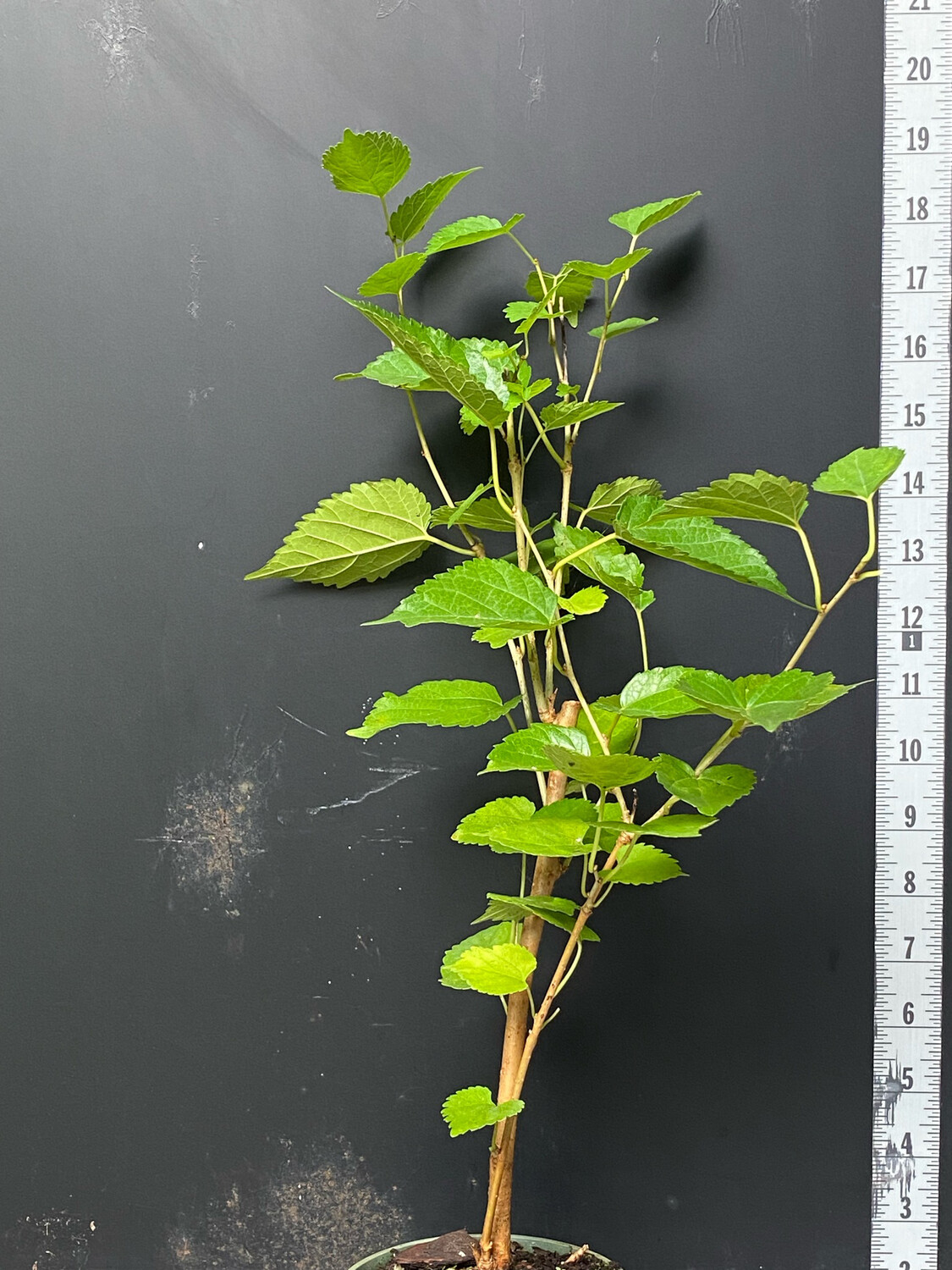
🍇 Everbearing Mulberry Tree — Repeat Harvests from One Backyard Berry Machine 🌿
Morus spp. — Morus alba / hybrid Everbearing type
Sweet berries should not require a grocery-store treasure hunt. The Everbearing Mulberry produces juicy, richly colored fruit that is best enjoyed moments after picking—and with light, thoughtful pruning, established trees may reward warm-climate growers with more than one fruiting flush each year.
Fast-growing, forgiving, highly prune-responsive, and useful in everything from compact edible gardens to full-scale food forests, this is the kind of fruit tree that quickly earns its place in the landscape.
Small berries. Generous harvests. Serious backyard snack potential.
A Fast-Growing Fruit Tree with an Extended Harvest Window
The Everbearing Mulberry is valued for its ability to produce fruit over an extended period rather than ripening every berry at once. In Florida and similarly mild climates, established plants may produce a primary spring crop followed by additional warm-season flushes.
Light pruning between harvests encourages fresh branching, keeps fruit within reach, and may promote additional productive growth.
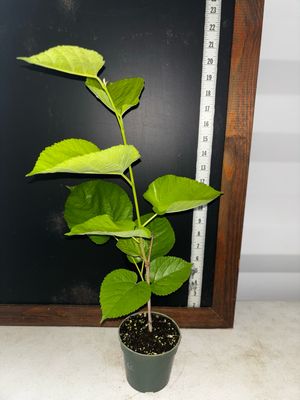
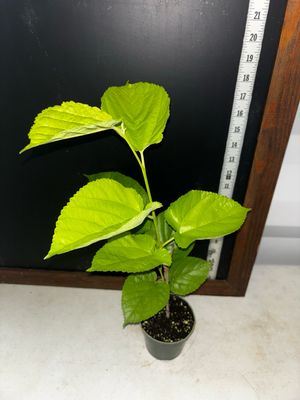
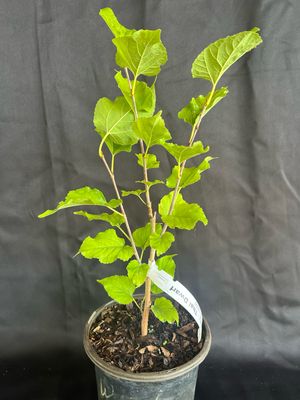
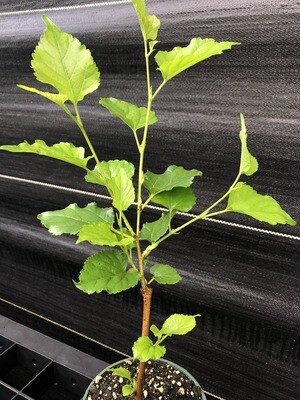
This listing is for a young 4-inch starter plant. It is an affordable way to begin growing this productive fruit tree, but the small container dries more quickly and requires more attentive care than a 1-gallon or larger selection.
Cultivar identity note: “Everbearing Mulberry” is used in the nursery trade for several related fruiting selections and is not always one universally standardized cultivar. Our plant is sold as an Everbearing Morus alba or hybrid type and should not automatically be confused with the much colder-hardy cultivar ‘Illinois Everbearing’ unless specifically labeled as such. Mulberry species and hybrids can be difficult to distinguish, and natural hybridization is common.
PRODUCT INTRODUCTION, QUICK FACTS & CULINARY INFORMATION
🌿 Quick Facts Guide
| Category | Details |
|---|---|
| Botanical Name | Morus spp.; sold as Morus alba / hybrid Everbearing type |
| Common Name | Everbearing Mulberry |
| Plant Type | Fast-growing deciduous fruiting shrub or small tree |
| Size at Sale | Ships in a 4-inch nursery container |
| Estimated Plant Age | Approximately 4–8 months, depending on seasonal growth |
| Typical Mature Height | Approximately 8–15 ft when allowed to grow naturally; underlying clone and growing conditions may produce a larger tree |
| Managed Height | Commonly maintained around 6–8 ft with regular light pruning |
| Typical Mature Width | Approximately 6–12 ft with pruning; potentially wider if unmaintained |
| Recommended USDA Zones | Zones 7–10 for this warm-climate Everbearing type; container protection is advised near the colder edge of its range |
| Sun Requirements | Full sun for strongest growth and fruiting; tolerates light afternoon shade |
| Cold Hardiness | Established wood may tolerate approximately 10–15°F, but young starter plants should be protected from freezing temperatures |
| Growth Rate | Fast once established; approximately 2–4 ft of growth per year is possible in favorable conditions |
| Growth Habit | Upright to bushy, branching, and extremely responsive to pruning |
| Pollination | One known fruiting clone is generally sufficient; mulberry flowering biology varies because plants may be monoecious, dioecious, or occasionally set fruit without a separate pollinizer |
| Spacing | Approximately 8–12 ft for a managed backyard tree |
| Soil Preference | Adaptable, but performs best in moderately fertile, well-draining soil |
| Water Requirements | Consistent moisture while young; increasingly drought tolerant after establishment |
| Wind Tolerance | Moderate; young trees benefit from structural pruning and protection from severe wind |
| Salt Tolerance | Some tolerance to coastal conditions, but protect young plants from direct salt spray |
| Container Growing | Very suitable when regularly pruned and progressively up-potted |
| Indoor Growing | Not recommended as a permanent houseplant |
| Seasonal Habit | Deciduous in temperate and subtropical climates; may retain foliage longer during very mild winters |
UF/IFAS describes mulberries as adaptable to Florida’s sandy soils, drought tolerant after establishment, moderately wind resistant, and tolerant of some wind and salt exposure. Dwarf Everbearing types are particularly well suited to pruning, containers, and compact edible landscapes.
Important Expectations for a 4-Inch Starter
A 4-inch Everbearing Mulberry is a young starter plant, not a finished landscape tree. Its advantages include lower purchase and shipping costs, easy container management, and the opportunity to train the tree from an early age.
However, a small starter plant:
- Dries out more quickly than a 1-gallon or larger tree
- Has fewer stored resources for recovering from shipping stress
- Needs gradual exposure to intense sun and wind
- Requires freeze protection while young
- Should remain in its original container until it has recovered from transit
- May need one or more up-potting stages before landscape planting
For growers who want faster establishment or who live farther from Florida, we recommend selecting a 1-gallon or larger plant whenever available.
🍇 Fruit and Flavor Profile
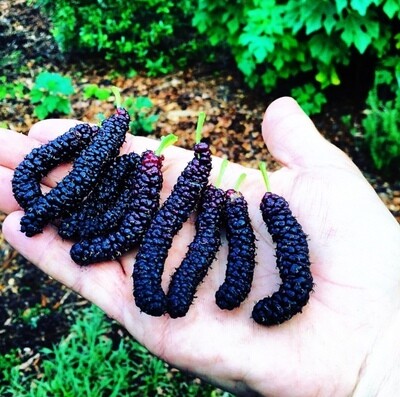
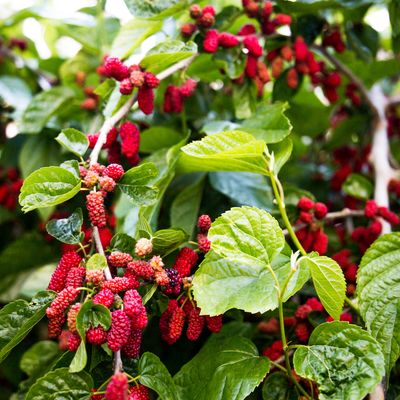
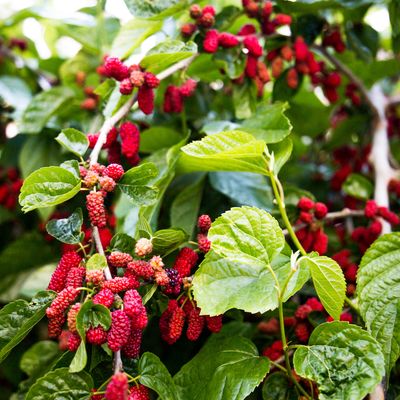
Everbearing Mulberry fruit resembles a slender blackberry, but it grows on a tree instead of a thorny cane.
Flavor
- Sweet and juicy when fully ripe
- Mildly tart or bright before reaching peak ripeness
- Often compared to a blend of blackberry, raspberry, and blueberry
- Richer and less acidic when allowed to ripen completely on the branch
Fruit Size
Fruit is generally small to medium, often approximately ¾–1 inch long, although size varies with the clone, crop load, pruning, water, and soil conditions.
Texture
- Thin, delicate skin
- Soft, extremely juicy interior
- Tiny edible seeds
- No peeling, coring, or pitting required
Ripening Progression
Green → Pale pink or red → Red-purple → Deep purple or nearly black
Allow dark-fruited berries to become fully colored and slightly soft. A ripe mulberry should release with very little resistance. Fruit picked too early may be noticeably tart and less aromatic.
Mulberry fruits are technically multiple fruits made from clusters of small drupelets. Their delicate texture and short shelf life are major reasons fresh mulberries are rarely found in conventional supermarkets.
🌸 Typical Harvest Season
| Region | General Harvest Expectations |
|---|---|
| Central and South Florida | Main crop commonly begins from late winter through spring, often February–May; additional warm-season flushes may occur |
| North Florida and the Southeast | Usually spring through early summer, with possible later crops after light pruning |
| Zones 7–8 | Primarily late spring through summer |
| Cooler Container-Growing Regions | Summer harvest after spring dormancy and bud break |
| Very Mild Tropical or Subtropical Areas | May flower and fruit intermittently when actively growing |
Weather, pruning, tree maturity, recent freezes, and water availability can shift the harvest period. “Everbearing” does not mean that the tree carries ripe berries every week of the year. It describes its tendency to fruit over an extended season or produce multiple flushes under favorable conditions. UF/IFAS reports that Dwarf Everbearing types may produce several times annually in Florida.
🍇 How Everbearing Mulberries Produce
Mulberries flower along productive shoots as active growth returns. Light pruning between fruiting flushes encourages branching and makes future crops easier to harvest.
For better fruit production:
- Provide at least 6–8 hours of direct sun
- Avoid heavy applications of high-nitrogen fertilizer
- Maintain reasonably even soil moisture while fruit develops
- Lightly tip-prune after a harvest rather than making frequent major cuts
- Remove crossing, damaged, or poorly positioned branches
- Protect swelling buds and flowers from late freezes
- Maintain an open but leafy canopy with good airflow
- Allow fruit to become completely ripe before harvesting
A young starter may fruit early, but the first meaningful crop commonly follows establishment and stronger branching. Focus first on healthy roots and structure rather than forcing immediate production.
🌳 Mulberry Cultivar Comparison Guide
Cultivar names and traits may vary among nurseries because mulberries hybridize readily and have been exchanged informally among growers for generations. Use this chart as a practical comparison rather than a rigid botanical key.
| Cultivar | Fruit Size, Flavor and Texture | Tree Size and Growth Habit | Cold and Climate Notes | Best For |
|---|---|---|---|---|
| Everbearing | Small to medium; sweet, soft, juicy, with mild berry acidity | Bushy, fast-growing, and prune-responsive; maintain around 6–8 ft | Best adapted to Zones 7–10; protect young growth from freezes | Repeat harvests, backyard orchards, food forests |
| Thai Dwarf | Small to medium; sweet, soft, and very juicy | Naturally compact and bushy; often maintained around 4–8 ft | Warm-climate selection; protect during hard freezes | Containers, patios, and smaller yards |
| World’s Best | Large; very sweet, soft, and dessert-like | Vigorous upright tree that responds well to pruning | Performs well in warm and subtropical climates | Fresh eating and larger berries |
| Tice | Medium to large; rich, sweet-tart, soft, and juicy | Large, vigorous, and spreading | Excellent Florida performer; generally suited to Zones 8–10 | Food forests, shade, and larger properties |
| Florida Giant / Estero Giant | Large to very large; rich, juicy, and sweet-tart | Vigorous warm-climate tree with a broad canopy | Best suited to Florida and similar mild climates; protect from severe freezes | Large-fruited Florida collections |
| Shangri-La | Medium to large; very sweet with a complex berry flavor | Large, vigorous tree with broad leaves and strong growth | Performs well throughout much of the Southeast | Orchards, food forests, and large yards |
| Pakistan | Very large, often 3–4 in long; sweet with mild acidity and a tender, slightly firmer bite | Fast-growing, upright, and potentially large | More cold-sensitive than many common mulberries | Specialty fruit collectors and dramatic fresh fruit |
| 6th Street | Medium to large; rich, sweet, and juicy | Strong upright tree with vigorous production | Adaptable to Florida and the Southeast | Productive backyard orchards |
| Hunter | Medium to large; classic sweet mulberry flavor | Vigorous upright growth | Good warm-climate performance with seasonal dormancy | Home orchards and food forests |
| White Mulberry Types | Small to medium; honey-sweet and usually lower in acidity | Rapid-growing shade tree that may become very large | Generally among the more cold-adaptable mulberries | Sweet fruit, wildlife, shade, and silk-related history |
| Corkscrew / Unryu | Small, mildly sweet fruit when produced | Distinctive twisted branches; grown primarily as an ornamental | Broadly adaptable but valued more for form than crops | Artistic landscapes, winter interest, and bonsai |
🌿 Why Grow an Everbearing Mulberry?
1. Fruit You Rarely Find in Stores
Mulberries bruise and leak easily once harvested. Growing your own provides access to fruit at peak ripeness—when the sweetness, aroma, and texture are at their best.
2. Fast Establishment
Mulberries are among the faster-growing fruit trees. A small starter can become a substantial plant surprisingly quickly when provided with warmth, sunlight, root space, and steady care.
3. An Extended Harvest
Rather than producing one quick burst of fruit, Everbearing types may ripen berries over a longer period and produce additional flushes in warm climates.
4. Easy Height Management
The tree responds well to regular light pruning and can be maintained at a convenient picking height.
5. Multiple Landscape Functions
A managed Everbearing Mulberry can serve as:
- A compact fruit tree
- An edible privacy screen
- A food forest understory or midstory tree
- A seasonal shade plant
- A fruiting hedge
- A wildlife-feeding tree
- A container-grown patio specimen
- A source of chop-and-drop leafy material
6. Wildlife Value
Birds, squirrels, raccoons, opossums, and other animals are strongly attracted to ripe mulberries. This makes the tree valuable for wildlife habitat, although growers may need netting if the harvest is intended primarily for people.
🍽️ Culinary Uses — What Can You Make with Mulberries?
Fresh mulberries are excellent eaten directly from the tree, but a productive plant may quickly provide more fruit than one household can eat fresh.
Popular Uses
- Fresh fruit bowls
- Smoothies and protein shakes
- Yogurt, oatmeal, and cereal toppings
- Pancakes and waffles
- Mulberry jam or jelly
- Syrups and dessert sauces
- Pies, cobblers, and crisps
- Muffins and quick breads
- Ice cream and sorbet
- Fruit leather
- Dehydrated berries
- Fermented beverages, cordials, and wine
- Frozen berries for later baking
The Easiest Harvest Method
For a mature tree producing heavily:
- Place a clean sheet or harvest tarp beneath the canopy.
- Gently shake individual branches.
- Collect the fully ripe berries that release naturally.
- Sort out leaves, stems, and underripe fruit.
- Refrigerate or process the fruit promptly.
Mulberries are delicate. Store them in a shallow container rather than piling them deeply, and wash them shortly before use.
Simple Mulberry Freezing Method
- Sort and gently rinse fully ripe berries.
- Allow them to drain and dry.
- Spread the berries in a single layer on a tray.
- Freeze until firm.
- Transfer them to a freezer-safe container.
Tray-freezing prevents the berries from freezing into one solid block.
Classic Mulberry Jam Concept
The most common mulberry preserve combines:
- Fully ripe mulberries
- Sugar
- Lemon juice for brightness and acidity
- Commercial pectin when a firmer set is desired
Mulberries are naturally delicate and juicy. Lemon adds flavor contrast and helps create a more balanced preserve.
🍇 Nutritional and Cultural Interest
Mulberry fruits contain carbohydrates, dietary fiber, vitamins, minerals, phenolic compounds, flavonoids, and—in dark-fruited types—anthocyanin pigments. Nutrient content varies with species, cultivar, ripeness, climate, and processing.
Mulberries can be promoted as a colorful whole fruit within a varied diet, but they should not be marketed as a treatment or cure for any health condition. Research into mulberry phytochemicals is ongoing and does not replace medical guidance.
🧵 From Silk Roads to Backyard Food Forests
White mulberry has been cultivated in China for thousands of years because its leaves are the primary food of the domesticated silkworm, Bombyx mori. Mulberry trees became inseparable from sericulture—the raising of silkworms and production of silk.
Attempts were made to establish a profitable silk industry in colonial North America. Virginia even required residents to plant white mulberries during the 1600s, and the eastern United States later experienced a speculative “mulberry mania” during the 1830s. The silk ventures faded, but the trees remained, naturalized, and hybridized with native red mulberries.
North American Indigenous communities also had long-established relationships with native mulberries. Historical records describe mulberries being dried, stored, made into warm sauces, mixed with corn-based foods, used for dyes, and incorporated into other practical applications.
Today, mulberries connect ancient fiber production, traditional foods, wildlife habitat, and modern edible landscaping—all in one remarkably adaptable genus.
🌳 Ornamental and Landscape Appeal
Everbearing Mulberry trees develop:
- Lush green foliage
- Variable heart-shaped or lobed leaves
- An informal, branching silhouette
- A dense seasonal canopy
- Gray-brown woody stems as the plant matures
- Yellowing foliage before winter dormancy
This is best treated as a productive edible landscape tree, not a formal evergreen specimen.
Use it:
- Along the edge of an orchard
- In a food forest
- As an informal edible screen
- Behind smaller fruiting shrubs
- Near a chicken or livestock forage area
- In a large container on a sunny patio
- Where dropped berries will not create a staining problem
Avoid positioning a dark-fruited mulberry directly over pale paving, outdoor furniture, vehicles, pools, wooden decks, or frequently traveled walkways.
SEASONAL CARE, PLANTING, WATERING, CONTAINERS & PRODUCTION
🍂 Seasonal Reality Check — Mulberries Are Deciduous
Everbearing Mulberry is naturally deciduous through much of the continental United States. This means it sheds its leaves and enters a resting period during cooler weather.
A dormant mulberry may look bare, spotted, yellow, or temporarily unattractive. This is not automatically evidence that the plant is dead or diseased.
In very warm tropical or subtropical microclimates, a mulberry may retain some foliage longer or behave as semi-evergreen. Dormancy will vary with temperature, day length, recent pruning, and plant maturity.
🌱 Seasonal Guide for Florida and Similar Climates
Late Winter — January through February
Depending on the winter, the tree may be leafless, partially leafless, or beginning to awaken.
Expect:
- Bare branches
- Swelling buds
- Early new leaves
- Possible early flowers
- Rapid changes after a warm spell
Recommended care:
- Complete structural pruning before vigorous growth begins
- Remove dead, damaged, rubbing, or badly positioned wood
- Add a light compost top-dressing
- Refresh hardwood mulch
- Begin monitoring irrigation as new foliage expands
- Protect tender new growth if a late freeze is forecast
Spring — March through May
This is generally the most active period for growth, flowering, and fruiting in Central Florida.
Expect:
- Rapid leaf expansion
- New branches
- Flowers and developing berries
- The primary fruit harvest
- Strong water demand during dry spring weather
Recommended care:
- Water deeply at soil level
- Harvest fruit frequently
- Watch for birds and squirrels
- Avoid heavy nitrogen during fruit development
- Perform only light tip-pruning after a crop is harvested
- Inspect new growth for whiteflies, mites, scale, and chewing insects
Summer — June through September
Trees remain actively growing through Florida’s heat and rainy season. Established Everbearing types may produce additional fruiting flushes.
Expect:
- Fast shoots
- Dense leafy growth
- Occasional additional flowers and berries
- Increased fungal pressure during humid weather
- Possible wind damage during summer storms
Recommended care:
- Thin crowded shoots lightly
- Maintain airflow
- Use drip irrigation during dry periods
- Reduce irrigation during prolonged rainfall
- Check drainage after tropical storms
- Remove broken branches promptly
- Keep mulch away from the trunk
- Avoid overhead irrigation, particularly late in the day
Fall — October through November
Growth begins to slow as days shorten and temperatures cool.
Expect:
- Reduced flowering
- Slower new growth
- Yellow, brown, or spotted older leaves
- Gradual leaf drop
- Increasing dormancy
Recommended care:
- Stop encouraging tender growth with high-nitrogen fertilizer
- Continue watering during extended drought
- Collect heavily diseased fallen foliage if leaf-spot pressure was severe
- Avoid unnecessary major pruning until the tree is fully dormant
- Prepare container plants for cold protection
Winter — November through January
Dormancy is most visible after cold fronts.
Expect:
- Partial or complete leaf drop
- Bare branches
- No active fruit production
- A healthy green cambium layer beneath lightly scratched bark
- Visible buds waiting for warmer conditions
A leafless winter mulberry is not a dead mulberry. Avoid repeatedly watering a dormant container that is not using moisture quickly.
🍂 Seasonal Guide for Zones 7–8
Growers in cooler regions should expect:
- A later spring bud break
- A shorter active growing season
- More complete winter dormancy
- Summer rather than winter or early-spring fruit
- Greater need to protect container roots
- Possible branch dieback following unusually severe cold
Container-grown plants can be moved after dormancy into an unheated garage, shed, greenhouse, or similarly protected space. The goal is to protect the root ball from extreme freezing—not to force the tree into warm indoor growth all winter.
📦 What a Dormant Shipped Mulberry Looks Like
Mulberries shipped during dormancy may arrive:
- Leafless
- With yellowing leaves
- With spotted leaves ready to drop
- With small buds along otherwise bare stems
- Looking less full than a plant shipped in spring
Check for flexibility in smaller branches and green tissue beneath a very light bark scratch. Avoid scraping large areas or repeatedly damaging the stem.
Dormant appearance alone is not evidence of poor plant quality.
🪴 First 30 Days After Delivery
Your Everbearing Mulberry has just traveled inside a dark shipping box. Immediate transplanting, full afternoon sun, heavy feeding, or excessive watering can compound shipping stress.
Days 1–3
- Unpack immediately
- Remove packing material carefully
- Inspect the soil moisture
- Water only if the root ball is becoming dry
- Place the plant in bright shade or gentle morning sun
- Protect it from wind, pets, and temperature extremes
Days 4–10
Gradually increase sun exposure:
- Begin with morning sun
- Add one or two hours every few days
- Monitor leaves for bleaching, crisp edges, or wilting
- Avoid sudden exposure to intense western afternoon sun
Days 10–30
- Continue checking moisture daily
- Keep the plant in its original nursery container
- Wait for healthy new growth
- Do not fertilize a visibly stressed plant
- Begin planning the next container only after recovery
We recommend waiting approximately 30 days or until healthy new growth appears before transplanting. A plant that is severely root-bound may need earlier attention, but it should first be stabilized and protected from additional stress.
💧 Watering a 4-Inch Everbearing Mulberry
Small nursery containers can dry rapidly, especially during Florida’s spring heat, summer weather, and windy conditions.
Container Watering
Check the plant every morning.
Water when:
- The upper portion of the potting mix is beginning to dry
- The container feels noticeably lighter
- Leaves begin losing firmness
- Water is no longer visible or retained in the upper mix
Water thoroughly until excess drains from the bottom.
During hot, sunny weather, a 4-inch pot may require water daily. During cool, cloudy, or rainy weather, it may need substantially less.
Daily checking is required. Automatic daily watering is not.
No Overhead Watering
Water your Everbearing Mulberry:
- At the soil surface
- In the morning
- Slowly enough for the root ball to absorb moisture
- Without repeatedly splashing soil onto the leaves
Avoid overhead afternoon watering. Wet foliage combined with intense sun, humidity, and poor airflow can contribute to spotting, leaf scorch, and disease pressure.
In-Ground Establishment Schedule
For a larger, well-rooted tree planted in the landscape:
First 2–4 weeks
- Water deeply approximately 3–4 times per week during dry weather
- Check the root ball rather than relying only on nearby soil moisture
Months 2–3
- Reduce to approximately 2–3 deep waterings per week when rainfall is insufficient
After establishment
- Water during extended drought
- Increase irrigation during flowering, fruit development, and exceptional heat
- Reduce watering during prolonged rainfall
Use actual soil moisture and plant response to adjust the schedule. Sandy Florida soil dries much faster than moisture-retentive clay.
Drip irrigation or a soil-level bubbler is strongly preferred over overhead sprinklers.
🪴 Container Growing and Up-Potting
Everbearing Mulberry is one of the better mulberries for container culture because it tolerates pruning and produces on a relatively young framework.
Recommended Container Progression
4-inch → 1-gallon → 3-gallon → 7-gallon → 15-gallon or larger
Do not move a small plant directly into an oversized container unless the growing mix and watering are managed carefully. Excess unused soil can remain wet long after the small root ball has absorbed what it needs.
Signs It Is Time to Up-Pot
- Roots emerging from drainage holes
- The root ball sliding out as one dense mass
- Soil drying unusually quickly
- Water running around the root ball instead of soaking in
- Growth slowing despite good light and nutrition
- The plant becoming top-heavy
- Roots circling densely around the container
Recommended Potting Mix
Mulberries prefer drainage combined with moderate moisture retention.
A practical mix is:
- 50% high-quality potting mix
- 25% aged pine bark fines
- 25% perlite, pumice, or similar aeration material
Optional additions:
- A modest amount of finished compost
- Worm castings
- Biochar that has been properly charged
- Small quantities of trace minerals such as azomite
Avoid:
- Dense native garden soil in containers
- Heavy muck-based mixes
- Containers without drainage holes
- Potting mixes that remain saturated for long periods
- Excess compost that collapses and becomes waterlogged
Containers and potting materials can be found through independent nurseries, garden centers, landscape suppliers, farm-supply businesses, online garden retailers, and community plant groups. Search for used nursery pots, tree pots, pine bark fines, professional potting mix, or horticultural pumice/perlite.
How to Up-Pot an Everbearing Mulberry
- Choose a container only one or two practical sizes larger.
- Confirm that it has multiple drainage holes.
- Lightly moisten the new potting mix.
- Remove the plant by supporting the root ball—not by pulling the trunk.
- Loosen only tightly circling exterior roots.
- Position the plant at the same soil level it occupied previously.
- Backfill around the root ball.
- Firm the mix gently to remove large air pockets.
- Water thoroughly at soil level.
- Return the tree to bright, protected light while it recovers.
Do not bury the trunk or cover the original root flare.
Long-Term Container Size
For continued fruit production, use at least a 15-gallon container, although 20–30 gallons provides more stable moisture and root space.
Container trees require:
- More frequent watering
- Regular root and canopy management
- Periodic replacement of depleted potting mix
- Light feeding during active growth
- Protection from temperature extremes
- A heavy container or stable base to reduce tipping
🏠 Can Everbearing Mulberry Grow Indoors?
Everbearing Mulberry is not a dependable permanent houseplant.
It requires:
- Strong direct sunlight
- Seasonal temperature changes
- Air movement
- Space for roots and branches
- Insect pollination is not required, but outdoor wind and natural conditions support healthier growth
- A period of reduced winter activity in cooler regions
A greenhouse, screened enclosure, or extremely bright sunroom may provide temporary protection, but ordinary indoor window light is usually insufficient for long-term fruit production.
In cold regions, allow the plant to become dormant and move the container to a sheltered, cool location rather than attempting to keep it actively growing in a warm living room.
🌱 Where to Plant Everbearing Mulberry
Choose a location with:
- Full sun
- Well-draining soil
- Good airflow
- At least 8–12 ft of managed growing space
- Access for harvesting and pruning
- Distance from pale paving and vehicles
- Protection from the strongest storm winds
Avoid Planting
- Directly above septic systems
- Immediately beside foundations
- Under utility lines
- Beside narrow walkways
- Over driveways or patios
- In standing water
- Where falling fruit would create a maintenance problem
- Against a fence without room for pruning access
- In exposed beachfront conditions with constant direct salt spray
Mulberries have spreading, relatively shallow root systems. Allow reasonable distance from hardscape and underground infrastructure.
🌿 GreenDreams “High & Tight” Planting Method
We recommend allowing a 4-inch Everbearing Mulberry to become established in progressively larger containers before planting it in the landscape. A well-rooted 3-gallon or larger tree is generally more forgiving for direct ground planting.
Planting Steps
- Dig a hole only slightly wider than the root ball.
- Do not dig the hole deeper than the root ball.
- Position the upper surface of the root ball approximately level with or slightly above the surrounding grade.
- Backfill primarily with native soil.
- Firm the soil gently but thoroughly around the root ball.
- Water deeply to settle the planting area.
- Top-dress the surrounding soil with compost, charged biochar, azomite, and an appropriate organic nutrient source.
- Apply hardwood mulch around the planting zone.
- Keep mulch several inches away from the trunk and root flare.
- Maintain a slightly raised, well-draining planting position.
Do not create a deep mulch volcano or bury the original trunk.
Watch GreenDreams demonstrate our High & Tight planting approach:
https://youtu.be/RRQFY30qdA8?si=rRIcsbLlVAVYotfI
🌿 Fertilizing Everbearing Mulberry
Mulberries do not require aggressive fertilization and can grow in relatively lean soils.
Florida Feeding Schedule
Late winter or early spring
- Top-dress with finished compost
- Apply a modest amount of balanced organic fruit-tree fertilizer
- Refresh hardwood mulch
After the primary harvest
- Apply a light feeding only if growth is weak or foliage indicates a deficiency
- Avoid forcing long, soft shoots during storm season
Late summer through fall
- Reduce or stop high-nitrogen fertilizer
- Allow new growth time to mature before cooler weather
Excess nitrogen can produce:
- Large, soft leaves
- Long, breakable shoots
- Dense shade inside the canopy
- Reduced flowering
- Increased pest pressure
- Greater storm damage
Use soil or leaf testing before repeatedly correcting suspected deficiencies.
✂️ Pruning for Structure, Harvesting, and Repeat Production
Everbearing Mulberry responds enthusiastically to pruning, but that does not mean every branch should be cut heavily every year.
Young Tree Training
During the first few years:
- Select several well-spaced framework branches
- Remove narrow, weak branch unions
- Correct crossing growth early
- Encourage a low, harvestable canopy
- Avoid allowing one long, unstable shoot to dominate the plant
After a Fruit Flush
- Lightly tip-prune vigorous shoots
- Shorten branches that have moved beyond harvesting reach
- Remove weak interior growth
- Maintain good airflow
- Avoid removing most of the leafy canopy at once
Dormant Pruning
Use the dormant period for:
- Structural correction
- Removing dead or storm-damaged wood
- Removing crossing branches
- Lowering excessive height
- Correcting imbalanced growth
Avoid Large Unnecessary Cuts
Mulberry wounds from major branch removal can be slow to close. Maintain the tree with frequent, smaller corrections rather than allowing it to become enormous and then severely topping it.
Wear gloves. Broken twigs and pruning cuts release milky sap that may irritate sensitive skin. UF/IFAS recommends light framework pruning when young and limiting mature-tree pruning primarily to dead, damaged, or crossing branches. Dwarf Everbearing trees can also be pruned lightly between crops to maintain reach and encourage productive branching.
🌬️ Wind and Storm Preparation
Mulberries grow quickly, and rapid growth can result in long branches with weaker attachment points.
Before hurricane season:
- Remove damaged and crossing branches
- Shorten excessively long lateral shoots
- Maintain several balanced scaffold branches
- Avoid heavy nitrogen fertilizer
- Secure container-grown plants
- Move small containers into shelter before severe weather
- Remove tight nursery stakes once the trunk can support itself
- Do not leave permanent ties that cut into expanding bark
Mulberries offer some wind tolerance, but young trees and poorly structured branches may be damaged during severe storms. UF/IFAS specifically recommends creating a strong framework because Dwarf Everbearing Mulberry can be injured by high winds.
🌿 Companion Plants for an Everbearing Mulberry Guild
Keep support plants far enough away that they do not crowd the young trunk or compete directly with the starter’s root ball.
Nitrogen-Supporting Plants
- Pigeon pea
- Sunn hemp
- Perennial peanut in suitable managed areas
Biomass and Chop-and-Drop Plants
- Mexican sunflower
- Vetiver grass
- Fakahatchee grass
- Lemongrass
- Bananas where space permits
Pollinator and Beneficial-Insect Plants
Mulberries are primarily wind-pollinated, but insectary plants still support overall ecosystem health and natural pest control.
- Blue porterweed
- African blue basil
- Native asters
- Tropical sage
- Beautyberry
- Sweet almond bush
Edible Understory Companions
- Turmeric
- Ginger
- Chaya
- Okinawan spinach
- Longevity spinach
- Cranberry hibiscus
Guild Management Tip
Keep an open mulched ring around the mulberry’s trunk. Chop-and-drop material should be placed around the root zone without being piled against the woody base.
CAUTIONS, TROUBLESHOOTING, FAQ, SHIPPING, CTA & SEO
⚠️ Important Cautions
Only Eat Fully Ripe Fruit
Ripe mulberries are edible. Avoid consuming unripe fruit, green plant parts, or milky sap. Unripe fruit and sap may cause gastrointestinal or neurological symptoms, and the sap can irritate skin.
Milky Sap
Wear gloves when pruning or handling broken branches, especially if you have sensitive skin.
Fruit Staining
Dark berries can stain:
- Concrete
- Pavers
- Decking
- Vehicles
- Clothing
- Shoes
- Indoor flooring when tracked inside
Choose the planting location with the mature canopy in mind.
Wildlife Competition
Birds and mammals may harvest berries before you do. Use wildlife-safe netting only when it can be securely installed and frequently inspected.
Fast Growth and Roots
Mulberries can develop spreading surface roots and vigorous branches. Do not plant too close to foundations, paving, septic infrastructure, pools, or underground utilities.
Seedling Spread and Ecological Considerations
White mulberry and its hybrids have naturalized throughout much of the United States. Birds can spread seeds, and white mulberry may hybridize with native red mulberry.
In regions where Morus alba is regulated, restricted, or considered invasive, customers should consult state and local guidance before planting. Remove unwanted seedlings while they are young and avoid allowing volunteer plants to spread into natural areas.
🔍 Everbearing Mulberry Troubleshooting Guide
Icons represent common issues and organic solutions—look for 🌿 for recovery guidance.
| ⚠️ Issue | 🧠 Likely Cause | 🌿 Organic Response |
|---|---|---|
| 🍂 Yellow or spotted leaves in fall | Normal seasonal senescence before dormancy | Allow natural leaf drop; reduce watering as growth slows |
| 🍃 Leaf drop after delivery | Shipping stress, sudden light change, or disturbed moisture balance | Keep in the original pot, provide bright shade, and maintain even moisture |
| 💧 Limp leaves and very dry soil | Small 4-inch root ball dried too far | Water thoroughly at soil level and protect temporarily from intense afternoon sun |
| 💦 Yellow leaves with constantly wet soil | Overwatering or poor drainage | Allow the upper mix to begin drying and confirm drainage holes are open |
| ☀️ Pale, bleached, or crispy foliage | Sunburn following sudden exposure | Reacclimate gradually using morning sun before stronger afternoon light |
| 🌬️ Brown leaf margins | Windburn, drought, salt exposure, or root stress | Shelter the plant and correct moisture without saturating the soil |
| 🍄 Expanding leaf spots | Humidity, overhead watering, poor airflow, or fungal pressure | Remove severely affected debris, water at soil level, and improve airflow |
| 🪲 Sticky leaves or pale stippling | Whiteflies, scale, aphids, or mites | Inspect leaf undersides; use water sprays or labeled horticultural soap/oil during mild conditions |
| 🐛 Irregular holes in leaves | Caterpillars, beetles, or grasshoppers | Hand-pick where practical and use a correctly identified, targeted organic treatment |
| 🪵 Wilting despite wet soil | Root injury or root rot | Reduce irrigation, improve drainage, and inspect the root system |
| 🌾 Slow growth | Recent shipping, small root system, insufficient sun, depleted mix, or crowded roots | Allow recovery, improve light gradually, and up-pot once actively growing |
| 🌸 No flowers or fruit | Plant is young, too shaded, heavily fertilized, repeatedly pruned, or affected by winter weather | Increase sun, reduce nitrogen, and allow productive branches to mature |
| 🍃 Fruit dropping early | Heat, irregular watering, wind, or natural crop thinning | Maintain more consistent root-zone moisture and protect from extreme stress |
| 🐦 Berries disappearing | Birds and wildlife harvesting first | Pick daily or use carefully secured wildlife-safe netting |
| ❄️ Blackened new growth | Late frost or freeze injury | Wait for regrowth before pruning; remove confirmed dead tissue after danger passes |
| 🌱 Shoots emerging below the desired framework | Basal suckering or vigorous regrowth | Remove unwanted shoots while young and direct energy into selected branches |
| 🧪 Pale new leaves with green veins | Possible micronutrient limitation or high soil pH | Test soil before applying repeated supplements; use an appropriate chelated micronutrient only when indicated |
| 🪚 Split branch unions | Weak structure, excessive crop weight, or storm damage | Remove damaged wood cleanly and retrain a balanced framework |
Potential mulberry problems include borers, whiteflies, scale, mites, mealybugs, bacterial blight, cankers, leaf scorch, powdery mildew, and root rot, although healthy trees are generally resilient.
🌟 Is This Plant Right for You?
✅ Ideal For
- Florida and Southeastern growers
- Backyard fruit enthusiasts
- Food forest and permaculture projects
- Growers who want fruit rarely found in stores
- Gardeners comfortable with seasonal dormancy
- Home cooks who preserve or freeze berries
- Wildlife-friendly landscapes
- Growers willing to prune for size control
- Container gardeners with strong outdoor sunlight
- Families looking for a fast-growing edible tree
❌ May Not Be Ideal For
- Landscapes where berry staining would be unacceptable
- Tiny spaces without room for roots or pruning
- Gardeners seeking an evergreen ornamental
- Permanent indoor growing
- Highly exposed beachfront sites
- Areas where white mulberry or related hybrids are restricted
- Growers unable to monitor a small starter container
- Customers expecting a large, immediately established tree
- Northern or western customers unwilling to assume seasonal shipping risk
- Properties where wildlife access to fruit is a serious concern
❓ Everbearing Mulberry FAQ
Is Everbearing Mulberry the same as Illinois Everbearing?
Not necessarily. “Everbearing” is used for several nursery-trade selections. ‘Illinois Everbearing’ is a named Morus alba × rubra cultivar known for exceptional cold tolerance and a large eventual size. This listing should be treated as an Everbearing Morus alba or hybrid type unless the plant label specifically identifies another cultivar.
How large does an Everbearing Mulberry tree grow?
This type can generally be managed around 6–8 ft tall. Without pruning, expect approximately 8–15 ft or more, depending on the underlying clone, soil, climate, and growing season.
Does Everbearing Mulberry need two trees to produce fruit?
A known nursery-propagated fruiting selection is generally grown successfully as a single plant. Mulberry flowering varies, however, because individual plants may carry both flower types, separate flower types, or occasionally set fruit without conventional pollination.
How quickly will a 4-inch Everbearing Mulberry grow?
After the root system becomes established, growth can be rapid. Approximately 2–4 ft in a favorable year is possible, although small plants may initially focus on root development.
How soon will it produce fruit?
Some mulberries flower while young, but reliable production usually improves after the plant develops a stronger framework. Shipping, up-potting, pruning, freezes, and limited sunlight may delay early fruiting.
Can I plant the 4-inch starter directly in the ground?
It is possible in ideal protected conditions, but we recommend gradually growing it into at least a strongly rooted 3-gallon plant before landscape planting. Larger root systems tolerate drought, wind, weeds, and temperature changes more successfully.
How long should I wait before transplanting after delivery?
Allow approximately 30 days or wait until healthy new growth appears. Avoid combining shipping stress with immediate root disturbance.
Can Everbearing Mulberry grow in a container?
Yes. Maintain it through pruning and progressively increase the pot size. A 15-gallon or larger container is recommended for meaningful long-term production.
Can I grow it indoors?
Not as a typical houseplant. It requires strong outdoor light, airflow, space, and seasonal changes. A greenhouse or cool protected winter location is more appropriate than a living room.
Is the tree evergreen in Florida?
Usually not reliably. It is deciduous, although trees in especially mild locations may retain foliage longer or become briefly semi-evergreen.
Why is my mulberry losing leaves in winter?
Seasonal leaf drop is normal. Leaves may turn yellow, brown, or spotted before falling. Look for healthy buds and green tissue beneath the bark.
When should I prune an Everbearing Mulberry?
Complete structural pruning while dormant. Use light tip-pruning between fruiting flushes to control height and encourage branching. Avoid unnecessary removal of major limbs.
Does Everbearing Mulberry tolerate Florida’s sandy soil?
Yes. Mulberries adapt well to Florida’s sandy, relatively infertile soils once established, although compost and hardwood mulch can improve soil biology and moisture consistency.
Is it drought tolerant?
Established mulberries are drought tolerant, but a 4-inch starter is not. Small containers require close moisture monitoring.
Is Everbearing Mulberry salt tolerant?
It has some salt tolerance, but a young tree should be protected from direct ocean spray and saline irrigation.
Will birds eat the fruit?
Absolutely. Mulberries are highly attractive to birds and other wildlife. Harvest frequently or use properly installed netting.
Are mulberry leaves edible?
Mulberry foliage has traditional culinary and agricultural uses in some cultures, but correct species identification, harvest stage, and preparation matter. This plant is sold primarily for fruit production. Do not consume unidentified foliage, stems, sap, or green fruit without reliable preparation guidance.
🚚 Shipping and Handling — Please Read Before Ordering
This listing is for a small 4-inch starter plant.
Best Shipping Region
This size is most ideally shipped to:
- Florida
- The Southeastern United States
- Texas
- Nearby warm-climate destinations with shorter UPS Ground transit times
We ship across the continental United States, but customers in northern and western states should carefully consider the risk associated with extended ground transit.
Shipping Schedule
- Live plants ship on Mondays
- We currently use UPS Ground
- Orders may be held when severe heat, cold, holidays, or carrier delays create unreasonable risk
- Transit time varies by destination
Northern and Western Shipping Advisory
A 4-inch container has very little soil volume and can dry, chill, or overheat more quickly than a larger plant.
Extended UPS Ground transit may result in:
- Leaf drop
- Wilted foliage
- Broken tender growth
- Dry soil
- Yellowing leaves
- Heat or cold injury
- A longer recovery period
California agricultural inspection may hold a shipment for an additional day, further extending transit time.
Buyer Discretion During Extreme Weather
The customer assumes the weather-related risk associated with ordering live plants during peak summer heat, winter cold, or extended ground transit.
GreenDreams cannot guarantee that a small starter plant shipped far outside our regional zone will arrive in the same cosmetic condition as a plant delivered within Florida or the Southeast.
Plants often recover from shipping stress with proper care, but recovery is not immediate.
For northern or western destinations, we strongly recommend ordering a 1-gallon or larger selection when available.
After Arrival
- Unpack immediately
- Check soil moisture
- Place in bright shade
- Water only when needed
- Gradually introduce direct sun
- Keep in the original container
- Wait approximately 30 days or until new growth appears before transplanting
🌾 Shop with Us in Person
Skip the shipping box and choose your plant in person!
Our retail nursery carries Everbearing Mulberries, additional mulberry cultivars, larger fruit trees, seasonal edible plants, natives, medicinal species, and many selections that are never listed online.
GreenDreams Nursery & Farm
Retail Nursery Open to the Public
🌾 18709 US Hwy. 41, Spring Hill, FL 34610
🕘 Tuesday–Friday: 9 AM–5 PM
🌞 Saturday: 8 AM–3 PM
Walk the nursery, compare cultivars, ask our team questions, and see what is flowering, fruiting, and ready for your landscape this week.
🌿 Beyond the Plant: GreenDreams Services
At GreenDreams, we do more than grow plants—we design, build, and restore ecosystems throughout Florida.
- 🌳 Onsite consultations and edible landscape design
- 🚜 Installation and ecological project management
- 🚚 Bulk delivery of compost, hardwood mulch, biochar, and soil materials
- 🌾 Wholesale plants and large-scale regenerative landscape solutions
Let our experienced team help you turn one Everbearing Mulberry into the beginning of a thriving edible ecosystem.
🌿 IMPORTANT INFORMATION BEFORE PURCHASING LIVE PLANTS
Please note: Plants purchased through our online store are not available for pickup at our retail nursery in Spring Hill, Florida.
Online inventory is housed at a separate facility and is priced, prepared, and handled exclusively for shipping.
🌱 Looking for larger plants or more selection?
Our retail nursery location offers far more availability, including larger sizes, specialty plants, and many selections not suitable for nationwide shipping.
Local pickup is available for retail nursery purchases only.
Visit our Spring Hill, FL retail nursery page to explore in-person shopping options.
🚚 LIVE PLANT SHIPPING & TRANSIT EXPECTATIONS
Live plants naturally experience stress during shipping. Temporary leaf drop, mild wilting, or cosmetic stress is normal after transit. Most plants recover quickly with proper watering, gradual light exposure, and basic aftercare. Some plants may require additional attention during the first few weeks.
Despite careful packing, minor cosmetic damage may occur during transit. Small issues such as broken leaves or stems typically resolve with time and proper care.
If your shipping box arrives with significant external damage, please contact UPS within 30 days to initiate a carrier claim.
⏱️ SHIPPING METHOD, TIMING & TRANSIT WINDOWS
All online orders ship via UPS Ground from our Central Florida nursery.
📦 Shipping Schedule: Orders ship once weekly on Mondays to reduce the risk of packages sitting in transit over weekends. A countdown clock on our website displays the next shipping date.
🚚 Typical Transit Times:
-
Florida: 1–2 days
-
Southern U.S.: approximately 2 days
-
Midwest, West & Northern U.S.: 3–5 business days
Long-distance shipments, particularly to the western U.S., may experience additional transit time due to agricultural inspections in states such as Arizona, California, and Texas.
Extended transit times can be more challenging for small or tender plants and may require additional recovery care after arrival.
🌡️ EXTREME WEATHER & SEASONAL RISK
Live plants are sensitive to temperature extremes.
We cannot guarantee plant condition during periods of extreme summer heat or winter cold and freezing temperatures. Weather-related delays, carrier interruptions, or exposure during delivery are beyond our control.
Customers are responsible for:
-
Monitoring tracking information sent via email
-
Retrieving packages promptly upon delivery
-
Preventing plants from being left outdoors in extreme conditions
During unsafe weather, holiday shipping volume, or extended transit risk, orders may be held and shipped the following week to protect plant health.
⚠️ CUSTOMER RESPONSIBILITY & REFUND POLICY
By purchasing live plants, customers acknowledge and accept the risks associated with shipping, weather exposure, transit delays, and regional suitability.
Refunds or replacements are considered only under exceptional circumstances and in accordance with our return and refund policy. We are not responsible for:
-
Weather-related damage
-
Carrier delays
-
Poor plant selection for a given climate or region
-
Improper care after delivery
Upon purchase, customers assume full responsibility for the ongoing care and success of their plants.
✅ CONSENT & AGREEMENT
By completing a purchase, you confirm that you have read, understand, and agree to all shipping policies, responsibilities, and conditions outlined above.
Our goal is transparency, plant health, and long-term growing success — and we appreciate your understanding and care when ordering live plants.


