


🌿 Green Malabar Spinach Plant – Heat-Loving Basella alba in a 4-Inch Pot
A Tropical Spinach Substitute That Turns Summer Heat Into Harvest Season 🌞
Traditional spinach has already waved the white flag. Green Malabar Spinach is just getting started.
When Florida gardens become too hot and humid for ordinary leafy greens, Green Malabar Spinach (Basella alba) climbs, branches and produces glossy edible leaves throughout the warm season. This vigorous tropical vine delivers tender greens, vertical beauty and repeated harvests from a surprisingly small footprint.
Grow it on a trellis, fence, arbor or patio tower and discover why this ancient tropical vegetable deserves a permanent place in the modern edible garden.
Heat-loving. Space-saving. Endlessly harvestable. This is spinach energy—without the spinach drama.
⠀ ⠀ ⠀ ⠀ ⠀
🌿 Green Malabar Spinach Quick Facts
| Feature | Details |
|---|---|
| Botanical Name | Basella alba L. |
| Common Names | Green Malabar Spinach, Vine Spinach, Ceylon Spinach, Indian Spinach, Climbing Spinach, Alugbati |
| Plant Family | Basellaceae |
| Plant Type | Tropical, frost-sensitive perennial vine; commonly grown as a warm-season annual |
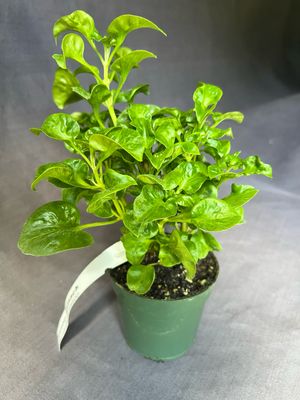
| Sale Size | Ships in a 4-inch nursery pot, approximately ½–¾ quart depending on the production container |
| Estimated Nursery Age | Typically about 4–8 weeks from propagation under warm growing conditions; age varies by crop cycle |
| Mature Height — Managed | Approximately 4–6 feet when regularly harvested and pruned |
| Mature Height — Unpruned | Commonly 8–10+ feet; established vines may grow considerably longer in frost-free tropical climates |
| Typical Width | 2–3 feet when trained; wider if permitted to ramble |
| USDA Zones | Reliably perennial in Zones 10–11; generally grown as a summer annual in Zones 7–9 and colder regions |
| Florida Performance | Warm-season annual in North and much of Central Florida; may persist longer or grow perennially in protected South Florida locations |
| Sun Requirements | Full sun to partial shade |
| Best Florida Exposure | Morning sun with light afternoon shade produces especially tender, succulent leaves; full sun is excellent with reliable moisture |
| Preferred Temperature | Fastest growth generally occurs around 80–90°F and above |
| Cold Hardiness | Extremely frost-sensitive; growth slows significantly during cool weather and may stop when temperatures remain below approximately 60°F |
| Growth Habit | Rapid-growing, soft-stemmed, twining vine with fleshy leaves and stems |
| Support Needed | Strongly recommended—use a trellis, fence, arbor, tomato cage or vertical garden tower |
| Spacing | 12–18 inches apart along a trellis; allow 2–3 feet if plants will ramble |
| Soil Preference | Fertile, moisture-retentive but well-draining soil rich in organic matter |
| Preferred Soil pH | Approximately 5.5–7.0 |
| Water Needs | Consistent moisture; dry conditions can reduce tenderness and encourage flowering |
| Harvested Parts | Young leaves, tender shoot tips and succulent young stems |
| Typical Harvest Window | Repeated harvests throughout hot weather; often late spring through fall in Florida and summer until frost elsewhere |
| Pollination Requirement | No second plant is needed for leaf production |
| Container Friendly | Yes—provide a large container, consistent moisture and sturdy support |
| Indoor Potential | Possible with very bright light, warmth, airflow and regular pruning |
| Wind Tolerance | Handles normal breezes when secured, but long vines and heavily leafed trellises can be damaged in strong winds |
| Salt Tolerance | Some salt tolerance has been reported, but best leaf production occurs with fresh water and protection from direct coastal spray |
⠀ ⠀ ⠀ ⠀ ⠀
🌏 From Tropical Asia to the Summer Garden
Basella alba is native across tropical Asia, including India, Sri Lanka, Southeast Asia, the Philippines and New Guinea. It has been cultivated for generations as a dependable leafy vegetable in warm, humid regions where true spinach struggles.
The word alba means white in Latin, referring to the pale flowers associated with the green-stemmed form. The name Malabar Spinach connects the plant with the Malabar Coast of southwestern India, although it is neither limited to that region nor botanically related to true spinach.
Across its range, the plant developed a long list of regional names:
- Alugbati in the Philippines
- Pui or Poi Shaak in parts of India and Bangladesh
- Mồng tơi in Vietnam
- Ceylon Spinach
- Indian Spinach
- Vine Spinach
- Climbing Spinach
That collection of names tells the real story: this is not a novelty vegetable. It is an established food crop shared across tropical culinary traditions.
⠀ ⠀ ⠀ ⠀ ⠀
🥬 What Does Green Malabar Spinach Look Like?
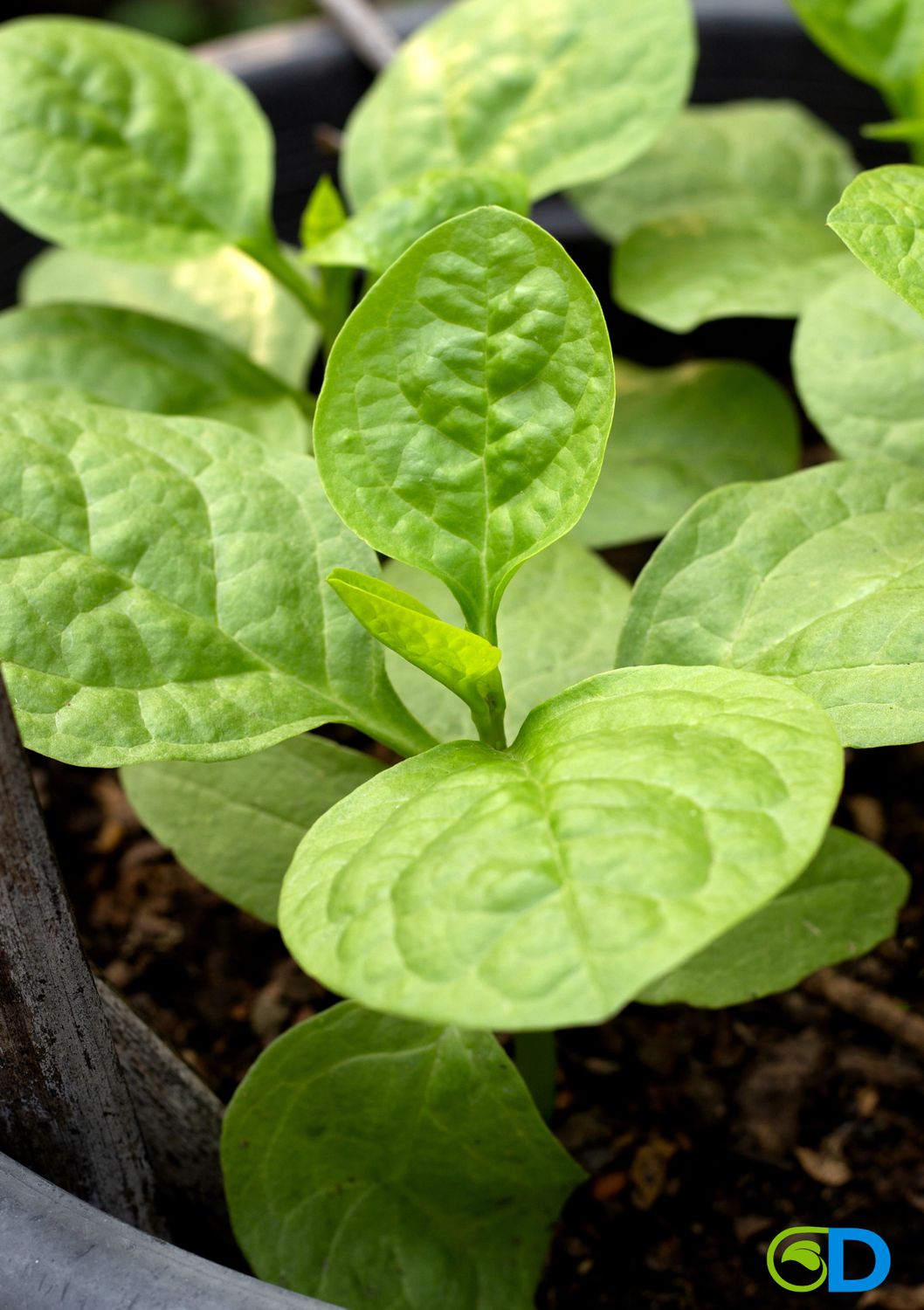
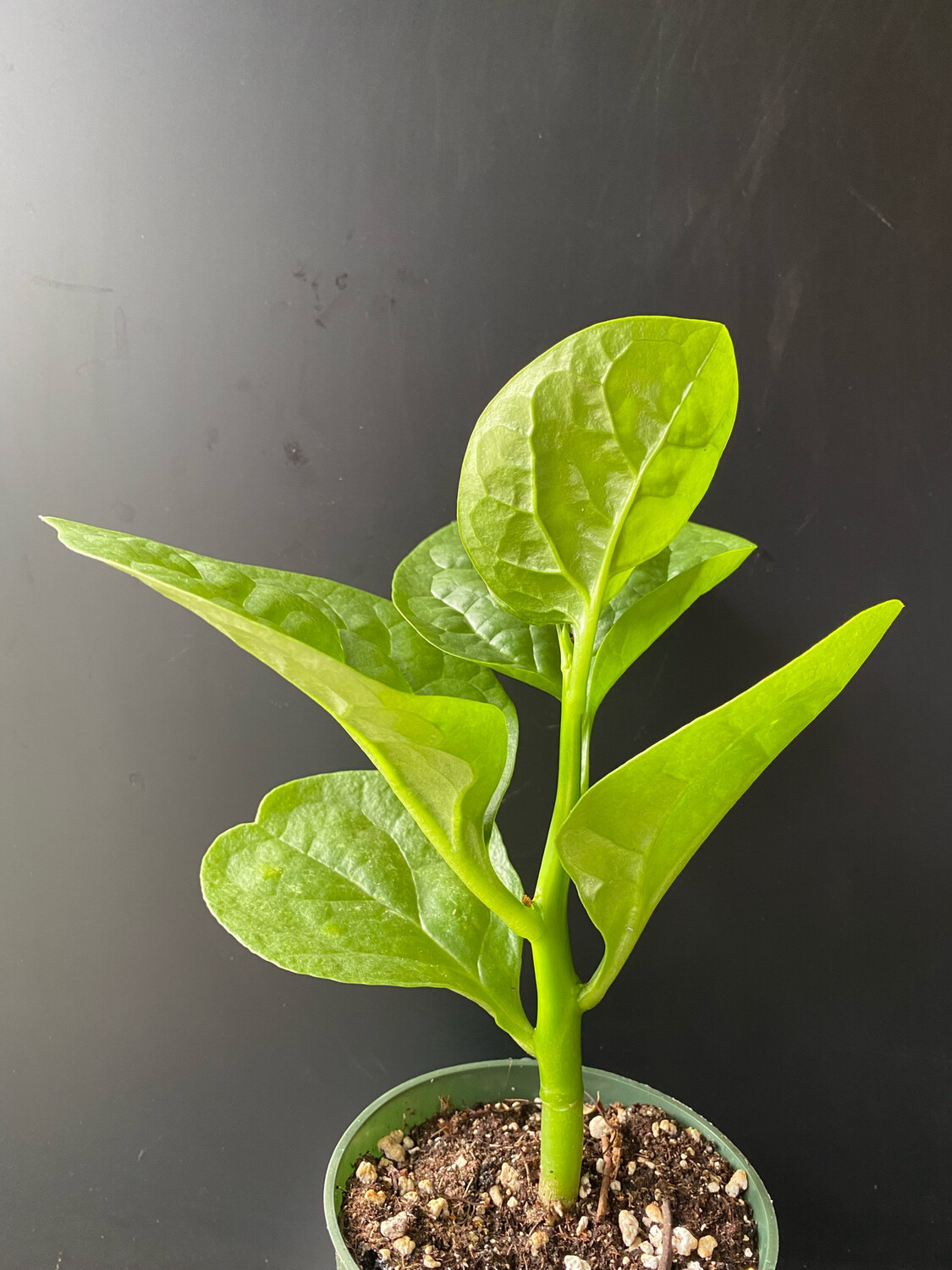
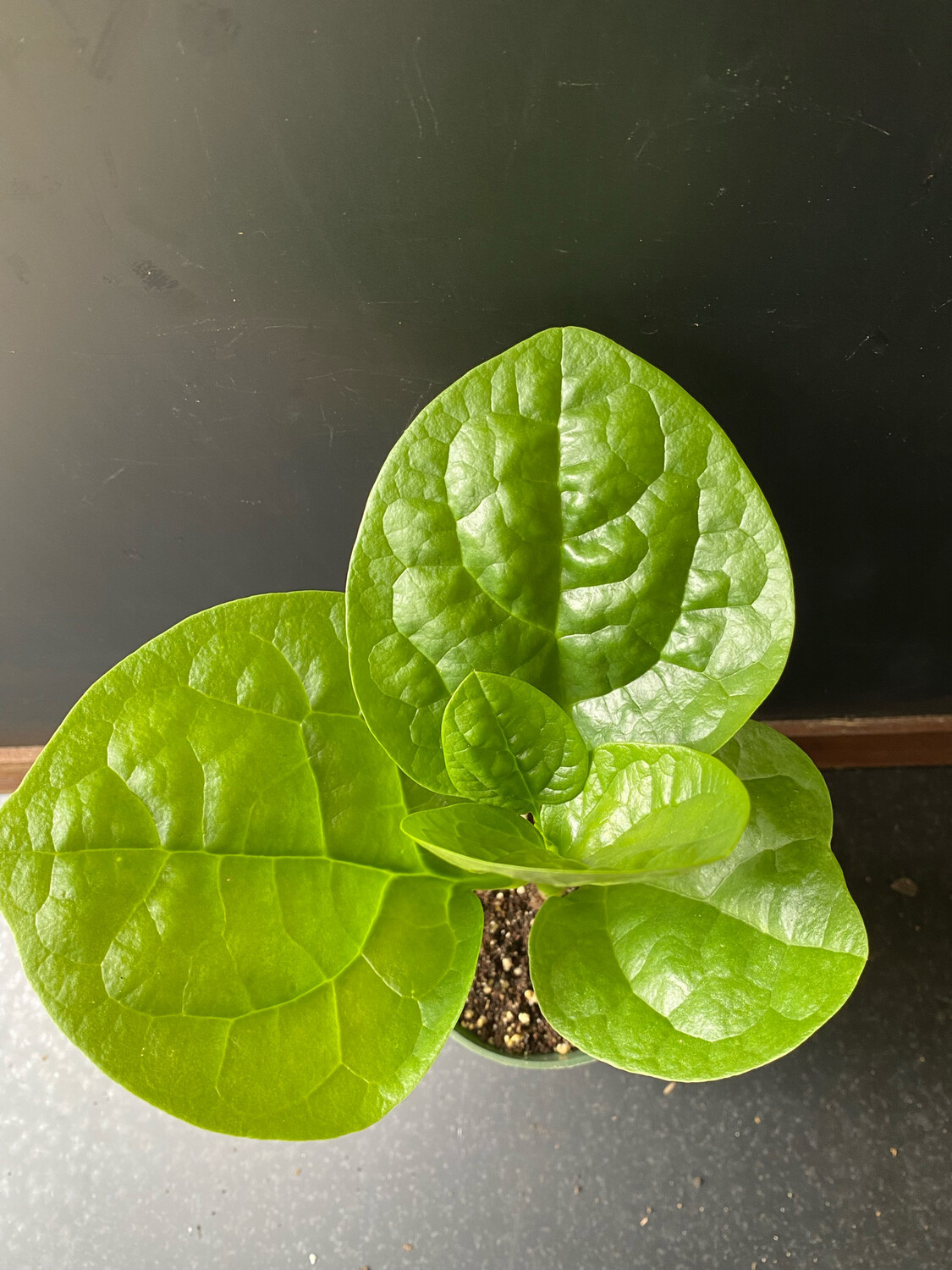
Green Malabar Spinach produces thick, glossy, deep-green leaves arranged along succulent green vines. The leaves range from oval to gently heart-shaped and have a smooth surface that gives the plant a polished, almost ornamental appearance.
Its stems are soft and flexible rather than woody. As the vine grows, it wraps around available supports and may root where sections touch consistently moist soil.
Small white to pale-pink flowers eventually appear along short spikes in the leaf axils. These are followed by round, deep-purple berries that contain seed and intensely colored juice.
Defining Characteristics
- Shiny green foliage
- Fleshy, semi-succulent leaves
- Tender green growing tips
- Rapid, twining vines
- Small pale flowers
- Purple-black berries later in the season
- Dense coverage when trained on a trellis
Use it to soften a fence, cover an arbor, create an edible privacy screen or add vertical movement behind lower-growing herbs and vegetables.
⠀ ⠀ ⠀ ⠀ ⠀
🍲 Flavor, Texture & Edible Qualities
Green Malabar Spinach offers a flavor that is mild, fresh and spinach-like, often with subtle peppery or citrus notes.
| Plant Part | Flavor & Texture | Best Uses |
|---|---|---|
| Young Leaves | Mild, tender and gently crisp | Salads, sandwiches, wraps, smoothies and garnishes |
| Mature Leaves | More substantial with a fleshy texture | Stir-fries, soups, curries, omelets and braised dishes |
| Tender Shoot Tips | Succulent, mild and crisp | Quick sautés, steamed greens and noodle dishes |
| Young Stems | Crunchy when lightly cooked | Stir-fries, soups and vegetable medleys |
| Cooked Leaves | Soft with a naturally mucilaginous quality | Thickening soups, stews, curries and sauces |
| Purple Berries | Mild to nearly flavorless; strongly staining | Traditionally used as a natural colorant or food dye |
The mucilage becomes more noticeable during prolonged cooking, producing a texture somewhat similar to okra. This quality is valuable in cuisines where the leaves are used to give soups, stews and curries more body.
For a crisper texture, use young leaves raw or cook them quickly over high heat.
⠀ ⠀ ⠀ ⠀ ⠀
🌍 How Green Malabar Spinach Is Used Around the World
India and Bangladesh
Malabar Spinach is commonly cooked as pui shaak or poi saag, often combined with onions, mustard oil, chilies, lentils, pumpkin, eggplant, shrimp or fish. The leaves’ natural mucilage helps bind sauces and curries.
Philippines
Known as alugbati, the leaves and tender stems are added to vegetable soups, broths and mixed dishes. They are especially useful in recipes requiring a tender green that will not disappear during cooking.
Vietnam
Known as mồng tơi, it is frequently cooked in light soups with shrimp, crab, luffa or other vegetables.
China and Southeast Asia
The shoots are quickly stir-fried with garlic or added near the end of soups and noodle dishes.
Tropical Africa and the Caribbean
Leaves and young shoots may be steamed, braised or cooked into thick vegetable sauces.
UF/IFAS describes one of the simplest preparations: stir-frying the leaves with oil, garlic and soy sauce. In Bengali cooking, the greens may be prepared with onions, hot chilies and mustard oil.
⠀ ⠀ ⠀ ⠀ ⠀
🍳 The Easiest Way to Cook It: Five-Minute Garlic Malabar Greens
Ingredients
- 4 packed cups young Green Malabar Spinach leaves and tender tips
- 1 tablespoon cooking oil
- 2–3 cloves garlic, minced
- Soy sauce, coconut aminos or salt to taste
- Optional chili flakes, ginger or sesame oil
Directions
- Wash the leaves and tender shoots thoroughly. Remove any tough lower stems.
- Heat oil in a large skillet or wok.
- Add garlic and cook briefly until aromatic.
- Add the Malabar Spinach and stir-fry for 2–4 minutes.
- Season lightly and serve while the leaves are still bright green.
Garden-to-kitchen tip: Harvest immediately before cooking. Young growing tips offer the most delicate texture and encourage the vine to produce additional side shoots.
⠀ ⠀ ⠀ ⠀ ⠀
🥗 More Ways to Use Your Harvest
- Add young leaves to summer salads.
- Blend a few tender leaves into green smoothies.
- Layer leaves into sandwiches and wraps.
- Fold chopped greens into eggs, quiche or frittatas.
- Add to soups during the final minutes of cooking.
- Use in coconut-based curries.
- Combine with lentils, chickpeas or pigeon peas.
- Stir-fry with garlic, ginger, mushrooms or peppers.
- Steam and season with citrus, salt and sesame oil.
- Add chopped leaves to rice, noodle or grain bowls.
- Use the mucilage to naturally thicken vegetable soups.
- Freeze blanched leaves for later cooking.
- Preserve ripe berries for seed saving or natural-dye projects.
⠀ ⠀ ⠀ ⠀ ⠀
🌿 Nutritional & Constituent Profile
Green Malabar Spinach is valued as a nutrient-dense leafy vegetable rather than as a medicinal treatment.
Research and food-composition references report that the leaves contain:
- Provitamin A carotenoids
- Vitamin C
- Folate and other B vitamins
- Calcium
- Magnesium
- Potassium
- Phosphorus
- Iron
- Dietary fiber
- Phenolic compounds
- Naturally occurring antioxidants
- Water-soluble polysaccharides responsible for the plant’s mucilaginous texture
Exact nutrient concentrations vary with growing conditions, geography, plant maturity, preparation and laboratory method. It is best presented as a useful component of a varied diet—not as a cure or substitute for medical care.
⠀ ⠀ ⠀ ⠀ ⠀
🫐 Purple Berries: Natural Color With Serious Staining Power
Green Malabar Spinach eventually produces dark-purple berries containing richly colored betacyanin pigments.
The juice has traditionally been used to color:
- Pastries
- Sweets
- Beverages
- Rice dishes
- Decorative food preparations
- Natural-dye crafts
The berries are not the main edible crop and have little flavor, but their staining power is impressive.
Wear gloves and protect counters, clothing and porous surfaces. The pigment can create a beautiful magenta-purple color—and a memorable laundry situation.
⠀ ⠀ ⠀ ⠀ ⠀
🌿 Green vs. Red-Stemmed Malabar Spinach
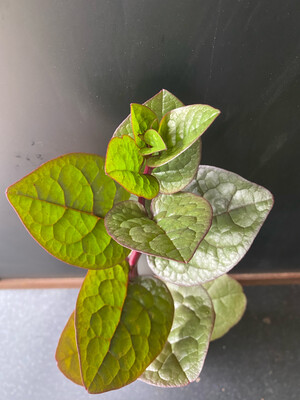
Red-stemmed plants are commonly sold as Basella rubra or Basella alba ‘Rubra.’ Current botanical treatments may consider Basella rubra a synonym or cultivated form within Basella alba.
| Feature | Green Malabar Spinach | Red-Stemmed Malabar Spinach |
|---|---|---|
| Common Trade Name | Green Malabar Spinach | Red Malabar Spinach |
| Typical Botanical Label | Basella alba | Basella rubra or B. alba ‘Rubra’ |
| Stem Color | Green | Burgundy, red or purple |
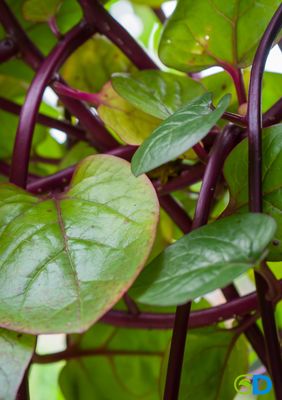
| Leaf Color | Deep glossy green | Green with reddish stems or veins |
| Flavor | Mild and spinach-like | Similar mild flavor |
| Texture | Fleshy and succulent | Fleshy and succulent |
| Primary Appeal | Productive green vegetable vine | Edible vine with stronger ornamental color |
| Landscape Style | Lush tropical green screen | High-contrast ornamental edible |
| Culinary Use | Raw young leaves and cooked greens | Raw young leaves and cooked greens |
| Growth Requirements | Heat, moisture and support | Heat, moisture and support |
⠀ ⠀ ⠀ ⠀ ⠀
🌱 Top Benefits of Growing Basella alba
Produces When Traditional Spinach Quits
True spinach is a cool-season crop. Green Malabar Spinach reaches peak production during the heat and humidity of summer.
Repeated Cut-and-Come-Again Harvests
Regular harvesting stimulates branching and creates more tender shoot tips.
Maximizes Vertical Space
One properly trained vine can turn a narrow garden edge, patio or fence into a productive edible wall.
Offers Culinary Versatility
Use the leaves raw, steamed, sautéed, stir-fried, braised or simmered.
Combines Ornamental and Edible Value
The glossy foliage creates a tropical appearance while producing food.
Performs Well in Containers
A large container and sturdy support make it useful for patios, balconies and small urban gardens.
Supports Seed Saving
Allow late-season berries to mature when you want seed for the following warm season.
Has Niche-Crop Potential
UF/IFAS identifies Malabar Spinach as a potential specialty crop for Florida growers because it is adapted to warm conditions and already valued in international cuisines.
SEASONAL CARE, PLANTING, WATERING, CONTAINERS & PRODUCTION
🌞 Seasonal Care Guide for Green Malabar Spinach
Green Malabar Spinach is not deciduous in the traditional sense. It does not enter a predictable woody dormancy like a peach, mulberry or persimmon.
Instead, it is a tropical perennial that responds directly to temperature:
- Warm weather produces rapid growth.
- Cool weather slows the vine.
- Frost damages or kills exposed growth.
- In colder climates, the entire plant is normally grown as an annual.
- In frost-free climates, established vines may continue growing or resprout after pruning.
Because it is extremely frost-sensitive, seasonal expectations vary significantly between South Florida, Central Florida, North Florida and the rest of the continental United States.
⠀ ⠀ ⠀ ⠀ ⠀
🌿 Florida & Southeastern Seasonal Care Calendar
| Season | Central and North Florida | South Florida | Zones 7–8 and Colder Regions |
|---|---|---|---|
| Spring | Plant after frost danger has passed and soil is thoroughly warm. Growth may remain slow until temperatures consistently rise. | Begin feeding and pruning overwintered plants. Replace cold-damaged vines if needed. | Start indoors before the final frost or plant outside once nights remain warm. |
| Summer | Peak growth and harvest season. Train weekly, maintain moisture and harvest frequently. | Strong growth continues; monitor fungal spotting during extended rain. | Peak outdoor production. Water consistently and harvest tender tips. |
| Fall | Continue harvesting until cool nights slow growth. Allow berries to mature if saving seed. | Continue harvesting. Shorter days may encourage flowering and berry production. | Harvest before frost. Take cuttings indoors or save mature seed. |
| Winter | Frost commonly kills the vine. Remove damaged growth after the threat of additional freezes or replant in spring. | Growth may continue in warm locations but can slow during cool fronts. Protect during unusual cold. | Outdoor plants die with frost. Overwinter rooted cuttings indoors if desired. |
Zone-by-Zone Expectations
- Zone 8: Grow as a summer annual.
- Zone 9: Usually treated as a warm-season annual; protected plants may survive mild winters, but survival is not dependable.
- Zone 10: Often perennial where hard freezes are absent.
- Zone 11: Perennial tropical production is possible with routine pruning.
- Northern United States: Start early indoors and grow through the frost-free summer season.
- Western United States: Production depends on warm nights and adequate moisture; protect plants from dry wind and prolonged shipping stress.
⠀ ⠀ ⠀ ⠀ ⠀
🌿 Where to Plant Green Malabar Spinach
Choose a location with:
- Full sun or bright partial shade
- Warm soil
- Consistent moisture
- Excellent drainage
- High organic matter
- Convenient access for frequent harvest
- A trellis or support at least 5–8 feet tall
- Airflow around the foliage
- Protection from severe wind
Best Florida Placement
In Florida, Green Malabar Spinach performs beautifully with:
- Morning sun
- Filtered afternoon light
- Regular irrigation
- Hardwood mulch around the root zone
- A sturdy trellis on the eastern or southeastern side of a garden
Light afternoon shade can help the leaves remain broad and succulent during the hottest part of summer.
Avoid Planting
- In standing water
- In compacted, poorly drained depressions
- Beneath roof runoff without drainage control
- Against weak decorative lattice
- Where the vine will smother small neighboring plants
- Beside chemically treated structures or surfaces
- In areas receiving direct salt spray
- Where fallen berries and volunteer seedlings would be difficult to manage
⠀ ⠀ ⠀ ⠀ ⠀
🌬️ Wind & Coastal Exposure
Green Malabar Spinach has flexible stems and can tolerate ordinary garden breezes, but the plant is not a windbreak.
A fully leafed vine creates considerable resistance during storms. Secure the trellis into the ground or attach it to a stable structure. Before tropical storms or hurricanes:
- Harvest heavily to reduce weight.
- Shorten excessively long vines.
- Check trellis anchors.
- Move container-grown plants into a sheltered location.
- Do not leave a tall, top-heavy container beside windows or vehicles.
Some salt tolerance has been reported for Basella alba, including occurrence near sea-spray habitats. However, edible leaf quality is still best when the plant receives fresh irrigation water and protection from intense, direct oceanfront exposure.
⠀ ⠀ ⠀ ⠀ ⠀
🪴 After Your Plant Arrives
Your 4-inch Green Malabar Spinach is a young starter plant and should not be immediately moved into the ground or a dramatically larger container.
GreenDreams Arrival Protocol
- Unpack the plant promptly.
- Remove packing materials carefully.
- Water at the soil level when the root ball needs moisture.
- Place the plant in bright shade or gentle morning sun.
- Protect it from harsh afternoon sun, strong wind and heavy rain.
- Allow it to recover in its original container.
- Gradually increase sunlight over 7–14 days.
- Wait approximately 30 days or until healthy new growth appears before transplanting.
Leaves may temporarily droop, yellow or drop after shipping. Fresh new growth is the most reliable sign that the root system has recovered.
Do not fertilize a visibly stressed or wilted plant immediately after delivery.
⠀ ⠀ ⠀ ⠀ ⠀
🌱 How to Plant Green Malabar Spinach High & Tight
Green Malabar Spinach prefers moisture, but the stem base should never be buried deeply.
In-Ground Planting Steps
- Water the plant in its nursery pot before transplanting.
- Prepare the trellis before placing the plant.
- Dig a hole only slightly wider than the container.
- Keep the hole approximately the same depth as the root ball.
- Remove the plant gently without pulling on the vine.
- Position the root ball at the existing soil grade—or slightly above grade in slow-draining soil.
- Backfill with loosened native soil and a modest amount of finished compost.
- Pack the soil firmly enough to remove large air pockets without crushing the roots.
- Water thoroughly at the soil level.
- Add 2–3 inches of hardwood mulch around the planting zone.
- Keep mulch several inches away from the stem base.
- Loosely guide the vine onto its support.
The GreenDreams High & Tight approach helps prevent plants from settling too deeply and reduces the risk of crown and root problems.
Planting demonstration:
https://youtu.be/RRQFY30qdA8?si=rRIcsbLlVAVYotfI
⠀ ⠀ ⠀ ⠀ ⠀
💧 Green Malabar Spinach Watering Guide
Consistent moisture is one of the most important factors affecting leaf quality. Dry plants tend to produce smaller, tougher or more bitter foliage and may begin flowering earlier.
Important Watering Rule
Do not rely on overhead irrigation. Water at the soil level during the morning.
Overhead afternoon watering can contribute to leaf spotting, uneven absorption and foliage burn during stressful weather. Soil splashing also increases the movement of disease organisms onto edible leaves.
Drip irrigation, microtubing or careful hand-watering at the root zone is preferred.
| Growing Situation | Suggested Watering Approach |
|---|---|
| New 4-Inch Plant | Check daily. Water thoroughly when the surface begins to dry, allowing excess water to drain. |
| Newly Transplanted In-Ground Plant | Check daily for the first 1–2 weeks. Water whenever the root zone begins drying. |
| Established In-Ground Plant | Provide deep, regular irrigation 2–4 times weekly, adjusting for rainfall, soil and temperature. Daily irrigation may be needed during extreme dry heat. |
| Container Plant in Florida Summer | Expect to check and often water daily. Large vines in small pots can dry rapidly. |
| Rainy Season | Reduce irrigation, but verify that the container or planting bed drains freely. |
| Indoor Plant | Water when the upper surface begins to dry; never allow the pot to remain in standing water. |
Signs the Plant Needs More Water
- Wilting during the morning
- Thin or leathery leaves
- Slowed growth
- Premature flowering
- Increasingly bitter flavor
- Dry soil pulling away from the container
Signs the Roots Are Staying Too Wet
- Persistent yellowing
- Soft or darkened stem base
- Sour-smelling potting mix
- Fungus gnats
- Little new growth despite wet soil
- Root or crown decay
⠀ ⠀ ⠀ ⠀ ⠀
🌾 Soil & Potting Mix
Green Malabar Spinach prefers soil that holds useful moisture while still allowing oxygen to reach the roots.
In-Ground Soil
Ideal soil is:
- Rich in organic matter
- Moisture-retentive
- Well-draining
- Loamy or sandy-loam in texture
- Approximately pH 5.5–7.0
Florida sand can be improved with finished compost, worm castings and repeated surface mulching. Avoid filling the planting hole with a pocket of pure compost; blend amendments into a wider area or top-dress around the plant.
Container Soil
Use a high-quality potting mix intended for vegetables or container plants—not dense native soil.
A practical blend may include:
- Approximately 60% peat- or coconut-coir-based potting mix
- Approximately 20% finished compost or worm castings
- Approximately 20% pine bark fines, perlite or another aeration material
The final mix should absorb water evenly but drain freely from the bottom of the container.
⠀ ⠀ ⠀ ⠀ ⠀
🌿 Organic Fertility Program
Malabar Spinach is grown primarily for leaves, so steady—but not excessive—nitrogen supports production.
At Planting
Top-dress around the root zone with a light blend of:
- Finished compost
- Charged biochar
- Worm castings
- Azomite or another trace-mineral amendment
- A mild, balanced organic vegetable fertilizer
Keep all concentrated materials away from direct contact with the stem and roots.
During Active Growth
- Apply a light organic feeding every 4–6 weeks in the ground.
- Container plants may benefit from a diluted organic liquid feed every 2–4 weeks.
- Reduce feeding when cool weather slows growth.
- Do not heavily fertilize a dry, wilted or shipping-stressed plant.
- Water before applying liquid fertilizer.
- Follow product labels and avoid assuming that more fertilizer creates more harvest.
Overfertilization Signs
- Burned leaf margins
- Very soft, weak vines
- Excessive growth with poor structure
- Salt buildup on the soil surface
- Sudden wilting after feeding
- Increased aphid or mite activity
⠀ ⠀ ⠀ ⠀ ⠀
✂️ Pruning, Training & Harvesting
Frequent harvesting is the best form of pruning.
To Create a Bushier Vine
When the plant reaches approximately 12–18 inches tall:
- Pinch or cut the main growing tip.
- Leave several healthy leaf nodes below the cut.
- Guide new side shoots onto the trellis.
- Continue harvesting the upper 4–6 inches of growth.
Routine Harvest
- Harvest young leaves and tender shoot tips.
- Use clean scissors or pruners.
- Cut just above a node.
- Leave enough foliage to support rapid regrowth.
- Harvest every few days during peak summer growth.
- Avoid stripping the entire vine at one time.
- Wash harvested greens before eating.
When the Vine Becomes Overgrown
Cut vines back by approximately one-third to one-half, leaving healthy nodes and leaves. Malabar Spinach generally responds with vigorous new shoots during warm weather.
Managing Flowers
Dry soil, extreme stress and shorter days can encourage flowering. Once heavy flowering begins, leaves may become less tender or more bitter.
For continued leaf production:
- Maintain consistent moisture.
- Remove flower spikes when they appear.
- Harvest shoot tips frequently.
- Keep the soil mulched.
- Avoid allowing the root zone to become severely dry.
Allow flowers and berries to remain when seed saving is the goal.
⠀ ⠀ ⠀ ⠀ ⠀
🧺 Harvest & Production Expectations
Under warm conditions, plants started from seed may begin producing a meaningful harvest in approximately 55–70 days. A healthy rooted starter may provide a light harvest sooner after it becomes established.
UF/IFAS reports that two well-grown vines can generally produce enough summer and fall greens for a small household.
Production depends on:
- Temperature
- Root space
- Irrigation
- Soil fertility
- Frequency of harvesting
- Light exposure
- Trellis size
- Whether flowers are removed
- Pest and disease pressure
For the best balance of flavor and productivity, harvest young leaves and shoot tips instead of waiting for the vine to become fully mature.
⠀ ⠀ ⠀ ⠀ ⠀
🪴 Growing Green Malabar Spinach in Containers
Malabar Spinach is excellent for container gardening, but its vigorous growth and high water use should not be underestimated.
Recommended Container Progression
| Current Size | Next Container | When to Advance |
|---|---|---|
| 4-Inch Pot | 1-gallon container | After shipping recovery and when roots begin filling the pot |
| 1 Gallon | 3-gallon container | When roots circle the pot or water runs through unusually quickly |
| 3 Gallon | 7-gallon container | For a longer harvest season and a larger trellis |
| 7 Gallon | 10–15+ gallon container | For maximum patio production or long-term tropical growth |
A final container of at least 7–15 gallons is recommended for a large, productive vine. A smaller container can be used temporarily, but it will dry rapidly and limit production.
Signs It Is Time to Up-Pot
- Roots are visible through drainage holes.
- The root ball holds the shape of the pot.
- Water runs through immediately without moistening the mix.
- The plant wilts shortly after watering.
- Growth slows despite warmth and proper fertility.
- The vine becomes top-heavy.
- The pot tips over easily.
How to Up-Pot
- Water the plant before transplanting.
- Choose a container with several drainage holes.
- Add enough fresh potting mix to maintain the current planting depth.
- Remove the root ball carefully.
- Loosen only severely circling outer roots.
- Position the plant at the same depth.
- Fill around the root ball and firm the mix gently.
- Water thoroughly at soil level.
- Keep the plant in bright shade for several days.
- Reintroduce stronger sun gradually.
Containers and vegetable potting mix are commonly available through local nurseries, garden centers, landscape suppliers, farm stores and online searches for professional nursery pots or organic container soil.
⠀ ⠀ ⠀ ⠀ ⠀
🏠 Can Green Malabar Spinach Grow Indoors?
Yes, but indoor growing is most successful as a winter holding strategy rather than the easiest way to achieve maximum production.
Provide:
- A very bright south-facing window or strong full-spectrum grow light
- Warm temperatures
- A trellis or compact support
- Good air circulation
- A container with drainage
- Regular pruning
- Protection from heating and air-conditioning vents
- Routine inspection for spider mites, aphids and fungus gnats
Indoor vines may have longer spaces between leaves and softer growth because of reduced light. Taking and rooting a few cuttings is often easier than moving a full-size outdoor vine indoors.
⠀ ⠀ ⠀ ⠀ ⠀
🌳 Companion Plants & Edible-Garden Guild Ideas
Green Malabar Spinach benefits more from good soil management, insect diversity and thoughtful spacing than from any single “magic” companion.
Biomass & Soil-Building Plants
| Companion | Garden Function |
|---|---|
| Mexican Sunflower | Rapid biomass, pollinator flowers and chop-and-drop material; keep several feet away so it does not shade the vine |
| Pigeon Pea | Nitrogen-fixing shrub and light biomass source in warm climates |
| Sunn Hemp | Seasonal nitrogen-fixing cover crop for nearby open beds |
| Lemongrass | Dense clumping habit, aromatic foliage and useful chop-and-drop biomass |
| Vetiver or Other Clumping Grasses | Root-zone stabilization, biomass and potential wind buffering when placed appropriately |
Pollinator & Beneficial-Insect Plants
- Basil
- African blue basil
- Zinnias
- Cosmos
- Marigolds
- Native Florida wildflowers
- Sweet alyssum during cooler weather
Pollination is not necessary for leaf harvesting, but a diverse garden supports predators and parasitoids that help regulate pests.
Attractive Edible Combinations
Pair Green Malabar Spinach with:
- Purple basil
- Swiss chard
- Okinawan Spinach
- Longevity Spinach
- Sissoo Spinach
- Chaya
- Katuk
- Turmeric
- Ginger
- Cannas
- Dark-leaved tropical foliage plants
Keep vigorous companions outside the vine’s immediate root zone and avoid placing multiple aggressive climbers on the same small trellis.
CAUTIONS, TROUBLESHOOTING, FAQ & SHIPPING
⚠️ Important Cautions
Frost Sensitivity
Green Malabar Spinach cannot tolerate frost. A light frost may blacken or collapse the leaves and stems. In Zones 7–9, plan to grow it primarily as an annual unless you can provide dependable winter protection.
Rapid Growth
The vine can quickly cover neighboring plants, fences and small structures. Provide intentional support and prune regularly.
Self-Seeding
Ripe berries may fall and produce volunteer seedlings when warm weather returns. Remove berries before they mature if you do not want seedlings.
Staining Berries
Purple berry juice can stain:
- Clothing
- Hands
- Decking
- Concrete
- Countertops
- Harvest baskets
- Outdoor furniture
Wear gloves and protect surfaces when handling ripe fruit.
Mucilaginous Texture
Cooked leaves become naturally slick or thickening. Gardeners who strongly dislike okra-like textures may prefer using young leaves raw or cooking them quickly.
Flavor Changes After Flowering
Dry conditions and heavy flowering can make the leaves less tender and more bitter. Maintain moisture and remove flower spikes when leaf production is the priority.
Culinary Responsibility
Harvest only correctly identified Basella alba plants grown without prohibited pesticides. Wash leaves thoroughly and follow all pesticide-label harvest intervals when treatments have been used.
Traditional medicinal uses are part of the plant’s cultural history, but they should not be interpreted as medical advice or proven treatment claims.
⠀ ⠀ ⠀ ⠀ ⠀
🔍 Green Malabar Spinach Troubleshooting Guide
Icons represent common issues and organic solutions—look for 🌿 for recovery guidance.
| ⚠️ Issue | 🧠 Likely Cause | 🌿 Organic Response |
|---|---|---|
| 🍂 Lower leaves turning yellow | Normal aging, inconsistent moisture or roots remaining too wet | Remove old leaves, inspect drainage and adjust watering based on the root zone |
| 🫣 Leaves curling or wilting | Dry root ball, shipping stress, strong wind or extreme heat | Move young plants into gentler light, water deeply at soil level and allow recovery |
| 💧 Thin, tough or bitter leaves | Insufficient water or prolonged stress | Maintain consistent moisture and add hardwood mulch around the root zone |
| 🌸 Early flowering | Dry soil, root restriction, heat stress or shorter days | Increase consistent irrigation, up-pot if rootbound and remove flower spikes |
| ☁️ Long weak vines with few leaves | Insufficient light | Gradually move into brighter light or improve indoor grow-light intensity |
| ☀️ Pale or scorched patches | Sudden exposure to intense sun after shipping or indoor growth | Acclimate the plant gradually over 7–14 days |
| 💦 Yellowing in wet soil | Overwatering or poor drainage | Allow drainage, clear blocked holes and repot into an aerated mix when necessary |
| 🍄 Brown or purple-edged leaf spots | Cercospora or another fungal leaf-spot disease favored by wet foliage | Remove affected leaves, improve airflow and stop overhead watering |
| 🐛 Winding pale tunnels in leaves | Leafminer larvae | Remove badly damaged leaves and protect new growth with insect netting where practical |
| 🐌 Ragged holes and slime trails | Slugs or snails | Hand-pick after dark, reduce hiding places and use an edible-garden-labeled organic control if needed |
| 🪱 Poor growth despite feeding | Root restriction, poor drainage or plant-parasitic nematodes | Inspect roots, rotate crops, use clean container media and improve soil organic matter |
| 🕷️ Fine stippling or webbing indoors | Spider mites in hot, dry indoor air | Isolate the plant, rinse pests from leaf undersides and use a labeled organic treatment |
| 🐜 Sticky leaves with clustered insects | Aphids supported by ant activity | Control ants, rinse aphids away and encourage ladybugs and other beneficial insects |
| 🔥 Burned tips after feeding | Excess fertilizer or soluble-salt buildup | Flush the container thoroughly and pause fertilizer until new growth appears |
| ❄️ Blackened, collapsed foliage | Frost or cold injury | Wait until freeze danger passes, then prune dead growth; replace plants that fail to resprout |
| 🌬️ Torn vines or fallen trellis | Wind exposure or inadequate support | Reduce vine mass, secure the trellis and relocate movable containers before storms |
UF/IFAS reports that Malabar Spinach is generally resistant to many common pests, but fungal leaf spots, snails and nematodes can still reduce plant quality. Regular inspection and sanitation are usually more useful than routine spraying.
⠀ ⠀ ⠀ ⠀ ⠀
🌟 Is Green Malabar Spinach Right for You?
✅ Ideal For
- Florida and Southeastern growers
- Tropical and subtropical food gardens
- Gardeners who struggle to grow leafy greens in summer
- Vertical gardens
- Small urban spaces
- Patio and balcony containers
- Permaculture and edible-landscape systems
- Families wanting repeated leafy harvests
- Growers interested in international vegetables
- Gardeners who enjoy stir-fries, curries, soups and fresh greens
- Schools and demonstration gardens
- Market gardeners serving specialty or culturally diverse markets
❌ May Not Be Ideal For
- Gardeners without a warm growing season
- Locations that remain below approximately 60°F for long periods
- Anyone unable to provide regular irrigation
- Gardens without a trellis or room for a vigorous vine
- Growers seeking a frost-hardy perennial
- People who dislike mucilaginous cooked vegetables
- Low-light indoor locations
- Sites exposed to severe wind or direct salt spray
- Gardeners who do not want to manage fallen berries or volunteer seedlings
⠀ ⠀ ⠀ ⠀ ⠀
❓ Green Malabar Spinach FAQ
Is Malabar Spinach the same as regular spinach?
No. Green Malabar Spinach belongs to the Basellaceae family, while traditional spinach belongs to a different botanical family. They are used similarly in the kitchen, but Malabar Spinach prefers hot weather rather than cool weather.
Is Green Malabar Spinach perennial in Florida?
It is reliably perennial primarily in frost-free Zones 10–11. In Zone 9 and colder areas, it is usually safest to treat the plant as a warm-season annual. Protected plants may occasionally survive mild winters, but this is not guaranteed.
How cold can Malabar Spinach tolerate?
It is extremely frost-sensitive. Growth slows during cool weather and may stop when temperatures remain below approximately 60°F. Protect the plant before frost rather than waiting for visible damage.
Does Green Malabar Spinach need full sun?
It can grow in full sun or partial shade. In Florida, light afternoon shade may help produce larger, more tender leaves. Full-sun plants need dependable moisture.
Does it require a trellis?
A trellis is strongly recommended. The vine can be allowed to ramble, but support improves airflow, harvesting, appearance and use of garden space.
How tall does Green Malabar Spinach grow?
Regularly harvested plants can be maintained around 4–6 feet. Unpruned vines commonly reach 8–10 feet or more, especially in long, frost-free seasons.
How often should I harvest it?
Harvest young leaves and the upper 4–6 inches of tender shoots whenever sufficient growth is available. Frequent cutting encourages branching and additional harvests.
Why does my Malabar Spinach taste bitter?
Bitter leaves are commonly associated with dry soil, older foliage, stress or heavy flowering. Improve irrigation and focus on young shoot tips.
Can I eat Malabar Spinach raw?
Yes. Young leaves are the best choice for salads, wraps and smoothies. Mature leaves and stems are generally more enjoyable when cooked.
Is Malabar Spinach slimy?
The cooked leaves have a mucilaginous texture similar to okra. Quick cooking reduces the effect, while longer cooking allows the leaves to thicken soups and stews.
Can I grow it in a container?
Yes. Begin with gradual pot increases and use a final container of approximately 7–15 gallons for a large vine. Provide drainage, rich potting mix and a secure trellis.
Can it grow indoors?
It can grow indoors with strong light, warmth and airflow. Indoor plants generally need frequent pruning and careful pest monitoring.
Can I save seed?
Yes. Allow berries to become dark purple and fully mature. Protect work surfaces when processing them because the juice stains heavily.
Are the purple berries useful?
The berries contain deeply colored pigment traditionally used as a natural food colorant. Their culinary value is primarily their color rather than flavor.
Does Malabar Spinach need another plant for pollination?
No companion plant is required for edible leaf production. A second plant is not necessary for routine home-garden harvesting.
How many plants should I grow?
One well-grown plant can produce a substantial amount of foliage. Two vines are often sufficient to provide repeated summer greens for a small household. [2]
⠀ ⠀ ⠀ ⠀ ⠀
🚚 Shipping & Plant-Recovery Information
Please Review Before Ordering a 4-Inch Plant
Green Malabar Spinach ships in a small 4-inch nursery container. This economy size is lightweight and affordable, but it dries faster and has fewer stored resources than a 1-gallon or larger plant.
Best Regional Shipping Area
This size is most ideally shipped to:
- Florida
- The Southeastern United States
- Texas
- Other locations with relatively short UPS Ground transit times from Florida
We ship across the continental United States, including northern and western states, but buyer discretion is strongly advised.
Northern & Western Shipping Considerations
Extended UPS Ground transit can expose a young plant to:
- Prolonged darkness
- Drying
- Heat buildup
- Cold temperatures
- Rough package handling
- Delayed delivery
- Rapid weather changes
California packages may be held for an additional agricultural inspection, creating another potential day of transit.
Small plants shipped to distant destinations may arrive wilted, yellowed, defoliated or in need of a considerable recovery period. Many plants can recover with warmth, filtered light, careful watering and patience, but arrival in ideal condition cannot be guaranteed outside our regional shipping area.
Extreme Weather Disclaimer
GreenDreams ships live plants from Florida by UPS Ground every Monday.
Customers are responsible for reviewing weather conditions in Florida, along the shipping route and at the destination before ordering. Buyer discretion and risk acceptance are especially important during:
- Summer heat waves
- Winter freezes
- Severe storms
- Holiday shipping congestion
- Extended ground-transit periods
We are not responsible for plant decline or damage caused by extreme transit temperatures, carrier delays, agricultural inspection delays or ordinary risks associated with ground delivery.
When available, we strongly recommend choosing a 1-gallon or larger plant for long-distance shipping because the larger root ball generally holds moisture longer and tolerates transit stress better.
After Delivery
- Unpack immediately.
- Photograph the plant and packaging if damage is present.
- Water only when the root ball requires moisture.
- Keep the plant in its original container.
- Begin in bright shade or gentle morning light.
- Do not fertilize immediately.
- Allow approximately 30 days—or wait for healthy new growth—before transplanting.
- Contact GreenDreams promptly within the applicable reporting period if shipping damage occurred.
⠀ ⠀ ⠀ ⠀ ⠀
🏡 Shop With Us in Person
GreenDreams Nursery & Farm — Retail Nursery Open to the Public
See the plants before choosing, speak with experienced growers and explore many larger sizes that may not be available for shipping.
Our retail nursery carries a constantly changing collection of:
- Tropical and subtropical fruit trees
- Perennial vegetables
- Medicinal and culinary plants
- Florida native species
- Pollinator plants
- Ecological landscape plants
- Soil-building species
- Seasonal nursery specialties
- Larger plants not listed online
🌾 18709 US Hwy. 41, Spring Hill, FL 34610
🕘 Tuesday–Friday: 9AM–5PM
🌞 Saturday: 8AM–3PM
🌿 Stop by our regenerative nursery to see what is growing, blooming and fruiting this week.
⠀ ⠀ ⠀ ⠀ ⠀
🌿 Beyond the Plant: GreenDreams Services
At GreenDreams, we do more than grow plants—we design, build and restore productive ecosystems across Florida.
- 🌳 Onsite consultations and edible-landscape design
- 🚜 Ecological landscape installation and project management
- 🌿 Food-forest planning and plant selection
- 🧤 Day-labor assistance for customer-led garden projects
- 🚚 Bulk delivery of compost, mulch, biochar and soil materials
- 🌾 Wholesale plants and large-scale regenerative solutions
- 🪴 Nursery guidance for containers, home gardens and tropical collections
Let our team help you turn Green Malabar Spinach and other useful plants into a complete edible landscape designed around your property, goals and lifestyle.
🌿 IMPORTANT INFORMATION BEFORE PURCHASING LIVE PLANTS
Please note: Plants purchased through our online store are not available for pickup at our retail nursery in Spring Hill, Florida.
Online inventory is housed at a separate facility and is priced, prepared, and handled exclusively for shipping.
🌱 Looking for larger plants or more selection?
Our retail nursery location offers far more availability, including larger sizes, specialty plants, and many selections not suitable for nationwide shipping.
Local pickup is available for retail nursery purchases only.
Visit our Spring Hill, FL retail nursery page to explore in-person shopping options.
🚚 LIVE PLANT SHIPPING & TRANSIT EXPECTATIONS
Live plants naturally experience stress during shipping. Temporary leaf drop, mild wilting, or cosmetic stress is normal after transit. Most plants recover quickly with proper watering, gradual light exposure, and basic aftercare. Some plants may require additional attention during the first few weeks.
Despite careful packing, minor cosmetic damage may occur during transit. Small issues such as broken leaves or stems typically resolve with time and proper care.
If your shipping box arrives with significant external damage, please contact UPS within 30 days to initiate a carrier claim.
⏱️ SHIPPING METHOD, TIMING & TRANSIT WINDOWS
All online orders ship via UPS Ground from our Central Florida nursery.
📦 Shipping Schedule: Orders ship once weekly on Mondays to reduce the risk of packages sitting in transit over weekends. A countdown clock on our website displays the next shipping date.
🚚 Typical Transit Times:
-
Florida: 1–2 days
-
Southern U.S.: approximately 2 days
-
Midwest, West & Northern U.S.: 3–5 business days
Long-distance shipments, particularly to the western U.S., may experience additional transit time due to agricultural inspections in states such as Arizona, California, and Texas.
Extended transit times can be more challenging for small or tender plants and may require additional recovery care after arrival.
🌡️ EXTREME WEATHER & SEASONAL RISK
Live plants are sensitive to temperature extremes.
We cannot guarantee plant condition during periods of extreme summer heat or winter cold and freezing temperatures. Weather-related delays, carrier interruptions, or exposure during delivery are beyond our control.
Customers are responsible for:
-
Monitoring tracking information sent via email
-
Retrieving packages promptly upon delivery
-
Preventing plants from being left outdoors in extreme conditions
During unsafe weather, holiday shipping volume, or extended transit risk, orders may be held and shipped the following week to protect plant health.
⚠️ CUSTOMER RESPONSIBILITY & REFUND POLICY
By purchasing live plants, customers acknowledge and accept the risks associated with shipping, weather exposure, transit delays, and regional suitability.
Refunds or replacements are considered only under exceptional circumstances and in accordance with our return and refund policy. We are not responsible for:
-
Weather-related damage
-
Carrier delays
-
Poor plant selection for a given climate or region
-
Improper care after delivery
Upon purchase, customers assume full responsibility for the ongoing care and success of their plants.
✅ CONSENT & AGREEMENT
By completing a purchase, you confirm that you have read, understand, and agree to all shipping policies, responsibilities, and conditions outlined above.
Our goal is transparency, plant health, and long-term growing success — and we appreciate your understanding and care when ordering live plants.


