


🌿 Surinam Spinach Plant – Waterleaf / Thai Gingeng (Talinum fruticosum) | Tropical Super Green
The juicy, heat-loving leafy green your summer garden has been missing.
When ordinary spinach checks out for the summer, Surinam Spinach clocks in.
This fast-growing tropical vegetable produces tender, succulent leaves with a mild flavor and satisfyingly juicy texture. It grows through Florida heat, tolerates partial shade, responds quickly to harvesting, and fits beautifully into edible landscapes, food forests, raised beds, and patio containers.
Once you discover how easy it is to harvest a fresh handful for dinner, this underrated green has a habit of becoming a permanent part of the garden.
🌿 Quick Facts Guide
| Category | Details |
|---|---|
| Botanical Name | Talinum fruticosum (L.) Juss. |
| Common Botanical Synonym | Talinum triangulare |
| Family | Talinaceae |
| Common Names | Surinam Spinach, Waterleaf, Surinam Purslane, Ceylon Spinach, Philippine Spinach, Florida Spinach, Gbure |
| Marketplace Nickname | Edible Thai Ginseng or Leaf Ginseng; it is not true ginseng |
| Plant Type | Short-lived tropical perennial leafy herb; commonly grown as a warm-season annual |
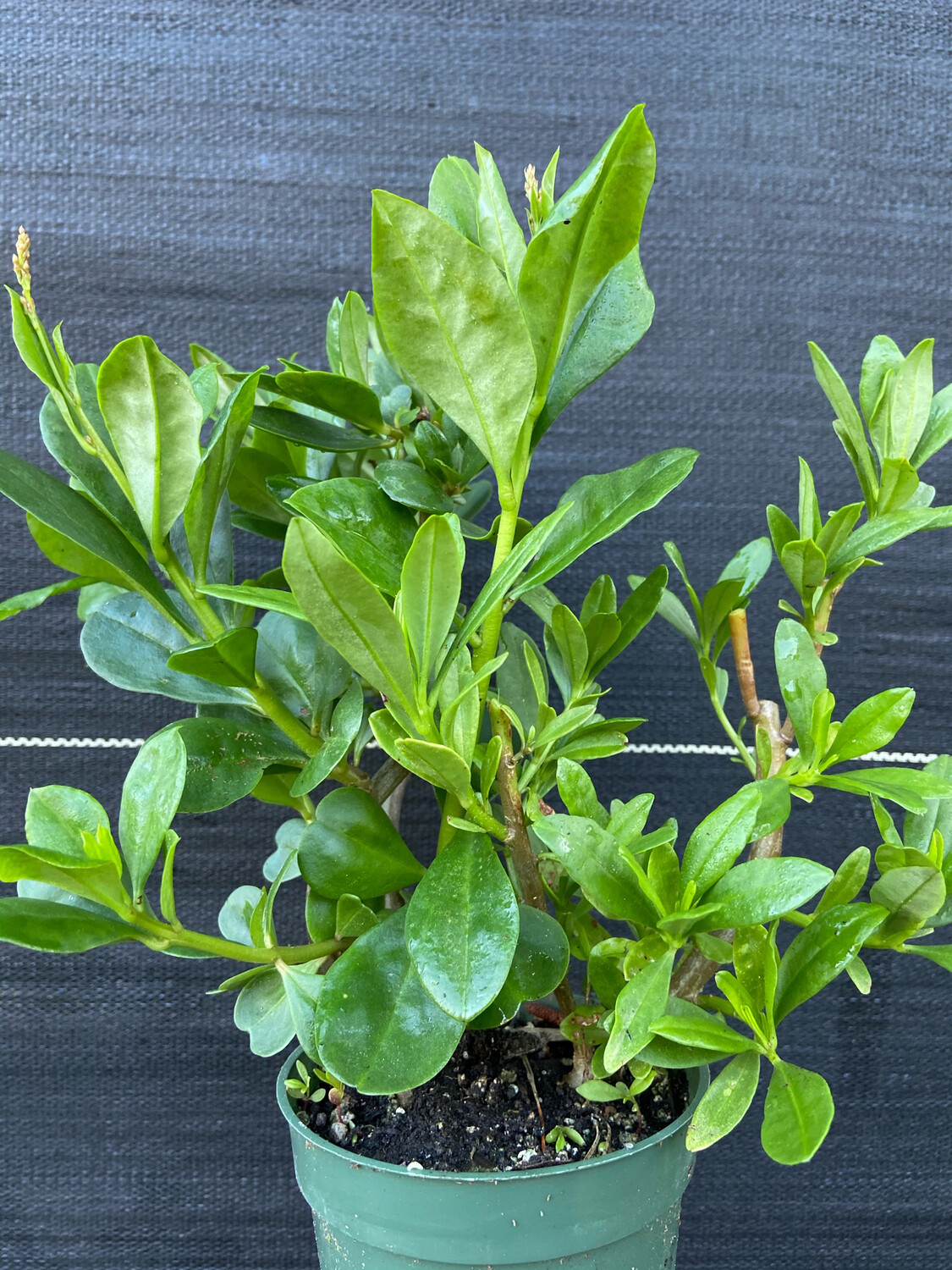
| Size at Sale | Ships in a 4-inch nursery container |
| Estimated Age | Approximately 8–12 weeks old; age and height vary seasonally |
| Typical Maintained Size | Approximately 12–24 inches tall and wide with regular harvesting |
| Potential Unpruned Size | Commonly 2–3 feet tall; exceptionally taller in rich, humid growing conditions |
| USDA Growing Zones | Best treated as a perennial in protected Zones 9b–11; annual or overwintered container plant elsewhere |
| Florida Range | Well suited to Central and South Florida; seasonal protection may be needed in North Florida |
| Sun Requirements | Partial sun, filtered light, or full sun with dependable irrigation |
| Best Summer Location | Morning sun with afternoon shade in extremely hot inland locations |
| Cold Hardiness | Frost-sensitive; foliage may be damaged around 32°F |
| Growth Habit | Upright, branching, succulent herb with shallow roots |
| Spacing | 10–18 inches apart for home gardens |
| Preferred Soil pH | Approximately 6.1–7.5 |
| Water Needs | Consistent moisture with good drainage |
| First Harvest | Often 3–4 weeks after establishment |
| Harvest Frequency | Tender shoots may be cut every 1–2 weeks during active growth |
| Edible Parts | Leaves and tender young stems |
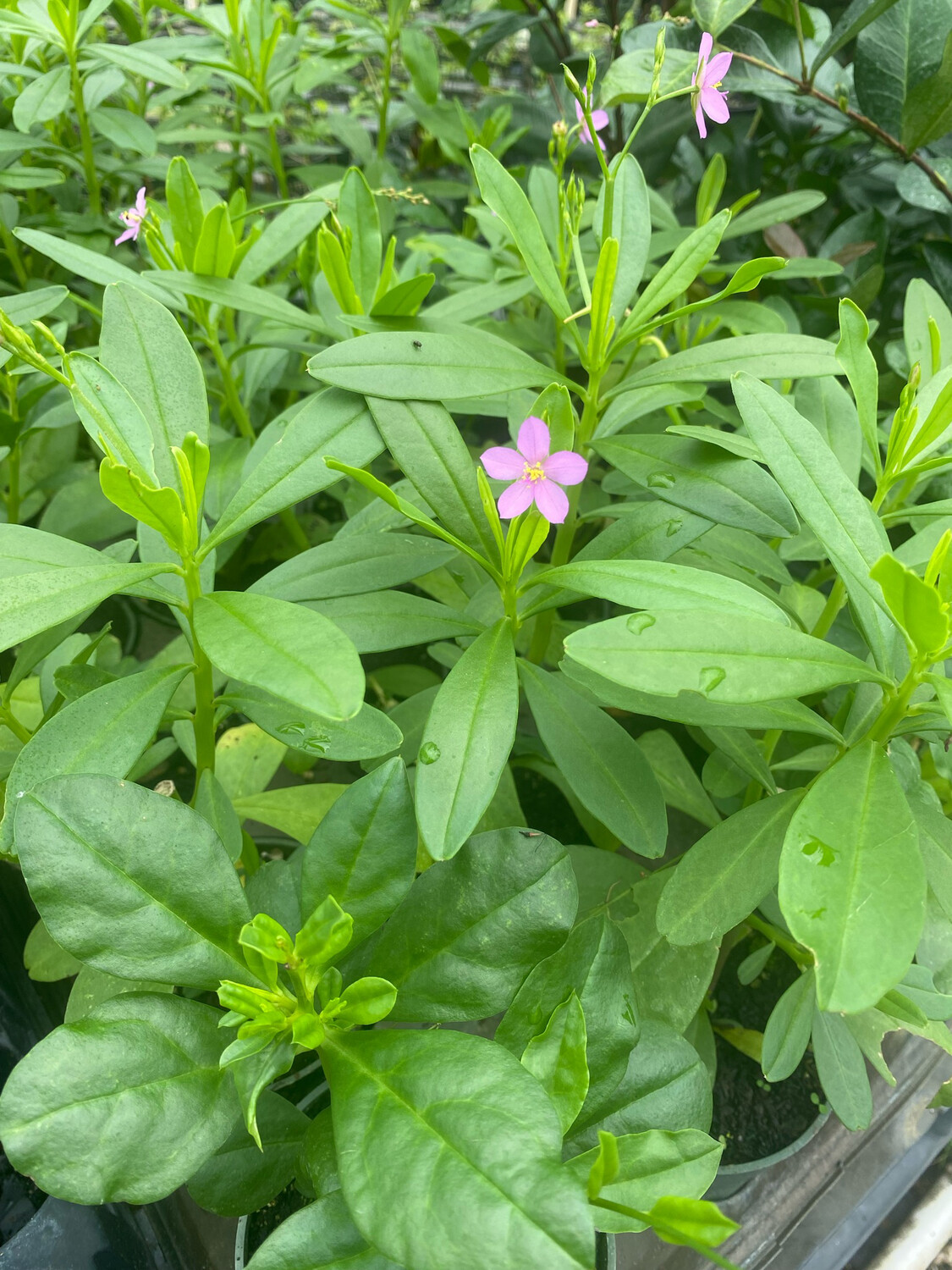
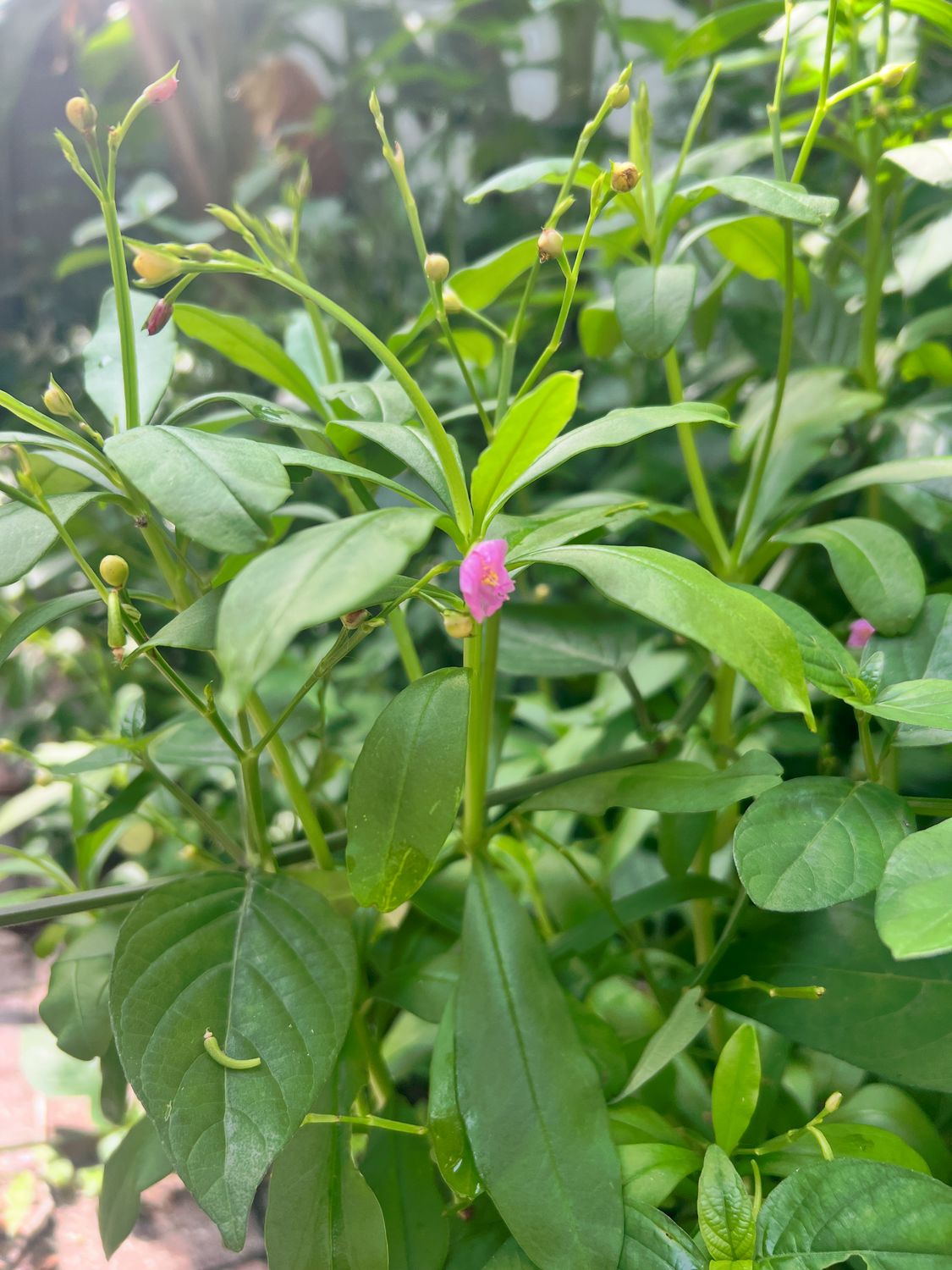
| Flowers | Small pink flowers held above the foliage |
| Pollination | Primarily self-pollinating, with limited insect-assisted pollination |
| Container Friendly | Yes |
| Indoor Growing | Possible under very bright light or quality grow lights |
| Wind Tolerance | Moderate when established, but succulent stems benefit from protection |
| Salt Tolerance | Some root-zone salinity tolerance is reported; direct ocean spray is not recommended |
A Note About Its Growth Habit
Surinam Spinach is sometimes promoted as an edible groundcover because closely spaced plants can shade the soil and function like living mulch.
Botanically, however, it is an upright, branching herb—not a creeping, mat-forming groundcover. Regular harvesting keeps the plant compact and bushy. Plants allowed to flower without pruning become taller and more open.
For a dense edible understory, plant several Surinam Spinach plants approximately 10–12 inches apart and harvest frequently.
⠀
⠀
⠀
⠀
⠀
🌎 From the Americas to Tropical Kitchens Around the World
Talinum fruticosum is native across tropical and subtropical portions of the Americas, including the Caribbean, Central America, South America, Mexico, and Florida.
Its tender leaves and ability to establish quickly helped it travel far beyond its native range. Waterleaf later became especially important in parts of West and Central Africa, Southeast Asia, India, and other humid tropical regions.
Historical botanical records report that plant material was introduced into Java from Suriname in the early 1900s. That movement may help explain common names such as Surinam Spinach, Surinam Purslane, and Java Spinach—even though a common name does not necessarily identify the plant’s original homeland.
The name waterleaf is a perfect description of the plant itself. Its leaves and stems hold considerable moisture, creating the tender, juicy texture that makes the plant so useful in soups and stews.
What About “Edible Thai Ginseng”?
Surinam Spinach is occasionally sold under names such as Edible Thai Ginseng, Leaf Ginseng, or Blatt-ginseng.
These names appear to reference its fleshy roots and its history of traditional tonic use in parts of Asia. It is important to understand that:
- It is not a true ginseng
- It is not part of the Panax genus
- Reliable botanical sources do not establish Thailand as its place of origin
- Traditional root preparations should not be confused with the everyday culinary use of the leaves
The primary food crop is the tender foliage, not the root.
⠀
⠀
⠀
⠀
⠀
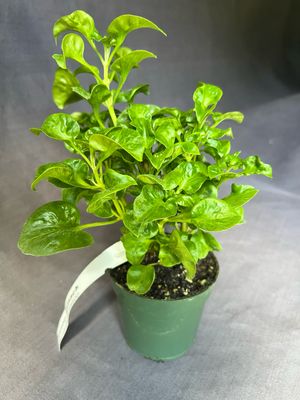
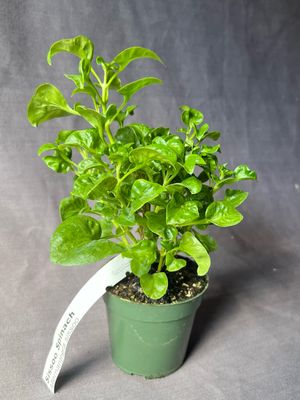
🍃 What Does Surinam Spinach Look Like?
Surinam Spinach brings a lush, polished look to edible landscapes.
Foliage
- Smooth, spoon-shaped leaves
- Soft green to bright green coloring
- Fleshy, succulent texture
- Leaves often cluster toward the ends of actively growing stems
- New growth is especially tender and attractive
Stems
- Smooth and hairless
- Light green, occasionally showing pink tones near the base
- Succulent rather than woody
- Highly responsive to pinching and cutting
Flowers and Seeds
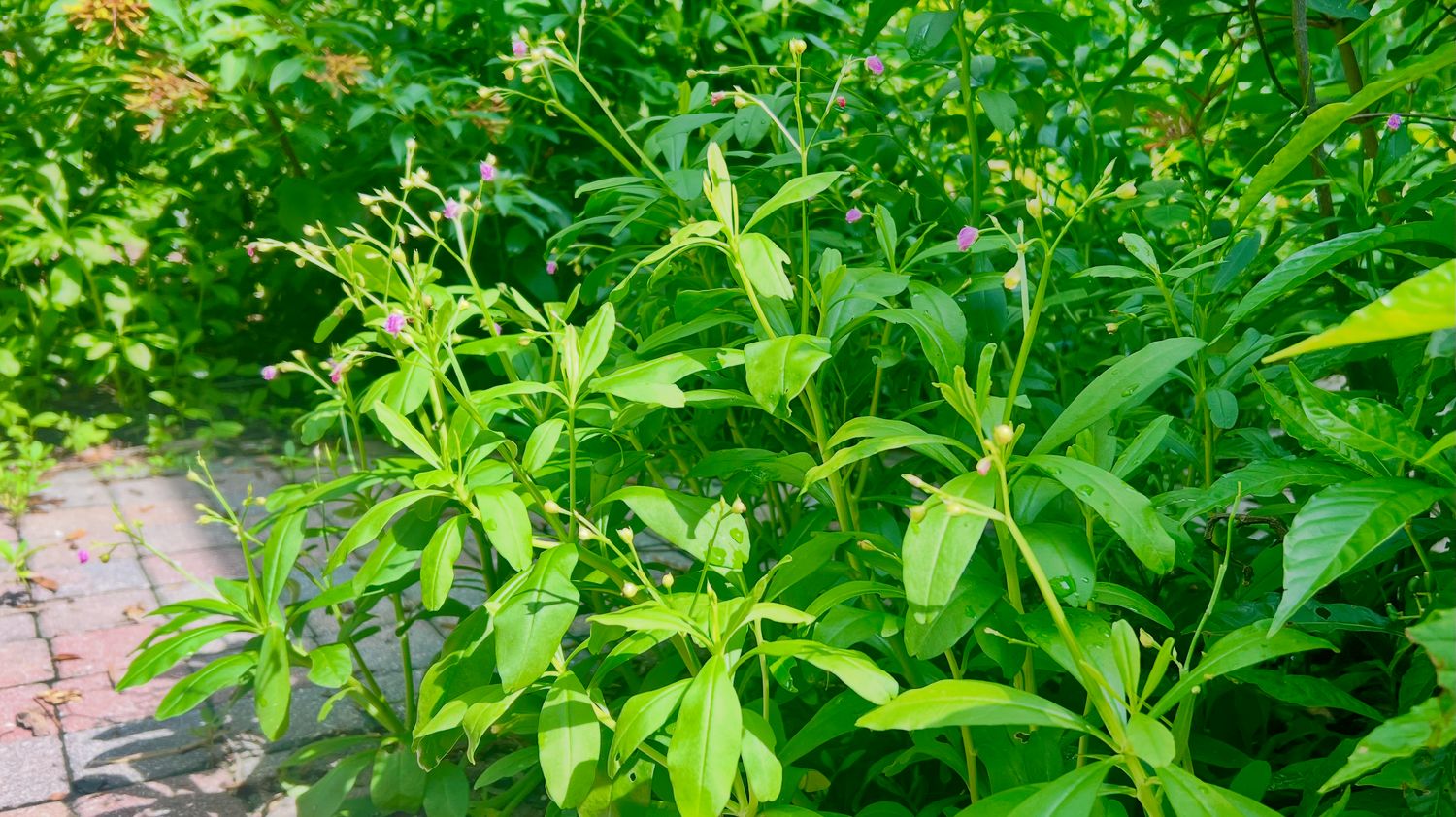
The plant produces delicate pink flowers on branching stems above the foliage. Each flower is small, but a mature planting can create a soft cloud of pink over an edible bed.
The flowers develop into small capsules containing numerous dark seeds. Mature capsules can open suddenly, allowing the plant to self-seed in warm, disturbed soil.
This is a plant that looks relaxed and tropical without becoming visually heavy—the edible garden equivalent of effortless style.
⠀
⠀
⠀
⠀
⠀
🥗 Flavor, Texture and Edible Qualities
Surinam Spinach is not closely related to traditional spinach, but it performs a similar culinary role during hot weather.
Flavor Profile
- Mild
- Fresh and green
- Lightly earthy
- Less bitter than many leafy vegetables
- Neutral enough to accept strong seasonings
Texture
- Succulent
- Tender
- Slightly crisp when young
- Moist and lightly mucilaginous when cooked
- Softer than kale but more substantial than baby spinach
“Mucilaginous” means the leaves release a gentle thickening quality during cooking. This is similar to—but usually lighter than—the texture created by okra, jute mallow, or Malabar Spinach.
That natural body makes Waterleaf especially useful in soups, sauces, braised greens, and vegetable stews.
🍲 How to Use Surinam Spinach
The leaves and tender stem tips are the primary edible portions.
Lightly Cooked
- Sauté with garlic, ginger, onion, or peppers
- Fold into scrambled eggs or omelets
- Add during the final minutes of a stir-fry
- Wilt into coconut-based curries
- Combine with noodles, rice, tofu, fish, chicken, or beef
- Mix into cooked beans or lentils
Soups and Stews
- Add body to brothy vegetable soups
- Use as a tender companion to tougher greens
- Stir into seafood or fish stews
- Add to coconut milk soups
- Combine with tomatoes, onions, chilies, and herbs
- Use as a natural thickener in sauces
Fresh Use
Young leaves are sometimes eaten raw in traditional cuisines and may be used in:
- Small mixed salads
- Wraps and sandwiches
- Finely chopped herb mixtures
- Smoothies containing a modest amount of foliage
Because Waterleaf contains soluble oxalates and other naturally occurring antinutritional compounds, cooked use is the best everyday recommendation. Cooking also softens the foliage and enhances its signature texture.
Harvest Tip
Harvest early in the morning while the leaves are fully hydrated. Use the foliage promptly or refrigerate it in a ventilated or lightly closed produce bag.
Waterleaf is appropriately named—it contains abundant moisture and can wilt relatively quickly after harvesting.
⠀
⠀
⠀
⠀
⠀
🌍 Traditional Culinary Uses
Waterleaf has become especially significant in West and Central African cooking.
Southern Nigerian Waterleaf Soups
In southern Nigeria, where the plant is commonly called gbure, Waterleaf is incorporated into soups and sauces with ingredients such as:
- Onion
- Chili pepper
- Palm oil
- Dried fish
- Meat
- Tomatoes
- Jute mallow
- Ground melon seed
Its succulent shoots release moisture and soften more fibrous vegetables during cooking.
Cameroonian Eru
In Cameroon, Waterleaf is often paired with eru, the leaves of Gnetum africanum or related species.
Eru leaves are firm and fibrous. The juicy Waterleaf shoots soften the mixture and add moisture, creating a rich vegetable dish commonly served with a starchy side such as fufu.
Tropical Home-Kitchen Uses
Across its wider growing range, Surinam Spinach may be used as:
- A cooked potherb
- A substitute for tender spinach
- A thickening green
- A market vegetable
- A seasonal green when other vegetables are scarce
- A quick crop for home and small-scale production
Clarifying the Surinamese Pom Story
Pom is a celebrated Surinamese casserole traditionally built around grated pomtajer—generally a Xanthosoma corm—combined with chicken, citrus, seasonings, and other ingredients.
Waterleaf may be used creatively alongside many Caribbean dishes, but it should not be presented as the defining or traditional primary green in Pom.
⠀
⠀
⠀
⠀
⠀
🍳 Quick Garden-to-Table Recipe: Garlic-Ginger Waterleaf Sauté
Ingredients
- 6 packed cups Surinam Spinach leaves and tender tips
- 1 tablespoon olive, avocado, or coconut oil
- 2 cloves garlic, minced
- 1 teaspoon grated ginger
- ¼ cup sliced onion
- Pinch of salt
- Black pepper or crushed chili to taste
- Squeeze of lemon or lime
Directions
- Wash the leaves thoroughly and remove tough lower stems.
- Warm the oil and cook the onion, garlic, and ginger until fragrant.
- Add the Waterleaf and cook for approximately 5–8 minutes, stirring as it wilts.
- Season and finish with fresh citrus.
Garden Tip
Cut young tips in the morning and leave several healthy nodes on each plant. Frequent harvesting encourages branching and gives you a steadier supply of tender foliage.
⠀
⠀
⠀
⠀
⠀
🌿 Nutritional and Traditional Uses
Waterleaf is valued as a nutrient-dense leafy vegetable. Published analyses report varying levels of:
- Vitamin C
- Carotenoid compounds
- Calcium
- Magnesium
- Potassium
- Iron
- Amino acids
- Dietary fiber
- Naturally occurring plant antioxidants
Exact nutrient concentrations vary with soil, irrigation, plant age, harvest timing, and whether the leaves are measured fresh or dried.
Traditional Folk Applications
Leaves, stems, and roots have appeared in traditional preparations associated with:
- General vitality
- Digestive support
- Skin applications
- Blood pressure
- Blood sugar
- Inflammatory conditions
These are traditional uses, not proven medical treatments. Laboratory, animal, or extract-based research should not be interpreted as evidence that eating the plant will prevent, treat, or cure a disease.
Surinam Spinach should be sold primarily as a food-producing plant, not as a medication.
🌱 Top Benefits of Growing Surinam Spinach
✅ Productive in Warm Weather
It continues producing during seasons when traditional spinach is difficult or impossible to grow.
✅ Fast First Harvest
Under favorable conditions, tender growth may be ready within approximately 3–4 weeks after establishment.
✅ Cut-and-Come-Again Production
Harvesting encourages fresh shoots and can provide repeated crops throughout the warm growing season.
✅ Partial-Shade Tolerance
Surinam Spinach can produce in filtered light and food-forest understories where many annual vegetables struggle.
✅ Container Friendly
Its shallow root system and responsive growth make it suitable for patios, raised planters, and urban gardens.
✅ Easy to Propagate
Established plants can be multiplied from stem cuttings or seed.
✅ Edible Landscape Appeal
Glossy foliage and small pink flowers create an ornamental effect without sacrificing food production.
✅ Useful Living-Mulch Function
Closely spaced plants can shade exposed soil and reduce some weed pressure, even though the plant is not a creeping groundcover.
✅ Pollinator Interest
Small flowers may receive visits from bees and other beneficial insects.
✅ Small-Farm Potential
Fast establishment and repeated harvests make Waterleaf an interesting specialty crop for tropical vegetable growers.
🌿 Tropical Spinach Substitute Comparison
| Plant | Growth Habit | Texture and Flavor | Best Landscape Role | Typical Size |
|---|---|---|---|---|
| Surinam Spinach | Upright, branching succulent herb | Mild, juicy, lightly mucilaginous | Edible understory, raised beds, containers | 1–3 feet with regular care |
| Malabar Spinach | Vigorous climbing vine | Thick, succulent and noticeably mucilaginous | Trellis, archway or edible screen | 8–10+ feet |
| Okinawan Spinach | Low, spreading perennial | Savory, tender, slightly crisp | Colorful edible border or ground layer | Approximately 1–2 feet |
| Sissoo Spinach | Creeping, mat-forming herb | Mild, crisp and tender | True edible groundcover | Approximately 6–12 inches |
| Longevity Spinach | Sprawling, trailing herb | Mild and tender | Hanging baskets, edges and understory beds | Approximately 1–2 feet |
Choose Surinam Spinach when you want: fast upright production, partial-shade tolerance, succulent leaves, and a green that performs beautifully in soups and sautéed dishes.
🌱 Seasonal Care, Planting and Production Guide for Talinum fruticosum
🌿 First Steps After Your Plant Arrives
Shipping can temporarily interrupt the plant’s normal water uptake and growth cycle.
Keep Surinam Spinach in its original container for at least 30 days or until healthy new growth appears, whichever takes longer.
During the recovery period:
- Place the plant in bright shade or gentle morning sun
- Protect it from intense afternoon heat for the first several days
- Water thoroughly at the soil level
- Allow excess water to drain
- Do not immediately fertilize a stressed or wilted plant
- Avoid transplanting while leaves remain limp or growth is stalled
- Gradually increase sunlight over 7–14 days
A plant actively producing new leaves is generally better prepared for transplanting than one still recovering from shipping.
🌡️ Florida and Southeastern Seasonal Guide
Surinam Spinach is not deciduous. It does not follow the same predictable winter dormancy cycle as temperate fruit trees.
It is a frost-sensitive tropical herb that may slow, decline, or die back when temperatures become unfavorable.
| Season | What to Expect | Recommended Care |
|---|---|---|
| Late Winter | Protected plants may remain green; frost-exposed plants may show blackened or collapsed stems | Keep roots mulched, reduce watering during cool wet weather, and wait until freeze danger passes before major pruning |
| Early Spring | New growth begins as soil temperatures rise | Remove dead stems, refresh compost, begin regular watering, and take cuttings from vigorous growth |
| Late Spring | Rapid branching and leaf production | Begin frequent tip harvests and watch container plants for drying |
| Summer | Strong growth with consistent moisture; foliage may become smaller or tougher during prolonged temperatures above 95°F | Provide morning sun or filtered afternoon shade, irrigate at soil level, harvest often, and maintain mulch |
| Early Fall | Continued production and flowering | Continue harvesting, collect cuttings, and allow selected plants to produce seed |
| Late Fall | Growth slows with shorter days and cooler nights | Reduce fertilizer, prepare frost protection, and move containers to a sheltered location |
Central Florida and Similar Zone 9 Areas
- Plants often grow vigorously from spring through fall
- Light frost can damage or kill exposed foliage
- Mulched roots may return after brief cold events
- Survival is not guaranteed after a hard or prolonged freeze
- Keep backup cuttings or a protected container plant before winter
North Florida and the Southeastern United States
In Zones 8–9a, treat Surinam Spinach as:
- A warm-season annual
- A frost-protected perennial experiment
- A container plant moved indoors or into a greenhouse
- A plant that can be restarted from cuttings each spring
South Florida and Frost-Free Locations
Production may continue for much of the year. Leaf quality can still decline during:
- Prolonged extreme heat
- Drought
- Waterlogged conditions
- Nutrient depletion
- Excessive flowering without harvesting
UF/IFAS production guidance identifies spring and fall as particularly useful growing seasons in much of Florida, with cooler-season production possible in South Florida.
Surinam Spinach handles hot weather far better than true spinach, but “heat tolerant” does not mean “unaffected by unlimited heat.” Moisture, shade, root health, and harvesting all influence summer leaf quality.
⠀
⠀
⠀
⠀
⠀
🌞 Where to Plant Surinam Spinach
Best Locations
Choose a site with:
- Morning sun and afternoon shade
- Filtered light beneath open-canopy fruit trees
- Moist but well-draining soil
- Easy access to drip irrigation
- Protection from strong north winds
- Regular access for harvesting
- Organic matter near the soil surface
Full Sun
Surinam Spinach can grow in full sun when:
- Irrigation is dependable
- Soil is mulched
- Roots remain cool
- Plants are acclimated gradually
- Afternoon temperatures are not excessively reflected by walls or pavement
In Florida summer conditions, full-day sun may produce smaller plants or tougher foliage than partial shade.
Partial Shade
Bright partial shade often supports:
- Larger, softer leaves
- Reduced afternoon wilting
- Less sun scorch after transplanting
- Better performance beneath young fruit trees
- Longer intervals between container watering
Avoid deep shade. Plants grown with insufficient light may become stretched, pale, and less productive.
Locations to Avoid
Do not plant Surinam Spinach:
- In standing water
- In compacted soil without drainage improvement
- At the base of a roof valley or downspout
- Directly against a hot west-facing wall
- Beneath an extremely dense evergreen canopy
- In soil that may contain industrial pollution or heavy metals
- Where self-seeding would be difficult to manage
- In areas receiving direct ocean spray
⠀
⠀
⠀
⠀
⠀
🌾 Soil and Drainage Requirements
Surinam Spinach appreciates soil that holds moisture without remaining anaerobic.
Ideal In-Ground Soil
- Rich in finished organic matter
- Moisture retentive
- Loose enough for air movement
- Well drained after heavy rain
- Approximately pH 6.1–7.5
The plant adapts to relatively low-fertility conditions, but lush leaf production improves when moisture and nutrition are consistently available.
Heavy Clay
For clay or compacted soil:
- Plant slightly high
- Loosen a broad area around the planting hole
- Incorporate compost near the surface
- Avoid creating a deep bowl that holds water
- Use hardwood mulch to protect soil structure
- Consider a raised bed or low planting mound
Sandy Florida Soil
For very sandy soil:
- Add finished compost
- Incorporate charged biochar near the surface
- Maintain a 2–3-inch mulch layer
- Irrigate more frequently
- Feed lightly but consistently
- Check for rapid nutrient leaching
Waterlogged Soil
Although published sources report that Waterleaf can tolerate temporary flooding stress, prolonged saturation may lead to collar or root rot.
Temporary tolerance does not make it an aquatic plant.
⠀
⠀
⠀
⠀
⠀
🌿 How to Plant Surinam Spinach Using the GreenDreams High & Tight Method
- Water the plant thoroughly several hours before planting.
- Dig a hole only slightly wider than the nursery container.
- Keep the hole approximately the same depth as the root ball.
- Carefully remove the plant without pulling on its succulent stems.
- Set the root ball so its upper surface remains level with—or slightly above—the surrounding soil.
- Do not bury the stem or crown.
- Backfill with loosened native soil, finished compost, or an appropriate blend.
- Firm the soil around the root ball to eliminate large air pockets.
- Top-dress with compost, charged biochar, azomite, and an organic nutrient product suited to leafy vegetables.
- Water deeply at the soil level.
- Add 2–3 inches of hardwood mulch around the planting area.
- Keep mulch several inches away from the base of the plant.
Planting too deeply can trap moisture against the stem and increase the risk of rot.
Watch the GreenDreams Planting Method
https://youtu.be/RRQFY30qdA8?si=rRIcsbLlVAVYotfI
⠀
⠀
⠀
⠀
⠀
💧 Watering Surinam Spinach
Surinam Spinach has succulent leaves, but it is not a desert succulent.
The foliage stores moisture while the shallow root system performs best with consistent access to water.
Newly Planted in the Ground
During warm, dry weather:
- Water daily for approximately the first 1–2 weeks
- Water every other day during weeks 3–4
- Transition toward 2–3 deep waterings per week after establishment
- Increase frequency in sandy soil, drought, or extreme heat
- Reduce frequency during rainy or cool periods
Always check actual soil moisture rather than following a calendar without adjustment.
Established In-Ground Plants
Water when the upper 1–2 inches of soil begin to dry.
Established plants may tolerate short dry periods, but prolonged drought can cause:
- Smaller leaves
- Tougher stems
- Reduced branching
- Yellowing
- Wilting
- Lower harvest quality
Plants in Containers
A 4-inch container can dry rapidly.
During warm weather:
- Check the plant every morning
- Water thoroughly when the upper surface begins to dry
- Expect daily watering during hot, sunny conditions
- Never leave the container standing in a saucer of stagnant water
- Confirm that drainage holes remain open
Larger containers dry more slowly but still require regular monitoring.
No Overhead Watering
Water only at the soil level whenever possible.
Morning soil-level watering:
- Delivers moisture directly to the roots
- Reduces foliage spotting
- Limits soil splash onto edible leaves
- Improves absorption before afternoon heat
- Lowers the risk of fungal problems
Avoid routine afternoon overhead watering. Water droplets, hot foliage, soil splash, and prolonged leaf wetness can contribute to leaf damage and disease pressure.
For landscape plantings, drip irrigation is preferred over overhead misters or sprinkler heads.
⠀
⠀
⠀
⠀
⠀
🌿 Fertilizing for Leaf Production
Surinam Spinach can survive in relatively lean soil, but strong repeated leaf harvests require available nutrition—especially nitrogen.
It is better described as a moderate feeder for production, rather than a plant that never needs fertilizer.
Organic Fertility Program
At planting:
- Finished compost
- Charged biochar
- Worm castings
- Azomite or another trace-mineral amendment
- Mild organic granular fertilizer
During active growth:
- Top-dress with compost every 2–3 months
- Apply worm castings around container plants
- Use a diluted organic liquid feed every 3–4 weeks when growth slows
- Replace nutrients removed through repeated harvesting
- Reduce feeding during cold weather or shipping recovery
Signs of Low Fertility
- Pale green foliage
- General yellowing
- Small new leaves
- Thin stems
- Slow regrowth after cutting
Signs of Excess Fertilizer
- Burned leaf tips
- Sudden wilt after feeding
- Salt crust on container soil
- Weak, overly soft growth
- Excessive stem growth with poor structure
Avoid applying a strong fertilizer dose to dry soil. Water first, feed lightly, and observe the plant’s response.
⠀
⠀
⠀
⠀
⠀
✂️ Harvesting and Pruning Surinam Spinach
Regular harvesting is the main pruning method.
Frequent Tip Harvest
Cut or pinch:
- The upper 4–8 inches of tender growth
- Just above a healthy leaf node
- Before stems become fibrous
- Every 1–2 weeks during rapid growth
This encourages side branching and keeps the plant compact.
Renewal Harvest
When plants become tall, sparse, or woody near the base:
- Cut stems back to approximately 2–4 inches above the soil
- Leave healthy lower nodes whenever possible
- Water consistently during regrowth
- Apply a light compost top-dressing
- Watch for fresh shoots before fertilizing heavily
Research-based production systems sometimes cut Waterleaf approximately 1 inch above the ground to stimulate rapid regeneration.
Best Harvest Time
Harvest early in the morning when leaves are:
- Fully hydrated
- Crisp
- Cooler
- Less likely to wilt immediately
Extending Production
The highest-quality market leaves are often obtained from the first several harvests. Home gardeners can extend the planting by:
- Rotating between several plants
- Rooting new cuttings
- Replacing declining specimens
- Allowing selected plants to produce seed
- Maintaining even moisture and fertility
A succession of younger plants frequently produces better leaves than attempting to keep one tired plant forever.
⠀
⠀
⠀
⠀
⠀
🪴 Growing Surinam Spinach in Containers
Surinam Spinach performs well in containers when water, drainage, and nutrition remain balanced.
Recommended Container Sizes
| Container | Best Use |
|---|---|
| 4-inch pot | Temporary nursery and shipping size |
| 1-gallon container | Short-term production or one young plant |
| 3-gallon container | Strong long-term size for one productive plant |
| 5–7-gallon container | Larger clump, heavier harvests, or reduced watering frequency |
| Wide raised planter | Multiple plants for continuous household production |
A wide container is often more useful than an unnecessarily deep container because the plant develops a relatively shallow feeding-root zone.
Recommended Potting Mix
Use a moisture-retentive but airy blend such as:
- Approximately 60% high-quality peat- or coconut-coir-based potting mix
- Approximately 20% finished compost or worm-casting blend
- Approximately 20% perlite, fine pine bark, or another drainage material
The goal is a mix that:
- Holds moisture between waterings
- Drains freely
- Does not compact
- Supports active biological life
- Allows oxygen around the roots
Do not use dense native soil alone in a container.
How to Up-Pot
Move the plant into a larger container when:
- Roots circle the pot
- Roots emerge from drainage holes
- The soil dries unusually fast
- Growth stalls despite appropriate care
- The plant becomes top-heavy
- Water runs immediately down the sides without soaking the root ball
To transplant:
- Water the plant before handling.
- Select a pot only one or two practical sizes larger.
- Add enough potting mix to keep the crown at its original depth.
- Gently loosen only tightly circling outer roots.
- Center the root ball.
- Backfill and firm the mix lightly.
- Water thoroughly at soil level.
- Keep the plant in bright shade for several days.
- Wait for active growth before applying strong fertilizer.
Progressing from a 4-inch pot to a 1-gallon, then a 3-gallon and eventually a 5- or 7-gallon container is safer than placing a tiny root system into an oversized pot that remains wet for too long.
Gardeners can locate nursery pots and soil materials through:
- Independent garden centers
- Local nurseries
- Landscape supply companies
- Hydroponic suppliers
- Farm and feed stores
- Online searches for nursery containers and bulk potting media
- Community gardening groups that reuse clean nursery pots
⠀
⠀
⠀
⠀
⠀
🏠 Can Surinam Spinach Grow Indoors?
Yes, but indoor growth is usually slower.
Indoor Requirements
- Bright south- or east-facing window
- Supplemental grow lights where natural light is insufficient
- Approximately 12–14 hours of bright artificial light during winter
- Warm temperatures
- Good airflow
- Careful watering
- Clean leaves and regular pest inspection
Common Indoor Problems
- Leggy growth from insufficient light
- Fungus gnats from constantly wet potting mix
- Aphids or mites on tender growth
- Weak stems from stagnant air
- Root rot from oversized containers
- Reduced harvests during short winter days
For most growers, indoor culture works best as a way to preserve stock plants and cuttings—not as the highest-yield production system.
🌬️ Wind and Coastal Conditions
The plant tolerates moderate wind once established, but its succulent stems can bend or snap in exposed locations.
For best results:
- Plant near a permeable windbreak
- Avoid exposed corners that funnel wind
- Protect containers before tropical storms
- Cut tall stems back before severe weather
- Avoid excessive nitrogen that creates weak growth
Research indicates some tolerance of saline soil or irrigation conditions. This does not mean the foliage is highly tolerant of direct salt spray.
Near the coast:
- Use a protected courtyard or leeward location
- Rinse accidental salt deposits from leaves with fresh water
- Avoid planting in the first line of ocean exposure
- Maintain healthy soil organic matter
🌾 Ecological Companion Planting
Surinam Spinach fits naturally beneath open-canopy tropical plants and along frequently harvested garden edges.
Nitrogen and Biomass Support
- Pigeon Pea: vertical nitrogen-fixing support and light shade
- Mexican Sunflower: rapid biomass for chop-and-drop mulch
- Sunn Hemp: seasonal nitrogen and biomass production
- Native legumes: regionally appropriate soil-building support
Carbon and Silica Support
- Vetiver: deep-rooted clumping grass for stabilization
- Lemongrass: aromatic clump and biomass source
- Sugarcane: tall carbon-producing boundary plant
- Clumping bamboo: only where space and management are appropriate
Pollinator and Insectary Plants
- Mexican Sunflower
- African Blue Basil
- Native asters
- Tropical sage
- Coreopsis
- Sweet almond bush
Edible Companions
- Turmeric
- Ginger
- Katuk
- Okinawan Spinach
- Longevity Spinach
- Cranberry Hibiscus
- Perennial Peanut
- Dwarf bananas in spacious systems
Attractive Design Combination
Pair the soft green leaves and pink flowers with:
- Purple-leaved Okinawan Spinach
- Cranberry Hibiscus
- Golden oregano
- Turmeric foliage
- Variegated edible hibiscus
- Dark-leaved basil
Avoid placing Surinam Spinach directly against aggressive spreading plants that will smother its shallow roots.
🌱 Propagation and Small-Scale Production
Stem Cuttings
Waterleaf is easily propagated from tender stem cuttings.
- Take a healthy cutting approximately 4–6 inches long.
- Remove the lowest leaves.
- Insert approximately 1–2 inches of stem into moist potting mix.
- Place in bright shade.
- Maintain even moisture without waterlogging.
- Gradually increase light after roots develop.
Seed
The plant produces numerous tiny seeds in capsules that may split when fully mature.
For seed collection:
- Watch capsules as they change from green toward maturity
- Collect before they shatter
- Dry inside a paper bag
- Surface-sow or cover very lightly
- Maintain warm, moist conditions
- Transplant seedlings after they develop a stable root system
Production Spacing
- Dense leaf bed: approximately 6–10 inches apart
- Home garden plants: approximately 10–18 inches apart
- Large ornamental specimens: approximately 18–24 inches apart
Closer spacing creates a denser canopy. Wider spacing produces larger individual plants and improves access for harvesting.
Production Timeline
- Initial establishment: approximately 2–4 weeks
- First harvest: often 3–4 weeks after establishment
- Repeated harvest: every 1–2 weeks
- Flowering: often begins within approximately 40–75 days under favorable conditions
- Productive planting life: commonly several months, depending on climate and management
⚠️ Surinam Spinach Cautions and Responsible Use
🍲 Cooked Use Is Recommended
Waterleaf contains soluble oxalates and other naturally occurring antinutritional compounds.
Large quantities of raw leaves are not recommended as an everyday food. Cooking or blanching can reduce a meaningful portion of soluble oxalates.
Practical guidance:
- Wash leaves thoroughly
- Cook before frequent or substantial consumption
- Avoid treating raw smoothies as a concentrated daily supplement
- Eat as part of a varied diet
- Discard boiling water when specifically trying to reduce soluble oxalates
- Consult a qualified medical professional regarding dietary restrictions
People with a history of:
- Calcium-oxalate kidney stones
- Kidney disease
- Medically prescribed low-oxalate diets
- Gout or related dietary restrictions
should seek individualized professional advice before consuming Waterleaf regularly.
Published production guidance also advises against incorporating Waterleaf into infant meals because of its antinutritional compounds.
🌾 Grow Food Only in Clean Soil
Waterleaf has been investigated for its ability to accumulate pollutants and heavy metals from contaminated soil.
That ability may be useful in phytoremediation research—but it creates an important food-safety warning:
Do not eat Surinam Spinach grown in contaminated soil.
Avoid harvesting from:
- Dump sites
- Industrial properties
- Roadsides with uncertain contamination
- Areas treated with persistent herbicides
- Soil exposed to lead paint
- Sites receiving polluted runoff
- Locations with unknown fill material
Use clean soil, clean irrigation water, and amendments intended for edible gardens.
🌱 Self-Seeding
Surinam Spinach can produce abundant seed in warm climates.
To reduce unwanted seedlings:
- Harvest flower stems before capsules mature
- Grow in containers
- Mulch surrounding soil
- Remove volunteers when young
- Keep plants away from natural areas
- Do not dispose of mature seed-bearing plants in unmanaged locations
UF/IFAS did not list Waterleaf among plants evaluated as invasive at the time of its publication, but the species can behave like a weed in disturbed tropical environments. Responsible management is still appropriate.
🩺 Educational Disclaimer
Nutritional and historical information is provided for general education. This plant and listing are not intended to diagnose, treat, cure, or prevent any medical condition.
⠀
⠀
⠀
⠀
⠀
🔍 Surinam Spinach Troubleshooting Guide
Icons represent common issues and organic solutions—look for 🌿 for recovery guidance.
| ⚠️ Issue | 🧠 Likely Cause | 🌿 Organic Solution |
|---|---|---|
| 🍂 Lower leaves yellowing | Nitrogen depletion, old foliage, excessive moisture, or root stress | Check drainage first. If roots are healthy, top-dress with compost or worm castings and apply a mild organic nitrogen feed |
| 💧 Plant wilts during the afternoon | Dry root ball, intense sun, hot reflected heat, or recent transplant stress | Check soil below the surface. Water deeply at soil level and provide temporary afternoon shade |
| 💦 Soft, collapsing stems | Excess moisture, buried crown, poor airflow, or collar rot | Reduce watering, improve drainage, remove affected stems, and keep mulch away from the crown |
| 🌱 Tall, leggy growth | Insufficient light or lack of harvesting | Increase filtered sunlight and pinch growing tips to encourage branching |
| ☀️ Bleached or scorched leaves | Sudden exposure to intense sun or afternoon heat | Move containers to morning sun or use temporary shade while new foliage develops |
| 🐛 Irregular holes in leaves | Caterpillars, beetles, snails, or slugs | Inspect at dawn or after dark, handpick pests, use barriers, and apply an appropriate organic control only when necessary |
| 🪲 Curled or sticky new growth | Aphids, whiteflies, or other sap-feeding insects | Rinse pests from stems, control ant activity, encourage beneficial insects, and use insecticidal soap according to its label |
| 🕷️ Fine stippling or webbing | Spider mites during hot, dry conditions | Increase plant hydration, rinse foliage in the morning when appropriate, improve monitoring, and use horticultural soap or oil according to label directions |
| 🪱 Weak plants despite adequate fertilizer | Root-knot nematodes or damaged roots | Inspect roots, rotate beds, add organic matter, solarize heavily affected soil when appropriate, and restart plants in clean media |
| 🌊 Plant declines after heavy rain | Saturated soil and limited root oxygen | Improve drainage, pull mulch back temporarily, and avoid additional irrigation until the root zone begins to recover |
| ❄️ Blackened or translucent foliage | Frost or freeze damage | Leave damaged growth temporarily if more cold is expected, mulch the roots, and prune after danger of freezing passes |
| 🌸 Too many flowers and fewer tender leaves | Plant age, heat stress, or infrequent harvesting | Cut stems back, water consistently, apply a light compost feeding, and start replacement cuttings |
Organic Pest-Care Reminder
Neem oil, horticultural oils, soaps, and biological products can still damage plants when applied incorrectly.
- Follow the product label
- Test a small area first
- Never spray oil products onto heat-stressed foliage
- Avoid spraying during intense sun
- Protect pollinators by avoiding open flowers
- Wash edible foliage before use
- Observe all harvest intervals listed on the label
⠀
⠀
⠀
⠀
⠀
❓ Surinam Spinach FAQ
Is Surinam Spinach the same as regular spinach?
No. Traditional spinach is Spinacia oleracea, a cool-season vegetable. Surinam Spinach is Talinum fruticosum, a tropical leafy herb that tolerates warm weather far better.
Is Talinum fruticosum the same as Talinum triangulare?
Many agricultural and ethnobotanical references use the names interchangeably. Royal Botanic Gardens, Kew currently accepts Talinum fruticosum and includes Talinum triangulare among its synonyms.
Is Surinam Spinach a true groundcover?
No. It is an upright, branching herb. Closely spaced plants can create soil-shading coverage, but the plant does not form a creeping mat like Sissoo Spinach or Perennial Peanut.
How tall does Surinam Spinach grow?
Plants maintained through repeated harvesting commonly remain approximately 12–24 inches tall. Unpruned plants may reach 2–3 feet or more, and published height descriptions vary significantly according to climate and production conditions.
Can Surinam Spinach grow in shade?
Yes. Bright partial shade is often excellent, especially in hot Florida summers. Deep shade may produce weak, stretched growth.
Does Surinam Spinach survive frost?
The foliage is frost-sensitive. Brief light frost may cause top dieback, while mulched roots sometimes survive in protected warm-climate locations. A hard or prolonged freeze can kill the plant.
Can I grow it as an annual?
Yes. Gardeners in colder regions can plant it after frost danger passes and grow it as a warm-season annual.
Can Surinam Spinach grow indoors?
It can be overwintered indoors with strong natural light or grow lights. Growth is typically slower and less productive than outdoors.
Can the leaves be eaten raw?
Young leaves are eaten raw in some culinary traditions, but cooked use is the better regular recommendation because the plant contains soluble oxalates and other antinutritional compounds.
How quickly can I harvest it?
Under favorable warm conditions, harvesting may begin approximately 3–4 weeks after the plant establishes.
How should I harvest Surinam Spinach?
Cut tender stem tips just above a leaf node for ongoing production. Older plants can be cut back more substantially to encourage fresh shoots.
Will it grow from cuttings?
Yes. Tender stem cuttings root readily in warm, moist potting media.
Does Surinam Spinach tolerate salt?
Some research reports tolerance to saline root-zone conditions. That does not guarantee tolerance of direct ocean spray. Use a protected coastal planting location.
Is “Edible Thai Ginseng” real ginseng?
No. It is a marketplace or folk name. Surinam Spinach is unrelated to true Panax ginseng.
Can it be planted beneath fruit trees?
Yes. It is useful beneath open-canopy fruit trees where it receives filtered light, irrigation, and enough root space. Avoid planting directly against the tree trunk.
⠀
⠀
⠀
⠀
⠀
🌟 Is This Plant Right for You?
✅ Ideal For
- Florida gardeners
- Gulf Coast and Southeastern growers
- Tropical vegetable collectors
- Food-forest growers
- Permaculture gardens
- Home cooks who enjoy soups and sautéed greens
- Gardeners seeking warm-season spinach substitutes
- Raised-bed growers
- Container gardeners
- Beginners interested in easy propagation
- Growers with bright partial-shade spaces
- Small farms exploring specialty leafy vegetables
❌ May Not Be Ideal For
- Gardeners wanting a cold-hardy perennial
- Growers without indoor winter protection in freezing climates
- People seeking the exact flavor and texture of traditional spinach
- Landscapes where self-seeding cannot be monitored
- Sites with contaminated soil
- Extremely exposed coastal locations
- Gardeners seeking a true creeping groundcover
- Individuals who must follow a medically prescribed low-oxalate diet
🚚 Shipping Information — 4-Inch Plant
This 4-inch size is most ideally suited for shipping to:
- Florida
- The Southeastern United States
- Texas
- Other regions with relatively short UPS Ground transit times
We ship live plants from Florida using UPS Ground every Monday.
Before Ordering
A 4-inch nursery pot contains less soil and dries more quickly than a 1-gallon or larger plant. Small plants are more vulnerable to:
- Extended ground-transit times
- Delayed delivery
- Extreme heat
- Freezing temperatures
- Box exposure
- Rapid drying
- Inspection delays
- Rough handling during transportation
Larger sizes are strongly recommended for northern and western customers whenever available.
Northern and Western States
We can ship across the continental United States, but extended UPS Ground transit may not be suitable for every small tropical plant.
Plants sent to distant northern or western destinations may arrive with:
- Wilted leaves
- Yellowing
- Leaf drop
- Bent stems
- Dry potting media
- Cold or heat stress
- Temporary growth interruption
Risk associated with extended ground transit is assumed by the buyer.
California Shipments
California packages may be held for agricultural inspection. This can add an additional day—or occasionally longer—to normal transit.
Inspection delays are outside GreenDreams’ control.
Extreme Weather Disclaimer
Buyer discretion is required during peak heat and cold seasons.
GreenDreams is not responsible for plant decline or damage caused by:
- Extreme temperatures during transit
- Freezing conditions
- Heatwaves
- UPS Ground delays
- Carrier handling
- Ground-service delivery conditions
- Additional state inspection time
- Packages left outdoors after delivery
Monitor tracking and bring the package indoors promptly after delivery.
Recovery After Shipping
Many stressed tropical plants can recover with careful attention.
After arrival:
- Open the box promptly.
- Remove protective packing materials.
- Check the soil moisture.
- Water at soil level when needed.
- Place the plant in bright shade.
- Avoid immediate repotting.
- Avoid strong fertilizer.
- Protect from wind and afternoon sun.
- Wait for healthy new growth.
Visible recovery may take 1–3 weeks or longer, depending on stress level and weather.
Keep the plant in its original container for at least 30 days or until new growth appears before transplanting.
🏡 Shop With Us in Person
We carry Surinam Spinach and countless other edible, ecological, native, medicinal, and useful plants at our public retail nursery.
Larger sizes and many plants that are not listed online may be available for local pickup.
GreenDreams Nursery & Farm — Retail Nursery Open to the Public
🌾 18709 US Hwy. 41, Spring Hill, FL 34610
🕘 Tuesday–Friday: 9AM–5PM
🌞 Saturday: 8AM–3PM
🌿 Stop by our regenerative nursery to see what is blooming, fruiting, and ready for the garden this week.
🌿 Beyond the Plant: GreenDreams Services
At GreenDreams, we do more than grow plants—we design, build, and restore ecosystems across Florida.
- 🌳 Onsite consultations and edible landscape design
- 🚜 Ecological landscape installation and project management
- 🚚 Bulk delivery of compost, mulch, biochar, and soil materials
- 🌾 Wholesale plants and large-scale regenerative solutions
- 🌱 Food-forest planning and plant selection
- 🪵 Garden development and soil-building support
Let our team help you create a thriving edible paradise—starting with Surinam Spinach.
🌿 IMPORTANT INFORMATION BEFORE PURCHASING LIVE PLANTS
Please note: Plants purchased through our online store are not available for pickup at our retail nursery in Spring Hill, Florida.
Online inventory is housed at a separate facility and is priced, prepared, and handled exclusively for shipping.
🌱 Looking for larger plants or more selection?
Our retail nursery location offers far more availability, including larger sizes, specialty plants, and many selections not suitable for nationwide shipping.
Local pickup is available for retail nursery purchases only.
Visit our Spring Hill, FL retail nursery page to explore in-person shopping options.
🚚 LIVE PLANT SHIPPING & TRANSIT EXPECTATIONS
Live plants naturally experience stress during shipping. Temporary leaf drop, mild wilting, or cosmetic stress is normal after transit. Most plants recover quickly with proper watering, gradual light exposure, and basic aftercare. Some plants may require additional attention during the first few weeks.
Despite careful packing, minor cosmetic damage may occur during transit. Small issues such as broken leaves or stems typically resolve with time and proper care.
If your shipping box arrives with significant external damage, please contact UPS within 30 days to initiate a carrier claim.
⏱️ SHIPPING METHOD, TIMING & TRANSIT WINDOWS
All online orders ship via UPS Ground from our Central Florida nursery.
📦 Shipping Schedule: Orders ship once weekly on Mondays to reduce the risk of packages sitting in transit over weekends. A countdown clock on our website displays the next shipping date.
🚚 Typical Transit Times:
-
Florida: 1–2 days
-
Southern U.S.: approximately 2 days
-
Midwest, West & Northern U.S.: 3–5 business days
Long-distance shipments, particularly to the western U.S., may experience additional transit time due to agricultural inspections in states such as Arizona, California, and Texas.
Extended transit times can be more challenging for small or tender plants and may require additional recovery care after arrival.
🌡️ EXTREME WEATHER & SEASONAL RISK
Live plants are sensitive to temperature extremes.
We cannot guarantee plant condition during periods of extreme summer heat or winter cold and freezing temperatures. Weather-related delays, carrier interruptions, or exposure during delivery are beyond our control.
Customers are responsible for:
-
Monitoring tracking information sent via email
-
Retrieving packages promptly upon delivery
-
Preventing plants from being left outdoors in extreme conditions
During unsafe weather, holiday shipping volume, or extended transit risk, orders may be held and shipped the following week to protect plant health.
⚠️ CUSTOMER RESPONSIBILITY & REFUND POLICY
By purchasing live plants, customers acknowledge and accept the risks associated with shipping, weather exposure, transit delays, and regional suitability.
Refunds or replacements are considered only under exceptional circumstances and in accordance with our return and refund policy. We are not responsible for:
-
Weather-related damage
-
Carrier delays
-
Poor plant selection for a given climate or region
-
Improper care after delivery
Upon purchase, customers assume full responsibility for the ongoing care and success of their plants.
✅ CONSENT & AGREEMENT
By completing a purchase, you confirm that you have read, understand, and agree to all shipping policies, responsibilities, and conditions outlined above.
Our goal is transparency, plant health, and long-term growing success — and we appreciate your understanding and care when ordering live plants.


