


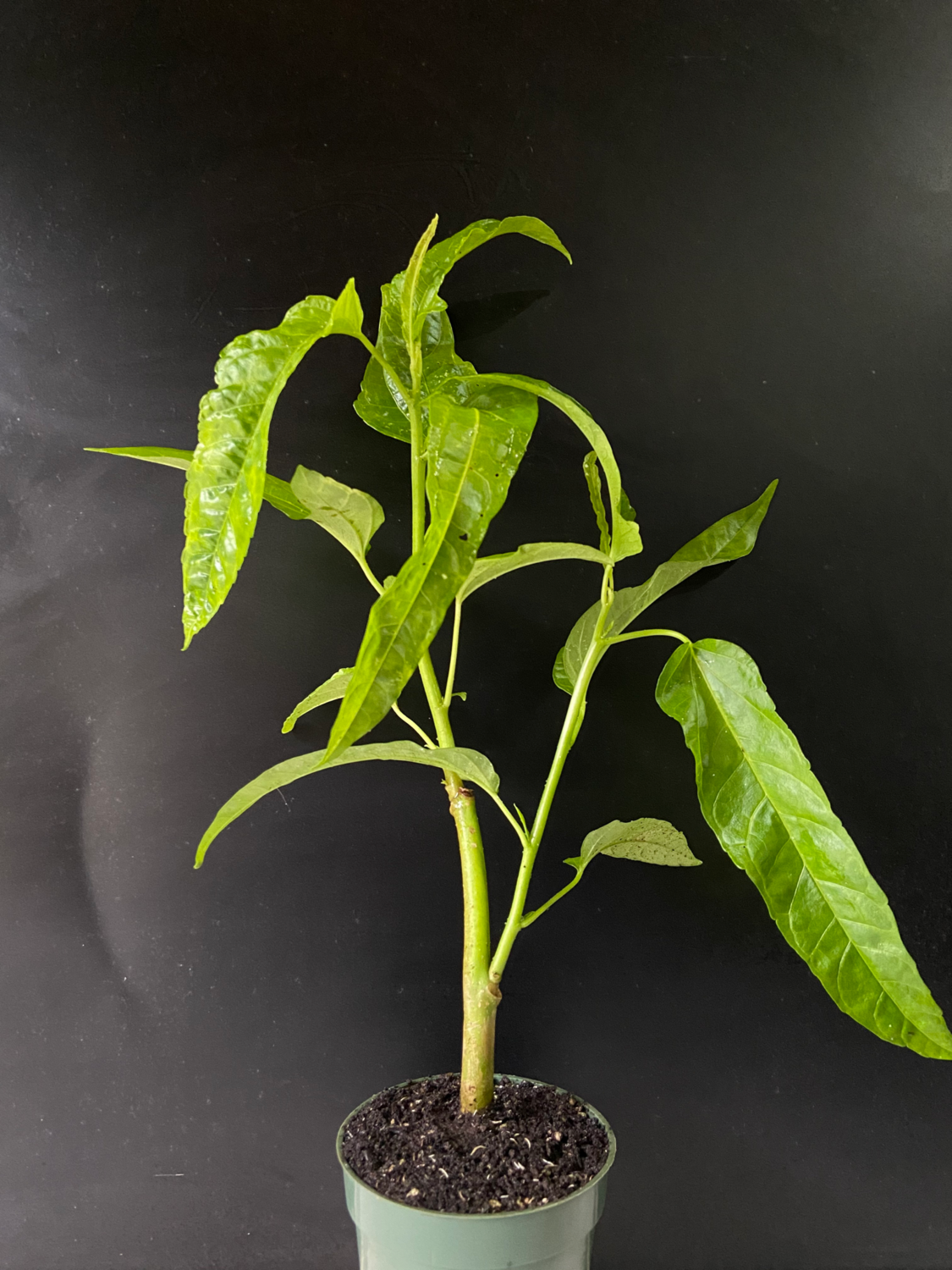
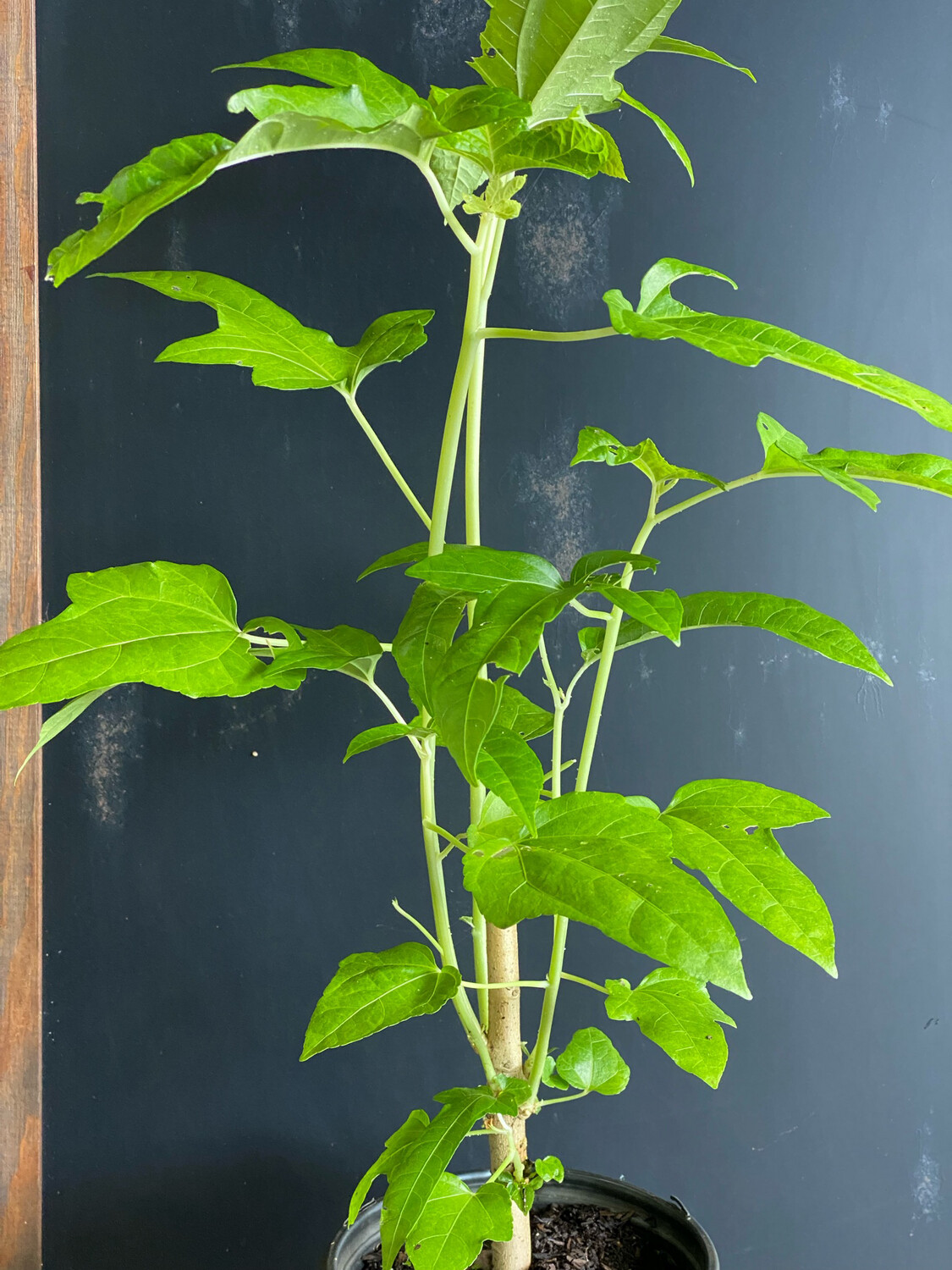
🌿 Long Leaf Edible Hibiscus (Abelmoschus manihot) — 1-Gallon Established Plant for Summer Leaf Production
What if one of the most dramatic plants in your edible landscape was also one of the vegetables you harvested most often?
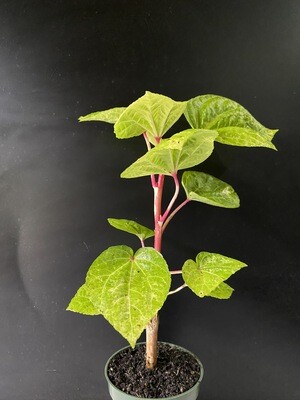
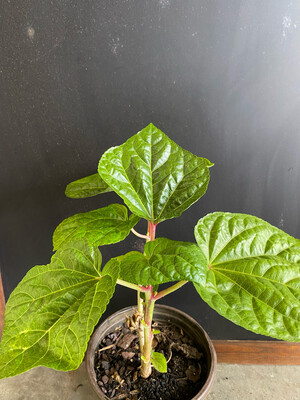
Long Leaf Edible Hibiscus (Abelmoschus manihot) is a fast-growing tropical leafy vegetable with long, deeply divided foliage, hibiscus-like blooms and a serious appetite for the kind of hot, humid weather that shuts down traditional lettuce and spinach.
For Florida gardeners, food-forest growers and warm-climate homesteaders, this is exactly the kind of crop that makes summer gardening easier.
Instead of fighting the heat…
grow something that wants it.
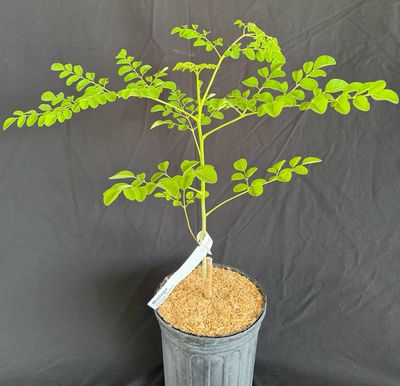
This listing is for our more established 1-gallon Long Leaf Edible Hibiscus, offering considerably more root mass, foliage and stored moisture than our economical 4-inch starter size.
For growers who want a faster jump into production—or customers shipping farther from Florida—the 1-gallon size is generally our preferred choice when available.
🌱 QUICK FACTS — LONG LEAF EDIBLE HIBISCUS
| FEATURE | DETAILS |
|---|---|
| Botanical Name | Abelmoschus manihot |
| Selection | Long Leaf Edible Hibiscus |
| Family | Malvaceae — the mallow family |
| Related Plants | Okra, roselle, cotton and ornamental hibiscus |
| Common Names | Edible Hibiscus, Aibika, Bele, Pele, Island Cabbage, Slippery Cabbage, Sunset Hibiscus, Sunset Muskmallow |
| Plant Type | Fast-growing tropical/subtropical perennial leafy vegetable; soft-wooded shrub or subshrub |
| Sale Size | 1-gallon nursery container |
| Estimated Plant Age | Commonly several months from propagation; approximately 3–6+ months depending on season, propagation timing and production conditions |
| Typical Shipping Plant | More established root system and canopy than our 4-inch starter; exact height and fullness vary naturally by season |
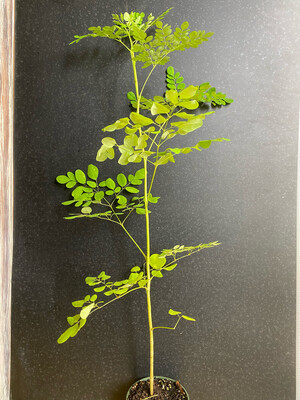
| Unpruned Height | Approximately 10–12 ft under favorable conditions |
| Maintained Height | Approximately 4–7 ft with repeated harvesting and pruning |
| Typical Width | Approximately 3–6 ft, depending on pruning and fertility |
| Spacing | 2–3 ft for a frequently pruned edible hedge; allow 4–6 ft for larger specimens |
| USDA Zones | Best treated as a perennial in Zones 9–11 |
| Colder Climates | Grow as a vigorous warm-season annual or overwinter as a protected container plant |
| Sun | Full sun to partial sun; approximately 5–8+ hours of strong light |
| Florida Light | Full sun with reliable irrigation; some afternoon shade can help maintain tender foliage in very hot, dry exposures |
| Soil | Fertile, organically rich, moist but well-drained |
| Water | Regular moisture during active growth |
| Cold Tolerance | Frost-sensitive tropical perennial; foliage and upper stems can be damaged by frost |
| Growth Rate | Fast to very fast in warm weather |
| Primary Harvest | Young leaves and tender shoot tips |
| Harvest Window — Florida | Much of the warm season, potentially longer in frost-free locations |
| Wind Tolerance | Moderate when maintained; tall soft growth benefits from wind protection |
| Salt Tolerance | Not considered strongly salt tolerant; protect from direct salt spray |
| Container Growing | Yes |
| Indoor Growing | Best for temporary winter protection under very bright light rather than permanent indoor culture |
🌱 WHY CHOOSE THE 1-GALLON SIZE?
Our 1-gallon Long Leaf Edible Hibiscus is for growers who want to skip some of the vulnerable starter stage.
Compared with a 4-inch plant, a healthy 1-gallon selection generally offers:
- 🌿 More established foliage
- 🌱 Greater root mass
- 💧 Better moisture reserve
- 💪 More stored energy for recovery
- ✂️ Earlier potential for tip-pruning and branching
- 🥗 A shorter path toward meaningful leaf harvests
- 📦 Better resilience during longer shipping routes
- 🌞 Easier establishment in the landscape once acclimated
It is still a live tropical plant traveling through UPS Ground service, so transit stress can happen.
But when both sizes are available, we generally recommend the 1-gallon plant for customers outside our immediate southeastern shipping region.
🌿 WHY LONG LEAF? THIS ONE BRINGS THE DRAMA
The edible value of Abelmoschus manihot is already impressive.
The Long Leaf selection adds architecture.
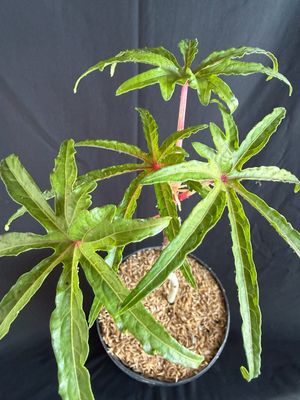
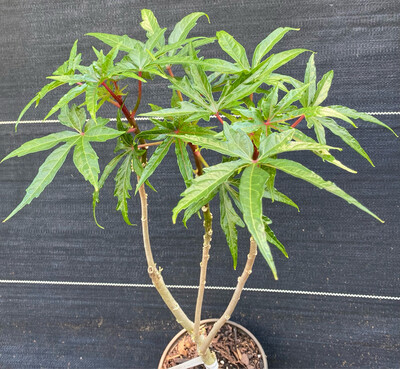
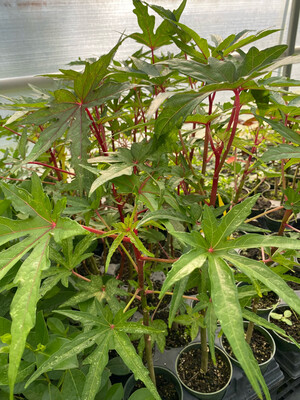
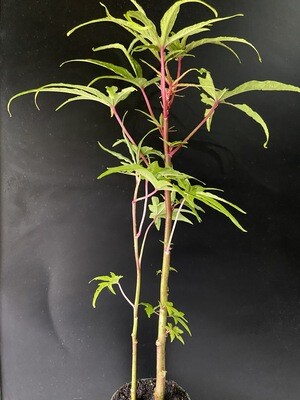
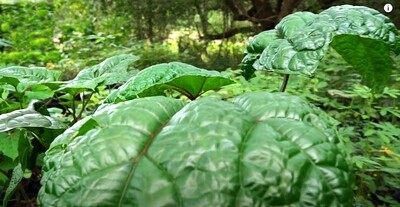
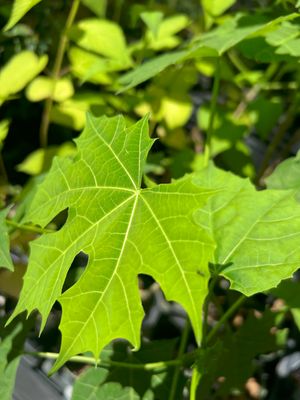
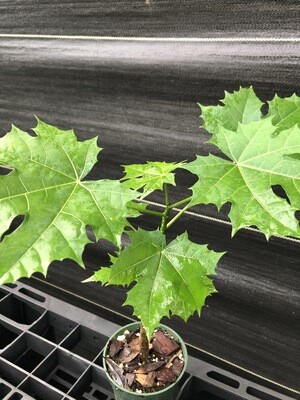
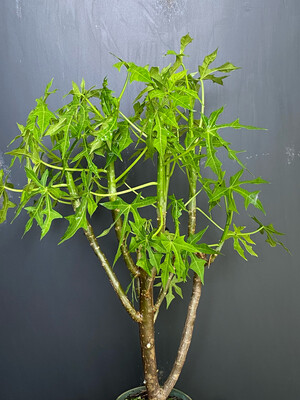
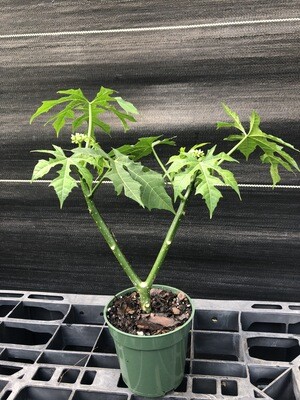
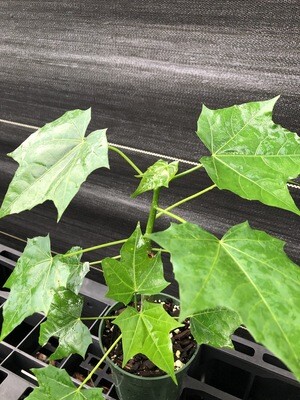
Instead of the rounder or broader foliage seen in some Bele types, Long Leaf develops elongated, deeply divided green leaves that give the plant an almost tropical-maple or cassava-like appearance.
Use it as:
- 🌿 A tall edible backdrop
- 🥗 A living leafy-green production hedge
- 🌺 An edible ornamental
- 🌾 A food-forest understory or edge plant
- 🪵 A productive biomass plant
- 🪴 A dramatic container specimen
- 🌱 A warm-season privacy screen
And unlike an ordinary ornamental shrub, regular pruning produces something useful:
food.
🌺 FROM HIBISCUS MANIHOT TO ABELMOSCHUS MANIHOT
Long Leaf Edible Hibiscus has a botanical history that explains its confusing assortment of names.
Carl Linnaeus originally published the species as Hibiscus manihot in 1753.
It was later placed within the genus Abelmoschus, where the accepted botanical name is now:
Abelmoschus manihot
Older books and traditional references may still use names such as:
- Hibiscus manihot
- Edible Hibiscus
- Sunset Hibiscus
- Sunset Muskmallow
- Manioc Hibiscus
Its relatives include:
- Okra
- Roselle
- Cotton
- Ornamental hibiscus
The family resemblance becomes especially obvious when the plant blooms.
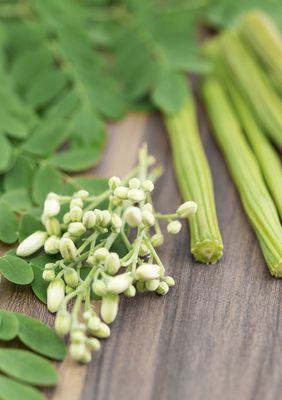
Flowers are typically pale to lemon yellow with a contrasting dark burgundy-purple center.
But unlike okra, the primary crop here is not the pod.
It is the foliage.
🌏 ORIGIN STORY — AN OLD VEGETABLE WITH A BIG PASSPORT
Abelmoschus manihot has a native range extending through parts of tropical and subtropical Asia into northeastern Australia.
From there, centuries of cultivation and human movement carried edible forms throughout warm regions of the world.
Today related forms are known as:
- Aibika
- Bele
- Pele
- Island Cabbage
- Pacific Cabbage
- Slippery Cabbage
- Edible Hibiscus
It became especially important throughout Melanesia and the Pacific Islands, where growers maintained tremendous diversity.
Some selections have:
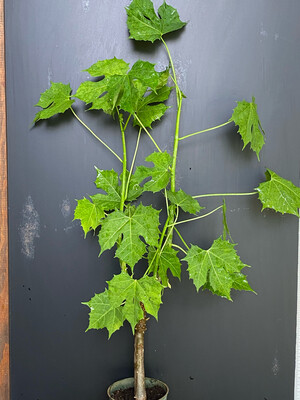
- Broad leaves
- Deeply divided leaves
- Narrow finger-like foliage
- Colorful stems
- Different branching habits
- Different plant sizes
Long Leaf represents one of the more visually dramatic forms.
This is not simply an ornamental hibiscus that someone discovered was edible.
It is part of a long lineage of cultivated tropical leafy vegetables selected by generations of growers for food.
🥗 WHAT DOES LONG LEAF EDIBLE HIBISCUS TASTE LIKE?
Think:
mild tropical green + tender spinach + a touch of okra-like silkiness.
Young leaves are generally:
- Mild
- Green and vegetal
- Slightly sweet
- Tender
- Soft rather than crunchy
As leaves mature, they become:
- More substantial
- Slightly firmer
- More noticeably mucilaginous when cooked
What does mucilaginous mean?
Abelmoschus manihot belongs to the same genus as okra.
Its leaves contain natural plant mucilage that can produce a silky, lightly thickened texture in cooked dishes.
This makes it particularly useful in:
- Soups
- Stews
- Curries
- Beans
- Broths
- Gumbo-style dishes
- Coconut-based vegetable recipes
Prefer a lighter texture?
Harvest the youngest leaves and tender tips and cook them briefly.
🍽️ WHAT PARTS DO YOU HARVEST?
🌱 Young Leaves
The premium harvest.
Use tender foliage in:
- Salads
- Wraps
- Sandwiches
- Mixed greens
- Eggs
- Stir-fries
- Noodles
- Rice dishes
🌿 Tender Growing Tips
One of our favorite harvests.
Removing the tip simultaneously:
- Gives you food
- Controls plant height
- Encourages branching
- Creates more future harvest points
That is edible landscaping working overtime.
🍃 Larger Leaves
More mature leaves develop a richer cooked texture.
Use them for:
- Steaming
- Sautéing
- Stir-frying
- Soups
- Stews
- Curries
- Beans
- Casseroles
🍲 CULINARY USE GUIDE
| HARVEST | TEXTURE | BEST USES |
|---|---|---|
| 🌱 Very young leaves | Tender, mild | Salads, wraps, sandwiches |
| 🌿 Young full-size leaves | Soft and mild | Sautéed greens, eggs, tacos, noodles |
| 🍃 Larger leaves | More substantial and silky | Soups, curries, stews, beans |
| ✂️ Tender shoot tips | Very tender | Stir-fries, broth, coconut dishes |
| 🌺 Flowers | Primarily ornamental for this listing | Garnish or edible-flower use only when correctly identified and appropriately grown |
🥥 SIMPLE BELE-STYLE COCONUT GREENS
One of the easiest ways to understand why this crop became so important throughout the tropics is to cook it with coconut.
Ingredients
- 4–6 cups young Long Leaf Edible Hibiscus leaves
- 1 small onion
- Fresh garlic
- Fresh ginger
- Coconut milk
- Salt
- Black pepper
- Optional hot pepper
- Optional fish, shrimp, chicken or tofu
- Optional citrus
Method
- Wash the leaves thoroughly.
- Remove tough stems.
- Roughly chop the foliage.
- Sauté onion, garlic and ginger.
- Add the edible hibiscus leaves.
- Allow them to wilt.
- Add a small amount of coconut milk.
- Simmer until tender.
- Season to taste.
- Finish with citrus or pepper if desired.
Serve with:
- Rice
- Root crops
- Fish
- Beans
- Grilled vegetables
- Tropical starch crops
💡 Harvest tip: Pick leaves during the cooler morning hours whenever possible. Tender foliage can wilt rapidly after harvest during Florida summer heat.
🌿 NUTRITIONAL VALUE — MORE THAN A NOVELTY PLANT
Aibika has received substantial attention as a nutrient-rich tropical leafy vegetable.
Published Pacific-region research has documented nutrients including:
- Lutein
- Beta-carotene
- Calcium
- Magnesium
- Iron
- Zinc
- Manganese
- Potassium
- Plant protein
- Dietary fiber
Some laboratory studies report impressive protein concentrations on a dry-matter basis.
That does not mean fresh leaves contain the same percentage of protein because fresh foliage contains substantial water.
We would rather make that distinction than turn an excellent vegetable into another overhyped “miracle superfood.”
The real story is already good enough:
a highly productive, nutritious tropical green that thrives during weather when many traditional vegetables struggle.
🌿 TRADITIONAL MEDICINAL USE VS. MEDICAL CLAIMS
Different cultures have also historically used Abelmoschus manihot in traditional food and folk-health practices.
Ethnobotanical references include uses associated with:
- Digestive complaints
- Sore throats
- Postpartum foods
- General strengthening foods
- Bone-health traditions
These are historical and cultural applications.
They should not be interpreted as evidence that Long Leaf Edible Hibiscus treats, prevents or cures disease.
We grow and sell it primarily as something remarkable enough already:
a productive tropical vegetable.
📜 THE UNEXPECTED SIDE STORY — HIBISCUS & HANDMADE JAPANESE PAPER
The species has another fascinating use far outside the kitchen.
In Japan, Abelmoschus manihot is known as Tororo-aoi.
Mucilage extracted from the roots has traditionally been used as neri in handmade Japanese washi papermaking.
This natural material helps keep paper fibers suspended and evenly distributed during sheet formation.
One species connects:
food + traditional agriculture + botanical chemistry + Japanese craft.
That is a pretty serious résumé for a leafy green.
🌺 ORNAMENTAL VALUE — THE VEGETABLE THAT DOESN'T LOOK LIKE A VEGETABLE
Long Leaf Edible Hibiscus does not need to live hidden behind the vegetable garden.
Its dramatic foliage works beautifully in:
- Pool gardens
- Tropical borders
- Food forests
- Cottage gardens
- Edible landscapes
- Mixed perennial beds
- Privacy plantings
- Patio gardens
Mature plants can develop woody lower stems with vigorous green upper growth.
Yellow hibiscus-like flowers add another ornamental layer.
Landscape Design Tip
Because Long Leaf can potentially reach approximately 10–12 feet, plant it toward the middle or rear of a landscape bed unless you plan to prune regularly.
For a manicured edible landscape, keeping plants around 4–6 feet tall provides a much fuller shrub-like form and makes harvesting easy.
🌿 GREENDREAMS EDIBLE HIBISCUS COLLECTION
We grow several Abelmoschus manihot selections because this species contains much more diversity than most growers realize.
| SELECTION | GENERAL HABIT | FOLIAGE CHARACTER | BEST ROLE |
|---|---|---|---|
| Long Leaf Edible Hibiscus | Tall and vigorous; up to roughly 10–12 ft unpruned | Long, deeply divided foliage | Tall edible backdrop, biomass, productive screen |
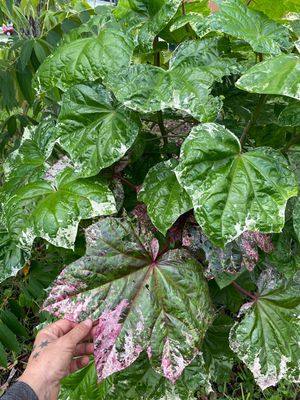
| Auntie Lilli's South Sea Salad Tree™ | More compact | Colorful variegated foliage | Containers, ornamental edible landscapes |
| Chief Kubo's Pride | Upright and vigorous | Large tropical foliage | Edible screen and food-forest production |
| Kiko's Crump™ | Vigorous | Particularly large leaves | High-volume leaf production |
| Tongan Spinach / Bele | Variable | Classic Aibika-type foliage | Traditional tropical leafy-green production |
A note about cultivar comparisons
Scientific literature documents tremendous diversity within Abelmoschus manihot, but most nursery-trade cultivar names do not have replicated scientific trials comparing flavor, cold hardiness or yield.
We will not manufacture precision that does not exist.
The most reliable visible differences are typically:
- Leaf shape
- Leaf size
- Pigmentation
- Stem color
- Stature
- Branching habit
- Ornamental character
🌱 GROWING 1-GALLON LONG LEAF EDIBLE HIBISCUS
One of the best reasons to grow Abelmoschus manihot is timing.
When traditional salad greens begin surrendering to summer…
Long Leaf Edible Hibiscus is just getting started.
Warm soil, long days, rainfall, irrigation and humidity can trigger extremely rapid vegetative growth.
Starting with a 1-gallon plant gives the grower a larger root system and more established canopy than a starter plant, shortening the path toward a full-sized productive specimen.
🌞 SEASONAL CARE & EXPECTATIONS
| SEASON | CENTRAL FLORIDA / ZONE 9–10 | WHAT TO DO |
|---|---|---|
| 🌱 Spring | Rapid growth returns as temperatures rise | Remove confirmed cold damage, mulch, begin feeding and increase irrigation |
| ☀️ Summer | Peak vegetative production | Harvest frequently, tip-prune, maintain moisture and inspect for pests |
| 🍂 Fall | Strong production continues until nights cool | Keep harvesting, prepare frost protection and reduce heavy late-season feeding |
| ❄️ Winter | Growth slows; frost can damage foliage and upper stems | Protect plants, reduce irrigation frequency and delay major pruning until spring |
Is Long Leaf Edible Hibiscus deciduous?
Not in the traditional temperate-tree sense.
It is better described as a frost-sensitive tropical perennial.
In frost-free climates, plants may remain leafy for much of the year.
In Central or North Florida, winter may cause:
- Slowed growth
- Yellow leaves
- Leaf drop
- Sparse foliage
- Blackened leaves following frost
- Partial stem dieback
- Complete top dieback during severe cold
Do not assume a bare plant in winter is dead.
Wait until reliably warm spring weather before removing lower stems that still appear viable.
🌎 WHAT TO EXPECT BY REGION
South Florida
Often capable of remaining productive through much of the year.
Central Florida
Excellent perennial vegetable with occasional winter setbacks.
Cold protection can dramatically improve survival and spring recovery.
North Florida / Zone 8
Treat conservatively as a warm-season crop or protected perennial.
Some established plants may return following winter, but survival is not guaranteed.
Colder U.S. Regions
Grow it as:
- A summer annual
- A seasonal patio crop
- A greenhouse plant
- A container plant brought into protection for winter
📦 WHEN YOUR 1-GALLON PLANT ARRIVES
A 1-gallon plant has an important advantage over a 4-inch starter:
more root mass means more stored resources.
That helps with recovery—but acclimation still matters.
On arrival:
- Open the package promptly.
- Inspect the foliage and soil.
- Water thoroughly at soil level if needed.
- Place the plant in bright shade or gentle morning sun.
- Protect it initially from severe afternoon heat.
- Gradually return it to full growing conditions.
Temporary shipping responses can include:
- Wilted foliage
- Yellow leaves
- Cosmetic leaf damage
- Leaf drop
- Bent young stems
The important thing to watch for is healthy new growth after recovery.
🌱 SHOULD I TRANSPLANT MY 1-GALLON PLANT IMMEDIATELY?
Usually, no.
GreenDreams recommends allowing transported plants to recover in their existing containers before disturbing their roots.
Our general recommendation is:
approximately 30 days OR until healthy new growth demonstrates that the plant has recovered from shipping.
You do not need to transplant simply because you received the plant.
Transplant because the plant is ready.
Signs include:
- Roots visible through drainage holes
- Root ball holding firmly together
- Water moving through the pot unusually quickly
- Frequent wilting despite adequate watering
- Strong new growth
- Increasing root density
A well-established 1-gallon plant may be ready sooner than a small starter, but recovery still takes priority over rushing.
🌿 WHERE TO PLANT LONG LEAF EDIBLE HIBISCUS
Choose a location with:
- 🌞 Full sun to partial sun
- 🌱 Fertile soil
- 💧 Reliable irrigation
- 🌾 Organic matter
- 🌬️ Reasonable airflow
- 🪵 Mulched root zone
- Adequate vertical room
Approximately 5–8+ hours of direct sunlight provides strong production.
In hot inland Florida landscapes, some afternoon shade may help maintain tender foliage when irrigation is limited.
PLACES TO AVOID
Avoid planting:
- In standing water
- In deep landscape depressions
- Directly beneath continuously discharging downspouts
- In severely compacted soil without improvement
- Against seawalls receiving salt spray
- Beneath deep shade
- Directly under utility lines unless you intend to prune
- Against narrow walkways
- In exposed high-wind corridors
A 10-foot soft-stemmed leafy shrub catches plenty of wind.
Pruning solves a surprising amount of that problem.
🌱 GREENDREAMS “HIGH & TIGHT” PLANTING METHOD
Long Leaf Edible Hibiscus appreciates moisture.
It does not need to be buried.
How to plant your 1-gallon Abelmoschus manihot
- Dig a hole only slightly wider than the 1-gallon root ball.
- Dig approximately the same depth as the root ball.
- Remove the plant carefully from its container.
- Place the top of the root ball level with—or slightly above—the surrounding grade.
- Backfill with native soil and appropriate organic material.
- Firm soil enough to eliminate major air pockets.
- Never pile soil against the stem.
- Water thoroughly at soil level.
- Top-dress the surrounding area.
- Apply hardwood mulch while keeping mulch away from the base.
GreenDreams Soil-Building Approach
Depending on the site, we commonly build fertility using materials such as:
- Compost
- Biochar
- Azomite or appropriate mineral amendments
- Organic nutrients
- Hardwood mulch
We prefer to improve the surrounding soil system instead of creating a deep compost-filled planting hole.
🎥 GreenDreams High & Tight Planting Method:
https://youtu.be/RRQFY30qdA8?si=rRIcsbLlVAVYotfI
💧 WATERING — LEAF PRODUCTION REQUIRES MOISTURE
Long Leaf Edible Hibiscus produces a tremendous amount of soft vegetative growth.
Water is part of the equation.
While Still in the 1-Gallon Container
Check moisture daily during warm weather.
A 1-gallon container holds significantly more water than a 4-inch starter, but during Florida summer conditions it can still dry rapidly.
Water thoroughly when needed until water exits the drainage holes.
Do not allow the container to remain continually submerged.
⚠️ NO ROUTINE OVERHEAD WATERING
GreenDreams recommends watering:
- In the morning
- Directly at soil level
- Slowly enough for the root zone to absorb moisture
Routine overhead sprinklers are not our preferred method.
Wet foliage—particularly later in the day—can increase:
- Leaf spotting
- Fungal pressure
- Pest problems
- Cosmetic foliage damage
For both production gardens and landscapes:
drip irrigation or soil-level irrigation is preferred.
Newly Planted In-Ground Plants
For the first several weeks:
- Check root-zone moisture daily
- Water whenever the developing root zone begins drying
- Adjust for Florida rainfall
- Do not follow an automatic schedule during periods of heavy precipitation
Sandy Florida soils can dry remarkably quickly.
Established Plants
Established plants appreciate:
- Deep watering
- Consistent summer moisture
- Supplemental irrigation during drought
- A broad mulched root zone
Signs of insufficient water
💧 Morning wilting
💧 Limp foliage
💧 Small new leaves
💧 Crispy margins
💧 Reduced growth
Signs of excessive water
💦 Persistent yellow foliage
💦 Soil remaining wet for days
💦 Weak soft growth
💦 Stem decline near soil level
💦 Root deterioration
🌾 SOIL — MOIST DOESN'T MEAN MUDDY
The ideal root environment is:
fertile + organically rich + moisture-retentive + aerated.
For landscape plants, build soil over time with:
- Compost
- Hardwood mulch
- Organic nutrients
- Chop-and-drop material
- Soil biology
Avoid chronically waterlogged planting sites.
🪴 CONTAINER SOIL
Use a quality container-growing medium rather than heavy yard soil.
Suitable mixes commonly incorporate:
- Peat moss or coconut coir
- Composted bark
- Pine bark
- Perlite
- Pumice
- Compost
- Worm castings
The goal is not extreme drainage.
It is:
reliable moisture without oxygen-starved roots.
FERTILITY — REMEMBER, YOU ARE HARVESTING THE PLANT
Every leaf harvested contains nutrients that the plant must replace.
For strong production, consider:
- Compost top-dressing
- Worm castings
- Balanced organic granular fertilizers
- Soil testing when appropriate
- Trace minerals when indicated
- Chop-and-drop mulch
During spring and summer, moderate recurring fertility generally makes more sense than one giant fertilizer application.
Avoid excessive nitrogen.
Too much can create:
- Weak stems
- Extremely soft growth
- Increased pest pressure
- Nutrient imbalance
- Fertilizer burn
Container plants generally require more frequent nutrient replacement because irrigation continually leaches nutrients.
✂️ PRUNING — DON'T LET ALL THAT ENERGY GO STRAIGHT UP
Long Leaf wants to grow vertically.
You do not have to let it.
A 1-gallon plant often reaches pruning size considerably faster than a small starter plant.
Once your plant has recovered and is growing vigorously:
- Select the height where you want branching to begin.
- Cut or pinch just above a healthy node.
- Allow multiple side branches to develop.
- Harvest those growing tips as they extend.
- Repeat throughout the warm season.
The result:
one tall stem becomes a branching leaf-production machine.
Ideal Maintained Height
For many home gardeners:
4–6 feet
This makes the plant:
- Easier to harvest
- Easier to protect from frost
- More wind resistant
- More ornamental
- Easier to irrigate
- Easier to inspect for pests
Rejuvenation Pruning
Large established plants can tolerate substantial warm-season pruning.
Avoid severe pruning immediately before freezing weather.
For frost-damaged plants, wait for spring warmth before determining how much stem tissue actually died.
🥗 HARVESTING A 1-GALLON PLANT
A larger nursery plant may reach meaningful harvest size sooner than a starter, but do not strip the plant immediately after arrival.
First allow:
- Shipping recovery
- Root stabilization
- New vegetative growth
Then begin with selective harvesting.
Harvest:
- Tender shoot tips
- Selected young leaves
- Individual branches rather than the entire plant
Leave enough foliage to maintain active photosynthesis.
The harvest/pruning loop:
Grow → harvest tip → branch → grow → harvest again
That is how one plant becomes increasingly productive.
🪴 LONG-TERM CONTAINER GROWING
The 1-gallon pot is still a nursery-production size—not a permanent home for a potentially 10- to 12-foot shrub.
Typical Container Progression
1-Gallon
Current nursery size.
Useful during:
- Transit recovery
- Early establishment
- Initial branching
3-Gallon
The next logical step for many plants.
Offers:
- Greater moisture stability
- More root space
- Faster canopy development
7-Gallon
Excellent for:
- Patio production
- Mother plants
- Overwintering
- Longer-term container growing
10–25+ Gallons
Useful for growers who want a substantial perennial vegetable without planting it in the landscape.
🪴 HOW TO TRANSPLANT FROM A 1-GALLON CONTAINER
- Water the plant beforehand.
- Choose a container with adequate drainage.
- Usually move to approximately a 3-gallon container rather than an enormous pot.
- Add quality potting medium.
- Remove the plant carefully.
- Maintain its existing soil level.
- Do not bury the stem.
- Fill around the root ball.
- Firm gently.
- Water thoroughly at soil level.
- Temporarily reduce severe afternoon exposure if roots were disturbed.
As the root system fills the next pot:
1 gallon → 3 gallon → 7 gallon → larger container
Containers, professional potting media and soil amendments can usually be found through:
- Independent nurseries
- Garden centers
- Agricultural suppliers
- Landscape-supply businesses
- Hydroponic suppliers
- Online searches for nursery containers and professional potting media
🏠 CAN IT GROW INDOORS?
Possible?
Yes.
Ideal?
Not really.
Long Leaf Edible Hibiscus is a vigorous sun-loving tropical vegetable.
Permanent low-light indoor conditions commonly result in:
- Long weak stems
- Reduced leaf size
- Pale growth
- Pest pressure
- Reduced production
For northern growers overwintering the plant, use:
- A greenhouse
- Heated sunroom
- Very bright southern exposure
- Strong horticultural grow lights
Before bringing any plant indoors:
🔍 Inspect carefully for:
- Aphids
- Whiteflies
- Spider mites
- Mealybugs
A strategic pruning before moving a large plant indoors can make overwintering much easier.
🌬️ WIND & COASTAL CONDITIONS
Wind
The plant can tolerate normal breezes, but tall soft stems carrying large leaves can be damaged by severe wind.
For Florida gardens:
- Maintain a shorter canopy
- Use wind-buffering plants
- Avoid exposed corridors
- Stake young top-heavy specimens if necessary
- Consider reducing excessive canopy ahead of severe storms
Salt
Long Leaf Edible Hibiscus should not be considered a strongly salt-tolerant coastal vegetable.
In coastal areas:
- Protect from direct ocean spray
- Irrigate with fresh water
- Build soil organic matter
- Avoid repeated saline flooding
🌾 BUILD A FUNCTIONAL EDIBLE-HIBISCUS GUILD
We prefer companion planting based on ecological function rather than internet folklore.
🌻 Pollinator & Beneficial-Insect Support
Consider:
- Mexican sunflower
- Native salvia
- Native wildflowers
- Other nectar-producing flowering plants
🌿 Nitrogen & Soil Support
Depending on location:
- Pigeon pea
- Perennial peanut
- Appropriate leguminous support plants
🪵 Biomass & Chop-and-Drop
Excellent companions can include:
- Mexican sunflower
- Clumping grasses
- Lemongrass
- Other fast-growing biomass species
🌱 Groundcover
Lower-growing species can:
- Shade bare soil
- Reduce weeds
- Protect soil biology
- Moderate soil temperatures
- Increase landscape diversity
💡 Food-forest placement tip: Keep Long Leaf close enough to the kitchen that harvesting remains convenient.
The best vegetable is the one you actually remember to eat.
⚠️ LONG LEAF EDIBLE HIBISCUS — IMPORTANT CAUTIONS
🌿 Correct Identification
Consume only correctly identified Abelmoschus manihot intended for edible use.
Do not assume every ornamental hibiscus should be consumed.
🧪 Know How It Was Grown
Only consume foliage that has not been treated with products unsuitable for edible crops.
🌱 Harvest Young Growth
Young foliage is typically the most tender and desirable.
Older leaves can become progressively more fibrous.
❄️ Tropical Perennial ≠ Freeze-Proof
This is an important distinction.
Long Leaf Edible Hibiscus is perennial in warm tropical and subtropical climates.
That does not mean it remains evergreen through freezing weather.
🌿 Traditional Uses Are Not Medical Advice
Historical folk applications do not establish that the plant diagnoses, prevents, treats or cures medical conditions.
🌊 Protect the Root System From Saturation
Long Leaf likes regular water.
It does not appreciate a continuously oxygen-starved root zone.
🔍 LONG LEAF EDIBLE HIBISCUS TROUBLESHOOTING GUIDE
| ⚠️ ISSUE | 🧠 LIKELY CAUSE | 🌿 SOLUTION |
|---|---|---|
| 🍂 Lower leaves yellowing | Aging foliage, excessive moisture or nutrient demand | Check drainage and fertility before reacting |
| 🫣 Afternoon wilt | Heat + inadequate root moisture | 💧 Deep morning watering and mulch |
| 💧 Frequent wilting in 1-gallon pot | Plant beginning to outgrow its container | 🪴 Consider moving to 3 gallons after recovery |
| 💦 Yellow foliage + wet soil | Excess water or poor drainage | 🌿 Allow greater aeration and reduce irrigation |
| 🐛 Holes in leaves | Caterpillars, beetles or grasshoppers | 🔍 Inspect manually and use edible-crop controls when necessary |
| 🪲 Distorted new growth | Aphids, whiteflies or sap feeders | 🔍 Inspect leaf undersides and encourage beneficial insects |
| 🕷️ Fine stippling indoors | Spider mites | 🌿 Isolate and address promptly |
| 🍄 White coating | Powdery mildew | 🌬️ Improve airflow and keep foliage dry |
| 🍄 Leaf spotting | Wet foliage or disease pressure | 💡 Shift to morning soil-level irrigation |
| ❄️ Black foliage | Frost damage | 🧘 Wait for spring before heavy pruning |
| 🌬️ Split stems | Excessive height + wind | ✂️ Maintain a lower branching canopy |
| ☁️ Weak elongated growth | Insufficient light | 🌞 Gradually increase sunlight |
| 🔥 Brown tips after fertilizer | Fertilizer salts / excess concentration | 💧 Flush and reduce feeding |
| 🌱 Slow growth | Cold, insufficient light, nutrient issues or transplant stress | 🧘 Correct conditions and observe new growth |
| 🪣 Decline in a low planting site | Saturated root system | 🌿 Improve drainage or relocate high & tight |
🌟 IS THIS PLANT FOR YOU?
✅ IDEAL FOR:
- Florida gardeners
- Gulf Coast growers
- Southeastern U.S. gardens
- Texas growers
- Tropical vegetable collectors
- Food-forest gardeners
- Permaculture enthusiasts
- Homesteaders
- Summer vegetable production
- High-biomass edible landscapes
- People who enjoy leafy greens
- Growers wanting a larger plant than a starter
- Customers who want faster landscape establishment
- Buyers farther from Florida who prefer more shipping resilience
❌ MAY NOT BE IDEAL FOR:
- Anyone expecting a freeze-proof perennial
- Permanently low-light indoor environments
- Continuously flooded sites
- Direct salt-spray exposure
- Gardens without reliable summer irrigation
- Growers who dislike silky or mucilaginous cooked greens
- Customers expecting tropical foliage to remain flawless after multi-day shipping
❓ LONG LEAF EDIBLE HIBISCUS FAQ
Is Long Leaf Edible Hibiscus actually edible?
Yes.
Long Leaf is a selection of Abelmoschus manihot, a tropical leafy vegetable cultivated in many warm regions.
The primary edible crop is the young foliage and tender growing tips.
Can I eat the leaves raw?
Tender young foliage can be eaten fresh after proper washing.
Larger leaves are often preferred cooked.
Does it taste like okra?
Not exactly.
The flavor is generally mild and green.
The stronger similarity is texture—the leaves can develop a silky mucilaginous quality when cooked.
Is edible hibiscus the same plant as okra?
No.
Both belong to the genus Abelmoschus.
Edible Hibiscus: Abelmoschus manihot
Okra: Abelmoschus esculentus
Okra is primarily grown for pods.
This plant is primarily grown for leaves.
How tall will Long Leaf Edible Hibiscus grow?
Approximately 10–12 feet is possible when left unpruned under favorable conditions.
Frequent harvesting can maintain it around 4–7 feet.
Can it survive winter in Florida?
Yes in many Florida landscapes, although its appearance varies dramatically by region.
South Florida plants may remain active much longer.
Central Florida plants can experience frost damage and partial dieback.
North Florida plants require greater winter protection and may experience complete top dieback.
Can Long Leaf grow in Zone 8?
Yes as a warm-season vegetable.
Perennial survival is less dependable.
Treat outdoor winter survival as a possibility—not a guarantee.
Why choose the 1-gallon instead of the 4-inch plant?
The 1-gallon plant generally offers:
- More root mass
- More stored moisture
- More established foliage
- Greater shipping resilience
- Faster establishment
- Earlier branching potential
If budget allows and both are available, it is particularly worthwhile for customers facing a longer UPS Ground route.
Can I plant my 1-gallon immediately?
We generally recommend allowing the plant to recover first.
Keep it in its current container for approximately 30 days or until healthy new growth is evident.
Transplant once shipping stress has passed and root development indicates that more space is needed.
What size pot comes next?
A healthy rootbound 1-gallon plant can usually move into approximately a:
3-gallon container
Later progression may be:
3 gallon → 7 gallon → 10–25+ gallon production container
Can I keep it at 5 feet tall?
Absolutely.
Frequent tip-pruning and harvesting are actually beneficial because they encourage branching.
A 4- to 6-foot plant can become far easier to harvest than an unpruned 10- to 12-foot specimen.
Does it flower?
Yes.
Abelmoschus manihot produces large hibiscus-like flowers, usually pale yellow with a dark center.
Flowering varies according to cultivar, season, photoperiod, age and pruning.
The primary crop in this listing remains the foliage.
🚚 1-GALLON LIVE PLANT SHIPPING INFORMATION
Our 1-gallon Long Leaf Edible Hibiscus is our more substantial shipped selection.
Compared with our economical 4-inch starter plant, it generally provides:
- Greater root mass
- More foliage
- Larger moisture reserves
- Greater stored energy
- Better ability to rebound after transit
That makes it an excellent choice for Florida and the southeastern United States—and generally a better option for customers considering longer shipping routes.
🌴 BEST SHIPPING REGION
Our plants ship from Florida.
We consider UPS Ground shipping most favorable to:
- Florida
- Georgia
- Alabama
- South Carolina
- North Carolina
- Tennessee
- Gulf Coast states
- Texas
- Other relatively close southeastern destinations
Shorter transit generally means less stress for live plants.
🌎 NORTHERN & WESTERN U.S. SHIPPING
We are able to ship live plants throughout the continental United States.
However, customers should understand that UPS Ground transit becomes substantially longer as packages move away from Florida.
Even a 1-gallon plant may experience:
- Wilt
- Leaf drop
- Yellowing
- Cosmetic leaf spotting
- Bent foliage
- Temporary shock
The 1-gallon size is generally better equipped to recover than a 4-inch starter, but it is still a live tropical plant traveling inside a closed shipping box.
Northern and western buyers accept the additional risk associated with longer-distance ground shipping.
🔥❄️ PEAK HEAT & COLD WEATHER
Please evaluate temperatures in:
- Florida
- Transit hubs
- Your destination
before ordering during periods of extreme weather.
We cannot control environmental conditions inside:
- UPS trucks
- Sorting facilities
- Warehouses
- Delivery vehicles
- Customer delivery locations
Extreme summer heat and severe winter cold increase risk.
Buyer discretion is especially important during peak seasonal temperatures.
📦 SHIPPING DAY
🌿 GreenDreams live-plant orders ship on Mondays via UPS Ground.
This schedule helps reduce the chance of live plants remaining in carrier facilities over a weekend.
🌴 CALIFORNIA & WESTERN AGRICULTURAL INSPECTION
California and certain other destinations may subject plant shipments to agricultural inspection.
Inspection can occasionally add additional transit time.
For a tropical plant shipped from Florida, even one additional day can increase stress.
Our 1-gallon plant is generally the better choice when available for these longer routes, but arrival condition still cannot be guaranteed after extended ground-service delivery.
📦 WHEN YOUR PLANT ARRIVES
DO:
✅ Open the box promptly
✅ Check soil moisture
✅ Water at soil level when necessary
✅ Begin recovery in bright shade
✅ Gradually increase sun exposure
✅ Leave roots undisturbed initially
✅ Watch for healthy new growth
DO NOT:
❌ Immediately transplant a stressed plant
❌ Fertilize heavily on arrival
❌ Place directly into intense afternoon sun
❌ Leave the unopened box outside
❌ Assume temporary leaf loss means the plant is dead
🌱 GREENDREAMS TRANSPLANT RULE
Our preferred approach:
Allow approximately 30 days OR wait until healthy new growth shows that shipping stress has passed.
Then evaluate the roots.
A healthy plant that is actively outgrowing its 1-gallon container can be moved into:
- The landscape
- A 3-gallon nursery pot
- Another appropriately sized production container
🏡 SHOP WITH US IN PERSON
🌿 Looking for Even Larger Plants?
Our retail nursery inventory is much larger and more diverse than what can practically be shipped through the online store.
Depending on current availability, customers may find:
- Larger Long Leaf Edible Hibiscus
- Additional Abelmoschus manihot cultivars
- Larger perennial vegetables
- Tropical fruit trees
- Native plants
- Pollinator species
- Food-forest support plants
- Plants not currently listed online
GreenDreams Nursery & Farm
Retail Nursery Open to the Public
🌾 18709 US Hwy. 41, Spring Hill, FL 34610
🕘 Tuesday–Friday: 9AM–5PM
🌞 Saturday: 8AM–3PM
Stop by our regenerative nursery and see what is blooming, producing and looking especially good this week.
Our in-person inventory changes constantly—and larger sizes are often available that would simply be impractical to ship.
🌿 BEYOND THE PLANT: GREENDREAMS SERVICES
At GreenDreams, we do more than grow plants—
we design, build and restore ecosystems across Florida.
Our services include:
- 🌳 Onsite consultations
- 🌿 Edible landscape & food-forest design
- 🚜 Installation & project management
- 🌱 Day-labor assistance for customer projects
- 🚚 Bulk compost, mulch, biochar and soil-material delivery
- 🌾 Wholesale and large-scale regenerative plant solutions
- 🪵 Soil-building and ecological landscape strategies
Whether Long Leaf Edible Hibiscus becomes one productive plant beside your kitchen or one layer within an entire edible ecosystem, our team can help you build around it.
🌿 IMPORTANT INFORMATION BEFORE PURCHASING LIVE PLANTS
Please note: Plants purchased through our online store are not available for pickup at our retail nursery in Spring Hill, Florida.
Online inventory is housed at a separate facility and is priced, prepared, and handled exclusively for shipping.
🌱 Looking for larger plants or more selection?
Our retail nursery location offers far more availability, including larger sizes, specialty plants, and many selections not suitable for nationwide shipping.
Local pickup is available for retail nursery purchases only.
Visit our Spring Hill, FL retail nursery page to explore in-person shopping options.
🚚 LIVE PLANT SHIPPING & TRANSIT EXPECTATIONS
Live plants naturally experience stress during shipping. Temporary leaf drop, mild wilting, or cosmetic stress is normal after transit. Most plants recover quickly with proper watering, gradual light exposure, and basic aftercare. Some plants may require additional attention during the first few weeks.
Despite careful packing, minor cosmetic damage may occur during transit. Small issues such as broken leaves or stems typically resolve with time and proper care.
If your shipping box arrives with significant external damage, please contact UPS within 30 days to initiate a carrier claim.
⏱️ SHIPPING METHOD, TIMING & TRANSIT WINDOWS
All online orders ship via UPS Ground from our Central Florida nursery.
📦 Shipping Schedule: Orders ship once weekly on Mondays to reduce the risk of packages sitting in transit over weekends. A countdown clock on our website displays the next shipping date.
🚚 Typical Transit Times:
-
Florida: 1–2 days
-
Southern U.S.: approximately 2 days
-
Midwest, West & Northern U.S.: 3–5 business days
Long-distance shipments, particularly to the western U.S., may experience additional transit time due to agricultural inspections in states such as Arizona, California, and Texas.
Extended transit times can be more challenging for small or tender plants and may require additional recovery care after arrival.
🌡️ EXTREME WEATHER & SEASONAL RISK
Live plants are sensitive to temperature extremes.
We cannot guarantee plant condition during periods of extreme summer heat or winter cold and freezing temperatures. Weather-related delays, carrier interruptions, or exposure during delivery are beyond our control.
Customers are responsible for:
-
Monitoring tracking information sent via email
-
Retrieving packages promptly upon delivery
-
Preventing plants from being left outdoors in extreme conditions
During unsafe weather, holiday shipping volume, or extended transit risk, orders may be held and shipped the following week to protect plant health.
⚠️ CUSTOMER RESPONSIBILITY & REFUND POLICY
By purchasing live plants, customers acknowledge and accept the risks associated with shipping, weather exposure, transit delays, and regional suitability.
Refunds or replacements are considered only under exceptional circumstances and in accordance with our return and refund policy. We are not responsible for:
-
Weather-related damage
-
Carrier delays
-
Poor plant selection for a given climate or region
-
Improper care after delivery
Upon purchase, customers assume full responsibility for the ongoing care and success of their plants.
✅ CONSENT & AGREEMENT
By completing a purchase, you confirm that you have read, understand, and agree to all shipping policies, responsibilities, and conditions outlined above.
Our goal is transparency, plant health, and long-term growing success — and we appreciate your understanding and care when ordering live plants.


