


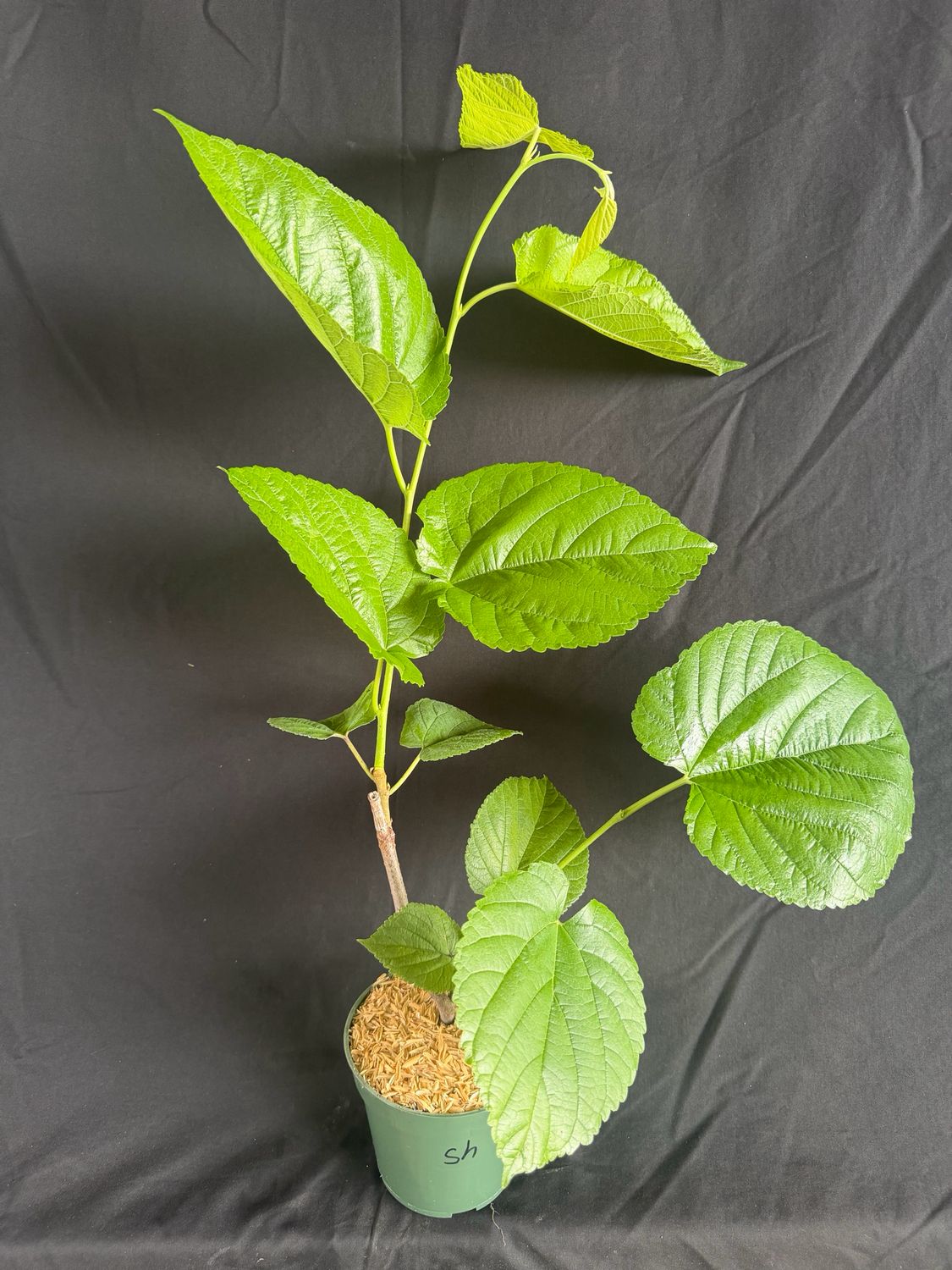
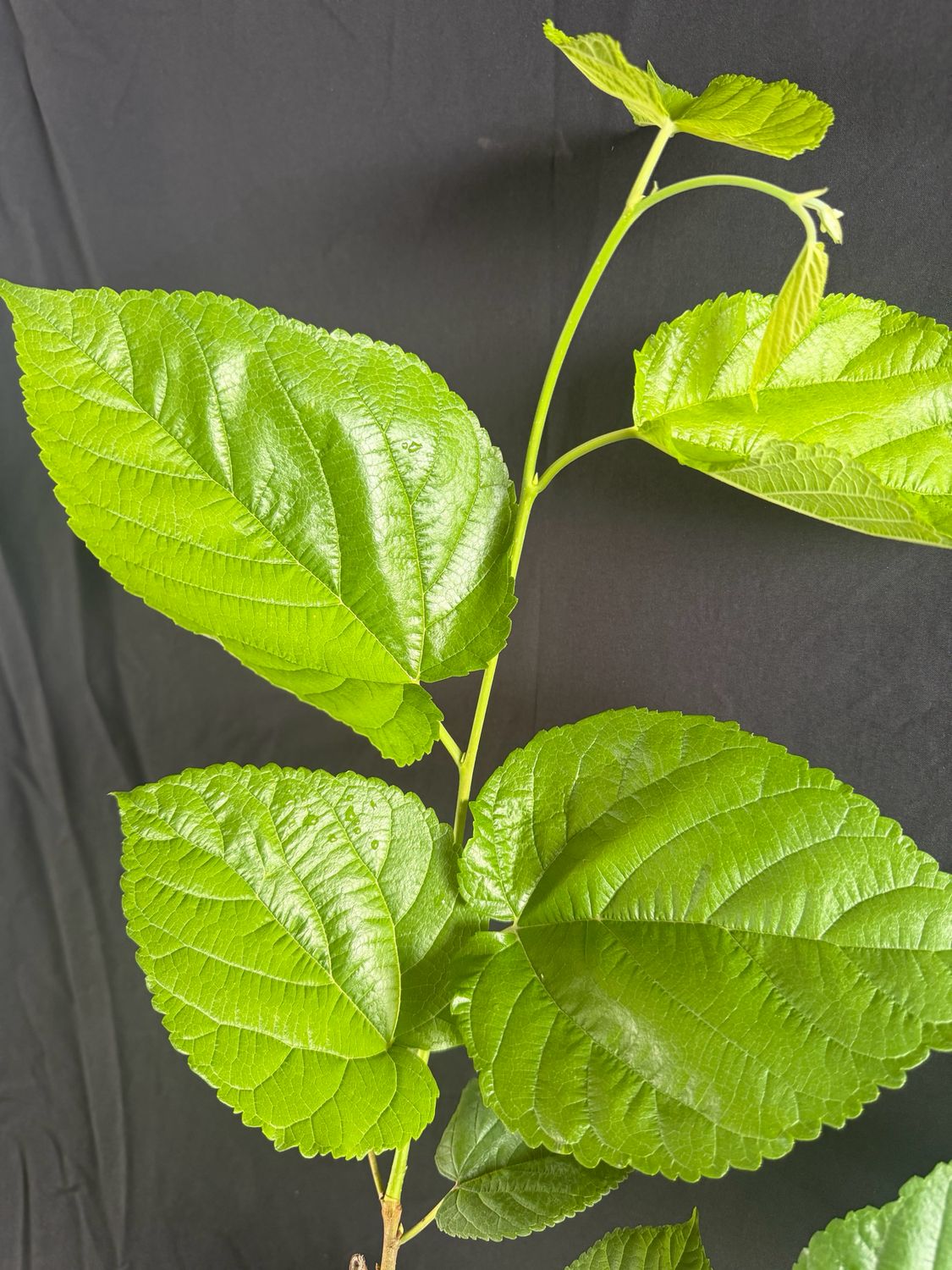
🍇 Shangri-La Mulberry Tree — 4-Inch Florida-Born Fruit Tree Starter 🌿
Morus alba × rubra ‘Shangri-La’
Some fruits are simply too soft, juicy, and perishable for the grocery-store system. Mulberries are one of those rare fruits best experienced fully ripe, freshly picked, and eaten beneath the tree.
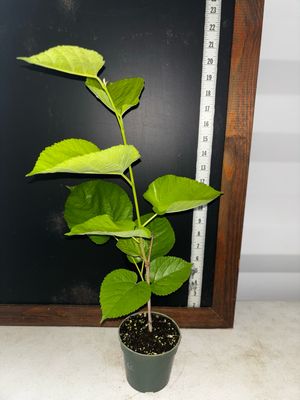
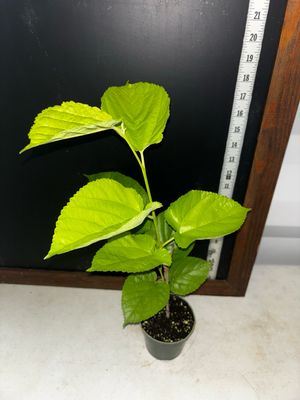
Shangri-La Mulberry combines generous dark fruit, oversized tropical-looking leaves, fast growth, and excellent performance in warm, humid climates. Our 4-inch starter plants are young, vigorous trees intended for growers who enjoy establishing a fruit tree from the ground up.
This is not the instant-impact size—it is the grow-it-right-from-the-start size. Give it good light, steady moisture, thoughtful container upsizing, and a little patience, and this young starter can develop into a lush, productive mulberry tree that delivers fruit you will rarely find anywhere else.
Shangri-La Stands Out For
- Large, juicy, blackberry-colored mulberries
- Sweet to sweet-tart, richly berry-like flavor
- Oversized heart-shaped foliage
- Fast growth in Florida and the Southeast
- Strong response to thoughtful pruning
- Excellent edible and ornamental landscape value
- Fruit that is best enjoyed directly from the tree
Botanical classification varies somewhat within the nursery trade. Shangri-La is commonly listed as Morus alba ‘Shangri-La’ or Morus alba × rubra ‘Shangri-La’.
🌿 Quick Facts Guide
| Category | Details |
|---|---|
| Botanical Name | Morus alba × rubra ‘Shangri-La’ |
| Common Name | Shangri-La Mulberry |
| Plant Type | Deciduous fruit tree |
| Size at Sale | 4-inch nursery container |
| Estimated Plant Age | Approximately 3–6 months; age and height vary by growing season |
| Mature Height — Unpruned | Approximately 10–20 ft |
| Managed Height | Maintain around 8–12 ft with regular pruning |
| Mature Width | Approximately 12–20 ft |
| USDA Zones | Generally Zones 7–10 |
| Best Performance | Zones 8–10, including Florida, the Gulf Coast, Southeast, and much of Texas |
| Sun Requirements | Full sun is best; provide 6–8+ hours daily |
| Cold Hardiness | Deciduous and reasonably cold tolerant once established; young plants and fresh growth need freeze protection |
| Growth Habit | Fast-growing, upright-to-spreading tree with a broad canopy |
| Pollination | Generally self-fruitful; one tree can produce fruit |
| Spacing | 12–20 ft for open growth; approximately 8–10 ft for a regularly pruned hedgerow |
| Wind Tolerance | Moderate to good once established; protect young starter trees |
| Salt Tolerance | Some salt and coastal-wind tolerance, but avoid direct beachfront exposure |
| Soil Preference | Rich, well-drained soil with steady moisture and good aeration |
| Fruiting Habit | Produces along developing seasonal growth and fruiting wood |
| Best Uses | Backyard orchards, edible landscapes, food forests, family harvest trees, screens, and large patio containers |
Shangri-La is especially well suited to warm, humid regions, yet established trees are grown well beyond Florida. Mulberries generally perform best in full sun and well-drained soil, while white-mulberry–dominant selections also tolerate heat, periodic drought, varied soil types, and some wind and salt exposure.
🍇 Fruit Characteristics — The Kind of Berry You Grow Because You Cannot Buy It
Shangri-La produces plump, dark mulberries with a soft texture and bold berry flavor. The fruit ripens from reddish purple to nearly black and is at its best when fully colored, tender, and easy to remove from the stem.
Commercial stores rarely carry properly ripened mulberries because the fruit is thin-skinned, easily bruised, and has a very short shelf life. That inconvenience becomes a major advantage for the home grower: the best fruit never needs to leave your yard.
Fruit Profile
| Trait | Description |
|---|---|
| Color | Deep red-purple to black when fully ripe |
| Flavor | Sweet to sweet-tart with rich blackberry-like notes |
| Texture | Soft, tender, and exceptionally juicy |
| Fruit Size | Medium to large; commonly around 1–1.5 inches |
| Skin | Thin and delicate |
| Interior | Juicy, deeply colored flesh with tiny edible seeds |
| Best Flavor Stage | Fully dark, soft, and easily detached |
| Best Eating Method | Fresh from the tree before the birds notice |
Shangri-La is consistently described by specialty fruit nurseries as an early-ripening Florida selection producing large dark fruit on a relatively compact tree with exceptionally large, heart-shaped leaves.
🗓️ Harvest Season by Region
| Growing Region | Typical Harvest Expectations |
|---|---|
| South Florida | Often begins in late winter, followed by a strong spring harvest |
| Central Florida / Zone 9 | Usually late winter through late spring; some years extend into early summer |
| North Florida and the Gulf Coast | Primarily spring into early summer |
| Warm Southeast and Texas | Spring, with timing influenced by winter temperatures |
| Zone 7 and Cooler Areas | Generally later spring into early summer |
| Long Warm Seasons | Additional flowering or fruiting flushes may follow careful post-harvest pruning |
Weather, winter chill, pruning timing, plant age, and irrigation all influence the exact harvest window. Shangri-La is often considered one of the earlier mulberries to ripen.
What Helps Improve Fruiting?
- Plant in full sun
- Maintain even moisture during flowering and fruit development
- Avoid waterlogged roots
- Maintain good airflow through selective pruning
- Use balanced nutrition rather than excessive nitrogen
- Avoid major pruning immediately before the primary crop
- Tip-prune thoughtfully after harvest to encourage manageable fresh growth
- Protect emerging flowers and tender shoots from late freezes
A young 4-inch starter should first focus on building roots and structure. Fruit production will increase as the tree becomes established and develops more healthy fruiting wood.
🌸 Why Grow Shangri-La Mulberry?
1️⃣ Florida-Born and Deep-South Proven
Shangri-La is widely traced to Naples, Florida, where it became known for handling southern heat and humidity while producing large, flavorful fruit. Specialty nurseries continue to recommend it for the Southeast, although growers also report success in cooler regions where the dormant tree receives appropriate winter conditions.
2️⃣ Fruit You Almost Never Find Properly Ripe
Mulberries are soft, delicate, and quick to deteriorate after harvest. Growing your own allows you to pick each berry at its darkest, sweetest stage rather than harvesting it early for transport.
3️⃣ Oversized Tropical-Looking Leaves
The large, heart-shaped foliage gives Shangri-La a lush subtropical appearance. Even when the tree is not fruiting, it can become a dramatic edible landscape feature.
4️⃣ Fast Rewards for Patient Growers
Mulberries are known for fast vegetative growth and relatively early bearing compared with many tree fruits. The starter size requires attentive care, but it gives the grower control over training, branching, and long-term form.
5️⃣ Easy to Keep at Picking Height
Routine pruning can maintain Shangri-La around 8–12 ft, making harvest easier and preventing the canopy from taking over the landscape.
6️⃣ Excellent Organic-Garden Potential
Once established, mulberries generally perform well with compost, hardwood mulch, moderate organic feeding, and chop-and-drop fertility. They do not typically require the intensive spray schedules associated with many conventional orchard fruits.
7️⃣ Food, Shade, Beauty, and Wildlife Value
Shangri-La can function as:
- A family harvest tree
- An edible shade tree
- A food-forest canopy layer
- A seasonal screen
- A wildlife-supporting fruit tree
- A tropical-looking ornamental
- A productive patio specimen when container-managed
🌳 The Story Behind Shangri-La
The cultivar is associated with Naples, Florida, and became known among specialty-fruit growers for its unusually large leaves, early production, dark fruit, and ability to perform in the Deep South.
Its name evokes the legendary Shangri-La—a hidden place of beauty, abundance, and ease. The comparison fits: this tree produces a lush canopy of oversized foliage and berries so delicate that the finest harvest is usually enjoyed steps from where it grew.
Mulberries also carry a much older human story. Species within the genus Morus have been cultivated throughout Asia, Europe, the Middle East, and the Americas for fruit, shade, animal fodder, traditional preparations, and silkworm production. Shangri-La brings that historic usefulness into a distinctly Florida-friendly backyard fruit tree.
🌿 Ornamental Appeal & Landscape Use
Shangri-La is one of the most visually dramatic fruiting mulberries.
What It Looks Like
- Oversized heart-shaped leaves
- Bright green seasonal foliage
- Broad, lush canopy
- Upright young growth that becomes more spreading with age
- Dark berries contrasting against green leaves
- Deciduous winter structure with visible branching
Great Landscape Uses
- Edible shade tree
- Backyard orchard centerpiece
- Food-forest canopy or subcanopy tree
- Family picking tree
- Informal seasonal screen
- Pruned hedgerow
- Tropical-style edible landscape
- Large movable patio tree
Where Not to Plant
Avoid planting Shangri-La:
- Directly over patios, sidewalks, driveways, pools, or parked vehicles
- Against a home, septic structure, or foundation
- In permanently wet or poorly drained soil
- Under utility lines
- In a tiny space without a long-term pruning plan
- Where falling dark fruit could stain valuable hardscape
Fruit drop is part of the mulberry experience. Smart placement lets you enjoy the abundance without turning the driveway purple.
🍽️ Kitchen Ideas — How to Use Shangri-La Mulberries
Shangri-La fruit can be used much like blackberries, but the texture is softer and the flavor often becomes sweeter as the berry reaches full color.
Fresh Eating
Pick fully dark berries and enjoy them immediately. A ripe berry should release with little resistance.
Breakfast and Snacks
Use fresh fruit in:
- Yogurt bowls
- Oatmeal
- Pancakes and waffles
- Chia pudding
- Fresh fruit salads
- Granola
- Smoothies
Baking
Substitute mulberries for blackberries in:
- Cobblers
- Pies
- Crisps
- Muffins
- Breakfast cakes
- Hand pies
- Quick breads
Because ripe mulberries release considerable juice, a little starch or flour may be needed to thicken baked fillings.
Preserves and Sauces
Excellent for:
- Mulberry jam
- Freezer preserves
- Fruit syrup
- Compote
- Dessert sauce
- Barbecue glaze
- Chutney
Drinks and Frozen Desserts
Use the fruit in:
- Smoothies
- Shrubs
- Kombucha flavoring
- Lemonade
- Homemade wine
- Sorbet
- Granita
- Ice pops
Freezer Tip
Arrange clean, dry berries in a single layer on a tray. Freeze until firm and then transfer them to freezer containers. This keeps the fruit from becoming one large frozen clump.
🌿 Nutritional and Traditional-Use Profile
Mulberry fruit contributes fiber, vitamins, minerals, and colorful plant pigments. Dark-fruited mulberries are especially associated with anthocyanins—the pigments responsible for deep red, purple, and black coloration.
Mulberry fruit and leaves have long histories in foods, teas, syrups, traditional tonics, and regional preparations. These historical uses are not a substitute for medical advice, and nutrient or phytochemical levels vary by species, cultivar, ripeness, soil, and preparation method.
🌸 GreenDreams Mulberry Variety Comparison Guide
Mulberry performance varies with climate, rootstock, pruning, plant age, and local growing conditions. Use this chart as a practical shopping guide when choosing the right cultivar for your space and harvest goals.
| Cultivar | Fruit Size, Flavor & Texture | Tree Size & Growth Habit | Cold & Climate Notes | Best For |
|---|---|---|---|---|
| Thai Dwarf | Small to medium; sweet, soft, and very juicy with mild berry acidity | Compact, bushy, and highly prune-responsive; maintain around 4–8 ft | Best in Zones 8–10; protect young growth from freezes | Containers, patios, small yards |
| Everbearing | Small to medium; sweet-tart, juicy, classic mulberry flavor | Bushy to medium-sized tree that responds well to pruning | Adaptable; hardiness varies by clone | Backyard orchards and extended harvests |
| Tice | Medium to large; rich, sweet-tart flavor with very soft, juicy flesh | Large, vigorous, and spreading with broad foliage | Excellent Florida performer; generally Zones 8–10 | Food forests, shade, large properties |
| Florida Giant / Estero Giant | Large to very large, often around 2 inches; bold sweet-tart flavor with juicy, tender flesh | Fast-growing, vigorous tree with a broad canopy and large leaves | Best in warm Zones 8–10 | Collectors, food forests, oversized fruit |
| World’s Best | Large, often near 2 inches; very sweet, soft, and exceptionally juicy | Vigorous but manageable with repeated pruning | Best in Zones 8–10 | Fresh eating and productive home orchards |
| Pakistan | Very large and elongated, often several inches long; sweet with mild acidity and firmer flesh | Vigorous, upright tree requiring regular size control | Best in Zones 9–10; protect from hard freezes | Specialty fruit and impressive harvests |
| Shangri-La | Medium to large; richly sweet, juicy, and full-flavored | Vigorous, spreading tree with large foliage | Strong Florida performer; generally Zones 7–10 | Food forests and larger backyards |
| Hunter | Medium to large; sweet, juicy, and traditionally flavored | Vigorous, upright to spreading tree | Best in warm-temperate and subtropical climates | Home orchards and larger landscapes |
| White-Fruited Types | Small to medium; honey-sweet, mild, and usually low in acidity | Size and growth habit vary by cultivar | Hardiness varies widely by selection | Low-staining fruit and wildlife gardens |
| Unryu / Contorted Mulberry | Usually small; mildly sweet with soft flesh | Compact to medium tree with dramatically twisted branches | Deciduous and generally cold tolerant | Ornamental edible landscapes |
Growing more than one mulberry cultivar can diversify fruit size, texture, appearance, tree form, and harvest experience.
SEASONAL CARE, PLANTING, WATERING, CONTAINERS & PRODUCTION
🍂 Shangri-La Is Deciduous — Seasonal Leaf Drop Is Normal
Shangri-La Mulberry is a deciduous fruit tree, not an evergreen tropical ornamental.
A deciduous tree intentionally slows its growth and sheds foliage during its dormant cycle. The exact timing varies by winter temperatures, latitude, rainfall, pruning, and container conditions.
A bare or partially defoliated mulberry is not automatically dead. In many cases, it is simply resting, adjusting after transit, or preparing for a fresh seasonal flush.
Seasonal Guide for Florida and Similar Climates
| Season | What to Expect | Recommended Care |
|---|---|---|
| Late Fall | Older leaves may yellow, spot, curl, or drop as growth slows | Reduce fertilizer; continue watering according to soil moisture |
| Winter | Partial or complete dormancy; canopy may become bare | Perform major structural pruning while dormant; protect young containers during freezes |
| Late Winter | Buds swell and fresh growth may begin early in warm areas | Resume regular moisture; inspect for emerging growth before assuming a branch is dead |
| Spring | Strong leaf flush, flowering, fruit development, and primary harvest | Maintain even moisture; avoid excessive nitrogen; harvest frequently |
| Summer | Rapid vegetative growth; possible additional flowers or fruit in warm climates | Tip-prune for size and airflow; water deeply during dry weather |
| Early Fall | Growth begins slowing as days shorten | Avoid heavy nitrogen; allow tender growth to mature before cold weather |
Normal Seasonal Signs
The following can be normal depending on the season:
- Yellowing older leaves
- Cosmetic spotting before leaf drop
- A partially bare canopy
- Temporary leaf loss after shipping
- Slower winter growth
- Uneven bud break following a mild Florida winter
- Fresh shoots emerging from apparently bare wood
Before removing a dormant branch, lightly scratch a tiny area of bark. Green tissue beneath the surface generally indicates that the branch is alive.
Mulberries are deciduous trees, and established specimens generally grow best in full sun with major pruning completed during dormancy to reduce excessive sap bleeding.
🪴 Arrival Care — Do Not Rush the Transplant
A 4-inch Shangri-La Mulberry is a young nursery-stage tree with limited soil volume. It may dry quickly, respond visibly to transit, or temporarily drop leaves while adjusting to a new environment.
After Your Plant Arrives
- Remove the plant carefully from its packaging.
- Water at soil level when the potting mix needs moisture.
- Place it in bright, protected outdoor light.
- Gradually transition it into stronger sun over several days if needed.
- Protect it from strong wind, intense reflected heat, and freezing temperatures.
- Keep it in its original container while it recovers.
- Wait approximately 30 days or until healthy new growth appears before transplanting.
- Up-pot when roots are beginning to fill the container or the soil is drying unusually quickly.
Do not immediately move a recently shipped starter into an oversized container, expose it to harsh all-day sun, or plant it directly into unprepared ground.
Signs the Tree Has Recovered
- Fresh green buds
- Expanding new leaves
- Firm stems
- Stable moisture use
- New root activity
- No continuing stress-related decline
🪴 Container and Patio Strategy
Shangri-La can grow in a large container, and container establishment is the recommended first step for this 4-inch starter.
Recommended Progression
| Growth Stage | Suggested Container |
|---|---|
| Current Starter | 4-inch nursery container |
| First Upsize | 1-gallon or directly into a 3-gallon container |
| Establishment Stage | 3-gallon container |
| Patio Production | 7–10 gallons |
| Larger Long-Term Patio Tree | 15 gallons or larger |
| Ground Planting | After the tree is firmly rooted, structurally stronger, and actively growing |
Faster Establishment Option
Many growers move directly from:
4-inch → 3-gallon container
This provides greater root volume while still allowing the young tree to remain protected from weeds, turf competition, flooding, drought, and accidental landscape damage.
Gradual Option
Growers who prefer smaller steps can use:
4-inch → 1 gallon → 3 gallon → 7 gallon or ground
Both approaches can work. The correct choice depends on watering habits, potting-mix quality, climate, and the grower’s ability to monitor moisture.
🔁 How to Know When It Is Time to Up-Pot
Look for:
- Roots visible through drainage holes
- Roots circling the inside of the container
- Soil drying much faster than before
- Water running immediately through the pot
- Slowed growth despite adequate light and care
- A top-heavy plant that tips easily
- A root ball that holds together when gently removed
Do not disturb a weak or recently shipped plant solely because the container appears small. Active new growth and healthy roots matter more than the calendar.
🌱 How to Transplant Shangri-La Into a Larger Container
- Select a container with generous drainage holes.
- Prepare fresh, well-draining potting mix.
- Add enough mix to keep the existing root ball at the same height.
- Water the starter before transplanting if the root ball is dry.
- Slide the tree out gently without pulling on the trunk.
- Loosen only tightly circling outer roots.
- Set the plant upright at its original soil depth.
- Backfill and firm the mix gently around the roots.
- Water thoroughly at soil level.
- Keep the newly transplanted tree protected from harsh afternoon exposure for several days.
- Resume stronger sunlight gradually as growth remains firm.
Never bury the trunk or pile potting mix over the original root flare.
Where to Find Containers and Potting Materials
Suitable containers and ingredients can often be found through:
- Independent garden centers
- Local nurseries
- Farm and feed stores
- Landscape-supply yards
- Hardware stores
- Agricultural-supply companies
- Online searches for nursery pots, fabric pots, or fruit-tree potting mix
- Local gardening, homesteading, or plant-swap groups
Reused containers should be cleaned and should always have functioning drainage holes.
🌱 Recommended Potting Mix
Shangri-La appreciates moisture but should never remain waterlogged.
GreenDreams-Style Container Blend
| Ingredient | Approximate Percentage | Purpose |
|---|---|---|
| High-Quality Potting Mix | 45% | Primary growing medium |
| Finished Compost | 25% | Organic matter and biological activity |
| Aged Bark Fines or Coir | 20% | Root structure and balanced moisture retention |
| Perlite or Pumice | 10% | Drainage and aeration |
Optional additions include:
- Worm castings
- Charged biochar
- Trace minerals
- A mild organic slow-release fertilizer
Avoid dense garden soil, heavy muck, poorly decomposed wood products, or containers without drainage.
🏡 Can Shangri-La Be Grown Indoors?
Not successfully as a permanent indoor fruit tree.
Shangri-La needs:
- Direct outdoor sunlight
- Air movement
- Seasonal temperature cues
- Adequate root volume
- Strong light for fruit production
- Room for regular pruning
A bright window is rarely enough for healthy long-term fruiting. A movable outdoor patio container is the better choice for growers who need winter flexibility.
In colder climates, a dormant container can be protected in an unheated but sheltered location. Avoid keeping an actively growing mulberry in a dark, warm indoor room for long periods.
🌱 Best Practices for Planting Shangri-La Mulberry
Do not rush a 4-inch starter directly into the landscape.
For the best establishment success, allow it to:
- Recover from shipping
- Produce healthy new growth
- Develop a stronger root system
- Become established in a 3-gallon container
- Build enough structure to withstand open-ground conditions
Where to Plant
Choose a location with:
- Full sun
- Well-drained soil
- Room for a managed 8–12 ft canopy
- Access to irrigation
- Protection from severe north winds while young
- Distance from stain-sensitive hardscape
- Enough space to harvest and prune comfortably
Shangri-La can tolerate varied soil conditions once established, but growth and fruit production are strongest in fertile, well-drained soil with consistent moisture.
Where Not to Plant
Avoid:
- Permanently saturated locations
- Deep landscape depressions
- Direct beachfront salt exposure
- Beneath power lines
- Immediately beside a foundation
- Over septic components
- Areas where falling fruit creates a safety or staining problem
- Locations shaded by buildings or mature trees for most of the day
🌿 GreenDreams High & Tight Planting Method
Once your Shangri-La Mulberry is fully established in a larger container and pushing strong growth:
- Dig a hole only slightly wider than the container.
- Keep the hole no deeper than the root ball.
- Set the root ball at or slightly above the surrounding grade.
- Keep the root flare visible.
- Backfill primarily with native soil.
- Firm the soil around the root ball to remove major air pockets.
- Do not compact the soil excessively.
- Water thoroughly at soil level.
- Top-dress the surrounding area with compost, charged biochar, trace minerals, and an appropriate organic nutrient source.
- Apply 2–3 inches of hardwood mulch.
- Keep all mulch several inches away from the trunk.
GreenDreams Fruit Tree Planting Video:
https://youtu.be/RRQFY30qdA8?si=rRIcsbLlVAVYotfI
Planting high and tight helps protect the root crown from poor drainage, excessive soil settlement, and accidental burial.
💧 Watering Shangri-La Mulberry
Critical Watering Rule
Water only at soil level.
Avoid overhead irrigation whenever possible. Morning soil-level watering provides better root-zone absorption and reduces unnecessary moisture on leaves.
Overhead watering—especially during hot afternoons—can contribute to:
- Leaf scorch
- Fungal spotting
- Soil splash
- Uneven root-zone moisture
- Water loss through evaporation
Drip irrigation or a low-flow hose at the root zone is preferred over overhead sprinklers and misting heads.
Watering a 4-Inch Container
Check the plant daily, especially during warm or windy weather.
Water when:
- The upper layer of potting mix begins to dry
- The container feels noticeably lighter
- Leaves begin losing firmness
- The root ball is dry beneath the surface
A small container may require daily watering in hot weather, but never water automatically when the mix is still saturated.
After Upsizing
Water thoroughly until excess water exits the drainage holes. Allow the mix to regain air space before watering again.
Newly Planted in the Ground
A practical starting schedule is:
- First week: Check daily and water when the root zone begins drying
- Weeks 2–8: Deep water approximately 2–3 times weekly during dry conditions
- Remainder of first year: Deep water weekly during rain-free periods
- Extreme heat or sandy soil: Increase frequency as plant and soil conditions require
Established Trees
Established mulberries tolerate periodic dryness, but irrigation during flowering and fruit swelling can improve fruit size and reduce unnecessary stress.
Always adjust for:
- Rainfall
- Soil type
- Temperature
- Wind
- Container size
- Mulch depth
- Plant response
🌿 Feeding and Soil-Building
Mulberries are vigorous trees and generally do not need aggressive fertilization.
Recommended Organic Approach
- Top-dress with finished compost in late winter or early spring
- Maintain a broad hardwood-mulch ring
- Apply a balanced organic fruit-tree fertilizer according to the label
- Use worm castings as a gentle biological amendment
- Add charged biochar to improve long-term soil function
- Use chop-and-drop companion plants to recycle biomass
Avoid Excess Nitrogen
Too much nitrogen can create:
- Oversized leaves
- Rapid, weak growth
- Reduced flowering
- Delayed wood maturity
- Greater storm damage
- More pruning work
Feed the soil and observe the tree before adding more fertilizer.
✂️ Pruning Shangri-La Mulberry
Shangri-La responds strongly to pruning, making it easier to maintain than many large fruit trees.
Practical Home-Orchard Goal
Maintain the tree around 8–12 ft tall with a broad, accessible canopy.
Dormant Structural Pruning
Late fall or winter is the preferred period for major cuts because dormant mulberries are less likely to bleed sap heavily.
Use dormant pruning to:
- Remove dead or damaged wood
- Correct crossing branches
- Open the center for airflow
- Select primary scaffold limbs
- Reduce excessive height
- Remove weak, narrow branch attachments
Post-Harvest Pruning
After the primary crop:
- Shorten excessively long shoots
- Tip-prune to increase branching
- Remove crowded interior growth
- Keep fruiting areas within reach
- Thin water sprouts
Fresh growth following pruning may flower again during a long warm season, but a second crop is not guaranteed.
Avoid
- Removing most of the canopy immediately before harvest
- Repeated severe pruning of a weak young tree
- Leaving torn or ragged cuts
- Allowing multiple tightly attached leaders to develop unchecked
- Cutting large limbs during active sap flow unless necessary
Mulberries are widely recommended for late-fall or winter pruning to reduce sap bleeding.
🌬️ Cold, Wind, and Coastal Care
Cold
Shangri-La is generally listed for Zones 7–10, but cold tolerance increases as the trunk and root system mature.
Protect young plants when freezing weather is expected:
- Move containers beside a protected structure
- Water the root zone before a freeze if the soil is dry
- Insulate the container
- Cover the canopy with frost cloth
- Extend coverings to the ground
- Remove coverings after temperatures recover
- Wait until new growth confirms damage before pruning
A dormant tree may look bare while remaining perfectly healthy.
Wind
Established mulberries have some wind tolerance, but rapid growth can create long, flexible shoots.
Improve storm resilience through:
- Early structural pruning
- A lower managed canopy
- Removal of weak branch unions
- Deep rather than shallow irrigation
- Temporary staking only when necessary
- Avoidance of excessive nitrogen
Salt
Mulberries have some salt tolerance, but Shangri-La should not be treated as a frontline beachfront tree.
For coastal properties:
- Plant behind a protective windbreak
- Avoid direct salt spray
- Irrigate the root zone with fresh water
- Maintain organic mulch
- Rinse salt-exposed foliage with fresh water in the morning when necessary
- Improve drainage so salts can move below the active root zone
🌼 Companion and Support Guild
Nitrogen-Fixing Support Plants
- Pigeon pea
- Sunn hemp
- Other climate-appropriate leguminous support species
Biomass and Chop-and-Drop Plants
- Mexican sunflower
- Fakahatchee grass
- Other non-running clumping grasses
- Fast-growing herbaceous support plants
Pollinator and Beneficial-Insect Plants
Mulberries do not require insect pollination in the same way many flowering fruit trees do, but a diverse garden still supports overall ecosystem health.
Good companions include:
- Blue porterweed
- African blue basil
- Native wildflowers
- Flowering culinary herbs
- Seasonal pollinator plants
Aesthetic Partners
- Bananas
- Chaya
- Turmeric
- Ginger
- Cranberry hibiscus
- Other subtropical foliage plants
Chop-and-Drop in Plain English
Periodically cut manageable support-plant growth and place it beneath the mulberry canopy. Combined with hardwood mulch, this material:
- Protects soil moisture
- Feeds soil organisms
- Recycles nutrients
- Suppresses weeds
- Gradually builds organic matter
Keep all mulch and fresh biomass away from direct contact with the trunk.
🌾 Home-Orchard and Small-Farm Potential
Shangri-La works well for:
- Family orchards
- Pick-and-eat gardens
- Food forests
- Homesteads
- Diversified small farms
- Edible demonstration gardens
- Regenerative landscapes
- Seasonal farm-to-table production
For open growth, allow approximately 12–20 ft between trees. For managed hedgerow production, closer spacing may be used when paired with consistent pruning, irrigation, and fertility management.
Because ripe fruit is delicate, Shangri-La is often best suited to:
- Direct-to-consumer harvest
- U-pick experiences
- Farm stands
- Same-day restaurant use
- Fresh preserves
- Value-added frozen products
This is not ideal fruit for long-distance fresh shipping—which is exactly why growing it locally carries so much value.
CAUTIONS, TROUBLESHOOTING, FAQ & SHIPPING
⚠️ Cautions and Important Expectations
Before planting Shangri-La Mulberry, consider the following:
- Fully ripe fruit can stain concrete, clothing, vehicles, and outdoor furniture.
- Birds and wildlife may harvest fruit before you do.
- Mulberries grow quickly and require pruning in small spaces.
- The tree is deciduous and may arrive partially defoliated or dormant during cooler months.
- Small starter plants dry faster than larger nursery trees.
- Deep planting and wet soil can cause root decline.
- Broken stems release milky sap that may irritate sensitive skin.
- Fallen fruit can create slippery areas on walkways.
- Mulberry seedlings may appear where wildlife distributes seed.
- White-mulberry–dominant plants can be considered weedy or invasive in some regions.
Check local guidance before planting, particularly in areas where Morus alba is regulated or discouraged because of self-seeding and hybridization concerns.
🔍 Shangri-La Mulberry Troubleshooting Guide
Icons identify common conditions and organic recovery strategies—look for 🌿 for the practical fix.
| ⚠️ Issue | 🧠 Likely Cause | 🌿 Organic Response |
|---|---|---|
| 🍂 Yellow leaves after arrival | Shipping stress, changing light, natural leaf turnover, or excessive moisture | Keep in the original container, stabilize watering, protect from harsh exposure, and wait for new growth |
| 🍃 Bare winter branches | Normal deciduous dormancy | Check for green tissue beneath the bark and wait for spring bud break |
| 💧 Wilting in a small pot | Root ball drying too quickly | Water thoroughly at soil level and up-pot after the plant has recovered |
| 💦 Persistently wet soil | Poor drainage or excessive watering | Allow air to return to the mix; improve drainage and reduce watering frequency |
| ☀️ Bleached or scorched leaves | Sudden exposure to intense sun or reflected heat | Transition gradually into full sun and protect tender new foliage |
| 🌬️ Torn or curled foliage | Wind exposure or moisture loss | Move young containers to a protected location and maintain even moisture |
| 🍄 Leaf spotting during rainy weather | Humidity, wet foliage, or poor airflow | Avoid overhead watering, remove severely affected leaves, and improve airflow |
| 🐛 Chewed leaves | Caterpillars, beetles, grasshoppers, or other chewing insects | Inspect at night and beneath leaves; hand-remove pests where practical |
| 🪲 Sticky leaves or distorted growth | Aphids, scale, whiteflies, or other sap-feeding pests | Inspect stems and leaf undersides; use insecticidal soap or horticultural oil as appropriate |
| 🐜 Ant activity on branches | Ants farming sap-feeding insects | Control the sap-feeding pest and interrupt ant access |
| 🌿 Heavy leaves but little fruit | Excess nitrogen, low sun, immaturity, or poorly timed pruning | Increase light, reduce nitrogen, allow the tree to mature, and revise pruning timing |
| 🍇 Fruit dropping early | Uneven moisture, heat, wind, or natural thinning | Maintain steadier root-zone moisture during fruit development |
| 🐦 Birds harvesting everything | Ripe mulberries are highly attractive to wildlife | Harvest daily, maintain a lower canopy, or use wildlife-safe netting |
| ❄️ Blackened new growth | Freeze injury | Wait for recovery before pruning; protect future growth during cold events |
| 🌱 Weak growth in sandy soil | Low organic matter, nematodes, inconsistent moisture, or limited nutrition | Add compost, mulch broadly, use support crops such as sunn hemp, and consider container culture |
| 🍇 Staining fruit drop | Tree planted over hardscape | Harvest frequently, maintain a lower canopy, or relocate hardscape-sensitive items |
Most Shangri-La Mulberry problems can be traced to one of five fundamentals:
- Insufficient sunlight
- Poor drainage
- Inconsistent watering
- Excessive fertilizer
- Lack of long-term pruning
🌟 Is Shangri-La Mulberry Right for You?
✅ Ideal For
- Florida and Southeast growers
- Home orchardists
- Food-forest builders
- Families who enjoy fresh-picked fruit
- Collectors seeking distinctive mulberry cultivars
- Gardeners wanting fast edible shade
- Growers willing to prune for easy harvest
- People who value fruit unavailable in grocery stores
- Patio growers prepared to use increasingly larger containers
- Regenerative growers using compost, mulch, and support plants
❌ Not Ideal For
- Growers wanting a permanently evergreen tree
- Tiny spaces without room for pruning
- Sites with standing water
- Locations directly over valuable hardscape
- Gardeners unwilling to share some fruit with wildlife
- Beachfront areas receiving direct salt spray
- Indoor-only growing
- Buyers unable to protect a 4-inch starter from severe heat or freezes
- Northern or western buyers unwilling to accept extended UPS Ground transit risk
❓ Frequently Asked Questions
Is Shangri-La Mulberry self-fertile?
Shangri-La is generally sold as self-fruitful. One established tree can produce fruit without a second mulberry cultivar.
How large does Shangri-La Mulberry grow?
An unpruned tree can reach approximately 10–20 ft tall with a broad canopy. Regular pruning can maintain it around 8–12 ft for easier harvesting.
How quickly does Shangri-La Mulberry grow?
It is a vigorous, fast-growing mulberry in warm conditions. Growth rate depends on plant age, container size, sunlight, irrigation, fertility, and climate.
When will a 4-inch Shangri-La Mulberry produce fruit?
A starter plant must first establish its root system and framework. Fruiting time varies, but mulberries generally bear younger than many traditional fruit trees. Do not allow a tiny plant to carry a heavy crop at the expense of establishment.
When does Shangri-La Mulberry fruit in Florida?
In Central and South Florida, fruiting can begin in late winter and typically continues through spring. Cooler regions usually harvest later in spring or early summer.
Can Shangri-La Mulberry be kept small?
Yes. Regular dormant pruning and light post-harvest tip-pruning can maintain a practical 8–12 ft harvest canopy.
Can it grow in a container?
Yes. Progressively upsize the plant into 3-, 7-, 10-, and 15-gallon or larger containers. Container trees need more frequent watering and root management than in-ground trees.
Can it grow indoors?
Not as a productive long-term indoor tree. Shangri-La needs outdoor sunlight, airflow, space, and seasonal environmental cues.
Should I plant the 4-inch starter directly into the ground?
We recommend allowing the plant to recover from transit and stepping it into a larger container first. For the best success, establish it in a 3-gallon container before ground planting.
Why is my tree losing its leaves?
Shangri-La is deciduous. Seasonal yellowing and leaf drop are normal, especially during fall and winter. Shipping stress, drought, excessive moisture, and abrupt light changes can also cause temporary leaf loss.
Is a bare dormant tree dead?
Not necessarily. Lightly scratch a tiny section of bark. Green tissue beneath the surface generally indicates living wood. Wait for seasonal bud break before making major cuts.
Does mulberry fruit stain?
Dark ripe fruit can stain concrete, clothing, patios, and vehicles. Plant away from high-value hardscape and harvest frequently.
Does Shangri-La tolerate wind and salt?
Established mulberries have some wind and salt tolerance, but young trees need protection. Shangri-La is better suited to a sheltered coastal landscape than direct beachfront exposure.
Why grow mulberries instead of buying them?
Properly ripened mulberries are exceptionally fragile and rarely available through conventional grocery stores. Growing your own is the most reliable way to experience their full flavor.
🚚 Shipping and Handling — Please Read Before Ordering
This Shangri-La Mulberry ships in a 4-inch nursery container.
Best Shipping Regions
This starter size is most ideally shipped to:
- Florida
- The Southeastern United States
- Texas
We ship live plants from Florida using UPS Ground. Our standard plant shipping day is Monday.
Northern and Western Shipping Advisory
We can ship across the continental United States, but extended UPS Ground transit times may be challenging for small live plants.
Buyers in northern and western states should understand:
- The plant may arrive stressed, wilted, spotted, partially defoliated, or dormant.
- A longer recovery period may be required.
- Small containers dry faster than 1-gallon or larger plants.
- Seasonal heat and cold can intensify shipping stress.
- California inspections may delay delivery by an additional day.
- Ground transit may not provide ideal conditions for a young starter plant.
- Ordering a 1-gallon or larger plant is strongly recommended when available.
Buyer discretion is especially important during peak summer heat and winter cold.
Weather and Transit Disclaimer
The buyer assumes the risks associated with:
- Extreme heat
- Freezing temperatures
- Extended ground transit
- Carrier delays
- California agricultural inspections
- Weather-related delivery interruptions
- Stress associated with long-distance live-plant transportation
GreenDreams cannot guarantee that a small live plant shipped outside our regional zone will arrive in optimal condition. Damage or stress caused by extreme temperatures or extended ground-service delivery is not the responsibility of the nursery.
Many stressed plants can recover with proper light, moisture, protection, and patience, but recovery is not guaranteed.
After Arrival
- Unpack promptly.
- Check soil moisture immediately.
- Water at soil level when needed.
- Keep the tree protected from intense exposure.
- Do not fertilize a stressed plant.
- Do not transplant immediately.
- Wait approximately 30 days or until healthy new growth appears.
- Transplant when the plant has recovered and its roots are filling the current container.
🌾 Shop With Us in Person
GreenDreams Nursery & Farm — Open to the Public
Our retail nursery carries countless edible, medicinal, native, ecological, and useful plants—including larger sizes and selections that may not be offered through the online store.
📍 18709 US Hwy. 41, Spring Hill, FL 34610
🕘 Tuesday–Friday: 9 AM–5 PM
🌞 Saturday: 8 AM–3 PM
Visit the nursery to compare mulberry cultivars, explore larger fruit trees, and see what is blooming, fruiting, and freshly available this week.
Come build your edible landscape with plants selected for real Florida growing conditions. 🌿
🌿 Beyond the Plant: GreenDreams Services
At GreenDreams, we do more than grow plants—we design, build, and restore ecosystems across Florida.
- 🌳 Onsite consultations and edible landscape design
- 🚜 Installation and project management
- 🚚 Bulk delivery of compost, mulch, biochar, and soil materials
- 🌾 Wholesale and large-scale regenerative solutions
Let our team help you create your own thriving edible paradise—starting with Shangri-La Mulberry. 🌿
🌿 IMPORTANT INFORMATION BEFORE PURCHASING LIVE PLANTS
Please note: Plants purchased through our online store are not available for pickup at our retail nursery in Spring Hill, Florida.
Online inventory is housed at a separate facility and is priced, prepared, and handled exclusively for shipping.
🌱 Looking for larger plants or more selection?
Our retail nursery location offers far more availability, including larger sizes, specialty plants, and many selections not suitable for nationwide shipping.
Local pickup is available for retail nursery purchases only.
Visit our Spring Hill, FL retail nursery page to explore in-person shopping options.
🚚 LIVE PLANT SHIPPING & TRANSIT EXPECTATIONS
Live plants naturally experience stress during shipping. Temporary leaf drop, mild wilting, or cosmetic stress is normal after transit. Most plants recover quickly with proper watering, gradual light exposure, and basic aftercare. Some plants may require additional attention during the first few weeks.
Despite careful packing, minor cosmetic damage may occur during transit. Small issues such as broken leaves or stems typically resolve with time and proper care.
If your shipping box arrives with significant external damage, please contact UPS within 30 days to initiate a carrier claim.
⏱️ SHIPPING METHOD, TIMING & TRANSIT WINDOWS
All online orders ship via UPS Ground from our Central Florida nursery.
📦 Shipping Schedule: Orders ship once weekly on Mondays to reduce the risk of packages sitting in transit over weekends. A countdown clock on our website displays the next shipping date.
🚚 Typical Transit Times:
-
Florida: 1–2 days
-
Southern U.S.: approximately 2 days
-
Midwest, West & Northern U.S.: 3–5 business days
Long-distance shipments, particularly to the western U.S., may experience additional transit time due to agricultural inspections in states such as Arizona, California, and Texas.
Extended transit times can be more challenging for small or tender plants and may require additional recovery care after arrival.
🌡️ EXTREME WEATHER & SEASONAL RISK
Live plants are sensitive to temperature extremes.
We cannot guarantee plant condition during periods of extreme summer heat or winter cold and freezing temperatures. Weather-related delays, carrier interruptions, or exposure during delivery are beyond our control.
Customers are responsible for:
-
Monitoring tracking information sent via email
-
Retrieving packages promptly upon delivery
-
Preventing plants from being left outdoors in extreme conditions
During unsafe weather, holiday shipping volume, or extended transit risk, orders may be held and shipped the following week to protect plant health.
⚠️ CUSTOMER RESPONSIBILITY & REFUND POLICY
By purchasing live plants, customers acknowledge and accept the risks associated with shipping, weather exposure, transit delays, and regional suitability.
Refunds or replacements are considered only under exceptional circumstances and in accordance with our return and refund policy. We are not responsible for:
-
Weather-related damage
-
Carrier delays
-
Poor plant selection for a given climate or region
-
Improper care after delivery
Upon purchase, customers assume full responsibility for the ongoing care and success of their plants.
✅ CONSENT & AGREEMENT
By completing a purchase, you confirm that you have read, understand, and agree to all shipping policies, responsibilities, and conditions outlined above.
Our goal is transparency, plant health, and long-term growing success — and we appreciate your understanding and care when ordering live plants.


