


🌿 Kiko’s Crump™ South Sea Salad Tree – Large-Leaf Edible Hibiscus for Florida Gardens
Turn summer heat into harvest season with Kiko’s Crump™ Edible Hibiscus (Abelmoschus manihot)—a fast-growing perennial leafy green that produces oversized, tender leaves when lettuce and traditional spinach are struggling.
Also called a South Sea Salad Tree, Bele, Aibika, Island Cabbage, or Slippery Cabbage, this tropical edible doubles as a lush ornamental plant with dramatic foliage, colorful stems, and hibiscus-like yellow flowers. One plant can become a highly productive backyard source of fresh wraps, cooked greens, soup thickeners, and tropical garden beauty.
Ships growing in a 4-inch nursery container.
🌱 Quick Facts Guide
| Feature | Details |
|---|---|
| Botanical Name | Abelmoschus manihot ‘Kiko’s Crump’ |
| Common Names | Kiko’s Crump, South Sea Salad Tree, Edible Hibiscus, Bele, Aibika, Island Cabbage, Slippery Cabbage |
| Plant Family | Malvaceae—the mallow family, related to okra, cotton, roselle, and hibiscus |
| Plant Type | Fast-growing tropical or subtropical perennial leafy green; botanically a soft-wooded shrub or subshrub |
| Sale Size | Ships growing in a 4-inch nursery container |
| Estimated Age | Commonly approximately 6–10 weeks from propagation; age and height vary seasonally |
| Mature Height | Typically 6–8 ft tall; may approach 10 ft in ideal tropical conditions |
| Maintained Height | Easily maintained around 3–5 ft through harvesting and tip-pruning |
| Mature Width | Approximately 2–4 ft, depending on pruning and fertility |
| USDA Zones | Best as a perennial in Zones 9–11; may return from protected roots in parts of Zone 8 or 8b; grow as an annual or overwintered container plant elsewhere |
| Sun Requirements | Full sun to partial sun; approximately 5–8 hours of direct light is ideal |
| Florida Light Note | Full sun produces vigorous growth, while light afternoon shade can help keep leaves tender during extreme summer heat |
| Cold Hardiness | Frost tender; protect young plants when temperatures are forecast near 35°F |
| Growth Habit | Upright, branching, fast-growing, and highly responsive to pruning |
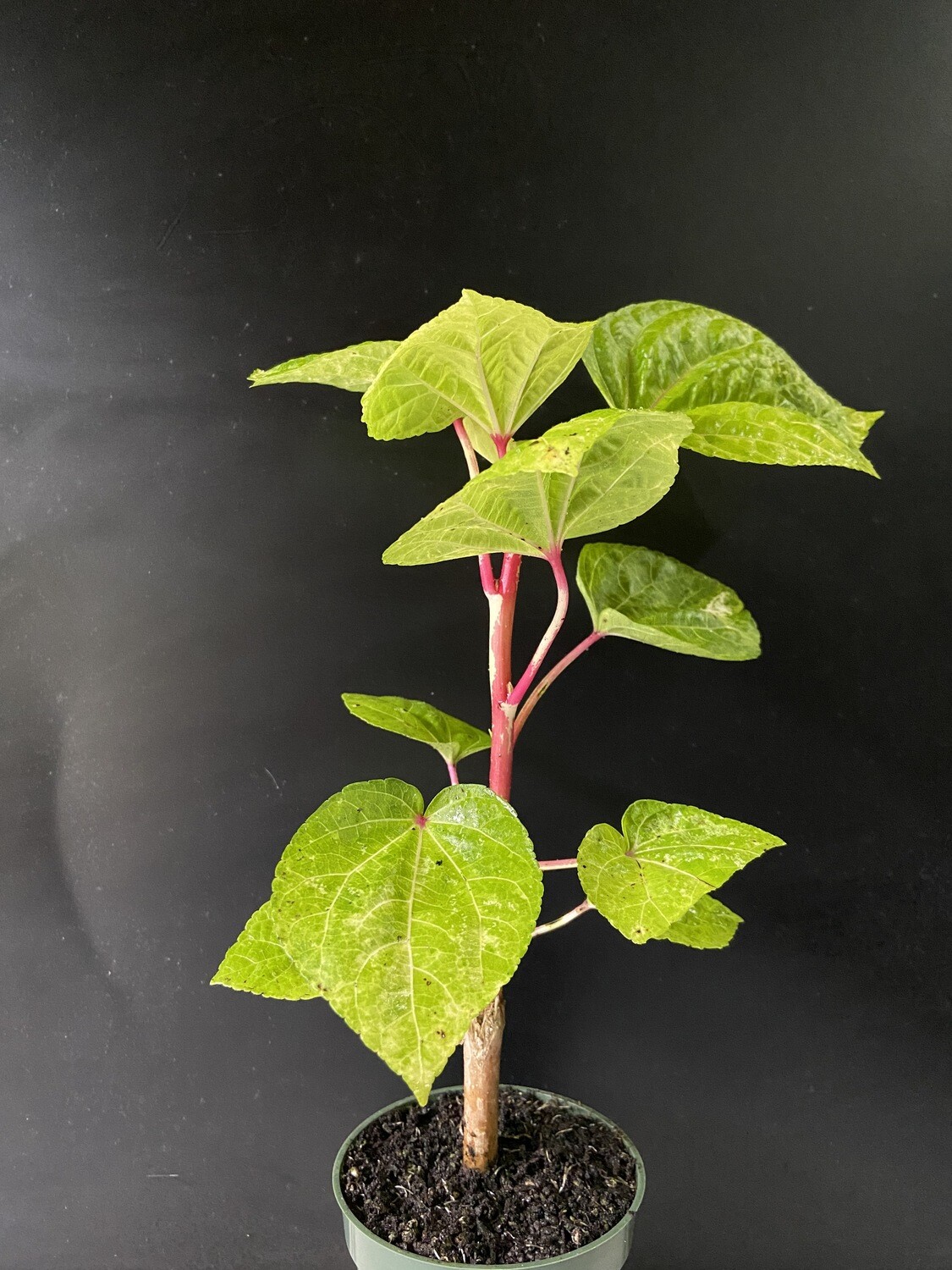
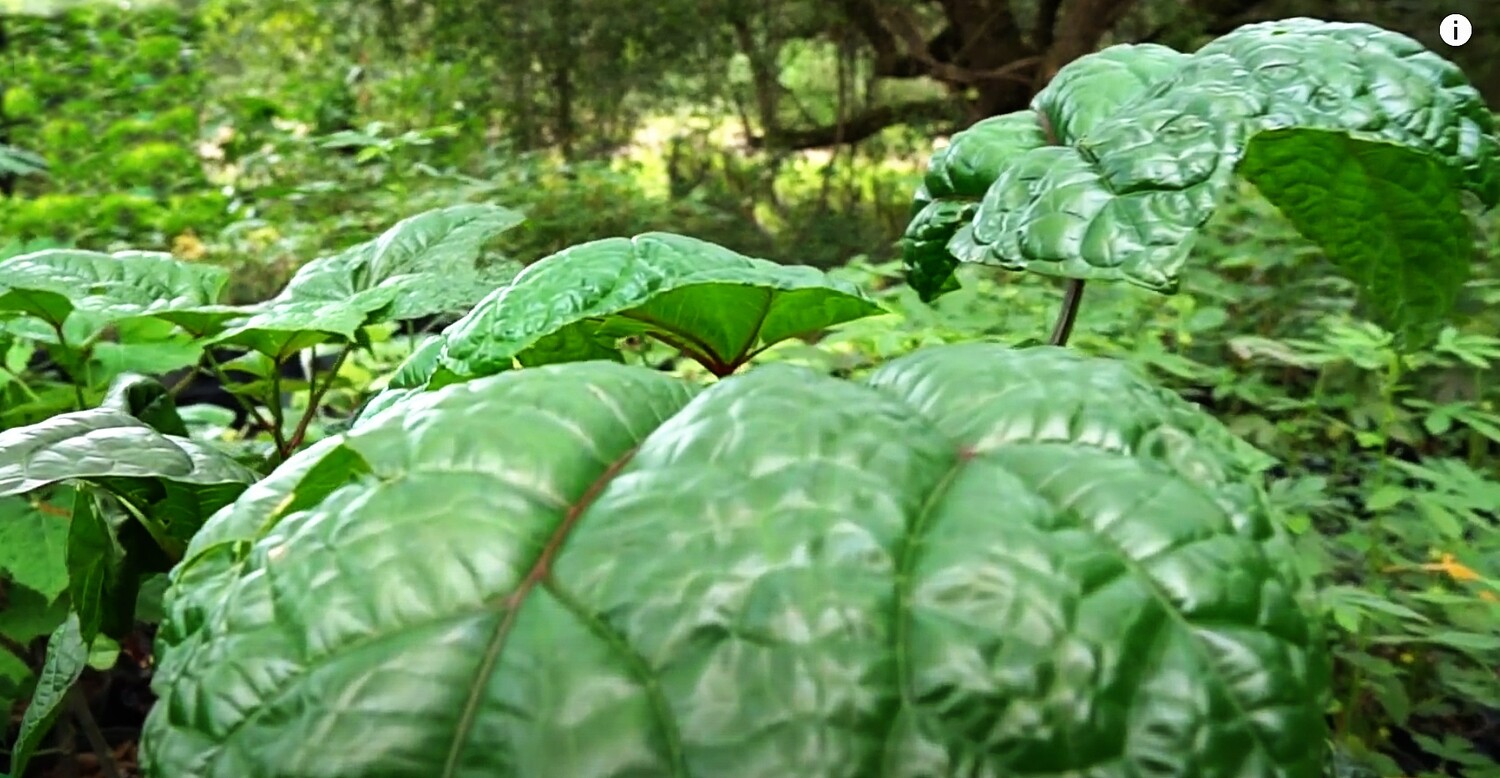
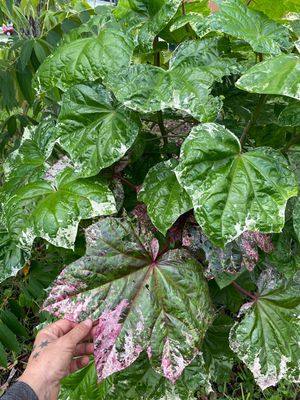
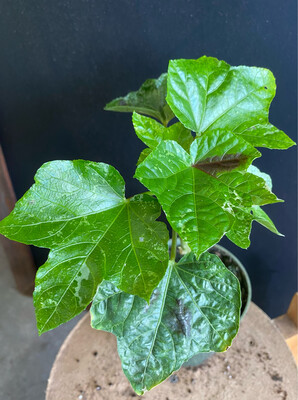
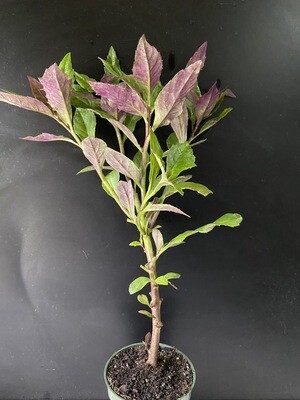
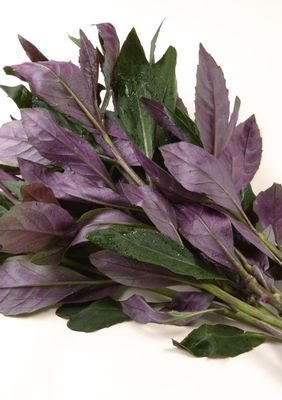
| Leaf Description | Large, soft leaves with pronounced sunken veins; red-toned stems and contrasting coloration may become more noticeable with maturity and strong light |
| Flower Description | Large, pale to buttery-yellow hibiscus-like flowers, often with a dark central eye |
| Spacing | Plant approximately 3–5 ft apart for individual shrubs or 3–4 ft apart in managed production rows |
| Water Requirements | Consistent moisture with excellent drainage; avoid prolonged drought and standing water |
| Wind Tolerance | Moderate when regularly pruned; tall, top-heavy plants may lean or break in storms |
| Salt Tolerance | No dependable cultivar-specific salt-tolerance data is available; treat as having low salt tolerance and protect from direct coastal spray |
| Primary Harvest | Young leaves, tender growing tips, and properly identified edible flowers |
| Florida Harvest Season | Spring through fall, with possible winter harvests in protected or frost-free locations |
| Cooler-Climate Harvest | Late spring through the first frost |
| Container Friendly | Yes—especially when regularly pruned |
| Indoor Potential | Best indoors as a temporary overwintering plant under very bright light rather than as a permanent low-light houseplant |
🌿 Why Grow Kiko’s Crump Edible Hibiscus?
This is the plant for gardeners who look at a blazing Florida summer and think, “Good. Let’s grow more food.”
Top Benefits
- Produces during intense heat when lettuce, spinach, and many cool-season greens decline
- Provides a cut-and-come-again harvest of tender leaves and growing tips
- Develops leaves large enough to use as fresh garden wraps
- Adds a mild, silky texture to soups, stews, curries, and stir-fries
- Responds to harvesting by becoming bushier and more productive
- Functions as both an edible crop and ornamental landscape shrub
- Can be pruned to suit raised beds, containers, patios, kitchen gardens, and food forests
- Produces generous biomass for home food production and regenerative growing systems
- Offers an excellent conversation piece for tropical plant collectors
- Connects the garden to longstanding food traditions throughout Asia, Melanesia, and the Pacific Islands
🌺 What Makes ‘Kiko’s Crump’ Special?
Although many forms of Abelmoschus manihot are grown around the world, ‘Kiko’s Crump’ is recognized in the North American nursery trade for its:
- Exceptionally large edible leaves
- Tender, buttery texture when harvested young
- Deep, prominent leaf venation
- Red or burgundy-toned stems
- Attractive yellow hibiscus-like flowers
- Vigorous warm-season growth
- Ability to produce greens through hot, humid weather
- Strong ornamental presence in edible landscapes
Nursery descriptions sometimes note contrasting or tri-colored foliage. The exact amount of red, cream, or contrasting coloration can vary with plant age, growing conditions, season, nutrition, and light exposure.
The detailed history behind the cultivar name ‘Kiko’s Crump’ does not appear to be widely documented in reliable botanical references. Rather than inventing a folklore story, it is more accurate to describe it as a distinctive nursery-trade selection of a much older tropical food plant.
😋 Flavor, Texture & Edible Parts
| Edible Portion | Flavor & Texture | Best Uses |
|---|---|---|
| Young Leaves | Mild, green, slightly sweet, and spinach-like with a soft, tender texture | Salads, wraps, sandwiches, omelets, tacos, and quick sautés |
| Larger Leaves | Mild and more substantial, with noticeable mucilage when cooked | Soups, stews, curries, gumbo-style dishes, casseroles, and cooked greens |
| Tender Shoot Tips | Soft, delicate, and similar to very tender spinach | Stir-fries, broths, egg dishes, noodles, and coconut-based recipes |
| Flowers and Buds | Mild and delicate; flavor can vary with maturity | Garnishes, salads, cooked dishes, and decorative edible presentations |
What Does “Mucilaginous” Mean?
Like its relative okra, edible hibiscus contains natural plant mucilage. When chopped and cooked, the leaves can release a silky thickening quality.
Some cooks love this texture in soups and stews. Others prefer:
- Harvesting the youngest leaves
- Cooking the leaves quickly over higher heat
- Adding them near the end of a recipe
- Pairing them with acidic ingredients such as tomato, citrus, or vinegar
- Using the leaves intentionally as a natural soup or sauce thickener
The texture is typically much less noticeable in tender young leaves eaten fresh.
🥬 How to Harvest Kiko’s Crump
Once the plant has recovered from transplanting and is producing vigorous new growth, begin with a light harvest.
For the Best Leaf Quality
- Harvest young leaves and the tender upper portions of growing shoots.
- Choose leaves that are fully expanded but still soft.
- Use clean scissors or pruners to remove shoot tips just above a leaf node.
- Leave enough foliage to support continued growth.
- Avoid stripping the plant bare during one harvest.
- Harvest repeatedly to encourage new branches and additional leaf production.
A good general guideline is to remove no more than approximately one-third of the healthy foliage at one time, especially from a young or recently transplanted plant.
How Harvesting Increases Production
Tip-pruning interrupts the plant’s upward growth and stimulates buds farther down the stem. Those buds develop into new branches, and each branch can produce another supply of edible leaves.
Frequent, moderate harvesting creates a shorter, bushier, easier-to-manage salad tree.
🍲 Culinary Uses Around the World
Abelmoschus manihot has been cultivated as a leafy vegetable across tropical and subtropical Asia, New Guinea, northeastern Australia, and many Pacific Island communities. It has also spread into parts of Africa, Oceania, and the Americas.
Depending on the region, it may be called:
- Bele
- Aibika
- Gedi or Daun Gedi
- Island Cabbage
- Bush Spinach
- Slippery Cabbage
- Lagikway
- Pele
- Sunset Hibiscus
- South Sea Salad Tree
Common Ways to Use the Leaves
- Fresh garden wraps
- Lettuce substitute on sandwiches
- Chopped into salads
- Stir-fried with garlic and ginger
- Added to omelets or scrambled eggs
- Cooked with coconut milk
- Added to soups and vegetable broths
- Simmered in curries
- Layered into casseroles
- Mixed into rice, noodles, or grain bowls
- Used as a natural thickener
- Steamed as a side vegetable
- Blended into savory green sauces
- Added to beans, lentils, or seafood stews
A Famous Traditional Application
In Indonesia, leaves known as daun gedi are associated with tinutuan or Bubur Manado, a vegetable-rich rice porridge from North Sulawesi. The leaves contribute both nutrition and a silky texture to the dish.
Throughout the Pacific, aibika or bele is also commonly cooked with coconut milk, onions, aromatics, meat, or seafood.
RECIPE HIGHLIGHT:
🥥 Easy Island-Style Coconut Greens
Ingredients
- 6–10 young Kiko’s Crump leaves
- 1 small onion or several green onions
- 1 clove garlic
- ½–1 cup coconut milk
- Salt and pepper to taste
- Optional ginger, hot pepper, tomato, lime, fish, shrimp, or cooked beans
Directions
- Wash the leaves thoroughly and remove any tough lower petiole sections.
- Stack and slice the leaves into ribbons.
- Sauté the onion, garlic, and optional ginger.
- Add the chopped leaves and stir until they begin to soften.
- Add coconut milk and simmer gently for several minutes.
- Season to taste and finish with lime if desired.
Young leaves need very little cooking. Add larger leaves earlier to allow additional time for tenderizing.
🌏 From Tropical Food Crop to Florida Food Forest
The accepted botanical range of Abelmoschus manihot extends from tropical and subtropical Asia into New Guinea and northeastern Australia. The species has been moved, selected, and cultivated throughout the Pacific for generations.
It is especially important as a traditional leafy vegetable in parts of Papua New Guinea, Fiji, Vanuatu, the Solomon Islands, Tonga, Indonesia, and the Philippines.
The nickname “Salad Tree” is memorable, but the plant is not botanically a true tree. It is a fast-growing shrub or subshrub that can develop tall, cane-like stems and a tree-shaped appearance when left unpruned.
Its older botanical name, Hibiscus manihot, explains why gardeners still commonly call it an edible hibiscus. Botanists now place the species within the genus Abelmoschus alongside okra and related plants.
Despite the word manihot in its botanical name, it is not cassava and should not be confused with Manihot esculenta. They are different plants with different culinary preparation requirements.
🥬 Nutritional Value
Aibika and other edible forms of Abelmoschus manihot have long been valued as nutrient-rich tropical greens.
Published food-composition and plant research describes the leaves as potential sources of:
- Provitamin A carotenoids
- Vitamin C
- Calcium
- Iron
- Magnesium
- Potassium
- Folate
- Dietary fiber
- Plant protein
- Naturally occurring flavonoids and other plant compounds
Nutrient levels vary significantly by cultivar, soil, climate, leaf age, harvest timing, storage, and cooking method. Fresh leaves should be treated as one component of a varied diet rather than as a medical treatment.
Responsible Medicinal Note
Different parts of Abelmoschus manihot have a history of use in traditional herbal systems, and laboratory research has examined isolated compounds and extracts from the plant.
However:
- Eating the leaves is not equivalent to using a concentrated extract.
- Laboratory findings do not automatically establish a medical benefit in people.
- This plant is not intended to diagnose, treat, cure, or prevent disease.
- Anyone managing a medical condition, pregnancy, food allergy, or medication interaction should consult a qualified healthcare professional before using unfamiliar plants medicinally.
🌸 Ornamental Appeal & Pollinator Value
Kiko’s Crump does not need to be hidden in a vegetable garden.
Its large leaves, upright structure, red-toned stems, bold venation, and yellow hibiscus-like flowers allow it to function as a productive ornamental shrub.
Landscape Applications
- Tropical foundation planting
- Edible privacy screen
- Kitchen-garden backdrop
- Food-forest understory edge
- Seasonal patio specimen
- Mixed tropical border
- Poolside edible landscape away from direct salt exposure
- Soft screening around compost or utility areas
- Productive focal point in a raised-bed garden
- Leafy background behind shorter perennial greens
The flowers can attract bees, butterflies, and other visiting insects. However, this plant is primarily grown for leaf production rather than dependable fruit or seed production.
📜 An Unexpected Industry Use: Traditional Papermaking
The culinary history is only part of the story.
In Japan, Abelmoschus manihot is known as tororo-aoi. Mucilage extracted from its roots has traditionally been used to create neri, a formation aid used in making Japanese washi paper.
The root mucilage helps disperse plant fibers evenly through the papermaking vat. Related techniques have also been used in the production of traditional Korean hanji paper.
This does not mean growers should harvest or consume the roots of a nursery plant. It simply reveals how one useful species became woven into food systems, gardens, and traditional craftsmanship.
🌞 Seasonal Growing Guide for Florida & the Southeastern United States
Kiko’s Crump is not a true temperate deciduous tree. It is a frost-tender tropical perennial whose winter appearance depends on temperature.
| Season | What to Expect | Recommended Care |
|---|---|---|
| Spring | New shoots emerge as soil and air temperatures warm. Protected roots may resprout after winter dieback. | Remove clearly dead stems after freeze danger has passed. Add compost, refresh mulch, begin regular watering, and start light organic feeding. |
| Summer | Peak growth and leaf production. Plants may grow rapidly during heat, humidity, and regular rainfall. | Harvest frequently, tip-prune for branching, monitor caterpillars and sap-sucking insects, and maintain consistent soil moisture. |
| Fall | Continued production during warm weather. Growth gradually slows as days shorten and nighttime temperatures decline. | Continue harvesting but reduce heavy pruning late in the season. Avoid pushing tender growth immediately before expected cold. |
| Winter in Zones 10–11 | Plants may remain leafy and productive in frost-free locations, although growth can slow. | Water according to soil moisture. Reduce fertilizer during cool periods. Protect from unusual cold snaps. |
| Winter in Zone 9 | Leaves may yellow, spot, wilt, or drop after cold exposure. Frost may kill stems back partially or completely. | Cover before frost, mulch the root zone, and wait until spring before assuming the roots are dead. |
| Winter in Zone 8 or Colder | Outdoor plants may behave as annuals unless exceptionally well protected. | Grow in a container and overwinter indoors, take backup cuttings, or replant after frost season. |
What Cold Damage Looks Like
Following frost or freezing temperatures, growers may notice:
- Limp or water-soaked leaves
- Darkened foliage
- Sudden leaf drop
- Soft or collapsed stem tips
- Brown stems
- Delayed spring emergence
Do not immediately remove every stem after a cold night. Wait until the extent of damage is clear. Once freeze danger has passed, scratch a small area of stem bark. Green tissue indicates living wood.
In Central Florida and similar Zone 9 climates, established plants may regrow from lower stems or protected roots as warm weather returns.
🌿 Best Practices for Planting Kiko’s Crump Edible Hibiscus
Allow the Plant to Recover After Shipping
Do not rush to transplant a newly delivered 4-inch plant.
Shipping places plants inside a dark box and exposes them to vibration, temperature changes, and reduced airflow. Some leaf yellowing, wilting, minor breakage, or leaf drop can occur even when roots remain healthy.
GreenDreams Recommendation
Keep the plant in its original container for approximately 30 days or until healthy new growth appears, whichever provides the clearest evidence of recovery.
During this period:
- Remove packaging promptly.
- Place the plant in bright shade or gentle morning sun.
- Avoid immediate exposure to intense afternoon sun.
- Water thoroughly at soil level as needed.
- Do not heavily fertilize a stressed plant.
- Gradually increase sunlight over 7–14 days.
- Transplant only after the plant is actively growing or its roots clearly require more space.
Where to Plant
Choose a location with:
- Full sun to partial sun
- Approximately 5–8 hours of direct sunlight
- Fertile soil with organic matter
- Reliable access to irrigation
- Good drainage
- Protection from severe wind
- Enough room for a 3–5 ft maintained shrub
- Easy access for regular kitchen harvesting
Avoid Planting
- In standing water
- In a low spot that remains saturated after rain
- Against a hot reflective wall without reliable irrigation
- Directly beside a saltwater shoreline
- Beneath dense tree canopy with very low light
- Where the mature plant will block a walkway
- Where tall stems will receive unbuffered tropical-storm winds
- In compacted construction fill without soil improvement
GreenDreams “High & Tight” Planting Method
Kiko’s Crump prefers consistent moisture but should not be buried deeply or planted into a water-holding depression.
- Dig a hole only slightly wider than the nursery container.
- Keep the hole approximately the same depth as the root ball.
- Carefully remove the plant without pulling on its stem.
- Set the root ball so its upper surface remains level with or slightly above the surrounding grade.
- Backfill firmly enough to remove large air pockets without crushing the roots.
- Avoid creating a deep bowl that holds water against the stem.
- Top-dress the surrounding soil with compost, biochar, azomite, worm castings, or an appropriate organic nutrient blend.
- Apply hardwood mulch around the planting area.
- Keep mulch several inches away from the base and stems.
- Water slowly and thoroughly at soil level.
For a visual demonstration of GreenDreams’ High & Tight planting method, visit:
https://youtu.be/RRQFY30qdA8?si=rRIcsbLlVAVYotfI
Soil Requirements
Kiko’s Crump performs best in soil that is:
- Fertile
- Rich in organic matter
- Moisture-retentive
- Well aerated
- Free draining
- Approximately neutral to mildly acidic or alkaline
Published cultivation references describe Abelmoschus manihot as performing well in moist, well-drained loam with high organic matter. A soil pH near approximately 6.0–8.0 is generally suitable.
Improving Florida Sand
For sandy Florida soils:
- Top-dress with finished compost
- Add aged hardwood mulch
- Incorporate biochar into compost before application
- Use worm castings around the active root zone
- Maintain living or organic groundcover
- Irrigate deeply enough to wet the root zone
- Reapply organic matter as it decomposes
Avoid filling the planting hole with pure compost or potting soil. A highly amended pocket surrounded by compacted native soil can interfere with water movement and root expansion. Use native soil for much of the backfill and improve the broader planting area from the surface.
💧 Watering Kiko’s Crump
Consistent moisture supports tender leaf production, but saturated roots can lead to collar rot and root decline.
Important GreenDreams Watering Rule
Do not rely on overhead watering.
Water at the soil level, preferably during the morning. Afternoon overhead irrigation can leave foliage wet overnight, spread leaf-spot organisms, splash contaminated soil onto leaves, and contribute to sun or heat injury.
Container Plants
A 4-inch container can dry rapidly.
- Check moisture daily.
- Water thoroughly when the upper surface begins to dry.
- Continue until water exits the drainage holes.
- Do not allow the container to sit in standing water.
- During hot, windy weather, a small container may need daily watering.
- Never assume rainfall has fully saturated a container beneath dense foliage.
Newly Planted in the Ground
A general starting schedule is:
- First 1–2 weeks: Check daily and water whenever the root ball begins drying.
- Weeks 3–4: Water every 2–3 days as needed.
- After establishment: Provide deep irrigation approximately 1–3 times weekly during dry weather.
- Severe heat or drought: Sandy Florida soil may require more frequent or even daily irrigation.
Adjust for rainfall, soil texture, mulch depth, sun exposure, temperature, and plant response.
Best Irrigation System
Drip irrigation or a low-flow emitter placed near the root zone is preferred over overhead sprinklers or misters.
The goal is evenly moist soil—not permanently saturated soil.
🌾 Fertilizing for Tender Leaf Production
Edible hibiscus is a leafy crop and responds to fertile soil, compost, and moderate nitrogen.
Organic Feeding Strategy
- Top-dress with compost in spring.
- Add worm castings around the root zone.
- Use a balanced organic granular fertilizer during active growth.
- Apply light, repeated feedings rather than one excessive dose.
- Add trace minerals only when appropriate for the soil.
- Maintain mulch to support soil biology.
- Observe new growth before automatically adding fertilizer.
During warm active growth, a light organic feeding approximately every 4–8 weeks may be appropriate for container plants or heavily harvested specimens.
Avoid
- Excessive synthetic nitrogen
- Fertilizing a severely wilted plant
- Heavy feeding immediately after shipping
- Fertilizing immediately before a freeze
- Applying concentrated fertilizer against the stem
- Allowing fertilizer salts to accumulate in containers
Excess fertilizer can cause weak, overly soft growth, burned leaf margins, pest attraction, or root damage.
✂️ Pruning Kiko’s Crump for a Bushier Salad Tree
Without pruning, the plant naturally reaches upward and may become tall, sparse, or top-heavy.
Tip-Pruning
When the plant is well established and actively growing:
- Remove the upper growing tip just above a healthy leaf node.
- Allow side shoots to develop.
- Repeat on vigorous branches.
- Harvest those tender tips for the kitchen.
Maintaining a 3–5 ft Plant
For convenient harvesting:
- Shorten tall stems above outward-facing nodes.
- Remove weak, crossing, or storm-damaged branches.
- Keep several strong structural stems.
- Avoid removing most of the foliage at one time.
- Prune regularly instead of waiting for one severe cutback.
Rejuvenating an Older Plant
Established plants that have become tall or unproductive may be cut back more substantially during warm weather. Leave healthy lower stems or a sturdy base from which new shoots can emerge.
In frost-prone Florida locations, delay major post-winter pruning until the threat of additional freezes has passed.
🌬️ Wind & Storm Preparation
Kiko’s Crump grows rapidly and can become top-heavy. Its soft stems and relatively shallow root system may be damaged by wind, especially when plants are tall and heavily leafed.
Before tropical weather:
- Harvest large leaves
- Reduce excessive top growth
- Secure container plants
- Move pots beside a protected structure
- Stake young plants loosely
- Check that ties are not cutting into stems
- Remove broken branches after the storm
- Verify that the root zone is draining after heavy rain
Regular pruning is usually more effective than allowing a single unsupported stem to reach maximum height.
🪴 Growing Kiko’s Crump in Containers
Container growing is an excellent option for patios, renters, growers in colder regions, and anyone who wants to control plant size.
Recommended Container Progression
Nursery pot sizes refer to container volume categories, not the plant’s final height.
A practical progression is:
4-inch pot → 1-gallon pot → 3-gallon pot → 7-gallon pot → 15-gallon or larger container
Do not automatically jump from a small starter pot into an enormous container. Excess unused soil can remain wet for too long and increase the risk of root problems.
When to Up-Pot
Transplant when:
- Roots circle the inside of the pot
- Roots emerge from drainage holes
- The plant dries out unusually fast
- Growth has slowed despite proper care
- The root ball holds together when removed
- New growth confirms the plant has recovered from shipping
Best Potting Mix
Kiko’s Crump prefers a mix that retains moisture without becoming dense or waterlogged.
A suitable blend may include:
- Quality organic potting mix
- Finished compost or worm castings
- Fine pine bark or coco coir
- Perlite, pumice, or another aeration material
One practical starting blend is:
- Approximately 40% quality potting mix
- 20–30% fine pine bark or coco coir
- 20% finished compost
- 10–20% perlite or pumice
Exact proportions can be adjusted for climate and watering habits. Growers in very rainy climates need more aeration, while growers in hot, dry regions may need slightly greater moisture retention.
Avoid using dense native garden soil by itself inside a container.
Where to Find Supplies
Containers and potting materials may be found through:
- Independent garden centers
- Local nurseries
- Farm and feed stores
- Hydroponic suppliers
- Landscape-material suppliers
- Reuse and recycling groups
- Online searches for nursery pots, food-safe planters, organic potting soil, pine bark fines, coco coir, perlite, or pumice
Growing Indoors
Kiko’s Crump can be brought indoors for winter, but it is not naturally adapted to a dark interior.
Indoor Requirements
- Very bright window exposure
- Several hours of direct light when possible
- Supplemental grow lighting when natural light is inadequate
- Good airflow
- Protection from heating vents
- Regular pest inspection
- Reduced watering during slow winter growth
- A saucer that catches drainage without leaving the pot submerged
Common Indoor Challenges
- Leggy growth from insufficient light
- Spider mites in dry air
- Aphids or whiteflies
- Root problems from overwatering
- Leaf drop after the move indoors
- Reduced growth during winter
Before returning the plant outdoors, gradually reacclimate it to direct sun.
🌿 Companion Plants & Edible-Hibiscus Guild Ideas
Kiko’s Crump benefits from a diverse planting community, but companions should not crowd its shallow roots or block access for harvesting.
Biomass & Soil-Building Partners
- Mexican Sunflower: Fast chop-and-drop biomass and pollinator activity
- Clumping Grasses: Carbon-rich mulch material and wind buffering
- Pigeon Pea: Nitrogen-fixing shrub and temporary nurse plant
- Sunn Hemp: Warm-season nitrogen-fixing cover crop
- Moringa: Productive vertical layer where adequate spacing is available
- Comfrey: Chop-and-drop biomass in suitable climates and soils
Pollinator & Beneficial-Insect Plants
- Native salvia
- Porterweed
- Mexican oregano
- Coreopsis
- Dune sunflower
- Sweet Almond
Edible Companions
- Longevity spinach
- Okinawa spinach
- Sissoo or Brazilian spinach
- Surinam spinach
- Lemongrass
- Turmeric
- Ginger
- Galangal
- Malabar spinach on a separate trellis
Design Tip
Place lower-growing perennial greens along the sunnier edge rather than directly beneath a mature Kiko’s Crump canopy. Regular pruning will allow more light to reach neighboring plants.
⚠️ Important Cautions
Correct Identification Matters
Only consume a plant that has been accurately identified as an edible form of Abelmoschus manihot.
Do not assume that every hibiscus, mallow, okra relative, or plant with a similar leaf is interchangeable.
Do Not Confuse It With Cassava
Despite the botanical word manihot, Kiko’s Crump is not cassava. Cassava is Manihot esculenta and has different preparation requirements.
Begin With a Small Serving
As with any unfamiliar food:
- Wash leaves thoroughly.
- Try a modest serving first.
- Stop use if irritation or an allergic response occurs.
- Use extra caution with known allergies to okra or other members of the mallow family.
- Consult a healthcare professional when managing a medical condition or specialized diet.
Pest-Spray Caution
Do not apply a product to edible foliage unless its label specifically permits use on edible crops. Always follow the labeled pre-harvest interval.
Moisture Caution
Although this plant enjoys moisture, permanently saturated soil can cause stem, collar, or root rot.
🔍 Kiko’s Crump Troubleshooting Guide
Icons represent common issues and organic solutions—look for 🌿 for recovery guidance.
| ⚠️ Issue | 🧠 Likely Cause | 🌿 Organic Response |
|---|---|---|
| 🍂 Older leaves yellowing | Normal aging, transplant stress, wet roots, or depleted container nutrients | Remove fully yellow leaves, check drainage, and evaluate watering before fertilizing |
| 💧 Leaves wilt during afternoon heat | Dry root ball, recent transplanting, or extreme heat | Check soil below the surface and water deeply at soil level when needed |
| 💦 Soil remains wet for days | Dense mix, oversized pot, blocked drainage, or low light | Improve drainage, clear holes, increase airflow, and reduce watering frequency |
| 🐛 Holes or missing leaf sections | Caterpillars, beetles, grasshoppers, or slugs | Inspect after dark and beneath leaves; hand-pick pests and use an edible-crop-approved treatment only when necessary |
| 🪲 Sticky leaves or distorted tips | Aphids, whiteflies, scale, or mealybugs | Inspect new growth and stems; rinse pests away at soil-safe pressure or use labeled insecticidal soap |
| 🐜 Ants moving along stems | Ants may be protecting aphids or scale | Address the sap-sucking insects and reduce ant access using an appropriate organic management program |
| 🍄 Brown or spotted leaves | Wet foliage, poor airflow, soil splash, or fungal leaf spot | Remove heavily affected leaves, avoid overhead watering, and increase spacing or airflow |
| 🌱 Tall, thin, sparse growth | Low light or lack of tip-pruning | Increase light gradually and pinch growing tips to encourage branching |
| 🔥 Brown leaf margins | Drought, fertilizer salts, hot wind, or root stress | Flush container soil, review fertilizer use, and restore even moisture |
| 🌬️ Leaning or broken stems | Top-heavy growth or storm exposure | Prune damaged growth, stake loosely, and maintain the plant at a shorter height |
| ❄️ Blackened leaves after cold | Frost injury | Wait for warm weather, protect the roots, and prune dead growth after freeze danger passes |
| 🧘 No immediate growth after shipping | Transit stress or seasonal slowdown | Maintain gentle light, correct moisture, and patience; transplant after healthy new growth appears |
| 🌊 Stem softening near soil line | Excess moisture or collar rot | Pull mulch away, improve drainage, and remove severely affected tissue with sanitized tools |
| 🕷️ Fine stippling or webbing indoors | Spider mites favored by warm, dry interiors | Isolate the plant, inspect closely, and use an edible-crop-approved treatment as directed |
Is Kiko’s Crump the Right Plant for You?
✅ Ideal For
- Florida gardeners seeking heat-tolerant leafy greens
- Growers in USDA Zones 9–11
- Permaculture gardens and food forests
- Tropical and subtropical plant collectors
- Home cooks who enjoy international cuisine
- Gardeners interested in cut-and-come-again crops
- Small-space growers willing to prune
- Container gardeners with strong sunlight
- Families interested in replacing part of the lawn with food production
- Growers who want a plant that is both edible and ornamental
- Gardeners who can provide regular water during dry weather
❌ May Not Be Ideal For
- Gardens without irrigation in hot, sandy soil
- Permanently wet or poorly drained locations
- Exposed beachfront sites receiving direct salt spray
- Growers who cannot provide frost protection in colder regions
- Dark indoor rooms without supplemental lighting
- Gardeners who want a plant that stays naturally compact without pruning
- People unwilling to inspect edible foliage for caterpillars and other pests
- Buyers uncomfortable accepting the additional shipping risk of a small tropical plant traveling long distances by ground service
❓ Kiko’s Crump Edible Hibiscus FAQ
Is Kiko’s Crump really a tree?
No. “Salad Tree” is a common nickname. Botanically, it is a fast-growing shrub or subshrub that can develop tall, cane-like stems and a tree-shaped appearance.
Can Kiko’s Crump leaves be eaten raw?
Properly identified young leaves are commonly eaten raw or cooked. Young leaves generally have the best fresh texture. Larger leaves are often preferred cooked.
What does Kiko’s Crump taste like?
The leaves have a mild, green, spinach-like flavor. Young leaves are soft and tender. Cooked leaves may develop a silky or slightly mucilaginous texture similar to okra.
How large does Kiko’s Crump grow?
It commonly reaches approximately 6–8 ft tall when left unpruned. Regular harvesting and tip-pruning can maintain it around 3–5 ft.
How quickly can I harvest?
Wait until the plant has recovered from shipping, established its roots, and begun producing vigorous growth. A light harvest may be possible within several weeks under ideal warm conditions, while substantial production commonly develops over the following two to three months.
Does Kiko’s Crump survive Florida winter?
It depends on location and winter temperatures. In frost-free South Florida it may remain productive. In Central Florida it may lose leaves or die back during cold weather and return when temperatures warm. North Florida plants need stronger protection and may behave as annuals.
Is it evergreen?
It can remain evergreen in warm, frost-free climates. It is not dependably evergreen where frost occurs.
Can it grow in partial shade?
Yes. It can grow in partial sun, although very low light produces weaker, leggier growth. Light afternoon shade may be useful during extreme summer heat.
Can I grow it indoors?
It can be overwintered indoors under very bright light or grow lights. It is generally not suitable for a permanently dark indoor location.
Can it grow in a pot?
Yes. Regular pruning allows it to perform well in containers. Gradually move from a 4-inch pot to 1-gallon, 3-gallon, 7-gallon, and larger containers as the roots fill each size.
Does it need pollination to produce edible leaves?
No. Leaf production does not require pollination. Flowers may still attract visiting bees and other beneficial insects.
Is Kiko’s Crump drought tolerant?
Established plants may survive short dry periods, but drought reduces tenderness and leaf production. Consistent moisture produces the best edible harvest.
Is it salt tolerant?
Reliable cultivar-specific salt-tolerance data is limited. We recommend protecting it from direct ocean spray and saline irrigation.
Why are the leaves becoming slimy when cooked?
The leaves contain natural mucilage, a trait shared with okra. Use this quality to thicken soups or cook young leaves quickly if you prefer less of that texture.
Can I propagate it from cuttings?
The species is commonly propagated from stem cuttings. Success is highest during warm weather using healthy, correctly identified plant material. Follow all applicable plant-patent, trademark, or propagation restrictions associated with named nursery cultivars.
🚚 Important Shipping Information for This 4-Inch Plant
Best Regional Shipping Range
The 4-inch Kiko’s Crump is most ideally suited for UPS Ground shipping to:
- Florida
- The Southeastern United States
- Texas
- Other nearby warm-climate destinations with shorter transit times
We can ship live plants throughout the continental United States, but small tropical plants traveling to northern and western states may experience longer transit times, temperature fluctuations, moisture loss, leaf drop, stem damage, or extended recovery periods.
Small Containers Dry Faster
A 4-inch container contains less soil and moisture than a 1-gallon or larger plant. It can dry faster during shipping and may be less resilient during extended transit.
We recommend choosing a 1-gallon or larger plant when available, particularly for customers outside our regional shipping zone.
UPS Ground Shipping
- Plants ship from Florida.
- We currently use UPS Ground for plant shipments.
- Our regular plant-shipping day is Monday.
- Shipping early in the week helps reduce the chance of plants remaining in a carrier facility over the weekend.
Peak Heat & Cold Advisory
Buyer discretion is strongly advised during extreme seasonal temperatures.
GreenDreams cannot control:
- Temperatures inside carrier vehicles
- Weather delays
- Extended transit times
- Packages left outdoors after delivery
- Cold exposure in northern states
- Extreme heat across southern or western routes
- Carrier handling after the package leaves our facility
We are not responsible for damage caused by extreme temperatures during ground-service transit.
Northern & Western United States
Extended UPS Ground transit may not be suitable for every small tropical plant. Buyers in northern and western states assume the additional risk associated with longer delivery times and regional temperature extremes.
A plant may arrive needing considerable recovery care, including:
- Gentle light
- Correct soil-level watering
- Removal of damaged foliage
- Protection from intense sun
- Stable temperatures
- Time to produce new growth
California Shipments
California agricultural inspection may hold a package for an additional day or longer. This delay is outside our control and can increase transit stress.
After Arrival
- Open the box promptly.
- Remove packing materials carefully.
- Photograph significant package or plant damage.
- Place the plant in bright shade.
- Check soil moisture before watering.
- Gradually acclimate the plant to stronger sun.
- Keep it in the original pot for approximately 30 days or until healthy new growth appears.
- Review our current live-plant policy and report qualifying shipping concerns within the stated claim period.
Transit-stressed plants often recover from leaf loss or cosmetic damage when the stem and root system remain healthy.
📍 Available for Local Pickup at GreenDreams!
Our retail nursery carries countless edible, medicinal, native, ecological, and useful plants—including larger sizes and many selections that are not available through our online shipping inventory.
GreenDreams Nursery & Farm
🌾 18709 US Hwy. 41, Spring Hill, FL 34610
🕘 Tuesday–Friday: 9AM–5PM
🌞 Saturday: 8AM–3PM
🌿 Stop by our regenerative nursery to discover what is fresh, flowering, fruiting, and ready for Florida gardens this week!
🌿 Beyond the Plant: GreenDreams Services
At GreenDreams, we do more than grow plants—we design, build, and restore ecosystems across Florida.
- 🌳 Onsite consultations and edible-landscape design
- 🚜 Ecological landscape and food-forest installation
- 🌱 Project planning and phased development
- 🚚 Bulk delivery of compost, mulch, biochar, and soil-building materials
- 🌾 Large-scale regenerative growing solutions
- 🪵 Soil improvement, groundcover planning, and organic fertility support
Let our team help you create a thriving edible landscape—starting with Kiko’s Crump Edible Hibiscus.
🌿 IMPORTANT INFORMATION BEFORE PURCHASING LIVE PLANTS
Please note: Plants purchased through our online store are not available for pickup at our retail nursery in Spring Hill, Florida.
Online inventory is housed at a separate facility and is priced, prepared, and handled exclusively for shipping.
🌱 Looking for larger plants or more selection?
Our retail nursery location offers far more availability, including larger sizes, specialty plants, and many selections not suitable for nationwide shipping.
Local pickup is available for retail nursery purchases only.
Visit our Spring Hill, FL retail nursery page to explore in-person shopping options.
🚚 LIVE PLANT SHIPPING & TRANSIT EXPECTATIONS
Live plants naturally experience stress during shipping. Temporary leaf drop, mild wilting, or cosmetic stress is normal after transit. Most plants recover quickly with proper watering, gradual light exposure, and basic aftercare. Some plants may require additional attention during the first few weeks.
Despite careful packing, minor cosmetic damage may occur during transit. Small issues such as broken leaves or stems typically resolve with time and proper care.
If your shipping box arrives with significant external damage, please contact UPS within 30 days to initiate a carrier claim.
⏱️ SHIPPING METHOD, TIMING & TRANSIT WINDOWS
All online orders ship via UPS Ground from our Central Florida nursery.
📦 Shipping Schedule: Orders ship once weekly on Mondays to reduce the risk of packages sitting in transit over weekends. A countdown clock on our website displays the next shipping date.
🚚 Typical Transit Times:
-
Florida: 1–2 days
-
Southern U.S.: approximately 2 days
-
Midwest, West & Northern U.S.: 3–5 business days
Long-distance shipments, particularly to the western U.S., may experience additional transit time due to agricultural inspections in states such as Arizona, California, and Texas.
Extended transit times can be more challenging for small or tender plants and may require additional recovery care after arrival.
🌡️ EXTREME WEATHER & SEASONAL RISK
Live plants are sensitive to temperature extremes.
We cannot guarantee plant condition during periods of extreme summer heat or winter cold and freezing temperatures. Weather-related delays, carrier interruptions, or exposure during delivery are beyond our control.
Customers are responsible for:
-
Monitoring tracking information sent via email
-
Retrieving packages promptly upon delivery
-
Preventing plants from being left outdoors in extreme conditions
During unsafe weather, holiday shipping volume, or extended transit risk, orders may be held and shipped the following week to protect plant health.
⚠️ CUSTOMER RESPONSIBILITY & REFUND POLICY
By purchasing live plants, customers acknowledge and accept the risks associated with shipping, weather exposure, transit delays, and regional suitability.
Refunds or replacements are considered only under exceptional circumstances and in accordance with our return and refund policy. We are not responsible for:
-
Weather-related damage
-
Carrier delays
-
Poor plant selection for a given climate or region
-
Improper care after delivery
Upon purchase, customers assume full responsibility for the ongoing care and success of their plants.
✅ CONSENT & AGREEMENT
By completing a purchase, you confirm that you have read, understand, and agree to all shipping policies, responsibilities, and conditions outlined above.
Our goal is transparency, plant health, and long-term growing success — and we appreciate your understanding and care when ordering live plants.


