


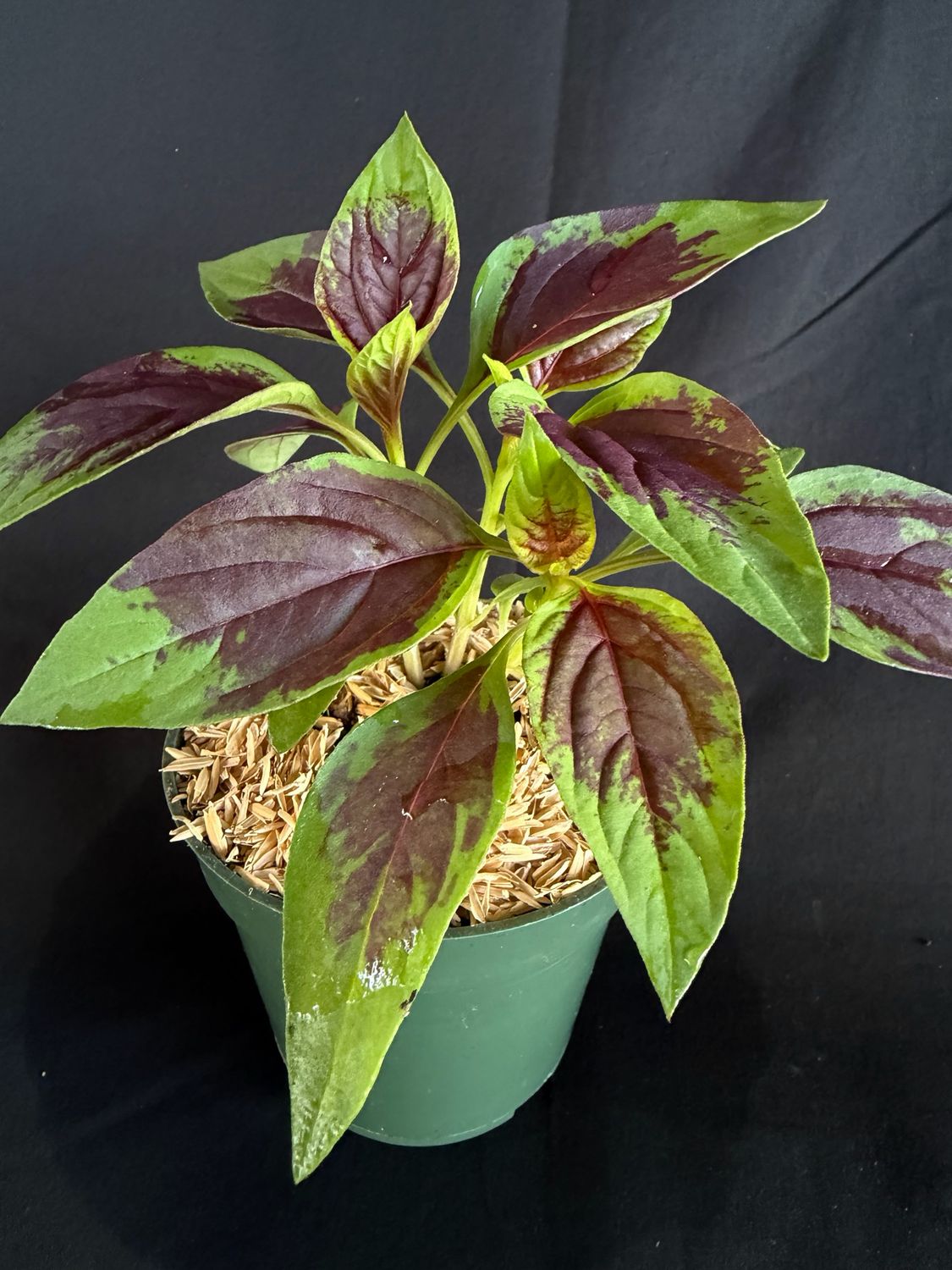
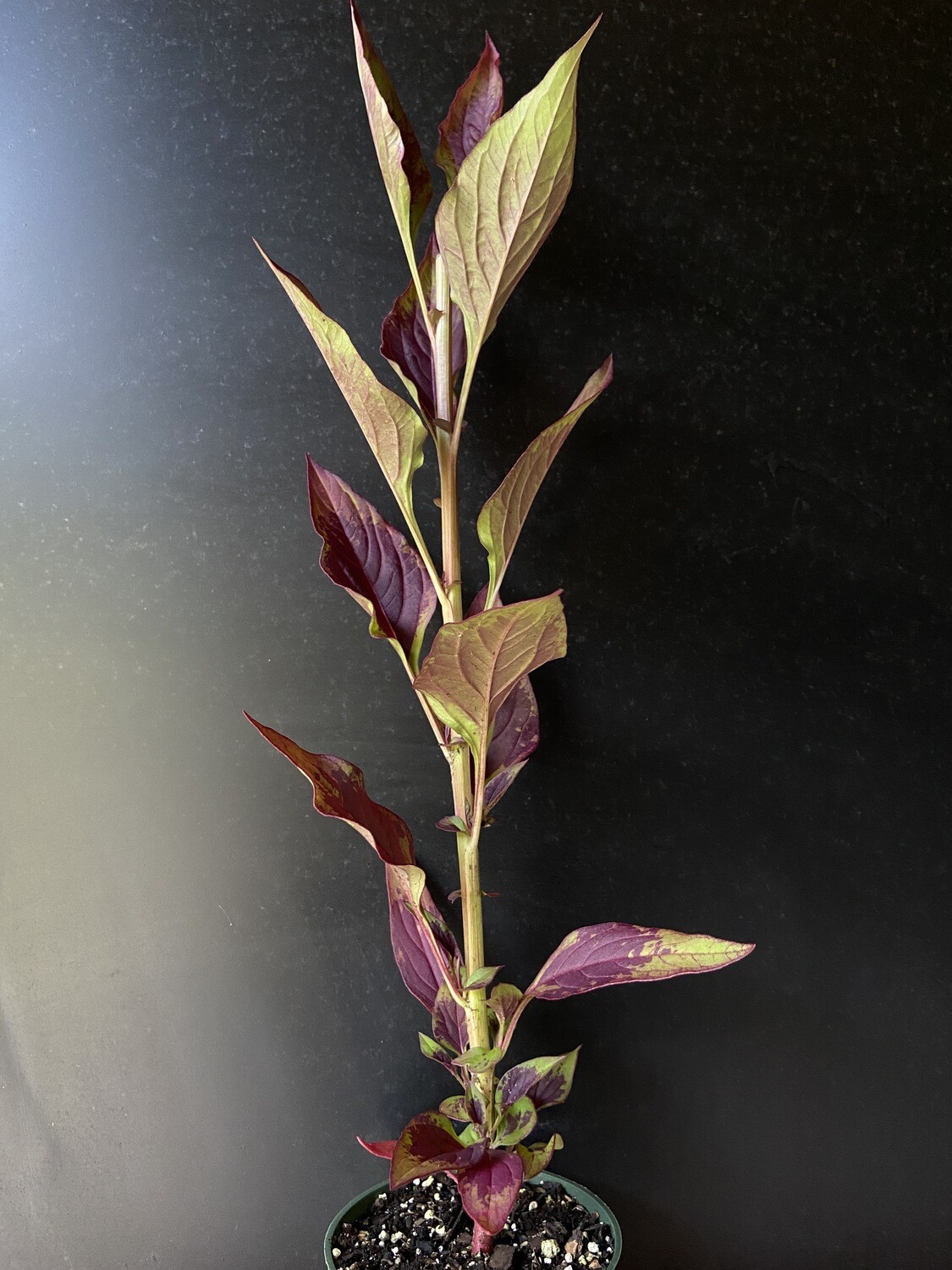
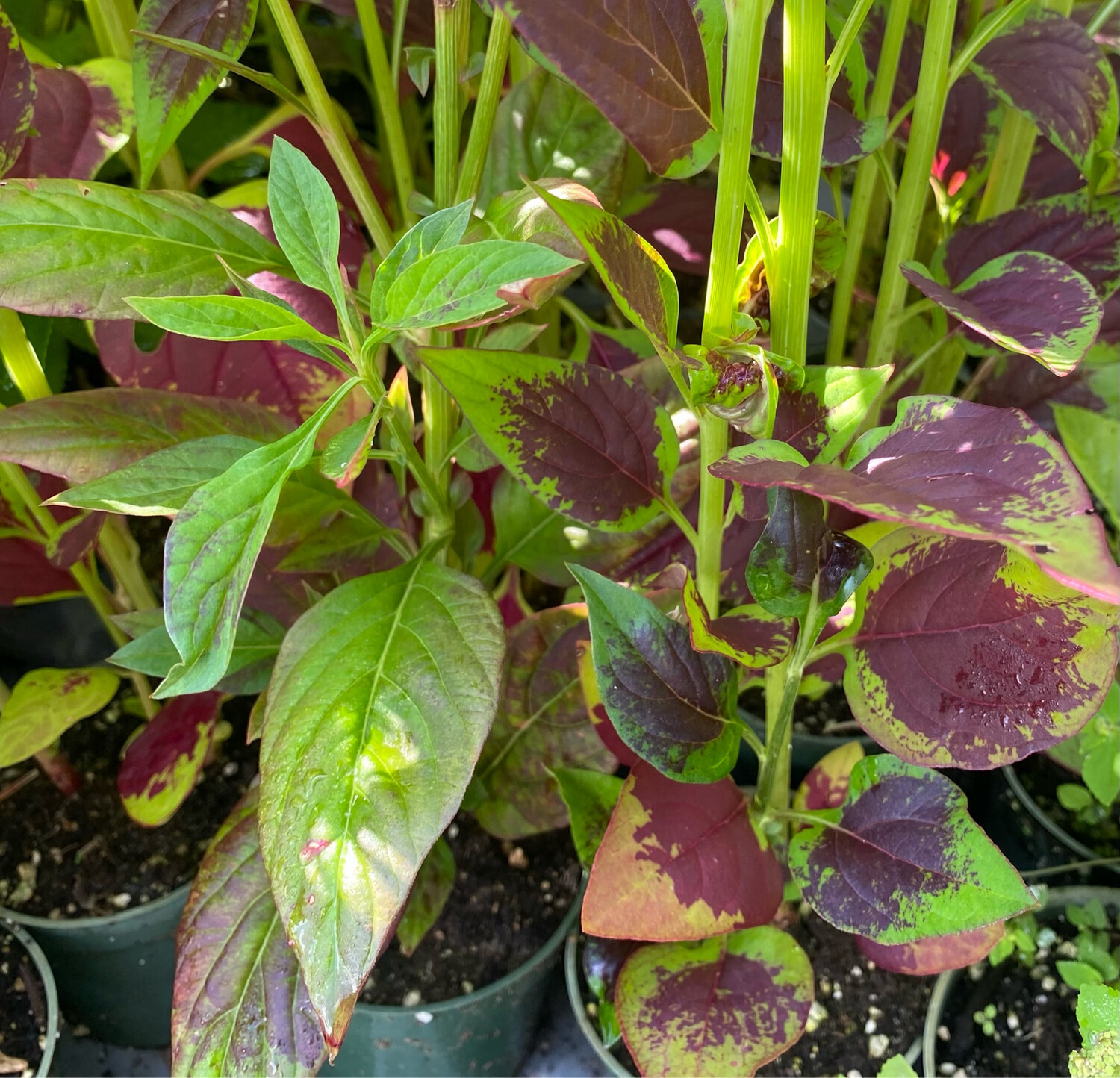
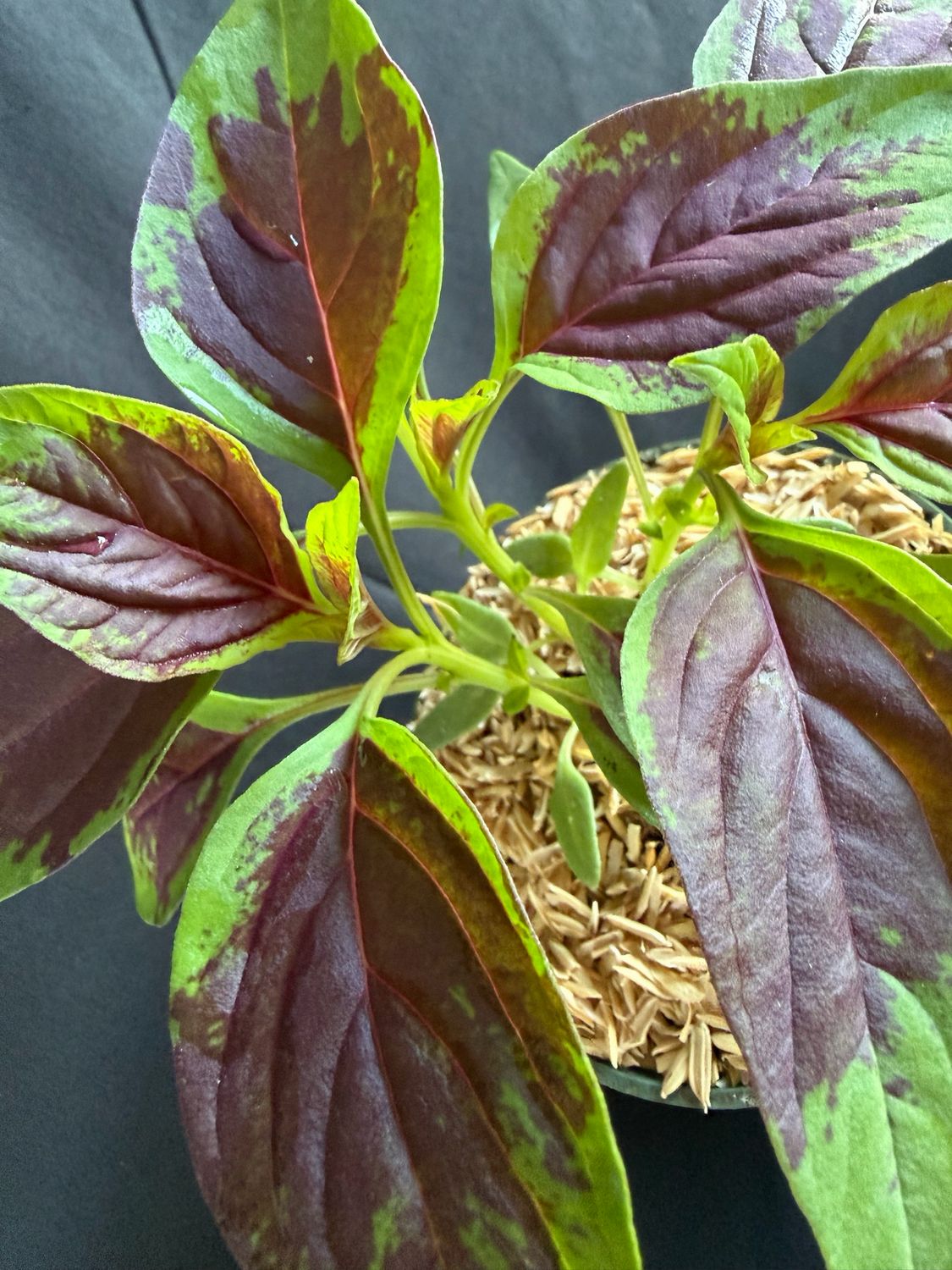
🌿 Lagos Spinach Plant — Purple Edible Celosia for Hot-Weather Harvests
A Leafy Green That Actually Loves Summer
When ordinary spinach taps out in the heat, Lagos Spinach is just getting started.
This colorful edible celosia produces tender young leaves, branching harvests, vivid burgundy-purple foliage, and dramatic flower plumes during the hottest part of the growing season. It is equal parts vegetable garden workhorse, edible ornamental, and tropical conversation piece.
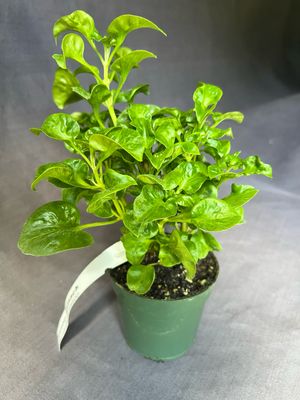
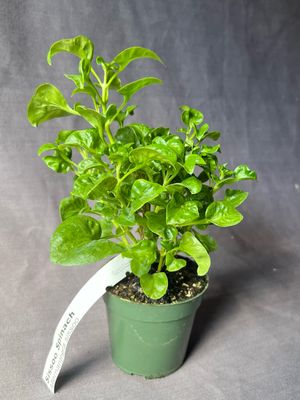
Ships in a 4-inch nursery container.
Lagos Spinach is especially valuable for Florida growers seeking a productive warm-season leafy green that can handle intense sunlight, humidity, and summer temperatures. Harvest the tender tips for soups, stews, sautés, stir-fries, and mixed greens—or allow selected plants to flower for bold color and future seed.
Heat-loving. Beautiful. Edible. Definitely not basic.
🌿 Quick Facts Guide
| Feature | Details |
|---|---|
| Botanical Name | Celosia argentea L. |
| Plant Family | Amaranthaceae |
| Common Names | Lagos Spinach, Celosia, Soko, Shoko, Sokoyokoto, Feather Cockscomb, Woolflower |
| Plant Type | Fast-growing, warm-season annual leafy vegetable and ornamental |
| Sale Size | Ships in a 4-inch nursery container |
| Estimated Age | Typically approximately 5–10 weeks old, depending on season and crop timing |
| Mature Height — Unpruned | Commonly 3–6 feet under warm, fertile growing conditions |
| Maintained Height | Approximately 2–4 feet with regular harvesting and tip-pruning |
| Mature Width | Approximately 1–2 feet |
| Growing Range | Grown as a summer annual throughout the continental United States; longest season in USDA Zones 9–11 |
| Florida Performance | Spring through fall in Central and North Florida; potentially longer in frost-free South Florida |
| Native Range | Tropical Africa |
| Sun Requirements | Full sun is preferred; light afternoon shade is acceptable during extreme Florida heat |
| Best Soil | Fertile, organic-rich, well-draining soil |
| Preferred Soil pH | Approximately 6.0–6.5 |
| Water Requirements | Consistent moisture without standing water or constantly saturated soil |
| Cold Hardiness | Frost-sensitive; cold weather slows growth and frost can kill the plant |
| Growth Habit | Upright, branching annual with edible leaves, tender stems, flower spikes, and seed heads |
| Spacing | 12–18 inches for leafy production; 18–24 inches for large ornamental specimens |
| Wind Tolerance | Moderate; tall or flower-heavy plants may require support |
| Salt Tolerance | Some celosia cultivars show moderate soil-salt tolerance, but direct coastal salt spray is not recommended |
| Primary Harvest | Tender leaves, growing tips, young stems, and immature flower spikes |
| Typical First Harvest | Often approximately 4–6 weeks from sowing under warm conditions |
| Harvest Style | Cut-and-come-again, usually every 1–2 weeks during active growth |
🌺 First Things First: Is Lagos Spinach a Perennial?
No—Lagos Spinach is botanically an annual plant.
It completes its natural lifecycle by growing, flowering, producing seed, and eventually declining. Warm weather may extend that lifecycle, and dropped seed may produce volunteer plants that make it appear perennial, but the original plant does not enter a dependable woody dormancy and return year after year.
What this means for growers
- Central and North Florida: Grow primarily from spring through fall. Frost normally ends the season.
- South Florida: Plants may continue much longer during warm winters, especially in protected locations.
- Southeastern United States: Treat it as a frost-sensitive summer vegetable.
- Northern and western states: Plant after frost danger has passed and enjoy it until autumn cold arrives.
- Containers: Moving a plant indoors may temporarily extend its season, but Lagos Spinach is not naturally a permanent houseplant.
Unlike a deciduous fruit tree, Lagos Spinach does not simply lose its leaves and wait underground for spring. Once it has fully matured, produced seed, or been damaged by frost, it is usually time to compost the original plant and begin the next generation from seed.
🌍 From Tropical Africa to the Summer Garden
Lagos Spinach has deep roots in African food culture, especially in Nigeria and neighboring countries where Celosia argentea is grown as a leafy vegetable rather than simply admired as a flower.
The plant is known by several regional names, including soko, shoko, and sokoyokoto. Leaves, tender stems, and young flower spikes are commonly cooked like spinach and added to soups, stews, sauces, and vegetable dishes.
The name Celosia comes from a Greek word associated with burning or flame—a fitting reference to the plant’s upright, brilliantly colored flower heads.
The common name Lagos Spinach reflects the crop’s strong association with Nigerian culinary traditions. It is not true spinach and is not botanically related to Spinacia oleracea. Instead, it belongs to the amaranth family, alongside other heat-tolerant leafy vegetables and ornamentals.
Traditional food references describe celosia greens as mild, tender, and sometimes slightly nutty. Unlike cool-season spinach, this crop remains productive in tropical heat when many familiar salad greens struggle.
🍃 What Does Lagos Spinach Look Like?
Lagos Spinach brings serious color to the edible landscape.
Depending on the seed line and growing conditions, plants may display:
- Green to deep burgundy-purple foliage
- Upright, sometimes reddish stems
- Alternating leaves with smooth margins
- Branching growth after pruning or harvesting
- Feathered, wheat-like, or crested flower heads
- Flowers in shades of purple, red, magenta, pink, orange, or gold
- Tiny black seeds held inside dry capsules
Because many celosia plants are seed-grown, individual plants may vary slightly in foliage intensity, height, branching, and flower form. Cooler weather, lower light, plant age, and nutrient availability can also affect purple coloration.
For the strongest foliage color and stockiest growth, provide abundant sunlight and avoid excessive shade.
🥬 Flavor, Texture & Best Harvest Stage
Flavor profile
Young Lagos Spinach leaves have a:
- Mild spinach-like flavor
- Soft, tender texture after cooking
- Lightly earthy or nutty finish
- Less bitter flavor before flowering
- Pleasant ability to absorb garlic, peppers, broth, coconut milk, tomato, and savory seasonings
Texture
- Very young leaves: Tender enough for limited raw use
- Mature leaves: Best steamed, sautéed, simmered, or added to soup
- Tender growing tips: Soft and succulent when cooked
- Young stems: Edible when still flexible
- Young flower spikes: Can be cooked before they become fibrous
- Older flowering stems: Usually tough and better suited for compost or seed production
The leaves tend to become firmer and more bitter after heavy flowering begins. Regular tip harvesting and flower removal help maintain tender vegetative growth. Young celosia leaves have a spinach-like flavor but may become bitter after flowering.
🍲 Which Parts of Lagos Spinach Are Edible?
| Plant Part | How to Use It | Best Stage |
|---|---|---|
| Young leaves | Soups, sautés, stir-fries, omelets, mixed greens | Before heavy flowering |
| Tender growing tips | Steam, braise, sauté, or simmer | Harvest when flexible |
| Young stems | Chop into soups and stews | Before stems become woody |
| Immature flower spikes | Cook as a tender vegetable | Before seed capsules harden |
| Mature flowers | Primarily ornamental or dried floral use | Fully developed |
| Seeds | Save for future planting | Allow seed heads to dry |
National Academies references describe the leaves, young stems, and young flower spikes as traditional potherbs that cook quickly and soften readily.
🧺 How and When to Harvest
For the first harvest
Under warm, productive growing conditions, the first thinning or harvest may begin approximately 4–6 weeks after sowing.
For a GreenDreams starter plant:
- Allow the plant to recover from shipping.
- Wait for healthy new growth.
- Allow several established leaf nodes to remain.
- Cut the upper 3–6 inches of a branch immediately above a leaf node.
- Leave enough foliage below the cut to power regrowth.
For continued production
- Harvest tender tips approximately every 1–2 weeks.
- Pinch above a node to encourage multiple side branches.
- Avoid removing more than one-third of the plant at one time.
- Harvest in the cool morning hours.
- Place cut greens into cool water or refrigeration promptly.
- Remove developing flowers when leaf production is the priority.
- Allow a few selected plants to flower when seed or ornamental color is desired.
Traditional production systems may continue harvesting for approximately 3–5 months, particularly where warmth and irrigation remain available.
🌞 Florida & Regional Harvest Calendar
| Region | Typical Planting Window | Main Harvest Window | Seasonal Notes |
|---|---|---|---|
| Central Florida | March–September, adjusted for frost and weather | Late spring through fall | Peak growth during warm, wet months |
| North Florida / Zone 8–9 | After spring frost through midsummer | Summer through early fall | Cold weather usually ends production |
| South Florida / Zone 10–11 | Much of the year during warm conditions | Extended warm-season harvest | Avoid cool, wet, shaded winter locations |
| Southeastern United States | After final spring frost | Summer until first fall frost | Excellent hot-weather spinach substitute |
| Northern United States | Late spring or early summer | Midsummer through early fall | Start indoors or purchase established plants |
| Hot, dry western climates | After nights are reliably warm | Summer through early fall | Provide consistent root-zone moisture and protection from drying wind |
These windows are general guidelines. Local frost dates, rainfall, elevation, container size, and microclimate will affect performance.
🍽️ Culinary Uses: Put This Plant to Work
| Preparation | Best Plant Part | Flavor Pairings |
|---|---|---|
| Quick sauté | Young leaves and tips | Garlic, onion, olive oil, sea salt, citrus |
| Nigerian-inspired vegetable stew | Leaves, stems, tender tips | Tomato, pepper, onion, palm oil, fish or meat |
| Soup green | Leaves and finely chopped stems | Broth, ginger, garlic, beans, chicken |
| Stir-fry | Tender tips | Sesame, soy sauce, chili, mushrooms |
| Egg dishes | Chopped young leaves | Omelets, scrambled eggs, frittatas |
| Rice and grain bowls | Cooked leaves | Rice, millet, quinoa, lentils |
| Mixed cooked greens | Leaves | Amaranth, chaya, katuk, kale, collards |
| Fresh garnish | Very young leaves only | Salads, sandwiches, wraps |
GreenDreams kitchen note
Lagos Spinach is most strongly documented as a cooked leafy vegetable. Very young, properly identified leaves may be sampled fresh, but mature portions are generally more enjoyable after cooking.
Older leaves may contain naturally occurring nitrate and oxalate compounds. For mature harvests, blanching or boiling and discarding the cooking water can reduce some water-soluble compounds. Anyone following a medically restricted low-oxalate or low-nitrate diet should consult a qualified healthcare professional before adding unfamiliar greens in quantity.
🍲 Easy Lagos Spinach With Garlic, Pepper & Tomato
This is a simple GreenDreams garden-kitchen interpretation inspired by the way celosia greens are incorporated into West African soups and vegetable dishes.
Ingredients
- 6 packed cups young Lagos Spinach leaves and tender tips
- 1 small onion, sliced
- 2 cloves garlic, minced
- 1 medium tomato, chopped
- Fresh hot pepper or pepper flakes to taste
- 1–2 tablespoons olive oil, avocado oil, or red palm oil
- Salt to taste
- A squeeze of lime or lemon
- Optional cooked beans, fish, chicken, or mushrooms
Directions
- Wash the greens thoroughly and remove fibrous stems.
- Heat the oil and soften the onion.
- Add garlic, tomato, and pepper.
- Stir in the Lagos Spinach and cook until tender.
- Season with salt and finish with citrus.
- Serve with rice, millet, bread, beans, meat, or fish.
Garden tip: Harvest immediately before cooking for the best texture. Young terminal shoots provide the most tender cut-and-come-again harvest.
🌾 Nutritional & Traditional Use Overview
Lagos Spinach has historically been valued as a nutrient-dense leafy vegetable. Analyses of Celosia argentea have identified:
- Plant-based protein
- Dietary fiber
- Calcium
- Iron
- Phosphorus
- Vitamin C
- Provitamin A carotenoids
- Betalain pigments in colored plant tissues
Exact nutrient levels vary significantly with cultivar, soil fertility, leaf age, harvest position, moisture content, preparation, and laboratory method. Deep purple coloration indicates the presence of plant pigments, but color alone should not be treated as proof of a specific vitamin or mineral concentration.
Celosia also appears in traditional herbal practices across several cultures. Those historical uses are ethnobotanical information, not proof that the plant diagnoses, treats, or prevents disease. GreenDreams sells Lagos Spinach as an edible garden plant—not as a medical treatment.
🌺 More Than Food: Ornamental & Industry Uses
Lagos Spinach can work hard in several roles:
Edible landscaping
Use it as a colorful middle-layer plant among herbs, vegetables, bananas, papayas, young fruit trees, and pollinator beds.
Annual privacy and screening
Several plants grouped together create upright seasonal structure. They will not form a permanent hedge, but they can provide fast summer height.
Cut flowers
Celosia flower heads can be harvested for fresh arrangements.
Dried flowers
Mature flower stems retain their shape and color when hung upside down in a dry, shaded location.
Natural pigment research
Betalain pigments from celosia are being studied for possible food-coloring, cosmetic, textile, and other industrial applications. This is an emerging research field rather than a promise of a practical home extraction process.
Seed production
A mature plant can produce abundant seed for future warm-season plantings.
Agricultural research
Celosia has been studied for possible effects on the parasitic weed Striga in African grain-production systems. Results are interesting but should not be interpreted as a proven home-garden control strategy.
SEASONAL CARE, PLANTING, WATERING, CONTAINERS & PRODUCTION
🌱 Lagos Spinach Planting & Care Guide
Give the Plant Time to Recover First
A 4-inch Lagos Spinach is young, fast-growing, and resilient—but the small container also dries quickly.
After delivery:
- Unpack the plant promptly.
- Water at the soil level if the potting mix feels dry.
- Place it in bright filtered light or gentle morning sun.
- Protect it from intense afternoon sun, strong wind, and heavy rain during the initial recovery period.
- Increase sunlight gradually over 7–14 days.
- Do not fertilize immediately.
- Keep the plant in its original container for approximately 30 days or until healthy new growth confirms recovery.
- Transplant when the roots are filling the container—not simply because the plant has arrived.
Some wilt, leaf spotting, faded color, or leaf drop may occur after shipping. The appearance of healthy new growth is the most reliable sign that the root system has adjusted.
🌞 Where to Plant Lagos Spinach
Best locations
Choose a location with:
- 6–8 or more hours of sunlight
- Good air movement
- Fast-draining soil
- Easy access to morning irrigation
- Protection from strong prevailing wind
- Enough space to harvest from all sides
- Organic matter without waterlogged conditions
In Central and South Florida, a location receiving morning through early-afternoon sun may help reduce stress during extreme heat, especially immediately after transplanting.
Avoid planting in
- Low spots that hold water after storms
- Heavy compacted soil without drainage improvement
- Deep shade
- Areas receiving repeated roof runoff
- Locations exposed to direct salt spray
- Wind tunnels between buildings
- Beds where root-knot nematodes have repeatedly damaged vegetables
- Areas treated with non-food-safe landscape chemicals
Celosia is adaptable to sand, loam, and clay when drainage is adequate. High organic matter generally increases plant vigor.
🌿 GreenDreams Planting Method
Although Lagos Spinach is an herbaceous annual rather than a fruit tree, the same core rule applies:
Never bury the plant too deeply.
How to transplant Lagos Spinach into the ground
- Water the nursery container before transplanting.
- Dig a hole only slightly wider than the root ball.
- Make the hole no deeper than the container.
- Remove the plant carefully without pulling on the stem.
- Position the upper surface of the root ball level with—or slightly above—the surrounding soil.
- Backfill with native soil blended lightly with finished compost.
- Firm the soil gently to remove major air pockets.
- Do not pile soil against the stem.
- Water slowly at soil level.
- Add 1–2 inches of hardwood mulch around the planting area.
- Keep mulch several inches away from the stem and crown.
For a visual demonstration of GreenDreams’ planting philosophy, watch our High & Tight Planting Method:
https://youtu.be/RRQFY30qdA8?si=rRIcsbLlVAVYotfI
💧 Watering Lagos Spinach Correctly
GreenDreams watering standard
Water only at the soil level.
Morning watering allows moisture to reach the root zone before the hottest part of the day. Avoid routine overhead watering, especially during the afternoon. Wet foliage combined with heat, intense sunlight, and humidity can increase spotting, disease pressure, and leaf damage.
Drip irrigation, a watering wand directed toward the potting mix, or a slow hose at the soil surface is preferred.
Container watering guide
| Condition | What to Do |
|---|---|
| Freshly delivered 4-inch plant | Check daily and water when the surface begins to dry |
| Hot, sunny weather | Small pots may require daily watering |
| Cloudy or rainy weather | Check before watering; do not keep saturated |
| Plant wilts but soil is dry | Water thoroughly at soil level |
| Plant wilts while soil is wet | Improve drainage and allow the root zone to breathe |
| Water runs straight through | Rehydrate slowly in several passes |
| Pot remains wet for days | Move to brighter airflow and inspect drainage holes |
Water until excess drains from the bottom. Empty saucers and never leave the nursery pot standing in water.
In-ground watering guide
First 7–14 days: Check daily and maintain even moisture.
Weeks 3–4: Water deeply approximately 3 times per week during dry weather.
Established plants: Deep watering approximately 1–3 times per week may be adequate, but Florida sand, extreme heat, and active harvesting can increase demand.
During the hot dry season, young plants may need daily checks and occasional daily irrigation. During the rainy season, irrigation may not be needed at all.
Celosia requires regular moisture but performs poorly in waterlogged soil. It generally tolerates a slightly dry root zone better than constant saturation.
🌾 Soil & Potting Mix Recommendations
Lagos Spinach prefers a fertile but airy growing medium. The ideal soil retains enough moisture for rapid leaf production while draining quickly after watering.
Suggested container mix
A useful starting blend is:
- 70% high-quality peat- or coconut-coir-based potting mix
- 20% perlite, pumice, or fine pine bark for drainage
- 10% screened compost or worm castings
Adjust according to climate:
- Add slightly more drainage material in humid or rainy regions.
- Add slightly more moisture-retentive potting mix in hot, arid climates.
- Avoid heavy native soil in containers.
- Avoid dense compost-only mixes.
- Ensure every container has open drainage holes.
Look for bagged mixes labeled for vegetables, herbs, raised beds, or high-quality container gardening. Containers, potting mix, perlite, compost, and organic amendments are commonly available from independent nurseries, garden centers, farm-supply stores, landscape-material suppliers, and online garden retailers.
In-ground soil improvement
For sandy Florida soil:
- Top-dress with finished compost
- Add small amounts of charged biochar
- Maintain hardwood mulch around—not against—the plant
- Use worm castings or a mild organic fertilizer
- Avoid creating a heavily amended “bathtub” inside poorly draining ground
Celosia prefers organic-rich soil around pH 6.0–6.5 but can grow across a broader range when drainage and nutrients are adequate.
🪴 How to Move From a 4-Inch Pot to a Larger Container
Pot-size names refer primarily to container volume, not the exact height of the plant.
| Current Size | Suggested Next Size | When to Move Up |
|---|---|---|
| 4-inch pot | 1-gallon container | Roots circle the pot, emerge from drainage holes, or the mix dries extremely quickly |
| 1-gallon | 3-gallon container | Plant becomes top-heavy or roots fill the container |
| 3-gallon | 5- or 7-gallon container | Only when maintaining a large ornamental or extended-season specimen |
| 7-gallon | Usually final seasonal container | Appropriate for a dramatic display or grouped planting |
Up-potting instructions
- Wait until shipping stress has passed.
- Water the plant several hours before transplanting.
- Select a pot only one or two sizes larger.
- Add fresh, well-draining potting mix.
- Keep the original root-ball surface at the same level.
- Do not bury the stem.
- Water thoroughly at soil level.
- Keep in filtered sun for several days.
- Return gradually to full sun.
- Delay fertilizer until the plant resumes active growth.
Because Lagos Spinach is an annual, endlessly increasing container size is rarely necessary. A healthy plant can complete its productive lifecycle in a 1- to 3-gallon pot, though a larger container provides more moisture stability and room for a specimen display.
🪴 Can Lagos Spinach Grow in a Container?
Yes.
Container growing is useful for:
- Patios and balconies
- Renters
- Cold-climate growers
- Small-space food gardens
- Growers with poor native soil
- Moving plants into temporary storm or cold protection
- Preventing unwanted reseeding
Container success tips
- Use at least a 1-gallon pot for a single young plant.
- Move to a 3-gallon pot for a larger, more stable specimen.
- A 5- to 7-gallon container supports multiple plants or a dramatic ornamental display.
- Keep containers in full sun after acclimation.
- Rotate pots periodically for balanced growth.
- Stake tall flowering stems.
- Check moisture daily during summer.
- Harvest frequently to encourage branching.
- Never allow the pot to sit in standing water.
University of Minnesota Extension notes that celosia generally performs more vigorously in garden beds than cramped containers. Providing sufficient soil volume and regular moisture helps prevent container-grown plants from becoming stunted.
🏠 Can Lagos Spinach Grow Indoors?
Lagos Spinach can be kept indoors temporarily, but it is not an ideal low-light houseplant.
For meaningful indoor growth, provide:
- A strong full-spectrum grow light
- Approximately 12–14 hours of bright light
- Warm temperatures
- Air circulation
- Excellent drainage
- Space for upright growth
- Protection from heating and air-conditioning vents
A typical windowsill may not provide enough light for strong growth, rich color, or continued leaf production. Indoor plants often become stretched, pale, or prone to mites.
For most growers, it is more practical to enjoy Lagos Spinach as a vigorous warm-season annual and start new plants the following season.
✂️ Pruning for More Leaves
Regular pruning transforms one central stem into a bushier, more productive plant.
For leafy production
- Begin pinching once the plant is established and approximately 6–10 inches tall.
- Cut immediately above a healthy leaf node.
- Leave at least 3–4 sets of leaves on the plant.
- Harvest growing tips every 1–2 weeks.
- Remove flower buds to extend tender leaf production.
- Cut out thin, damaged, or crossing stems.
- Avoid removing more than one-third of the foliage in a single harvest.
For flower production
- Allow selected stems to elongate.
- Pinch the first flower when it begins forming if multiple branches and flower heads are desired.
- Stake tall or top-heavy stems.
- Remove spent flowers to encourage additional bloom—or retain them when saving seed.
UF/IFAS recommends pinching the first forming flower on plumed and crested types when fuller branching and multiple inflorescences are desired. Traditional vegetable growers repeatedly harvest terminal shoots to stimulate continuing production.
Fertilizing Lagos Spinach
Lagos Spinach grows quickly and benefits from moderate, steady nutrition.
GreenDreams organic approach
At planting, top-dress lightly with:
- Finished compost
- Worm castings
- Charged biochar
- A small amount of azomite or another trace-mineral amendment
- A mild organic vegetable fertilizer used according to its label
During active leafy growth:
- Top-dress lightly every 3–4 weeks
- Use diluted fish or plant-based fertilizer when needed
- Observe new growth before adding more
- Water before applying fertilizer to dry soil
Avoid
- Heavy fertilizer immediately after shipping
- Excessive nitrogen
- Repeated high-phosphorus bloom fertilizer when leaf production is the goal
- Fertilizer contacting the stem
- Feeding a wilted, waterlogged, or cold-stressed plant
Too much fertilizer can produce soft growth, burned leaf tips, weak stems, and unnecessary nitrate accumulation. The goal is consistent nutrition—not pushing the plant beyond what its roots can support.
🌬️ Wind & Coastal Exposure
Wind
Lagos Spinach tolerates ordinary garden airflow, but mature plants can become tall and top-heavy.
For windy sites:
- Plant in groups for mutual support
- Pinch regularly to maintain a lower canopy
- Use a bamboo stake or soft plant tie
- Position near a porous windbreak
- Avoid tightly tying the main stem
- Harvest large flower heads before major storms
Salt
UF/IFAS reports moderate soil-salt tolerance in certain celosia cultivars, and USDA research has found meaningful salt tolerance in specific ornamental cultivars. That does not prove every Lagos Spinach seed line will tolerate direct ocean spray.
For coastal gardens:
- Place behind the first line of salt exposure
- Avoid direct irrigation with brackish water
- Rinse salt from the surrounding soil with fresh water when appropriate
- Provide organic mulch
- Watch for burned edges and stunted growth
Treat Lagos Spinach as moderately adaptable, not a frontline beach plant.
🌦️ Seasonal Care Guide for Florida & the Southeast
| Season | What to Expect | What to Do |
|---|---|---|
| Spring | Rapid growth begins as soil and nights warm | Transplant after frost risk, gradually increase sun, pinch the main tip, begin light feeding |
| Summer | Peak leaf production and fast branching | Water consistently, harvest every 1–2 weeks, maintain mulch, watch drainage after storms |
| Fall | Flowering and seed production may increase | Continue harvesting, remove flowers for leaves, or allow selected plants to set seed |
| Winter | Growth slows; frost may kill plants in Zones 8–9 | Protect during brief cold events, harvest before frost, collect seed, compost declining plants |
Zone 8
Grow as a late-spring through early-fall annual. Do not plant outdoors until frost danger has passed.
Zone 9
Expect strong spring, summer, and fall growth. Mild winters may extend the season, but frost can end it quickly.
Zone 10
Enjoy a long growing season. Avoid cold, shaded, overly wet winter locations.
Zone 11
Plants may grow through much of the year, but they still complete an annual lifecycle and naturally decline after flowering and seed production.
Celosia thrives in heat but is sensitive to freezing temperatures and cold exposure.
🌻 Companion & Support Planting Ideas
Lagos Spinach does not require a complex guild, but thoughtful companions can improve garden diversity, biomass production, insect habitat, and appearance.
| Companion | Function | Placement Notes |
|---|---|---|
| Mexican sunflower | Pollinator attraction and chop-and-drop biomass | Keep far enough away to prevent shading |
| Clumping grasses | Biomass, wind diffusion, and visual texture | Position behind or west of the bed |
| Basil | Culinary pairing and flowering insect resource | Plant along sunny bed edges |
| Marigolds | Color contrast and diverse insect habitat | Use between celosia groupings |
| Cosmos or zinnias | Pollinator and cut-flower display | Give adequate airflow |
| Sweet potato | Living groundcover and edible foliage | Prevent vines from smothering young plants |
| Longevity or Okinawan spinach | Lower edible layer in warm climates | Place where they receive partial shade |
| Leguminous cover crops | Soil-building rotation | Grow before or after the celosia crop |
Organic production tip
Rotate Lagos Spinach with unrelated crops when possible. Repeatedly planting the same bed may allow root-knot nematode pressure to build in warm sandy soils.
Use compost, mulch, diverse plantings, beneficial-insect habitat, and careful observation before reaching for pest controls.
🌾 Growing Lagos Spinach for Maximum Production
For a steady home harvest:
- Plant several starter plants rather than relying on one.
- Space plants approximately 12–18 inches apart.
- Pinch early to encourage branching.
- Harvest terminal shoots every 1–2 weeks.
- Keep soil evenly moist.
- Apply modest organic nutrition.
- Remove flower buds from plants dedicated to leaf production.
- Allow separate plants to flower for color and seed.
- Make additional plantings every 3–4 weeks for succession.
- Save seed from healthy, vigorous plants.
Celosia can produce abundant seed. Volunteer seedlings may appear nearby, but seedlings should still be identified carefully before use as food.
CAUTIONS, TROUBLESHOOTING, FAQ, SHIPPING, CTA & SEO
⚠️ Lagos Spinach Cautions
Please Read Before Growing or Eating
Confirm plant identity
Only consume a plant that has been accurately identified as edible Celosia argentea. Do not assume every ornamental plant with a similar flower is edible.
Know how the plant was treated
Do not eat foliage treated with a pesticide, fungicide, growth regulator, or systemic product that is not labeled for edible crops.
Harvest young growth
Young leaves and stems have the best flavor and texture. Older portions may become fibrous or bitter.
Natural plant compounds
Celosia foliage can contain oxalates and nitrates. Levels vary with leaf age, soil, fertility, and growing conditions.
- Cook mature leaves.
- Avoid excessive fertilization.
- Consider discarding dark boiling water.
- Eat as part of a varied diet.
- Seek medical guidance when following a restricted diet.
Frost sensitivity
Lagos Spinach is not cold-hardy. Frost-damaged tissue may turn dark, limp, translucent, or collapsed.
Reseeding
Celosia can produce large quantities of seed. Remove flower heads before maturity when volunteer seedlings are not desired.
Root-knot nematodes
Celosia roots may be affected by nematodes in warm soils. Rotate crops, increase organic matter, remove heavily damaged roots, and avoid moving infested soil to clean beds.
🔍 Lagos Spinach Troubleshooting Guide
Icons represent common issues and organic recovery steps—look for 🌿 and ✅ for solutions.
| ⚠️ Issue | 🧠 Likely Cause | 🌿 Organic Response |
|---|---|---|
| 🍂 Lower leaves turning yellow | Normal aging, excessive moisture, low nitrogen, or root stress | Check soil before watering; remove old leaves; add light compost only after growth resumes |
| 🫣 Leaves drooping in afternoon | Dry soil, root-bound container, heat, or shipping stress | Check the root zone; water deeply at soil level; provide temporary afternoon shade |
| 💦 Plant wilts while soil is wet | Poor drainage or root/crown damage | Stop watering; improve airflow and drainage; remove standing water |
| ☀️ Pale or bleached leaves | Sudden exposure to intense sun | Return to filtered light and acclimate gradually over 7–14 days |
| 🌬️ Torn leaves or snapped stems | Strong wind or top-heavy growth | Stake loosely, prune for branching, and relocate containers |
| 🪲 Curled or sticky new growth | Aphids, mites, or other sap-feeding insects | Inspect leaf undersides; control ants; use labeled insecticidal soap in cool conditions |
| 🕷️ Fine stippling or webbing | Spider mites, often during hot dry weather or indoors | Improve humidity around—but not on—the foliage; isolate; use a labeled organic treatment |
| 🐛 Holes in leaves | Caterpillars, beetles, grasshoppers, or snails | Hand-pick, identify the pest, and use the least-disruptive labeled control |
| 🍄 Brown or spreading leaf spots | Wet foliage, poor airflow, splash, or fungal pressure | Remove affected leaves; water at soil level; increase spacing and airflow |
| 🌊 Stem darkens at soil line | Crown rot, damping-off organisms, or deep planting | Improve drainage; keep mulch away; do not bury the stem |
| 🌱 Plant is tall and thin | Insufficient sunlight, crowding, or delayed pruning | Increase light gradually; pinch tips; provide spacing |
| 🌸 Plant flowers very early | Cold exposure, root stress, short days, or maturity | Pinch flower buds; keep warm; improve root conditions |
| 🔥 Brown leaf tips | Fertilizer salts, dry root zone, or saline water | Flush soil with fresh water; reduce fertilizer; maintain even moisture |
| ❄️ Black or collapsed foliage | Frost or severe cold injury | Wait for weather to warm; remove dead tissue; replace if the crown is dead |
| 🪱 Knotted or swollen roots | Possible root-knot nematodes | Remove plant and roots; rotate crops; add organic matter; solarize severely affected beds if appropriate |
🌿 Is Lagos Spinach Right for You?
✅ Ideal For
- Florida and southeastern growers
- Hot-climate vegetable gardeners
- Gardeners who struggle with summer spinach
- Edible-landscape enthusiasts
- African and Caribbean food gardeners
- Cut-and-come-again harvest systems
- Colorful kitchen gardens
- Pollinator and cut-flower beds
- Container gardeners with full sun
- Growers interested in saving seed
- Permaculture and regenerative garden projects
- Anyone wanting food production and ornamental appeal from one plant
❌ May Not Be Ideal For
- Growers expecting a permanent perennial
- Gardens with deep shade
- Waterlogged or poorly draining sites
- Locations exposed to repeated frost
- Homes without adequate indoor grow lighting
- Growers unable to check small containers frequently
- Frontline coastal sites with direct salt spray
- Anyone seeking a cool-season replacement for true spinach
- Growers who do not want a potentially self-seeding annual
❓ Lagos Spinach Frequently Asked Questions
Is Lagos Spinach really spinach?
No. Lagos Spinach is Celosia argentea, a member of the amaranth family. It is used like spinach because the young leaves and stems cook quickly and have a mild flavor.
Does Lagos Spinach come back every year?
The original plant is an annual and does not reliably return from dormancy. However, mature plants can drop seed, and volunteer seedlings may appear during warm weather.
Can Lagos Spinach grow in Florida?
Yes. It is especially well suited to Florida’s warm growing season. Central and North Florida growers should expect the best production from spring through fall. South Florida may offer a longer season.
Is Lagos Spinach frost-tolerant?
No. It is frost-sensitive. Cold temperatures slow growth, and frost can kill the plant.
Can the leaves be eaten raw?
Very young, properly identified leaves may be sampled raw in small amounts, but the plant is best documented as a cooked leafy vegetable. Mature leaves generally taste better after cooking.
What does Lagos Spinach taste like?
Young leaves are mild, tender, and spinach-like, sometimes with a light nutty or earthy quality. Older leaves may become more bitter after flowering.
How soon can I harvest?
Under warm conditions, harvesting may begin approximately 4–6 weeks after sowing. A shipped starter should first be allowed to recover and produce new growth.
How often can I harvest?
Healthy terminal shoots can often be harvested every 1–2 weeks. Leave sufficient foliage and cut above a leaf node.
How tall does Lagos Spinach grow?
Vegetable types commonly reach around 3 feet, but vigorous plants can grow 6 feet or taller. Regular harvesting can maintain plants around 2–4 feet.
Should I remove the flowers?
Remove flower buds when tender leaf production is the priority. Keep selected flowers when you want ornamental color, dried flowers, or seed.
Does Lagos Spinach grow in shade?
It tolerates partial sun, but full sun generally produces stockier growth, richer color, and stronger flowering. Deep shade causes weak, stretched plants.
Can it grow indoors?
Only with strong supplemental lighting, warmth, and airflow. It performs best outdoors during warm weather.
Is Lagos Spinach invasive?
It is not generally treated as a major invasive landscape plant, but it can produce abundant seed and volunteer seedlings. Remove seed heads when reseeding is unwanted.
Why is my purple plant becoming greener?
Lower light, plant age, warmer or cooler conditions, genetics, and nutrition can affect pigment intensity. Increase sunlight gradually and maintain balanced care.
Can I save the seed?
Yes. Allow healthy flower heads to mature and dry. Collect the tiny black seeds before the heads shatter, label them, and store them in a cool, dry location.
🚚 Shipping Information for 4-Inch Lagos Spinach Plants
Lagos Spinach is young and delicate in a 4-inch container, but it is also a tenacious, fast-growing plant when provided with proper recovery care.
Best shipping regions
The 4-inch size is best suited for shipping to:
- Florida
- The southeastern United States
- Texas
- Other areas with relatively short UPS Ground transit times
Northern and western shipping discretion
We ship across the continental United States, but extended UPS Ground travel may be challenging for small plants.
Orders traveling to northern or western states may experience:
- Longer periods inside the shipping box
- Drying of the small root ball
- Wilted or curled foliage
- Leaf drop
- Reduced purple coloration
- Temperature stress
- Delayed recovery
- A need for filtered light and close moisture monitoring for several weeks
The 4-inch container dries more quickly than larger nursery sizes. A 1-gallon or larger plant is recommended when available for customers located outside our primary regional shipping zone.
Extreme heat and cold
Buyer discretion is required during peak heat and cold seasons. GreenDreams cannot control temperatures inside UPS trucks, sorting facilities, warehouses, or delivery vehicles.
Risk associated with extreme temperatures and extended ground-service transit is assumed by the buyer.
California shipments
California packages may be held for agricultural inspection, potentially adding an additional day or more to the delivery timeline.
Our shipping schedule
- Plants ship from Florida.
- We currently use UPS Ground.
- Orders are processed for shipment each Monday.
- Tracking information is sent automatically when the label is created.
Arrival care
After delivery:
- Unpack immediately.
- Photograph any serious shipping damage.
- Check soil moisture.
- Water at soil level when dry.
- Place in bright filtered light.
- Protect from strong wind and afternoon sun.
- Do not fertilize.
- Do not transplant immediately.
- Wait approximately 30 days or until healthy new growth appears.
- Transplant only after the plant has recovered and roots are filling the container.
Shipping guidance follows GreenDreams’ established policy for young 4-inch and 1-gallon plants.
🏡 Shop With Us in Person
Find Larger Plants & Nursery-Only Treasures
We carry countless plants in larger sizes, along with fruit trees, edible perennials, tropical vegetables, ecological support species, native plants, medicinal plants, soil amendments, and seasonal items that may never appear online.
GreenDreams Nursery & Farm — Open to the Public
🌾 18709 US Hwy. 41, Spring Hill, FL 34610
🕘 Tuesday–Friday: 9AM–5PM
🌞 Saturday: 8AM–3PM
Stop by our regenerative nursery to see what is blooming, fruiting, and ready to plant this week. Our team can help you compare sizes, discuss placement, and select companion plants for your edible landscape.
🌿 Beyond the Plant: GreenDreams Services
At GreenDreams, we do more than grow plants—we design, build, and restore ecosystems across Florida.
- 🌳 Onsite consultations and edible-landscape design
- 🚜 Ecological landscape installation and project management
- 🌱 Food forest planning and garden development
- 🧤 Day-labor assistance for hands-on property projects
- 🚚 Bulk delivery of compost, mulch, biochar, and soil materials
- 🌾 Wholesale plants and large-scale regenerative solutions
- 🪴 Plant selection and seasonal garden guidance
Let our team help you create a thriving edible paradise—starting with one heat-loving leafy green and growing from there.
🌿 IMPORTANT INFORMATION BEFORE PURCHASING LIVE PLANTS
Please note: Plants purchased through our online store are not available for pickup at our retail nursery in Spring Hill, Florida.
Online inventory is housed at a separate facility and is priced, prepared, and handled exclusively for shipping.
🌱 Looking for larger plants or more selection?
Our retail nursery location offers far more availability, including larger sizes, specialty plants, and many selections not suitable for nationwide shipping.
Local pickup is available for retail nursery purchases only.
Visit our Spring Hill, FL retail nursery page to explore in-person shopping options.
🚚 LIVE PLANT SHIPPING & TRANSIT EXPECTATIONS
Live plants naturally experience stress during shipping. Temporary leaf drop, mild wilting, or cosmetic stress is normal after transit. Most plants recover quickly with proper watering, gradual light exposure, and basic aftercare. Some plants may require additional attention during the first few weeks.
Despite careful packing, minor cosmetic damage may occur during transit. Small issues such as broken leaves or stems typically resolve with time and proper care.
If your shipping box arrives with significant external damage, please contact UPS within 30 days to initiate a carrier claim.
⏱️ SHIPPING METHOD, TIMING & TRANSIT WINDOWS
All online orders ship via UPS Ground from our Central Florida nursery.
📦 Shipping Schedule: Orders ship once weekly on Mondays to reduce the risk of packages sitting in transit over weekends. A countdown clock on our website displays the next shipping date.
🚚 Typical Transit Times:
-
Florida: 1–2 days
-
Southern U.S.: approximately 2 days
-
Midwest, West & Northern U.S.: 3–5 business days
Long-distance shipments, particularly to the western U.S., may experience additional transit time due to agricultural inspections in states such as Arizona, California, and Texas.
Extended transit times can be more challenging for small or tender plants and may require additional recovery care after arrival.
🌡️ EXTREME WEATHER & SEASONAL RISK
Live plants are sensitive to temperature extremes.
We cannot guarantee plant condition during periods of extreme summer heat or winter cold and freezing temperatures. Weather-related delays, carrier interruptions, or exposure during delivery are beyond our control.
Customers are responsible for:
-
Monitoring tracking information sent via email
-
Retrieving packages promptly upon delivery
-
Preventing plants from being left outdoors in extreme conditions
During unsafe weather, holiday shipping volume, or extended transit risk, orders may be held and shipped the following week to protect plant health.
⚠️ CUSTOMER RESPONSIBILITY & REFUND POLICY
By purchasing live plants, customers acknowledge and accept the risks associated with shipping, weather exposure, transit delays, and regional suitability.
Refunds or replacements are considered only under exceptional circumstances and in accordance with our return and refund policy. We are not responsible for:
-
Weather-related damage
-
Carrier delays
-
Poor plant selection for a given climate or region
-
Improper care after delivery
Upon purchase, customers assume full responsibility for the ongoing care and success of their plants.
✅ CONSENT & AGREEMENT
By completing a purchase, you confirm that you have read, understand, and agree to all shipping policies, responsibilities, and conditions outlined above.
Our goal is transparency, plant health, and long-term growing success — and we appreciate your understanding and care when ordering live plants.


