


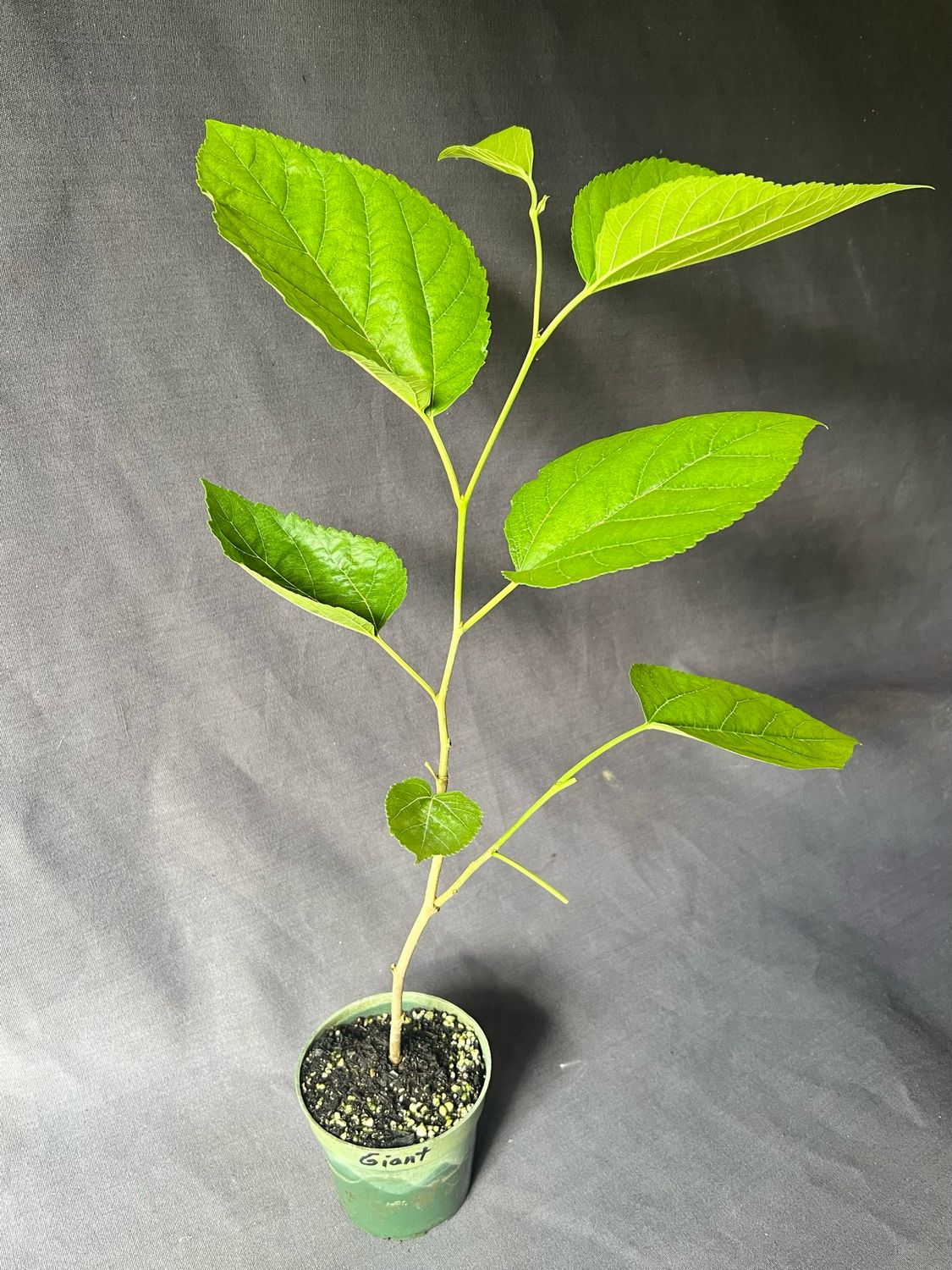
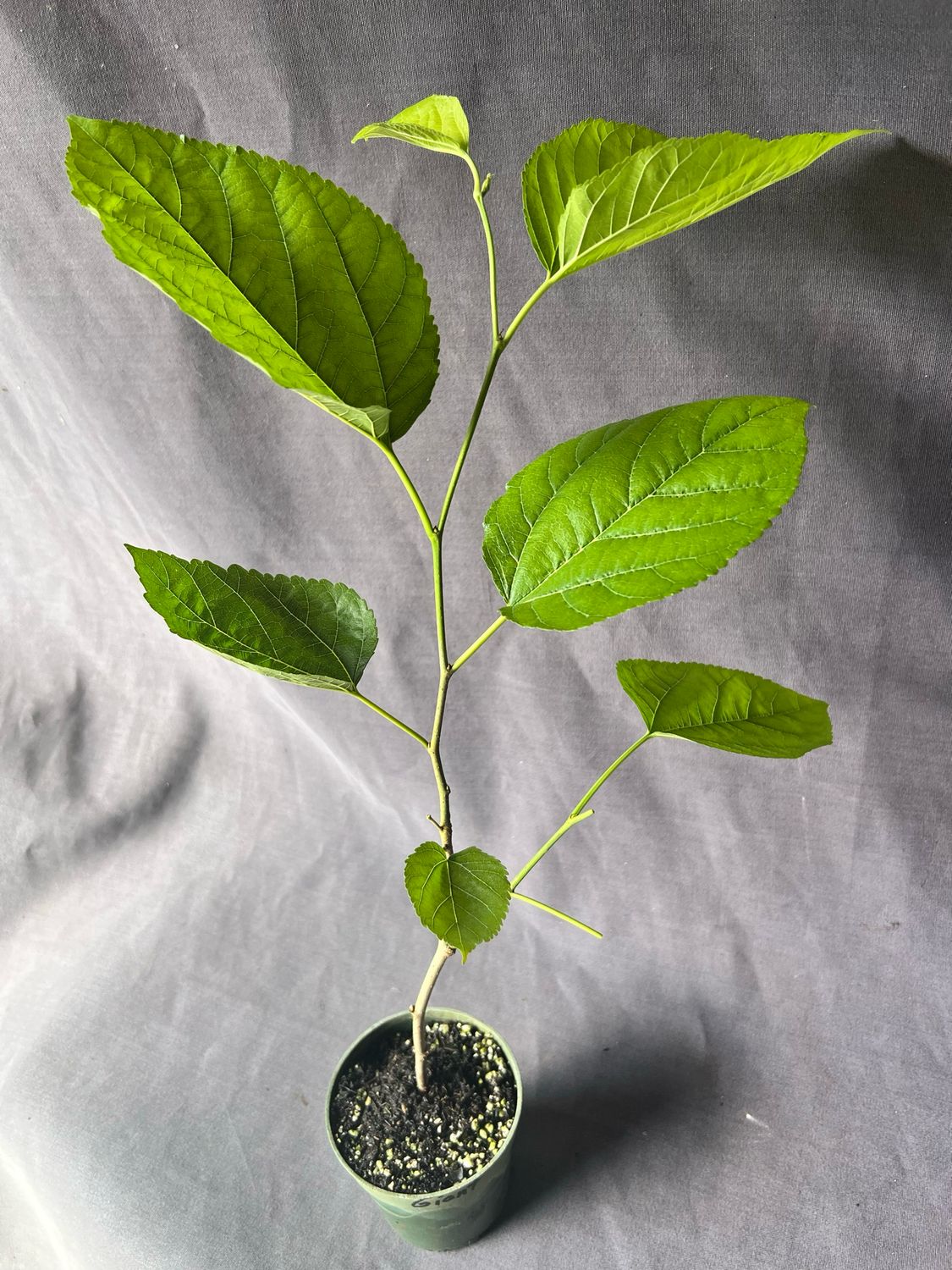
🍇 Estero Giant Mulberry Tree — Big Florida Berries, Fast Growth & Food-Forest Power
Morus spp. ‘Estero Giant’ | 4-Inch Rooted Starter Plant
Big berries from a little box.
Estero Giant Mulberry is the kind of old-school Florida fruit tree that makes a strong case for growing food at home: vigorous growth, a broad leafy canopy, beautiful dark berries, serious spring production, and fruit so tender that grocery stores simply are not built to handle it.
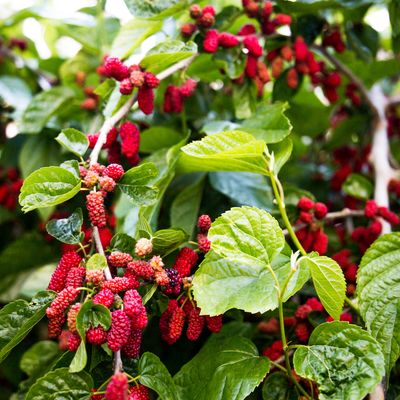
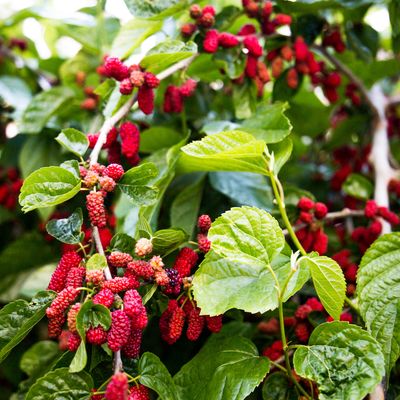
The berries are long, dark, exceptionally juicy, and richly sweet with enough tartness to keep them interesting. The tree itself grows with classic mulberry enthusiasm—quickly becoming an edible shade tree, wildlife resource, food-forest canopy species, and seasonal fruit factory.
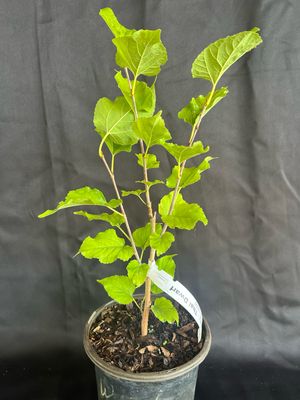
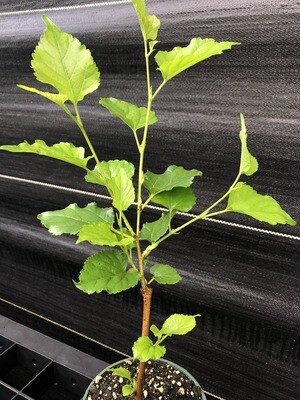
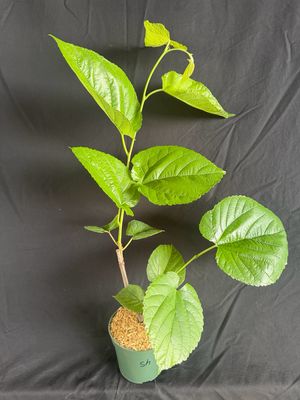
This listing features our 4-inch rooted Estero Giant starter plant, ideal for growers who enjoy beginning with a young tree and watching it develop from the ground up.
The compact starter size also makes Estero Giant accessible for shipping, particularly throughout Florida, the Southeastern United States, and Texas.
For longer UPS Ground routes into the northern and western U.S., however, the small container carries meaningfully greater transportation risk. A 4-inch pot holds less moisture and root reserve than our larger sizes, so growers outside our regional shipping zone should read the complete shipping section before ordering.
The plant may start small.
The tree definitely does not.
🌿 Quick Facts Guide — Estero Giant Mulberry
| Category | Details |
|---|---|
| Botanical Name | Morus spp. ‘Estero Giant’ |
| Common Name | Estero Giant Mulberry |
| Plant Type | Fast-growing deciduous fruit tree |
| Sale Size | Ships in a 4-inch nursery container |
| Plant Stage | Young rooted starter plant |
| Estimated Age | Generally several months old; approximately 3–9 months is common, depending on propagation date, pruning, season, and growth rate |
| Propagation Type | Vegetatively propagated / rooted cutting from selected fruiting stock |
| Mature Height — Unpruned | Commonly 25–40+ ft depending on site, climate, and management |
| Managed Height | Approximately 8–12 ft with consistent pruning |
| Mature Width | Approximately 20–35 ft when allowed to form a natural canopy |
| USDA Zones | Best suited to warm Zones 8–10; protected trials may be possible in favorable Zone 7 microclimates |
| Best U.S. Regions | Florida, Gulf Coast, lower Southeast, coastal Southeast, and warmer parts of Texas |
| Sun Requirements | Full sun preferred; approximately 6–8+ hours of direct sunlight |
| Cold Hardiness | Dormant wood is substantially more cold tolerant than tender new growth; protect young 4-inch plants from freezes |
| Growth Habit | Vigorous, upright-spreading deciduous tree developing a broad canopy |
| Growth Rate | Fast to extremely fast after establishment |
| Spacing — Managed Trees | Approximately 10–15 ft |
| Spacing — Natural Trees | Approximately 20–30 ft |
| Soil Preference | Adaptable; best in biologically active, well-drained soil |
| Water Needs | Consistent moisture while young; increasingly drought tolerant once established |
| Wind Tolerance | Moderate once established; young trees benefit from structural training |
| Salt Tolerance | Some coastal tolerance, but not suited to direct salt spray or saline soil |
| Pollination | A second mulberry is not normally required for fruit production from a selected fruiting clone |
| Typical Florida Harvest | Primarily late winter through spring |
| Fruit Color | Green → red → purple → deep purple-black |
| Fruit Size | Large, often approximately 1½–2 inches long under favorable conditions |
| Fruit Texture | Soft, extremely juicy, and tender |
| Primary Uses | Fresh eating, jam, syrup, cobbler, smoothies, wine, vinegar, freezing, food forests, edible shade, and wildlife forage |
Mulberries are deciduous, fruit on current-season growth, perform well in full sun and well-drained soil, and are known for rapid growth in Florida. UF/IFAS notes that some mulberries can grow more than 10 ft in a favorable season once established.
🌱 A Small Starter With Giant Potential
This is a 4-inch rooted starter plant.
That distinction matters.
You are not buying a miniature version of the mature tree. You are buying the beginning of the same vigorous Estero Giant Mulberry in a younger, smaller, more economical format.
With proper establishment, a small rooted mulberry can change dramatically during its first several growing seasons.
Why Start Small?
A 4-inch Estero Giant offers:
- 🌱 A young root system ready to establish into its environment
- 🌿 Fast adaptation once actively growing
- 🪴 Easy progressive container growing
- ✂️ The ability to begin structural training early
- 🚚 A more accessible entry point for shipping
- 🌳 The same cultivar potential as the larger plant
- 💚 The satisfaction of growing the tree from an early stage
But Smaller Also Means More Sensitive
Compared with a 1-gallon or larger tree, the 4-inch size has:
- Less soil volume
- Less stored moisture
- A smaller root reserve
- Faster dry-down
- Less insulation from temperature swings
- Less margin for watering mistakes
- Greater sensitivity during extended shipping
That does not make it a difficult plant.
Mulberries are famously vigorous.
It simply means the grower needs to pay more attention during the starter stage.
🔎 Estero Giant, Tice, Florida Giant & the Great Florida Mulberry Name Puzzle
If you spend enough time around old Florida fruit growers, you eventually discover a horticultural truth:
Not every great cultivar arrived with paperwork.
Many Florida mulberries circulated for decades through:
- Backyard growers
- Family properties
- Homesteads
- Small nurseries
- Cuttings shared between gardeners
- Farms
- Permaculture communities
- Local plant collectors
That informal distribution helped preserve excellent genetics—but also created considerable confusion around cultivar names.
Where Does Estero Giant Fit In?
Growers sometimes identify Estero Giant and Tice as the same cultivar or as extremely similar Florida selections.
Florida Giant is also sometimes discussed alongside them.
Other growers maintain these names as separate cultivars according to their propagation sources.
A recent California grower evaluation likewise noted that Tice and Estero Giant may be identical while acknowledging that their own observations did not establish that conclusively.
GreenDreams’ Approach
We maintain the cultivar identity according to the propagation source from which our stock originated.
This listing is therefore:
Morus spp. ‘Estero Giant’
We do not claim that Estero Giant, Tice, and Florida Giant have been genetically proven to be identical.
Until reliable genetic or historical documentation settles the question, we would rather preserve the cultivar label than manufacture certainty.
And really, the fruit speaks pretty loudly for itself.
🍇 Estero Giant Fruit Profile
This is why you grow it.
| Fruit Trait | What to Expect |
|---|---|
| Shape | Elongated rather than round |
| Typical Length | Often approximately 1½–2 inches under good growing conditions |
| Color Progression | Green → red → purple → deep purple-black |
| Flavor | Richly sweet with balancing berry-like tartness |
| Texture | Very soft, tender, and exceptionally juicy |
| Skin | Thin and delicate |
| Seeds | Tiny, soft, and generally unobtrusive |
| Aroma | Classic ripe berry character with mild floral notes |
| Best Eating Stage | Fully darkened, soft, and easily released from the stem |
| Storage Life | Very short; best eaten, refrigerated, frozen, or processed promptly |
UF/IFAS describes ripe mulberries generally as tender, flavorful, very sweet, and juicy, with fruit progressing from green through red before reaching its mature dark coloration.
🍇 When Is a Mulberry Actually Ripe?
Mulberries are a master class in patience.
Fruit can look nearly ready while still carrying noticeably more acidity than it will a day or two later.
For peak Estero Giant flavor:
- Allow the berry to become fully dark.
- Look for plump, softened fruit.
- Gently touch the berry.
- A truly ripe mulberry should release with almost no resistance.
The Easy Rule
If you need to pull, it probably needs more time.
A properly ripened mulberry almost falls into your hand.
That tree-ripened stage is difficult to commercialize because the fruit becomes so delicate.
Which brings us to one of the strongest reasons to grow your own.
🫐 Why Mulberries Rarely Show Up in Grocery Stores
Fresh mulberries are almost the opposite of a commercial shipping fruit.
They are:
- Thin skinned
- Soft
- Highly juicy
- Easily bruised
- Short lived after harvest
- Best when allowed to become fully ripe before picking
UF/IFAS notes that fully ripe mulberries have a very short shelf life and are best eaten soon after harvesting.
A supermarket needs fruit capable of being:
- Harvested before full maturity
- Packed
- Stacked
- Refrigerated
- Trucked
- Warehoused
- Displayed
- Handled by customers
A ripe mulberry basically says:
Absolutely not.
So if you want the real thing, grow the tree.
🌸 Fruiting Habit & Production
Estero Giant develops its crop alongside fresh seasonal growth.
Mulberries generally produce fruit on current-season shoots, which makes new-growth management an important part of long-term fruit production.
A Typical Central Florida Cycle
- 🍂 Winter dormancy and leaf drop
- 🌱 Bud swelling as temperatures warm
- 🌿 New shoots emerging
- 🌸 Flowers forming with new growth
- 🍇 Fruit developing rapidly
- 🧺 Primary spring harvest
- 🌳 Fast vegetative growth after harvest
- ✂️ Summer canopy management
- 🍂 Growth slowing toward winter
A mature Estero Giant can become a substantial seasonal producer.
🌱 How Soon Will My 4-Inch Estero Giant Fruit?
This is one of the most common questions—and also one where expectations matter.
Because these trees are vegetatively propagated rather than grown from unknown seed, they retain the mature genetics of the parent plant.
Mulberries can therefore fruit surprisingly young.
UF/IFAS reports that many mulberries may fruit in their first year under favorable conditions.
However:
Do Not Buy a 4-Inch Starter Expecting an Immediate Crop
A young starter should first prioritize:
- Root development
- Stem growth
- Structural branching
- Acclimation
- Container establishment or landscape establishment
Occasional flowers or berries on a young plant are possible.
They are not guaranteed.
The real payoff comes as the tree develops.
🗓️ Approximate Estero Giant Harvest Season
Timing shifts with winter temperatures, location, budbreak, pruning, and weather.
| Region | Typical Main Harvest |
|---|---|
| South Florida | Approximately February–March |
| Central Florida | Approximately March–April |
| North Florida | Approximately March–May |
| Gulf Coast / Lower Southeast | Approximately April–May |
| Warm Zone 8 Locations | Generally spring |
| Protected Cooler-Climate Trees | Later spring depending on dormancy and budbreak |
Interesting Estero Giant Observation
In one January Florida grower comparison, Estero Giant remained approximately 95% dormant while several other mulberry cultivars had already begun breaking bud.
That is useful observational information, particularly for growers concerned about erratic Florida winter weather.
It should not be interpreted as a guaranteed chill requirement or exact annual budbreak schedule.
Individual trees, microclimates, winter temperatures, pruning, and seasonal conditions can change timing considerably.
❄️ Why Budbreak Timing Matters in Florida
Cold hardiness is not one simple number.
A dormant mulberry branch can withstand considerably more cold than:
- A fresh leaf
- A swelling flower bud
- An open flower
- Newly developing fruit
Florida regularly gives growers this sequence:
Warm January → tree wakes up → beautiful new growth → cold front says hello.
The trunk may remain perfectly healthy while the new growth is damaged.
Young 4-inch plants should therefore receive extra protection during freezes.
More on that in Part 2.
🍇 What Helps Estero Giant Produce Better Fruit?
For stronger production and flavor:
- 🌞 Provide full sun
- 💧 Maintain consistent moisture during flowering and fruit development
- 🪣 Maintain excellent drainage
- 🌾 Improve poor soil with organic matter
- 🪵 Maintain hardwood mulch
- ✂️ Manage vigorous growth through thoughtful pruning
- 🌿 Maintain good light penetration
- ⚖️ Avoid excessive nitrogen
- ❄️ Protect early growth from freezes
- 🧺 Harvest fruit as it ripens
Mulberries are vigorous enough that excessive fertilizer can produce enormous vegetative growth without producing a proportionate improvement in fruit.
More Green Is Not Always More Fruit
Healthy soil + sunlight + appropriate water + thoughtful pruning usually beat aggressive fertilization.
🧺 Harvesting Estero Giant Mulberries
Ripe mulberries need gentle handling.
Hand Harvesting
- Harvest during cool morning conditions when possible
- Pick fruit that releases easily
- Use shallow containers
- Avoid piling berries deeply
- Refrigerate promptly
- Wash shortly before eating rather than before storage
Shake-and-Catch Method
Once the tree becomes larger:
- Spread a clean tarp beneath the canopy.
- Gently shake individual fruiting limbs.
- Fully ripe fruit will drop.
- Sort the berries immediately.
- Refrigerate, freeze, eat, or process quickly.
Do not aggressively beat or shake young branches.
What Can You Do With Estero Giant Mulberries?
This is where the harvest gets fun.
Estero Giant can stand in for:
- Blackberries
- Raspberries
- Blueberries
- Soft dark cherries
in many kitchen applications.
🍇 Fresh Uses
- Eat directly from the tree
- Top yogurt
- Add to oatmeal
- Fold into granola
- Blend into smoothies
- Serve over ice cream
- Add to fruit salad
- Pair with goat cheese
- Mix into pancakes
- Mix into waffles
- Freeze for snacks
- Crush into lemonade
- Add to sparkling water
🍯 Preserves, Desserts & Fermentation
A productive mature tree can create considerably more fruit than one family can eat fresh.
That’s a good problem.
Use the harvest for:
- Mulberry jam
- Jelly
- Cobbler
- Pie
- Galette
- Syrup
- Compote
- Chutney
- Fruit leather
- Fruit purée
- Smoothie packs
- Frozen whole fruit
- Mulberry wine
- Drinking vinegar
- Homemade fruit vinegar
- Barbecue glaze
- Dehydrated fruit
🌿 Savory Mulberry Pairings
The sweet-tart profile works particularly well with:
- Goat cheese
- Balsamic vinegar
- Citrus zest
- Black pepper
- Rosemary
- Basil
- Mint
- Hot peppers
- Pork
- Duck
- Roasted vegetables
A dark mulberry reduction over goat cheese or roasted meat is one of those dishes that makes people ask:
Wait—this came from your yard?
Exactly.
🍯 Simple Small-Batch Mulberry Jam
Ingredients
- 4 cups fully ripe mulberries
- 1½–2 cups sugar
- 2 tablespoons lemon juice
- 1 teaspoon lemon zest, optional
Directions
- Remove leaves and debris.
- Rinse the fruit gently.
- Drain well.
- Add berries, sugar, and lemon juice to a heavy saucepan.
- Lightly crush the berries.
- Simmer over medium-low heat.
- Stir frequently while the fruit releases juice.
- Continue cooking until thickened.
- Transfer to a clean container.
- Refrigerate.
For shelf-stable preservation, use a tested USDA or university Extension canning recipe for the appropriate processing method.
🌿 A Famous Mulberry Industry
White mulberry became especially important internationally because its leaves are the traditional food source used in silkworm production and sericulture.
The humble mulberry helped build an entire textile economy.
Not bad for a berry tree.
🌳 More Than Fruit — Estero Giant as an Edible Landscape Tree
Estero Giant can become a striking landscape feature.
Expect:
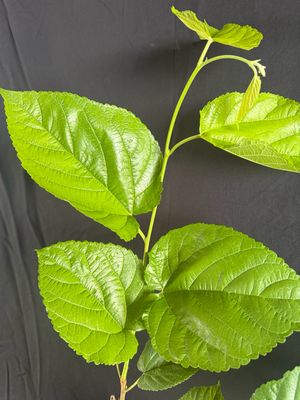
- Large green foliage
- Heart-shaped to variably lobed leaves
- Rapid canopy development
- Arching fruiting branches
- Gray-brown woody growth with age
- Bright spring foliage
- Dense summer shade
- Seasonal winter dormancy
Great Landscape Uses
Estero Giant works beautifully as a:
- Food-forest canopy tree
- Backyard orchard tree
- Homestead fruit tree
- Seasonal shade tree
- Wildlife tree
- Poultry forage tree
- Productive privacy screen
- Managed edible hedge
- Background edible specimen
🌳 Where You Probably Should NOT Put It
Avoid planting directly:
- Beside white concrete
- Over a patio
- Beside the pool
- Over parked vehicles
- Along a narrow driveway
- Against the house
- Under power lines
- Next to a septic drainfield
- Against a property line without room to prune
- In a tiny ornamental foundation bed
The tree is vigorous.
The berries stain.
Plan for both.
🍇 GreenDreams Mulberry Comparison Guide
Cultivar names within the mulberry trade are not always genetically standardized. This chart reflects commonly observed nursery characteristics rather than claiming documented pedigrees for every selection.
| Cultivar | Fruit Size, Flavor & Texture | Growth Habit | Climate Notes | Best For |
|---|---|---|---|---|
| Thai Dwarf | Small–medium; sweet, soft, and very juicy | Naturally compact and highly prune-responsive | Excellent Zones 8–10 choice | Containers, patios, small yards |
| Everbearing | Small–medium; classic sweet-tart mulberry flavor | Bushy to medium-sized | Exact hardiness varies by clone | Backyard orchards and repeat crops |
| Tice | Medium–large; rich sweet-tart flavor; very soft and juicy | Vigorous, broad, spreading | Longtime Florida performer | Food forests, homesteads, shade |
| Estero Giant | Large; elongated, richly sweet with balancing tartness; exceptionally juicy | Large, vigorous, broad-canopied | Excellent warm-climate selection | Large fruit, Florida landscapes, collectors |
| Florida Giant | Large–very large; elongated, sweet-tart, soft and juicy | Vigorous and spreading | Warm Zones 8–10 particularly suitable | Large fruit, food forests, edible shade |
| World’s Best | Large; sweet, soft, exceptionally juicy | Vigorous but easily managed with pruning | Excellent in warm climates | Fresh eating and production |
| Pakistan | Very long fruit; sweet, mildly tart, somewhat firmer | Vigorous, upright | Loves heat; protect from hard freezes | Specialty fruit collectors |
| Shangri-La | Medium–large; rich dark berry flavor | Fast, broad, tropical-looking | Excellent Florida performer | Food forests and large landscapes |
| White-Fruited Types | Honey-sweet, mild, lower acidity | Varies by selection | Variable | Lower-staining fruit |
| Unryu / Corkscrew | Fruit secondary to ornamental form | Twisted, architectural branching | Deciduous, relatively cold hardy | Ornamental edible landscapes |
Are Estero Giant and Tice the Same?
Possibly.
Multiple growers associate the names closely, but reliable historical records or genetic verification proving identity are not currently available. GreenDreams therefore maintains them according to propagation-source identity rather than collapsing the names together.
🌱 Estero Giant Mulberry Planting & Care Guide
🍂 Estero Giant Mulberry Is Deciduous
Yes.
And if you purchase this tree during winter, understanding this may save you some unnecessary panic.
A deciduous tree naturally loses its leaves during a seasonal resting period.
Mulberries may drop some or all foliage during a cold winter.
A healthy dormant Estero Giant can appear:
- Bare
- Nearly bare
- Yellowing
- Spotted
- Completely inactive
- Covered only with dormant buds
A Leafless Tree Is Not Automatically a Dead Tree
During dormancy, look for:
- Firm buds
- Flexible young wood
- Living tissue beneath the bark
- A sound root system
The tree may remain visually quiet for several weeks before spring growth begins.
🗓️ Estero Giant Seasonal Guide — Florida & Similar Climates
| Season | What to Expect | What to Do |
|---|---|---|
| Winter — Dec.–Feb. | Leaf yellowing, spotting, partial or complete dormancy | Reduce irrigation frequency, avoid heavy fertilizer, protect starter plants from freezes |
| Late Winter | Bud swelling and possible early growth | Monitor forecasts carefully |
| Spring — Mar.–May | Rapid leaf growth, flowering, fruit development, harvest | Maintain even moisture and harvest frequently |
| After Harvest | Strong vegetative growth | Begin canopy training and light size management |
| Summer | Extremely vigorous shoot growth | Water during drought, train structure, prune moderately |
| Late Summer | Continued canopy expansion | Control excessive height and width |
| Fall | Growth slows and wood begins hardening | Avoid heavy nitrogen and severe late pruning |
🌱 Seasonal Expectations for a Young 4-Inch Plant
A starter tree will not necessarily behave exactly like a mature fruiting specimen.
During its first growing cycle, you may see more emphasis on:
- Root development
- Stem elongation
- Leaf production
- Branch development
- Acclimation
rather than heavy fruiting.
That is good.
The goal is not to squeeze every possible berry out of a baby tree.
The goal is to build the structure that supports years of harvests later.
❄️ Cold & Frost Care — Extra Important for a 4-Inch Starter
A mature established mulberry and a recently rooted starter do not have the same cold tolerance.
Young trees have:
- Thinner stems
- Smaller roots
- Less stored energy
- Less soil insulation
- Less canopy mass
Protect 4-Inch Containers Aggressively During Freezes
Move the container into a:
- Garage
- Greenhouse
- Protected porch
- Enclosed lanai
- Other frost-protected location
A portable starter plant is easy to protect.
Take advantage of that.
If Already Planted
During dangerous cold:
- Water dry soil earlier in the day
- Cover the entire canopy
- Extend frost cloth toward the ground
- Anchor the material securely
- Keep plastic away from direct leaf contact
- Remove or vent coverings when temperatures recover
❄️ After a Freeze
Do not immediately prune every brown stem.
Wait until temperatures stabilize and buds begin responding.
Cold-damaged foliage may look terrible while:
- The stem remains alive
- Dormant buds remain viable
- New growth develops farther down the branch
Give the plant time to declare what actually survived.
🌞 Where to Plant Estero Giant Mulberry
Choose a permanent location with:
- Approximately 6–8+ hours of direct sun
- Well-drained soil
- Plenty of eventual canopy room
- Good airflow
- Easy access for pruning
- Easy access for harvest
- Room for falling fruit
UF/IFAS recommends full sun to light shade and well-drained soil for mulberries.
Recommended Spacing
Regularly pruned trees: approximately 10–15 ft
Natural canopy: approximately 20–30 ft
🚫 Avoid Planting Estero Giant Near
- Foundations
- Wells
- Septic systems
- Underground utilities
- Sidewalks
- Driveways
- Pools
- Light-colored patios
- Rooflines
- Electrical lines
- Narrow side yards
Remember:
A 4-inch plant fits almost anywhere today.
Plant for the tree it becomes.
🌬️ Wind Resistance & Storm Structure
Established mulberries have moderate wind resistance, according to UF/IFAS, but rapid tree growth makes early structural pruning important.
Build Strong Structure Early
While your Estero Giant is young:
- Encourage 3–5 well-spaced scaffold limbs
- Remove crossing branches
- Avoid narrow competing leaders
- Shorten excessively long shoots
- Correct weak structure while cuts are small
- Maintain a lower center of gravity
- Remove damaged wood before hurricane season
One major advantage of starting with a 4-inch tree is the opportunity to shape it correctly before the problems become large branches.
🌊 Salt & Coastal Exposure
Mulberries have some salt tolerance, but Estero Giant should not be treated as a frontline salt-tolerant coastal tree.
Best performance occurs:
- Inland from direct shoreline spray
- Behind a windbreak
- With freshwater irrigation
- Outside brackish flood zones
- Where salt exposure is occasional rather than constant
A protected coastal backyard can be very different from beachfront exposure.
🚚 First Things First: Recover From Shipping
This section matters more for a 4-inch plant than for almost any other size.
Your Estero Giant may have spent days:
- In darkness
- Inside a cardboard box
- Moving through multiple climate zones
- Experiencing vibration
- Experiencing temperature fluctuations
- Drying more rapidly than it would outdoors
Do Not Immediately Transplant It
GreenDreams recommends leaving newly shipped plants in their original containers for approximately 30 days or until healthy new growth confirms recovery.
That gives the plant time to:
- Rehydrate
- Reorient to natural light
- Replace stressed leaves
- Reestablish normal root function
- Demonstrate healthy growth
🌱 GreenDreams Arrival & Acclimation Process
When your 4-inch Estero Giant arrives:
- Open the box promptly.
- Remove packaging gently.
- Inspect the plant.
- Check the potting mix.
- Water at soil level if dry.
- Place in bright protected shade.
- Avoid intense afternoon sunlight immediately.
- Introduce morning sun gradually.
- Increase light over several days.
- Protect from high wind.
- Do not fertilize immediately.
- Keep it in the 4-inch container until recovery is obvious.
Temporary:
- Yellowing
- Curling
- Brown edges
- Leaf spotting
- Partial leaf drop
- Wilting
can occur after shipping.
What We Want to See
🌱 Healthy new growth.
That is your strongest signal that the plant has settled in.
💧 4-Inch Container Watering — Pay Attention Here
A small nursery pot can dry quickly.
Very quickly.
The same feature that makes a 4-inch plant economical to ship also means there is less potting medium holding moisture around the roots.
Check Your Estero Giant Daily
During hot weather, a small container may require daily watering.
Check by:
- Feeling the potting medium
- Lifting the pot to judge weight
- Looking at leaf firmness
- Checking deeper than the top crust of soil
Water Thoroughly
When irrigation is needed:
- Water slowly at the soil surface.
- Saturate the entire root ball.
- Allow water to flow through the drainage holes.
- Let excess water drain completely.
Do not provide tiny surface sips.
You want the entire root system hydrated.
🚫 NO OVERHEAD WATERING
GreenDreams recommends watering live plants at soil level only.
Preferred methods include:
- Drip irrigation
- Slow hose
- Soil-directed watering wand
- Proper micro-irrigation
- Tree watering ring
Morning Is Best
Morning irrigation allows the roots to absorb moisture before the hottest part of the day.
Avoid routine overhead watering, especially during hot afternoons.
Overhead watering can contribute to:
- Leaf burn
- Water spotting
- Soil splash
- Fungal pressure
- Wet foliage late in the day
- Uneven root-zone irrigation
Water the roots—not the leaves.
💦 Do Not Confuse Daily Checking With Keeping the Pot Soggy
A 4-inch plant may dry quickly.
That does not mean it should remain permanently saturated.
Roots require:
Water + Oxygen
If the pot stays continuously wet:
- Root oxygen declines
- Fine roots may deteriorate
- Leaves may yellow
- Growth can stall
- Root rot pressure increases
Check first.
Then water.
🌳 Suggested In-Ground Watering Schedule
Once the recovered plant has been transplanted:
| Establishment Stage | Suggested Watering |
|---|---|
| Days 1–14 | Water daily during hot or dry conditions |
| Weeks 3–6 | Deep watering approximately 2–3 times weekly |
| Months 2–6 | Approximately 1–2 times weekly during dry periods |
| Established Tree | Deep irrigation during prolonged drought and fruit development |
| Florida Rainy Season | Reduce supplemental irrigation when rainfall is adequate |
Adjust according to:
- Soil texture
- Temperature
- Rainfall
- Drainage
- Wind
- Plant health
Florida sand and heavy clay should not be watered on the same schedule.
🌱 How to Plant Estero Giant Mulberry
Step 1 — Confirm Drainage
Before digging anything, determine where water travels after a Florida thunderstorm.
Avoid low areas that remain saturated.
When necessary:
- Plant on a broad mound
- Redirect runoff
- Improve surrounding drainage
- Choose a different site
Step 2 — Dig Wide & Shallow
Once your Estero Giant has recovered from shipping:
Dig a hole:
- Only slightly wider than the root ball
- No deeper than the container
- With roughened sides
The original root-ball surface should remain at or slightly above the surrounding grade.
Step 3 — Inspect the Roots
Remove the young tree carefully.
Because the root system is small:
- Avoid tearing it apart
- Keep the root ball mostly intact
- Loosen only clearly circling exterior roots
- Correct severe girdling when necessary
- Handle the woody stem rather than pulling on foliage
Step 4 — Plant High & Tight
Position the tree so:
- The trunk is vertical
- The root flare remains visible
- The root ball sits slightly high rather than buried
- No new soil covers the stem
Never sink the plant below its original nursery depth.
Step 5 — Backfill
Use primarily the native soil removed from the planting area.
Pack the soil firmly enough to eliminate large air pockets without compacting it excessively.
Avoid creating a tiny artificial pocket filled completely with rich potting soil or compost.
Roots eventually need to move into the surrounding native soil.
Step 6 — Build Soil From the Surface
GreenDreams commonly supports the developing root zone with:
- Finished compost
- Charged biochar
- Worm castings
- Azomite or another appropriate trace-mineral amendment
- Modest organic nutrition where needed
Top-dressing supports the soil system without burying the trunk.
Step 7 — Mulch
Apply approximately 2–4 inches of hardwood mulch around the planting area.
Keep mulch:
- Broad
- Loose
- Several inches away from the woody stem
- Free from herbicide residues
- Replenished as decomposition occurs
Never Make a Mulch Volcano
Mulch belongs over soil.
Not against the trunk.
🎥 GreenDreams High & Tight Planting Method
For our fruit-tree planting demonstration:
Watch GreenDreams’ High & Tight Planting Video
🌾 Soil Preferences
Estero Giant Mulberry is adaptable.
It performs especially well in soil that is:
- Well drained
- Moderately fertile
- Biologically active
- Moist without remaining saturated
- Rich in decomposing organic matter
- Slightly acidic to near neutral
Florida’s sandy soil is workable.
Improve it from above with:
- Compost
- Mulch
- Organic matter
- Biological activity
UF/IFAS notes that mulberries tolerate relatively infertile sandy Florida soils and generally need little supplemental fertilizer once established.
🌿 Fertilizing Estero Giant Mulberry
Mulberry is one of those rare fruit trees where growers can create more problems by loving it too aggressively.
These trees already grow fast.
Excess Nitrogen Can Produce
- Extremely long shoots
- Weak growth
- Excessive canopy density
- Reduced airflow
- Increased storm leverage
- Tender late-season growth
- Fertilizer burn
- Lots of leaves without dramatically more fruit
GreenDreams Organic Approach
Consider:
- Finished compost
- Worm castings
- Charged biochar
- Hardwood mulch
- Modest organic fruit-tree fertilizer if needed
- Soil testing when chronic deficiencies are suspected
🗓️ Suggested Florida Nutrition Timing
Early Spring
Top-dress with compost.
Add light balanced organic nutrition only if growth or soil conditions indicate a need.
After Harvest
A modest feeding can support summer regrowth where needed.
Summer
Observe before feeding.
A mulberry producing several feet of healthy growth probably does not need encouragement.
Late Summer & Fall
Avoid heavy nitrogen.
You want branches hardening before winter—not producing soft new growth.
Winter
Do not routinely fertilize a dormant tree.
✂️ Pruning Estero Giant Mulberry
Pruning serves two very different purposes:
🍇 Fruit Production
Mulberry fruit develops with current-season growth.
🌳 Size Control
Estero Giant is naturally vigorous.
If you want a manageable harvest tree, start managing it while it is young.
🎯 Target Managed Height
For home harvesting, consider maintaining approximately:
8–12 ft
instead of allowing the tree to become a full-size shade tree.
This keeps:
- Fruit reachable
- Birds easier to compete with
- Pruning manageable
- Storm leverage lower
- Harvesting safer
✂️ Why Starting With a 4-Inch Tree Is Actually an Advantage
You can build the tree correctly from the beginning.
Rather than inheriting a poorly structured 20-ft tree, you can decide:
- Where the first branches develop
- How many primary scaffold limbs remain
- How high the canopy begins
- How wide the tree becomes
- How accessible the fruit remains
Young Tree Training
As the tree develops:
- Select 3–5 strong scaffold branches.
- Space them around the trunk.
- Remove crossing branches.
- Reduce competing narrow leaders.
- Shorten excessively long shoots.
- Maintain good light penetration.
- Remove unwanted basal shoots.
✂️ After-Harvest Pruning
For established fruiting trees, the period after the main spring crop is an excellent time for substantial size management.
This gives the tree warm weather to regrow.
Use pruning to:
- Reduce height
- Shorten long limbs
- Thin crowded growth
- Restore harvest access
- Encourage fresh shoots
- Improve branch structure
☀️ Summer Pruning
A second lighter pruning later in summer can help:
- Shorten vigorous vertical shoots
- Prevent the tree from becoming oversized
- Clear pathways
- Improve airflow
- Keep developing branches stronger
Avoid major late-season pruning immediately before winter.
Fresh tender growth is more freeze sensitive.
🪴 Can Estero Giant Grow in a Container?
Absolutely while young.
It can also be maintained as a container tree longer term, but Estero Giant is naturally vigorous and will require active management.
Container growing is useful for:
- Renters
- Patio gardeners
- Growers waiting for a permanent site
- Cold-climate growers needing winter mobility
- Collectors
- People intentionally restricting tree size
🪴 Recommended Container Progression
| Growth Stage | Suggested Container |
|---|---|
| Current Starter | 4-inch nursery container |
| Next Step | Approximately 1 gallon |
| Developing Tree | Approximately 3 gallon |
| Young Landscape / Patio Tree | Approximately 7 gallon |
| Larger Container Tree | Approximately 10–15 gallon |
| Productive Patio Tree | Approximately 20–30 gallon |
| Long-Term Specimen | Approximately 30–45+ gallon |
Think Gradually
4-inch → 1 gallon → 3 gallon → 7 gallon → 15 gallon → 25–30+ gallon
Do not move a tiny starter directly into a 30-gallon pot.
A huge volume of unused soil can remain wet much longer than the young roots can use it.
🪴 When Should I Up-Pot My Estero Giant?
Look at the roots.
Signs include:
- Roots emerging from drainage holes
- Circling roots
- Root ball holding together firmly
- Container drying extremely quickly
- Water running around rather than through the root ball
- Plant becoming top-heavy
- Growth slowing despite good care
Best Rule
Transplant based on root development, not because a calendar tells you to.
For shipped plants, also wait until transportation stress has passed.
🌱 How to Move a 4-Inch Estero Giant Into a Larger Container
- Allow the shipped plant to recover first.
- Choose the next appropriately sized pot.
- Confirm multiple drainage holes.
- Add enough mix to maintain the existing planting depth.
- Carefully slide the starter from the container.
- Keep most of the root ball intact.
- Loosen only clearly circling exterior roots.
- Position the stem upright.
- Backfill gently.
- Do not bury the woody stem.
- Water thoroughly at soil level.
- Protect the newly transplanted tree from severe heat and wind while it settles.
🪴 Where Can I Find Larger Nursery Pots?
Growers can generally find professional containers through:
- Independent nurseries
- Garden centers
- Hydroponic suppliers
- Landscape suppliers
- Agricultural stores
- Farm-supply companies
- Online horticultural suppliers
Useful search terms include:
- Nursery container
- Tree pot
- Trade gallon nursery pot
- Heavy-duty nursery container
- Fabric grow bag
Always prioritize excellent drainage.
🌱 Recommended Estero Giant Potting Mix
Mulberry appreciates moisture but does not want stagnant roots.
A practical container mix might include:
| Ingredient | Approximate Proportion |
|---|---|
| Quality peat- or coir-based potting medium | 40–45% |
| Aged pine bark fines | 20–25% |
| Finished compost or worm-casting blend | 15–20% |
| Perlite, pumice, or coarse aeration material | 10–15% |
| Charged biochar | Up to approximately 5% |
The final mix should:
- Drain freely
- Retain moderate moisture
- Remain aerated
- Resist compaction
🚫 Avoid Container Mixes Made From
- Straight Florida sand
- Heavy landscape soil
- Pure compost
- Uncomposted manure
- Dense clay
- Containers without drainage
A container is not a miniature planting hole.
It is its own root environment.
🏠 Can Estero Giant Be Grown Indoors?
Not as a practical long-term fruiting houseplant.
Estero Giant needs:
- Strong direct sun
- Outdoor airflow
- Seasonal temperature shifts
- Dormancy
- Significant root space
- Room for branch growth
A container plant can temporarily be moved into a:
- Garage
- Greenhouse
- Protected porch
- Enclosed structure
during severe cold.
Think Temporary Protection, Not Permanent Indoor Growing
🌿 Estero Giant Food-Forest Companion Plants
Mulberries are primarily wind pollinated, so flowering companions are not required to pollinate the tree itself.
That does not mean companions are unnecessary.
A good guild can:
- Build soil
- Produce biomass
- Protect the ground
- Attract beneficial insects
- Produce additional crops
- Reduce weed pressure
- Increase ecological diversity
🌱 Nitrogen-Supporting Plants
Consider:
- Pigeon pea
- Sunn hemp
- Perennial peanut
- Regionally appropriate native legumes
🌿 Biomass & Chop-and-Drop Species
GreenDreams favorites include:
- Mexican sunflower
- Fakahatchee grass
- Lemongrass
- Other non-running clumping grasses
These plants produce renewable material that can be chopped and returned to the soil surface.
🐝 Beneficial-Insect Plants
Consider:
- African blue basil
- Coreopsis
- Native asters
- Goldenrod
- Mountain mint
- Native sunflowers
- Flowering culinary herbs
🥬 Productive Edible Companions
Depending on sun and spacing:
- Cranberry hibiscus
- Chaya
- Roselle
- Okinawa spinach
- Longevity spinach
- Ginger
- Turmeric
- Managed sweet potato
Keep the Trunk Clear
Do not allow vines or companions to engulf a young Estero Giant.
Maintain an open mulched establishment zone around the starter tree.
⚠️ Estero Giant Mulberry Cautions
🍇 Ripe Fruit Can Stain
Dark ripe mulberries can stain:
- Concrete
- Pavers
- Pool decks
- Vehicles
- Patio furniture
- Clothing
- Light-colored surfaces
Better Placement
Plant over:
- Mulch
- Lawn
- Pasture
- Orchard floor
- Groundcover areas
rather than directly beside polished hardscape.
🐦 Birds Know Exactly When Mulberries Are Ripe
Wildlife loves mulberry.
Expect visits from:
- Birds
- Squirrels
- Raccoons
- Opossums
- Other fruit-eating animals
Strategies include:
- Harvesting daily
- Keeping the tree low
- Picking fully ripe fruit promptly
- Using properly installed wildlife-safe netting
- Growing enough to share
Avoid loose netting that can trap wildlife.
🧤 Milky Mulberry Sap
Cut stems and foliage may release milky sap.
UF/IFAS notes that mulberry sap can irritate the skin of sensitive individuals.
When pruning:
- Wear gloves
- Avoid eye contact
- Wash exposed skin
- Clean pruning tools
- Keep freshly cut debris away from small children and pets
Eat the fully ripe fruit rather than unripe plant material.
🌱 Responsible Mulberry Management
Mulberry taxonomy and cultivar identity can become complicated.
Some nonnative Morus genetics have naturalized extensively in North America and can hybridize with native red mulberry.
For responsible edible landscaping:
- Remove unwanted seedlings
- Do not intentionally allow volunteers to spread into natural areas
- Do not label seedlings as Estero Giant
- Maintain named cultivars through vegetative propagation
- Use documented native red mulberry when native restoration genetics are required
A named fruit cultivar and a native ecological restoration tree serve different goals.
🔍 Estero Giant Mulberry Troubleshooting Guide
Icons represent common issues and organic recovery strategies—look for 🌿 for the next step.
| ⚠️ Issue | 🧠 Likely Cause | 🌿 Recommended Response |
|---|---|---|
| 🍂 Bare plant in winter | Normal dormancy | Check buds and living wood; reduce irrigation and wait for spring |
| 🍂 Yellow or spotted winter foliage | Normal seasonal senescence | Allow natural leaf drop |
| 🌱 No immediate growth after delivery | Transportation/acclimation stress | Maintain proper moisture and bright protected light |
| 🫣 Curling shortly after shipping | Root moisture stress, heat, wind, or transition shock | Protect from extremes and monitor moisture closely |
| ☀️ Brown patches after moving into sun | Sunscald during acclimation | Reduce exposure and introduce direct sun gradually |
| 💧 Wilt + dry 4-inch pot | Underwatering | Water entire root ball thoroughly; check daily |
| 💦 Wilt + constantly wet soil | Root oxygen stress | Reduce irrigation and improve drainage |
| 🍂 Yellow summer foliage | Wet roots, nutrient imbalance, or root stress | Inspect roots and soil before adding fertilizer |
| 🍄 Leaf spots | Humidity, splash, fungal pressure | Improve airflow and eliminate routine overhead irrigation |
| 🍿 Enlarged green popcorn-like fruit | Popcorn disease | Remove affected fruit from tree and ground |
| 🐛 Chewed leaves | Caterpillars or beetles | Identify the pest; tolerate minor damage or use a labeled organic control |
| 🪲 Sticky leaves / black sooty coating | Aphids, scale, or related sap-feeders | Inspect undersides; manage ants; use appropriate labeled treatment |
| 🕷️ Fine stippling or webbing | Spider mites | Reduce drought stress and treat with a suitable labeled product if necessary |
| 🍃 Fruit drops prematurely | Weather, uneven moisture, freeze injury, heat, or stress | Maintain consistent care |
| 🌿 Huge growth, low fruiting | Excess nitrogen, shade, youth, or pruning imbalance | Reduce fertilizer and improve sunlight |
| ✂️ Too many vertical shoots | Heavy heading cuts or high nitrogen | Thin selected shoots rather than repeatedly topping |
| 🌬️ Broken limbs | Rapid growth + weak structure | Train branches early |
| ❄️ Brown new spring growth | Late freeze | Wait for regrowth before removing wood |
| 🐦 Fruit disappears every morning | Wildlife | Harvest frequently and maintain reachable canopy |
| 🌾 Weak growth in Florida sand | Drought, poor establishment, low organic matter, root stress | Improve watering consistency, compost, and mulch |
🌟 Is Estero Giant Mulberry Right for You?
✅ Ideal For
- Florida fruit growers
- Southeast gardeners
- Gulf Coast growers
- Texas growers
- Food-forest enthusiasts
- Backyard orchard growers
- Homesteaders
- Permaculture landscapes
- Wildlife-friendly gardens
- Growers who want fast edible shade
- Gardeners comfortable with pruning
- Growers who enjoy starting with young plants
- People who want fruit unavailable in grocery stores
- Cooks interested in jam, cobbler, syrup, freezing, or fermentation
❌ Probably Not Ideal For
- Growers who want an immediately large landscape specimen
- Tiny spaces without pruning access
- Plantings beside pristine white concrete
- Poolside planting
- Areas over parked vehicles
- Sites with permanently wet soil
- Growers seeking a naturally dwarf tree
- Long-term indoor cultivation
- Gardeners unwilling to manage vigorous growth
- Buyers expecting a small starter to tolerate extended shipping like a 3-gallon tree
- Ecological restoration projects requiring documented native Morus rubra genetics
❓ Estero Giant Mulberry FAQ
What is an Estero Giant Mulberry?
Estero Giant is an old Florida-circulated mulberry selection valued for vigorous growth, large elongated dark berries, sweet-tart flavor, and excellent potential as a productive edible shade tree.
Is Estero Giant the Same as Tice Mulberry?
Possibly, but we do not consider the identity genetically proven.
Growers frequently associate the two names, while other collections preserve them separately.
GreenDreams maintains the Estero Giant cultivar name according to our propagation source.
Is Estero Giant the Same as Florida Giant?
The names are sometimes grouped or confused in the nursery trade, but there is not enough reliable documentation to declare every Estero Giant and Florida Giant tree genetically identical.
We maintain them according to their cultivar labels and propagation histories.
How Big Does Estero Giant Mulberry Get?
Without pruning, Estero Giant can become a substantial shade tree, commonly reaching approximately 25–40+ ft depending on conditions.
With consistent management, it can be kept around 8–12 ft for easier harvesting.
How Fast Does Estero Giant Grow?
Very fast once established.
Mulberries are among the fastest-growing fruit trees used in Florida landscapes. UF/IFAS reports that some can exceed 10 ft of growth in a favorable year.
How Big Will My 4-Inch Plant Be When It Arrives?
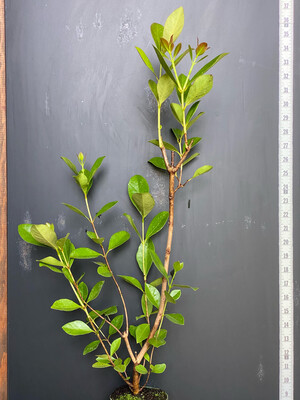
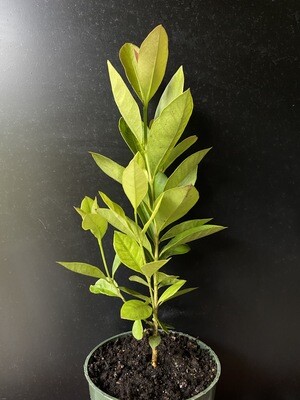
Plant height and branching vary throughout the season.
The listing refers to the container size, not a guaranteed height.
A 4-inch starter may be:
- Short and recently rooted
- Taller with a single developing leader
- Branched
- Recently pruned
- Leafy during active growth
- Partially or completely dormant during winter
The root system and cultivar identity matter more than temporary foliage height.
How Old Is a 4-Inch Estero Giant?
Plants are generally several months old.
Approximately 3–9 months is a useful estimate, although actual age varies with propagation timing, pruning, season, rooting speed, and nursery conditions.
Is the 4-Inch Estero Giant Grafted?
Our mulberries are vegetatively propagated as rooted cuttings unless specifically stated otherwise.
This allows the new tree to retain the characteristics of the selected parent cultivar.
When Will a 4-Inch Estero Giant Fruit?
Vegetatively propagated mulberries may fruit surprisingly young, sometimes within the first growing year under favorable conditions.
However, a newly purchased starter should prioritize establishment first.
Early fruit is possible.
It is not guaranteed.
Does Estero Giant Need Another Mulberry for Pollination?
A second cultivar is not normally necessary for a selected fruiting mulberry clone.
Multiple cultivars are still worthwhile for:
- Flavor diversity
- Fruit-size diversity
- Growth-habit diversity
- Potentially broader harvest timing
Do Bees Pollinate Mulberry?
Mulberries are primarily wind pollinated.
Pollinator plants remain valuable for supporting the larger edible landscape.
Does Estero Giant Fruit on New Growth?
Yes.
Mulberry fruits occur on current-season growth.
That is one reason pruning and fresh-shoot management can influence production.
When Does Estero Giant Fruit in Florida?
Primary harvest generally occurs from late winter through spring.
Central Florida growers can often expect the main crop around March and April, though timing changes annually.
Is Estero Giant Evergreen?
No.
It is deciduous.
Expect seasonal leaf loss.
Why Did My Estero Giant Arrive Leafless?
Potential causes include:
- Normal winter dormancy
- Shipping darkness
- Temperature fluctuations
- Moisture stress
- Normal post-shipping defoliation
A leafless mulberry may still be completely healthy.
Look for viable buds and living wood and allow the plant time to recover.
Can Estero Giant Grow in Zone 7?
Protected trials may be possible in favorable Zone 7 locations, but our primary recommendation is for warmer Zones 8–10.
A young 4-inch plant needs considerably more winter protection than an established mature tree.
Can Estero Giant Grow in Florida Sand?
Yes.
Mulberries are highly adaptable to Florida soil.
Compost, mulch, and consistent establishment irrigation can dramatically improve performance.
Is Estero Giant Drought Tolerant?
Established mulberries are relatively drought tolerant.
A 4-inch starter is not yet an established tree.
Small containers and newly planted root systems need much more consistent moisture.
Can Estero Giant Grow in a Container?
Yes.
It is easy to keep container-grown while young.
Long-term container culture requires:
- Progressive up-potting
- Pruning
- Full sun
- Reliable irrigation
- Excellent drainage
- Eventually a large container
Can I Keep Estero Giant Under 10 ft?
Yes.
Start managing height while the tree is young.
Regularly reducing a 10-ft tree is far easier than trying to reclaim a 35-ft tree.
Can Estero Giant Be Grown Indoors?
Not as a practical permanent houseplant.
It requires outdoor sun, airflow, seasonal changes, and significant root space.
When Should I Transplant My 4-Inch Estero Giant?
After shipping:
Wait approximately 30 days or until healthy new growth confirms recovery.
For up-potting, transplant when the root system begins filling the current container.
Why Do You Recommend Waiting Before Transplanting?
Shipping already creates substantial environmental change.
Immediate transplanting adds another layer of stress.
Waiting allows the plant to:
- Recover
- Rehydrate
- Resume active growth
- Demonstrate root health
before another major change.
Does a 4-Inch Estero Giant Need Daily Water?
It needs to be checked daily.
During Florida summer weather, daily watering may be necessary.
During cool or rainy conditions, it may not be.
Water according to the actual root-ball moisture.
Why Do You Recommend a Larger Size for Long-Distance Shipping?
A larger nursery container generally provides:
- More soil
- More moisture reserve
- Greater root mass
- More stored energy
- Better insulation from temperature fluctuations
The difference becomes increasingly important during extended UPS Ground transportation.
🚚 Shipping Your 4-Inch Estero Giant Mulberry
🌱 Please Read Before Ordering
This live Estero Giant Mulberry ships from Florida in a 4-inch nursery container using UPS Ground.
We offer this starter size because it provides an economical way for growers to obtain excellent cultivar genetics.
However, this is also our smallest live-plant shipping format, and buyers need to understand the limitations that come with it.
The 4-Inch Size Is Most Ideal for Shipping To:
- 🌴 Florida
- 🌿 The Southeastern United States
- 🌞 Gulf Coast states
- 🌵 Texas
These regions typically offer:
- Shorter UPS Ground transit from Florida
- Less dramatic climate transition
- Faster recovery after delivery
- Growing conditions closer to those of our nursery
⚠️ Northern & Western U.S. Shipping Advisory
We are able to ship live plants throughout the continental United States.
That does not mean a 4-inch live plant is equally well suited to every UPS Ground route.
Extended transportation into northern and western states carries additional risk.
A 4-inch container:
- Holds relatively little soil
- Holds less water
- Dries faster
- Has a smaller root reserve
- Has less stored energy
- Provides less insulation
- Responds faster to temperature changes
- Has less recovery margin than a larger tree
Long-Distance Buyers Should Expect That:
The plant may arrive with:
- Wilted foliage
- Leaf loss
- Yellowing
- Brown edges
- Spotting
- Drying
- Cosmetic damage
- Delayed growth
and may require a considerably longer recovery period.
🌿 A Healthy Plant May Arrive Looking Stressed
This distinction is important.
A plant that spends several days moving across the country in a box can look dramatically different from the plant that left our nursery.
Live plants can recover from:
- Partial defoliation
- Wilt
- Shipping scorch
- Leaf browning
- Cosmetic foliage damage
if the stems and roots remain healthy.
Growers purchasing the 4-inch size should be prepared to focus on recovery and new growth, rather than expecting the plant to emerge from the box looking retail-display perfect.
📦 Regional Shipping Risk vs. Plant Size
| Plant Size | Transit Resilience | Best Use |
|---|---|---|
| 4-inch | Lowest moisture and root reserve | Best for Florida, Southeast & Texas; experienced growers; economical starters |
| 1 gallon | Improved soil volume and recovery reserve | Better choice for moderate-distance UPS Ground routes |
| 2–3 gallon | Greater moisture and root mass | Preferred when available for difficult or longer routes |
Our Recommendation
If you live in the northern or western U.S. and we offer Estero Giant in a 1-gallon or larger shipping size:
Choose the larger plant.
The larger root ball and greater soil volume provide a better buffer against extended transit stress.
Our 4-inch size is best viewed as the regional starter option.
⚠️ Buyer Discretion for Extended Transit
Customers choosing a 4-inch plant for long UPS Ground routes accept the additional risks associated with small live-plant shipping.
GreenDreams cannot guarantee that a small starter shipped across several climate zones will arrive in the same cosmetic condition in which it left our Florida nursery.
Risk Increases With:
- Transit length
- Carrier delays
- Extreme heat
- Freezing temperatures
- Repeated handling
- Dry air
- Holiday congestion
- Severe weather
- Agricultural inspection delays
The buyer assumes the added transportation risk when selecting this small size for destinations outside our preferred regional shipping area.
🔥 Peak Heat Shipping
Small plants can dry rapidly inside carrier vehicles during extreme summer temperatures.
Buyer discretion is especially important during:
- Heat waves
- Triple-digit temperatures
- Severe drought
- Major carrier delays
If extreme conditions are forecast along the route, consider delaying your purchase or choosing a larger plant when available.
❄️ Winter Shipping
A 4-inch starter contains very little soil compared with a mature landscape tree.
That means the root system is more vulnerable to prolonged freezing temperatures.
Growers in cold regions should carefully consider:
- Origin temperature in Florida
- Destination temperature
- Forecast temperatures along the route
- Delivery-day conditions
A mature Estero Giant may eventually tolerate significant winter cold while dormant.
That does not mean a tiny pot moving through the UPS network has the same protection.
🌡️ Extreme-Weather Disclaimer
Buyer discretion is strongly recommended during:
- Peak summer heat
- Freezing weather
- Severe storms
- Holiday shipping congestion
- Transportation disruptions
GreenDreams cannot control:
- UPS vehicle temperatures
- Warehouses
- Delays
- Package handling
- Weather
- Delivery timing
after a package enters the carrier network.
We are not responsible for plant decline caused by extreme temperatures or prolonged ground-shipping conditions outside our control.
📦 California Shipping Note
California agricultural inspection can occasionally delay live-plant packages.
An additional inspection day may not seem significant for ordinary merchandise.
For a small live plant, it can matter.
California customers should consider:
- Seasonal temperatures
- Extended ground transit
- Potential agricultural inspection delays
before choosing the 4-inch size.
A larger option is strongly recommended when available.
🗓️ GreenDreams Shipping Schedule
- 🚚 Ships from Florida
- 📦 UPS Ground only
- 🌿 Live plants normally ship on Mondays
- 🌡️ Extreme weather may affect shipping decisions
- ⛈️ Severe storms can delay carrier movement
- 🎁 Holiday congestion may change normal schedules
Monday shipping helps reduce the likelihood of a live plant becoming unnecessarily stalled in transit over the weekend.
🍂 Dormant Plants May Ship Leafless
Estero Giant is deciduous.
A fall or winter starter may arrive:
- Leafless
- Nearly leafless
- Yellowing
- Spotted
- Dormant
- Without visible active growth
That can be completely normal.
Do not compare a dormant mulberry in January with a tropical evergreen plant in July.
🌱 After Your 4-Inch Estero Giant Arrives
- Open the package immediately.
- Remove packing material carefully.
- Photograph true shipping damage if present.
- Check the potting mix.
- Water only if needed.
- Place the plant in bright protected shade.
- Avoid immediate full afternoon sun.
- Gradually acclimate to direct light.
- Protect from wind.
- Do not immediately fertilize.
- Keep the plant in its original 4-inch container.
- Wait approximately 30 days or until healthy new growth is visible before transplanting.
Recovery Is the Priority
Do not rush a stressed plant into:
- A new pot
- The ground
- Full sun
- Heavy fertilizer
Give it what plants do best with:
Water. Light. Air. Time.
🌾 Shop Estero Giant Mulberries With Us in Person
Want a larger tree?
Want to compare mulberry cultivars?
Want to skip shipping altogether?
Come see us.
We carry larger fruit trees, edible plants, native species, ecological support plants, medicinal plants, tropical fruit, subtropical fruit, and food-forest species at our retail nursery—and many items are available locally in sizes that cannot be shipped.
GreenDreams Nursery & Farm — Retail Nursery Open to the Public
🌾 18709 US Hwy. 41, Spring Hill, FL 34610
🕘 Tuesday–Friday: 9 AM–5 PM
🌞 Saturday: 8 AM–3 PM
🌿 Stop by our regenerative nursery to see what is blooming, fruiting, and ready to plant this week.
Local Grower Advantage
Our nursery often carries larger sizes that may provide:
- Faster landscape impact
- Larger root systems
- Greater establishment reserves
- More developed branch structure
Online-store sizes, pricing, and availability may differ from what is available at our physical retail nursery.
🌿 Beyond the Plant: GreenDreams Services
At GreenDreams, we do much more than sell trees.
We design, build, and restore productive ecosystems across Florida.
Our services include:
- 🌳 Onsite consultations
- 🌿 Edible landscape design
- 🍇 Food-forest planning
- 🚜 Installation and project management
- 🚚 Bulk compost delivery
- 🪵 Mulch delivery
- 🌱 Biochar and soil-material delivery
- 🌾 Larger-scale regenerative landscape solutions
- 🍊 Orchard and fruit-tree planning
Whether you are planting a single Estero Giant Mulberry or turning an entire property into a productive landscape, we can help build a system that:
feeds people, builds soil, supports wildlife, and improves with time.
🌿 IMPORTANT INFORMATION BEFORE PURCHASING LIVE PLANTS
Please note: Plants purchased through our online store are not available for pickup at our retail nursery in Spring Hill, Florida.
Online inventory is housed at a separate facility and is priced, prepared, and handled exclusively for shipping.
🌱 Looking for larger plants or more selection?
Our retail nursery location offers far more availability, including larger sizes, specialty plants, and many selections not suitable for nationwide shipping.
Local pickup is available for retail nursery purchases only.
Visit our Spring Hill, FL retail nursery page to explore in-person shopping options.
🚚 LIVE PLANT SHIPPING & TRANSIT EXPECTATIONS
Live plants naturally experience stress during shipping. Temporary leaf drop, mild wilting, or cosmetic stress is normal after transit. Most plants recover quickly with proper watering, gradual light exposure, and basic aftercare. Some plants may require additional attention during the first few weeks.
Despite careful packing, minor cosmetic damage may occur during transit. Small issues such as broken leaves or stems typically resolve with time and proper care.
If your shipping box arrives with significant external damage, please contact UPS within 30 days to initiate a carrier claim.
⏱️ SHIPPING METHOD, TIMING & TRANSIT WINDOWS
All online orders ship via UPS Ground from our Central Florida nursery.
📦 Shipping Schedule: Orders ship once weekly on Mondays to reduce the risk of packages sitting in transit over weekends. A countdown clock on our website displays the next shipping date.
🚚 Typical Transit Times:
-
Florida: 1–2 days
-
Southern U.S.: approximately 2 days
-
Midwest, West & Northern U.S.: 3–5 business days
Long-distance shipments, particularly to the western U.S., may experience additional transit time due to agricultural inspections in states such as Arizona, California, and Texas.
Extended transit times can be more challenging for small or tender plants and may require additional recovery care after arrival.
🌡️ EXTREME WEATHER & SEASONAL RISK
Live plants are sensitive to temperature extremes.
We cannot guarantee plant condition during periods of extreme summer heat or winter cold and freezing temperatures. Weather-related delays, carrier interruptions, or exposure during delivery are beyond our control.
Customers are responsible for:
-
Monitoring tracking information sent via email
-
Retrieving packages promptly upon delivery
-
Preventing plants from being left outdoors in extreme conditions
During unsafe weather, holiday shipping volume, or extended transit risk, orders may be held and shipped the following week to protect plant health.
⚠️ CUSTOMER RESPONSIBILITY & REFUND POLICY
By purchasing live plants, customers acknowledge and accept the risks associated with shipping, weather exposure, transit delays, and regional suitability.
Refunds or replacements are considered only under exceptional circumstances and in accordance with our return and refund policy. We are not responsible for:
-
Weather-related damage
-
Carrier delays
-
Poor plant selection for a given climate or region
-
Improper care after delivery
Upon purchase, customers assume full responsibility for the ongoing care and success of their plants.
✅ CONSENT & AGREEMENT
By completing a purchase, you confirm that you have read, understand, and agree to all shipping policies, responsibilities, and conditions outlined above.
Our goal is transparency, plant health, and long-term growing success — and we appreciate your understanding and care when ordering live plants.


