


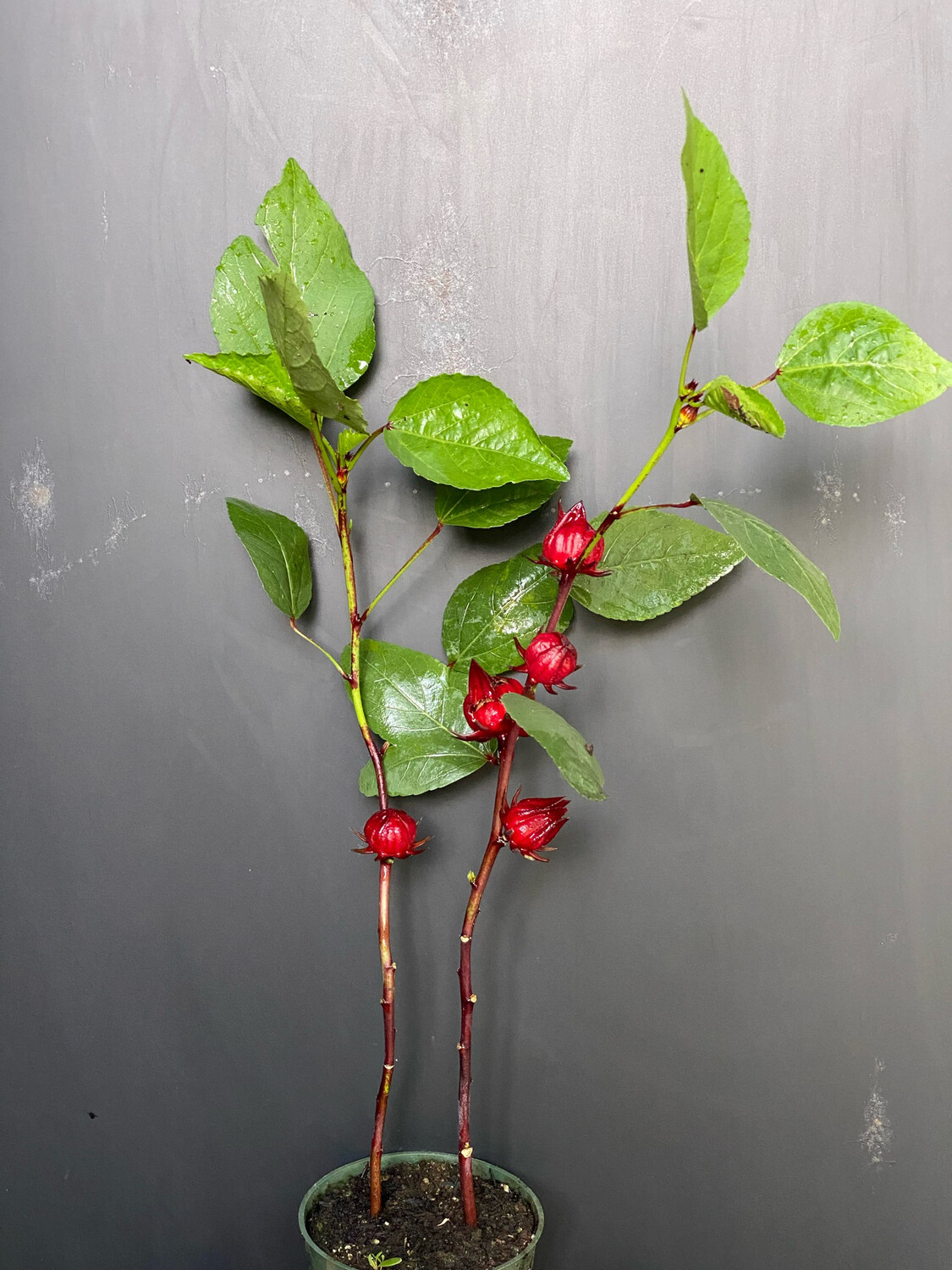
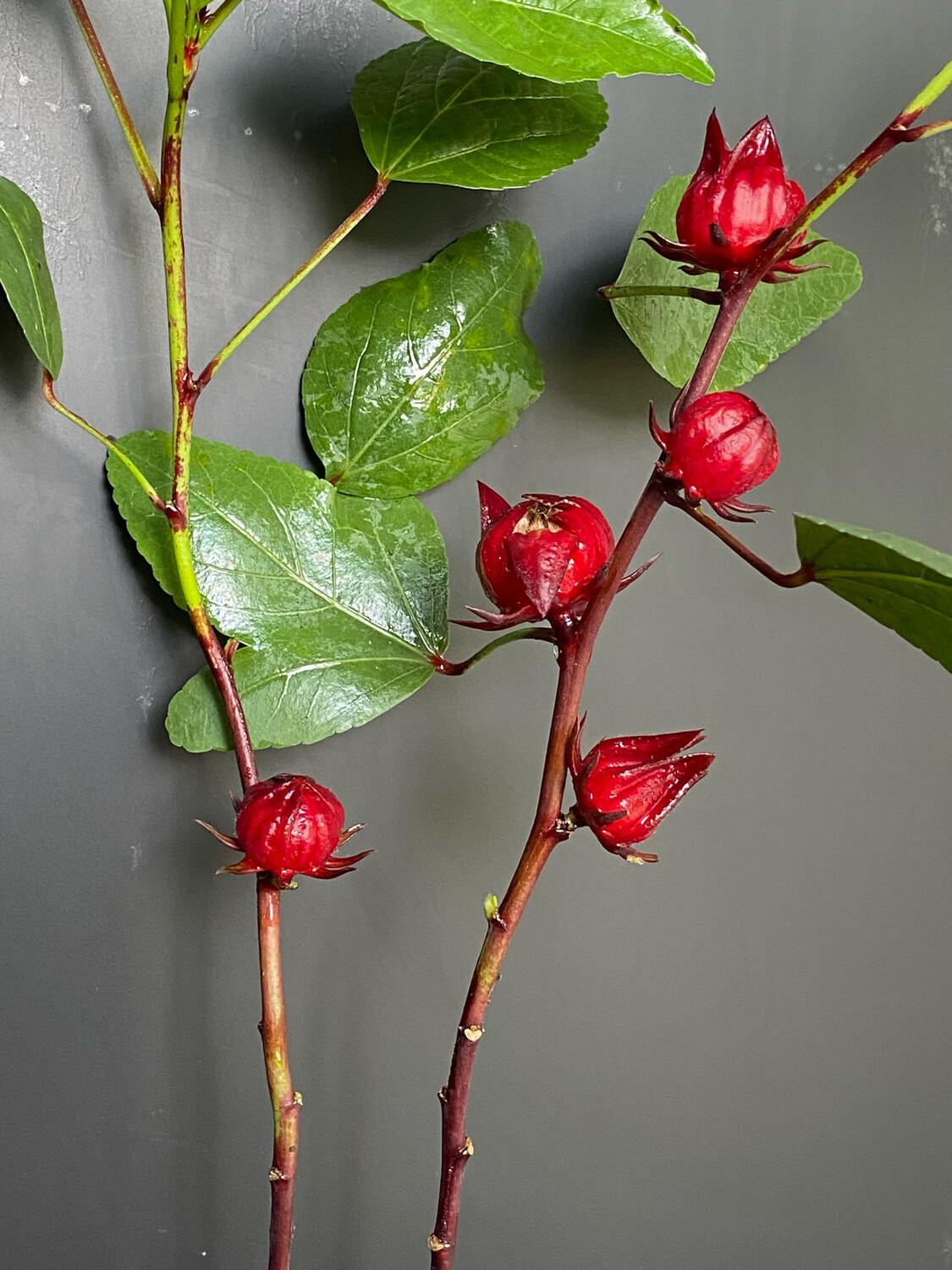
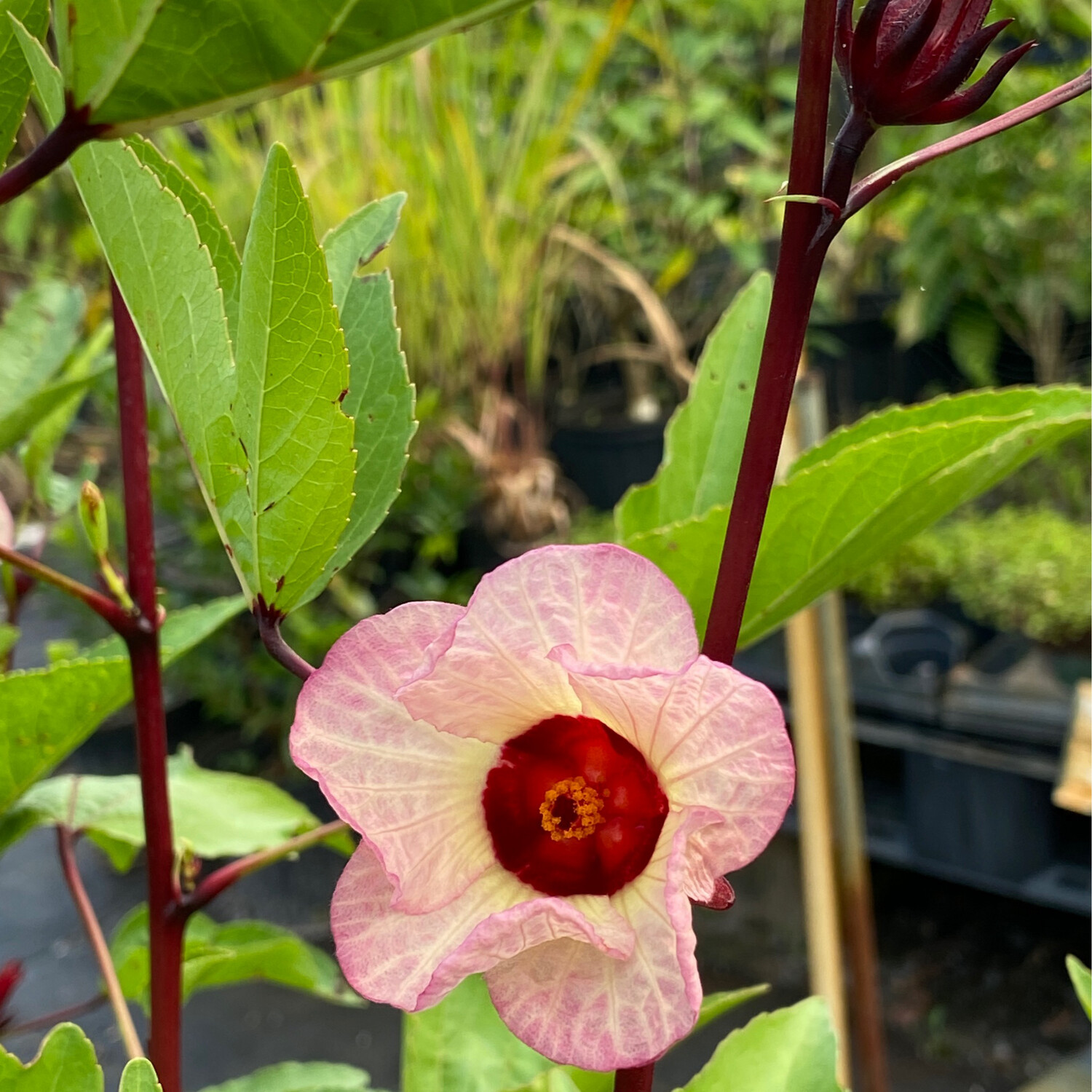
🌺 Roselle Hibiscus – Warm-Season Annual Tea, Sorrel & Edible Leaf Plant
Hibiscus sabdariffa 🍷🌞
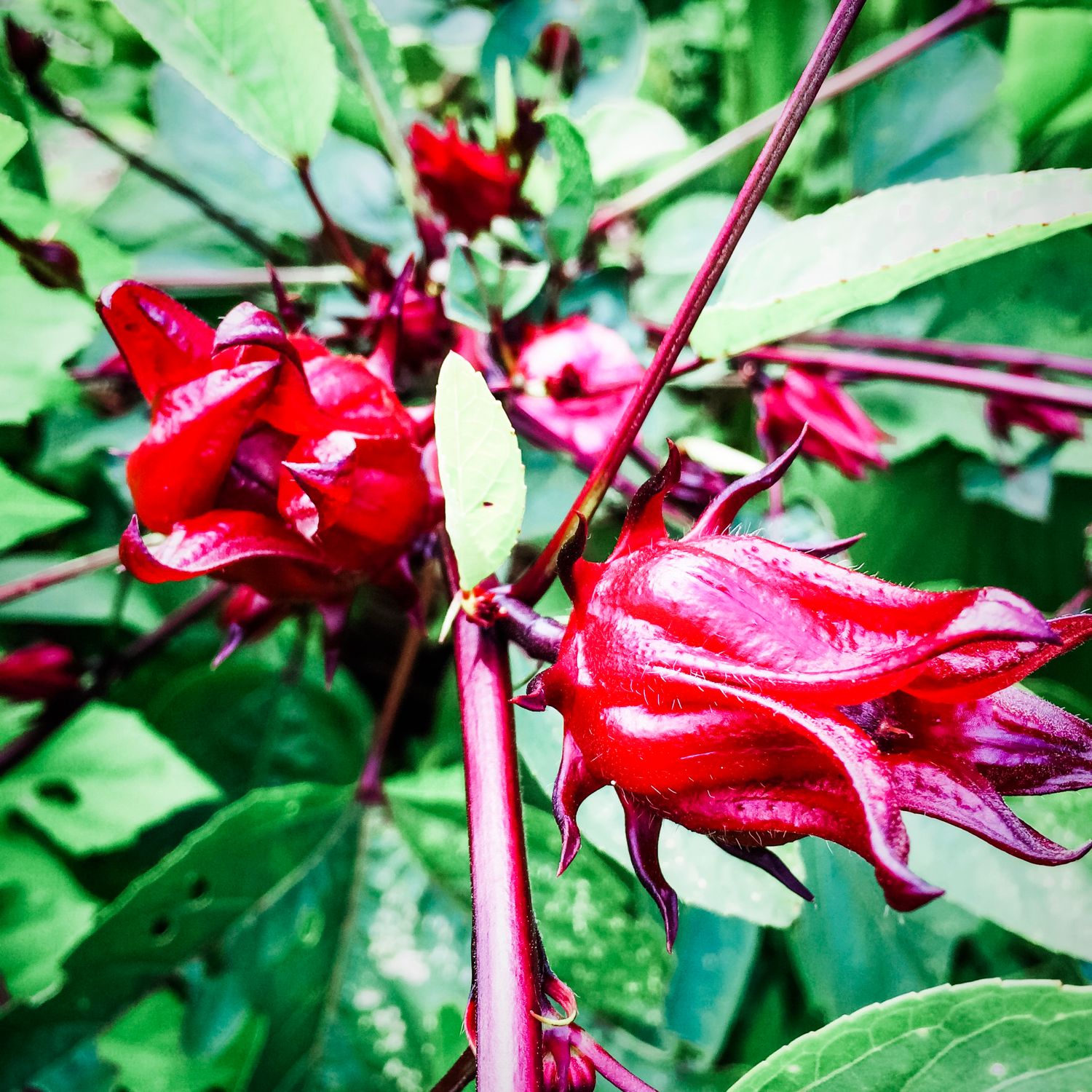
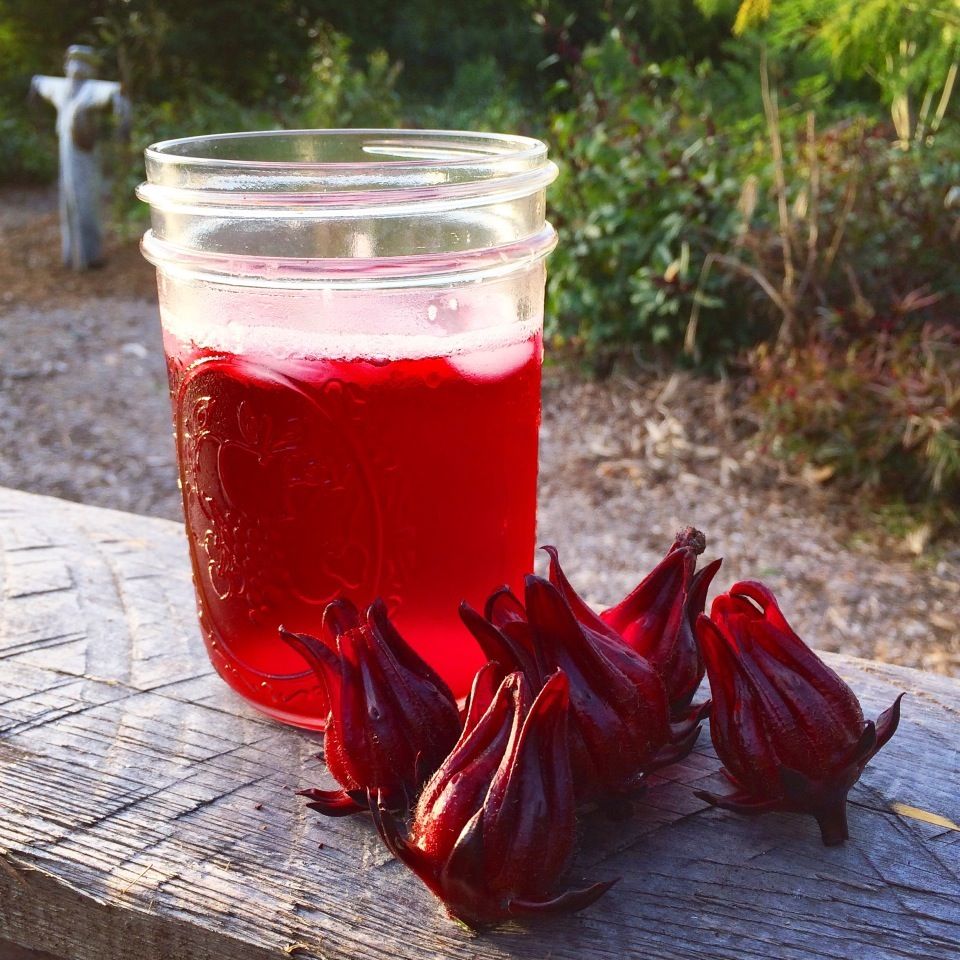
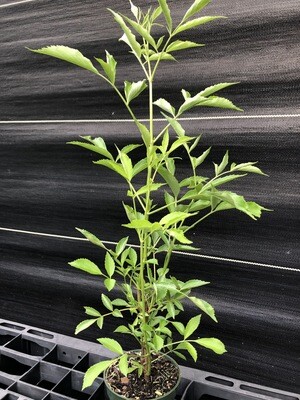
Grow a complete seasonal harvest of tart edible leaves, tropical flowers, and brilliant ruby-red calyces with Roselle Hibiscus. This heat-loving plant grows rapidly through summer before producing the flavorful calyces used for Jamaican sorrel, hibiscus tea, agua de Jamaica, bissap, jams, syrups, chutneys, and natural food coloring.
Also known as Jamaican Sorrel, Florida Cranberry, Red Sorrel, and Sorrel Hibiscus, Hibiscus sabdariffa is treasured across Africa, the Caribbean, Asia, Latin America, and the American South. Its young leaves can be harvested as tangy greens throughout the growing season, while the glowing red calyces provide its signature fall harvest.
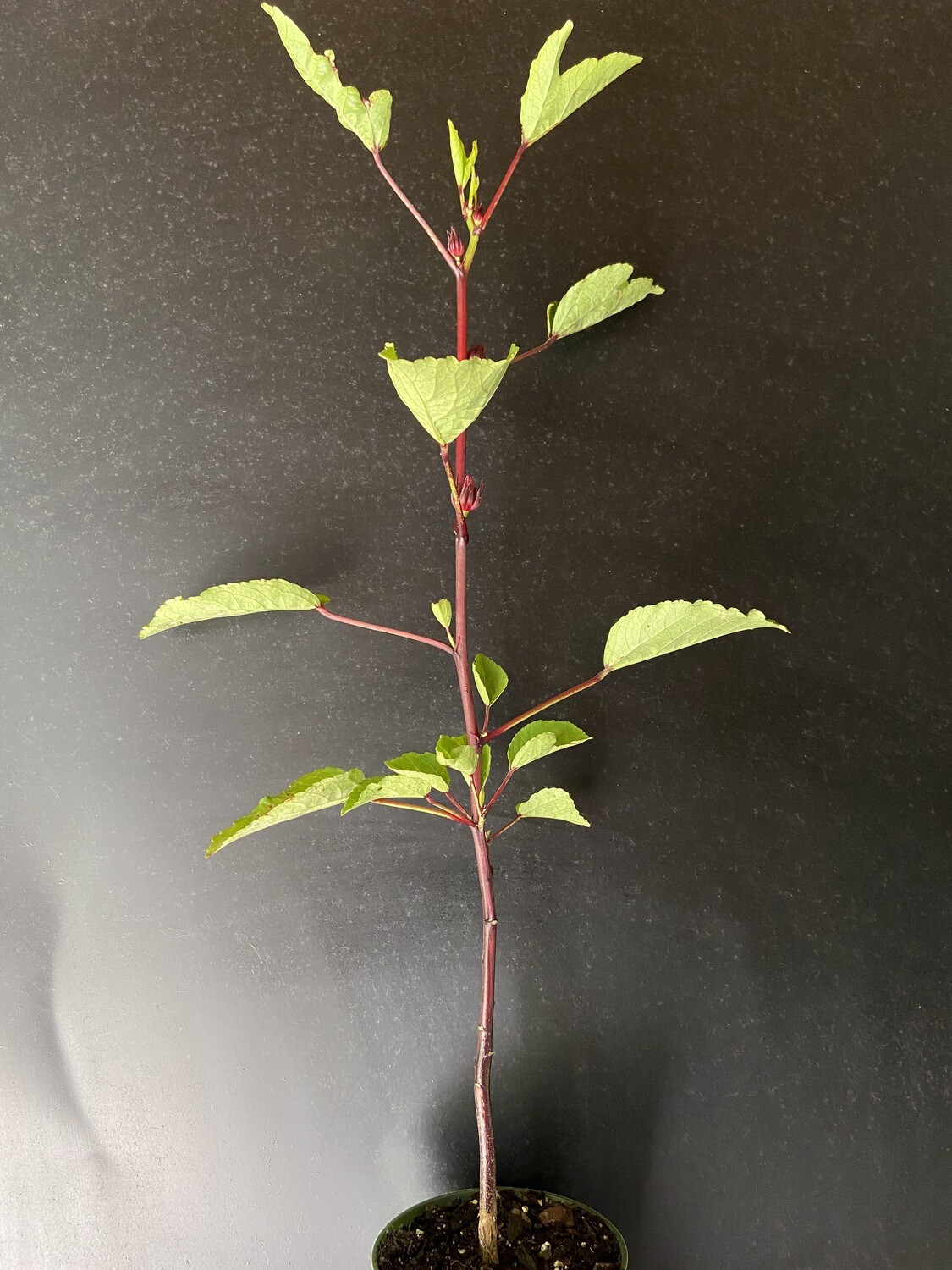
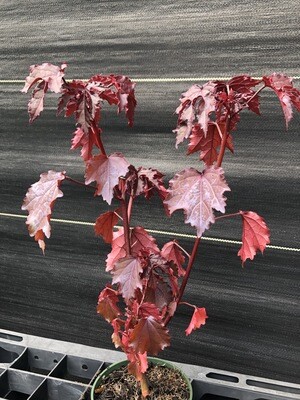
Ships in a 4-inch nursery container. 🌱
⚠️ Important Growing Expectation
Roselle should be grown as a warm-season annual in most regions of the United States.
Although Hibiscus sabdariffa is botanically capable of perennial growth in tropical conditions, it is frost tender and is commonly cultivated as an annual—even in many Southern gardens. Plant it in spring, enjoy its rapid summer growth, harvest leaves and calyces through fall, and expect the plant to finish its life cycle or be killed by cold weather.
Roselle may survive as a short-lived perennial only in reliably frost-free tropical or subtropical conditions. Rutgers University describes Roselle as naturally perennial but commonly cultivated as an annual, while noting that many calyx-producing varieties flower late in response to shorter autumn days.
🌿 Quick Facts
| Category | Details |
|---|---|
| Botanical Name | Hibiscus sabdariffa |
| Common Names | Roselle, Jamaican Sorrel, Florida Cranberry, Red Sorrel, Sorrel Hibiscus, Jamaican Tea |
| Plant Type | Fast-growing, warm-season edible annual; tropical short-lived perennial only where frost is absent |
| Sale Size | Ships in a 4-inch nursery container |
| Approximate Age | Typically 6–8 weeks from propagation, depending on season and growing conditions |
| Mature Height | Approximately 4–7 ft tall |
| Mature Width | Approximately 3–5 ft wide |
| Pruned Size | Can be maintained around 3–4 ft, although late or excessive pruning may delay flowering |
| Growing Regions | Grown seasonally throughout much of the United States; longest calyx harvests occur in warm Southern climates |
| Perennial Potential | Limited to reliably frost-free tropical or subtropical locations |
| Sun Requirements | Full sun; 6–8 or more hours daily |
| Cold Hardiness | Frost tender; freezing temperatures may severely damage or kill the plant |
| Growth Habit | Upright, branching, bushy and rapidly growing |
| Soil Preference | Fertile, well-drained sandy or loamy soil |
| Water Needs | Moderate; consistent moisture during establishment and active growth |
| Spacing | Approximately 3–4 ft between plants |
| Row Spacing | Approximately 4–5 ft for airflow and harvest access |
| Bloom Season | Primarily fall for many calyx-producing types |
| Typical Florida Harvest | Calyces generally mature during October and November, depending on variety, planting date and weather |
| Edible Parts | Young leaves and shoots, calyces and flowers; seeds have traditional culinary uses in some cultures |
| Primary Harvest | Ruby-red calyces for beverages, preserves and sauces |
| Secondary Harvest | Tart young leaves used fresh or cooked |
| Best Uses | Tea, sorrel drink, agua de Jamaica, bissap, jam, syrup, chutney, cooked greens and seasonal edible landscaping |
Roselle is sensitive to day length, and many varieties begin flowering as autumn days shorten. Northern growers may successfully harvest leaves but run out of warm weather before receiving a mature calyx crop.
🍷 Why Grow Roselle Hibiscus?
Roselle delivers several edible and ornamental benefits within a single growing season.
Top Reasons Gardeners Love Roselle
- 🌺 Produces brilliant red calyces for tea, sorrel drinks, jams and syrups
- 🍋 Offers a naturally tart, cranberry-like flavor
- 🌿 Provides edible young leaves that can be harvested before flowering
- 🌞 Thrives during hot, humid summers
- 🐝 Produces hibiscus-like flowers that add seasonal pollinator interest
- 🎨 Adds burgundy stems, tropical foliage and jewel-toned color
- 🪴 Grows in garden beds, raised beds and large containers
- 🍯 Appeals to tea makers, cooks, homesteaders and market gardeners
- 🌱 Works well in school, community and cultural gardens
- 🍂 Completes a productive crop cycle without requiring permanent landscape space
🍂 Roselle Is Primarily a Seasonal Crop
Roselle is sometimes described as a tropical shrub or perennial, but that description can create the wrong expectation for home gardeners.
For most customers, the most accurate way to understand Roselle is:
- Plant after frost danger has passed.
- Allow it to grow rapidly through spring and summer.
- Harvest young leaves during active vegetative growth.
- Reduce pruning as late summer approaches.
- Harvest calyces after flowering in fall.
- Save mature seed or take protected cuttings for the following season.
- Expect frost or seasonal decline to end the crop.
Even where winters are mild, Roselle is often replanted annually because young plants can be more vigorous, productive and manageable than older woody specimens.
Annual Versus Perennial Expectations
| Region | Expected Growth Pattern |
|---|---|
| Northern and Midwestern U.S. | Warm-season annual; leaf harvest is more dependable than mature calyx production |
| Mid-Atlantic and Upper South | Annual; plant early to maximize the growing season |
| Southeastern U.S. | Usually grown as an annual; fall calyx harvest is possible with timely planting |
| North and Central Florida | Fast-growing annual in most gardens; frost generally ends the season |
| South Florida and Protected Coastal Microclimates | May survive longer or behave as a short-lived perennial where frost is absent |
| Indoor or Greenhouse Protection | Cuttings or young plants may be maintained, but full-size Roselle requires considerable light and space |
🌍 Origin, History & Cultural Roots
Roselle has deep cultural importance across tropical and subtropical regions. Its exact center of origin remains debated, although Africa is frequently identified as a major center of cultivation and diversity. The plant spread through migration, agriculture and trade, becoming an important food crop throughout Africa, the Caribbean, South and Southeast Asia, Latin America and the southern United States.
In Jamaica and throughout the Caribbean, Roselle is known as sorrel and is traditionally brewed with ingredients such as ginger, citrus and warming spices. In West Africa, its calyces become bissap and related beverages. In Mexico and Central America, the dried calyces are used for agua de Jamaica. In parts of India and Southeast Asia, the tart leaves are cooked as vegetables, souring agents, chutneys and additions to soups or curries.
Roselle carries a tremendous story within a single growing season: culture, celebration, flavor, beauty and the satisfaction of transforming a garden harvest into something memorable.
🍷 Edible Calyces and Flavor Profile
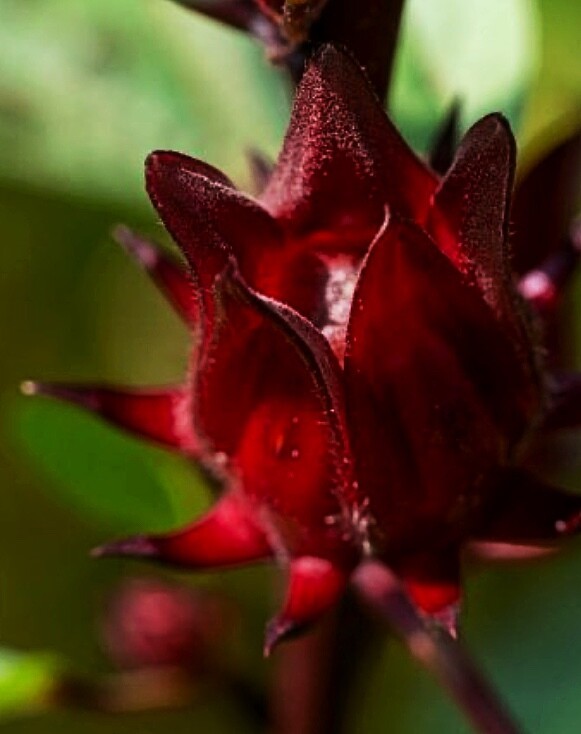
The fleshy red structure surrounding the seed capsule after flowering is called the calyx. It is the primary harvest for most Roselle growers.
Calyx Flavor
- Tart
- Fruity
- Cranberry-like
- Rhubarb-like
- Bright and lightly floral
- Naturally red when steeped or cooked
Popular Calyx Uses
- Hibiscus tea
- Jamaican sorrel drink
- Agua de Jamaica
- West African bissap
- Syrups
- Jams and jellies
- Chutneys
- Sauces
- Holiday punches
- Herbal tea blends
- Fermented beverages
- Natural food coloring
Roselle calyces are widely used in teas, juices, syrups, preserves, flavorings and colorings.
🌿 Are Roselle Leaves Edible?
Yes. Young Roselle leaves and tender shoots are edible.
They have a tart, lemony or sorrel-like flavor and can be eaten raw or cooked. The youngest leaves are generally the most tender, while older leaves may become firmer and more strongly flavored.
UF/IFAS notes that Roselle leaves can be cooked as greens or added raw to salads for a flavorful “zing.” Rutgers also documents the young leaves being prepared similarly to spinach and mixed with vegetables and seasonings.
Roselle Leaf Flavor and Texture
- Tangy and noticeably acidic
- Lemony or sorrel-like
- More flavorful than a neutral spinach substitute
- Lightly mucilaginous when cooked
- Best when harvested young
- Useful as a souring green or flavor accent
Best Uses for Roselle Leaves
- Mixed salads
- Stir-fries
- Soups
- Curries
- Chutneys
- Stewed greens
- Lentil and bean dishes
- Rice dishes
- Tangy sauces
- Cooked vegetable blends
Harvesting Roselle Leaves
Harvest young leaves selectively from an established, actively growing plant. Avoid removing excessive foliage at one time because the plant still needs sufficient leaf area to continue growing, branching and producing flowers.
For regular harvest:
- Select young, clean and undamaged leaves
- Leave the growing tip and several mature leaves on each branch
- Harvest lightly but consistently
- Wash thoroughly before use
- Use tender leaves raw or cook them to soften their texture
- Reduce heavy leaf harvesting as the plant approaches flowering
🌿 Roselle Compared With GreenDreams’ Other Edible Hibiscus Leaves
Not every plant commonly called an “edible hibiscus” fills the same role in the kitchen.
Roselle is primarily a seasonal calyx crop with useful edible leaves.
Cranberry Hibiscus is primarily a tart edible ornamental.
Kenaf is primarily an annual fiber and biomass plant with edible young leaves.
The Abelmoschus manihot cultivars are the strongest choices for ongoing production of mild leafy greens.
Edible Hibiscus Leaf Comparison
| Plant | Typical Growth Pattern | Leaf Flavor and Texture | Best Culinary Role | How It Compares With Roselle |
|---|---|---|---|---|
| Roselle Hibiscus sabdariffa | Warm-season annual in most regions | Tangy, lemony, sorrel-like and lightly mucilaginous | Sour greens, salads, curries, soups and chutneys | Best choice when you want both edible leaves and a fall calyx crop |
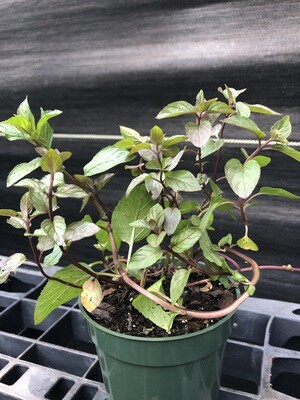
| Cranberry Hibiscus Hibiscus acetosella | Tender perennial in warm climates; frequently grown as an annual where cold | Burgundy leaves with a distinctly tart, sour flavor; somewhat fleshy and mucilaginous | Fresh salad accents, garnishes, colorful cooked greens and tea blends | Usually more ornamental and more sharply tart than Roselle leaves |
| Kenaf Hibiscus Hibiscus cannabinus | Fast-growing annual | Young leaves and shoots are edible; older foliage becomes less tender | Cooked vegetable, seasonal greens, biomass and fiber production | Better known for growth, fiber and biomass than as a premium salad green |
| Tongan Spinach / Bele Abelmoschus manihot | Tropical short-lived perennial; dies back or requires protection in cold regions | Mild, tender, slightly sweet and mucilaginous | Frequent harvests for soups, stir-fries, stews and cooked greens | Considerably milder and better suited to regular leafy-green production |
| Aunt Lillie’s South Sea Salad Tree Abelmoschus manihot cultivar | Tropical perennial or warm-season dieback plant, depending on climate | Generally mild with tender young growth and the characteristic silky texture of the species | Fresh young leaves, cooked greens, soups and mixed vegetable dishes | Better for high-volume leaf harvest; does not provide Roselle’s red calyx crop |
| South Sea Salad Tree – Tree Forms Abelmoschus manihot selections | Tall tropical perennial forms where protected from frost | Mild, tender when young and softly mucilaginous when cooked | Tall edible hedge, repeated pruning and bulk greens | Taller, more permanent leafy production than seasonal Roselle |
| Long Leaf Edible Hibiscus Abelmoschus manihot cultivar | Tropical perennial or seasonal dieback plant | Mild leaves; narrower leaf shape may feel slightly firmer when mature | Stir-fries, soups, chopped greens and mixed edible landscaping | Milder and more productive as a leafy vegetable |
| Chief Kubo’s Pride Abelmoschus manihot cultivar | Tropical perennial or warm-season dieback plant | Mild, tender young leaves with the species’ lightly mucilaginous texture | Repeated leafy harvests, soups, stews and edible ornamental planting | A more appropriate choice for customers seeking a perennial spinach substitute |
Young Abelmoschus manihot leaves may be eaten raw or cooked and are generally described as sweet or mild and mucilaginous. This makes the species substantially different from the distinctly sour leaves of Roselle and Cranberry Hibiscus.
Cranberry Hibiscus leaves are edible but are typically more sour than Roselle leaves. The species is a tender perennial that is commonly grown as an annual in colder climates.
Kenaf is an annual herbaceous plant. Its young leaves and shoots have traditional use as vegetables, but its taller, fibrous growth makes it a different type of crop from the tender-leaf Abelmoschus manihot cultivars.
🌿 Important Cultivar Note
Tongan Spinach, Aunt Lillie’s South Sea Salad Tree, Long Leaf Edible Hibiscus, Chief Kubo’s Pride and other edible-leaf forms belong to the same general species, Abelmoschus manihot.
Their most noticeable differences are often leaf shape, leaf size, tenderness, growth habit, branching, vigor and yield, rather than dramatically different flavors. Plant age, sunlight, water and harvest timing can also affect tenderness.
Which Edible Hibiscus Should You Choose?
Choose Roselle when you want:
- Hibiscus tea and sorrel calyces
- Tart seasonal leaves
- A fast-growing summer annual
- Fall color and a memorable harvest project
Choose Cranberry Hibiscus when you want:
- Deep burgundy ornamental foliage
- Sharp, tart leaves for salads and garnishes
- A colorful edible hedge or landscape accent
- A tender perennial in warm climates
Choose Kenaf when you want:
- Extremely rapid annual growth
- Biomass, fiber or chop-and-drop material
- Edible young leaves as a secondary use
- A tall seasonal screen
Choose an Abelmoschus manihot cultivar when you want:
- The mildest edible hibiscus leaves
- Repeated leafy-green harvests
- A spinach-like vegetable for tropical gardens
- A perennial or returning warm-season plant where climate allows
- Productive leaves rather than tea calyces
🍹 Simple Garden Roselle Tea
Basic Method
- Harvest plump red calyces after the flowers fade.
- Remove the central seed capsule.
- Rinse the calyces thoroughly.
- Simmer or steep them in water until the liquid turns deep red.
- Add ginger, citrus, cinnamon, clove, mint or sweetener to taste.
- Serve hot or chill over ice.
For a Caribbean-inspired sorrel drink, combine Roselle with ginger, warming spices and citrus. For agua de Jamaica, keep the drink bright, tart, refreshing and lightly sweetened.
🌺 Ornamental Appeal
Roselle provides dramatic seasonal beauty even before harvest.
Landscape Features
- Upright and branching growth
- Burgundy or reddish stems
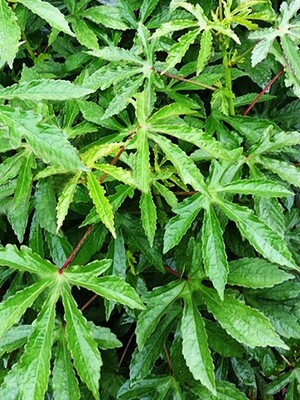
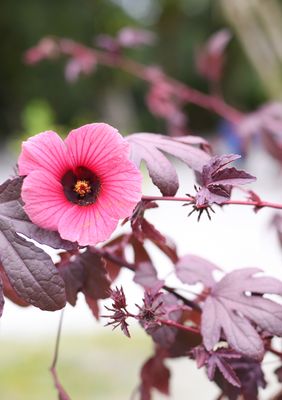
- Green leaves that may show red veins
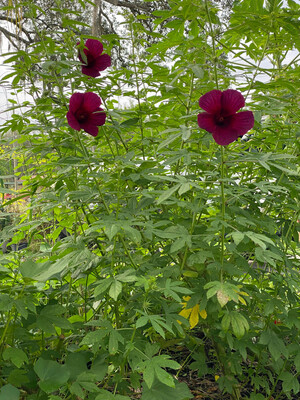
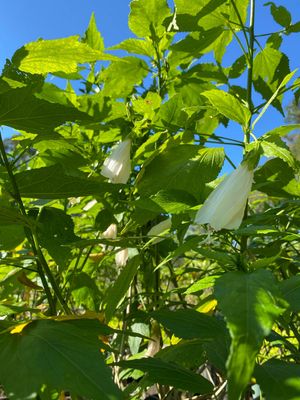
- Pale hibiscus-like flowers with dark centers
- Brilliant red fall calyces
- Tropical texture without becoming a permanent tree
- Fast seasonal screening
Best Landscape Uses
- Seasonal edible hedge
- Food forest edge
- Pollinator garden backdrop
- Warm-season production bed
- Raised-bed focal point
- Large patio container
- Tea garden
- Cultural or educational garden
- Annual tropical screen
Roselle is especially useful where gardeners want a large, ornamental-looking edible plant for summer without committing permanent landscape space.
🌞 How to Grow Roselle Hibiscus
Roselle requires heat, full sun and a sufficiently long growing season. Planting early is especially important for gardeners who want a mature fall calyx harvest.
Choose a Location With
- Full sun
- Warm soil
- Good drainage
- Consistent access to moisture
- Good airflow
- Room for branching
- Convenient fall harvest access
Avoid
- Standing water
- Soggy soil
- Deep shade
- Compacted planting holes
- Heavy wet clay without improvement
- Direct coastal salt spray
- Tight spaces with poor airflow
Timing Matters
Plant Roselle after frost danger has passed and nighttime temperatures have warmed.
Earlier planting allows the plant to develop a large branching framework before shorter fall days trigger flowering. Growers in short-season climates should plant as early as safely possible and understand that leaf production may be more reliable than calyx production.
🌱 Planting Roselle the GreenDreams Way
For best drainage and root development, use the GreenDreams High & Tight planting method.
Add link: GreenDreams High & Tight Planting Method video
Before Planting
After shipping, allow the plant to recover in its original container. Place it in bright shade or filtered light initially and gradually transition it into stronger sun.
We generally recommend waiting until the plant is hydrated, stable and producing healthy new growth before transplanting. Depending on shipping stress and local conditions, this may take several days or longer.
Planting Steps
- Select a sunny, well-drained location.
- Dig a hole only slightly wider than the root ball.
- Keep the root crown level with or slightly above the surrounding grade.
- Do not bury the stem.
- Set the plant high and tight rather than creating a sunken planting basin.
- Backfill around the root ball without heavily amending only the planting hole.
- Press gently to remove large air pockets.
- Top-dress with finished compost and appropriate organic nutrients.
- Apply hardwood mulch around the planting area.
- Keep mulch several inches away from the stem.
- Water thoroughly.
💧 Watering Roselle Hibiscus
Roselle appreciates consistent moisture during establishment and rapid summer growth but does not tolerate permanently waterlogged roots.
Newly Planted Roselle
- Water thoroughly after planting
- Check moisture daily during the first week
- Water as needed to keep the root ball evenly moist
- Gradually reduce frequency as roots expand
- Continue deep watering during hot, dry periods
Local soil, rainfall, wind, container size and temperature should determine the exact schedule.
Container Watering
A 4-inch nursery container can dry rapidly during hot weather.
- Check small containers daily
- Water when the upper soil begins to dry
- Allow excess water to drain freely
- Never leave the pot sitting in a water-filled saucer
- Up-pot once roots begin filling the container
Signs of Underwatering
- Wilting during the cooler part of the day
- Crispy leaf margins
- Slowed growth
- Dry, shrinking potting mix
- Rapid leaf drop
Signs of Excess Moisture
- Yellowing leaves
- Drooping despite wet soil
- Sour or swampy soil odor
- Soft stem tissue near the soil
- Root decline
- Fungal problems
Drip irrigation or careful watering at soil level is preferred because it delivers water near the root zone while reducing unnecessary leaf wetness.
🌾 Fertilizing Roselle Hibiscus
Roselle grows quickly in fertile soil, but excessive nitrogen can produce a huge leafy plant that flowers late or develops fewer calyces.
Recommended Organic Approach
- Compost-enriched soil
- Balanced organic fertilizer
- Light feeding during active spring and summer growth
- Trace minerals where soil testing indicates a need
- Hardwood mulch to support soil biology
- Reduced nitrogen as fall approaches
Avoid
- Excessive high-nitrogen fertilizer
- Heavy late-season feeding
- Fertilizing severely wilted plants
- Fertilizing immediately after stressful shipping
- Synthetic fertilizer contacting dry roots
- Repeated feeding without observing the plant’s response
✂️ Pruning Roselle Hibiscus
Early pruning encourages branching, and more branches can create more potential flowering points.
Early-Season Pruning
When the plant reaches approximately 12–18 inches tall, pinch or lightly prune the growing tip to encourage side branches.
Midseason Pruning
Light shaping can be performed during active growth. Avoid removing excessive foliage if you are also regularly harvesting leaves.
Late-Season Pruning
Avoid heavy pruning in late summer or fall. Roselle responds to shorter days, and late pruning can remove developing flowering wood or delay the fall harvest.
🍂 Seasonal Growing Guide
🌱 Spring
- Plant after frost danger
- Select the sunniest available location
- Protect young plants from unexpected cold
- Establish consistent watering
- Begin light feeding after active growth starts
- Pinch the growing tip once the plant is established
🌞 Summer
- Expect rapid vegetative growth
- Harvest young leaves selectively
- Water deeply during dry periods
- Maintain mulch
- Watch for aphids, caterpillars and mites
- Avoid waterlogged soil
- Reduce excessive nitrogen later in summer
🌺 Fall
- Stop heavy pruning
- Watch for flower development
- Harvest mature calyces regularly
- Process or refrigerate fresh calyces promptly
- Save seed from selected mature capsules
- Prepare for frost in inland and northern areas
❄️ Winter
- Expect frost to end the crop in most regions
- Remove dead annual growth after the season
- Compost healthy plant material
- Discard heavily diseased material
- Store dry seed for spring planting
- Protect cuttings only when equipped with strong light and warm conditions
🪴 Growing Roselle in Containers
Roselle can grow in containers, but it requires ample root space for full development.
Suggested Up-Potting Progression
- 4-inch nursery pot
- 1-gallon container
- 3-gallon container
- 7-gallon container
- 10-gallon or larger finishing container
A 7–10 gallon or larger container is recommended for meaningful calyx production. Smaller pots can produce leaves and flowers but may restrict plant size and require very frequent watering.
Up-Pot When
- Roots fill the existing container
- Water passes through unusually quickly
- The plant wilts shortly after watering
- Growth slows despite proper light and nutrition
- The plant becomes top-heavy
- Healthy new growth is active
Potting Mix
Use a rich but well-draining mix containing:
- Quality organic potting soil
- Finished compost or worm castings
- Pine bark fines, perlite or another aeration material
- Charged biochar, if desired
- Trace minerals where appropriate
The goal is a mix that retains moisture without remaining saturated.
🏡 Can Roselle Grow Indoors?
Roselle is not well suited to life as a traditional indoor houseplant.
It requires:
- Very strong light
- Warm temperatures
- Good airflow
- Considerable vertical and horizontal space
- Seasonal day-length cues for dependable flowering
Gardeners in colder regions may maintain young plants or cuttings beneath strong grow lights or in a heated greenhouse, but outdoor warm-season cultivation generally produces the best growth and harvest.
🌿 Companion Planting Ideas
Roselle can be combined with useful plants that support pollinators, soil health and seasonal biomass.
Nitrogen-Supporting Plants
- Pigeon Pea
- Sunshine Mimosa
- Other appropriate legumes
Biomass and Chop-and-Drop Plants
- Mexican Sunflower
- Vetiver
- Lemongrass
- Pigeon Pea
Pollinator Plants
- African Blue Basil
- Firebush
- Native Salvia
- Porterweed
Groundcovers
- Sweet Potato
- Sunshine Mimosa
- Perennial Peanut where appropriate
Allow enough space so companion plants do not crowd Roselle or reduce the sunlight needed for flowering.
🌾 Market Garden and Larger-Scale Production
Roselle can be grown as a seasonal specialty crop for:
- Fresh calyces
- Dried tea ingredients
- Sorrel beverages
- Herbal blends
- Jams and syrups
- Chutneys
- Farmers markets
- Cultural food products
- Restaurants
- Educational gardens
- Small regenerative farms
Suggested Production Spacing
- Between plants: 3–4 ft
- Between rows: 4–5 ft
Wider spacing improves branching, airflow, harvest access and disease management.
Calyces should be harvested as they become plump and tender rather than being allowed to become tough or weather damaged.
⚠️ Cautions and Important Notes
- Roselle should be treated as an annual in most growing regions.
- Frost may severely damage or kill the plant.
- Customers in short-season climates may receive abundant leaves but little or no mature calyx harvest.
- Plant as early as safely possible where the growing season is limited.
- Roselle requires full sun for strong growth and production.
- Avoid wet, poorly drained soil.
- Excess nitrogen may delay flowering.
- Heavy late-season pruning may reduce the calyx harvest.
- Small shipped plants require careful acclimation.
- Verify plant identity before consuming any plant sold simply as “hibiscus.” Not every ornamental hibiscus should automatically be treated as a food crop.
- Use clean, correctly identified plant material grown without inappropriate pesticide applications.
- This listing describes traditional culinary use and is not medical advice.
🌟 Is Roselle Hibiscus Right for You?
✅ Ideal For
- Florida and Southern gardeners
- Growers with long, hot summers
- Tea and sorrel drink enthusiasts
- Jam and syrup makers
- Cultural and heritage gardeners
- Homesteaders
- Market gardeners
- Food forest growers
- Pollinator-friendly landscapes
- School and community gardens
- Customers who enjoy seasonal crops
- Gardeners who want both edible leaves and calyces
❌ May Not Be Ideal For
- Customers expecting a permanent evergreen shrub
- Indoor-only gardeners
- Very short-season climates
- Gardeners unable to provide full sun
- Cold regions where planting cannot begin early
- Soggy or poorly drained landscapes
- Exposed coastal sites with direct salt spray
- Customers seeking a mild perennial spinach substitute
For a milder, more dependable leafy-green crop, consider Tongan Spinach, Aunt Lillie’s South Sea Salad Tree, Long Leaf Edible Hibiscus or Chief Kubo’s Pride—all forms of Abelmoschus manihot.
🔍 Troubleshooting Roselle Hibiscus
Icons represent common issues and organic solutions—look for 🌿 for recovery tips.
| ⚠️ Issue | 🧠 Likely Cause | 🌿 Organic Solution |
|---|---|---|
| Large plant but no flowers | Long days, excessive nitrogen, late planting or late pruning | Be patient for shorter fall days, reduce nitrogen and avoid late pruning |
| Flowers begin too late | Variety is sensitive to day length or growing season is short | Plant earlier and prioritize leaf harvest in short-season regions |
| No mature calyces before frost | Cold arrived before fruit development | Start earlier next season or grow primarily for edible leaves |
| 🍂 Yellow leaves | Excess moisture, drainage problems or nutrient imbalance | Reduce watering, inspect drainage and apply balanced nutrition only if needed |
| 💧 Wilting in heat | Dry root ball or insufficient root development | Water deeply, mulch and monitor small containers daily |
| 💦 Drooping in wet soil | Oxygen-starved or declining roots | Allow partial drying and improve drainage |
| 🐛 Chewed leaves | Caterpillars or beetles | Inspect foliage and hand-remove pests where practical |
| 🐜 Ants on new growth | Ants may be tending aphids or scale | Control ants and inspect tender stems and leaf undersides |
| 🕷️ Fine stippling or webbing | Spider mites during hot, dry conditions | Rinse foliage and use an appropriate organic treatment |
| 🌬️ Leaning or broken stems | Wind exposure or top-heavy growth | Provide temporary support and avoid exposed locations |
| 🍄 Moldy drying calyces | Thick drying layers or insufficient airflow | Dry in thin layers with strong ventilation |
| Small calyces | Stress, low sun, late planting or poor fertility | Improve growing conditions and plant earlier next season |
| ❄️ Collapsed foliage | Frost or freezing temperatures | Treat as seasonal annual growth and replant after winter |
❓ Roselle Hibiscus FAQ
Is Roselle an annual or a perennial?
Roselle is naturally capable of perennial growth in tropical conditions, but it is grown as an annual in most regions. Frost, seasonal decline and its late flowering cycle make annual cultivation the most realistic expectation for most customers.
Does Roselle come back every year?
Not reliably. In frost-free tropical locations, an established plant may survive as a short-lived perennial. In most of the United States, gardeners should save seed or purchase a fresh plant for the following growing season.
Can Roselle be grown outside the South?
Yes. It can produce substantial warm-season growth and edible leaves in many regions. However, northern growers may not have enough warm autumn weather for a mature calyx harvest because many varieties flower in response to shorter days.
Can you eat Roselle leaves?
Yes. Young leaves and tender shoots may be eaten raw or cooked. They have a tangy, sour flavor and can be used in salads, soups, curries, chutneys and cooked vegetable dishes.
Is Roselle a perennial leafy green?
Roselle produces edible leaves, but it should not be marketed as a dependable perennial leafy green for most customers. The Abelmoschus manihot cultivars are better choices for ongoing mild leafy-green production in warm climates.
How do Roselle leaves taste?
The leaves are tart, lemony and sorrel-like. They are substantially more acidic than Tongan Spinach and other Abelmoschus manihot cultivars.
Which edible hibiscus has the mildest leaves?
The Abelmoschus manihot selections—including Tongan Spinach, Aunt Lillie’s South Sea Salad Tree, Long Leaf Edible Hibiscus and Chief Kubo’s Pride—generally provide the mildest leaves.
What part of Roselle is used for tea?
The fleshy red calyx that develops after the flower fades is the main part used for hibiscus tea, Jamaican sorrel, agua de Jamaica and bissap.
When does Roselle flower in Florida?
Many varieties begin flowering as days shorten in late September or October, with calyx harvest following during fall. Timing varies with variety, planting date, weather and location.
How long does Roselle take to harvest?
Leaves may be harvested once the plant is established and growing vigorously. A mature calyx crop generally requires a long warm season and often arrives approximately five to six months after spring planting.
Can Roselle grow in a container?
Yes. Use a large container—preferably 7–10 gallons or larger—for the strongest growth and calyx production.
Can Roselle grow indoors?
It is difficult to maintain as a productive indoor plant because of its size, high light requirements and seasonal flowering response.
How far apart should Roselle be planted?
Allow approximately 3–4 ft between plants. In rows, provide 4–5 ft for airflow and harvest access.
🚚 Shipping Information
Ships in a 4-inch nursery container.
GreenDreams ships live plants from Florida each Monday using UPS Ground.
Regional Shipping Recommendation
The 4-inch Roselle size is most ideally shipped to:
- Florida
- The Southeastern United States
- Texas
We can ship throughout the continental United States, but customers in northern and western states should use discretion. Extended UPS Ground transit times and periods of extreme heat or cold may prevent small plants from arriving in optimal condition.
Important 4-Inch Plant Notes
- A 4-inch plant dries more quickly than a larger container.
- Check soil moisture immediately upon arrival.
- Small plants may require a recovery period after shipping.
- Buyers outside our regional shipping area accept the increased risk associated with extended transit and extreme temperatures.
- GreenDreams cannot guarantee optimal arrival quality when small plants are shipped long distances during peak heat or cold.
- A 1-gallon or larger plant is recommended when available.
- California shipments may experience additional agricultural inspection time.
After Your Plant Arrives
- Unpack the plant carefully.
- Inspect the soil moisture.
- Water thoroughly if the root ball is dry.
- Place the plant in bright shade or filtered light.
- Protect it from strong wind and intense afternoon sun during recovery.
- Gradually transition it into full sun.
- Keep it in its original container until it is stable and actively growing.
- Up-pot or plant in the ground only after shipping stress has passed.
🏡 Local Pickup at GreenDreams
Roselle Hibiscus and many other edible, medicinal, native and useful plants are available seasonally at our Spring Hill retail nursery.
Larger sizes and limited seasonal selections may be available locally even when they are not listed online.
GreenDreams Nursery & Farm
18709 US Hwy. 41
Spring Hill, FL 34610
Tuesday–Friday: 9 AM–5 PM
Saturday: 8 AM–3 PM
Come explore what is growing, blooming and fruiting this week! 🌿
🌳 Beyond the Plant: GreenDreams Services
GreenDreams helps Florida growers create productive landscapes and thriving local ecosystems through:
- Onsite consultations
- Edible landscape and food forest design
- Installation and project management
- Garden revitalization
- Bulk compost, mulch and biochar delivery
- Wholesale and large-scale regenerative solutions
🌿 IMPORTANT INFORMATION BEFORE PURCHASING LIVE PLANTS
Please note: Plants purchased through our online store are not available for pickup at our retail nursery in Spring Hill, Florida.
Online inventory is housed at a separate facility and is priced, prepared, and handled exclusively for shipping.
🌱 Looking for larger plants or more selection?
Our retail nursery location offers far more availability, including larger sizes, specialty plants, and many selections not suitable for nationwide shipping.
Local pickup is available for retail nursery purchases only.
Visit our Spring Hill, FL retail nursery page to explore in-person shopping options.
🚚 LIVE PLANT SHIPPING & TRANSIT EXPECTATIONS
Live plants naturally experience stress during shipping. Temporary leaf drop, mild wilting, or cosmetic stress is normal after transit. Most plants recover quickly with proper watering, gradual light exposure, and basic aftercare. Some plants may require additional attention during the first few weeks.
Despite careful packing, minor cosmetic damage may occur during transit. Small issues such as broken leaves or stems typically resolve with time and proper care.
If your shipping box arrives with significant external damage, please contact UPS within 30 days to initiate a carrier claim.
⏱️ SHIPPING METHOD, TIMING & TRANSIT WINDOWS
All online orders ship via UPS Ground from our Central Florida nursery.
📦 Shipping Schedule: Orders ship once weekly on Mondays to reduce the risk of packages sitting in transit over weekends. A countdown clock on our website displays the next shipping date.
🚚 Typical Transit Times:
-
Florida: 1–2 days
-
Southern U.S.: approximately 2 days
-
Midwest, West & Northern U.S.: 3–5 business days
Long-distance shipments, particularly to the western U.S., may experience additional transit time due to agricultural inspections in states such as Arizona, California, and Texas.
Extended transit times can be more challenging for small or tender plants and may require additional recovery care after arrival.
🌡️ EXTREME WEATHER & SEASONAL RISK
Live plants are sensitive to temperature extremes.
We cannot guarantee plant condition during periods of extreme summer heat or winter cold and freezing temperatures. Weather-related delays, carrier interruptions, or exposure during delivery are beyond our control.
Customers are responsible for:
-
Monitoring tracking information sent via email
-
Retrieving packages promptly upon delivery
-
Preventing plants from being left outdoors in extreme conditions
During unsafe weather, holiday shipping volume, or extended transit risk, orders may be held and shipped the following week to protect plant health.
⚠️ CUSTOMER RESPONSIBILITY & REFUND POLICY
By purchasing live plants, customers acknowledge and accept the risks associated with shipping, weather exposure, transit delays, and regional suitability.
Refunds or replacements are considered only under exceptional circumstances and in accordance with our return and refund policy. We are not responsible for:
-
Weather-related damage
-
Carrier delays
-
Poor plant selection for a given climate or region
-
Improper care after delivery
Upon purchase, customers assume full responsibility for the ongoing care and success of their plants.
✅ CONSENT & AGREEMENT
By completing a purchase, you confirm that you have read, understand, and agree to all shipping policies, responsibilities, and conditions outlined above.
Our goal is transparency, plant health, and long-term growing success — and we appreciate your understanding and care when ordering live plants.


