


🌿 Kenaf Plant – The “Wait… That’s Not What You Think It Is” Garden Legend
Hibiscus cannabinus – Edible Leaves, Hibiscus Flowers, Natural Fiber & Serious Biomass
We used to grow Kenaf along the fence line at our old home—until one day, a neighbor called city code enforcement because they thought we were growing cannabis.
No joke.
That unforgettable moment inspired one of our favorite GreenDreams YouTube videos:
We’re NOT Growing Weed, Mom.
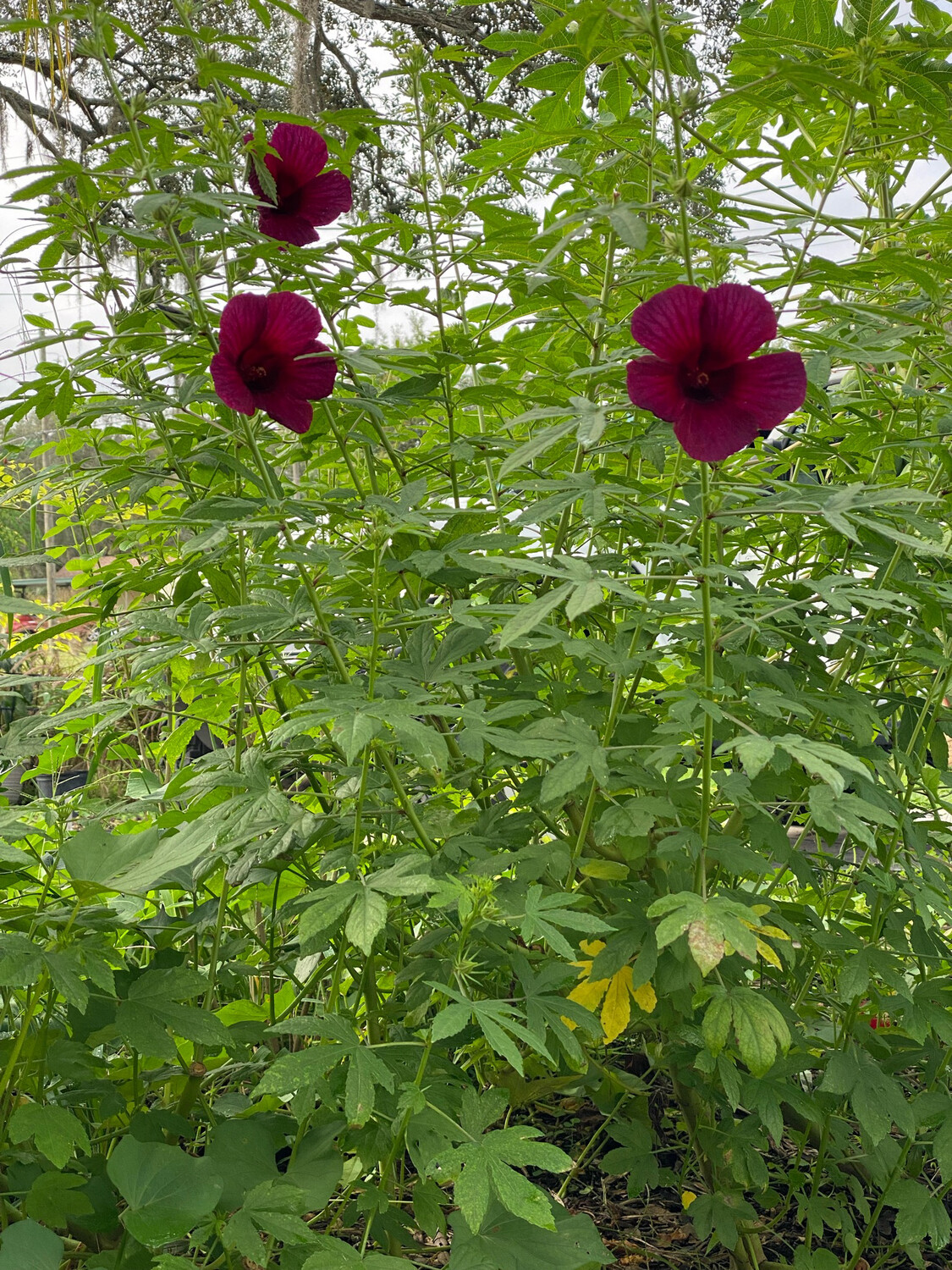
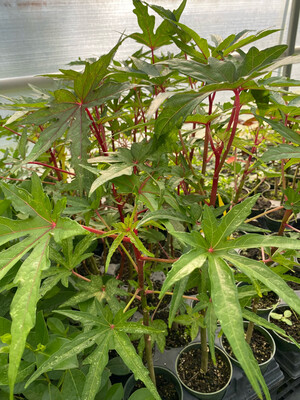
What the neighbor was actually seeing was Kenaf (Hibiscus cannabinus)—a completely legal, fast-growing member of the hibiscus family with edible young leaves, showy flowers, natural fiber, pollinator value, and enough seasonal growth to transform a bare fence line into a living wall.
The deeply lobed foliage may earn a few double takes, but once you know what Kenaf can do, the real question becomes:
Why aren’t more people growing this plant?
Part leafy vegetable. Part ornamental hibiscus. Part fiber crop. Part biomass factory.
Kenaf is one of the most useful conversation starters you can plant.
🌾 Fast-Growing, Edible & Almost Impossible to Ignore
Kenaf is for growers who enjoy plants that work for their space.
In one warm growing season, this tropical annual can produce towering stalks, abundant foliage, hibiscus-style flowers, pollinator activity, chop-and-drop material, and potential fiber for garden crafts and homestead experiments.
Use Kenaf as a:
- Seasonal edible leafy green
- Fast-growing privacy screen
- Pollinator-support plant
- Tropical garden statement
- Biomass and mulch producer
- Educational fiber crop
- Homestead craft plant
- Living backdrop for shorter edible plants
Whether you harvest the tender leaves, admire the flowers, cut the stems for biomass, or simply grow it to confuse your neighbors, Kenaf earns its place in a useful garden.
🌿 Quick Facts Guide
| Category | Details |
|---|---|
| Botanical Name | Hibiscus cannabinus |
| Common Names | Kenaf, Deccan Hemp, Brown Indian Hemp, Java Jute |
| Plant Family | Malvaceae—the hibiscus, okra and cotton family |
| Plant Type | Fast-growing, warm-season annual; occasionally short-lived in truly frost-free tropical conditions |
| Size at Sale | Live starter plant growing in a 4-inch nursery container |
| Estimated Age | Approximately 6–10 weeks, depending on season, weather and nursery growth rate |
| Typical Shipping Height | Varies naturally; shipped as a young starter rather than a finished landscape plant |
| Mature Height—Unpruned | Commonly 8–14 ft; exceptional plants may grow taller under production conditions |
| Mature Height—Pruned | Approximately 4–8 ft with pinching, repeated leaf harvest and seasonal cutbacks |
| Mature Width | Approximately 2–5 ft when allowed to branch |
| USDA Growing Range | Grown as a warm-season annual across much of zones 6–11; best long-season performance in zones 8–11 |
| Florida Growth Pattern | Warm-season annual in North and Central Florida; may live longer in protected South Florida locations, but is generally managed as an annual crop |
| Country of Origin | Native or probably native to tropical Africa; long cultivated across Africa and Asia |
| Sun Requirements | Full sun; provide at least 6–8 hours of direct light |
| Cold Hardiness | Frost tender; growth slows significantly in cool weather and plants are usually killed by frost |
| Growth Habit | Upright, cane-like, herbaceous stalks with variable, deeply lobed foliage |
| Flowering Season | Usually late summer through fall; timing varies by cultivar, planting date, latitude and day length |
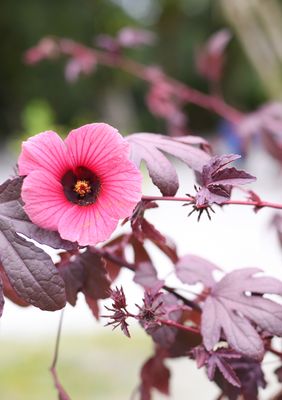
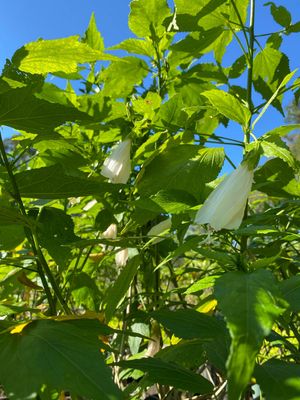
| Flower Description | Large hibiscus-style flowers, commonly cream, pale yellow or nearly white with a dark burgundy-red throat |
| Pollinator Value | Attractive to bees and other flower-visiting insects |
| Water Requirements | Consistent moisture during active growth, with good drainage and no prolonged standing water |
| Soil Preference | Fertile, organically enriched, well-drained soil; adapts to several soil textures when drainage is adequate |
| Suggested Soil pH | Approximately 5.5–7.0 |
| Wind Tolerance | Moderate while young; very tall plants may lean or lodge during strong winds and tropical storms |
| Salt Tolerance | Not recommended for direct coastal salt spray; plant in a protected inland position near the coast |
| Specimen Spacing | Approximately 3–5 ft apart |
| Edible-Leaf Spacing | Approximately 18–36 inches apart, depending on the desired density |
| Seasonal Screen Spacing | Approximately 18–24 inches apart for a fuller visual barrier |
| Fiber Production Spacing | Commercial fiber crops are planted much more densely to encourage straighter, less-branched stalks |
| Indoor Suitability | Suitable only for temporary indoor starting; not recommended as a permanent houseplant |
Kenaf performs best where summers are hot, the frost-free season is long, and soil moisture remains reasonably consistent without becoming waterlogged. Its mature height, branching and flowering time can differ significantly according to cultivar, spacing, climate and day length.
🌿 The Name That Keeps the Neighbors Guessing
Kenaf is not cannabis, marijuana or industrial hemp.
It belongs to the Malvaceae family, alongside hibiscus, okra and cotton. Cannabis belongs to an entirely different botanical family.
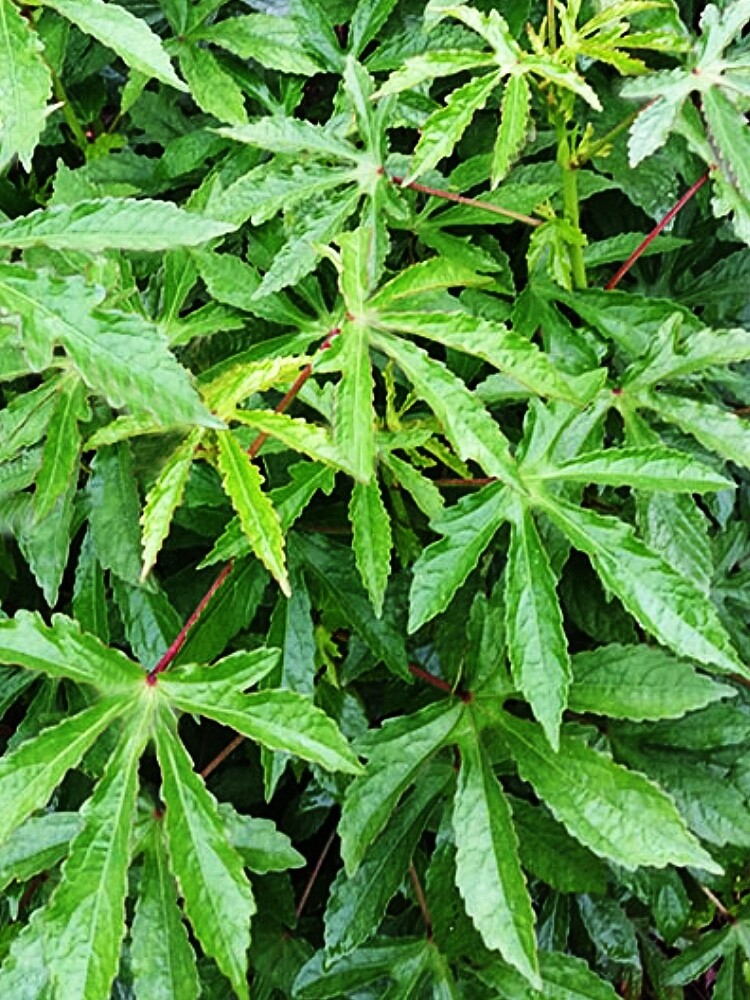
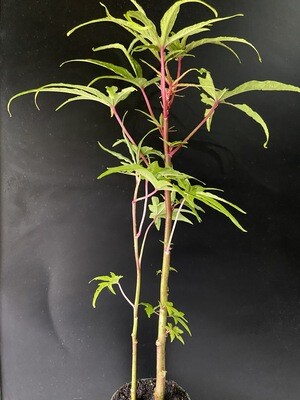
The confusion comes from Kenaf’s deeply divided leaves. On some plants, the mature foliage develops three to seven narrow lobes that can resemble cannabis from a distance.
Even the botanical name plays into the confusion.
The Latin species name cannabinus means hemp-like or resembling hemp—a reference to the plant’s foliage and useful stem fiber, not to any psychoactive property.
Kenaf does not produce marijuana buds, and it is not grown for THC.
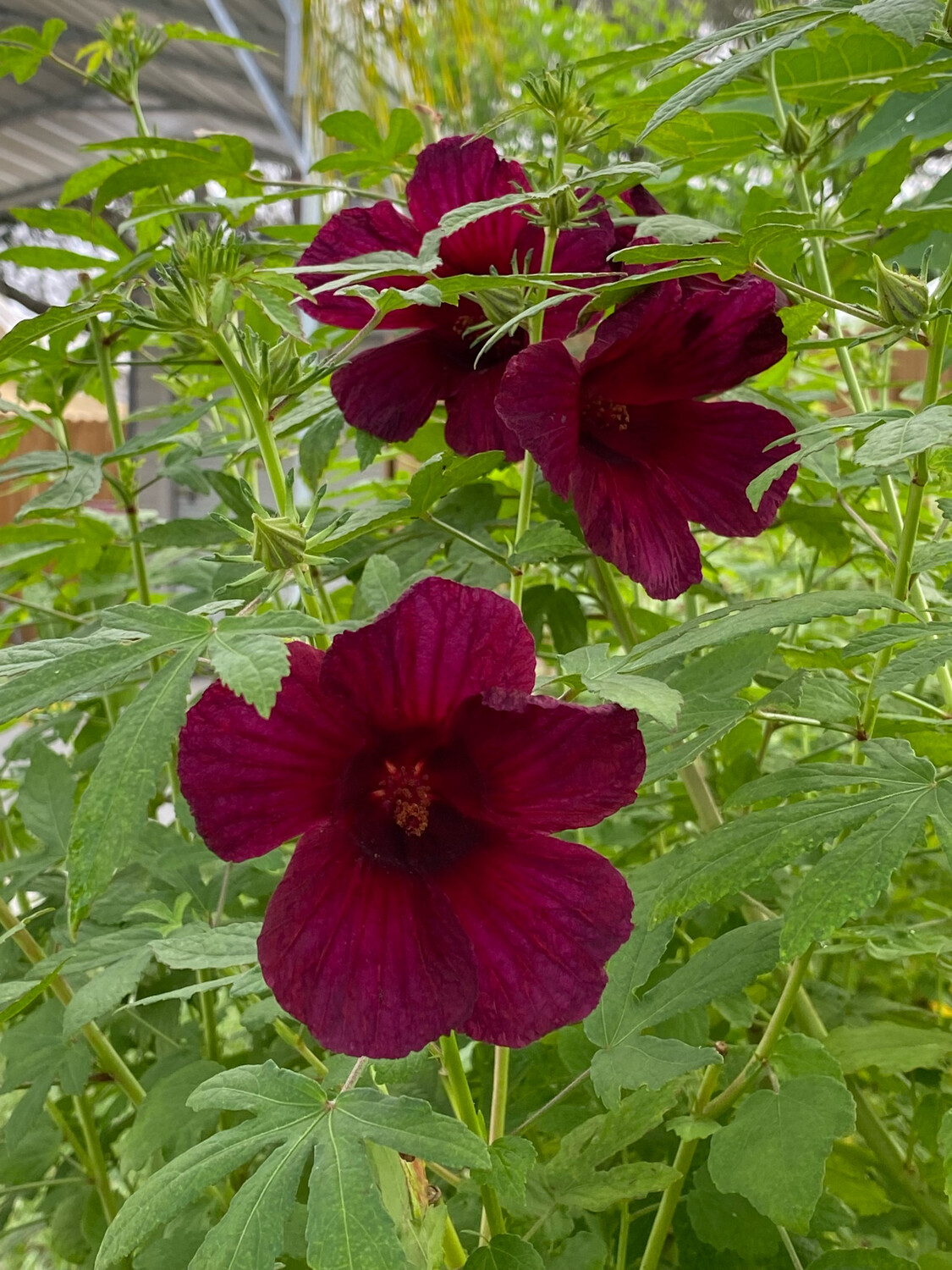
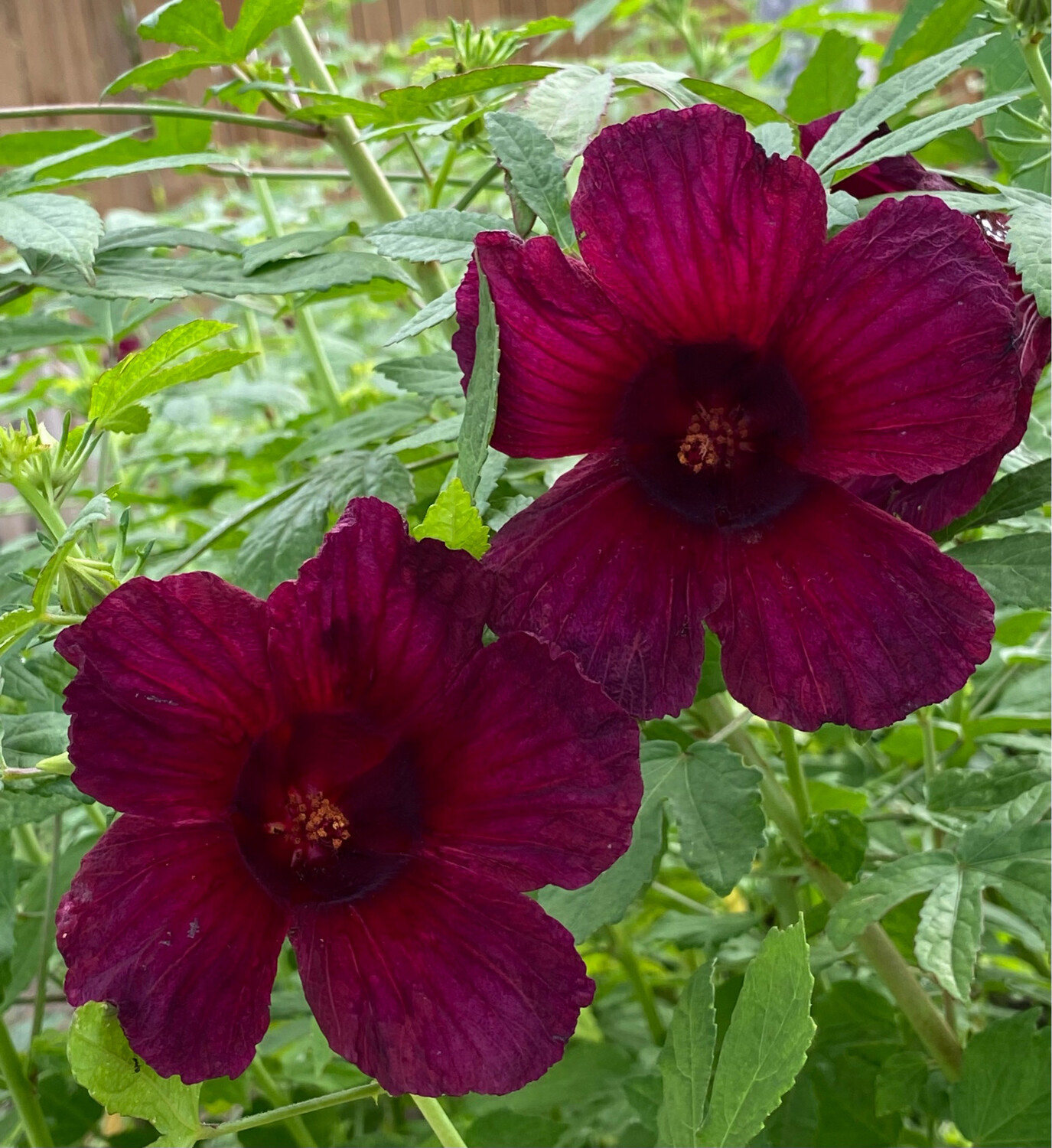
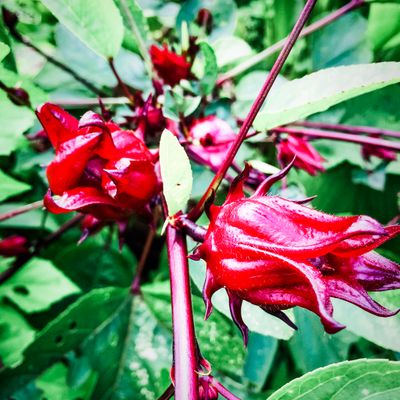
Once flowering begins, the difference becomes especially obvious: Kenaf produces unmistakable hibiscus-style blossoms with broad petals and a dramatic dark center.
🌍 From Ancient Fiber Fields to the Modern Regenerative Garden
Kenaf is believed to have originated in tropical Africa, particularly the east-central African region, although centuries of cultivation and naturalization make its exact original range difficult to define.
For generations, communities across Africa and Asia have grown Kenaf for several purposes at once:
- Young leaves and shoots for food
- Stalk fiber for cordage and textiles
- Woody stem core for absorbent material
- Animal forage
- Household crafts
- Green manure and organic matter
- Seasonal wind or privacy barriers
Kenaf later drew major industrial interest as an alternative source of pulp and paper. During the twentieth century, United States agricultural researchers evaluated hundreds of potential nonwood fiber crops and identified Kenaf as one of the most promising candidates.
Today, Kenaf fiber appears in research and manufacturing involving paper, molded products, insulation, biodegradable packaging, composite materials, animal bedding, erosion-control products and automotive components.
For a home grower, that industrial history translates into something simple:
This plant makes an impressive amount of useful material in one season.
Kenaf has been cultivated for food and fiber for thousands of years, and modern research continues to investigate its role in renewable materials, food systems and biomass production.
🍃 Edible Kenaf Leaves: The Harvest Most Gardeners Overlook
The most practical edible portion for a home gardener is the young leaf and tender growing tip.
Young Kenaf leaves have a mild green flavor with a light tang and a texture that becomes softer and slightly mucilaginous when cooked. That natural thickening quality is common within the hibiscus family and may remind growers of okra, roselle leaves or certain traditional soup greens.
Harvest the Best Leaves
Choose:
- Young, fully expanded leaves
- Tender branch tips
- Newer foliage near the upper portion of the plant
- Leaves without pest damage, spotting or weather injury
Avoid relying on:
- Old, coarse leaves
- Tough lower foliage
- Heavily fibrous stems
- Leaves treated with products not labeled for edible crops
Older Kenaf leaves become increasingly fibrous as the plant matures. Frequent harvesting encourages branching and provides a steadier supply of tender growth.
How Does Kenaf Taste?
The flavor can vary with age, weather and preparation, but tender leaves are generally:
- Mildly earthy
- Fresh and green
- Lightly tangy
- Slightly mucilaginous when simmered
- More tender when harvested young
- Well suited to boldly seasoned recipes
Kenaf is not usually grown for a sweet fruit or succulent calyx like culinary roselle. Its greatest culinary value is as a productive warm-season leaf vegetable.
Young Kenaf leaves and shoots have documented use as vegetables and may be eaten cooked or, in some traditions, raw. For the best texture, digestibility and food-safety margin, GreenDreams recommends using clean, tender leaves in cooked preparations.
🍲 How Kenaf Is Used in the Kitchen
Kenaf leaves are traditionally incorporated into vegetable dishes, soups and mixed greens in portions of Africa and Asia.
The most approachable preparation for a new grower is to cook the tender leaves as you would other warm-climate greens.
Popular Culinary Applications
- Soups and broths
- Stews
- Garlic-sautéed greens
- Coconut-based vegetable dishes
- Stir-fries
- Braised greens
- Mixed leafy-green dishes
- Lentil, bean or pea soups
- Egg dishes
- Rice bowls
- Savory sauces that benefit from natural thickening
Best Flavor Partners
Kenaf pairs well with:
- Garlic
- Onion and shallot
- Ginger
- Chili pepper
- Coconut milk
- Tomato
- Lemon or lime
- Smoked paprika
- Cumin
- Turmeric
- Black pepper
- Beans and lentils
- Chicken, fish or pork
- Rice, millet or cornmeal dishes
Texture Tip
When simmered, Kenaf may lightly thicken the surrounding broth. Growers who enjoy okra, jute mallow, molokhia-style greens or roselle leaves will recognize this useful quality.
For a less mucilaginous texture:
- Harvest very young leaves.
- Slice them rather than crushing them.
- Cook quickly over medium-high heat.
- Avoid adding excess water.
- Finish with acid, such as lemon or lime juice.
For a thicker soup or stew, chop the leaves finely and allow them to simmer longer.
🍲 Simple Garlic-Braised Kenaf Greens
This easy preparation allows new growers to experience the flavor before adding Kenaf to more complex recipes.
Ingredients
- 4 packed cups young Kenaf leaves and tender tips
- 1 tablespoon olive oil or cooking oil
- 2–3 cloves garlic, minced
- ¼ cup chopped onion or shallot
- 2–4 tablespoons water, broth or coconut milk
- Salt and black pepper to taste
- Lemon or lime juice
- Optional chili pepper, ginger or smoked paprika
Directions
- Wash the leaves thoroughly and remove coarse stems.
- Warm the oil in a skillet over medium heat.
- Sauté the onion and garlic until aromatic.
- Add the Kenaf leaves and a small amount of liquid.
- Cover and cook until tender, stirring occasionally.
- Season to taste and finish with citrus juice.
Serve with rice, beans, roasted vegetables, grilled meats or a hearty soup.
Garden Tip: Harvesting tender tops every few weeks encourages Kenaf to branch, producing a shorter, fuller plant with more edible shoots.
🌺 Flowers, Seedpods & Seeds
Kenaf produces large, eye-catching hibiscus flowers that commonly appear from late summer into fall.
Flower color varies, but many plants produce:
- Pale yellow, cream or off-white petals
- A dark burgundy or maroon throat
- Prominent hibiscus-style reproductive structures
- Rounded seed capsules after successful pollination
The flowers are most valuable in the home garden as an ornamental feature and pollinator resource.
Although research and traditional-use literature discuss multiple Kenaf plant parts, its flowers and seed products are not as familiar in the American home kitchen as roselle calyces or okra pods.
GreenDreams Culinary Recommendation
- Prioritize young leaves and shoots for home cooking.
- Enjoy the flowers primarily for ornamental and pollinator value.
- Do not assume Kenaf calyces can be used exactly like roselle calyces.
- Do not consume seed oil or homemade seed products without a reliable, food-specific processing method.
- Never use plant material that has been treated with non-food-safe garden products.
Kenaf seed contains oil and nutritional compounds of interest to researchers, but many published applications involve controlled extraction and food-processing methods rather than casual home preparation. Research into potential health-related compounds is promising but should not be interpreted as proof that Kenaf prevents or treats disease.
🌱 Top Benefits of Growing Kenaf
🍃 A Productive Summer Green
Kenaf produces edible foliage during the heat of the year, when traditional cool-season spinach struggles in Florida and the Southeast.
🌾 Major Biomass in One Season
The fast-growing stems and leaves create abundant organic material for garden experiments, seasonal screens and managed chop-and-drop systems.
🌺 Ornamental Appeal
The plant combines bold, tropical foliage with dramatic hibiscus-style flowers and an architectural upright form.
🐝 Pollinator Support
Kenaf flowers attract bees and other visiting insects during the flowering period.
🧶 A Real Fiber Crop
Its stalk contains two useful fiber zones:
- Outer bast fiber: longer fibers traditionally used for rope, cordage and textiles
- Inner woody core: shorter fiber used in paper, absorbent products, bedding and composite materials
🌿 Seasonal Privacy
Closely spaced plants can create a temporary screen along fences, garden edges and production areas.
📚 Educational Value
Kenaf is an excellent demonstration plant for:
- School gardens
- Homestead programs
- Fiber workshops
- Regenerative agriculture tours
- Botanical education
- Farm-to-product demonstrations
😄 Guaranteed Conversation
Between the cannabis-like leaves, towering stalks and hibiscus flowers, Kenaf may become the most discussed plant in your garden.
🌺 Ornamental & Landscape Appeal
Kenaf is not a restrained foundation shrub.
It is tall, seasonal, tropical-looking and visually bold.
Use it where dramatic vertical growth is an advantage:
- Along a fence
- At the back of an edible garden
- Behind shorter perennial greens
- In a seasonal pollinator border
- Around a production garden
- As a temporary privacy screen
- Near a pergola or outdoor gathering area
- In a tropical cottage-garden planting
- As a backdrop for dark-leaved or silver-foliaged plants
Avoid placing it:
- Directly against buildings
- Beneath low utility lines
- In narrow walkways
- Where a tall plant could block visibility
- In small formal beds that require year-round consistency
- Where falling stalks could damage delicate plants
- In a location where frost-killed stems would be difficult to remove
Kenaf is especially effective when repeated in a row or planted in a loose cluster rather than isolated as a single narrow stalk.
Foliage Changes as Kenaf Grows
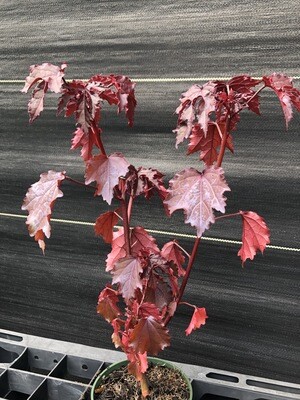
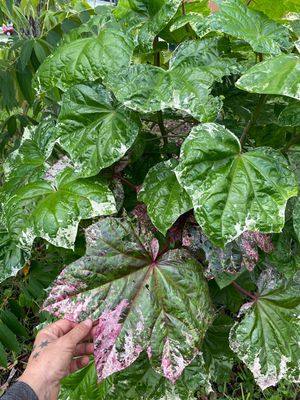
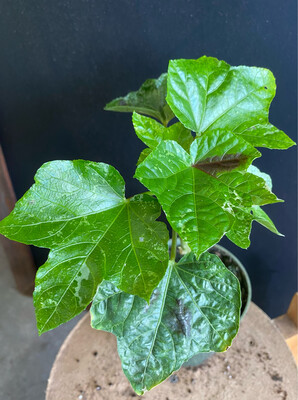
One of Kenaf’s most interesting traits is its variable leaf shape.
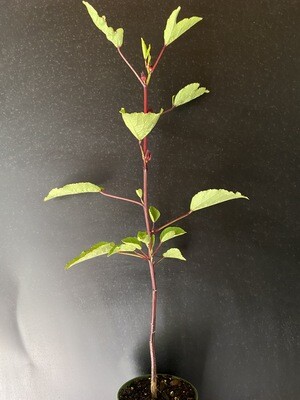
Young plants may begin with simple or lightly lobed leaves. As the plant matures, later leaves may become deeply divided into narrow lobes. Upper foliage can become less divided again as the plant approaches flowering and seed production.
This natural variation is not a sign that multiple plant species are growing from the same container.
It is part of Kenaf’s normal development.
🌾 Kenaf Seasonal Care, Planting & Production Guide
🌱 What to Do When Your Kenaf Plant Arrives
Your Kenaf is shipped as a young, living starter plant in a 4-inch nursery container.
Small plants may arrive with:
- Slightly drooping leaves
- Minor yellowing
- Loose or shifted soil
- A dry upper soil surface
- A few broken leaves
- Temporary leaf loss
- Slower growth during the first several days
These conditions do not automatically indicate that the plant is failing. Kenaf is fast-growing once established, but a small starter needs time to recover from darkness, vibration, temperature changes and limited airflow during shipment.
Arrival Care
- Open the box promptly.
- Remove all packing material carefully.
- Check the soil moisture before watering.
- Water at soil level if the root ball feels dry.
- Place the plant in bright shade or gentle morning sun.
- Protect it from intense afternoon sun and strong wind during the first several days.
- Gradually increase sunlight over approximately one week.
- Keep the plant in its original container until transit stress has passed and healthy new growth appears.
Wait approximately 30 days or until the plant produces clear new growth before transplanting whenever practical.
The best time to transplant is when the plant has recovered and its roots are beginning to occupy or outgrow the existing container.
Because 4-inch containers dry more quickly than larger pots, inspect the plant daily during warm weather.
🌸 Florida & Southeastern Seasonal Guide
Kenaf is not truly deciduous. It is a frost-tender warm-season annual in most of the continental United States.
A deciduous tree enters a recurring dormant period and later regrows from established woody structure. Kenaf usually completes its life cycle within one warm season and is then killed by frost, cold damage or natural senescence after flowering and seed production.
🌸 Spring: Establishment & Early Growth
North Florida and Zone 8
- Plant after the danger of frost has passed.
- Wait for warm soil and consistently mild nighttime temperatures.
- Protect young plants from late cold fronts.
- Growth may remain slow when temperatures fall below approximately 50°F.
- Begin training or pinching only after vigorous new growth begins.
Central Florida and Zone 9
- Plant after the region’s final meaningful frost risk.
- March through late spring is generally the primary establishment period.
- Early planting provides the longest season for foliage and biomass.
- Watch for dry spring weather and irrigate consistently.
South Florida and Zone 10
- Plant during warm weather.
- Kenaf may grow for an extended period where frost is absent.
- Even in South Florida, many growers manage it as an annual because flowering and seed production naturally slow vegetative growth.
☀️ Summer: Explosive Vegetative Growth
Summer is Kenaf’s power season.
Expect:
- Rapid height gain
- Larger leaves
- Increasing stalk diameter
- Greater water demand
- Faster root development
- Improved weed competition after canopy establishment
- A need for regular leaf harvest if maintaining a shorter plant
During prolonged heat:
- Check 4-inch and 1-gallon containers daily.
- Water deeply at soil level.
- Do not allow containers to sit in stagnant water.
- Refresh mulch around in-ground plants.
- Watch for spider mites, aphids and leaf-chewing insects.
- Stake plants before—not after—major wind events.
🌺 Late Summer & Fall: Flowering, Fiber Maturity & Seed Development
Many Kenaf types respond to shortening day length, so flowering commonly begins from late summer into fall. Exact timing varies with variety, latitude, temperature and planting date.
Expect:
- Reduced vertical growth
- Large hibiscus-style flowers
- Increased branching on previously pinched plants
- Firming and lignification of the stalks
- Seed capsule formation
- Gradual decline in leaf tenderness
- More energy directed toward reproduction
Continue harvesting younger shoots, but understand that mature leaves may become tougher as the plant flowers.
Gardeners interested in stalk fiber may allow the stems to mature through flowering.
❄️ Winter: Cold Decline & Seasonal Removal
In zones 8–10, cold weather generally ends the Kenaf growing season.
Symptoms may include:
- Wilting after cold nights
- Darkened or water-soaked foliage
- Leaf drop
- Brown stems
- Complete collapse following frost
- Dry seed capsules on mature plants
After frost kills the plant:
- Harvest any mature seed capsules you intend to save.
- Cut the stalks at ground level.
- Process suitable stems for crafts or fiber experiments.
- Chip or cut clean material into smaller pieces for composting.
- Leave healthy roots to decompose in place if appropriate.
- Remove diseased or heavily infested material from the garden.
Do not assume a frost-killed Kenaf plant will reliably regrow in spring. Replant with new starts or saved seed for the next warm season.
Kenaf is sensitive to cool weather and performs best with high temperatures, ample sunlight, a long frost-free season and consistent soil moisture. Flowering is often initiated as day length shortens toward approximately 12½ hours.
🌞 Where to Plant Kenaf
Choose a Location With:
- Full sun
- At least 6–8 hours of direct sunlight
- Fertile soil
- Good drainage
- Room for 6–14 ft of seasonal height
- Easy access to irrigation
- Space for periodic harvesting
- Protection from severe wind when possible
- Clearance from structures and overhead lines
Kenaf can adapt to sandy soils when supplied with organic matter, mulch, water and appropriate nutrition. It may also perform well in loamy or heavier soils when drainage remains adequate.
Avoid:
- Standing water
- Poorly drained low spots
- Dense shade
- Compacted soil with no preparation
- Locations receiving roof runoff
- Beds directly beside foundations
- Areas exposed to direct ocean salt spray
- Wind tunnels between buildings
- Narrow pathways
- Locations where a tall seasonal plant would obstruct traffic or visibility
Coastal Planting Note
Kenaf is not a first-choice oceanfront plant.
Research shows that some Kenaf cultivars can respond to moderate salinity, but salt stress can reduce growth and performance. This does not make Kenaf reliably tolerant of repeated salt spray, storm surge or saline irrigation.
Near the coast, plant Kenaf:
- Inland from the primary dune
- Behind a building, fence or windbreak
- Away from direct salt-laden wind
- In soil irrigated with low-salinity water
- Where drainage is strong
Cultivar responses to salinity vary, and measurable salt stress can affect Kenaf growth. For home landscapes, treat it as salt-sensitive to moderately tolerant rather than as a true coastal species.
🌿 How to Plant Kenaf Using the GreenDreams Method
Kenaf grows quickly, but correct planting depth is still essential.
Planting too deeply may keep the crown and upper root zone excessively wet, restrict oxygen and increase the risk of decline.
Kenaf Planting Instructions
- Water the plant several hours before transplanting if the root ball is dry.
- Dig a hole only slightly wider than the existing nursery container.
- Dig no deeper than the root ball.
- Remove the plant carefully without pulling it by the stem.
- Inspect circling roots and loosen only the outermost roots when necessary.
- Position the root ball at the same depth it grew in the nursery container—or slightly high in poorly drained Florida soil.
- Backfill with native soil, incorporating only a modest amount of finished compost.
- Firm the soil around the root ball to eliminate large air pockets without compacting it heavily.
- Water slowly and deeply at soil level.
- Top-dress the surrounding soil with compost, biochar, azomite and an organic nutrient source appropriate for leafy vegetables.
- Apply hardwood mulch around the planting area.
- Keep mulch several inches away from the base of the stalk.
Never:
- Bury the lower stem
- Create a deep mulch volcano
- Leave the root ball exposed above the soil without surrounding support
- Fill the hole with pure compost
- Plant into standing water
- Fertilize a stressed plant heavily on transplant day
Watch Our High & Tight Planting Method
For GreenDreams planting guidance, visit:
https://youtu.be/RRQFY30qdA8?si=rRIcsbLlVAVYotfI
Although the video demonstrates fruit-tree planting, the core principles—proper depth, firm backfilling, drainage awareness and keeping mulch away from the trunk or stem—also apply to Kenaf.
💧 Kenaf Watering Guide
Kenaf grows rapidly and develops a substantial root system, but young plants must not be allowed to dry repeatedly.
The goal is consistent soil moisture with adequate oxygen around the roots.
Important GreenDreams Watering Rule
Do not rely on overhead watering.
Water Kenaf:
- At soil level
- In the morning
- Slowly enough to soak the root zone
- With drip irrigation, a watering wand or a hose directed at the soil
Overhead afternoon watering may contribute to leaf spotting, uneven absorption, fungal pressure and sun-related leaf injury. It also wastes water by wetting foliage rather than the root zone.
Watering a 4-Inch Container
During warm weather:
- Check moisture every day.
- Water thoroughly when the upper soil begins to dry.
- Continue watering until excess drains from the bottom.
- Do not allow the container to sit in a tray of water.
- Recheck during very hot, windy or dry weather.
A 4-inch pot may require daily watering in summer. However, do not water automatically when the soil is still saturated.
Watering a 1-Gallon or Larger Container
- Check the soil daily during active growth.
- Water when the upper ½–1 inch begins to dry.
- Saturate the entire root ball.
- Empty saucers after watering.
- Increase frequency during heat, wind and rapid growth.
- Reduce frequency during cloudy or cool weather.
Watering Newly Planted Kenaf
For the first 1–2 weeks:
- Check daily.
- Water deeply when the root zone begins to lose moisture.
- Do not keep poorly drained soil continuously saturated.
During weeks 3–6:
- Gradually transition toward deeper, less frequent irrigation.
- In hot, dry Florida weather, plants may still require water several times per week.
Once established:
- Provide approximately 1–2 deep waterings weekly during periods of regular rainfall.
- Increase to 2–3 times weekly—or more often—during drought, extreme heat or sandy-soil conditions.
- Adjust according to soil moisture rather than a rigid calendar.
Signs Kenaf Needs More Water
- Soft, drooping leaves during the morning
- Dry potting mix pulling from the edge of the container
- Crisp leaf margins
- Slow or undersized new growth
- Repeated midday collapse that does not recover by evening
Signs the Soil Is Staying Too Wet
- Yellow lower leaves
- Persistent wilt despite wet soil
- Sour-smelling potting mix
- Fungus gnats
- Darkened stem tissue near the soil
- Little or no new growth
- Root discoloration
Kenaf benefits from abundant moisture during warm active growth but performs poorly in soil with severe drainage problems or prolonged standing water.
🌾 Soil, Mulch & Organic Fertility
Kenaf is a fast-growing plant producing a large volume of foliage and stem material. That growth requires sunlight, water, active soil biology and adequate nutrition.
Preferred Soil
Choose soil that is:
- Fertile
- Well drained
- Biologically active
- Moisture retentive without becoming waterlogged
- Enriched with finished compost
- Approximately pH 5.5–7.0
Florida Sandy-Soil Support
In very sandy soil, improve moisture and nutrient retention with:
- Finished compost
- Aged hardwood mulch
- Charged biochar
- Worm castings
- Regular organic top-dressing
- Drip irrigation
Fertility Approach
Kenaf often responds strongly to nitrogen because gardeners are primarily encouraging vegetative growth.
Use moderate applications of:
- Finished compost
- Worm castings
- Balanced organic vegetable fertilizer
- Fish hydrolysate
- Kelp products
- Composted manure
- Mineral amendments based on soil-test results
Suggested Feeding Schedule
At planting:
Use compost and a mild organic nutrient source. Avoid aggressive feeding while the plant is recovering.
Three to four weeks after establishment:
Apply a balanced organic fertilizer according to the product label or soil-test recommendations.
During rapid summer growth:
Top-dress periodically with compost or apply a light liquid feed if growth becomes pale or slow.
Approaching fall flowering:
Avoid excessive nitrogen if seed and stalk maturity are desired. Continued heavy nitrogen may encourage soft vegetative growth.
Avoid Overfeeding
Excess fertilizer may cause:
- Soft, weak stems
- Leaf-tip burn
- Excessive height
- Greater lodging risk
- Increased aphid activity
- Nutrient runoff
- Salt accumulation in containers
Kenaf is capable of using residual nutrients efficiently through its deep taproot and spreading lateral roots. Base major fertilizer decisions on plant response and soil testing rather than assuming that more fertilizer always produces a better plant.
✂️ Pruning, Pinching & Leaf Production
The correct pruning style depends on why you are growing Kenaf.
For Maximum Edible Leaves
- Allow the plant to establish first.
- Pinch the growing tip once the plant is approximately 18–30 inches tall and actively growing.
- Cut just above a healthy leaf node.
- Allow side branches to develop.
- Harvest tender branch tips every 2–3 weeks.
- Avoid removing more than approximately one-third of the foliage at one time from a young or stressed plant.
Repeated tip harvest creates a bushier plant with more accessible leaves.
For a Seasonal Privacy Screen
- Space plants approximately 18–24 inches apart.
- Pinch once or twice early in the season to increase branching.
- Retain enough central structure to support vertical growth.
- Stake exposed plants before hurricane-season wind events.
- Remove weak or crossing stems.
For Tall Fiber Stalks
- Do not pinch the main growing tip.
- Space plants closer together.
- Encourage upright, minimally branched stems.
- Maintain even moisture and nutrition.
- Harvest stalks as they mature around flowering, depending on the intended fiber project.
For Biomass Production
- Allow plants to reach the desired height.
- Cut before stems become too woody for your equipment.
- Chop leaves and smaller stems into manageable pieces.
- Use clean, pest-free material as mulch or compost feedstock.
- Allow thick stems to dry or chip them before composting.
Storm Preparation
Kenaf’s tall growth can become top-heavy.
Before severe weather:
- Stake individual specimen plants.
- Tie loosely with flexible material.
- Reduce excessive top growth if necessary.
- Avoid rigid ties that cut into the stem.
- Do not place the plant where a fallen stalk could damage structures.
Commercial-production research notes that plants may lodge when spacing produces stems that are excessively thin or branches that are too heavy. Balanced spacing and early support are important in the home garden as well.
🪴 Kenaf Container-Growing Guide
Kenaf can grow in a container, but a 4-inch starter pot is only the beginning.
This species produces rapid top growth, a deep taproot and widespread lateral roots. It will quickly become stressed if left in a small container.
Recommended Pot Progression
- 4-inch nursery pot → 1-gallon container
- 1 gallon → 3-gallon container
- 3 gallon → 7-gallon or larger container
- 7 gallon → 15–25-gallon final container for substantial seasonal growth
The final size depends on your goal.
For a compact, repeatedly harvested leaf plant, a 7–15-gallon container may be manageable with regular pruning.
For maximum height and biomass, use a 20–25-gallon container or plant Kenaf in the ground.
When to Up-Pot
Transplant when:
- Healthy new growth confirms recovery
- Roots circle the container
- Roots emerge from drainage holes
- The pot dries unusually quickly
- Growth slows despite proper water and nutrition
- The plant becomes top-heavy
Whenever practical, allow approximately 30 days after shipping—or wait until clear new growth appears—before transplanting.
How to Up-Pot Kenaf
- Select a container only one or two practical sizes larger.
- Confirm that it has multiple drainage holes.
- Add enough potting mix to position the root ball at its original depth.
- Remove the plant carefully.
- Loosen only tightly circling outer roots.
- Center the plant in the new container.
- Fill around the root ball with fresh potting mix.
- Firm gently to remove air pockets.
- Water thoroughly at soil level.
- Place in bright shade for one or two days if transplanting during intense heat.
- Gradually return the plant to full sun.
Best Potting Mix for Kenaf
Use a rich, well-drained vegetable or tropical plant mix containing materials such as:
- Coconut coir or peat-based organic matter
- Composted bark
- Finished compost
- Perlite, pumice or rice hulls for aeration
- A modest amount of mineral soil or worm castings
A useful general target is:
- Approximately 60–70% quality organic potting mix
- Approximately 20–30% aeration material
- Approximately 10–20% finished compost or worm castings
Do not use dense native yard soil by itself in a container.
Containers and potting materials can be found through local independent nurseries, farm-supply stores, landscape suppliers, hydroponic retailers, garden centers and online searches for nursery pots, food-production potting soil and professional growing media.
🏠 Can Kenaf Be Grown Indoors?
Kenaf can be started indoors temporarily, but it is not an ideal long-term houseplant.
It requires:
- Strong direct light
- Warm temperatures
- Significant vertical space
- A large root volume
- Air circulation
- Regular watering
- Seasonal outdoor conditions for its best growth
A bright window is rarely sufficient for a mature plant. Indoor plants often become thin, stretched and weak.
Temporary Indoor Uses
Kenaf may be kept indoors:
- While recovering from cold
- As a seedling before the final frost
- During brief shipping recovery
- In a greenhouse or sunroom with strong supplemental light
For long-term production, move it outdoors after weather is reliably warm.
🌿 Kenaf Companion & Support Plant Guide
Kenaf works well in a managed regenerative planting, but it should not shade every plant around it.
Support Plants
| Function | Suggested Plants | How They Help |
|---|---|---|
| Nitrogen Support | Pigeon pea, perennial peanut, cowpea, sunn hemp | Contribute nitrogen-rich biomass and improve system diversity |
| Pollinator Support | Mexican sunflower, African blue basil, native asters, blanket flower | Extend floral resources and beneficial-insect activity |
| Carbon & Biomass | Clumping grasses, vetiver, sugarcane, native grasses | Produce fibrous mulch and complementary root structures |
| Living Groundcover | Sweet potato, perennial peanut, low-growing herbs | Protect soil and reduce exposed ground |
| Edible Contrast | Cranberry hibiscus, roselle, chaya, longevity spinach | Create varied leaf color, texture and harvest opportunities |
| Aromatic Diversity | Lemongrass, basil, society garlic | Add scent, culinary use and visual contrast |
Design Considerations
- Place Kenaf north or west of low-growing crops when possible so its height does not create unwanted shade.
- Leave access paths for leaf harvesting.
- Keep vigorous vines from climbing and pulling down Kenaf stalks.
- Do not crowd the base so tightly that airflow and inspection become difficult.
- Cut support plants strategically rather than allowing every species to compete at full height.
Important Note About Pigeon Pea and Other Tall Companions
Kenaf and pigeon pea can both become large. Use them together only where sufficient space exists, or stagger them so one does not overwhelm the other.
🌾 Production Goals at a Glance
| Your Goal | Spacing | Pruning Strategy | Harvest Focus |
|---|---|---|---|
| Tender edible leaves | 18–36 inches | Pinch and harvest tips regularly | Young leaves and shoots |
| Seasonal privacy screen | 18–24 inches | Pinch early for branching | Foliage and visual density |
| Ornamental specimen | 3–5 ft | Light shaping and staking | Flowers and architecture |
| Fiber stalks | Dense rows | Do not pinch | Long, straight stems |
| Biomass production | 2–3 ft | Minimal pruning until harvest | Leaves and chopped stems |
| Container production | One plant per large pot | Regular height control | Leaves and flowers |
Commercial Kenaf fields use extremely close crop spacing to produce straight fiber stems. Those production rates should not be copied directly into a home landscape unless the grower intends to harvest an entire dense row as a crop.
🌿 Kenaf Cautions, Troubleshooting, Shipping & Ordering Guide
⚠️ Important Kenaf Cautions
Kenaf is generally straightforward to grow during warm weather, but every gardener should understand its size, seasonal nature and management needs before planting.
Plan for Significant Height
An unpruned Kenaf plant may reach 8–14 ft in one season. Do not place it beneath rooflines, utility cables or low tree branches.
Frost Will Usually End the Season
Kenaf is not a cold-hardy perennial shrub. In North and Central Florida, expect frost or winter cold to kill the plant.
Small Containers Dry Quickly
A 4-inch Kenaf starter may require daily inspection and frequent watering during warm weather. Missing one hot, windy day can result in severe wilt.
Tall Stems Can Lodge
Strong storms, saturated soil or top-heavy branching may cause Kenaf to lean or fall. Stake exposed plants before severe weather.
Avoid Waterlogged Soil
Kenaf appreciates moisture but not prolonged standing water. Poor drainage increases the risk of root decline and seedling damping-off.
Do Not Confuse Kenaf With Cannabis
Kenaf is a hibiscus relative and does not produce marijuana. However, the leaf resemblance can attract questions. Consider labeling the plant in visible community gardens or front-yard installations.
Culinary Use Requires Proper Identification
Consume only correctly identified Hibiscus cannabinus leaves from plants grown without non-food-safe pesticides.
Research Is Not Medical Advice
Kenaf leaves and seeds contain nutrients and phytochemicals studied for antioxidant and other biological properties. These studies do not establish Kenaf as a treatment, cure or preventive therapy for any disease.
Monitor Seed Production
Mature plants may form numerous seed capsules in climates with a long enough fall. Harvest seed intentionally and remove unwanted seedlings before they become established.
🌟 Is Kenaf the Right Plant for You?
✅ Kenaf Is Ideal For:
- Florida and Southeastern growers
- Permaculture gardeners
- Homesteaders
- Tropical vegetable collectors
- Pollinator-garden enthusiasts
- Growers seeking summer leafy greens
- Fiber and natural-craft hobbyists
- Regenerative agriculture demonstrations
- Educational gardens
- Seasonal privacy-screen projects
- Gardeners who enjoy fast-growing plants
- Anyone who appreciates a good garden story
❌ Kenaf May Not Be Ideal For:
- Small indoor spaces
- Highly formal landscapes
- Gardens without direct sun
- Low-lying, waterlogged locations
- Exposed oceanfront sites
- Gardeners wanting a permanent evergreen screen
- Cold-climate growers without a sufficient warm season
- Anyone unable to monitor a small container regularly
- Growers who do not have room for a tall seasonal crop
- Landscapes where stalk removal after frost would be difficult
Kenaf is best for a gardener who sees seasonal growth as an opportunity rather than a maintenance problem.
🔍 GreenDreams Kenaf Troubleshooting Guide
Icons represent common issues and organic solutions—look for 🌿 for recovery guidance.
| ⚠️ Issue | 🧠 Likely Cause | 🌿 Organic Response |
|---|---|---|
| 🍂 Yellow lower leaves | Overwatering, restricted roots, normal aging or low nitrogen | Check drainage and root space first. Allow excess moisture to drain, then top-dress lightly with compost if the plant is actively growing. |
| 🫣 Wilting in the afternoon | Heat stress, dry soil or a rootbound container | Check moisture below the surface. Water deeply at soil level and move a container out of reflected heat. |
| 💦 Wilting while soil is wet | Oxygen-starved roots, root damage or poor drainage | Stop automatic watering, improve drainage and inspect roots before adding fertilizer. |
| 🔥 Brown leaf tips | Fertilizer burn, salt buildup or repeated drought | Flush the container thoroughly, reduce feeding and maintain more consistent moisture. |
| ☀️ Pale or scorched leaves after arrival | Sudden exposure to intense sun | Return the plant to bright shade and acclimate it gradually over approximately one week. |
| 🌬️ Torn or ragged foliage | Wind exposure or storm damage | Move containers to shelter, stake tall plants and remove only severely damaged leaves. |
| 🪵 Leaning stalks | Top-heavy growth, wind or overly loose soil | Stake loosely, firm the surrounding soil and reduce excessive upper growth if needed. |
| 🐛 Large holes in leaves | Caterpillars, grasshoppers or beetles | Inspect after sunset and beneath leaves. Handpick pests and use an edible-crop-labeled biological treatment only when necessary. |
| 🪲 Sticky leaves or curled tips | Aphids, whiteflies or other sap-feeding insects | Rinse pests from the plant in the morning, control ants and encourage beneficial insects. |
| 🕷️ Fine stippling or webbing | Spider mites favored by hot, dry conditions | Inspect leaf undersides, improve irrigation consistency and use an edible-crop-labeled soap or oil according to directions. |
| 🐜 Ant activity on stems | Ants may be protecting aphids or scale insects | Trace the ants to the sap-feeding pest and manage both problems together. |
| 🍄 Spots spreading during wet weather | Fungal or bacterial leaf disease, poor airflow or overhead watering | Remove severely affected leaves, water at soil level and increase spacing and airflow. |
| 🌊 Sudden decline after heavy rain | Saturated soil or root injury | Improve drainage, pull mulch away from the stalk and avoid fertilizing until new growth returns. |
| 🌾 Slow growth despite warm weather | Rootbound pot, low fertility, insufficient sun or nematode pressure | Check roots and light exposure. Up-pot after recovery and consider a soil or root diagnosis if in-ground plants remain stunted. |
| 🪱 Swollen or knotted roots | Root-knot nematodes | Remove badly affected annual plants, add organic matter, rotate crops and avoid repeatedly planting susceptible hibiscus-family crops in the same spot. |
| ❄️ Blackened leaves after a cold night | Frost or cold injury | Wait until conditions stabilize, remove dead material and replace the plant in spring if the stem has died. |
| 🌺 No flowers yet | Plant is still vegetative, day length is too long or the cultivar flowers late | Continue normal care. Many Kenaf plants begin flowering only as days shorten in late summer or fall. |
| 🌱 Numerous seedlings nearby | Mature capsules released viable seed | Pull unwanted seedlings while small and harvest capsules before they split. |
Kenaf is often relatively tolerant of ordinary insect feeding, but anthracnose, seedling damping-off and root-knot nematodes are among the more important production concerns. Proper drainage, crop rotation, sanitation and regular inspection remain the strongest preventive tools.
❓ Kenaf FAQ
Is Kenaf Marijuana or Hemp?
No. Kenaf is Hibiscus cannabinus, a member of the hibiscus family. Marijuana and industrial hemp are forms of Cannabis sativa and belong to a different botanical family.
Kenaf’s deeply divided leaves and useful stem fiber inspired the hemp-like botanical name, but it does not produce marijuana.
Why Does Kenaf Look Like Cannabis?
Mature Kenaf foliage may develop three to seven narrow lobes, creating a similar outline when viewed from a distance. The flowers, seed capsules, stems and botanical structure are distinctly hibiscus-like.
Can You Eat Kenaf Leaves?
Yes. Tender young leaves and shoots have traditional food uses and may be cooked like other leafy vegetables.
GreenDreams recommends harvesting young, clean foliage and cooking it in soups, stews, stir-fries or braised-green dishes.
Can Kenaf Leaves Be Eaten Raw?
Some references report raw use of tender leaves. However, cooked preparations generally provide a softer texture and align with many traditional vegetable applications.
Wash all harvested leaves thoroughly and use only plants grown with food-safe practices.
What Is the Most Common Way to Cook Kenaf?
Young leaves are commonly added to soups, stews and mixed vegetable dishes. Their mild mucilaginous quality can help thicken broth in a manner similar to okra or jute mallow.
Do Kenaf Leaves Taste Like Spinach?
Kenaf may be used similarly to spinach, but the flavor and texture are different. It is generally mild, lightly tangy and more mucilaginous when simmered.
Are Kenaf Flowers Edible?
Kenaf’s best-documented home-garden food use is its young leaves and shoots. Although related hibiscus species have edible flowers and calyces, do not assume every Kenaf flower preparation is interchangeable with culinary roselle.
Enjoy the flowers ornamentally unless following a verified, species-specific food source.
How Fast Does Kenaf Grow?
Once established in hot weather, Kenaf grows extremely quickly. It can reach 8–14 ft in a long growing season, depending on cultivar, spacing, soil, water and planting date.
How Long Does Kenaf Live?
Kenaf is normally grown as an annual. It grows, flowers, produces seed and declines within one season.
It may persist longer in truly frost-free tropical climates, but it should not be marketed or managed as a reliable permanent perennial in most of Florida.
Will Kenaf Come Back After Winter?
Frost-killed Kenaf generally does not return from the same stalk. New plants may emerge from dropped seed, or growers can replant starter plants each spring.
What USDA Zones Can Grow Kenaf?
Kenaf can be grown as a summer annual in much of the continental United States where the warm season is long enough. Zones 8–11 offer especially favorable heat, although growers in colder zones can still produce it seasonally after frost.
When Does Kenaf Flower in Florida?
Many plants flower in late summer or fall as day length shortens. Cultivar and planting-date differences can shift this schedule.
Is Kenaf Self-Pollinating?
Kenaf is primarily self-fertile, although insects can contribute to cross-pollination between nearby plants.
Does Kenaf Attract Pollinators?
Yes. Its large hibiscus-style flowers attract bees and other flower-visiting insects.
Can Kenaf Be Used as a Privacy Screen?
Yes, but it is a seasonal screen—not a permanent hedge. Space plants approximately 18–24 inches apart and pinch them early to encourage fuller branching.
Is Kenaf Wind Tolerant?
Kenaf handles ordinary summer breezes, but tall plants may lean, snap or lodge in strong storms. Stake specimens in exposed areas and avoid allowing container plants to become top-heavy.
Is Kenaf Salt Tolerant?
Kenaf is not a dependable salt-spray plant. Some cultivars show moderate tolerance to saline soil conditions in research, but direct coastal exposure can reduce performance.
Can Kenaf Grow in a Pot?
Yes. Begin with gradual pot progression and expect to finish in a 7–25-gallon container, depending on the desired height and harvest.
Can Kenaf Grow Indoors?
Only temporarily. Mature Kenaf needs more direct sunlight, airflow and space than most indoor environments provide.
Is Kenaf Good for Soil?
Kenaf produces substantial roots, leaves and stalk biomass. When managed responsibly, clean plant material can contribute organic matter to compost and mulch systems.
However, it is not a nitrogen-fixing plant.
Can Kenaf Be Used for Chop-and-Drop?
Yes. Young leaves and smaller stems decompose more quickly than mature woody stalks. Cut thick stems into smaller pieces or chip them before applying.
How Is Kenaf Fiber Harvested?
Fiber growers typically allow long, straight stalks to mature, then cut and process them to separate the outer bast fibers from the woody core. Retting, drying and mechanical separation may be required depending on the intended project.
Is Kenaf Invasive?
Kenaf is generally cultivated as an annual crop, but mature plants can produce viable seed. Remove unwanted seedlings and harvest capsules before they release seed if reseeding is not desired.
🚚 Kenaf Shipping & Recovery Information
This listing is for one live Kenaf starter plant growing in a 4-inch nursery container.
The 4-inch size is our most economical shipping option, but it also dries more quickly and carries less stored moisture than a larger plant.
Best Regional Shipping Destinations
This size is most ideally suited for shipping to:
- Florida
- The Southeastern United States
- Texas
- Other destinations with relatively short UPS Ground transit times
We ship throughout the continental United States, but buyers in northern and western states should carefully consider distance, transit duration and seasonal temperatures before ordering a small tropical plant.
UPS Ground Shipping
- Plants ship from Florida.
- We currently use UPS Ground.
- Our regular live-plant shipping day is Monday.
- Delivery times vary by destination and are not guaranteed by GreenDreams.
- California packages may be held for an additional agricultural inspection, increasing transit time.
Northern & Western Buyer Discretion
Extended UPS Ground transit may not be ideal for a small 4-inch plant.
Plants shipped outside our regional delivery zone may arrive with:
- Wilted foliage
- Yellow leaves
- Dry soil
- Leaf loss
- Bent stems
- Heat or cold stress
- A need for an extended recovery period
Many plants can recover with proper care, but GreenDreams cannot guarantee that a small starter shipped across a long-distance ground route will arrive in the same condition as a locally delivered plant.
The buyer assumes the additional transit risk associated with ordering small live plants for long-distance UPS Ground delivery.
When available, we strongly recommend choosing a 1-gallon or larger plant for extended transit because the larger root ball retains moisture more effectively and generally provides greater resilience.
Extreme Heat & Cold Disclaimer
Buyer discretion is strongly advised during peak summer heat and winter cold.
GreenDreams is not responsible for damage caused by:
- Extreme temperatures during transit
- Carrier delays
- Packages left outdoors after delivery
- Frozen or overheated delivery vehicles
- Ground-service transit duration
- California agricultural inspection delays
- Weather-related service interruptions
Review the weather at our Florida nursery, along the likely shipping route and at your destination before placing an order.
After Delivery
- Open the package immediately.
- Photograph the plant and box if significant shipping damage is present.
- Water only after checking the soil.
- Begin recovery in bright shade.
- Gradually acclimate the plant to full sun.
- Protect it from strong wind.
- Keep it in its original container until healthy new growth appears.
- Wait approximately 30 days—or until recovery and new growth are evident—before transplanting whenever practical.
Do not fertilize a severely stressed plant immediately after delivery.
🏡 Shop With Us in Person
GreenDreams Nursery & Farm – Open to the Public
Our retail nursery carries Kenaf and countless other edible, useful, native and ecological plants, including larger specimens and seasonal selections that may never appear in the online store.
Shopping locally gives you the opportunity to:
- Select from larger plant sizes
- Compare edible hibiscus relatives
- Discover rare seasonal inventory
- Ask our team where a plant will perform best
- See what is blooming, fruiting and thriving in Central Florida
- Find companion plants for a complete edible ecosystem
🌾 18709 US Hwy. 41, Spring Hill, FL 34610
🕘 Tuesday–Friday: 9 AM–5 PM
🌞 Saturday: 8 AM–3 PM
🌿 Stop by our regenerative nursery to see what is blooming, fruiting and growing this week.
🌿 Beyond the Plant: GreenDreams Services
At GreenDreams, we do more than grow plants—we design, build and restore productive ecosystems throughout Florida.
Our services include:
- 🌳 Onsite consultations and edible landscape design
- 🚜 Ecological landscape installation and project management
- 🌿 Food forest and regenerative garden development
- 🌾 Day-labor assistance for planting and landscape projects
- 🚚 Bulk delivery of compost, hardwood mulch, biochar and soil materials
- 🪴 Large-volume and wholesale plant sales
- 🌱 Regenerative agriculture planning and implementation
Whether you need one unusual plant or support transforming an entire property, our team can help you build a healthier and more productive landscape.
Let’s create your edible ecosystem—starting with Kenaf.
🌿 IMPORTANT INFORMATION BEFORE PURCHASING LIVE PLANTS
Please note: Plants purchased through our online store are not available for pickup at our retail nursery in Spring Hill, Florida.
Online inventory is housed at a separate facility and is priced, prepared, and handled exclusively for shipping.
🌱 Looking for larger plants or more selection?
Our retail nursery location offers far more availability, including larger sizes, specialty plants, and many selections not suitable for nationwide shipping.
Local pickup is available for retail nursery purchases only.
Visit our Spring Hill, FL retail nursery page to explore in-person shopping options.
🚚 LIVE PLANT SHIPPING & TRANSIT EXPECTATIONS
Live plants naturally experience stress during shipping. Temporary leaf drop, mild wilting, or cosmetic stress is normal after transit. Most plants recover quickly with proper watering, gradual light exposure, and basic aftercare. Some plants may require additional attention during the first few weeks.
Despite careful packing, minor cosmetic damage may occur during transit. Small issues such as broken leaves or stems typically resolve with time and proper care.
If your shipping box arrives with significant external damage, please contact UPS within 30 days to initiate a carrier claim.
⏱️ SHIPPING METHOD, TIMING & TRANSIT WINDOWS
All online orders ship via UPS Ground from our Central Florida nursery.
📦 Shipping Schedule: Orders ship once weekly on Mondays to reduce the risk of packages sitting in transit over weekends. A countdown clock on our website displays the next shipping date.
🚚 Typical Transit Times:
-
Florida: 1–2 days
-
Southern U.S.: approximately 2 days
-
Midwest, West & Northern U.S.: 3–5 business days
Long-distance shipments, particularly to the western U.S., may experience additional transit time due to agricultural inspections in states such as Arizona, California, and Texas.
Extended transit times can be more challenging for small or tender plants and may require additional recovery care after arrival.
🌡️ EXTREME WEATHER & SEASONAL RISK
Live plants are sensitive to temperature extremes.
We cannot guarantee plant condition during periods of extreme summer heat or winter cold and freezing temperatures. Weather-related delays, carrier interruptions, or exposure during delivery are beyond our control.
Customers are responsible for:
-
Monitoring tracking information sent via email
-
Retrieving packages promptly upon delivery
-
Preventing plants from being left outdoors in extreme conditions
During unsafe weather, holiday shipping volume, or extended transit risk, orders may be held and shipped the following week to protect plant health.
⚠️ CUSTOMER RESPONSIBILITY & REFUND POLICY
By purchasing live plants, customers acknowledge and accept the risks associated with shipping, weather exposure, transit delays, and regional suitability.
Refunds or replacements are considered only under exceptional circumstances and in accordance with our return and refund policy. We are not responsible for:
-
Weather-related damage
-
Carrier delays
-
Poor plant selection for a given climate or region
-
Improper care after delivery
Upon purchase, customers assume full responsibility for the ongoing care and success of their plants.
✅ CONSENT & AGREEMENT
By completing a purchase, you confirm that you have read, understand, and agree to all shipping policies, responsibilities, and conditions outlined above.
Our goal is transparency, plant health, and long-term growing success — and we appreciate your understanding and care when ordering live plants.


