


🍇 Summit Muscadine Grape — Sweet Bronze Southern Classic
Vitis rotundifolia ‘Summit’ — A Fresh-Eating Favorite with Serious Southern Roots
Big bronze berries. Rich sweetness. A vigorous native grape built for hot, humid Southern summers.
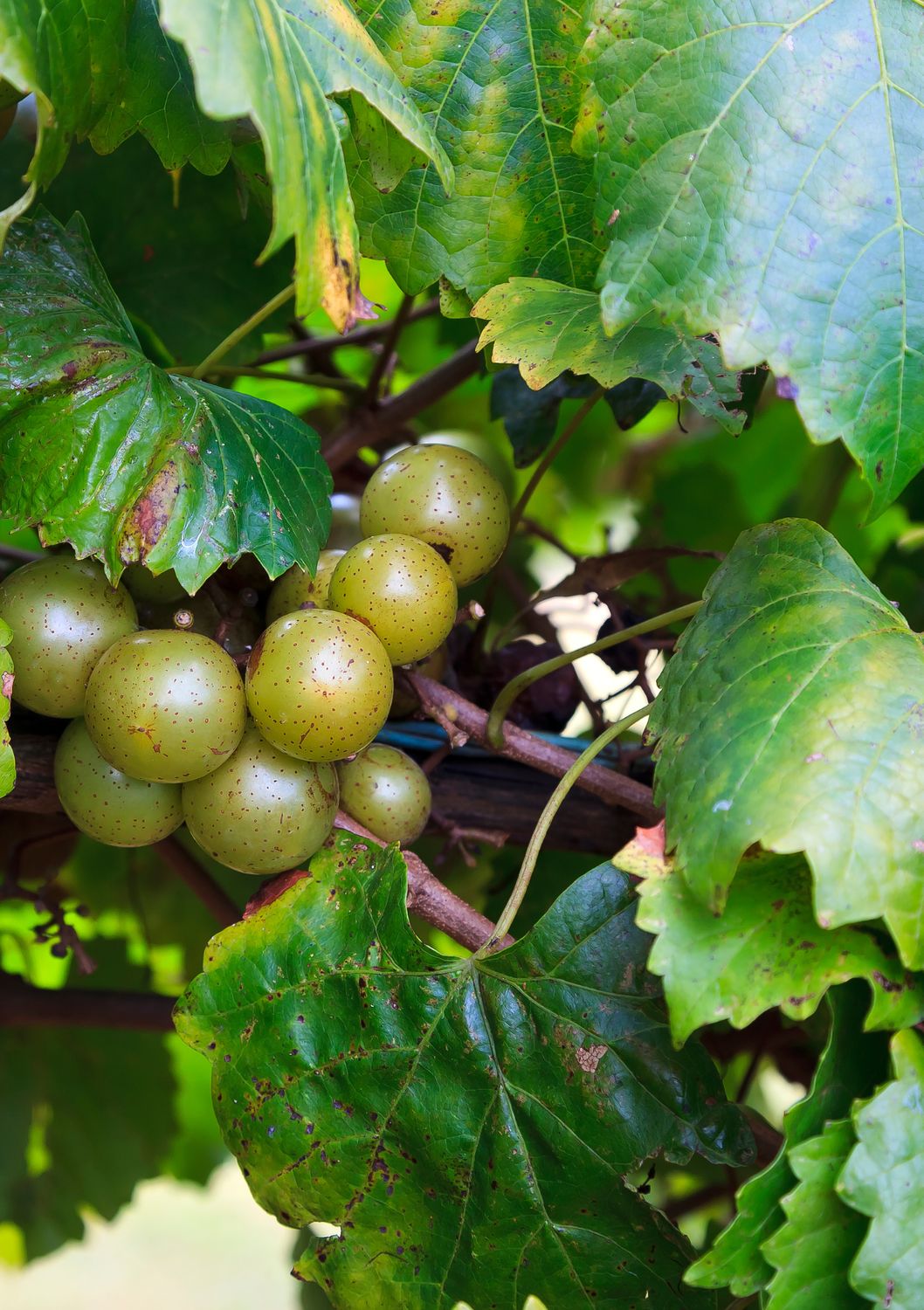
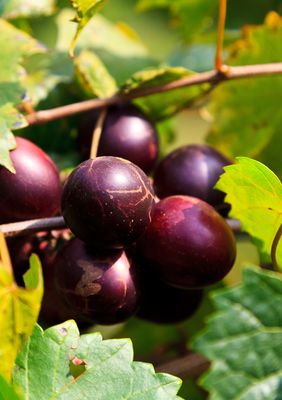
‘Summit’ Muscadine is a time-tested fresh-eating cultivar selected for the qualities backyard growers actually care about: excellent flavor, productive vines, attractive pink-bronze fruit, good disease resistance, and a relatively dry stem scar that helps ripe berries hold up after picking.
Developed by the University of Georgia and introduced in 1977, ‘Summit’ remains a recommended fresh-market muscadine decades later. That staying power says a lot.
For Florida and Southeastern growers who have struggled with conventional bunch grapes, muscadines are in a different league. This is a grape native to the Southeast, naturally adapted to our heat and humidity—and ‘Summit’ is one of the classic cultivars bred to make that native toughness even more delicious.
🌿 Summit Muscadine Quick Facts
| Category | Details |
|---|---|
| Botanical Name | Vitis rotundifolia ‘Summit’ |
| Common Name | Summit Muscadine Grape |
| Family | Vitaceae |
| Plant Type | Perennial woody fruiting vine |
| Leaf Habit | Deciduous — naturally drops leaves during winter dormancy |
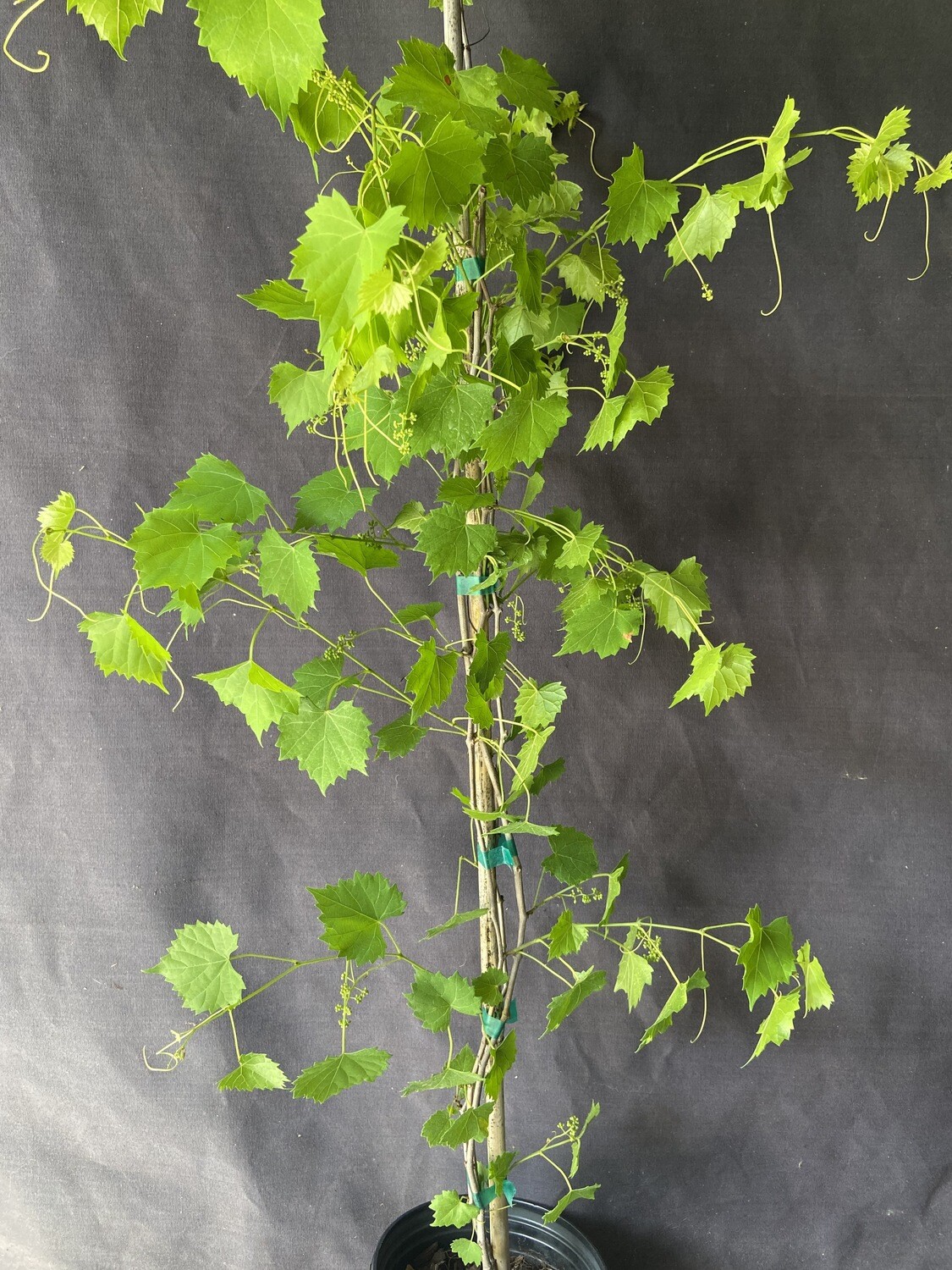
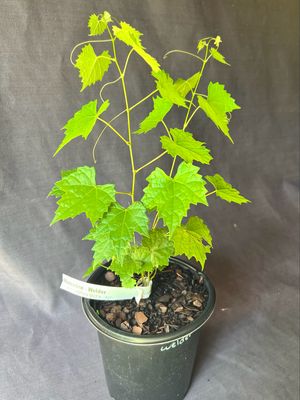
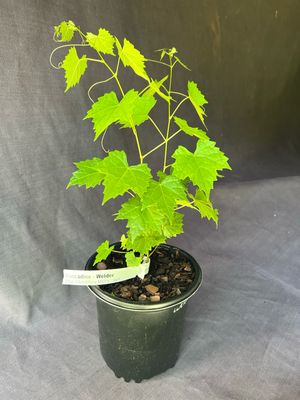
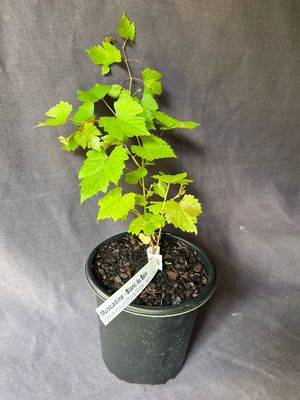
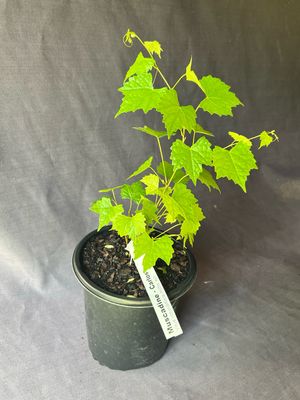
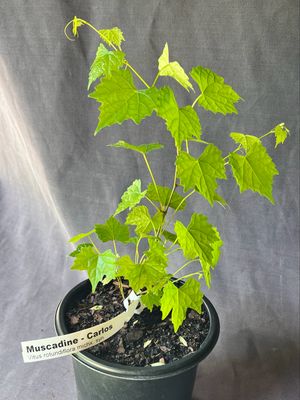
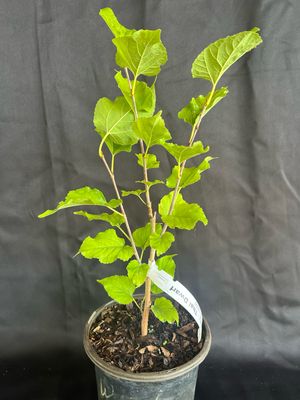
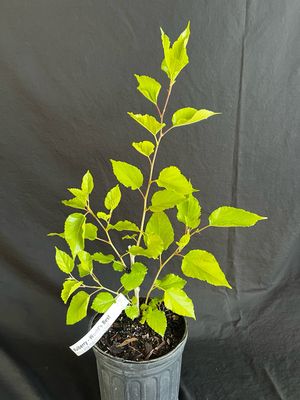
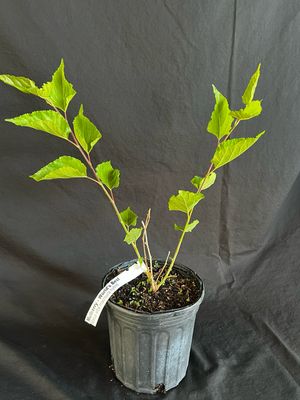
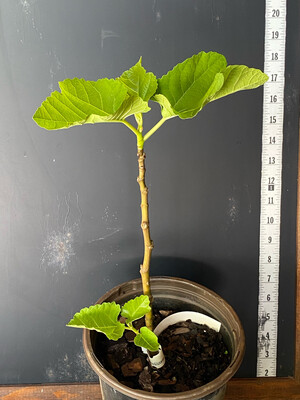
| Sale Size | Ships in a 1-gallon nursery container |
| Estimated Nursery Age | Typically a young, actively establishing vine; exact age varies by propagation and crop cycle |
| Growth Rate | Vigorous / fast once established |
| Mature Vine Size | Potentially 20+ ft of vine growth; maintained to trellis dimensions through annual pruning |
| Recommended Trellis Space | Approximately 15–20 ft per mature vine |
| USDA Climate Range | Best adapted to the warm-temperate and subtropical Southeast; generally grown through approximately zones 7–10 depending on site and cultivar |
| Florida Performance | Well suited throughout much of Florida where drainage and soil conditions are appropriate |
| Sun | Full sun preferred; 6–8+ hours for best production and sweetness |
| Soil | Well-drained sandy loam, loam or amended sandy soil |
| Preferred Soil pH | Approximately 5.5–6.5 |
| Cold Tolerance | Established, properly acclimated muscadines can tolerate temperatures around 10°F; young vines need greater protection |
| Fruit Color | Pink-bronze to golden bronze |
| Average Berry Weight | About 10–11 grams in university trials |
| Average Berry Diameter | Approximately 25 mm / about 1 inch |
| Sugar | Approximately 16° Brix in UGA trials; results vary with climate and maturity |
| Harvest | Midseason; generally late summer into early fall |
| Flower Type | Female / pistillate |
| Self-Fertile? | No |
| Pollinator Required? | Yes — plant near a self-fertile muscadine cultivar |
| Wildlife Value | Flowers support pollinators; ripe fruit attracts birds and mammals |
| Best Uses | Fresh eating, preserves, jelly, juice, desserts, sauces and home fermentation |
🍇 Why Grow ‘Summit’?
There are newer muscadines. There are bigger muscadines. But ‘Summit’ has remained relevant since 1977 because it hits a sweet spot between fruit quality and garden performance.
University of Georgia trials describe ‘Summit’ as a high-vigor vine with good productivity, minimal observed leaf disease, only slight berry rot, even ripening and approximately 80% dry stem scars. Its berries averaged about 10.4 grams and 25 mm across, with soluble solids around 16.1%.
Translation for the backyard grower?
It was bred to be eaten.
Unlike many older muscadines grown primarily for wine, juice or processing, ‘Summit’ is recognized as a fresh-market cultivar. Pick a fully colored berry, let it reach peak ripeness, and enjoy the distinctly Southern experience of eating muscadines straight from the vine.
🌟 A Georgia-Bred Classic: The Story Behind ‘Summit’
‘Summit’ didn't simply appear as a wild selection.
The cultivar came from the University of Georgia muscadine breeding program under breeder R. P. Lane. It originated from a 1965 cross of the famous bronze cultivar ‘Fry’ × Georgia selection 29-49.
The seedling was selected in 1971, tested as Ga. 37-40, and officially introduced as ‘Summit’ in 1977.
The breeding goal becomes obvious when you compare it with ‘Fry.’
‘Fry’ had already established itself as a benchmark for large, high-quality bronze muscadines. ‘Summit’ retained excellent fresh-market fruit quality while bringing greater vine vigor, better productivity, improved berry-rot resistance and a much higher percentage of dry stem scars in UGA trials.
More than four decades later, UGA still recommends ‘Summit’ as a main-season bronze fresh-market muscadine.
That is some serious staying power. 🍇
🍯 Fruit & Flavor — What Does Summit Muscadine Taste Like?
Sweet, Juicy & Made for Fresh Eating
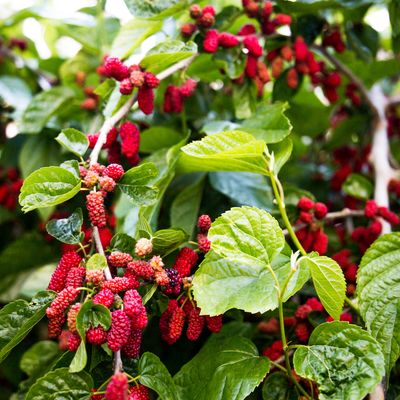
At full maturity, ‘Summit’ develops attractive bronze to pink-bronze berries with translucent, juicy flesh and the characteristic skin and seeds of a traditional muscadine.
| Fruit Trait | ‘Summit’ |
|---|---|
| Color | Bronze with an attractive pink-bronze blush |
| Berry Size | Medium-large to large by traditional muscadine standards |
| Average Trial Weight | About 10.4 g |
| Average Diameter | About 25 mm / 1 inch |
| Sweetness | Sweet; around 16.1% soluble solids in UGA Tifton trials |
| Flavor Style | Rich, fruity, distinctly muscadine and dessert-friendly |
| Flesh | Juicy, translucent and tender around the seeds |
| Skin | Noticeably thicker than a supermarket bunch grape, as expected with muscadines |
| Seeds | Seeded |
| Stem Scar | Predominantly dry in UGA trials |
| Best Use | Fresh eating |
Important flavor tip: Don't judge a muscadine like a supermarket table grape.
Muscadines have their own eating experience. Their skins are thicker, the berries contain seeds, and their flavor can be much more aromatic. Some people eat the entire berry; others bite the skin, squeeze the juicy pulp into their mouth, and discard the skin and seeds.
There is no wrong team here.
From Vine to Kitchen: What Can You Make with Summit?
Fresh eating is where ‘Summit’ shines, but a productive mature vine can give the home cook plenty to experiment with.
Eat Them Fresh
Chill ripe berries and serve them whole as a late-summer snack. Their natural sweetness makes this one of the simplest—and arguably best—ways to appreciate the cultivar.
Muscadine Jelly & Preserves
Cook ripe fruit to release juice and flavor from the skins, strain as desired, then prepare as jelly, jam or preserves.
Fresh Muscadine Juice
Crushed fruit can be strained for a richly flavored Southern-style grape juice.
Muscadine Syrup or Reduction
Reduce strained juice into a sweet-tart sauce for pancakes, desserts, yogurt, ice cream or cheese boards.
Pies, Cobblers & Desserts
The cooked pulp can be separated from seeds and reunited with chopped or cooked skins for old-fashioned muscadine pies and cobblers.
Sauces & Savory Pairings
Try a muscadine reduction alongside roasted vegetables, cheese, grilled foods or vinaigrettes.
Home Fermentation
Muscadines have a long tradition in Southern wine and fermentation. ‘Summit’ is principally known as a fresh-market cultivar, but surplus fruit can still be explored for small-batch home processing where legally permitted.
🌸 Pollination — Summit Needs a Partner
This is one of the most important details when purchasing ‘Summit’:
❗ ‘Summit’ is NOT self-fertile.
‘Summit’ produces female flowers. It can produce fruit, but its flowers do not provide the pollen needed to reliably fertilize themselves.
Plant a self-fertile / perfect-flowered muscadine cultivar nearby to provide pollen.
Good possibilities include self-fertile cultivars such as:
- ‘Tara’
- ‘Triumph’
- ‘Carlos’
- ‘Cowart’
- ‘Ison’
- Other compatible self-fertile muscadines
UGA has historically identified ‘Tara’ and ‘Triumph’ as suitable pollinizers for ‘Summit’.
🐝 Bees and other insects then help move pollen between flowers.
One self-fertile muscadine can pollinate female cultivars nearby, so you don't necessarily need a one-to-one pairing.
🍇 Summit vs. Other Muscadines
| Cultivar | Color | Flower Type | Berry Character | Season | Why Grow It? |
|---|---|---|---|---|---|
| Summit | Pink/Bronze | Female | ~10.4 g in UGA trials; sweet | Mid | Excellent classic fresh-market bronze cultivar |
| Fry | Bronze | Female | Larger than Summit | Mid | Benchmark traditional fresh-eating bronze |
| Tara | Bronze | Self-fertile | Medium-large | Early–Mid/Mid | Useful pollinizer + fresh eating |
| Triumph | Bronze/Pink | Self-fertile | Medium | Early | Useful pollinizer with good cold hardiness |
| Supreme | Dark | Female | Exceptionally large | Mid | Huge dark fresh-market fruit |
| Carlos | Bronze | Self-fertile | Smaller | Mid | Productive processing/juice cultivar and pollen source |
🍇 Summit vs. Fry
This is the particularly interesting comparison.
UGA trials found ‘Fry’ berries larger—about 12.7 g versus 10.4 g for ‘Summit’—but ‘Summit’ had:
- Higher vine vigor
- Higher percentage of a full crop
- Slightly higher soluble solids in those trials
- A dramatically higher percentage of dry stem scars
- Better historical reputation for berry-rot resistance
So if your goal isn't simply “biggest berry wins,” ‘Summit’ has a very compelling résumé.
🌳 Edible Landscape & Ornamental Value
Muscadines are productive plants, but that doesn't mean your trellis has to look agricultural.
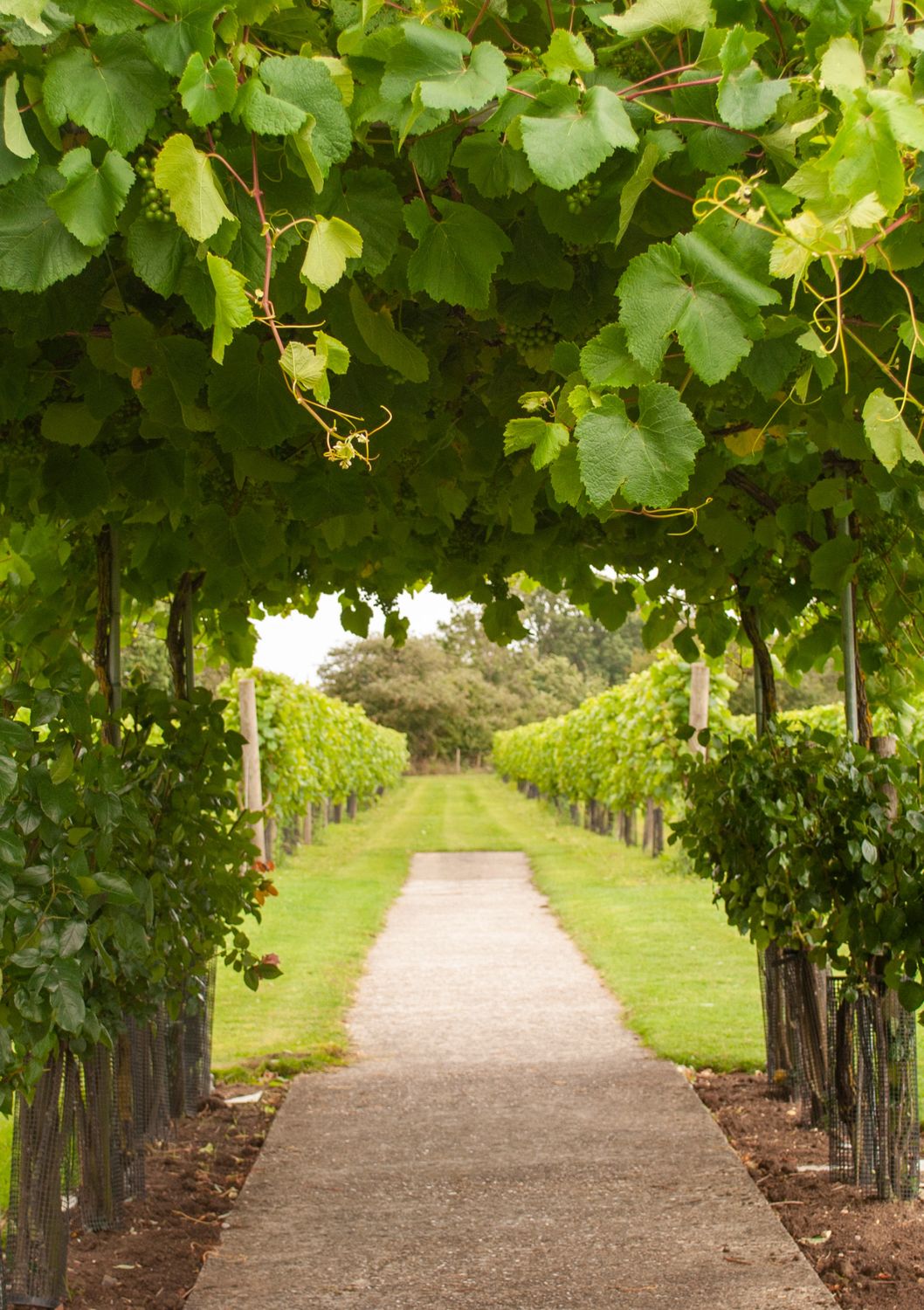
A properly trained ‘Summit’ can create a beautiful seasonal feature over:
- Vineyard-style wire trellises
- Garden boundaries
- Edible landscape corridors
- Strong decorative trellises
- Purpose-built grape structures
Spring brings fresh green growth, summer builds a lush wall of foliage, late summer brings jewel-like bronze fruit, and winter exposes the woody architecture of the vine.
A Design Note from GreenDreams
For serious fruit production, function beats a fancy arbor.
A romantic grape-covered pergola looks fantastic, but complicated overhead structures make annual pruning and harvesting considerably harder. A simple, accessible wire system generally makes managing the vine much easier.
Give the vine somewhere permanent to live—and make sure you can reach it with pruning shears.
🐝 Ecological Value in the Food Forest
Muscadines are native to the Southeastern United States and can become a productive part of an ecological landscape.
Their flowers are visited by pollinating insects, while ripe grapes can attract birds and mammals.
For a human-focused harvest, this means you'll be sharing unless you plan accordingly.
Bird netting and timely harvesting may be necessary when wildlife pressure is high.
🌿 How to Grow Summit Muscadine Grapes
Location First: Give ‘Summit’ Room to Become a Real Vine
Muscadines aren't petite ornamental vines. An established ‘Summit’ muscadine is vigorous, and the permanent structure supporting it should be planned before the vine reaches full size.
🌞 Best Location
Choose a location with:
- 6–8+ hours of direct sun
- Excellent air movement
- Well-drained soil
- Easy access to irrigation
- Permanent trellis support
- Enough room to prune and harvest from both sides
More sunlight generally means better flowering, fruit development and sugar accumulation.
Partial sun may sustain the vine, but full sun is the goal when fruit production is the priority.
🌾 Soil: Drainage Matters More Than Fancy Amendments
Muscadines are naturally adapted to many Southeastern soils, including Florida's sandy conditions, but they do not appreciate chronically saturated roots.
A soil pH around 5.5–6.5 is a useful target.
Avoid:
- Standing water
- Poorly drained low spots
- Highly calcareous soils
- Constantly saturated irrigation zones
- Planting beside a downspout or drainage discharge
- Deep planting
UF/IFAS specifically notes poor performance in soils with poor drainage or high calcium/calcareous conditions.
If you're gardening on wet Florida ground, correcting drainage or creating an appropriately raised planting area is far more valuable than filling a wet hole with premium soil.
🌱 Planting Summit Muscadine — GreenDreams “High & Tight” Method
After shipping or transporting your ‘Summit’ muscadine, don't rush straight into transplanting.
First: Let Your Vine Recover
For shipped plants, we recommend leaving the plant in its original nursery container for approximately 30 days or until healthy new growth confirms recovery from transit stress.
Keep it:
- Properly watered
- In appropriate outdoor light
- Protected from extreme weather immediately after arrival
- In its nursery pot while acclimating
Then transplant once the plant is actively growing and/or the root system is beginning to fill its existing container.
When You're Ready to Plant
- Dig a hole slightly wider than the nursery root ball.
- Keep the planting depth approximately equal to the root ball depth.
- Remove the plant carefully without excessively disturbing healthy roots.
- Position the root flare/crown at or slightly above surrounding grade.
- Backfill firmly enough to eliminate large air pockets.
- Do not bury the crown or woody base.
- Top-dress the surrounding soil with compost and appropriate organic amendments rather than creating a highly amended “pot” underground.
- Apply hardwood mulch around the root zone.
- Keep mulch pulled several inches away from the vine's base.
- Water deeply at soil level.
🌿 High & Tight wins over Deep & Drowned.
For our fruit-tree planting philosophy, see GreenDreams' High & Tight planting demonstration on YouTube.
💧 Watering Summit Muscadine
Young muscadines need consistent moisture while establishing.
In the Nursery Container
Check your vine daily, especially during Florida's hot, windy or dry periods.
A one-gallon nursery container has limited soil volume and can dry far faster than the ground.
Water thoroughly until the root ball is evenly hydrated and excess water drains from the container.
GreenDreams Watering Rule
Water the soil—not the leaves.
We recommend:
- Morning watering
- Soil-level irrigation
- Drip irrigation or direct root-zone watering
- Checking moisture rather than blindly watering on a timer
Avoid routine overhead watering, especially late in the day. Wet foliage, splashing soil and humid nighttime conditions can encourage disease.
Newly Planted in the Ground
Keep the root zone consistently moist during establishment without leaving it waterlogged.
During hot or dry Florida weather, a newly planted vine may require frequent irrigation. As the root system expands, transition toward deeper, less frequent irrigation while continuing to monitor soil moisture.
Mature Vines
Established muscadines tolerate periods of dry weather better than newly planted vines, but consistent moisture is particularly important during flowering, fruit development and prolonged drought.
Irregular drought stress during crop development can reduce vine performance and fruit quality.
💡 Florida growers: rainfall totals can be deceptive. A thunderstorm doesn't necessarily mean the entire root zone received a deep watering.
🪵 Mulching & the Living Root Zone
Maintain approximately 2–4 inches of coarse organic mulch around the surrounding root zone where appropriate.
Hardwood mulch helps:
- Buffer soil temperature
- Conserve moisture
- Suppress competing weeds
- Feed soil biology as it decomposes
- Add organic matter over time
Keep mulch away from direct contact with the trunk/base.
A wide mulched zone is more useful than a tiny decorative mulch ring.
🌱 Trellising & Training — The Secret to a Manageable Muscadine
Think about the trellis before planting.
Mature muscadines are heavy vines carrying significant foliage and fruit. Flimsy garden trellises can quickly become overwhelmed.
A common home system trains:
- One main trunk vertically to the trellis wire.
- Two permanent horizontal arms—or cordons—in opposite directions.
- Short fruiting spurs along those cordons.
UGA recommends approximately 20 ft of trellis per mature home-garden vine, while Florida recommendations vary with the training system.
Why Annual Training Matters
Without pruning, ‘Summit’ can become a magnificent green monster.
That sounds fun until you need to find the grapes.
Annual training keeps sunlight and air moving through the canopy and keeps productive fruiting wood within reach.
✂️ How to Prune Summit Muscadine
Muscadines produce fruit on new shoots arising from buds on the previous season's growth.
That makes dormant pruning essential.
Florida Pruning Window
UF/IFAS recommends major pruning approximately:
Mid-January through mid-March
Avoid unnecessarily early pruning in November or December because early pruning can increase vulnerability to winter injury.
Mature-Vine Pruning
Once your permanent trunk and cordons are established:
- Cut the previous season's lateral growth back to short fruiting spurs.
- A common guideline is 2–4 buds/nodes per spur.
- Space spurs roughly 6 inches apart along the permanent cordon.
- Remove dead, tangled and poorly positioned wood.
- Remove unwanted shoots from the trunk.
- Thin excessive growth that blocks airflow.
Don't panic if pruning cuts appear to “bleed” sap as spring approaches. Sap flow from properly timed grape pruning can look dramatic, but it is generally not considered harmful.
Don't Skip a Year
One skipped pruning season can turn into a lot more work the following winter.
Annual pruning is one of the biggest differences between a muscadine that merely survives and one that remains manageable and productive.
🍂 Summit Is Deciduous — Your Vine Is Supposed to Look Different in Winter
Yes—‘Summit’ muscadine is deciduous.
That means seasonal leaf loss is part of its normal biology.
🌱 Spring — Wake Up & Train
In Central and North Florida:
- Dormant buds begin pushing.
- Fresh shoots emerge.
- Rapid vegetative growth begins.
- Flower clusters develop on new growth.
- Begin guiding young shoots where needed.
- Resume irrigation according to weather.
- Evaluate nutrition once active growth begins.
Late budbreak helps muscadines avoid some spring frost injury compared with earlier-breaking fruit crops.
☀️ Summer — Grow, Fruit & Watch Water
Expect:
- Dense green foliage
- Rapid shoot extension
- Fruit enlargement
- Increasing irrigation demand
- Weed pressure
- Wildlife interest
Maintain airflow and avoid allowing the vine to turn into an impenetrable thicket.
🍇 Late Summer–Early Fall — Harvest Season
‘Summit’ is considered a midseason cultivar.
In Florida and the Southeast, muscadine harvest generally falls during late summer into early fall, with exact timing shifting by latitude, weather and growing conditions.
Harvest berries when fully colored, sweet and easily released.
Unlike supermarket bunch grapes, muscadines commonly ripen berry-by-berry rather than every berry in a cluster reaching perfection simultaneously. Expect multiple pickings.
🍂 Fall — Slow Down
After harvest:
- Growth begins slowing.
- Older leaves may discolor.
- Leaf drop progresses as dormancy approaches.
- Reduce supplemental irrigation as weather cools and plant demand declines, while preventing severe drought.
🧘 Winter — Dormant Does NOT Mean Dead
A healthy dormant vine may look like little more than woody stems.
That's normal.
Expect:
- Few or no leaves
- Little visible growth
- Bare woody cordons
- Reduced water demand
This is pruning season—not funeral season.
Scratch-testing questionable wood lightly can help determine whether tissue beneath the bark remains green and alive.
❄️ Cold & Frost Protection
Established, properly acclimated muscadine vines can tolerate substantial winter cold, with UF/IFAS noting that most can withstand temperatures around 10°F without injury.
That does not mean every young ‘Summit’ in a one-gallon pot is automatically safe at 10°F.
Container plants and newly established vines have less thermal buffering around their roots.
For young vines during an unusual freeze:
- Water the root zone appropriately before the freeze if soil is dry.
- Move containers into a protected location where possible.
- Protect young vines from harsh north winds.
- Use frost cloth when appropriate.
- Mulch the surrounding root zone.
- Avoid stimulating tender new growth with unnecessary late-season nitrogen.
Wait until the extent of freeze injury is clear before making aggressive cuts.
🪱 Fertilizing Summit Muscadine
More fertilizer does not automatically mean more grapes.
Excess nitrogen can encourage excessive vegetative growth at the expense of manageable fruit production.
The most professional approach is to begin with a soil test and adjust nutrition accordingly.
UF/IFAS traditional recommendations for muscadines use balanced fertilizer applications during active growth, with rates increasing as vines mature.
For an organic home system, the same principle applies:
- Feed according to plant and soil needs.
- Use compost as a soil-building top dressing.
- Supply balanced nutrients where testing or plant performance indicates a need.
- Maintain micronutrients.
- Avoid placing concentrated fertilizer directly against roots or the vine base.
- Avoid unnecessary heavy nitrogen late in the growing season.
🌿 GreenDreams growers can integrate compost, worm castings, mineral amendments and appropriately formulated organic fertilizers into a soil-health-based program.
🪴 Can Summit Muscadine Grow in a Container?
Yes—but think BIG.
A one-gallon pot is a nursery production size, not a permanent home for a vigorous mature muscadine.
Container culture can work when ground planting isn't possible, but you'll need:
- Large soil volume
- Excellent drainage
- Permanent trellis support
- Consistent irrigation
- Regular pruning
- More attentive nutrition
Suggested Progression
1-gallon nursery pot → 3-gallon → 7-gallon → 15–25+ gallon long-term container
You do not necessarily need to hit every size. The point is to avoid moving a small root system directly into an enormous volume of wet soil while also avoiding severe root binding.
When Should I Up-Pot?
Look for:
- Roots emerging from drainage holes
- Soil drying unusually quickly
- A dense root system filling the pot
- Reduced vigor despite proper care
- Difficulty keeping the root ball evenly hydrated
Move up one or several practical container sizes while maintaining good drainage.
Nursery containers and quality potting materials can usually be sourced through local independent nurseries, landscape suppliers, hydroponic/garden suppliers or online searches for professional nursery pots.
🌾 Best Potting Mix for Muscadine Grapes
Choose a well-draining outdoor container mix that holds useful moisture without remaining swampy.
A practical blend should contain:
- Quality aged organic matter
- Pine bark or similar coarse material
- Peat or coco-based moisture-retentive material where appropriate
- Perlite, expanded aggregate or another aeration component
- Balanced organic fertility as needed
Avoid dense native clay in containers and avoid mixes that remain saturated for days.
Drainage holes are non-negotiable.
🏠 Can Summit Muscadine Be Grown Indoors?
Not realistically as a productive permanent houseplant.
‘Summit’ is a vigorous, deciduous outdoor fruiting vine that benefits from:
- Direct sun
- Seasonal temperature changes
- Dormancy
- Pollinator access
- A substantial trellis
- Significant root volume
A greenhouse or highly specialized controlled environment is different, but a typical living room window is not a vineyard.
For cold-climate container growers, overwintering strategies should preserve dormancy while protecting the root system from extreme freezes rather than attempting to maintain the vine as a tropical indoor houseplant.
Wind & Coastal Conditions
A properly supported mature muscadine can tolerate normal Southeastern weather, but vines create significant wind resistance once covered in foliage.
Use:
- Strong permanent posts
- Properly tensioned wire
- Secure young trunks
- Routine pruning to control excess canopy
After tropical storms or hurricanes, inspect the trellis before assuming the vine itself is the problem.
🌊 What About Salt?
We would not market ‘Summit’ as a salt-tolerant coastal vine.
For properties receiving direct salt spray, storm surge or saline irrigation, use caution and provide protection. A site farther inland with good freshwater irrigation is preferable to an exposed beachfront location.
🌿 Companion Plant Sidebar — Build a Vineyard Ecosystem
Rather than surrounding the vine with turf and calling it finished, consider creating a biologically active support zone.
🐝 Pollinator Support
Flowering plants nearby can help maintain beneficial-insect activity throughout the season.
🌻 Mexican Sunflower
Where climate and space permit, Mexican sunflower can provide pollinator forage and abundant chop-and-drop biomass.
🌾 Clumping Grasses
Useful around—not directly underneath—the vineyard zone for biomass, habitat, soil coverage and chop-and-drop material.
🌸 Native Wildflowers
Regionally appropriate flowering species can extend nectar and pollen resources beyond grape bloom.
🌿 Low-Growing Groundcovers
Use manageable species that suppress weeds without climbing into the muscadine trellis or creating intense root competition immediately around a young vine.
Keep the immediate trunk and working trellis area accessible.
A grapevine guild should make harvesting and pruning easier—not turn the vine into an archaeological excavation.
Summit Muscadine Troubleshooting Guide
Muscadines are among the better-adapted grapes for the hot, humid Southeast and are naturally resistant to several problems that make conventional bunch grapes difficult in Florida.
That doesn't make them indestructible.
Icons represent common issues and organic solutions — look for 🌿 for recovery tips!
| ⚠️ Issue | 🧠 Likely Cause | 🌿 What to Do |
|---|---|---|
| 🍂 Leaves yellow/drop in fall | Normal deciduous dormancy | Allow the vine to rest; prepare for winter pruning |
| 🌱 Little spring growth | Cold injury, root stress, poor drainage or delayed dormancy break | Check living wood, drainage and root-zone moisture |
| 💦 Yellowing during active growth | Excess irrigation or poor drainage | Let soil breathe; correct drainage rather than adding fertilizer blindly |
| 💧 Wilt in summer | Dry root zone / container drying | Water deeply at soil level and monitor more frequently |
| 🌿 Huge vine, few grapes | Excess nitrogen, shade, poor pruning or pollination problem | Increase light, correct pruning and nutrition, verify pollinizer |
| 🌸 Flowers but poor fruit set | No compatible pollen source | Plant a self-fertile muscadine nearby |
| 🍄 Fruit spotting/rot | Disease pressure + humidity + dense canopy | Improve airflow, sanitation and pruning; harvest ripe fruit promptly |
| 🍃 Leaf spots | Fungal disease or normal late-season decline depending on timing | Identify before treating; remove debris and improve airflow |
| 🐛 Chewed foliage | Caterpillars/beetles/other insects | Identify pest first; encourage beneficial insects and use targeted organic controls when necessary |
| 🪲 Distorted new growth | Thrips, aphids or other sap-feeding pests | Inspect leaf undersides and new growth; treat only when pressure warrants |
| 🐦 Missing ripe grapes | Birds or wildlife | Harvest promptly and consider exclusion netting |
| 🪵 Vine collapsing | Inadequate trellis | Reinforce structural support; don't rely on lightweight ornamental trellises |
| ❄️ Dead shoot tips after winter | Freeze injury | Wait for spring growth to reveal live tissue, then prune dead wood |
| ☀️ Scorched newly shipped foliage | Transit + sudden intense sunlight | Acclimate gradually and wait for healthy new growth before transplanting |
🐛 Pests & Disease: Why Muscadines Make Sense in Florida
One of the biggest reasons to grow muscadines in Florida is their regional adaptation.
UF/IFAS notes that muscadines generally have relatively few insect and disease problems and can often be grown with minimal pesticide inputs.
They also have an important advantage over conventional European bunch grapes: muscadines possess strong natural resistance to Pierce's disease, a major limiting factor for many grapes in Florida.
Potential problems can still include:
- Angular leaf spot
- Black rot
- Ripe rot
- Macrophoma rot
- Powdery mildew
- Aphids
- Chilli thrips
- Grape root borer
- Wildlife feeding
♻️ Our Organic First Line of Defense
Before reaching for a spray bottle:
- Grow the right grape for the climate.
- Plant in full sun.
- Maintain airflow.
- Use drip/root-zone irrigation.
- Keep foliage dry when practical.
- Remove dead wood.
- Remove mummified or rotting fruit.
- Keep the vineyard floor manageable.
- Harvest ripe fruit promptly.
- Encourage ecological diversity and beneficial insects.
Identify first. Treat second.
That's a much better organic-growing philosophy than spraying every spotted leaf.
⚠️ Important Cautions
Female Cultivar
‘Summit’ needs pollen from a compatible self-fertile muscadine. A second female cultivar alone does not solve the problem.
Vigorous Growth
Do not plant first and figure out the trellis later.
Wildlife
Birds, raccoons, opossums and other animals may discover your crop before you do.
Seeds & Thick Skin
This is a traditional muscadine—not a seedless supermarket grape. Set expectations accordingly.
Poor Drainage
Wet roots can undermine an otherwise tough plant.
Coastal Exposure
Do not assume native-to-the-Southeast means tolerant of direct ocean salt spray.
Dormancy
Winter leaf loss is normal. A dormant vine may look unimpressive while doing exactly what nature intended.
🌟 Is Summit Muscadine Right for You?
✅ Ideal For
- Florida and Southeastern fruit growers
- Backyard vineyard growers
- Native edible landscape enthusiasts
- Gardeners wanting a heat- and humidity-adapted grape
- People who prioritize fresh-eating fruit
- Growers interested in lower-input grape culture
- Permaculture and food-forest gardeners
- Anyone willing to build a proper trellis
- Gardeners who can provide a compatible self-fertile pollinizer
- Southern-food enthusiasts ready for jelly, juice, preserves and fresh muscadines
❌ Probably Not Ideal For
- Someone wanting a seedless supermarket-style table grape
- Tiny spaces without substantial trellis room
- Deep shade
- Persistently waterlogged sites
- Highly alkaline/calcareous locations without management
- Exposed saltwater-front landscapes
- Anyone unwilling to prune annually
- Growers who only have room for one vine unless they already have a compatible self-fertile muscadine nearby
❓ Summit Muscadine FAQ
Is Summit Muscadine self-pollinating?
No. ‘Summit’ is a female-flowered muscadine cultivar and requires pollen from a nearby self-fertile/perfect-flowered muscadine for reliable fruit production.
What is a good pollinator for Summit Muscadine?
UGA specifically identifies ‘Tara’ and ‘Triumph’ as pollinizers historically recommended for female cultivars such as ‘Summit’ and ‘Fry’. Other suitable self-fertile muscadines may also provide pollen.
How big are Summit muscadine grapes?
UGA trials at Tifton measured ‘Summit’ at approximately 10.4 grams per berry and 25 mm—about 1 inch—in diameter on average.
Growing conditions influence final berry size.
Is Summit sweeter than Fry?
In UGA's Tifton comparison, ‘Summit’ averaged approximately 16.1% soluble solids versus 15.3% for ‘Fry’. However, sweetness changes with ripeness, crop load, sunlight, weather and location, so those numbers shouldn't be interpreted as a guarantee for every backyard vine.
When does Summit Muscadine ripen?
‘Summit’ is classified as a midseason muscadine. In Florida and much of the Southeast, expect harvest during the broader late-summer-to-early-fall muscadine season. Local climate can move those dates.
How long before a Summit Muscadine produces grapes?
A healthy young vine may begin producing within roughly 2–3 years, but establishment, pruning, pollination, climate and plant maturity all influence timing. The early goal should be building a strong trunk and cordon system rather than forcing a heavy crop immediately.
Does Summit Muscadine lose its leaves?
Yes. Muscadines are deciduous vines. Leaves naturally yellow and drop as the plant enters winter dormancy.
How much sun does Summit need?
For meaningful fruit production, give it full sun—ideally 6–8+ hours of direct sunlight daily.
Can Summit Muscadine grow in Florida?
Absolutely. Muscadines are native to the Southeastern United States, and UF/IFAS recommends ‘Summit’ among cultivars suitable for fresh eating in Florida. Drainage, sunlight, pruning and irrigation still matter.
Can Summit grow in a pot?
Yes, but it needs a large container and permanent support as it matures. A 15–25+ gallon container is much more realistic for longer-term production than its original nursery pot.
How much room does one muscadine need?
Plan generously. UGA recommends about 20 ft of trellis per home-garden muscadine vine. Vineyard spacing varies according to training system.
Why isn't my Summit producing fruit?
Start with the big five:
- Is a self-fertile pollinizer nearby?
- Is the vine mature enough?
- Does it receive enough sun?
- Is it being pruned correctly?
- Is excessive nitrogen producing leaves instead of a balanced fruiting canopy?
Do muscadines need pesticides?
Not necessarily. Their regional adaptation and disease resistance make muscadines particularly appealing for organic and lower-input systems. Disease pressure still varies with cultivar, weather, canopy density and site management.
📦 Shipping Live Summit Muscadine Plants
🌿 Shipped in a 1-Gallon Nursery Container
Our smaller live plants are best suited for shipping within Florida, the Southeastern United States and Texas, where UPS Ground transit times from our Florida nursery are generally more favorable.
We do ship across the continental United States, but buyer discretion is especially important for northern and western destinations.
Before Ordering Long-Distance
Longer UPS Ground transit can mean:
- Extended time inside a shipping box
- Greater moisture loss
- Heat or cold exposure
- Temporary leaf drop
- Wilted or stressed foliage
- Longer post-shipping recovery
California orders may also experience additional inspection-related transit time.
Plants are living organisms. Even when packaged carefully, they do not experience a five-day journey in a cardboard box the same way a garden shovel does.
🌡️ Extreme Heat & Cold
Please check weather conditions at both our Florida nursery and your destination before ordering.
We use UPS Ground, and live-plant orders normally ship Mondays.
Buyer discretion is advised during peak summer heat and winter cold. GreenDreams cannot guarantee against plant stress or damage caused by extreme temperatures, carrier delays or extended ground-transit conditions.
For distant northern or western destinations, larger plants—when available—are generally the safer choice.
🌱 When Your Plant Arrives
Don't immediately repot a stressed traveler.
We recommend keeping shipped plants in their original nursery containers for approximately 30 days or until healthy new growth appears before transplanting.
Allow the plant to:
- Rehydrate
- Reacclimate to outdoor light
- Recover from transit
- Resume active growth
Then transplant once the root system is ready for additional space.
🌾 Shop with Us in Person
GreenDreams Nursery & Farm — Retail Nursery Open to the Public
Want to skip the shipping box and explore the nursery?
Our retail location often has larger plant sizes, seasonal fruit trees, rare edible plants and inventory that never makes it onto the online store.
🌾 18709 US Hwy. 41, Spring Hill, FL 34610
🕘 Tues–Fri 9AM–5PM | Sat 8AM–3PM
🌿 Stop by our regenerative nursery to see what's blooming, fruiting and growing this week.
Local shoppers can also talk with our nursery team about pollinizer options so your ‘Summit’ doesn't end up living the single life forever. 🍇
🌿 Beyond the Plant: GreenDreams Services
At GreenDreams, we do more than grow plants—we design, build and restore ecosystems across Florida.
- 🌳 Onsite consultations & edible landscape design
- 🚜 Edible landscape and food-forest installation
- 🚚 Bulk delivery of compost, mulch, biochar and soil materials
- 🌾 Wholesale & large-scale regenerative solutions
Whether you're planting one grapevine or transforming an entire property into a productive landscape, our team can help you build the system around it.
Let us help you create your own thriving edible paradise—starting with a ‘Summit’ Muscadine. 🌿
🌿 IMPORTANT INFORMATION BEFORE PURCHASING LIVE PLANTS
Please note: Plants purchased through our online store are not available for pickup at our retail nursery in Spring Hill, Florida.
Online inventory is housed at a separate facility and is priced, prepared, and handled exclusively for shipping.
🌱 Looking for larger plants or more selection?
Our retail nursery location offers far more availability, including larger sizes, specialty plants, and many selections not suitable for nationwide shipping.
Local pickup is available for retail nursery purchases only.
Visit our Spring Hill, FL retail nursery page to explore in-person shopping options.
🚚 LIVE PLANT SHIPPING & TRANSIT EXPECTATIONS
Live plants naturally experience stress during shipping. Temporary leaf drop, mild wilting, or cosmetic stress is normal after transit. Most plants recover quickly with proper watering, gradual light exposure, and basic aftercare. Some plants may require additional attention during the first few weeks.
Despite careful packing, minor cosmetic damage may occur during transit. Small issues such as broken leaves or stems typically resolve with time and proper care.
If your shipping box arrives with significant external damage, please contact UPS within 30 days to initiate a carrier claim.
⏱️ SHIPPING METHOD, TIMING & TRANSIT WINDOWS
All online orders ship via UPS Ground from our Central Florida nursery.
📦 Shipping Schedule: Orders ship once weekly on Mondays to reduce the risk of packages sitting in transit over weekends. A countdown clock on our website displays the next shipping date.
🚚 Typical Transit Times:
-
Florida: 1–2 days
-
Southern U.S.: approximately 2 days
-
Midwest, West & Northern U.S.: 3–5 business days
Long-distance shipments, particularly to the western U.S., may experience additional transit time due to agricultural inspections in states such as Arizona, California, and Texas.
Extended transit times can be more challenging for small or tender plants and may require additional recovery care after arrival.
🌡️ EXTREME WEATHER & SEASONAL RISK
Live plants are sensitive to temperature extremes.
We cannot guarantee plant condition during periods of extreme summer heat or winter cold and freezing temperatures. Weather-related delays, carrier interruptions, or exposure during delivery are beyond our control.
Customers are responsible for:
-
Monitoring tracking information sent via email
-
Retrieving packages promptly upon delivery
-
Preventing plants from being left outdoors in extreme conditions
During unsafe weather, holiday shipping volume, or extended transit risk, orders may be held and shipped the following week to protect plant health.
⚠️ CUSTOMER RESPONSIBILITY & REFUND POLICY
By purchasing live plants, customers acknowledge and accept the risks associated with shipping, weather exposure, transit delays, and regional suitability.
Refunds or replacements are considered only under exceptional circumstances and in accordance with our return and refund policy. We are not responsible for:
-
Weather-related damage
-
Carrier delays
-
Poor plant selection for a given climate or region
-
Improper care after delivery
Upon purchase, customers assume full responsibility for the ongoing care and success of their plants.
✅ CONSENT & AGREEMENT
By completing a purchase, you confirm that you have read, understand, and agree to all shipping policies, responsibilities, and conditions outlined above.
Our goal is transparency, plant health, and long-term growing success — and we appreciate your understanding and care when ordering live plants.


