


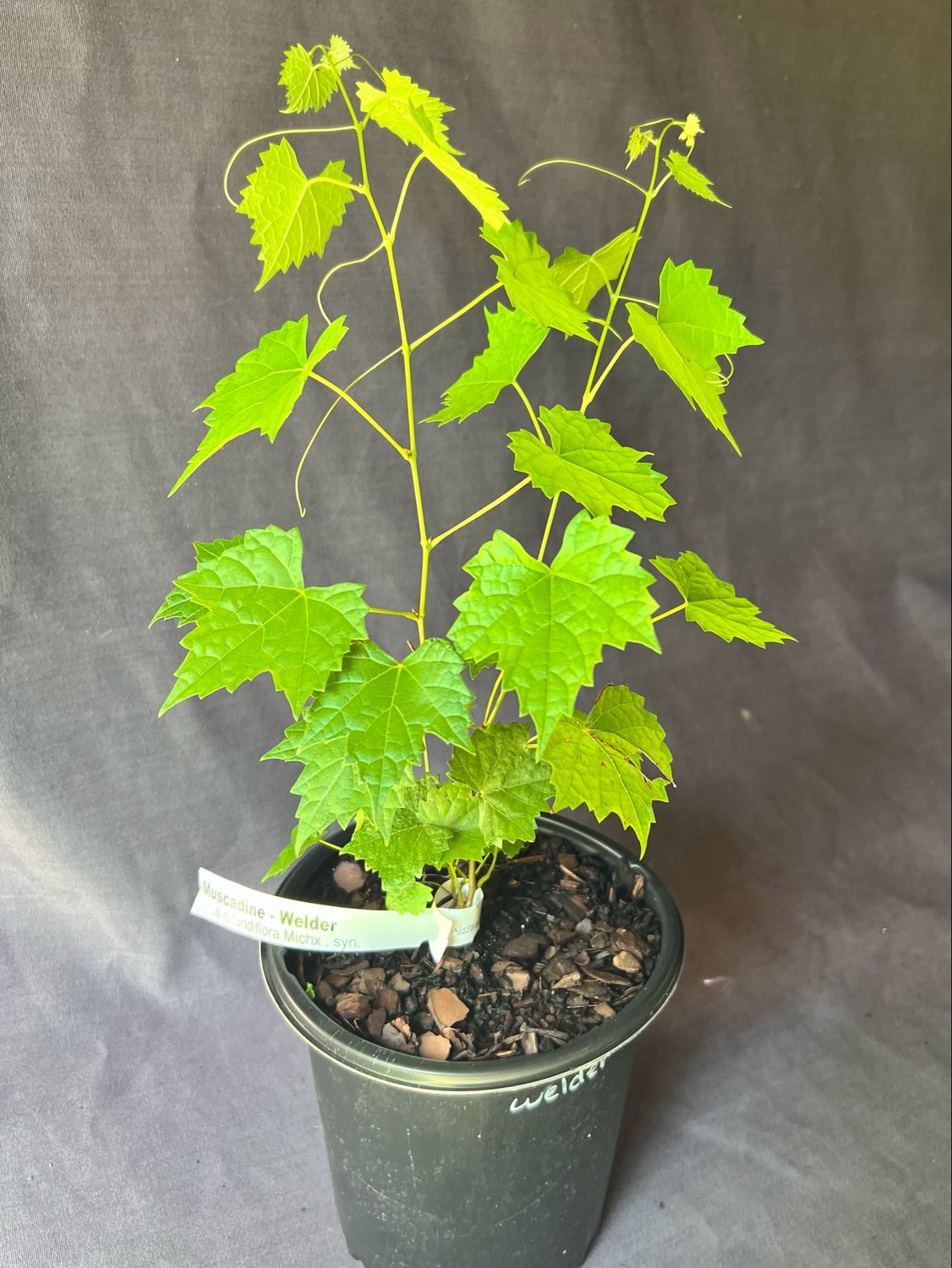
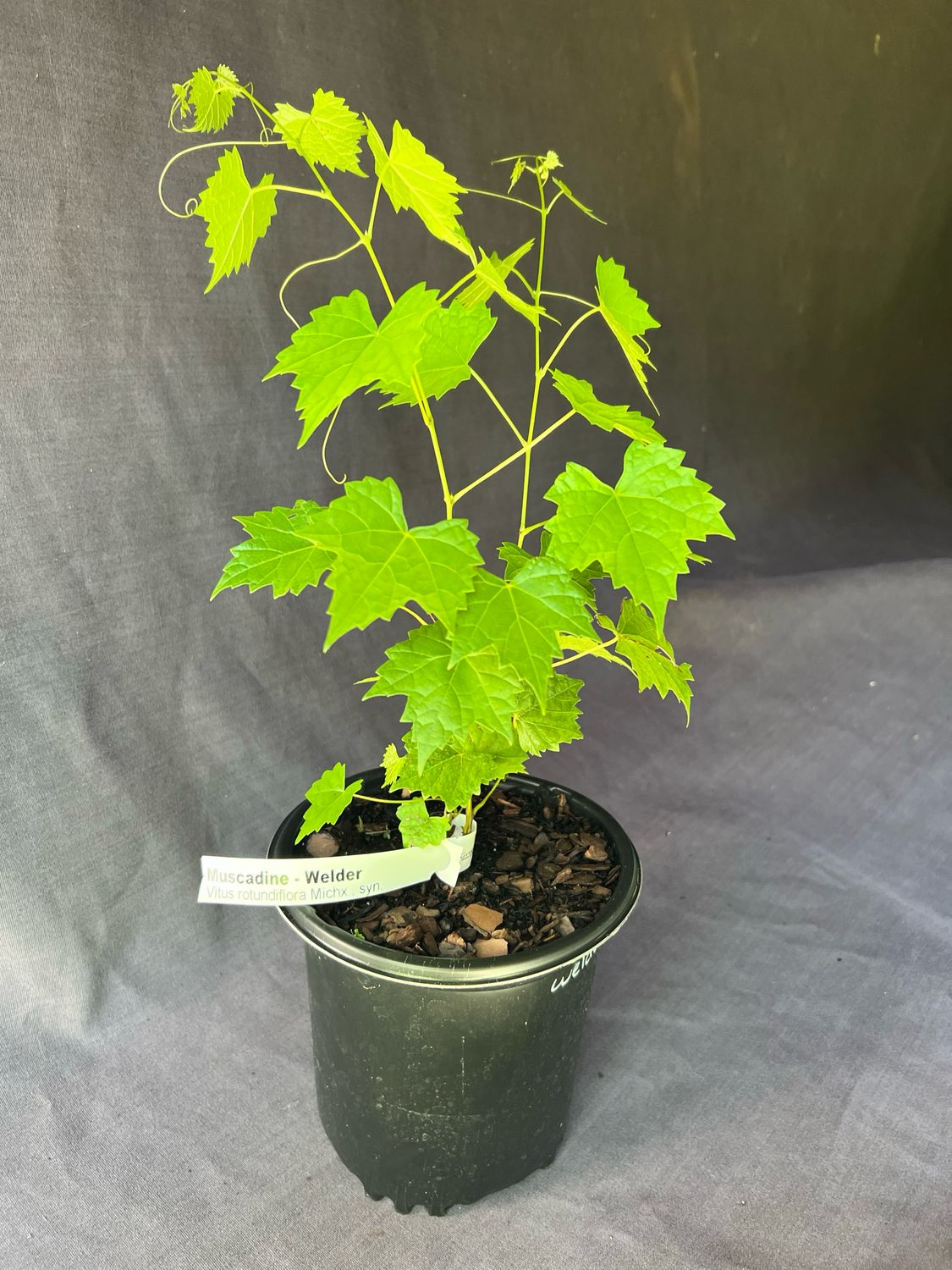
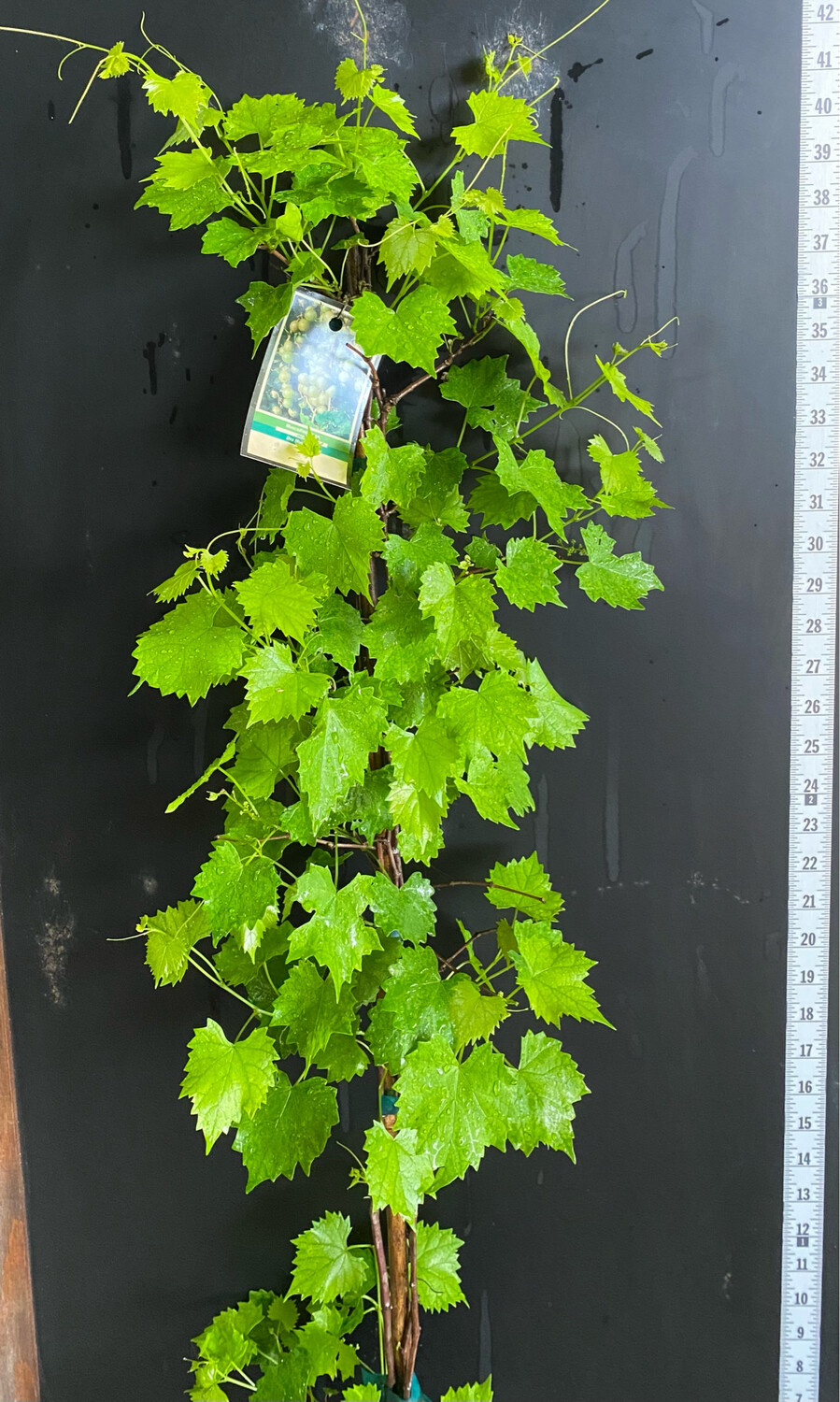
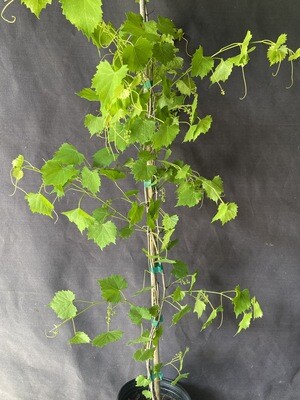
🍇 Welder Muscadine Grape – Florida-Bred Bronze Juice, Jelly & Wine Grape | 1 Gallon
Florida-born, juice-ready & built for Southern growing. 🌿🍇
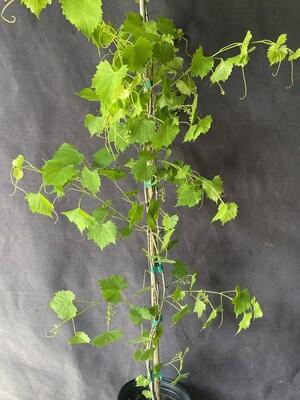
Ships in a 1-gallon container.
If your idea of a successful grapevine is less about producing a handful of enormous showpiece berries and more about filling the harvest basket with flavorful fruit you can actually turn into something, meet Welder Muscadine.
This old-school Florida cultivar is a vigorous, self-fruitful bronze muscadine selected for the kind of growing conditions we know all too well:
heat + humidity + summer rain + long growing seasons.
Welder produces smaller bronze berries packed with sweet, aromatic muscadine flavor and has long been valued for juice, jelly, preserves and muscadine wine.
And unlike a random “Southern grape” being pushed into Florida?
Welder was discovered right here in the Sunshine State.
Introduced by Henry Welder of Tavares, Florida, this productive cultivar has been part of Southern muscadine growing for more than half a century.
It isn’t trying to compete with giant fresh-market muscadines.
Welder has another assignment:
Grow vigorously. Produce reliably. Bring the sugar. Make some juice. 🍇
🌿 Welder Muscadine Quick Facts
| Quick Fact | Welder Muscadine |
|---|---|
| Botanical Name | Vitis rotundifolia ‘Welder’ |
| Also Classified As | Muscadine grape; muscadines are also botanically treated as Muscadinia rotundifolia |
| Plant Type | Deciduous perennial fruiting vine |
| Sale Size | 1-gallon container |
| Estimated Nursery Age | Typically a young vine within approximately its first 1–2 growing seasons; exact age varies with propagation and production cycle |
| Origin | Tavares, Florida, USA |
| Discovery | Open-pollinated seedling discovered in 1957 |
| Introduced | 1972 |
| Introduced By | Henry Welder |
| Patent Status | Nonpatented cultivar |
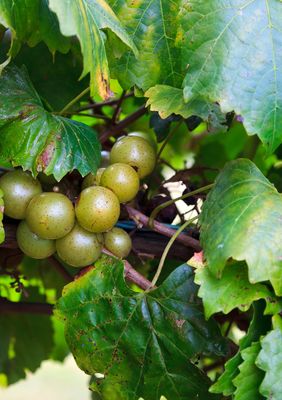
| Fruit Color | Bronze to golden-bronze |
| Berry Size | Small-to-medium for a muscadine; roughly 4–4.2 grams in university evaluations |
| Approx. Berry Diameter | Around 18 mm / 0.7 in in UGA Tifton trials |
| Flavor | Sweet, aromatic, tangy, traditional muscadine character |
| Seeds | Seeded |
| Skin | Thick, edible muscadine skin |
| Typical Soluble Solids | Approximately 15.8–17° Brix in university trials |
| Primary Uses | Juice, jelly, jam, preserves, wine, sauces & fresh eating |
| Pollination | Self-fruitful / perfect-flowered |
| Pollinator Value | Can provide pollen for nearby female-flowered muscadine cultivars |
| Yield | Moderate-to-high depending on location and growing system |
| Growth Habit | Vigorous climbing vine with tendrils |
| Managed Size | Commonly trained around 5–6 ft high × 15–20+ ft wide |
| Unpruned Size | Can run 30+ ft or farther through trees, fences and structures |
| Recommended Spacing | Approximately 15–20 ft between vines on a traditional home trellis |
| Sun | Full sun — ideally 6–8+ hours daily |
| Soil | Well-drained sandy loam, loamy sand or similar aerated soil |
| Preferred Soil pH | Approximately 5.5–6.5 |
| Water | Moderate; consistent moisture during establishment and active fruit development |
| Florida Harvest | Generally midseason — commonly around August into September, varying by location and year |
| Upper Southeast Harvest | Typically late summer into early fall |
| USDA Growing Range | Best suited approximately to Zones 8–10; not one of the preferred cultivars for the coldest northern muscadine regions |
| Cold Hardiness | Less cold hardy than several northern-adapted muscadines; protect from unusually severe freezes and late frost |
| Pierce’s Disease | Muscadines possess strong natural resistance compared with traditional bunch grapes |
| Disease Resistance | Generally good; UGA trials found lower fruit-rot incidence than Carlos |
| Stem Scar | Often relatively wet; best suited to processing or prompt use rather than long fresh-fruit storage |
| Wind Tolerance | Mature vines tolerate ordinary wind when securely trellised |
| Salt Tolerance | Moderate species-level tolerance; avoid direct salt spray and saline irrigation |
| Container Growing | Yes, but requires a very large final container and serious support |
| Indoor Growing | Not recommended long term |
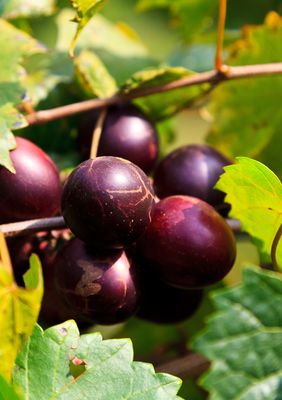
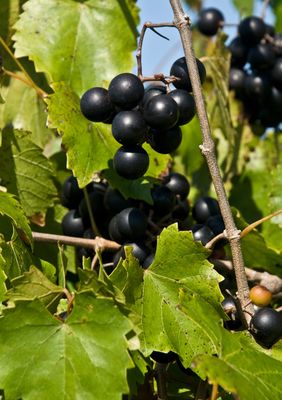
Grower note: Welder is a true muscadine — not a conventional bunch grape. Expect loose clusters of individual bronze berries, thick skins, seeds and intense Southern grape character.
🍇 What Does Welder Muscadine Taste Like?
Welder has the unmistakable flavor profile people either remember from traditional Southern muscadines or discover and immediately wonder why ordinary supermarket grapes taste so tame.
Expect:
- 🍯 Sweet ripe pulp
- 🍇 Strong grape aroma
- 🌿 Traditional muscadine character
- ✨ Light spice
- 🍋 Enough acidity to keep the juice lively
- 🌸 Fruity aromatics
Its fruit is generally smaller than Carlos, but University of Georgia trials recorded higher soluble solids in Welder.
In those trials:
Welder: 15.8% soluble solids
Carlos: 13.8% soluble solids
Translation?
Welder may be smaller, but it is packing plenty of sugar into those berries.
🍇 Skin, Pulp & Texture
Like other muscadines, Welder consists of three distinctly different textures:
The Skin
- Bronze at maturity
- Thick
- Leathery compared with conventional table grapes
- Edible
- Rich in naturally occurring polyphenols
The Pulp
Inside is a softer, juicy pulp with:
- Sweet juice
- Muscadine aroma
- Seeds
- Considerably softer texture than a crisp seedless grocery-store grape
The Seeds
Welder is not seedless.
That is one reason processing makes so much sense.
Juicing, jelly-making and winemaking capture the fruit’s flavor while allowing you to separate the seeds and skins according to the finished product you want.
🧃 The Juice Maker’s Muscadine
This is Welder’s lane.
UF/IFAS specifically lists Welder among Florida’s commercial juice and jelly cultivars, alongside other proven processing muscadines such as Carlos, Noble and Alachua.
It is also recognized as a cultivar capable of producing good juice or wine.
That’s important.
Some muscadines are selected because they make an impressive giant berry.
Some are selected for tender skin.
Some are designed around fresh-market shelf life.
Welder comes from a different school of thought:
What happens when the harvest goes into the kitchen?
Welder is especially useful for:
- 🧃 Fresh muscadine juice
- 🍯 Jelly
- 🫙 Jam
- 🍇 Preserves
- 🍷 Muscadine wine
- 🍹 Fermented beverages
- 🍨 Sorbet
- 🍰 Dessert fillings
- 🥄 Syrups
- 🍽️ Fruit reductions
- 🥗 Sweet-savory sauces
- 🍇 Fresh eating
🫙 Make the Southern Classic: Muscadine Jelly
There is a reason muscadine jelly has stayed relevant for generations.
The fruit brings its own natural combination of:
sweetness + acidity + aroma + intensely grape-like flavor.
A basic home process looks like this:
- Harvest fully ripe Welder muscadines.
- Wash and remove damaged fruit.
- Gently crush the berries.
- Heat them until the fruit softens and releases its juice.
- Strain the cooked fruit through a jelly bag or fine food strainer.
- Use the extracted juice in a tested muscadine jelly recipe.
- Follow current USDA or Cooperative Extension recommendations for pectin, sugar and safe canning.
For juice, the same extraction process gives you an intensely flavored base that can be:
- Drunk fresh
- Sweetened to taste
- Frozen
- Fermented
- Reduced into syrup
- Used in desserts
🌿 Grower’s Advantage
Small processing fruit suddenly makes a lot of sense once you stop evaluating grapes one berry at a time.
Welder isn’t trying to win a biggest-grape contest.
It’s trying to fill the pitcher.
🌿 Don’t Automatically Throw Away the Skins
Muscadine skins are one of the most chemically interesting portions of the fruit.
UF/IFAS identifies muscadines as notable sources of naturally occurring polyphenols including compounds such as:
- Ellagic acid
- Quercetin
- Gallic acid
- Tannins
- Ellagitannins
- Flavanols
- Resveratrol and related phytochemicals
The exact amount varies with cultivar, fruit tissue, ripeness and processing.
That doesn’t turn muscadines into medicine.
It does make them a particularly interesting whole-food crop.
Recipes that incorporate some of the skins — including:
- Jam
- Fruit leather
- Whole-fruit preserves
- Fermented products
- Sauces
— can retain components that would otherwise remain behind after clear juice extraction.
📜 Welder’s Florida Origin Story
This time we really do have a Florida story.
Welder originated in Tavares, Florida.
The cultivar began as an open-pollinated seedling discovered in 1957.
Unlike cultivars developed from a carefully documented intentional cross, Welder’s exact parents are not known.
That is part of the story.
Someone planted or encountered a seedling.
The seed produced something worth keeping.
And instead of disappearing into the endless genetic shuffle of seed-grown grapes, this particular vine was selected and propagated.
Henry Welder introduced the cultivar in 1972.
It carries his name today.
🌿 From Central Florida Seedling to Southern Vineyard
Welder eventually became recognized for traits useful far beyond one backyard:
- Self-fertile flowers
- Vigorous growth
- Good productivity
- Bronze fruit
- Useful sugar levels
- Juice and wine potential
- Processing quality
More than 50 years after its introduction, university publications still include Welder among Florida’s recommended processing muscadines.
That is a pretty solid résumé for an unknown seedling from Tavares.
🍇 A Fascinating Detail: Welder vs. Carlos
Carlos and Welder are natural comparisons.
Both are:
- Bronze
- Self-fruitful
- Muscadines
- Processing cultivars
- Used for juice
- Used for wine
- Vigorous Southern vines
- Midseason producers
But they aren’t identical.
University of Georgia evaluated them side-by-side at Tifton.
Welder vs. Carlos — UGA Trial Results
| Characteristic | Welder | Carlos |
|---|---|---|
| Berry Color | Bronze | Bronze |
| Flower Type | Self-fertile | Self-fertile |
| Average Berry Weight | 4.0 g | 5.3 g |
| Average Berry Diameter | 18 mm | 20 mm |
| Soluble Solids | 15.8% | 13.8% |
| Vine Vigor | High | High |
| Leaf Disease | Slight | Slight |
| Berry Rot | Medium | High |
| Estimated Full Crop | 90% | 90% |
| Harvest | Midseason | Midseason |
| Ripening | Even | Even |
| Dry Scar | 50% | 90% |
So What Does That Mean for a Home Grower?
Choose Welder if:
- Juice and wine are major priorities.
- You don’t mind smaller berries.
- Higher sugar potential interests you.
- You are growing in a warm region.
- Fruit rot has been an issue with processing grapes.
- You plan to process fruit promptly after harvest.
Choose Carlos if:
- You want larger processing fruit.
- You value a higher percentage of dry picking scars.
- You want one of the most established bronze processing cultivars throughout the Southeast.
🌿 One Important Regional Detail
UGA observed relatively even ripening in its Tifton trials.
UF/IFAS, however, notes that Welder can have an extended ripening period in Florida, sometimes requiring up to three harvests.
That isn’t necessarily bad for a backyard grower.
Instead of every berry becoming ripe simultaneously, you may get:
Harvest One → eat some.
Harvest Two → juice some.
Harvest Three → finish the jelly.
Commercial growers may prefer one giant harvest.
Home growers may actually enjoy the staggered season.
🌱 Why Grow Welder?
1. It’s a Florida Muscadine
Welder came from Tavares, Florida, making it especially interesting for Florida growers looking for cultivars with genuine regional history.
2. Excellent Processing Fruit
Welder is specifically recommended for:
- Juice
- Jelly
- Wine
This isn’t marketing guesswork.
Those are the roles university grape programs continue to assign this cultivar.
3. Self-Fertile
A single Welder vine can produce fruit.
You do not need a second cultivar for Welder itself.
4. It Can Pollinate Female Muscadines
Because Welder produces functional pollen, it can also serve as a pollen source for nearby female cultivars.
That makes it particularly useful in a mixed muscadine planting.
5. Good Sugar Development
Welder has produced respectable soluble-solids readings in Florida and Georgia trials.
6. Vigorous Growth
A healthy vine can quickly build a substantial permanent framework.
7. Better Fruit-Rot Performance Than Carlos in UGA Trials
Neither is disease-proof, but Welder showed an interesting advantage under Tifton trial conditions.
8. Edible + Ornamental
A properly trained muscadine provides:
- Summer shade
- Green seasonal coverage
- Wildlife value
- Fruit
- Structure within an edible landscape
9. It Has Proven Staying Power
A cultivar introduced in 1972 that remains recommended for Florida processing more than five decades later has earned some respect.
🍇 Welder vs. Other Grapes in the GreenDreams Collection
| Cultivar | Type | Fruit | Best Known For | Pollination | Best Fit |
|---|---|---|---|---|---|
| Welder | Muscadine | Bronze, smaller | Juice, jelly & wine; higher sugar potential | Self-fruitful | Florida processing + mixed muscadine plantings |
| Carlos | Muscadine | Bronze, medium | Heavy production, juice & wine | Self-fruitful | High-volume processing |
| Blanc du Bois | Interspecific bunch grape | Light green, clustered | Premium white wine | Self-fruitful | Growers wanting conventional grape bunches |
| Alachua | Muscadine | Black, medium | Juice, jelly & processing | Self-fruitful | Dark-fruited processing |
| Delicious | Muscadine | Black, medium-large | Fresh eating | Self-fruitful | Backyard fruit |
| Southern Home | Muscadine hybrid | Black, medium | Fruit + ornamental foliage | Self-fruitful | Pergolas & edible landscapes |
The Simple Version
Choose Welder if:
You want a Florida-born bronze muscadine particularly suited to juice, jelly and wine.
Choose Carlos if:
Heavy production and somewhat larger bronze processing berries are the priority.
Choose Blanc du Bois if:
You want traditional grape clusters and European-inspired white-wine character.
Choose Delicious if:
You are shopping mainly for fresh eating.
Choose Southern Home if:
You want fruit plus exceptional ornamental value.
Choose Alachua if:
You want a dark-fruited self-fertile processing muscadine.
🌞 Where to Plant Welder Muscadine
The formula is simple:
SUN + DRAINAGE + ROOM TO RUN.
Welder performs best in:
- 6–8+ hours of direct sunlight
- Well-drained soil
- Slightly acidic conditions
- Good airflow
- A permanent trellis location
- Open space
- Easy irrigation access
- A location that can be reached for annual pruning
Full Sun Matters
Partial sun may keep a vine alive.
That doesn’t make it the best location for fruit production.
Full sun contributes to:
- Stronger growth
- Better flowering
- Increased sugar accumulation
- Better fruit quality
- Faster drying following rain
- Reduced disease pressure
For a processing grape where sugar and flavor concentration matter?
Give Welder the sunshine.
🚫 Where NOT to Plant Welder
Avoid:
- Deep shade
- Low wet areas
- Locations where water stands after rain
- Highly alkaline soil
- Areas receiving limestone or concrete runoff
- Constant overhead irrigation
- Tight spaces with no airflow
- Locations without a permanent support structure
- Places where you cannot reach the vine for pruning
- Areas directly exposed to heavy coastal salt spray
Florida Soil Warning
Muscadines can be very unhappy in soils with high calcium levels or high pH.
This can be especially relevant around:
- New construction
- Limestone fill
- Shell fill
- Concrete foundations
- Heavily limed soil
If something looks off?
Test the soil before trying to fix the vine with fertilizer.
🌿 Build the Trellis Before Welder Takes Over
A productive muscadine needs actual infrastructure.
Welder is not a cucumber.
Do not expect a lightweight decorative trellis to support:
- Mature permanent wood
- Summer foliage
- Rain-soaked leaves
- A fruit crop
- Wind load
Recommended Home Systems
- Single-wire trellis
- Double-curtain trellis
- Strong grape arbor
- Heavy-duty pergola
- Vineyard wire
- Properly reinforced fence-line system
Spacing
Plan approximately:
15–20 ft of trellis space per vine
Muscadines may be planted more closely in certain production systems, but the traditional home-garden layout benefits from generous space.
Multiple rows generally need approximately 10–12 ft between rows, depending on equipment and management.
🍇 The Simple Single-Wire Trellis
For most home growers, simplicity wins.
A classic system uses:
- Strong end posts
- Heavy wire approximately 5 ft above ground
- One permanent grape trunk
- Two permanent horizontal arms
The basic shape eventually resembles:
← CORDON — TRUNK — CORDON →
From those permanent arms grow the short fruiting spurs that produce annual shoots.
Those annual shoots produce your grapes.
Once you understand that structure, muscadine pruning makes much more sense.
🌱 How to Plant Welder Muscadine
FIRST — Let Your Shipped Vine Recover
After receiving your Welder through UPS:
do not immediately transplant it.
Shipping is stressful.
The plant has just experienced:
- Darkness
- Movement
- Temperature changes
- Reduced airflow
- Different humidity
- A completely new environment
We generally recommend leaving the plant in its original GreenDreams container for:
approximately 30 days OR until healthy new growth shows recovery.
During this period:
- Check moisture daily.
- Keep the root ball from drying completely.
- Avoid standing water.
- Gradually acclimate to full sun when needed.
- Avoid heavy fertilizer.
- Begin building the permanent trellis.
Winter Exception
Welder is deciduous.
If you receive a dormant vine without leaves, you may not see active new growth until spring.
That does not mean the plant is unhealthy.
Dormancy should be considered when determining transplant timing.
🌿 GreenDreams High & Tight Planting Method
Muscadines dislike wet roots.
Don’t sabotage good genetics by planting the vine six inches too deep.
Planting Steps
- Dig a hole only slightly wider than the container.
- Avoid creating an unnecessarily deep planting basin.
- Carefully remove the vine from its nursery pot.
- Keep the root ball reasonably intact.
- Set Welder at the same soil level or slightly higher than surrounding grade.
- Never bury several inches of the stem.
- Backfill primarily with native soil.
- Firm the soil gently around the root ball.
- Water deeply to settle the planting.
- Top-dress the surrounding soil with compost and appropriate organic amendments.
- Add hardwood mulch.
- Keep mulch away from the stem.
- Train the strongest shoot toward the trellis.
🎥 Watch Our GreenDreams High & Tight Planting Method
https://youtu.be/RRQFY30qdA8?si=rRIcsbLlVAVYotfI
💧 Watering Welder Muscadine
🚫 NO OVERHEAD WATERING
Water the soil, not the vine.
We recommend:
- Morning watering
- Drip irrigation
- Soil-level emitters
- Deep root-zone irrigation
Avoid:
- Overhead sprinklers
- Misters
- Repeated wet foliage
- Afternoon leaf watering
- Keeping the root zone permanently saturated
Wet leaves + warm temperatures + humidity = conditions fungal organisms appreciate far more than we do.
🪴 Watering Your 1-Gallon Welder
Small containers dry rapidly.
Check a 1-gallon vine daily during hot weather.
In Florida summer conditions, watering may be required every day.
Consider:
- Air temperature
- Wind
- Container temperature
- Vine size
- Amount of foliage
- Rain
- Potting mix moisture
Water thoroughly until water drains through the bottom.
Then let oxygen return to the media.
The goal is:
moist + aerated
not:
dry as dust
and definitely not:
miniature swamp.
🌱 Watering Newly Planted Welder
Young muscadines need consistent irrigation while developing roots.
In extremely sandy Florida soil during dry weather, around 2 gallons per young vine per day can be an appropriate production benchmark.
But irrigation should always respond to actual conditions.
Reduce watering after:
- Heavy rain
- Tropical weather systems
- Cool cloudy periods
Increase attention during:
- Drought
- Heat
- Wind
- Active spring growth
Check Before You Water
Automatic irrigation timers don’t know it rained four inches yesterday.
You do.
🍇 Watering Mature Fruiting Vines
Established vines develop broad root systems.
During spring and early summer, consistent water supports:
- Shoot development
- Flowering
- Fruit set
- Berry enlargement
UF/IFAS identifies approximately May and June as particularly important irrigation periods for Florida muscadines.
As fruit approaches maturity:
more water is not automatically better.
Excess moisture around harvest can:
- Encourage berry rot
- Dilute soluble solids
- Reduce fruit quality
Adjust irrigation downward during wet late-summer conditions.
This is especially important in Florida, where ripening often overlaps with peak summer rainfall.
🌾 Soil & pH
Ideal Welder soil is:
- Well drained
- Slightly acidic
- Aerated
- Biologically active
- Moisture retentive without saturation
Target pH
Approximately:
5.5–6.5
A pH around 6.0–6.5 works beautifully for most muscadine plantings.
Get a Soil Test
Before blindly adding:
- Lime
- Magnesium
- Phosphorus
- Potassium
- Micronutrients
- Large amounts of fertilizer
test first.
Florida soil varies dramatically from one property to another.
🌿 Feeding Welder Organically
Muscadines can produce extremely vigorous growth.
Our goal is not to create the world’s longest grapevine.
The goal is:
healthy roots + balanced canopy + fruit.
GreenDreams favors gradual soil-building with materials such as:
- Finished compost
- Worm castings
- Charged biochar
- Hardwood mulch
- Balanced organic nutrients
- Mineral amendments based on actual need
🚫 Don’t Overdo Nitrogen
Too much nitrogen creates:
- Excess shoot growth
- Thick canopy
- Shade
- Reduced airflow
- Increased disease pressure
- More pruning
- Potentially poorer fruit balance
If your grapevine looks like it is attempting to conquer the neighborhood but isn’t making much fruit?
Stop feeding the jungle.
🍂 Magnesium: A Nutrient Worth Watching
Muscadines have a relatively high magnesium requirement.
Potential deficiency symptoms include:
- Yellowing on older leaves
- Green veins remaining visible
- Interveinal chlorosis
- Symptoms progressing upward if severe
Do not assume every yellow leaf means magnesium deficiency.
It can also result from:
- Wet roots
- Drought
- Natural autumn senescence
- Root damage
- pH imbalance
🧪 Test Before Treating
If magnesium and soil acidity both need correction, dolomitic lime may sometimes be appropriate.
If your pH is already high?
Adding more lime may make the problem worse.
Soil chemistry > guessing.
🪵 Mulching Welder
Apply approximately 2–4 inches of hardwood or other coarse organic mulch around the root zone.
Benefits:
- Moisture conservation
- Lower soil temperatures
- Weed suppression
- Carbon addition
- Increased organic matter
- Better soil biology
Don’t Mulch the Stem
Leave open space directly around the base.
Think:
mulch doughnut
not:
mulch volcano.
✂️ Pruning Welder Muscadine
Annual pruning is one of the biggest differences between:
a grapevine
and:
a productive grapevine.
Welder produces fruit on new shoots arising from buds on the previous season’s growth.
This means you intentionally maintain short sections of one-year-old wood along permanent arms.
These are your fruiting spurs.
Florida Pruning Window
Major muscadine pruning is generally performed during dormancy:
approximately mid-January through mid-March
Your exact timing depends on:
- Location
- Weather
- Vine dormancy
- Spring temperatures
🌿 Training a Young Welder Vine
During its first season:
1. Select the Best Shoot
Choose one vigorous shoot for the permanent trunk.
2. Train It Up
Tie it loosely to a stake or training line.
3. Remove Competition
Remove unnecessary shoots from the lower trunk.
4. Reach the Wire
Once the trunk reaches the trellis wire, encourage two arms.
5. Grow Left + Right
Train one cordon in each direction.
6. Build Before Cropping
Do not prioritize a huge first crop.
The first goal is a permanent structure that may produce fruit for years.
✂️ Pruning a Mature Welder
Once established:
- Keep the permanent trunk.
- Keep the permanent cordons.
- Cut annual lateral shoots back into short fruiting spurs.
- Remove dead wood.
- Remove tangled growth.
- Remove old fruit stems.
- Thin crowded spur positions.
- Remove tendrils constricting permanent wood.
Short spurs of roughly 2–4 buds / approximately 3 inches are common in muscadine management.
🌿 Why Remove Old Tendrils?
Muscadine tendrils can wrap around permanent cordons.
As the cordon expands, an old tendril can become a tourniquet.
Remove tight tendrils during dormant pruning before they girdle valuable permanent wood.
💧 My Vine Is Dripping After Pruning — Did I Hurt It?
Probably not.
Muscadines frequently exude clear sap from fresh pruning cuts as root pressure increases before spring growth.
This is commonly called:
vine bleeding.
It can look alarming.
It is generally a normal part of the grapevine waking up.
🍂 Yes — Welder Is Deciduous
Welder naturally loses its leaves.
That seasonal rhythm matters for:
- Care
- Customer expectations
- Landscape placement
It also means Welder is not an evergreen privacy screen.
🌱 SPRING — WAKE UP
Expect:
- Bud swell
- New leaves
- Rapid shoots
- Tendrils
- Flowers
- Fast growth
Spring Priorities
- Train young growth
- Remove suckers
- Maintain irrigation
- Begin fertility only after active growth
- Scout leaves
- Keep weeds controlled
🌞 SUMMER — BUILD THE CROP
Expect:
- Fast shoot growth
- Expanding canopy
- Green berries
- Heavy Florida rain
- Increasing disease pressure
Summer Priorities
- Maintain airflow
- Keep the vine trained
- Avoid overhead irrigation
- Scout fruit
- Remove diseased berries
- Monitor moisture
🍇 LATE SUMMER — HARVEST TIME
Welder is generally a midseason muscadine.
In Florida, expect the harvest window to center roughly around:
August into September
with location and weather shifting the actual dates.
UF/IFAS notes that Welder may develop an extended ripening period in Florida.
Multiple pickings may be needed.
How Do I Know Welder Is Ripe?
Look for:
- Bronze/golden coloration
- Full flavor
- Increased sweetness
- Softer ripe texture
- Easy separation from the vine
Don’t judge only by color.
Taste one.
The grape usually tells you.
🍂 FALL — LET IT RECHARGE
After harvest:
don’t immediately chop the vine back.
Healthy leaves continue photosynthesizing and replenishing carbohydrate reserves.
Allow the vine to:
- Maintain foliage
- Harden new wood
- Store energy
- Naturally enter dormancy
Late in the season you may see:
- Yellow leaves
- Spotted aging foliage
- Slowed growth
- Leaf drop
- Brown woody canes
These changes can be completely normal.
Avoid pushing excessive late growth with heavy nitrogen.
🧘 WINTER — DORMANT DOESN’T MEAN DEAD
By winter, Welder may look like:
a collection of bare brown sticks on a wire.
Perfect.
That is what deciduous grape dormancy looks like.
Winter is the season for:
- Major pruning
- Trellis repair
- Removing mummified fruit
- Removing dead wood
- Cleaning old debris
- Inspecting cordons
- Removing girdling tendrils
Landscape Planning Tip
If you grow Welder over a pergola for summer shade, remember:
the canopy disappears in winter.
That’s an advantage if you want more winter sunlight beneath the structure.
🪴 Growing Welder Muscadine in a Container
Yes.
But a 1-gallon pot is a starting point — not Welder’s retirement plan.
Suggested Progression
4-inch → 1 gallon → 3 gallon → 7 gallon → 15 gallon → 25+ gallon
You don’t need to hit every size.
Up-pot according to root development.
Signs It’s Time
- Roots emerging from drainage holes
- Heavy root circling
- Pot drying extremely fast
- Reduced growth
- Vine becoming unstable
- Little remaining potting-media volume
Final Container
For long-term fruit production:
25+ gallons is much more realistic.
A 30–50 gallon container provides even better moisture and root-volume stability where space permits.
Larger isn’t automatically easier, though.
Once filled with moist soil, that container isn’t going anywhere.
Plan first.
🌾 Potting Mix for Welder
Container media should provide both:
moisture retention + drainage
A useful blend may contain roughly:
- 2 parts pine-bark-based potting mix
- 1 part peat or coco coir
- 1 part coarse perlite, pumice or similar aeration material
Optional small additions:
- Finished compost
- Worm castings
- Charged biochar
Avoid:
- Dense native soil used alone in a pot
- Heavy muck
- Containers without large drainage holes
- Permanently full saucers
Where to Find Materials
Search:
- Local independent nurseries
- Landscape supply stores
- Farm-supply stores
- Hydroponic suppliers
- Professional nursery suppliers
- Online horticultural suppliers
Look for professional outdoor nursery potting media, not simply indoor houseplant soil.
🏠 Can Welder Grow Indoors?
Not as a realistic productive houseplant.
Welder needs:
- Full outdoor sunlight
- Air movement
- Large root volume
- Substantial vine space
- A permanent trellis
- Annual pruning
- Seasonal dormancy
Temporary weather protection?
Sure.
Permanent residence beside the couch?
Not this grape.
🌬️ Wind & Coastal Growing
Wind
Established Welder vines handle normal breezy conditions well.
Airflow is actually beneficial.
The bigger concern is:
structural support.
A mature muscadine trellis may support an enormous combined weight of:
- Wood
- Leaves
- Rainwater
- Fruit
A tropical storm can turn a poorly anchored trellis into modern art.
Build it strong.
Salt
Muscadines have moderate species-level salt tolerance.
Welder can be considered for many coastal Florida landscapes, but we do not recommend treating it like a dune plant.
Avoid:
- Repeated direct ocean spray
- Saline irrigation
- Highly saline soil
- Exposed beachfront placement
Use salt-tolerant windbreak plants where needed.
🌸 Pollination — Welder Does Double Duty
Welder is self-fruitful.
That means:
one Welder vine can fruit by itself.
But its functional pollen also means it can help pollinate female-flowered muscadine cultivars.
Examples of muscadines that may require a self-fertile pollenizer include female cultivars such as:
- Fry
- Supreme
- Summit
- Other pistillate selections
For commercial plantings, Extension recommendations generally keep female vines reasonably close to self-fertile pollenizers.
In a backyard planting?
A self-fertile cultivar like Welder is a very useful neighbor.
⚠️ Welder Is Resilient — Not Maintenance-Free
Muscadines are naturally better adapted to the Southeast than many conventional grape species.
That’s why we love them.
Still, Welder can encounter:
- Berry rots
- Leaf disease
- Root problems
- Insect pests
- Wildlife pressure
- Nutrient imbalances
- Drought stress
- Excess water
🍄 Fruit Rot
Here Welder has an interesting advantage.
In University of Georgia Tifton trials:
Welder showed less berry rot than Carlos.
UGA rated:
Welder — Medium berry rot
Carlos — High berry rot
That does not make Welder rot-proof.
Florida late-summer weather still brings:
heat + humidity + ripening fruit + rain
— a perfect recipe for fruit disease.
Your best protection remains:
- Full sun
- Open canopy
- Annual pruning
- Drip irrigation
- Prompt harvest
- Removal of diseased fruit
- Good sanitation
🍇 Wet Stem Scar — What Does That Mean?
Welder is a processing cultivar, and this detail helps explain why.
When a muscadine berry separates from its stem, the attachment point can remain:
Dry Scar
The berry separates cleanly with little juice leakage.
Good for:
- Fresh sales
- Storage
- Shipping
Wet Scar
Separation can tear tissue and release some juice.
That fruit is more prone to:
- Leakage
- Stickiness
- Postharvest deterioration
Welder has shown a relatively lower percentage of dry scars compared with cultivars optimized for the fresh market.
For the Home Grower?
Not a major problem if your plans are:
pick → kitchen → juice/jelly/wine.
It is simply another reason Welder fits processing better than cross-country fresh-fruit shipping.
🧫 Pierce’s Disease
One reason muscadines are so valuable throughout Florida is their strong natural resistance to Pierce’s disease.
Pierce’s disease is caused by the bacterium Xylella fastidiosa and is devastating to many conventional grapes in the Deep South.
Native muscadine genetics give growers a much better starting point.
This is part of why Welder can succeed in an environment where many traditional European wine grapes require far more intervention.
♻️ Organic Growing Strategy
For Welder, prevention should come before products.
1. Full Sun
Sun dries leaves and fruit.
2. Proper Spacing
Give the canopy room.
3. Winter Pruning
Remove excess growth every year.
4. Drip Irrigation
Keep unnecessary water off foliage.
5. Remove Rotten Fruit
Don’t leave disease inoculum hanging on the vine.
6. Remove Mummified Berries
Clean up during winter.
7. Control Excess Vigor
More nitrogen is not always better.
8. Build Soil
Healthy roots support resilient growth.
9. Identify Before Treating
A brown spot isn’t a diagnosis.
When disease treatment becomes necessary, use products specifically labeled for:
grapes + the identified problem
and follow current Extension and label recommendations.
The product label is the law.
🐛 Insects & Wildlife
Grape Root Borer
One of the more important muscadine insect pests in Florida is grape root borer.
Its larvae damage underground tissues around the roots and crown.
Potential symptoms:
- General decline
- Weak shoots
- Reduced production
- Vine collapse
Before blaming fertilizer, inspect declining vines carefully.
🐦 Birds
Birds eventually figure out where the good stuff is.
Netting may be necessary before ripening.
🦝 Other Customers Who Don’t Pay
Depending on the property:
- Raccoons
- Opossums
- Squirrels
- Deer
may also appreciate your harvest.
The better the fruit gets, the more popular your vineyard becomes.
🔍 Welder Muscadine Troubleshooting Guide
Icons represent common issues and organic solutions — look for 🌿 for recovery tips!
| ⚠️ Issue | 🧠 Likely Cause | 🌿 What to Do |
|---|---|---|
| 🍂 Leaves yellow and drop in winter | Normal deciduous dormancy | ✅ Allow natural dormancy |
| 🌱 Vine grows but doesn’t fruit | Young vine, shade, pruning issue | 🌞 Improve light and training |
| 🌱 Tons of leaves + little fruit | Excess nitrogen | ✅ Reduce nitrogen and improve dormant pruning |
| 🍇 Some fruit ripe while some stays green | Extended Welder ripening window | 🧺 Harvest selectively in multiple passes |
| 🍄 Berries rot during rainy weather | Fruit rot + humidity | ✂️ Remove affected berries; open canopy |
| 🍇 Fruit leaks after picking | Wet picking scar | ✅ Process promptly; normal cultivar characteristic |
| 💧 Young vine wilts | Dry root zone | ✅ Water deeply and consistently |
| 💦 Vine yellows in constantly wet soil | Poor drainage | 🪣 Correct drainage and reduce irrigation |
| 🍂 Older leaves yellow between green veins | Possible magnesium deficiency | 🧪 Test before correcting |
| ☁️ Weak fruit quality | Too much shade | 🌞 Move or open surrounding canopy |
| ✂️ Clear sap flows after pruning | Normal grapevine bleeding | ✅ No treatment needed |
| 🌿 Cordon becomes constricted | Old tendril girdling wood | ✂️ Remove tight tendrils |
| ❄️ New shoots brown after cold night | Spring frost | 🧘 Wait for secondary growth before severe pruning |
| 🌬️ Vine pulls trellis down | Support failure | 🪵 Reinforce posts and wire |
| 🐦 Fruit disappears | Birds | ✅ Net before ripening |
| 🌳 Mature vine declines unexpectedly | Root borer / root disease / drainage | 🔍 Inspect crown and roots first |
| 🍇 Flavor tastes flat | Fruit harvested too early or excessive water | 🧺 Allow full ripening; review irrigation |
| 🍃 Late fall spotting | Normal aging OR disease | 🔍 Consider timing and severity before treating |
🐕 Pet Caution
Grapes and raisins should not be fed to dogs.
Grape ingestion has been associated with potentially serious kidney toxicity in dogs.
If dogs have unrestricted access beneath the trellis:
- Harvest frequently
- Pick up fallen berries
- Prevent intentional feeding
- Restrict access during heavy fruit drop if necessary
🌟 Is Welder Muscadine Right for You?
✅ IDEAL FOR:
- Florida growers
- Central Florida gardens
- Southeastern vineyards
- Gulf Coast landscapes
- Juice makers
- Jelly makers
- Home winemakers
- Homesteaders
- Permaculture growers
- Edible landscapes
- People wanting a Florida-origin cultivar
- Mixed muscadine plantings needing a self-fertile pollenizer
- Growers comfortable with smaller processing fruit
- Organic and lower-input fruit production
- Anyone with enough room for a serious grape trellis
❌ NOT IDEAL FOR:
- Cold northern muscadine regions
- Gardeners looking specifically for Zone 7 cold hardiness
- Deep shade
- Poorly drained soil
- Highly alkaline soil
- Tiny patios
- Indoor growing
- Growers unwilling to prune
- People expecting seedless grapes
- Shoppers wanting giant fresh-market berries
- People wanting thin supermarket-style skins
- Anyone expecting every berry to ripen on the exact same day
- Growers wanting long fresh-fruit storage
- Gardens without permanent support
🌿 The Bottom Line
Welder is a processing muscadine.
That’s not a compromise.
That’s its specialty.
If your goal is:
harvest → juice → jelly → wine → repeat
you are shopping in exactly the right section.
❓ Welder Muscadine FAQ
Is Welder muscadine self-fertile?
Yes.
Welder has perfect flowers and can produce fruit without a second muscadine cultivar.
Can Welder pollinate other muscadines?
Yes.
Because Welder produces functional pollen, it can serve as a pollenizer for nearby female-flowered muscadine cultivars.
Where did Welder muscadine originate?
Tavares, Florida.
Welder was an open-pollinated seedling discovered in 1957 and introduced by Henry Welder in 1972.
Do we know Welder’s parents?
No.
The cultivar originated as an open-pollinated seedling, and its exact parentage is unknown.
Is Welder a bunch grape?
No.
Welder is a muscadine.
Muscadines produce loose clusters of individual berries rather than the tight clusters typical of European and traditional American bunch grapes.
Is Welder good for juice?
Yes — this is one of its primary uses.
UF/IFAS specifically recommends Welder as a processing cultivar for juice and jelly.
Is Welder good for wine?
Yes.
UF/IFAS describes Welder as producing good juice or wine.
It is traditionally used for bronze muscadine wine styles.
Can I eat Welder fresh?
Absolutely.
Welder fruit is edible straight from the vine.
However, its:
- Smaller size
- Thick skin
- Seeds
- Wet stem scar
make it more of a processing cultivar than a premium fresh-market cultivar.
Is Welder sweeter than Carlos?
It can be.
In University of Georgia Tifton trials, Welder averaged approximately:
15.8% soluble solids
compared with:
13.8% for Carlos.
Fruit sugar changes with:
- Weather
- Crop load
- Irrigation
- Harvest timing
- Location
so this should not be interpreted as every Welder berry always being sweeter than every Carlos berry.
Which grape is bigger: Welder or Carlos?
Carlos.
UGA trial averages:
Welder — 4.0 g / 18 mm
Carlos — 5.3 g / 20 mm
Welder trades some berry size for strong processing characteristics.
Which has better fruit-rot resistance: Welder or Carlos?
In UGA’s Tifton evaluations, Welder experienced less berry rot than Carlos.
That makes Welder especially interesting for warm, humid Southern growers.
Neither cultivar is immune to fruit rot.
When does Welder ripen in Florida?
Welder is generally considered midseason.
For many Florida growers, expect harvest approximately:
August into September.
Exact timing changes with location and year.
Do all Welder berries ripen together?
Not necessarily.
UGA observed relatively even ripening in Georgia trials, while UF/IFAS notes that Welder can have a very extended ripening period in Florida, sometimes requiring three harvests.
Home growers should expect to pick according to ripeness rather than stripping the entire vine on a predetermined date.
What is a wet stem scar?
When the berry separates from its stem, a small amount of tissue or juice may remain exposed.
Wet-scar cultivars generally don’t store as well as dry-scar fresh-market muscadines.
For juice or jelly?
No big deal.
Pick it and process it.
Is Welder cold hardy?
Welder is not among the best muscadines for colder northern growing regions.
Cold-hardiness problems have been reported in Arkansas trials.
We consider Welder best suited to the warmer muscadine belt — particularly Florida and the lower Southeast.
What USDA zones are best for Welder?
We consider approximately Zones 8–10 the most appropriate practical range.
Growers in colder Zone 7 locations should select muscadines with stronger documented cold hardiness.
Can Welder grow throughout Florida?
Muscadines can be grown throughout Florida where:
- Drainage is good
- Soil is not excessively high in calcium
- Enough sunlight is available
Local conditions still matter.
Does Welder lose its leaves?
Yes.
Welder is a deciduous vine.
Bare winter vines are normal.
Does Welder need a trellis?
100%.
Build a real permanent support system.
How much room does Welder need?
Plan approximately:
15–20 ft of trellis space per mature vine
for a traditional home system.
When should Welder be pruned?
During winter dormancy.
For Florida, major pruning generally falls approximately between:
mid-January and mid-March.
Can Welder grow in a container?
Yes.
Eventually use a large container — ideally 25 gallons or larger for long-term production — along with substantial support.
Can Welder be grown indoors?
Not realistically for long-term fruit production.
It needs:
- Full sun
- Outdoor airflow
- Vine space
- Dormancy
- Trellis support
Why isn’t my Welder producing grapes?
Possible reasons include:
- The vine is young
- Too much shade
- Incorrect pruning
- Excess nitrogen
- Drought
- Poor drainage
- Frost damage
- Root problems
Lack of a pollenizer is not normally the issue because Welder is self-fruitful.
Why are my berries falling or leaking juice after harvest?
Welder can have a relatively wet stem scar.
This is one reason it is particularly well suited to:
juice + jelly + wine
rather than prolonged fresh storage.
📦 SHIPPING YOUR 1-GALLON WELDER MUSCADINE
Best Shipping Region
Our 1-gallon live plants are most ideally shipped to Florida, the Southeastern United States and Texas, where UPS Ground transportation from our Florida nursery tends to be shorter.
We can ship throughout the continental United States where agricultural regulations permit.
However, northern and western customers should consider:
- Distance
- Seasonal temperature
- Transit duration
- Live-plant stress
before ordering.
🚚 UPS Ground Shipping
GreenDreams currently ships live plants using:
UPS Ground
Our regular plant-shipping day is:
MONDAY
Shipping early in the week helps reduce the risk of live plants sitting unnecessarily at carrier facilities over the weekend.
🌡️ Extreme Heat & Cold Disclaimer
Live plants are living, perishable material.
GreenDreams cannot control temperatures experienced inside:
- UPS trucks
- Distribution centers
- Warehouses
- Delivery vehicles
- Packages sitting outdoors after delivery
Buyer discretion is especially important during:
- Heat waves
- Extreme freezes
- Severe storms
- Holiday delays
- Major weather events
GreenDreams is not responsible for damage caused by extreme temperatures or extended UPS Ground transit.
🗺️ Northern & Western Buyers
The farther your 1-gallon plant must travel by ground service, the greater the potential stress.
Shipping symptoms may include:
- Yellow leaves
- Leaf drop
- Wilt
- Cosmetic spotting
- Tender shoot damage
- Temporary growth interruption
Many plants recover once properly acclimated.
However, a 1-gallon plant contains much less:
soil + moisture + root mass
than a larger nursery specimen.
When larger plants are available for shipping, we strongly recommend them for especially long routes.
Risk associated with extended ground shipping outside our regional zone is assumed by the buyer.
🌴 California Orders
California packages may experience additional agricultural inspection.
An extra day in transit can significantly affect a small live plant during:
- Extreme summer temperatures
- Cold winter weather
Please purchase accordingly.
🌿 When Your Welder Arrives
Resist the urge to immediately put it in the ground.
Keep your new plant in its existing container for approximately:
30 days OR until healthy new growth shows that it has recovered from transit.
During recovery:
- Water carefully.
- Keep drainage open.
- Gradually acclimate to strong sun.
- Avoid heavy fertilizer.
- Protect from unusual weather.
- Build the trellis.
Once growing strongly and well rooted, move it into:
- A larger container
- Its permanent vineyard row
- A grape arbor
- A trellis
🏡 Shop With Us in Person
📍 Welder Muscadine Available at GreenDreams Nursery & Farm
Want to see what else we’re growing?
Visit our retail nursery in Spring Hill, Florida.
Our collection includes hundreds of:
- Fruit trees
- Muscadines
- Grape vines
- Tropical fruit
- Subtropical fruit
- Florida native plants
- Herbs
- Medicinal species
- Ecological support plants
- Rare edibles
- Productive landscape plants
We also maintain larger sizes and seasonal inventory that may never appear in our online store.
GreenDreams Nursery & Farm — Open to the Public
🌾 18709 US Hwy. 41, Spring Hill, FL 34610
🕘 Tuesday–Friday: 9AM–5PM
🌞 Saturday: 8AM–3PM
🌿 Stop by our regenerative nursery to see what’s fruiting, flowering and ready for a new home this week.
Online inventory, available plant sizes and pricing may differ from our Spring Hill retail nursery.
🌿 Beyond the Plant: GreenDreams Services
At GreenDreams, we do more than grow plants — we design, build and restore ecosystems across Florida.
- 🌳 Onsite consultations & edible landscape design
- 🚜 Installation & project management
- 🚚 Bulk delivery of compost, mulch, biochar and soil materials
- 🌾 Wholesale & large-scale regenerative solutions
Whether you’re adding a single muscadine or trying to figure out how an entire vineyard, orchard and edible landscape should work together, the right layout makes a major difference.
Let our team help you create your own thriving edible paradise — starting with Welder Muscadine. 🍇🌿
🌿 IMPORTANT INFORMATION BEFORE PURCHASING LIVE PLANTS
Please note: Plants purchased through our online store are not available for pickup at our retail nursery in Spring Hill, Florida.
Online inventory is housed at a separate facility and is priced, prepared, and handled exclusively for shipping.
🌱 Looking for larger plants or more selection?
Our retail nursery location offers far more availability, including larger sizes, specialty plants, and many selections not suitable for nationwide shipping.
Local pickup is available for retail nursery purchases only.
Visit our Spring Hill, FL retail nursery page to explore in-person shopping options.
🚚 LIVE PLANT SHIPPING & TRANSIT EXPECTATIONS
Live plants naturally experience stress during shipping. Temporary leaf drop, mild wilting, or cosmetic stress is normal after transit. Most plants recover quickly with proper watering, gradual light exposure, and basic aftercare. Some plants may require additional attention during the first few weeks.
Despite careful packing, minor cosmetic damage may occur during transit. Small issues such as broken leaves or stems typically resolve with time and proper care.
If your shipping box arrives with significant external damage, please contact UPS within 30 days to initiate a carrier claim.
⏱️ SHIPPING METHOD, TIMING & TRANSIT WINDOWS
All online orders ship via UPS Ground from our Central Florida nursery.
📦 Shipping Schedule: Orders ship once weekly on Mondays to reduce the risk of packages sitting in transit over weekends. A countdown clock on our website displays the next shipping date.
🚚 Typical Transit Times:
-
Florida: 1–2 days
-
Southern U.S.: approximately 2 days
-
Midwest, West & Northern U.S.: 3–5 business days
Long-distance shipments, particularly to the western U.S., may experience additional transit time due to agricultural inspections in states such as Arizona, California, and Texas.
Extended transit times can be more challenging for small or tender plants and may require additional recovery care after arrival.
🌡️ EXTREME WEATHER & SEASONAL RISK
Live plants are sensitive to temperature extremes.
We cannot guarantee plant condition during periods of extreme summer heat or winter cold and freezing temperatures. Weather-related delays, carrier interruptions, or exposure during delivery are beyond our control.
Customers are responsible for:
-
Monitoring tracking information sent via email
-
Retrieving packages promptly upon delivery
-
Preventing plants from being left outdoors in extreme conditions
During unsafe weather, holiday shipping volume, or extended transit risk, orders may be held and shipped the following week to protect plant health.
⚠️ CUSTOMER RESPONSIBILITY & REFUND POLICY
By purchasing live plants, customers acknowledge and accept the risks associated with shipping, weather exposure, transit delays, and regional suitability.
Refunds or replacements are considered only under exceptional circumstances and in accordance with our return and refund policy. We are not responsible for:
-
Weather-related damage
-
Carrier delays
-
Poor plant selection for a given climate or region
-
Improper care after delivery
Upon purchase, customers assume full responsibility for the ongoing care and success of their plants.
✅ CONSENT & AGREEMENT
By completing a purchase, you confirm that you have read, understand, and agree to all shipping policies, responsibilities, and conditions outlined above.
Our goal is transparency, plant health, and long-term growing success — and we appreciate your understanding and care when ordering live plants.


