


🍒 Dwarf Grumichama — Rare Brazilian Cherry | Eugenia itaguahiensis
A rare Brazilian fruit tree that stays genuinely small—bringing glossy evergreen beauty and sweet, dark cherry-like fruit to patios, containers, understory gardens & edible landscapes.
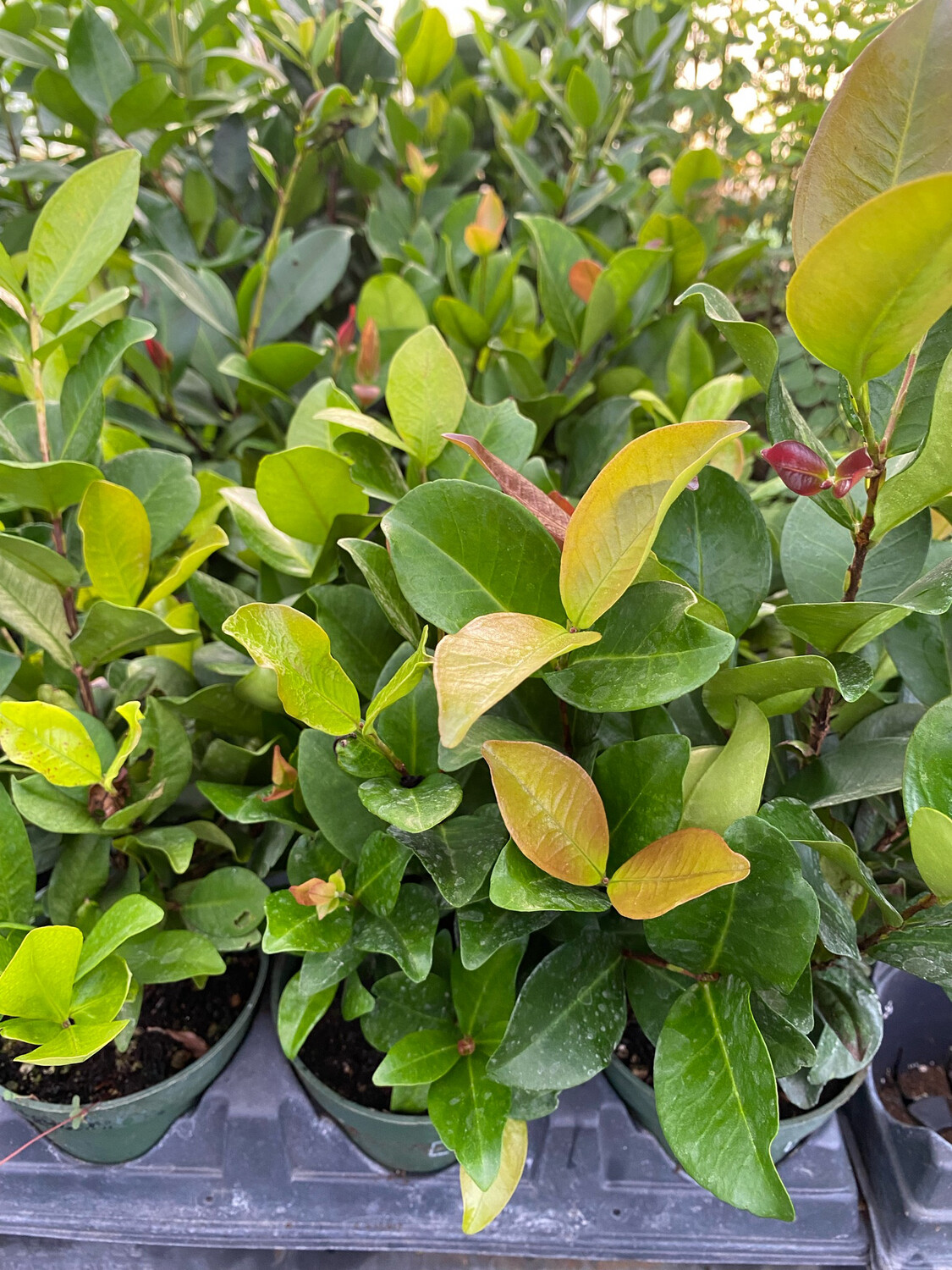
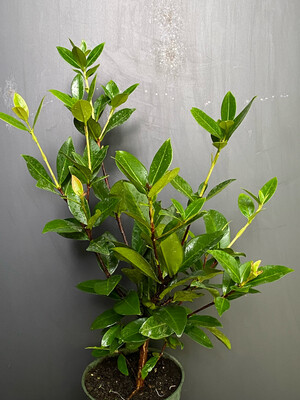
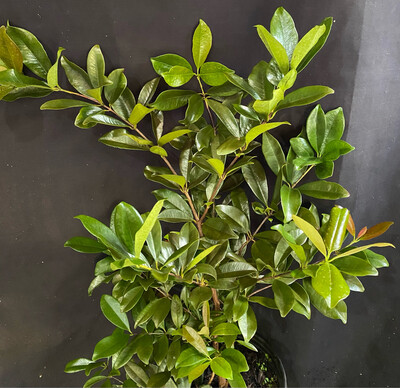
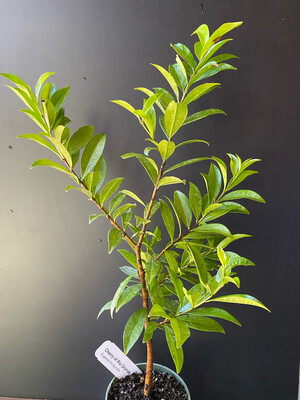
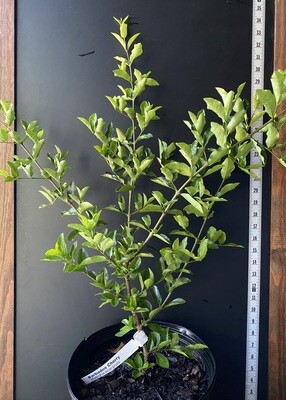
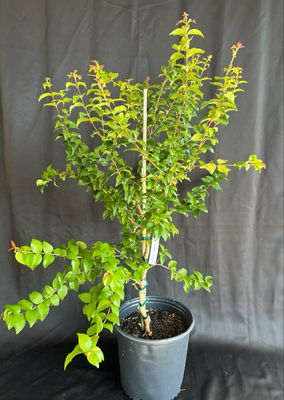
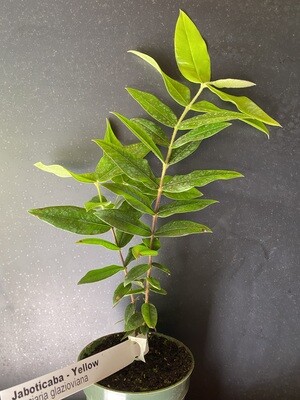
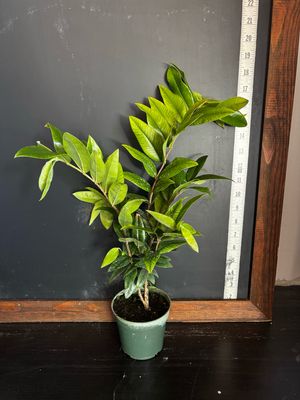
Meet one of the little-known gems of the Eugenia world. Dwarf Grumichama (Eugenia itaguahiensis) is not simply a smaller version of standard Grumichama—it is its own distinct species, prized for its naturally compact stature, attractive evergreen foliage, white flowers and edible purple-black fruit.
For growers who love rare fruit but have run out of room for another giant tree, this one gets interesting fast.
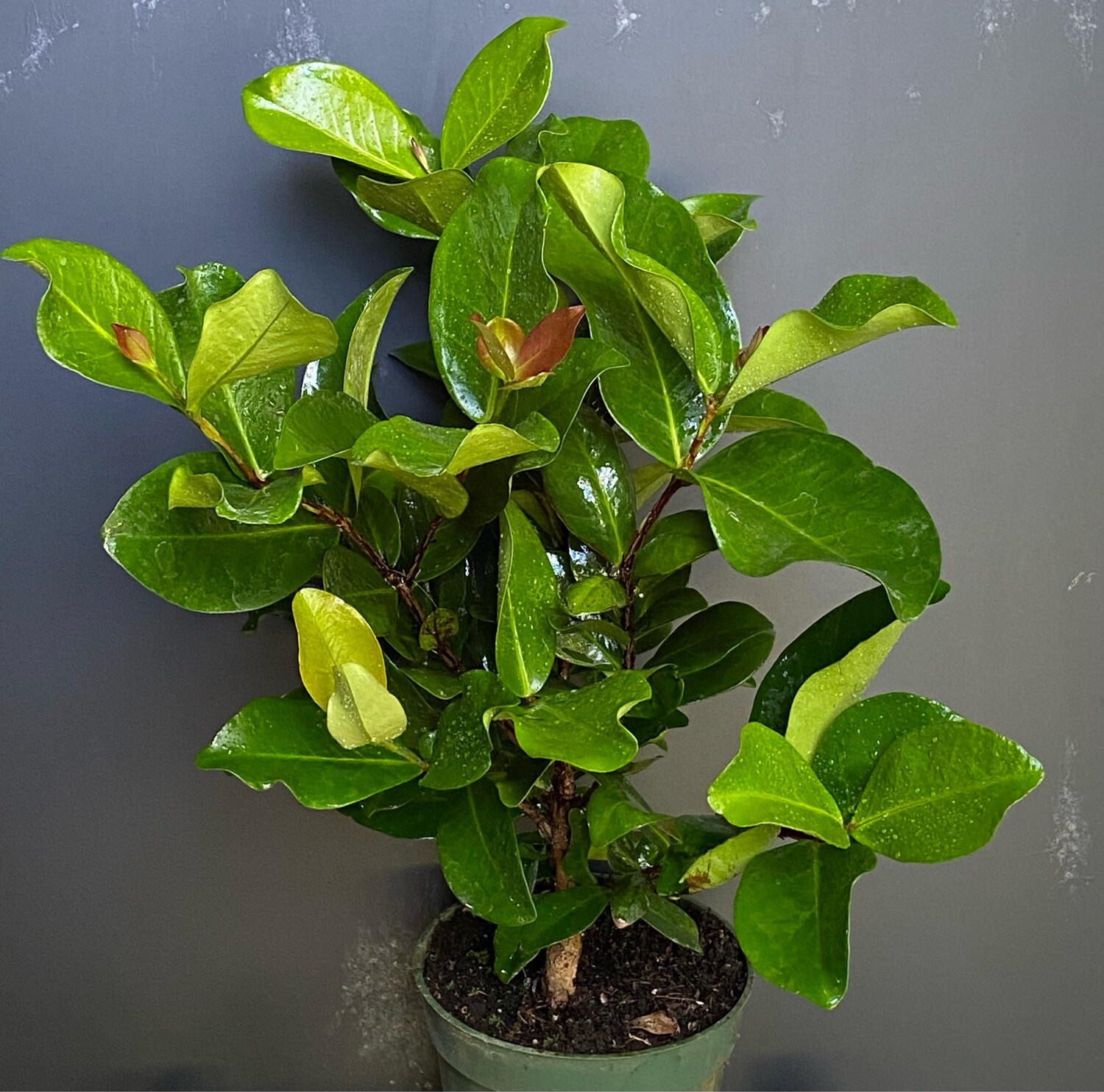
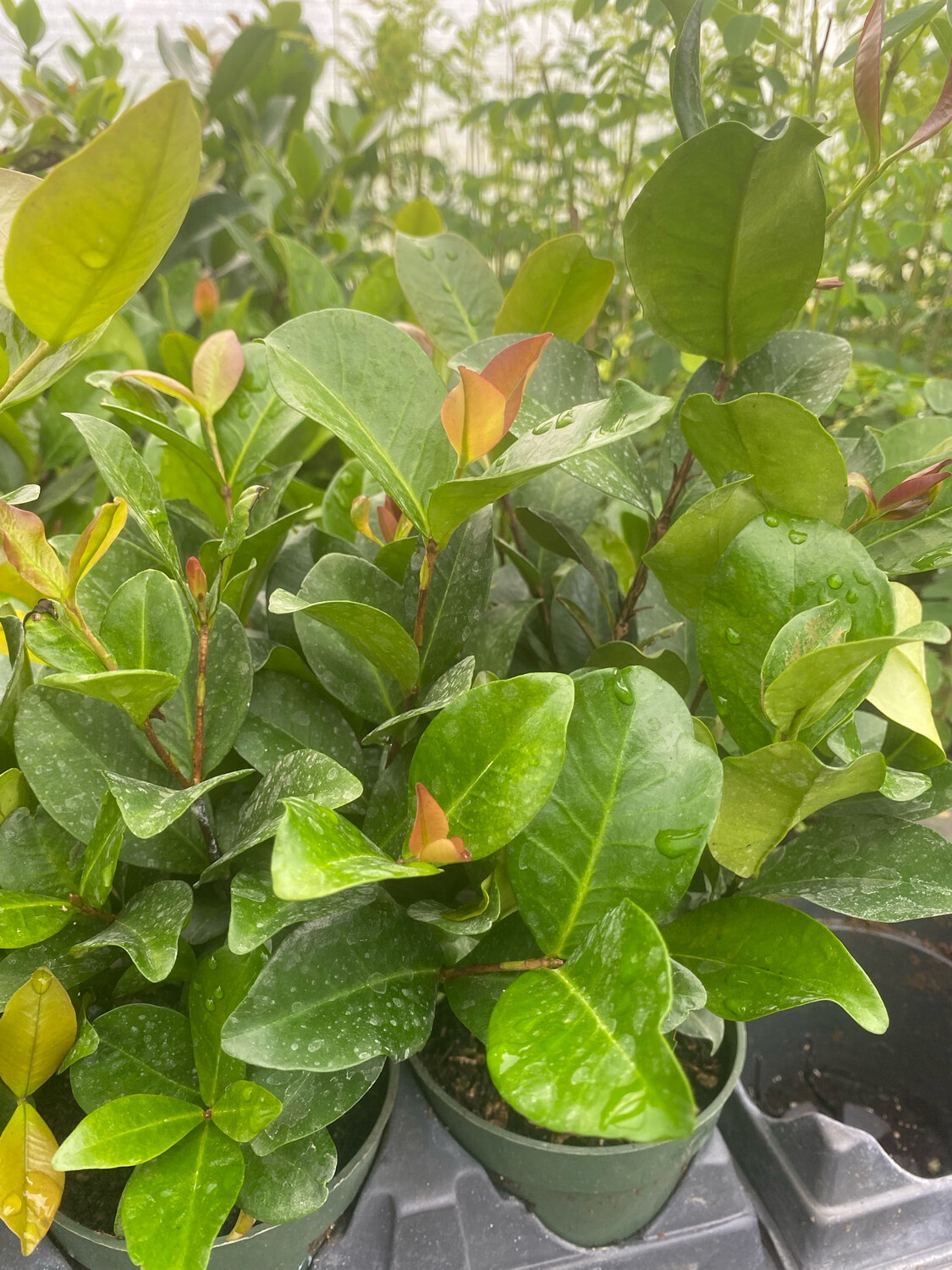
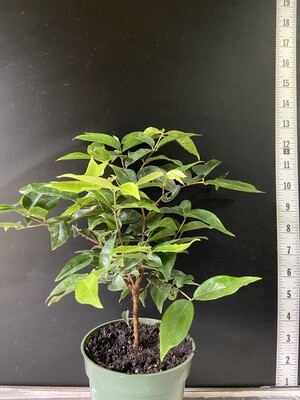
Our 4" nursery starter plant is the most affordable way to begin growing this uncommon Brazilian species. It is best suited to patient growers willing to give a young plant consistent moisture, protection and time to establish.
🌿 Quick Facts — Dwarf Grumichama
| Category | Details |
|---|---|
| Botanical Name | Eugenia itaguahiensis Nied. |
| Common Names | Dwarf Grumichama, Grumixama-Mirim, Grumixama Anã |
| Family | Myrtaceae |
| Plant Type | Evergreen fruiting shrub / small tree |
| Sale Size | 4" nursery starter container |
| Estimated Age | Approximately 8–14 months; individual plants vary |
| Typical Mature Height | Approximately 6–16 ft, with many cultivated plants remaining toward the smaller end |
| Maintained Height | Approximately 5–8 ft with selective pruning |
| Growth Rate | Generally slow to moderate; young plants may establish slowly |
| Suggested USDA Range | Approximately Zones 9b–11 outdoors; colder zones as a protected/container specimen |
| Cold Reference | Established plants have reports of surviving brief light frost near 27°F; young 4" plants should be protected well above this |
| Light | Sun to partial shade when established; filtered light / gentle morning sun preferred for young starter plants in Florida heat |
| Water | Consistent moisture with excellent drainage |
| Growth Habit | Naturally compact, shrubby to small-tree form |
| Suggested Spacing | Approximately 5–8 ft for individual landscape specimens |
| Container Growing | Excellent candidate |
| Salt Tolerance | Some soil-salt tolerance has been reported; avoid assuming high salt-spray tolerance |
| Wind | Shelter young plants from strong, drying winds |
| Edible Part | Fruit |
| Fruit Size | Approximately ¾ in. / 2 cm is reported |
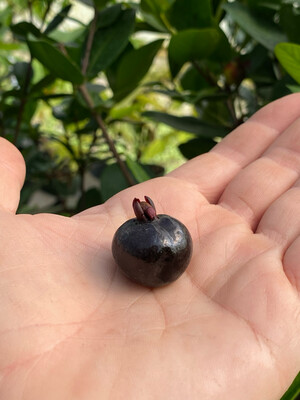
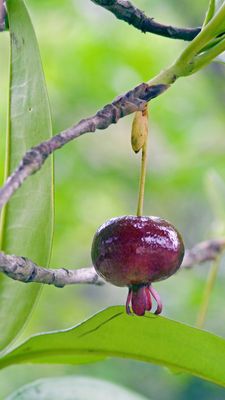
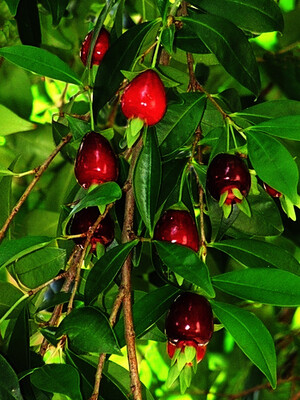
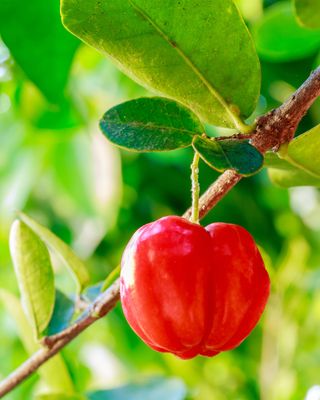
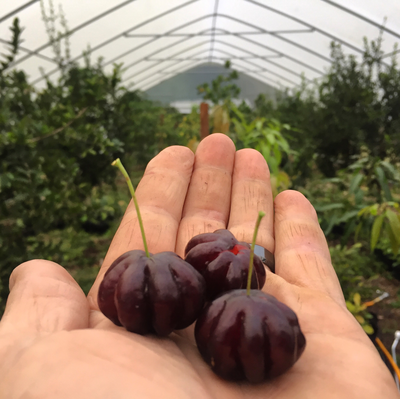
| Fruit Color | Deep purple to nearly black when ripe |
| Native Range | Brazil |
| Conservation Note | Considered Endangered in the wild in Brazil by CNCFlora |
Important: USDA-zone and temperature recommendations for this uncommon species are based on limited cultivation experience rather than extensive commercial trials. Microclimate, plant age, wind, moisture and duration of cold all matter.
🌎 Not Just a “Dwarf Variety” — This Is a Different Species
Here is one of the coolest things about this plant.
Standard Grumichama is Eugenia brasiliensis.
Dwarf Grumichama is Eugenia itaguahiensis.
Despite the shared common name, they are botanically distinct species. Eugenia itaguahiensis is recognized as an accepted species and has been documented as a compact shrub or small tree native to Brazil. Brazilian conservation sources associate it with Atlantic Forest habitats, including restinga and humid forest environments.
That distinction matters for gardeners: the smaller stature isn't simply a pruning trick or marketing name. Compactness is part of the plant's natural growth habit.
🌿 A Rare Plant with a Conservation Story
Brazilian conservation authorities currently classify Eugenia itaguahiensis as Endangered (EN) in the wild, citing its restricted distribution and continuing habitat loss. Cultivation therefore has an interesting ex-situ conservation dimension—although a backyard specimen should never be confused with protecting intact wild populations and habitat.
Its scientific name also carries a little geographic history: historical botanical material connects the species with Itaguaí, Rio de Janeiro, reflected in the epithet itaguahiensis.
🍒 The Fruit — Small, Dark & Made for Eating Fresh
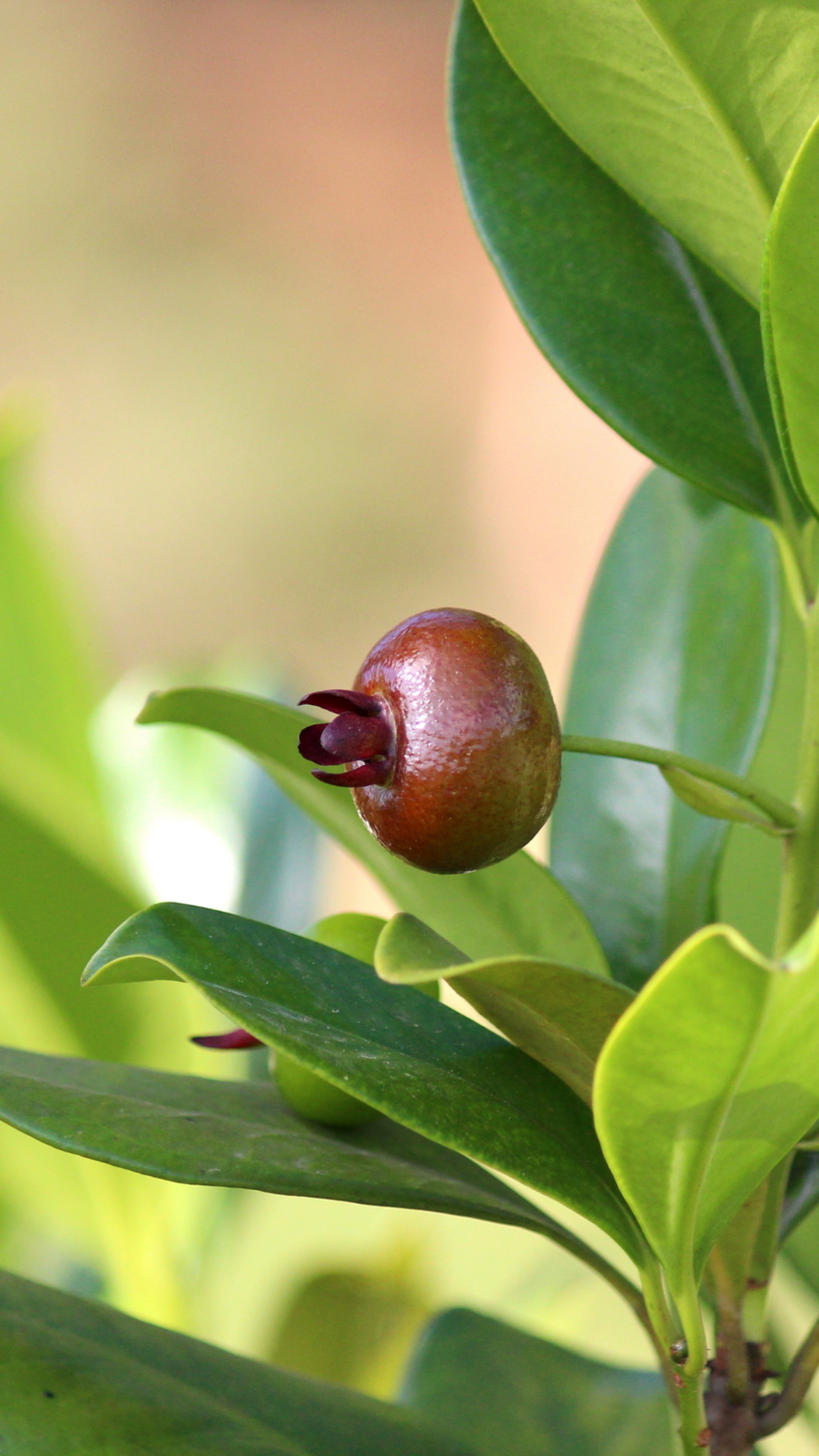
Dwarf Grumichama produces attractive fruits that mature from green into deep purple or glossy near-black.
Species references describe the fruit at roughly ¾ inch (2 cm) across, with fleshy pulp and a sweet flavor. It is traditionally eaten fresh and can also be made into jelly.
Flavor & Texture Guide
| Feature | What to Expect |
|---|---|
| Flavor | Sweet, fruity and pleasantly balanced |
| Flavor Family | Cherry/berry-like tropical fruit |
| Ripe Color | Dark purple to nearly black |
| Flesh | Soft, fleshy and juicy |
| Skin | Edible; can be more noticeable than the flesh |
| Seeds | Usually several relatively large seeds may occur |
| Best Stage | Allow fruit to become fully dark before harvesting |
Because Eugenia itaguahiensis remains uncommon in cultivation, seedling variation should be expected. Flavor, fruit size, seed count, growth rate and productivity can vary from plant to plant.
🍽️ How Do You Eat Dwarf Grumichama?
Start simple: eat it fresh.
Fully ripened fruit can be picked from the plant and enjoyed out of hand. The dark fruit also lends itself beautifully to small-batch kitchen projects.
🍒 Our Favorite Uses
- Fresh-picked fruit
- Fruit bowls and tropical fruit boards
- Small-batch jam
- Jelly
- Fruit preserves
- Syrups and dessert sauces
- Smoothies
- Frozen fruit preparations
- Sorbet and frozen desserts
- Yogurt or oatmeal toppings
- Specialty beverages
🍯 Easiest First Recipe: Dwarf Grumichama Refrigerator Preserve
Because the fruits are small and seasonal, you don't need a commercial-sized harvest.
Simple method:
- Harvest fully ripe, dark fruit.
- Wash gently.
- Remove seeds.
- Combine pulp with sugar to taste and a little citrus juice.
- Simmer until the fruit breaks down and the mixture thickens.
- Cool and refrigerate.
Spread it on toast, spoon it over yogurt or pair it with soft cheese.
Kitchen note: This is a refrigerator-style preparation, not a shelf-stable canning formula. Use a tested canning recipe if preserving for room-temperature storage.
🌸 Flowers, Fruit Set & Production
Small white flowers emerge around the foliage and add another ornamental layer before fruit production. Brazilian horticultural references describe flowering followed by dark edible fruits and document the species as suitable for fruit and ornamental cultivation.
For Better Fruit Set
🌸 Maintain consistent moisture during flowering. Significant drying while flowering or carrying immature fruit can reduce fruit retention.
🐝 Invite pollinators. Diverse flowering plants surrounding the tree help turn an edible landscape into functioning habitat.
🌿 Avoid excessive nitrogen. The goal is balanced growth—not a huge flush of foliage at the expense of reproductive growth.
✂️ Prune thoughtfully. Its naturally small form means aggressive size-control pruning usually isn't necessary.
☀️ Increase light as the plant matures. A protected 4" starter and a mature fruiting specimen do not necessarily need identical exposure.
📅 When Does Dwarf Grumichama Fruit?
Published Brazilian records place flowering roughly August–November and fruiting around October–December in its native Southern Hemisphere growing conditions. Those dates should not simply be copied onto a Florida calendar because seasonal cues differ between regions.
For Florida growers, expect flowering and fruiting behavior to depend on plant maturity, winter temperatures, rainfall, irrigation and microclimate. Spring into early summer is a reasonable period to watch closely for reproductive activity in established plants, but unusual flushes can occur in subtropical conditions.
⏳ How Long Until Fruit?
This is where patience matters.
Reports for cultivated Eugenia itaguahiensis vary considerably—from precocious seedlings fruiting within a few years to plants taking longer under less favorable conditions. For a small 4" seedling, we recommend planning around approximately 3–5 years rather than purchasing with an expectation of immediate production.
Good culture can accelerate development; stress, repeated transplanting, drought, cold damage and insufficient light can delay it.
🌳 Dwarf vs. Standard Grumichama
GreenDreams grows both Dwarf Grumichama (E. itaguahiensis) and Standard Grumichama (E. brasiliensis), making this an especially useful distinction for customers choosing between them.
| Feature | 🍒 Dwarf Grumichama | 🌳 Standard Grumichama |
|---|---|---|
| Botanical Name | Eugenia itaguahiensis | Eugenia brasiliensis |
| Same Species? | No | No |
| Natural Form | Shrub / genuinely small tree | Larger tree |
| Typical Height | Roughly 6–16 ft | Commonly 15–40+ ft depending on conditions |
| Container Culture | ⭐⭐⭐⭐⭐ Excellent | ⭐⭐⭐ Good with pruning |
| Small Landscapes | Excellent | Can work with pruning |
| Fruit | Small, dark purple-black, sweet | Larger cherry-like fruit, typically purple-black forms |
| Growth | Generally compact | More tree-like |
| Best Reason to Choose | Space efficiency + rarity | Larger established fruit tree / classic Grumichama experience |
If your edible garden is already packed, Dwarf Grumichama has the obvious spatial advantage.
GreenDreams' current nursery inventory also distinguishes the two species separately rather than treating the dwarf plant as a cultivar of E. brasiliensis.
🌿 Why Grow Eugenia itaguahiensis?
🍒 It produces genuinely edible fruit.
This isn't an ornamental with technically edible berries. The fruit is traditionally consumed fresh and used for preserves.
🪴 It fits where larger tropical fruit trees don't.
Containers, patios, courtyards and tightly layered food forests become realistic options.
🌳 It's evergreen.
The foliage provides structure even when the plant isn't flowering or fruiting.
🌸 It doubles as an ornamental.
Compact form + foliage + white flowers + black fruit make it easy to integrate into a designed landscape.
🌎 You're growing something genuinely uncommon.
This Brazilian species remains far less familiar in American landscapes than Surinam Cherry, Jaboticaba or standard Grumichama.
🐝 It belongs in a diverse edible ecosystem.
Flowers add another food source for visiting insects while ripe fruits also have ecological value for wildlife.
It adds genetic and botanical diversity.
For rare-fruit collectors, that's half the fun.
🌿 Nutritional & Medicinal Claims — What We Can Actually Say
You'll find dramatic health claims online for Grumichama and other Eugenia fruits. We aren't going to copy those claims onto a plant listing without species-specific evidence.
Research confirms that Eugenia itaguahiensis is used as a wild food plant in Brazil, and phytochemical work has examined compounds in its leaf essential oil. However, that is not the same thing as demonstrating a medical benefit from eating the fruit.
For this listing, we prefer the accurate claim:
Dwarf Grumichama is a traditional edible Brazilian fruit species grown primarily for fresh eating, preserves, horticultural diversity and ornamental value.
That's already plenty of reason to grow it.
🌱 Growing Dwarf Grumichama — Eugenia itaguahiensis
Dwarf Grumichama may be compact, but a 4" starter plant needs more attention than an established fruit tree. Your first goal isn't fruit—it is roots.
Build the root system, acclimate the foliage, avoid extremes and let the plant graduate into larger containers as it earns the space.
☀️ Light — A Little Nuance Matters Here
Published sources describe established Eugenia itaguahiensis growing in sun to partial shade, and Brazilian nursery references report successful production in both brighter exposures and meia sombra, or partial shade.
Our nursery recommendation is deliberately more conservative for a 4" Florida-grown starter plant.
🌱 For Newly Arrived 4" Plants
Best:
- Bright filtered light
- Dappled sunlight
- Gentle morning sun
- Afternoon shade
- Protected patio or nursery area
Avoid initially:
- Sudden all-day Florida sun
- Reflective heat beside pavement or walls
- Hot western exposure
- Strong drying wind
Once established, plants can be gradually acclimated to brighter conditions.
💡 Think acclimation—not absolutes. A small plant coming out of a shipping box should never go directly into intense afternoon sun just because a mature specimen is capable of growing there.
💧 Watering Dwarf Grumichama
Dwarf Grumichama appreciates consistent moisture but not stagnant, oxygen-starved soil.
That distinction is important.
🪴 4" Containers
Check the plant daily, especially during warm, windy Florida weather.
Water thoroughly when needed so the entire root ball becomes moist and excess water drains freely.
A tiny nursery pot has very little moisture reserve. During hot weather, it can go from properly hydrated to severely dry surprisingly fast.
🌳 In the Ground
During establishment:
- Monitor soil moisture frequently.
- Water deeply at the root zone.
- During hot/dry periods, young plants may require frequent irrigation.
- Gradually reduce frequency as the root system expands.
- Established plants still benefit from irrigation during prolonged drought and especially around flowering/fruit development.
💦 GreenDreams Watering Rule
Water at soil level.
We prefer drip irrigation or direct root-zone watering over overhead sprinklers.
Morning watering is ideal because plants enter the heat of the day hydrated while foliage remains dry.
Avoid routine afternoon overhead irrigation. Wet foliage, splashing soil and prolonged leaf moisture can encourage unnecessary disease pressure, while droplets combined with stressful environmental conditions can contribute to foliage damage.
💡 Never water by calendar alone. Check the soil, weather and plant first.
🌾 What Soil Does Dwarf Grumichama Want?
Aim for the sweet spot:
moisture-retentive + oxygen-rich + freely draining.
The species is associated with coastal Brazilian habitats but cultivated plants perform best when their root system is not left stagnant. Species references recommend fertile, well-drained soil and consistent moisture.
🪴 Container Mix
Look for a high-quality organic potting mix containing materials that balance moisture retention and aeration, such as:
- Pine bark fines
- Coco coir or peat
- Perlite or similar aeration material
- Finished compost in moderation
The finished mix should hold moisture without becoming dense mud.
Do not use straight garden soil in a container.
🌳 In-Ground Soil
Improve the system around the plant, rather than creating an isolated bowl of ultra-rich material inside a poorly draining planting hole.
Organic matter, surface-applied compost and hardwood mulch help build soil over time.
🌱 GreenDreams “High & Tight” Planting Method
Once your Dwarf Grumichama has recovered from shipping and is ready for permanent planting:
- Dig a hole only slightly wider than the container.
- Keep the planting depth approximately equal to the existing root ball.
- Position the root flare at or slightly above surrounding grade.
- Never bury the trunk.
- Backfill firmly enough to remove major air pockets without compacting the soil into concrete.
- Water thoroughly at soil level.
- Top-dress the surrounding soil with quality compost and organic amendments as appropriate.
- Apply hardwood mulch around the root zone.
- Keep mulch away from direct contact with the trunk.
Our philosophy is simple: high & tight beats deep & soggy.
🎥 GreenDreams fruit-tree planting method:
Watch our High & Tight planting video
📦 First 30 Days After Shipping
This may be the most important section on the page for a 4" plant.
When Your Plant Arrives
Do not immediately transplant it.
Shipping means darkness, vibration, temperature changes and altered humidity. Give the plant time to recover before adding another major stress.
Our Recommendation
Keep the plant in its original container for approximately 30 days OR until you see healthy new growth.
During recovery:
- Keep it protected.
- Maintain consistent moisture.
- Provide bright filtered light.
- Avoid fertilizer immediately after arrival.
- Do not panic over a few stressed leaves.
- Watch the growing tips for new activity.
🌱 Fresh new growth is one of the best signals that the root system is working again.
🪴 How to Up-Pot a 4" Dwarf Grumichama
Don't jump from tiny starter pot to enormous container.
Container Progression
4" starter → approximately 1 gallon → 3 gallon → 7 gallon → larger permanent container
Why?
An oversized container holds a large volume of wet soil around a comparatively tiny root system. That can make moisture management harder and increase the risk of root problems.
Time to Move Up When:
- Roots circle the container heavily
- Roots emerge from drainage holes
- The root ball dries dramatically faster than before
- Growth slows despite appropriate care
- The plant has recovered fully from shipping and is actively growing
How to Transplant
- Water the plant before transplanting.
- Prepare the new container first.
- Remove the root ball gently.
- Inspect roots.
- Loosen only severely circling exterior roots as necessary.
- Position the plant at the same soil level.
- Backfill with fresh potting medium.
- Water thoroughly.
- Return it temporarily to protected light.
- Resume normal exposure gradually.
Need supplies? Search locally or online for nursery pots, fabric grow bags, professional potting mix, pine bark fines, coco coir, perlite and organic soil amendments. Local independent nurseries, landscape suppliers and hydroponic/grow stores are often excellent resources.
🪴 Long-Term Container Growing
This is one of the strongest reasons to choose Eugenia itaguahiensis.
Because the species naturally stays much smaller than standard Grumichama, it can become a long-term patio fruit plant rather than merely surviving temporarily in a pot.
Mature Container Strategy
Eventually work toward approximately:
- 7–10 gallons for a younger specimen
- 15–25+ gallons for longer-term fruit production
Larger isn't automatically better. Container size should follow root development.
Container Placement
Ideal locations include:
- Bright patios
- Pool-cage gardens with adequate light
- Courtyards
- Protected south/east exposures in cooler climates
- Greenhouses
- Screened growing areas
- Outdoor container orchards
Container culture is especially valuable north of its reliable outdoor range because the plant can be moved or protected during cold events.
🏠 Can Dwarf Grumichama Grow Indoors?
Temporarily or seasonally? Yes.
As a permanently productive houseplant in ordinary room light? Not ideal.
For overwintering indoors, place it:
- At the brightest window available
- Away from heating vents
- Away from cold drafts
- Where humidity doesn't become excessively low
- Under supplemental grow lighting if natural light is inadequate
Fruit production requires considerably more energy than merely keeping foliage alive.
For cold-climate growers, think “container fruit tree that winters indoors” rather than traditional houseplant.
❄️ Cold Protection
Published cultivation information is limited, but Brazilian horticultural references report tolerance of brief light frost around 27°F (-3°C) for established plants.
That does not mean we recommend exposing a 4" starter plant to 27°F.
Young Plants
Protect early.
For small plants, move containers into shelter before frost conditions develop.
Established Landscape Plants
Before a freeze:
- Water the root zone appropriately ahead of the event.
- Maintain mulch over the root zone.
- Keep mulch away from the trunk.
- Use frost cloth extending toward the ground.
- Shelter from cold north/northwest winds when possible.
❄️ Do not fertilize a cold-damaged plant immediately. Wait until temperatures stabilize and new growth reveals which tissue remains alive.
🌬️ Wind & Salt
Young Dwarf Grumichama should be protected from persistent strong or drying winds.
Species references report some tolerance of salt in the soil, but this should not be interpreted as proven tolerance of direct coastal salt spray.
For beachfront or highly exposed coastal landscapes, use a more salt-proven species as the first windbreak and position Dwarf Grumichama farther inland or behind protective vegetation.
✂️ Pruning Dwarf Grumichama
The good news?
This isn't a tree you should need to fight.
Its naturally compact genetics do much of the size management for you.
Prioritize:
- Removing dead wood
- Removing damaged branches
- Correcting crossing/rubbing growth
- Maintaining airflow
- Encouraging a balanced framework
- Light tip-pruning if denser branching is desired
Avoid aggressive pruning on a young starter plant.
Once fruiting begins, time heavier shaping after harvest whenever practical, allowing the plant to rebuild productive growth.
🌿 Fertility — Feed the Soil, Not Just the Plant
For organically managed Dwarf Grumichama, we favor moderate, biologically driven fertility rather than heavy synthetic feeding.
Useful tools include:
- Finished compost
- Worm castings
- Biochar incorporated appropriately
- Balanced organic fruit-tree fertilizer
- Trace mineral amendments when indicated
- Hardwood mulch
Florida Timing
Spring: Resume nutrition as active growth begins.
Summer: Moderate feeding can continue during strong growth; avoid excessive nitrogen.
Fall: Begin reducing aggressive nitrogen inputs as cooler weather approaches.
Winter: In Central Florida and similar climates, avoid forcing tender new growth immediately ahead of potential freezes.
💡 More fertilizer does not equal more fruit. Excessive nitrogen can create lush vegetative growth without proportional flowering.
📅 Central Florida Seasonal Care Guide
| Season | What Dwarf Grumichama Is Doing | Your Job |
|---|---|---|
| 🌸 Spring | Active growth increases; flowering may occur on mature plants | Compost, balanced nutrition, monitor irrigation, increase light gradually |
| ☀️ Summer | Strong vegetative growth; heat and rain dominate | Monitor drainage, check 4" pots daily, protect starters from brutal afternoon sun |
| 🍂 Fall | Growth may moderate as days shorten | Reduce aggressive feeding, inspect structure, prepare containers for cold protection |
| ❄️ Winter | Evergreen but growth can slow substantially | Protect from frost, reduce watering frequency as demand drops, avoid forcing tender growth |
Is It Deciduous?
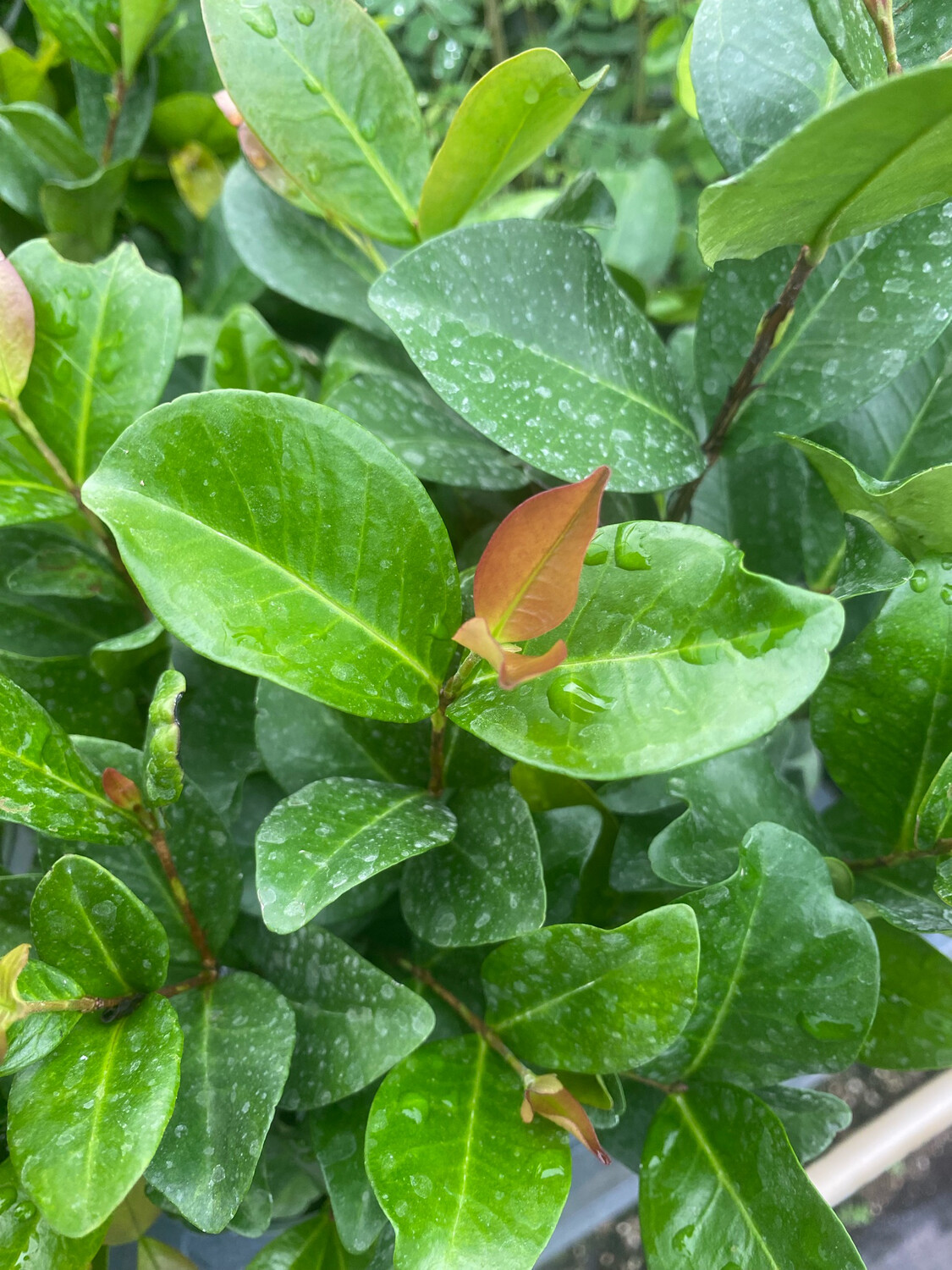
No. Dwarf Grumichama is evergreen.
It should normally retain foliage through winter, although cold, drought, transplant stress or shipping can cause leaf discoloration or temporary leaf drop.
Evergreen does not mean every leaf stays forever. Older leaves naturally cycle out as new growth develops.
🌼 Build a Dwarf Grumichama Guild
Instead of growing one isolated fruit tree surrounded by turf, build a small functioning ecosystem around it.
🐝 Pollinator Support
Use flowering species with staggered bloom periods to keep beneficial insects moving through the garden.
🌿 Biomass Plants
Mexican Sunflower (Tithonia diversifolia) can provide fast-growing biomass for chop-and-drop systems where climate and space allow.
🌾 Clumping Grasses
Non-running clumping grasses can generate carbon-rich biomass, create habitat and provide material for chop-and-drop management.
🌱 Nitrogen Support
Use appropriate nitrogen-fixing shrubs, trees or groundcovers far enough away that they don't overwhelm this slow-growing fruit tree.
🌸 Aesthetic Companions
Pair Dwarf Grumichama with contrasting foliage, low flowering groundcovers and other compact subtropical edibles to turn the planting into an intentional garden rather than a collection of fruit trees.
Guild rule: companions should support the tree—not compete with it for every drop of water, ray of light and inch of root space.
🔍 Dwarf Grumichama Troubleshooting Guide
Dwarf Grumichama is not especially difficult once established, but small plants magnify small mistakes.
A 4" root ball simply has less margin for error.
| ⚠️ Issue | 🧠 Likely Cause | 🌿 What to Do |
|---|---|---|
| 🍂 Yellow leaves | Excess moisture, root stress, old foliage or nutrition imbalance | Check soil before watering; confirm drainage; don't automatically fertilize |
| 🫣 Curling/wilting leaves | Dry root ball, wind or transplant stress | Check moisture immediately and move into protected conditions |
| ☀️ Bleached/brown foliage | Starter plant exposed to intense sun too quickly | Return to filtered light and reacclimate gradually |
| 💧 Constant wilting | 4" pot drying too rapidly or compromised roots | Inspect moisture and roots; up-pot only after shipping recovery if genuinely root-bound |
| 💦 Wet soil + decline | Poor drainage / overwatering | Increase aeration and drainage; never leave the container standing in water |
| 🌱 No growth after delivery | Shipping recovery | Maintain stable conditions and wait; new growth may take several weeks |
| ❄️ Brown foliage after cold | Frost/cold injury | Protect immediately; wait before pruning until living tissue becomes obvious |
| 🪲 Sticky/distorted growth | Possible scale, aphids or other sap-feeding insects | Inspect stems and leaf undersides; encourage beneficials and use appropriate organic controls |
| 🕷️ Fine stippling/webbing | Possible mites, especially in dry protected environments | Inspect carefully; improve growing conditions and treat appropriately if confirmed |
| 🍄 Leaf spotting | Persistent wet foliage / fungal pressure | Water at soil level, improve airflow and remove badly affected debris |
| 🌸 Flowers but little fruit | Moisture stress, immature plant, low pollinator activity or environmental stress | Maintain moisture during bloom and increase pollinator habitat |
| 🍃 Fruit dropping young | Moisture fluctuations or environmental stress | Keep root-zone moisture more consistent during flowering and fruit development |
⚠️ Cautions & Things to Know Before Buying
🌱 This Is a Starter Plant
A 4" plant is intentionally small.
It is not comparable to purchasing a 3-, 7- or 15-gallon fruit tree.
Choose this size because you enjoy growing plants from an early stage—not because you want immediate fruit.
💧 Small Pots Dry Quickly
This is the biggest practical consideration.
During warm weather, check your plant every day.
☀️ Don't Rush It Into Full Sun
A mature plant may tolerate much brighter conditions than a freshly shipped starter. Acclimate gradually.
🌊 Drainage Still Matters
Consistent moisture does not mean swamp conditions.
❄️ Protect Young Plants From Frost
Cold tolerance improves with size and establishment.
🍒 Wildlife May Discover the Fruit
Dark, soft, sweet fruit doesn't exactly fly under the radar. Birds and other wildlife may compete with you when plants begin producing.
🌿 No Major Toxicity Concern Identified for the Edible Fruit
Published species references identify the fruit as edible and report no known hazards. That does not mean unidentified plant parts should be used medicinally or consumed indiscriminately.
🌿 Is Dwarf Grumichama Right for You?
✅ An Excellent Choice For:
- Rare-fruit collectors
- Florida fruit growers
- Subtropical gardeners
- Container growers
- Patio orchards
- Small-space edible gardens
- Food forests
- Understory-style designs
- Growers who value unusual Brazilian fruit species
- Gardeners willing to raise a young starter plant
- People wanting a naturally manageable fruit tree
❌ Probably Not Your Best Choice If:
- You want fruit immediately
- You routinely forget to water small containers
- Your only location is brutally exposed afternoon sun with no acclimation
- You have chronically waterlogged soil
- You expect a 4" starter to behave like an established tree
- You live in a cold climate and cannot provide winter protection
- You want a “plant it and forget it” landscape plant
❓ Dwarf Grumichama FAQ
Is Dwarf Grumichama the same as regular Grumichama?
No. Dwarf Grumichama is Eugenia itaguahiensis, while standard Grumichama is Eugenia brasiliensis. They are separate species—not simply large and small versions of the same cultivar.
How big does Dwarf Grumichama get?
Published references describe Eugenia itaguahiensis as a shrub or small tree roughly 6½–16½ ft (2–5 m) tall, with some sources placing typical specimens around 10–13 ft. Growing conditions and pruning affect final size.
Can Dwarf Grumichama grow in a container?
Yes—and that's one of its strongest selling points. Its naturally compact size makes it considerably easier to maintain long-term in containers than many tropical fruit trees.
Can Dwarf Grumichama grow in full sun?
Established plants are reported in sun to partial shade, but we recommend protecting young 4" plants from intense exposed Florida sun and gradually acclimating them as they establish.
What does Dwarf Grumichama taste like?
The fruit is described as sweet and fleshy, with growers commonly placing its flavor in a cherry/berry-like tropical profile. Because most plants are seedlings, some variation should be expected.
How large is the fruit?
Published botanical/horticultural references place the fruit around ¾ inch (2 cm) across.
How long until a 4" Dwarf Grumichama fruits?
We recommend budgeting approximately 3–5 years for a starter this young. Individual seedlings may fruit earlier or later depending on genetics, climate, nutrition, container progression and overall culture.
Is Dwarf Grumichama evergreen?
Yes. It is an evergreen shrub/small tree. Stress can still cause temporary leaf drop.
How cold hardy is Dwarf Grumichama?
Species-specific cultivation information remains limited. Brazilian growing references report established plants tolerating brief light frost around 27°F (-3°C). We recommend protecting young plants considerably earlier rather than using that figure as a damage-free guarantee.
Can I grow Dwarf Grumichama indoors?
It can be overwintered indoors with very bright light, but permanent indoor fruit production can be difficult without strong supplemental lighting.
Should I transplant it immediately after delivery?
No. Keep the plant in its original container while it recovers. GreenDreams recommends waiting approximately 30 days or until healthy new growth appears before transplanting.
Why is my 4" pot drying so quickly?
Small containers have very little soil volume. As the root system fills the pot, water demand can become surprisingly high. Check moisture daily and, once the plant has recovered from shipping, inspect whether the roots indicate it is ready for the next container size.
Does Dwarf Grumichama need another tree to fruit?
Detailed controlled pollination research for Eugenia itaguahiensis is limited. We therefore don't recommend promising self-fertility as an established scientific fact. A single plant may produce fruit, while maintaining pollinator habitat and growing multiple genetically distinct seedlings may potentially improve reproductive opportunities.
That's a more accurate answer than pretending the science is more complete than it is.
🚚 Shipping a 4" Live Plant — Please Read Before Ordering
Our 4" starter size is best suited for shipping within Florida, the Southeastern United States and Texas.
We can ship these plants throughout the continental United States, but distance matters.
📦 GreenDreams Shipping
- UPS Ground shipping
- Orders ship Mondays
- Plants ship from Florida
- 4" plants contain a comparatively small soil and moisture reserve
- Regional shipments generally spend less time in transit
🌎 Northern & Western US Buyers
We welcome growers across the country, but buyer discretion is especially important when ordering a 4" tropical/subtropical starter plant over long distances.
Extended UPS Ground transit may expose plants to:
- Heat
- Cold
- Dry conditions
- Darkness
- Vibration
- Multiple distribution facilities
- Longer transit times
California shipments may also experience additional processing time associated with agricultural inspection.
Transit stress does not always mean a plant is lost. Many young plants can defoliate, wilt or look tired after a difficult trip and recover once their roots are rehydrated and new growth begins.
However, GreenDreams cannot guarantee that small starter plants shipped long distances will arrive in the same cosmetic condition in which they left our Florida nursery, particularly during seasonal temperature extremes.
🌡️ Peak Heat & Cold
Extreme weather increases shipping risk.
The buyer assumes the weather-related risk associated with choosing UPS Ground service during periods of extreme heat or cold.
If a 1-gallon or larger size is available, we strongly recommend considering the larger plant for longer-distance shipping. A larger root system and greater soil volume generally provide a much better buffer against transit stress.
🌱 After Arrival
Please do not immediately repot your plant.
Keep it in its original nursery container and allow approximately 30 days OR until healthy new growth appears before transplanting.
Recovery first. Repotting second.
🏡 Shop With Us in Person
🌿 Find Larger Dwarf Grumichama & More at GreenDreams Nursery
Local growers get another advantage: our retail nursery carries larger sizes and countless plants that never make it onto the online store.
GreenDreams Nursery & Farm — Open to the Public
🌾 18709 US Hwy. 41, Spring Hill, FL 34610
🕘 Tuesday–Friday: 9AM–5PM
🌞 Saturday: 8AM–3PM
Shop fruit trees, rare tropical edibles, native plants, useful species, soil-building plants and more.
🌸 Stop by our regenerative nursery to see what's blooming, fruiting and looking especially good this week.
🌿 Beyond the Plant: GreenDreams Services
At GreenDreams, we do more than grow plants—we design, build and restore productive ecosystems across Florida.
Our local services include:
- 🌳 Onsite edible landscape & food forest consultations
- 📐 Ecological landscape design and planning
- 🚜 Professional landscape installation & project management
- 🌱 Food forest and edible landscape development
- 🚚 Bulk compost, mulch, biochar and soil-material delivery
- 🌾 Wholesale and large-scale regenerative solutions
- 🌿 Long-term guidance for healthier, more resilient landscapes
A Dwarf Grumichama can be one plant in a pot—or one small piece of an entire edible ecosystem.
🌿 IMPORTANT INFORMATION BEFORE PURCHASING LIVE PLANTS
Please note: Plants purchased through our online store are not available for pickup at our retail nursery in Spring Hill, Florida.
Online inventory is housed at a separate facility and is priced, prepared, and handled exclusively for shipping.
🌱 Looking for larger plants or more selection?
Our retail nursery location offers far more availability, including larger sizes, specialty plants, and many selections not suitable for nationwide shipping.
Local pickup is available for retail nursery purchases only.
Visit our Spring Hill, FL retail nursery page to explore in-person shopping options.
🚚 LIVE PLANT SHIPPING & TRANSIT EXPECTATIONS
Live plants naturally experience stress during shipping. Temporary leaf drop, mild wilting, or cosmetic stress is normal after transit. Most plants recover quickly with proper watering, gradual light exposure, and basic aftercare. Some plants may require additional attention during the first few weeks.
Despite careful packing, minor cosmetic damage may occur during transit. Small issues such as broken leaves or stems typically resolve with time and proper care.
If your shipping box arrives with significant external damage, please contact UPS within 30 days to initiate a carrier claim.
⏱️ SHIPPING METHOD, TIMING & TRANSIT WINDOWS
All online orders ship via UPS Ground from our Central Florida nursery.
📦 Shipping Schedule: Orders ship once weekly on Mondays to reduce the risk of packages sitting in transit over weekends. A countdown clock on our website displays the next shipping date.
🚚 Typical Transit Times:
-
Florida: 1–2 days
-
Southern U.S.: approximately 2 days
-
Midwest, West & Northern U.S.: 3–5 business days
Long-distance shipments, particularly to the western U.S., may experience additional transit time due to agricultural inspections in states such as Arizona, California, and Texas.
Extended transit times can be more challenging for small or tender plants and may require additional recovery care after arrival.
🌡️ EXTREME WEATHER & SEASONAL RISK
Live plants are sensitive to temperature extremes.
We cannot guarantee plant condition during periods of extreme summer heat or winter cold and freezing temperatures. Weather-related delays, carrier interruptions, or exposure during delivery are beyond our control.
Customers are responsible for:
-
Monitoring tracking information sent via email
-
Retrieving packages promptly upon delivery
-
Preventing plants from being left outdoors in extreme conditions
During unsafe weather, holiday shipping volume, or extended transit risk, orders may be held and shipped the following week to protect plant health.
⚠️ CUSTOMER RESPONSIBILITY & REFUND POLICY
By purchasing live plants, customers acknowledge and accept the risks associated with shipping, weather exposure, transit delays, and regional suitability.
Refunds or replacements are considered only under exceptional circumstances and in accordance with our return and refund policy. We are not responsible for:
-
Weather-related damage
-
Carrier delays
-
Poor plant selection for a given climate or region
-
Improper care after delivery
Upon purchase, customers assume full responsibility for the ongoing care and success of their plants.
✅ CONSENT & AGREEMENT
By completing a purchase, you confirm that you have read, understand, and agree to all shipping policies, responsibilities, and conditions outlined above.
Our goal is transparency, plant health, and long-term growing success — and we appreciate your understanding and care when ordering live plants.


