


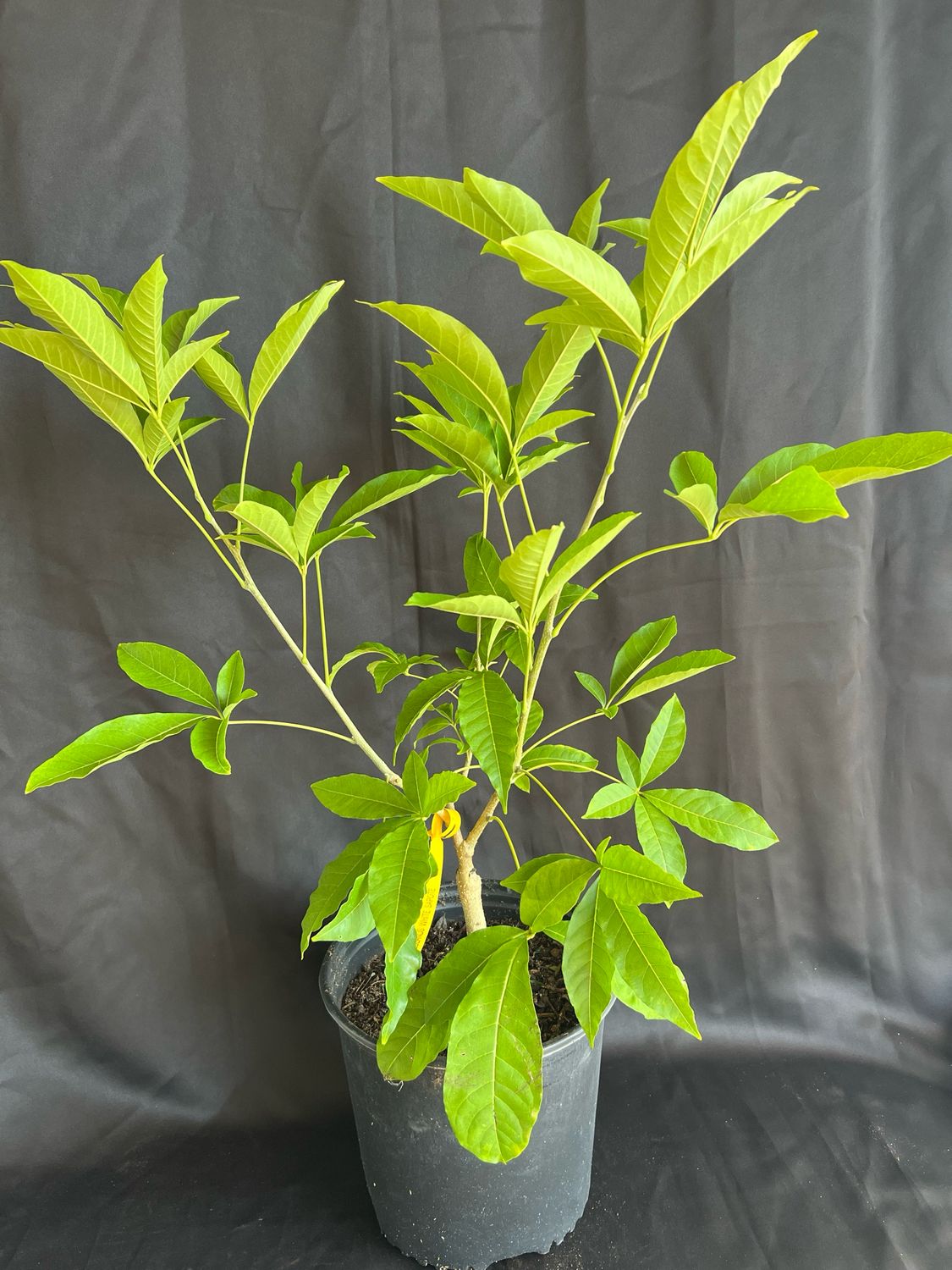
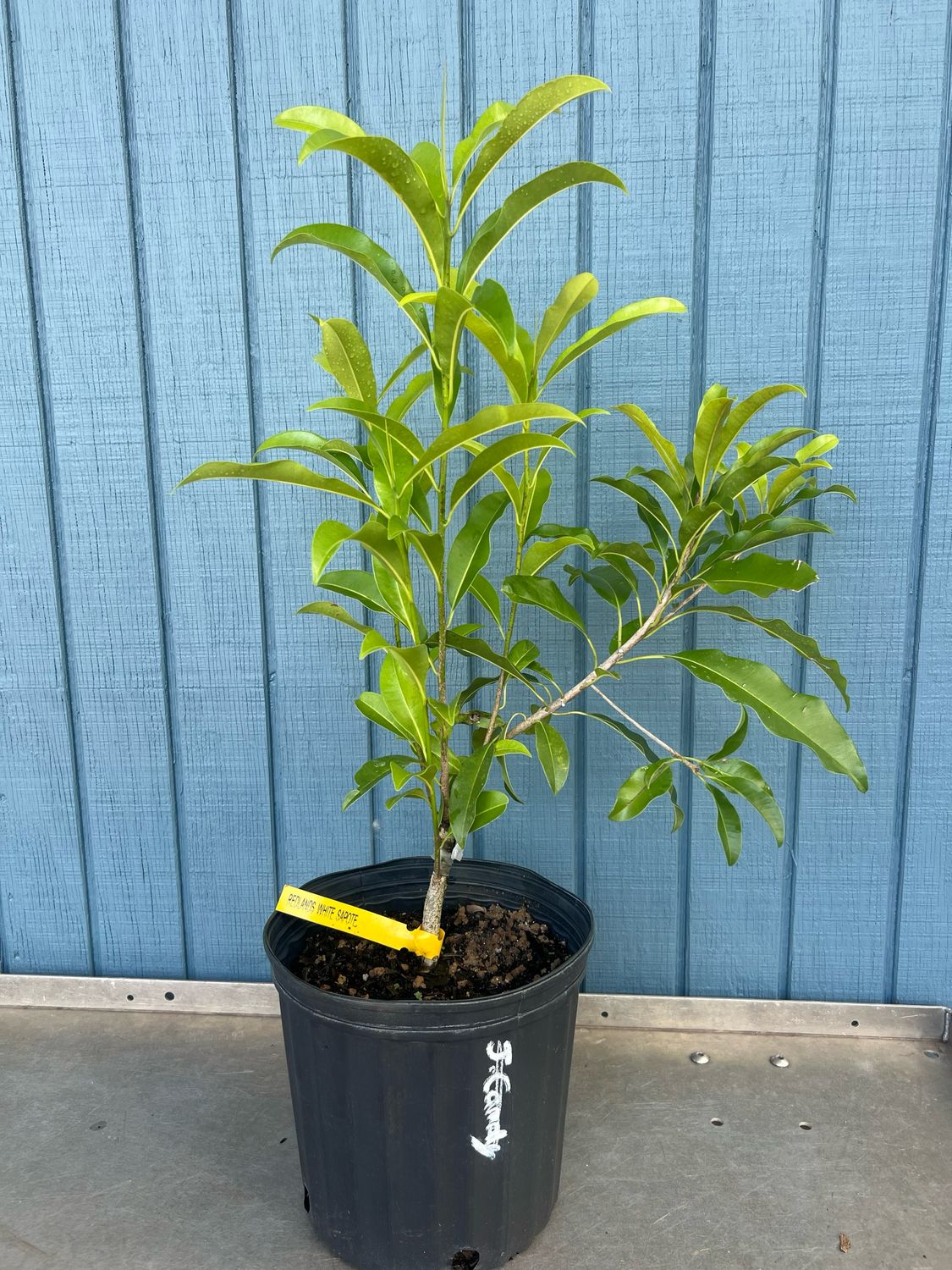
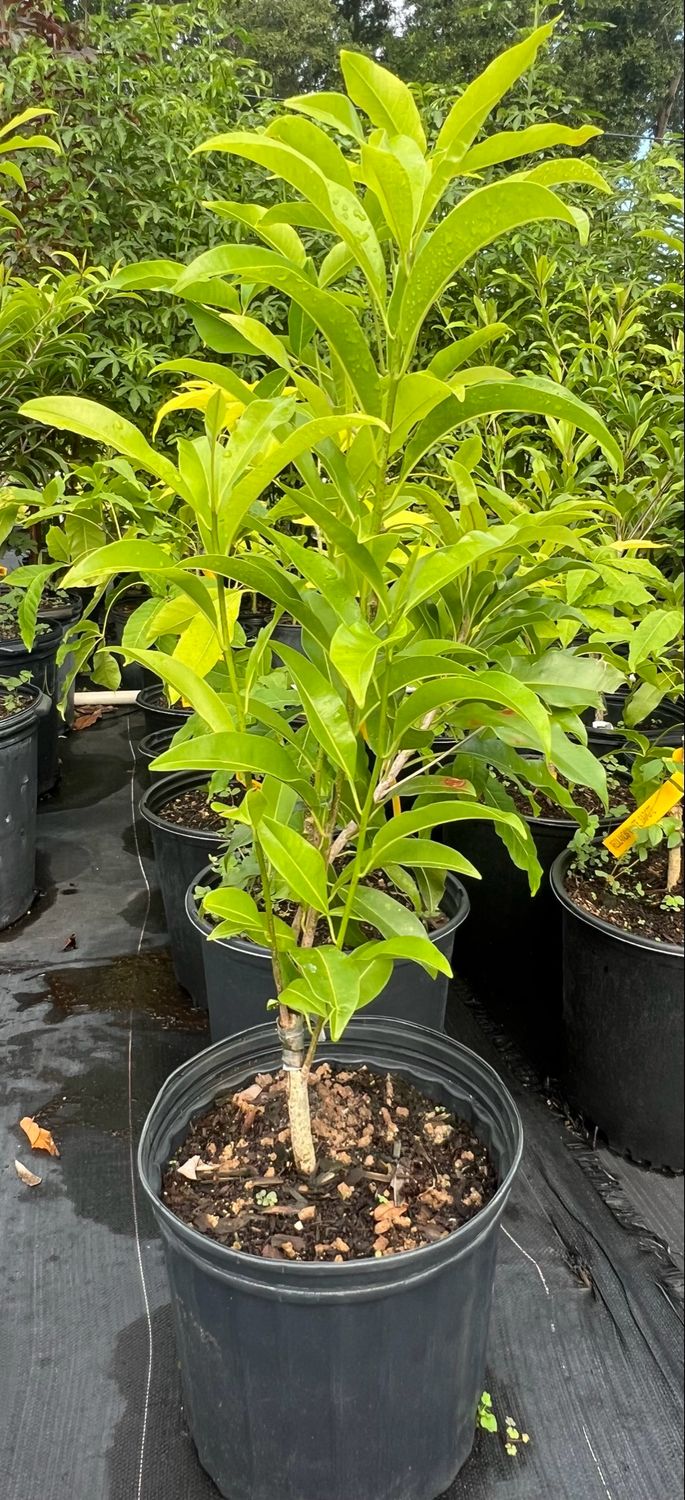
🌟 White Sapote ‘Redlands’ — Grafted Vanilla-Custard Fruit Tree
Casimiroa edulis ‘Redlands’
Imagine growing a fruit that tastes like vanilla custard folded with ripe peach, pear and banana—directly from a handsome subtropical shade tree in your own backyard.
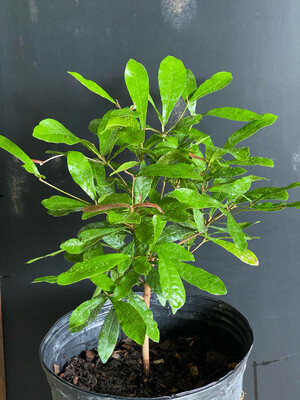
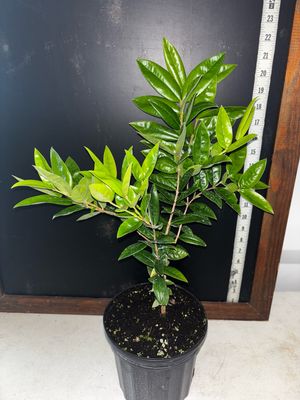
White Sapote ‘Redlands’ is a grafted South Florida selection prized for its creamy dessert-quality fruit, dependable production and naturally full, branching canopy. This is the kind of rare fruit tree that turns a backyard orchard into a conversation piece—and eventually turns harvest season into dessert season.
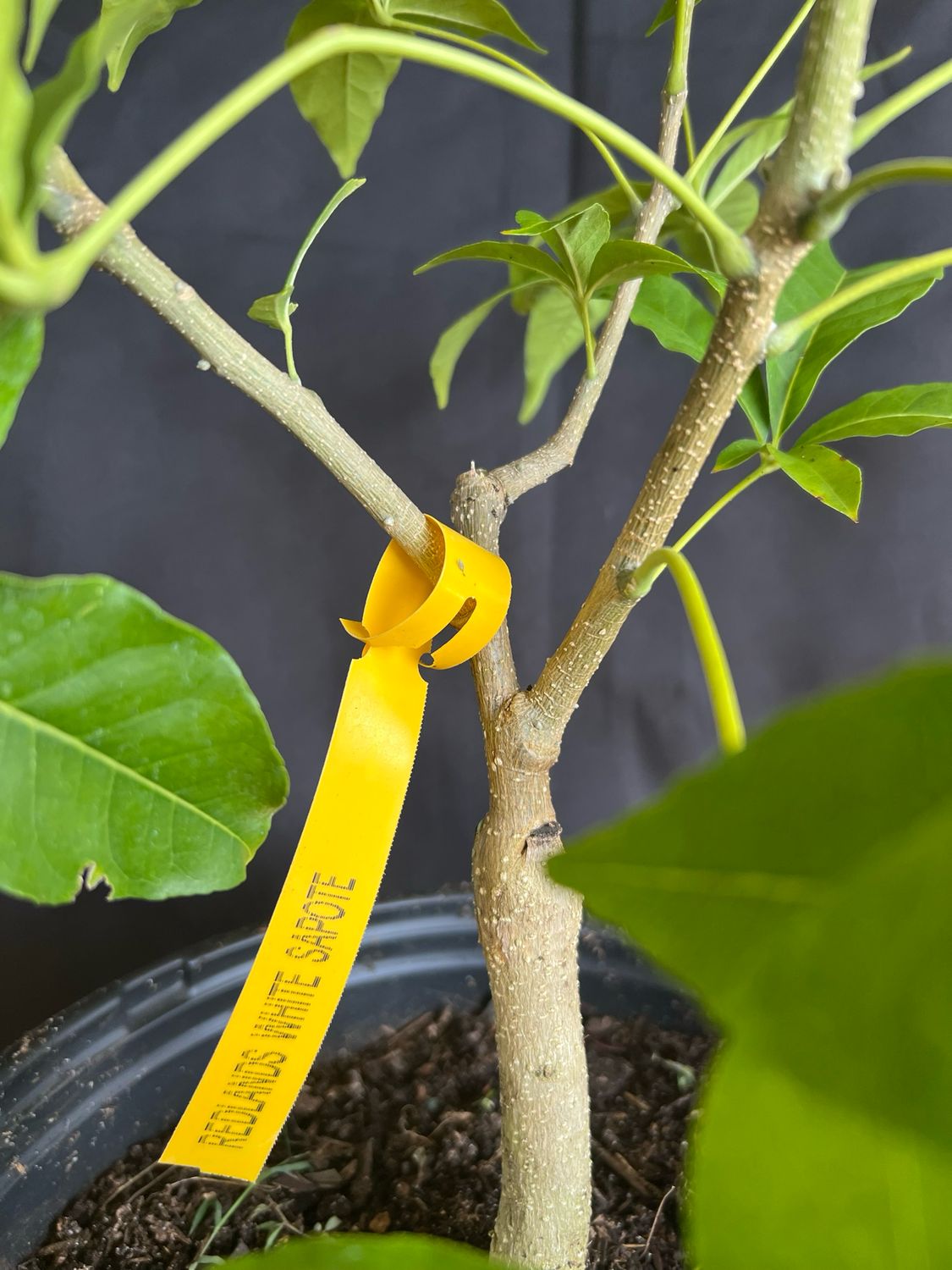
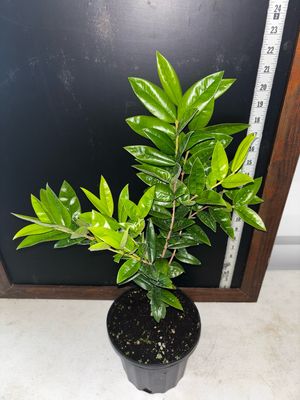
Our grafted trees are available in a 3-gallon nursery container, offering a strong balance between shipping durability, developed roots and rapid landscape establishment.
🌿 Quick Facts at a Glance
| Category | Details |
|---|---|
| Botanical Name | Casimiroa edulis ‘Redlands’ |
| Alternate Trade Spelling | Frequently sold as ‘Redland’ |
| Plant Family | Rutaceae—the citrus family |
| Plant Type | Grafted subtropical fruit tree |
| Sale Size | 3-gallon nursery container |
| Estimated Plant Age | Commonly approximately 18–36 months from propagation; actual age varies by grafting date and nursery conditions |
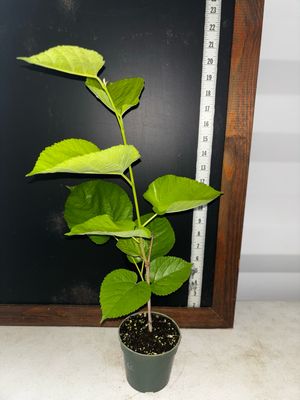
| Typical Shipped Height | Approximately 2–4 ft above the soil line; every live tree varies |
| Mature Height Unpruned | Approximately 15–60 ft depending on cultivar, climate, soil and care |
| Recommended Managed Height | Maintain at approximately 10–15 ft with selective pruning |
| Mature Canopy Width | Commonly 15–30 ft or wider if left unmanaged |
| USDA Growing Zones | Best suited to Zones 9–11 |
| Best U.S. Growing Regions | Florida, the Gulf Coast, southern Texas, protected areas of the Southeast and suitable parts of coastal Southern California |
| Country of Origin of Species | Mexico and Central America |
| Cultivar Association | South Florida’s Redland agricultural district |
| Sun Requirements | Full sun; 6–8 or more hours daily |
| Cold Hardiness | Protect young trees near 30°F; established trees tolerate brief colder conditions better |
| Growth Habit | Upright to spreading; ‘Redlands’ is often described as naturally bushy and well-branched |
| Foliage Behavior | Evergreen to semi-evergreen; may shed leaves during cold, drought, shipping stress or unusual heat |
| Soil Requirements | Well-drained sandy, loamy, limestone-based or moderately clay soil |
| Preferred Soil pH | Approximately 5.5–7.5 |
| Water Requirements | Moderate during establishment; increasingly drought tolerant with maturity |
| Spacing | Plant at least 25 ft from large trees, buildings and permanent structures |
| Wind Tolerance | Moderate foliage tolerance, but branches can be brittle in severe wind |
| Salt Tolerance | Limited to moderate; avoid direct oceanfront salt spray and highly saline soils |
| Pollination | Insect-pollinated; another cultivar may improve fruit set |
| Expected Fruiting Age | Commonly approximately 3–5 years for grafted trees under favorable care |
| Typical Florida Harvest | Primarily spring through summer; cultivar and weather can shift the season |
UF/IFAS describes white sapote as a medium-to-large tree reaching approximately 15–60 ft, recommends planting at least 25 ft from structures and advises maintaining backyard trees at approximately 10–15 ft through annual or biannual selective pruning.
🍮 Why Grow ‘Redlands’ White Sapote?
Some fruit trees earn their space through productivity. Others earn it through beauty.
‘Redlands’ does both.
Top Reasons to Grow It
- Produces an unusual creamy dessert fruit
- Grafted for true-to-cultivar characteristics
- Typically fruits earlier than seed-grown trees
- Naturally develops a lush subtropical canopy
- Can be maintained at a practical harvesting height
- Tolerates a range of well-drained Florida soils
- Becomes relatively drought tolerant after establishment
- Works well as a food-forest canopy tree
- Provides flowers for bees and other beneficial insects
- Offers excellent fresh-eating, smoothie and frozen-dessert potential
- Adds another layer of rare-fruit diversity to a home orchard
Seed-grown white sapote trees do not reliably reproduce the qualities of the fruit they came from. Grafting preserves the selected cultivar and usually reduces the wait for fruit compared with seedlings, which commonly require seven or eight years.
🍈 Fruit Details — Nature’s Custard Cup
White sapote may look modest from the outside, but a properly ripened fruit has an almost pudding-like interior.
Flavor Profile
‘Redlands’ is known in the South Florida nursery trade for sweet, creamy fruit with flavors that may suggest:
- Vanilla custard
- Ripe banana
- Peach
- Pear
- Mild caramel
- Soft tropical spice
Flavor varies with ripeness, crop load, rainfall, soil and harvest timing. Fruit harvested too early may remain firm or bitter, while severely overripe fruit may develop an unpleasant fermented flavor.
Texture
The ripe flesh is:
- Smooth
- Melting
- Custard-like
- Spoonable
- Similar in texture to soft avocado, pudding or pastry cream
Fruit Appearance
| Feature | Description |
|---|---|
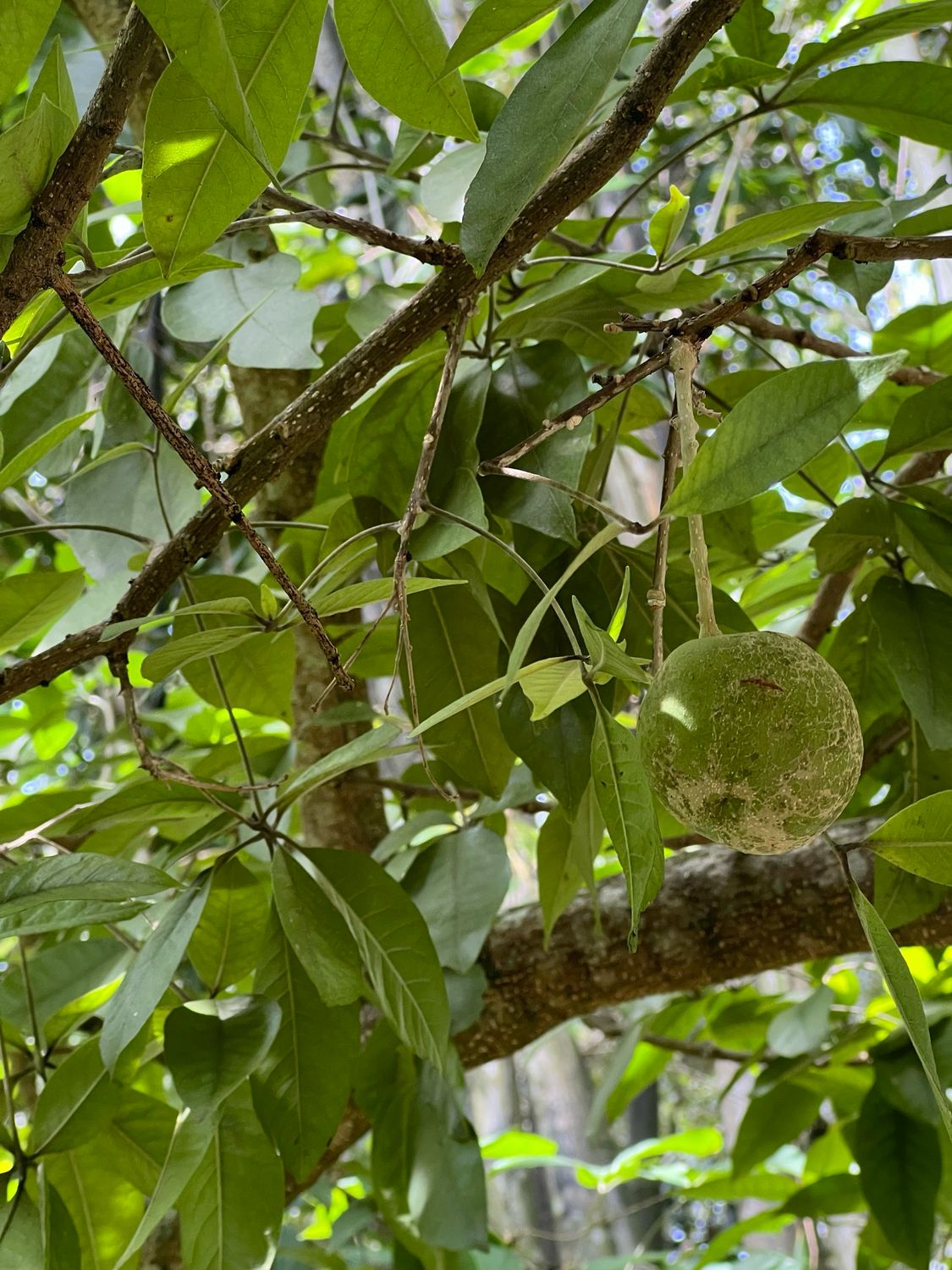
| Typical Shape | Round, oval, ovoid or slightly irregular |
| Typical Diameter | Approximately 2½–4½ inches or larger |
| Typical Weight | Approximately 2½–25 oz across the species and cultivars |
| Skin | Thin, tender and green to yellow-green when mature |
| Flesh | Creamy white to pale ivory |
| Seeds | Usually 1–5 large seeds |
| Peel Quality | Often bitter and generally discarded |
| Handling | Extremely delicate and easily bruised |
White sapote fruit generally ripens six to nine months after bloom. Bruising can darken the peel and cause the flesh directly beneath the injury to become bitter.
🌿 ‘Redlands’ vs. ‘Smathers’ White Sapote Comparison
GreenDreams now carries two white sapote cultivars: ‘Redlands’ and ‘Smathers.’
Growing more than one cultivar can add genetic diversity to the orchard and may improve pollen availability when flowering periods overlap.
| Feature | ‘Redlands’ | ‘Smathers’ |
|---|---|---|
| Common Botanical Listing | Casimiroa edulis ‘Redlands’ | Commonly listed as Casimiroa edulis ‘Smathers’ |
| Alternate Name | Often listed as ‘Redland’ | Sometimes written as ‘Smather’s’ |
| Florida Connection | Associated with the Redland agricultural district south of Miami | Documented as a Florida-origin cultivar |
| Growth Habit | Often described as naturally bushy and well-branched | Upright to spreading white sapote growth habit |
| Tree Size | Potentially 15–40+ ft; readily managed smaller | Potentially 15–40+ ft; readily managed smaller |
| Recommended Managed Height | Approximately 10–15 ft | Approximately 10–15 ft |
| Fruit Weight | Formal cultivar-specific data is limited | UF/IFAS lists approximately 8–9 oz |
| Skin Color | Green to yellow-green | Greenish-yellow |
| Flesh Color | Creamy white to pale ivory | Yellow |
| Flavor Reputation | Sweet, creamy and dessert-like | UF/IFAS historically lists fair flavor; collector reports vary considerably |
| Defining Strength | Reliable South Florida selection with rich, creamy fruit | Historic Florida cultivar offering a contrasting fruit type |
| Best For | First-time white sapote growers and dessert-fruit collectors | Collectors, cultivar comparison and orchard diversity |
| Pollination Value | May benefit from another cultivar nearby | May provide additional pollen where bloom overlaps |
UF/IFAS identifies ‘Smathers’ as a Florida cultivar producing approximately 8–9 oz fruit with greenish-yellow peel and yellow flesh. The older published table rates the flavor as fair, although modern grower descriptions vary.
A Note About Botanical Naming
White sapote literature includes both Casimiroa edulis and woolly-leaf white sapote, Casimiroa tetrameria. Some historic cultivar records are inconsistent about where individual selections belong.
UF/IFAS lists ‘Smathers’ among Florida white sapote varieties, while older rare-fruit references have sometimes associated it with woolly-leaf material. Unless a particular nursery accession has been formally verified, the most practical store designation is:
White Sapote ‘Smathers’ — Casimiroa edulis cultivar
The comparison should focus primarily on the fruit and growing characteristics of the actual trees GreenDreams carries rather than making an unverified species claim.
🐝 Flowering, Pollination & Fruit Production
White sapote flowers are small, pale green to cream-colored and produced in branching clusters.
Fruiting Habits
- Trees commonly flower from late fall through early summer.
- Fruit usually requires approximately six to nine months to ripen.
- The main Florida harvest is generally spring through summer.
- Some trees may flower more than once in a year.
- Certain cultivars may alternate between heavier and lighter crops.
- Mature trees can become highly productive.
- Fruit should be clipped before natural drop whenever possible.
Is ‘Redlands’ Self-Fruitful?
A single tree may produce fruit, but dependable self-fertility should not be guaranteed for every white sapote cultivar.
Some cultivars produce functionally female flowers and require pollen from another compatible tree. Even trees capable of fruiting alone may produce more consistently with another cultivar nearby.
How to Improve Fruit Set
- Plant in full sun.
- Maintain steady moisture during bloom and early fruit development.
- Avoid excessive nitrogen.
- Grow nectar-rich flowering plants nearby.
- Avoid insecticide applications during bloom.
- Maintain an open, healthy canopy.
- Protect flowers from severe wind and late frost.
- Consider planting both ‘Redlands’ and ‘Smathers.’
White sapote flowers are pollinated by insects, and UF/IFAS confirms that some varieties require cross-pollination for good fruit production.
👩🍳 Harvesting & Ripening White Sapote
White sapote does not always develop dramatic color when mature. Learning when to harvest takes a little observation.
Signs of Maturity
- Fruit has reached its expected full size.
- Dark green skin begins lightening toward yellow-green.
- The surface may become slightly less glossy.
- Fruit clips easily from the branch.
- Mature fruit begins softening after harvest.
Clip the fruit with a short piece of stem attached. Do not pull, squeeze or allow it to fall onto hard ground.
How to Ripen It
- Place mature fruit at room temperature.
- Allow it to soften naturally.
- Check gently once daily.
- Eat when it yields like a ripe avocado.
- Refrigerate ripe fruit and use promptly.
UF/IFAS recommends ripening harvested fruit at room temperature. Once ripe, it may remain usable in the refrigerator for approximately 7–10 days, although quality is best when eaten sooner.
🍨 Culinary Uses
The fruit is most memorable when chilled, cut open and eaten directly with a spoon.
Favorite Uses
- Fresh from the peel
- Smoothies
- Milkshakes
- Puddings
- Ice cream
- Frozen fruit bars
- Yogurt bowls
- Fruit parfaits
- Custard-style pie filling
- Dessert sauces
- Sweet toast spreads
- Blended frozen desserts
Flavor Pairings
White sapote pairs well with:
- Vanilla
- Cinnamon
- Coconut milk
- Cacao
- Coffee
- Banana
- Passionfruit
- Toasted pecans
- Macadamia nuts
- Nutmeg
- Mild citrus
- Honey or maple syrup
Because the fruit has a delicate flavor, strongly acidic ingredients should be used lightly.
🍮 Simple White Sapote Vanilla Freeze
Ingredients
- Flesh from 2 ripe white sapote fruits
- ½ cup coconut milk or dairy milk
- ½ teaspoon vanilla
- Small pinch of cinnamon
- Optional honey or maple syrup
Directions
- Remove the peel.
- Carefully remove and discard every seed.
- Blend the flesh with milk, vanilla and cinnamon.
- Taste before adding sweetener.
- Freeze in a shallow container.
- Stir once or twice as it firms.
- Serve softly frozen.
White sapote is naturally sweet enough that additional sugar may not be necessary.
🌱 Nutritional & Traditional Interest
White sapote fruit supplies:
- Natural carbohydrates
- Dietary fiber
- Vitamin C
- Small amounts of protein
- Various minerals and plant compounds
It is best marketed as a flavorful whole fruit rather than as a treatment for a medical condition.
The fruit has a long cultural relationship with Mexico and Central America. Its Nahuatl-associated name, commonly interpreted as sleep sapote, contributed to historical interest in the plant.
The leaves and seeds have also appeared in traditional preparations. That history is not a recommendation for home medicinal use.
Important Safety Note
- Eat only the ripe fruit flesh.
- Do not eat the seeds.
- Do not blend the seeds into smoothies.
- Do not prepare the leaves or seeds as home medicine.
- Keep discarded seeds away from children and animals.
🌎 Origin Story — From Mexican Highlands to South Florida
White sapote originated in the subtropical highlands of Mexico and Central America.
Unlike equatorial rainforest fruits, white sapote evolved where trees experience a noticeable cool or dry seasonal period. That background helps explain why Florida-grown trees may pause, shed some foliage and then flower after conditions improve.
The cultivar sold as ‘Redlands’ or ‘Redland’ is associated with the Redland agricultural region south of Miami—one of Florida’s most important centers for tropical-fruit agriculture, plant collecting and cultivar selection.
Formal public records describing the exact original ‘Redlands’ seedling, breeder and release date are limited. It is most accurate to describe it as a South Florida selection circulated for reliable production and sweet, creamy fruit.
The species is native to central Mexico, while nursery descriptions consistently associate ‘Redland’ with South Florida and describe it as reliably productive with a naturally bushy growth habit.
🌳 Ornamental & Landscape Appeal
White sapote is productive enough for an orchard and attractive enough for a landscape.
Defining Features
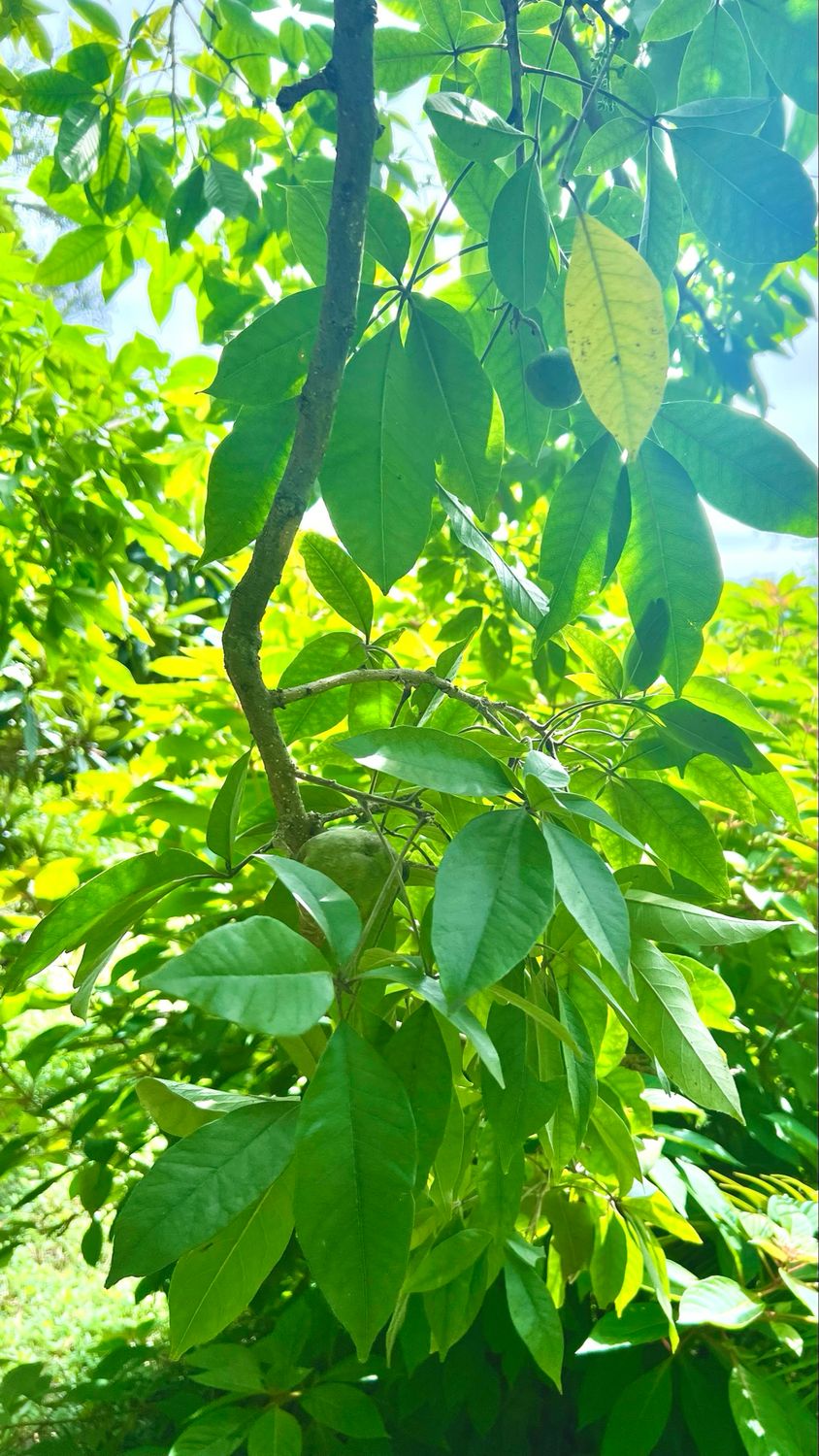
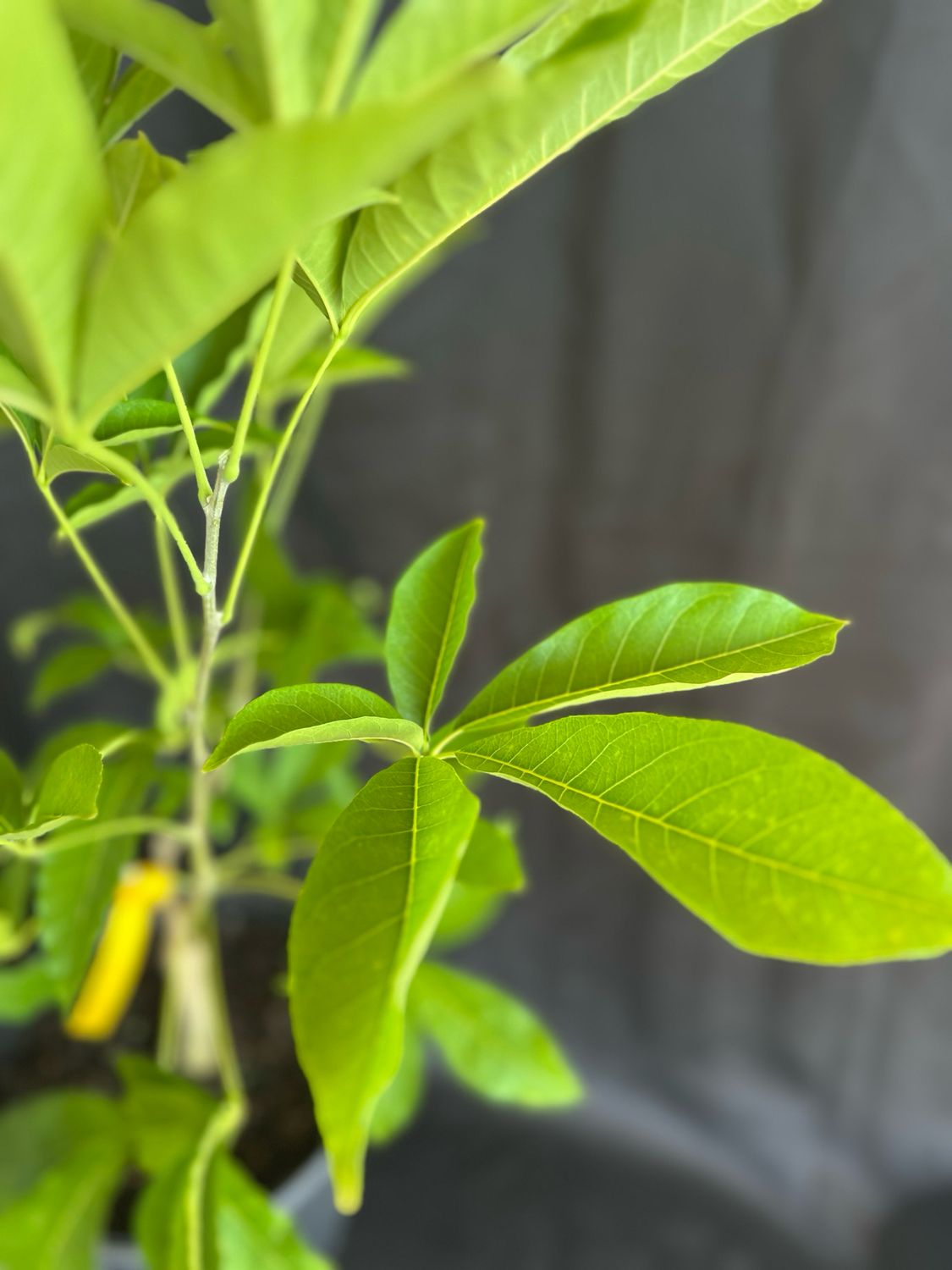
- Hand-shaped, palmately compound leaves
- Glossy green mature foliage
- Reddish or bronze new growth
- Dense subtropical canopy
- Small cream-to-green flower clusters
- Spreading shade-tree form
- Attractive layered branching when pruned properly
Landscape Uses
Use ‘Redlands’ as:
- A backyard orchard tree
- A food-forest canopy species
- A productive shade tree
- A specimen near a tropical garden
- A transition tree between tropical and warm-temperate plantings
- A fruiting screen where sufficient room is available
Avoid planting it directly over patios, driveways, pools or heavily traveled walkways. Unharvested ripe fruit can fall, bruise and create a slippery mess.
🌼 White Sapote Companion Plant Guild
Nitrogen-Fixing Support Plants
- Pigeon Pea — Cajanus cajan
- Sunn Hemp — Crotalaria juncea
- Perennial Peanut
- Managed leguminous shrubs
Biomass & Chop-and-Drop Plants
- Mexican Sunflower — Tithonia diversifolia
- Vetiver — Chrysopogon zizanioides
- Lemongrass
- Clumping grasses
- Canna
- Edible ginger
- Turmeric
Pollinator Plants
- Firebush — Hamelia patens
- Blue Porterweed — Stachytarpheta jamaicensis
- Native salvia
- Flowering basil
- Native wildflowers
- Sweet almond bush where space permits
Edible & Ornamental Understory
- Okinawan spinach
- Longevity spinach
- Pineapple
- Cranberry hibiscus
- Turmeric
- Culinary ginger
- Low-growing perennial herbs
Manage vigorous companions with regular chop-and-drop pruning so they do not shade the young tree, cover the root flare or compete excessively with the root ball.
🌿 White Sapote ‘Redlands’ Seasonal Care & Growing Guide
White sapote is often called evergreen, but growers should not expect an identical canopy every month of the year.
A more useful description is evergreen to semi-evergreen and stress-deciduous.
Cold, drought, shipping, root disturbance, extreme heat or abrupt environmental changes can cause partial or complete leaf drop. Healthy trees frequently respond with a fresh growth flush once favorable conditions return.
🍂 Is White Sapote Deciduous?
White sapote does not follow the predictable winter dormancy cycle of peaches, plums or apples.
Instead, it may temporarily shed foliage in response to environmental conditions.
Normal Seasonal Signs Can Include
- Older leaves yellowing
- Scattered spots on aging leaves
- Gradual canopy thinning
- Temporary bare branches
- A pause in visible growth
- Red or green buds swelling afterward
- A new flush replacing older foliage
A leafless tree is not automatically dead.
A tiny scratch on a young branch may reveal green living tissue beneath the bark. Avoid aggressive pruning until warm weather returns and the extent of any damage becomes clear.
California Rare Fruit Growers describes white sapote as evergreen but deciduous during drought and other stress. Prolonged cold or unusual heat may also cause defoliation followed by new growth.
🌦 Seasonal Guide for Florida & Similar Zone 9–10 Climates
| Season | What to Expect | Care Priorities |
|---|---|---|
| Winter | Slower growth, partial leaf drop and possible flowering on mature trees | Protect young trees during frost, reduce irrigation during cool wet weather and avoid heavy fertilizer |
| Early Spring | Bud swell, reddish new foliage, flowers and renewed root activity | Resume irrigation as needed and feed lightly once active growth is visible |
| Late Spring | Strong growth, flowering, fruit development and possible harvest overlap | Maintain steady moisture and protect pollinating insects |
| Summer | Rapid canopy growth, primary Florida harvest and heavy rainfall | Monitor drainage, harvest before fruit falls and prune after the main crop |
| Early Fall | Later fruit may finish ripening while vegetative growth gradually slows | Avoid high-nitrogen feeding and complete only necessary pruning |
| Late Fall | Cooler or drier weather may initiate rest and future flower development | Refresh mulch, reduce irrigation frequency and prepare cold protection |
White sapote trees generally flower from late fall through early summer, and the Florida harvest season is generally concentrated in spring and summer.
📦 Care After Shipping
Shipping is stressful even when a plant arrives looking healthy.
Keep the Tree in Its Existing Container
GreenDreams recommends waiting:
- At least 30 days after arrival, or
- Until healthy new growth appears
Waiting allows the tree to:
- Rehydrate
- Recover from temperature changes
- Repair fine roots
- Acclimate to local light
- Demonstrate active root growth
First-Week Placement
- Place the tree outdoors in bright filtered light.
- Protect it from intense afternoon sun.
- Shield it from strong wind.
- Check the soil moisture every morning.
- Water only when needed.
- Gradually increase direct sunlight over approximately 7–14 days.
Do Not Immediately
- Transplant
- Fertilize heavily
- Place in all-day intense sun
- Leave exposed to strong wind
- Allow the container to dry completely
- Leave the pot standing in water
🌞 Where to Plant White Sapote ‘Redlands’
Choose a location with:
- Full sun
- Excellent drainage
- A warm winter microclimate
- Protection from direct cold north winds
- At least 25 ft of clearance
- Space to prune and harvest
- Access to soil-level irrigation
- No seasonal flooding
Good Florida Locations
- South or southeast side of the property
- Elevated areas
- Broad berms
- Well-drained sandy or loamy sites
- Areas protected by buildings without being shaded
- Open food-forest canopy positions
Avoid Planting
- In low frost pockets
- In standing water
- Beneath roof runoff
- Beside septic drain fields
- Directly under power lines
- Beneath large shade trees
- In narrow side yards
- Against pavement
- In direct salt spray
- Above patios or driveways where fruit will fall
UF/IFAS recommends planting white sapote in full sun in the warmest available part of the landscape that does not flood after normal summer rain.
🌬 Wind & Salt Tolerance
White sapote foliage can tolerate ordinary breezes, but the branches may be brittle.
Improve Wind Resistance By
- Encouraging low branching
- Removing competing upright leaders
- Correcting narrow branch unions
- Avoiding excessive nitrogen
- Maintaining the tree at 10–15 ft
- Selectively thinning upper limbs
- Harvesting mature fruit before storms
- Avoiding severe topping
Salt Exposure
White sapote may tolerate small amounts of soil salinity, but long-term salt accumulation can cause decline.
It is not recommended for:
- Direct beachfront exposure
- Repeated salt spray
- Highly saline irrigation water
- Poorly drained coastal soil
CRFG notes that the tree is brittle in wind and may gradually decline under saline conditions.
🌳 Planting White Sapote ‘Redlands’ High & Tight
Watch GreenDreams’ fruit-tree planting guide:
High & Tight Fruit Tree Planting Method
https://youtu.be/RRQFY30qdA8?si=rRIcsbLlVAVYotfI
Before Planting
- Allow the tree to recover from shipping.
- Wait for new growth.
- Water the container several hours before planting.
- Remove turf from the planting area.
- Confirm that irrigation is available.
- Identify the top of the root ball and root flare.
Planting Instructions
- Dig wide, not deep.Dig a hole only slightly wider than the nursery container and no deeper than the root ball.
- Remove the container carefully.Support the root ball rather than pulling on the trunk.
- Inspect the roots.Loosen only tightly circling outer roots. Do not aggressively tear apart the root system.
- Plant high and tight.Position the top of the root ball level with or slightly above the surrounding grade.
- Use a mound where needed.In heavy, compacted or seasonally wet soil, create a broad raised planting mound.
- Backfill primarily with native soil.Pack soil firmly enough to remove large air pockets without compacting the root zone excessively.
- Keep the trunk visible.Never bury the root flare, graft union or lower trunk.
- Water deeply.Thoroughly saturate the original root ball and surrounding soil.
- Top-dress the area.Apply finished compost, charged biochar, trace minerals and an appropriate organic nutrient blend over the soil surface.
- Mulch broadly.Apply approximately 2–6 inches of hardwood mulch.
- Keep mulch off the trunk.Maintain an open ring approximately 8–12 inches around the trunk.
UF/IFAS recommends setting the top of the nursery media level with or slightly above the surrounding soil and keeping mulch approximately 8–12 inches away from the trunk.
💧 Watering White Sapote ‘Redlands’
Always Water at Soil Level
GreenDreams recommends:
- Morning watering
- Soil-level watering
- Drip irrigation
- Slow hose watering
- Monitoring soil before irrigating
Avoid routine overhead watering.
Overhead afternoon irrigation may contribute to:
- Leaf spotting
- Uneven soil moisture
- Sunscald on wet foliage
- Increased fungal pressure
- Water waste
Newly Planted Trees
| Establishment Stage | Suggested Starting Schedule |
|---|---|
| Planting Day | Water deeply and completely |
| First Week | Water approximately every other day if rainfall is insufficient |
| Weeks 2–8 | Water deeply 1–2 times weekly |
| Remainder of First Year | Water during dry periods based on soil moisture |
| Years 2–3 | Water weekly during prolonged drought |
| Established Trees | Irrigate primarily during extended drought and fruit development |
These are starting guidelines—not permanent timer settings.
UF/IFAS recommends watering at planting, every other day during approximately the first week and then 1–2 times weekly during the first several months. Mature trees generally need supplemental irrigation only during prolonged dry periods.
Check Before Watering
Inspect:
- Soil moisture 2–4 inches beneath the mulch
- Recent rainfall
- Leaf posture
- Drainage speed
- Container weight
- Wind
- Temperature
- Root-zone condition
Container Watering
Check a 3-gallon tree every morning.
Water when:
- The top 1–2 inches of mix begin to dry
- The container feels lighter
- Leaves begin losing firmness
- Windy weather increases moisture loss
- Hot weather rapidly dries the root ball
During Florida summer, a fully rooted 3-gallon tree may require daily watering.
During cool or rainy weather, it may need substantially less.
Water slowly until the entire root ball is saturated and excess water drains freely. Never leave the container sitting in standing water.
🌾 Organic Fertility
White sapote responds best to steady, moderate fertility.
More fertilizer does not necessarily mean more fruit.
Excessive nitrogen may produce:
- Tall, soft growth
- Weak branch unions
- Reduced flowering
- Lower fruit quality
- Increased storm damage
Young Trees
Once new growth is active:
- Feed lightly every 6–8 weeks during warm weather.
- Use a balanced organic fruit-tree fertilizer.
- Add compost or worm castings as a surface application.
- Include magnesium and trace minerals.
- Reduce feeding during cold weather.
- Never fertilize a dry or waterlogged root ball.
Mature Trees
A practical schedule may include:
- Early spring
- Late spring or early summer
- After harvest when additional growth is desired
Helpful Organic Materials
- Finished compost
- Worm castings
- Charged biochar
- Kelp
- Seaweed products
- Azomite or another trace-mineral source
- Balanced organic fruit-tree fertilizer
- Hardwood mulch
Nutrient Troubleshooting
Pale tissue between green veins may indicate a micronutrient availability problem rather than a need for more nitrogen.
Florida’s high-pH soils commonly limit access to:
- Iron
- Manganese
- Zinc
UF/IFAS recommends micronutrient applications during the warm growing season and selecting the correct iron product based on soil pH.
✂️ Pruning for Fruit, Strength & Manageable Size
White sapote responds well to thoughtful selective pruning.
Years 1–2
Focus on structure:
- Encourage low lateral branches.
- Select three or four strong scaffold limbs.
- Remove competing leaders.
- Correct narrow branch unions.
- Stake only when necessary.
- Remove flowers if the tree is still too small to support fruit.
Mature Fruiting Trees
Prune soon after the main harvest.
- Remove dead or damaged wood.
- Remove crossing branches.
- Selectively remove tall upper limbs at their point of origin.
- Maintain sunlight in the lower canopy.
- Keep the tree approximately 10–15 ft tall.
- Preserve healthy lower branches.
- Avoid removing more than approximately one-quarter of the healthy canopy at once.
Avoid
- Shearing the canopy into a ball
- Leaving branch stubs
- Severe topping
- Removing every lower branch
- Major pruning immediately before winter
- Climbing an oversized tree without professional equipment
UF/IFAS recommends formative pruning during the first two years, preserving lower branches and selectively pruning trees annually or biannually to approximately 10–15 ft.
❄️ Winter Protection
Young white sapote trees are more vulnerable to cold than established trees.
For practical nursery guidance, begin protecting young trees when temperatures are forecast near 30°F.
Before a Frost
- Water dry soil earlier in the day.
- Maintain mulch over the root zone.
- Cover the full canopy to the ground.
- Use frost cloth rather than plastic directly against foliage.
- Anchor the covering against wind.
- Protect the graft union.
- Move containers into a greenhouse, garage or protected porch.
- Avoid fertilizing immediately before cold weather.
After a Frost
- Do not immediately prune all damaged growth.
- Keep the soil lightly moist.
- Wait for warm weather.
- Watch for new buds.
- Remove clearly dead wood only after recovery begins.
- Delay fertilizer until active growth returns.
Published cold-tolerance figures vary by tree age, cultivar and source. UC Cooperative Extension advises that young trees may be damaged around 30°F, while established trees tolerate brief lower temperatures.
🪴 Growing White Sapote in Containers
A grafted white sapote can grow and potentially fruit in a container, especially during its younger years.
It is not naturally a dwarf tree.
Recommended Container Progression
3-gallon → 7-gallon → 15-gallon → 25-gallon → larger permanent container
Avoid placing a small root ball directly into an oversized volume of wet soil.
When to Transplant Into a Larger Pot
Up-pot when:
- Roots circle the container.
- Roots grow heavily from drainage holes.
- The pot dries unusually fast.
- Growth slows during warm weather.
- The tree becomes top-heavy.
- Water runs around the root ball instead of soaking through it.
- The root mass has clearly occupied most of the container.
How to Up-Pot
- Water several hours before transplanting.
- Select a container with large drainage holes.
- Prepare fresh potting mix.
- Remove the tree without pulling the trunk.
- Loosen only the outer circling roots.
- Keep the existing soil line unchanged.
- Keep the graft union above the soil.
- Fill around the root ball.
- Water thoroughly.
- Protect from harsh sun and wind for several days.
Recommended Potting Soil
Use a fast-draining tropical fruit-tree mix with moderate moisture retention.
A useful starting blend:
- 60–70% quality peat- or coconut-coir-based potting mix
- 20–30% aged pine bark fines
- 10–20% perlite, pumice or similar porous drainage material
Optional additions:
- Finished compost
- Worm castings
- Charged biochar
- Trace minerals
Avoid
- Dense native garden soil in pots
- Pure compost
- Fine muck
- Containers without drainage
- Permanently wet saucers
- Potting mixes that remain saturated for days
Nursery containers and potting materials can be found through independent garden centers, landscape suppliers, farm stores, hydroponic suppliers and online horticultural retailers. Useful search terms include:
- Nursery tree pots
- Aged pine bark fines
- Professional potting mix
- Horticultural perlite
- Pumice
- Tropical fruit-tree soil
🏠 Can White Sapote Grow Indoors?
White sapote is not recommended as a permanent indoor fruit tree.
It requires:
- Strong direct sunlight
- Significant root space
- Seasonal temperature changes
- Air movement
- Pollinating insects
- Regular pruning
A container tree may be moved indoors temporarily for cold protection.
Place it:
- Near the brightest available window
- Away from heating vents
- Away from cold glass
- Where air can circulate
- Indoors only as long as necessary
A greenhouse, sunroom or protected outdoor structure is better suited than a normal living room.
🐝 Growing ‘Redlands’ and ‘Smathers’ Together
Planting both cultivars may:
- Increase pollen availability
- Improve orchard diversity
- Increase the chance of overlapping bloom
- Provide contrasting fruit characteristics
- Extend the collector value of the planting
- Reveal which cultivar performs best in your microclimate
Allow adequate spacing between the trees.
Do not plant them so close that the canopies immediately compete for sunlight.
⚠️ White Sapote Cautions
Poisonous Seeds
White sapote seeds are poisonous.
Do not:
- Eat them
- Blend them
- Crush them into food
- Prepare them as tea
- Use them in home remedies
Discard seeds where children, pets and livestock cannot access them.
Traditional Plant Use
The leaves and seeds have a history of traditional use, but historical use does not establish safety.
GreenDreams does not recommend consuming or preparing the leaves, bark or seeds.
Delicate Fruit
Ripe fruit bruises easily.
Bruising may cause:
- Blackened peel
- Bitter flesh
- Shortened storage life
- Rapid fermentation
Falling Fruit
Do not plant directly over:
- Patios
- Driveways
- Pools
- Play areas
- Sidewalks
- Frequently used seating
Brittle Branches
Develop a strong low canopy and avoid exposed high-wind sites.
Mature Tree Size
A grafted tree can still become large.
Grafted means true-to-cultivar and usually earlier fruiting. It does not automatically mean dwarf.
🌟 Is ‘Redlands’ White Sapote Right for You?
✅ Ideal For
- Florida rare-fruit growers
- Food-forest gardeners
- Backyard orchardists
- Permaculture growers
- Tropical and subtropical collectors
- Home chefs
- Smoothie makers
- Gardeners willing to prune annually
- Properties with full sun
- Landscapes with good drainage
- Growers interested in both ‘Redlands’ and ‘Smathers’
❌ Not Ideal For
- Permanently wet landscapes
- Direct oceanfront salt exposure
- Small yards without pruning access
- Unprotected cold climates
- Permanent indoor growing
- Locations beneath power lines
- Properties dependent on frequent overhead irrigation
- Gardeners unwilling to manage a large canopy
- Buyers expecting immediate fruit from a young tree
🔍 White Sapote Troubleshooting Guide
Icons represent common challenges and organic recovery strategies—look for 🌿 for the recommended response.
| ⚠️ Issue | 🧠 Likely Cause | 🌿 Organic Response |
|---|---|---|
| 🍂 Older leaves turning yellow | Normal aging or seasonal foliage turnover | Monitor buds and stems; allow aging leaves to fall naturally |
| 🍃 Sudden leaf drop | Shipping, cold, heat, drought or root disturbance | Stabilize moisture and light; wait for new growth before fertilizing |
| 💦 Yellow foliage with wet soil | Overwatering or poor drainage | Reduce irrigation and inspect the root zone |
| 💧 Wilted foliage with dry soil | Drought stress | Rehydrate slowly at soil level in the morning |
| 🪣 Slow growth in wet soil | Buried trunk or saturated roots | Expose the root flare and improve drainage |
| 🌰 Pale leaves with green veins | Iron, manganese or zinc deficiency | Test soil pH and apply appropriate micronutrients |
| 🔥 Brown leaf tips | Fertilizer salts, drought or hot wind | Flush container soil and stabilize irrigation |
| ☀️ Bleached foliage | Sudden exposure to intense sun | Acclimate gradually after shipping or indoor protection |
| 🌬️ Torn leaves or broken branches | Wind exposure or weak branch unions | Stake temporarily and prune for stronger structure |
| ❄️ Blackened new growth | Frost injury | Wait for warm weather before pruning |
| 🪲 Sticky leaves | Scale, aphids or mealybugs | Inspect stems and leaf undersides; use labeled horticultural oil where appropriate |
| 🐜 Ants moving through the canopy | Ants protecting sap-feeding insects | Manage the pest and the ant population together |
| 🐛 Chewed young leaves | Caterpillars, beetles, snails or slugs | Inspect after dark and hand-remove when practical |
| 🍄 Corky fruit blemishes | Scab or other superficial disease | Improve airflow and eliminate overhead irrigation |
| 🌸 Flowers dropping | Temperature stress, weak pollination or excess nitrogen | Add pollinator plants and reduce heavy nitrogen |
| 🍃 Small fruit dropping | Moisture swings or natural crop thinning | Maintain steady moisture and allow the tree to regulate its crop |
| 🍮 Bitter fruit | Immature harvest, bruising or pulp close to the peel | Allow mature fruit to soften indoors and avoid damaged areas |
| 🧘 No new growth after shipping | Normal recovery period | Keep the tree in its existing pot and wait patiently |
| 🌱 Growth below the graft | Rootstock sucker | Remove growth originating beneath the graft union |
UF/IFAS notes that white sapote has relatively few serious pest problems, although scale, fruit flies and fruit scab may occur.
❓ White Sapote FAQ
Is ‘Redlands’ White Sapote self-fruitful?
It may produce fruit alone, but dependable self-fertility should not be guaranteed for every tree.
Some white sapote cultivars produce functionally female flowers and require pollen from another compatible cultivar. Planting ‘Smathers’ nearby may improve pollen availability when bloom overlaps.
When will a grafted tree produce fruit?
Grafted white sapote trees commonly begin fruiting in approximately 3–5 years, although individual trees may fruit earlier or later.
Seedlings commonly require seven or eight years and do not remain true to the parent cultivar.
How tall will ‘Redlands’ grow?
An unmanaged tree may eventually reach approximately 15–60 ft depending on climate, soil and growing conditions.
Maintain it at approximately 10–15 ft through selective pruning.
Can I keep it small?
Yes.
Begin structural pruning while the tree is young and selectively reduce upper limbs after harvest.
What is the difference between ‘Redlands’ and ‘Smathers’?
‘Redlands’ is associated with South Florida and is known in the nursery trade for sweet, creamy fruit and a naturally bushy canopy.
UF/IFAS describes ‘Smathers’ as a Florida cultivar producing approximately 8–9 oz fruit with greenish-yellow peel and yellow flesh.
Should I plant both?
Growers with adequate room may benefit from both cultivars.
Two cultivars offer:
- Greater orchard diversity
- Potentially improved pollen availability
- Contrasting fruit characteristics
- Additional collector value
Is white sapote tropical?
It is better described as subtropical.
The species originated in elevated areas of Mexico and Central America and often benefits from a cooler or drier seasonal period before flowering.
How cold hardy is it?
Young trees should be protected near 30°F.
Established healthy trees tolerate brief colder temperatures better, but damage depends on:
- Duration of cold
- Wind
- Tree health
- Soil moisture
- Cultivar
- Microclimate
Does white sapote lose its leaves?
It can temporarily lose leaves during:
- Cold
- Drought
- Shipping
- Root disturbance
- Extreme heat
- Seasonal rest
Look for green stems and swelling buds before assuming the tree has died.
Can it grow in a container?
Yes, especially while young.
Long-term container production requires:
- A large pot
- Excellent drainage
- Regular pruning
- Consistent irrigation
- Periodic up-potting
- Strong sunlight
Can it grow indoors?
Not successfully as a permanent fruit tree.
It may be moved indoors temporarily for freeze protection.
Can I eat the peel?
The peel is often bitter and is generally discarded.
Are the seeds edible?
No. The seeds are poisonous.
How do I know when the fruit is ripe?
Harvest full-sized mature fruit and allow it to soften at room temperature.
Ripe fruit should yield gently like an avocado.
Why does the fruit taste bitter?
Possible causes include:
- Immature harvest
- Bruising
- Overripeness
- Eating too close to the peel
- Cultivar genetics
- Poor growing conditions
🚚 Shipping Information
Plant Shipped
- Grafted ‘Redlands’ White Sapote
- 3-gallon nursery container
- Florida-grown live plant
- Carefully packaged for UPS Ground transportation
Shipping Schedule
- Live plants ship on Mondays.
- Orders ship from Florida.
- We currently use UPS Ground.
- Delivery time depends on destination and carrier conditions.
After Arrival
Keep the tree in its existing container for:
- At least 30 days, or
- Until healthy new growth appears
Do not immediately:
- Transplant
- Fertilize heavily
- Expose it to intense all-day sun
- Leave it in strong wind
- Keep it indoors in low light
Extreme Heat & Cold Disclaimer
Buyer discretion is strongly advised during peak summer heat and winter cold.
GreenDreams cannot control:
- Temperatures inside delivery vehicles
- Packages left outdoors after delivery
- Carrier delays
- Severe weather
- Route changes
- Unexpected cold exposure
- Unexpected heat exposure
- Agricultural inspection delays
GreenDreams is not responsible for plant decline caused by extreme weather or extended ground-service transit.
Northern & Western U.S. Buyers
We ship throughout the continental United States, but longer UPS Ground transit times may increase plant stress.
Growers in northern and western states should:
- Check destination weather before ordering.
- Avoid known heatwaves or freezes.
- Select larger plants when available.
- Prepare a sheltered acclimation area.
- Expect a recovery period after arrival.
Risk associated with extended transit is assumed by the buyer.
California Orders
California packages may be held for agricultural inspection.
Inspection can add an additional day or more to transit.
GreenDreams cannot guarantee delivery timing or plant condition when inspection or carrier delays occur.
Many transit-stressed plants recover with:
- Morning soil-level watering
- Bright filtered light
- Wind protection
- Patience
- No immediate transplanting
📍 Shop with Us in Person
GreenDreams Nursery & Farm
We also sell White Sapote ‘Redlands,’ ‘Smathers’ and many other rare fruit trees at our retail nursery in Spring Hill, Florida.
Our in-person inventory may include:
- Larger fruit trees
- Plants not listed online
- Seasonal edible plants
- Native and ecological species
- Pollinator plants
- Biomass plants
- Food-forest support species
- Compost and soil amendments
🌾 18709 US Hwy. 41, Spring Hill, FL 34610
🕘 Tuesday–Friday: 9AM–5PM
🌞 Saturday: 8AM–3PM
🌿 Stop by our regenerative nursery to see what is blooming, fruiting and ready for your landscape this week!
🌿 Beyond the Plant: GreenDreams Services
At GreenDreams, we do more than grow plants—we design, build and restore productive ecosystems across Florida.
- 🌳 Onsite consultations and edible landscape design
- 🚜 Installation and project management
- 🌿 Food-forest establishment and garden revitalization
- 🚚 Bulk delivery of compost, hardwood mulch, biochar and soil materials
- 🌾 Wholesale and large-scale regenerative solutions
- 🪴 Plant selection support for do-it-yourself growers
Let our team help you create a thriving edible landscape—starting with ‘Redlands’ White Sapote!
🌿 IMPORTANT INFORMATION BEFORE PURCHASING LIVE PLANTS
Please note: Plants purchased through our online store are not available for pickup at our retail nursery in Spring Hill, Florida.
Online inventory is housed at a separate facility and is priced, prepared, and handled exclusively for shipping.
🌱 Looking for larger plants or more selection?
Our retail nursery location offers far more availability, including larger sizes, specialty plants, and many selections not suitable for nationwide shipping.
Local pickup is available for retail nursery purchases only.
Visit our Spring Hill, FL retail nursery page to explore in-person shopping options.
🚚 LIVE PLANT SHIPPING & TRANSIT EXPECTATIONS
Live plants naturally experience stress during shipping. Temporary leaf drop, mild wilting, or cosmetic stress is normal after transit. Most plants recover quickly with proper watering, gradual light exposure, and basic aftercare. Some plants may require additional attention during the first few weeks.
Despite careful packing, minor cosmetic damage may occur during transit. Small issues such as broken leaves or stems typically resolve with time and proper care.
If your shipping box arrives with significant external damage, please contact UPS within 30 days to initiate a carrier claim.
⏱️ SHIPPING METHOD, TIMING & TRANSIT WINDOWS
All online orders ship via UPS Ground from our Central Florida nursery.
📦 Shipping Schedule: Orders ship once weekly on Mondays to reduce the risk of packages sitting in transit over weekends. A countdown clock on our website displays the next shipping date.
🚚 Typical Transit Times:
-
Florida: 1–2 days
-
Southern U.S.: approximately 2 days
-
Midwest, West & Northern U.S.: 3–5 business days
Long-distance shipments, particularly to the western U.S., may experience additional transit time due to agricultural inspections in states such as Arizona, California, and Texas.
Extended transit times can be more challenging for small or tender plants and may require additional recovery care after arrival.
🌡️ EXTREME WEATHER & SEASONAL RISK
Live plants are sensitive to temperature extremes.
We cannot guarantee plant condition during periods of extreme summer heat or winter cold and freezing temperatures. Weather-related delays, carrier interruptions, or exposure during delivery are beyond our control.
Customers are responsible for:
-
Monitoring tracking information sent via email
-
Retrieving packages promptly upon delivery
-
Preventing plants from being left outdoors in extreme conditions
During unsafe weather, holiday shipping volume, or extended transit risk, orders may be held and shipped the following week to protect plant health.
⚠️ CUSTOMER RESPONSIBILITY & REFUND POLICY
By purchasing live plants, customers acknowledge and accept the risks associated with shipping, weather exposure, transit delays, and regional suitability.
Refunds or replacements are considered only under exceptional circumstances and in accordance with our return and refund policy. We are not responsible for:
-
Weather-related damage
-
Carrier delays
-
Poor plant selection for a given climate or region
-
Improper care after delivery
Upon purchase, customers assume full responsibility for the ongoing care and success of their plants.
✅ CONSENT & AGREEMENT
By completing a purchase, you confirm that you have read, understand, and agree to all shipping policies, responsibilities, and conditions outlined above.
Our goal is transparency, plant health, and long-term growing success — and we appreciate your understanding and care when ordering live plants.


