


🌸 Sunshine Mimosa (Mimosa strigillosa) – Florida’s Interactive Living Groundcover 🌿
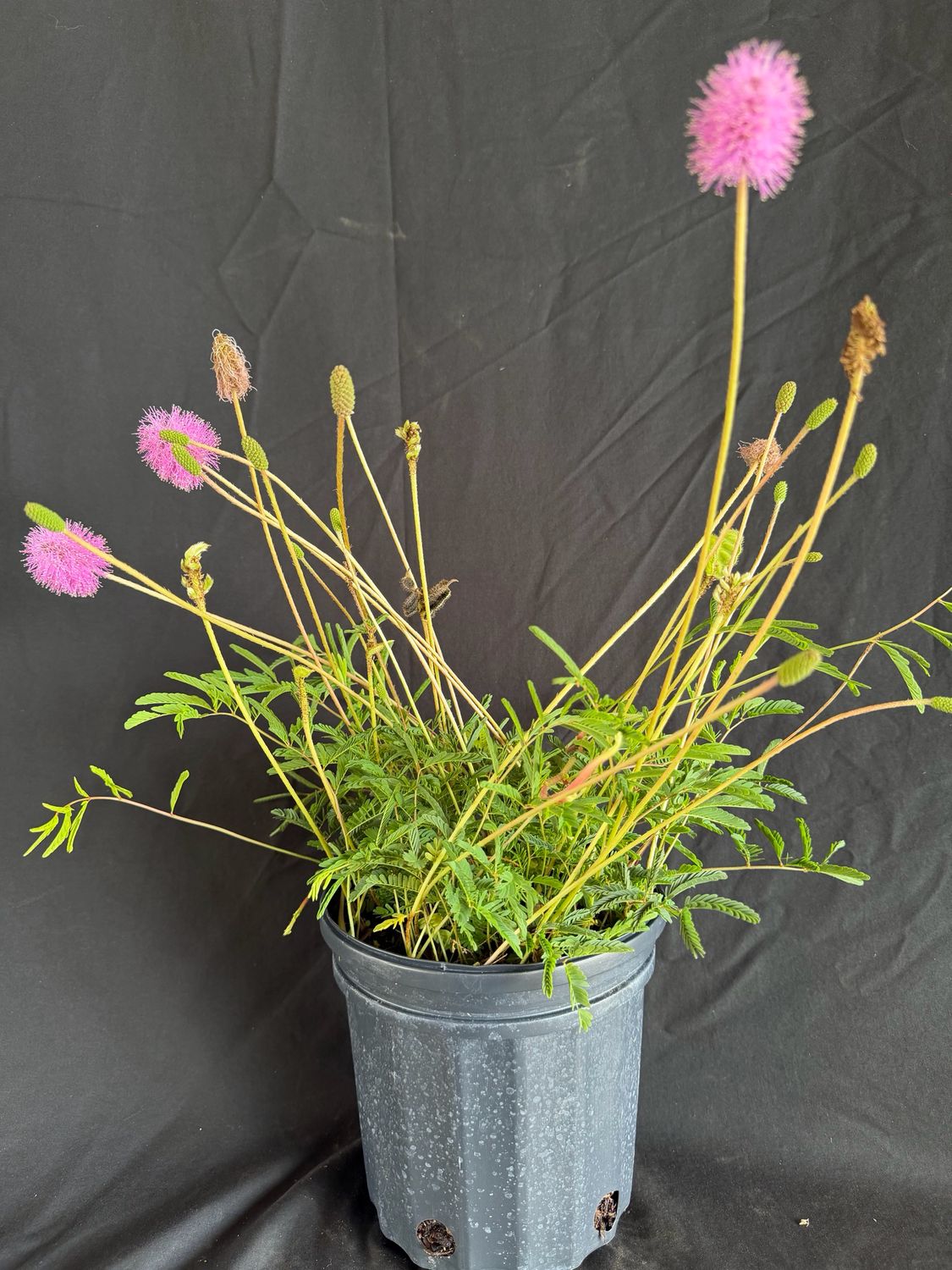
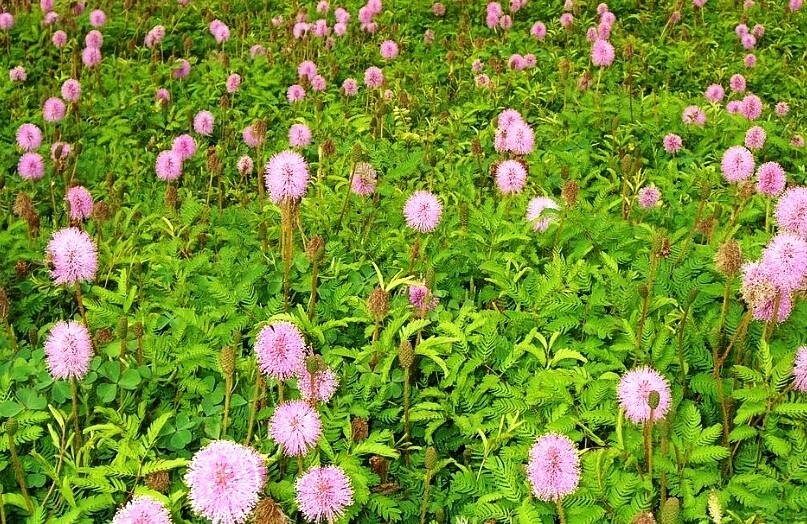
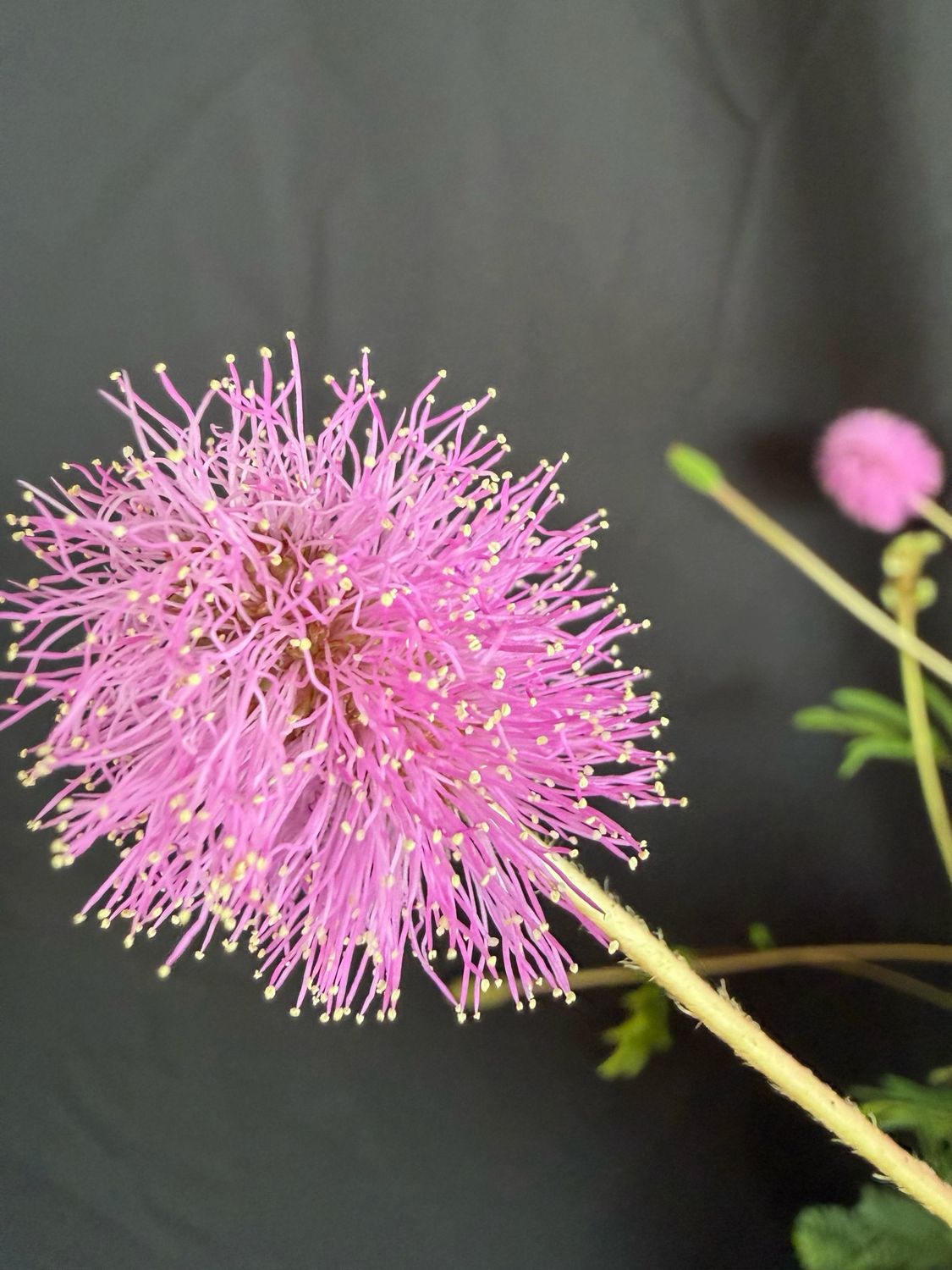
Meet one of Florida’s most fascinating native groundcovers — Sunshine Mimosa, a drought-tough, nitrogen-fixing perennial that creates a lush green carpet covered in bright pink powder-puff blooms.
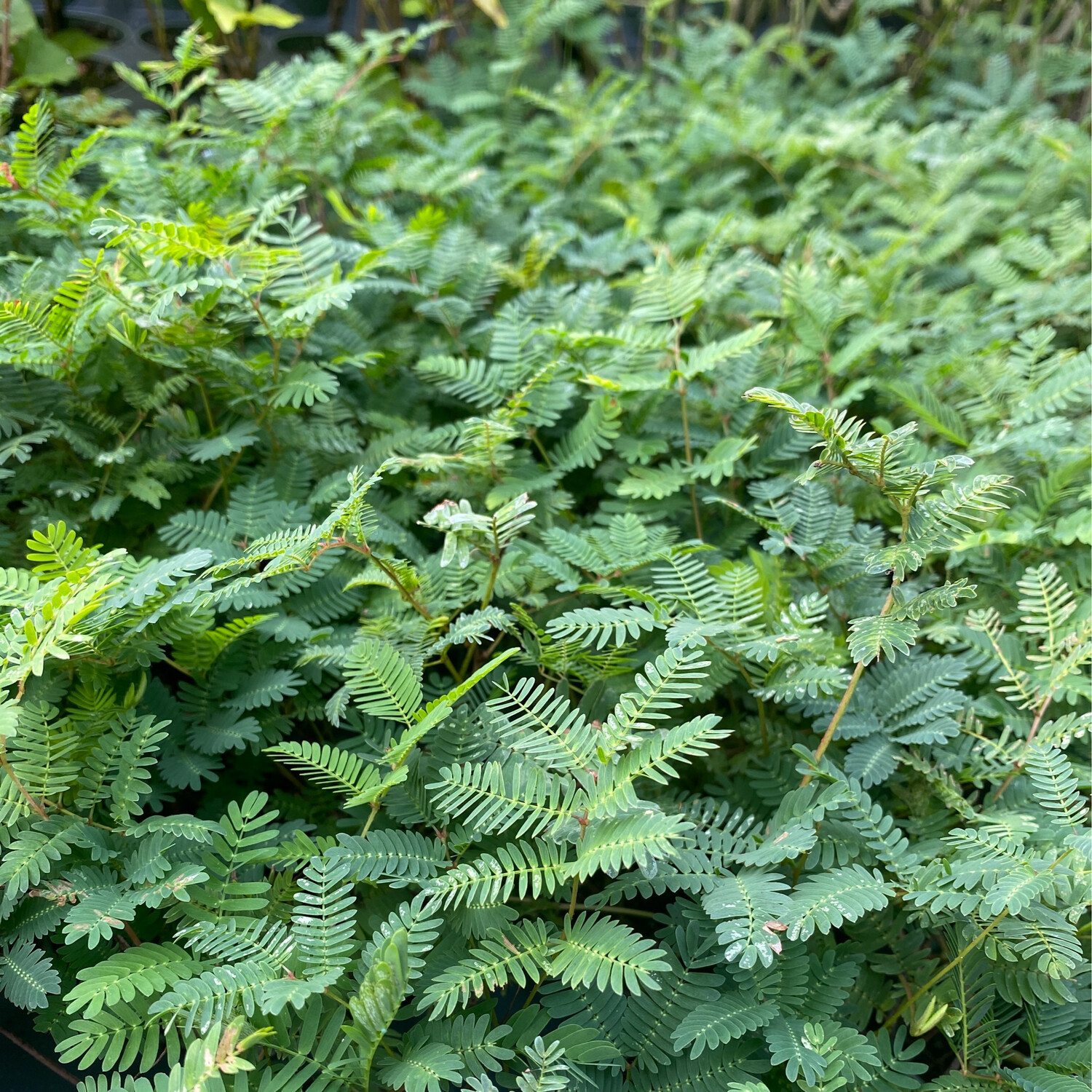
This low-growing native doesn’t just look beautiful — it responds to touch. Lightly brush the fern-like foliage and the leaves temporarily fold inward before reopening again later, earning Sunshine Mimosa its reputation as one of the most interactive and memorable plants in the garden world.
Between its touch-sensitive foliage, exceptional drought tolerance, pollinator value, and ability to thrive in poor sandy soils, Sunshine Mimosa has become one of our favorite regenerative groundcovers for Florida food forests, native landscapes, sensory gardens, and ecological restoration projects.
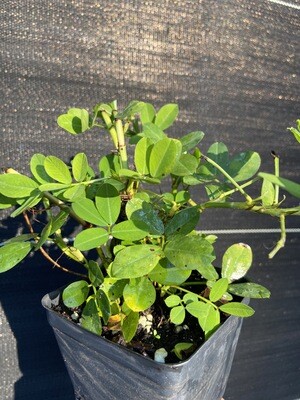
Our current offering is available in a healthy, established 1-gallon size, ideal for faster fill-in, stronger root development, and improved transplant success in the landscape.
🌿 Quick Facts
| Category | Details |
|---|---|
| Botanical Name | Mimosa strigillosa |
| Plant Type | Native perennial nitrogen-fixing legume groundcover |
| Current Size Available | Established 1-gallon container |
| Estimated Plant Age | Approximately 8–14 months old depending on season |
| Mature Height | 3–4 inches tall |
| Mature Spread | 3–5+ feet over time |
| USDA Zones | 8B–11 |
| Sun Requirements | Full sun to filtered light |
| Cold Hardiness | Approx. 20°F once established |
| Growth Habit | Fast-spreading mat-forming perennial |
| Spacing | 18–24 inches apart |
| Soil Preference | Sandy, well-drained soils |
| Drought Tolerance | Extremely high once established |
| Salt Tolerance | Moderate |
| Wind Tolerance | Excellent once rooted |
🌸 The “Sensitive Plant” Effect – A Living Interactive Experience 🌿
One of the coolest details about Sunshine Mimosa is its ability to respond to touch.
When stimulated, the tiny leaflets fold inward temporarily before slowly reopening. This natural response evolved as a defense mechanism in the wild, but in the landscape it creates a completely unique sensory experience.
🌿 Perfect for:
- Sensory gardens
- Children’s gardens
- Educational landscapes
- Pollinator pathways
- Botanical collections
- Therapeutic outdoor spaces
- School gardens & nature centers
Kids especially become fascinated watching the foliage react in real time — making Sunshine Mimosa one of the most engaging native plants you can grow.
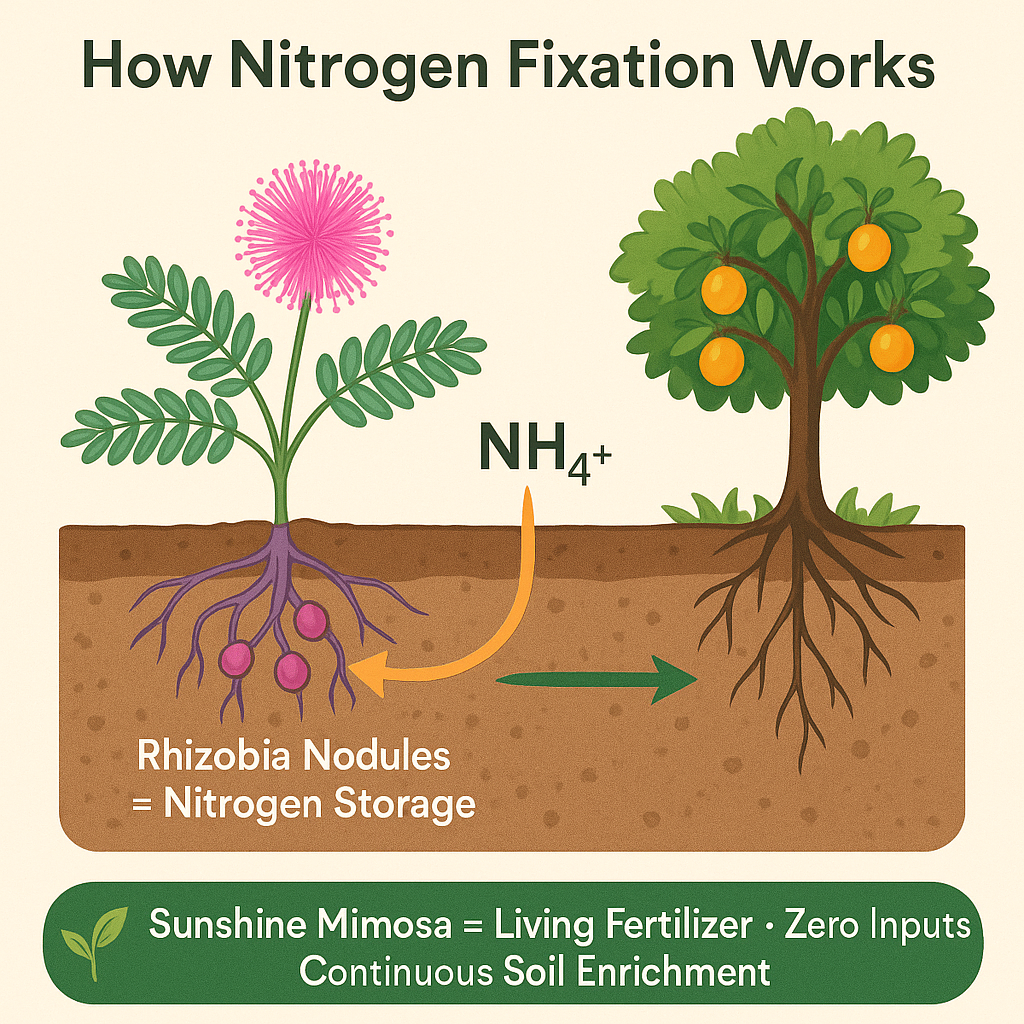
🌱 Nature’s Living Fertilizer – Nitrogen Fixation Explained
Sunshine Mimosa is much more than an ornamental groundcover — it’s also a soil-building powerhouse.
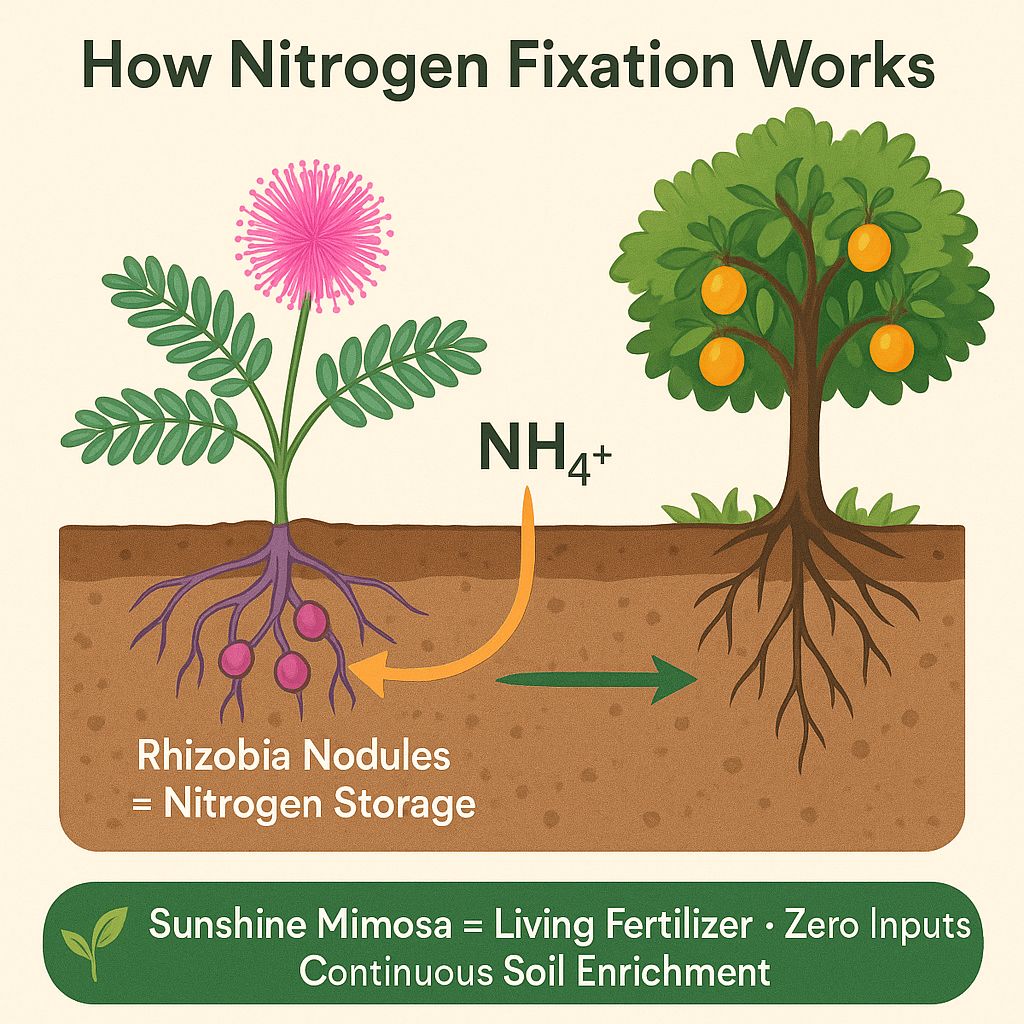
As a member of the legume family, Sunshine Mimosa forms a partnership with beneficial bacteria called rhizobia, which live in nodules attached to the plant’s roots. These bacteria capture nitrogen gas from the atmosphere and convert it into usable nutrients that enrich the surrounding soil naturally.
🌿 Why Nitrogen Fixation Matters
💰 Reduces Fertilizer Costs
Once established, Sunshine Mimosa continuously contributes fertility back into the soil, reducing the need for synthetic fertilizers and lowering long-term maintenance costs.
🌾 Improves Soil Health
Nitrogen supports greener growth, stronger microbial activity, and healthier surrounding plants while encouraging long-term biological diversity beneath the soil surface.
🌳 Benefits Nearby Trees & Plants
As roots, stems, and foliage naturally break down, nutrients slowly cycle into the soil where nearby fruit trees, herbs, flowers, and pollinator plants can benefit.
♻️ Supports Low-Input Gardening
Sunshine Mimosa thrives with minimal intervention — especially in Florida’s nutrient-poor native sands where many traditional groundcovers struggle without constant fertilization.
💡 Do growers need to “release” the nitrogen somehow?
No. The process happens naturally underground through normal growth, root turnover, pruning, and decomposition. Simply maintain healthy living soil and avoid excessive synthetic fertilizers that may suppress the bacterial relationship.
🌾 Built for Florida – Thrives in Poor Sandy Soils
One of Sunshine Mimosa’s greatest strengths is its ability to thrive where many traditional groundcovers fail.
This native species naturally excels in:
✅ Dry sandy soils
✅ Nutrient-poor sites
✅ Harsh sun exposure
✅ Native Florida landscapes
✅ Erosion-prone slopes
✅ Low irrigation environments
✅ Difficult “dead zones” where turf struggles
At GreenDreams Farm, we’ve watched Sunshine Mimosa naturally spread across dry native sands with minimal inputs once established — helping stabilize soil while improving fertility over time.
Unlike turf grass, Sunshine Mimosa does not require constant fertilizing, heavy irrigation, or high-maintenance mowing schedules.
Once rooted, it becomes one of the most resilient living mulches we grow.
🌾 Sunshine Mimosa + Perennial Peanut – Florida’s Regenerative Groundcover Duo 🌸🌾
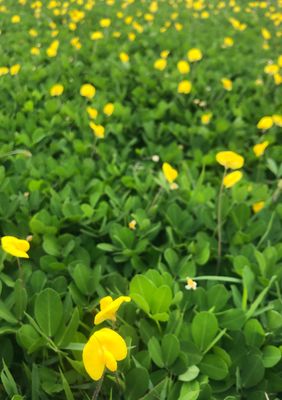
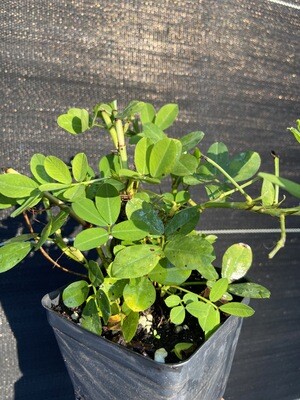
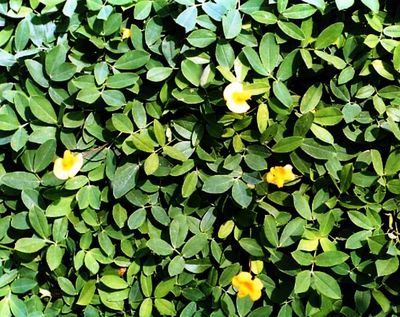
At GreenDreams, we frequently combine Sunshine Mimosa with Perennial Peanut (Arachis glabrata) because the two plants complement each other beautifully in regenerative landscapes and food forest systems.
Both species are nitrogen-fixing legumes. Both thrive in full sun to filtered light. Yet each naturally prefers slightly different soil conditions.
🌸 Sunshine Mimosa Prefers
- Lean native sandy soils
- Dry open areas
- Orchard pathways
- Lower fertility zones
- Harsh sun exposure
🌾 Perennial Peanut Prefers
- Richer mulched beds
- Soils containing humus & compost
- Areas amended with biochar & organic matter
- Fruit tree understory zones
- Slightly more moisture retention
At our farm, Sunshine Mimosa naturally fills the dry native zones between orchard rows while Perennial Peanut dominates the mulched zones beneath fruit trees where decomposed hardwood mulch and compost accumulate.
Together they create a highly functional “living mulch” system that:
🌿 Builds fertility naturally
🌿 Suppresses weeds
🌿 Supports pollinators
🌿 Protects soil moisture
🌿 Reduces fertilizer inputs
🌿 Increases biodiversity
🌿 Stabilizes sandy soils
🌿 Improves long-term orchard health
🌱 Groundcover Comparison Chart
| Feature | 🌸 Sunshine Mimosa | 🌾 Perennial Peanut |
|---|---|---|
| Preferred Soil | Sandy native soils | Humus-rich mulched soils |
| Sunlight | Full sun to filtered light | Full sun to partial shade |
| Drought Tolerance | Extremely high | Moderate to high |
| Growth Habit | Fast-spreading mat | Dense rhizomatous cover |
| Bloom Color | Pink powder-puff flowers | Yellow pea flowers |
| Best Use | Dry pathways & native zones | Orchard understory & mulched beds |
| Nitrogen Fixing | Excellent in poor soils | Excellent in richer soils |
💡 Broken-down mulch, compost, biochar, and trace minerals can dramatically improve establishment speed for both species — especially Perennial Peanut.
🌸 Flowers, Pollinators & Ornamental Appeal
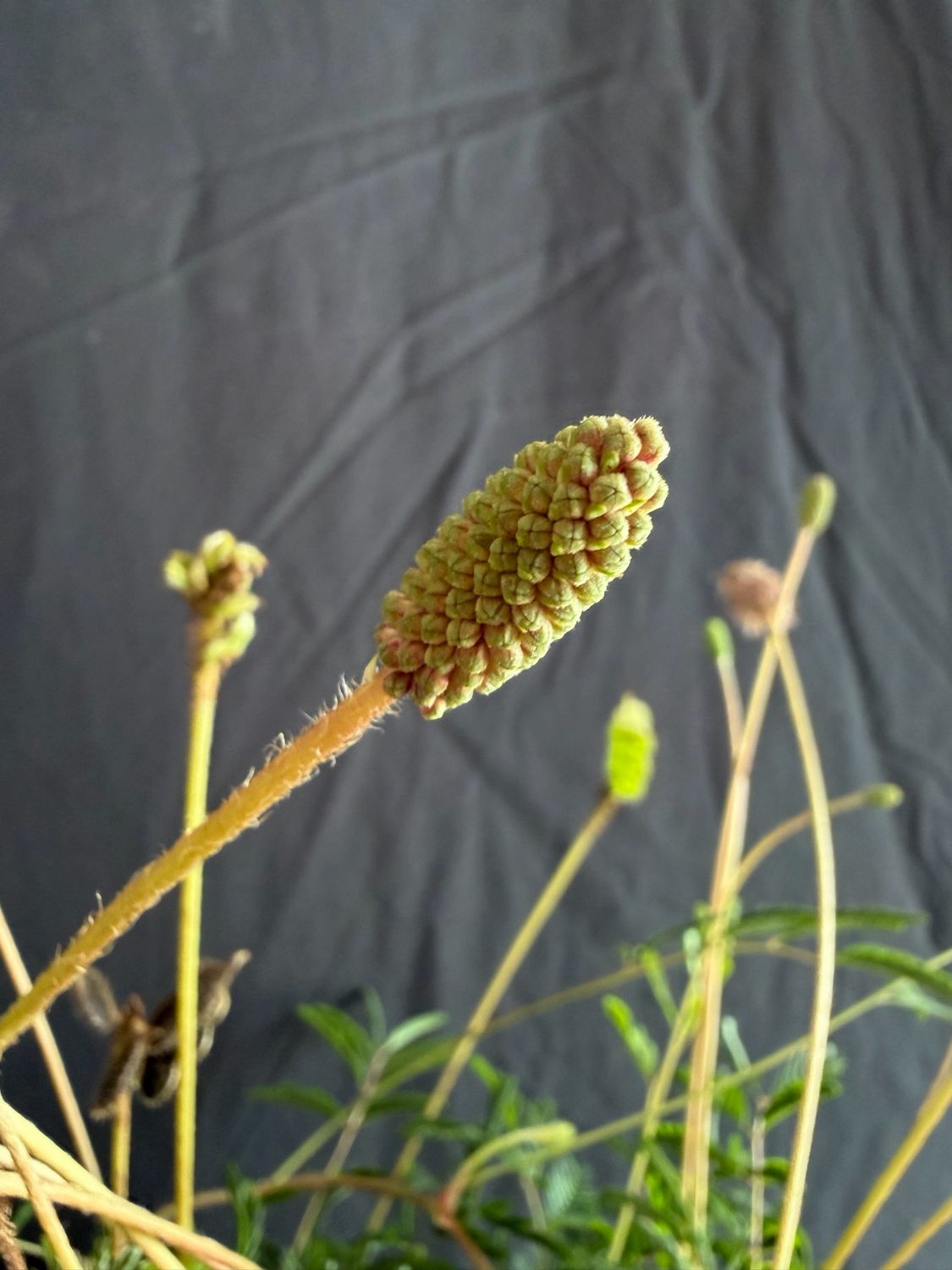
Sunshine Mimosa blooms heavily from spring through fall with cheerful pink puffball flowers that stand out beautifully against its soft fern-like foliage.
The flowers attract:
🐝 Native bees
🦋 Butterflies
🐞 Beneficial insects
Its tropical texture pairs beautifully with:
- Firebush
- Porterweed
- Native grasses
- Tropical sage
- Fruit trees
- Pollinator gardens
- Edible landscapes
- Native wildflower systems
🌞 Best Practices for Planting & Care
🌿 Where to Plant Sunshine Mimosa
Choose locations with:
✅ Full sun to filtered light
✅ Well-drained sandy soils
✅ Orchard rows
✅ Pollinator gardens
✅ Native restoration zones
✅ Erosion-prone slopes
✅ Dry difficult planting areas
Avoid consistently saturated soils or heavily compacted clay zones.
🌱 How to Plant Sunshine Mimosa
GreenDreams “High & Tight” Method
- Dig a hole only slightly wider than the root zone
- Plant at the same depth as the nursery container
- Pack soil firmly during backfill
- Water thoroughly after planting
🎥 Watch our planting method here:
GreenDreams High & Tight Planting Method
🌾 Soil Preparation Tips
Although Sunshine Mimosa performs well in poor soils, adding organic biology during establishment can dramatically accelerate coverage and rooting speed.
We recommend top dressing with:
🪵 Hardwood mulch
🌾 Compost
🌋 Biochar
🌰 Trace minerals
🌿 Organic nutrients
These inputs help create fungal activity, moisture retention, and improved microbial diversity while the plant establishes itself.
Keep mulch away from the crown of the plant to avoid excess moisture buildup.
💧 Watering Guide
🌱 Establishment Phase
Water daily or as needed during the first 2–4 weeks after planting.
The 1-gallon size typically establishes faster than smaller starter plants due to its stronger root mass and increased soil volume.
🌿 Established Plants
Once rooted, Sunshine Mimosa becomes highly drought tolerant and typically only requires supplemental irrigation during prolonged drought periods.
💡 Drip irrigation is preferred over overhead watering whenever possible.
✂️ Seasonal Care & Maintenance
Winter
🍂 Growth slows during cool weather. Some foliage may temporarily bronze after frost in colder regions.
Spring
🌱 Rapid spreading and fresh new growth begin as temperatures warm.
Summer
🌸 Peak flowering and pollinator activity occur during warm rainy periods.
Maintenance
✂️ Light trimming can encourage denser spreading, though very little maintenance is required overall.
⚠️ Troubleshooting Guide
| ⚠️ Issue | 🧠 Cause | 🌿 Organic Solution |
|---|---|---|
| 💧 Wilting after planting | Temporary transplant shock | 🌱 Maintain steady moisture during establishment |
| 🍂 Yellow foliage | Excess moisture or poor drainage | 💡 Improve drainage & reduce watering |
| 🐛 Chewed foliage | Caterpillars or beetles | ✅ Neem oil or hand removal |
| ☀️ Scorched foliage | Extreme heat on new plants | 🌬️ Temporary filtered shade |
| ❄️ Frost burn | Cold exposure | ✂️ Trim damaged foliage in spring |
🌿 Is Sunshine Mimosa Right for You?
✅ Ideal For
- Food forests
- Pollinator gardens
- Sensory landscapes
- Native Florida landscapes
- Regenerative systems
- Drought-tolerant gardening
- Living mulch systems
- Soil restoration projects
- Families wanting interactive garden plants
❌ Not Ideal For
- Deep shade
- Waterlogged soils
- Indoor-only growing
- Heavy foot traffic areas without recovery time
❓ FAQ
Does Sunshine Mimosa really respond to touch?
Yes! The foliage temporarily folds inward when stimulated, making it one of the most interactive native plants available for sensory gardens and educational landscapes.
Is Sunshine Mimosa drought tolerant?
Extremely once established. It performs exceptionally well in dry sandy soils with minimal irrigation.
Does Sunshine Mimosa improve the soil?
Absolutely. Sunshine Mimosa naturally fixes nitrogen and improves long-term soil fertility over time.
Do I need fertilizer?
Usually very little once established. Excess synthetic fertilizer can reduce nitrogen fixation activity.
Can I plant it with Perennial Peanut?
Definitely. The two plants complement each other beautifully in regenerative landscapes and orchard systems.
Why choose the 1-gallon size?
The established 1-gallon size offers faster coverage, stronger roots, and improved transplant success compared to smaller starter sizes.
🚚 Shipping & Handling
Our established 1-gallon Sunshine Mimosa plants are more resilient during shipping and transplanting than smaller starter plants.
Best suited for:
🌿 Florida
🌾 Southeastern U.S.
☀️ Texas
Nationwide shipping is available, though plants shipped to northern or western states may require additional recovery time after transit.
⚠️ Buyer discretion advised during extreme heat or freezing weather.
📦 Ships every Monday via UPS Ground from Florida.
Please allow plants time to acclimate after arrival before transplanting. Wait for active new growth prior to major disturbance.
🏡 Local IN-PERSON Shopping
🌿 GreenDreams Nursery & Farm
📍 18709 US Hwy. 41, Spring Hill, FL 34610
🕘 Tues–Fri 9AM–5PM
🌞 Sat 8AM–3PM
Visit our regenerative nursery to see Sunshine Mimosa growing throughout our food forest systems and demonstration beds.
🌿 Beyond the Plant: GreenDreams Services
At GreenDreams, we do more than grow plants — we design, build, and restore ecosystems across Florida.
- 🌳 Food forest & edible landscape design
- 🌾 Regenerative landscape installation
- 🚚 Compost, mulch & biochar delivery
- 🌿 Pollinator habitat planning
- 🪴 Wholesale regenerative solutions
Let us help you create a thriving living ecosystem — starting with Sunshine Mimosa. 🌸
🌿 IMPORTANT INFORMATION BEFORE PURCHASING LIVE PLANTS
Please note: Plants purchased through our online store are not available for pickup at our retail nursery in Spring Hill, Florida.
Online inventory is housed at a separate facility and is priced, prepared, and handled exclusively for shipping.
🌱 Looking for larger plants or more selection?
Our retail nursery location offers far more availability, including larger sizes, specialty plants, and many selections not suitable for nationwide shipping.
Local pickup is available for retail nursery purchases only.
Visit our Spring Hill, FL retail nursery page to explore in-person shopping options.
🚚 LIVE PLANT SHIPPING & TRANSIT EXPECTATIONS
Live plants naturally experience stress during shipping. Temporary leaf drop, mild wilting, or cosmetic stress is normal after transit. Most plants recover quickly with proper watering, gradual light exposure, and basic aftercare. Some plants may require additional attention during the first few weeks.
Despite careful packing, minor cosmetic damage may occur during transit. Small issues such as broken leaves or stems typically resolve with time and proper care.
If your shipping box arrives with significant external damage, please contact UPS within 30 days to initiate a carrier claim.
⏱️ SHIPPING METHOD, TIMING & TRANSIT WINDOWS
All online orders ship via UPS Ground from our Central Florida nursery.
📦 Shipping Schedule: Orders ship once weekly on Mondays to reduce the risk of packages sitting in transit over weekends. A countdown clock on our website displays the next shipping date.
🚚 Typical Transit Times:
-
Florida: 1–2 days
-
Southern U.S.: approximately 2 days
-
Midwest, West & Northern U.S.: 3–5 business days
Long-distance shipments, particularly to the western U.S., may experience additional transit time due to agricultural inspections in states such as Arizona, California, and Texas.
Extended transit times can be more challenging for small or tender plants and may require additional recovery care after arrival.
🌡️ EXTREME WEATHER & SEASONAL RISK
Live plants are sensitive to temperature extremes.
We cannot guarantee plant condition during periods of extreme summer heat or winter cold and freezing temperatures. Weather-related delays, carrier interruptions, or exposure during delivery are beyond our control.
Customers are responsible for:
-
Monitoring tracking information sent via email
-
Retrieving packages promptly upon delivery
-
Preventing plants from being left outdoors in extreme conditions
During unsafe weather, holiday shipping volume, or extended transit risk, orders may be held and shipped the following week to protect plant health.
⚠️ CUSTOMER RESPONSIBILITY & REFUND POLICY
By purchasing live plants, customers acknowledge and accept the risks associated with shipping, weather exposure, transit delays, and regional suitability.
Refunds or replacements are considered only under exceptional circumstances and in accordance with our return and refund policy. We are not responsible for:
-
Weather-related damage
-
Carrier delays
-
Poor plant selection for a given climate or region
-
Improper care after delivery
Upon purchase, customers assume full responsibility for the ongoing care and success of their plants.
✅ CONSENT & AGREEMENT
By completing a purchase, you confirm that you have read, understand, and agree to all shipping policies, responsibilities, and conditions outlined above.
Our goal is transparency, plant health, and long-term growing success — and we appreciate your understanding and care when ordering live plants.


