


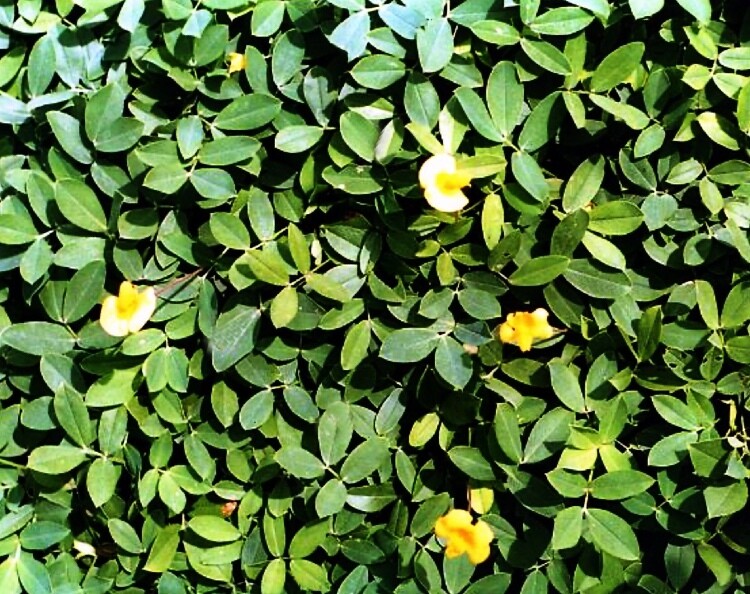
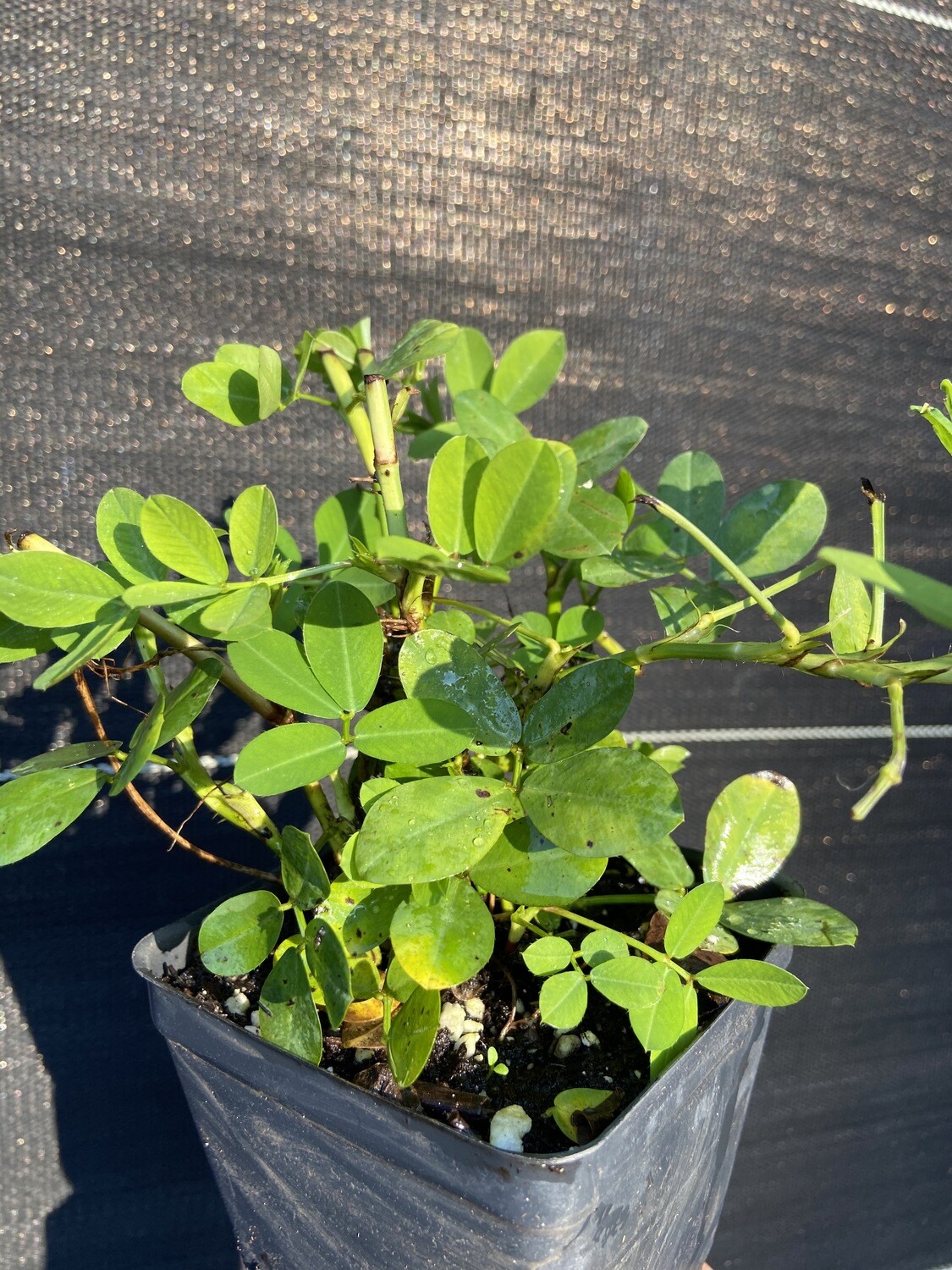
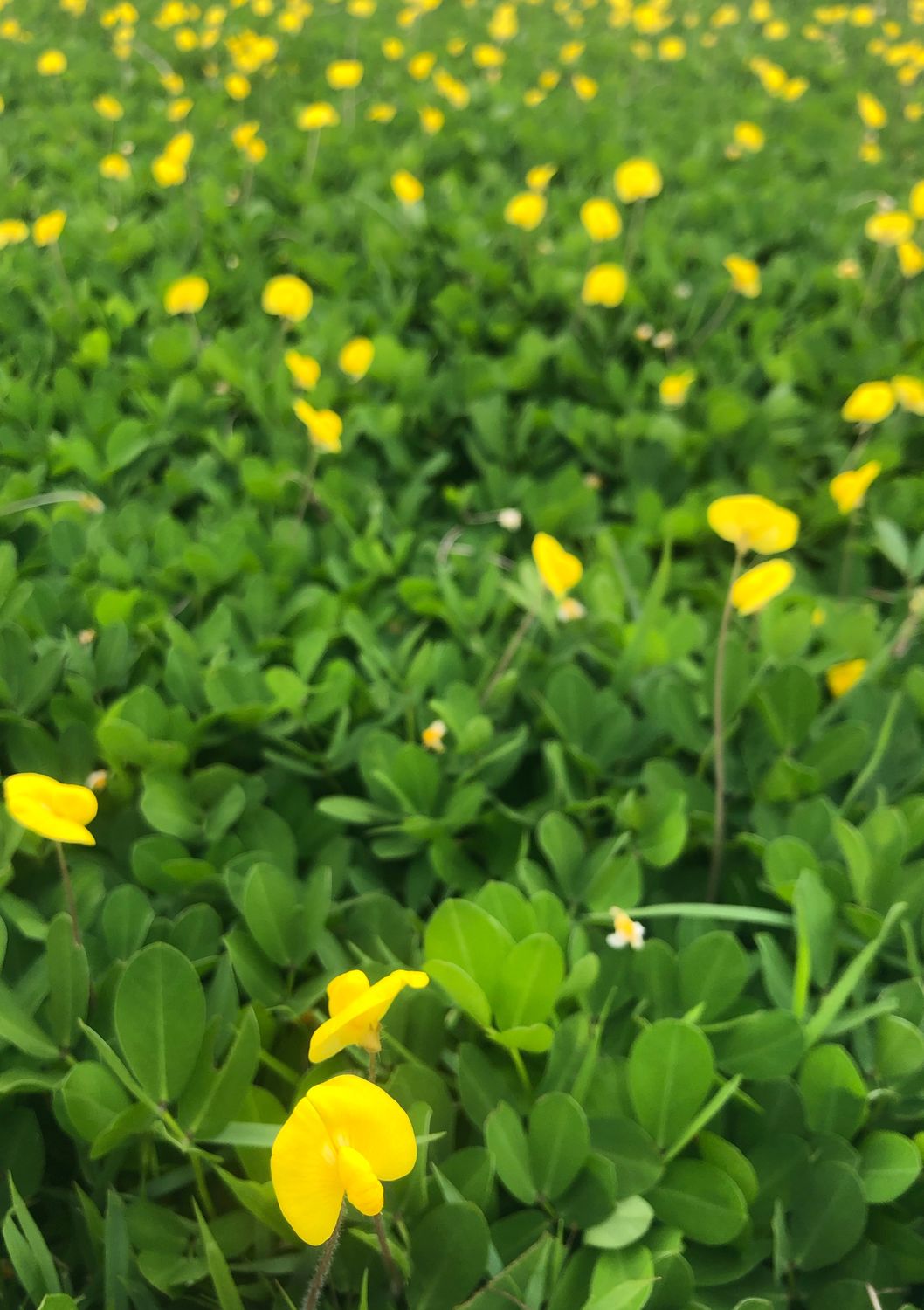
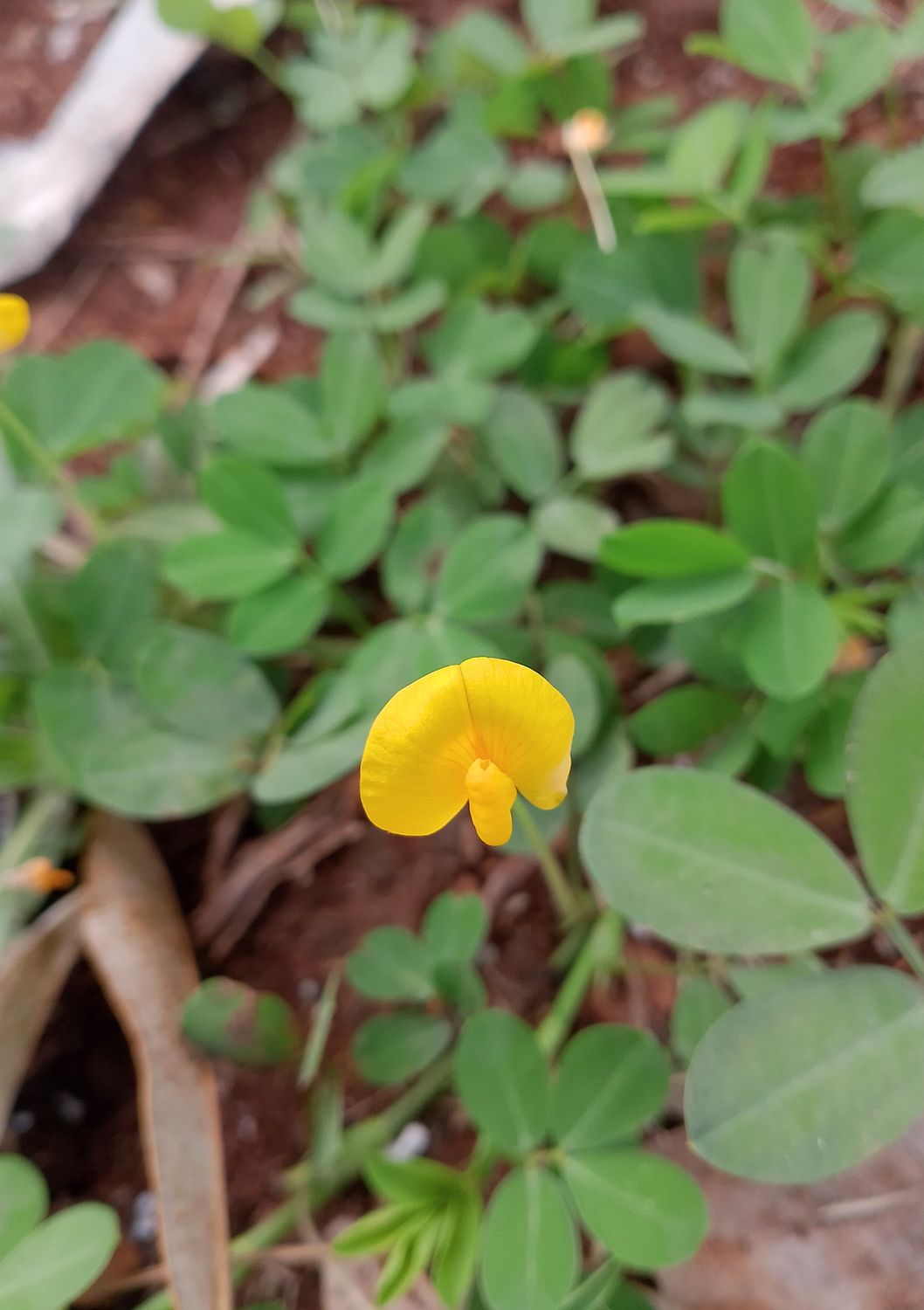
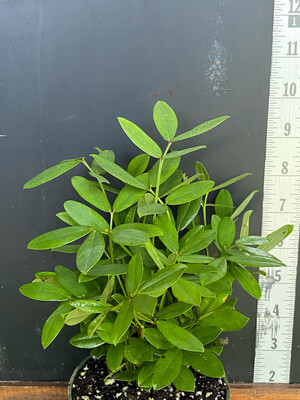
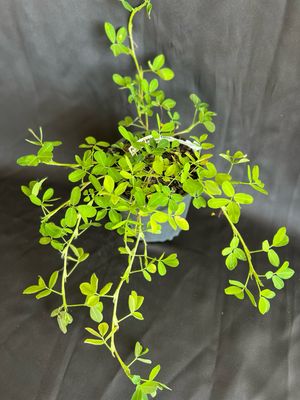
🌿 ‘Yellow’ Perennial Peanut 10-Pack — 4” Starter Plants 🌞💛
Arachis glabrata | Nitrogen-Fixing Lawn Alternative, Living Mulch & Spreading Groundcover
10 LIVE STARTER PLANTS - 4” Containers
Plant a patch — not just a plant.
If you have ever looked at a thirsty patch of turf, an open fruit-tree grove, a sunny slope or a bare stretch of Florida sand and thought, “There has to be something better to grow here,” perennial peanut deserves a serious look.
Our 10-Pack of 4” ‘Yellow’ Perennial Peanut (Arachis glabrata) starter plants is designed specifically for growers who want to establish this plant the way it performs best: in quantity.
Plant it as:
🌿 A flowering lawn alternative
🌳 Living mulch beneath fruit trees
🍊 Orchard or grove groundcover
🌾 Farm and food-forest understory
⛰️ Erosion-controlling slope coverage
🐝 Pollinator-friendly landscape groundcover
🏡 A low-growing alternative to conventional turf
Rather than producing above-ground runners like many familiar groundcovers, Arachis glabrata develops a network of underground rhizomes that gradually knit individual plants together into an increasingly dense, persistent mat.
The result?
Less bare soil. Less conventional turf. More living ground.
UF/IFAS recommends approximately 12–18 inches between container-grown plants when establishing perennial peanut for complete landscape coverage.
🌿 QUICK FACTS — 10-PACK AT A GLANCE
| Category | Details |
|---|---|
| Botanical Name | Arachis glabrata |
| Product / Selection Name | ‘Yellow’ Perennial Peanut |
| Family | Fabaceae — Legume / Pea Family |
| Plant Type | Warm-season perennial, nitrogen-fixing groundcover |
| Quantity | 10 individual live starter plants |
| Size at Sale | 4” nursery starter containers |
| Nursery Stage | Young, rooted vegetatively propagated starter plants |
| Exact Plant Age | Varies; container size and establishment are more meaningful than chronological age for vegetatively propagated perennial peanut |
| Mature Height | Generally 6–12 inches depending on selection and management |
| Maintained Height | Can be kept lower with periodic mowing |
| Spread | Continues outward through underground rhizomes |
| USDA Zones | Approximately 8b–11 |
| Florida Performance | Excellent throughout Florida; winter appearance varies by frost exposure |
| Origin | Tropical South America |
| Sun | Full sun preferred; some partial shade tolerated |
| Flowering | Best and most abundant in full sun |
| Soil | Best in well-drained sandy to loamy soils |
| Soil pH | Adaptable; UF orchard guidance cites approximately pH 5.0–6.5 |
| Drought Tolerance | High once established |
| Salt Tolerance | High according to UF/IFAS Florida-Friendly Landscaping data |
| Wind | Low profile reduces structural wind issues; UF/IFAS does not currently provide a formal wind-resistance rating |
| Growth Habit | Low, spreading, rhizomatous, mat-forming |
| Recommended Spacing | 12–18 inches on center |
| Winter Behavior | Evergreen where frost-free; may brown or become dormant following frost |
| Traffic Tolerance | Best for light traffic; use stepping stones in heavily traveled areas |
| Nitrogen Fertilizer | Generally not required once established |
| Primary Uses | Lawn alternative, living mulch, orchard understory, grove rows, slopes, erosion control, food forests and landscape beds |
UF/IFAS currently assesses Arachis glabrata as not a problem species in North, Central and South Florida. It is not native to Florida; its native range is South America.
🌎 FROM SOUTH AMERICAN FORAGE PLANT TO FLORIDA LANDSCAPE WORKHORSE
Perennial peanut has much deeper roots in agriculture than its cheerful little flowers might suggest.
Arachis glabrata originated in South America and was introduced from Brazil into Florida in the 1930s. It became valued as a high-quality perennial forage legume because of its persistence, nutritional forage quality and ability to tolerate Florida’s long, hot growing season.
Over time, growers began recognizing another talent:
It makes an exceptionally useful groundcover.
Shorter landscape selections of perennial peanut are now planted around homes, roadways, commercial landscapes, orchards and agricultural systems throughout Florida.
And its role as a living mulch is not a new trend invented for social media.
Throughout Central and South America, perennial peanut species have long been incorporated beneath crops such as:
☕ Coffee
🍫 Cacao
🍌 Plantain
🌴 Palms
🍊 Citrus
🌳 Other fruit and nut crops
UF/IFAS now actively studies Arachis glabrata as a potential living mulch and biological nitrogen source for Florida citrus and orchard production.
🌱 WHY WE CREATED A 10-PACK
Perennial peanut can certainly be planted one plant at a time.
But that misses the point.
This is a plant intended to connect.
One plant becomes a patch.
Several plants become colonies.
Ten strategically spaced starters begin creating an interconnected groundcover system.
This 10-pack is ideal for growers interested in:
🌿 Converting sections of conventional lawn
🌳 Establishing living mulch beneath fruit trees
🍊 Filling spaces between trees in groves and orchards
🌾 Developing regenerative farm alleys
💧 Covering sunny, drought-prone landscape areas
🐝 Creating long-flowering pollinator habitat
⛰️ Stabilizing sandy slopes and berms
🏡 Filling large landscape beds economically
🌱 Establishing perennial cover in food forests
This is why we consider the 10-pack our landscape-establishment option.
📏 SPACING PERENNIAL PEANUT — CLOSER = FASTER COVERAGE
Your planting distance determines two important things:
- How many plants you need today
- How long you will be looking at open ground between them
UF/IFAS recommends approximately 12–18 inches between containerized plants for eventual complete coverage.
🌱 12” ON CENTER — FASTEST COVERAGE
Approximately 1 plant per square foot
Best for:
- Lawn replacement
- Highly visible beds
- Smaller residential installations
- Areas where faster visual closure matters
- Reducing open areas where weeds can establish
Our choice when speed is more important than reducing initial plant quantity.
🌿 15” ON CENTER — THE BALANCED APPROACH
Approximately 0.64 plants per square foot
Best for:
- Home landscapes
- Food forests
- Fruit-tree guilds
- Garden beds
- Medium-sized installations
This provides a useful balance between plant cost and establishment speed.
🌾 18” ON CENTER — ECONOMICAL LARGE-AREA ESTABLISHMENT
Approximately 0.44 plants per square foot
Best for:
- Farms
- Groves
- Large orchards
- Long-term landscape projects
- Growers comfortable managing weeds while plants connect
Fewer plants are required initially — but more patience and early weed control will be necessary.
HOW MUCH GROUND WILL ONE 10-PACK START?
These numbers represent the initial planting grid, not the eventual maximum spread of the plants.
| Plant Spacing | Approximate Initial Area |
|---|---|
| 12” centers | About 10 sq. ft. |
| 15” centers | About 15–16 sq. ft. |
| 18” centers | About 22–23 sq. ft. |
Once established, those individual plants continue sending rhizomes outward beyond their original footprint.
You also do not have to plant your 10-pack as one square block.
Try:
🌳 Several plants around individual fruit trees
🍊 A row between young orchard trees
🌿 A ribbon along the edge of a food forest
⛰️ Staggered plants across a slope
🏡 Multiple starter colonies throughout a future lawn conversion
🌿 HOW MANY PERENNIAL PEANUT PLANTS DO I NEED?
Approximate quantities for a square planting pattern:
| Area | 12” Spacing | 15” Spacing | 18” Spacing |
|---|---|---|---|
| 25 sq. ft. | 25 | 16 | 12 |
| 50 sq. ft. | 50 | 32 | 23 |
| 100 sq. ft. | 100 | 64 | 45 |
| 250 sq. ft. | 250 | 160 | 112 |
| 500 sq. ft. | 500 | 320 | 223 |
| 1,000 sq. ft. | 1,000 | 640 | 445 |
💡 Translation:
Want faster closure?
Buy more plants and tighten your spacing.
Covering a grove or farm?
Wider spacing can reduce your initial investment, but you will spend more time managing the open spaces between plants.
Trying to balance both?
Approximately 12–15 inches is our preferred starting range for many residential landscape installations.
Actual quantities vary with bed shape, existing trees, pathways, structures and other vegetation.
HOW FAST WILL PERENNIAL PEANUT SPREAD?
Here is where realistic expectations matter.
Perennial peanut is persistent — but persistent does not mean instant.
UF/IFAS describes rhizoma perennial peanut establishment as slow, particularly in agricultural installations, and notes that development of a mature stand may take approximately two growing seasons.
Your results depend heavily on:
☀️ Sun exposure
🌡️ Soil temperature
💧 Irrigation
🌿 Starting plant size
📏 Plant spacing
🌾 Weed competition
🪨 Soil conditions
📅 Time of year
🌱 Length of the warm growing season
A REALISTIC ESTABLISHMENT TIMELINE
First several weeks:
Transplanted starters concentrate heavily on rooting and recovery.
First warm growing season:
Healthy plants begin sending growth beyond their containers and establishing surrounding soil.
Following warm season:
Rhizomes increasingly colonize the spaces between plants.
Mature stand:
Individual colonies knit together into a denser carpet capable of suppressing many competing weeds.
For planning purposes, think in terms of one to two warm growing seasons rather than a few weeks.
Closer spacing, excellent weed control, warm soil and consistent establishment irrigation can dramatically improve how quickly the planting looks finished.
🌾 WHY THIS IS A VERY DIFFERENT KIND OF LAWN
Conventional turf often asks for:
💧 Irrigation
⚗️ Nitrogen fertilizer
✂️ Frequent mowing
🌱 Weed management
💰 Ongoing inputs
Established perennial peanut can substantially reduce several of those demands.
It provides:
🌿 Low-growing permanent vegetation
💛 Long-lasting seasonal flowers
🐝 Pollinator resources
⚗️ Biological nitrogen fixation
💧 Strong drought tolerance once established
✂️ Optional rather than mandatory mowing
🌱 Underground rhizomes capable of persistent regrowth
⛰️ Soil protection and erosion control
It works especially well for homeowners who want their yard to behave a little more like an ecosystem and a little less like a golf course.
UF/IFAS specifically recommends perennial peanut as a low-maintenance groundcover and possible turf alternative in areas receiving limited foot traffic.
🌳 LIVING MULCH FOR FRUIT TREES, GROVES & FOOD FORESTS
This may be our favorite application.
Instead of maintaining large expanses of bare ground beneath fruit trees, perennial peanut can gradually form a permanent living understory.
UF/IFAS research discusses perennial peanut as a potential living mulch beneath citrus and other orchard crops, with the additional benefit of biological nitrogen fixation.
Consider it beneath or between:
🍊 Citrus
🥑 Avocados
🥭 Mangoes and tropical fruit where climate permits
🍑 Temperate and low-chill fruit trees
🌴 Palms
🌳 Mixed food forests
🌰 Nut trees
🌾 Orchard alleys
Keep vegetation away from the immediate woody trunk or trunk flare of young trees.
Perennial peanut should function as living groundcover around the tree — not as material piled against its trunk.
THE NITROGEN-FIXING ADVANTAGE
Arachis glabrata belongs to the legume family.
Through its relationship with nitrogen-fixing bacteria associated with its roots, perennial peanut can convert atmospheric nitrogen into biologically useful forms.
UF/IFAS notes that established rhizoma perennial peanut used as orchard groundcover generally does not require supplemental nitrogen fertilizer.
That does not mean planting perennial peanut instantly fertilizes every fruit tree around it.
Think of the planting as part of a larger nutrient-cycling system.
When vegetation is periodically cut and the clippings are allowed to remain in place and decompose, those materials contribute organic matter and captured nutrients back to the soil.
That makes perennial peanut especially interesting for:
♻️ Regenerative agriculture
🌳 Food forests
🍊 Orchard systems
🌿 Living-mulch applications
🪱 Soil-building landscapes
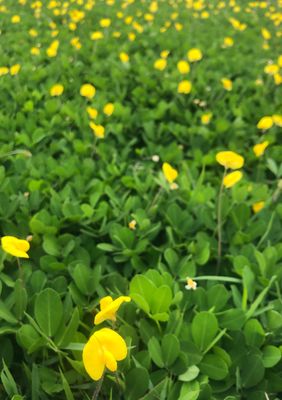
🐝 FLOWERS, POLLINATORS & THE YELLOW CARPET EFFECT
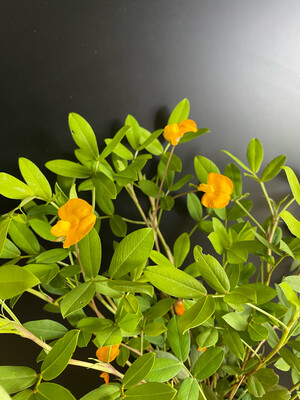
During warm weather, the green foliage becomes dotted with vivid yellow flowers.
The blooms:
💛 Add long-season ornamental color
🐝 Provide resources for visiting insects
🦋 Add habitat value to diversified landscapes
🌿 Transform what could otherwise look like ordinary groundcover
UF/IFAS lists Arachis glabrata as a host plant for the Barred Yellow butterfly and identifies the flowers as edible.
🌼 YES — THE FLOWERS ARE EDIBLE
Perennial peanut is a relative of the familiar edible peanut, Arachis hypogaea, but do not plant this expecting an underground crop of peanuts.
Rhizoma perennial peanut is grown primarily for its foliage, flowers and underground rhizome system. Many selections produce very little to essentially no seed.
The yellow flowers themselves are edible, however.
UF/IFAS Extension has described their flavor as pleasantly peanut-like.
Try clean, organically managed blooms as:
🥗 A small salad garnish
🌼 An edible plate decoration
🥪 A colorful finishing touch
🍴 A conversation-starting edible flower
⚠️ HARVEST SMART
Only consume flowers collected from areas that have not been exposed to inappropriate pesticides, herbicides, pet waste, roadway contamination or other potential pollutants.
This listing is sold primarily as a landscape and ecological groundcover plant, not as a peanut-producing food crop.
🌿 LANDSCAPE CHARACTER
Perennial peanut creates a completely different visual texture than turfgrass.
Expect:
🌱 Small compound green leaves
💛 Bright pea-family flowers
🌿 Fine-textured spreading foliage
🧩 Interconnecting colonies
✂️ A neater carpet when periodically mowed
🌾 A softer, more natural appearance when allowed to grow freely
It works beautifully:
- Along orchard rows
- Between stepping stones
- Around palms
- Around fruit trees
- Across broad landscape beds
- Along driveways
- Over sunny slopes
- Beside tropical foliage
- As a transition between formal landscaping and food-production areas
🌿 AGRICULTURAL & INDUSTRY USES
Perennial peanut did not begin its Florida career as an ornamental.
Rhizoma perennial peanut has historically been used commercially for:
🌾 High-quality forage
🐄 Grazing systems
🌿 Hay production
♻️ Green-manure systems
🍊 Orchard groundcover
⛰️ Erosion management
🏡 Landscape groundcover
🌱 Turfgrass alternatives
UF/IFAS describes the forage quality of rhizoma perennial peanut as comparable to alfalfa under appropriate agricultural management.
Important: GreenDreams sells these nursery plants as landscape plants. We are not selling or certifying this particular nursery product as livestock feed.
SEASONAL CARE, PLANTING, WATERING, CONTAINERS & ESTABLISHMENT
☀️ WHAT TO EXPECT THROUGH THE YEAR
Perennial peanut is a warm-season perennial, and understanding that one phrase prevents a lot of unnecessary winter panic.
It is not truly deciduous in the same way a temperate fruit tree is.
Instead:
🌴 Frost-free climate: foliage can remain evergreen
❄️ Frost-prone climate: top growth may brown and disappear temporarily
🌱 Established underground rhizomes: survive and resume growth once warm conditions return
UF/IFAS notes that frost initiates dormancy in colder portions of Florida while frost-free southern areas may remain green but grow more slowly during shorter winter days.
🌱 SPRING — WAKE UP & MOVE
In Central and North Florida, spring is when established perennial peanut begins transitioning out of winter dormancy.
Expect:
🌱 New shoots emerging
🌿 Rapidly improving foliage color
☀️ Increasing growth as soils warm
🌼 Flower production beginning to increase
North Florida stands may not resume serious growth until approximately late February into March depending on temperatures. Central and South Florida can wake earlier.
SPRING JOBS
✅ Remove winter debris
✅ Identify gaps that need additional starters
✅ Weed before summer growth explodes
✅ Check irrigation
✅ Edge areas you do not want colonized
✅ Top-dress lightly with compost if desired
Spring through the beginning of the warm rainy season is an excellent period for establishing new landscape areas.
🌞 SUMMER — GO TIME
Heat-loving perennial peanut looks at a Florida summer and says:
Finally.
Summer generally provides:
☀️ Warm soil
🌧️ Seasonal moisture
🌱 Strong rhizome development
💛 Peak flowering
🌿 Maximum vegetative growth
This is when newly established colonies can make substantial progress.
UF/IFAS describes perennial peanut as particularly adapted to Florida’s hot summers and sandy soils and notes flowering throughout the summer season.
SUMMER JOBS
💧 Maintain reliable water for new installations
🌿 Keep weeds from shading young starters
✂️ Trim or mow established stands if desired
🏡 Edge boundaries
🔍 Watch young 4” plants carefully during drought or extreme heat
Established stands are drought tolerant.
Freshly planted 4” starters are not.
🍂 FALL — KEEP GROWING WHILE THE HEAT LASTS
Warm early fall weather can continue producing active growth and flowers.
As day length decreases and temperatures cool:
🌿 Growth slows
💛 Flowering decreases
💧 Water demand declines
❄️ Frost-sensitive areas begin approaching dormancy
Fall is a good time to inspect how much ground your plants covered during the warm season.
Fill gaps while weather permits, or mark areas for additional planting the following spring.
❄️ WINTER — BROWN DOES NOT ALWAYS MEAN DEAD
This is one of the most important pieces of information for customers outside South Florida.
Following frost:
🍂 Leaves may discolor
🤎 Top growth may become brown
🌿 Stems may look lifeless
🌱 Above-ground foliage may disappear
Do not immediately assume your plant has died.
The important perennial structures are the underground rhizomes.
Once soil temperatures rise, established rhizomes can begin producing new shoots.
Farther south, plants may retain green foliage through winter but still grow more slowly.
WINTER CARE
🪵 Maintain an organic mulch buffer around newly establishing plants
💧 Reduce irrigation as growth and evaporation decline
❌ Do not apply heavy nitrogen fertilizer trying to force growth
✂️ Wait for active spring growth before making aggressive cleanup decisions
🌱 Give apparently dormant plants time to respond to warm weather
🌞 WHERE TO PLANT ‘YELLOW’ PERENNIAL PEANUT
BEST CONDITIONS
✅ Full sun
✅ 6+ hours of direct light where possible
✅ Well-drained sandy or loamy soil
✅ Warm locations
✅ Large areas with room to spread
✅ Sites where permanent vegetative cover is desirable
Full sun generally produces the densest flowering display.
Some partial shade is tolerated, making perennial peanut useful in more open orchard understories.
🚫 WHERE WE WOULD NOT PLANT IT
Think twice before planting in:
❌ Deep shade
❌ Constantly saturated soil
❌ Heavily traveled dog runs
❌ Athletic or children’s play surfaces
❌ Narrow ornamental beds where spreading rhizomes will be impossible to manage
❌ Areas where you eventually expect to repeatedly cultivate the soil
This is a permanent-minded groundcover.
If you give it happy conditions, it intends to stay.
🌊 SALT, COASTAL CONDITIONS & WIND
UF/IFAS Florida-Friendly Landscaping resources rate perennial peanut with high salt tolerance, making it useful for many coastal Florida landscapes.
That does not mean a young 4” plant should be expected to thrive while repeatedly flooded with seawater.
Drainage still matters.
WIND
UF/IFAS currently lists formal wind resistance as not known.
However, unlike a tree or tall shrub, perennial peanut remains only inches above the soil and has little canopy for wind to leverage.
For exposed properties, the greater concerns are often:
💧 Drying winds during establishment
🌊 Salt exposure
🪨 Soil erosion before plants knit together
🌿 Keeping newly planted rootballs properly hydrated
Once established, the underground rhizome network provides excellent persistence.
🌱 BEFORE YOU PLANT: PREPARATION MATTERS
Perennial peanut’s mature reputation can make people underestimate its establishment phase.
Do not plant ten tiny starters into aggressive weeds and expect them to win immediately.
UF/IFAS describes establishment as relatively slow and emphasizes weed management during the development of a new stand.
PREP YOUR SITE FIRST
- Remove unwanted turf and aggressive weeds.
- Correct serious drainage problems.
- Mark your planting grid.
- Decide whether you are using 12”, 15” or 18” spacing.
- Install irrigation if necessary.
- Have mulch ready for the spaces between plants.
- Plant only when you can reliably provide establishment care.
The cleaner the starting area, the easier the next year becomes.
📦 FIRST: LET SHIPPED PLANTS RECOVER
Live plants experience a completely different environment inside a shipping box.
After delivery:
- Unpack promptly.
- Water thoroughly at soil level if needed.
- Place plants in bright but protected outdoor conditions.
- Gradually return them to appropriate full-sun exposure if necessary.
- Keep them in their original containers while they recover.
- Watch for healthy new growth.
🌿 GREENDREAMS TRANSPLANTING RULE
We recommend keeping shipped plants in their current containers for approximately 30 days OR until active new growth indicates that transit stress has passed, whichever is more appropriate for the individual plant.
Small 4” containers dry quickly.
Check them frequently.
🌱 HOW TO PLANT PERENNIAL PEANUT — HIGH & TIGHT
When planting Arachis glabrata, avoid digging a deep bathtub-shaped hole.
GREENDREAMS METHOD
- Dig a hole only slightly wider than the existing rootball.
- Keep the planting depth approximately equal to the container depth.
- Position the crown level with or slightly high relative to surrounding grade.
- Backfill firmly enough to eliminate major air pockets.
- Water thoroughly at soil level.
- Top-dress around the planting with compost and appropriate organic amendments if desired.
- Add hardwood mulch around the planting area.
- Do not bury the crown beneath mulch.
- Keep mulch away from woody trunks of nearby fruit trees.
- Continue checking moisture until the starter is actively rooting into surrounding soil.
🎥 GreenDreams High & Tight Planting Method:
https://youtu.be/RRQFY30qdA8?si=rRIcsbLlVAVYotfI
💧 WATERING NEW 4” PERENNIAL PEANUT STARTERS
There is a huge difference between watering:
🌱 A newly planted 4” starter
and
🌿 A mature rhizomatous stand.
JUST PLANTED
Water thoroughly at planting.
For roughly the first week, check the root zone daily.
Hot weather, sandy soil, direct sun and wind can dry a small rootball rapidly.
EARLY ESTABLISHMENT
Continue watering when the surrounding root zone begins drying.
Depending on rainfall and soil, this may mean several waterings per week or even daily checks during hot, dry conditions.
ESTABLISHED GROUND COVER
Once a mature rhizome system develops, Arachis glabrata becomes highly drought tolerant and requires considerably less supplemental irrigation.
🚫 NO ROUTINE OVERHEAD WATERING
Our preferred irrigation method is soil-level irrigation.
Use:
💧 Drip irrigation
💧 Dripline
💧 Low soil-level emitters
💧 Hand watering directed into the root zone
Whenever practical, water during the morning.
We do not recommend relying on routine overhead afternoon irrigation for nursery plants.
Directing water into the soil:
✅ Reduces unnecessary leaf wetness
✅ Places water where roots actually need it
✅ Limits evaporative losses
✅ Makes it easier to monitor actual soil moisture
Never water simply because a calendar says so.
Check the soil and check the plant.
🌾 SOIL & FERTILITY
One of perennial peanut’s superpowers is its ability to perform in relatively low-fertility soils.
For in-ground planting, excellent drainage matters more than creating an overly rich planting hole.
IDEAL GENERAL CONDITIONS
🌾 Sandy to sandy-loam soil
💧 Well drained
🌿 Moderate organic matter
🧪 Slightly acidic soil performs well
UF/IFAS orchard guidance reports good performance around pH 5.0–6.5, while other Florida landscape resources indicate adaptability into somewhat higher pH ranges.
SHOULD I FERTILIZE PERENNIAL PEANUT?
Do not feed it like turfgrass.
This is a legume.
Once properly established and nodulated, perennial peanut fixes atmospheric nitrogen through its association with beneficial soil bacteria.
UF/IFAS states that perennial peanut used as orchard groundcover does not require supplemental nitrogen fertilizer.
OUR PREFERENCE
Focus on soil biology rather than pushing rapid nitrogen growth.
Depending on your existing soil conditions, that may include modest use of:
🌿 Finished compost
🪱 Vermicompost
🪵 Organic mulch
🌑 Biochar blended appropriately with organic materials
🪨 Mineral amendments based on actual soil need
If you are managing a large farm or grove, soil testing beats guessing.
✂️ MOWING & PRUNING
Do you have to mow perennial peanut?
Nope.
Can you?
Absolutely.
Mowing established Arachis glabrata can:
🌿 Maintain a more uniform lawn-like appearance
💛 Stimulate fresh flowering
✂️ Keep foliage lower
🌱 Refresh older top growth
🏡 Define edges
UF/IFAS reports that mowing can increase flowering, while orchard guidance notes some lower-growing selections may only require mowing approximately every 4–8 weeks.
NEW INSTALLATIONS
Do not immediately scalp newly planted 4” starters.
Let plants:
- Recover
- Root
- Begin spreading
before treating the installation like a mature lawn.
For early weed management in orchard systems, UF/IFAS describes periodic mowing with approximately 1–2 inches of remaining stubble as one establishment-management option.
🌿 NATURALIZED VS. MANICURED
WANT A LAWN LOOK?
Mow periodically and edge boundaries.
WANT A FOOD-FOREST LOOK?
Let the foliage build naturally and trim only where necessary.
WANT AN ORCHARD FLOOR?
Mow lanes periodically and allow clippings to return to the soil.
Different management creates very different aesthetics from the same plant.
⚠️ CONTAIN IT WHERE NECESSARY
Perennial peanut spreads using underground rhizomes.
That is exactly why it works.
It is also why you should decide where you want it before you establish acres of enthusiasm.
UF/IFAS recommends sturdy edging where containment is important.
Possible boundaries include:
🪨 Hardscape
🧱 Deep landscape edging
🚶 Walkways
✂️ Regularly maintained borders
🌿 Mowed transition zones
Expect occasional maintenance along edges.
🪴 CAN PERENNIAL PEANUT GROW IN CONTAINERS?
Yes — but a container changes the purpose of the plant.
In pots, perennial peanut makes an attractive:
🌿 Spilling groundcover
💛 Flowering container accent
🪴 Patio plant
🌱 Living mulch around compatible larger container plants
It will not achieve its large-scale rhizomatous landscape potential until given more root space.
🪴 UP-POTTING YOUR 4” STARTERS
If you are not ready to plant in the ground and roots begin filling the starter container, move plants gradually through nursery sizes.
A typical progression might be:
4” starter → 1 gallon → 3 gallon → 7 gallon
You do not have to hit every size.
The principle is simple:
Give roots additional room without moving a tiny root system into an unnecessarily massive volume of wet potting soil.
WHEN TO UP-POT
Look for:
🌱 Roots reaching drainage holes
💧 Pots drying unusually quickly
🌿 Dense root development
📏 Growth becoming disproportionate to container size
HOW
- Water the existing container before transplanting.
- Select a pot with excellent drainage holes.
- Use a loose, well-aerated nursery potting mix.
- Keep the crown at approximately the same depth.
- Firm gently around the rootball.
- Water thoroughly.
- Return the plant gradually to full sun.
🌾 WHAT POTTING MIX DOES PERENNIAL PEANUT PREFER?
Avoid heavy garden soil in nursery containers.
Choose a fast-draining outdoor container or nursery mix that maintains some moisture while still allowing abundant oxygen around the roots.
Look for mixes containing combinations such as:
🪵 Aged pine bark
🌿 Quality composted organic material
🥥 Coconut coir or peat in moderation
⚪ Perlite or another coarse aeration component
The goal is:
Moist — not swampy.
You can find containers and appropriate potting media through local independent nurseries, landscape suppliers, hydroponic/garden suppliers and reputable online horticultural suppliers.
🌿 COMPANION & GUILD IDEAS
Perennial peanut already serves as a ground-layer nitrogen fixer, so build upward from there.
🌳 PRODUCTIVE CANOPY
Use around compatible:
🍊 Citrus
🥑 Avocado
🥭 Mango and subtropical fruit
🍑 Low-chill fruit trees
🌳 Mulberry
🍈 Other appropriate orchard crops
🌻 POLLINATOR & BIOMASS SUPPORT
Consider integrating:
🌻 Mexican sunflower / Tithonia
🌾 Clumping grasses
🌼 Native flowering perennials
🐝 Long-blooming pollinator plants
Mexican sunflower can contribute substantial chop-and-drop biomass while perennial peanut occupies the lower living-mulch layer.
🌾 CARBON & STRUCTURE
Clumping grasses can provide:
🌾 Biomass
🪵 Carbon-rich material
🌿 Vertical contrast
🏡 Defined planting structure
Avoid aggressive companions that completely shade the groundcover.
Think in layers:
Trees above. Shrubs through the middle. Flowers around the edges. Perennial peanut on the floor.
⚠️ CAUTIONS — WHAT TO KNOW BEFORE YOU PLANT
Perennial peanut is easygoing once established, but it is not perfect for every site.
🌿 IT SPREADS
Those underground rhizomes are a feature — until they reach somewhere you did not want them.
Use edging and maintain boundaries.
🚶 LIGHT TRAFFIC IS BETTER
Perennial peanut can tolerate occasional walking, but heavily traveled areas should include stepping stones or pathways.
💧 IT DOES NOT WANT A SWAMP
Established plants are tough, but prolonged waterlogging is very different from normal Florida summer rainfall.
Provide drainage.
❄️ WINTER APPEARANCE CHANGES
In frost-prone climates, winter dormancy can dramatically change the appearance of the planting.
Do not select it as the sole groundcover beneath a formal focal point if brown winter dormancy will bother you.
🌱 ESTABLISHMENT REQUIRES PATIENCE
UF/IFAS describes perennial peanut as relatively slow to establish.
Plan on managing weeds while plants connect.
🐛 PESTS & DISEASE — GENERALLY VERY LOW DRAMA
One reason perennial peanut has become so valuable is its relatively low pest burden.
UF/IFAS reports good resistance to many pests, nematodes and pathogens. Occasional issues can include:
🐛 Armyworms
🦗 Grasshoppers
🪲 Thrips
🍄 Peanut rust
🍃 Pepper spot
These problems are typically not economically significant in established stands.
ORGANIC MANAGEMENT APPROACH
✅ Keep plants healthy rather than overfertilized
✅ Avoid constantly wet foliage
✅ Maintain reasonable airflow
✅ Inspect unusual damage before treating
✅ Remove severely affected material when warranted
✅ Encourage diverse beneficial insect populations
✅ Only apply pest controls after identifying the actual problem
Do not spray first and identify later.
🔍 PERENNIAL PEANUT TROUBLESHOOTING GUIDE
| 🔍 What You See | 🧠 Most Likely Explanation | 🌿 What To Do |
|---|---|---|
| Plants spreading slowly | Normal establishment, cool soil or wide spacing | Keep weeds controlled and allow another warm growing period |
| New starter wilting | Small rootball drying too quickly | Check moisture immediately; water thoroughly at soil level |
| Leaves yellowing | Excess moisture, root stress, seasonal slowdown or soil issue | Check drainage and soil moisture before fertilizing |
| Very few flowers | Insufficient sunlight or mature foliage needing refreshment | Increase sun where possible; lightly mow established plants |
| Weeds filling gaps | Open soil during establishment | Hand weed, mulch carefully between plants and maintain plants until closure |
| Brown winter foliage | Frost/dormancy | Wait for sustained warm spring weather and new rhizome growth |
| Plant completely disappears after freeze | Possible top-growth loss | Protect root zone and wait before declaring plant dead |
| Patch moving beyond border | Normal healthy rhizome expansion | Edge, mow or install a stronger barrier |
| Brown/fungal foliage | Wet foliage, poor airflow or occasional disease | Reduce overhead watering; mow/clean affected foliage if appropriate |
| Chewed leaves | Grasshoppers, caterpillars or other chewing insects | Inspect first; use targeted organic controls only when necessary |
| Plants look lush but flower poorly | Shade or excessive vegetative conditions | Improve light and avoid unnecessary nitrogen fertilizer |
🌟 IS THIS 10-PACK RIGHT FOR YOU?
✅ IDEAL FOR
🌳 Fruit-tree growers
🍊 Orchard and grove owners
🌿 Food-forest gardeners
🏡 Florida homeowners reducing conventional turf
🌾 Farms and regenerative landscapes
🐝 Pollinator-friendly gardens
💧 Water-conscious landscapes
🌱 Permaculture systems
⛰️ Sunny erosion-prone slopes
🌞 Low-traffic lawn alternatives
🌴 Coastal landscapes where salt tolerance matters
🪵 Growers interested in living mulch and nutrient cycling
❌ PROBABLY NOT YOUR BEST CHOICE IF
❌ You need an instant lawn tomorrow
❌ The area receives heavy pedestrian traffic
❌ Children or pets continuously run across the planting
❌ The soil stays permanently saturated
❌ You have deep shade
❌ You need a groundcover that stays visually identical after freezes
❌ You cannot accommodate spreading underground rhizomes
❌ You do not want to weed during establishment
🌞 10-PACK — OUR LANDSCAPE ESTABLISHMENT OPTION
You receive:
10 individual 4” ‘Yellow’ Perennial Peanut starter plants
For areas over approximately 25–50 square feet, use the spacing calculator above to determine whether several packs would better match your desired establishment speed.
❓ PERENNIAL PEANUT FAQ
HOW MANY PERENNIAL PEANUT PLANTS DO I NEED FOR 100 SQUARE FEET?
Approximately:
🌱 100 plants at 12-inch centers
🌿 64 plants at 15-inch centers
🌾 45 plants at 18-inch centers
Closer spacing costs more initially but reduces the distance each plant must travel before colonies meet.
WILL ONE 10-PACK COVER 100 SQUARE FEET?
Eventually the plants can spread well beyond their original footprint, but we would not recommend only ten plants when reasonably fast coverage of 100 square feet is the goal.
Ten plants initially establish approximately:
10 sq. ft. at 12” spacing
15–16 sq. ft. at 15” spacing
22–23 sq. ft. at 18” spacing
Plant quantity is essentially a trade:
More plants now = less open ground and faster closure.
HOW LONG DOES IT TAKE PERENNIAL PEANUT TO FILL IN?
Think in growing seasons, not weeks.
UF/IFAS describes mature stand establishment as potentially requiring approximately two growing seasons in agricultural settings. Residential installations with close spacing, irrigation and strong weed control may visually connect sooner.
CAN PERENNIAL PEANUT REPLACE MY GRASS LAWN?
Yes — in the right location.
It is especially suited to sunny, low-traffic areas where reduced mowing, water use and nitrogen fertilizer are priorities.
For frequently traveled routes, add stepping stones or permanent paths.
DOES PERENNIAL PEANUT NEED NITROGEN FERTILIZER?
Generally no once established.
It is a nitrogen-fixing legume capable of partnering with beneficial root bacteria to obtain nitrogen biologically.
DOES PERENNIAL PEANUT GROW ACTUAL PEANUTS?
Not like the peanut crop grown for human consumption.
Arachis glabrata is related to the edible peanut, but rhizoma perennial peanut produces little to essentially no seed in many selections and is propagated primarily vegetatively.
ARE THE YELLOW FLOWERS EDIBLE?
Yes.
UF/IFAS identifies perennial peanut flowers as edible, and Extension educators have described them as having a peanut-like flavor.
Harvest only from clean areas managed appropriately for edible use.
CAN I GROW PERENNIAL PEANUT UNDER FRUIT TREES?
Absolutely — provided enough light reaches the ground.
UF/IFAS has specifically studied perennial peanut as living mulch and a biological nitrogen source within Florida orchard systems.
DOES IT TOLERATE SHADE?
Some.
However, full sun remains the best choice for dense growth and abundant flowering.
Open orchard shade is much more suitable than deep shade beneath a dense evergreen canopy.
IS PERENNIAL PEANUT FLORIDA NATIVE?
No.
Arachis glabrata originated in South America.
UF/IFAS currently classifies it as not a problem species throughout Florida.
IS PERENNIAL PEANUT INVASIVE?
UF/IFAS currently does not classify Arachis glabrata as a problem species in North, Central or South Florida.
However, that does not mean it sits politely in a six-inch circle.
It spreads locally by underground rhizomes.
Ecologically acceptable and garden-aggressive are two different questions.
Use physical boundaries where necessary.
WILL IT STAY GREEN THROUGH WINTER?
Depends where you live.
🌴 Frost-free South Florida: often evergreen, though winter growth slows.
❄️ Central and North Florida: frost can brown or remove foliage.
🌱 Spring: established rhizomes return when temperatures become favorable.
UF/IFAS describes meaningful North Florida regrowth beginning around late February to March depending on weather.
DOES PERENNIAL PEANUT TOLERATE SALT?
UF/IFAS Florida-Friendly Landscaping resources rate its salt tolerance as high, making it an interesting option for many coastal landscapes.
CAN I MOW PERENNIAL PEANUT?
Yes.
Mowing is optional but can maintain a lawn-like appearance and encourage flowering.
Established low-growing orchard plantings may only require periodic mowing rather than the frequent schedule associated with conventional turfgrass.
📦 SHIPPING YOUR 10-PACK
YOU RECEIVE
10 individual live ‘Yellow’ Perennial Peanut plants in 4” starter nursery containers
PRICE
$125 + shipping
SHIPPING METHOD
📦 UPS Ground
SHIPPING DAY
Our live plants are generally shipped Mondays from Florida.
🌡️ IMPORTANT 4” STARTER SHIPPING INFORMATION
Our 4” live plant size is most ideally suited for shipping to Florida, the Southeastern United States and Texas.
We are able to ship throughout the continental United States, but there is an important difference between:
📦 A small plant traveling one or two states
and
📦 A small plant spending an extended period traveling from Florida to the northern or western United States.
A 4” starter has a small soil volume and limited moisture reserve.
That makes it more vulnerable to:
🔥 Extreme heat
❄️ Extreme cold
📦 Extended ground transit
💨 Drying during shipping
🚚 Carrier delays
Growers in northern and western states should purchase with discretion.
🌴 CALIFORNIA & WESTERN SHIPPING
Packages traveling long-distance UPS Ground routes may require additional transit time.
California plant shipments may also experience additional inspection time.
We cannot control:
🚚 Carrier delays
🌡️ Temperatures inside the transportation network
📦 Inspection delays
❄️ Regional cold events
🔥 Regional heat waves
Weather and extended-transit risk is assumed by the buyer.
Plants experiencing shipping stress can often recover with proper care, but customers outside our regional shipping area should consider 1-gallon or larger plants when available because larger containers carry a more substantial root system and soil moisture reserve.
📦 WHAT TO DO WHEN YOUR PLANTS ARRIVE
- Open the box promptly.
- Remove all packing materials.
- Check soil moisture.
- Water thoroughly at soil level if dry.
- Keep plants outdoors in protected bright conditions.
- Gradually acclimate plants to their intended sun exposure.
- Do not immediately fertilize a stressed plant.
- Allow the plant to stabilize.
We recommend waiting approximately 30 days or until healthy new growth appears before transplanting shipped plants.
A stressed-looking leaf is less important than a healthy root system and successful new growth.
🏡 SHOP WITH US IN PERSON
🌿 GREENDREAMS NURSERY & FARM — RETAIL NURSERY OPEN TO THE PUBLIC
Want to cover more ground?
Come see us.
Our Spring Hill nursery offers a much broader collection than we can realistically ship — including larger plant sizes, landscape quantities, fruit trees, native plants, perennial vegetables, unusual edibles, ecological support plants and seasonal treasures that may never appear online.
🌾 18709 US Hwy. 41, Spring Hill, FL 34610
🕘 Tuesday–Friday: 9 AM–5 PM
🌞 Saturday: 8 AM–3 PM
Come walk the nursery, see what is blooming and fruiting, compare sizes and build the rest of the landscape while you’re here.
For larger perennial peanut installations, ask our team about current plant availability and quantities.
🌿 NEED MORE THAN A FEW PACKS?
If you are trying to cover hundreds or thousands of square feet, you may be thinking beyond a normal online plant order.
That’s our world.
GreenDreams works with homeowners, growers, farms and property owners throughout Florida to create productive ecological landscapes.
We can help you think through:
📏 Plant spacing
🌳 Orchard layout
🌿 Groundcover establishment
💧 Irrigation
🪵 Mulching
🌾 Biomass systems
🌱 Plant guilds
🚚 Material quantities
🏡 Long-term landscape management
🌿 BEYOND THE PLANT: GREENDREAMS SERVICES
At GreenDreams, we do more than grow plants — we design, build and restore ecosystems across Florida.
🌳 Onsite consultations & edible landscape design
🚜 Installation & project management
🚚 Bulk delivery of compost, mulch, biochar and soil materials
🌾 Wholesale & large-scale regenerative solutions
🌿 Plant sourcing for larger projects
🪵 Food forest and orchard establishment
Let our team help turn your property into something more productive, resilient and alive — starting from the ground up with perennial peanut.
🌿 IMPORTANT INFORMATION BEFORE PURCHASING LIVE PLANTS
Please note: Plants purchased through our online store are not available for pickup at our retail nursery in Spring Hill, Florida.
Online inventory is housed at a separate facility and is priced, prepared, and handled exclusively for shipping.
🌱 Looking for larger plants or more selection?
Our retail nursery location offers far more availability, including larger sizes, specialty plants, and many selections not suitable for nationwide shipping.
Local pickup is available for retail nursery purchases only.
Visit our Spring Hill, FL retail nursery page to explore in-person shopping options.
🚚 LIVE PLANT SHIPPING & TRANSIT EXPECTATIONS
Live plants naturally experience stress during shipping. Temporary leaf drop, mild wilting, or cosmetic stress is normal after transit. Most plants recover quickly with proper watering, gradual light exposure, and basic aftercare. Some plants may require additional attention during the first few weeks.
Despite careful packing, minor cosmetic damage may occur during transit. Small issues such as broken leaves or stems typically resolve with time and proper care.
If your shipping box arrives with significant external damage, please contact UPS within 30 days to initiate a carrier claim.
⏱️ SHIPPING METHOD, TIMING & TRANSIT WINDOWS
All online orders ship via UPS Ground from our Central Florida nursery.
📦 Shipping Schedule: Orders ship once weekly on Mondays to reduce the risk of packages sitting in transit over weekends. A countdown clock on our website displays the next shipping date.
🚚 Typical Transit Times:
-
Florida: 1–2 days
-
Southern U.S.: approximately 2 days
-
Midwest, West & Northern U.S.: 3–5 business days
Long-distance shipments, particularly to the western U.S., may experience additional transit time due to agricultural inspections in states such as Arizona, California, and Texas.
Extended transit times can be more challenging for small or tender plants and may require additional recovery care after arrival.
🌡️ EXTREME WEATHER & SEASONAL RISK
Live plants are sensitive to temperature extremes.
We cannot guarantee plant condition during periods of extreme summer heat or winter cold and freezing temperatures. Weather-related delays, carrier interruptions, or exposure during delivery are beyond our control.
Customers are responsible for:
-
Monitoring tracking information sent via email
-
Retrieving packages promptly upon delivery
-
Preventing plants from being left outdoors in extreme conditions
During unsafe weather, holiday shipping volume, or extended transit risk, orders may be held and shipped the following week to protect plant health.
⚠️ CUSTOMER RESPONSIBILITY & REFUND POLICY
By purchasing live plants, customers acknowledge and accept the risks associated with shipping, weather exposure, transit delays, and regional suitability.
Refunds or replacements are considered only under exceptional circumstances and in accordance with our return and refund policy. We are not responsible for:
-
Weather-related damage
-
Carrier delays
-
Poor plant selection for a given climate or region
-
Improper care after delivery
Upon purchase, customers assume full responsibility for the ongoing care and success of their plants.
✅ CONSENT & AGREEMENT
By completing a purchase, you confirm that you have read, understand, and agree to all shipping policies, responsibilities, and conditions outlined above.
Our goal is transparency, plant health, and long-term growing success — and we appreciate your understanding and care when ordering live plants.


