


🌺 Roselle Seeds — Grow Your Own Caribbean Sorrel & Florida Cranberry
Hibiscus sabdariffa — currently accepted as Sabdariffa gossypiifolia
Ruby-red harvests • tropical summer growth • tea, sauces, jams and holiday drinks
One seed packet can become a garden full of tart, jewel-red calyces—the famous ingredient behind Caribbean sorrel, West African bissap, Mexican agua de Jamaica, herbal hibiscus tea and old-fashioned Florida cranberry sauce.
Roselle grows from seed into a bold, burgundy-stemmed shrub that thrives through summer heat before transforming into a late-season harvest machine. This is the plant for gardeners who want their landscape to look tropical, feed pollinators and stock the kitchen pantry at the same time.
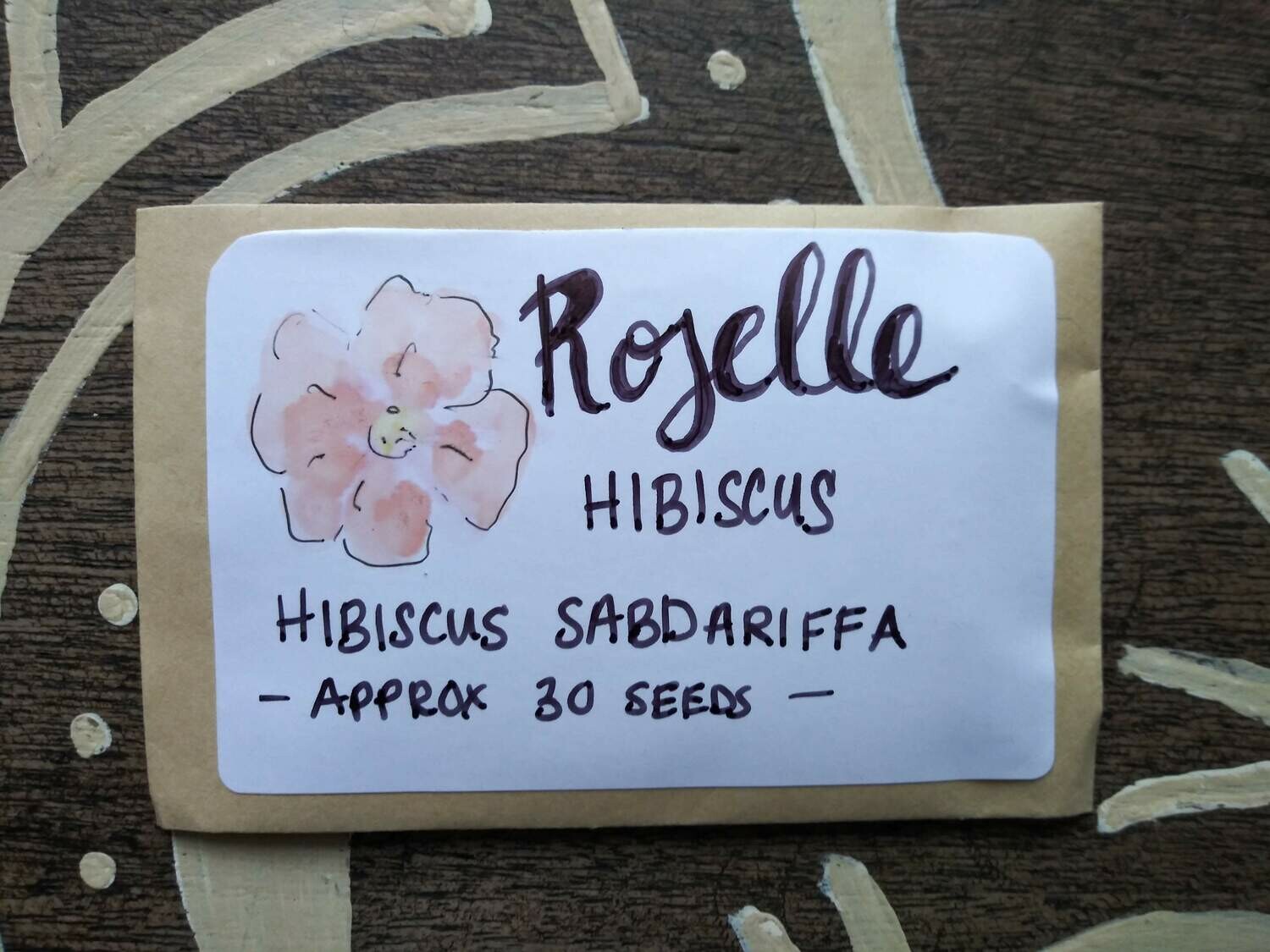
Each packet contains 30+ seeds, providing enough for succession sowing, sharing and selecting your strongest seedlings.
🌿 Quick Facts
| Category | Details |
|---|---|
| Widely Used Botanical Name | Hibiscus sabdariffa |
| Current Accepted Name | Sabdariffa gossypiifolia |
| Common Names | Roselle, Caribbean Sorrel, Jamaican Sorrel, Jamaica Sorrel, Florida Cranberry, Red Sorrel, Bissap, Karkadé, Zobo |
| Plant Family | Malvaceae—the hibiscus, okra and mallow family |
| Plant Type | Fast-growing warm-season annual for most growers; may persist as a short-lived perennial in frost-free climates |
| Packet Size | 30+ seeds |
| Primary Edible Harvest | Fleshy red calyces surrounding the developing seed capsules |
| Other Edible Parts | Young leaves and, in some food traditions, mature processed seeds |
| Typical Mature Height | Approximately 5–7 ft; favorable plants may grow taller |
| Typical Mature Width | Approximately 3–5 ft |
| Growing Range | Can be grown as an annual throughout much of the continental United States |
| Best Perennial Potential | Frost-free portions of zones 10–11 |
| Sun Requirements | Full sun—at least 6 hours of direct sunlight |
| Germination | Commonly 5–14 days under consistently warm conditions |
| Ideal Germination Temperature | Approximately 70–85°F |
| Sowing Depth | Approximately ¼ inch |
| Spacing | 3–4 ft between mature plants |
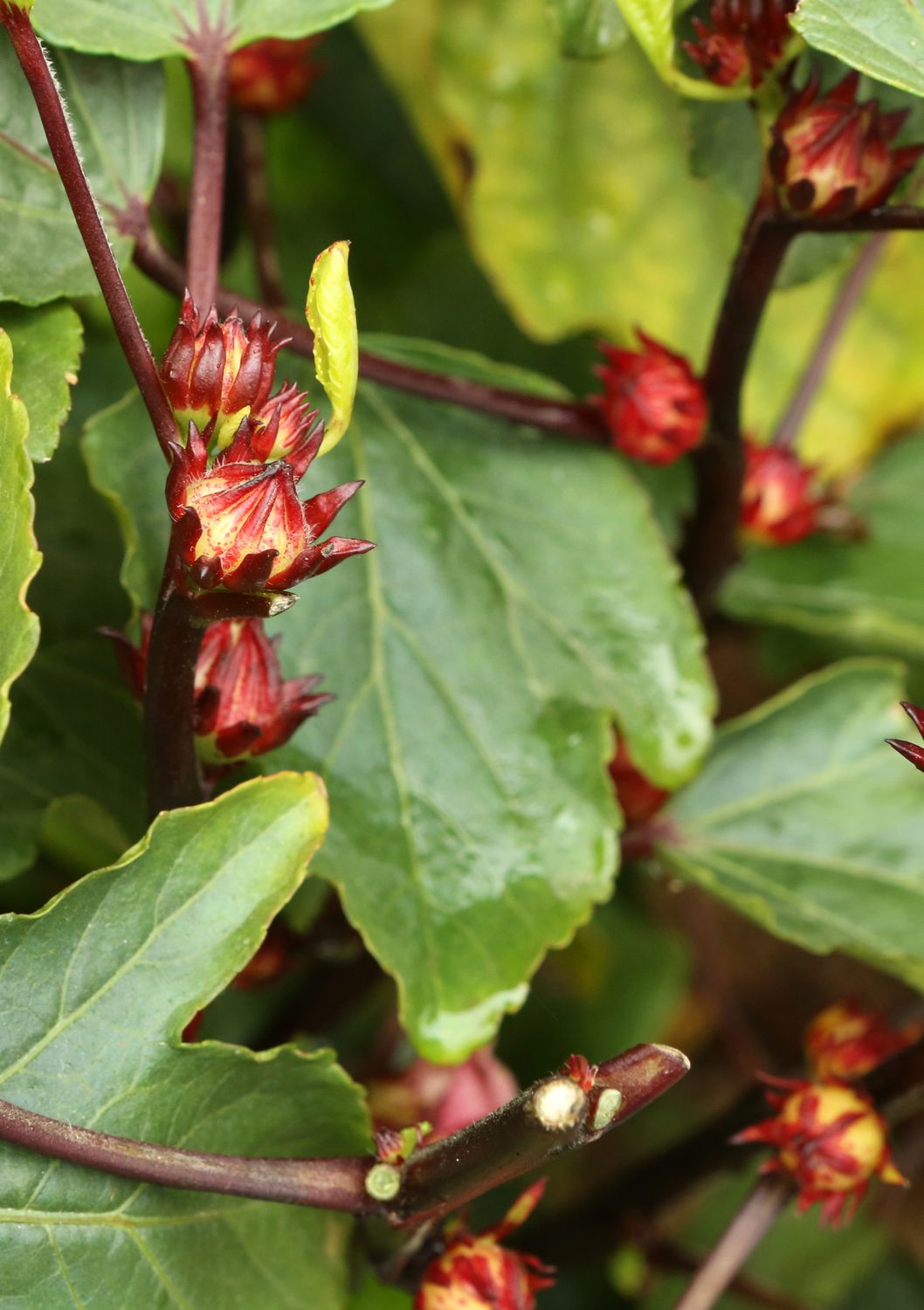
| Growth Habit | Upright, multistemmed and shrub-like with burgundy-red stems |
| Flowering Habit | Short-day responsive; flowering increases as nights become longer |
| Florida Planting Season | Generally March–May; August planting is also possible |
| Florida Harvest Season | Typically October–December, sometimes continuing later in warm areas |
| Cold Sensitivity | Damaged by temperatures below approximately 40°F; frost or freezing temperatures may kill plants |
| Water Needs | Consistent moisture during establishment; moderate drought tolerance once deeply rooted |
| Container Suitable | Yes, preferably in a 10- to 20-gallon container for meaningful production |
| Pollinator Value | Flowers attract bees and other beneficial insects |
| Wind Tolerance | Moderate; tall, heavily branched plants may require pruning or support |
| Salt Tolerance | Not recommended for direct salt spray or saline irrigation |
Roselle generally reaches 5–7 ft in Central Florida, requires full sun and well-drained soil, and begins its main flowering cycle as nights lengthen in late summer and fall.
🌱 Important Germination Note
We provide 30+ seeds, but no seed packet can guarantee a specific number of mature plants. Germination and survival depend on:
- Seed-storage conditions
- Soil temperature
- Moisture consistency
- Planting depth
- Fungal pressure
- Light after emergence
- Transplant handling
- Length of the local growing season
Sow more seedlings than you ultimately need, then keep the strongest plants.
🌍 From African Crop to Global Holiday Tradition
Roselle originated in tropical Africa, with botanical references placing its native range from western tropical Africa toward Sudan. From there, the plant spread through tropical Asia, the Caribbean, the Americas and other warm regions, becoming part of distinct food traditions wherever it was grown.
Today, the same red calyx may appear as:
- Sorrel in Jamaica and other Caribbean communities
- Bissap in Senegal and parts of West Africa
- Zobo in Nigeria
- Karkadé in Sudan, Egypt and surrounding regions
- Agua de Jamaica in Mexico and Central America
- Florida cranberry in historic Florida gardens
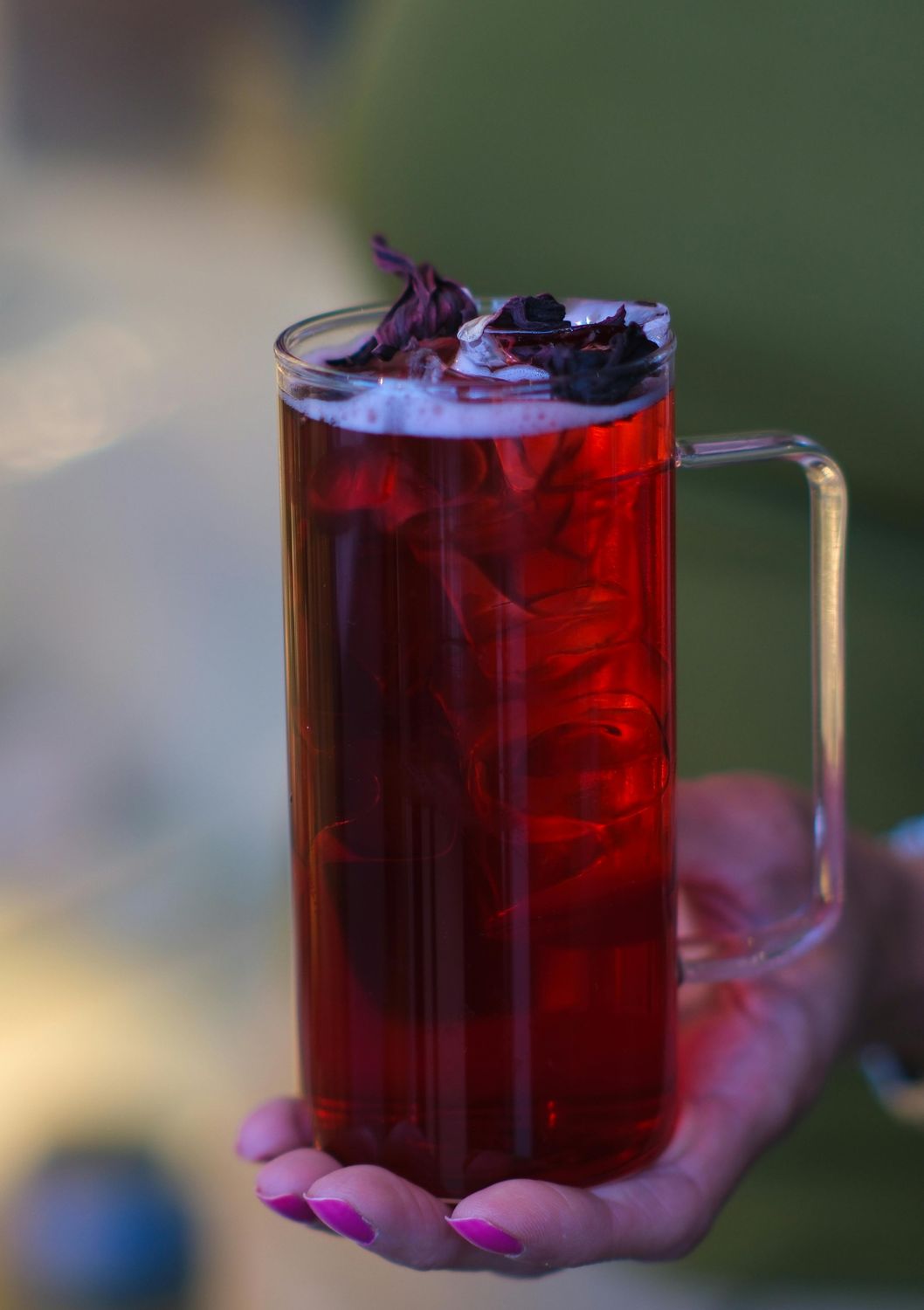
In the Caribbean, sorrel is strongly associated with Christmas and year-end celebrations. The calyces are steeped with ginger, spices and sweetener to create a deep-red drink served chilled or over ice.
Florida homesteaders once grew roselle as a warm-season garden crop and used its tart calyces as a substitute for temperate cranberries. That history explains the enduring name Florida cranberry, even though roselle is not botanically related to the true cranberry. UF/IFAS notes that it was once common around Florida Cracker homesteads.
🍒 The “Fruit” Is Actually a Calyx
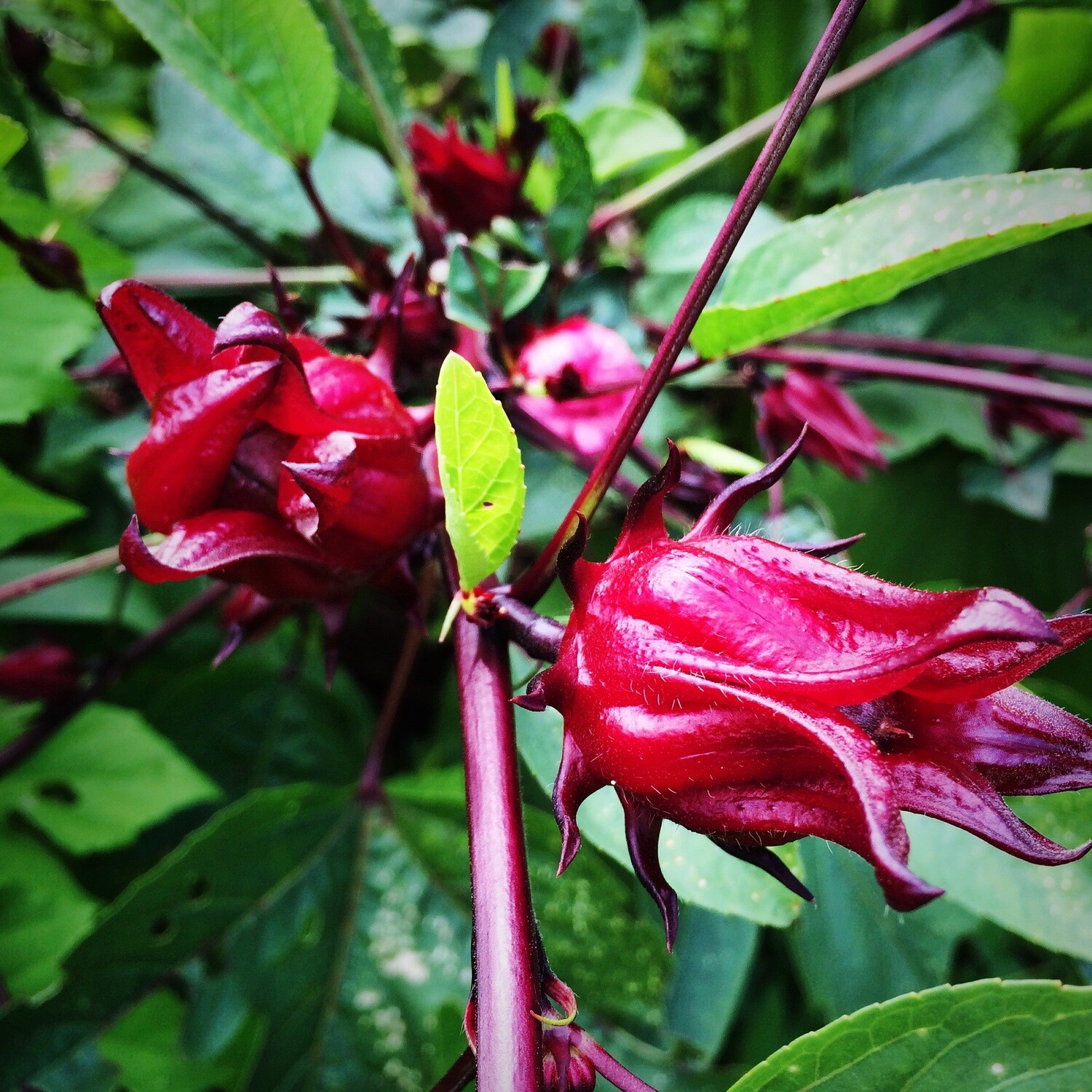
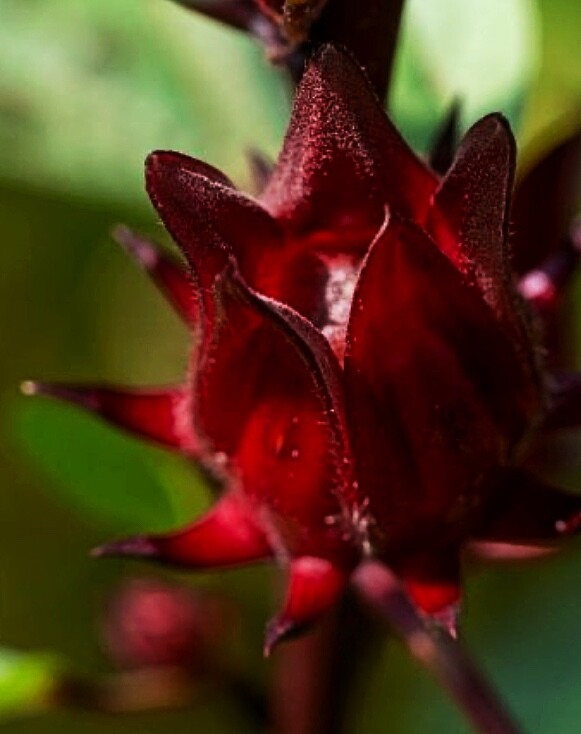
Roselle is often described as producing fruit, but the colorful portion used for tea and cooking is technically the fleshy calyx—the enlarged structure at the base of the flower.
The growth sequence looks like this:
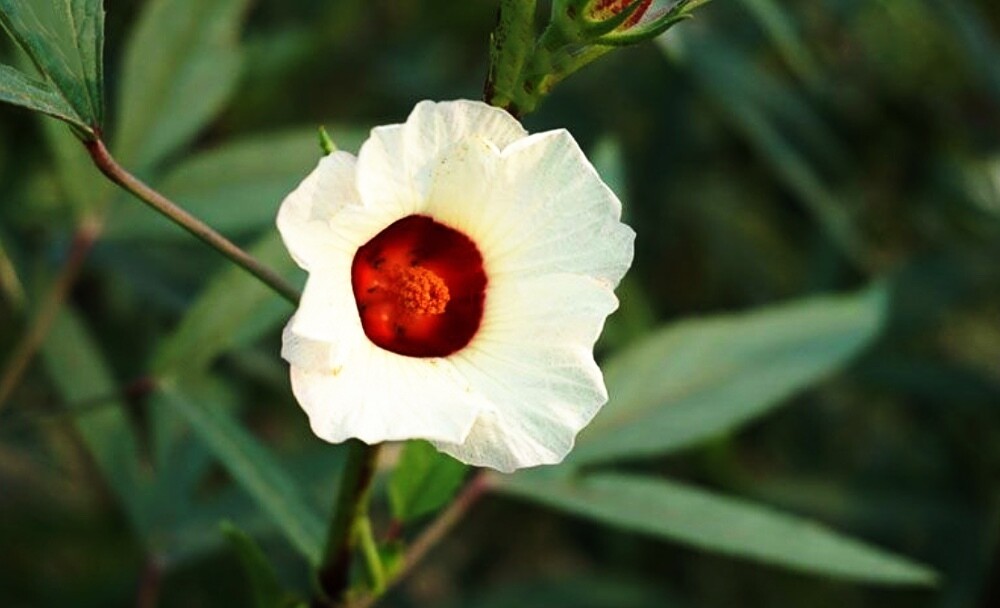
- A cream, pale yellow or blush-colored hibiscus flower opens.
- The petals usually last about one day.
- The flower drops.
- The red calyx surrounding the developing seed capsule becomes thick and fleshy.
- The calyx is harvested while tender and plump.
- The inner seed capsule is removed before most culinary uses.
Harvest before the calyx becomes brown, fibrous or dry. In Central Florida, the primary harvest commonly begins during October or November.
🍹 Flavor and Culinary Profile
| Characteristic | What to Expect |
|---|---|
| Fresh Calyx Flavor | Bright, tart and fruity |
| Closest Comparisons | Cranberry, sour cherry, red currant and rhubarb |
| Texture | Crisp when fresh; softens quickly when simmered |
| Color | Ruby red to deep burgundy |
| Tea Profile | Tangy, refreshing and naturally caffeine-free |
| Young Leaf Flavor | Lemon-tart, pleasantly sour and slightly herbal |
| Best Pairings | Ginger, cinnamon, clove, allspice, citrus, pineapple, mint, sugar, honey and tropical fruits |
| Natural Pectin | Useful in jams, jellies, sauces and preserves |
| Primary Uses | Tea, holiday drinks, syrup, jam, jelly, sauces, wine, cordials and desserts |
🌺 Top Ways to Use a Roselle Harvest
Fresh or frozen calyces
- Florida cranberry-style sauce
- Jam and jelly
- Fruit leather
- Chutney
- Relish
- Pie or crisp filling
- Syrup
- Cocktail and mocktail mixers
- Sorbet
- Fermented beverages
- Wine and cordials
- Natural red food coloring
Dried calyces
- Hot herbal tea
- Iced hibiscus tea
- Caribbean sorrel
- Bissap
- Agua de Jamaica
- Tea blends with mint, lemongrass or citrus peel
- Powdered drink and dessert flavoring
Young leaves
- Salads
- Curries
- Soups
- Stir-fries
- Chutneys
- Lentil dishes
- Cooked greens
- Sour flavoring for broths and sauces
UF/IFAS recognizes the calyces, leaves and seeds as food ingredients, including the traditional use of roasted seeds in beverages and soups.
Seed-Packet Safety Note
The seeds inside this retail packet are sold for planting—not for consumption.
Only consume seeds harvested from your own mature plants when they have been handled, cleaned and prepared according to an established food-use method.
🫖 Classic Jamaican-Style Sorrel Drink
Ingredients
- 2 cups fresh roselle calyces or approximately 1 cup dried calyces
- 8 cups water
- 2–3 inches fresh ginger, sliced or grated
- 4–6 whole cloves
- 1 cinnamon stick
- 2–4 allspice berries
- Orange or lime peel, optional
- Sugar, honey or preferred sweetener to taste
- Lime juice to taste
Directions
- Remove the inner seed capsules from fresh calyces.
- Rinse the calyces thoroughly.
- Bring the water, ginger and spices to a boil.
- Add the roselle calyces.
- Reduce the heat and simmer gently for approximately 10 minutes.
- Remove from heat, cover and steep for at least 30 minutes.
- For stronger holiday-style flavor, refrigerate the covered infusion overnight.
- Strain and sweeten to taste.
- Add fresh lime juice.
- Serve chilled over ice.
Traditional recipes vary by household and may include pineapple peel, orange, bay leaf, additional spices or rum.
🍒 Florida Cranberry-Style Sauce
Ingredients
- 4 cups fresh roselle calyces, seed capsules removed
- 1–1½ cups water
- ¾–1 cup sugar
- Orange zest, optional
- Cinnamon or ginger, optional
- Pinch of salt
Directions
- Wash and roughly chop the calyces.
- Combine them with water in a saucepan.
- Simmer until softened.
- Stir in the sugar and optional seasonings.
- Continue cooking until thickened.
- Cool and refrigerate.
Use it anywhere cranberry sauce would normally appear—Thanksgiving plates, sandwiches, cheese boards, pastries and savory glazes.
🌿 Nutritional and Traditional Wellness Profile
Roselle’s red color comes largely from anthocyanins and related plant pigments. Research has also identified organic acids, polyphenols and other antioxidant compounds in the calyces.
Hibiscus beverages have been studied for possible effects on blood pressure and other cardiometabolic measurements. However, a food plant should not be marketed as a guaranteed treatment or cure. Evidence varies by product, dosage, preparation and individual health status.
Responsible wellness language
- Roselle is a traditional food and beverage plant.
- It contains naturally occurring anthocyanins and polyphenols.
- Unsweetened roselle tea is naturally caffeine-free.
- Results from concentrated extracts should not be directly applied to ordinary garden recipes.
- Roselle should not replace prescribed medication or professional medical advice.
🌸 Ornamental and Ecological Appeal
Roselle earns its garden space before the first calyx is harvested.
Landscape features
- Burgundy to red stems
- Lobed green leaves with red veins
- Cream or pale-yellow hibiscus flowers
- Dark-red flower centers
- Upright tropical architecture
- Brilliant ruby calyces during fall
- Dense seasonal screening
- Strong contrast with silver, chartreuse and dark-green foliage
Landscape uses
- Edible privacy hedge
- Tall vegetable-garden backdrop
- Pollinator border
- Tropical annual bed
- Food forest edge
- Raised-bed centerpiece
- Seasonal screen
- Large patio container
- Cut-flower and botanical display garden
The stems also produce a useful bast fiber historically used for cordage, sacks and similar applications.
SEED STARTING, SEASONAL CARE, WATERING, CONTAINERS & PRODUCTION
🌱 How to Grow Roselle From Seed
Roselle loves heat, full sun and a long growing season. The most common challenge is not getting the seed to germinate—it is giving the plant enough warm weather to reach its naturally late flowering and harvest period.
Roselle is responsive to day length and generally increases flowering when nights reach approximately 12 hours or longer. Starting seeds early provides time to build a large, branched plant before the fall flowering signal arrives.
🌡️ Germination Guide
| Germination Detail | Recommendation |
|---|---|
| Sowing Depth | Approximately ¼ inch |
| Soil Temperature | Ideally 70–85°F |
| Expected Germination Window | Commonly 5–14 days |
| Starting Medium | Sterile, well-draining seed-starting mix |
| Container | Cell tray, soil block or small nursery pot |
| Moisture | Evenly moist—not saturated |
| Light After Emergence | Very bright light or full-spectrum grow lights |
| Transplant Timing | After frost danger and when nights are consistently warm |
| Final Spacing | 3–4 ft apart |
UF/IFAS reported germination in approximately 5–10 days during its Central Florida trials. Cooler soil can slow emergence considerably.
🌱 Indoor Seed-Starting Method
- Fill cells or small pots with fresh seed-starting mix.
- Moisten the medium before sowing.
- Sow one or two seeds per cell approximately ¼ inch deep.
- Cover lightly.
- Keep the medium warm and evenly moist.
- Do not leave trays sitting in stagnant water.
- Provide strong light immediately after seedlings emerge.
- Thin or separate seedlings after true leaves develop.
- Begin light airflow to strengthen stems.
- Harden plants outdoors gradually before transplanting.
In regions with shorter summers, start seeds 6–8 weeks before the average last frost date. Never transplant outdoors solely because the calendar says spring—wait until frost danger has passed and the soil has warmed.
☀️ Direct Sowing
Roselle may be direct-sown where the growing season is long and warm.
- Wait until frost danger has passed.
- Confirm that the soil is thoroughly warm.
- Prepare a weed-free, compost-enriched bed.
- Sow seeds approximately ¼ inch deep.
- Keep the seed zone consistently moist.
- Thin seedlings to the strongest plant every 3–4 ft.
Direct sowing is most dependable in Florida, the Gulf Coast, southern Texas and similarly warm regions.
🌿 When to Plant Roselle
Florida
- March–May: Best general sowing and transplant period
- June–July: Possible, but plants have less time to build size
- August: An alternative Florida planting window for more moderate growth
- September onward: Usually too late for maximum production unless conditions remain warm
- October–December: Main calyx harvest season
- Winter: Save seed and replant the following season
UF/IFAS recommends spring planting and also recognizes August as an alternative Florida planting period.
Southeastern United States—Zones 7–8
- Start indoors 6–8 weeks before the final frost.
- Transplant once nights and soil are warm.
- Maximize early vegetative growth.
- Expect flowering as nights lengthen.
- Harvest all usable calyces before frost.
Mid-Atlantic, Midwest and Northeast
Roselle can grow as an annual, but short-season gardeners should start early. The plant may grow impressively all summer and still begin flowering too late to produce a large calyx harvest before frost.
Use:
- Indoor seed starting
- Warm soil
- Full sun
- Dark, uninterrupted nights later in the season
- Frost protection during the final harvest window
Avoid placing plants near strong nighttime landscape lighting, which may interfere with short-day flowering.
Western United States
Roselle can perform well in warm inland locations with irrigation. In arid climates:
- Provide consistent root-zone moisture.
- Protect young seedlings from drying winds.
- Use mulch.
- Consider gentle afternoon protection during extreme desert heat.
- Avoid saline irrigation whenever possible.
Salinity can reduce germination and seedling growth, so roselle should not be treated as a dependable salt-tolerant crop.
🌞 Where to Plant Roselle
Best locations
- Full sun with at least 6 hours of direct light
- Warm, open garden beds
- Raised beds with ample root depth
- South-facing vegetable gardens
- Food forest edges with open sky
- Behind shorter vegetables
- Areas protected from severe wind
- Locations accessible for frequent fall harvests
Avoid
- Deep shade
- Waterlogged depressions
- Areas beneath strong nighttime lights
- Narrow pathways
- Direct salt-spray exposure
- Beds beside highly competitive tree roots
- Locations where a 5- to 7-ft shrub will shade smaller crops
- Low areas that remain flooded after summer storms
Roselle performs poorly in shade and prefers well-drained soil, although established plants can become moderately drought tolerant.
🌾 Soil Preparation
Roselle is adaptable but performs best in living, fertile, well-drained soil.
In-ground preparation
Top-dress or lightly incorporate:
- Finished compost
- Charged biochar
- A modest amount of balanced organic fertilizer
- Trace-mineral amendments where needed
- A 2- to 4-inch hardwood mulch layer after planting
Do not bury the plant crown or pile mulch against the stem.
Florida sandy soil
Compost and organic mulch help:
- Retain moisture
- Hold nutrients
- Support soil biology
- Moderate soil temperature
- Reduce drought stress
- Suppress weed competition
Heavy clay soil
Plant in a raised bed or broad mound. Avoid digging a deep hole that acts like a water-holding basin.
🌿 Transplanting Roselle Seedlings — High & Tight
Seedlings should be actively growing, hardened outdoors and large enough to handle without disturbing the roots excessively.
- Water the seedling before transplanting.
- Dig a hole only slightly wider than the root ball.
- Keep the hole at the same depth as the current container.
- Gently remove the seedling.
- Position the top of the root ball at or slightly above surrounding grade.
- Backfill firmly without crushing the soil structure.
- Water slowly at soil level.
- Top-dress with compost and organic amendments.
- Apply hardwood mulch.
- Keep mulch several inches away from the stem.
GreenDreams planting guide:
https://youtu.be/RRQFY30qdA8?si=rRIcsbLlVAVYotfI
💧 Watering Roselle
Always water at soil level
Roselle should be watered in the morning at the root zone.
Avoid routine overhead watering. Wetting foliage unnecessarily can:
- Increase leaf-spot pressure
- Spread soil-borne organisms
- Waste water through evaporation
- Damage tender foliage during intense afternoon sun
- Leave leaves wet overnight
Drip irrigation or soil-level hand watering is preferred.
Seed trays
- Keep evenly moist during germination.
- Never allow the medium to become swampy.
- Use bottom watering carefully and drain excess water.
- Reduce moisture slightly after seedlings become established.
Newly transplanted seedlings
| Establishment Period | Suggested Starting Point |
|---|---|
| First 7–10 days | Check daily and water when the root zone begins drying |
| Weeks 2–4 | Water deeply several times weekly, depending on rainfall |
| Established plants | Water during extended dry periods or visible morning wilt |
| Container plants | Check daily during hot or windy weather |
Established roselle develops a substantial root system and can tolerate moderate dry periods, but reliable moisture generally produces larger plants and heavier calyx harvests.
🌿 Organic Fertility
Roselle does not need excessive fertilizer.
At planting
Use:
- Compost
- Balanced organic vegetable fertilizer
- Charged biochar
- Trace minerals where soil testing indicates a need
During vegetative growth
- Apply compost around the root zone.
- Use a moderate organic fertilizer according to its label.
- Feed lightly if leaves become uniformly pale.
- Maintain mulch.
Before flowering
Reduce high-nitrogen feeding. Excessive nitrogen can create a giant leafy plant with delayed or reduced flowering.
Aim for strong—but not overly soft—growth.
✂️ Pruning for More Branches and Calyces
Early pruning encourages roselle to branch and develop additional flowering shoots. UF/IFAS specifically recommends early pruning for fuller plants and increased flowering potential.
Pinching method
- Allow the seedling to become well established.
- When it reaches approximately 12–24 inches, remove the growing tip.
- Cut immediately above a healthy leaf node.
- Allow multiple side shoots to develop.
- Pinch exceptionally tall side shoots once more if needed.
Avoid heavy late-season pruning. Once shortening days begin stimulating flower buds, major cuts may remove future calyx production.
🌬️ Wind Care
Roselle develops thick stems, but mature plants can still become top-heavy.
In exposed locations:
- Prune early for lower branching.
- Space plants so stems do not stretch toward light.
- Use a flexible stake when needed.
- Avoid excessive nitrogen.
- Place plants near a wind-filtering hedge rather than a solid wall.
- Harvest calyces frequently to reduce branch weight.
- Cut damaged stems cleanly after storms.
🪴 Container Growing
Roselle can grow in a container, but larger containers produce stronger plants and reduce daily watering demands.
| Container Stage | Recommended Use |
|---|---|
| 3- to 4-inch pot | Young seedling |
| 1 gallon | Early growth |
| 3 gallons | Temporary production |
| 5 gallons | Minimum practical patio size |
| 10–15 gallons | Better home harvest |
| 20+ gallons | Maximum container growth and stability |
Container mix
Use a fertile but well-aerated blend such as:
- 60–70% quality peat- or coconut-coir-based potting mix
- 15–25% compost or pine bark fines
- 10–20% perlite, pumice or similar drainage material
Do not fill containers with compacted native yard soil.
Container placement
- Full sun
- Near a reliable water source
- Protected from severe wind
- Raised enough to keep drainage holes open
- Away from reflective walls that create extreme heat
- Away from nighttime security lights during the fall flowering period
Roselle can become rootbound rapidly. A 5-gallon container may keep the plant smaller, but a 10- to 20-gallon container offers greater production potential.
🏠 Can Roselle Grow Indoors?
Roselle is not a practical long-term houseplant. It needs:
- Strong light
- Warm temperatures
- Significant root space
- Good air circulation
- Appropriate seasonal darkness for flowering
Indoor growing is most useful for:
- Starting seeds
- Protecting young plants before the final frost
- Extending the season briefly
- Maintaining cuttings in cold climates
A sunny window alone may not provide enough light for strong seedlings. Use a full-spectrum grow light when necessary.
🌿 Companion Plants and Garden Guild
Pollinator companions
- African blue basil
- Tulsi
- Zinnias
- Coreopsis
- Tropical sage
- Marigolds
- Sweet alyssum during cool weather
- Native asters
Soil-building companions
- Pigeon pea
- Mexican sunflower
- Perennial peanut
- Cowpeas
- Clumping grasses for chop-and-drop mulch
Attractive edible companions
- Lemongrass
- Turmeric
- Ginger
- Okinawa spinach
- Cranberry hibiscus
- Lagos spinach
- Surinam spinach
- Sweet potato
- Eggplant
- Peppers
Keep companions far enough from the roselle stem to prevent root competition and maintain airflow.
🍂 Florida and Southeastern Seasonal Guide
| Season | What Roselle Is Doing | Recommended Care |
|---|---|---|
| Late Winter | Seeds may be started in protected warm conditions | Prepare seed supplies, containers and garden beds |
| Spring | Germination and establishment | Transplant after frost; begin steady watering |
| Summer | Rapid leafy and structural growth | Pinch early, mulch and monitor water |
| Late Summer | Branching continues; nights begin lengthening | Stop major pruning and avoid excessive nitrogen |
| Fall | Main flowering and calyx production | Harvest every few days as calyces become plump |
| Early Winter | Final harvest and seed maturation | Harvest before cold; allow selected pods to dry for seed |
| After Frost | Plants decline or die | Remove plants, compost healthy material and store seeds |
Roselle is not deciduous in the same sense as a temperate fruit tree. It is a tropical crop that usually completes its annual production cycle and is killed by cold.
🌱 Saving Seeds for Next Season
Select several healthy calyces and leave them on the plant rather than harvesting them for food.
- Allow the seed capsule to mature and turn dry.
- Harvest before the capsule splits and scatters seed.
- Dry the capsule further in a protected location.
- Open it and remove the seeds.
- Separate seeds from plant debris.
- Allow seeds to become thoroughly dry.
- Store in a labeled paper packet or airtight container.
- Keep them cool, dry and dark.
Roselle can self-pollinate, but insects may also cross-pollinate plants. Growers preserving a specific variety should separate different roselle selections by a substantial distance. UF/IFAS recommends isolation of approximately 500–1,600 ft for higher-confidence variety maintenance.
HARVEST, CAUTIONS, TROUBLESHOOTING, FAQ & SHIPPING
🍒 How to Harvest Roselle Calyces
The ideal calyx is:
- Brightly colored
- Thick and fleshy
- Tender rather than fibrous
- Fully expanded around the seed capsule
- Harvested before browning or drying
Calyces often reach a useful size within approximately one to two weeks after the flower drops, although weather and cultivar affect the timing.
Harvest method
- Wear gloves if the stems irritate your skin.
- Use clean pruning shears.
- Clip the calyx with a short section of stem.
- Avoid pulling hard enough to damage the branch.
- Harvest every few days during peak production.
- Remove the inner seed capsule before culinary use.
- Refrigerate, freeze, dry or process the calyces promptly.
UF/IFAS recommends harvesting while the calyces remain tender and plump and before they turn brown. Harvesting regularly can also stimulate continued flower production.
🍒 Removing the Seed Capsule
The inner capsule is firm and green when the culinary calyx is ready.
Simple method
- Slice across the base of the calyx.
- Push the seed capsule out through the opening.
- Separate the fleshy red material.
- Rinse the usable calyx.
- Compost the immature capsule.
A narrow apple corer or purpose-made roselle-calyx tool can speed up processing large harvests.
🧺 Storing the Harvest
Refrigeration
Fresh calyces generally keep for approximately one week when refrigerated clean and dry.
Freezing
- Remove seed capsules.
- Wash and dry the calyces.
- Freeze in a single layer.
- Transfer to freezer-safe containers.
Drying
- Remove seed capsules.
- Wash and thoroughly drain the calyces.
- Cut large pieces for even drying.
- Dry in a food dehydrator or protected, well-ventilated area.
- Continue until completely crisp.
- Store airtight away from light and humidity.
Do not seal partially moist calyces in storage containers. Residual moisture can cause mold.
⚠️ Important Cautions
Seeds in This Packet Are for Planting
The 30+ seeds included in this packet are agricultural planting seed.
Do not roast, brew, grind or consume seeds directly from the retail packet.
Culinary Use Versus Concentrated Herbal Products
Roselle has an extensive history as a food and beverage ingredient. That does not mean all quantities or concentrated preparations are appropriate for every person.
People who are:
- Pregnant or breastfeeding
- Managing low blood pressure
- Taking blood-pressure medication
- Taking diabetes medication
- Managing kidney or liver conditions
- Preparing for surgery
- Using other concentrated herbal products
should ask a qualified healthcare professional before regularly consuming concentrated roselle extracts or medicinal-strength teas. Reviews have noted possible medication and safety considerations, while also emphasizing the need for further research.
Food Safety
- Wash calyces and leaves before use.
- Do not consume plant material treated with products not labeled for edible crops.
- Follow pesticide harvest intervals.
- Discard moldy, fermented or foul-smelling material unless it is part of a controlled food-fermentation process.
- Refrigerate homemade syrups, sauces and fresh beverages promptly.
Frost
Roselle is highly cold sensitive. Plants may be damaged below approximately 40°F and are likely to be killed by freezing temperatures. Harvest before major cold fronts.
Dogs, Cats and Livestock
Roselle’s history as human food does not establish unrestricted safety for every animal. Prevent pets and livestock from eating large quantities unless an animal-health professional approves the plant for that species.
🔍 Roselle Troubleshooting Guide
Icons identify common issues and organic recovery steps—look for 🌿 for the recommended response.
| ⚠️ Issue | 🧠 Likely Cause | 🌿 Organic Response |
|---|---|---|
| 🌱 Seeds do not germinate | Cold soil, excessive moisture, deep planting or old seed | Maintain 70–85°F, sow approximately ¼ inch deep and use fresh draining mix |
| 🫣 Seedlings become tall and thin | Insufficient light | Move grow lights closer and provide gentle airflow |
| 🍂 Seedling leaves yellow | Saturated soil or root stress | Improve drainage and allow slight surface drying |
| 🌞 Plants grow slowly | Shade or cool conditions | Move into full sun after gradual acclimation |
| 🌿 Large plant produces few flowers | Long days, nighttime lighting or excess nitrogen | Allow natural darkness, stop heavy feeding and wait for shorter days |
| 💧 Leaves wilt in the morning | Root zone is dry | Water deeply at soil level |
| 💦 Leaves wilt in wet soil | Poor drainage or root damage | Reduce irrigation and improve drainage |
| 🐛 Leaves have large holes | Caterpillars, beetles or grasshoppers | Inspect manually; use Bt for caterpillars according to the edible-crop label |
| 🪲 Leaves curl or become sticky | Aphids, whiteflies or other sap feeders | Check undersides; encourage beneficial insects and use labeled soap if needed |
| 🐜 Ants climb the stems | Ants may be tending aphids or scale | Identify and address the sap-feeding pest |
| 🍄 White coating appears | Powdery mildew | Improve airflow, avoid overhead watering and remove heavily affected leaves |
| 🍄 Dark leaf spots develop | Prolonged leaf wetness or fungal pressure | Water at soil level and remove infected debris |
| 🌾 Plant is huge but floppy | Excess nitrogen, crowding or shade | Reduce feeding, improve light and support stems |
| 🌬️ Branches split | Wind or heavy calyx load | Harvest regularly, prune damaged stems and add flexible support |
| 🍂 Calyces become brown and tough | Harvest was delayed | Harvest younger calyces more frequently |
| ❄️ Leaves blacken after a cold night | Chilling or frost damage | Harvest remaining calyces and save mature seed |
| 🧫 Roots show knots and plant declines | Possible root-knot nematodes | Rotate crops, add organic matter and plant in a different bed next season |
| 🔥 Leaf edges burn | Fertilizer, drought, salt or reflective heat | Flush soil, adjust watering and reduce fertilizer |
| 🌺 Flowers appear but calyces fail | Pollination stress, heat, poor plant vigor or physical damage | Maintain even water and protect pollinator habitat |
🌱 Is Roselle Right for You?
✅ Ideal For
- Florida and Gulf Coast gardeners
- Caribbean and African food gardeners
- Herbal-tea enthusiasts
- Jam, jelly and syrup makers
- Growers seeking heat-tolerant summer crops
- Pollinator-friendly landscapes
- Gardeners who save seed
- Edible-landscape enthusiasts
- Fermentation and beverage makers
- Growers with full sun and a long warm season
- Northern gardeners willing to start seeds indoors
- Teachers and families demonstrating a full seed-to-harvest cycle
❌ Not Ideal For
- Deeply shaded gardens
- Sites with standing water
- Growers expecting an early-summer calyx harvest
- Very short-season climates without indoor seed starting
- Gardens continuously illuminated at night
- Landscapes exposed to regular salt spray
- Growers unable to provide 3–4 ft of spacing
- Anyone seeking a freeze-hardy perennial
- Customers expecting every seed to become a mature plant
❓ Frequently Asked Questions
How many seeds are included?
Each packet contains 30 or more roselle seeds.
How many plants will one packet produce?
The number varies according to germination conditions and seedling care. Rather than promising a fixed number, sow additional seeds and select the healthiest seedlings.
Is roselle an annual or perennial?
Treat roselle as an annual in most of the United States and most Florida gardens. It may survive longer in protected, genuinely frost-free climates, but annual replanting remains a dependable production strategy.
Can roselle grow outside Florida?
Yes. It can grow as a warm-season annual throughout much of the continental United States. The key limitation is having enough warm weather for the short-day flowering cycle and calyx harvest to occur before frost.
When should I start roselle seeds?
In Florida, sow from March through May for a large fall crop. In colder climates, begin seeds indoors 6–8 weeks before the final frost.
Why is my roselle not blooming?
Roselle is a short-day-responsive plant. Many types wait until nights approach 12 hours before flowering heavily. Excess nitrogen, shade and nighttime lighting may delay production.
How long does roselle take to mature?
Roselle commonly flowers approximately four to five months after planting, with Florida harvests concentrated in fall. The total timeline varies by cultivar, latitude, planting date and weather.
How tall will it grow?
Most plants reach approximately 5–7 ft tall and 3–5 ft wide. Early pruning can create a fuller, more branched plant.
Are the leaves edible?
Yes. Young leaves have a tart, lemony flavor and may be used raw in moderation or cooked in soups, curries and vegetable dishes.
Are the flower petals used for tea?
The familiar red hibiscus tea is usually made from the fleshy calyces, not primarily from the pale flower petals.
When are calyces ready to pick?
Harvest after the flower drops and the red calyx becomes thick, tender and plump. Do not wait until it becomes brown and dry unless saving seed.
Does harvesting encourage more production?
Regular harvest can encourage the plant to continue producing additional flower buds while conditions remain favorable.
Can roselle grow in containers?
Yes. Use at least a 5-gallon pot, although 10–20 gallons is better for substantial growth and production.
Can roselle be grown indoors?
It can be started indoors, but mature plants need intense light, substantial space and seasonal darkness. It is not an ideal permanent houseplant.
Will these seeds grow true to type?
Roselle can self-pollinate, but insects may move pollen between different roselle plants. Seed saved near another variety may show variation in future generations.
📦 Seed Shipping and Storage
Easy Nationwide Shipping
Unlike small live plants, roselle seed packets handle long-distance shipping well and can be shipped throughout the continental United States where permitted.
- Packets contain 30+ planting seeds.
- Orders leave our Florida nursery on Mondays.
- We currently use UPS Ground.
- Transit temperatures are less risky for dormant seed than for live tropical plants.
- Packages should still be removed from hot mailboxes, porches or freezing conditions promptly.
After Your Packet Arrives
Store unopened or unused seeds:
- In a cool location
- Away from direct sunlight
- Away from humidity
- In a sealed, labeled container
- Away from children and pets
- Separate from culinary seeds and food ingredients
Heat and moisture shorten seed-storage life. Do not leave packets in a greenhouse, vehicle or outdoor shed during Florida summer.
🏡 Shop With Us in Person
GreenDreams Nursery & Farm — Open to the Public
Pick up Roselle seeds and explore our seasonal selection of roselle plants, edible hibiscus, perennial leafy greens, tropical vegetables, fruit trees, native species and useful plants.
We often carry larger plants and unusual selections that are not practical to list or ship through our online store.
🌾 18709 US Hwy. 41, Spring Hill, FL 34610
🕘 Tuesday–Friday: 9AM–5PM
🌞 Saturday: 8AM–3PM
Stop by our regenerative nursery to see what is blooming, fruiting and ready for harvest this week.
🌿 Beyond the Seed: GreenDreams Services
At GreenDreams, we do more than sell plants and seeds—we design, build and restore productive ecosystems throughout Florida.
- 🌳 Onsite consultations and edible landscape design
- 🚜 Ecological installation and project management
- 🚚 Bulk compost, hardwood mulch, biochar and soil-material delivery
- 🌾 Wholesale plants and regenerative landscape solutions
- 🍃 Food forests, kitchen gardens and perennial vegetable systems
- 🪵 Soil-building and garden-revitalization services
Let our team help turn one packet of Roselle seeds into a thriving edible garden filled with tropical flavor, pollinators and seasonal abundance.
🌿 IMPORTANT INFORMATION BEFORE PURCHASING LIVE PLANTS
Please note: Plants purchased through our online store are not available for pickup at our retail nursery in Spring Hill, Florida.
Online inventory is housed at a separate facility and is priced, prepared, and handled exclusively for shipping.
🌱 Looking for larger plants or more selection?
Our retail nursery location offers far more availability, including larger sizes, specialty plants, and many selections not suitable for nationwide shipping.
Local pickup is available for retail nursery purchases only.
Visit our Spring Hill, FL retail nursery page to explore in-person shopping options.
🚚 LIVE PLANT SHIPPING & TRANSIT EXPECTATIONS
Live plants naturally experience stress during shipping. Temporary leaf drop, mild wilting, or cosmetic stress is normal after transit. Most plants recover quickly with proper watering, gradual light exposure, and basic aftercare. Some plants may require additional attention during the first few weeks.
Despite careful packing, minor cosmetic damage may occur during transit. Small issues such as broken leaves or stems typically resolve with time and proper care.
If your shipping box arrives with significant external damage, please contact UPS within 30 days to initiate a carrier claim.
⏱️ SHIPPING METHOD, TIMING & TRANSIT WINDOWS
All online orders ship via UPS Ground from our Central Florida nursery.
📦 Shipping Schedule: Orders ship once weekly on Mondays to reduce the risk of packages sitting in transit over weekends. A countdown clock on our website displays the next shipping date.
🚚 Typical Transit Times:
-
Florida: 1–2 days
-
Southern U.S.: approximately 2 days
-
Midwest, West & Northern U.S.: 3–5 business days
Long-distance shipments, particularly to the western U.S., may experience additional transit time due to agricultural inspections in states such as Arizona, California, and Texas.
Extended transit times can be more challenging for small or tender plants and may require additional recovery care after arrival.
🌡️ EXTREME WEATHER & SEASONAL RISK
Live plants are sensitive to temperature extremes.
We cannot guarantee plant condition during periods of extreme summer heat or winter cold and freezing temperatures. Weather-related delays, carrier interruptions, or exposure during delivery are beyond our control.
Customers are responsible for:
-
Monitoring tracking information sent via email
-
Retrieving packages promptly upon delivery
-
Preventing plants from being left outdoors in extreme conditions
During unsafe weather, holiday shipping volume, or extended transit risk, orders may be held and shipped the following week to protect plant health.
⚠️ CUSTOMER RESPONSIBILITY & REFUND POLICY
By purchasing live plants, customers acknowledge and accept the risks associated with shipping, weather exposure, transit delays, and regional suitability.
Refunds or replacements are considered only under exceptional circumstances and in accordance with our return and refund policy. We are not responsible for:
-
Weather-related damage
-
Carrier delays
-
Poor plant selection for a given climate or region
-
Improper care after delivery
Upon purchase, customers assume full responsibility for the ongoing care and success of their plants.
✅ CONSENT & AGREEMENT
By completing a purchase, you confirm that you have read, understand, and agree to all shipping policies, responsibilities, and conditions outlined above.
Our goal is transparency, plant health, and long-term growing success — and we appreciate your understanding and care when ordering live plants.


