


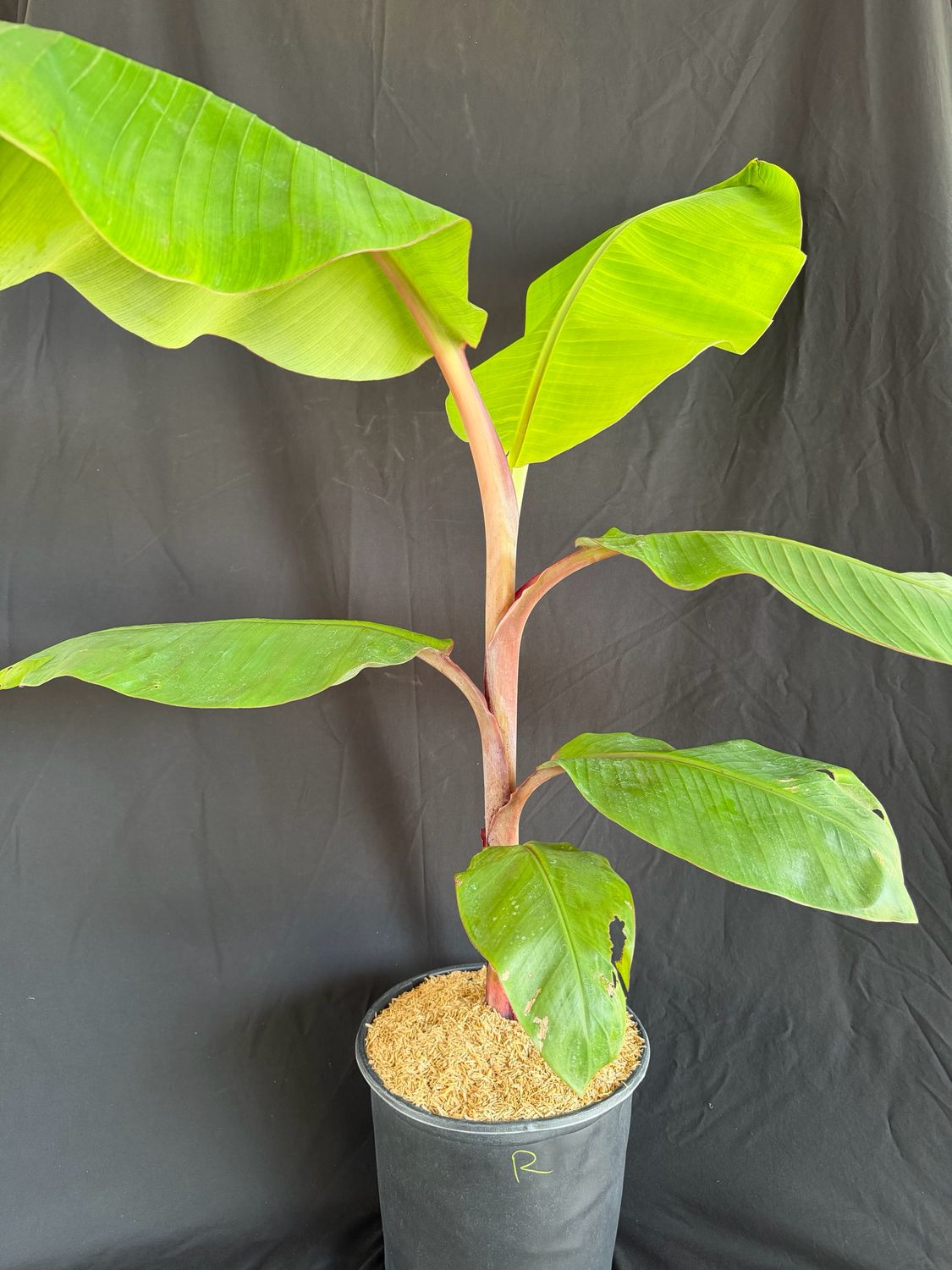
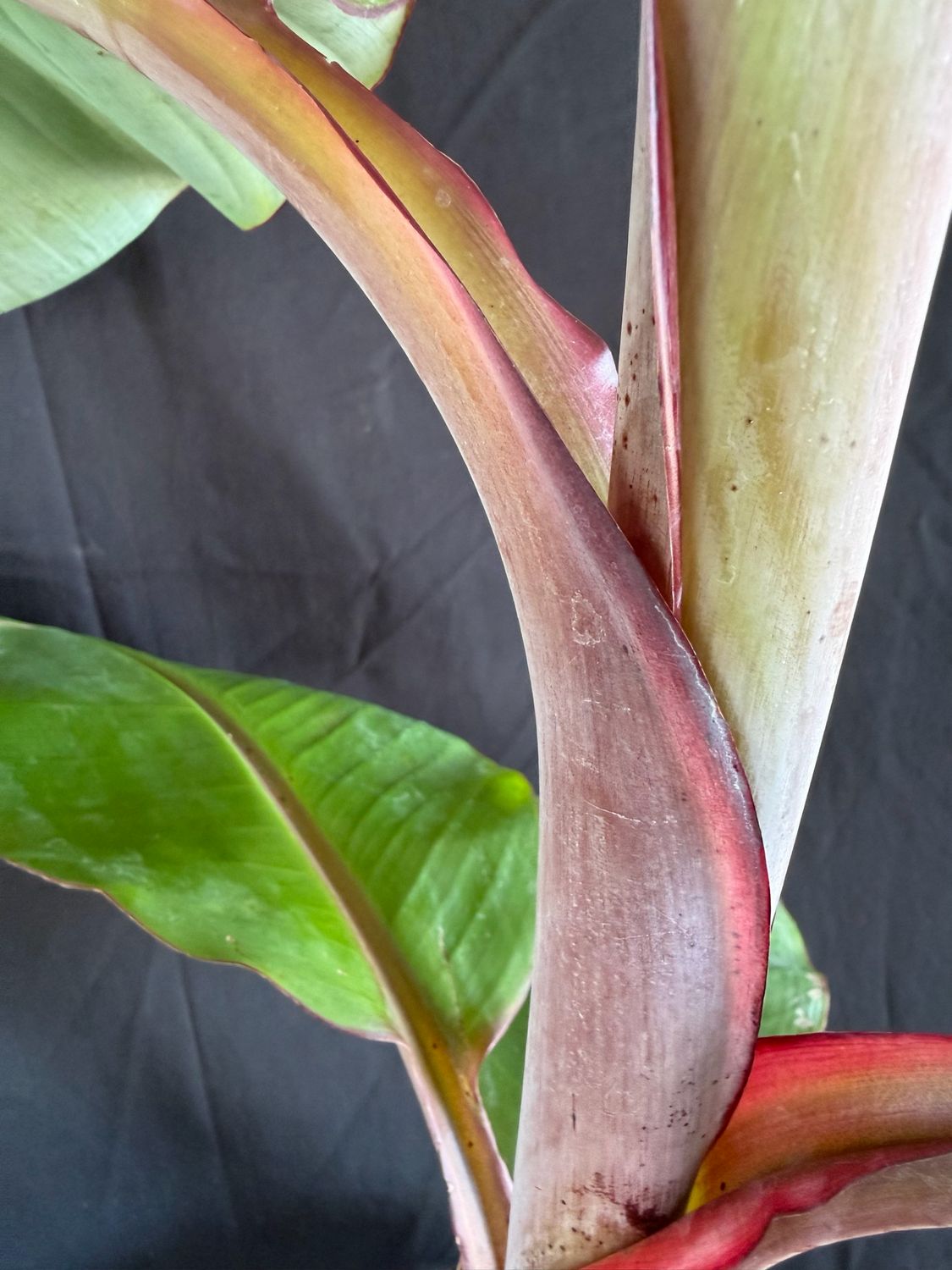
🍌 Cuban Red Dacca Banana – Rare Red Banana Plant for Sale 🌺🌿
The Tropical Showstopper with Sweet Red Fruit & Massive Jungle Energy
Some plants blend into the landscape.
The Cuban Red Dacca Banana (Musa acuminata AAA Group) completely transforms it.
With towering tropical leaves, deep maroon-red fruit, and creamy sweet bananas that taste richer than anything from the grocery store, this legendary cultivar has become one of the most sought-after edible tropical plants in the world.
Known by names such as:
- Cuban Red Banana
- Red Dacca
- Jamaican Red Banana
…this stunning tropical fruiting banana combines:
✅ Incredible ornamental value
✅ Delicious dessert-quality fruit
✅ Fast tropical growth
✅ Food forest performance
✅ Tropical resort aesthetics
At GreenDreams, this is one of our favorite bananas for creating instant tropical atmosphere in edible landscapes across Florida and the Southeast.
And yes — when these deep red banana bunches appear hanging beneath giant tropical leaves, people lose their minds. 🍌🔥
🌿 Quick Facts – Cuban Red Dacca Banana (Musa acuminata)
| Feature | Details |
|---|---|
| Botanical Name | Musa acuminata AAA Group |
| Common Names | Cuban Red Banana, Red Dacca, Jamaican Red Banana |
| Plant Type | Tropical fruiting banana |
| Plant Size at Sale | 3-Gallon Container |
| Estimated Age | Approximately 10–18 months |
| Mature Height | 8–15 ft tall |
| Mature Width | 6–10 ft clumping colony |
| USDA Zones | 9B–11 |
| Cold Hardiness | Sensitive below freezing |
| Sun Requirements | Full sun to bright filtered light |
| Growth Habit | Fast-growing clumping herbaceous perennial |
| Fruit Color | Red-purple exterior with creamy flesh |
| Fruiting Window | Typically 12–24 months |
| Salt Tolerance | Moderate |
| Wind Tolerance | Moderate with protection |
| Evergreen? | Semi-evergreen in frost-free climates |
| Container Friendly | Yes temporarily |
| Pollinator Friendly | Tropical flowers attract beneficial insects |
🍌 Why Grow Cuban Red Dacca Banana?
This is not your average grocery store banana.
The Cuban Red Dacca produces:
- Thick reddish-maroon fruit
- Creamier flesh
- Sweeter tropical flavor
- Berry-like undertones
- Massive lush foliage
- Incredible ornamental appeal
Compared to standard yellow bananas, the flavor is often described as:
🍌 Richer
🍌 Sweeter
🍌 Creamier
🍌 Slightly raspberry-like
🍌 Tropical custard flavor
The fruit itself tends to be:
- Shorter
- Thicker
- Denser
- More aromatic
Fully ripe fruit develops exceptional sweetness and a smooth almost dessert-like texture.
🌎 Origin Story – The Legendary Red Banana
Red bananas have been cultivated throughout Southeast Asia and tropical regions for centuries, where colorful banana cultivars were selected for flavor, resilience, and ornamental beauty.
Over time, Red Dacca bananas became especially popular throughout:
- Cuba
- Jamaica
- Central America
- Hawaii
- Tropical Florida
The cultivar eventually became highly collectible because of:
🌺 Its rare fruit color
🌿 Exotic tropical appearance
🍌 Superior dessert flavor
🌴 Fast-growing edible landscape value
Today, it remains one of the most iconic ornamental edible bananas in the tropical gardening world.
🌺 Tropical Ornamental Banana with Massive Landscape Appeal
Even without fruit, Cuban Red Dacca is breathtaking.
The plant produces:
- Huge paddle-shaped leaves
- Thick tropical pseudostems
- Lush dense canopy
- Strong jungle architecture
- Rich tropical texture
This makes it ideal for:
- Tropical food forests
- Poolside landscapes
- Privacy screens
- Courtyard gardens
- Tropical patios
- Resort-style designs
- Edible ecosystems
Few plants create “instant tropical paradise” faster than bananas.
🍴 Flavor Profile & Culinary Uses
🍌 What Does Cuban Red Dacca Taste Like?
Compared to Cavendish bananas:
✅ Sweeter
✅ Richer
✅ Creamier
✅ More aromatic
✅ Less chalky
Many growers describe the flavor as:
- Banana custard
- Vanilla berry banana
- Tropical raspberry banana
The flesh becomes incredibly smooth and fragrant when fully ripe.
🍌 Culinary Uses
Fresh Eating
The best way to experience the flavor.
Smoothies
Adds exceptional creaminess.
Banana Bread
Creates richer tropical flavor.
Frozen Desserts
Excellent for homemade “nice cream.”
Caribbean Cooking
Used in:
- Fried sweet dishes
- Banana fritters
- Tropical pastries
- Dessert recipes
Banana Chips
Dense texture dries beautifully.
🌴 Growing Cuban Red Dacca Banana in Florida
🌞 Sunlight Requirements
For maximum fruiting:
✅ Full sun is best
However, in Central and South Florida:
- Young plants often appreciate filtered afternoon light
- Wind protection improves leaf quality
- Moisture retention becomes extremely important during summer
🌡️ Cold Hardiness & Seasonal Behavior
Cuban Red Dacca performs best in:
- South Florida
- Coastal microclimates
- Protected Zone 9B locations
Winter Notes for Florida Growers
During colder months:
🍂 Leaves may yellow or shred
❄️ Frost may collapse foliage
🌱 Underground corms often rebound in spring
Bananas are not trees — they are giant herbaceous tropical plants.
Each pseudostem fruits once before naturally declining while new pups replace it.
🌧️ Florida Rainfall & Drainage
Bananas LOVE:
- Heat
- Moisture
- Humidity
- Organic matter
But they dislike:
⚠️ Standing water
⚠️ Compacted soils
⚠️ Oxygen-starved roots
Good drainage is critical for long-term health.
🌱 Best Practices for Planting & Growing Cuban Red Dacca Banana
Bananas are some of the fastest-growing and heaviest-feeding edible plants in the tropical gardening world. Experienced growers know that successful banana production depends heavily on:
- Soil biology
- Moisture retention
- Organic matter
- Nutrient cycling
At GreenDreams, we encourage growers to think of bananas less like fruit trees and more like giant tropical grasses thriving in compost-powered ecosystems.
🍌 The Banana Circle Method – One of the Best Backyard Banana Systems
One of the best regenerative ways to grow bananas is through a banana circle — a tropical permaculture technique designed to recycle nutrients and retain moisture naturally.
🌿 What Is a Banana Circle?
A banana circle is:
- A circular planting basin
- Designed to collect organic matter and moisture
- Bananas planted around the perimeter
- Composting biomass in the center
The system mimics how bananas naturally grow in tropical forest environments.
🌾 How to Build a Banana Circle
Typical Dimensions
- 5–8 ft wide
- 2–3 ft deep in center
Planting Layout
- 3–6 banana plants around the outside edge
Fill the Center With:
- Hardwood mulch
- Grass clippings
- Kitchen scraps
- Banana leaves
- Compost
- Wood chips
- Mexican sunflower biomass
- Pigeon pea trimmings
As materials break down:
🌿 Soil biology increases
💧 Moisture retention improves
🍌 Banana growth accelerates
🪱 Nutrient cycling intensifies
Banana circles are especially effective in:
✅ Florida
✅ Sandy soils
✅ Food forests
✅ Greywater systems
✅ Tropical homesteads
🌿 Where to Plant Cuban Red Dacca Banana
Choose:
✅ Full sun
✅ Rich organic soil
✅ Wind-protected areas
✅ Irrigated zones
✅ Warm southern exposures
Avoid:
⚠️ Standing water
⚠️ Frost pockets
⚠️ Compacted clay
⚠️ Severe wind exposure
Strong winds can shred leaves and reduce fruit production.
🌱 How to Plant Cuban Red Dacca Banana
Step 1 – Dig Properly
Dig a hole:
- Slightly wider than the container
- No deeper than the root ball
Step 2 – Plant Elevated
We strongly recommend planting:
- Slightly raised
- “High & tight”
- With excellent drainage around the corm
Step 3 – Feed the Soil
Amend with:
- Compost
- Biochar
- Worm castings
- Azomite
- Organic matter
Step 4 – Mulch Heavily
Bananas absolutely love mulch.
Best choices:
- Hardwood mulch
- Chopped banana leaves
- Wood chips
- Compost
Keep mulch slightly away from the pseudostem base.
Step 5 – Water Deeply
Water thoroughly after planting.
🎥 Planting Tutorial:
https://youtu.be/RRQFY30qdA8?si=rRIcsbLlVAVYotfI
💧 Watering Requirements
Bananas are heavy water users.
Newly Planted Bananas
- Water daily during establishment
- Especially during dry spring heat
Established Bananas
- Deep watering 2–4x weekly depending on rainfall
- More during active fruit production
💡 Pro Tip
Bananas respond incredibly well to:
- Drip irrigation
- Greywater systems
- Compost-rich mulch basins
- Heavy organic matter
🌿 Fertilizing & Feeding
Bananas are among the heaviest feeders in the edible landscape world.
Cuban Red Dacca Loves:
✅ Potassium
✅ Nitrogen
✅ Magnesium
✅ Compost-rich soils
✅ Frequent organic feeding
Excellent Organic Inputs
- Compost
- Fish hydrolysate
- Kelp meal
- Worm castings
- Biochar
- Azomite
- Chopped biomass mulch
High potassium levels dramatically improve:
🍌 Fruit size
🍌 Fruit sweetness
🍌 Production quality
🌾 Chop-and-Drop Companion Plants
Bananas thrive when surrounded by biomass-producing support plants.
Excellent Banana Guild Plants
- Mexican Sunflower
- Pigeon Pea
- Sunn Hemp
- Perennial Peanut
- Lemongrass
- Ginger
- Turmeric
- Comfrey
- Sweet Potato
These plants:
🌿 Build soil
🪱 Feed microbes
💧 Hold moisture
♻️ Cycle nutrients
✂️ Pruning & Banana Management
Bananas continuously produce underground pups.
For best production:
- Keep 1 mature fruiting stem
- 1 replacement stem
- 1 young pup
This is known as:
🍌 The Mother – Daughter – Granddaughter System
Benefits include:
✅ Better airflow
✅ Larger fruit
✅ Less overcrowding
✅ Stronger production
Remove excess pups regularly.
🪴 Growing in Containers
Cuban Red Dacca can be container grown temporarily.
Recommended Pot Progression
- 3-Gallon
- 7-Gallon
- 15–25 gallon minimum long-term
Container bananas require:
⚠️ More water
⚠️ More fertilizer
⚠️ More root management
Best Potting Mix
We recommend:
- Coconut coir
- Pine bark fines
- Compost
- Perlite
- Biochar
Goal:
✅ Moisture retention
✅ Aeration
✅ Biological activity
🍌 Fruiting Habits
Under ideal conditions:
- Fruiting may occur within 12–24 months
- Faster in South Florida
- Slower in cooler climates
What Improves Fruiting?
✅ Full sun
✅ Heat
✅ Potassium
✅ Wind protection
✅ Consistent moisture
✅ Heavy organic feeding
Each pseudostem fruits once before naturally declining.
New pups continue the cycle.
🍌 Banana Comparison Chart
| Variety | Flavor | Height | Cold Tolerance | Fruit Color | Best Feature |
|---|---|---|---|---|---|
| Cuban Red Dacca | Sweet, creamy, berry-like | 8–15 ft | Moderate | Red-purple | Best ornamental fruit |
| Namwa | Rich vanilla flavor | 8–12 ft | Better cold tolerance | Yellow | Excellent producer |
| Dwarf Cavendish | Familiar grocery flavor | 6–8 ft | Moderate | Yellow | Compact grower |
| Raja Puri | Dense sweet fruit | 6–10 ft | Better cold resilience | Yellow | Reliable in Zone 9 |
🔍 Troubleshooting Cuban Red Dacca Banana
| ⚠️ Issue | 🧠 Cause | 🌿 Solution |
|---|---|---|
| 🍂 Yellow lower leaves | Natural cycling | ✂️ Remove aging foliage |
| 🌬️ Torn leaves | Wind exposure | 🪵 Plant in protected microclimate |
| 💦 Soft corm | Poor drainage | 🪣 Raise planting area |
| ❄️ Winter burn | Frost exposure | 🌿 Mulch heavily before freezes |
| 🐛 Leaf chewing | Caterpillars | 🐞 Encourage beneficial insects |
| 🧪 Weak growth | Nutrient deficiency | 🌿 Increase potassium feeding |
❓ FAQ – Cuban Red Dacca Banana
Are red bananas edible?
Absolutely — many growers prefer them over standard bananas.
Do red bananas taste different?
Yes. They are sweeter, richer, creamier, and more aromatic.
Can Cuban Red Dacca grow in Central Florida?
Yes — especially in protected Zone 9B locations.
Will it survive frost?
Light frost may damage foliage, but established corms often recover.
Can bananas grow in a banana circle?
Yes — banana circles are one of the best regenerative systems for backyard banana production.
🚚 Shipping Information
This listing is for a live Cuban Red Dacca Banana plant in a 3-gallon container.
3-gallon bananas are substantially better suited for nationwide shipping because they:
✅ Hold moisture longer
✅ Have stronger root systems
✅ Recover faster after transit
✅ Handle shipping stress better
However:
⚠️ Buyer discretion is advised during extreme seasonal heat or cold.
⚠️ California shipments may experience additional inspection delays.
⚠️ UPS Ground transit times vary by region.
We ship every Monday from Florida.
After arrival:
- Allow acclimation time
- Keep evenly watered
- Wait approximately 30 days or until new growth appears before transplanting
🏡 Local Pickup Available at GreenDreams Nursery & Farm
We carry many larger banana varieties and tropical fruit plants not listed online.
🌿 GreenDreams Nursery & Farm
📍 18709 US Hwy. 41, Spring Hill, FL 34610
🕘 Tues–Fri 9AM–5PM
🌞 Sat 8AM–3PM
🌴 Visit our regenerative nursery and explore one of Florida’s largest edible plant collections.
🌿 Beyond the Plant: GreenDreams Services
At GreenDreams, we do more than grow plants — we design, install, and restore edible ecosystems throughout Florida.
Services Include:
- 🌳 Food forest consultations
- 🌿 Edible landscape design
- 🚜 Installation & project management
- 🚚 Compost & mulch delivery
- 🌾 Regenerative agriculture support
Let our team help you create your own tropical edible paradise — starting with Cuban Red Dacca Banana! 🍌
🌿 IMPORTANT INFORMATION BEFORE PURCHASING LIVE PLANTS
Please note: Plants purchased through our online store are not available for pickup at our retail nursery in Spring Hill, Florida.
Online inventory is housed at a separate facility and is priced, prepared, and handled exclusively for shipping.
🌱 Looking for larger plants or more selection?
Our retail nursery location offers far more availability, including larger sizes, specialty plants, and many selections not suitable for nationwide shipping.
Local pickup is available for retail nursery purchases only.
Visit our Spring Hill, FL retail nursery page to explore in-person shopping options.
🚚 LIVE PLANT SHIPPING & TRANSIT EXPECTATIONS
Live plants naturally experience stress during shipping. Temporary leaf drop, mild wilting, or cosmetic stress is normal after transit. Most plants recover quickly with proper watering, gradual light exposure, and basic aftercare. Some plants may require additional attention during the first few weeks.
Despite careful packing, minor cosmetic damage may occur during transit. Small issues such as broken leaves or stems typically resolve with time and proper care.
If your shipping box arrives with significant external damage, please contact UPS within 30 days to initiate a carrier claim.
⏱️ SHIPPING METHOD, TIMING & TRANSIT WINDOWS
All online orders ship via UPS Ground from our Central Florida nursery.
📦 Shipping Schedule: Orders ship once weekly on Mondays to reduce the risk of packages sitting in transit over weekends. A countdown clock on our website displays the next shipping date.
🚚 Typical Transit Times:
-
Florida: 1–2 days
-
Southern U.S.: approximately 2 days
-
Midwest, West & Northern U.S.: 3–5 business days
Long-distance shipments, particularly to the western U.S., may experience additional transit time due to agricultural inspections in states such as Arizona, California, and Texas.
Extended transit times can be more challenging for small or tender plants and may require additional recovery care after arrival.
🌡️ EXTREME WEATHER & SEASONAL RISK
Live plants are sensitive to temperature extremes.
We cannot guarantee plant condition during periods of extreme summer heat or winter cold and freezing temperatures. Weather-related delays, carrier interruptions, or exposure during delivery are beyond our control.
Customers are responsible for:
-
Monitoring tracking information sent via email
-
Retrieving packages promptly upon delivery
-
Preventing plants from being left outdoors in extreme conditions
During unsafe weather, holiday shipping volume, or extended transit risk, orders may be held and shipped the following week to protect plant health.
⚠️ CUSTOMER RESPONSIBILITY & REFUND POLICY
By purchasing live plants, customers acknowledge and accept the risks associated with shipping, weather exposure, transit delays, and regional suitability.
Refunds or replacements are considered only under exceptional circumstances and in accordance with our return and refund policy. We are not responsible for:
-
Weather-related damage
-
Carrier delays
-
Poor plant selection for a given climate or region
-
Improper care after delivery
Upon purchase, customers assume full responsibility for the ongoing care and success of their plants.
✅ CONSENT & AGREEMENT
By completing a purchase, you confirm that you have read, understand, and agree to all shipping policies, responsibilities, and conditions outlined above.
Our goal is transparency, plant health, and long-term growing success — and we appreciate your understanding and care when ordering live plants.


