


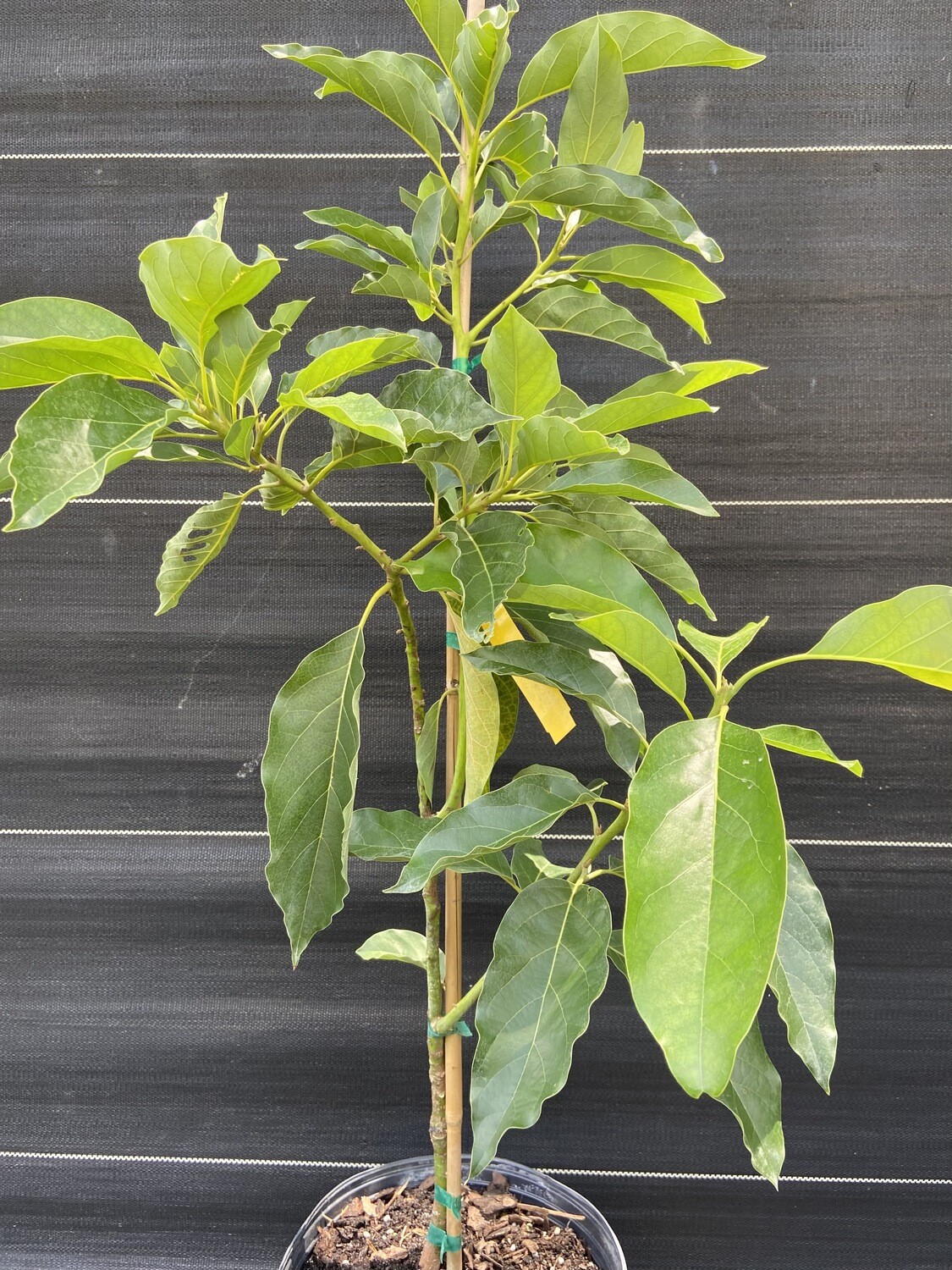
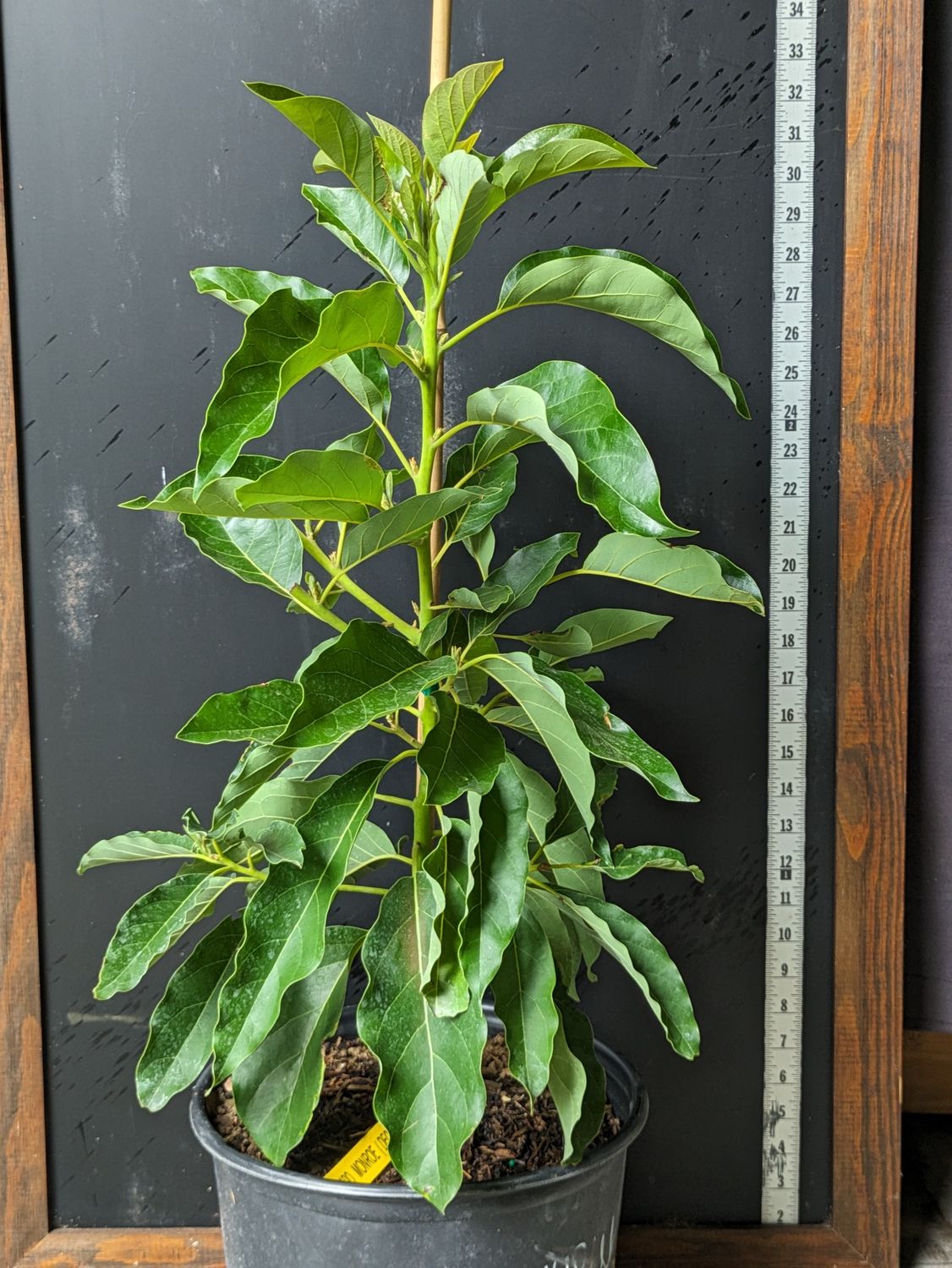
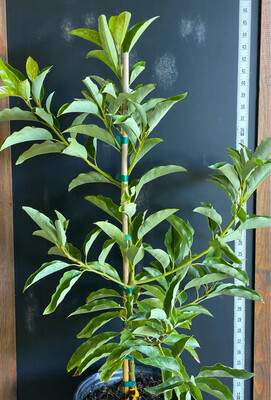
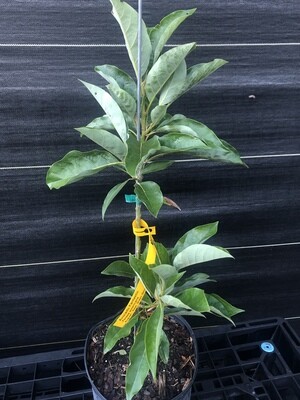
🥑 ‘Monroe’ Avocado (Persea americana) — Late-Season Heavy Producer + Big Fruit + Florida Favorite 🌿
If you want a tree that doesn’t just “make a few avocados”… but can turn into a serious backyard producer, ‘Monroe’ is one of the most loved late-season cultivars for Florida and warm Gulf climates. Expect large, smooth, creamy fruit, a vigorous canopy, and a harvest window that can stretch deep into the cool season—right when everyone wishes they had more homegrown food.
SHIPS AS A 3-GALLON GRAFTED TREE
🌟 Quick Facts Guide
| Category | Details |
|---|---|
| Botanical Name | Persea americana, ‘Monroe’ |
| Plant Type | Evergreen fruit tree (grafted cultivar) |
| Sale Size | 3-gallon container |
| Estimated Age (3-gal) | Typically ~18–30 months from graft (varies by season + growth rate) |
| Mature Size | Commonly 30+ ft unpruned; maintain 12–18 ft with pruning |
| USDA Zones | 9a–11 (best); can be grown in 8b/9a with protection + ideal microclimate |
| Sun Requirements | Full sun (6–8+ hrs daily) |
| Cold Hardiness | Often handled around mid–upper 20s°F when mature (young trees need protection) |
| Growth Habit | Vigorous, upright to spreading; evergreen; strong canopy builder |
| Spacing Requirements | 20–25 ft from other trees/buildings (more if you want it full-size) |
| Flower Type | Type B (can fruit alone; higher yields with a nearby Type-A variety) |
| Leaf Trait | Glossy deep-green foliage; great evergreen screening value |
| Best Feature | Late harvest + large fruit + strong productivity |
🍐 Fruit & Harvest Details
What the fruit is like 🥑
- Size & Appearance: Large, green-skinned fruit—often described as “big, clean, classic Florida avocado.”
- Flavor & Texture: Creamy, mild-to-rich (depending on maturity at harvest), with a smooth texture and low fiber.
- Yield & Quality: ‘Monroe’ is known as a reliable producer with a reputation for heavy yields once established.
- Handling note: Large fruit can be more prone to bruising—pick carefully and avoid dropping.
Harvest window (typical)
Late season is the whole point here.
| Region | Common Harvest Window (Typical) |
|---|---|
| Florida (Central/South) | November–February |
| Texas / Warm Gulf | Late fall into winter (site dependent) |
| California (mild areas) | Late fall/winter potential depending on climate |
✅ Pro harvesting tip: Avocados generally do not ripen on the tree. Pick mature fruit and ripen indoors until it softens.
🌿 Why Grow ‘Monroe’?
- Late-Season Avocado: Keeps your harvest going when summer varieties are done
- Large Fruit: Great for slicing, bowls, meal prep, and “one avocado = the whole guac” moments
- Heavy Producer: A favorite for growers who want real yield, not just a novelty crop
- Excellent Pollinator Pairing: Type B variety that pairs well with many Type A cultivars
- Landscape Value: A vigorous evergreen canopy can also serve as a screening / shade tree when managed correctly
🌿 Fun Name Story
‘Monroe’ is one of those Florida-grown cultivars that earned its reputation the old-school way: performance. It stuck around because it consistently delivered what growers wanted—big fruit, strong growth, and late-season production.
🏡 ALSO AVAILABLE IN LARGER SIZES (LOCAL PICKUP ONLY)
We carry ‘Monroe’ and many other avocado cultivars at our Spring Hill nursery—often including larger container sizes that establish faster and can fruit sooner (seasonal availability).
Larger sizes may include (pickup-only):
- 7-gallon
- 15-gallon
- Specimen / landscape-ready trees
🌿 And yes—our retail nursery carries countless plants not listed online, including limited and seasonal inventory that’s only available for local pickup.
📍 Where to Plant ‘Monroe’ Avocado
Best location (Florida + Gulf Coast optimized)
- Full sun
- Excellent drainage
- Open airflow (helps reduce disease pressure in humid climates)
✅ In Florida and humid regions: plant on a 2–3 ft mound to improve root oxygen and reduce root-rot risk.
Avoid
- Standing water, low spots, heavy clay without mounding/drainage work
- Deep shade
- Overhead watering that keeps foliage wet
Wind + salt notes (important for Florida)
- Wind: ‘Monroe’ can become a large canopy—young trees should be sheltered from constant wind and staked if they rock in storms. Heavy crops can increase branch stress.
- Salt: Avocados are generally salt sensitive—avoid salty irrigation water and direct coastal salt spray when possible.
🌱 IMPORTANT: Let Your Tree Recover Before Transplanting
After delivery or pickup, keep your ‘Monroe’ Avocado in its current container and wait ~30 days or until you see fresh new growth before transplanting. This reduces shock and improves establishment success.
🌱 GreenDreams “High & Tight” Planting Method (Best for Avocados)
Avocado roots need oxygen—planting too deep is the #1 killer.
- Dig a hole only slightly wider than the container and no deeper than the root ball
- Set the root flare at or slightly above soil level
- Backfill with native soil and pack firmly to remove air pockets
- Water deeply to settle
- Apply 2–4 inches of mulch around the drip line—keep mulch off the trunk
- Top dress with compost + biochar + azomite for biology + minerals
▶️ Watch: GreenDreams “High & Tight” Tree Planting Tutorial
https://youtu.be/RRQFY30qdA8?si=rRIcsbLlVAVYotfI
💧 Watering, Feeding & Pruning (Florida-Friendly + Pro-Level)
Watering (container vs in-ground)
While in a pot (3-gal):
- Expect daily watering during warm, sunny, or windy conditions
- Pots dry fast—check moisture often
After planting in-ground:
- Week 1: water daily
- Weeks 2–4: every 2–3 days
- After month 1: deep weekly watering, adjusting for rainfall and soil type
✅ We strongly recommend drip irrigation over overhead spray.
Fertilizing
- Avocados prefer light, frequent organic feeding
- Focus on biology: compost, mulch, minerals, gentle organic nutrients
- Avoid heavy synthetic fertilizer that can burn roots and trigger weak flushes
Pruning (especially important for ‘Monroe’)
Because ‘Monroe’ can get big, pruning is not optional if you want it manageable.
- Target a maintained height of 12–18 ft for pickability and wind stability
- Start shaping early: encourage lateral branching instead of one tall leader
- Do small structural cuts yearly rather than giant reductions every few years
- Remove crossing branches and thin congested centers for airflow
Winter care (Zones 8b/9a and cold events)
- Water the day before cold events
- Mulch the root zone heavily (keep mulch off the trunk)
- Use frost cloth on young trees and protect from north wind
- Expect some leaf burn after freezes—healthy trees often rebound
🍃 Seasonal Habits (Florida + Similar Climates)
‘Monroe’ is evergreen, but seasonal shifts still happen:
- Spring: new flush; older leaves may drop as new growth pushes
- Summer: canopy growth; fruit sizing begins depending on bloom timing
- Fall: fruit sizing + late-season development; consistent watering matters
- Winter: slowed growth; cold snaps can scorch leaves—young trees need protection
🪴 Container Growing (Possible, But Choose This If You’ll Prune)
You can container grow ‘Monroe’, but it’s naturally vigorous.
Recommended long-term container: 25+ gallon if you plan to keep it long-term
Soil blend: compost + pine bark fines + coarse sand (fast drainage is the goal)
Sun: full sun outdoors
Maintenance: consistent pruning; don’t let it become rootbound and stressed
When to up-pot or transplant
- When the rootball fills the pot and dries too quickly
- Best time: warm season growth window
- Always transplant using “High & Tight” principles
🥑 Culinary Uses (Why You Grow This Tree)
‘Monroe’ is a workhorse kitchen avocado—especially because the fruit tends to be large.
Favorite ways to use it 🍽️
- Slicing avocado for salads, sandwiches, wraps
- Guacamole (one fruit can make a serious batch)
- Avocado bowls with citrus, salt, herbs
- Meal prep: mash + lemon/lime + salt for quick spreads
- Smoothies for creamy texture without dairy
✅ Late-season harvest = a big deal if you want more homegrown food through winter.
🌾 Orchard & Large-Scale Strategy
‘Monroe’ can be used in small orchards and production blocks in suitable climates.
Spacing strategy:
- 20–25 ft typical
- Maintain canopy with annual pruning for access and airflow
- For better yields, plant Type A + Type B within 20–30 ft and support pollinators
🌼 Companion Plant Sidebar (Curated from GreenDreams Inventory)
Nitrogen fixers (soil builders):
- Pigeon Pea (Cajanus cajan)
- Perennial Peanut (Arachis glabrata)
- Sunn Hemp (Crotalaria juncea)
Pollinator magnets (better fruit set):
- Firebush (Hamelia patens)
- Porterweed (Stachytarpheta spp.)
- African Blue Basil
Dynamic accumulators / aesthetic companions:
- Turmeric (Curcuma longa)
- Gingers
- Fakahatchee Grass (Tripsacum dactyloides)
🔍 Troubleshooting Guide — ‘Monroe’ Avocado
| 🔍 Issue | 🧠 Likely Cause | ✅ Organic Fix |
|---|---|---|
| 🍂 Yellowing leaves | Overwatering / poor drainage | Improve drainage, plant high on mound, allow slight dry-down |
| 🪲 Bronzed/speckled leaves | Lace bug / mites | Organic soap or horticultural oil; encourage beneficials |
| ❄️ Leaf burn after cold | Frost + wind exposure | Water before cold, mulch, frost cloth, windbreak |
| 🍃 Fruit drop | Low pollination / bloom weather swings | Add Type A partner; increase pollinator plants |
| 💧 Root rot decline | Standing water / deep planting | High & Tight + fast drainage + careful irrigation |
| 🌬️ Branch break / splitting | Heavy fruit load + wind | Prune for structure; thin crowded growth; protect from wind |
❓ FAQ
Is ‘Monroe’ avocado self-fertile?
It can fruit on its own, but yields often improve with a Type A partner nearby.
What makes ‘Monroe’ special?
It’s known for late-season harvest, large fruit, and strong production in warm climates.
How long until it fruits?
Grafted avocados often begin producing in ~3–4 years in-ground with good care (sometimes sooner with larger nursery stock and ideal conditions).
Can I keep ‘Monroe’ small?
Yes—start early with pruning. Many growers maintain it at 12–18 ft for easy harvest.
What’s the #1 mistake with avocado planting?
Planting too deep and poor drainage. Avocados need oxygen at the roots—mounding helps.
⚠️ Cautions
- Do not bury the trunk (crown rot risk)
- Avoid waterlogged soils and salty irrigation
- Young trees need frost protection until established
- Keep mulch off the trunk to prevent rot and decline
- Vigorous trees need pruning—don’t wait until it’s too tall
🌟 Is This Plant For Me?
✅ Ideal for:
- Growers in Zones 9a–11 (and 8b/9a with protection + microclimate)
- Anyone who wants a late-season avocado
- Home orchardists building a long harvest calendar
- People who love large fruit + strong yields
- Landscapes where an evergreen canopy can also provide screening/shade
❌ Not ideal for:
- Sites that stay wet without mounding/drainage improvements
- Direct coastal salt spray or salty irrigation water
- Areas below Zone 8b without serious freeze protection
- Anyone unwilling to prune a vigorous tree
🌿 Choose the Right Avocado for Your Climate, Taste & Space
(Kept in full — for customer decision support)
| 🌳 Cultivar | 🔤 Type | ❄️ Cold Tolerance | 🍽️ Flavor / Texture | 🗓️ Harvest Window (FL) | 📏 Growth Habit | 🌟 Highlights |
|---|---|---|---|---|---|---|
| 🟣 Brogdon | Type B | 🧊 22°F | 🥑 Nutty, creamy | Jul–Sep | 🌳 20–25 ft | Purple skin, cold-hardy Florida heirloom |
| 🌿 Day | Type A | ❄️ 24°F | 🧈 Mild, buttery | Jul–Aug | 🌿 12–18 ft | Compact, early harvest, great for containers |
| ⚫ Mexicola | Type A | 🧊 18°F | 🌰 High-oil, edible skin | Aug–Sep | 🌳 10–15 ft | Most cold-hardy; edible black skin |
| 🟢 Lula | Type A | ❄️ 26°F | 🧈 Buttery, high-oil | Nov–Jan | 🌳 25–30 ft | Late-season, great pollinator |
| 💚 Monroe | Type B | ❄️ 26°F | 🥑 Creamy, mild | Nov–Feb | 🌲 30+ ft | Vigorous, late harvest, heavy yield |
| 💧 Choquette | Type A | ❄️ 28°F | 🥗 Mild, smooth | Oct–Dec | 🌲 30+ ft | Huge fruit, great for slicing & salads |
| 🖤 Florida Hass | Type A | ❄️ 25°F | 🥑 Classic Hass flavor | Sep–Nov | 🌳 Medium | “Hass look,” adapted for Florida |
| 🌱 Wurtz (Little Cado) | Type A | ❄️ 26°F | 🧈 Creamy, mild | May–Sep | 🌿 8–10 ft | Dwarf size, perfect for pots |
| 🟤 Joey | Type B | 🧊 15–18°F | 🌰 Rich, nutty | Aug–Oct | 🌳 Compact | Ultra-cold-hardy Texas selection |
| 🟡 Fantastic | Type A | 🧊 15°F | 🧈 Smooth, buttery | Jul–Aug | 🌿 Small | Coldest-hardy variety, reliable producer |
| 🟢 Brazos Belle | Type B | ❄️ 20°F | 🥑 Rich, nutty | Aug–Oct | 🌳 Medium | Cold-hardy Texas selection |
| 🌴 Kampong | Type A | ❄️ 28°F | 🍐 Mild, low-oil | Oct–Dec | 🌲 Vigorous | Rare tropical collector’s tree |
| 🌞 Catalina | Type A | ❄️ 26°F | 🧈 Buttery, light | Jul–Aug | 🌳 Medium | Early-season Cuban classic |
| 🌿 Donnie | Type A | ❄️ 28°F | 🥗 Mild, light | May–Jun | 🌲 Large | Very early fruiter, light flavor |
| 🟤 Bacon | Type B | ❄️ 24°F | 🥑 Mild, pleasant | Nov–Jan | 🌳 Medium | Excellent pollinator, winter fruit |
| 🎃 Marcus Pumpkin | Type B | ❄️ 24°F | 🧈 Creamy, mild | Nov–Feb | 🌳 Medium | Unique round fruit; showy shape |
| ⚫ Maria Black | Type A | ❄️ 25°F | 🥑 Creamy, rich | Aug–Oct | 🌳 Medium | Dark skin, balanced flavor |
| 🌿 Talpeno | Type B | 🧊 23°F | 🧈 Buttery, high-oil | Aug–Sep | 🌳 Medium | Cold-hardy hybrid, reliable yields |
| ❤️ Thompson Red | Type A | ❄️ 26°F | 🌰 Nutty, smooth | Sep–Nov | 🌳 Medium | Red blush skin, ornamental appeal |
| 💚 Victoria | Type A | ❄️ 24°F | 🧈 Smooth, buttery | Jul–Sep | 🌳 Medium | Heat-tolerant, compact, productive |
🚚 Shipping & Handling (Read Before Ordering)
- Shipping day: Mondays via UPS Ground from Florida
- Weather advisory: Buyer discretion is strongly recommended during temperature extremes. We are not responsible for heat/freeze damage in transit.
- Small plants (4" & 1-gallon): Best shipped to Florida, the Southeast, and Texas. We can ship nationwide, but northern/western deliveries may require extra recovery time after transit stress.
✅ Pro tip: Keep plants in their container and wait ~30 days or until new growth before transplanting.
🏡 Local Pickup
GreenDreams Nursery & Farm
🌾 18709 US Hwy. 41, Spring Hill, FL 34610
🕘 Tues–Fri 9AM–5PM | 🌞 Sat 8AM–3PM
🌿 Stop by our regenerative nursery to see what’s blooming this week! 🌸
🌿 Beyond the Plant: GreenDreams Services
At GreenDreams, we do more than grow plants — we design, build, and restore ecosystems across Florida.
- 🌳 Onsite consultations & edible landscape design
- 🚜 Installation & project management
- 🚚 Bulk delivery of compost, mulch, biochar, and soil materials
- 🌾 Wholesale & large-scale regenerative solutions
Let our team help you create your own thriving edible paradise — starting with ‘Monroe’ Avocado! 🌿
🌿 IMPORTANT INFORMATION BEFORE PURCHASING LIVE PLANTS
Please note: Plants purchased through our online store are not available for pickup at our retail nursery in Spring Hill, Florida.
Online inventory is housed at a separate facility and is priced, prepared, and handled exclusively for shipping.
🌱 Looking for larger plants or more selection?
Our retail nursery location offers far more availability, including larger sizes, specialty plants, and many selections not suitable for nationwide shipping.
Local pickup is available for retail nursery purchases only.
Visit our Spring Hill, FL retail nursery page to explore in-person shopping options.
🚚 LIVE PLANT SHIPPING & TRANSIT EXPECTATIONS
Live plants naturally experience stress during shipping. Temporary leaf drop, mild wilting, or cosmetic stress is normal after transit. Most plants recover quickly with proper watering, gradual light exposure, and basic aftercare. Some plants may require additional attention during the first few weeks.
Despite careful packing, minor cosmetic damage may occur during transit. Small issues such as broken leaves or stems typically resolve with time and proper care.
If your shipping box arrives with significant external damage, please contact UPS within 30 days to initiate a carrier claim.
⏱️ SHIPPING METHOD, TIMING & TRANSIT WINDOWS
All online orders ship via UPS Ground from our Central Florida nursery.
📦 Shipping Schedule: Orders ship once weekly on Mondays to reduce the risk of packages sitting in transit over weekends. A countdown clock on our website displays the next shipping date.
🚚 Typical Transit Times:
-
Florida: 1–2 days
-
Southern U.S.: approximately 2 days
-
Midwest, West & Northern U.S.: 3–5 business days
Long-distance shipments, particularly to the western U.S., may experience additional transit time due to agricultural inspections in states such as Arizona, California, and Texas.
Extended transit times can be more challenging for small or tender plants and may require additional recovery care after arrival.
🌡️ EXTREME WEATHER & SEASONAL RISK
Live plants are sensitive to temperature extremes.
We cannot guarantee plant condition during periods of extreme summer heat or winter cold and freezing temperatures. Weather-related delays, carrier interruptions, or exposure during delivery are beyond our control.
Customers are responsible for:
-
Monitoring tracking information sent via email
-
Retrieving packages promptly upon delivery
-
Preventing plants from being left outdoors in extreme conditions
During unsafe weather, holiday shipping volume, or extended transit risk, orders may be held and shipped the following week to protect plant health.
⚠️ CUSTOMER RESPONSIBILITY & REFUND POLICY
By purchasing live plants, customers acknowledge and accept the risks associated with shipping, weather exposure, transit delays, and regional suitability.
Refunds or replacements are considered only under exceptional circumstances and in accordance with our return and refund policy. We are not responsible for:
-
Weather-related damage
-
Carrier delays
-
Poor plant selection for a given climate or region
-
Improper care after delivery
Upon purchase, customers assume full responsibility for the ongoing care and success of their plants.
✅ CONSENT & AGREEMENT
By completing a purchase, you confirm that you have read, understand, and agree to all shipping policies, responsibilities, and conditions outlined above.
Our goal is transparency, plant health, and long-term growing success — and we appreciate your understanding and care when ordering live plants.


