


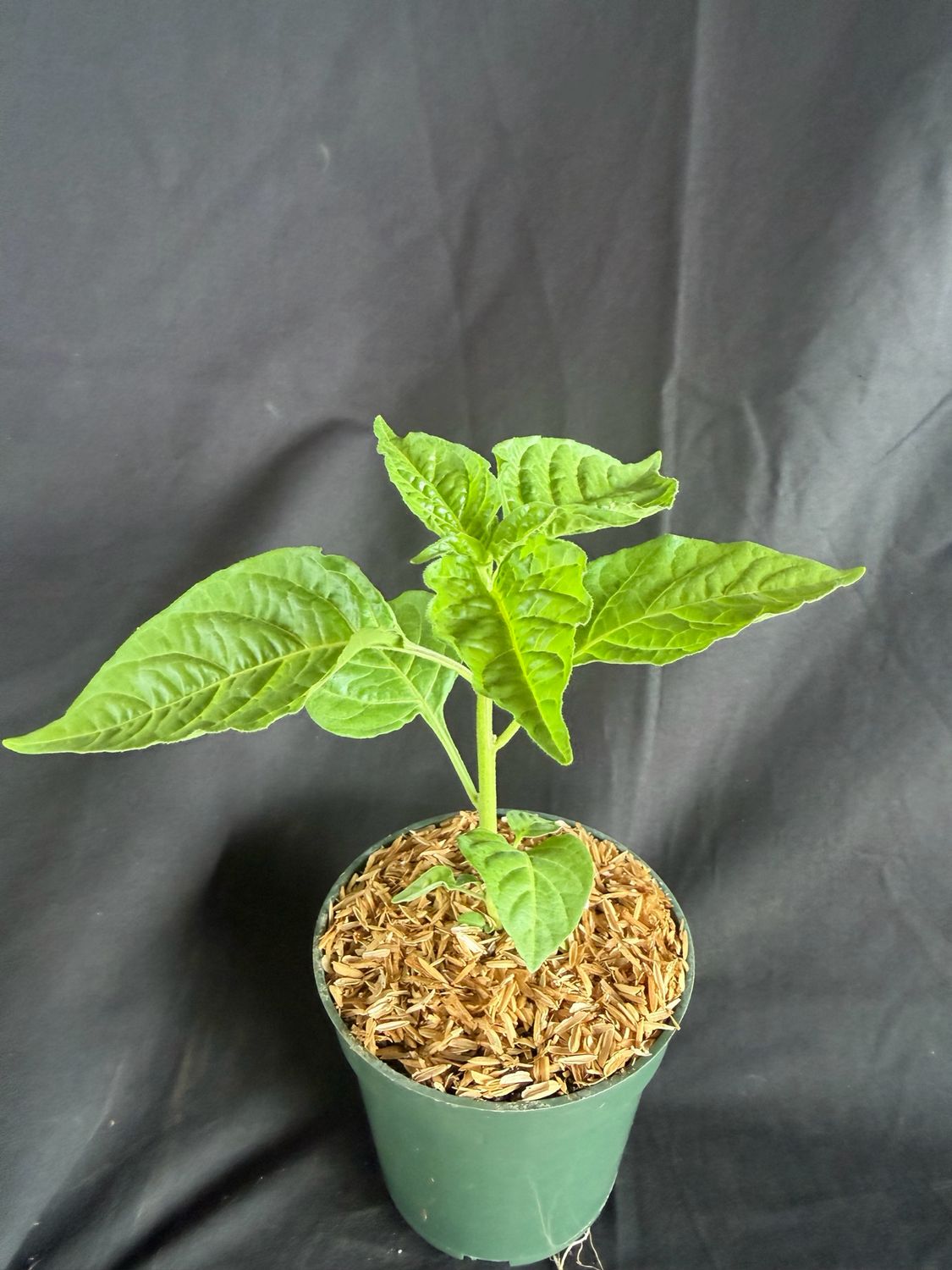
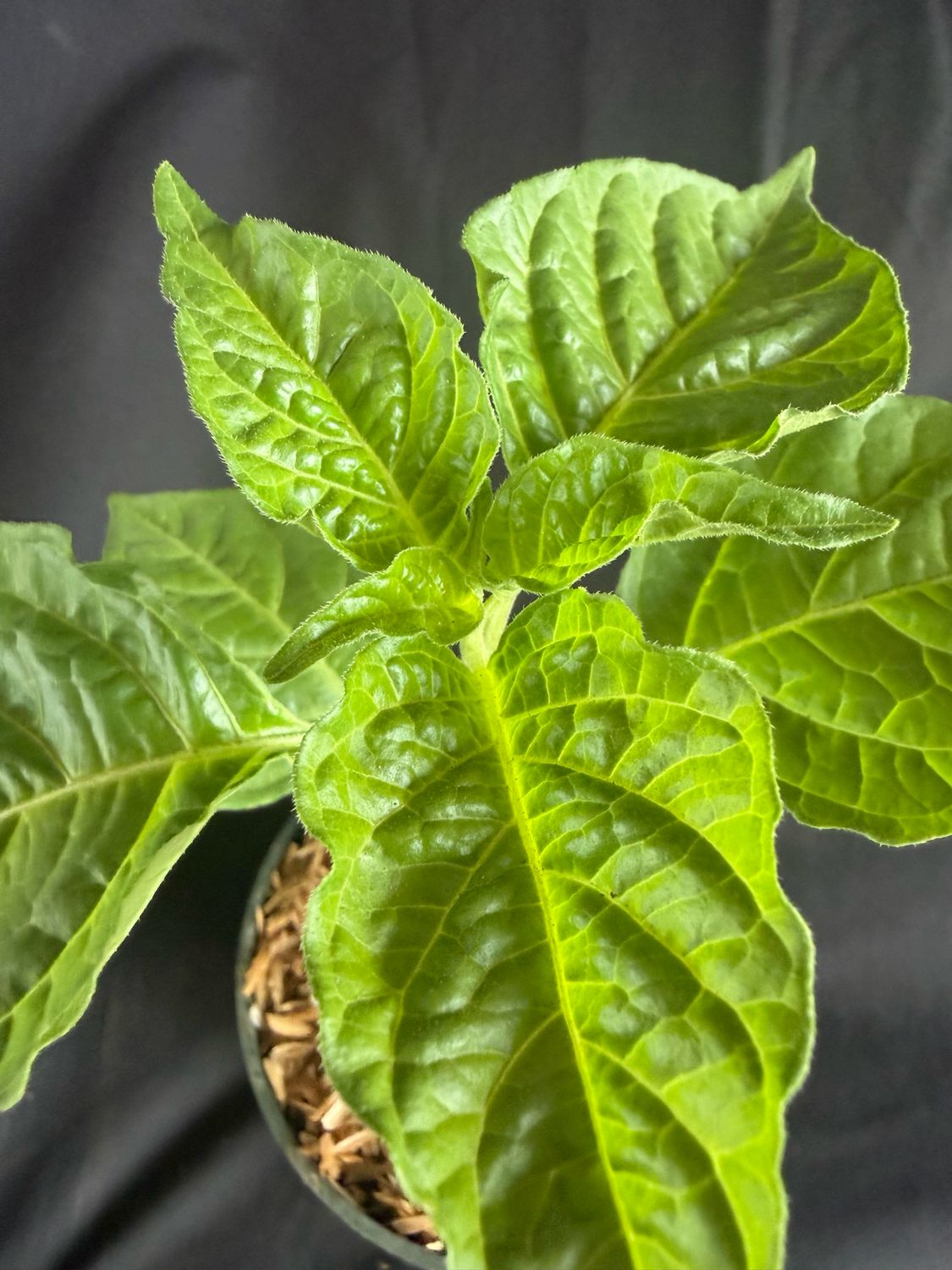
Red Scotch Bonnet Pepper — Capsicum chinense
Some peppers whisper. The Scotch Bonnet shows up wearing a tiny plaid hat and dares you to keep up. 🌶️ This is the pepper that built jerk chicken, powers half of Jamaica's hot sauce industry, and somehow tastes like a tropical fruit salad while it's setting your tongue on fire. If you've been cooking with habaneros and wondering why your jerk marinade still tastes "close but not quite right" — this is why. Scotch Bonnet is the real thing, and once you grow your own, store-bought will never cut it again.
Grown organically here at GreenDreams, our Red Scotch Bonnets are ready to bring serious Caribbean heat (and serious curb appeal) to your garden, patio, or production row.
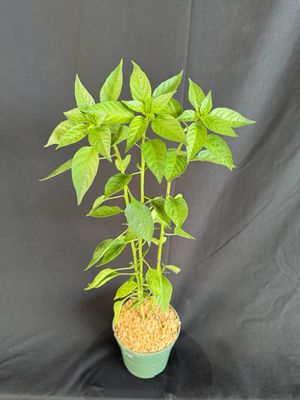
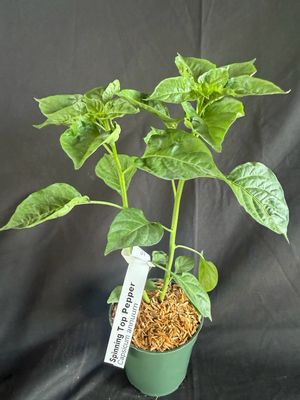
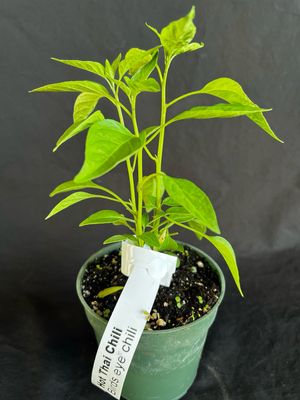
📦 This listing is for a live plant in a 4" pot — a healthy, well-rooted young plant ready to size up in your garden or container of choice.
🌶️ Quick Facts Guide
| Category |
Details |
| Botanical Name |
Capsicum chinense 'Scotch Bonnet' |
| Common Names |
Scotch Bonnet, Bonney Pepper, Caribbean Red Pepper |
| Plant Type |
Tender tropical perennial (grown as annual in cooler zones) |
| Heat Level |
100,000–350,000 Scoville Heat Units (SHU) — roughly 15–40x hotter than a jalapeño |
| Flavor |
Fruity, sweet, tropical — notes of mango, apricot & citrus under the heat |
| Mature Height |
2–4 ft (unpruned may reach up to 5 ft in ideal tropical conditions) |
| Mature Spread |
2–3 ft |
| USDA Growing Zones |
9–12 (perennial in 10–11 with protection; annual or containerized in 9 and below) |
| Sunlight |
Full sun, 6–8+ hours daily |
| Wind Tolerance |
Moderate — benefits from staking or a wind-sheltered spot |
| Salt Tolerance |
Low to moderate — not a beachfront plant, but tolerates light coastal breeze |
| Water Needs |
Consistent, moderate — avoid soggy soil |
| Days to Harvest |
90–120 days after transplant |
| Container Friendly? |
Yes ✅ |
| Indoor Friendly? |
Yes, with bright light ✅ |
| Pot Size |
4" pot |
🎩 How the Scotch Bonnet Got Its Name (and Its Passport Stamps)
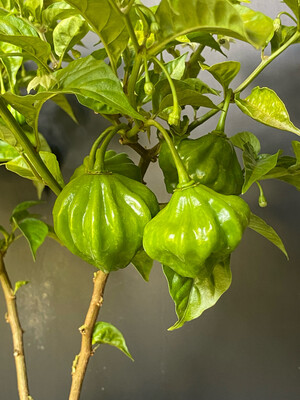
Here's a fun one for the dinner table: the Scotch Bonnet has nothing to do with Scotland. The name comes purely from its shape — the pepper's squat, deeply ridged form echoes the folds of a traditional Scottish tam o'shanter cap, the kind of floppy plaid beret you'd picture on a bagpiper. Someone, somewhere, took one look at this wrinkled little lantern-shaped fruit and said "that's a wee bonnet if I ever saw one," and the name stuck.
But the pepper's real roots trace back thousands of miles from Scotland. Capsicum chinense originated in the lowland Amazon basin of South America, where indigenous peoples were cultivating and eating its wild ancestors for at least 7,000 years — making it one of the oldest domesticated food plants in the Americas. From there, the pepper made its way into the Caribbean through the complex agricultural trade networks of the colonial era, and over centuries of island cultivation it developed the distinct fruity flavor, shape, and cultural identity we know today.
That cultural identity runs deep. The Scotch Bonnet appears in Caribbean folk songs, proverbs, and traditional medicine, and its cultivation supports thousands of small-scale farmers across the region to this day. It also made the jump across the Atlantic in the other direction — this pepper is now a staple ingredient across West African cooking as well, where it goes by names like "bonnet pepper" in local markets. Grow one, and you're growing a genuine piece of food history. 🌍
🌿 Plant Appeal & Characteristics
The Scotch Bonnet isn't just a heat-delivery machine — it's a genuinely handsome plant. Expect:
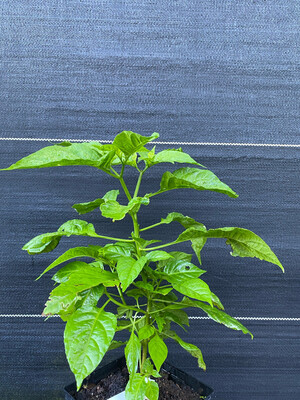
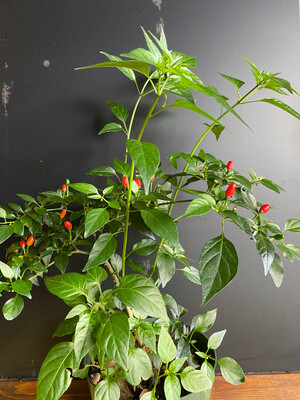
- Growth habit: Upright, bushy, and well-branched, forming a compact mound of foliage that fills out beautifully in a garden bed or large container
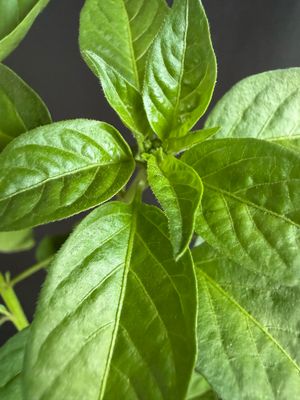
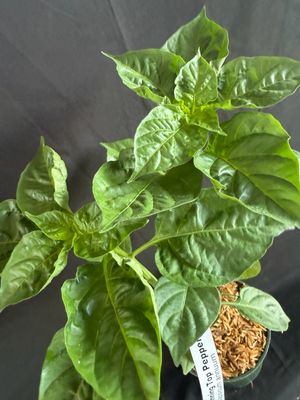
- Leaves: Broad, glossy, deep-green ovate leaves that give the plant a lush, tropical look even before fruit shows up
- Flowers: Small, star-shaped white blossoms that dot the plant before pepper set — a nice pollinator draw in their own right
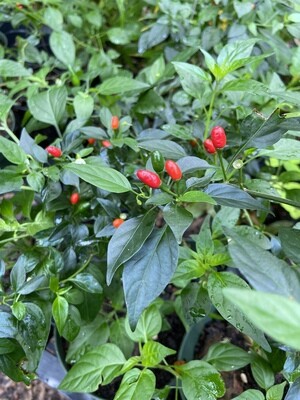
- Fruit shape: Small, squat, and deeply lobed with 3–4 distinct "pinches," giving that signature crumpled bonnet silhouette
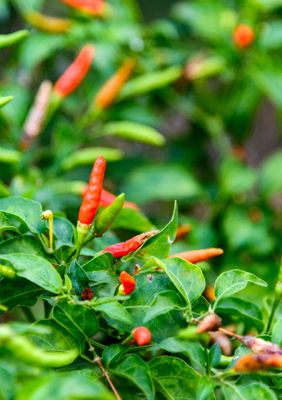
- Color transition: Fruits ripen from glossy green through yellow and orange before finishing at deep scarlet red — a full rainbow show on a single plant at once
- Size at maturity: Peppers run roughly 1–2 inches across and 1–1.5 inches tall — small, but mighty
📦 What You're Getting: Size, Age & Growth Timeline
- Pot size: 4" pot
- Estimated plant age at shipping: Typically 8–12 weeks from seed — a young, actively growing plant with an established root system ready for its next size up
- Time to first harvest: Roughly 90–120 days after transplanting into your garden or final container, assuming warm, sunny conditions
- Mature height, unpruned: 3–4 ft, occasionally taller in a true tropical, frost-free climate where the plant is allowed to live as a true perennial for multiple seasons
- Mature height, maintained/pruned: 2–2.5 ft — many growers keep Scotch Bonnets pruned to this tidier size for easier harvesting and better airflow
☀️ Growing Conditions
Sunlight & Location: Full sun is non-negotiable here — this plant needs a minimum of 6–8 hours of direct sunlight daily to set fruit well and develop that signature heat and sweetness. Choose a location with some wind protection; steady strong wind can cause flower drop and stress the branches.
Wind & Salt Tolerance: Scotch Bonnet is not a dedicated coastal plant. It handles the occasional salty breeze fine but shouldn't be planted in a spot that takes direct salt spray or consistently harsh wind. If you're gardening near the coast, tuck it behind a windbreak of larger shrubs or a fence line.
Cold Hardiness / Frost Tolerance: This is a true tropical — it has zero frost tolerance. Even a light frost will damage or kill foliage, and a hard freeze will kill the plant to the ground (or outright, depending on severity and root protection). Scotch Bonnets are reliably perennial in USDA zones 10–11, and are typically grown as annuals in zone 9 and below unless brought indoors and pruned back heavily before the first frost.
Soil: Fertile, well-drained soil with a pH between 6.0 and 6.8 is ideal. Work in aged compost before planting to give roots a nutrient-rich start.
Water: Consistent moisture is the name of the game — irregular watering is the #1 cause of blossom end rot and flower drop in this species, so aim for a deep watering 2–3 times per week rather than light daily sprinkles once established in-ground.
🌤️ Florida & Southeast Seasonal Guide
Scotch Bonnet is not deciduous — it's an evergreen tropical perennial in frost-free conditions. But here in Central Florida (zone 9b) and similar southeastern zones 8–10, it behaves more like a "part-time perennial," and knowing what to expect each season will save you a lot of head-scratching:
- Spring (March–May): Prime planting season once nighttime lows are reliably above 60°F. New growth flushes quickly in the warming soil; this is the best window to get plants in the ground or moved up a container size.
- Summer (June–September): Peak growth and peak harvest season. Expect heavy flowering and fruit set, especially with consistent watering and a potassium-rich feed. Florida's humidity is right in this plant's comfort zone.
- Fall (October–November): Harvest continues as long as temperatures stay warm. As nights begin to cool, growth slows — this is a good time to take cuttings if you want backup plants for next spring.
- Winter (December–February): In zone 9b, an unprotected plant can suffer dieback or death during a hard freeze. Options: mulch heavily and cover during cold snaps, bring container plants indoors near a bright window, or treat the plant as an annual and start fresh in spring. If foliage browns and drops after a cold night, don't panic — cut back damaged stems and watch for new growth at the base once temperatures rebound.
- Zones 10–11 (South Florida & similar): Little to no interruption — the plant can carry on as a true multi-year perennial with only minor seasonal slowdown in cooler months.
📏 Spacing Requirements
- In-ground: Space plants 18–24 inches apart, with rows 30–36 inches apart for good airflow and easy harvest access
- Raised beds: 18–20 inches apart in all directions
- Containers: One plant per container of 5 gallons or larger
🏆 Top Benefits of Growing Red Scotch Bonnet Pepper
- Unmatched flavor — no store-bought pepper sauce compares to fresh-picked Scotch Bonnet
- High yield in a small footprint — one plant can produce 20–50+ peppers per season
- Beautiful ornamental value — glossy foliage and a rainbow of ripening fruit colors on one plant
- Pollinator friendly — its flowers draw bees and beneficial insects into the garden
- Container & indoor versatile — grow it on a sunny patio, balcony, or windowsill
- A genuine conversation piece — few backyard gardens grow authentic Caribbean heat
- Preserves beautifully — freezes, dries, and ferments into sauces that last all year
🍋 Flavor Profile, Fruiting & Culinary Uses
Texture & Taste: The flesh is thin-walled but juicy, with a bright, tropical sweetness up front — think mango and apricot — that gives way fast to serious, lingering heat. The skin is thin and slightly waxy, cooks down easily, and carries a lot of that essential oil flavor.
Fruiting Habits: Expect steady, continuous fruit set throughout the warm season once the plant is established. A healthy plant can produce 20 to 50+ ripe peppers in a season, with pot size and season length being the two biggest factors driving total yield. To boost fruit set: keep watering consistent, switch to a potassium/phosphorus-forward feed once flowering starts, and harvest often — regular picking signals the plant to keep producing.
How to Harvest: Cut, don't pull — snipping the stem with garden shears or scissors protects the branch and encourages more flowering. Always wear gloves; capsaicin oil penetrates skin and can cause hours of burning discomfort, especially if it reaches your eyes or nose — and note that latex gloves are not sufficient protection, nitrile gloves are recommended.
Culinary Uses: This is the pepper behind:
- 🇯🇲 Authentic Jamaican jerk seasoning (chicken, pork, fish)
- 🌶️ Caribbean pepper sauces and hot sauces
- 🍲 Trinidadian and Bajan stews, soups, and curries
- 🥘 West African soups, stews, and pepper-based sauces (jollof rice included)
- 🥫 Fermented hot sauces and vinegar-based condiments
- 🍹 Fruit-forward hot sauces paired with mango or pineapple to lean into its natural sweetness
A Common Recipe — Quick Scotch Bonnet Pepper Sauce: Blend a handful of Scotch Bonnets with carrot, garlic, white vinegar, a pinch of salt, and a squeeze of lime. Simmer 10 minutes, blend smooth, and bottle. It's the base of countless Caribbean table sauces and keeps refrigerated for weeks.
Historical & Cultural Uses: Beyond the plate, Scotch Bonnet holds a place in Caribbean folk songs, proverbs, and traditional medicine, and its cultivation has long supported small-scale farming communities across the islands and West Africa. Traditionally, capsaicin-rich peppers like this one have also been used in folk remedies for circulation and topical warming applications — always consult a professional before using any plant medicinally.
Nutritional Notes: Like other hot peppers, Scotch Bonnet is a strong source of vitamin C and capsaicin, the compound responsible for its heat and studied for its metabolism-boosting and anti-inflammatory properties. As with any capsaicin-rich food, moderation is key.
🌺 Ornamental & Landscape Use
Don't box this plant into the veggie patch! Its glossy foliage, tidy bushy habit, and a fruit display that runs green-yellow-orange-red all at once make it a genuinely eye-catching landscape accent. Tuck it into a mixed edible border, cluster three together in a large container on a sunny patio, or use it as a colorful, productive filler plant along a fence line. It pairs beautifully with ornamental grasses and pollinator flowers for a bed that looks as good as it produces.
🚜 Large-Scale & Market Production
Scotch Bonnet is very well suited to production growing, particularly for growers targeting Caribbean, West African, or specialty hot sauce markets. Commercial spacing generally runs 18–24 inches between plants in rows 30–36 inches apart to balance yield density with airflow and disease prevention. Successional plantings every few weeks through spring and early summer can extend the harvest window and stagger production for consistent supply. Growers supplying restaurants or hot sauce producers should factor in the plant's continuous-fruiting habit — frequent harvesting keeps plants producing longer than a single big pick.
🌶️ Comparison Chart: Scotch Bonnet Varieties We Carry
| Variety |
Color at Maturity |
Heat (SHU) |
Flavor Notes |
Plant Size |
| Red Scotch Bonnet (this listing) |
Deep scarlet red |
100,000–350,000 |
Bold, fruity, full heat |
2–4 ft |
| Yellow Scotch Bonnet |
Golden yellow |
100,000–350,000 |
Slightly brighter, citrus-forward |
2–3.5 ft |
| Sweet Bonnet / Cachucha |
Green to orange |
500–2,000 (mild!) |
All the tropical sweetness, minimal heat |
1.5–2.5 ft |
(Check our online store or ask us in person about current availability of each variety.)
🪴 Container & Indoor Growing
Can it be grown in a container? Absolutely — Scotch Bonnet is one of the better hot peppers for container life. Aim for a container at least 5 gallons in size once the plant is mature, with good drainage holes. Container plants dry out faster than in-ground plantings, so daily monitoring during hot months is important — most container Scotch Bonnets will need water daily during peak summer heat.
Can it be grown indoors? Yes, provided it gets strong, direct light — a bright south-facing window or supplemental grow light is essential, since indoor light levels rarely match full outdoor sun. Indoor plants are also a great way to overwinter this tropical perennial in climates where outdoor frost would otherwise kill it.
Transplanting Up: How Pot Sizes Work As Scotch Bonnet grows, its roots will fill out and eventually crowd its current container — you'll notice roots circling the drainage holes or the plant drying out unusually fast between waterings. When that happens, it's time to size up:
- 4" pot → 1-gallon
- 1-gallon → 3-gallon
- 3-gallon → 7-gallon (typically the final container size for most home growers)
Always size up gradually rather than jumping straight to a huge pot — oversized containers hold excess moisture around young roots and can invite rot. When you're ready to transplant, local garden centers, hardware stores, and online retailers all carry a wide range of container sizes and potting mixes — a quick search for "nursery containers" or "potting soil" near you (or online) will turn up plenty of options.
Potting Soil: Scotch Bonnet wants a well-draining but moisture-retentive mix. A blend heavy in aged compost with added perlite or coarse sand for drainage works well — avoid dense, water-logged mixes that can lead to root rot.
When to Transplant: Wait until roots have visibly filled the current container, or about 30 days after arrival at minimum — whichever comes later. New growth is your green light that the plant has settled in and is ready for the next step up.
🌱 Best Practices for Planting & Care — The GreenDreams Way
Important: All plants should remain in their current containers after arrival until transplant shock has passed and new growth emerges — this typically takes about 30 days.
Where to Plant: Choose a sunny spot (6–8+ hours of direct sun) with well-draining soil and some protection from harsh, sustained wind.
Planting Tips — "High & Tight": At GreenDreams, we plant everything high & tight. Dig a hole only slightly wider than the container and at the same depth — never deeper. When backfilling with compost or native soil, pack it firmly around the plant without burying the crown too deep; setting the root ball slightly proud of grade helps prevent water pooling around the stem and reduces rot risk. Top dress with a blend of biochar, compost, azomite, and your organic nutrients of choice. For a full walkthrough of our planting method, check out our video guide: youtu.be/RRQFY30qdA8
Mulching: Add a layer of hardwood mulch around the planting area to retain moisture and moderate soil temperature — but keep mulch pulled back from direct contact with the base of the stem to prevent moisture buildup and rot.
Watering — Containers: Most container-grown Scotch Bonnets need water daily during warm/dry weather, since pots dry out faster than garden beds. Check soil moisture with a finger test before watering to avoid overdoing it.
Watering — In-Ground: We always recommend drip irrigation over overhead sprinklers for hot peppers — wet foliage from overhead watering increases disease risk, while deep, infrequent watering 2–3 times per week promotes stronger root systems. During Florida's dry season, plan on daily monitoring and watering as needed; check soil moisture and plant appearance (wilting, leaf curl) to fine-tune your schedule.
Fertilizing: Start with a balanced organic fertilizer at planting. Once flowering begins, switch to a fertilizer higher in phosphorus and potassium — a tomato-specific organic formula works well — to channel the plant's energy into fruit production rather than leafy growth. Avoid heavy nitrogen once flowering starts, as it produces lush foliage at the expense of peppers.
Pruning: Light pruning throughout the season to remove crossing or damaged branches improves airflow and reduces disease pressure. In cooler zones like ours, a heavier "hard prune" before winter — cutting the main stem back and removing a majority of foliage — helps the plant conserve energy and survive as a perennial into the following spring.
⚠️ Cautions
- Capsaicin burns are real — always use nitrile gloves when handling, pruning, or harvesting. Wash hands thoroughly and avoid touching your face.
- No frost tolerance — a hard freeze can kill this plant outright; protect or bring indoors during cold snaps.
- Not pet-friendly to eat — while not toxic in the way some ornamentals are, the intense heat can cause serious digestive upset in pets and should be kept out of reach.
🤔 Is This Plant For Me?
Who this plant IS ideal for:
- Caribbean & West African cooking enthusiasts who want authentic, fresh heat
- Hot sauce makers and fermenters
- Gardeners in zones 9–12 with full sun space
- Container gardeners who can commit to consistent watering
- Anyone chasing bold, fruity heat rather than just "hot for the sake of hot"
Who this plant is NOT ideal for:
- Gardeners in shady yards without a full-sun location
- Those wanting a low-maintenance, "set it and forget it" plant
- Households with curious pets or young children who might handle fruit unsupervised
- Growers in zones below 9 without a plan for winter protection or indoor growing
🌾 Companion Planting & Guilds
Pair your Scotch Bonnet with companions that support pollination, soil health, and pest resistance:
- Pollinator magnets: Mexican Sunflower (Tithonia) — draws in bees and beneficial insects to boost fruit set
- Chop-and-drop biomass: Clumping grasses — build organic matter and suppress weeds around the base
- Aesthetic companions: Ornamental basil or marigold planted nearby adds color, and marigold's scent can help deter some common pepper pests
(Ask us about availability of Mexican Sunflower, clumping grasses, and other guild companions from our current inventory!)
🔍 Troubleshooting Guide — Growing Scotch Bonnet Pepper in Florida & Beyond
| Problem |
Likely Cause |
Organic Solution |
| Flowers dropping, no fruit |
Irregular watering, extreme heat, or wind stress |
Water deeply and consistently; provide light wind shelter |
| Dark, sunken spots on fruit bottom |
Blossom end rot from inconsistent moisture |
Even out watering schedule; mulch to stabilize soil moisture |
| Yellowing lower leaves |
Overwatering or nitrogen excess |
Let soil dry between waterings; ease off nitrogen once flowering starts |
| Slow growth, few flowers |
Too much nitrogen, not enough sun |
Reduce nitrogen, switch to bloom-boosting feed, confirm 6–8 hrs direct sun |
| Wilting despite moist soil |
Root rot from poor drainage |
Improve soil drainage; avoid oversized containers for young plants |
| Chewed leaves / holes |
Common pepper pests (aphids, hornworms) |
Hand-pick larger pests; use insecticidal soap or neem for aphids |
| Bitter or off-flavor fruit late season |
Cooler overnight temps late in the season |
Expected in fall — flavor improves again with next season's warmth |
| Foliage browning after cold night |
Frost/chill damage |
Trim damaged growth; mulch roots; watch for spring rebound |
🌶️ Companion Plant Sidebar (From Our Inventory)
- Nitrogen Fixers: Pigeon pea, perennial peanut
- Pollinator Magnets: Mexican sunflower, native wildflower mixes
- Dynamic Accumulators: Comfrey, clumping grasses for chop-and-drop mulch
❓ FAQ
Is a Scotch Bonnet pepper the same as a habanero? No, though they're closely related — both belong to Capsicum chinense and share a similar heat range of 100,000–350,000 SHU, but habanero has a sharper, citrusy bite while Scotch Bonnet offers a rounder, sweeter, more tropical flavor.
How hot is a Scotch Bonnet pepper really? 100,000–350,000 Scoville Heat Units — for comparison, that's roughly 15–40 times hotter than a typical jalapeño, which sits around 2,500–8,000 SHU.
Can I grow Scotch Bonnet peppers in Florida? Yes — Florida's zones 9–11 are excellent for this plant, ranging from a true perennial in South Florida to a protected annual/perennial in Central and North Florida.
Will my Scotch Bonnet come back after winter? In zones 10–11, likely yes with minimal protection. In zone 9, it depends on how cold it gets — hard freezes can kill the plant back to the roots or outright, so mulching, covering, or bringing containers indoors during cold snaps improves your odds significantly.
How many peppers will one plant produce? A healthy, established plant can produce 20 to 50+ peppers in a single growing season.
Do I need to stake my plant? Staking is recommended, especially once the plant is loaded with fruit — it helps keep peppers off the ground and protects branches from wind or fruit-weight breakage.
🚚 Shipping Details (Continental US)
We ship our 4" Red Scotch Bonnet Peppers from our nursery in Florida via UPS Ground every Monday. This smaller size is best suited for shipping to Florida, the southeastern US, and Texas, where transit times are shortest.
We're happy to ship across the northern and western US as well, but please note: we are not responsible for the condition of plants upon arrival outside our core shipping region. Plants may need a short recovery period after transit stress — this is normal, and most plants bounce back with a little TLC.
Buyer discretion is important here. Extended UPS Ground transit times may not be ideal for smaller plants heading to distant regions, and risk during transit is assumed by the buyer at purchase. California shipments may be held an additional day for agricultural inspection, which can further extend delivery time. We are not responsible for damages resulting from ground shipping delays. For growers in colder or more distant regions, we strongly recommend ordering our larger container sizes, which handle transit stress better.
Peak Heat & Cold Disclaimer: We are not responsible for plant stress or damage caused by extreme temperatures during transit. Please use buyer discretion when ordering during peak summer heat or winter cold snaps.
After Arrival: We recommend waiting at least 30 days, or until new growth appears, before transplanting into a larger container or the ground. The best time to transplant is once roots begin to outgrow the current pot.
🌿 Local Pickup
We also carry Red Scotch Bonnet Pepper — and many other varieties and sizes you won't find in our online store — at our retail nursery location!
GreenDreams Nursery & Farm 🌾 18709 US Hwy. 41, Spring Hill, FL 34610 🕘 Tues–Fri 9AM–5PM | 🌞 Sat 8AM–3PM 🌿 Stop by our regenerative nursery to see what's blooming this week! 🌸
🌿 Beyond the Plant: GreenDreams Services
At GreenDreams, we do more than grow plants — we design, build, and restore ecosystems across Florida.
🌳 Onsite consultations & edible landscape design 🚜 Installation & project management 🚚 Bulk delivery of compost, mulch, biochar, and soil materials 🌾 Wholesale & large-scale regenerative solutions
Let our team help you create your own thriving edible paradise — starting with Red Scotch Bonnet Pepper! 🌿
🌿 IMPORTANT INFORMATION BEFORE PURCHASING LIVE PLANTS
Please note: Plants purchased through our online store are not available for pickup at our retail nursery in Spring Hill, Florida.
Online inventory is housed at a separate facility and is priced, prepared, and handled exclusively for shipping.
🌱 Looking for larger plants or more selection?
Our retail nursery location offers far more availability, including larger sizes, specialty plants, and many selections not suitable for nationwide shipping.
Local pickup is available for retail nursery purchases only.
Visit our Spring Hill, FL retail nursery page to explore in-person shopping options.
🚚 LIVE PLANT SHIPPING & TRANSIT EXPECTATIONS
Live plants naturally experience stress during shipping. Temporary leaf drop, mild wilting, or cosmetic stress is normal after transit. Most plants recover quickly with proper watering, gradual light exposure, and basic aftercare. Some plants may require additional attention during the first few weeks.
Despite careful packing, minor cosmetic damage may occur during transit. Small issues such as broken leaves or stems typically resolve with time and proper care.
If your shipping box arrives with significant external damage, please contact UPS within 30 days to initiate a carrier claim.
⏱️ SHIPPING METHOD, TIMING & TRANSIT WINDOWS
All online orders ship via UPS Ground from our Central Florida nursery.
📦 Shipping Schedule: Orders ship once weekly on Mondays to reduce the risk of packages sitting in transit over weekends. A countdown clock on our website displays the next shipping date.
🚚 Typical Transit Times:
-
Florida: 1–2 days
-
Southern U.S.: approximately 2 days
-
Midwest, West & Northern U.S.: 3–5 business days
Long-distance shipments, particularly to the western U.S., may experience additional transit time due to agricultural inspections in states such as Arizona, California, and Texas.
Extended transit times can be more challenging for small or tender plants and may require additional recovery care after arrival.
🌡️ EXTREME WEATHER & SEASONAL RISK
Live plants are sensitive to temperature extremes.
We cannot guarantee plant condition during periods of extreme summer heat or winter cold and freezing temperatures. Weather-related delays, carrier interruptions, or exposure during delivery are beyond our control.
Customers are responsible for:
-
Monitoring tracking information sent via email
-
Retrieving packages promptly upon delivery
-
Preventing plants from being left outdoors in extreme conditions
During unsafe weather, holiday shipping volume, or extended transit risk, orders may be held and shipped the following week to protect plant health.
⚠️ CUSTOMER RESPONSIBILITY & REFUND POLICY
By purchasing live plants, customers acknowledge and accept the risks associated with shipping, weather exposure, transit delays, and regional suitability.
Refunds or replacements are considered only under exceptional circumstances and in accordance with our return and refund policy. We are not responsible for:
-
Weather-related damage
-
Carrier delays
-
Poor plant selection for a given climate or region
-
Improper care after delivery
Upon purchase, customers assume full responsibility for the ongoing care and success of their plants.
✅ CONSENT & AGREEMENT
By completing a purchase, you confirm that you have read, understand, and agree to all shipping policies, responsibilities, and conditions outlined above.
Our goal is transparency, plant health, and long-term growing success — and we appreciate your understanding and care when ordering live plants.


