


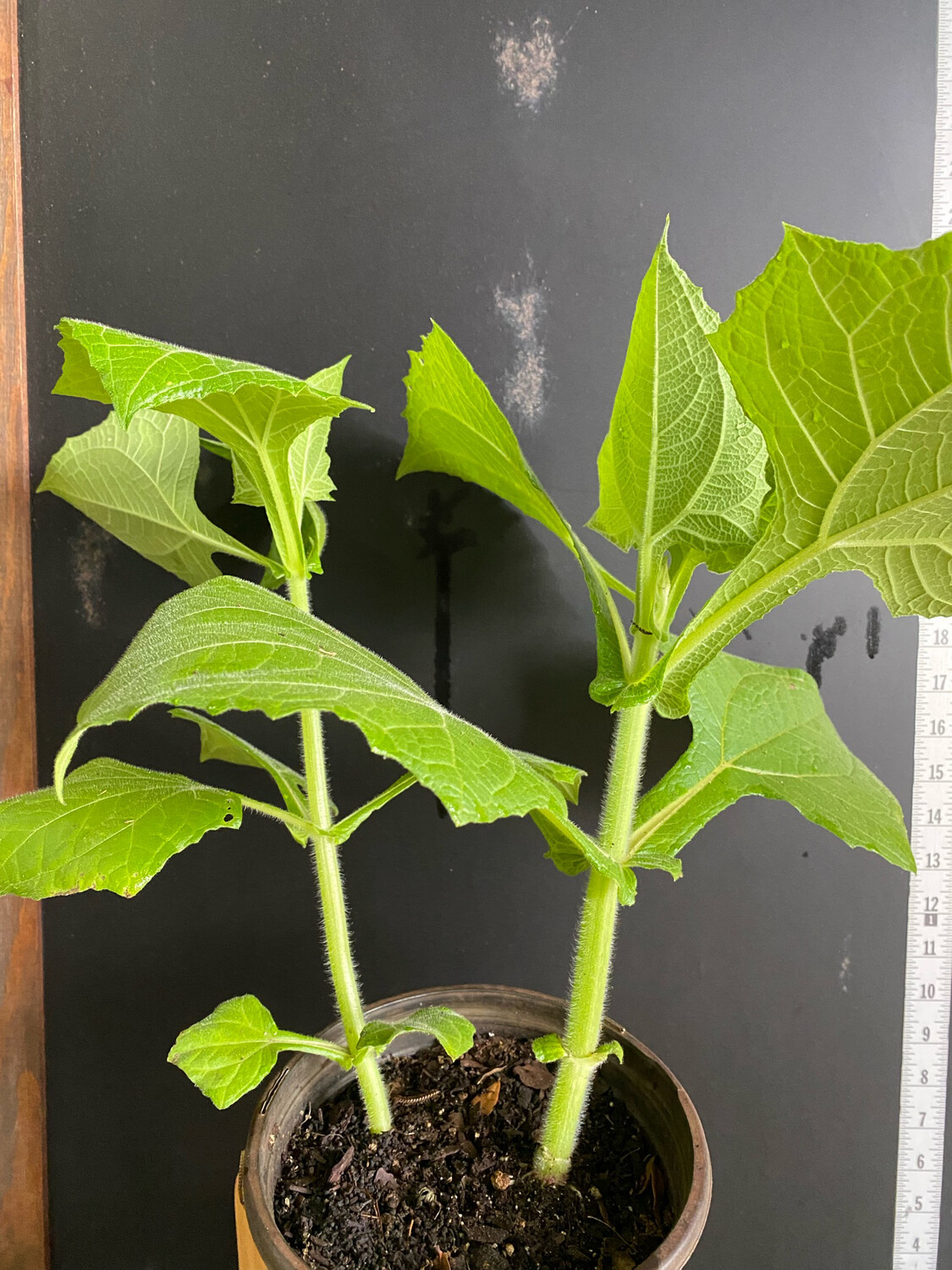
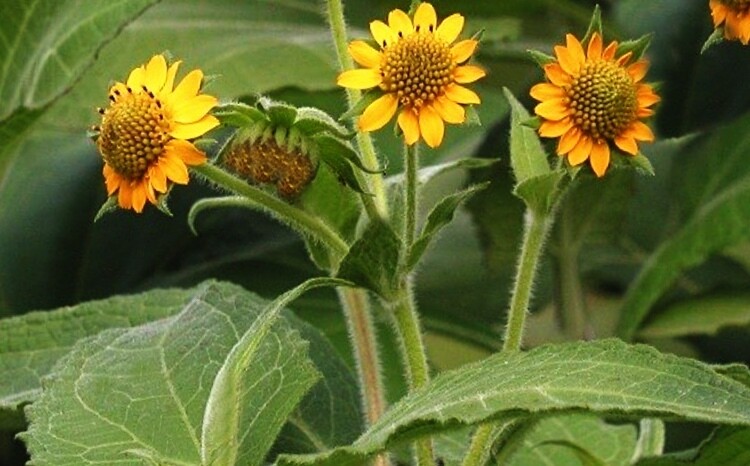
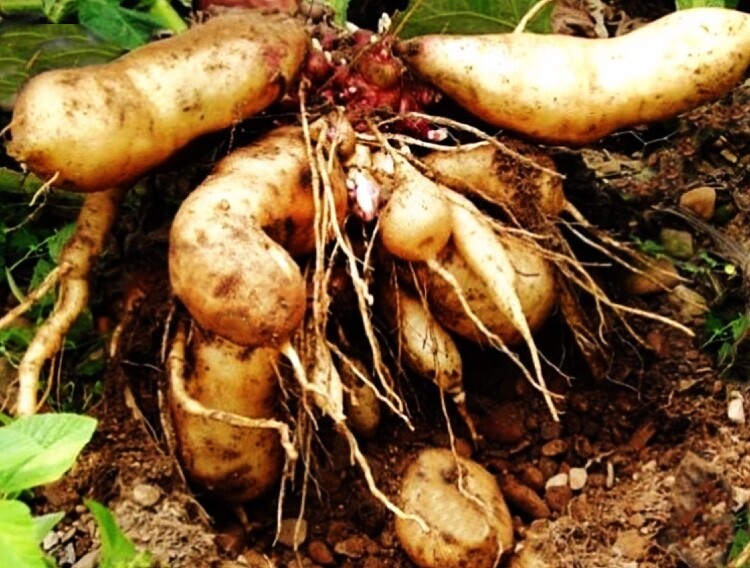
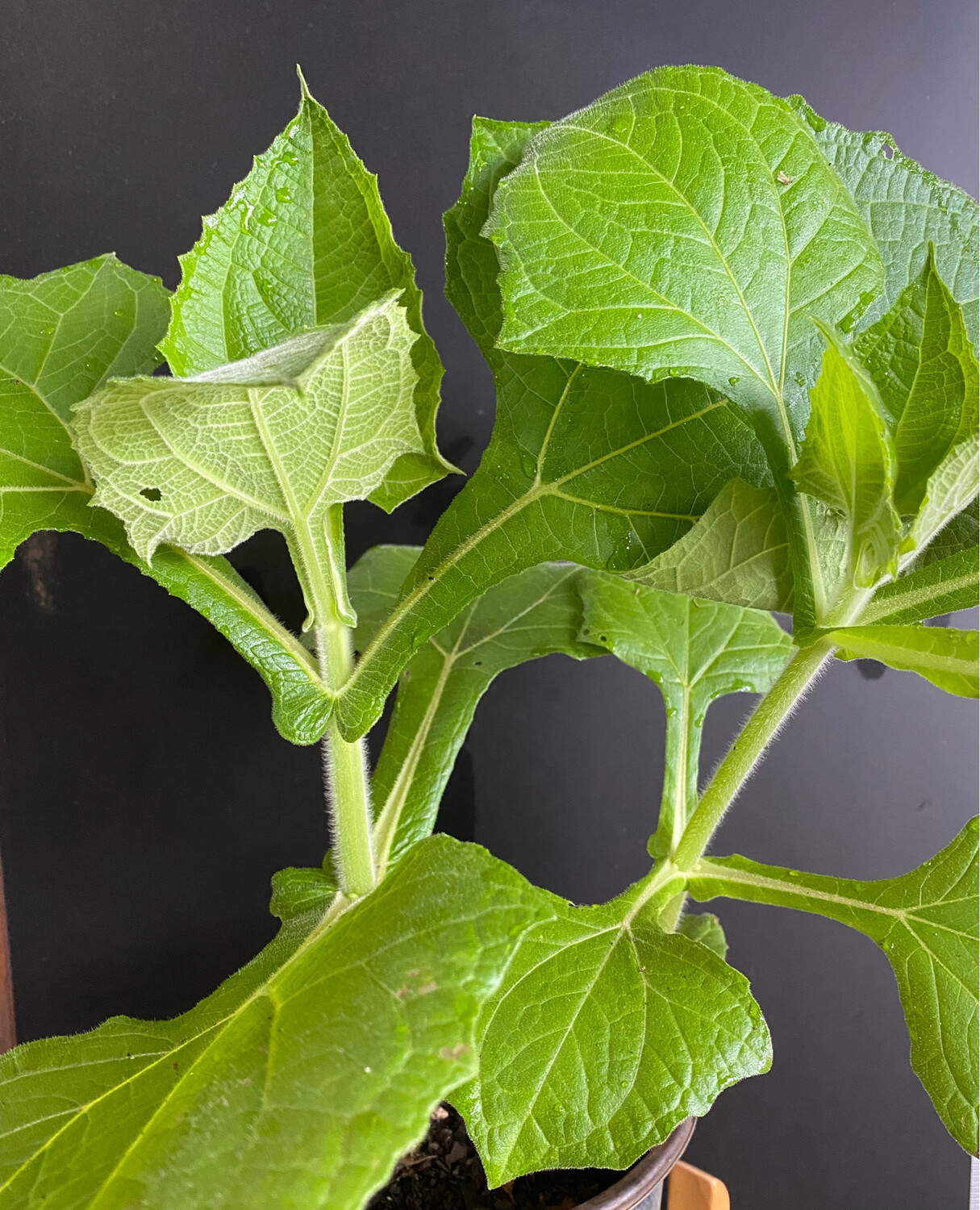
🌻 Yacon Root Plant – The Crunchy, Sweet “Apple of the Andes” 🍎🌿
Grow One of the Most Unique Edible Roots in the World
If you’ve never tasted Yacon before, imagine a juicy cross between a crisp apple, pear, watermelon, and celery — all growing underground on a towering sunflower-like plant. Native to the Andes Mountains of South America, Yacon has become a favorite among food forest growers, permaculture enthusiasts, chefs, and health-conscious gardeners for its delicious edible roots, massive biomass production, and incredible adaptability.
Unlike potatoes or sweet potatoes, Yacon (Smallanthus sonchifolius) produces crisp, hydrating tubers that are typically eaten raw, juiced, pickled, cooked, or processed into the famous Yacon syrup — a naturally sweet prebiotic sweetener rich in fructooligosaccharides (FOS).
At GreenDreams, Yacon has become one of our favorite multifunctional edible landscape plants because it checks nearly every box:
✅ Productive
✅ Beautiful
✅ Pollinator friendly
✅ Tropical-looking
✅ Easy to grow
✅ Incredible for soil building and biomass production
🌿 Quick Facts – Yacon (Smallanthus sonchifolius)
| Feature | Details |
|---|---|
| Botanical Name | Smallanthus sonchifolius |
| Common Names | Yacon, Peruvian Ground Apple, Apple of the Andes |
| Plant Type | Herbaceous perennial edible root crop |
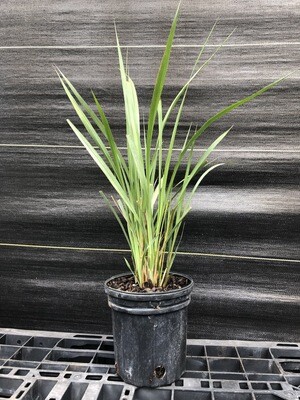
| Plant Size at Sale | 1-Gallon Container |
| Estimated Plant Age | Approximately 5–10 months depending on season |
| Mature Height | 5–8 ft tall |
| Mature Width | 3–5 ft wide |
| USDA Zones | 8B–11 perennial |
| Cold Hardiness | Top dies back around freezing temperatures |
| Sun Requirements | Full sun to partial shade |
| Growth Habit | Large clumping perennial with edible storage roots |
| Edible Portion | Crisp underground tubers |
| Harvest Season in Florida | Late fall through winter |
| Spacing | 3–5 ft apart |
| Salt Tolerance | Low |
| Wind Tolerance | Moderate once established |
| Container Friendly | Yes, in very large containers |
| Pollinator Friendly | Yes 🌼🐝 |
🍎 What Does Yacon Taste Like?
Yacon is one of those plants people remember after their very first bite.
The underground storage roots are:
- Crisp like water chestnut
- Juicy like pear
- Slightly sweet like apple
- Refreshing like watermelon
- Mildly earthy like celery
Unlike starchy roots such as potatoes or cassava, Yacon stays crunchy and hydrating even when mature.
Many growers prefer eating it:
- Fresh sliced
- Chilled in the refrigerator
- Tossed into salads
- Added to smoothies
- Pickled
- Juiced
- Roasted
- Cooked into syrups or desserts
The sweetness intensifies after harvest when roots are allowed to cure for several days.
🌎 Ancient Andean Food Crop with Modern Popularity
Yacon originates from the Andes Mountains of Peru, Ecuador, and Bolivia, where it has been cultivated for centuries alongside potatoes, ulluco, and other high-elevation root crops.
Traditionally, farmers valued Yacon because:
- It stores exceptionally well
- The roots remain juicy for long periods
- It tolerates fluctuating mountain climates
- It produces large harvests with relatively low inputs
In recent years, Yacon exploded in popularity worldwide due to interest in:
- Functional foods
- Prebiotic fiber
- Gut health
- Natural sweeteners
- Permaculture systems
- Edible landscaping
Its syrup is now widely marketed as a lower glycemic sweetener alternative.
🌱 Why Grow Yacon?
🌿 Top Benefits of Yacon
🍎 Delicious Fresh Eating Root
One of the few edible roots commonly eaten raw.
🌻 Tropical Ornamental Appeal
Huge lush leaves and sunflower-like flowers create dramatic edible landscaping.
🐝 Pollinator Support
Late-season flowers attract bees and beneficial insects.
🌾 Massive Biomass Production
Produces enormous leafy growth useful for:
- Chop-and-drop mulch
- Compost systems
- Soil building
- Food forests
♻️ Excellent Regenerative Crop
Helps improve soil structure and organic matter.
🌱 Perennial Food Security Plant
Can return annually in warm climates from underground crowns.
💚 Gut Health Support
Naturally rich in:
- Fructooligosaccharides (FOS)
- Inulin
- Prebiotic fibers
🍴 Culinary Uses of Yacon
Yacon is one of the most versatile edible roots we grow.
Popular Ways to Use Yacon
- 🍎 Fresh sliced snack
- 🥗 Chopped into salads
- 🥤 Juiced into refreshing drinks
- 🥒 Pickled
- 🍯 Made into syrup
- 🍠 Roasted like root vegetables
- 🥬 Added to stir fries
- 🍨 Used in desserts
- 🧃 Blended into smoothies
Yacon Syrup
Yacon syrup is produced by reducing the juice of the roots into a thick sweetener.
It has become popular as:
- A sugar alternative
- A prebiotic sweetener
- A functional food ingredient
🌼 Landscape & Food Forest Uses
Yacon works beautifully in:
- Food forests
- Tropical edible landscapes
- Pollinator gardens
- Cottage gardens
- Biomass systems
- Regenerative farms
- Raised bed gardens
Its huge foliage creates:
- Shade
- Wind buffering
- Living mulch effects
- Microclimates for smaller plants
The towering stems also create incredible visual impact in subtropical landscapes.
🪴 Can Yacon Be Grown in Containers?
Yes — but larger containers work best.
Recommended Pot Sizes
- Start: 1-gallon
- Upgrade to: 7–15 gallon containers minimum
Yacon develops extensive underground storage roots, so larger root volume dramatically improves production.
Best Container Soil Mix
We recommend:
- Rich compost
- Coconut coir
- Pine bark fines
- Perlite or coarse sand for drainage
The soil should:
✅ Hold moisture
✅ Drain well
✅ Stay biologically active
🌿 Best Practices for Planting & Care
🌞 Where to Plant Yacon
Yacon performs best in:
- Full sun
- Rich soils
- Consistent moisture
- Areas protected from extreme drying winds
In Florida and the Southeast, some afternoon shade can help during extreme summer heat.
🌱 GreenDreams “High & Tight” Planting Method
When planting Yacon:
- Dig a hole only slightly wider than the container
- Plant at the same depth as the nursery pot
- Do NOT bury the crown too deeply
- Pack soil firmly around roots
- Water deeply after planting
We strongly recommend planting slightly elevated (“high & tight”) in Florida soils to improve drainage and oxygen around roots.
🎥 Planting Tutorial:
https://youtu.be/RRQFY30qdA8?si=rRIcsbLlVAVYotfI
💧 Watering
Container Plants
- Water daily during hot weather
- Check moisture frequently
- Avoid letting containers dry completely
In-Ground Plants
- Water regularly during establishment
- Deep watering preferred over shallow frequent watering
- Drip irrigation is strongly recommended
⚠️ Yacon dislikes prolonged drought during active growth.
🪵 Mulching
Yacon LOVES mulch.
We recommend:
- Hardwood mulch
- Leaf mulch
- Compost top dressing
Keep mulch slightly away from the main stem to prevent rot.
✂️ Seasonal Care
In Florida & Zone 9
- Explosive spring and summer growth
- Flowers late season
- Top growth may decline in winter
- Underground crowns typically return in spring
In Colder Zones
- Treat as annual or dig/store crowns before hard freezes
🌱 Companion Plants & Food Forest Guild Ideas
Yacon pairs beautifully with:
- Mexican Sunflower
- Perennial Peanut
- Pigeon Pea
- Lemongrass
- Turmeric
- Ginger
- Bananas
- Clumping grasses for chop-and-drop biomass
These combinations help:
- Build soil
- Support pollinators
- Create living mulch systems
- Improve biodiversity
🌞 Real Growing Experience from Our Nursery – Important Notes for Florida Growers
After several years of experimenting with Yacon (Smallanthus sonchifolius) here at GreenDreams in Central Florida, we want to share some honest real-world observations with our growers.
While Yacon absolutely grows here — and can become a beautiful, vigorous ornamental edible plant — we have personally found that achieving the large, dense underground tuber production seen in cooler Andean climates can be somewhat inconsistent in our hotter, humid subtropical conditions.
What We’ve Observed in Central Florida (Zone 9B)
At our nursery and growing sites:
- Yacon performs surprisingly well in bright filtered light
- Plants often produce lush tropical foliage very quickly
- The plant handles Florida summer rains better than many root crops
- Pollinators absolutely love the late flowers 🌼🐝
However, we’ve also noticed:
- Extremely hot nighttime temperatures may reduce tuber development
- Excess summer humidity can encourage more leafy growth over root production
- Plants sometimes remain overly vegetative in rich Florida soils
- Heavy summer rainfall can occasionally reduce root quality if drainage is poor
In our experience, Yacon often behaves more like a vigorous tropical biomass plant in Central Florida rather than the ultra-heavy root producer seen in cooler climates.
🌎 Where We Believe Yacon May Perform Best in the Southeast
Based on our growing experience and feedback from other growers:
Best Southeastern Production Zones May Include:
✅ North Florida
✅ North Central Florida
✅ South Georgia
✅ Alabama
✅ South Carolina
✅ Milder parts of Zone 8B–9A
These regions often provide:
- Cooler nighttime temperatures
- More pronounced seasonal transitions
- Reduced tropical humidity
- Better conditions for storage root swelling
🌿 Our Recommendation for Central Florida Growers
We still absolutely recommend growing Yacon in Zone 9B — especially for:
- Edible landscaping
- Food forests
- Biomass production
- Pollinator gardens
- Culinary experimentation
- Plant collectors
- Functional ornamental gardens
But we also believe growers should approach it with realistic expectations:
- You may get moderate root production rather than massive harvests
- Some years may perform better than others
- Filtered light can actually help reduce stress during peak summer heat
- Soil drainage and seasonal timing matter tremendously
In many ways, Yacon behaves similarly to other highland Andean crops that appreciate:
- Warm days
- Cooler nights
- Long growing seasons without excessive tropical stress
💡 Our Current Best Results
So far, our best Florida results have come from:
- Bright filtered light or morning sun
- Rich but well-draining soil
- Heavy mulch systems
- Moderate fertility (not excessive nitrogen)
- Slightly drier conditions late in the season before harvest
- Allowing plants a long uninterrupted growing season
We’re continuing to trial Yacon in different microclimates and food forest systems because we still believe it has tremendous potential as a regenerative edible crop for the Southeast.
🔍 Troubleshooting Yacon
| ⚠️ Issue | 🧠 Cause | 🌿 Solution |
|---|---|---|
| 🍂 Yellow lower leaves | Natural aging or nutrient demand | 🌿 Add compost and mulch |
| 💦 Rotting crowns | Poor drainage | 🪣 Plant elevated and improve soil |
| 🫣 Wilting in heat | Dry soil | 💧 Deep water consistently |
| 🐛 Chewed leaves | Caterpillars or beetles | 🐞 Encourage beneficial insects |
| ❄️ Winter dieback | Seasonal cold response | 💪 Allow spring regrowth |
❓ FAQ – Yacon Root Plant
Is Yacon a potato?
No. Yacon is more closely related to sunflowers than potatoes.
Can you eat Yacon raw?
Absolutely — that’s one of the best ways to enjoy it.
Is Yacon perennial in Florida?
Yes. In most of Central and South Florida, Yacon can return yearly from underground crowns.
Does Yacon spread aggressively?
No. It forms manageable clumps that are easy to divide.
How long until harvest?
Typically 5–8 months after planting depending on climate.
⚠️ Important Shipping & Transplant Notes
This listing is for a live Yacon plant in a 1-gallon container.
1-gallon plants ship best to:
- Florida
- Southeastern US
- Texas
We can ship nationwide, but buyers in northern and western states should understand:
- Extended UPS Ground transit may stress plants
- California shipments may experience additional inspection delays
- Small plants may require extra recovery time after arrival
⚠️ Buyer assumes risk during extreme seasonal heat or cold.
We ship every Monday via UPS Ground from Florida.
After arrival:
✅ Allow the plant to acclimate
✅ Keep evenly watered
✅ Wait approximately 30 days or until new growth appears before transplanting
🏡 Local Pickup Available at GreenDreams Nursery & Farm
We carry countless edible, medicinal, native, and rare tropical plants in larger sizes not listed online.
🌿 GreenDreams Nursery & Farm
📍 18709 US Hwy. 41, Spring Hill, FL 34610
🕘 Tues–Fri 9AM–5PM
🌞 Sat 8AM–3PM
🌱 Stop by our regenerative nursery to explore what’s growing this week!
🌿 Beyond the Plant: GreenDreams Services
At GreenDreams, we do more than grow plants — we design, install, and restore edible ecosystems across Florida.
Our Services Include:
- 🌳 Edible landscape consultations
- 🌾 Food forest master planning
- 🚜 Installation & project management
- 🚚 Compost, mulch & soil delivery
- 🌿 Regenerative property development
Let our team help you create your own edible paradise — starting with Yacon! 🌻
🌿 IMPORTANT INFORMATION BEFORE PURCHASING LIVE PLANTS
Please note: Plants purchased through our online store are not available for pickup at our retail nursery in Spring Hill, Florida.
Online inventory is housed at a separate facility and is priced, prepared, and handled exclusively for shipping.
🌱 Looking for larger plants or more selection?
Our retail nursery location offers far more availability, including larger sizes, specialty plants, and many selections not suitable for nationwide shipping.
Local pickup is available for retail nursery purchases only.
Visit our Spring Hill, FL retail nursery page to explore in-person shopping options.
🚚 LIVE PLANT SHIPPING & TRANSIT EXPECTATIONS
Live plants naturally experience stress during shipping. Temporary leaf drop, mild wilting, or cosmetic stress is normal after transit. Most plants recover quickly with proper watering, gradual light exposure, and basic aftercare. Some plants may require additional attention during the first few weeks.
Despite careful packing, minor cosmetic damage may occur during transit. Small issues such as broken leaves or stems typically resolve with time and proper care.
If your shipping box arrives with significant external damage, please contact UPS within 30 days to initiate a carrier claim.
⏱️ SHIPPING METHOD, TIMING & TRANSIT WINDOWS
All online orders ship via UPS Ground from our Central Florida nursery.
📦 Shipping Schedule: Orders ship once weekly on Mondays to reduce the risk of packages sitting in transit over weekends. A countdown clock on our website displays the next shipping date.
🚚 Typical Transit Times:
-
Florida: 1–2 days
-
Southern U.S.: approximately 2 days
-
Midwest, West & Northern U.S.: 3–5 business days
Long-distance shipments, particularly to the western U.S., may experience additional transit time due to agricultural inspections in states such as Arizona, California, and Texas.
Extended transit times can be more challenging for small or tender plants and may require additional recovery care after arrival.
🌡️ EXTREME WEATHER & SEASONAL RISK
Live plants are sensitive to temperature extremes.
We cannot guarantee plant condition during periods of extreme summer heat or winter cold and freezing temperatures. Weather-related delays, carrier interruptions, or exposure during delivery are beyond our control.
Customers are responsible for:
-
Monitoring tracking information sent via email
-
Retrieving packages promptly upon delivery
-
Preventing plants from being left outdoors in extreme conditions
During unsafe weather, holiday shipping volume, or extended transit risk, orders may be held and shipped the following week to protect plant health.
⚠️ CUSTOMER RESPONSIBILITY & REFUND POLICY
By purchasing live plants, customers acknowledge and accept the risks associated with shipping, weather exposure, transit delays, and regional suitability.
Refunds or replacements are considered only under exceptional circumstances and in accordance with our return and refund policy. We are not responsible for:
-
Weather-related damage
-
Carrier delays
-
Poor plant selection for a given climate or region
-
Improper care after delivery
Upon purchase, customers assume full responsibility for the ongoing care and success of their plants.
✅ CONSENT & AGREEMENT
By completing a purchase, you confirm that you have read, understand, and agree to all shipping policies, responsibilities, and conditions outlined above.
Our goal is transparency, plant health, and long-term growing success — and we appreciate your understanding and care when ordering live plants.


