


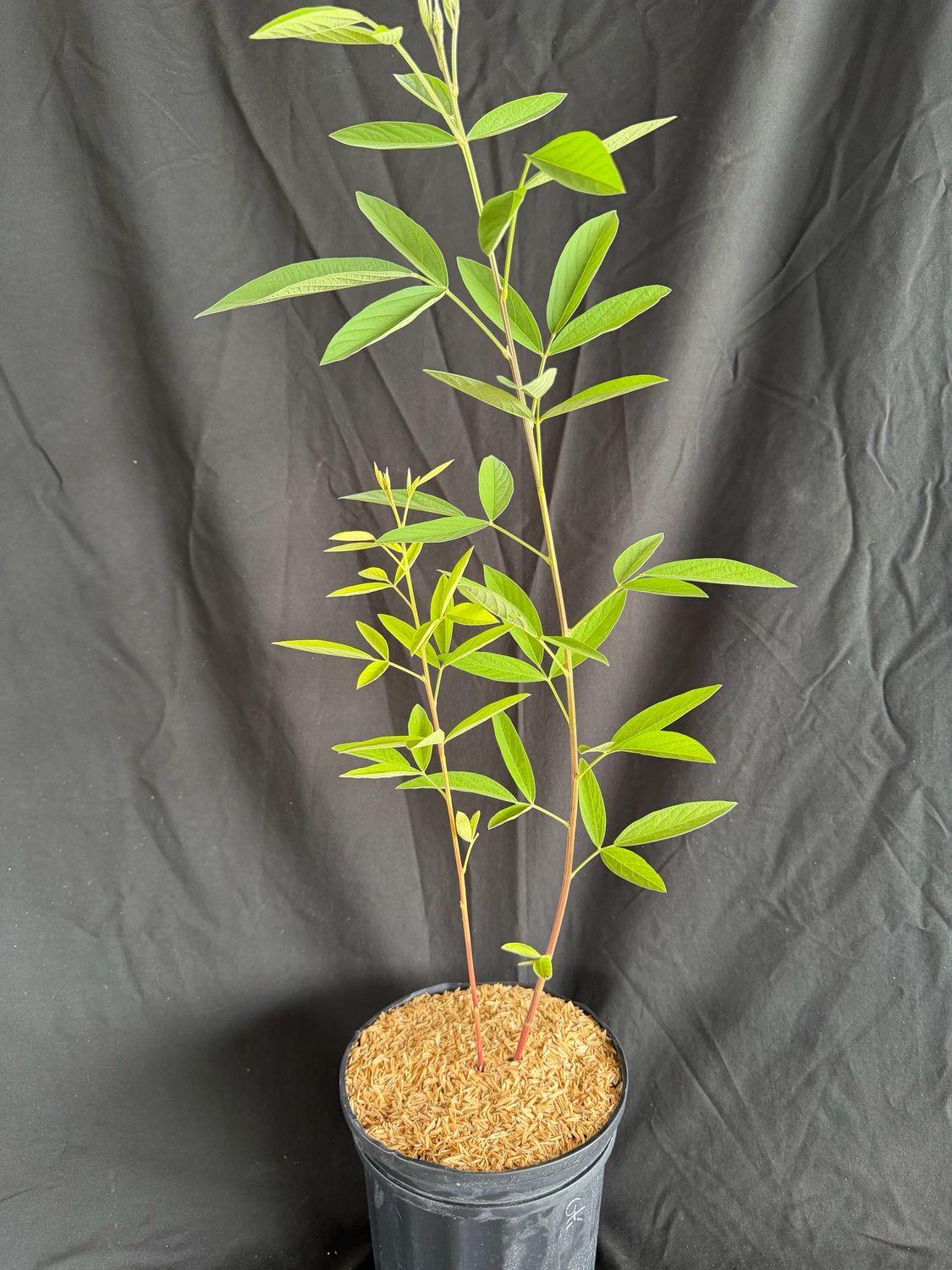
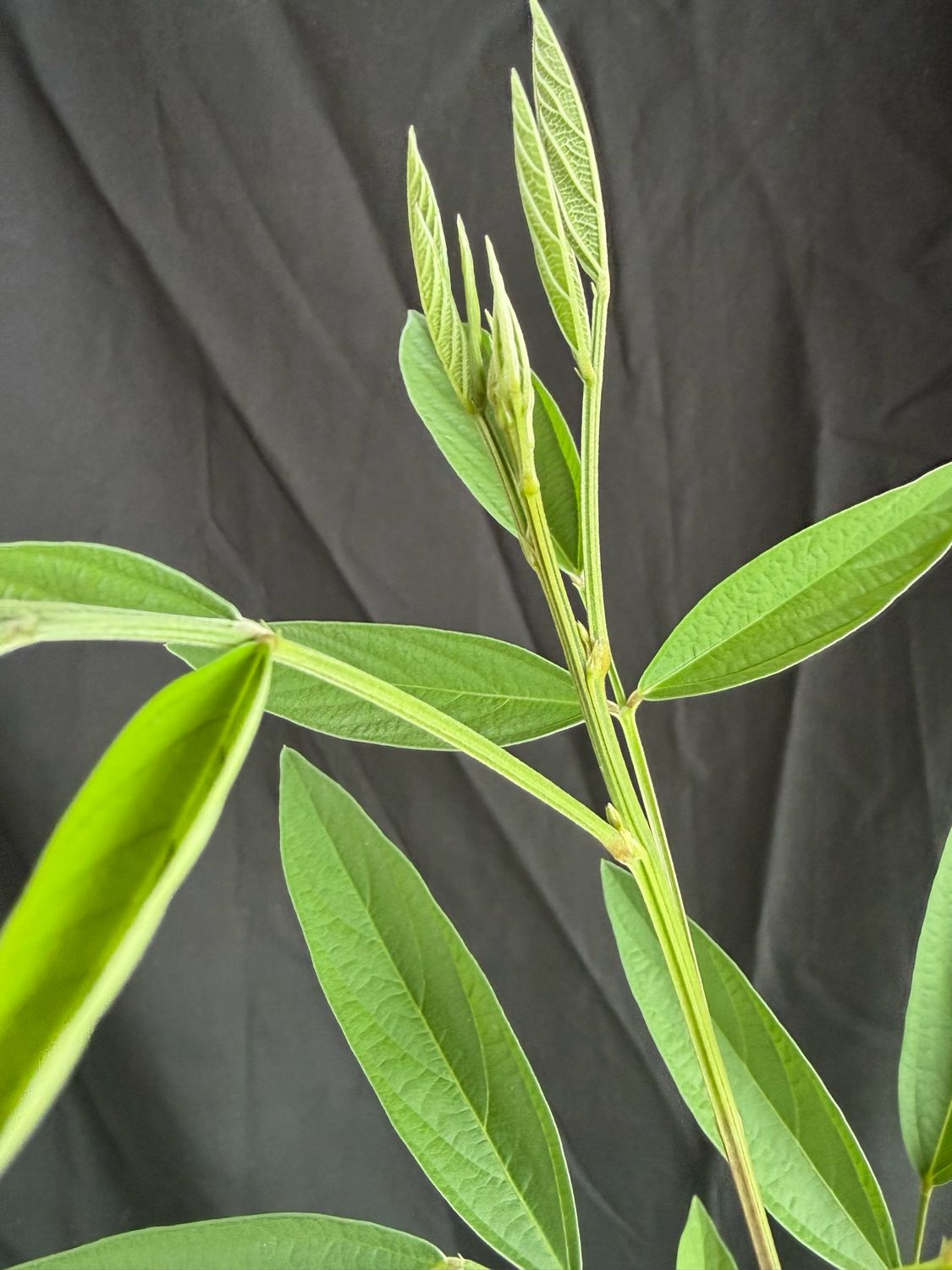
🌺 Red Pigeon Pea Plant – Edible Protein, Pollinators & Soil-Building Power
Red Pigeon Pea is a fast-growing edible landscape MVP: part food crop, part nitrogen fixer, part pollinator plant, part living mulch factory. This tropical woody legume brings protein-rich harvests, bright flowers, warm garden color, and serious regenerative value to Florida food forests and sunny edible landscapes.
🌿 Quick Facts
| Category | Details |
|---|---|
| Botanical Name | Cajanus cajan |
| Common Names | Pigeon Pea, Gandul, Gungo Pea, Congo Pea, Red Gram |
| Plant Type | Short-lived perennial legume / woody shrub |
| Size at Sale | 1-gallon container |
| Estimated Age at Sale | Young starter plant in active early growth |
| Mature Height | 4–8 ft pruned; 8–12 ft unpruned in warm climates |
| Mature Width | 3–6 ft |
| USDA Zones | 9–12 perennial; annual in cooler climates |
| Sun Requirements | Full sun, 6–8+ hours |
| Cold Hardiness | Top growth may damage near frost; roots may regrow after mild freezes |
| Growth Habit | Upright, bushy, multi-stemmed shrub |
| Spacing | 3–6 ft apart |
| Soil Needs | Well-drained soil; tolerant of sandy and lower-fertility soils |
| Pollination | Self-fertile, pollinator-friendly |
| Salt Tolerance | Low; avoid coastal salt spray exposure |
🌞 Why Grow Red Pigeon Pea?
Red Pigeon Pea is the kind of plant that works harder than most garden crops.
- 🌿 Fixes nitrogen and supports soil fertility
- 🍲 Produces edible green and dried peas
- 🐝 Attracts pollinators with bright pea-family flowers
- 🌾 Creates chop-and-drop biomass for mulch and compost
- 🌳 Makes an excellent nurse plant for young fruit trees
- 🌺 Adds tropical texture, warm-toned pods/seeds, and movement to the landscape
- 🫘 Supports food security with a protein-rich harvest
This is not just another edible plant — it is a system builder.
Origin & Cultural Significance
Pigeon pea has been cultivated for thousands of years, with strong historical roots in the Indian subcontinent before spreading through Africa, the Caribbean, Latin America, and tropical farming systems worldwide.
Today, Cajanus cajan is a staple in:
- Indian dal
- Caribbean rice and peas
- Puerto Rican arroz con gandules
- African soups and stews
- Tropical homestead and survival gardens
- Agroforestry and regenerative farming systems
The name “pigeon pea” comes from its historic use as feed for pigeons and livestock, but humans quickly figured out the real secret: this plant feeds people, animals, soil, and pollinators all at once.
🌺 What Makes the Red Type Special?
Red Pigeon Pea belongs to the same powerhouse species, Cajanus cajan, but red selections are valued for their warmer color tones and deeper visual character.
| Type | Key Trait | Best Use |
|---|---|---|
| Red | Warm-toned pods or seeds depending on line | Edible + ornamental landscapes |
| Yellow | Classic common type | General food forest use |
| Black | Darker seeds, rarer look | Collectors and crop diversity |
| Otini Fifin | Heritage lineage | Cultural and specialty growing |
All pigeon pea types share similar benefits: fast growth, edible peas, nitrogen-fixing ability, pollinator value, and biomass production.
🍲 Culinary Uses & Flavor
Red Pigeon Pea is one of the most useful edible legumes for warm-climate growers.
Edible Parts
- 🫘 Green peas, cooked fresh
- 🫘 Mature dried peas
- 🌱 Young pods, cooked when tender
- 🍃 Leaves, used traditionally in some regions
Flavor Profile
- Nutty
- Earthy
- Hearty
- Similar to lentils, split peas, or chickpeas
- Fresh peas are softer and lighter
- Dried peas cook into a rich, comforting staple
Popular Dishes
- Indian dal
- Caribbean rice and peas
- Puerto Rican arroz con gandules
- African stews
- Tropical homestead soups
- Cooked vegetable-legume medleys
For the home grower, this plant brings a rare combination: beauty, resilience, and a protein-rich harvest from your own yard.
🥣 Nutrition & Traditional Use Notes
Pigeon pea is widely valued as a nutrient-dense pulse crop.
It is known for:
- High plant-based protein
- Dietary fiber
- Complex carbohydrates
- Minerals such as potassium, magnesium, calcium, and iron
- Long-standing traditional use in food systems across tropical regions
As with all edible legumes, mature dried peas should be cooked properly before eating.
🌸 Flowers, Pods & Production
Red Pigeon Pea produces cheerful pea-family flowers followed by slender pods containing multiple seeds.
What to Expect
| Feature | Description |
|---|---|
| Flowers | Bright yellow, pea-family blooms |
| Pods | Slender pods with multiple peas |
| Seed Color | Often tan, red, reddish-brown, or darker depending on line |
| Growth Speed | Very fast in warm weather |
| Florida Harvest | Often fall through winter |
| Cooler Regions | Grown as a warm-season annual; harvest depends on frost timing |
How to Boost Production
- 🌞 Plant in full sun
- 🐝 Encourage pollinators
- 🌿 Avoid heavy nitrogen fertilizer
- ✂️ Tip prune young plants for branching
- 💧 Keep evenly watered during establishment
- 🌾 Mulch well, but keep mulch away from the stem
🌿 Seasonal Behavior in Florida & Similar Climates
Red Pigeon Pea is semi-evergreen to seasonal depending on temperature, frost, and rainfall.
| Season | What to Expect |
|---|---|
| Spring | New growth flush; plants may resprout after winter damage |
| Summer | Rapid growth, biomass production, and strong root establishment |
| Fall | Flowering and pod development increase as days shorten |
| Winter | Growth slows; frost may damage top growth; roots may survive mild freezes |
In Central Florida and similar zone 9 climates, pigeon pea may behave like a short-lived perennial shrub. In colder regions, it is usually grown as an annual warm-season crop.
🌞 Best Placement in the Landscape
Plant Red Pigeon Pea where it can work.
Ideal Locations
- Full-sun food forests
- Edible hedges
- Pollinator beds
- Soil-building zones
- Around young fruit trees as a temporary nurse plant
- Wind-buffering rows in mild climates
- Regenerative farm rows and alley-cropping systems
Avoid Planting In
- Wet, low-lying areas
- Heavy shade
- Salt-spray exposure
- Tight formal beds where seasonal pruning or dieback would look messy
- Areas with poor drainage or standing water
🪴 Container Growing & Transplanting
Red Pigeon Pea can be grown in containers, especially while young, but it does not want to stay cramped forever.
Container Progression
4-inch → 1-gallon → 3-gallon → 7-gallon → 15–20-gallon
Best Container Tips
- Use a well-draining potting mix
- Keep in full outdoor sun
- Water regularly while container-grown
- Transplant once roots begin filling the pot
- Avoid letting plants become severely rootbound
- After shipping, wait about 30 days or until new growth appears before transplanting
For potting soil, choose a loose, well-draining mix suitable for vegetables, tropical edibles, or woody shrubs. If sourcing locally, search for organic potting mix, compost-based container mix, or well-draining nursery blend. Avoid dense, soggy soils.
Indoor Growing
Not recommended. Red Pigeon Pea is an outdoor production plant that wants sun, airflow, heat, and room to grow.
🌱 Best Practices for Planting & Care
When planting Red Pigeon Pea, Cajanus cajan, use a simple “high and tight” approach.
Where to Plant
Choose a sunny location with well-draining soil. Sandy Florida soils are usually fine as long as the plant is not sitting in water.
Planting Tips
- Dig a hole only slightly wider than the container.
- Plant at the same depth or slightly elevated.
- Pack soil firmly around the root ball to remove air gaps.
- Do not bury the stem too deep.
- Top dress with compost, biochar, azomite, and organic nutrients if desired.
- Mulch with hardwood mulch, keeping mulch away from the woody base.
For our planting method, visit the GreenDreams “High & Tight” fruit tree planting video.
Watering
| Stage | Watering Guidance |
|---|---|
| First 1–2 weeks | Water often enough to keep soil evenly moist, especially in dry weather |
| Establishment | Deep water several times weekly as needed |
| Established plants | More drought tolerant, but better harvests with steady moisture |
| Containers | Check daily in hot weather; small pots dry quickly |
Drip irrigation is preferred over overhead watering because it keeps moisture near the root zone while reducing leaf and disease pressure.
Fertilizing
Red Pigeon Pea does not need heavy fertilizer. Too much nitrogen can push leafy growth at the expense of flowers and pods.
Best approach:
- Compost
- Mulch
- Biochar
- Trace minerals
- Light organic feeding if growth is pale or slow
Pruning
- Tip prune young plants for bushier growth
- Cut back after harvest if needed
- Chop-and-drop prunings as mulch
- Remove cold-damaged growth in spring once new growth shows
- Maintain at 4–8 ft for easy harvest
🌾 Large-Scale Growing Potential
Red Pigeon Pea is an excellent candidate for regenerative growing systems.
Uses in Larger Systems
- Agroforestry
- Alley cropping
- Living mulch systems
- Soil restoration
- Wind buffering
- Livestock forage systems where appropriate
- Intercropping with young fruit trees
Suggested Spacing
| Use | Spacing |
|---|---|
| Home garden shrub | 3–6 ft apart |
| Edible hedge | 3–4 ft apart |
| Food forest nurse plant | 4–8 ft from young trees |
| Biomass row | 3–5 ft apart |
| Alley cropping | Depends on equipment, crop plan, and harvest method |
It grows quickly, handles heat, and produces biomass while offering an edible harvest — that is rare plant economics.
🌺 Ornamental Value
Red Pigeon Pea is not just practical — it has a beautiful tropical look.
Landscape Appeal
- Airy, compound foliage
- Upright branching habit
- Bright yellow flowers
- Warm-toned pods or seeds
- Natural movement in the garden
- Soft, tropical texture around fruit trees
Use it in edible landscapes, pollinator gardens, mixed tropical borders, and informal hedge rows.
🌿 Companion Planting Ideas
Red Pigeon Pea pairs beautifully with other edible and ecological plants.
Great Companions
- 🌻 Mexican sunflower for biomass and pollinators
- 🌾 Clumping grasses for carbon and structure
- 🍠 Sweet potato as a living groundcover
- 🍌 Bananas for tropical stacking
- 🌱 Turmeric and ginger in nearby filtered-edge zones
- 🌸 Milkweed and native flowers for pollinator support
- 🌳 Young fruit trees that benefit from temporary shade and soil support
This plant makes the most sense when used as part of a living system, not as a lonely specimen.
🔍 Troubleshooting Guide
| Issue | Likely Cause | Organic Fix |
|---|---|---|
| 🍂 Yellow leaves | Overwatering or poor drainage | Reduce watering and improve drainage |
| 🌊 Wilting in wet soil | Waterlogged roots | Replant high, mound soil, avoid low spots |
| 🌿 No pods | Too much shade or excess nitrogen | Increase sun and reduce feeding |
| ❄️ Cold damage | Frost or freezing wind | Wait until spring, then prune damaged growth |
| 🐛 Chewed leaves | Caterpillars or beetles | Inspect leaves and treat early with organic methods |
| 🪲 Sap-sucking pests | Aphids, mites, or similar insects | Encourage beneficial insects; use organic sprays when needed |
| ☀️ Heat stress in pots | Small container drying too fast | Water more consistently or up-pot when ready |
❓ FAQ
How fast does Red Pigeon Pea grow?
Very fast in warm weather. In Florida, it can put on strong growth through the warm season.
Is Red Pigeon Pea self-pollinating?
Yes. It is self-fertile, though pollinator activity can support better garden productivity.
Does Red Pigeon Pea fix nitrogen?
Yes. As a legume, Cajanus cajan can form relationships with soil microbes that help fix atmospheric nitrogen.
Can I keep Red Pigeon Pea small?
Yes. Regular pruning can keep it around 4–8 ft tall.
Can Red Pigeon Pea grow in a pot?
Yes, especially when young, but it should be upsized as roots fill the container.
Is Red Pigeon Pea good for Florida?
Excellent. It loves heat, sun, and well-drained soils, making it a strong choice for Florida edible landscapes.
Is Red Pigeon Pea salt tolerant?
No. It is not a strong choice for salt-spray coastal exposure.
Is Red Pigeon Pea deciduous?
It is not a classic deciduous fruit tree, but it can behave seasonally. In cool weather or after frost, it may drop leaves, slow down, or die back before regrowing from the base in mild climates.
⚠️ Cautions
- Not ideal for waterlogged soil
- Not recommended for indoor growing
- Sensitive to salt exposure
- Frost can damage top growth
- Small plants may need recovery after shipping
- Mature dried peas should be cooked before eating
- In colder climates, grow as an annual unless protected
🌟 Is This Plant for Me?
✅ Ideal For
- Florida and Southeast growers
- Food forest builders
- Organic gardeners
- Regenerative growers
- Pollinator gardens
- Edible hedge projects
- Tropical homesteads
- Growers wanting plant-based protein from the landscape
❌ Not Ideal For
- Indoor setups
- Deep shade gardens
- Wet, poorly drained areas
- Cold climates without seasonal protection
- Tiny patio gardens with no room to up-pot
📦 Shipping & Handling
Red Pigeon Pea plants in 1-gallon containers are best suited for shipping to Florida, the Southeastern US, and Texas.
We ship from Florida using UPS Ground, with plant shipping scheduled every Monday.
Buyer discretion is advised during peak heat and cold seasons. We are able to ship across the northern and western United States, but extended transit times may not be suitable for smaller live plants. Plants shipped outside our regional zone may arrive stressed and may require additional recovery time.
California packages may also be held for agricultural inspection, which can add extra transit time.
We always recommend keeping plants in their current containers after arrival and waiting about 30 days, or until new growth appears, before transplanting.
📍 Local Pickup
We sell Red Pigeon Pea and many other edible, medicinal, native, tropical, and useful plants at our retail nursery.
We often have larger sizes and additional inventory available in person that may not be listed online.
GreenDreams Nursery & Farm
🌾 18709 US Hwy. 41, Spring Hill, FL 34610
🕘 Tues–Fri 9AM–5PM | 🌞 Sat 8AM–3PM
🌿 Stop by our regenerative nursery to see what’s blooming this week! 🌸
🌿 Beyond the Plant: GreenDreams Services
At GreenDreams, we do more than grow plants — we design, build, and restore ecosystems across Florida.
- 🌳 Onsite consultations and edible landscape design
- 🚜 Installation and project management
- 🚚 Bulk delivery of compost, mulch, biochar, and soil materials
- 🌾 Wholesale and large-scale regenerative solutions
Let our team help you create your own thriving edible paradise — starting with Red Pigeon Pea.
🌿 IMPORTANT INFORMATION BEFORE PURCHASING LIVE PLANTS
Please note: Plants purchased through our online store are not available for pickup at our retail nursery in Spring Hill, Florida.
Online inventory is housed at a separate facility and is priced, prepared, and handled exclusively for shipping.
🌱 Looking for larger plants or more selection?
Our retail nursery location offers far more availability, including larger sizes, specialty plants, and many selections not suitable for nationwide shipping.
Local pickup is available for retail nursery purchases only.
Visit our Spring Hill, FL retail nursery page to explore in-person shopping options.
🚚 LIVE PLANT SHIPPING & TRANSIT EXPECTATIONS
Live plants naturally experience stress during shipping. Temporary leaf drop, mild wilting, or cosmetic stress is normal after transit. Most plants recover quickly with proper watering, gradual light exposure, and basic aftercare. Some plants may require additional attention during the first few weeks.
Despite careful packing, minor cosmetic damage may occur during transit. Small issues such as broken leaves or stems typically resolve with time and proper care.
If your shipping box arrives with significant external damage, please contact UPS within 30 days to initiate a carrier claim.
⏱️ SHIPPING METHOD, TIMING & TRANSIT WINDOWS
All online orders ship via UPS Ground from our Central Florida nursery.
📦 Shipping Schedule: Orders ship once weekly on Mondays to reduce the risk of packages sitting in transit over weekends. A countdown clock on our website displays the next shipping date.
🚚 Typical Transit Times:
-
Florida: 1–2 days
-
Southern U.S.: approximately 2 days
-
Midwest, West & Northern U.S.: 3–5 business days
Long-distance shipments, particularly to the western U.S., may experience additional transit time due to agricultural inspections in states such as Arizona, California, and Texas.
Extended transit times can be more challenging for small or tender plants and may require additional recovery care after arrival.
🌡️ EXTREME WEATHER & SEASONAL RISK
Live plants are sensitive to temperature extremes.
We cannot guarantee plant condition during periods of extreme summer heat or winter cold and freezing temperatures. Weather-related delays, carrier interruptions, or exposure during delivery are beyond our control.
Customers are responsible for:
-
Monitoring tracking information sent via email
-
Retrieving packages promptly upon delivery
-
Preventing plants from being left outdoors in extreme conditions
During unsafe weather, holiday shipping volume, or extended transit risk, orders may be held and shipped the following week to protect plant health.
⚠️ CUSTOMER RESPONSIBILITY & REFUND POLICY
By purchasing live plants, customers acknowledge and accept the risks associated with shipping, weather exposure, transit delays, and regional suitability.
Refunds or replacements are considered only under exceptional circumstances and in accordance with our return and refund policy. We are not responsible for:
-
Weather-related damage
-
Carrier delays
-
Poor plant selection for a given climate or region
-
Improper care after delivery
Upon purchase, customers assume full responsibility for the ongoing care and success of their plants.
✅ CONSENT & AGREEMENT
By completing a purchase, you confirm that you have read, understand, and agree to all shipping policies, responsibilities, and conditions outlined above.
Our goal is transparency, plant health, and long-term growing success — and we appreciate your understanding and care when ordering live plants.


