


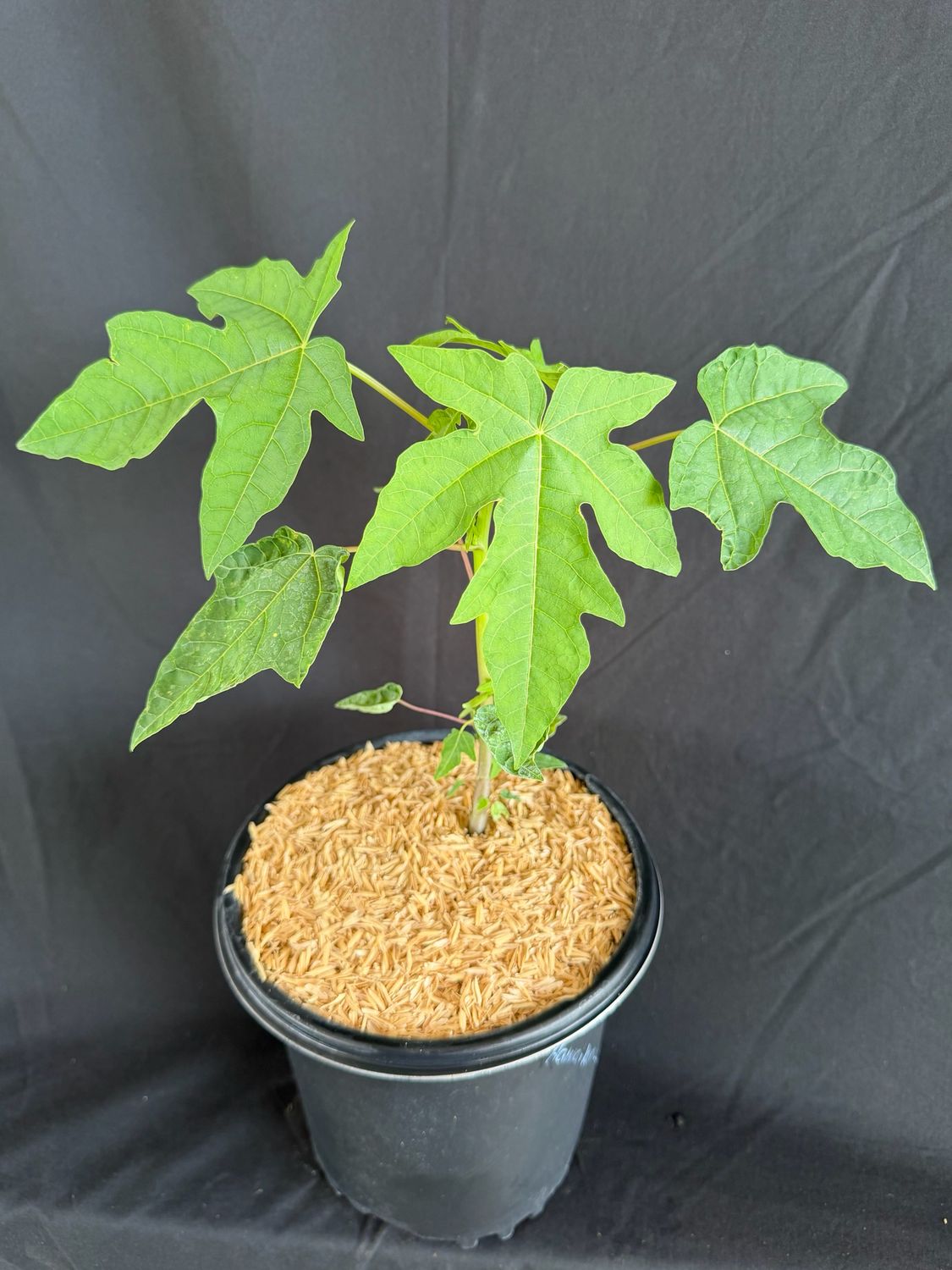
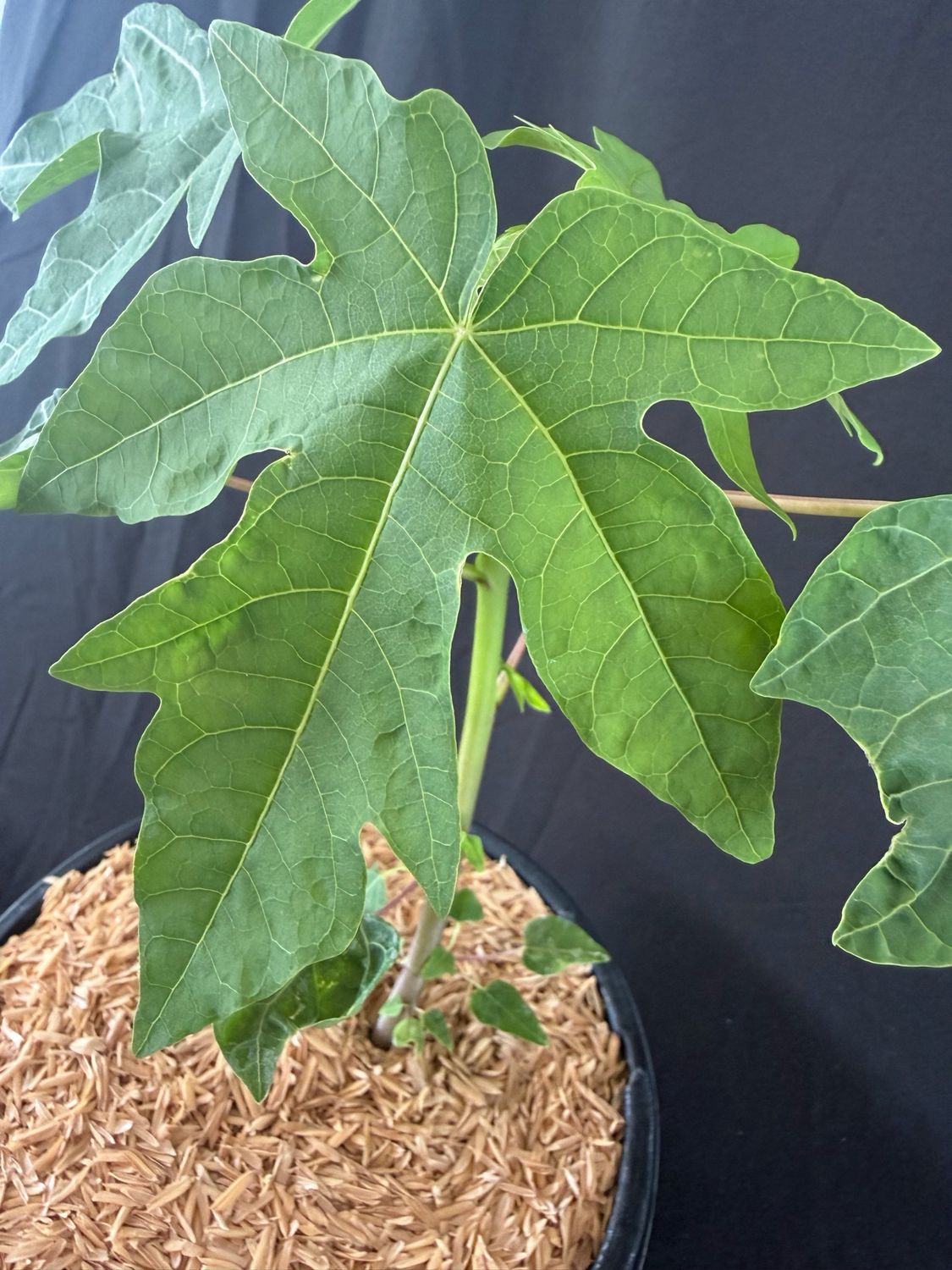
🌴 Hawaiian Solo Papaya (Carica papaya) 1G — Classic Tropical Sweetness in a Backyard-Sized Fruit 🍈
Hawaiian Solo Papaya is the iconic “breakfast papaya” — small enough for one person, sweet enough to feel like dessert, and fast enough to make backyard fruit growing feel instantly rewarding. This compact tropical fruiting plant is a fantastic choice for Florida growers who want lush, edible abundance without waiting years for harvest.
🌿 Quick Facts
| Category | Details |
|---|---|
| Botanical Name | Carica papaya |
| Common Name | Hawaiian Solo Papaya |
| Plant Type | Fast-growing tropical fruiting herbaceous plant |
| Sale Size | 1-gallon container |
| Estimated Age | Approx. 4–8 months, depending on season and growth rate |
| Mature Height | 8–15 ft unpruned; often managed around 6–10 ft |
| Mature Width | 4–8 ft |
| USDA Zones | Best in 9B–11; protect in cooler Zone 9 areas |
| Sun Requirements | Full sun for best growth and fruit sweetness |
| Cold Hardiness | Tropical; damaged or killed near/below freezing |
| Growth Habit | Upright, fast-growing, single-trunk tropical “tree-like” herb |
| Spacing | 6–10 ft apart |
| Fruiting Time | Often fruits within 8–14 months in warm conditions |
| Container Friendly | Yes short-term; best production in-ground |
| Indoor Friendly | Only with greenhouse-level light and warmth |
🍈 Fruit Details — Sweet, Personal-Sized, and Easy to Use
The name Solo refers to the classic Hawaiian style of papaya: a smaller, pear-shaped fruit sized for one person to enjoy in a single sitting. Hawaiian Solo-type papayas are valued for uniform fruit shape, excellent eating quality, and productivity. (CTAHR)
| Fruit Feature | What to Expect |
|---|---|
| Fruit Size | Usually small to medium; often around 1–2 lb depending on strain and conditions |
| Shape | Pear-shaped to oval |
| Flesh Color | Yellow-orange to orange, depending on strain |
| Texture | Smooth, soft, juicy, spoonable |
| Flavor | Sweet melon-tropical flavor |
| Muskiness | Typically lower than many large-fruited papayas |
| Best Uses | Fresh eating, breakfast bowls, smoothies, green papaya salad |
🌟 Flavor Snapshot
Sweetness: ⭐⭐⭐⭐
Texture: Smooth, juicy, custard-soft when ripe
Muskiness: Low to mild
Best harvest stage: Mostly yellow/orange skin with slight give
🌺 Why Grow Hawaiian Solo Papaya?
Hawaiian Solo Papaya is perfect for growers who want fruit quickly and a bold tropical look in the landscape.
Top Benefits
- 🍈 Fast fruiting: Papayas are among the quickest fruiting tropical plants.
- 🌴 Compact fruit size: Easier to harvest, eat, and share.
- 🌞 Florida-friendly with care: Great for warm Central and South Florida microclimates.
- 🥤 Excellent fresh eating: Sweeter and more aromatic than most grocery store papayas.
- 🐝 Pollinator interest: Flowers attract beneficial insects.
- 🌿 Edible landscape beauty: Large tropical leaves create instant lushness.
- 🪴 Container-start friendly: Easy to grow larger before planting in-ground.
🌍 Origin & Story
Papaya is native to tropical America and became one of the world’s most important tropical fruits as it spread through the Caribbean, Asia, Africa, and the Pacific. UF/IFAS describes papaya as a tropical tree-like plant native to Central America, with ripe fruit that is soft, juicy, and sweet like mango or melon. (Gardening Solutions)
Hawaiian Solo papayas became famous because they were smaller, sweeter, and more uniform than many large-fruited tropical types. The “Solo” name stuck because the fruit is sized for one person — breakfast, lunch, or dessert without needing to carve up a giant papaya. (GMS CTARH Hawaii)
🍽️ How to Use Hawaiian Solo Papaya
🍈 Ripe Papaya Uses
- Slice in half, scoop seeds, add lime
- Blend into smoothies
- Add to yogurt bowls
- Dice into tropical fruit salads
- Freeze cubes for smoothie packs
- Make papaya sorbet
- Pair with coconut, mango, pineapple, banana, ginger, and citrus
🥗 Green Papaya Uses
Unripe green papaya is used around the world in savory cooking:
- Thai-style green papaya salad
- Slaws
- Pickles
- Stir-fries
- Curries
- Tenderizing marinades
🌿 Seeds
Papaya seeds are peppery and sometimes dried and used sparingly like a spice.
🍖 Papain Enzyme
Green papaya contains papain, an enzyme historically used as a natural meat tenderizer.
🍈 Papaya Cultivar Comparison Chart
| Cultivar | Fruit Size & Flesh Color | Flavor + Muskiness Rating | Plant Size | Best For | Special Notes |
|---|---|---|---|---|---|
| Waimanalo | Medium-large • orange-salmon flesh | ⭐⭐⭐⭐⭐ Sweet tropical flavor • low muskiness | Compact-medium | Backyard growers & premium flavor | Hawaiian classic with rich sweetness |
| Sunset | Small-medium • deep orange flesh | ⭐⭐⭐⭐⭐ Very sweet • very low muskiness | Compact | Fresh eating & smaller spaces | Famous dessert-style Solo papaya |
| Hawaiian Solo | Small-medium • yellow-orange to orange flesh | ⭐⭐⭐⭐ Sweet & aromatic • low muskiness | Compact | Breakfast papaya & containers | Classic personal-sized Hawaiian type |
| Tainung #2 | Large • orange-red flesh | ⭐⭐⭐ Mild sweetness • medium muskiness | Large vigorous | Heavy production | Commercial-style hybrid |
| Red Lady | Medium-large • deep red-orange flesh | ⭐⭐⭐⭐ Sweet & juicy • low muskiness | Medium-large | Fast-fruiting home orchards | Productive and beginner friendly |
| Red Maradol | Very large • deep red flesh | ⭐⭐⭐⭐ Rich tropical flavor • medium-high muskiness | Large | Giant fruit lovers | Bold grocery-style papaya |
| Bella F1 Hybrid | Medium • orange-red flesh | ⭐⭐⭐⭐ Balanced sweetness • low muskiness | Compact-medium | Reliable backyard production | Hybrid vigor and uniformity |
| Red Nemesis F1 | Medium • deep orange-red flesh | ⭐⭐⭐⭐ Vibrant fruity flavor • low muskiness | Medium | Premium fruit quality | Attractive newer hybrid |
🌞 Where to Plant Hawaiian Solo Papaya
Papayas grow best where conditions stay warm to hot. UF/IFAS notes that papayas grow and fruit best around 70°F–90°F, and that drought, cold, wind, and shade reduce growth and production. (Ask IFAS - Powered by EDIS)
Best Location
- Full sun
- Warm protected microclimate
- South or southeast exposure
- Near reflected heat from a wall, driveway, or patio
- Protected from strong north winds
- High, well-drained soil
Avoid Planting
- Low wet areas
- Heavy standing water zones
- Frost pockets
- Wind tunnels
- Deep shade
- Areas with overhead sprinkler saturation
🌱 Planting Hawaiian Solo Papaya — GreenDreams “High & Tight” Method
Papayas are fast growers, but they are extremely sensitive to wet roots. Drainage is everything.
Planting Steps
- Keep your Hawaiian Solo Papaya in its container after shipping until it has recovered and is pushing new growth.
- Choose a warm, sunny, well-drained location.
- Dig a hole only slightly wider than the pot.
- Keep the root ball at the same depth or slightly above surrounding grade.
- Backfill firmly so no air pockets remain.
- Top dress with compost, biochar, azomite, and organic nutrients.
- Mulch 2–4 inches deep around the planting zone.
- Keep mulch several inches away from the trunk.
- Water deeply to settle the soil.
🎥 GreenDreams planting method: https://youtu.be/RRQFY30qdA8?si=rRIcsbLlVAVYotfI
💧 Watering Guide
Papayas want consistent moisture, but they do not want soggy roots.
| Growing Situation | Watering Guidance |
|---|---|
| Newly planted | Water daily during dry weather until established |
| Established in-ground | Deep water 2–4x weekly depending on rainfall |
| Container grown | Check daily in warm weather |
| Winter | Reduce watering when growth slows |
| Rainy season | Watch drainage carefully |
✅ Drip irrigation is better than overhead irrigation.
❌ Avoid constant wet foliage and saturated root zones.
🌿 Fertilizing Hawaiian Solo Papaya
Papayas are heavy feeders because they grow and fruit quickly.
Organic Fertility Plan
During active warm-season growth, feed regularly with:
- Compost
- Worm castings
- Organic fruit tree fertilizer
- Fish hydrolysate
- Kelp
- Biochar blends
- Trace minerals
- Potassium-rich amendments during fruiting
Feeding Frequency
- Light feeding every 3–4 weeks during warm growth
- Reduce feeding in cold weather
- Avoid heavy fertilizer on drought-stressed plants
✂️ Pruning & Maintenance
Papayas do not require traditional fruit tree pruning.
Regular Care
- Remove old yellowing leaves
- Remove damaged foliage after storms
- Cut off diseased leaves and discard
- Stake young plants if windy
- Keep competing weeds away from the root zone
Height Management
When papayas become too tall to harvest easily, some growers top the plant to encourage lower branching. This can work, but cuts should only be made on healthy, vigorous plants during warm growing weather.
❄️ Seasonal Care in Florida
🌱 Spring
Growth speeds up as temperatures warm. Begin regular feeding and watering.
☀️ Summer
Peak growth season. Expect fast height gain, flowering, and fruit development. Keep watered and fed.
🍂 Fall
Continue harvesting in warm regions. Prepare for storms and gradually reduce fertilizer late in the season.
❄️ Winter
Growth slows. Cold damage can appear as leaf spotting, yellowing, drooping, or trunk injury. Protect plants before freezing weather.
UF/IFAS notes papayas are not tolerant of freezing temperatures and may be damaged or killed below about 31°F. (Ask IFAS - Powered by EDIS)
Container Growing
Hawaiian Solo Papaya can be grown in containers short-term, especially while young.
Pot Size Progression
| Stage | Pot Size |
|---|---|
| Starter | 1 gallon |
| Next step | 3 gallon |
| Larger young plant | 7 gallon |
| Fruiting container | 15–25 gallon or larger |
Best Container Mix
Use a fast-draining tropical fruit mix with:
- Pine bark fines
- Compost
- Perlite or pumice
- Coarse sand
- Coconut coir
- Biochar
Avoid dense, soggy potting soil.
When to Up-Pot
Transplant when:
- Roots circle the bottom
- Plant dries out too quickly
- Growth stalls
- Roots are visible through drainage holes
Wait at least 30 days after shipping or until new growth appears before transplanting.
🏡 Can Hawaiian Solo Papaya Grow Indoors?
Only in very bright, warm conditions. A sunny window is usually not enough for long-term fruit production.
Best indoor setups include:
- Greenhouses
- Sunrooms
- High-output grow lights
- Warm winter protection areas
For most growers, papaya performs best outdoors in full sun.
🌾 Companion Plant Sidebar
Papaya loves a living, mulched, biologically active planting area.
Great Companions
| Companion Type | Plants to Consider |
|---|---|
| Nitrogen Fixers | Pigeon pea, sunshine mimosa, perennial peanut |
| Pollinator Plants | Mexican sunflower, firebush, salvia, society garlic |
| Biomass Plants | Lemongrass, vetiver, clumping grasses |
| Tropical Edibles | Ginger, turmeric, chaya, longevity spinach |
| Groundcovers | Perennial peanut, sunshine mimosa |
Keep companions from crowding the papaya trunk.
🔍 Troubleshooting Guide
| Issue | Likely Cause | Organic Solution |
|---|---|---|
| 🍂 Yellow lower leaves | Natural aging or high nutrient demand | Feed regularly and remove old leaves |
| 💦 Wilting despite wet soil | Root stress or poor drainage | Improve drainage; plant high and tight |
| ❄️ Burned leaves after cold | Frost or cold wind | Cover before freezes; prune only after danger passes |
| 🪲 Whiteflies / aphids | Warm-season sap-sucking pests | Use insecticidal soap or neem; encourage beneficial insects |
| 🍄 Leaf spots | Humidity, overhead watering, poor airflow | Remove affected leaves; improve airflow |
| 🌬️ Leaning trunk | Wind exposure or shallow rooting | Stake young plants and mulch root zone |
| 🍃 Flower drop | Stress, drought, cold, or nutrition swings | Stabilize watering and fertility |
| 🍈 Poor fruit sweetness | Shade, low fertility, early harvest | Increase sun, potassium, and harvest fully ripe |
⚠️ Cautions
- Papaya latex may irritate sensitive skin.
- Unripe papaya and latex should be used cautiously by pregnant individuals.
- Roots are sensitive to standing water.
- Young plants are vulnerable to wind and cold.
- Fruit production slows in cool weather.
- Papayas are short-lived compared to woody fruit trees; many growers replant every 2–3 years for best production.
🌟 Is Hawaiian Solo Papaya Right for You?
✅ Ideal For
- Florida gardeners
- Tropical fruit collectors
- Small-yard growers
- Growers wanting fruit quickly
- Smoothie lovers
- Edible landscape projects
- Backyard food forest systems
❌ Not Ideal For
- Cold climates without winter protection
- Wet, poorly drained yards
- Deep shade gardens
- Windy exposed locations
- Growers who cannot water during dry spells
- Indoor-only fruit production
❓FAQ
How long does Hawaiian Solo Papaya take to fruit?
In warm climates, papayas can often begin flowering and fruiting within the first year under excellent conditions.
Does Hawaiian Solo Papaya need another papaya to fruit?
Many Solo-type papayas are self-fertile or produce hermaphroditic flowers, but planting more than one papaya can improve production consistency. Hawaiian solo varieties commonly produce female or hermaphroditic plants, with hermaphrodites preferred commercially. (CTAHR)
Can Hawaiian Solo Papaya grow in Central Florida?
Yes, with the right microclimate, drainage, and frost protection. South Florida is easiest, but Central Florida growers can succeed with care.
Why are my papaya leaves turning yellow?
Older lower leaves naturally yellow and drop. Rapid yellowing can also indicate overwatering, poor drainage, nutrient deficiency, or cold stress.
Can I grow Hawaiian Solo Papaya in a pot?
Yes short-term. For fruit production, use a large container of at least 15–25 gallons and keep fertility consistent.
Is papaya a tree?
Papaya is often called a tree, but botanically it is a fast-growing, tree-like herbaceous plant.
🚚 Shipping Notes for 1-Gallon Hawaiian Solo Papaya
This 1-gallon papaya is best suited for shipping to:
- Florida
- Southeastern US
- Texas
We ship across the continental U.S., but northern and western states may experience longer UPS Ground transit times. Small tropical plants may need extra recovery time after shipping.
Important Shipping Details
- Ships from Florida
- UPS Ground only
- Weekly shipping on Mondays
- Buyer discretion advised during extreme heat or cold
- We are not responsible for damage caused by extreme temperatures or extended ground transit
- California packages may be delayed for agricultural inspection
- Allow 30 days or visible new growth before transplanting
🏡 Local Pickup at GreenDreams Nursery & Farm
We also sell papayas and many other edible plants at our retail nursery. Our retail selection often includes larger sizes, additional cultivars, and pickup-only plants not listed online.
GreenDreams Nursery & Farm
🌾 18709 US Hwy. 41, Spring Hill, FL 34610
🕘 Tues–Fri 9AM–5PM | 🌞 Sat 8AM–3PM
🌿 Stop by our regenerative nursery to see what’s fresh this week.
🌿 Beyond the Plant: GreenDreams Services
At GreenDreams, we do more than grow plants — we design, build, and restore ecosystems across Florida.
- 🌳 Onsite consultations & edible landscape design
- 🚜 Installation & project management
- 🚚 Bulk delivery of compost, mulch, biochar, and soil materials
- 🌾 Wholesale & large-scale regenerative solutions
Let our team help you create your own thriving edible paradise — starting with Hawaiian Solo Papaya. 🌿
🌿 IMPORTANT INFORMATION BEFORE PURCHASING LIVE PLANTS
Please note: Plants purchased through our online store are not available for pickup at our retail nursery in Spring Hill, Florida.
Online inventory is housed at a separate facility and is priced, prepared, and handled exclusively for shipping.
🌱 Looking for larger plants or more selection?
Our retail nursery location offers far more availability, including larger sizes, specialty plants, and many selections not suitable for nationwide shipping.
Local pickup is available for retail nursery purchases only.
Visit our Spring Hill, FL retail nursery page to explore in-person shopping options.
🚚 LIVE PLANT SHIPPING & TRANSIT EXPECTATIONS
Live plants naturally experience stress during shipping. Temporary leaf drop, mild wilting, or cosmetic stress is normal after transit. Most plants recover quickly with proper watering, gradual light exposure, and basic aftercare. Some plants may require additional attention during the first few weeks.
Despite careful packing, minor cosmetic damage may occur during transit. Small issues such as broken leaves or stems typically resolve with time and proper care.
If your shipping box arrives with significant external damage, please contact UPS within 30 days to initiate a carrier claim.
⏱️ SHIPPING METHOD, TIMING & TRANSIT WINDOWS
All online orders ship via UPS Ground from our Central Florida nursery.
📦 Shipping Schedule: Orders ship once weekly on Mondays to reduce the risk of packages sitting in transit over weekends. A countdown clock on our website displays the next shipping date.
🚚 Typical Transit Times:
-
Florida: 1–2 days
-
Southern U.S.: approximately 2 days
-
Midwest, West & Northern U.S.: 3–5 business days
Long-distance shipments, particularly to the western U.S., may experience additional transit time due to agricultural inspections in states such as Arizona, California, and Texas.
Extended transit times can be more challenging for small or tender plants and may require additional recovery care after arrival.
🌡️ EXTREME WEATHER & SEASONAL RISK
Live plants are sensitive to temperature extremes.
We cannot guarantee plant condition during periods of extreme summer heat or winter cold and freezing temperatures. Weather-related delays, carrier interruptions, or exposure during delivery are beyond our control.
Customers are responsible for:
-
Monitoring tracking information sent via email
-
Retrieving packages promptly upon delivery
-
Preventing plants from being left outdoors in extreme conditions
During unsafe weather, holiday shipping volume, or extended transit risk, orders may be held and shipped the following week to protect plant health.
⚠️ CUSTOMER RESPONSIBILITY & REFUND POLICY
By purchasing live plants, customers acknowledge and accept the risks associated with shipping, weather exposure, transit delays, and regional suitability.
Refunds or replacements are considered only under exceptional circumstances and in accordance with our return and refund policy. We are not responsible for:
-
Weather-related damage
-
Carrier delays
-
Poor plant selection for a given climate or region
-
Improper care after delivery
Upon purchase, customers assume full responsibility for the ongoing care and success of their plants.
✅ CONSENT & AGREEMENT
By completing a purchase, you confirm that you have read, understand, and agree to all shipping policies, responsibilities, and conditions outlined above.
Our goal is transparency, plant health, and long-term growing success — and we appreciate your understanding and care when ordering live plants.


