


🌿 Swiss Cheese Plant — Monstera adansonii | 1 Gallon Tropical Climbing Vine
🪴 Bring the Jungle Home — Holes Included
Some tropical plants need flowers to make a statement. Monstera adansonii just shows up with leaves full of holes and steals the room.
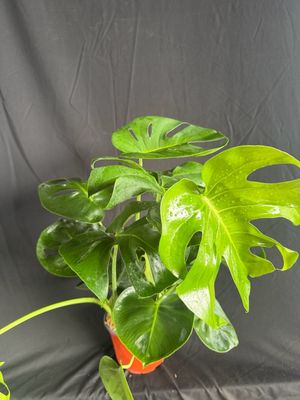
Better known as the Swiss Cheese Plant, Swiss Cheese Vine, Five-Hole Plant, or Adanson’s Monstera, this fast-growing tropical climber produces glossy, heart-shaped foliage punctuated by natural openings called fenestrations. Give it bright filtered light, warmth and something to climb, and those vines can transform a shelf, patio, shade garden or living wall into a full-blown tropical moment.
Unlike many of the edible plants in the GreenDreams collection, Monstera adansonii is here strictly for the looks. This one earns its space through vertical texture, dramatic foliage and serious ornamental appeal.
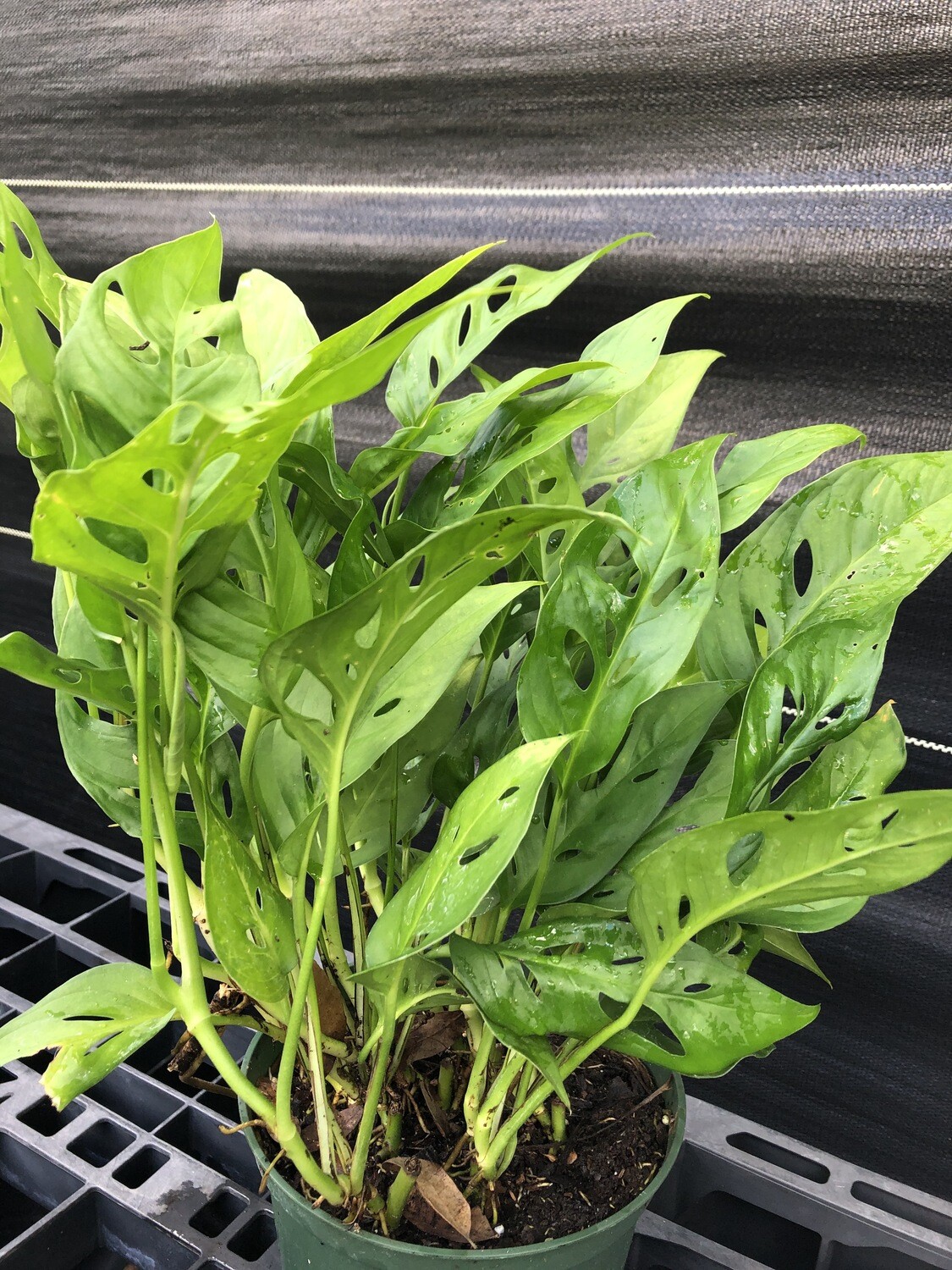
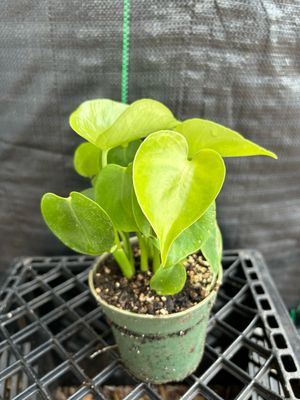
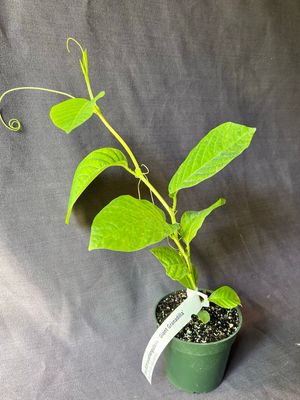
It ships in a 1-gallon nursery container and can be grown as a trailing houseplant, trained vertically onto a pole or trellis, or used outdoors in appropriately warm subtropical and tropical landscapes.
Monstera adansonii is an accepted species native broadly across Tropical America. In nature it is a climbing plant of wet tropical habitats, using aerial roots to move upward along trees and other supports.
🌿 Monstera adansonii Quick Facts
| 🌱 QUICK FACT | DETAILS |
|---|---|
| Botanical Name | Monstera adansonii Schott |
| Common Names | Swiss Cheese Plant, Swiss Cheese Vine, Adanson’s Monstera, Five-Hole Plant |
| Family | Araceae — the aroid family |
| Plant Type | Evergreen tropical herbaceous climbing vine |
| Sale Size | Ships in a 1-gallon nursery container |
| Typical Age at This Size | Often approximately 6–12 months from propagation, depending heavily on growing conditions and nursery production schedule; container development is more useful than chronological age |
| Growth Rate | Fast under warm, humid, well-lit conditions |
| Indoor Height | Commonly 3–8 ft. with climbing support |
| Outdoor Height | Approximately 10–13 ft. when allowed to climb |
| Pruned Height | Easily maintained around 3–6 ft. indoors or on patios |
| Typical Width | About 1–3 ft., although unsupported vines may wander farther |
| USDA Zones | 10–12 for reliable outdoor perennial growth |
| Zone 9 | Best treated as a protected patio/container tropical; frost protection is required |
| Zones 8 & Colder | Grow as a houseplant or seasonal outdoor container plant |
| Best Light | Bright indirect light, filtered sun or partial shade |
| Direct Sun | Avoid intense afternoon sun; foliage may scorch |
| Temperature Preference | Warm tropical conditions; approximately 65–85°F is ideal |
| Cold Sensitivity | Avoid prolonged exposure below approximately 50°F |
| Water | Consistent moisture with excellent drainage; never continuously soggy |
| Humidity | Moderate to high humidity preferred |
| Soil | Loose, organic-rich, moisture-retentive but fast-draining mix |
| Growth Habit | Climbing/vining; produces aerial roots |
| Support | Moss pole, coco-coir pole, trellis or other vertical structure |
| Suggested Spacing Outdoors | Approximately 2–3 ft. apart when trained vertically |
| Deciduous? | No — evergreen in warm conditions |
| Salt Tolerance | Not recommended for direct coastal salt-spray exposure |
| Wind Tolerance | Better in protected locations; secure vines to support in windy landscapes |
| Indoor Growing | Excellent |
| Container Growing | Excellent |
| Edible? | No — do not consume |
| Pet Safe? | No — contains irritating calcium oxalate crystals |
| Primary Use | Ornamental tropical foliage |
NC State identifies M. adansonii as a fast-growing evergreen climber hardy in USDA Zones 10a–12b, typically reaching 3–8 ft. indoors with support and about 10–13 ft. outdoors. Bright indirect light, moist well-drained soil and protection from temperatures below 50°F are recommended.
🍃 The Leaves Are the Main Event
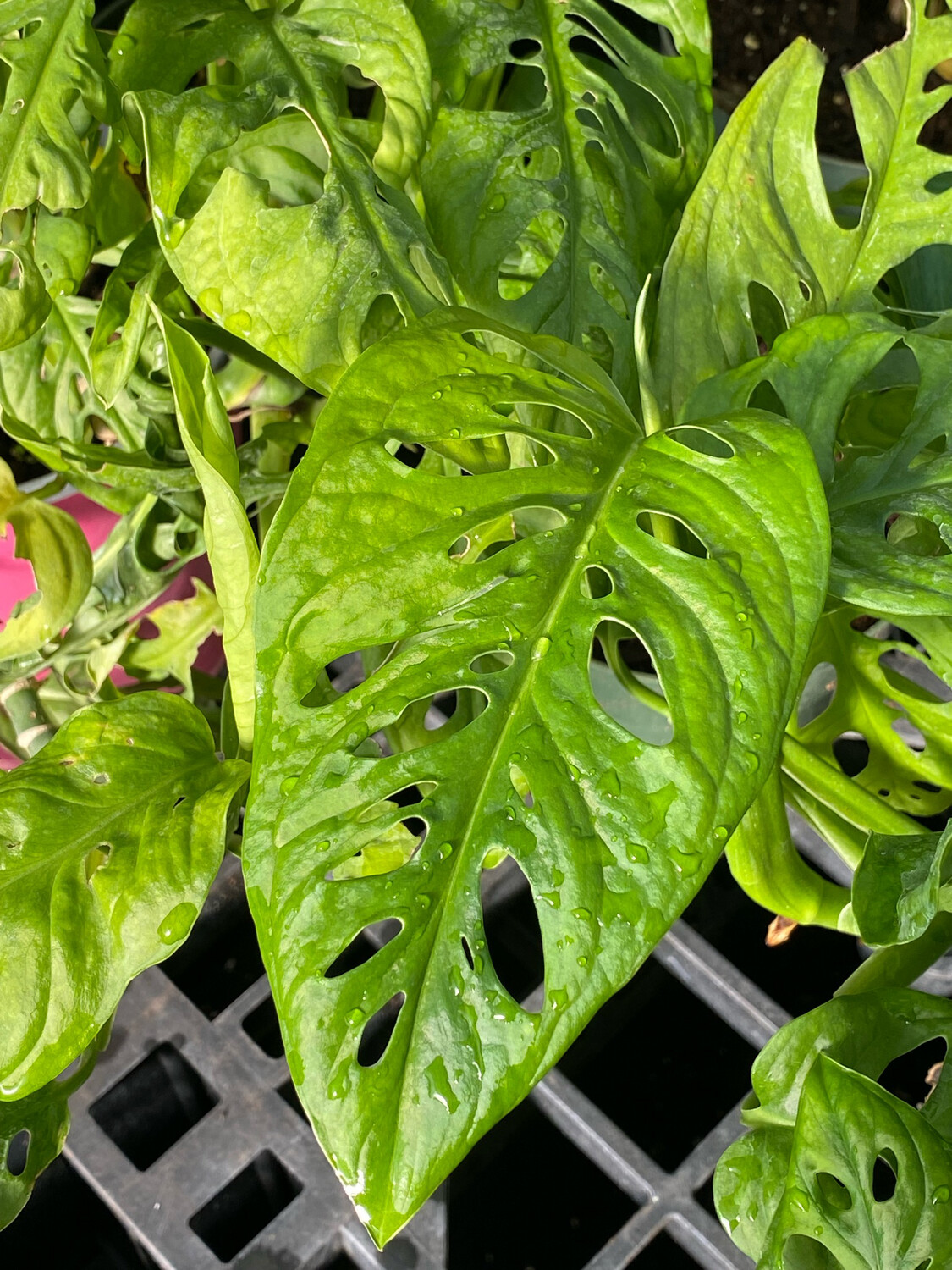
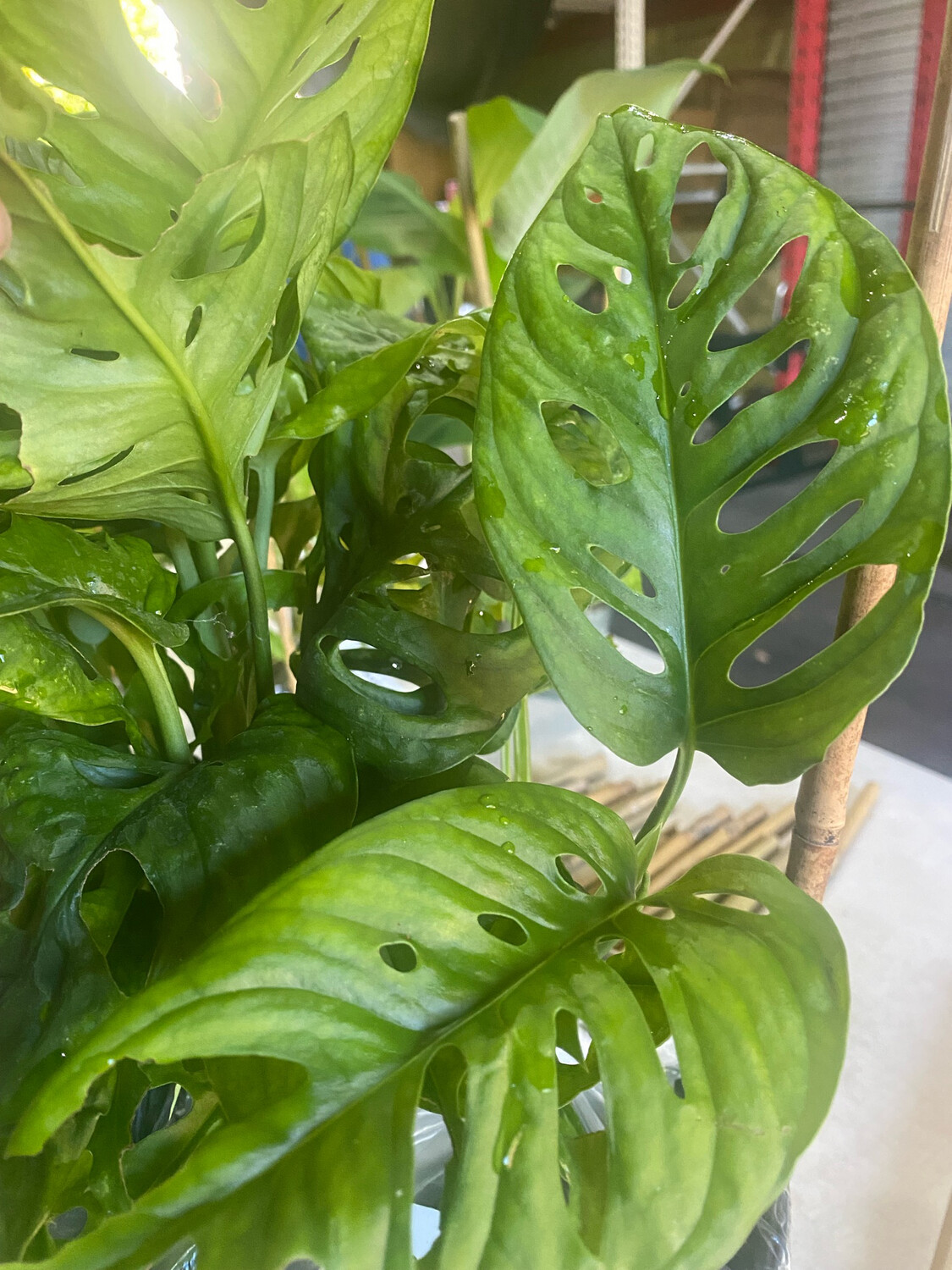
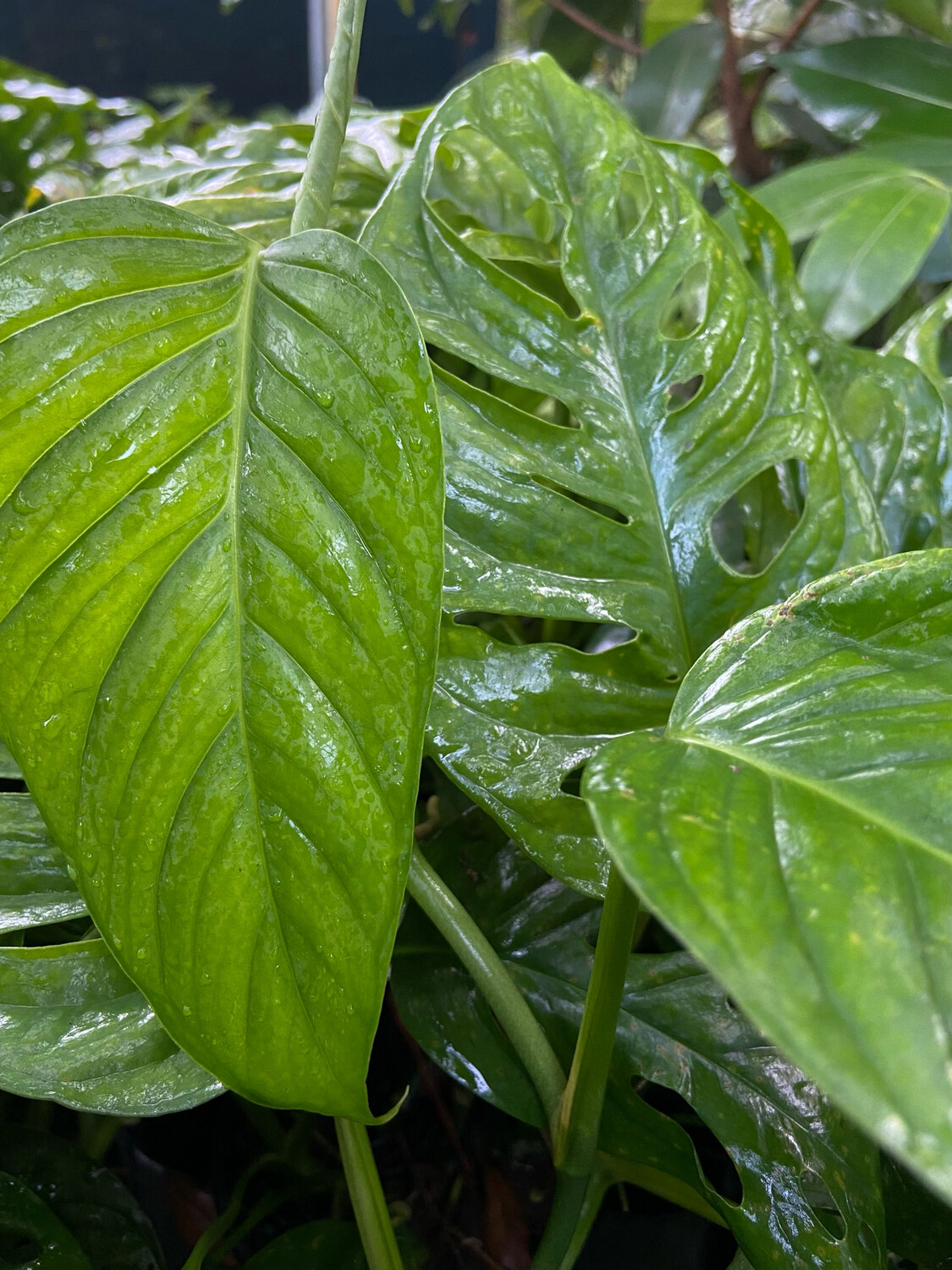
The signature feature of Monstera adansonii is its foliage.
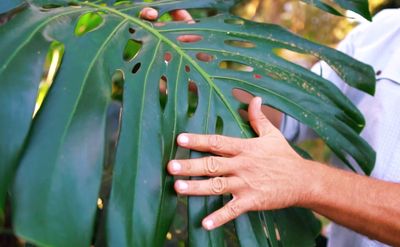
Young leaves begin relatively simple, then develop increasingly distinctive holes as the plant matures under favorable conditions. These natural openings are known botanically as fenestrations.
Expect:
- 💚 Medium to deep green foliage
- 🍃 Heart-shaped to oval leaves
- 🪟 Numerous oval interior fenestrations
- ✨ A slightly glossy tropical finish
- 🌿 Flexible vining stems
- 🪵 Aerial roots that search for something to climb
- 🌱 Larger, more mature foliage when the vine is allowed to climb rather than continually trail
Providing good light and a vertical support can encourage larger and increasingly mature foliage. The RHS notes that climbing Monsteras often produce larger leaves with more fenestrations once given appropriate support.
GreenDreams Tip: Want the full jungle look? Let it climb. Want a cascading shelf or hanging-basket plant? Let it trail. Same species — completely different visual personality.
🧀 So…Why Is It Called the Swiss Cheese Plant?
One look at a mature leaf and the nickname makes sense.
The oval openings scattered through the foliage resemble the holes in Swiss-style cheese, creating one of the most instantly recognizable leaf patterns in the houseplant world.
The species itself has a deeper botanical story.
Monstera adansonii was formally published by Austrian botanist and aroid specialist Heinrich Wilhelm Schott in 1830, while the name adansonii honors French naturalist and botanist Michel Adanson. Adanson lived during the 18th century and was an influential early botanical taxonomist.
So while social media helped make Swiss Cheese Plants modern houseplant icons, the plant has been part of formal botanical literature for nearly two centuries.
🌎 A Tropical American Climber
The natural range of Monstera adansonii extends broadly through Tropical America, including areas of South America, Central America and the Caribbean. Kew records native populations in countries including Brazil, Colombia, Costa Rica, Ecuador, Nicaragua, Panama, Peru, Suriname, Venezuela and numerous Caribbean islands.
In tropical forests, the plant does not naturally behave like a freestanding shrub.
It climbs.
Aerial roots emerge from the stems, grab available surfaces and help the vine move upward toward brighter filtered light. That natural behavior explains why a Swiss Cheese Plant usually develops a much more impressive form when gardeners give it a trellis, moss pole or other vertical structure.
🌿 Top Reasons to Grow Monstera adansonii
🪴 A Legendary Houseplant
It delivers a huge amount of visual interest without requiring a huge amount of floor space.
🌱 Fast Tropical Impact
When happy, new leaves and vines can develop quickly.
🍃 Naturally Artistic Foliage
No variegation required. The leaf structure is already doing the work.
🪵 Vertical-Garden Potential
Train it onto:
- Moss poles
- Coco-coir poles
- Wooden trellises
- Decorative plant ladders
- Indoor green-wall systems
- Protected pergola posts
- Tropical patio structures
🏡 Works in Small Spaces
Compared with the much larger Monstera deliciosa, M. adansonii is easier to accommodate in apartments, screened patios and smaller rooms.
🌴 Outdoor Tropical Appeal
In frost-free climates, it can provide lush foliage against shaded walls, beneath tree canopy or in protected courtyard gardens.
✂️ Easy to Control
If it gets too enthusiastic, pruning can bring it right back into its assigned lane.
🪴 Swiss Cheese Plant vs. Monstera deliciosa
These two plants share the nickname “Swiss Cheese Plant,” but they are not the same species.
| FEATURE | 🌿 Monstera adansonii | 🌴 Monstera deliciosa |
|---|---|---|
| Typical Size | Smaller, finer-textured vine | Much larger climbing plant |
| Leaves | Smaller, numerous interior holes | Much larger leaves; mature foliage develops dramatic splits and holes |
| Growth Style | Long, flexible vine | Thick-stemmed, massive climber |
| Indoor Space Needed | Moderate | Considerable |
| Best For | Shelves, poles, small rooms, hanging displays | Large statement plant |
| Outdoor Scale | Roughly 10–13 ft. | Can become dramatically larger |
| Fruit | Do not treat as an edible crop | Mature M. deliciosa is famous for edible fully ripe fruit |
| GreenDreams Position | Ornamental foliage plant | Separate species with different uses |
NC State specifically warns gardeners not to confuse the smaller M. adansonii with the larger M. deliciosa.
🍽️ Culinary Information — This One Stays Out of the Kitchen
GreenDreams specializes heavily in edible and useful plants, so this distinction matters:
❌ We do NOT recommend Monstera adansonii for culinary use.
Do not assume that because ripe fruit from the separate species Monstera deliciosa has an edible tradition that Monstera adansonii should also be consumed.
The foliage, stems, roots and sap of M. adansonii contain calcium oxalate crystals, which can irritate the mouth, throat, digestive tract and skin.
This listing is therefore sold and presented as an ornamental tropical plant only.
No salad experiments with this one, folks.
SEASONAL CARE, PLANTING, WATERING, CONTAINERS & PRODUCTION
🌱 How to Grow Monstera adansonii Successfully
The secret to a great Swiss Cheese Plant is to recreate the important parts of a tropical forest environment without recreating the swamp.
Think:
Warm + humid + bright filtered light + oxygen around the roots + something to climb.
Not:
Full Florida afternoon sun + permanently saturated soil + freezing January patio.
NC State and the RHS consistently recommend warm conditions, indirect or filtered light, good drainage and moderate-to-high humidity for Monstera culture.
☀️ Where to Grow Swiss Cheese Plant
Indoors
An excellent location provides bright indirect light.
Good options include:
- Near an east-facing window
- Several feet back from a bright south- or west-facing window
- A bright bathroom with good natural light
- Sunroom with filtered light
- Beneath an appropriate grow light
- Bright office or interior tropical display
Avoid allowing intense afternoon sun to beat directly onto the leaves through glass for hours at a time. Direct sun can scorch foliage.
Outdoors
In Zones 10–12, use:
- Filtered light beneath high tree canopy
- Bright shade
- Morning sun with afternoon protection
- Screened patios
- Protected courtyards
- North- or east-facing walls
- Tropical shade gardens
🌞 Florida Warning
Florida sunlight is not the same thing as a bright living room.
A Monstera moved from indoor conditions directly into full May or June sun can scorch dramatically. Acclimate gradually and prioritize filtered light.
Avoid:
- Exposed western walls
- Reflective heat beside concrete
- Open parking-lot landscapes
- Full-day blazing sun
- Frost pockets
- Extremely windy corners
- Direct oceanfront salt spray
🌬️ Wind & Salt Exposure
Wind
Monstera adansonii is a climbing vine rather than a self-supporting woody shrub. Secure it to its support and choose a protected setting.
The leaves may tolerate ordinary air movement, but exposed storm winds can tear foliage, whip stems or separate vines from their support.
Salt
There is limited reliable horticultural evidence supporting M. adansonii as a salt-tolerant coastal landscape plant.
For that reason, we do not recommend it for direct salt spray or exposed beachfront planting.
Protected coastal patios and courtyards are a much safer application than an open dune-side landscape.
This recommendation is intentionally conservative based on the species’ wet tropical forest ecology and preferred protected growing conditions.
🌾 Best Potting Mix for Monstera adansonii
Roots want both moisture and oxygen.
A dense soil that stays wet continuously can create root problems very quickly.
For containers, use a loose, organic-rich tropical or aroid-style mix with good pore space.
A practical blend can contain:
- Quality peat- or coco-coir-based potting mix
- Fine or medium orchid bark
- Perlite or pumice
- Finished compost or worm castings in moderation
The RHS recommends an open, well-drained, slightly acidic medium and specifically notes that poor drainage can cause Monstera roots to rot.
GreenDreams Goal
The finished mix should:
✅ Hold some moisture
✅ Drain excess water rapidly
✅ Resist compaction
✅ Allow oxygen into the root zone
✅ Contain organic matter
✅ Never remain swampy
💧 How to Water Monstera adansonii
The Most Important Rule
Moist does not mean saturated.
Allow the upper portion of the potting medium to begin drying before thoroughly watering again.
NC State recommends moist but well-drained soil, while RHS guidance similarly emphasizes moisture with excellent drainage.
🪴 For Plants Still in Their Nursery Container
Check the plant daily, especially during Florida’s warm season.
A 1-gallon container outdoors can dry much faster than the same plant inside an air-conditioned home.
Water when needed until the entire rootball is evenly moist and water exits the drainage holes.
Do not leave the pot standing continuously in a saucer full of water.
During Hot Florida Weather
A small container may require watering daily during hot, breezy or dry periods.
The correct schedule is determined by:
- Temperature
- Wind
- Sun exposure
- Pot size
- Root density
- Humidity
- Potting medium
Indoors
Indoor plants usually need water less frequently.
Feel the soil rather than watering automatically according to the calendar.
🌿 GreenDreams Watering Practice
Water at soil level whenever possible.
We recommend morning watering directly into the root zone rather than routinely wetting the foliage.
For in-ground installations, drip irrigation is preferred over overhead sprinklers or misting.
Reducing unnecessary leaf wetness and soil splash can help reduce foliar disease pressure; NC State specifically recommends avoiding water splashing onto M. adansonii foliage and maintaining good airflow.
🪴 First 30 Days After Your Plant Arrives
Shipping is already a major environmental change.
Do not immediately repot a newly delivered Swiss Cheese Plant just because you purchased a prettier container.
We recommend:
- Remove packaging.
- Inspect the plant.
- Place it in bright filtered light.
- Keep it adequately hydrated.
- Allow it to acclimate.
- Watch for healthy new growth.
- Wait approximately 30 days or until the plant has resumed active growth before transplanting, unless an urgent root or drainage problem requires intervention.
Some yellowing, cosmetic leaf damage or temporary slowdown can occur following transport.
🌱 Fresh growth is the best signal that the plant is settling into its new environment.
🪴 When Is It Time to Repot?
Do not repot according to age alone.
Look at the roots and water behavior.
Time to size up when:
- Roots are emerging through drainage holes
- The rootball lifts from the pot almost intact
- The plant dries unusually quickly
- Growth has stalled despite good environmental conditions
- The container has become unstable or top-heavy
- Roots occupy most of the available medium
General Monstera guidance recommends increasing containers gradually rather than placing a small rootball into a dramatically oversized pot, because excess unused soil remains wet longer and increases root-rot risk.
🌱 Understanding Nursery Pot Sizes
Nursery container sizes are steps, not deadlines.
A typical progression might look like:
4-inch → 1 gallon → 3 gallon → 7 gallon → 10/15 gallon or permanent container
Do not automatically skip several sizes.
From a 1-Gallon Plant
Your next logical container will usually be around 2–3 gallons once the roots are genuinely filling the current pot.
Choose a container:
- With generous drainage holes
- Only moderately larger than the current rootball
- Heavy enough to support a climbing pole if needed
- Deep and stable enough for vigorous roots
Containers and aroid potting materials are readily available through local independent nurseries, landscape suppliers, hydroponic suppliers, garden centers and online horticultural retailers. Search for terms such as:
- Aroid potting mix
- Tropical plant mix
- Orchid bark
- Coco coir
- Perlite
- Nursery pots
- Heavy indoor planters with drainage
🪵 Give It Something to Climb
This may be the single easiest way to upgrade the appearance of the plant.
Use:
- Moss pole
- Coco-coir pole
- Wooden plank
- Narrow trellis
- Decorative ladder
- Green-wall support
Position the support while the plant is still manageable and gently guide vines toward it.
Use loose plant ties rather than tightly cinching stems.
Aerial roots can attach to or grow into suitable supports, and vertical growth frequently encourages more mature foliage.
🌱 Planting Monstera adansonii Outdoors
Permanent outdoor planting is best reserved for Zones 10–12 or protected tropical microclimates.
GreenDreams “High & Tight” Principle
When planting:
- Dig the hole only slightly wider than the container.
- Do not dig substantially deeper than the rootball.
- Set the plant so the root crown is at or slightly above surrounding grade.
- Backfill firmly enough to eliminate large air pockets without burying the stem.
- Water the rootball thoroughly.
- Top-dress the surrounding area with compost, biochar, azomite and organic nutrients where appropriate.
- Apply hardwood mulch around the planting area.
- Keep mulch pulled away from the plant’s crown and stems.
Planting too deeply creates unnecessarily wet conditions around the crown.
🎥 For an overview of GreenDreams’ High & Tight planting philosophy:
https://youtu.be/RRQFY30qdA8?si=rRIcsbLlVAVYotfI
🪵 Mulching
Outdoor Monsteras benefit from an organically active root environment.
Use approximately 2–3 inches of hardwood mulch over the surrounding soil where appropriate.
Keep mulch away from direct contact with:
- Stems
- Crown
- Container trunk/support base
Mulch helps moderate soil moisture, suppress weeds and gradually contribute organic material as it decomposes.
🌿 Fertilizing Monstera adansonii
This plant grows quickly when conditions are favorable, but more fertilizer is not automatically better.
During Active Growth
Use a balanced houseplant or tropical foliage fertilizer according to the product label.
For container plants, lighter regular feeding is safer than repeatedly applying strong concentrations.
RHS guidance recommends balanced liquid fertilizer approximately monthly while Monstera plants are actively growing.
GreenDreams Organic Approach
Depending on growing environment, consider:
- Finished compost
- Worm castings
- Quality organic granular fertilizer
- Biochar that has been properly charged
- Trace minerals based on actual need
Avoid:
🔥 Heavy fertilizer immediately after shipping
🔥 Fertilizing badly wilted or root-stressed plants
🔥 Applying concentrated fertilizer to dry roots
🔥 Feeding heavily during cool, low-light winter conditions
Healthy roots first. Fertilizer second.
✂️ How to Prune Swiss Cheese Plant
Pruning controls length and improves shape.
Best Time
Spring through early summer is ideal when active growth allows faster recovery.
To Create a Fuller Plant
Cut long vines just above a node.
This can redirect growth and encourage branching from remaining nodes.
To Reduce Size
Shorten individual vines gradually rather than shearing the entire plant indiscriminately.
Remove:
- Dead leaves
- Fully yellow leaves
- Broken stems
- Damaged growth
- Diseased tissue
The RHS notes that Monstera can be pruned in spring to manage overall size, although new juvenile growth following heavy cuts may initially produce smaller leaves with fewer fenestrations.
🌱 Can I Propagate It?
Yes.
Monstera adansonii is commonly propagated from stem cuttings, and NC State specifically lists stem cutting as its recommended propagation strategy.
A successful cutting needs a node.
A leaf by itself may remain attractive in water for a period but cannot produce a complete new vine without appropriate stem/node tissue.
🌴 Seasonal Monstera adansonii Care — Florida & Similar Warm Climates
🌸 SPRING | March–May
This is wake-up-and-go season.
Expect increasingly active growth as temperatures, day length and humidity rise.
Spring Tasks
- Resume regular feeding as growth accelerates
- Up-pot root-bound plants
- Install or enlarge climbing supports
- Prune overly long vines
- Propagate healthy cuttings
- Increase watering as temperatures rise
- Gradually acclimate indoor plants before moving outdoors
- Inspect closely for mites, scale and mealybugs
🌱 Spring is one of the best times for repotting, pruning and structural training.
☀️ SUMMER | June–September
Florida summer is close to Monstera weather — warm and humid — but our sun can be dramatically stronger than rainforest-filtered light.
Expect:
- Rapid vine growth
- Frequent new leaves
- Increased water use
- More aerial-root activity
Summer Priorities
- Check container moisture daily
- Protect from harsh afternoon sun
- Maintain airflow
- Secure vines before tropical storms
- Keep drainage openings unobstructed
- Watch for leaf spot in stagnant, overly wet conditions
- Do not allow containers to sit in standing stormwater
⛈️ After prolonged heavy rain, check the root zone before adding more irrigation.
🍂 FALL | October–November
Growth gradually slows as light levels and nighttime temperatures decline.
Fall Tasks
- Reduce fertilizer as growth slows
- Continue watering according to actual soil moisture
- Inspect plants carefully before moving them indoors
- Treat pests before bringing plants into living spaces
- Clean damaged leaves
- Prepare an indoor winter location
- Avoid aggressive pruning immediately before cold weather
If nights begin approaching 50–55°F, prepare to move container-grown plants to warmer protection. NC State advises avoiding temperature drops below 50°F.
❄️ WINTER | December–February
Is Monstera adansonii Deciduous?
No.
It is an evergreen tropical perennial.
It does not require winter dormancy and should not naturally lose all of its leaves simply because the calendar says January.
Significant winter leaf loss usually indicates stress rather than true deciduous dormancy.
In Central Florida / Zone 9
Treat it as cold-sensitive.
During cold weather:
- Move containers indoors or into greenhouse protection
- Keep away from frost
- Protect from cold north winds
- Reduce watering as growth slows
- Do not keep cool roots saturated
- Reduce or pause fertilizer when growth is minimal
- Wait until warm weather returns before major pruning of cold-damaged portions unless tissue is rotting
In Zones 8 and Colder
Plan from the beginning to grow this as a houseplant or movable patio tropical.
In Zones 10–12
Outdoor growing is considerably more realistic, although unusual cold events can still damage tender foliage.
🌿 Florida Landscape Placement
In our climate, Swiss Cheese Plant works beautifully as a foliage accent around:
- Covered patios
- Screen enclosures
- Courtyards
- Protected entrances
- Beneath high tree canopy
- Tropical pool gardens away from harsh reflected sunlight
- Shaded trellises
- Vertical garden structures
What It Is NOT
This is not one of our typical:
- Nitrogen fixers
- Pollinator plants
- Biomass producers
- Dynamic accumulators
- Fruit-production species
Its role is ornamental vertical structure and foliage texture.
🌾 Companion & Landscape Pairing Ideas
Rather than building an ecological guild around Swiss Cheese Plant, pair it aesthetically with plants sharing similar protected tropical conditions.
Depending on your climate and current GreenDreams inventory, combinations may include:
- 🌿 Tropical gingers
- 🌱 Turmeric
- 🍃 Ferns
- 🌴 Shade-tolerant tropical foliage
- 🌺 Bromeliads
- 🌿 Other climbing aroids
- 🍃 Tropical understory edibles where light requirements overlap
For edible landscapes, use M. adansonii as the ornamental layer, while separate support species perform the nitrogen-fixing, pollinator, biomass and nutrient-cycling work.
⚠️ Important Cautions for Monstera adansonii
🚫 Not an Edible Plant
Monstera adansonii should not be consumed.
The plant contains calcium oxalate crystals capable of causing irritation to the mouth, digestive tract and skin.
🐕🐈 Keep Away From Pets & Small Children
NC State identifies the plant as problematic for cats, dogs and children and notes that ingestion may cause oral and digestive irritation, drooling, vomiting and appetite loss. Sap can also irritate skin.
Place indoor plants where curious pets cannot chew hanging vines.
Wear gloves if you have sensitive skin when taking cuttings or performing substantial pruning.
🌿 A Florida-Specific Note About Outdoor Planting
UF/IFAS has specifically encouraged Florida growers to keep Swiss Cheese Plant controlled and containerized, noting concerns surrounding related non-native Monstera species in Florida landscapes. Their published guidance is another good reason to favor container culture rather than allowing vines to climb uncontrolled into mature trees.
Keep it gorgeous.
Just don’t let it annex the neighborhood.
🔍 Monstera adansonii Troubleshooting Guide
Icons represent common issues and organic recovery practices — look for 🌿 for recovery tips.
| ⚠️ ISSUE | 🧠 LIKELY CAUSE | 🌿 WHAT TO DO |
|---|---|---|
| 🍂 Yellow lower leaves | Excess water, poor drainage or occasionally normal aging of individual older leaves | ✅ Check moisture before watering; confirm drainage holes are open |
| 💦 Several leaves yellowing quickly | Root zone staying too wet | 🌿 Reduce irrigation and inspect roots/media |
| 🫣 Wilting with dry soil | Underwatering | 💧 Water thoroughly at soil level and reassess frequency |
| 🫣 Wilting with wet soil | Potential root damage or poor oxygenation | 🪣 Stop blindly adding water; inspect drainage/root health |
| ☀️ Bleached or brown patches | Excessive direct sunlight | 🌿 Move to bright filtered light |
| 🍃 Tiny leaves / long internodes | Insufficient light | ✅ Increase bright indirect light |
| 🍃 Few fenestrations | Juvenile growth, inadequate light or lack of mature climbing habit | 🪵 Improve light and give the vine a vertical support |
| 🌬️ Torn leaves | Wind or physical damage | 🌿 Relocate to a protected setting and secure vines |
| ❄️ Blackened/collapsed foliage | Cold or frost damage | 🌿 Move to warmth; wait to assess living tissue |
| 🪲 Sticky leaves / scale-like bumps | Scale or other sap-feeding insects | ⚠️ Inspect stems and leaf undersides; physically remove where practical and use an appropriate organic treatment |
| 🕷️ Fine stippling/webbing | Spider mites | ⚠️ Inspect leaf undersides; isolate plant and begin control early |
| 🐛 White cottony clusters | Mealybugs | ✅ Isolate, manually remove and treat repeatedly as needed |
| 🍄 Leaf spotting | Wet foliage, poor airflow, disease pressure | 🌿 Water at soil level, increase airflow, remove badly affected material |
| 🔥 Brown tips after feeding | Excess salts/fertilizer or root stress | 💧 Flush appropriately and reduce fertilizer concentration |
| 🌱 No growth after shipping | Acclimation/transit stress | 🧘 Maintain stable conditions and wait for new growth before repotting |
NC State lists spider mites, mealybugs, aphids, whiteflies and scale among common pests, and notes that overwatering can lead to root rot while splashing foliage and poor circulation can contribute to leaf disease.
✨ Is This Plant Right for You?
✅ IDEAL FOR:
🪴 Houseplant Collectors
A classic choice for anyone building an indoor jungle.
🌿 Beginning Plant Growers
Relatively forgiving when light, drainage and watering are handled correctly.
🏡 Apartment & Small-Space Gardeners
Vertical growth delivers big visual impact without requiring an enormous footprint.
🌴 Tropical & Subtropical Gardeners
Excellent patio or protected landscape specimen in warm climates.
✂️ Gardeners Who Like to Train Plants
Few things are more satisfying than watching a small vine climb a pole and mature into increasingly dramatic foliage.
🌱 Propagation Fans
Stem cuttings make this a fun plant to multiply and share.
❌ MAY NOT BE IDEAL FOR:
🐕 Homes Where Pets Eat Plants
Place it completely out of reach or choose a pet-safe alternative.
☀️ Exposed Full-Sun Landscapes
Florida afternoon sun can be far too intense.
❄️ Unprotected Cold-Climate Gardens
This is tropical — not frost hardy.
🏖️ Direct Oceanfront Exposure
Choose something with established salt tolerance instead.
💦 Chronic Overwaterers
If every plant receives a daily drink whether it needs one or not, Monstera roots are eventually going to file a complaint.
❓ Swiss Cheese Plant FAQ
Is Monstera adansonii the same as Monstera deliciosa?
No. They are different species. M. adansonii is generally smaller and more vine-like, with numerous enclosed holes through its leaves. M. deliciosa becomes much larger and develops enormous mature leaves with both splits and fenestrations.
Can Monstera adansonii grow indoors?
Absolutely.
Indoor culture is one of its strongest applications. Give it bright indirect light, warmth, moderate-to-high humidity, good drainage and preferably something to climb.
Can Swiss Cheese Plant grow outside in Florida?
Yes, but location matters enormously.
South Florida and other Zone 10+ locations offer the most reliable outdoor conditions. In Central Florida and Zone 9 areas, grow it where it can be protected from cold and preferably in a container that can be moved during freeze events. NC State rates the plant for Zones 10–12.
”;
Does Monstera adansonii need a moss pole?
It does not need one to survive.
But providing vertical support reproduces its natural climbing behavior and can encourage a stronger, more mature-looking plant.
Can I grow it in a hanging basket?
Yes.
Without climbing support, the vines can trail downward beautifully. Just remember that vines permitted to climb often develop more mature foliage than constantly trailing growth.
Why doesn’t my Swiss Cheese Plant have many holes?
Young leaves may naturally show fewer fenestrations.
Insufficient light and the absence of climbing support can also contribute to less mature foliage. Increasing bright indirect light and giving the plant a support structure can improve future growth.
How often should I water Monstera adansonii?
There is no responsible universal number of days.
Check the pot.
Water once the upper portion begins drying, then saturate the rootball thoroughly and allow excess water to drain. Outdoor 1-gallon plants in Florida summer may require very frequent attention, while an indoor plant may take considerably longer to dry.
”;
Is Monstera adansonii pet safe?
No.
Keep it away from cats, dogs and animals likely to chew the foliage.
Is Monstera adansonii edible?
We do not recommend consuming any part of this plant.
Do not confuse it with fully ripe fruit of Monstera deliciosa. M. adansonii is sold by GreenDreams as an ornamental plant.
”;
📦 SHIPPING LIVE MONSTERA ADANSONII FROM FLORIDA
Ships in a 1-Gallon Nursery Container
GreenDreams ships live plants using UPS Ground from Florida, with our regular plant shipments departing on Mondays.
🌴 BEST SHIPPING REGION
Our smaller tropical plants are best suited for shipment to:
- Florida
- The Southeastern United States
- Texas and other relatively warm destinations with reasonable transit times
We can ship across the continental United States, but buyer discretion becomes increasingly important with longer UPS Ground transit times and extreme temperatures.
”;
🌡️ Heat & Cold Shipping Advisory
Live plants are living, perishable material.
Extreme weather occurring after a plant leaves our nursery is outside our control.
Please consider:
🔥 Severe summer heat
❄️ Freezing winter temperatures
🚚 Extended UPS Ground transit
📦 Weekend or carrier delays
🌵 Hot, dry Western destinations
🏔️ Cold Northern destinations
Plants traveling outside our immediate Southeastern shipping region may arrive with:
- Wilted foliage
- Leaf yellowing
- Brown edges
- Cosmetic leaf damage
- Temporary leaf loss
- Slowed growth
These symptoms do not automatically mean the plant is dead.
Established roots may push healthy replacement growth once the plant is stabilized.
”;
🌎 Western & Northern U.S. Buyers
UPS Ground service from Florida may involve an extended journey.
The longer a tropical plant remains boxed, the greater the potential for:
- Temperature exposure
- Moisture loss
- Darkness
- Physical stress
- Delayed recovery
Risk associated with extended ground transit and destination weather is assumed by the buyer.
Larger plant sizes generally tolerate shipping stress better than very small plants when larger shippable options are available.
”;
🌴 California Orders
California shipments may occasionally experience additional delays associated with agricultural inspection.
An added day in transit can make a meaningful difference during peak summer heat or winter cold.
Please consider destination weather and estimated UPS Ground travel time before ordering.
”;
🌱 When Your Plant Arrives
Give it recovery time.
We recommend waiting approximately 30 days or until healthy new growth appears before repotting or planting, unless the plant has an obvious emergency requiring immediate attention.
Start with:
✅ Bright filtered light
✅ Appropriate soil moisture
✅ Warm temperatures
✅ Good airflow
✅ No heavy fertilizer
✅ No immediate major transplant
Let the plant tell you it is ready.
New growth = roots are getting back to work.
”;
🏡 Shop With Us in Person
🌿 Find Even More at GreenDreams Nursery & Farm
Want to see the plants before choosing your favorite?
Our Spring Hill retail nursery carries countless plants in larger sizes plus many selections that never make it onto the online store.
GreenDreams Nursery & Farm — Retail Nursery Open to the Public
🌾 18709 US Hwy. 41, Spring Hill, FL 34610
🕘 Tuesday–Friday: 9AM–5PM
🌞 Saturday: 8AM–3PM
Come wander the nursery, compare specimens and see what is blooming, flushing, fruiting or looking ridiculously good this week. 🌿🌸
”;
🌿 Beyond the Plant: GreenDreams Services
At GreenDreams, we do more than grow plants — we design, build and restore ecosystems across Florida.
- 🌳 Onsite consultations & edible landscape design
- 🚜 Installation & project management
- 🚚 Bulk delivery of compost, mulch, biochar & soil materials
- 🌾 Wholesale & large-scale regenerative solutions
Monstera adansonii may be the decorative jungle layer, but we can help you build everything around it — from productive edible landscapes to complete ecological garden systems.
🌿 IMPORTANT INFORMATION BEFORE PURCHASING LIVE PLANTS
Please note: Plants purchased through our online store are not available for pickup at our retail nursery in Spring Hill, Florida.
Online inventory is housed at a separate facility and is priced, prepared, and handled exclusively for shipping.
🌱 Looking for larger plants or more selection?
Our retail nursery location offers far more availability, including larger sizes, specialty plants, and many selections not suitable for nationwide shipping.
Local pickup is available for retail nursery purchases only.
Visit our Spring Hill, FL retail nursery page to explore in-person shopping options.
🚚 LIVE PLANT SHIPPING & TRANSIT EXPECTATIONS
Live plants naturally experience stress during shipping. Temporary leaf drop, mild wilting, or cosmetic stress is normal after transit. Most plants recover quickly with proper watering, gradual light exposure, and basic aftercare. Some plants may require additional attention during the first few weeks.
Despite careful packing, minor cosmetic damage may occur during transit. Small issues such as broken leaves or stems typically resolve with time and proper care.
If your shipping box arrives with significant external damage, please contact UPS within 30 days to initiate a carrier claim.
⏱️ SHIPPING METHOD, TIMING & TRANSIT WINDOWS
All online orders ship via UPS Ground from our Central Florida nursery.
📦 Shipping Schedule: Orders ship once weekly on Mondays to reduce the risk of packages sitting in transit over weekends. A countdown clock on our website displays the next shipping date.
🚚 Typical Transit Times:
-
Florida: 1–2 days
-
Southern U.S.: approximately 2 days
-
Midwest, West & Northern U.S.: 3–5 business days
Long-distance shipments, particularly to the western U.S., may experience additional transit time due to agricultural inspections in states such as Arizona, California, and Texas.
Extended transit times can be more challenging for small or tender plants and may require additional recovery care after arrival.
🌡️ EXTREME WEATHER & SEASONAL RISK
Live plants are sensitive to temperature extremes.
We cannot guarantee plant condition during periods of extreme summer heat or winter cold and freezing temperatures. Weather-related delays, carrier interruptions, or exposure during delivery are beyond our control.
Customers are responsible for:
-
Monitoring tracking information sent via email
-
Retrieving packages promptly upon delivery
-
Preventing plants from being left outdoors in extreme conditions
During unsafe weather, holiday shipping volume, or extended transit risk, orders may be held and shipped the following week to protect plant health.
⚠️ CUSTOMER RESPONSIBILITY & REFUND POLICY
By purchasing live plants, customers acknowledge and accept the risks associated with shipping, weather exposure, transit delays, and regional suitability.
Refunds or replacements are considered only under exceptional circumstances and in accordance with our return and refund policy. We are not responsible for:
-
Weather-related damage
-
Carrier delays
-
Poor plant selection for a given climate or region
-
Improper care after delivery
Upon purchase, customers assume full responsibility for the ongoing care and success of their plants.
✅ CONSENT & AGREEMENT
By completing a purchase, you confirm that you have read, understand, and agree to all shipping policies, responsibilities, and conditions outlined above.
Our goal is transparency, plant health, and long-term growing success — and we appreciate your understanding and care when ordering live plants.


