


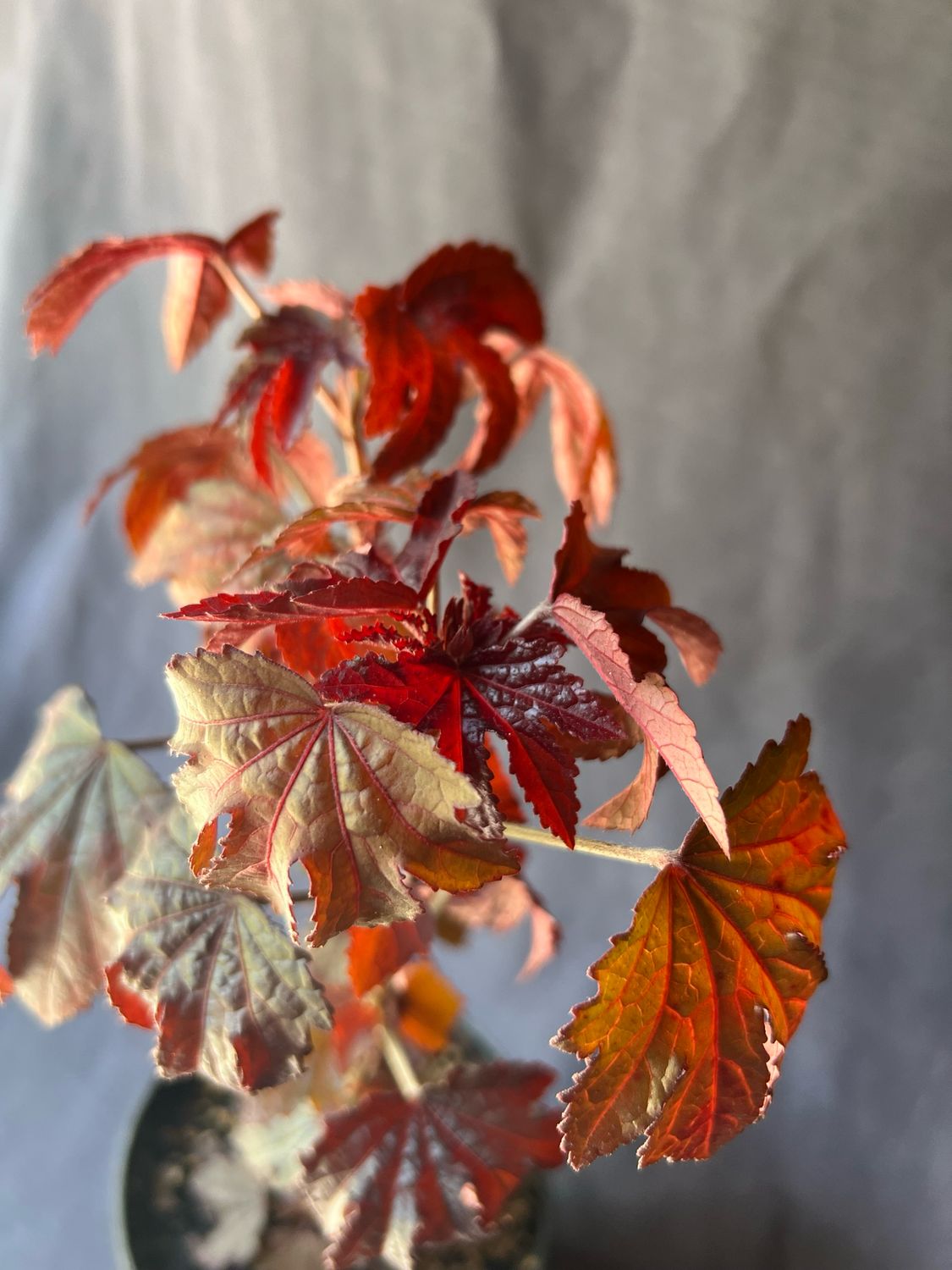
🌺 Red Cranberry Hibiscus – 1-Gallon Edible Burgundy Beauty
Hibiscus acetosella — Tropical Color You Can Harvest 🌿
Bold burgundy foliage • bright, tart edible leaves • fast seasonal growth
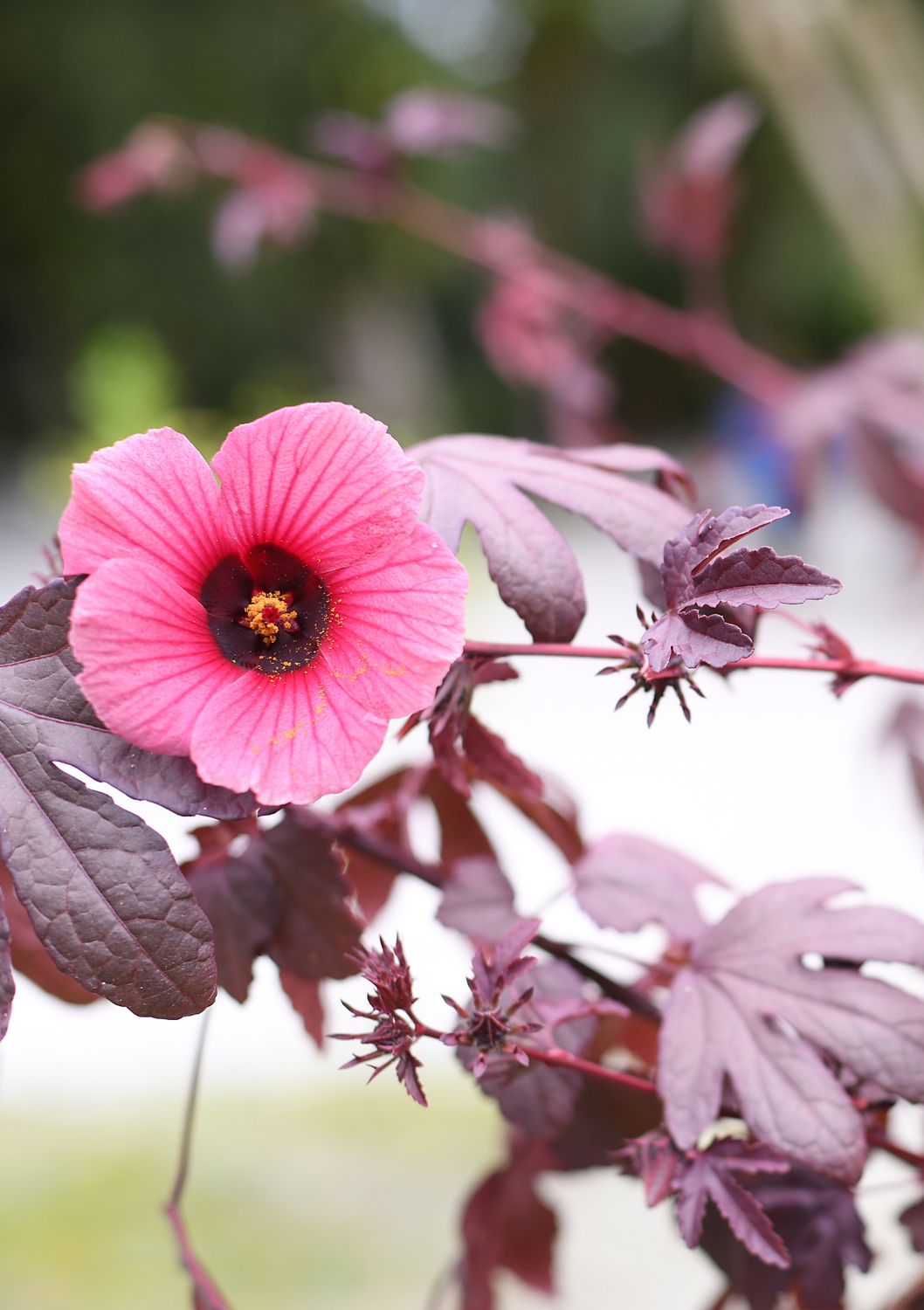
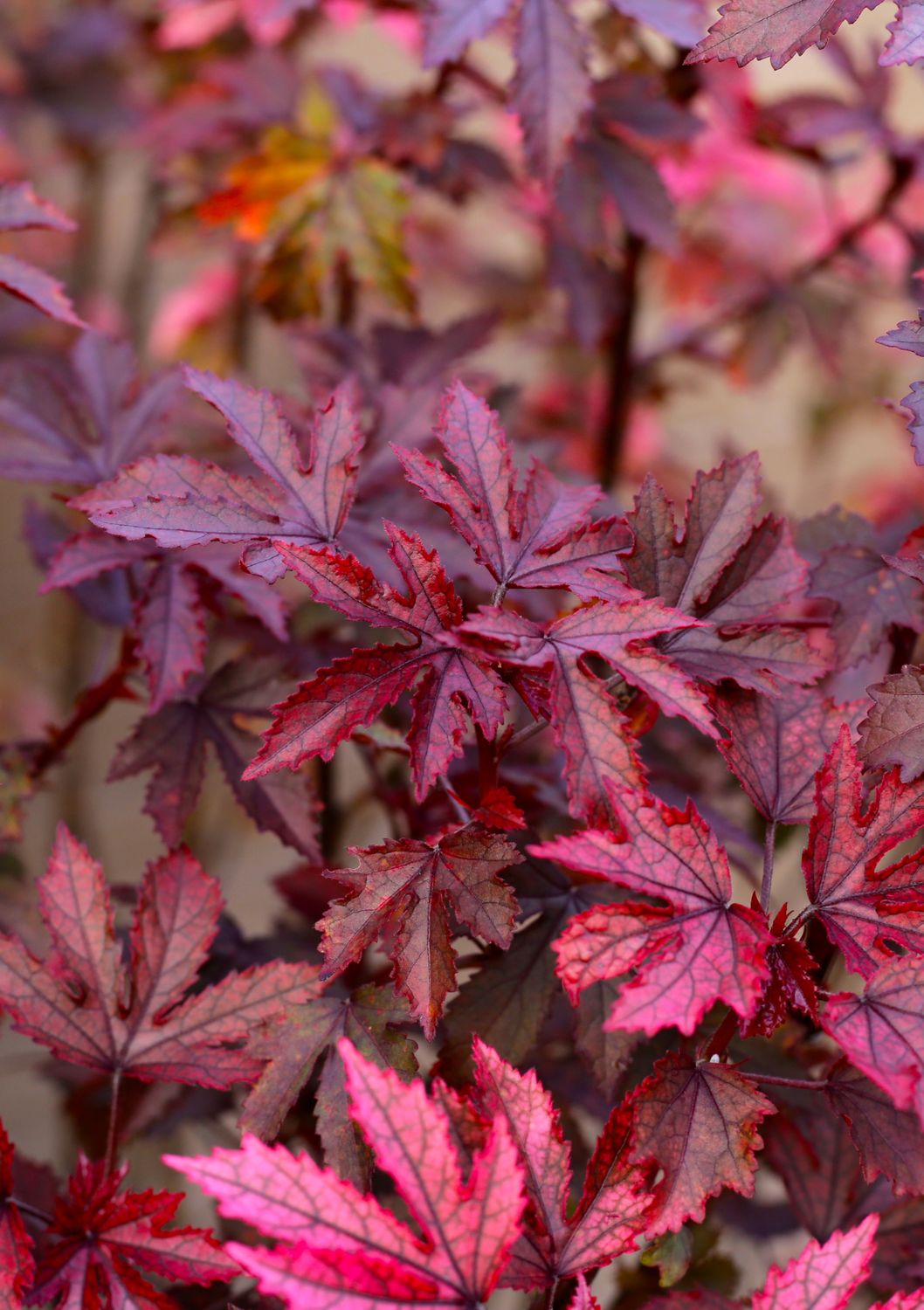
Red Cranberry Hibiscus delivers the kind of color most gardeners expect from an ornamental—then casually reveals that its leaves and flowers are edible too.
This fast-growing 1-gallon plant creates dramatic contrast in edible landscapes, pollinator gardens, seasonal hedges, patio containers, and tropical planting combinations. Harvest the young leaves for salads, wraps, colorful garnishes, sautéed greens, and refreshing drinks while enjoying months of rich cranberry-red foliage.
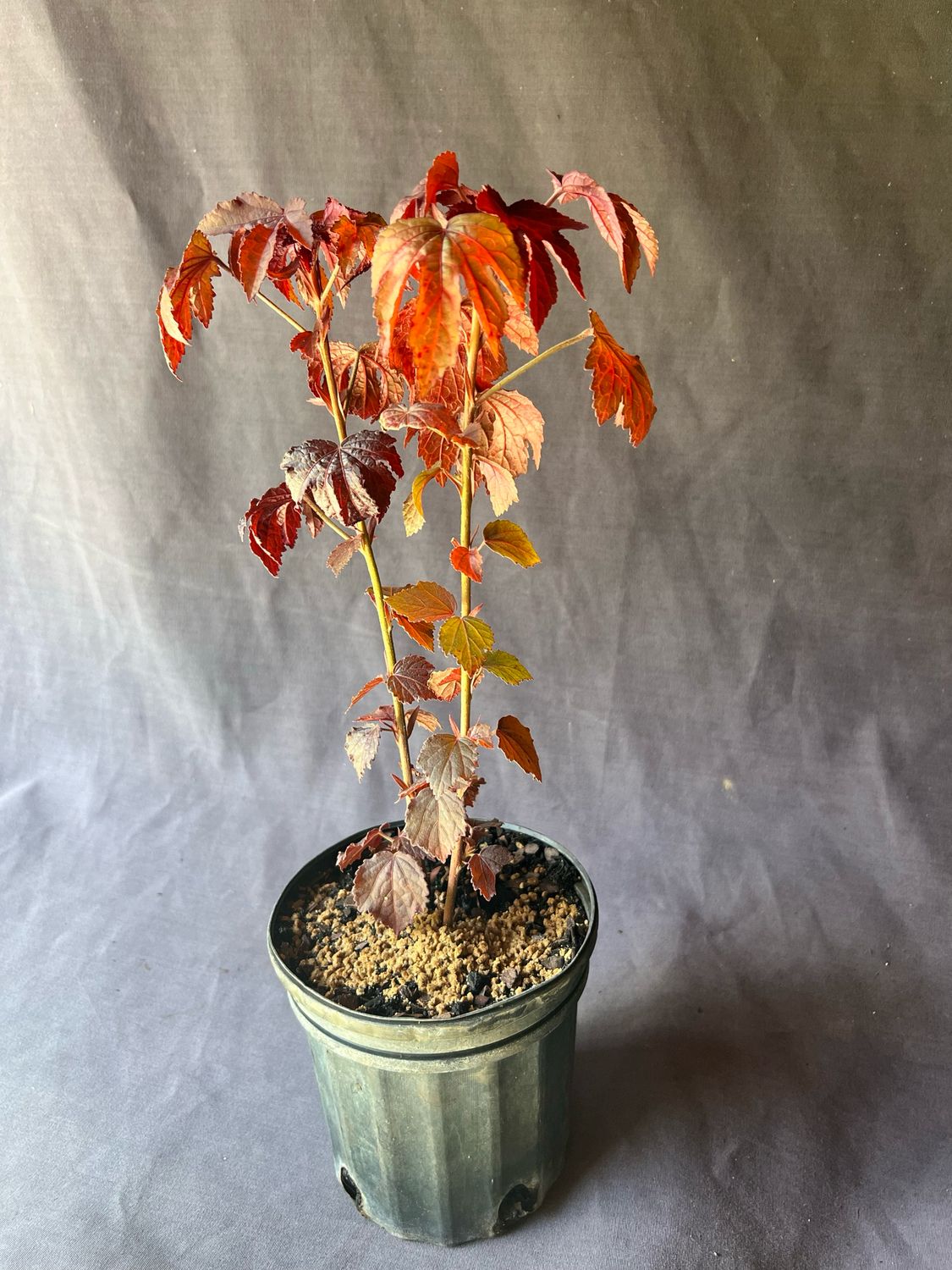
It is larger, better established, and more resilient than a small starter plant, making it an excellent choice for growers who want quicker landscape impact and earlier harvests.
Important growing note: Cranberry Hibiscus is a frost-sensitive subshrub in warm tropical and subtropical climates, but it should be treated as a warm-season annual throughout most of the continental United States. Even in colder portions of USDA Zone 9, a freeze may end the plant’s growing season rather than trigger dependable dormancy and regrowth.
Current botanical references may classify the species as Sabdariffa acetosella, although Hibiscus acetosella remains the established horticultural and commercial name most growers recognize.
⠀
⠀
⠀
⠀
⠀
🌿 Quick Facts Guide
| Category | Details |
|---|---|
| Botanical Name | Hibiscus acetosella; currently accepted by Kew as Sabdariffa acetosella |
| Common Names | Cranberry Hibiscus, Red-Leaf Hibiscus, African Rosemallow, False Roselle, Maroon Mallow |
| Plant Family | Malvaceae — the hibiscus, okra, cotton, and mallow family |
| Plant Type | Fast-growing edible subshrub; tender perennial in reliably frost-free climates; warm-season annual across most of the United States |
| Sale Size | Ships in a 1-gallon nursery container |
| Estimated Age | Commonly approximately 4–10 months from propagation; actual age varies with nursery production cycle, season, and pruning |
| Typical One-Season Size | Approximately 3–5 feet tall and 1½–3 feet wide |
| Mature Size With Pruning | Commonly maintained around 3–5 feet tall and 2–4 feet wide |
| Potential Unpruned Size | Approximately 4–6+ feet in a long, warm growing season |
| Perennial Growing Range | Best considered perennial in protected portions of USDA Zones 9–11, with the most dependable persistence in Zones 10–11 |
| Annual Growing Range | Easily grown as a summer annual after frost throughout colder regions |
| Sun Requirements | Full sun to light afternoon shade; strongest burgundy color generally develops with abundant sunlight |
| Soil Preference | Fertile, organic-rich soil that remains moderately moist but drains freely |
| Cold Hardiness | Frost sensitive; freezing temperatures can kill foliage, stems, or the entire plant |
| Growth Habit | Upright, multi-stemmed, rapid-growing, naturally somewhat open or leggy unless pinched |
| Spacing | 2½–3 feet apart for a dense seasonal hedge; 3–5 feet apart for individual shrubs or mixed beds |
| Harvest Season — Florida | Primarily spring through fall; harvesting may continue into winter in frost-free South Florida |
| Harvest Season — Other Regions | From active summer growth until the first hard frost |
| Flowering Season | Usually late summer through fall as days shorten |
| Container Growing | Excellent in 5–10+ gallon containers with pruning and consistent moisture |
| Indoor Growing | Best used for temporary winter protection rather than as a permanent low-light houseplant |
| Wind Tolerance | Moderate after establishment, but tall, soft stems may bend or snap in storms |
| Salt Tolerance | Not reliably documented as salt tolerant; protect from direct salt spray and saline irrigation |
Extension references describe Hibiscus acetosella as a rapid-growing plant that typically reaches approximately 3–5 feet in one season. It performs best in sunny, moist but well-drained conditions and benefits from pinching to create a fuller form.
⠀
⠀
⠀
⠀
⠀
🌍 From African Food Gardens to Modern Edible Landscapes
Cranberry Hibiscus has a much deeper story than its striking color suggests.
Botanical references place its native range from Burundi into southern tropical Africa, including Angola, the Democratic Republic of Congo, Zambia, and Zimbabwe. PROTA describes it as a possible cultivated hybrid that may have developed in the southern Congo–Angola–Zambia region before spreading through tropical food-growing cultures.
The plant became valued as both a leafy vegetable and a living hedge. It was later introduced into Southeast Asia and Brazil, where it became known by names such as vinagreira-roxa, referring to its vinegar-like tartness and purple coloring.
PROTA records its historical use as a vegetable in Cameroon and the Democratic Republic of Congo and notes that it became especially popular in Brazil after being introduced there.
Its species name reflects the same personality: the leaves have a bright, sorrel-like acidity. In other words, this is the hibiscus that showed up dressed like a Japanese maple and brought its own vinaigrette.
⠀
⠀
⠀
⠀
⠀
🍃 What Does Red Cranberry Hibiscus Taste Like?
Young Cranberry Hibiscus leaves offer a refreshing combination of:
- Bright lemony acidity
- Cranberry-like tartness
- A light sorrel character
- Tender texture when harvested young
- Mild mucilage when cooked, similar to other members of the hibiscus and okra family
- Rich burgundy color that can remain visible after gentle cooking
The youngest leaves and tender shoot tips are generally the best choice for fresh eating. Mature leaves become firmer, more fibrous, and noticeably stronger in flavor.
Best Harvest Stage
Harvest:
- Newly expanded leaves
- Tender growing tips
- Soft upper stems
- Fresh flowers after they fully open
- Leaves without pest damage, spotting, or chemical residue
For continued production, remove only a few tips from each branch rather than stripping the entire plant. Frequent light harvesting encourages branching and creates more tender new growth.
Traditional and contemporary culinary references document the leaves as both a fresh and cooked vegetable. The flowers may also be used in drinks, garnishes, and infusions.
🍽️ Culinary Uses
Enjoy the Young Leaves Fresh
Try finely sliced Cranberry Hibiscus leaves in:
- Garden salads
- Citrus slaws
- Sandwiches and wraps
- Fresh spring rolls
- Tacos
- Grain bowls
- Fruit salads
- Herb salads
- Cold noodle dishes
- Edible flower platters
Because the flavor is naturally tart, the leaves pair especially well with:
- Mango
- Pineapple
- Papaya
- Avocado
- Cucumber
- Coconut
- Ginger
- Mint
- Basil
- Cilantro
- Peanuts
- Sesame
- Mild cheeses
- Grilled fish or chicken
Use It as a Cooked Green
Young leaves and shoots may be:
- Lightly sautéed with garlic
- Stir-fried with vegetables
- Folded into omelets
- Added near the end of soups
- Simmered with beans or lentils
- Combined with coconut milk
- Cooked with ground peanuts
- Added to rice dishes
- Used as a tart counterpoint in rich stews
Cooking softens the leaves, mellows the acidity, and produces a texture similar to other tender mallow-family greens.
Use the Flowers
Fresh flowers may be used for:
- Edible garnishes
- Colorful tea infusions
- Flavored water
- Simple syrup
- Lemonade
- Mocktails
- Cocktails
- Ice cubes
- Cake and dessert decoration
Unlike true Roselle, Cranberry Hibiscus does not produce the same thick, fleshy calyx commonly harvested for traditional hibiscus tea and preserves. Its culinary strength is primarily its colorful leaves, tender shoots, and flowers.
⠀
⠀
⠀
⠀
⠀
🥜 Quick Kitchen Idea: Cranberry Hibiscus Peanut Greens
This preparation is inspired by documented Central African uses of the leaves with ground peanuts.
Ingredients
- 3 cups loosely packed young Cranberry Hibiscus leaves
- 1 tablespoon cooking oil
- 1 small garlic clove, minced
- 2–3 tablespoons ground peanuts or natural peanut butter
- 2–4 tablespoons water or coconut milk
- Salt to taste
- Optional ginger, chili, scallions, or lime
Directions
- Wash the leaves thoroughly and remove any tough lower stems.
- Warm the oil and gently sauté the garlic.
- Add the leaves and a splash of water or coconut milk.
- Cook for approximately 3–5 minutes, stirring until tender.
- Stir in the peanuts or peanut butter.
- Season lightly and serve with rice, roasted vegetables, fish, beans, or plantains.
The finished dish is creamy, tangy, savory, and deeply colorful.
PROTA specifically documents the use of cooked Hibiscus acetosella leaves with pounded peanuts to balance their natural acidity.
🌺 Nutritional and Plant-Compound Overview
The deep burgundy color is associated with naturally occurring plant pigments, including anthocyanins.
Published analysis of Cranberry Hibiscus flowers has identified:
- Anthocyanins
- Organic acids
- Myricetin derivatives
- Quercetin derivatives
- Kaempferol derivatives
- Delphinidin compounds
- Cyanidin compounds
These compounds are widely studied for antioxidant activity, but Cranberry Hibiscus should be marketed and enjoyed as a food—not as a treatment or cure for disease.
Species-specific nutritional data for the leaves remain more limited than online claims often suggest. It is therefore more accurate to describe Cranberry Hibiscus as a colorful, diverse leafy green containing naturally occurring phenolic compounds rather than promising specific medical outcomes.
🌱 Top Benefits of Growing Cranberry Hibiscus
1. A Fast Cut-and-Come-Again Leaf Crop
Regular tip harvesting encourages side branching and repeated production of young leaves.
2. Major Color Without Sacrificing Food Production
The maple-shaped burgundy leaves provide the visual effect of an ornamental foliage plant while remaining useful in the kitchen.
3. Excellent Summer Performance
Cranberry Hibiscus thrives during the hot, humid growing season when many conventional leafy vegetables struggle.
4. Useful Seasonal Screening
Plant several in a row to create:
- A temporary hedge
- An edible privacy screen
- A garden-room divider
- A backdrop for bright green foliage
- A soft boundary between annual and perennial areas
5. Pollinator Support
The late-season flowers attract bees and other beneficial insects at a time when some summer plants are slowing down.
6. Easy Propagation
Plants can be reproduced from:
- Seed
- Stem cuttings rooted in water
- Stem cuttings rooted in potting medium
7. Potential Crop-Rotation Value
PROTA reports high resistance to root-knot nematodes and notes its usefulness following susceptible crops such as tomatoes and other solanaceous vegetables. This does not eliminate an existing nematode problem, but it makes Cranberry Hibiscus an interesting addition to diversified warm-season rotations.
⠀
⠀
⠀
⠀
⠀
🌿 Which Edible Hibiscus Is Right for Your Kitchen?
| Plant | Primary Edible Feature | Flavor and Texture | Typical Habit | Best Reason to Grow |
|---|---|---|---|---|
| Red Cranberry Hibiscus | Young leaves, shoots and flowers | Bright, lemony, tart; lightly mucilaginous when cooked | 3–6 foot seasonal shrub | Burgundy foliage plus frequent leaf harvests |
| Roselle — Hibiscus sabdariffa | Fleshy red calyces, leaves and flowers | Tart leaves; intensely tangy calyces | Upright warm-season annual | Tea, syrups, sauces, jam and dried calyces |
| Kenaf — Hibiscus cannabinus | Young leaves; stems have fiber value | Mild to lightly tart when young | Tall annual, often 6–14 feet | Biomass, fiber, screening and edible young growth |
| Tongan Spinach / Bele — Abelmoschus manihot | Large tender leaves and shoot tips | Mild, soft and more spinach-like | Large tropical leafy perennial or seasonal shrub | Higher-volume cooked-green production |
| South Sea Salad Tree Types | Tender leaves and shoot tips | Mild, tender and lightly mucilaginous | Tall, upright edible hibiscus form | Abundant leafy-green harvest from a narrow footprint |
| Long Leaf Edible Hibiscus | Long tender leaves | Mild and vegetable-forward | Upright perennial in warm regions | Productive greens with less tartness |
| Chief Kubo’s Pride | Large leaves and tender shoots | Mild, soft and suited to cooking | Vigorous tropical hibiscus form | High-volume leaf production |
Choose Cranberry Hibiscus When You Want:
- The boldest foliage color
- A tart leaf for fresh salads and drinks
- A seasonal edible hedge
- A plant that performs as both food and ornament
- A quick-growing annual for colder regions
Choose an Abelmoschus manihot Type When You Want:
- A milder everyday cooking green
- Larger leaves
- Less acidity
- Greater emphasis on cooked-leaf production
- A plant that may become more tree-like in frost-free climates
SEASONAL CARE, PLANTING, WATERING, CONTAINERS & PRODUCTION
🌞 Growing Red Cranberry Hibiscus Successfully
Cranberry Hibiscus is fast, forgiving, and highly productive when three needs are met:
- Warm soil and air temperatures
- Regular moisture without waterlogging
- Frequent harvesting or pinching
The plant is often described as a tender perennial, but growers should not confuse frost death with predictable deciduous dormancy.
🍂 Is Cranberry Hibiscus Deciduous?
No. Cranberry Hibiscus is not a true temperate deciduous shrub.
It does not follow the dependable winter rest cycle associated with peaches, apples, figs, or other woody deciduous crops. Instead, it is a tropical or subtropical subshrub that may remain active in frost-free weather, slow during cool conditions, suffer leaf drop after cold stress, or die completely during a freeze.
Important Expectations
- Yellowing and leaf drop after cold exposure may signal stress or plant decline, not healthy dormancy.
- A plant that freezes to the ground may or may not return.
- Zone 9 growers should take cuttings or collect seed before winter.
- In USDA Zones 8 and colder, plan to grow it as a warm-season annual.
- Do not delay purchasing or planting while waiting for a dormant plant to “wake up” like a deciduous fruit tree.
Kew describes the species as an annual or subshrub, while extension references describe it as a tender perennial commonly grown as an annual in colder regions.
⠀
⠀
⠀
⠀
⠀
🌿 Seasonal Care Guide for Florida and the Southeastern United States
| Season | Central and North Florida — Zones 8b–9b | South Florida — Zones 10–11 | Colder Southeastern Regions |
|---|---|---|---|
| Spring | Plant after frost danger. Prune surviving stems only after cold damage is clear. Begin light feeding and tip pinching. | Prune lightly to renew shape. Refresh mulch and begin regular harvesting. | Start indoors or plant outdoors after the final frost and after nights remain reliably warm. |
| Summer | Peak vegetative growth. Harvest frequently, irrigate consistently and pinch leggy stems. | Vigorous growth; afternoon shade may help container plants during extreme heat. | Rapid annual growth. Maintain moisture and prune for branching. |
| Fall | Shortening days encourage flower buds. Continue harvesting lightly and collect cuttings before frost. | Flowering may become more noticeable. Continue leaf and flower harvests. | Enjoy late-season color, but frost may arrive before flowering. Take cuttings before cold weather. |
| Winter | Frost may damage or kill the plant. Protect containers or maintain backup cuttings. | Growth may slow during cool weather but can continue in protected locations. | The outdoor crop usually ends with frost. Overwinter cuttings indoors or restart from seed in spring. |
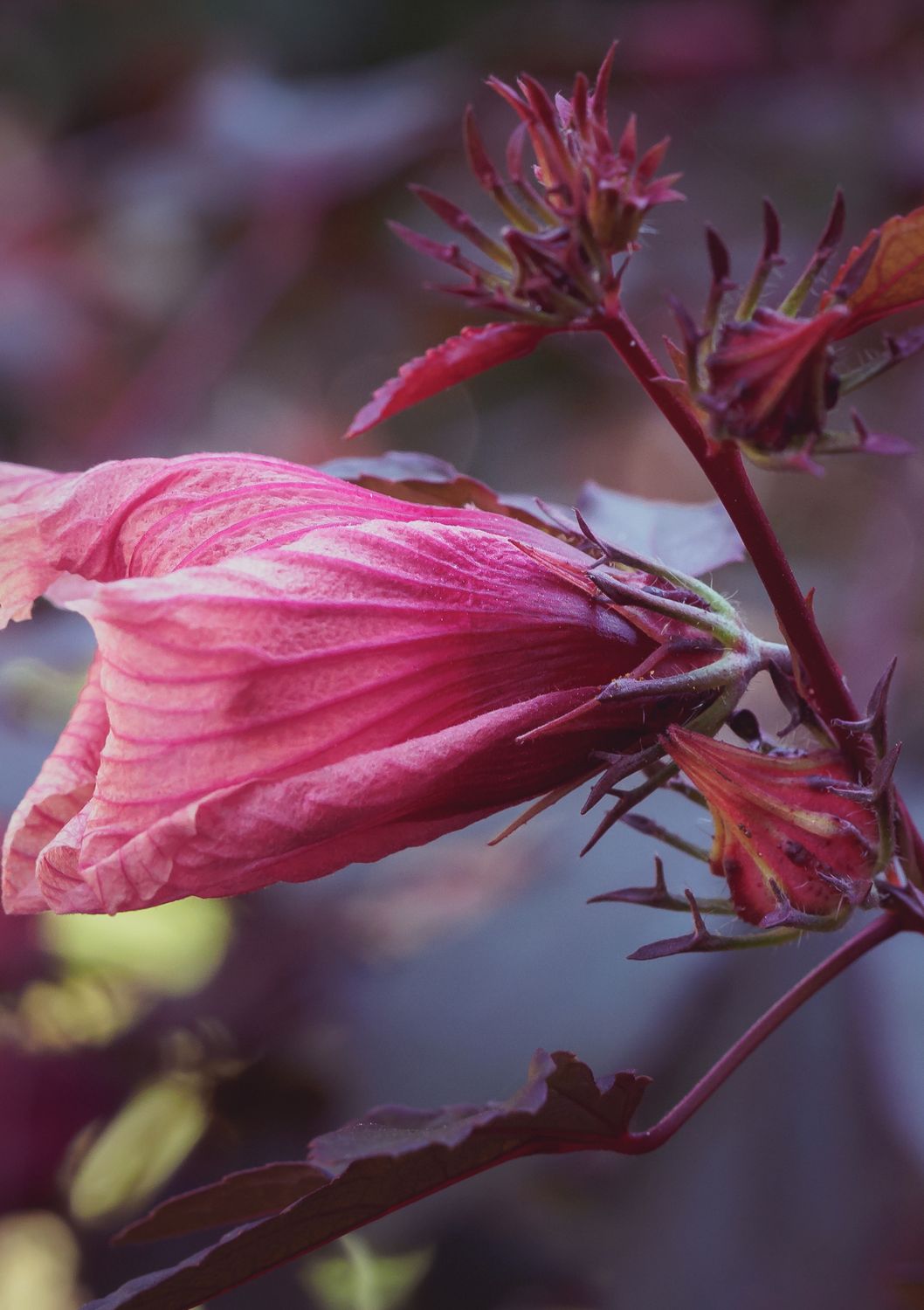
Cranberry Hibiscus is a short-day-responsive plant. Flowers often appear late in the season as days become shorter, which means northern growers may lose plants to frost before flowering occurs.
🌱 What to Do After Your Plant Arrives
Live plants may experience temporary stress from:
- Darkness inside the shipping box
- Temperature changes
- Reduced airflow
- Drying during transit
- Branch movement
- Sudden changes in sunlight
- Normal pruning completed for safe packing
Arrival Recovery Steps
- Remove the plant from its box promptly.
- Remove protective packaging carefully.
- Inspect the soil moisture before watering.
- Water at soil level only when moisture is needed.
- Place the plant in bright shade or filtered morning sun.
- Avoid immediate exposure to intense afternoon sun.
- Allow approximately 7–14 days for gradual acclimation.
- Continue maintaining the plant in its original nursery container.
- Wait at least 30 days or until healthy new growth appears before transplanting.
- Do not fertilize a severely wilted, overheated, chilled, or transit-stressed plant.
Some temporary leaf yellowing, leaf drop, or wilting may occur after shipping. Healthy stems and new buds are better indicators of recovery than the appearance of older leaves.
⠀
⠀
⠀
⠀
⠀
🌞 Where to Plant Red Cranberry Hibiscus
Best Locations
Choose a location with:
- At least 6 hours of direct sunlight for deep foliage color
- Light afternoon shade in extremely hot inland or container settings
- Good air circulation
- Moisture-retentive but freely draining soil
- Easy access for frequent harvesting
- Protection from strong north winds
- Space for rapid summer growth
Avoid Planting In:
- Low areas that remain flooded after rain
- Dense, compacted soil without drainage improvement
- Locations exposed to direct salt spray
- Areas irrigated with highly saline water
- Dark shade
- Beneath large trees with aggressive surface roots
- Narrow walkways where rapid growth will become inconvenient
- Wind tunnels between buildings
- Spots where soft stems may be struck by equipment
Landscape Placement Tip
Because the plant may be lost during winter, use it as:
- A seasonal hedge
- A colorful middle or back layer
- A summer privacy screen
- An edible border
- A filler between slower-growing perennial plants
In colder zones, avoid depending on Cranberry Hibiscus as the permanent structural focal point of the landscape.
🌿 GreenDreams High & Tight Planting Method
Before Planting
Allow the shipped Cranberry Hibiscus to recover in its current container for approximately 30 days or until it produces healthy new growth.
Transplant when:
- Roots are beginning to fill the nursery pot
- The root ball holds together when removed
- The plant is actively growing
- Weather is warm
- The plant is hydrated but the soil is not saturated
In-Ground Planting Directions
- Water the plant several hours before transplanting.
- Dig a hole only slightly wider than the existing container.
- Keep the hole at the same depth as the root ball or slightly shallower.
- Carefully remove the plant without pulling on the stem.
- Loosen only tightly circling outer roots.
- Position the top of the root ball slightly above the surrounding grade.
- Backfill with native soil, finished compost, or a compatible blend.
- Firm the soil around the root ball to remove large air pockets.
- Do not bury the crown or lower stem.
- Top-dress the surrounding area with compost, biochar, azomite, or an organic nutrient blend as appropriate.
- Apply 2–3 inches of hardwood mulch.
- Keep mulch several inches away from the base of the plant.
- Water deeply at soil level.
▶ Watch GreenDreams’ High & Tight planting demonstration:
https://youtu.be/RRQFY30qdA8?si=rRIcsbLlVAVYotfI
💧 Watering Red Cranberry Hibiscus
Cranberry Hibiscus grows quickly and produces soft leafy growth, so it performs best with consistent moisture. However, permanently saturated soil can suffocate roots and promote decline.
GreenDreams Watering Standard
Water at soil level only. Avoid routine overhead watering.
Morning watering allows plants to absorb moisture before peak afternoon heat. Overhead irrigation can waste water, spread soil-borne organisms onto foliage, and contribute to spotting or leaf scorch when performed during hot afternoon conditions.
Newly Planted In-Ground Schedule
Adjust for rainfall, soil type, temperature, plant size, and drainage.
- Days 1–7: Check daily and water deeply whenever the root ball begins drying.
- Weeks 2–3: Water approximately every other day during dry weather.
- Weeks 4–6: Water 2–3 times weekly as needed.
- Established plants: Water deeply 1–3 times weekly, or more frequently in sandy soil and prolonged drought.
- Extreme Florida heat: Check daily. Fast-growing plants may require daily irrigation during extended hot, dry periods.
Best Irrigation Method
Use:
- Drip tubing
- Individual drip emitters
- Soaker lines
- A hose directed slowly at the soil
Avoid relying on:
- Overhead misting
- Lawn sprinkler overspray
- Frequent shallow splashing
- Standing water around the crown
Reading the Plant
| Plant Signal | Likely Meaning | Response |
|---|---|---|
| Soft wilt during midday that recovers by evening | Temporary heat response | Check soil before adding water |
| Wilted morning foliage and dry soil | Underwatering | Water deeply at soil level |
| Yellow lower leaves and wet soil | Excess moisture or poor drainage | Reduce irrigation and improve drainage |
| Brown crispy margins | Drought, root stress, fertilizer salts or hot wind | Check the entire root zone and review feeding |
| Sudden collapse in saturated soil | Root or crown decline | Stop irrigation and investigate drainage |
🪵 Mulching and Soil Health
Apply 2–3 inches of coarse hardwood mulch around in-ground plants.
Benefits include:
- Reduced evaporation
- Cooler root temperatures
- Improved soil biology
- Gradual organic-matter development
- Reduced weed competition
- Protection from soil splash
Keep mulch away from the stem. Mulch piled against soft hibiscus stems can hold excess moisture against the crown.
Recommended soil-building materials may include:
- Finished compost
- Aged hardwood mulch
- Charged biochar
- Worm castings
- Trace mineral amendments
- Slow-release organic fertilizer
Avoid large amounts of uncomposted manure or high-nitrogen fertilizer immediately against the root ball.
⠀
⠀
⠀
⠀
⠀
🪴 Container Growing Guide
Cranberry Hibiscus is highly suitable for container growing, but its rapid growth means a 1-gallon nursery pot is not a permanent home.
Recommended Container Progression
| Current Size | Next Step | Typical Use |
|---|---|---|
| 1-gallon nursery pot | Maintain during shipping recovery | Temporary nursery and acclimation stage |
| 3-gallon container | First up-pot for continued vegetative growth | Short-term patio plant |
| 5–7 gallon container | Better space for branching and repeated harvest | Seasonal edible foliage production |
| 10–15 gallon container | Long-term container display or overwintering specimen | Larger shrub and heavier harvests |
Container gallon measurements are nursery trade volumes and do not always match exact liquid-gallon capacity.
When to Up-Pot
Transplant when:
- Roots circle the interior of the pot
- Roots emerge from drainage holes
- Water runs through immediately without moistening the mix
- The plant wilts rapidly despite appropriate watering
- Growth slows during warm weather
- The plant becomes top-heavy
Move up one or two container sizes at a time. A small root ball placed directly into a very large volume of wet potting mix may remain saturated too long.
Recommended Potting Mix
Use a fertile, moisture-retentive but well-aerated blend.
A suitable mix may contain approximately:
- 50–60% quality peat- or coconut-coir-based potting medium
- 20–30% aged pine bark fines
- 10–20% perlite, pumice, or similar aeration material
- Up to 10% finished compost or worm castings
The exact recipe may be adjusted for climate:
- Add more aeration in humid or rainy conditions.
- Add slightly more moisture-holding material in hot, dry environments.
- Never use heavy native soil alone in a container.
- Confirm that every pot has unobstructed drainage holes.
Where to Find Supplies
Growers can search locally or online for:
- Nursery production containers
- Food-safe growing containers
- Reusable landscape pots
- Professional potting mix
- Pine bark fines
- Coconut coir
- Perlite or pumice
- Finished compost
- Organic nursery fertilizer
Independent nurseries, landscape suppliers, hydroponic stores, farm stores, municipal compost programs, and online horticultural suppliers are often useful sources.
💧 Container Watering
Check container plants daily.
During Florida summer, a vigorous Cranberry Hibiscus may require watering every morning. Smaller containers dry much faster than larger containers.
Water until excess moisture exits the drainage holes, then allow the mix to begin draining before watering again.
Do not allow the pot to:
- Sit continuously in a saucer of water
- Remain bone dry for extended periods
- Become waterlogged after heavy rain
- Stay inside a decorative pot without drainage
🏠 Can Cranberry Hibiscus Grow Indoors?
It can be overwintered indoors, but it is not an ideal permanent low-light houseplant.
For winter protection, provide:
- The brightest south- or west-facing window available
- Supplemental grow lighting when natural light is inadequate
- Warm indoor temperatures
- Reduced but consistent watering
- Excellent drainage
- Regular pest inspection
- Space between the foliage and cold window glass
Expect slower growth, greener foliage, some leaf drop, and possible aphid, whitefly, or spider-mite activity indoors.
Move the plant outdoors gradually after frost danger has passed. Do not place tender indoor foliage directly into intense afternoon sun.
Extension guidance confirms that cuttings or potted plants may be overwintered indoors with adequate light.
⠀
⠀
⠀
⠀
⠀
✂️ Pruning for a Bushier, More Productive Plant
Cranberry Hibiscus naturally develops an upright, somewhat open form. Pinching transforms it from “one tall stem with ambitions” into a fuller edible shrub.
Early Pinching
When new stems are actively growing:
- Allow a shoot to develop several sets of leaves.
- Pinch or cut just above a healthy leaf node.
- Leave enough foliage below the cut to power regrowth.
- Repeat on new branches as they lengthen.
Production Pruning
For continuous leaf production:
- Harvest the upper 3–6 inches of selected shoots.
- Cut immediately above a leaf node.
- Rotate harvests around the plant.
- Avoid removing more than approximately one-third of the canopy at one time.
- Allow recovery after heavy harvesting.
Height Control
Maintain plants at approximately 3–5 feet for:
- Easier harvesting
- Better branching
- Improved wind resistance
- Greater container stability
- A denser hedge
Flowering Consideration
Flowers are produced on new growth and are encouraged by shorter days. Frequent heavy pruning in late summer or fall may remove developing flower buds.
Choose your priority:
- Continue frequent pruning for maximum tender-leaf production.
- Reduce pruning later in the season to encourage flowers and seed.
Storm Preparation
Before tropical weather:
- Reduce excessively tall, soft shoots.
- Move containers to a protected location.
- Stake only when necessary.
- Avoid rigid ties that cut into stems.
- Do not leave top-heavy containers exposed to strong winds.
🌱 Propagating Future Cranberry Hibiscus Crops
Propagation From Cuttings
- Select a healthy non-flowering stem.
- Take a cutting approximately 4–8 inches long.
- Remove the lowest leaves.
- Leave two or three leaves near the top.
- Root the cutting in clean water or sterile, well-drained propagation mix.
- Keep it warm and in bright indirect light.
- Maintain gentle moisture without saturation.
- Pot the cutting after new roots are established.
- Gradually acclimate rooted cuttings to stronger sunlight.
Take backup cuttings in late summer or early fall before frost threatens.
Propagation From Seed
- Allow mature seedpods to dry on healthy plants.
- Wear gloves if the fine hairs around seed structures irritate your skin.
- Store dry seed in a cool location.
- Start seed indoors approximately 6–8 weeks before the final frost in colder regions.
- Plant outdoors only after frost danger has passed and temperatures are warm.
Seedlings develop rapidly under warm conditions. Extension sources describe both seed and stem cuttings as effective propagation methods.
🌾 Feeding and Organic Production
Cranberry Hibiscus benefits from fertile soil, but excessive nitrogen can create overly soft, weak, leggy growth.
In-Ground Feeding
- Incorporate finished compost around the planting area.
- Top-dress lightly during active spring and summer growth.
- Use a balanced organic fertilizer according to the product label.
- Reduce or stop feeding as cold weather approaches.
- Avoid fertilizing severely stressed or waterlogged plants.
Container Feeding
Because nutrients leave the pot through drainage:
- Apply a gentle, balanced organic fertilizer during active growth.
- Use light, regular applications rather than one heavy dose.
- Refresh the surface with worm castings or finished compost.
- Flush the container occasionally with plain water if fertilizer salts accumulate.
Production Tip
Harvest quality depends on balance.
- Too little fertility produces slow growth and smaller leaves.
- Excess nitrogen produces weak stems and growth that may be more attractive to sap-feeding insects.
- Irregular watering produces tougher leaves and reduced harvest quality.
🐝 Companion Plants and Edible Landscape Guild Ideas
Biomass and Fertility Support
- Mexican Sunflower — Tithonia diversifolia
- Pigeon Pea — Cajanus cajan
- Vetiver — Chrysopogon zizanioides
- Lemongrass — Cymbopogon citratus
- Other non-running clumping grasses used for chop-and-drop mulch
Pollinator Partners
- Firebush
- Blue Porterweed
- African Blue Basil
- Native salvia species
- Pentas
- Goldenrod
- Marigolds
- Zinnias
Color Companions
Pair the burgundy foliage with:
- Lime-green sweet potato vine
- Variegated Cuban oregano
- Pineapple sage
- Chartreuse coleus
- Silver herbs
- Bananas
- Cannas
- Ornamental grasses
- Bright orange or yellow flowers
Dark Cranberry Hibiscus foliage is particularly effective when backlit or contrasted with lime-green, silver, yellow, pink, or orange plants.
Guild Layout Tip
Place taller Cranberry Hibiscus plants on the north side of shorter annual vegetables when possible so the summer canopy does not shade sun-loving crops.
CAUTIONS, TROUBLESHOOTING, FAQ & SHIPPING
⚠️ Important Cautions
Food Safety and Oxalate Awareness
Cranberry Hibiscus is traditionally consumed as a leafy vegetable, but its tart leaves should be treated like other strongly acidic greens such as sorrel.
- Enjoy as one part of a varied diet.
- Avoid consuming unusually large quantities of mature raw leaves.
- Cooking can mellow the acidity.
- Anyone advised by a medical professional to restrict oxalate-rich or strongly acidic foods should request personalized guidance before regular consumption.
- Do not use the plant as a substitute for medical treatment.
Verify Plant Identity
Only consume plants that have been positively identified as an edible species.
Do not assume that every ornamental hibiscus has the same documented culinary use.
Chemical Exposure
Do not eat leaves or flowers treated with products that are not labeled for edible crops.
Follow all harvest intervals and label instructions for:
- Insecticidal soaps
- Horticultural oils
- Neem products
- Fertilizers
- Fungicides
- Other garden treatments
Cold Sensitivity
A freeze can kill the foliage, stems, or entire plant.
Zone 8 and colder growers should treat Cranberry Hibiscus as an annual unless overwintering protected plants or cuttings indoors.
Salt Exposure
Cranberry Hibiscus is not documented as a dependable salt-tolerant coastal shrub.
Protect it from:
- Direct ocean spray
- Brackish irrigation
- Salt accumulation in containers
- Road salt runoff
Storm and Wind Damage
Rapidly growing stems can become tall and top-heavy.
Pruning, protected placement, adequate spacing, and container stability are more effective than allowing the plant to become excessively tall.
⠀
⠀
⠀
⠀
⠀
🌟 Is Red Cranberry Hibiscus Right for You?
✅ Ideal For
- Florida edible landscapes
- Tropical and subtropical gardens
- Warm-season vegetable production
- Growers seeking heat-tolerant leafy greens
- Food forest understories and edges
- Pollinator gardens
- Seasonal privacy screens
- Container gardeners
- Culinary gardeners
- Plant collectors
- Gardeners who enjoy unusual edible plants
- Landscapes needing dramatic burgundy contrast
- Growers willing to propagate cuttings before winter
❌ Not Ideal For
- Gardeners expecting a freeze-proof perennial
- Permanently wet or poorly drained locations
- Exposed beachfront planting
- Low-light indoor spaces
- Growers unable to water containers consistently
- Landscapes requiring a permanent evergreen hedge in colder zones
- People seeking Roselle’s thick, fleshy tea calyces
- Gardens where rapid summer growth cannot be accommodated
- Anyone unable to confirm that edible foliage has not received non-food-safe treatments
🔍 GreenDreams Troubleshooting Guide
Icons represent common issues and organic solutions—look for 🌿 and ✅ for recovery guidance.
| ⚠️ Issue | 🧠 Likely Cause | 🌿 Organic Response |
|---|---|---|
| 🍂 Lower leaves turning yellow | Excess water, natural aging, nutrient depletion or transplant stress | Check soil moisture before watering; confirm drainage; add gentle compost only after active recovery |
| 💦 Soil remains wet for several days | Dense soil, blocked drainage or oversized container | Improve drainage; clear drainage holes; reduce watering frequency |
| 💧 Plant wilts every morning | Root ball is too dry or roots have crowded the pot | Water deeply; inspect root density; up-pot after recovery if root-bound |
| ☀️ Pale or green foliage | Insufficient sunlight, excess nitrogen or recent indoor growth | Increase sunlight gradually; avoid heavy feeding |
| 🔥 Brown leaf tips | Drought, fertilizer salts, hot wind or root stress | Flush container soil; review watering; protect from intense wind |
| 🫣 Tall, leggy growth | Insufficient sunlight or lack of pinching | Move gradually into brighter light and pinch above leaf nodes |
| 🌬️ Bent or broken stems | Top-heavy growth or storm exposure | Prune damaged stems cleanly; reduce height; relocate containers |
| 🐜 Sticky foliage and ants | Aphids, whiteflies or other sap-feeding insects | Inspect leaf undersides; wash pests off; manage ants; use labeled insecticidal soap when needed |
| 🕷️ Fine webbing or speckled foliage | Spider mites, especially indoors or during hot, dry weather | Isolate affected plants; rinse leaf undersides in the morning; apply labeled horticultural treatment |
| 🐛 Chewed leaves | Caterpillars, beetles or grasshoppers | Inspect at sunrise or after dark; hand-pick; use a labeled biological treatment when appropriate |
| 🍄 Leaf spotting | Wet foliage, poor airflow, overcrowding or soil splash | Water only at soil level; improve spacing; remove severely affected leaves |
| 🌊 Sudden decline in wet soil | Root or crown rot | Stop irrigation; improve drainage; remove rotting tissue; propagate healthy tips if possible |
| ❄️ Black or limp foliage after cold | Frost or freeze damage | Wait until the full extent of damage is visible; prune after danger passes; protect remaining growth |
| 🌱 No new growth after shipping | Transit stress, low temperature or root disturbance | Maintain bright shade, warmth and correct moisture; wait for recovery before fertilizing |
| 🌸 No flowers before frost | Short growing season or continued long days | Normal in northern climates; grow primarily for foliage or start plants earlier |
NC State Extension reports no serious insect or disease problems under suitable growing conditions. Most home-garden issues are associated with water management, low light, indoor pest pressure, overcrowding, or weather stress.
⠀
⠀
⠀
⠀
⠀
❓ Cranberry Hibiscus FAQ
Is Cranberry Hibiscus a perennial?
Cranberry Hibiscus is a tender tropical or subtropical subshrub. It may persist as a perennial in reliably frost-free portions of USDA Zones 10–11 and protected Zone 9 locations. Throughout most of the continental United States, it should be grown as a warm-season annual.
Will Cranberry Hibiscus come back after a freeze?
Possibly, but not reliably. A light frost may damage only the upper growth, while a hard freeze can kill the plant. Maintain backup cuttings or seed rather than depending on spring regrowth.
Is Cranberry Hibiscus the same plant as Roselle?
No.
Cranberry Hibiscus is primarily grown for its tart burgundy leaves and ornamental foliage. Roselle, Hibiscus sabdariffa, is widely grown for the thick red calyces used in hibiscus tea, jams, syrups, and sauces.
Which parts of Cranberry Hibiscus are edible?
The commonly used edible portions are:
- Young leaves
- Tender shoots
- Fresh flowers
The root has been reported as technically edible but fibrous and unappealing. The non-fleshy calyx is not used like Roselle calyces.
What do the leaves taste like?
Young leaves taste bright, lemony, cranberry-like, and lightly reminiscent of sorrel. Cooked leaves become softer and mildly mucilaginous.
How soon can I begin harvesting?
Once the plant has recovered from transport and is producing vigorous new growth, begin with a few young leaves or shoot tips. A well-established 1-gallon plant can often provide light harvests within several weeks under warm growing conditions.
How often can the leaves be harvested?
Harvest lightly every one to three weeks during vigorous growth. Remove selected tips rather than stripping entire branches.
Does harvesting make the plant bushier?
Yes. Cutting or pinching immediately above leaf nodes encourages new side shoots and a fuller plant.
How tall does Cranberry Hibiscus grow?
Most plants reach approximately 3–5 feet during one growing season. In long, warm seasons, unpruned plants may exceed 5 feet. Regular pruning can maintain a more manageable 3–4 foot shrub.
Does Cranberry Hibiscus need full sun?
Full sun produces the strongest burgundy color and dense growth. Light afternoon shade may help plants in extremely hot container settings, but deep shade usually produces greener, thinner, leggier growth.
Can it grow in a container?
Yes. Use a 5–10 gallon container for long-term seasonal growth. Large plants may benefit from a 10–15 gallon container.
Can Cranberry Hibiscus grow indoors?
It can be overwintered near a very bright window or under grow lights. It is not well suited to permanently dim indoor conditions.
Why is my Cranberry Hibiscus turning green?
Common causes include:
- Insufficient sunlight
- Excess nitrogen
- Indoor growth
- Dense shade
- Newly developing tender leaves
Increase light gradually rather than moving a shaded plant immediately into intense afternoon sun.
When does Cranberry Hibiscus flower?
It generally flowers as days shorten in late summer, fall, or early winter. Northern plants may be killed by frost before flowers open.
Can Cranberry Hibiscus be propagated from cuttings?
Yes. Healthy stem cuttings root in water or a moist, well-drained propagation medium.
Is Cranberry Hibiscus invasive in Florida?
UF/IFAS currently lists it as not a documented problem species in South Florida, while assessments for other Florida regions remain incomplete. Gardeners should still manage seed production responsibly and watch for unwanted seedlings.
Does Cranberry Hibiscus tolerate wind?
Established plants tolerate ordinary garden airflow, but tall, fast-growing stems may break during thunderstorms or tropical weather. Pinching and height control improve stability.
Is Cranberry Hibiscus salt tolerant?
Reliable species-specific salt-tolerance documentation is limited. Do not position it as a primary beachfront or salt-spray plant.
📦 Shipping and Handling
Ships in a 1-Gallon Nursery Container
The 1-gallon size offers:
- A larger root system than a 4-inch starter
- Better moisture reserves during transit
- Faster landscape impact
- Earlier potential harvest
- Greater shipping resilience than very small plants
Plants may be lightly pruned before packing to reduce breakage and fit safely inside the shipping box.
Shipping Schedule
- Ships from Florida
- UPS Ground service only
- Live-plant shipping occurs each Monday
- Orders may be held when extreme temperatures create an unreasonable shipping risk
- Delivery time varies by destination and UPS routing
Best Shipping Region
This plant is best suited for shipping to:
- Florida
- The Southeastern United States
- Texas
- Other nearby warm-climate destinations
Northern and Western Shipping Advisory
We are able to ship throughout the continental United States. However, extended UPS Ground transit times may not be ideal for live tropical plants.
Growers in northern and western states should understand:
- Plants may arrive wilted, defoliated, dry, chilled, overheated, or stressed.
- Recovery may require considerable time and attentive care.
- Small or tender plants are less forgiving of extended ground transport.
- Buyer discretion is advised during seasonal heat waves and cold snaps.
- Risk associated with long-distance ground transport is assumed by the purchaser.
- GreenDreams cannot guarantee optimal arrival condition after prolonged transit outside our regional shipping zone.
California packages may be delayed for agricultural inspection, adding additional transit time.
Extreme-Weather Disclaimer
Live plants are sensitive to temperature extremes inside trucks, trailers, sorting facilities, and delivery vehicles.
GreenDreams is not responsible for damage caused by:
- Extreme heat
- Freezing temperatures
- Extended ground-service delays
- Weather-related carrier interruptions
- Packages left outdoors after delivery
- California agricultural inspection delays
- Incorrect customer addresses
- Delayed customer pickup
Customers should review weather conditions in Florida, along the shipping route, and at the destination before ordering.
Arrival Recovery Reminder
After delivery:
- Unpack immediately.
- Inspect soil moisture.
- Water only when needed.
- Place in bright shade.
- Gradually introduce sunlight.
- Keep the plant in its original container.
- Wait at least 30 days or until healthy new growth develops before transplanting.
Many transit-stressed plants can recover with warmth, correct watering, filtered light, and patience.
⠀
⠀
⠀
⠀
⠀
🏡 Shop With Us in Person
GreenDreams Nursery & Farm — Retail Nursery Open to the Public
Want an even larger Cranberry Hibiscus or want to compare it with our other edible hibiscus varieties?
Our retail nursery carries countless plants in larger sizes, along with many rare edible, medicinal, ecological, native, and tropical species that may never appear in the online store.
🌾 18709 US Hwy. 41, Spring Hill, FL 34610
🕘 Tuesday–Friday: 9:00 AM–5:00 PM
🌞 Saturday: 8:00 AM–3:00 PM
Browse what is blooming, fruiting, flushing, and ready for planting this week. Our team can also help you compare Cranberry Hibiscus with Roselle, Kenaf, Bele, South Sea Salad Tree types, and other perennial leafy greens.
🌿 Beyond the Plant: GreenDreams Services
At GreenDreams, we do more than grow plants—we design, build, and restore ecosystems across Florida.
- 🌳 Onsite consultations and edible landscape design
- 🚜 Installation and project management
- 🚚 Bulk delivery of compost, mulch, biochar, and soil materials
- 🌾 Wholesale and large-scale regenerative solutions
Let our team help you create your own thriving edible paradise—starting with Red Cranberry Hibiscus! 🌿
🌿 IMPORTANT INFORMATION BEFORE PURCHASING LIVE PLANTS
Please note: Plants purchased through our online store are not available for pickup at our retail nursery in Spring Hill, Florida.
Online inventory is housed at a separate facility and is priced, prepared, and handled exclusively for shipping.
🌱 Looking for larger plants or more selection?
Our retail nursery location offers far more availability, including larger sizes, specialty plants, and many selections not suitable for nationwide shipping.
Local pickup is available for retail nursery purchases only.
Visit our Spring Hill, FL retail nursery page to explore in-person shopping options.
🚚 LIVE PLANT SHIPPING & TRANSIT EXPECTATIONS
Live plants naturally experience stress during shipping. Temporary leaf drop, mild wilting, or cosmetic stress is normal after transit. Most plants recover quickly with proper watering, gradual light exposure, and basic aftercare. Some plants may require additional attention during the first few weeks.
Despite careful packing, minor cosmetic damage may occur during transit. Small issues such as broken leaves or stems typically resolve with time and proper care.
If your shipping box arrives with significant external damage, please contact UPS within 30 days to initiate a carrier claim.
⏱️ SHIPPING METHOD, TIMING & TRANSIT WINDOWS
All online orders ship via UPS Ground from our Central Florida nursery.
📦 Shipping Schedule: Orders ship once weekly on Mondays to reduce the risk of packages sitting in transit over weekends. A countdown clock on our website displays the next shipping date.
🚚 Typical Transit Times:
-
Florida: 1–2 days
-
Southern U.S.: approximately 2 days
-
Midwest, West & Northern U.S.: 3–5 business days
Long-distance shipments, particularly to the western U.S., may experience additional transit time due to agricultural inspections in states such as Arizona, California, and Texas.
Extended transit times can be more challenging for small or tender plants and may require additional recovery care after arrival.
🌡️ EXTREME WEATHER & SEASONAL RISK
Live plants are sensitive to temperature extremes.
We cannot guarantee plant condition during periods of extreme summer heat or winter cold and freezing temperatures. Weather-related delays, carrier interruptions, or exposure during delivery are beyond our control.
Customers are responsible for:
-
Monitoring tracking information sent via email
-
Retrieving packages promptly upon delivery
-
Preventing plants from being left outdoors in extreme conditions
During unsafe weather, holiday shipping volume, or extended transit risk, orders may be held and shipped the following week to protect plant health.
⚠️ CUSTOMER RESPONSIBILITY & REFUND POLICY
By purchasing live plants, customers acknowledge and accept the risks associated with shipping, weather exposure, transit delays, and regional suitability.
Refunds or replacements are considered only under exceptional circumstances and in accordance with our return and refund policy. We are not responsible for:
-
Weather-related damage
-
Carrier delays
-
Poor plant selection for a given climate or region
-
Improper care after delivery
Upon purchase, customers assume full responsibility for the ongoing care and success of their plants.
✅ CONSENT & AGREEMENT
By completing a purchase, you confirm that you have read, understand, and agree to all shipping policies, responsibilities, and conditions outlined above.
Our goal is transparency, plant health, and long-term growing success — and we appreciate your understanding and care when ordering live plants.


