top of page
Green Leaves_edited.jpg

Not sure where to start?

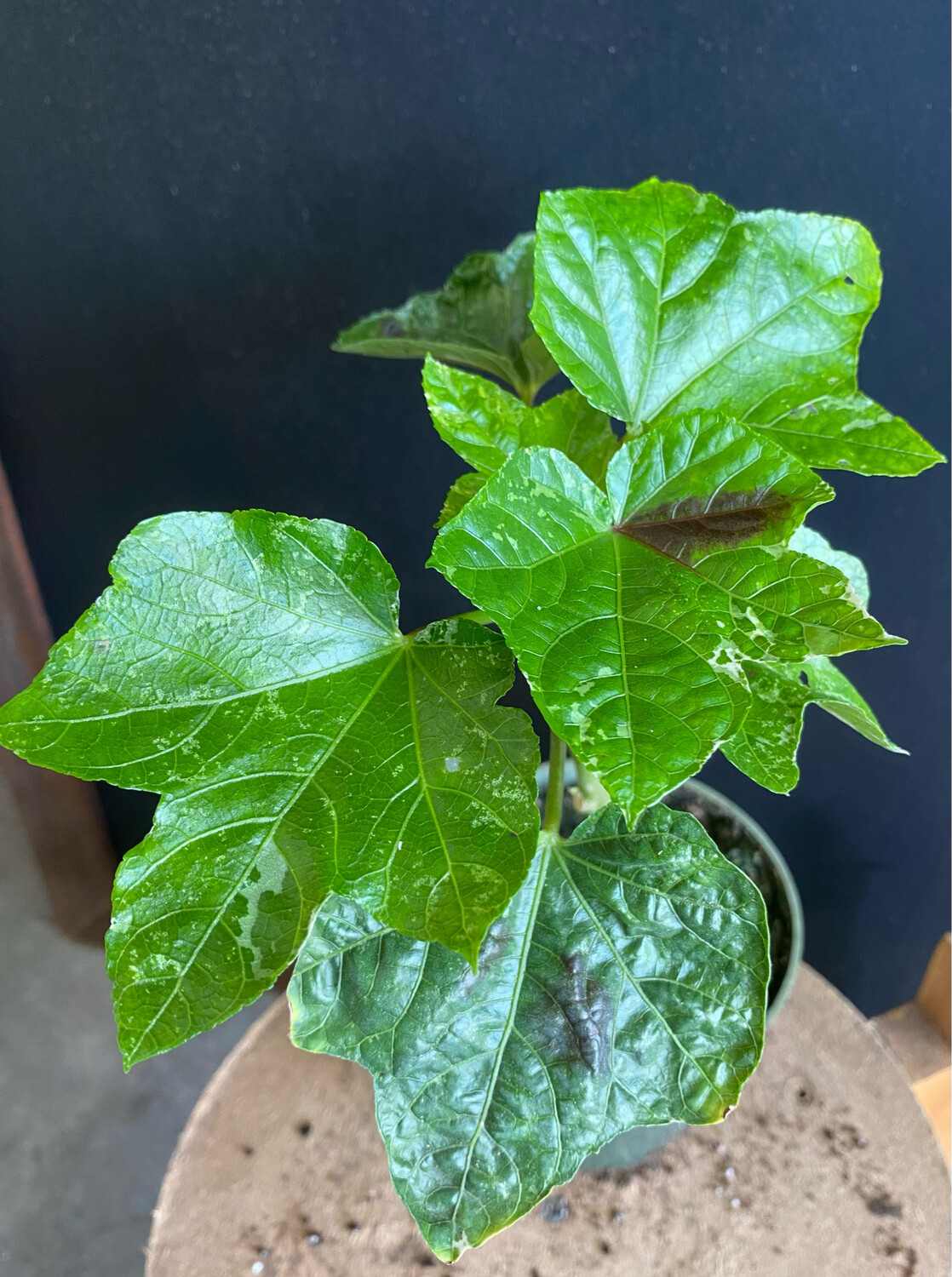
Hibiscus - Auntie Lilli's (Abelmoschus manihot) Edible Leaf 4"

$23.00
Back in Stock
A colorful edible green that turns heads and fills plates
In stock: 12 available
1
Save this product for later
Share this product with your friends
Hibiscus - Auntie Lilli's (Abelmoschus manihot) Edible Leaf 4"
Product Details

🌺 Auntie Lilli’s South Sea Salad Tree™ — Rare Variegated Edible Hibiscus

Abelmoschus manihot — Tropical Color You Can Actually Eat 🌿


If you thought leafy greens could not be show-stopping, Auntie Lilli’s is ready to prove otherwise.

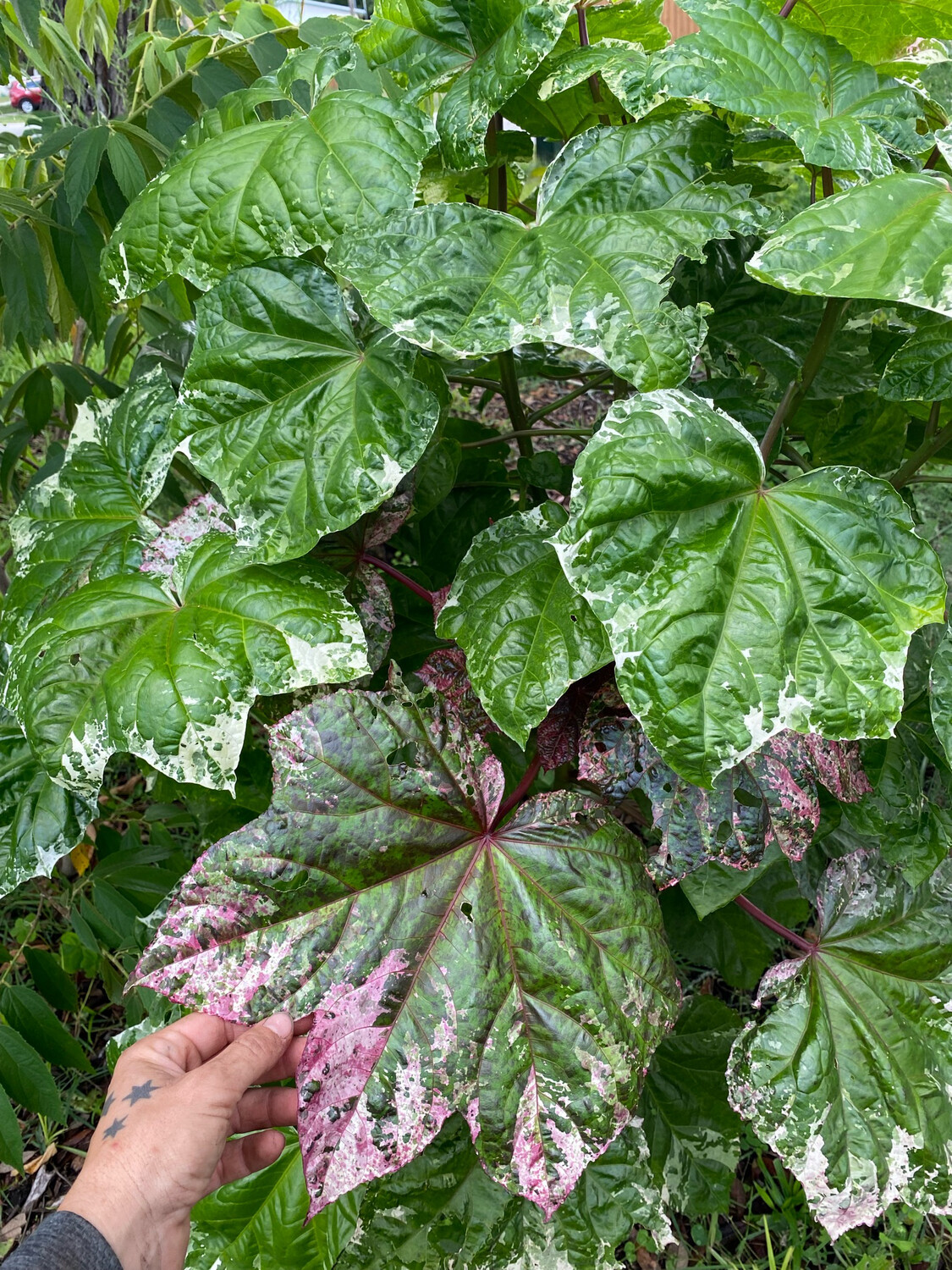
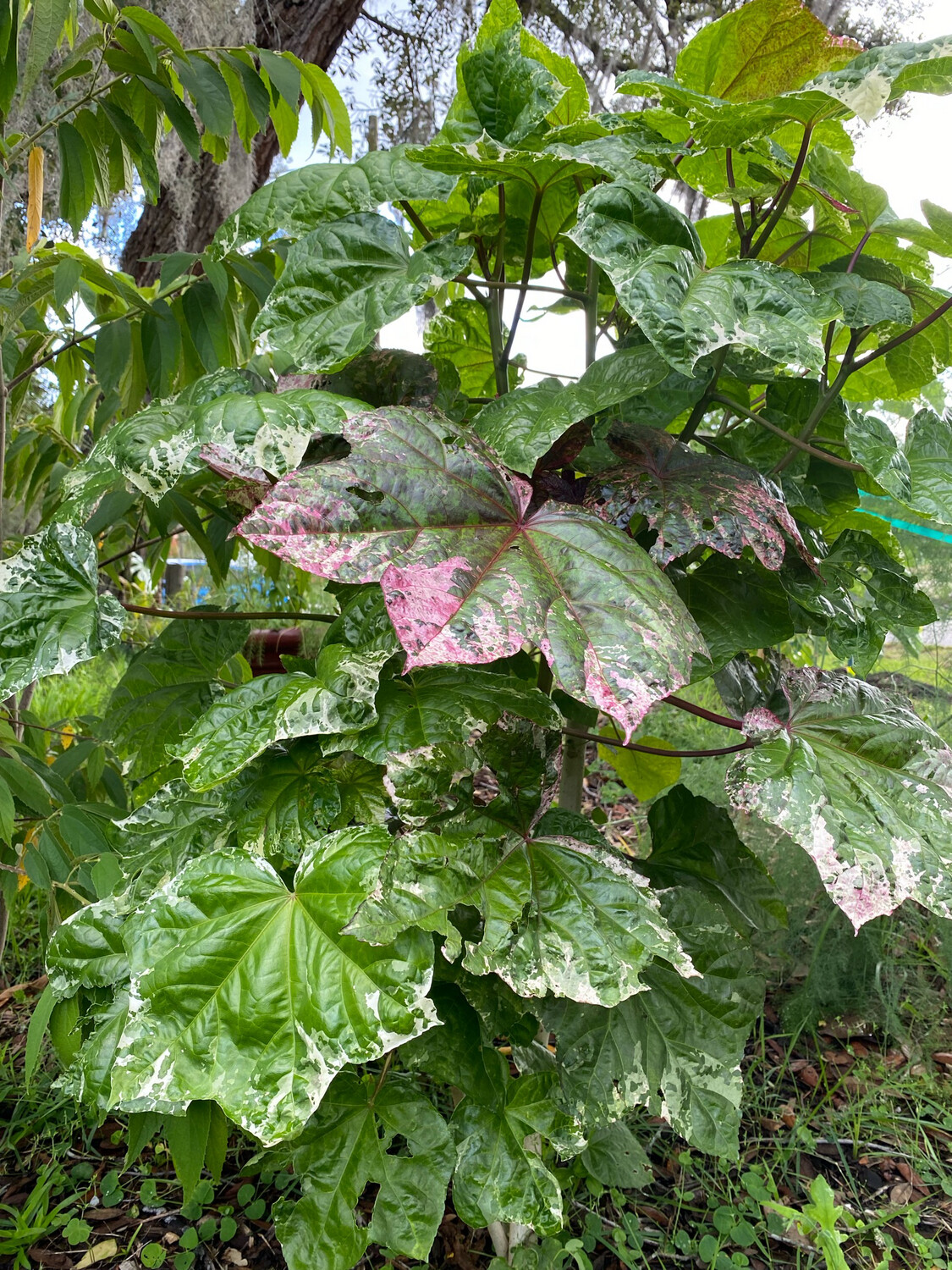
This rare variegated edible hibiscus produces a living tapestry of green, cream, pink, burgundy, and rose-toned foliage—while also supplying tender leaves and growing tips for salads, soups, stir-fries, coconut-milk dishes, and edible garden creations.

It is part tropical collectible, part perennial vegetable, and completely unlike the ordinary greens found at the grocery store. Grow it for the color. Keep it for the harvest.


🌿 Quick Facts Guide

Feature Details
Botanical Name Abelmoschus manihot
Cultivar Auntie Lilli’s South Sea Salad Tree™
Common Names Edible Hibiscus, Bele, Aibika, Island Cabbage, Pacific Cabbage, Salad Tree
Plant Family Malvaceae — mallow family
Plant Type Tender tropical perennial shrub grown for edible leaves and ornamental foliage
Sale Size 4-inch nursery container, approximately 1 pint; actual volume varies by pot style
Estimated Age Approximately 12+ weeks under normal nursery production
Mature Height — Unpruned Approximately 3–4 feet
Maintained Height Approximately 2–3 feet with frequent harvesting and pruning
Mature Width Approximately 2–4 feet
USDA Zones 9–11 as a perennial; annual or protected container plant in colder zones
Best U.S. Regions Florida, the lower Gulf Coast, South Texas, protected coastal California, and other warm subtropical areas
Sun Requirements Bright filtered light, partial sun, or morning sun with afternoon shade
Cold Hardiness Foliage may become damaged near 35°F; frost can cause top dieback
Seasonal Habit Evergreen in frost-free climates; soft perennial that may die back during cold weather
Growth Habit Compact, upright, branching, and naturally bushier than many standard edible hibiscus selections
Spacing 2–4 feet apart
Soil Preference Fertile, organic-rich, moisture-retentive but well-draining soil
Water Needs Consistent moisture without waterlogging
Wind Tolerance Moderate after establishment; young stems benefit from protection
Salt Tolerance Low; avoid direct coastal salt spray and saline irrigation
Primary Harvest Tender leaves, growing tips, and edible flowers
Typical Florida Harvest Most of the year during warm weather; production slows during winter
Container Friendly Yes—one of the better edible hibiscus varieties for patios and small gardens
Indoor Potential Temporary overwintering or bright grow-light culture; not ideal for a dim indoor location

Auntie Lilli’s is commonly listed at approximately 3–4 feet tall and 2–4 feet wide, with semi-shade preferred and outdoor perennial performance concentrated in USDA Zones 9–11. The broader species is an accepted tropical Asian and northeastern Australian shrub that has become deeply established in Pacific food traditions.


🎨 What Makes Auntie Lilli’s So Special?

Rare Multi-Color Variegation

The leaves can display an ever-changing mix of:

  • Deep green
  • Creamy white
  • Dusty pink
  • Rose
  • Burgundy
  • Soft red veining

No two leaves look exactly alike. Color expression may also shift with light exposure, temperature, plant age, nutrition, and the season.

Bright filtered light generally provides the best balance between vigorous growth and strong coloration. Too little light can produce greener foliage, while harsh summer afternoon sun may bleach or scorch the light-colored portions of the leaves.


Compact Growth Without the Jungle Takeover

Many Abelmoschus manihot varieties can grow 6–12 feet tall without pruning. Auntie Lilli’s usually remains closer to 3–4 feet, making it easier to fit into:

  • Patio gardens
  • Courtyard landscapes
  • Raised beds
  • Small food forests
  • Poolside tropical gardens away from salt exposure
  • Decorative edible borders
  • Large containers
  • Front-yard edible landscapes


Edible and Ornamental at the Same Time

This is not a plant you need to hide in the vegetable garden. Use it where you would normally place a colorful tropical foliage plant—and harvest dinner from it.

It works especially well as:

  • A colorful middle-layer food-forest shrub
  • An edible accent near a patio
  • A backdrop for low-growing perennial greens
  • A tropical focal point in a decorative container
  • A contrasting foliage plant beside green-leaved herbs
  • A conversation starter in an edible landscape

Translation: it brings serious coleus energy—but with leaves you can sauté.


🌏 From Pacific Food Gardens to Modern Edible Landscapes

Abelmoschus manihot is native across tropical and subtropical Asia through New Guinea and northeastern Australia. It has also been introduced throughout many Pacific islands, where cultivated forms are commonly known as bele, aibika, island cabbage, or Pacific cabbage.

The species has been selected for generations for differences in:

  • Leaf size
  • Leaf shape
  • Stem color
  • Pigmentation
  • Texture
  • Productivity
  • Tenderness
  • Local culinary preferences

New Guinea is considered an important center of diversity, with a large number of locally maintained forms. Modern research continues to document substantial genetic and visual diversity across Pacific collections.


The Auntie Lilli’s Story

Auntie Lilli’s South Sea Salad Tree™ appears in the nursery trade as a modern named selection prized for its unusually compact growth and multicolored foliage. A formal published breeder record or fully documented introduction history does not appear to be publicly available.

What is clear is that this selection carries forward the much older South Pacific tradition of growing Abelmoschus manihot as a productive household vegetable—then turns up the ornamental volume.

The affectionate “Auntie” name fits the plant perfectly: welcoming, generous, colorful, and always ready to feed somebody.


🍃 Edible Leaf, Shoot and Flower Details

What Parts Are Edible?

The primary edible portions are:

  • Young leaves
  • Tender growing tips
  • Short succulent stem sections
  • Flowers and petals

Young foliage is preferred because it is softer, less fibrous, and faster to cook. Older leaves remain usable but are usually better steamed, simmered, baked, or added to soups.


Flavor Profile

Characteristic Description
Taste Mild, green, and spinach-like
Texture When Raw Tender young leaves are soft with a lightly silky finish
Texture When Cooked Smooth, soft, and slightly thickening
Mucilage Similar to okra but generally milder in young leaves
Best Harvest Stage Young expanded leaves and tender shoot tips
Flower Flavor Mild with a lightly vegetal or tangy character
Strong Flavors? No—the leaves readily absorb coconut milk, garlic, ginger, broth, spices, and sauces

The leaves naturally contain mucilage—the same type of soluble, slippery texture associated with okra. This makes them especially useful for thickening soups, stews, and braised vegetable dishes. (PROSEA)

Raw or Cooked?

Very young leaves may be eaten raw in modest quantities, but most traditional uses involve cooking.

Cooking:

  • Softens the leaves
  • Reduces fibrous texture
  • Blends the natural mucilage into the dish
  • Makes older leaves more enjoyable
  • Allows the foliage to absorb broths, coconut milk, and seasonings

Always wash leaves thoroughly before use. Gardeners trying the plant for the first time may prefer to begin with cooked young leaves.


🥬 How to Harvest Auntie Lilli’s Edible Hibiscus

Do not heavily harvest a newly delivered 4-inch starter plant. Allow it to recover from shipping and begin producing active new growth first.

Once established:

  1. Choose a healthy growing tip.
  2. Cut the tip just above a lower leaf node.
  3. Include two or three tender leaves with the shoot tip.
  4. Leave enough healthy foliage to continue feeding the plant.
  5. Rotate harvests around the plant rather than stripping one stem.
  6. Allow new side shoots to develop before harvesting that branch again.

Removing the growing tip encourages buds below the cut to develop into new branches. This creates a fuller plant and more future harvest points.

Traditional production references report that new shoots may be ready again approximately four weeks after tip harvest under favorable conditions. Freshly propagated plants may begin commercial-style harvest around 80–90 days after planting, although a lightly harvested nursery plant can be used sooner once it is well established.


Florida Harvest Calendar

Season What to Expect
Spring Rapid new growth as temperatures warm; begin light harvesting once growth is vigorous
Summer Peak leaf production; monitor water closely and protect variegated foliage from harsh afternoon sun
Fall Continued harvest during warm weather; reduce feeding as growth slows
Winter Slower production, cold spotting, leaf drop, or top dieback may occur
Frost-Free South Florida Harvest may continue much of the year
Central and North Florida Expect a winter slowdown and possible dormancy or dieback


🍲 Culinary Uses and Applications

Auntie Lilli’s is more than a novelty garnish. Its leaves can fill many of the same culinary roles as spinach, chard, young collards, callaloo greens, and tender okra leaves.

Popular Ways to Use the Leaves

  • Sautéed with garlic and olive oil
  • Simmered in coconut milk
  • Added to soups and broths
  • Stir-fried with ginger, onion, and peppers
  • Chopped into curries
  • Added near the end of noodle dishes
  • Mixed into omelets or scrambled eggs
  • Folded into rice dishes
  • Blended into savory green sauces
  • Used as a natural soup thickener
  • Wrapped around rice, vegetables, meat, or seafood
  • Baked as stuffed leaf rolls
  • Added to young-leaf salads
  • Mixed with other perennial greens

Large, soft leaves can be used similarly to grape leaves or tender cabbage leaves for wrapped dishes. Pacific culinary references also describe bele cooked with coconut milk and fish.

Using the Flowers

The hibiscus-style flowers are edible and can be used as:

  • Fresh garnishes
  • Decorative salad additions
  • Cake or dessert decorations
  • Colorful additions to chilled beverages
  • Mild floral infusions
  • Plate accents for tropical dishes

Harvest newly opened flowers from plants that have not been treated with non-food-safe pesticides.


🥥 Signature Recipe: Island-Style Coconut Bele Greens

Ingredients

  • 4–6 cups loosely packed young Auntie Lilli’s leaves and tender tips
  • 1 tablespoon coconut oil
  • ½ small onion, sliced
  • 2 cloves garlic, minced
  • ½ teaspoon fresh grated ginger
  • ¾ cup unsweetened coconut milk
  • Sea salt to taste
  • Black pepper to taste
  • Optional: hot pepper, lime juice, cooked fish, shrimp, tofu, or pigeon peas

Directions

  1. Wash the leaves and remove any tough lower petioles.
  2. Stack and slice the foliage into ribbons.
  3. Warm the coconut oil over medium heat.
  4. Sauté the onion, garlic, and ginger until aromatic.
  5. Add the leaves and stir until they begin to wilt.
  6. Pour in the coconut milk.
  7. Simmer gently for approximately 5–8 minutes.
  8. Season with salt, pepper, and optional hot pepper.
  9. Finish with lime juice before serving.

The leaves become silky and creamy while naturally thickening the coconut broth.


More Kitchen Ideas

Dish How to Use Auntie Lilli’s
Green Omelet Chop young leaves and sauté before adding eggs
Tropical Stir-Fry Add sliced leaves during the final few minutes
Vegetable Soup Add near the end for a silky texture
Leaf Wraps Blanch mature leaves and fill with rice or vegetables
Green Curry Stir chopped foliage into coconut-based curries
Garden Salad Use only the youngest tender leaves
Broth Thickener Simmer chopped leaves until the desired texture develops
Edible Garnish Use fresh petals or small young leaves


🌿 Nutritional Profile

Research on aibika and bele has found that its leaves can contribute:

  • Beta-carotene and other carotenoids
  • Lutein
  • Vitamin C
  • Calcium
  • Iron
  • Magnesium
  • Potassium
  • Zinc
  • Manganese
  • Fiber
  • Plant protein

Nutrient concentrations vary substantially among cultivars, growing conditions, leaf age, preparation method, and whether values are reported for fresh leaves or dry matter. Fresh foliage is mostly water, so dry-matter protein percentages should not be interpreted as the percentage found in a fresh serving.

Use minimal cooking water when boiling the foliage, or serve the cooking liquid as part of a soup so water-soluble nutrients are not discarded. Serving cooked greens with coconut milk, avocado, olive oil, or another dietary fat can also support the absorption of fat-soluble carotenoids.


Traditional Uses

Different cultures have historically used Abelmoschus manihot in folk preparations associated with digestion, sore throats, postpartum nutrition, and general nourishment. These traditions are ethnobotanical information—not proof that the plant treats or prevents a medical condition.

This plant listing does not provide medical advice. Anyone with health concerns, allergies, pregnancy-related questions, or medication interactions should consult a qualified healthcare professional.


🌺 GreenDreams Edible Hibiscus Comparison

Variety Typical Habit Foliage Best Feature Best Landscape Role
Auntie Lilli’s South Sea Salad Tree™ Compact and bushy; approximately 3–4 ft Green, cream, pink, rose, and burgundy variegation Most ornamental and container friendly Patio specimen, edible accent, small-space garden
Chief Kubo’s Pride Upright and vigorous; approximately 6–8 ft unpruned Large green tropical foliage Strong vertical production and substantial harvests Food-forest layer, edible screen, productive hedge
Long Leaf Edible Hibiscus Tall and fast-growing; may reach approximately 10–12 ft unpruned Long, deeply divided green leaves Dramatic shape and high biomass Tall edible backdrop, privacy planting, chop-and-drop system
Standard Bele Types Variable; commonly 6–10 ft Round, lobed, narrow, green, red-veined, or purple forms Broad genetic and culinary diversity Tropical vegetable garden and household food production

Growth depends on climate, soil fertility, water, pruning frequency, and cultivar stability. Frequent tip harvesting keeps all varieties shorter and more highly branched.


SEASONAL CARE, PLANTING, WATERING, CONTAINERS & PRODUCTION


🌱 Growing Auntie Lilli’s South Sea Salad Tree™

Auntie Lilli’s is a tropical food crop wearing ornamental camouflage. Give it warmth, moisture, drainage, and regular harvesting, and it can produce a surprising amount of foliage from a relatively small footprint.

The major challenge is not convincing it to grow during summer. The real challenge is balancing adequate moisture with good drainage while protecting the lighter variegated leaves from intense heat, salt, cold, and rough wind.


🌞 Where to Plant Abelmoschus manihot ‘Auntie Lilli’s’

Best Outdoor Location

Choose a location with:

  • Morning sun and afternoon shade
  • Bright filtered light beneath a high tree canopy
  • Protection from hot western exposure
  • Organic-rich soil
  • Reliable access to irrigation
  • Good air circulation
  • Protection from direct salt spray
  • Shelter from strong winter winds

The broader species can grow in full sun, but cultivation guides note that afternoon shade is beneficial. Auntie Lilli’s lighter variegated portions are more vulnerable to heat and sunscald than solid-green edible hibiscus leaves.


Good Landscape Placements

  • East side of a house
  • South-facing area with filtered afternoon shade
  • Edge of a food forest
  • Beside a patio with bright indirect light
  • Behind lower perennial greens
  • Near a frequently used kitchen-garden path
  • Inside a protected courtyard
  • In a movable decorative container

Avoid Planting In

  • Standing water
  • Low depressions that flood after storms
  • Harsh reflected heat beside white walls or pavement
  • Direct oceanfront salt spray
  • Unprotected wind tunnels
  • Deep, dark shade
  • Areas without irrigation
  • Locations where the plant will be repeatedly struck by equipment
  • A winter focal point in colder Zone 9 landscapes, since seasonal dieback is possible


🌾 Soil and Potting Mix Requirements

Abelmoschus manihot prefers fertile, well-draining soil with steady moisture. Production references describe good performance in well-drained loams around pH 5.5–7 and sensitivity to waterlogging.

Recommended In-Ground Conditions

Florida’s sandy soils benefit from the addition of:

  • Finished compost
  • A modest amount of charged biochar
  • Worm castings
  • A mineral amendment such as azomite
  • A surface layer of hardwood mulch
  • Organic matter added across the surrounding bed—not packed into a wet planting pocket

Avoid creating a heavily amended “bathtub” inside poorly drained native soil. Improve the broader planting area or build a raised mound where drainage is questionable.

Recommended Container Mix

Use a mix that retains moisture but still allows excess water to drain quickly.

A practical blend is:

  • 40% quality organic potting mix
  • 25% coconut coir or peat-based material
  • 20% fine compost or worm-casting blend
  • 15% perlite, pine bark fines, or another aeration component

The final blend should feel light and springy rather than muddy or dense.

Do not use:

  • Straight garden soil in a container
  • Heavy muck
  • Pure compost
  • A water-retentive mix without drainage material
  • Containers without open drainage holes


🌿 GreenDreams Planting Method

After delivery, keep the plant in its original container until it has recovered from transit and is producing new growth. We recommend waiting approximately 30 days or until active new growth appears before transplanting.

A small plant that is immediately transplanted, exposed to full sun, and heavily fertilized may experience multiple stresses at once.

How to Plant Auntie Lilli’s Edible Hibiscus

  1. Water the plant thoroughly at soil level several hours before planting.
  2. Select a location with filtered sun and reliable drainage.
  3. Dig a hole only slightly wider than the nursery container.
  4. Dig no deeper than the existing root ball.
  5. Carefully remove the plant without pulling on the stem.
  6. Inspect the roots without aggressively breaking apart a young root ball.
  7. Position the plant so the upper surface of the root ball sits level with—or slightly above—the surrounding grade.
  8. Backfill with native soil, compost-amended soil, or a suitable blend.
  9. Pack the soil firmly enough to remove large air pockets.
  10. Do not bury the stem or place soil over the original root flare.
  11. Top-dress the surrounding area with compost, charged biochar, azomite, or an organic nutrient blend.
  12. Apply approximately 2–3 inches of hardwood mulch.
  13. Keep mulch several inches away from the stem.
  14. Water slowly and deeply at soil level.
  15. Protect the transplant from extreme afternoon sun while it establishes.

🎥 GreenDreams High & Tight Planting Video:

https://youtu.be/RRQFY30qdA8?si=rRIcsbLlVAVYotfI


💧 Watering Auntie Lilli’s South Sea Salad Tree™

Auntie Lilli’s prefers consistent moisture, but its roots should not remain in stagnant, oxygen-poor soil.

Non-Negotiable Watering Rule

Do not use routine overhead watering.

Water in the morning and apply water directly to the potting mix or root zone. Overhead watering—especially during hot afternoons—can contribute to:

  • Leaf spotting
  • Sunburn on wet foliage
  • Fungal pressure
  • Uneven water delivery
  • Soil splash onto leaves
  • Wasted irrigation
  • Reduced absorption before evaporation

Drip irrigation or a slow hose application at soil level is preferred over overhead sprinklers and misting systems.

Watering a 4-Inch Container

Check the plant daily.

Small containers dry much faster than larger pots, particularly during:

  • Hot weather
  • Windy weather
  • UPS transit recovery
  • Active summer growth
  • Root-bound conditions
  • Low-humidity periods

Water when the upper surface begins to dry, continuing until water exits the drainage holes. Do not leave the plant standing in a water-filled saucer.

Newly Planted in the Ground

Establishment Period General Starting Schedule
Days 1–14 Check daily; water whenever the root ball begins to dry
Weeks 3–6 Approximately 3–4 deep waterings weekly, adjusted for rain and soil
After Establishment Approximately 1–3 deep waterings weekly
Hot Florida Dry Season Daily monitoring may be necessary, particularly in sandy soil
Rainy Season Reduce or pause irrigation when the root zone remains moist

These are starting points—not automatic rules. Check the soil several inches below the mulch and observe the plant.

Signs the Plant Needs More Water

  • Soft drooping foliage during the morning
  • Dry, lightweight container
  • Leaf-edge crisping
  • Slowed new growth
  • Premature leaf drop
  • Curling leaves that recover after irrigation

Signs the Plant Is Staying Too Wet

  • Persistent yellowing
  • Soft lower stems
  • Sour-smelling soil
  • Fungus gnats in containers
  • Little growth despite wet soil
  • Blackened stem tissue near the soil line
  • Leaves remaining wilted even though the soil is saturated


🌱 Fertility and Organic Feeding

Auntie Lilli’s is grown primarily for foliage, so it responds well to moderate, consistent fertility during warm active growth.

Organic Feeding Schedule

Spring:

Top-dress with compost and a balanced organic fertilizer when new growth begins.

Summer:

Apply a light feeding every 4–6 weeks if the plant is being harvested regularly.

Early Fall:

Apply a final light feeding while temperatures remain warm.

Late Fall and Winter:

Reduce or stop fertilizer when growth slows. Feeding a cold-stressed or dormant plant can damage roots and encourage weak growth.

Useful Organic Inputs

  • Finished compost
  • Worm castings
  • Composted poultry manure used conservatively
  • Balanced organic vegetable fertilizer
  • Fish hydrolysate applied according to label directions
  • Kelp-based products
  • Charged biochar
  • Azomite or another trace-mineral amendment
  • Chop-and-drop mulch from clean biomass plants

Production references report larger leaves and greater yields under improved fertility, with nitrogen supporting continued vegetative growth during repeated harvest. (PROSEA)

Avoid

  • Heavy fertilizer on a newly shipped plant
  • Concentrated synthetic fertilizer against the stem
  • Excessive phosphorus without a soil test
  • Repeated high-nitrogen feeding during winter
  • Allowing fertilizer salts to accumulate in containers

Flush container soil periodically with plain water to reduce mineral buildup.


✂️ Pruning for Color, Shape and Leaf Production

Harvesting and pruning serve the same basic purpose: removing growing tips stimulates new side branches.

Establishment Pruning

Wait until the plant is actively growing after shipping or transplanting.

Once established:

  • Pinch a growing tip above a healthy node.
  • Allow two or more side branches to develop.
  • Repeat selectively as those branches lengthen.
  • Maintain an open shape with good air movement.

Production Pruning

Harvest a tender growing tip back to the newest full-sized leaf. New shoots form below the cut and create future harvest points.

Avoid removing more than approximately one-third of the healthy foliage during a single harvest, especially on a small plant.

Reversion Pruning

Variegated cultivars may occasionally produce a vigorous solid-green shoot.

Because fully green foliage contains more chlorophyll, it may grow faster and eventually dominate the plant. Remove strongly reverted green stems back to their point of origin when maintaining the variegated appearance is the priority.

Do not remove healthy multicolored branches simply because one new leaf appears greener; color may change as the leaf matures.

Winter Pruning

After cold damage:

  1. Leave damaged upper growth in place until the worst frost risk has passed.
  2. Scratch-test questionable stems for green living tissue.
  3. Remove dead material in late winter or early spring.
  4. Cut back to healthy wood or the living crown.
  5. Refresh mulch without burying the stem.
  6. Resume feeding only after new growth appears.


🌤 Seasonal Care Guide for Florida and the Southeastern U.S.

Auntie Lilli’s is not truly deciduous in the way a peach, persimmon, or temperate fruit tree is deciduous. It is an evergreen tropical plant in frost-free conditions that may become partially dormant, defoliate, or die back when exposed to cold.

Spring

Expect:

  • New shoots from existing stems or the root crown
  • Increasing pink and cream coloration
  • Rapid leaf expansion
  • Greater water and nutrient demand

Spring tasks:

  • Remove confirmed dead stems
  • Add compost
  • Refresh mulch
  • Resume organic feeding
  • Begin tip pruning
  • Up-pot root-bound plants
  • Watch for aphids on tender shoots

Summer

Expect:

  • Fastest vegetative growth
  • Frequent harvests
  • Larger leaves
  • Increased caterpillar and beetle activity
  • Heat stress if the root zone dries
  • Possible bleaching in intense afternoon sun

Summer tasks:

  • Check containers daily
  • Maintain morning soil-level irrigation
  • Harvest regularly
  • Provide afternoon shade where needed
  • Inspect leaf undersides
  • Maintain mulch
  • Feed lightly every 4–6 weeks

Fall

Expect:

  • Continued production while nights remain warm
  • Slower growth as days shorten
  • Possible flowering
  • Gradual reduction in water use

Fall tasks:

  • Continue moderate harvesting
  • Reduce fertilizer late in the season
  • Take backup cuttings before frost where desired
  • Prepare containers for protected overwintering
  • Refresh mulch around in-ground plants

Winter

Expect:

  • Slower growth
  • Reduced variegation
  • Yellow or spotted cold-stressed leaves
  • Leaf drop
  • Stem dieback following frost
  • Dormancy or complete top dieback in colder locations

Winter tasks:

  • Protect from frost
  • Move containers to a warm, bright location
  • Reduce watering without allowing complete desiccation
  • Stop routine fertilizer
  • Avoid heavy pruning before cold weather has passed
  • Do not discard an apparently dead in-ground plant too quickly

Zone 8 Guidance

Treat Auntie Lilli’s as:

  • A warm-season annual
  • A container plant brought indoors
  • A mother plant overwintered under grow lights
  • A crop renewed from protected cuttings each spring

Zone 9 Guidance

Plant in a protected microclimate and expect possible winter dieback. Thick mulch can help buffer the root zone, but it must not touch the stem.

Zones 10–11

The plant may remain evergreen and productive through much of the year, although cooler, shorter, or drier conditions can still slow growth.


🪴 Container Growing Guide

Auntie Lilli’s compact form makes it especially suitable for container culture.

Pot Progression

Move up gradually:

4-inch pot → 1-gallon → 3-gallon → 7-gallon → 10- to 15-gallon

Do not place a small root system directly into an oversized, continuously wet container. Excess potting mix can hold moisture much longer than the roots can use it.

When to Up-Pot

Transplant when:

  • Roots circle the inside of the pot
  • Roots emerge through drainage holes
  • The container dries unusually fast
  • Growth slows despite proper care
  • The plant becomes top-heavy
  • New growth has resumed after shipping
  • At least approximately 30 days have passed since delivery


How to Up-Pot

  1. Select a container only one or two sizes larger.
  2. Confirm that drainage holes are fully open.
  3. Add enough fresh mix to maintain the original planting depth.
  4. Remove the plant gently.
  5. Loosen only tightly circling outer roots.
  6. Place the root ball slightly high rather than deeply buried.
  7. Fill around the roots and firm the mix.
  8. Water thoroughly at soil level.
  9. Keep the plant in bright shade for several days.
  10. Gradually return it to its normal light exposure.

Finding Supplies

Suitable nursery pots and organic potting materials can often be found through:

  • Independent garden centers
  • Local nurseries
  • Hydroponic supply stores
  • Landscape-supply companies
  • Farm and feed stores
  • Community gardening groups
  • Online garden retailers

Useful search terms include:

  • Food-safe nursery container with drainage
  • Professional potting mix for tropical vegetables
  • Coconut coir potting blend
  • Pine bark fines
  • Organic compost near me
  • Reusable nursery pots


🏠 Can Auntie Lilli’s Grow Indoors?

It can be kept indoors temporarily, particularly for winter protection, but ordinary household light is usually insufficient for strong long-term production.

Indoor Requirements

  • Bright south- or east-facing window
  • Supplemental full-spectrum grow light when needed
  • Warm temperatures
  • Good airflow
  • Moderate humidity
  • Protection from HVAC vents
  • Careful watering
  • Frequent inspection for aphids, scale, whiteflies, and spider mites

A grow light may need to operate approximately 12–14 hours daily during winter, depending on its intensity and placement.

Indoor growth will generally be:

  • Slower
  • Greener
  • Less productive
  • More susceptible to sap-sucking insects
  • More stretched if light is inadequate

The plant performs best outdoors during warm weather.


🐝 Companion Plants and Edible Landscape Guild

Use support plants that improve soil, create biomass, attract beneficial insects, and visually complement the variegated foliage.

Guild Role Recommended Plants Benefit
Nitrogen Support Pigeon pea, sunn hemp, clumping peanut Biomass and nitrogen-rich chop-and-drop material
Living Groundcover Perennial peanut, Sissoo spinach, Okinawan spinach Covers soil and reduces moisture loss
Pollinator Support Mexican sunflower, native salvia, African blue basil Supports bees and beneficial insects
Carbon and Biomass Mexican sunflower, clumping grasses, vetiver Produces regular mulch material
Silica and Structure Vetiver or other clumping grasses Deep roots, biomass, bed definition
Aromatic Layer Lemongrass, society garlic, Cuban oregano Contrasting texture and kitchen usefulness
Tropical Contrast Cranberry hibiscus, purple sweet potato, katuk Creates dramatic color combinations
Low Edible Layer Longevity spinach, Okinawan spinach, purslane Expands the harvest beneath the shrub

Do not crowd the stem. Maintain access for pruning, harvesting, and airflow.


CAUTIONS, TROUBLESHOOTING, FAQ, SHIPPING, CTA & SEO


⚠️ Important Cautions

Cold Sensitivity

Auntie Lilli’s is not reliably frost-proof. Light frost may damage the foliage and upper stems, while harder or repeated freezes can kill the plant.

Waterlogging

The species prefers steady moisture but is sensitive to poorly drained conditions. Collar rot and root problems become more likely when the stem is buried, mulch touches the base, or water remains around the roots.

Variegated Leaf Sensitivity

Cream and pink portions contain less chlorophyll and are more vulnerable to:

  • Sunburn
  • Heat scorch
  • Fertilizer burn
  • Wind damage
  • Shipping stress
  • Rapid dehydration

A damaged light-colored patch does not automatically indicate disease.

Pest Attraction

Like many members of the mallow family, edible hibiscus can attract:

  • Caterpillars
  • Leaf rollers
  • Flea beetles
  • Grasshoppers
  • Aphids
  • Scale insects
  • Whiteflies
  • Spider mites
  • Snails and slugs

Regular inspection is more effective than waiting for widespread damage. (PROSEA)

Food-Safety Reminder

Only consume correctly identified plant material that has not been exposed to non-food-safe pesticides, contaminated irrigation water, pet waste, roadside pollution, or chemical drift.

Traditional medicinal uses are not a substitute for professional medical advice.


🔍 GreenDreams Troubleshooting Guide

Icons represent common issues and organic solutions—look for 🌿 for recovery tips.

⚠️ Issue 🧠 Likely Cause 🌿 Organic Response
🍂 Lower leaves turning yellow Old foliage, wet roots, or low nitrogen Check drainage first; remove old leaves and feed lightly only during active growth
🫣 Leaves curling Dry soil, heat, wind, pests, or transplant stress Check soil moisture and leaf undersides; protect from wind and afternoon heat
☀️ Pale or crispy cream sections Sunscald on variegated tissue Move to morning sun or filtered light
💧 Plant wilts daily Small pot, root-bound plant, or insufficient irrigation Water deeply in the morning and inspect roots
💦 Wilted plant in wet soil Root stress or poor drainage Stop automatic watering, improve drainage, and inspect the stem base
🍄 Dark stem at soil line Stem buried too deeply, wet mulch, or collar rot Pull mulch away, improve airflow, and keep the crown high and dry
🐛 Holes in leaves Caterpillars, beetles, grasshoppers, or snails Hand-pick pests; use Bt for caterpillars where appropriate
🪲 Sticky leaves or distorted tips Aphids, scale, or whiteflies Rinse pests away at soil-safe timing or use insecticidal soap according to label directions
🕷️ Fine stippling and webbing Spider mites during hot, dry, or indoor conditions Isolate the plant, rinse leaf undersides, and use an appropriate organic treatment
🍃 Sudden leaf drop after delivery Shipping stress, low light, temperature change, or dehydration Keep in original pot, provide bright shade, water correctly, and wait for new growth
❄️ Blackened foliage after frost Cold damage Protect the root zone and delay pruning until frost danger passes
🌱 Solid-green branch appears Natural reversion Remove the reverted shoot at its origin if maintaining variegation
☁️ Leggy green growth Insufficient light Gradually increase bright filtered light
🔥 Brown leaf tips after feeding Fertilizer salts or excess nutrients Flush the container with plain water and pause fertilizer
🌬️ Torn or folded leaves Wind exposure Move containers or add wind protection
🌱 Little growth after transplanting Root establishment, transplant shock, cold soil, or oversized pot Maintain warmth and steady moisture; avoid repeated disturbance

Organic Pest Strategy

Begin with the least disruptive option:

  1. Inspect plants several times weekly.
  2. Hand-remove caterpillars, beetles, slugs, and damaged leaves.
  3. Encourage ladybugs, lacewings, small wasps, and other beneficial insects.
  4. Use Bt products specifically labeled for caterpillars when necessary.
  5. Use insecticidal soap for soft-bodied insects according to the label.
  6. Control ants when they are protecting aphids or scale.
  7. Avoid spraying oils onto heat-stressed variegated foliage.
  8. Never apply horticultural oils during intense sun or extreme heat.
  9. Follow all product labels and edible-crop harvest intervals.


🌟 Is Auntie Lilli’s South Sea Salad Tree™ Right for You?

✅ Ideal For

  • Florida gardeners
  • Tropical and subtropical plant collectors
  • Edible-landscape enthusiasts
  • Food-forest growers
  • Patio and balcony gardeners
  • Gardeners seeking compact perennial vegetables
  • Home chefs interested in unusual greens
  • Growers who value ornamental foliage
  • Gardeners able to provide regular irrigation
  • Northern growers with greenhouse or indoor winter protection
  • Customers who enjoy rare and conversation-worthy plants

❌ Not Ideal For

  • Landscapes without irrigation
  • Deep-shade gardens
  • Exposed oceanfront locations
  • Cold climates without winter protection
  • Growers seeking a completely frost-proof perennial
  • Gardens with continuously saturated soil
  • Customers unable to monitor a small 4-inch plant after delivery
  • Anyone expecting an immediate heavy harvest from a young starter
  • Locations exposed to intense western sun and reflected pavement heat


❓ Frequently Asked Questions

Is Auntie Lilli’s South Sea Salad Tree really edible?

Yes. It is a named form of Abelmoschus manihot, a traditional tropical leafy vegetable commonly called bele or aibika. The young leaves, tender tips, and flowers are edible.

Is edible hibiscus the same plant as okra?

No. They are close relatives in the genus Abelmoschus. Okra is primarily grown for its edible pods, while Abelmoschus manihot is primarily cultivated for its leaves and tender shoots.

Can Auntie Lilli’s leaves be eaten raw?

Very young, tender leaves may be eaten raw after proper washing. Older leaves are generally more enjoyable cooked.

Does Auntie Lilli’s taste slimy like okra?

The leaves contain mucilage and can develop a silky or lightly thickening texture when cooked. Young foliage is generally less fibrous and less noticeably mucilaginous.

Will Auntie Lilli’s survive winter in Florida?

It may remain evergreen in frost-free South Florida. In Central and North Florida, it may lose leaves or die back during cold snaps and regrow when warm weather returns. Survival is not guaranteed after severe freezes.

Is Auntie Lilli’s a tree?

Despite the common name “salad tree,” it is a fast-growing perennial shrub—not a true tree.

Can it grow in full sun?

The broader species can grow in full sun, but Auntie Lilli’s variegated foliage generally performs best with morning sun or bright filtered light. Harsh afternoon sun can scorch the lighter leaf sections.

Why are some leaves greener than others?

Variegation naturally changes with light, temperature, leaf maturity, and growing conditions. A completely solid-green branch that remains vigorous may be a reverted shoot and can be pruned out.

How soon can I harvest it?

Allow a newly shipped 4-inch plant to recover and produce active new growth before harvesting. Begin lightly and increase harvest as the plant becomes larger and more highly branched.

How often should I prune it?

Tip-prune or harvest whenever stems become long enough to cut above a healthy leaf node. During summer, productive plants may be harvested regularly.

Can I grow Auntie Lilli’s in a container?

Yes. It is one of the best edible hibiscus selections for container growing. Progress gradually from a 4-inch pot to 1-gallon, 3-gallon, and eventually 7-gallon or larger containers.

Can I grow it indoors all year?

Possible—but not ideal without strong supplemental lighting. Warm temperatures, high light, airflow, and pest monitoring are essential.

Is Auntie Lilli’s invasive?

It is generally maintained through vegetative propagation and regular harvesting. Gardeners should still remove unwanted seed pods and monitor all cultivated plants responsibly.


🚚 Shipping and Arrival Care

Shipping Schedule

  • Ships from Florida
  • UPS Ground service only
  • Orders are processed for shipment each Monday
  • Tracking information is sent automatically when the label is created

Best Shipping Region

This 4-inch starter is best suited for shipping to:

  • Florida
  • The Southeastern United States
  • The Gulf Coast
  • Texas

The small container dries faster and provides less insulation than a 1-gallon or larger plant. When larger sizes are available, we recommend choosing them for longer transit routes.

Northern and Western U.S. Shipping Advisory

We can ship across the continental United States; however, customers in northern and western states should consider:

  • Longer UPS Ground transit times
  • Greater temperature variation
  • Increased dehydration risk
  • Cold exposure during winter
  • Heat buildup inside delivery vehicles
  • Additional recovery time after arrival

California packages may also experience an additional agricultural inspection delay.

Buyer discretion is strongly advised for long-distance orders. The buyer accepts the increased risk associated with extended ground transit, carrier delays, regional inspections, and extreme temperatures.

GreenDreams is not responsible for damage caused by:

  • Extreme heat or cold during transit
  • UPS Ground delays
  • Packages left exposed after delivery
  • Weather events outside our control
  • Additional inspection delays
  • Extended transit to northern or western destinations

Many stressed plants can recover with proper care, but recovery is not always immediate or guaranteed.

Peak Heat and Cold

Review the forecast for your region and the expected travel corridor before ordering.

Avoid ordering a sensitive 4-inch plant when:

  • Freezing temperatures are forecast
  • Regional temperatures exceed safe live-plant shipping conditions
  • Severe storms may interrupt ground delivery
  • You will not be available to receive the package

What to Do When Your Plant Arrives

  1. Open the package immediately.
  2. Remove packing material carefully.
  3. Photograph any transit damage.
  4. Check the soil moisture.
  5. Water at soil level only when needed.
  6. Place the plant in bright shade.
  7. Do not fertilize immediately.
  8. Do not place it directly into full sun.
  9. Do not transplant immediately.
  10. Allow approximately 30 days—or wait for healthy new growth—before up-potting or planting.

Leaf loss, drooping, faded coloration, and minor cosmetic damage may occur after shipping. The best sign of recovery is healthy new growth.


🏡 Shop With Us in Person

GreenDreams Nursery & Farm — Retail Nursery Open to the Public

Our Spring Hill nursery carries Auntie Lilli’s South Sea Salad Tree™ and countless other edible, medicinal, native, ecological, and unusual tropical plants.

Many plants are available in larger sizes locally, including selections that are too large, seasonal, or limited to offer through our online store.

🌾 18709 US Hwy. 41, Spring Hill, FL 34610

🕘 Tuesday–Friday: 9AM–5PM

🌞 Saturday: 8AM–3PM

Come explore what is blooming, fruiting, and ready to plant this week. Our team can help you compare edible hibiscus cultivars, select companion plants, choose soil amendments, and build a more productive garden from the ground up.


🌿 Beyond the Plant: GreenDreams Services

At GreenDreams, we do more than grow plants—we design, build, and restore ecosystems across Florida.

  • 🌳 Onsite consultations and edible-landscape design
  • 🚜 Ecological landscape installation and project management
  • 🌿 Food forests, orchards, pollinator gardens, and native landscapes
  • 🌾 Regenerative property planning
  • 🧤 Day-labor assistance for customer-led garden projects
  • 🚚 Bulk delivery of compost, mulch, biochar, and soil materials
  • 🪴 Larger plant orders and landscape-scale plant sourcing

Let our team help you turn one exceptional plant into a thriving edible ecosystem—starting with Auntie Lilli’s South Sea Salad Tree™.

🌿 IMPORTANT INFORMATION BEFORE PURCHASING LIVE PLANTS


Please note: Plants purchased through our online store are not available for pickup at our retail nursery in Spring Hill, Florida.

Online inventory is housed at a separate facility and is priced, prepared, and handled exclusively for shipping.


🌱 Looking for larger plants or more selection?

Our retail nursery location offers far more availability, including larger sizes, specialty plants, and many selections not suitable for nationwide shipping.

Local pickup is available for retail nursery purchases only.

Visit our Spring Hill, FL retail nursery page to explore in-person shopping options.


🚚 LIVE PLANT SHIPPING & TRANSIT EXPECTATIONS

Live plants naturally experience stress during shipping. Temporary leaf drop, mild wilting, or cosmetic stress is normal after transit. Most plants recover quickly with proper watering, gradual light exposure, and basic aftercare. Some plants may require additional attention during the first few weeks.

Despite careful packing, minor cosmetic damage may occur during transit. Small issues such as broken leaves or stems typically resolve with time and proper care.

If your shipping box arrives with significant external damage, please contact UPS within 30 days to initiate a carrier claim.


⏱️ SHIPPING METHOD, TIMING & TRANSIT WINDOWS

All online orders ship via UPS Ground from our Central Florida nursery.

📦 Shipping Schedule: Orders ship once weekly on Mondays to reduce the risk of packages sitting in transit over weekends. A countdown clock on our website displays the next shipping date.


🚚 Typical Transit Times:
  • Florida: 1–2 days

  • Southern U.S.: approximately 2 days

  • Midwest, West & Northern U.S.: 3–5 business days

Long-distance shipments, particularly to the western U.S., may experience additional transit time due to agricultural inspections in states such as Arizona, California, and Texas.

Extended transit times can be more challenging for small or tender plants and may require additional recovery care after arrival.


🌡️ EXTREME WEATHER & SEASONAL RISK

Live plants are sensitive to temperature extremes.

We cannot guarantee plant condition during periods of extreme summer heat or winter cold and freezing temperatures. Weather-related delays, carrier interruptions, or exposure during delivery are beyond our control.

Customers are responsible for:

  • Monitoring tracking information sent via email

  • Retrieving packages promptly upon delivery

  • Preventing plants from being left outdoors in extreme conditions

During unsafe weather, holiday shipping volume, or extended transit risk, orders may be held and shipped the following week to protect plant health.


⚠️ CUSTOMER RESPONSIBILITY & REFUND POLICY

By purchasing live plants, customers acknowledge and accept the risks associated with shipping, weather exposure, transit delays, and regional suitability.

Refunds or replacements are considered only under exceptional circumstances and in accordance with our return and refund policy. We are not responsible for:

  • Weather-related damage

  • Carrier delays

  • Poor plant selection for a given climate or region

  • Improper care after delivery

Upon purchase, customers assume full responsibility for the ongoing care and success of their plants.


✅ CONSENT & AGREEMENT

By completing a purchase, you confirm that you have read, understand, and agree to all shipping policies, responsibilities, and conditions outlined above.

Our goal is transparency, plant health, and long-term growing success — and we appreciate your understanding and care when ordering live plants.

  • YouTube
  • tiktok-iconm
  • Instagram
  • Facebook
  • Pinterest

GreenDreams Sustainable Solutions, Inc.
18709 US Hwy. 41, Spring Hill, FL 34610
Shop Our Retail Nursery Location: Open to the Public!
TUES - FRI 9 AM - 5 PM / SAT 8 AM - 3 PM

Retail Nursery Info + Contact - Click Here

All Online Orders Ship Mondays
Question About Your Online Order? USE CONTACT FORM HERE

ONLINE NURSERY / SHIPPING DEPT / MATERIALS DELIVERY / CONSULTATION & DESIGN - PLEASE USE OUR CONTACT FORM FOR BEST SERVICE: USE CONTACT FORM HERE

bottom of page