


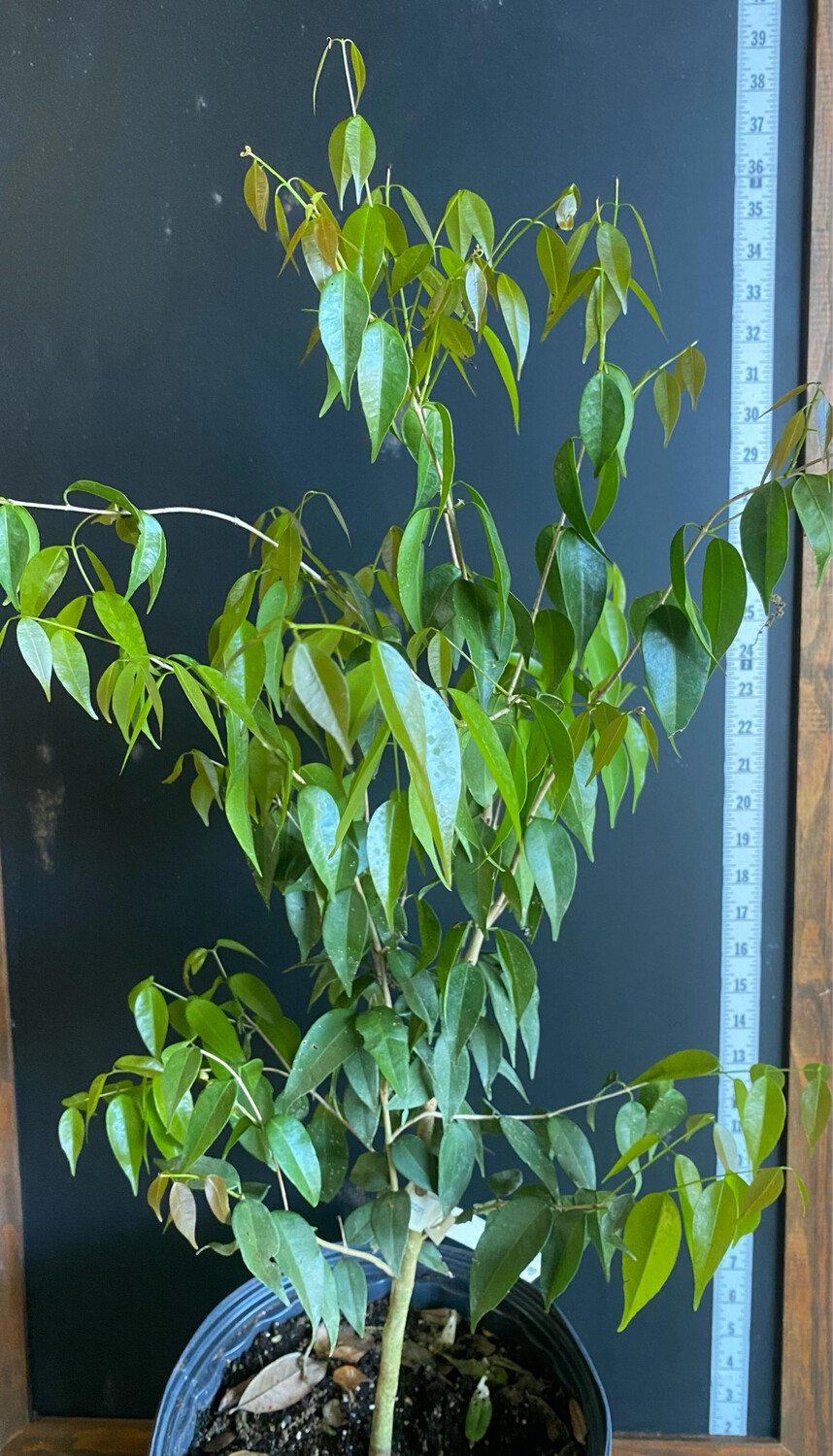
🍇 Guaburiti (Plinia rivularis) — Rare Brazilian River-Forest Fruit Tree
Sweet tropical fruit • rare Plinia species • collector-worthy evergreen beauty
Already growing jaboticaba and ready to explore deeper into the Plinia family? Traditional Guaburiti (Plinia rivularis) offers the same collector appeal with its own softer, low-acid tropical personality.
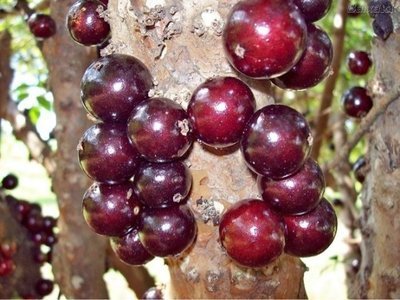
Native across tropical and subtropical South America, this uncommon evergreen fruit tree produces small, juicy fruits that ripen from green through red and into dark red, purple, or nearly black—depending on the individual tree and growing conditions.
The flavor is generally sweet, mild, and refreshing. Collectors often compare it to jaboticaba with softer tropical notes that may suggest peach, lychee, banana, or sweet grape.
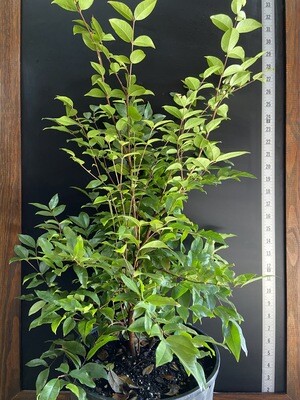
This plant ships in a 3-gallon nursery container as an established juvenile with greater root development, moisture reserves, and transplant resilience than a starter-sized tree.
🌿 Traditional Guaburiti or Black Guaburiti?
Both plants belong to the same botanical species:
Plinia rivularis
The distinction used in our nursery is based on the fruiting selection or accession rather than a formally registered cultivar classification.
| Plant | Practical Nursery Distinction |
|---|---|
| Traditional Guaburiti | Standard seedling or unnamed form of Plinia rivularis; fruit may mature red, dark purple, or nearly black |
| Black Guaburiti | Trade name used for a selection associated with consistently darker, black-ripening fruit |
| Botanical Identity | Both are Plinia rivularis unless documented otherwise |
Because seed-grown Plinia trees can vary, we cannot guarantee that every traditional Guaburiti seedling will produce fruit identical in color, size, or flavor to another tree.
That genetic diversity is part of the appeal for rare-fruit growers: each seedling has the potential to become a distinctive backyard selection.
🌱 Quick Facts
| Category | Details |
|---|---|
| Botanical Name | Plinia rivularis (Cambess.) Rotman |
| Family | Myrtaceae |
| Common Names | Guaburiti, Guapuriti, Guaporetí, Guaporeti, Brazilian River Jaboticaba, Jaboticaba-de-cacho |
| Plant Type | Evergreen tropical to subtropical fruit tree |
| Size at Sale | 3-gallon nursery container |
| Estimated Age | Approximately 2–3 years; age varies by propagation and production conditions |
| Managed Height | Approximately 8–15 ft with selective pruning |
| Potential Unpruned Height | Commonly 20–35 ft; older forest trees may grow taller |
| Potential Width | Approximately 12–20 ft |
| Growth Rate | Slow to moderate |
| Growth Habit | Dense, rounded, low-branching evergreen tree |
| USDA Zones | Best suited to Zones 9B–11; container culture and winter protection elsewhere |
| Native Range | Trinidad and South America through Brazil, Paraguay, Uruguay, and northeastern Argentina |
| Sun Requirements | Bright filtered light or morning sun while young; increased sun tolerance with age |
| Soil Preference | Moist, organic, acidic, and well aerated |
| Preferred Soil pH | Approximately 5.5–6.5 |
| Water Requirements | Consistent moisture without stagnant water |
| Cold Tolerance | Young plants are frost sensitive; protect below 32°F |
| Deciduous? | No—normally evergreen |
| Wind Tolerance | Moderate once established; protect young plants from drying wind |
| Salt Tolerance | Low; avoid direct coastal salt spray |
| Spacing | 12–15 ft for managed trees; 18–25 ft for natural growth |
| Container Friendly? | Yes—especially when moisture and acidity are carefully managed |
| Indoor Friendly? | Temporary winter protection only; not ideal as a permanent houseplant |
🍈 Fruit Characteristics
Traditional Guaburiti produces small rounded or slightly flattened fruit, generally measuring approximately ¾ inch across.
Ripening Progression
- Green and firm
- Red as sugars begin developing
- Dark red, purple, or nearly black when fully ripe
Fruit color can vary between seedlings. A tree should be evaluated by softness, flavor, and ease of release rather than color alone.
Inside the Fruit
- Skin: Smooth and relatively tender
- Pulp: Pale, translucent, juicy, and soft
- Seeds: Usually one or two relatively large seeds
- Texture: Similar to a soft grape or jaboticaba
- Acidity: Generally low when fully ripe
- Fruit size: Approximately grape-sized
The edible pulp surrounds the seed rather than separating into firm segments. Most growers eat the fruit fresh, squeezing or biting the pulp from the skin and saving the seeds for propagation.
🍇 What Does Traditional Guaburiti Taste Like?
The most dependable description is:
Sweet, juicy, mild, and low in acidity with a soft tropical Myrtaceae flavor.
Depending on genetics and growing conditions, collectors have described notes resembling:
- Jaboticaba
- Sweet grape
- Peach
- Lychee
- Banana
- Mild tropical stone fruit
These flavor comparisons are subjective. Guaburiti is commonly seed-grown, so individual trees may differ from the parent plant and from one another.
This makes traditional Guaburiti especially appealing to growers interested in evaluating and preserving new fruit selections.
🌸 Flowering and Fruiting Habit
Traditional Guaburiti generally flowers and fruits along woody branches, branch junctions, and older growth.
It may occasionally fruit near heavier limbs, but it is not usually as strongly trunk-fruiting as Sabará or other classic cauliflorous jaboticabas.
The regional name jaboticaba-de-cacho roughly translates to bunched or clustered jaboticaba, describing the way fruit may appear in small groups along the branches.
Expected Fruiting Timeline
From a healthy 3-gallon seedling, allow approximately:
- 3–6 additional years under excellent subtropical care
- Longer when maintained in an undersized container
- Longer in alkaline soil or hard irrigation water
- Longer when exposed to drought, repeated cold damage, or insufficient light
Seedling maturity varies widely. We intentionally provide conservative fruiting estimates rather than promising a specific harvest date.
Typical Harvest Season
A standardized U.S. harvest calendar has not been established for this uncommon species.
| Region | General Expectation |
|---|---|
| South Florida | Potential flowering and fruiting from spring through fall |
| Central Florida | Most active growth and potential flowering during warm, humid months |
| Northern Florida and Zone 9A | Later spring activity and a shorter warm-season window |
| Protected Containers | Timing may vary according to light, temperature, and pollinator access |
Mature trees in warm climates may flower once or more than once annually when moisture and temperature conditions are favorable.
🐝 Supporting Flowering and Fruit Set
For the strongest production potential:
- Maintain consistent soil moisture.
- Never allow the root ball to become completely dry.
- Gradually provide brighter light as the tree matures.
- Avoid excessive nitrogen fertilizer.
- Maintain acidic soil conditions.
- Provide micronutrients when testing indicates a deficiency.
- Avoid major pruning before the expected flowering season.
- Grow pollinator-supporting plants nearby.
- Consider growing more than one genetically different seedling.
Definitive self-fertility research for Plinia rivularis remains limited. A single tree may produce fruit, but a second unrelated seedling may improve pollination opportunities and provides another unique fruit expression.
👩🍳 Culinary Uses
Guaburiti is primarily valued as a fresh-eating collector fruit, but productive trees can support creative small-batch recipes.
Fresh Eating
Harvest when the fruit:
- Has reached its deepest mature color
- Feels slightly soft
- Releases easily with a gentle pull
- Has developed full sweetness
The fruit is particularly appealing to growers who enjoy jaboticaba but prefer a milder, less acidic experience.
Culinary Applications
- Fresh fruit tasting
- Fruit salads
- Smoothies
- Syrups
- Jam and jelly
- Refrigerator preserves
- Sorbet
- Frozen fruit desserts
- Yogurt or oatmeal topping
- Small-batch wine
- Fruit liqueur
- Fermented beverages
- Dessert sauces
Simple Guaburiti Refrigerator Preserve
- Wash fully ripe fruit.
- Gently crush the fruit in a saucepan.
- Add a small amount of water.
- Simmer until the skins soften and release color.
- Strain away seeds and coarse skin material.
- Return the pulp and liquid to the pan.
- Sweeten to taste.
- Add lemon or lime juice for brightness and acidity.
- Refrigerate and use promptly.
Guaburiti is naturally low in acidity. Use a professionally tested formula when preparing shelf-stable canned preserves.
🌿 Nutritional and Traditional Uses
Species-specific nutritional research remains limited, but published fruit analysis has documented:
- Natural soluble sugars
- Vitamin C
- High moisture content
- Low acidity at full ripeness
Dark red and purple fruit skins may contain anthocyanins and other pigmented phenolic compounds. Concentration can vary by accession, maturity, environment, and laboratory method.
No standardized medicinal treatment or therapeutic dosage has been established for Guaburiti.
Enjoy the fruit as part of a varied diet rather than as a replacement for medical care.
Regional sources describe the fruit being:
- Eaten fresh
- Made into marmalade
- Used in wines and liqueurs
- Gathered from wild or semi-wild trees
- Valued as an underutilized native food crop
The species’ dense wood has also historically been used for handles, posts, flooring, fuel, and charcoal. For the modern home grower, the tree is far more valuable as a living fruit-producing specimen.
🌳 Ornamental and Ecological Appeal
Guaburiti is attractive even before it begins producing fruit.
Ornamental Features
- Dense evergreen foliage
- Fine-textured leaves
- Copper or reddish new growth
- Rounded branching structure
- Small white Myrtaceae flowers
- Color-changing fruit
- Naturally full canopy
Landscape Uses
- Rare-fruit collection
- Food-forest subcanopy
- Edible courtyard tree
- Screened-enclosure specimen
- High-canopy understory planting
- Large patio container
- Informal evergreen screen
- Botanical teaching garden
Avoid placing a young tree as an isolated focal point against hot pavement or reflective masonry. Guaburiti performs best where mulch, surrounding vegetation, and dependable irrigation create a cool and humid root environment.
Wildlife Benefits
The flowers may support bees and other small beneficial insects. Ripe fruit may attract birds and wildlife, so timely harvesting or protective netting may be needed once the tree begins producing.
🌱 Growing Guaburiti (Plinia rivularis)
Traditional Guaburiti performs best when three conditions remain stable:
- Acidic soil
- Consistent moisture
- Healthy root-zone oxygen
It dislikes complete dry-down, dense soil, abrupt sun exposure, and being planted too deeply.
📦 The First 30 Days After Delivery
Shipping temporarily changes the plant’s environment. A healthy Guaburiti may still need time to adjust after traveling inside a dark box.
After Unpacking
- Remove the plant from the package promptly.
- Check the potting medium before watering.
- Place it in bright shade or gentle morning sun.
- Protect it from wind and temperature extremes.
- Do not fertilize immediately.
- Do not prune healthy foliage.
- Do not transplant immediately.
- Watch for active buds and new leaf growth.
GreenDreams Transplanting Rule
Keep Guaburiti in its original container for at least 30 days or until healthy new growth appears—whichever takes longer.
New growth indicates that the root system has recovered and resumed active function.
Minor spotting, yellowing, or older-leaf drop may occur after shipping. Evaluate the health of the stems, buds, and new growth rather than expecting every transported leaf to remain cosmetically perfect.
☀️ Light and Placement
Young and Container-Grown Trees
GreenDreams recommends filtered or dappled light for young Guaburiti trees, particularly through the 15- to 30-gallon stage.
Suitable locations include:
- Beneath high-canopy trees
- Screened enclosures
- Bright patios with morning sun
- Shade houses
- Greenhouses
- East-facing garden areas
- Protected food-forest edges
Avoid sudden exposure to strong afternoon sun. Leaves developed under shade can burn quickly when moved directly into open Florida summer sunlight.
Mature Trees
Large, established Guaburiti trees can tolerate more direct sun when:
- Roots remain consistently moist
- The tree has been gradually acclimated
- Soil is heavily mulched
- Irrigation is dependable
- The canopy is not abruptly thinned
More sun may support flowering, but only when water and root health remain adequate.
Avoid Planting
- Against hot west-facing walls
- Near reflective pavement
- In direct salt spray
- In compacted construction fill
- In low areas with standing water
- Beneath roof valleys
- Beside overhead sprinkler heads
- In open frost pockets
🌾 Soil and pH
Guaburiti prefers soil that is:
- Acidic
- Rich in organic material
- Moisture retentive
- Well aerated
- Free draining
- Protected with mulch
A target pH of approximately 5.5–6.5 is appropriate.
Florida Soil Challenges
Many Florida properties contain:
- Alkaline sand
- Limestone
- Compacted fill
- Shell fragments
- High-pH irrigation water
- Low organic matter
These conditions may cause micronutrient lockout, pale new leaves, and slow growth.
For difficult sites, long-term container cultivation may produce more reliable results than attempting to permanently change the surrounding soil.
🪴 GreenDreams Container-Growing Method
We grow nearly all Plinia species in containers because container culture provides better control over:
- Soil acidity
- Root-zone oxygen
- Water retention
- Nutrient availability
- Frost protection
- Storm preparation
- Root competition
Recommended Potting Medium
Our preferred starting blend for Guaburiti is:
- 80% coconut coir or acidic peat-based medium
- 20% horticultural vermiculite
This mixture holds moisture while remaining lightweight.
For rain-exposed or highly humid Florida conditions, replace a portion of the moisture-retentive material with:
- Fine aged pine bark
- Coarse perlite
- Pumice
- Another clean aeration ingredient
Small optional additions include:
- Finished compost
- Worm castings
- Charged biochar
- Trace-mineral amendments
- Mild slow-release organic nutrients
Avoid placing Guaburiti in containers filled with:
- Native sand
- Clay
- Heavy topsoil
- Dense garden soil
- Unfinished compost
- Poorly draining bagged soil
Compaction can restrict oxygen and cause root decline even when the plant receives the correct amount of water.
🪴 Choosing and Progressing Through Containers
Every container should have:
- Multiple functional drainage holes
- Adequate weight or stability
- Sufficient root volume
- No standing water beneath it
- Protection from extreme root-zone heat
Light-colored or insulated containers may help reduce root overheating.
Typical Pot Progression
4-inch starter → 1 gallon → 3 gallon → 7 gallon → 15 gallon → 25 or 30 gallon → larger permanent container
This plant is currently in a 3-gallon container. Its next normal step is a 7-gallon pot once the root system has occupied the existing container.
Professional nursery containers and potting materials can often be found through:
- Independent garden centers
- Hydroponic suppliers
- Landscape-supply companies
- Farm and feed stores
- Online nursery-supply retailers
🔍 When to Up-Pot Guaburiti
Look for several signs rather than transplanting according to a calendar.
Signs the Tree Is Ready
- Roots are visible through drainage holes.
- The root ball remains intact when inspected.
- The container dries much faster than before.
- Water runs around the root mass instead of soaking evenly.
- Growth slows during otherwise favorable weather.
- The tree becomes top-heavy.
- Fine roots circle the inside of the pot.
How to Transplant
- Water the tree several hours beforehand.
- Prepare the new container and pre-moisten the potting medium.
- Add enough soil to maintain the original planting depth.
- Slide the root ball carefully from the pot.
- Do not aggressively loosen or tear healthy roots.
- Correct only severely circling exterior roots when necessary.
- Place the tree in the center.
- Fill evenly around the root ball.
- Firm the medium without compacting it.
- Keep the upper root flare level with or slightly above the soil surface.
- Water thoroughly at soil level.
- Return the plant to filtered light.
- Wait for renewed growth before increasing sun or fertilizer.
Never bury the trunk deeper simply because the new container is larger.
🌳 Planting Guaburiti in the Ground
In-ground planting may be successful where the property offers:
- Acidic or amendable soil
- Excellent drainage
- Consistent irrigation
- Frost protection
- Low salt exposure
- Adequate long-term space
Container cultivation remains preferable in limestone-based or highly alkaline locations.
GreenDreams High & Tight Planting Method
Dig a hole only slightly wider than the nursery container and no deeper than the existing root ball.
- Water the plant before installation.
- Remove it carefully from the container.
- Position the upper root ball level with or slightly above the surrounding grade.
- Backfill with compatible native soil and a modest amount of finished compost.
- Pack the soil firmly enough to remove large air pockets.
- Do not bury the trunk or root flare.
- Water deeply at soil level.
- Mulch the surrounding root zone.
- Leave clear space around the trunk.
Watch the GreenDreams High & Tight planting demonstration:
https://youtu.be/RRQFY30qdA8?si=rRIcsbLlVAVYotfI
Planting in Wet Areas
Guaburiti appreciates moisture but still requires oxygen around its roots.
Where seasonal waterlogging occurs, plant on a broad raised mound rather than placing the tree inside a deep bowl-shaped hole.
Mulching
Apply approximately 3–5 inches of hardwood mulch or arborist wood chips over the surrounding root zone.
Mulch helps:
- Reduce evaporation
- Moderate soil temperature
- Encourage fungal activity
- Suppress competing weeds
- Build organic matter
- Improve sandy soil over time
Keep mulch several inches away from the trunk. Never create a mulch volcano around the woody base.
💧 Watering Guaburiti
Moisture consistency is one of the strongest drivers of healthy growth and future fruiting.
GreenDreams Watering Rule
Water in the morning at soil level. Avoid routine overhead watering.
Afternoon overhead irrigation may:
- Increase fungal spotting
- Splash soil onto foliage
- Encourage disease
- Waste water
- Damage sun-heated leaves
- Keep the canopy wet overnight
Drip irrigation, soil-level micro-irrigation, or a slow hose is preferable.
Container Watering
During warm weather:
- Check the container daily.
- Water whenever the root ball begins losing moisture.
- Water until excess drains from the bottom.
- Never allow complete dry-down.
- Never leave the container standing in stagnant water.
Daily watering may be needed during Florida summer heat, especially in smaller containers or windy locations.
During winter, reduce frequency according to temperature and actual soil moisture—but never allow the root ball to become completely dry.
Newly Planted In-Ground Tree
| Establishment Period | Suggested Starting Schedule |
|---|---|
| First 2 weeks | Check daily and water whenever the root ball begins drying |
| Weeks 3–8 | Approximately 3–4 deep waterings weekly during dry weather |
| Months 3–6 | Approximately 2–3 deep waterings weekly |
| Established Tree | Approximately 1–2 deep waterings weekly, adjusted for rain |
Sandy soil, wind, heat, flowering, and fruit development may increase water requirements.
Underwatering Symptoms
- Curled leaves
- Limp new growth
- Crispy leaf margins
- Light-feeling container
- Flower or fruit drop
- Sudden loss of older leaves
Poor Drainage Symptoms
- Sour-smelling potting medium
- Pale new growth
- Wet soil combined with leaf drop
- Dark or soft roots
- Continued decline despite frequent watering
When soil remains saturated, improve drainage and root oxygen rather than simply withholding water for an extended period.
🌿 Organic Fertility
Guaburiti responds best to gentle, consistent nutrition rather than aggressive fertilizer applications.
Suitable Organic Inputs
- Finished compost
- Worm castings
- Charged biochar
- Fish hydrolysate
- Kelp products
- Balanced organic fruit-tree fertilizer
- Trace minerals
- Targeted micronutrients based on testing
Seasonal Fertility Guide
| Season | Recommended Approach |
|---|---|
| Late Winter | Wait for active growth before feeding |
| Spring | Apply compost and moderate balanced nutrition |
| Early Summer | Provide light supplemental feeding |
| Late Summer | Reduce nitrogen and maintain mineral balance |
| Fall | Avoid forcing tender growth before cold weather |
| Winter | Use little or no fertilizer during slow growth |
Never apply concentrated fertilizer to dry soil. Hydrate the plant first and follow the label instructions.
Possible Nutrient Indicators
- Pale new leaves with green veins: Possible iron or manganese lockout
- Uniformly pale foliage: Possible low nitrogen, root stress, or insufficient light
- Yellowing between veins on older leaves: Possible magnesium imbalance
- Brown tips after feeding: Possible fertilizer or mineral-salt burn
High-pH soil and damaged roots can imitate fertilizer deficiencies. Test before repeatedly adding individual nutrients.
✂️ Pruning Guaburiti
Traditional Guaburiti naturally forms a dense, rounded canopy.
Recommended Pruning
- Remove dead wood.
- Remove storm-damaged growth.
- Remove crossing or rubbing branches.
- Lightly thin congested interior areas.
- Tip-prune unusually long shoots.
- Maintain a harvest-friendly height.
- Preserve mature woody fruiting sites.
Avoid
- Severe topping
- Hard annual canopy reduction
- Removing large amounts of healthy wood
- Major pruning before flowering
- Exposing previously shaded bark to intense sunlight
- Heavy pruning immediately before winter
Because flowers and fruit form on woody growth, unnecessary pruning may remove future production sites.
For a backyard tree, gradual shaping to approximately 8–15 ft tall is preferable to making major cuts after the tree becomes oversized.
🌸 Production Checklist
To encourage future fruiting:
- Keep the roots evenly moist.
- Maintain mildly acidic soil.
- Increase light gradually.
- Avoid root binding.
- Use nitrogen conservatively.
- Protect the tree from repeated frost damage.
- Preserve mature branches.
- Support pollinators.
- Irrigate during flowering and fruit development.
- Allow sufficient time for seedling maturity.
🌾 Companion Plant Sidebar
Nitrogen-Supporting Plants
- Pigeon pea
- Perennial peanut
- Sunshine mimosa
- Other nonaggressive subtropical legumes
Pollinator Magnets
- African blue basil
- Native salvia
- Porterweed
- Sweet almond bush
- Flowering culinary herbs
Chop-and-Drop Biomass
- Mexican sunflower
- Lemongrass
- Vetiver
- Other nonrunning clumping grasses
- Comfrey where climate and conditions are suitable
Attractive Edible Companions
- Okinawan spinach
- Longevity spinach
- Surinam spinach
- Culinary ginger
- Turmeric
- Shade-tolerant herbs
Keep vigorous support plants pruned and away from the Guaburiti trunk. Companion plants should improve the environment without overwhelming the young tree.
🌦 Seasonal Care in Florida
Guaburiti is evergreen, not truly deciduous. Growth may slow or pause during cold weather, and temporary leaf drop may follow drought, frost, shipping, or root disturbance.
Spring
Expect:
- Copper or reddish new growth
- Increased root activity
- Greater water demand
- Possible flowering on mature trees
Care:
- Resume moderate feeding.
- Increase irrigation as temperatures rise.
- Prune dead winter-damaged wood after new growth identifies living branches.
- Acclimate container plants gradually to brighter light.
Summer
Expect:
- Strong vegetative growth
- Daily container-water demand
- Possible flowering and fruit development
- Greater risk of sunburn and mites
Care:
- Check containers every day.
- Maintain mulch.
- Water at soil level in the morning.
- Protect young plants from intense western sun.
- Inspect drainage after tropical storms.
- Avoid excessive fertilizer during extreme heat.
Fall
Expect:
- Continued growth during warm early fall
- Slower growth as days shorten
- Possible late-season fruit development
- Tender new growth vulnerable to early cold
Care:
- Reduce nitrogen.
- Limit pruning to minor corrections.
- Prepare frost protection.
- Secure containers and stakes.
- Continue irrigation through dry weather.
Winter
Expect:
- Slow or paused growth
- Reduced water consumption
- Leaf bronzing or spotting after cold nights
- Temporary leaf drop following frost
- No true dormant leafless period under normal mild conditions
Care:
- Protect young plants near freezing.
- Move containers into a protected structure during freezes.
- Cover in-ground trees to the soil line.
- Remove coverings after temperatures rise.
- Reduce watering frequency without allowing complete dry-down.
- Delay fertilizer until active growth returns.
A cold-stressed Guaburiti may remain unattractive for several weeks. Wait for warm weather and new buds before removing questionable branches.
🌬 Wind and Storm Care
- Protect young trees from constant drying wind.
- Secure containers before tropical weather.
- Stake only when necessary.
- Allow slight natural trunk movement.
- Remove broken branches cleanly after storms.
- Inspect drainage after heavy rain.
- Do not fertilize immediately after severe damage.
- Provide temporary shade when surrounding canopy loss suddenly exposes the tree.
🔍 Guaburiti Troubleshooting Guide
Icons represent common plant issues and organic recovery methods—look for 🌿 for the recommended response.
| ⚠️ Issue | 🧠 Likely Cause | 🌿 Organic Response |
|---|---|---|
| 🍂 Older leaves yellowing | Natural turnover, watering inconsistency, or shipping adjustment | Stabilize moisture and evaluate new growth |
| 🍃 Pale new leaves with green veins | High pH and micronutrient lockout | Test pH and use an acidic medium with appropriate micronutrients |
| ☀️ White or crispy leaf patches | Sudden exposure to strong sun | Return to filtered light and acclimate gradually |
| 🫣 Curled leaves | Dry roots, hot wind, or temperature swings | Check the complete root ball and improve soil-level watering |
| 💧 Repeated wilting | Fast-drying container or crowded roots | Water deeply and inspect root development |
| 💦 Yellowing in wet soil | Poor aeration or blocked drainage | Improve drainage and repot into an airy acidic mixture |
| 🔥 Brown leaf tips | Fertilizer salts, hard water, or drought | Flush the soil and reduce fertilizer concentration |
| 🍃 Leaf drop after delivery | Shipping stress or abrupt environmental change | Keep in bright shade and wait for new growth |
| ❄️ Blackened tender leaves | Frost injury | Protect the tree and delay pruning until warm-weather regrowth |
| 🕷️ Fine stippling or webbing | Spider mites | Inspect leaf undersides and use a labeled organic treatment |
| 🪲 Sticky foliage or black coating | Scale, aphids, or mealybugs | Control ants and use labeled insecticidal soap or horticultural oil |
| 🍄 Expanding leaf spots | Wet foliage and restricted airflow | Stop overhead irrigation and improve air circulation |
| 🌸 Flower drop | Drought, heat, immaturity, or nutrient imbalance | Maintain moisture and avoid excess nitrogen |
| 🍈 Young fruit drop | Irrigation swings, weather stress, or limited pollination | Stabilize watering and support pollinators |
| 🌱 Extremely slow growth | Cool weather, low light, high pH, or root stress | Evaluate the entire growing environment before fertilizing |
Follow all product-label directions when using horticultural oil, neem-based treatments, insecticidal soap, or biological fungicides. Test a small area first and avoid applying oils during extreme heat.
⚠️ Cautions and Realistic Expectations
Guaburiti Requires Patience
A 3-gallon Guaburiti is an established juvenile—not a mature fruiting tree. It may require several additional years of healthy growth before producing consistently.
Seedling Fruit Can Vary
Traditional Guaburiti is commonly propagated from seed.
Individual trees may vary in:
- Fruit color
- Fruit size
- Flavor
- Seed size
- Growth rate
- Bearing age
- Productivity
Only documented vegetative propagation can preserve a selected tree exactly.
Fruit Contains Large Seeds
The fruit usually contains one or two relatively large seeds. Guaburiti should be grown for rare flavor and botanical interest rather than as a seedless commercial-style fruit.
Cold Tolerance Is Variable
The native range extends into subtropical South America, indicating some tolerance of cooler conditions. However, controlled cold-hardiness data are limited.
Protect young trees below 32°F. Older established trees may survive brief exposure into the upper 20s, but survival depends on:
- Duration
- Wind
- Soil moisture
- Tree age
- Overall health
- Previous acclimation
No specific minimum temperature should be treated as guaranteed.
Low Salt Tolerance
Guaburiti is not recommended for direct beachfront exposure, salt spray, or saline irrigation.
No Established Medicinal Treatment
Guaburiti fruit may provide vitamin C and naturally occurring plant compounds. No standardized medicinal use or therapeutic dosage has been established.
Ripe Fruit Is Perishable
Harvested fruit should be eaten, refrigerated, frozen, or processed soon after picking.
✅ Is Guaburiti Right for You?
Ideal For
- Rare-fruit collectors
- Jaboticaba enthusiasts
- Patient long-term growers
- Florida food forests
- Subtropical landscapes
- Large-container gardeners
- Growers with reliable irrigation
- Botanical and educational gardens
- Anyone interested in evaluating unusual seedling fruit
Not Ideal For
- Dry landscapes without irrigation
- Direct salt exposure
- Growers expecting immediate fruit
- Permanent low-light indoor culture
- Highly alkaline soils that cannot be managed
- Unprotected cold-climate gardens
- Anyone who routinely allows container plants to dry completely
❓ Guaburiti FAQ
Is Guaburiti a jaboticaba?
Guaburiti belongs to the same genus, Plinia, and is closely related to jaboticaba. It is a different species from common Sabará, Red Hybrid, and Grimal jaboticabas.
Is traditional Guaburiti different from Black Guaburiti?
Both are identified as Plinia rivularis. Traditional Guaburiti refers to a standard or unnamed seedling form, while Black Guaburiti is a nursery trade name associated with a darker-ripening selection.
Unless a tree is clonally propagated from documented material, exact fruit characteristics cannot be guaranteed.
What color is ripe Guaburiti fruit?
Fruit typically changes from green to red before becoming dark red, purple, or nearly black. Final color can vary by genetics and growing conditions.
Does Guaburiti fruit directly on the trunk?
It usually flowers and fruits along older branches and branch junctions. It is less dramatically trunk-fruiting than many familiar jaboticabas.
How large does Guaburiti grow?
A managed tree can be maintained around 8–15 ft tall. Unpruned trees may reach approximately 20–35 ft and develop a broad canopy.
Can Guaburiti grow in a container?
Yes. It performs well in containers when given acidic potting medium, consistent moisture, adequate root space, and excellent drainage.
Can it remain permanently in a 3-gallon pot?
No. The 3-gallon container is a production and shipping size. Move the plant into a 7-gallon container after it has recovered from shipping and clearly outgrown the current pot.
Can Guaburiti grow indoors?
It may be moved indoors temporarily for freeze protection. Normal household light is rarely sufficient for permanent growth and fruiting.
How often should I water it?
Check container-grown plants daily during warm weather. Water thoroughly at soil level whenever the root ball begins to lose moisture.
Is Guaburiti deciduous?
No. It is normally evergreen, although cold, drought, shipping, or root stress may cause temporary leaf loss.
How cold hardy is it?
Protect young plants below 32°F. Established specimens may tolerate brief temperatures in the upper 20s, but exact performance varies and is not guaranteed.
Does Guaburiti require two trees?
Species-specific pollination information is limited. A single tree may fruit, but a second genetically different seedling may improve pollination opportunities.
When will a 3-gallon Guaburiti fruit?
Allow approximately three to six additional years under excellent conditions. Soil pH, water consistency, light, root space, and winter protection strongly influence maturity.
Should I transplant immediately after delivery?
No. Wait at least 30 days or until the tree produces healthy new growth—whichever takes longer.
What soil should I use?
Use an acidic, moisture-retentive, and well-aerated Plinia mixture. Avoid heavy garden soil, clay, or compacted potting media.
Why are the new leaves pale?
Pale young leaves with darker veins commonly indicate micronutrient lockout caused by high soil or irrigation-water pH.
🚚 Shipping Information — 3-Gallon Live Plant
Guaburiti ships from Florida in a 3-gallon nursery container.
Shipping Schedule
- Live plants ship on Mondays.
- We use UPS Ground.
- Monday shipping reduces the chance of plants remaining in a carrier facility over the weekend.
- Transit time varies by destination, weather, and carrier conditions.
Regional Shipping Guidance
Three-gallon plants generally hold moisture and tolerate transit more successfully than 4-inch or 1-gallon plants.
Florida, the Southeast, and Texas remain the lowest-risk UPS Ground shipping destinations.
Northern and western shipments may experience:
- Longer transit periods
- Hot or cold temperature swings
- Drying
- Cosmetic leaf damage
- Temporary leaf drop
- Broken tender growth
- Longer recovery periods
- California agricultural-inspection delays
Extreme Weather Disclaimer
Buyer discretion is strongly recommended during peak summer heat and winter cold.
GreenDreams cannot control:
- Temperatures inside delivery vehicles
- Freeze exposure
- Carrier delays
- Packages left in direct sun
- California inspection timing
- Handling after UPS accepts the shipment
The buyer assumes the seasonal risk associated with UPS Ground service during extreme temperatures and extended transit.
Many stressed plants can recover with proper care, but cosmetic damage or temporary defoliation may occur.
Prepare for Delivery
- Monitor tracking information.
- Bring the package inside promptly.
- Do not leave the box on hot pavement or in freezing weather.
- Photograph visibly damaged packaging before opening.
- Photograph the plant immediately when reporting a concern.
- Begin recovery in bright shade.
- Wait at least 30 days or until new growth before transplanting.
🌾 Shop with Us in Person
GreenDreams Nursery & Farm — Retail Nursery Open to the Public
We also carry Guaburiti and many other rare Plinia species at our Spring Hill nursery.
In-person inventory may include:
- Larger container sizes
- Additional Guaburiti seedlings
- Black Guaburiti
- Jaboticaba cultivars
- Rare tropical and subtropical fruit trees
- Plants not listed in our online store
🌾 18709 US Hwy. 41, Spring Hill, FL 34610
🕘 Tuesday–Friday: 9AM–5PM
🌞 Saturday: 8AM–3PM
🌿 Stop by our regenerative nursery to see what is flowering, fruiting, and ready for planting this week.
Contact us before traveling if you are looking for a specific plant or container size.
🌿 Beyond the Plant: GreenDreams Services
At GreenDreams, we do more than grow plants—we design, build, and restore ecosystems throughout Florida.
- 🌳 Onsite consultations and edible landscape design
- 🚜 Ecological installation and project management
- 🌱 Food-forest planning and garden revitalization
- 🚚 Bulk compost, mulch, biochar, and soil-material delivery
- 🌾 Wholesale plants and regenerative landscape solutions
- 🪴 Guidance for rare-fruit container collections
Let our team help you create a thriving edible paradise—starting with Guaburiti.
🌿 IMPORTANT INFORMATION BEFORE PURCHASING LIVE PLANTS
Please note: Plants purchased through our online store are not available for pickup at our retail nursery in Spring Hill, Florida.
Online inventory is housed at a separate facility and is priced, prepared, and handled exclusively for shipping.
🌱 Looking for larger plants or more selection?
Our retail nursery location offers far more availability, including larger sizes, specialty plants, and many selections not suitable for nationwide shipping.
Local pickup is available for retail nursery purchases only.
Visit our Spring Hill, FL retail nursery page to explore in-person shopping options.
🚚 LIVE PLANT SHIPPING & TRANSIT EXPECTATIONS
Live plants naturally experience stress during shipping. Temporary leaf drop, mild wilting, or cosmetic stress is normal after transit. Most plants recover quickly with proper watering, gradual light exposure, and basic aftercare. Some plants may require additional attention during the first few weeks.
Despite careful packing, minor cosmetic damage may occur during transit. Small issues such as broken leaves or stems typically resolve with time and proper care.
If your shipping box arrives with significant external damage, please contact UPS within 30 days to initiate a carrier claim.
⏱️ SHIPPING METHOD, TIMING & TRANSIT WINDOWS
All online orders ship via UPS Ground from our Central Florida nursery.
📦 Shipping Schedule: Orders ship once weekly on Mondays to reduce the risk of packages sitting in transit over weekends. A countdown clock on our website displays the next shipping date.
🚚 Typical Transit Times:
-
Florida: 1–2 days
-
Southern U.S.: approximately 2 days
-
Midwest, West & Northern U.S.: 3–5 business days
Long-distance shipments, particularly to the western U.S., may experience additional transit time due to agricultural inspections in states such as Arizona, California, and Texas.
Extended transit times can be more challenging for small or tender plants and may require additional recovery care after arrival.
🌡️ EXTREME WEATHER & SEASONAL RISK
Live plants are sensitive to temperature extremes.
We cannot guarantee plant condition during periods of extreme summer heat or winter cold and freezing temperatures. Weather-related delays, carrier interruptions, or exposure during delivery are beyond our control.
Customers are responsible for:
-
Monitoring tracking information sent via email
-
Retrieving packages promptly upon delivery
-
Preventing plants from being left outdoors in extreme conditions
During unsafe weather, holiday shipping volume, or extended transit risk, orders may be held and shipped the following week to protect plant health.
⚠️ CUSTOMER RESPONSIBILITY & REFUND POLICY
By purchasing live plants, customers acknowledge and accept the risks associated with shipping, weather exposure, transit delays, and regional suitability.
Refunds or replacements are considered only under exceptional circumstances and in accordance with our return and refund policy. We are not responsible for:
-
Weather-related damage
-
Carrier delays
-
Poor plant selection for a given climate or region
-
Improper care after delivery
Upon purchase, customers assume full responsibility for the ongoing care and success of their plants.
✅ CONSENT & AGREEMENT
By completing a purchase, you confirm that you have read, understand, and agree to all shipping policies, responsibilities, and conditions outlined above.
Our goal is transparency, plant health, and long-term growing success — and we appreciate your understanding and care when ordering live plants.


