


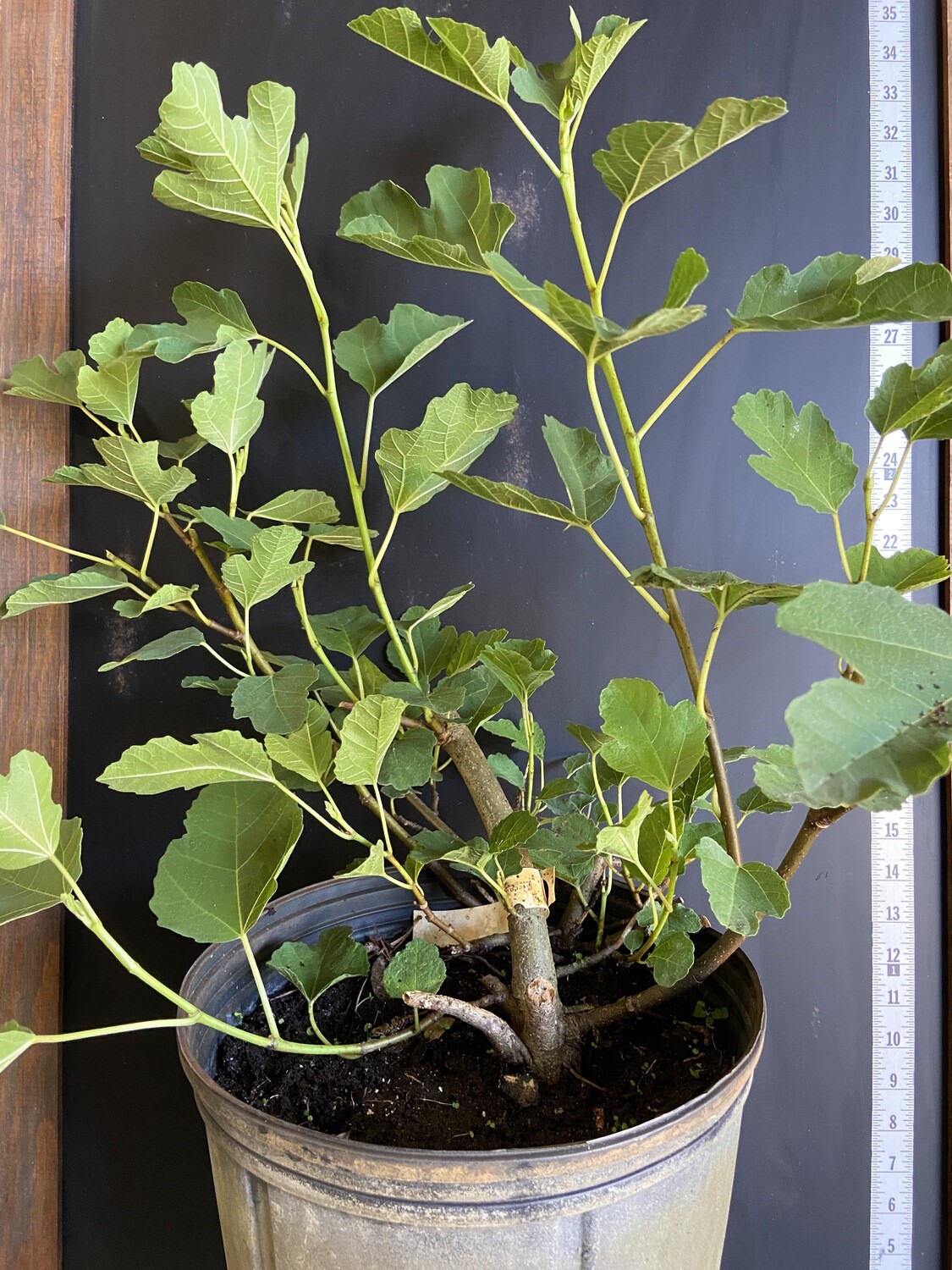
🌿 White Kadota Fig Tree — A Golden Heirloom of Honey & History 🍯✨
Step into the story of one of the world’s most cherished figs — the White Kadota. Beloved for centuries and descended from the Italian Dottato, this sun-loving heirloom has journeyed from Mediterranean orchards to the heart of American gardens.
With its buttery green-yellow skin, amber honeyed flesh, and luscious sweetness, the White Kadota brings a taste of old-world charm to modern backyards. Hardy, productive, and beautifully ornamental, it’s a top choice for both Florida growers and warm-climate gardeners across the U.S.
Whether you dream of fresh figs straight from the tree, homemade preserves, or a graceful fruiting accent in your landscape — the White Kadota delivers beauty, bounty, and history in one remarkable package. 🌳💛
🌱 Quick Facts (at a glance)
| Category | Details |
|---|---|
| Botanical Name | Ficus carica ‘Kadota’ (honey-type fig) |
| Plant Type | Deciduous fruit tree |
| Sale Size | Ships in 3-gallon container |
| Mature Size | 15–25 ft unpruned; easily kept 8–12 ft with annual pruning |
| USDA Zones | 7–10 (root-hardy into sheltered 6 with heavy protection) |
| Sun Requirements | Full sun (6–8+ hrs) for best sweetness and yield |
| Cold Hardiness | Mature wood tolerates roughly 15–20°F; protect young plants from frost |
| Growth Habit | Rounded canopy; trains well as a multi-stem bush for easy harvest |
| Spacing | 12–20 ft in-ground (or 7–10 ft if hedged/kept pruned) |
🍈 Fruit & Flavor Highlights
- Skin/Flesh: Green-yellow skin with tender amber flesh
- Flavor Profile: Mild, honey-sweet, low acid
- Fruit Size: Medium; slightly thicker skin—great for canning and drying
- Harvest Window:
- Florida & Gulf South: July–October (breba crop possible where previous-year wood overwinters)
- Warm West/Mediterranean-like climates: Early–late summer, best in long, hot summers
- Fruiting Habit: Self-fruitful (parthenocarpic)—no wasp or cross-pollination needed
🌟 Top Benefits & Uses
- Reliable home harvests in warm, sunny sites
- Culinary versatility: fresh, grilled/roasted, preserves, and drying
- Ornamental appeal: bold, lobed leaves; sculptural winter branching
- Container-friendly: produces well in large pots; manageable size with pruning
🌴 Florida vs. Other Regions: What to Expect
Florida & Humid Southeast
- Heat + Sun = Sweetness. Site in full sun with airflow; mulch wide to conserve moisture.
- Summer leaf issues (fig rust) can cause yellowing/spots and some leaf drop—mostly cosmetic. Trees refoliate quickly.
- Training tip: Grow as a multi-stem bush (6–10 ft). Easier bird netting and quick recovery if tips freeze.
- Soils: In sandy sites, deep mulch + compost improve moisture retention and reduce nematode stress.
Arid West / Mediterranean-type Climates
- Superb sugar development in long, dry summers; fruit holds exceptionally for drying and canning.
- Irrigate deeply but infrequently; avoid constant wetness around roots.
Cooler Summers / Colder Zones (6–7)
- Choose a south-facing heat pocket (walls/driveways reflect warmth).
- Grow in large containers you can roll into a garage/shed after leaf drop.
- Expect later ripening; prioritize maximum sun and season extension.
🪴 Container & (Bright) Indoor Notes
- Pot Size: Start with 18–22 in diameter; up-pot as needed.
- Soil: Well-drained potting mix + compost; avoid heavy, waterlogged media.
- Light/Water: Full sun outdoors; water deeply, then allow the top few inches to dry.
- Wintering: After leaf drop, store in a cool garage/shed; water sparingly (do not let roots go bone-dry).
- Maintenance: Root-prune and refresh media every 2–3 years.
🧑🍳 Kitchen Inspiration
- Fresh: with chèvre or burrata, drizzle of honey
- Roasted/Grilled: with rosemary/thyme, serve alongside meats or salads
- Preserves & Drying: Kadota’s honey sweetness and firmer skin excel in jams and dried fruit
Origin Snapshot
A U.S. standard honey-type fig linked historically to Italy’s ‘Dottato’ lineage. Selected for processing and fresh markets thanks to dependable cropping, mild sweetness, and excellent preserving quality.
🌾 How to Plant & Care (GreenDreams Method)
Where to Plant
- Full sun, well-drained soil; avoid low, wet spots.
- Mulch 2–3" deep (keep mulch off the trunk). Mulch wide in sandy Florida soils.
Planting — “High & Tight”
- Dig a hole only slightly wider than the pot and the same depth.
- Set the root ball ½–1" above grade (never bury the trunk flare).
- Backfill firmly with native soil blended with compost; eliminate air pockets.
- Water to settle; re-mulch.▶️ Tree Planting Video (High & Tight method): https://youtu.be/RRQFY30qdA8?si=rRIcsbLlVAVYotfI
Watering
- Establishment: Daily light irrigations for 1–2 weeks (weather-dependent), then 2–3×/week through the first season.
- Mature/Container: Deep, infrequent soak; allow top few inches to dry between waterings.
Feeding
- In-ground: Split, light organic feedings spring → early summer. Avoid heavy late-summer nitrogen.
- Containers: Balanced organic fertilizer at label rates during active growth.
Pruning
- Dormant season (winter): open the canopy; remove dead/diseased/crossing wood; head back long shoots to keep 8–12 ft.
- For a breba (early) crop, leave some previous-year shoots.
- In Florida, maintain multi-stem bush form for quick recovery and simple netting.
Winter Maintenance (Florida & Similar Climates)
- North/Central FL: Protect young trees on hard-freeze nights (frost cloth). Heavier mulch on root zone.
- Expect some tip dieback after severe cold—bush-form figs rebound readily in spring.
🛡️ Troubleshooting & Organic Care
Leaf Yellowing/Spots (Fig Rust)
- Common in humid summers; often cosmetic. Improve airflow, avoid overhead watering, and remove fallen leaves.
Souring/Splitting in Heavy Rains
- Harvest promptly at ripeness; ensure drainage; consistent watering reduces swings.
Root-Knot Nematodes (Sandy Soils)
- Use wide wood-chip mulch and compost; consider container culture if nematodes are severe.
Wildlife (Birds/Squirrels)
- Netting works best on bush-form trees; pick daily when fruit colors and softens.
General Organic Best Practices
- Mulch wide, prune for airflow, build soil with compost, and maintain steady moisture (no soggy feet).
❓ FAQ
Do Kadota figs need a pollinator or fig wasp?
No—Kadota is a common, self-fruitful fig (parthenocarpic).
Will my tree lose its leaves?
Yes—deciduous. Expect fall yellowing and leaf drop; new growth flushes in spring.
How small can I keep it?
With annual winter pruning, 8–12 ft is easy. Also excellent in large containers.
What’s the typical Florida harvest window?
July–October is common (earlier/later depending on microclimate). In many areas, a small early breba crop is possible.
Can I grow it in zone 6?
With wind protection, heat pockets, and/or container culture moved to shelter after leaf drop, yes—expect a shorter, later season.
🌿 GreenDreams Fig Variety Comparison Table
| Variety | Fruit Color / Flesh | Flavor Profile | Humidity & Rain Resistance | Cold Hardiness (°F) | Growth Habit / Size | Notable Strengths & Best Uses |
|---|---|---|---|---|---|---|
| Alma | Light brown / Amber | Honey-sweet with caramel notes | ⭐⭐⭐ Good | ~10–15 °F | Compact 8–12 ft | Early bearing; rich flavor; great for preserves |
| Beers Black | Dark purple / Red | Jammy, balanced sweet-tart | ⭐⭐ Moderate | ~15 °F | Upright 12–15 ft | Classic dessert fig; “Black Mission”-type |
| Brown Turkey | Brown / Pink | Mild sweetness, very reliable | ⭐⭐ Fair | ~5–10 °F | 12–20 ft | Cold-hardy, prolific, great starter fig |
| Celeste | Light brown / Rose | Sugar-sweet, small fruit | ⭐⭐⭐ Good | ~10 °F | 8–12 ft | “Sugar Fig” of the South; dependable cropper |
| Deanna | Yellow-green / Amber | Honeyed, mild, large fruit | ⭐⭐ Fair | ~15 °F | 10–15 ft | Big, showy fruit; excellent fresh eating |
| 🌿 Di Redo | Dark purple-black / Red | Raspberry-jam, berry-sweet, syrupy | ⭐⭐⭐⭐ Excellent (tight eye) | ~10–15 °F | 8–15 ft | Top flavor & humidity resistance — Florida favorite |
| Fignomenal | Violet / Pink | Rich, sugary-sweet | ⭐⭐⭐ Good | ~20 °F | Miniature 2–3 ft | Perfect patio & balcony fig; fruits year-round in warm zones |
| Green Egg | Light green / Pink | Custard-sweet, tropical notes | ⭐⭐ Fair | ~15 °F | 10–15 ft | Unique flavor; ornamental appeal |
| Ischia (Green) | Green / Strawberry-red | Sweet-berry, tangy | ⭐⭐ Moderate | ~15 °F | 8–12 ft | Historic Italian variety; container friendly |
| Little Ruby | Red-purple / Ruby | Very sweet, sugar-dense | ⭐⭐⭐ Good | ~15 °F | Dwarf 3–4 ft | Excellent container fig; heavy producer |
| LSU Purple | Deep purple / Amber | Light berry-sweet | ⭐⭐⭐⭐ Excellent | ~15 °F | 10–15 ft | LSU-bred for Gulf humidity; consistent yields |
| 🌳 Olympian | Purple-bronze / Rose | Honey-sweet, juicy, tangerine-sized fruit | ⭐⭐⭐ Good | Below 0 °F | Compact 4–8 ft | Unrivaled cold tolerance + giant fruit |
| White Kadota | Pale green / Amber | Honeyed, chewy, mild | ⭐⭐ Moderate | ~15 °F | 10–15 ft | Classic drying fig; dense, flavorful flesh |
| White Marseilles | Green-yellow / Pale amber | Mild-sweet, delicate | ⭐⭐ Fair | ~0 °F | 10–12 ft | Thomas Jefferson’s heirloom favorite |
| White Texas Everbearing | Green-yellow / Pink | Very sweet, long-season crop | ⭐⭐⭐ Good | ~10 °F | 8–12 ft | Long fruiting season in warm zones |
| Yellow Long Neck | Golden-yellow / Amber | Honey-vanilla, very mild | ⭐⭐ Fair | ~15 °F | 12–18 ft | Showy dessert-style fruit for fresh eating |
🌞 Regional Growing Insights
Florida & Gulf Growers (Zones 8–10):
- Top performers for heat + humidity: Di Redo, LSU Purple, Celeste, and White Kadota.
- Mulch deeply, maintain airflow, and prune annually for balance and vigor.
Cooler Regions (Zones 6–7 and beyond):
- Best cold-tolerant choices: Olympian, Brown Turkey, Celeste, and White Marseilles.
- In borderline zones, grow figs as multi-stem shrubs or in large containers moved to shelter after leaf drop.
⚠️ Cautions
- Latex sap may irritate skin—use gloves when pruning/harvesting.
- Ripe fruit attracts wildlife; plan for netting or frequent harvests.
✅ Is This Plant Right for You?
Ideal for:
Florida and warm-zone gardeners (7–10) with full sun, home preservers/dryers, and container growers who want a reliable, self-fruitful fig.
Not ideal for:
Shady sites, persistently soggy soils, or very cool-summer climates seeking peak sweetness without extra heat or season extension.
🚚 Shipping & Pickup
Shipping (4" & 1-gallon best practice):
Plants in 4" and 1-gallon containers ship best to Florida, the Southeast & Texas. We can ship nationwide, but plants going to the North & West may need extra recovery after transit. Buyer discretion is advised during peak heat or cold; we are not responsible for temperature damage during transit. We ship Mondays via UPS Ground from Florida.
Local Pickup (larger sizes seasonally available):
GreenDreams Nursery & Farm
18709 Hwy. 41, Spring Hill, FL 34610
Open to the public: Tues–Fri 9 AM–5 PM | Sat 8 AM–3 PM
🌿 Beyond the Plant: GreenDreams Services
We do more than sell plants—we design, build, and restore edible ecosystems across Florida.
- 🌳 Onsite consultations & edible landscape design
- 🚜 Installation & project management
- 🚚 Bulk delivery of compost, mulch, biochar, and soil materials
- 🤝 Wholesale & large-scale regenerative solutions
Let our team help you create your own thriving edible paradise—starting with figs! 🌿
🌿 IMPORTANT INFORMATION BEFORE PURCHASING LIVE PLANTS
Please note: Plants purchased through our online store are not available for pickup at our retail nursery in Spring Hill, Florida.
Online inventory is housed at a separate facility and is priced, prepared, and handled exclusively for shipping.
🌱 Looking for larger plants or more selection?
Our retail nursery location offers far more availability, including larger sizes, specialty plants, and many selections not suitable for nationwide shipping.
Local pickup is available for retail nursery purchases only.
Visit our Spring Hill, FL retail nursery page to explore in-person shopping options.
🚚 LIVE PLANT SHIPPING & TRANSIT EXPECTATIONS
Live plants naturally experience stress during shipping. Temporary leaf drop, mild wilting, or cosmetic stress is normal after transit. Most plants recover quickly with proper watering, gradual light exposure, and basic aftercare. Some plants may require additional attention during the first few weeks.
Despite careful packing, minor cosmetic damage may occur during transit. Small issues such as broken leaves or stems typically resolve with time and proper care.
If your shipping box arrives with significant external damage, please contact UPS within 30 days to initiate a carrier claim.
⏱️ SHIPPING METHOD, TIMING & TRANSIT WINDOWS
All online orders ship via UPS Ground from our Central Florida nursery.
📦 Shipping Schedule: Orders ship once weekly on Mondays to reduce the risk of packages sitting in transit over weekends. A countdown clock on our website displays the next shipping date.
🚚 Typical Transit Times:
-
Florida: 1–2 days
-
Southern U.S.: approximately 2 days
-
Midwest, West & Northern U.S.: 3–5 business days
Long-distance shipments, particularly to the western U.S., may experience additional transit time due to agricultural inspections in states such as Arizona, California, and Texas.
Extended transit times can be more challenging for small or tender plants and may require additional recovery care after arrival.
🌡️ EXTREME WEATHER & SEASONAL RISK
Live plants are sensitive to temperature extremes.
We cannot guarantee plant condition during periods of extreme summer heat or winter cold and freezing temperatures. Weather-related delays, carrier interruptions, or exposure during delivery are beyond our control.
Customers are responsible for:
-
Monitoring tracking information sent via email
-
Retrieving packages promptly upon delivery
-
Preventing plants from being left outdoors in extreme conditions
During unsafe weather, holiday shipping volume, or extended transit risk, orders may be held and shipped the following week to protect plant health.
⚠️ CUSTOMER RESPONSIBILITY & REFUND POLICY
By purchasing live plants, customers acknowledge and accept the risks associated with shipping, weather exposure, transit delays, and regional suitability.
Refunds or replacements are considered only under exceptional circumstances and in accordance with our return and refund policy. We are not responsible for:
-
Weather-related damage
-
Carrier delays
-
Poor plant selection for a given climate or region
-
Improper care after delivery
Upon purchase, customers assume full responsibility for the ongoing care and success of their plants.
✅ CONSENT & AGREEMENT
By completing a purchase, you confirm that you have read, understand, and agree to all shipping policies, responsibilities, and conditions outlined above.
Our goal is transparency, plant health, and long-term growing success — and we appreciate your understanding and care when ordering live plants.


