


🌿 Zill’s Black Surinam Cherry — Grafted Dark-Fruited Pitanga
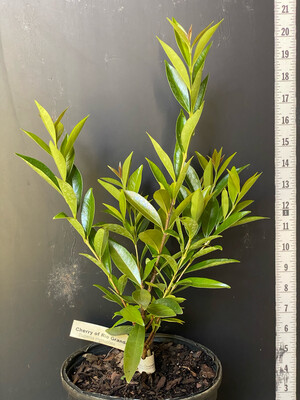
Eugenia uniflora ‘Zill Dark’ | 1-Gallon Live Fruit Tree
Dark, juicy, wildly underrated — this is the pitanga for people who thought they didn’t like pitanga.
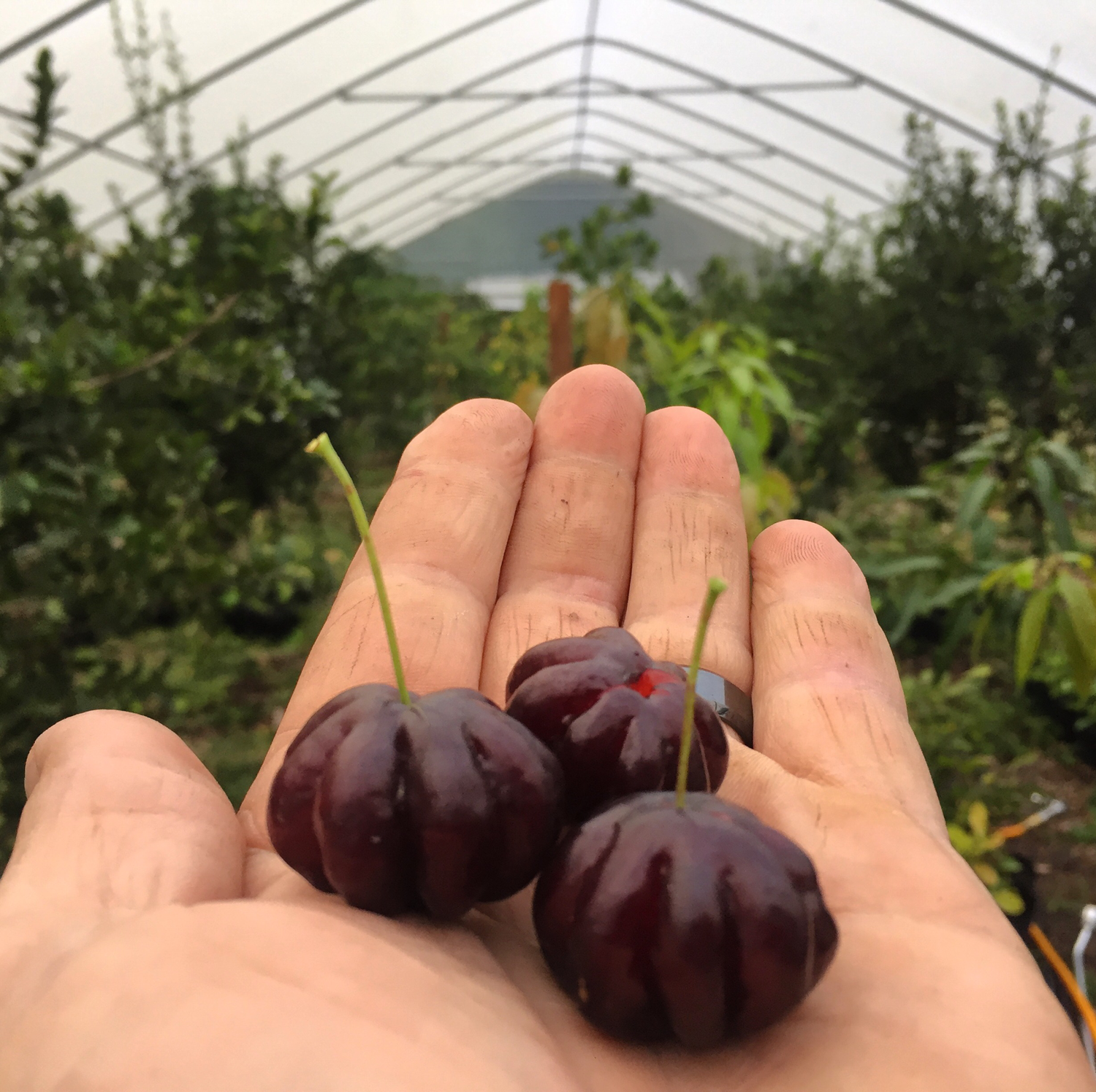
Zill’s Black Surinam Cherry, more accurately documented as ‘Zill Dark,’ is a superior dark-fruited selection of Eugenia uniflora prized for intensely colored fruit with a sweeter, richer flavor and noticeably less of the resinous character associated with many common red Surinam cherries.
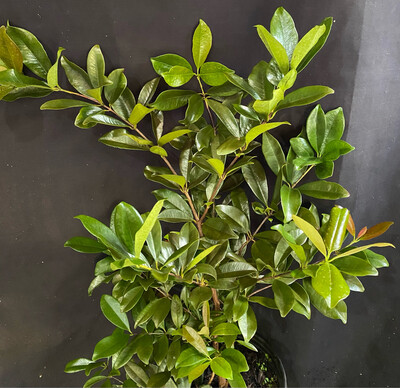
The fruit ripens through red and burgundy into a deep purple-black or blackish-red, while the plant itself delivers glossy evergreen foliage, coppery-red new growth, fragrant white flowers, and impressive edible-landscape potential.
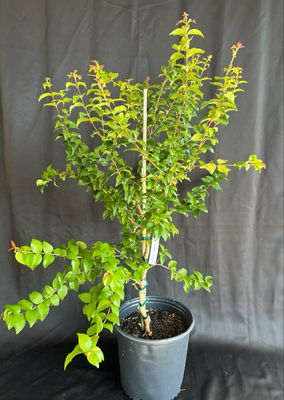
And because our plants are grafted, you are growing a known cultivar rather than rolling the genetic dice with a seedling.
If your idea of an edible landscape includes plants that look good enough for the front yard and produce fruit you actually want to eat, this one gets it.
🌿 Quick Facts — Zill’s Black Surinam Cherry
| Feature | Details |
|---|---|
| Botanical Name | Eugenia uniflora ‘Zill Dark’ |
| Common / Trade Name | Zill’s Black Surinam Cherry, Zill Dark Pitanga |
| Family | Myrtaceae |
| Plant Type | Evergreen subtropical fruiting shrub / small tree |
| Propagation | Grafted |
| Sale Size | 1-gallon nursery container |
| Estimated Age | Commonly approximately 1–2+ years in nursery production; exact age varies with rootstock and grafting cycle |
| Mature Height | Commonly 8–20 ft.; older specimens can exceed 20–25 ft. in favorable climates |
| Maintained Height | Easily managed around 6–10 ft. with regular pruning |
| Mature Width | Approximately 6–15 ft. |
| USDA Zones | 9b–11 for dependable outdoor landscape culture |
| Zone 8 | Best treated as a protected container specimen or given substantial winter protection |
| Sun | Full sun for best fruiting; tolerates partial sun |
| Growth Rate | Moderate; vigorous once established |
| Growth Habit | Dense, multibranched shrub or small tree |
| Evergreen? | Yes in suitable climates; cold or drought stress can cause temporary leaf drop |
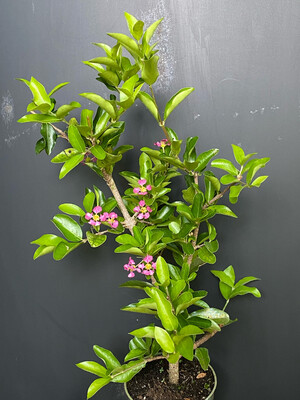
| Flower Color | Small, fragrant white flowers with prominent stamens |
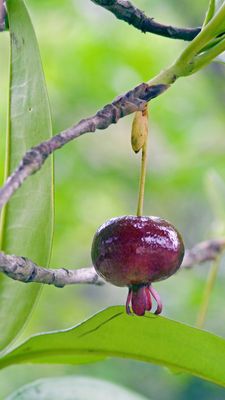
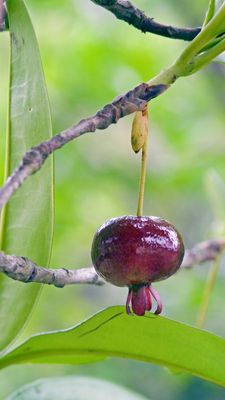
| Fruit Color | Red → burgundy → very dark purple / blackish-red when fully ripe |
| Fruit Size | Commonly around 1 inch, with some fruit approaching 1½ inches |
| Fruit Shape | Distinctively ribbed, almost like a tiny pumpkin |
| Seeds | Usually 1–3 |
| Pollination | Self-compatible; bees and cross-pollination can improve fruit set |
| Florida Harvest | Major spring crop, often March/April through May/June, with a possible second crop in fall |
| Soil | Adaptable, but performs best in fertile, rapidly draining soil |
| Drought Tolerance | Moderate once established |
| Salt Tolerance | Poor; avoid saline soils and exposed salt spray |
| Spacing — Specimen/Fruit Tree | Approximately 8–12 ft. depending on desired mature size |
| Spacing — Managed Hedge | Approximately 3–5 ft. |
| Container Friendly | Yes |
| Permanent Indoor Plant? | Possible to overwinter indoors, but not ideal as a conventional low-light houseplant |
🍒 Why Zill’s Black? The Fruit Is the Main Event
There are Surinam cherries you tolerate because the shrub is attractive.
Then there are Surinam cherries you grow because you want the fruit.
Dark-fruited pitangas are widely recognized for tending toward higher sweetness and lower resinous flavor than the common orange-red forms. ‘Zill Dark’ was important enough as a selected Florida cultivar to be used in horticultural research and breeding work.
🍷 Flavor Profile
Expect a fruit that is:
- Sweet and juicy
- Pleasantly tart rather than sharply acidic
- Richer and more complex than many standard red seedlings
- Fruity with cherry-, plum-, and tropical-guava-like notes
- Mildly aromatic and spicy
- Significantly less resin-forward when allowed to become completely ripe
The biggest flavor secret?
Do not pick it too early.
A Surinam cherry that still resists your fingers is usually not ready.
For the sweetest flavor and least resin character, allow the fruit to become fully dark and soft enough that it releases from the plant with almost no resistance.
🍒 What Does the Fruit Look Like?
One of the coolest fruits in the edible landscape.
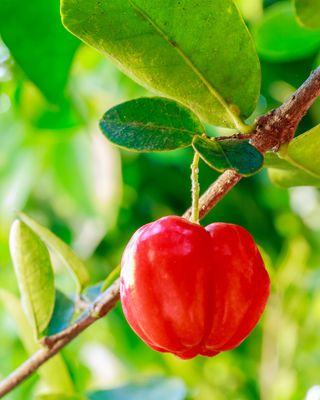
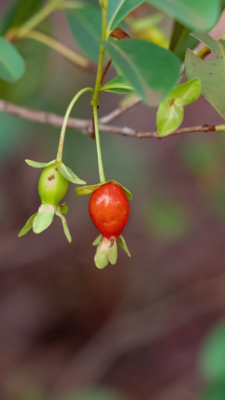
The small berry is prominently divided by 7–8 deep ribs, giving it the appearance of a miniature pumpkin.
As it ripens:
Green → yellow/orange → red → burgundy → deep purple-black
‘Zill Dark’ is better described as very dark purple or blackish-red than a true jet-black fruit.
Inside, the flesh is juicy and soft with typically one large seed or two to three smaller seeds.
The skin is thin, which is fantastic for fresh eating but one reason Surinam cherries are rarely found in conventional supermarkets.
They are a grow-it-yourself fruit in the truest sense.
🍽️ Grow Something You Can Actually Use
Surinam cherry is at its best when harvested directly from the tree and eaten immediately.
Fresh Eating
Let the darkest fruit become fully ripe, gently harvest, remove the seed, and eat the juicy pulp fresh.
Preserves
Heavy crops can become:
- Jam
- Jelly
- Fruit preserves
- Syrup
- Compote
Drinks
The juicy fruit works beautifully in:
- Fresh juice
- Lemonade-style drinks
- Smoothies
- Mocktails
- Fruit shrubs
- Frozen drinks
Desserts
Try ripe pitanga in:
- Sorbet
- Ice cream
- Yogurt
- Cheesecake toppings
- Fruit sauces
- Pies and tarts
- Tropical fruit salads
Savory Kitchen Uses
Its sweet-acid balance also works with:
- Chutneys
- Hot sauces
- Glazes
- Vinaigrettes
- Fruit salsas
- Sauces served alongside grilled foods
🍯 Easy Harvest Idea: Pitanga Freezer Pulp
When the crop comes in faster than you can eat it:
- Harvest only fully ripe fruit.
- Wash gently.
- Remove the seeds.
- Crush or blend the pulp.
- Freeze in small portions or ice-cube trays.
Now you have pitanga ready for smoothies, sauces, drinks, preserves, and desserts long after the fresh harvest ends.
🌸 Fruiting Habits & How to Improve Production
Surinam cherry flowers are self-compatible, meaning a single tree can produce fruit.
However, scientific pollination studies have shown that Eugenia uniflora can produce a higher fruit set from cross-pollination than from self-pollination. Bees are among its most important floral visitors.
For Better Crops
- Give the plant full sun whenever possible
- Maintain consistent moisture while flowering and developing fruit
- Avoid letting a container dry completely during fruit development
- Encourage bees and other beneficial insects
- Avoid spraying flowers with pesticides
- Maintain a diverse pollinator garden nearby
- Keep the canopy open enough for light and airflow
- Use moderate nutrition rather than excessive nitrogen
A second genetically different Surinam cherry nearby is not required, but additional flowering plants may improve pollination activity and can potentially improve fruit set.
📅 Florida Harvest Calendar
| Season | What to Expect |
|---|---|
| Late Winter–Early Spring | New growth and flower production may begin as temperatures rise |
| Spring | Primary flowering and fruiting season |
| March–June | Common Florida window for the major crop, varying by weather and location |
| Summer | Vegetative growth; irrigation becomes important during prolonged dry weather |
| Fall | A second flowering/fruiting cycle is possible, especially following seasonal rainfall |
| September–November | Secondary crops may occur in favorable Florida conditions |
| Winter | Growth slows during cool weather; young plants require frost protection in colder areas |
🟣 Dark vs. Red Surinam Cherry
| Characteristic | ‘Zill Dark’ / Zill’s Black | Typical Red Seedling |
|---|---|---|
| Fruit Color | Deep burgundy to purple-black | Orange-red to bright red |
| Sweetness | Generally sweeter | Highly variable |
| Resinous Flavor | Usually reduced | Can be pronounced |
| Flavor Consistency | Known grafted selection | Seedling genetics vary |
| Propagation | Grafted to preserve cultivar | Commonly seed-grown |
| Appearance | Dramatic dark fruit | Bright red-orange fruit |
| Best For | Fruit-focused collectors | Hedging, seedlings, general landscape use |
Why grafting matters: seedlings do not guarantee that the fruit will taste like the parent tree. A grafted cultivar preserves the genetics of a selected fruiting plant.
🌱 More Than Fruit — An Ornamental Edible
Even without the harvest, Eugenia uniflora has serious landscape appeal.
Fresh foliage often emerges in bronze, burgundy, copper, or reddish tones before maturing to glossy green.
Then come delicate white flowers loaded with stamens.
Then the tiny pumpkin-shaped fruit.
The bark can develop a thin, attractive, peeling texture as the plant ages.
Landscape Forms
With pruning, it can be maintained as:
- A compact fruiting shrub
- An edible screen
- A clipped hedge
- A multistemmed specimen
- A small single-trunk fruit tree
- A patio container plant
For home fruit production, we prefer giving a grafted specimen enough space to develop naturally rather than repeatedly shearing it into a tight ornamental hedge.
🌎 From South America to the Florida Fruit-Collector Scene
Eugenia uniflora is native from eastern and southern Brazil into other portions of southern South America, including areas of Argentina, Paraguay, Uruguay, and Bolivia.
The fruit is widely known as pitanga in Brazil.
The species traveled throughout tropical and subtropical regions of the world and eventually became a familiar Florida landscape shrub — although many of those old plants were selected for hedging rather than eating quality.
That is where superior dark selections become interesting.
🌿 The ‘Zill Dark’ Story
The cultivar sold in parts of the nursery trade as Zill’s Black is documented horticulturally as ‘Zill Dark.’
Historical accounts from Florida tropical-fruit circles report that Dorothy Zill recognized the plant as worth saving when older Surinam cherry trees at the former Zill nursery property were being removed.
The selected tree was preserved and circulated as ‘Zill Dark.’
The cultivar subsequently became more than a collector curiosity: researchers used ‘Zill Dark’ as breeding material in work studying purple-fruited Surinam cherries.
So there is a real horticultural story behind this fruit — just a slightly different one from the “black cherry” name that eventually followed it into the nursery trade.
🌿 Traditional Uses
Leaves of Eugenia uniflora have a long history of use in South American folk traditions, particularly in Brazil and Suriname.
Traditional leaf preparations have been reported for a variety of purposes, but these uses are ethnobotanical history rather than medical recommendations.
For the home grower, our primary reason for selecting ‘Zill Dark’ remains much simpler:
Grow it for the fruit. Eat it when it is dark, soft, and perfectly ripe.
🌱 How to Grow Zill’s Black Surinam Cherry
Planting & Care for Eugenia uniflora ‘Zill Dark’
One reason Surinam cherry became so widespread is its adaptability.
But surviving and producing exceptional fruit are not the same thing.
For the healthiest grafted tree and best-tasting crops, focus on sun, drainage, consistent moisture during production, organic soil-building, and thoughtful pruning.
☀️ Where to Plant Zill’s Black Surinam Cherry
Best Location
Choose a site with:
- Full sun, ideally 6+ hours per day
- Excellent drainage
- Good airflow
- Easy access for harvesting
- Space to maintain the plant at your preferred size
- Protection from harsh salt spray
- Protection from the coldest north/northwest winter winds in marginal climates
Partial sun is tolerated, but fruit production generally improves with more light.
Avoid
- Standing water
- Low landscape depressions
- Constantly saturated soil
- Heavy shade
- Direct oceanfront salt exposure
- Areas where ripe fruit and seedlings could spread into natural habitat
- Planting beneath the dripline of aggressive mature trees where roots compete heavily for moisture
🌿 First Rule After Shipping: Don’t Transplant Immediately
Your plant has just experienced darkness, movement, vibration, changing temperatures, and a completely different humidity environment during transportation.
Give it time.
Keep the plant in its current nursery container for approximately 30 days — or until you see healthy new growth — before transplanting whenever possible.
Place it in bright but protected conditions initially and gradually acclimate it to its permanent sun exposure.
Transplant once:
- Shipping stress has passed
- The foliage appears stable
- New growth is emerging
- The root system is beginning to fill its current container
A larger pot does not automatically mean faster growth. Moving a small root system into a huge volume of wet soil can actually increase root problems.
🌳 GreenDreams “High & Tight” Planting Method
We prefer fruit trees planted high rather than buried too deeply.
In-Ground Planting
- Dig a hole only slightly wider than the nursery container.
- Keep the planting depth at approximately the same level as the existing root ball.
- In poorly draining conditions, position the root ball slightly high rather than creating a basin.
- Remove the container carefully without tearing apart healthy roots unnecessarily.
- Set the tree upright.
- Backfill with native soil and/or appropriate compost without burying the trunk.
- Firm the soil gently enough to eliminate major air pockets.
- Water thoroughly at the soil level.
- Top-dress rather than burying concentrated amendments in direct contact with roots.
- Apply hardwood mulch over the surrounding root zone while keeping mulch several inches away from the trunk.
Our planting approach is designed to protect the root crown and prevent one of the most common causes of fruit-tree decline:
Planting too deep.
GreenDreams fruit-tree planting tutorial:
High & Tight Fruit Tree Planting Method
💧 Watering Zill’s Black Surinam Cherry
Surinam cherry becomes moderately drought tolerant once established, but consistent moisture improves growth and fruit development.
Golden Rule
Water the soil — not the leaves.
We do not recommend overhead watering for routine irrigation.
Morning irrigation at the soil line or drip irrigation:
- Delivers moisture where roots need it
- Reduces unnecessary leaf wetness
- Reduces splash from soil onto foliage
- Limits fungal pressure
- Prevents afternoon heat + wet foliage issues
- Wastes less water
Newly Planted in the Ground
First 1–2 weeks:
Check daily. Water deeply as needed based on rainfall, temperature, and soil drainage.
Weeks 3–8:
Gradually move toward approximately 2–3 deep waterings per week when rainfall is insufficient.
Established plant:
Water deeply during prolonged dry periods. During flowering and fruit development, avoid severe cycles of drought followed by flooding.
Florida Dry Season
Even established plants can benefit from regular irrigation during extended dry weather, especially while carrying fruit.
Florida Rainy Season
Often the bigger concern is too much water.
If the ground remains saturated after rain, correct drainage rather than simply reducing irrigation.
🪴 Watering While Still in the Nursery Pot
Small nursery containers can dry surprisingly fast.
During warm Florida weather, check the plant every day.
That does not mean automatically flooding it daily.
Insert a finger into the upper soil profile or learn the weight of the container:
- Light pot + dry upper soil = water
- Heavy pot + saturated mix = wait
- Wilted plant + dry mix = water promptly
- Wilted plant + wet mix = investigate root/drainage stress
Water slowly at soil level until the entire root ball has been hydrated and excess water drains from the container.
🌾 Soil & Organic Nutrition
Eugenia uniflora adapts to a surprisingly broad range of soils, but fruit production is best where roots receive oxygen, moisture, organic matter, and balanced fertility.
We Prefer
- Living soil
- Compost
- Finished organic matter
- Hardwood mulch
- Biochar when appropriately charged/blended
- Worm castings
- Slow-release organic nutrients
- Trace-mineral amendments when indicated by soil conditions
Avoid burying strong fertilizers directly against a newly transplanted root ball.
Fertilizing
For actively growing young trees:
- Feed lightly during the warm growing season
- Use a balanced organic fruit-tree fertilizer according to label rates
- Top-dress compost around the active root zone
- Reduce heavy nitrogen applications late in the year
- Avoid fertilizing a severely stressed, wilted, frozen, or freshly shipped plant
More fertilizer is not automatically better.
Excess nitrogen can produce lush foliage at the expense of balanced flowering and fruiting.
🪵 Mulch: Feed the Soil While Protecting the Roots
A generous organic mulch zone helps:
- Moderate soil temperature
- Reduce evaporation
- Suppress weeds
- Protect soil organisms
- Add carbon as material decomposes
- Improve long-term soil structure
We prefer hardwood mulch and other arborist-type woody materials for ecological landscapes.
Maintain approximately 2–4 inches where appropriate, but never pile mulch against the trunk.
Think:
Donut, not volcano.
✂️ Pruning & Size Control
Surinam cherry handles pruning well and has historically been used as a clipped hedge.
For fruit production, though, constant shearing is usually not the goal.
Young Tree
Focus on:
- Removing damaged branches
- Selecting a desirable framework
- Preventing badly crossing limbs
- Maintaining multiple strong branches if growing as a shrub
- Selecting a trunk if training into a small tree
Established Fruiting Plant
After harvest:
- Reduce excessive height
- Thin congested interior branches
- Remove dead or damaged wood
- Shorten overly long shoots
- Maintain harvestable size
A maintained height of roughly 6–10 feet makes harvesting dramatically easier than allowing the plant to reach full potential.
Avoid drastic pruning immediately before flowering if fruit production is your priority.
🌸 Florida Seasonal Care Guide
| Season | What the Plant Is Doing | GreenDreams Care |
|---|---|---|
| Winter | Growth slows; cold stress possible | Protect young plants from frost, reduce irrigation during cool/wet weather, avoid heavy fertilizer |
| Late Winter | Bud activity may increase | Inspect structure, make selective pruning cuts before major growth if needed |
| Spring | Strong growth, flowering, primary crop | Maintain moisture, encourage pollinators, begin warm-season nutrition |
| Early Summer | Fruit finishing + vegetative growth | Harvest frequently, mulch, maintain irrigation |
| Summer Rainy Season | Rapid growth | Monitor drainage, scale, caterpillars and fungal symptoms |
| Late Summer | Vegetative growth may continue | Light shaping if required; avoid unnecessary hard pruning |
| Fall | Possible second bloom and crop | Maintain pollinator habitat and consistent moisture |
| Late Fall | Growth begins slowing | Stop pushing tender growth with heavy nitrogen; prepare frost protection in colder locations |
🍂 Is Surinam Cherry Deciduous?
No.
Eugenia uniflora is evergreen in its normal subtropical and tropical range.
That said, evergreen does not mean the plant will never drop leaves.
Temporary leaf loss can occur from:
- Shipping stress
- Drought
- Cold
- Frost
- Root disturbance
- Sudden changes in sun exposure
- Overwatering
New leaves often emerge with dramatic red, bronze, or copper coloration, so a flush of colorful foliage is normally a sign of active new growth — not disease.
❄️ Winter Care & Cold Protection
For reliable landscape culture, we recommend treating this as a Zone 9b–11 plant.
Young grafted trees deserve additional protection because small trunks and root systems have less stored energy than established specimens.
Before Frost
- Water the root zone earlier in the day if soil is dry
- Maintain mulch over the root zone
- Move containers into a sheltered location
- Protect from north winds
- Cover the plant with frost cloth extending toward the ground
- Do not allow plastic to sit directly on foliage
After Cold Damage
Do not immediately assume brown foliage means the plant is dead.
Wait until warm weather returns and new growth reveals which branches are alive.
Then prune dead material back to living tissue.
Important for Grafted Trees
If severe cold kills the plant below the graft union, growth emerging from the rootstock will not be genetically identical to ‘Zill Dark.’
Inspect the graft before deciding what to retain.
🌬️ Wind & Salt
Surinam cherry develops a dense, branching canopy and established plants generally tolerate normal garden wind exposure reasonably well.
However:
- Protect newly planted trees from strong wind while roots establish
- Secure unstable container plants before storms
- Prune dense canopies intelligently rather than creating a top-heavy plant
- Avoid highly exposed salt-spray sites
UF/IFAS characterizes Eugenia uniflora as having poor soil-salt tolerance.
For coastal growers, place it inland from direct salt exposure whenever possible.
🪴 Growing Zill’s Black Surinam Cherry in Containers
This is an excellent candidate for long-term container culture.
Pot Progression
Rather than jumping directly into an oversized container:
4-inch → 1 gallon → 3 gallon → 7 gallon → 10/15+ gallon
Move upward once roots are filling the current container and the plant is actively growing.
For Your 1-Gallon Plant
A healthy next step is usually a 3-gallon container, rather than moving immediately into something enormous.
From there, graduate into larger sizes as roots fill each pot.
Potting Mix
Use a high-quality, moisture-retentive but freely draining subtropical fruit-tree mix.
Look for mixes built around ingredients such as:
- Aged pine bark
- Coco coir and/or peat
- Perlite, pumice, or similar aeration material
- Finished compost in moderate amounts
Avoid:
- Heavy garden soil
- Straight compost
- Containers without drainage holes
- Mixes that remain swampy for days after watering
You can find nursery containers and professional potting materials through local landscape suppliers, independent garden centers, hydroponic suppliers, agricultural stores, or online horticultural suppliers.
Search by nursery container gallon size, not ordinary household planter dimensions.
🌞 Container Placement
Outdoor container plants perform best with strong light.
If your plant arrives accustomed to filtered nursery conditions, transition it gradually:
Bright shade → morning sun → increasing direct sun → permanent exposure
Moving immediately from a shipping box into intense all-day summer sun can scorch tender leaves.
🏠 Can Surinam Cherry Grow Indoors?
Technically, yes.
Realistically, this is not a low-light houseplant.
Indoor plants need:
- An exceptionally bright south-facing window or greenhouse
- Strong supplemental grow lighting when natural light is inadequate
- Air circulation
- Careful watering
- Adequate humidity without constantly wet foliage
- Pollinator assistance or hand pollination if flowering indoors
The better strategy in cold climates is usually:
Grow outdoors during the warm season and overwinter in a bright protected space.
A greenhouse, sunroom, enclosed patio, or very bright indoor location works better than a conventional living room.
🐝 Build a Mini Food-Forest Guild Around It
A productive fruit tree does not have to stand alone.
Around Zill’s Black Surinam Cherry, consider plants that perform jobs.
| Guild Function | Plants to Consider | Why |
|---|---|---|
| Pollinator Support | Mexican sunflower, flowering herbs, native flowering species | Keeps beneficial insects active near flowers |
| Groundcover | Sunshine mimosa or suitable low native groundcovers | Covers soil and supports insect habitat |
| Biomass | Mexican sunflower + clumping grasses | Produces chop-and-drop organic matter |
| Nitrogen Support | Pigeon pea or other appropriate legumes | Adds diversity and biomass |
| Border / Pest-Diverse Planting | Society garlic and aromatic herbs | Adds flowering diversity and usable understory |
| Carbon & Root Structure | Clumping grasses | Produces mulch material and protects soil |
Keep vigorous support plants far enough from the trunk that they do not smother or heavily compete with a young tree.
The goal is not to pack every square inch with plants on day one.
The goal is to build layers that support one another as the system matures.
⚠️ Important Florida Note: Responsible Growing
Surinam cherry has a complicated relationship with Florida.
While it has been grown here for generations as an edible and ornamental plant, UF/IFAS currently classifies Eugenia uniflora as invasive in South Florida and as a species of caution in Central and North Florida.
South Florida
UF/IFAS recommends against planting Surinam cherry because birds and other animals can distribute the seeds into natural areas.
Central & North Florida
UF/IFAS advises caution and management to prevent escape.
For customers who already grow or legally purchase the plant in appropriate locations, responsible management includes:
- Harvesting fruit promptly
- Collecting fallen fruit
- Removing volunteer seedlings
- Avoiding planting adjacent to preserves and unmanaged natural areas
- Preventing seed dispersal beyond the cultivated landscape
- Never dumping fruit, seeds, or plant material into wild areas
This is especially important because the same abundant fruiting that makes Surinam cherry useful to a grower can also allow its seeds to spread through wildlife.
⚠️ Other Cautions
Seeds
The juicy fruit pulp is the edible portion. Discard the seeds rather than intentionally eating them.
Fruit Flies
Surinam cherry is a known host of Caribbean fruit fly and other fruit-feeding flies.
Harvest frequently and remove fallen or damaged fruit rather than allowing it to accumulate beneath the plant.
Scale & Caterpillars
UF/IFAS notes scale insects and caterpillars among the occasional pests of Eugenia uniflora.
Pets & Children
As with unfamiliar fruits, teach children to eat only properly identified ripe fruit and to discard the seeds.
Salt
This species has poor salt tolerance and is not a first choice for exposed beachfront landscapes.
🔍 Zill’s Black Surinam Cherry Troubleshooting Guide
Icons represent common issues and organic solutions — look for 🌿 for recovery tips!
| ⚠️ Issue | 🧠 Likely Cause | 🌿 What to Do |
|---|---|---|
| 🍂 Yellow leaves + wet soil | 💦 Overwatering / poor drainage | 🌿 Let soil breathe, improve drainage, reduce irrigation |
| 🫣 Wilt + dry pot | 💧 Underwatering | 🌿 Saturate root ball slowly at soil level |
| ☀️ Brown/scorched leaves after arrival | Sudden sun exposure | 🌿 Re-acclimate gradually from bright shade into full sun |
| 🍃 Leaf drop after shipping | Transit/environmental stress | 🌱 Stabilize moisture and light; wait for new flush |
| ❄️ Brown leaves after frost | Cold injury | 🌿 Wait for warm weather before determining dead wood |
| 🪲 Sticky leaves / bumps on stems | Scale insects | 🌿 Inspect closely; physically remove small populations and use appropriate organic controls |
| 🐛 Chewed foliage | Caterpillars | 🌿 Hand-remove when practical; identify pest before treating |
| 🍒 Wormy or damaged fruit | Fruit flies | 🌿 Harvest promptly and remove fallen/overripe fruit |
| 🍄 Leaf spotting | High moisture / poor airflow / disease pressure | 🌿 Stop overhead irrigation, increase airflow, remove heavily affected debris |
| 🌊 Slow growth + continuously wet soil | Root stress | 🌿 Correct drainage before adding fertilizer |
| 🌸 Flowers but little fruit | Pollination/weather/water stress | 🐝 Encourage pollinators and maintain consistent moisture |
| 🍒 Fruit tastes resinous | Harvested too early | 🌿 Allow fruit to become fully dark and release easily |
| 🌱 Shoots emerging below graft | Rootstock growth | ✂️ Remove shoots below the graft union |
| 🔥 Brown leaf tips after feeding | Excess fertilizer / salts | 🌿 Stop feeding, irrigate appropriately, reassess fertilizer rate |
🌿 Is Zill’s Black Surinam Cherry Right for You?
✅ Ideal For
- Tropical and subtropical fruit collectors
- Growers interested in unusual fruit
- Gardeners who want a compact fruit tree
- People who prefer sweeter dark-fruited pitanga
- Edible-landscape growers
- Permaculture and food-forest gardens where responsible management is appropriate
- Patio growers willing to maintain a larger container
- Growers in Zones 9b–11
- Colder-climate collectors with greenhouse or winter protection
- Gardeners who enjoy fruits rarely available commercially
❌ Probably Not Ideal For
- South Florida landscapes where UF/IFAS recommends against planting the species
- Properties directly bordering sensitive natural habitat
- Growers unwilling to control volunteer seedlings and fallen fruit
- Highly saline or oceanfront landscapes
- Permanently shaded yards
- Landscapes with chronically saturated soil
- Zone 8 and colder growers without winter protection
- Anyone wanting a conventional low-light indoor houseplant
- Growers who want fruit that can be harvested underripe and stored for weeks
❓ Zill’s Black Surinam Cherry FAQ
Is Zill’s Black the same as Zill Dark?
The best-supported cultivar name in horticultural literature is ‘Zill Dark.’ “Zill’s Black” or “Zill Black” is also used in the nursery trade. Historical accounts suggest the “black” wording originated later, while the fruit itself is more accurately very dark purple or blackish-red.
Is Zill’s Black Surinam Cherry sweet?
Yes. Dark-fruited Surinam cherries are generally valued for sweeter fruit and reduced resinous flavor compared with many common red seedlings. Flavor is best when the fruit is allowed to become completely ripe.
When is a Surinam cherry ripe?
Do not judge by redness alone. ‘Zill Dark’ continues developing color through burgundy into deep purple-black. A properly ripe fruit should release very easily from the plant.
Does one Surinam cherry tree produce fruit?
Yes. Eugenia uniflora is self-compatible. One plant can produce fruit, although scientific studies indicate that cross-pollination and good pollinator activity can improve fruit set.
When does Surinam cherry fruit in Florida?
The primary crop generally occurs in spring, commonly from approximately March or April into May or June. A second crop may occur in fall depending on rainfall, temperature, and location.
How big does Zill’s Black Surinam Cherry get?
UF/IFAS lists the species commonly around 8–20 feet tall and 6–15 feet wide, although older plants in favorable conditions may grow larger. Regular pruning can maintain a fruiting specimen around 6–10 feet.
Can Surinam cherry stay small?
Absolutely. It responds very well to pruning and can be maintained as a shrub, hedge, patio tree, or small fruit tree.
Can I grow Zill’s Black Surinam Cherry in a pot?
Yes. Container culture is one of the easiest ways to grow it in areas requiring winter protection. Move up gradually through nursery pot sizes as the root system develops.
Can Surinam cherry grow in partial shade?
Yes, but full sun generally gives stronger flowering and fruit production.
Is Surinam cherry evergreen?
Yes. It is an evergreen subtropical shrub/tree. Temporary leaf drop can occur after drought, cold, shipping, root disturbance, or other environmental stress.
Is Surinam cherry cold hardy?
For dependable landscape culture, treat it as a USDA Zone 9b–11 plant. Mature plants may tolerate brief cold events, but young grafted trees should be protected from frost and freezing temperatures.
Why is my new growth red?
That is one of the plant's ornamental features. New leaves commonly emerge bronze, copper, burgundy, or red before becoming glossy green.
Is Surinam cherry invasive in Florida?
Yes, this requires geographic context. UF/IFAS currently lists it as invasive in South Florida and a species of caution in Central and North Florida. Growers should follow regional recommendations and prevent fruit and seedlings from escaping cultivation.
Are Surinam cherries nutritious?
Pitanga contains vitamin C, carotenoids, flavonoids, phenolics, and other plant compounds. Purple-fruited forms have been studied for their anthocyanin content. These are nutritional characteristics, not claims that the fruit treats or prevents disease.
📦 Shipping Your 1-Gallon Live Plant
Our 1-gallon Zill’s Black Surinam Cherry is best suited for shipping within:
🌴 Florida
🌿 The Southeastern United States
☀️ Texas and nearby warm-region destinations
We do ship live plants throughout the continental United States using UPS Ground, but transit time increases substantially for many northern and western destinations.
Shipping Day
GreenDreams live-plant orders ship every Monday.
This helps reduce the likelihood of plants sitting inside shipping facilities over a weekend.
🌡️ Please Consider Your Weather Before Ordering
Live plants experience conditions inside shipping cartons that are very different from normal nursery conditions.
During periods of:
- Extreme summer heat
- Freezing weather
- Severe cold
- Major storms
- Holiday shipping congestion
- Extended carrier transit
we strongly encourage customers to use discretion before ordering.
Northern & Western United States
Long UPS Ground transit times create additional stress, particularly for smaller plants.
Plants may arrive needing a recovery period before they look nursery-fresh again.
Customers choosing Ground shipping over extended distances assume the additional risk associated with transit time and weather.
California
California-bound plants may also experience additional inspection time, potentially extending the period spent in transit.
Our Recommendation
When larger sizes are available, larger plants generally handle long-distance shipping better than very small nursery stock.
📦 Your Plant Arrived — Now What?
Do not immediately repot a stressed plant.
Instead:
- Unpack promptly.
- Water at the soil level if the root ball needs moisture.
- Place in bright, protected conditions.
- Avoid intense afternoon sun immediately after unpacking.
- Gradually increase sun exposure.
- Keep the plant in its original container while it acclimates.
- Watch for fresh new growth.
Whenever possible, wait approximately 30 days or until healthy new growth appears before transplanting.
Shipping leaf drop does not necessarily indicate root damage or plant failure.
For live plants, new growth is one of the best indicators that recovery is underway.
🏡 Shop With Us in Person
GreenDreams Nursery & Farm — Open to the Public
Our online collection represents only part of what is growing at the nursery.
Visit us in person to explore:
- Larger fruit trees
- Rare tropical and subtropical edibles
- Medicinal and useful plants
- Native species
- Pollinator plants
- Food-forest support plants
- Seasonal selections that may never appear online
🌾 18709 US Hwy. 41, Spring Hill, FL 34610
🕘 Tuesday–Friday: 9AM–5PM
🌞 Saturday: 8AM–3PM
Come walk the nursery, see what is fruiting, and find the plants that make sense for your growing space.
🌿 Inventory changes constantly — sometimes the coolest plants never make it onto the website.
🌿 Beyond the Plant: GreenDreams Services
At GreenDreams, we do more than grow plants — we design, build, and restore productive ecosystems across Florida.
- 🌳 Onsite consultations & edible landscape design
- 🚜 Installation & project management
- 🚚 Bulk delivery of compost, mulch, biochar & soil materials
- 🌾 Wholesale & large-scale regenerative solutions
From one unusual fruit tree to an entire edible landscape, orchard, kitchen garden, or regenerative growing system, our goal is the same:
Build landscapes that produce something — food, habitat, soil, shade, beauty, or preferably all of the above.

🌿 IMPORTANT INFORMATION BEFORE PURCHASING LIVE PLANTS
Please note: Plants purchased through our online store are not available for pickup at our retail nursery in Spring Hill, Florida.
Online inventory is housed at a separate facility and is priced, prepared, and handled exclusively for shipping.
🌱 Looking for larger plants or more selection?
Our retail nursery location offers far more availability, including larger sizes, specialty plants, and many selections not suitable for nationwide shipping.
Local pickup is available for retail nursery purchases only.
Visit our Spring Hill, FL retail nursery page to explore in-person shopping options.
🚚 LIVE PLANT SHIPPING & TRANSIT EXPECTATIONS
Live plants naturally experience stress during shipping. Temporary leaf drop, mild wilting, or cosmetic stress is normal after transit. Most plants recover quickly with proper watering, gradual light exposure, and basic aftercare. Some plants may require additional attention during the first few weeks.
Despite careful packing, minor cosmetic damage may occur during transit. Small issues such as broken leaves or stems typically resolve with time and proper care.
If your shipping box arrives with significant external damage, please contact UPS within 30 days to initiate a carrier claim.
⏱️ SHIPPING METHOD, TIMING & TRANSIT WINDOWS
All online orders ship via UPS Ground from our Central Florida nursery.
📦 Shipping Schedule: Orders ship once weekly on Mondays to reduce the risk of packages sitting in transit over weekends. A countdown clock on our website displays the next shipping date.
🚚 Typical Transit Times:
-
Florida: 1–2 days
-
Southern U.S.: approximately 2 days
-
Midwest, West & Northern U.S.: 3–5 business days
Long-distance shipments, particularly to the western U.S., may experience additional transit time due to agricultural inspections in states such as Arizona, California, and Texas.
Extended transit times can be more challenging for small or tender plants and may require additional recovery care after arrival.
🌡️ EXTREME WEATHER & SEASONAL RISK
Live plants are sensitive to temperature extremes.
We cannot guarantee plant condition during periods of extreme summer heat or winter cold and freezing temperatures. Weather-related delays, carrier interruptions, or exposure during delivery are beyond our control.
Customers are responsible for:
-
Monitoring tracking information sent via email
-
Retrieving packages promptly upon delivery
-
Preventing plants from being left outdoors in extreme conditions
During unsafe weather, holiday shipping volume, or extended transit risk, orders may be held and shipped the following week to protect plant health.
⚠️ CUSTOMER RESPONSIBILITY & REFUND POLICY
By purchasing live plants, customers acknowledge and accept the risks associated with shipping, weather exposure, transit delays, and regional suitability.
Refunds or replacements are considered only under exceptional circumstances and in accordance with our return and refund policy. We are not responsible for:
-
Weather-related damage
-
Carrier delays
-
Poor plant selection for a given climate or region
-
Improper care after delivery
Upon purchase, customers assume full responsibility for the ongoing care and success of their plants.
✅ CONSENT & AGREEMENT
By completing a purchase, you confirm that you have read, understand, and agree to all shipping policies, responsibilities, and conditions outlined above.
Our goal is transparency, plant health, and long-term growing success — and we appreciate your understanding and care when ordering live plants.


