


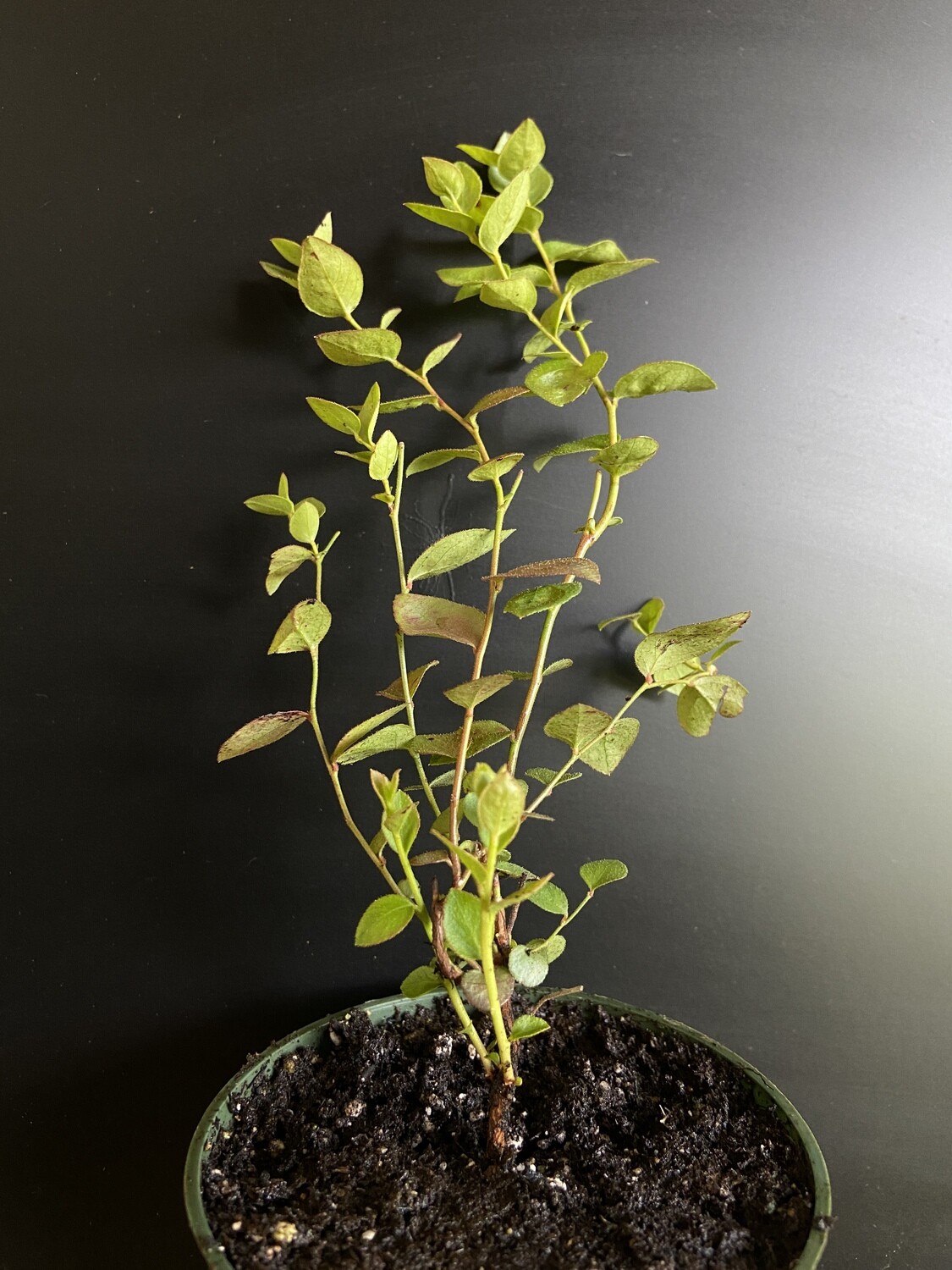
🌸 Pink Lemonade Blueberry Plant – Sweet Pink Berries for Edible Landscapes
Pink berries? On a blueberry bush? ‘Pink Lemonade’ Blueberry is the conversation-starting edible shrub every garden wants — producing glossy pink fruit with a sweet, mild, floral blueberry flavor and beautiful ornamental color through the seasons.
🌿 Quick Facts
| Category | Details |
|---|---|
| Botanical Name | Vaccinium ‘Pink Lemonade’ |
| Common Name | Pink Lemonade Blueberry |
| Plant Type | Deciduous fruiting shrub |
| Ships As | Live plant in a 4-inch pot |
| Estimated Age | Young starter plant, typically nursery-grown for establishment |
| Mature Size | 4–5 ft tall and wide; can be kept smaller with pruning |
| USDA Zones | Commonly listed for Zones 4–9, best performance depends on chill hours and soil |
| Chill Requirement | Low chill, often listed around 200–300 hours |
| Sun | Full sun best; tolerates light partial shade |
| Soil | Acidic, rich, moist but well-draining soil |
| Growth Habit | Upright, multi-stemmed shrub |
| Pollination | Self-fertile, but better crops with another compatible blueberry nearby |
| Spacing | 4–5 ft for home gardens; 6+ ft for easier harvest access |
🍓 What Makes ‘Pink Lemonade’ Blueberry Special?
‘Pink Lemonade’ is not your average blueberry. Developed through USDA breeding work, this cultivar produces berries that ripen from green to pale pink and finally bright pink when fully mature. USDA describes the fruit as medium-sized, glossy, firm, bright pink, and mild with a pleasant flavor, with mid-late to late-season ripening. (ARS)
| Feature | Why Gardeners Love It |
|---|---|
| Berry Color | Bright pink when ripe |
| Flavor | Sweet, mild, floral blueberry flavor |
| Texture | Firm, glossy berries |
| Harvest | Mid to late season; may continue producing lightly after main crop |
| Landscape Appeal | Spring flowers, glossy foliage, colorful berries, reddish winter twigs |
| Fun Factor | A blueberry that blushes — garden flex unlocked 🌸 |
🍯 Flavor, Harvest & Fruit Details
‘Pink Lemonade’ berries are sweet, mild, and slightly floral with a classic blueberry finish. Many growers describe the flavor as sweeter and softer than traditional blue blueberries.
Fruit Details:
- Color: Green → pale pink → bright/dark pink when fully ripe
- Size: Small to medium berries
- Flavor: Sweet, mild, floral, less tart than many blue varieties
- Texture: Firm and glossy when properly ripened
- Harvest Season:
- Florida & warm regions: Typically late spring through summer depending on chill and bloom timing
- Cooler regions: Mid to late summer, often July–August
- Best harvest tip: Wait until berries are fully pink and slightly softened for peak sweetness.
🐝 Fruiting & Pollination
‘Pink Lemonade’ is considered self-fertile, meaning it can produce fruit on its own. However, like many blueberries, it usually performs better with another compatible blueberry nearby for cross-pollination.
To increase fruit set:
- Plant with another rabbiteye or low-chill blueberry cultivar when possible.
- Encourage bees with pollinator plants nearby.
- Avoid broad pesticide use during bloom.
- Keep soil consistently moist during flowering and fruit development.
- Maintain acidic soil for healthy root function.
🌱 Why Grow Pink Lemonade Blueberry?
Blueberries are one of the most beloved edible landscape plants because they combine food, flowers, fall color, pollinator value, and compact shrub structure in one plant.
Top Benefits:
- 🍓 Produces unique pink edible berries
- 🌸 Spring flowers support pollinators
- 🍃 Attractive glossy green foliage
- 🍂 Seasonal color in fall and winter
- 🪴 Excellent for containers and small gardens
- 🫐 Great for fresh eating, baking, smoothies, jams, and desserts
- 💚 High in antioxidants and vitamin-rich fruit
🍽️ How to Use Pink Lemonade Blueberries
Use ‘Pink Lemonade’ berries anywhere you would use traditional blueberries — with the bonus of show-stopping pink color.
Favorite uses:
- Fresh snacking straight from the bush
- Pancakes, muffins, cobblers, and pies
- Smoothies and yogurt bowls
- Fruit salads and garden boards
- Homemade jam or preserves
- Dessert garnish
- Pink blueberry lemonade — yes, the name basically writes the recipe 🍋
🌿 Ornamental Landscape Appeal
This is a food plant that knows how to dress up.
Landscape Uses:
- Edible hedge
- Pollinator garden shrub
- Patio container feature
- Cottage garden border
- Food forest edge planting
- Children’s garden or sensory garden
- Front-yard edible landscaping
In spring, expect bell-shaped pinkish-white flowers. Summer brings glossy foliage and ripening pink berries. Fall can bring warm foliage color, while winter reveals reddish-brown twig color for seasonal interest. (AgResearch Magazine)
🍂 Is Pink Lemonade Blueberry Deciduous?
Yes. ‘Pink Lemonade’ Blueberry is a deciduous shrub, meaning it naturally drops leaves during the cooler dormant season.
| Season | What to Expect |
|---|---|
| Spring | New leaves, flowers, bee activity, early fruit formation |
| Summer | Active growth, ripening berries, regular watering needed |
| Fall | Leaves may yellow, bronze, red, or spot before dropping |
| Winter | Dormant woody stems; less attractive but completely normal |
Florida Note: In Central Florida and similar Zone 9 areas, blueberries may not go fully bare every winter, but leaf yellowing, spotting, and seasonal shedding are normal. Do not panic if the plant looks quieter in winter — blueberries need seasonal rest.
☀️ Where to Plant Pink Lemonade Blueberry
Plant ‘Pink Lemonade’ Blueberry where it receives strong sun and has acidic, organic-rich soil.
Best Location:
- Full sun for strongest flowering and fruiting
- Morning sun with light afternoon shade in very hot inland climates
- Well-drained acidic soil
- Away from concrete foundations, heavy lime, and alkaline irrigation runoff
- Protected from harsh wind while young
Wind & Salt:
Blueberries do not love strong wind or salty coastal exposure. In breezy sites, plant behind a wind-filtering hedge or near support plants. Salt tolerance is low to moderate at best, so avoid exposed coastal spray zones.
🌾 Soil Requirements
Blueberries are picky about soil — and this is where success begins.
Pink Lemonade Blueberry prefers:
- Acidic soil, ideally around pH 4.0–5.5
- High organic matter
- Excellent drainage
- Even moisture
- Pine bark fines, peat-based mixes, or acidic blueberry mixes
UF/IFAS notes that Florida blueberries perform best in acidic soils with high organic matter and that pine bark or peat moss can help prepare blueberry soil. (Gardening Solutions)
🪴 Container Growing
‘Pink Lemonade’ Blueberry is a great candidate for container growing, especially for gardeners with alkaline native soil.
Container Progression:
- Start in the shipped 4-inch pot.
- After recovery and active new growth, up-pot to a 1-gallon container.
- Move to a 3-gallon when roots begin filling the pot.
- Step up to 7-gallon or larger for long-term patio production.
- Mature container blueberries may need 15–25 gallon containers for best yield.
Important: Wait at least 30 days after shipping or until new growth appears before transplanting.
Container Soil Mix:
Use an acidic, well-draining mix. Look for blueberry/camellia/azalea-style potting mixes, pine bark fines, peat moss or coco-based blends, and perlite or similar drainage material. Avoid standard alkaline garden soil.
🏡 Can Pink Lemonade Blueberry Grow Indoors?
Not as a true indoor houseplant long-term. Blueberries need:
- Outdoor sun
- Seasonal temperature shifts
- Pollinator access
- Winter chill hours
- Strong airflow
You can temporarily protect container plants in a garage, greenhouse, or bright sheltered area during severe freezes, but they should live outdoors for best performance.
🌿 Best Practices for Planting & Care
For best results with Pink Lemonade Blueberry (Vaccinium ‘Pink Lemonade’), plant carefully and keep the root zone acidic, moist, and mulched.
Where to Plant:
- Full sun to light partial shade
- Acidic, organic-rich soil
- Well-drained location
- Avoid low wet spots or alkaline fill soil
Planting Tips:
- Keep your plant in its current pot after shipping until it has recovered.
- Dig a hole only slightly wider than the container and the same depth.
- Plant using GreenDreams’ High & Tight method — never too deep.
- Backfill firmly so no air pockets remain.
- Top-dress lightly with compost, biochar, azomite, and organic nutrients of choice.
- Mulch with pine bark or hardwood mulch, keeping mulch away from the woody base.
- Water thoroughly to settle the soil.
Planting Method Video: https://youtu.be/RRQFY30qdA8?si=rRIcsbLlVAVYotfI
💧 Watering Guide
Blueberries have shallow roots and dislike drying out.
| Situation | Watering Guidance |
|---|---|
| Newly shipped 4-inch plant | Check daily; keep evenly moist, not soggy |
| Container-grown | Water when top inch begins to dry |
| Newly planted in-ground | Water daily during dry spells while establishing |
| Established in-ground | Deep water 1–2x weekly depending on weather |
| Best irrigation | Drip irrigation preferred over overhead watering |
Avoid constantly soggy soil. Blueberries want moisture, not swamp life.
✂️ Pruning & Seasonal Maintenance
Young plants:
Let them establish before heavy pruning. Remove only damaged or weak growth.
Mature plants:
- Prune after harvest or during dormancy.
- Remove dead, weak, crossing, or crowded canes.
- Keep an open structure for airflow.
- Avoid severe pruning right before fruiting, as blueberries fruit on older wood.
UF/IFAS notes that blueberry plant size can be controlled by pruning, but severe pruning can reduce next season’s yield. (Ask IFAS - Powered by EDIS)
🌺 Companion Plant Sidebar
Blueberries thrive with companions that enjoy acidic soil and support pollinators without competing too aggressively.
Pollinator Magnets:
- Mexican sunflower
- Native salvia
- Native wildflowers
- Bee balm
- Porterweed in warm regions
Mulch & Soil Support:
- Pine bark mulch
- Oak leaves
- Hardwood mulch kept away from stems
Aesthetic Companions:
- Azaleas
- Camellias
- Native hollies
- Ferns in nearby shaded edges
Avoid:
- Heavy feeders planted too close
- Turfgrass competition
- Alkaline-loving plants
- Black walnut areas
🔍 Troubleshooting Guide
| Issue | Likely Cause | Organic Solution |
|---|---|---|
| 🍂 Yellow leaves | Soil pH too high or nutrient lockout | Test soil, acidify gently, use blueberry fertilizer |
| 💦 Wilting with wet soil | Poor drainage/root stress | Improve drainage, avoid deep planting |
| 💧 Crispy leaves | Underwatering or heat stress | Water consistently, mulch root zone |
| 🍃 Few berries | Lack of chill, poor pollination, too much shade | Add compatible blueberry, increase sun, attract bees |
| 🐛 Chewed leaves | Caterpillars or beetles | Hand-pick or use organic controls if needed |
| 🐦 Missing berries | Birds found them first | Use bird netting before fruit ripens |
| ❄️ Frost damage | Late cold snap during bloom | Cover during freeze events, protect container plants |
⚠️ Cautions
- Requires acidic soil for long-term success.
- Not ideal for alkaline soil without major amendment or container growing.
- Birds love ripe berries.
- Young plants may need freeze protection.
- Fruit production may vary by region depending on chill hours.
- Small 4-inch plants need careful watering after shipping.
✨ Is This Plant Right for You?
✅ Ideal For:
- Edible landscape gardeners
- Florida and Southeast growers with acidic soil or containers
- Patio growers
- Pollinator gardens
- Families and kids’ gardens
- Anyone who wants a rare-looking fruiting shrub
❌ Not Ideal For:
- Growers who cannot provide acidic soil
- Extremely dry, windy, or salty sites
- Deep shade locations
- Indoor-only growing
- Commercial growers seeking only maximum blue-fruit yield
❓ FAQ
Is Pink Lemonade Blueberry really pink?
Yes. The berries ripen to bright pink or dark pink when fully mature.
Is Pink Lemonade Blueberry self-pollinating?
Yes, it is self-fertile, but planting another compatible blueberry nearby can improve fruit set and berry size.
How sweet is Pink Lemonade Blueberry?
It is known for a sweet, mild, floral flavor and is often described as sweeter than many traditional blue blueberries.
Can Pink Lemonade Blueberry grow in Florida?
Yes, but success depends on chill hours, acidic soil, and consistent watering. It is a low-chill blueberry, often listed around 200–300 chill hours.
Can I grow this in a pot?
Yes. Container growing is often the easiest way to control acidic soil conditions.
🚚 Shipping Notes for 4-Inch Plants
This listing ships as a live Pink Lemonade Blueberry plant in a 4-inch pot.
Small plants are best suited for shipping to Florida, the Southeastern U.S., and Texas. We do ship across the continental U.S., but buyers in northern, western, or extreme-climate regions should use discretion.
Important Shipping Details:
- Ships from Florida via UPS Ground.
- Shipping is typically every Monday.
- Buyer discretion advised during peak heat and cold.
- We are not responsible for damage caused by extreme temperatures or UPS Ground transit delays.
- California shipments may experience an additional inspection delay.
- Small plants may need extra recovery time after shipping.
- Wait 30 days or until new growth appears before transplanting.
Local Pickup
We also sell this plant and many others at our retail nursery location. We often have countless plants in larger sizes available, plus many specialty items not listed online.
GreenDreams Nursery & Farm
🌾 18709 US Hwy. 41, Spring Hill, FL 34610
🕘 Tues–Fri 9AM–5PM | 🌞 Sat 8AM–3PM
🌿 Stop by our regenerative nursery to see what’s blooming this week! 🌸
🌿 Beyond the Plant: GreenDreams Services
At GreenDreams, we do more than grow plants — we design, build, and restore ecosystems across Florida.
- 🌳 Onsite consultations & edible landscape design
- 🚜 Installation & project management
- 🚚 Bulk delivery of compost, mulch, biochar, and soil materials
- 🌾 Wholesale & large-scale regenerative solutions
Let our team help you create your own thriving edible paradise — starting with Pink Lemonade Blueberry! 🌿
🌿 IMPORTANT INFORMATION BEFORE PURCHASING LIVE PLANTS
Please note: Plants purchased through our online store are not available for pickup at our retail nursery in Spring Hill, Florida.
Online inventory is housed at a separate facility and is priced, prepared, and handled exclusively for shipping.
🌱 Looking for larger plants or more selection?
Our retail nursery location offers far more availability, including larger sizes, specialty plants, and many selections not suitable for nationwide shipping.
Local pickup is available for retail nursery purchases only.
Visit our Spring Hill, FL retail nursery page to explore in-person shopping options.
🚚 LIVE PLANT SHIPPING & TRANSIT EXPECTATIONS
Live plants naturally experience stress during shipping. Temporary leaf drop, mild wilting, or cosmetic stress is normal after transit. Most plants recover quickly with proper watering, gradual light exposure, and basic aftercare. Some plants may require additional attention during the first few weeks.
Despite careful packing, minor cosmetic damage may occur during transit. Small issues such as broken leaves or stems typically resolve with time and proper care.
If your shipping box arrives with significant external damage, please contact UPS within 30 days to initiate a carrier claim.
⏱️ SHIPPING METHOD, TIMING & TRANSIT WINDOWS
All online orders ship via UPS Ground from our Central Florida nursery.
📦 Shipping Schedule: Orders ship once weekly on Mondays to reduce the risk of packages sitting in transit over weekends. A countdown clock on our website displays the next shipping date.
🚚 Typical Transit Times:
-
Florida: 1–2 days
-
Southern U.S.: approximately 2 days
-
Midwest, West & Northern U.S.: 3–5 business days
Long-distance shipments, particularly to the western U.S., may experience additional transit time due to agricultural inspections in states such as Arizona, California, and Texas.
Extended transit times can be more challenging for small or tender plants and may require additional recovery care after arrival.
🌡️ EXTREME WEATHER & SEASONAL RISK
Live plants are sensitive to temperature extremes.
We cannot guarantee plant condition during periods of extreme summer heat or winter cold and freezing temperatures. Weather-related delays, carrier interruptions, or exposure during delivery are beyond our control.
Customers are responsible for:
-
Monitoring tracking information sent via email
-
Retrieving packages promptly upon delivery
-
Preventing plants from being left outdoors in extreme conditions
During unsafe weather, holiday shipping volume, or extended transit risk, orders may be held and shipped the following week to protect plant health.
⚠️ CUSTOMER RESPONSIBILITY & REFUND POLICY
By purchasing live plants, customers acknowledge and accept the risks associated with shipping, weather exposure, transit delays, and regional suitability.
Refunds or replacements are considered only under exceptional circumstances and in accordance with our return and refund policy. We are not responsible for:
-
Weather-related damage
-
Carrier delays
-
Poor plant selection for a given climate or region
-
Improper care after delivery
Upon purchase, customers assume full responsibility for the ongoing care and success of their plants.
✅ CONSENT & AGREEMENT
By completing a purchase, you confirm that you have read, understand, and agree to all shipping policies, responsibilities, and conditions outlined above.
Our goal is transparency, plant health, and long-term growing success — and we appreciate your understanding and care when ordering live plants.


