


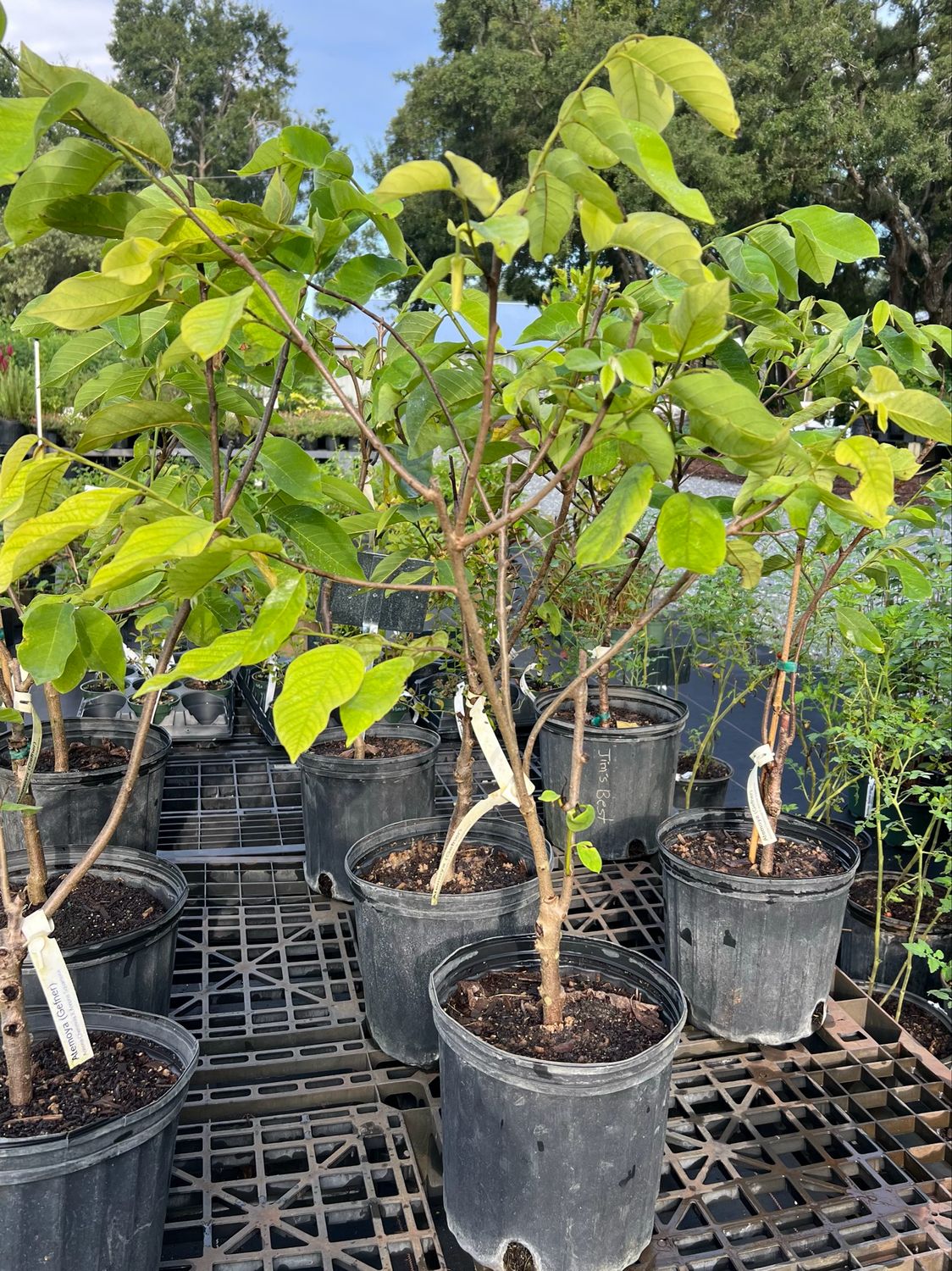
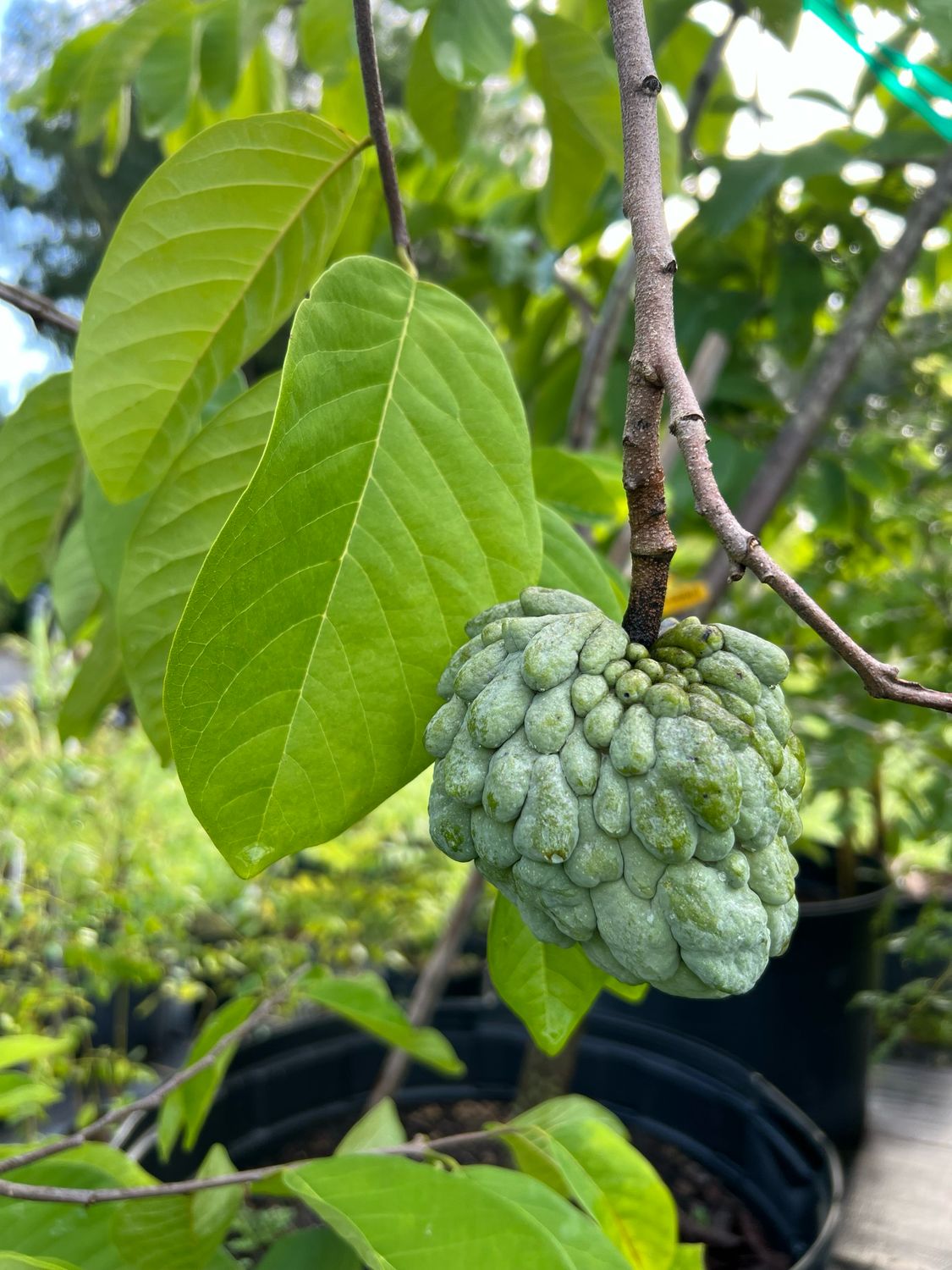
🍈 Grafted Atemoya ‘Gefner’ Fruit Tree – 3 Gallon
Annona × atemoya ‘Gefner’ — One of Florida’s Best Atemoya Cultivars
Creamy, intensely sweet tropical fruit, a manageable fruit-tree habit, and unusually reliable natural fruit set make Gefner Atemoya one of the standout Annona cultivars for Florida growers. This grafted selection combines the rich, custard-like eating quality of cherimoya with the tropical adaptability of sugar apple—and UF/IFAS considers ‘Gefner’ the most satisfactory atemoya cultivar evaluated under Florida conditions.
🌿 Quick Facts
| Category | Details |
|---|---|
| Botanical Name | Annona × atemoya ‘Gefner’ |
| Common Name | Geffner / Gefner Atemoya, Custard Apple |
| Plant Type | Grafted tropical/subtropical fruit tree |
| Sale Size | 3-gallon container |
| Mature Size – Unpruned | Approximately 20–30 ft. tall and wide |
| Maintained Size | Approximately 8–12 ft. with regular annual pruning |
| USDA Zones | 10–11 preferred; protected Zone 9b growing is possible but carries significant freeze risk |
| Sun Requirements | Full sun; ideally 6–8+ hours |
| Cold Hardiness | Young trees may be damaged or killed around 28–29°F; established trees may tolerate brief exposure around 24–26°F, but serious damage is possible |
| Growth Habit | Vigorous, rounded to somewhat irregular canopy; semi-deciduous in cooler weather |
| Soil | Adaptable, but excellent drainage is essential |
| Water Needs | Moderate; consistent moisture is especially important during flowering and fruit development |
| Standard Spacing | Approximately 25–30 ft. from trees and structures if allowed to grow naturally |
| Pollination | One of the better atemoyas for natural fruit set without hand pollination |
| Florida Harvest | Primarily August–October, with another possible crop into December–January |
| Propagation | Grafted for cultivar consistency |
UF/IFAS reports that atemoya trees can approach 30 feet without pruning but can readily be maintained around 8–12 feet through annual pruning.
🍈 What Does Geffner Atemoya Taste Like?
Atemoya is a hybrid between cherimoya (Annona cherimola) and sugar apple (Annona squamosa), bringing together desirable qualities from both fruits.
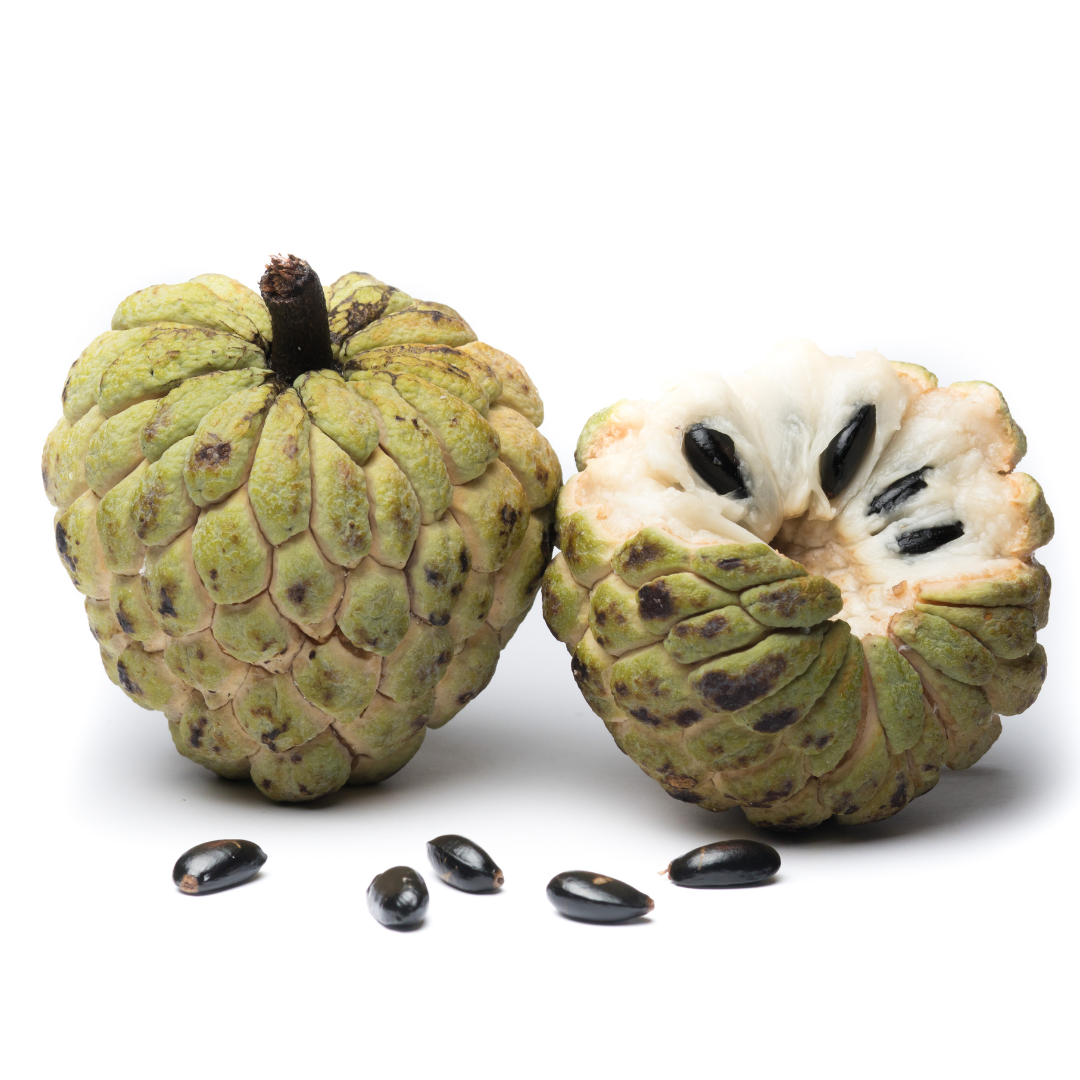
When properly ripened, the fruit develops:
- Creamy white to ivory flesh
- A soft, custard-like texture
- Rich tropical sweetness
- Pleasant aromatic flavor
- A flavor experience often compared with a tropical fruit custard rather than a conventional tree fruit
Atemoya fruit is generally about 3–5 inches across and 8–32 oz., although size varies substantially with pollination, crop load, tree health, and growing conditions.
🍽️ How to Eat Atemoya
Allow mature-picked fruit to soften at room temperature. Once ripe, simply cut it open and scoop out the creamy flesh.
Try it:
- Fresh and chilled
- Spoon-eaten directly from the fruit
- In tropical fruit salads
- Blended into smoothies
- In milkshakes
- Frozen into ice cream or sorbet
- Added to desserts and sweet sauces
Always remove the seeds before eating or blending the fruit.
🌸 Why Geffner Is Especially Good for Florida
Not every atemoya cultivar sets fruit equally well under Florida conditions.
UF/IFAS specifically identifies ‘Gefner’ as the most satisfactory cultivar under Florida conditions, noting that it produces good-quality fruit without requiring hand pollination. Other cultivars such as African Pride and Bradley frequently produce relatively little fruit unless growers intervene with hand pollination.
That makes Geffner especially attractive for the home grower who wants an unusual tropical fruit without turning pollination into a full-time job.
🐝 Does Geffner Need Hand Pollination?
Usually, no—and that is one of this cultivar's greatest advantages.
However, atemoya flowers naturally have their female and male stages at different times, and pollination can still influence:
- Total fruit set
- Fruit size
- Symmetry
- Overall crop quality
Hand pollination can therefore improve production even on Geffner, particularly when natural pollinator activity is low. UF/IFAS reports that hand pollination can dramatically increase fruit set and improve fruit shape.
🍈 Fruiting Season & Production
In Florida, atemoyas generally have a primary flowering period from spring into early summer, followed by fruit ripening from approximately August through October.
A smaller bloom may produce another harvest extending into December or January, provided cold weather does not interrupt fruit development.
Established atemoya trees can be remarkably productive under favorable conditions. UF/IFAS reports yields ranging from approximately 75–200 fruit per tree, although actual production varies greatly with weather, pollination, pests, pruning, irrigation, and tree maturity.
🌿 How Soon Will a Grafted Atemoya Fruit?
Grafting gives you a known cultivar rather than the genetic wildcard of a seedling tree.
UF/IFAS reports that grafted atemoya can begin fruit production in approximately 2–4 years, depending partly on rootstock, establishment, climate, and tree management. Individual nursery trees may fruit sooner or later, so fruiting time cannot be guaranteed.
For newly planted young trees, allowing the plant to establish good roots and structure before carrying a heavy crop usually creates a healthier tree long-term.
🌱 Top Benefits & Uses
🍈 Exceptional Dessert Fruit
The creamy flesh is unlike most conventional fruit grown in the United States. Atemoya is especially suited to eating fresh and using in chilled desserts.
🌴 Tropical Landscape Appeal
Geffner develops into an attractive small-to-medium fruit tree with a broad canopy and unusual tropical foliage.
✂️ Manageable With Pruning
Although an unpruned tree can eventually become large, annual pruning can keep atemoya around 8–12 feet tall, making harvesting, covering, hand pollination, and pest management considerably easier.
🌸 Better Natural Pollination
Geffner stands apart from several other atemoya cultivars because it can produce satisfactory crops in Florida without routine hand pollination.
🍊 Nutritional Value
Atemoya fruit provides dietary fiber, vitamin C, potassium, and other minerals. Florida's Department of Agriculture identifies the fruit as a source of vitamin C and several minerals.
🌎 A Tropical Hybrid With an International Story
Atemoya itself originated through crosses between cherimoya and sugar apple. The name combines historical names associated with those parent fruits.
Reliable horticultural references identify Gefner as an Israeli atemoya selection that later became particularly important in Florida because of its productivity and fruit quality.
Its performance in Florida is one reason Geffner has become one of the best-known atemoya cultivars among subtropical fruit collectors.
🌿 Planting Your Grafted Geffner Atemoya
🌞 Choose the Warmest, Sunniest Location
For best growth and fruiting, choose:
- Full sun
- Excellent air circulation without constant wind
- The warmest available microclimate
- Protection from cold north or northwest winds when possible
- Soil that drains rapidly after heavy rainfall
- Plenty of room away from large trees and structures
Atemoyas strongly dislike prolonged flooding and saturated soil. UF/IFAS recommends planting atemoya only in well-drained locations.
🌿 Use the GreenDreams “High & Tight” Planting Method
Do not bury the trunk or root crown.
We prefer planting fruit trees High & Tight so the top of the root ball remains at or slightly above the surrounding grade. This is especially valuable in Florida's rainy climate where excessive moisture around the root crown can lead to decline.
🎥 GreenDreams High & Tight Planting Method:
https://youtu.be/RRQFY30qdA8?si=rRIcsbLlVAVYotfI
If your property retains water after summer storms, consider planting on a substantial mound rather than placing the tree into a low planting hole. UF/IFAS recommends mounding tropical fruit trees in areas subject to a high water table or periodic flooding.
💧 Watering
Newly Planted Trees
Water thoroughly at planting.
During establishment:
- Check the root zone daily at first
- Water whenever the root ball begins to dry
- Gradually reduce watering frequency as roots expand into the surrounding soil
- Water deeply at the root zone rather than frequently wetting the foliage
- Adjust aggressively during Florida's rainy season—never water simply because a calendar says to if the soil is already wet
Once established, atemoya has some drought tolerance, but drought during flowering and fruit development can reduce fruit set and fruit size.
⚠️ Avoid Constantly Wet Roots
Too much irrigation is one of the easiest ways to cause trouble.
Automatic lawn irrigation can keep the root system wetter than atemoya prefers. Excessive fall and winter irrigation is especially problematic when the tree becomes semi-dormant or drops its leaves.
🪵 Mulching
Apply approximately 2–4 inches of organic mulch across the root zone.
Keep the mulch:
- Several inches away from the trunk
- Spread broadly rather than piled deeply
- On top of the soil rather than mixed into the planting hole
As mulch decomposes, it helps moderate soil temperatures, conserve moisture, and gradually build soil organic matter.
Fertility 🌾
Young atemoya trees respond well to moderate, repeated nutrition during active growth rather than huge fertilizer applications.
A balanced tropical fruit fertilizer containing micronutrients can be used during the growing season. Compost and other organic soil-building materials can also be used as part of an overall fertility program.
Avoid excessive nitrogen on mature fruiting trees. Too much vegetative growth can come at the expense of flowering and fruit production.
✂️ Pruning Geffner Atemoya
Pruning is highly recommended for Florida home landscapes.
UF/IFAS recommends annual selective pruning near the beginning of spring growth. Removing roughly one-third of the previous season's vegetative growth can help:
- Maintain an 8–12 ft. harvesting height
- Encourage new fruiting shoots
- Increase light penetration
- Keep fruit accessible
- Improve airflow
- Develop stronger branch structure
Avoid severe indiscriminate pruning because atemoya produces flowers on both relatively young wood and emerging shoots.
❄️ Winter Care in Florida
Geffner is more cold-tolerant than sugar apple, but it is not a freeze-proof fruit tree.
UF/IFAS reports:
- Young trees: damage or death may occur around 28–29°F
- Mature trees: may tolerate short periods around 24–26°F
- Temperatures at or below approximately 24°F can severely damage or kill established trees
For Central Florida and protected Zone 9b locations:
- Plant near a favorable thermal mass or protected microclimate
- Avoid exposed low areas where cold air settles
- Mulch the root zone
- Protect young trunks
- Cover smaller trees during freeze events
- Consider supplemental heat beneath frost cloth during serious freezes
- Keep the tree compact enough to protect when practical
Zone 10 and warmer locations provide a considerably safer long-term climate.
🍂 Don't Panic About Winter Leaf Drop
Atemoya is semi-deciduous.
Cool weather can cause significant yellowing and leaf drop, and a tree may appear surprisingly bare during winter. This does not automatically mean it is dying. New growth normally resumes as temperatures warm and the tree exits its seasonal rest.
🪴 Container Growing
Geffner Atemoya can be maintained in containers, particularly when growers need the ability to move a tree into protection during winter.
For long-term container culture:
- Gradually step up into larger containers as the root system develops
- Eventually plan on approximately 15–25 gallons or larger
- Use an exceptionally well-draining potting mix
- Never allow the container to sit in standing water
- Provide full sun
- Prune regularly to maintain manageable size
- Monitor water needs closely during hot weather
- Protect both the canopy and root system during freezes
Container culture can help colder-climate collectors grow atemoya, but permanent indoor growing is considerably more difficult because adequate light, pollination, root space, and tree size become limiting factors.
⚠️ Pests, Disease & Important Cautions
🐛 Annona Seed Borer
UF/IFAS identifies annona seed borer as the most important insect pest affecting atemoya in Florida. Larvae develop inside the fruit.
Bagging young developing fruit can substantially reduce damage.
🪲 Other Possible Pests
Watch for:
- Scale insects
- Mealybugs
- Ambrosia beetles
Healthy trees should still be inspected periodically, particularly along stems, branch unions, undersides of leaves, and developing fruit.
🍄 Fruit Rot
Fungal fruit rots can occur, particularly during warm, humid weather or following insect injury.
💦 Root Rot
Poor drainage and excessive irrigation are among the most important cultural risks.
⚠️ Seeds Are Toxic
Do not eat, crush, chew, or blend atemoya seeds.
UF/IFAS considers the seeds and bark of atemoya toxic and recommends removing all seeds before consuming the fruit. Keep seeds away from children and pets.
🌟 Is Geffner Atemoya Right for You?
✅ Ideal For:
- Florida tropical fruit growers
- Zone 10–11 landscapes
- Experienced Zone 9b growers willing to provide freeze protection
- Rare-fruit collectors
- Edible landscapes and food forests
- Backyard growers wanting an exceptional dessert fruit
- Gardeners wanting an Annona with comparatively reliable natural fruit set
- Growers comfortable pruning a fruit tree annually
- Container growers who can provide large pots and winter protection
❌ Not Ideal For:
- Landscapes with standing water or chronically wet soil
- Exposed freeze-prone locations
- Gardeners in colder climates without winter protection
- Sites with significant saltwater or saline irrigation exposure
- Permanently low-light indoor growing
- Anyone wanting a completely maintenance-free fruit tree
❓ Frequently Asked Questions
Does Geffner Atemoya need another tree for pollination?
No second cultivar is normally required. Geffner is particularly valued because it can set satisfactory crops naturally in Florida. Hand pollination can still increase fruit set and improve fruit shape.
How large does Geffner Atemoya get?
An unpruned atemoya may eventually approach 20–30 ft., but regular annual pruning can maintain a productive tree around 8–12 ft. tall.
Can I grow Geffner Atemoya in Central Florida?
Yes, with realistic expectations about cold protection. Central Florida is considerably more freeze-prone than the warm coastal areas of South Florida where atemoyas are best adapted. Choose your warmest microclimate and have a freeze-protection plan before planting.
When does atemoya fruit ripen in Florida?
The principal Florida harvest is generally August through October, with another crop sometimes ripening December into January when weather remains favorable.
Why did my atemoya lose its leaves?
Winter leaf drop can be completely normal. Atemoyas are semi-deciduous and may shed much of their foliage in response to cooler winter temperatures.
Is this tree grown from seed?
No. This is a grafted Geffner Atemoya. Vegetative propagation preserves the desired cultivar, while seedlings are genetically variable and will not reliably reproduce Geffner characteristics.
🚚 Shipping & Handling – 3 Gallon Grafted Tree
This listing is for a 3-gallon grafted Atemoya Geffner.
Plants are carefully selected and prepared for transit before leaving our Florida nursery.
- We currently ship via UPS Ground
- Live plant shipments generally leave our nursery on Mondays
- Tropical plants can experience leaf drop, temporary wilting, cosmetic damage, or other stress during transit
- Atemoya may naturally become semi-deciduous during cooler weather, so seasonal foliage density can vary
- Customers should consider temperatures both here in Florida and at the destination before ordering during extreme heat or cold
- Immediate unpacking and proper acclimation after arrival are important
Buyers in northern and western regions should pay particular attention to seasonal weather conditions. We cannot control temperatures inside UPS trucks, trailers, hubs, or sorting facilities during transit.
🏡 Available for Local Pickup at GreenDreams
GreenDreams Nursery & Farm
18709 US Hwy. 41
Spring Hill, FL 34610
Hours:
Tuesday–Friday: 9AM–5PM
Saturday: 8AM–3PM
Closed Sunday & Monday
Come visit us and explore what is currently growing at the nursery. 🌿
🌿 IMPORTANT INFORMATION BEFORE PURCHASING LIVE PLANTS
Please note: Plants purchased through our online store are not available for pickup at our retail nursery in Spring Hill, Florida.
Online inventory is housed at a separate facility and is priced, prepared, and handled exclusively for shipping.
🌱 Looking for larger plants or more selection?
Our retail nursery location offers far more availability, including larger sizes, specialty plants, and many selections not suitable for nationwide shipping.
Local pickup is available for retail nursery purchases only.
Visit our Spring Hill, FL retail nursery page to explore in-person shopping options.
🚚 LIVE PLANT SHIPPING & TRANSIT EXPECTATIONS
Live plants naturally experience stress during shipping. Temporary leaf drop, mild wilting, or cosmetic stress is normal after transit. Most plants recover quickly with proper watering, gradual light exposure, and basic aftercare. Some plants may require additional attention during the first few weeks.
Despite careful packing, minor cosmetic damage may occur during transit. Small issues such as broken leaves or stems typically resolve with time and proper care.
If your shipping box arrives with significant external damage, please contact UPS within 30 days to initiate a carrier claim.
⏱️ SHIPPING METHOD, TIMING & TRANSIT WINDOWS
All online orders ship via UPS Ground from our Central Florida nursery.
📦 Shipping Schedule: Orders ship once weekly on Mondays to reduce the risk of packages sitting in transit over weekends. A countdown clock on our website displays the next shipping date.
🚚 Typical Transit Times:
-
Florida: 1–2 days
-
Southern U.S.: approximately 2 days
-
Midwest, West & Northern U.S.: 3–5 business days
Long-distance shipments, particularly to the western U.S., may experience additional transit time due to agricultural inspections in states such as Arizona, California, and Texas.
Extended transit times can be more challenging for small or tender plants and may require additional recovery care after arrival.
🌡️ EXTREME WEATHER & SEASONAL RISK
Live plants are sensitive to temperature extremes.
We cannot guarantee plant condition during periods of extreme summer heat or winter cold and freezing temperatures. Weather-related delays, carrier interruptions, or exposure during delivery are beyond our control.
Customers are responsible for:
-
Monitoring tracking information sent via email
-
Retrieving packages promptly upon delivery
-
Preventing plants from being left outdoors in extreme conditions
During unsafe weather, holiday shipping volume, or extended transit risk, orders may be held and shipped the following week to protect plant health.
⚠️ CUSTOMER RESPONSIBILITY & REFUND POLICY
By purchasing live plants, customers acknowledge and accept the risks associated with shipping, weather exposure, transit delays, and regional suitability.
Refunds or replacements are considered only under exceptional circumstances and in accordance with our return and refund policy. We are not responsible for:
-
Weather-related damage
-
Carrier delays
-
Poor plant selection for a given climate or region
-
Improper care after delivery
Upon purchase, customers assume full responsibility for the ongoing care and success of their plants.
✅ CONSENT & AGREEMENT
By completing a purchase, you confirm that you have read, understand, and agree to all shipping policies, responsibilities, and conditions outlined above.
Our goal is transparency, plant health, and long-term growing success — and we appreciate your understanding and care when ordering live plants.


