


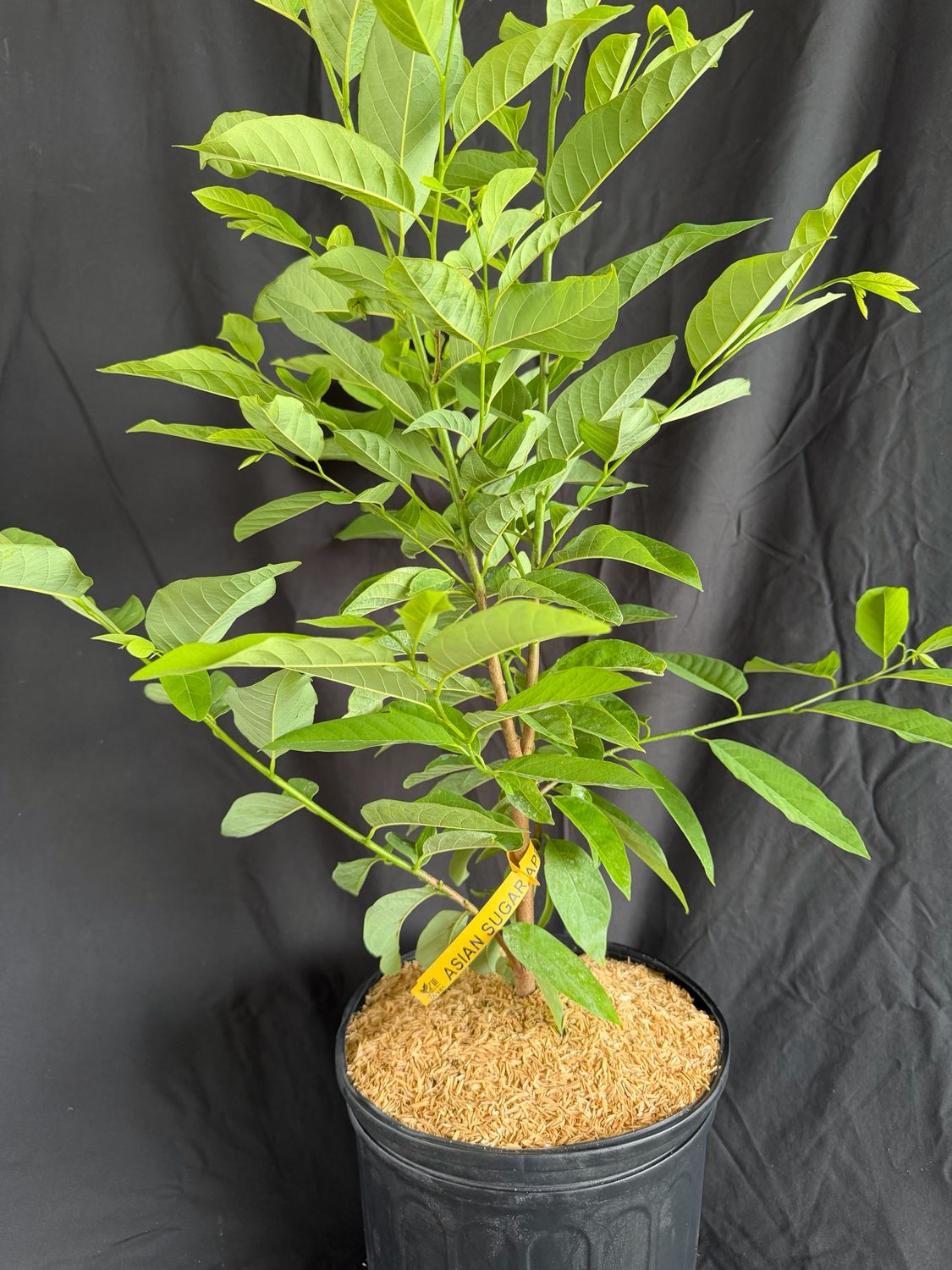
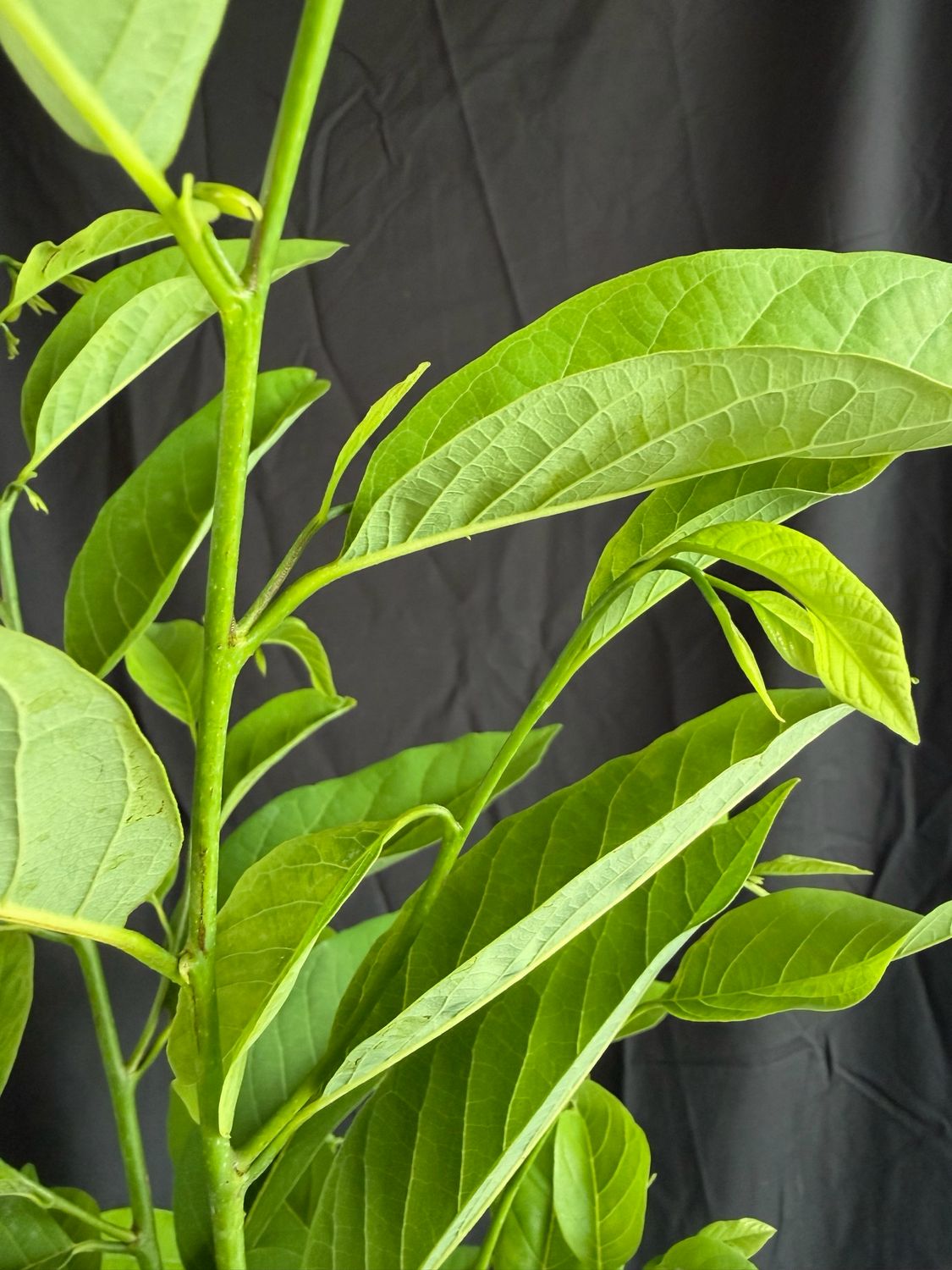
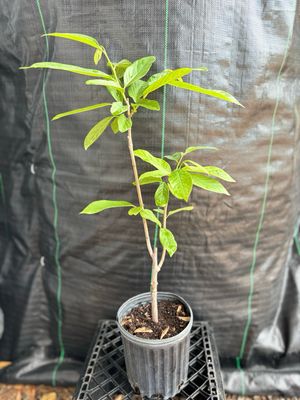
Sugar Apple Tree (Annona squamosa) 🌿🍏
The Tropical Custard Fruit That Makes People Stop and Ask, “What Is That?!”
If you've never tasted a tree-ripened Sugar Apple, you're missing out on one of the most unique tropical fruits grown in Florida. With creamy custard-like flesh, rich sweetness, and a flavor often compared to vanilla pudding, pear, banana, and tropical candy all wrapped into one fruit, Sugar Apple has earned a devoted following around the world.
Native to the tropical Americas and cultivated for centuries throughout the Caribbean, Southeast Asia, India, and Central America, Sugar Apple remains one of the most sought-after Annona species for home growers. The fruit is delicate, highly perishable, and rarely found in grocery stores—making it a true backyard treasure.
At GreenDreams, we believe some fruits are worth growing simply because you'll never experience them at their peak any other way. Sugar Apple is one of them. 🌿✨
🌱 Quick Facts Guide
| Feature |
Details |
| Botanical Name |
Annona squamosa |
| Common Names |
Sugar Apple, Sweetsop, Custard Apple, Sitaphal |
| Plant Type |
Tropical Fruit Tree |
| USDA Zones |
9B–11 |
| Mature Height (Unpruned) |
15–20 ft |
| Mature Height (Pruned) |
8–12 ft |
| Sun Requirements |
Full Sun |
| Growth Rate |
Moderate to Fast |
| Cold Tolerance |
Sensitive below 32°F |
| Salt Tolerance |
Low to Moderate |
| Wind Tolerance |
Moderate once established |
| Fruiting Season (Florida) |
Summer through Fall |
| Fruit Flavor |
Sweet custard, vanilla, pear, banana notes |
| Container Friendly |
Yes |
| Indoor Growing |
Possible with large greenhouse conditions |
| Deciduous? |
Semi-Deciduous in Florida |
Sources indicate Sugar Apple performs best in warm subtropical and tropical climates with full sun and excellent drainage. Hand pollination can dramatically increase fruit production.
🌴 Why Grow Sugar Apple?
Top Benefits
🍏 Exceptional tropical fruit flavor
🌿 Productive in Florida landscapes
🐝 Pollinator-friendly flowers
🏡 Easy-to-manage backyard fruit tree
🌿 Performs well in large containers
🌞 Heat and drought tolerant once established
🍮 One of the creamiest fruits in the tropical fruit world
🌎 Rarely available commercially due to delicate fruit
🍮 Flavor Profile
Sugar Apple is famous for its incredibly rich texture.
Taste
🍌 Banana
🍐 Pear
🍦 Vanilla custard
🍯 Honey sweetness
🥥 Light tropical complexity
Texture
The flesh is creamy, soft, and custard-like, often compared to pudding or cheesecake filling.
The fruit separates naturally into sweet segments surrounding glossy black seeds. The seeds are not edible and should be discarded.
Many fruit collectors rank Sugar Apple among the finest tasting tropical fruits in the world.
🌎 Origin & History
Sugar Apple is believed to have originated in the tropical Americas before spreading throughout the Caribbean, Asia, Africa, and India through centuries of trade and cultivation.
The name "Annona" comes from a Taíno word used by indigenous Caribbean peoples long before European arrival. Historical evidence suggests cultivation of Annona species dates back thousands of years in tropical America.
Today it remains one of the most important backyard fruit trees throughout India, Thailand, Vietnam, the Philippines, and the Caribbean.
In India, it is known as "Sitaphal" and is widely used in desserts, milkshakes, ice creams, and sweets.
🌳 Growth Habit & Appearance
Sugar Apple develops into a small tropical tree with an open branching structure and attractive foliage.
Tree Characteristics
🌿 Soft green leaves
🌿 Graceful branching habit
🌿 Attractive tropical appearance
🌿 Easily maintained at harvesting height
🌿 Excellent edible landscape specimen
Mature Size
| Condition |
Height |
| Naturally Grown |
15–20 ft |
| Pruned |
8–12 ft |
| Width |
10–15 ft |
Most homeowners find Sugar Apple easy to maintain with annual pruning after harvest.
☀️ Sun, Wind, Salt & Climate
Sunlight
✅ Full sun is best
✅ Minimum 6-8 hours direct sunlight
Wind
✅ Moderate wind tolerance
⚠️ Young trees benefit from protection while establishing
Salt
⚠️ Moderate tolerance to occasional coastal exposure
❌ Not recommended directly on exposed beachfront properties
Temperature
Ideal growth occurs between 70°F and 95°F.
❄️ Cold Hardiness
| Temperature |
Expected Response |
| 40°F+ |
No issues |
| 35–40°F |
Minor stress possible |
| 32°F |
Potential leaf damage |
| Below 30°F |
Significant damage likely |
| Mid-20s°F |
Potential tree loss |
Young trees are especially vulnerable to frost. Mature trees may recover from brief cold events but protection is strongly recommended.
🍏 Fruiting Habits
How Soon Will It Fruit?
| Tree Type |
Typical Fruiting Time |
| Seedling |
2–4+ years |
| Grafted Tree |
Often sooner |
What Increases Fruit Production?
✅ Consistent watering
✅ Full sun
✅ Balanced nutrition
✅ Good airflow
✅ Hand pollination
Because natural pollination can be inconsistent, many commercial growers hand-pollinate flowers to increase fruit set and fruit size.
Florida Harvest Season
🌿 Flowers: Spring through Summer
🍏 Harvest: Summer through Fall
Fruit typically matures about 3–4 months after flowering.
🍽️ Culinary Uses
One Sugar Apple tree can produce enough fruit for fresh eating and culinary experimentation.
Fresh Uses
🍏 Fresh out of hand
🥤 Smoothies
🍦 Ice cream
🥛 Milkshakes
🍨 Frozen desserts
🍮 Custards
🥧 Tropical pies
International Uses
🇮🇳 Sitaphal cream desserts
🇹🇭 Fresh fruit markets
🇻🇳 Sweet beverages
🇵🇭 Fruit shakes
🇨🇺 Traditional tropical desserts
The fruit is usually eaten fresh because of its delicate texture.
🌿 Nutritional Highlights
Sugar Apple contains:
🍊 Vitamin C
🍌 Potassium
🌱 Fiber
💪 Antioxidants
🌿 Various plant compounds studied for nutritional benefits
Traditionally, different parts of the tree have been used throughout tropical cultures, though the fruit remains the primary edible portion.
🍂 Is Sugar Apple Deciduous?
Yes — Semi-Deciduous in Florida
Many new growers become concerned when Sugar Apple begins dropping leaves.
This is normal.
In Central Florida and similar climates, Sugar Apple often becomes partially or fully dormant during cooler months.
Seasonal Expectations
Spring 🌱
New growth emerges rapidly.
Flower buds begin developing.
Summer ☀️
Strong growth.
Flowering and fruit set.
Fall 🍏
Primary harvest season.
Leaves remain active.
Winter 🍂
Leaves may yellow and drop.
Growth slows dramatically.
Dormancy is completely normal and not a sign of disease.
🌿 Growing Sugar Apple In Containers
Sugar Apple adapts surprisingly well to container culture.
Recommended Pot Progression
4" Pot ➜ 1 Gallon ➜ 3 Gallon ➜ 7 Gallon ➜ 15 Gallon ➜ 25+ Gallon
Many growers successfully fruit Sugar Apples in large containers.
Potting Mix
We recommend:
✅ High-quality organic potting soil
✅ Pine bark fines
✅ Coconut coir
✅ Compost
✅ Perlite or coarse drainage materials
The goal is moisture retention without becoming waterlogged.
🌱 Planting Instructions
Before Transplanting
After receiving your Sugar Apple, allow the plant to recover from shipping stress.
We strongly recommend waiting approximately 30 days or until active new growth emerges before transplanting.
GreenDreams Planting Method
Where to Plant
☀️ Full sun
🌿 Excellent drainage
🌬️ Protected from severe winds
Planting
Dig a hole only slightly wider than the container and at the same depth.
Plant high and tight.
Avoid planting deeper than the original soil level.
Backfill firmly to eliminate air pockets.
Top dress with:
🌱 Compost
🌱 Biochar
🌱 Azomite
🌱 Organic fertilizers
Finish with hardwood mulch, keeping mulch away from the trunk.
For detailed fruit tree planting instructions visit:
https://youtu.be/RRQFY30qdA8?si=rRIcsbLlVAVYotfI
💧 Watering Guide
Container Plants
Generally require daily monitoring and watering during hot Florida weather.
Never allow containers to remain waterlogged.
In-Ground Trees
First Year
Water regularly.
Daily during severe drought periods.
Established Trees
Water deeply.
Drip irrigation is strongly preferred over overhead watering.
Increase irrigation during flowering and fruit development for larger fruit production.
✂️ Pruning Guide
Sugar Apple fruits on new growth.
Best pruning occurs:
✅ After harvest
✅ During dormancy
Remove
❌ Crossing branches
❌ Dead wood
❌ Weak growth
Goal
Maintain an open canopy that allows sunlight and airflow throughout the tree.
Heavy pruning may reduce production the following season.
🌿 Organic Fertility Program
Sugar Apple responds well to:
🌱 Compost
🌱 Worm castings
🌱 Hardwood mulch
🌱 Biochar
🌱 Balanced fruit tree fertilizers
Young trees benefit from regular light feedings.
Mature fruiting trees benefit from applications before spring growth and after harvest.
🌼 Companion Plant Guild
Great companions include:
Nitrogen Fixers
🌿 Pigeon Pea
🌿 Sunn Hemp
🌿 Perennial Peanut
Pollinator Magnets
🌻 Mexican Sunflower
🌸 Native Wildflowers
🐝 Bee-friendly flowering herbs
Biomass Producers
🌾 Clumping Grasses
🌿 Comfrey
🌿 Mexican Sunflower
These support soil biology while attracting beneficial insects.
🔍 Troubleshooting Guide
Yellow Leaves During Winter
✅ Often normal dormancy
Poor Fruit Set
✅ Increase pollinator activity
✅ Hand pollinate flowers
Small Fruit
✅ Increase irrigation during fruit development
Brown Leaf Tips
✅ Drought stress
✅ Salt accumulation
Scale Insects
✅ Neem oil
✅ Horticultural oils
Mealybugs
✅ Encourage beneficial insects
✅ Spot treat organically
Common pests include scale, mealybugs, aphids, and fruit borers. Anthracnose can occur in humid conditions.
Is This Plant For Me?
Ideal For
✅ Tropical fruit collectors
✅ Florida homeowners
✅ Food forest growers
✅ Container gardeners
✅ Rare fruit enthusiasts
✅ Edible landscapes
Not Ideal For
❌ Areas with frequent hard freezes
❌ Poorly drained sites
❌ Growers seeking a completely maintenance-free fruit tree
❌ Extremely exposed coastal locations
Frequently Asked Questions
How long does it take a Sugar Apple tree to fruit?
Seedlings often fruit in 2–4 years. Grafted trees may fruit sooner.
Does Sugar Apple need another tree?
No, but hand pollination can significantly improve fruit production.
Can Sugar Apple grow in a pot?
Absolutely. Large containers can support productive trees for many years.
Is Sugar Apple self-fertile?
Generally yes, though pollination quality affects yield.
Why are my leaves dropping?
Sugar Apple is semi-deciduous and often sheds leaves during cooler weather.
Can Sugar Apple survive Florida winters?
Most of Florida zones 9B–11 are suitable, though freeze protection may be necessary during severe cold events.
📦 Shipping Details for Continental US
🚚 Ships every Monday from Florida via UPS Ground.
For smaller plants (4" and 1-Gallon sizes), these are best suited for Florida, the Southeastern United States, and Texas.
Customers in northern and western states should understand that longer transit times can increase stress on tropical plants. California inspections may add additional transit delays.
Buyer assumes risk associated with extreme temperatures during transit.
We strongly recommend allowing the Sugar Apple tree to remain in its original container for at least 30 days or until active new growth appears before transplanting.
During periods of extreme heat or cold, buyer discretion is advised.
🌿 Local Pickup & Larger Specimens Available
GreenDreams Nursery & Farm
🌾 18709 US Hwy. 41, Spring Hill, FL 34610
🕘 Tues–Fri 9AM–5PM
🌞 Sat 8AM–3PM
🌿 Stop by our regenerative nursery to see what's blooming this week!
We often carry larger Sugar Apple trees and many rare plants not listed online.
🌿 Beyond the Plant: GreenDreams Services
At GreenDreams, we do more than grow plants — we design, build, and restore ecosystems across Florida.
🌳 Onsite consultations & edible landscape design
🚜 Installation & project management
🚚 Bulk delivery of compost, mulch, biochar & soil materials
🌾 Wholesale & regenerative agriculture solutions
Let our team help you create your own thriving edible paradise — starting with Sugar Apple! 🌿
Sources
- Gardenia – Sugar Apple (Annona squamosa)
- University of Florida IFAS Extension – Annona Production Guides
- Growables Tropical Fruit Database – Annona squamosa
- Garden Florida – Sugar Apple Care Guide
- Purdue NewCROP Program – Annona squamosa
- Gardenish Plant Encyclopedia – Sugar Apple
- Fruits of Warm Climates (Julia Morton)
🌿 IMPORTANT INFORMATION BEFORE PURCHASING LIVE PLANTS
Please note: Plants purchased through our online store are not available for pickup at our retail nursery in Spring Hill, Florida.
Online inventory is housed at a separate facility and is priced, prepared, and handled exclusively for shipping.
🌱 Looking for larger plants or more selection?
Our retail nursery location offers far more availability, including larger sizes, specialty plants, and many selections not suitable for nationwide shipping.
Local pickup is available for retail nursery purchases only.
Visit our Spring Hill, FL retail nursery page to explore in-person shopping options.
🚚 LIVE PLANT SHIPPING & TRANSIT EXPECTATIONS
Live plants naturally experience stress during shipping. Temporary leaf drop, mild wilting, or cosmetic stress is normal after transit. Most plants recover quickly with proper watering, gradual light exposure, and basic aftercare. Some plants may require additional attention during the first few weeks.
Despite careful packing, minor cosmetic damage may occur during transit. Small issues such as broken leaves or stems typically resolve with time and proper care.
If your shipping box arrives with significant external damage, please contact UPS within 30 days to initiate a carrier claim.
⏱️ SHIPPING METHOD, TIMING & TRANSIT WINDOWS
All online orders ship via UPS Ground from our Central Florida nursery.
📦 Shipping Schedule: Orders ship once weekly on Mondays to reduce the risk of packages sitting in transit over weekends. A countdown clock on our website displays the next shipping date.
🚚 Typical Transit Times:
-
Florida: 1–2 days
-
Southern U.S.: approximately 2 days
-
Midwest, West & Northern U.S.: 3–5 business days
Long-distance shipments, particularly to the western U.S., may experience additional transit time due to agricultural inspections in states such as Arizona, California, and Texas.
Extended transit times can be more challenging for small or tender plants and may require additional recovery care after arrival.
🌡️ EXTREME WEATHER & SEASONAL RISK
Live plants are sensitive to temperature extremes.
We cannot guarantee plant condition during periods of extreme summer heat or winter cold and freezing temperatures. Weather-related delays, carrier interruptions, or exposure during delivery are beyond our control.
Customers are responsible for:
-
Monitoring tracking information sent via email
-
Retrieving packages promptly upon delivery
-
Preventing plants from being left outdoors in extreme conditions
During unsafe weather, holiday shipping volume, or extended transit risk, orders may be held and shipped the following week to protect plant health.
⚠️ CUSTOMER RESPONSIBILITY & REFUND POLICY
By purchasing live plants, customers acknowledge and accept the risks associated with shipping, weather exposure, transit delays, and regional suitability.
Refunds or replacements are considered only under exceptional circumstances and in accordance with our return and refund policy. We are not responsible for:
-
Weather-related damage
-
Carrier delays
-
Poor plant selection for a given climate or region
-
Improper care after delivery
Upon purchase, customers assume full responsibility for the ongoing care and success of their plants.
✅ CONSENT & AGREEMENT
By completing a purchase, you confirm that you have read, understand, and agree to all shipping policies, responsibilities, and conditions outlined above.
Our goal is transparency, plant health, and long-term growing success — and we appreciate your understanding and care when ordering live plants.


