


🌿 Rue (Ruta graveolens) – The Legendary Herb of Protection, Pollinators & Mediterranean Gardens | 1-Gallon Live Plant
🌿 Ancient Roots. Bold Fragrance. A Little Garden Magic.
Some plants grow food. Others grow stories. Rue (Ruta graveolens) has been doing both for centuries.
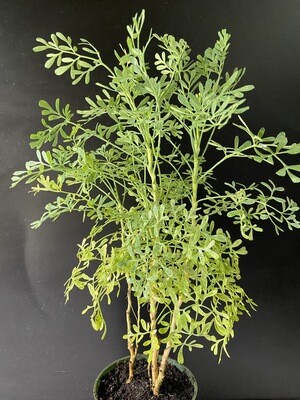
Known as the Herb of Grace, this striking Mediterranean evergreen herb brings silvery blue-green foliage, delicate yellow flowers, and a fascinating history of traditional herbalism, garden folklore, and symbolic protection.
From ancient European herb gardens to the doorways of Latin American homes, Rue has earned a reputation as a plant with purpose. Today, gardeners appreciate its sculptural appearance, aromatic foliage, pollinator-friendly flowers, and adaptability to sunny, well-drained landscapes.
One plant. Centuries of history. A whole lot of personality.
🪴 Ships in a 1-gallon nursery container. This larger, more established size offers additional growing media and root development compared with our 4-inch starter plants, making it a preferred option for gardeners seeking a more mature specimen.
Although 1-gallon plants are generally better suited to shipping than smaller starter plants, all live plants remain susceptible to transit stress, particularly during extreme seasonal temperatures.
🌿 Rue Quick Facts: Your Growing Guide
| Feature | Details |
|---|---|
| Botanical Name | Ruta graveolens L. |
| Common Names | Common Rue, Garden Rue, Herb of Grace |
| Plant Family | Rutaceae — Citrus Family |
| Plant Type | Aromatic evergreen to semi-evergreen perennial subshrub |
| Sale Size | 1-Gallon Nursery Container |
| Estimated Age | Varies by propagation method and growing conditions; container size does not establish exact age |
| Mature Height | Approximately 2–3 ft |
| Mature Width | Approximately 2–3 ft |
| Pruned Height | Approximately 12–24 inches with regular shaping |
| USDA Growing Zones | Generally Zones 4–9; possible in Zone 10 with appropriate conditions |
| Sun Requirements | Full sun to partial shade |
| Soil Preference | Well-draining, moderately fertile to lean soil |
| Water Requirements | Moderate during establishment; relatively drought-tolerant once established |
| Cold Tolerance | Established plants tolerate frost; severe freezes may damage exposed growth |
| Growth Habit | Upright, branching, rounded, woody-based |
| Growth Rate | Moderate |
| Spacing | Approximately 18–36 inches |
| Flower Color | Small yellow flowers |
| Typical Flowering | Spring through summer, varying by climate |
| Foliage | Blue-green, finely divided, strongly aromatic |
| Pollinator Value | Flowers attract visiting insects; foliage hosts certain swallowtail caterpillars |
| Salt Tolerance | Low; avoid direct salt spray |
| Wind Tolerance | Moderate in protected locations |
| Edibility | Historically used as a seasoning, but not recommended for consumption because of toxicity |
| Toxicity | Toxic if ingested; contact with foliage or sap followed by sunlight can cause serious skin reactions |
🌞 Florida Growing Tip: Rue prefers excellent drainage over consistently wet roots. In Central Florida, a raised planting location with morning sunshine and afternoon shade can be especially helpful during prolonged summer heat and rain.
🌼 What Makes Rue So Special?
🌱 Five Reasons Gardeners Love Growing Rue
1. 🏛️ A Living Piece of History
Grow an herb with centuries of documented cultural and horticultural significance. Rue has traveled through generations of Mediterranean gardens, historical herbal traditions, and symbolic ceremonies.
2. 🌿 Unique Ornamental Appeal
Its finely divided, silvery blue-green foliage stands out against tropical greenery, dark green shrubs, and colorful flowering perennials.
Rue develops into an attractive, softly rounded subshrub with upright stems and a somewhat woody base.
3. 🦋 Butterfly Garden Potential
Rue's foliage can serve as a larval host for certain swallowtail butterflies, including the giant swallowtail and black swallowtail. Its yellow flowers also attract visiting pollinators.
4. ☀️ Low-Water Landscape Potential
Once established in well-drained soil, Rue can tolerate relatively dry conditions, making it useful in appropriately designed, lower-water landscapes.
5. 🪴 Compact & Container-Friendly
Its manageable size makes Rue suitable for patios, herb collections, raised gardens, and ornamental containers.
Why Choose a 1-Gallon Rue Plant?
Compared with a smaller 4-inch starter, a 1-gallon plant generally offers:
- 🌱 Greater root-system development
- 💧 More growing media to buffer rapid drying
- 🌿 A more established framework for continued branching
- 🪴 Greater flexibility for maintaining the plant in its nursery container before transplanting
- 🌞 A convenient size for growing on toward a mature patio or landscape specimen
Actual plant height, fullness, and root development vary with season and growing conditions.
🏛️ The Story of Rue: From Ancient Gardens to Modern Traditions
🌿 Why Is Rue Called the Herb of Grace?
Rue's story reaches back to the Mediterranean world, where it was cultivated for aromatic, ceremonial, culinary, and medicinal purposes.
Its botanical name Ruta has ancient Latin and Greek associations, although the exact linguistic derivation remains uncertain.
The species name graveolens refers to its strong smell.
Rue later became known as the Herb of Grace, a name associated with religious traditions and ceremonial practices in parts of Europe.
Across generations, the plant became associated with purification, protection, and resilience.
✨ The Guardian at the Doorway
In various Mediterranean and Latin American traditions, Rue has been planted near entrances or kept in gardens as a symbolic protector against misfortune, envy, or negative influences.
In some communities, it is known as ruda, and it continues to hold cultural and spiritual significance.
These traditions form part of Rue's living cultural history rather than scientifically demonstrated protective effects.
🌿 GreenDreams Garden Inspiration: Create a small heritage herb garden near an entrance using Rue, rosemary, lavender, and other aromatic plants suited to your climate.
Position Rue away from areas where children, pets, or visitors may accidentally brush against its foliage.
🌿 Culinary History: An Herb With a Complicated Reputation
Was Rue Traditionally Used in Food?
Yes. Rue has a documented culinary history, particularly in some Mediterranean and European food traditions.
Its leaves have an intensely bitter, pungent, resinous flavor that differs considerably from familiar culinary herbs such as basil, parsley, and oregano.
Historically, Rue has appeared in certain regional dishes, herbal beverages, and flavored spirits.
However, historical culinary use does not establish modern food safety.
Rue contains biologically active compounds that can cause poisoning, and there is no established safe home-use dosage for its leaves or extracts.
For this reason, GreenDreams recommends enjoying Rue as an ornamental, cultural, and ecological garden plant rather than a culinary herb.
| Traditional Association | Modern GreenDreams Guidance |
|---|---|
| Flavoring foods | Historical interest only; avoid consuming |
| Herbal teas | Not recommended |
| Infused oils and extracts | Avoid homemade medicinal preparations |
| Aromatic herb gardens | Excellent visual and historical addition when safely positioned |
| Ceremonial planting | Suitable for symbolic ornamental use |
| Herbal education | Valuable for learning about plant chemistry and historical traditions |
💡 Looking for safer edible herbs? Consider rosemary, thyme, oregano, basil, and culinary sage instead.
🌼 Traditional Herbalism & Plant Chemistry
Rue's reputation in historical herbal medicine is extensive.
Mediterranean, Middle Eastern, and Latin American traditions have associated the plant with digestive complaints, menstrual conditions, inflammation, and ceremonial cleansing.
Modern scientific interest focuses on the plant's diverse phytochemical constituents.
| Constituent Group | Botanical Significance |
|---|---|
| Rutin and other flavonoids | Studied for antioxidant and other biological activities |
| Furanocoumarins | Can contribute to severe light-activated skin reactions |
| Alkaloids | Biologically active compounds with potential toxic effects |
| Volatile aromatic compounds | Responsible for much of Rue's distinctive fragrance |
Some laboratory studies have investigated anti-inflammatory and other pharmacological activities of Rue constituents.
These findings do not establish that Rue is a safe or effective treatment for arthritis, sprains, eczema, psoriasis, or other medical conditions.
Important: Rue should not be used internally or applied directly to skin as a home remedy.
Even topical exposure can cause phytophotodermatitis, resulting in blistering and burns when affected skin encounters sunlight.
Rue must be avoided for medicinal use during pregnancy because of its documented reproductive toxicity.
Its most appropriate place in a modern home garden is as an ornamental and educational plant, not a do-it-yourself medicine.
🦋 Rue as a Butterfly Host Plant: A Living Nursery for Swallowtails
One of Rue's most valuable ecological roles is as a larval host plant for swallowtail butterflies.
Certain swallowtail caterpillars feed on plants within the citrus family, including Ruta graveolens.
🦋 Giant Swallowtail Butterfly
The giant swallowtail (Papilio cresphontes) is one of North America's largest and most recognizable butterflies.
Its caterpillars can feed on Rue and other members of the citrus family.
The caterpillars have a distinctive appearance resembling bird droppings, an adaptation that helps protect them from predators.
🦋 Black Swallowtail Butterfly
The black swallowtail (Papilio polyxenes) is another beautiful species whose caterpillars can utilize Rue as a host plant.
These colorful caterpillars are also associated with familiar garden plants such as dill, parsley, and fennel.
🌼 How Rue Supports a Healthy Garden Ecosystem
- Provides foliage for certain butterfly larvae
- Produces flowers visited by pollinating insects
- Adds structural and botanical diversity
- Complements flowering plants that provide nectar for adult butterflies
- Creates educational opportunities to observe butterfly life cycles
🌿 GreenDreams Ecological Tip: If you notice caterpillars chewing Rue leaves, consider letting them stay.
A few missing leaves may mean your garden is supporting the next generation of butterflies.
Does Rue Naturally Repel Garden Pests?
Rue's strongly aromatic foliage contains compounds that have been studied for insect-related activity.
However, there is insufficient evidence that simply planting Rue beside vegetables will reliably prevent pest damage.
Think of Rue as one component of a diverse ecological landscape rather than a guaranteed natural pesticide.
The goal isn't a garden without insects. It's a garden with a healthy balance of life.
🌞 How to Grow Rue (Ruta graveolens) Successfully
Rue is relatively low-maintenance once established, but its Mediterranean origins provide the secret to growing it successfully:
Give it sunshine, excellent drainage, and room to breathe.
| Growing Factor | Ideal Conditions | What to Avoid |
|---|---|---|
| Sunlight | 6+ hours of sun in moderate climates; morning sun and afternoon shade in hot Florida sites | Deep shade or abrupt exposure of a newly shipped plant to intense sun |
| Soil | Well-drained sandy, loamy, or gravelly soil | Saturated, poorly drained beds |
| Moisture | Moderate during establishment, less frequent once established | Constantly wet roots |
| Fertility | Lean to moderately fertile soil | Heavy fertilizer applications |
| Airflow | Open, airy garden beds | Dense, humid, overcrowded planting |
| Location | Raised borders, herb gardens, butterfly gardens, containers | Busy pathways and children's play areas |
| Spacing | Approximately 2–3 ft | Crowding against larger, moisture-loving plants |
🌴 Growing Rue in Florida vs. Other Regions
| Region | Growing Expectations |
|---|---|
| Central Florida, Zones 9b–10a | Perennial growth possible; protect drainage during summer rains and young plants during freezes |
| North Florida and Southern Georgia, Zones 8–9 | Generally suitable as a perennial; frost damage and winter dieback possible |
| Texas, Zones 8–9 | Suitable in well-drained locations; protect during extreme freezes and intense heat |
| Carolinas and Mid-Atlantic, Zones 7–8 | Often perennial; good winter drainage is essential |
| Northern States, Zones 4–6 | May overwinter in favorable sites, but cold, wet soil and repeated freeze-thaw cycles increase losses |
| Arid Western States | Often suitable with irrigation during establishment and some protection from extreme reflected heat |
| Coastal Areas | Low salt tolerance; sheltered inland locations are preferable |
💡 Florida Grower's Note: Rue's biggest challenge in subtropical landscapes is often excessive moisture rather than insufficient fertility.
Choose planting areas that drain quickly after heavy rain.
Its drought tolerance improves with maturity, but even established Rue needs occasional supplemental water during prolonged dry weather.
🍂 Seasonal Rue Care Calendar — Florida & the Southeastern US
Rue is a woody-based perennial that may retain much of its foliage through mild winters.
Unlike a true annual, it does not naturally complete its entire life cycle in a single season.
However, freezing temperatures can cause substantial winter dieback.
| Season | What to Expect | GreenDreams Care Recommendations |
|---|---|---|
| 🌸 Spring (Mar–May) | New growth, branching, possible flower development | Lightly prune winter damage after frost risk passes; transplant when weather stabilizes |
| ☀️ Summer (Jun–Aug) | Flowering, active growth, possible heat and moisture stress | Monitor drainage during storms; provide afternoon shade when needed |
| 🍁 Fall (Sep–Nov) | Slower growth, occasional flowering, seed development | Reduce fertilizer; inspect drainage; prepare for cooler weather |
| ❄️ Winter (Dec–Feb) | Slower growth; possible leaf discoloration or dieback after freezes | Reduce watering, protect small plants during freezes, delay heavy pruning |
🌿 Is Rue Evergreen or Deciduous?
Rue is best described as evergreen to semi-evergreen, depending on climate.
In Central Florida, established Rue plants may remain leafy through much of winter.
In colder regions, foliage may bronze, yellow, drop, or die back following freezing temperatures.
A dormant-looking plant is not necessarily dead.
Inspect stems for living tissue after temperatures warm and allow time for spring regrowth.
Because Rue is a relatively short-lived subshrub, older plants may eventually become woody and less vigorous.
Periodic propagation or replacement can keep a heritage herb garden looking its best.
❄️ Winter Protection for 1-Gallon Rue Plants
Although a 1-gallon plant typically has more established roots than a 4-inch starter, plants maintained in containers remain vulnerable to cold because their roots are exposed to surrounding air temperatures.
During frost or freezing weather:
- Move container plants into a protected location.
- Protect outdoor plants with breathable frost cloth when necessary.
- Avoid keeping the root zone saturated before extended cold conditions.
- Return container plants to normal outdoor conditions when weather improves.
- Wait until spring to remove substantial winter-damaged growth.
In Central Florida, placement near a sheltered south-facing wall can provide additional warmth and protection during brief cold events.
🌱 Planting Rue: The GreenDreams High & Tight Method
At GreenDreams, we emphasize correct planting depth and drainage because healthy roots are the foundation of a resilient landscape.
Our High & Tight planting philosophy works especially well for Rue when adapted to its shallow planting requirements and preference for aerated soil.
🌿 Step-by-Step: Planting Ruta graveolens in the Ground
1. Choose the Right Location
Select a sunny or partially sunny area with excellent drainage.
Avoid low spots that collect standing water.
In Florida's hot summer climate, morning sunshine and light afternoon shade may help reduce stress.
2. Allow Your Plant to Recover From Shipping
Keep the Rue in its original 1-gallon nursery container after delivery.
Allow approximately 30 days, or until healthy new growth appears, before transplanting.
This gives the plant an opportunity to acclimate to its new environment.
3. Inspect the Root System
Once the plant has recovered, carefully slide it from its nursery container.
Check for densely circling roots or signs of poor root health.
Gently loosen minor circling roots when necessary without aggressively disturbing the root ball.
4. Dig a Shallow Planting Hole
Dig a hole slightly wider than the root ball and no deeper than its current root system.
Rue should never be planted too deeply.
5. Plant High & Tight
Position the root ball with its upper surface level with, or slightly above, the surrounding finished soil.
Never bury the crown.
Backfill with native soil, gently firming it around the roots to eliminate major air pockets without excessive compaction.
6. Support Soil Health
A modest amount of mature compost, precharged biochar, or appropriate mineral amendments may be used if needed.
Avoid excessive additions directly beneath the roots.
7. Mulch Thoughtfully
Apply approximately 1–2 inches of coarse hardwood mulch around the planting area.
Keep mulch several inches away from the crown and woody stems.
Rue is more sensitive to persistently wet conditions than many tropical fruit trees, so avoid excessively deep mulch.
8. Water at Soil Level
Water thoroughly immediately after planting.
Continue monitoring moisture until the roots establish.
💡 GreenDreams Tip: Rue does not require rich, constantly moist soil. Too much compost, heavy mulch, or irrigation can be counterproductive.
For this Mediterranean herb, good drainage is more valuable than aggressive fertilization.
💧 Watering Rue: How Much Is Enough?
Rue becomes relatively drought-tolerant once established, but a nursery-grown plant still requires consistent monitoring while adapting to a new environment.
The 1-gallon size offers greater moisture buffering than a 4-inch starter, although watering frequency still depends on sun, temperature, wind, and container drainage.
🪴 Container Watering Guide
| Stage | Suggested Approach |
|---|---|
| First 1–3 weeks after delivery | Check moisture daily; water when the upper soil begins to dry |
| Active summer growth | Check daily, particularly during extreme heat |
| Mild spring/fall weather | Check every 1–2 days; water according to moisture |
| Winter | Water less frequently, allowing the mix to dry partially between waterings |
| After upsizing | Monitor closely until roots establish in the larger container |
🌱 In-Ground Watering Guide
| Establishment Stage | Suggested Starting Schedule |
|---|---|
| First week | Check daily; water when the root zone needs moisture |
| Weeks 2–4 | Typically 2–4 times weekly in dry weather, adjusted for rainfall |
| Months 2–3 | Gradually reduce toward 1–2 deep waterings weekly as roots establish |
| Established plants | Water during extended dry spells; avoid routine saturation |
These schedules are starting points rather than fixed irrigation requirements.
Florida's sandy soils, heavy summer rainfall, and seasonal droughts can dramatically change watering needs.
🌿 GreenDreams Watering Standards
- 💧 Water in the morning, directly at soil level.
- 🌱 Prefer drip irrigation or targeted hand watering.
- ☀️ Avoid routine overhead irrigation, especially during hot afternoons.
- 🪣 Check moisture beneath the surface before adding more water.
- 🌧️ Pause irrigation when rainfall has sufficiently wetted the root zone.
- 🌿 Allow the soil to partially dry between waterings without permitting severe dehydration.
Waterlogged roots can lead to root rot and decline.
Overhead watering does not automatically cause leaf burn, but keeping foliage dry when practical helps reduce disease pressure and promotes more efficient root-zone irrigation.
Remember: Rue prefers a drink, not a swim!
🪴 Growing 1-Gallon Rue in Containers: From Nursery Plant to Mature Patio Specimen
Rue is an excellent candidate for container gardening, particularly for growers who need greater control over soil drainage, sunlight exposure, and winter protection.
🌱 GreenDreams Pot Progression Guide
| Current Size | Next Recommended Size | When to Transplant |
|---|---|---|
| 1-Gallon — Your Purchase Size | 3-Gallon | Once roots begin filling the nursery container and healthy growth is established |
| 3-Gallon | 5–7-Gallon | When roots become crowded or a larger specimen is desired |
| 5–7-Gallon | Maintain or increase as needed | Based on root health, plant size, and desired growth |
Important: These are general nursery size classes, not exact container-volume equivalents.
Rue may remain in a well-maintained 3–7-gallon container without needing continual upsizing.
Unlike larger fruit trees, Rue does not require progressively enormous containers to reach maturity.
🌿 The Best Potting Soil for Rue
Unlike moisture-loving tropical fruit trees, Ruta graveolens prefers an airy, fast-draining potting mix.
A practical starting blend:
| Ingredient | Suggested Proportion | Purpose |
|---|---|---|
| Well-draining potting soil | 60% | Provides structure and moderate moisture retention |
| Pine bark fines | 25% | Improves aeration and drainage |
| Perlite or pumice | 15% | Creates additional air space and reduces compaction |
This is a suggested horticultural blend rather than a scientifically established species-specific formula.
Adjust the proportions according to the starting potting mix and drainage conditions.
Choose containers with generous drainage holes.
Avoid pots without drainage, heavy garden soil, and mixes that remain saturated for days.
🌱 When Should You Transplant a 1-Gallon Rue Plant?
GreenDreams recommends waiting approximately 30 days after delivery, or until healthy new growth appears, before transplanting.
A larger container does not eliminate the need for shipping recovery.
Follow these steps:
- Keep Rue in its original 1-gallon nursery container during acclimation.
- Place the plant in bright, filtered light initially.
- Gradually introduce direct sunlight over 1–2 weeks.
- Check moisture daily without keeping the soil continuously wet.
- Inspect the roots once the plant is actively growing.
- Transplant into a 3-gallon container if the roots have sufficiently filled the current pot.
If roots are severely crowded or the original pot cannot retain adequate moisture, transplanting may become necessary sooner.
Avoid making several environmental changes simultaneously.
🌿 How to Upsize Rue Into a 3-Gallon Container
- Choose a clean container with several drainage openings.
- Add enough potting mix to maintain the plant's original planting depth.
- Carefully remove the Rue from its 1-gallon container.
- Gently loosen minor circling roots if present.
- Center the root ball in the new pot.
- Fill around the roots with well-draining potting mix.
- Firm gently without excessively compacting the soil.
- Water thoroughly at soil level and allow excess water to drain.
- Keep the plant in a protected location while it adjusts.
Where to Find Containers & Potting Materials
Suitable nursery pots, pine bark, perlite, and potting mixes are commonly available through local garden centers, agricultural supply stores, landscape material suppliers, and online horticultural retailers.
🌞 Can Rue Grow Indoors?
Rue can be maintained temporarily indoors, particularly during winter, but it generally performs better outdoors.
Provide:
- A very bright south-facing window or suitable grow light
- Good airflow
- Well-drained soil
- Moderate watering
- Protection from cold drafts and heating vents
Avoid dark corners, humid enclosed spaces, and locations accessible to pets or children.
For most growers, Rue is best treated as an outdoor ornamental herb that can be temporarily protected indoors during severe weather.
✂️ Pruning & Organic Fertilization
🌿 How to Prune Rue
Rue develops woody stems with age.
Light, consistent pruning helps maintain a compact and attractive shape.
🌸 Spring Pruning
Remove damaged or dead growth after frost danger has passed.
Trim healthy green tips to encourage branching.
☀️ Summer Pruning
Lightly shape the plant after flowering if desired.
Leave some flowers for visiting pollinators and butterfly habitat.
🍁 Fall Pruning
Avoid aggressive pruning immediately before winter in frost-prone regions.
❄️ Winter Pruning
Remove broken or hazardous growth as necessary, but postpone major shaping until warmer weather.
🧤 Important Pruning Precautions
Wear protective gloves, long sleeves, and eye protection.
Avoid pruning in strong sunlight or handling wet foliage with exposed skin.
Do not cut heavily into old, leafless woody stems unless necessary because regrowth from older wood can be unreliable.
🌱 Does Rue Need Fertilizer?
Usually very little.
Rue grows well in relatively lean soil.
Excess nitrogen can encourage soft, weak growth and reduce its compact habit.
For organic maintenance, consider:
- A small spring application of mature compost
- Modest amounts of worm castings
- Mild organic fertilizer only when a nutritional deficiency is suspected
- Soil testing before adding substantial mineral amendments
🌿 Less feeding. Better drainage. Stronger roots.
That's the Rue-growing philosophy.
🌼 Companion Planting & Ecological Garden Design
Rue can contribute to a diverse garden, but its best companions are plants with compatible growing requirements rather than plants that supposedly receive guaranteed pest protection from its fragrance.
| Companion Plant | Garden Role | Placement Recommendation |
|---|---|---|
| Rosemary | Aromatic, drought-tolerant evergreen | Nearby in a sunny, well-drained herb border |
| Lavender | Flowers, fragrance, ornamental contrast | Raised, fast-draining beds |
| Thyme | Low-growing flowering groundcover | Sunny edges with good drainage |
| Salvia | Pollinator nectar and seasonal color | Nearby with spacing for airflow |
| Native Clumping Grasses | Habitat, biomass, ornamental texture | Behind or beside Rue without crowding |
| Mexican Sunflower (Tithonia diversifolia) | Biomass and pollinator support | In a separate, more generously watered area |
| Dill and Fennel | Additional swallowtail host plants | In adjacent butterfly habitat |
Some of these companions have different irrigation or nutrient requirements.
Plant them in neighboring landscape zones rather than forcing every species into identical soil conditions.
🌿 GreenDreams Design Inspiration
Combine Rue's blue-green foliage with purple salvia flowers and the fine texture of native bunchgrasses.
The result is a layered garden offering ornamental beauty, ecological diversity, and seasonal interest.
A good garden doesn't just look alive. It supports life.
⚠️ Important Safety Information: Rue Is a Toxic Plant
Rue has an important place in botanical history, but responsible growing requires understanding its risks.
Ruta graveolens contains compounds that can be harmful if ingested or if plant sap comes into contact with skin and is subsequently exposed to sunlight.
| Safety Concern | What Growers Should Know |
|---|---|
| Ingestion | Can cause serious poisoning, including gastrointestinal and neurological symptoms |
| Skin Contact | Sap and foliage can trigger irritation and phytophotodermatitis |
| Sun Exposure | Plant compounds can cause blistering and burns after skin is exposed to ultraviolet light |
| Pregnancy | Avoid medicinal use; Rue has reproductive toxicity concerns |
| Children and Pets | Keep plants inaccessible; do not grow where accidental ingestion or brushing against foliage is likely |
| Herbal Preparations | Avoid homemade teas, extracts, poultices, oils, or medicinal applications |
| Pruning | Wear gloves, long sleeves, and protective clothing; wash exposed skin after handling |
Important: A patch test does not establish Rue's safety for topical use.
Delayed, light-activated burns can occur even when immediate irritation is absent.
If Rue is swallowed or causes a significant reaction, contact Poison Control at 1-800-222-1222 in the United States or seek medical assistance.
🔍 Rue Troubleshooting Guide: Common Problems & Organic Solutions
| ⚠️ Symptoms | 🧠 Likely Cause | 🌿 Recommended Response |
|---|---|---|
| 🍂 Yellowing leaves | Overwatering, root stress, seasonal aging | Check soil moisture and drainage before watering again |
| 💦 Soft stems and wilting in wet soil | Possible root rot | Improve drainage; inspect roots if container-grown |
| ☀️ Bleached or scorched leaves | Abrupt sun exposure, heat, or drought | Provide temporary afternoon shade and gradually acclimate |
| 🌬️ Dry, curled foliage | Water stress or wind exposure | Check root-zone moisture and move young plants to shelter |
| ❄️ Brown stems after frost | Cold injury | Protect from further freezes; prune dead tissue in spring |
| 🐛 Chewed leaves | Swallowtail caterpillars or other insects | Identify the insect before intervening; tolerate butterfly larvae when practical |
| 🕷️ Fine webbing or stippling | Possible spider mites | Inspect leaf undersides and improve growing conditions |
| 🌱 Weak, stretched growth | Insufficient sunlight | Gradually increase light exposure |
| 🌿 Woody, sparse center | Plant aging or insufficient pruning | Lightly reshape healthy stems; replace declining older plants if needed |
| 🌸 Few or no flowers | Young plant, limited sunlight, excessive nitrogen | Provide sufficient light and avoid heavy fertilization |
🐝 Organic Pest Management
Rue generally experiences relatively few serious pest or disease problems when grown under suitable conditions.
Before applying any organic pesticide, inspect the plant and identify the organism.
Not every insect feeding on Rue is a pest.
Avoid indiscriminate applications of neem oil, insecticidal soaps, or other sprays on plants supporting butterfly eggs and caterpillars.
Even organic pesticides can harm beneficial organisms.
For minor pest populations, improving plant health and encouraging natural predators may be sufficient.
🌿 The best pest management strategy begins with healthy soil, proper growing conditions, and biodiversity.
🌿 Is Rue the Right Plant for Your Garden?
✅ Ideal For
- 🦋 Butterfly and pollinator gardeners
- 🌿 Mediterranean-style landscape enthusiasts
- 🏛️ Collectors of historical and culturally significant plants
- ☀️ Growers seeking drought-tolerant ornamental herbs
- 🪴 Container gardeners with sunny patios
- 🌱 Gardeners who prefer a more established 1-gallon plant over a smaller starter
- 🌼 Experienced gardeners comfortable handling toxic plants safely
❌ Not Ideal For
- Homes where children or pets may access the plant
- Gardeners seeking an herb for regular culinary consumption
- Wet, poorly drained planting locations
- Low-light indoor spaces
- Gardens requiring frequent physical contact with foliage
- Growers seeking a guaranteed natural pesticide
- Anyone unable to provide appropriate handling precautions
❓ Frequently Asked Questions About Rue (Ruta graveolens)
1. Is Rue a perennial in Florida?
Yes.
Rue is a perennial subshrub that can grow year-round in many Florida locations.
It may experience frost damage during cold winters, particularly when young or grown in exposed containers.
2. Does Rue repel mosquitoes or other garden pests?
Rue contains aromatic compounds with documented biological activity, but growing a Rue plant does not guarantee effective mosquito or pest control.
It is better used as part of a diverse ecological landscape.
3. Does Rue attract butterflies?
Yes.
Rue can serve as a host plant for certain swallowtail butterfly caterpillars, including black and giant swallowtails.
Its flowers can also attract visiting pollinators.
4. Can I grow Rue in a pot?
Absolutely.
Rue performs well in containers with adequate drainage, proper sunlight, and careful watering.
A 3–7-gallon pot can support a mature specimen.
Your 1-gallon GreenDreams Rue plant can remain in its current container until the roots require additional space.
5. Is Rue safe to eat?
GreenDreams does not recommend consuming Rue.
Although it has a history of culinary use, it contains toxic compounds and can cause serious adverse effects.
6. How long does Rue live?
Rue is a relatively short-lived perennial subshrub.
Under favorable conditions, it may remain productive and attractive for several years, but woody decline can occur as plants age.
7. How quickly will a 1-gallon Rue plant grow?
Growth depends on temperature, sunlight, nutrition, root development, and watering.
A healthy, established 1-gallon plant may develop additional branching and flowering growth during its first warm growing season.
However, exact plant age and growth rate cannot be determined from container size alone.
8. Is a 1-gallon Rue plant better than a 4-inch starter?
For many growers, a 1-gallon Rue plant offers advantages because it generally has a more developed root system and a larger growing-media reserve.
It may require less frequent watering than a comparable 4-inch plant under the same conditions.
However, larger plants still require careful acclimation, proper watering, and suitable soil drainage.
9. Is Rue invasive?
Rue generally has low invasive potential.
Nevertheless, it can produce seeds and occasionally self-sow in favorable conditions.
Monitor seedlings and remove unwanted plants.
10. Does Rue tolerate coastal conditions?
Rue has low soil-salt tolerance.
It is better suited to protected inland gardens than exposed beachfront locations.
11. Why is my Rue losing leaves during winter?
Frost, reduced sunlight, wet roots, and normal seasonal stress can cause foliage decline.
In colder climates, Rue may partially die back and regrow when conditions improve.
12. Should I transplant my 1-gallon Rue immediately after shipping?
No.
We recommend keeping your Rue in its original nursery container for approximately 30 days after delivery, or until the plant produces healthy new growth.
Allow the plant to recover from transit stress before introducing the additional stress of transplanting.
13. Can Rue survive shipping to northern or western states?
Rue can survive longer-distance shipping, but extended transit periods and seasonal temperature extremes increase the risk of stress or damage.
The 1-gallon size generally provides a larger moisture reserve than a 4-inch starter, making it a preferable selection for many long-distance orders.
However, no live plant is immune to heat, cold, dehydration, or handling damage during transit.
📦 Shipping Live Rue Plants: What to Expect
| Shipping Detail | Information |
|---|---|
| Available Shipping Size | 1-Gallon Nursery Container |
| Shipping Method | UPS Ground |
| Shipping Day | Every Monday |
| Shipping Origin | Spring Hill, Florida |
| Recommended Shipping Region | Florida, Southeastern United States, and Texas |
| Extended Shipping Regions | Northern and Western United States — buyer discretion advised |
| California Orders | Possible additional agricultural inspection delays |
| Transplanting Recommendation | Wait approximately 30 days or until new growth appears |
🌱 A More Established Plant for the Journey Ahead
Our 1-gallon Rue plants offer a larger root zone and greater growing-media volume than our 4-inch starter plants.
This additional soil volume can help buffer moisture fluctuations during transit and provide more flexibility during the recovery period.
For customers deciding between 4-inch and 1-gallon Rue plants, we generally recommend the 1-gallon size when available, especially for longer-distance shipping.
However, larger container size does not eliminate the risks associated with shipping live plants.
🌿 Best Shipping Regions
We recommend our 1-gallon Rue plants primarily for customers in:
- Florida
- Georgia
- Alabama
- South Carolina
- North Carolina
- Other nearby Southeastern states
- Texas
We also ship throughout the continental United States.
Customers in northern and western states should consider the additional stress associated with longer UPS Ground transit times.
⚠️ Northern & Western Shipping Advisory
Customers outside our regional shipping area should consider the following:
🌞 Extended Transit
Longer shipping times can increase dehydration, leaf drop, and transport shock.
🔥 Temperature Extremes
Summer heat and winter cold can damage live plants during transit.
🌿 California Inspections
Agricultural inspections may add additional transit time.
💧 Container Moisture
Although 1-gallon containers offer greater moisture buffering than 4-inch starters, soil can still dry out during extended transport.
🌱 Recovery Time
Some plants may require several weeks of protected growing conditions before new growth resumes.
Important Shipping Disclaimer
Buyer discretion is strongly advised for northern and western destinations and during periods of extreme seasonal weather.
By purchasing live plants for long-distance UPS Ground shipping, customers acknowledge the additional risks associated with transit duration, weather, and regional conditions.
GreenDreams cannot guarantee optimal arrival condition following exposure to extreme temperatures, extended shipping delays, or shipping-related handling damage beyond our control.
The risks associated with selecting long-distance Ground shipping are assumed by the buyer, subject to applicable consumer protections and our published store policies.
We reserve the option to delay shipments when severe weather or holiday schedules create elevated transit risks.
Our goal is always to send healthy, carefully prepared plants, but live plants are living organisms that respond to their environment — including the journey to your home.
🌿 How to Help Your 1-Gallon Rue Recover After Delivery
1. Unpack Carefully
Remove packaging promptly and inspect the foliage, stems, and soil moisture.
2. Keep the Original Container
Do not immediately transplant into the ground or a larger pot.
3. Provide Gentle Light
Place the plant in a protected location with bright, filtered light.
4. Monitor Soil Moisture
Water at soil level as needed, without keeping the roots saturated.
5. Gradually Reintroduce Sunshine
Acclimate the plant to direct sunlight over approximately 1–2 weeks.
6. Allow Time for Recovery
Wait approximately 30 days, or until healthy new growth appears, before transplanting.
Remember: A little yellowing or leaf drop after shipping does not necessarily mean the plant is failing.
Healthy roots and emerging growth are better indicators of successful recovery.
🏡 Shop With Us in Person — GreenDreams Nursery & Farm
🌿 More Plants. More Possibilities. More Reasons to Visit.
Our Spring Hill nursery features a wide selection of edible, medicinal, ecological, and ornamental plants, including larger container sizes and specialty plants that may not be listed online.
GreenDreams Nursery & Farm — Retail Nursery Open to the Public
📍 18709 US Hwy. 41, Spring Hill, FL 34610
🕘 Tuesday–Friday: 9 AM–5 PM
🌞 Saturday: 8 AM–3 PM
Closed Sunday and Monday.
Come explore our regenerative nursery, meet our team, and discover what's growing this week!
Our retail selection includes specialty fruit trees, herbs, native plants, butterfly host plants, and many other useful species for Florida gardens.
🌿 Visit GreenDreams and discover your next favorite plant!
🌿 Beyond the Plant: GreenDreams Services
At GreenDreams, we do more than grow plants — we design, build, and restore ecosystems across Florida.
- 🌳 Onsite Consultations & Edible Landscape Design: Personalized recommendations for developing productive and ecological outdoor spaces.
- 🌱 Ecological Installation & Project Management: From soil preparation and planting to complete edible landscapes and food forests.
- 🚚 Bulk Soil Material Delivery: Compost, mulch, biochar, and other regenerative landscaping materials.
- 🌾 Wholesale & Large-Scale Regenerative Solutions: Plant supply and ecological solutions for larger projects.
Whether you're planting a single heritage herb or developing an entire edible landscape, our team can help you grow with greater confidence.
Your garden's next chapter begins with a single plant.



🌿 IMPORTANT INFORMATION BEFORE PURCHASING LIVE PLANTS
Please note: Plants purchased through our online store are not available for pickup at our retail nursery in Spring Hill, Florida.
Online inventory is housed at a separate facility and is priced, prepared, and handled exclusively for shipping.
🌱 Looking for larger plants or more selection?
Our retail nursery location offers far more availability, including larger sizes, specialty plants, and many selections not suitable for nationwide shipping.
Local pickup is available for retail nursery purchases only.
Visit our Spring Hill, FL retail nursery page to explore in-person shopping options.
🚚 LIVE PLANT SHIPPING & TRANSIT EXPECTATIONS
Live plants naturally experience stress during shipping. Temporary leaf drop, mild wilting, or cosmetic stress is normal after transit. Most plants recover quickly with proper watering, gradual light exposure, and basic aftercare. Some plants may require additional attention during the first few weeks.
Despite careful packing, minor cosmetic damage may occur during transit. Small issues such as broken leaves or stems typically resolve with time and proper care.
If your shipping box arrives with significant external damage, please contact UPS within 30 days to initiate a carrier claim.
⏱️ SHIPPING METHOD, TIMING & TRANSIT WINDOWS
All online orders ship via UPS Ground from our Central Florida nursery.
📦 Shipping Schedule: Orders ship once weekly on Mondays to reduce the risk of packages sitting in transit over weekends. A countdown clock on our website displays the next shipping date.
🚚 Typical Transit Times:
-
Florida: 1–2 days
-
Southern U.S.: approximately 2 days
-
Midwest, West & Northern U.S.: 3–5 business days
Long-distance shipments, particularly to the western U.S., may experience additional transit time due to agricultural inspections in states such as Arizona, California, and Texas.
Extended transit times can be more challenging for small or tender plants and may require additional recovery care after arrival.
🌡️ EXTREME WEATHER & SEASONAL RISK
Live plants are sensitive to temperature extremes.
We cannot guarantee plant condition during periods of extreme summer heat or winter cold and freezing temperatures. Weather-related delays, carrier interruptions, or exposure during delivery are beyond our control.
Customers are responsible for:
-
Monitoring tracking information sent via email
-
Retrieving packages promptly upon delivery
-
Preventing plants from being left outdoors in extreme conditions
During unsafe weather, holiday shipping volume, or extended transit risk, orders may be held and shipped the following week to protect plant health.
⚠️ CUSTOMER RESPONSIBILITY & REFUND POLICY
By purchasing live plants, customers acknowledge and accept the risks associated with shipping, weather exposure, transit delays, and regional suitability.
Refunds or replacements are considered only under exceptional circumstances and in accordance with our return and refund policy. We are not responsible for:
-
Weather-related damage
-
Carrier delays
-
Poor plant selection for a given climate or region
-
Improper care after delivery
Upon purchase, customers assume full responsibility for the ongoing care and success of their plants.
✅ CONSENT & AGREEMENT
By completing a purchase, you confirm that you have read, understand, and agree to all shipping policies, responsibilities, and conditions outlined above.
Our goal is transparency, plant health, and long-term growing success — and we appreciate your understanding and care when ordering live plants.


